Draft ECMA-262 / May 7, 2026
ECMAScript® 2027 Language Specification

关于本规范
在https://tc39.es/ecma262/上的文档是最准确且最新的 ECMAScript 规范。 它包含最近年份快照的内容以及任何已完成的提案 —— 这些提案已在提案流程中达到第 4 阶段,已在多个实现中落地, 并将被收录进下一个年度快照。历史快照可在 https://ecma-international.org/publications-and-standards/standards/ecma-262/ 获得。
参与本规范的贡献
本规范在 GitHub 上由 ECMAScript 社区共同开发。你可以通过以下多种方式参与规范的开发:
- GitHub 仓库:https://github.com/tc39/ecma262
- 问题:所有问题,提交新问题
- 拉取请求:所有拉取请求,新建拉取请求
- 测试套件:Test262
- 编辑者:
-
社区:
- Discourse 论坛:https://es.discourse.group/
- 聊天:Matrix
- 邮件
列表 存档:https://esdiscuss.org/
更多关于本文件的生成方式,请参考
简介
本 Ecma 标准定义了 ECMAScript 2027 语言。这是 ECMAScript 语言规范的第十八版。 ECMAScript 源自多项技术,最著名的是 JavaScript(Netscape)和 JScript(Microsoft)。 该语言由 Brendan Eich 在网景公司发明,首次出现在该公司发布的 Navigator 2.0 浏览器中。 虽然 ECMAScript 最为人知的是作为网页浏览器内嵌语言,但也被广泛用于浏览器之外的场景,包括服务器和嵌入式应用,现已成长为世界上应用最广泛的通用型编程语言之一。
ECMAScript 语言规范的制定工作始于 1996 年 11 月。第一版 Ecma 标准于 1997 年 6 月在 Ecma 大会通过。
该 Ecma 标准随后提交至 ISO/IEC JTC 1,采用快速通道(fast-track)程序,并于 1998 年 4 月被批准为国际标准 ISO/IEC 16262。1998 年 6 月的 Ecma 大会通过了第二版 ECMA-262,使其与 ISO/IEC 16262 保持完全一致。第一版与第二版之间的更动仅为编辑性质。
第三版标准引入了强大的正则表达式,更完善的字符串处理,新增控制语句,try/catch 异常处理机制,对错误更严格的定义,数值输出格式化,以及支持将来语言扩展的小幅修改。 第三版 ECMAScript 标准在 1999 年 12 月被 Ecma 大会采纳,并于 2002 年 6 月以 ISO/IEC 16262:2002 形式发布。
在第三版发布后,ECMAScript 配合万维网取得了巨大成功,成为几乎所有网页浏览器支持的编程语言。曾进行过大量工作以制定第四版规范,但该工作未能完成并发表为 ECMAScript 第四版,其部分成果被吸收进第六版的开发中。
ECMAScript 第五版(作为 ECMA-262 第五版发布)规范化了在浏览器实现中已普遍采用的语言解释方式,并增加了自第三版发布以来出现的新特性,包括
第五版被提交到 ISO/IEC JTC 1 并通过快速通道获得国际标准 ISO/IEC 16262:2011 资格。ECMAScript 标准的 5.1 版包含了小幅修正,与 ISO/IEC 16262:2011 内容相同。5.1 版在 2011 年 6 月由 Ecma 大会通过。
第六版的集中开发始于 2009 年(即第五版发布期间),在此之前自 1999 年第三版发布起,进行了大量实验和语言增强设计。从某种意义上说,第六版的完成,是十五年努力的结晶。本版目标包括更好地支持大型应用、库的创建,以及将 ECMAScript 作为其它语言的编译目标。主要增强有模块、类声明、词法块级作用域、迭代器与生成器、异步编程的 Promise、解构模式、正确的尾调用等。内建库扩展,支持新的数据抽象如映射(Map)、集合(Set)、二进制数值数组,并对字符串、正则表达式增强了 Unicode 补充字符支持。内建对象亦可通过子类化扩展。 第六版为语言和库实现定期、渐进增强打下基础。第六版于 2015 年 6 月被大会通过。
ECMAScript 2016 是在 Ecma TC39 全新年度发布节奏和开放开发流程下发布的首个 ECMAScript 版本。从 ECMAScript 2015 源文档构建的纯文本文档,成为后续开发的基础并完全在 GitHub 协作。一年内,有上百次拉取请求与问题提交,修复了数千项错误、编辑及改进。另外,开发了 Ecmarkup、Ecmarkdown、Grammarkdown 等工具,助力标准制定。ES2016 还引入了新的指数运算符和 Array.prototype.includes 方法。
ECMAScript 2017 引入了异步函数、共享内存和原子操作,并带来了更小幅的语言与库增强、漏洞修复和编辑更新。异步函数改善了异步编程体验,为返回 Promise 的函数提供了新语法。共享内存和原子操作引入了一种新Object.values、Object.entries 和 Object.getOwnPropertyDescriptors。
ECMAScript 2018 通过异步迭代器协议和异步生成器实现了异步迭代支持。同时还包括四项正则扩展特性:dotAll 标志、具名捕获组、Unicode 属性转义以及后行断言。最后,还加入了对象的剩余与扩展属性。
ECMAScript 2019 新增了若干内建函数:Array.prototype 上的 flat 和 flatMap 用于扁平化数组,Object.fromEntries 可直接将 Object.entries 的返回值转为新对象,String.prototype 上的 trimStart 和 trimEnd 是更佳命名的 trimLeft 和 trimRight 替代。还包括针对语法和语义的小幅更新,比如可选的 catch 绑定参数、允许字符串字面量出现 U+2028(换行分隔符)及 U+2029(段落分隔符)以兼容 JSON。其它更新包含:要求 Array.prototype.sort 稳定排序,JSON.stringify 无论输入数据都必须生成合规的 UTF-8,以及规定 Function.prototype.toString 必须返回原始源码或标准占位符。
ECMAScript 2020(第 11 版)引入了字符串的 matchAll 方法,可通过全局正则表达式返回所有匹配对象的迭代器;import() 支持动态异步加载模块;BigInt 新原始数值类型实现高精度Promise.allSettled 新 Promise 组合器不会因某单 Promise 拒绝而短路;globalThis 通用export * as ns from 'module' 专用语法用于模块内命名空间导出;for-in 枚举顺序更趋规范;import.meta 支持模块上下文相关信息;新增“空值”处理语法特性 Nullish 合并(??)和可选链接(?.)。
ECMAScript 2021(第 12 版)引入了字符串的 replaceAll 方法;Promise.any 是会在任一输入完成时即返回的 Promise 组合器;AggregateError 新错误类型可表示多个错误;逻辑赋值操作符(??=、&&=、||=);WeakRef 支持弱引用对象不影响垃圾回收,FinalizationRegistry 用于对象回收后注册清理回调;数字分隔符(如 1_000);Array.prototype.sort 更精确定义,减少实现相关的不确定顺序。
ECMAScript 2022(第 13 版)增加了顶层 await,允许模块顶层使用#x in obj 语法可检测对象私有字段;正则表达式 /d 标志用于获取子串的起止位置;Error 对象的 cause 属性可记录错误因果链;字符串、数组和 at 方法支持相对索引;Object.hasOwn 为 Object.prototype.hasOwnProperty 提供简化替代。
ECMAScript 2023(第 14 版)针对 Array.prototype 和 TypedArray.prototype 增加了 toSorted、toReversed、with、findLast 和 findLastIndex 等方法,Array.prototype 还新增 toSpliced 方法;支持在文件开头添加 #! 注释以增强可执行性;允许大部分 Symbol 作为弱集合键使用。
ECMAScript 2024(第 15 版)引入了调整和转移 ArrayBuffer 与 SharedArrayBuffer 的能力;新增 RegExp /v 标志,可针对字符串集合创建功能更强的正则表达式;加入了 Promise.withResolvers 快捷方法以构造 Promise,Object.groupBy 与 Map.groupBy 对数据聚合,Atomics.waitAsync 支持异步等待共享内存变化,以及 String.prototype.isWellFormed 与 String.prototype.toWellFormed 方法用于检查并保证字符串仅包含规范 Unicode 字符。
ECMAScript 2025(第 16 版)引入了全局 Iterator,以及用于操作迭代器的静态和原型方法;为 Set.prototype 新增常用集合操作方法;支持导入 JSON 模块及声明导入模块属性的语法;RegExp.escape 方法可安全转义字符串供正则使用;支持正则内联启用/禁用修饰符标志语法;Promise.try 方法保证无论目标函数是否返回 Promise 都总返回 Promise;新增 Float16Array DataView.prototype.getFloat16、DataView.prototype.setFloat16 和 Math.f16round 方法。
ECMAScript 2026(第 17 版)引入了 Math.sumPrecise,可对不同数量级的数值集合高精度求和,减少误差;Iterator.concat 合并迭代器序列;Array.fromAsync 可从异步可迭代对象等异步来源构建数组;Error.isError 用于识别错误对象;Map.prototype 和 WeakMap.prototype 可检索默认值键方法(当键不存在时可指定默认返回);Uint8Array 新增方法实现与 16 进制及 base64 编码二进制字符串的相互转换;JSON.parse 的 reviver 可访问 JSON 源片段;JSON.rawJSON 用于对原始值执行更细粒度的 stringify 输出控制。
有数十位、代表众多组织的专家在 Ecma TC39 对本版及以往多版标准做出了极其重要的贡献。 此外,支持 TC39 ECMAScript 工作的社区正在蓬勃发展。 他们审查了大量草案,提交了数千个错误报告,开展实现实验,贡献测试套件,推广 ECMAScript 至全球开发者社群。 遗憾的是,无法一一列出和感谢所有为此做出贡献的个人和组织。
Allen Wirfs-Brock
ECMA-262,第六版项目编辑
Brian Terlson
ECMA-262,第七至第十版项目编辑
Jordan Harband
ECMA-262,第十至第十二版项目编辑
Kevin Gibbons
ECMA-262,第十二至第十七版项目编辑
Shu-yu Guo
ECMA-262,第十二至第十八版项目编辑
Michael Ficarra
ECMA-262,第十二至第十八版项目编辑
Richard Gibson
ECMA-262,第十八版项目编辑
Ron Buckton
ECMA-262,第十八版项目编辑
Nicolò Ribaudo
ECMA-262,第十八版项目编辑
Linus Groh
ECMA-262,第十八版项目编辑
1 范围
本标准定义了 ECMAScript 2027 通用编程语言。
2 一致性
符合规范的 ECMAScript 实现必须提供并支持本规范中描述的所有类型、值、对象、属性、函数以及程序语法和语义。
符合规范的 ECMAScript 实现必须按照最新版 Unicode 标准和 ISO/IEC 10646 来解释输入的源文本。
如果某个符合规范的 ECMAScript 实现提供了应用程序编程接口(API),并支持那些需要适配不同人类语言和国家所采用的语言及文化约定的程序,则它必须实现与本规范兼容的最新版 ECMA-402 所定义的接口。
符合规范的 ECMAScript 实现可以提供超出本规范所描述内容之外的额外类型、值、对象、属性和函数。特别地,对于本规范所描述的对象,符合规范的 ECMAScript 实现可以提供本规范未描述的属性,以及这些属性的值。
符合规范的 ECMAScript 实现可以支持本规范未描述的程序语法和正则表达式语法。特别地,符合规范的 ECMAScript 实现可以支持使用本规范子条款
符合规范的 ECMAScript 实现不得实现任何在子条款
符合规范的 ECMAScript 实现不得重新定义任何非
除非另有说明,符合规范的 ECMAScript 实现可以选择实现或不实现规范性可选子条款。Web 浏览器通常需要实现所有规范性可选子条款。(参见附录
2.1 规范性可选条款标题示例
条款内容示例。
符合规范的 ECMAScript 实现必须实现遗留子条款,除非它们同时被标记为规范性可选。遗留子条款中规定的所有语言特性和行为都具有一个或多个不理想的特征。然而,它们在现有应用中的持续使用使得无法将其从本规范中移除。这些特性不被视为 ECMAScript 核心语言的一部分。程序员在编写新的 ECMAScript 代码时,不应使用这些特性和行为,也不应假定它们存在。
2.2 遗留条款标题示例
条款内容示例。
2.3 遗留规范性可选条款标题示例
条款内容示例。
3 规范性引用文件
以下引用文件对于本文件的应用是必不可少的。凡是注日期的引用文件,仅所引用的版本适用。凡是不注日期的引用文件,其最新版本(包括任何修订)适用。
Unicode 标准。
https://unicode.org/versions/latest
ISO/IEC 10646,信息技术——通用多八位编码字符集(UCS),加修正案 1:2005、修正案 2:2006、修正案 3:2008、修正案 4:2008,以及其他修正案和勘误,或其后继版本。
ECMA-402,ECMAScript 国际化 API 规范,具体指与本规范本版对应的年度版本。
https://www.ecma-international.org/publications-and-standards/standards/ecma-402/
ECMA-404,JSON 数据交换格式。
https://www.ecma-international.org/publications-and-standards/standards/ecma-404/
4 概述
本节包含 ECMAScript 语言的非规范性概述。
ECMAScript 是一种面向对象的编程语言,用于在
ECMAScript 最初被设计为一种脚本语言,但现已广泛用作通用编程语言。脚本语言是一种用于操纵、定制和自动化现有系统功能的编程语言。在这类系统中,有用的功能已经通过用户界面可用,而脚本语言则是一种将这些功能暴露给程序控制的机制。以这种方式,现有系统被称为提供了对象和设施的
ECMAScript 最初被设计为一种Web 脚本语言,用于为浏览器中的网页注入活力,并作为基于 Web 的客户端-服务器架构的一部分执行服务器端计算。现在,ECMAScript 已被用于为各种
ECMAScript 的使用已经超越了简单脚本,如今它被用于许多不同环境和不同规模下的完整编程任务范围。随着 ECMAScript 使用范围的扩大,它所提供的特性和设施也随之扩展。ECMAScript 现在已经是一种功能完备的通用编程语言。
4.1 Web 脚本
Web 浏览器为客户端计算提供 ECMAScript
Web 服务器则为服务器端计算提供了另一种
每个支持 ECMAScript 的 Web 浏览器和服务器都提供其自己的
4.2 宿主与实现
为帮助将 ECMAScript 集成到
实现是一个外部来源,它进一步定义了附录
实现定义设施,是指其定义被无进一步限定地延后到外部来源的设施。本规范不对具体行为提出任何建议,符合规范的实现可以在本规范施加的约束内自由选择任意行为。
实现近似定义设施,是指其定义被延后到外部来源,但同时推荐一种理想行为。尽管符合规范的实现可以在本规范施加的约束内自由选择任意行为,但仍鼓励其尽量逼近该理想行为。某些数学运算,例如 Math.exp
宿主是一个外部来源,它进一步定义了附录
宿主钩子是一个
- 它必须返回
正常完成 或抛出完成二者之一。
宿主定义设施,是指其定义被无进一步限定地延后到外部来源,且列在附录
宿主环境是对所有
4.3 ECMAScript 概览
以下是对 ECMAScript 的非正式概览——并未描述语言的所有部分。此概览不属于标准正文的一部分。
ECMAScript 是基于对象的:基础语言设施和
ECMAScript 定义了一组内建对象,以补全 ECMAScript 实体的定义。这些内建对象包括:Object、Function、Boolean、Symbol 以及各种 Error 对象;表示和操作数值的对象,包括 Math、Number 和 Date;文本处理对象 String 和 RegExp;作为值索引集合的对象,包括 Array 以及九种不同类型的 Typed Array,它们的元素都具有特定的数值数据表示;键控集合,包括 Map 和 Set 对象;支持结构化数据的对象,包括 JSON 对象、ArrayBuffer、SharedArrayBuffer 和 DataView;支持控制抽象的对象,包括生成器函数和 Promise 对象;以及反射对象,包括 Proxy 和 Reflect。
ECMAScript 还定义了一组内建运算符。ECMAScript 运算符包括各种一元运算、乘法运算符、加法运算符、位移运算符、关系运算符、相等运算符、二进制按位运算符、二进制逻辑运算符、赋值运算符以及逗号运算符。
大型 ECMAScript 程序可通过模块获得支持,模块允许将程序划分为多个语句和声明序列。每个模块都会显式标识它使用且需要由其他模块提供的声明,以及它自身有哪些声明可供其他模块使用。
ECMAScript 语法有意与 Java 语法相似。ECMAScript 语法较为宽松,以便其可作为一种易用的脚本语言。例如,变量不要求声明其类型,属性也不关联类型,而已定义函数也不要求其声明在文本上出现在调用它们之前。
4.3.1 对象
尽管 ECMAScript 包含类定义语法,但 ECMAScript 对象在根本上并不像 C++、Smalltalk 或 Java 那样基于类。相反,对象可以通过多种方式创建,包括通过字面量表示法,或通过new Date(2009, 11) 会创建一个新的 Date 对象。不使用 new 调用Date() 产生的是当前日期和时间的字符串表示,而不是对象。
每个由
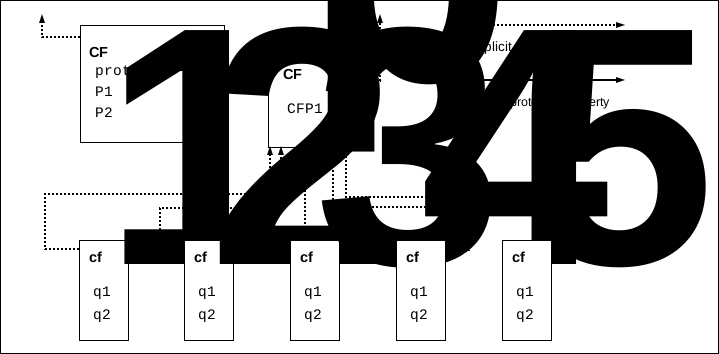
在基于类的面向对象语言中,一般来说,状态由实例承载,方法由类承载,而继承仅涉及结构和行为。在 ECMAScript 中,状态和方法都由对象承载,而结构、行为和状态都会被继承。
所有那些自身不直接包含其原型所含某个特定属性的对象,都会共享该属性及其值。图 1 说明了这一点:
CF 是一个new 表达式创建了五个对象:cf1、cf2、cf3、cf4 和 cf5。这些对象中的每一个都包含名为
与大多数基于类的对象语言不同,属性可以通过给对象赋值而被动态添加。也就是说,
尽管 ECMAScript 对象本质上并非基于类,但基于
4.3.2 ECMAScript 的严格变体
ECMAScript 语言认识到,某些语言使用者可能希望限制自己对语言中某些可用特性的使用。他们这样做可能是出于安全考虑、为了避免他们认为容易出错的特性、为了获得更强的错误检查,或基于他们自己选择的其他原因。为支持这种可能性,ECMAScript 定义了语言的严格变体。语言的严格变体排除了常规 ECMAScript 语言中的某些特定语法和语义特性,并修改了某些特性的详细语义。严格变体还规定了额外的错误条件:在那些非严格形式语言未规定为错误的情形下,必须通过抛出错误异常来报告这些错误条件。
ECMAScript 的严格变体通常被称为语言的严格模式。严格模式的选择,以及 ECMAScript 严格模式语法和语义的使用,是在单个
为了符合本规范,ECMAScript 实现必须同时实现本规范所定义的完整不受限 ECMAScript 语言以及 ECMAScript 语言的严格变体。此外,实现还必须支持将不受限模式和严格模式的源文本单元组合成单个复合程序。
4.4 术语和定义
就本文档而言,以下术语和定义适用。
4.4.1 实现近似定义
4.4.2 实现定义
4.4.3 宿主定义
与
在编辑表达上,参见条款
4.4.4 类型
如条款
4.4.5 原始值
Undefined、Null、Boolean、Number、BigInt、Symbol 或
原始值是在语言实现的最低层级上被直接表示的数据。
4.4.6 对象
对象是属性的集合,并且具有单个原型对象。该原型可以是
4.4.7 构造器
创建并初始化对象的
4.4.8 原型
为其他对象提供共享属性的对象
4.4.9 普通对象
对于所有对象都必须支持的基本内部方法,具有默认行为的对象
4.4.10 异质对象
对于一个或多个基本内部方法,不具有默认行为的对象
4.4.11 标准对象
其语义由本规范定义的对象
4.4.12 内建对象
由 ECMAScript 实现规定并提供的对象
标准内建对象由本规范定义。ECMAScript 实现可以规定并提供额外种类的内建对象。
4.4.13 undefined 值
当变量尚未被赋值时所使用的原始值
4.4.14 Undefined 类型
其唯一值为
4.4.15 null 值
表示刻意不存在任何对象值的原始值
4.4.16 Null 类型
其唯一值为
4.4.17 Boolean 值
Boolean 值只有两个:
4.4.18 Boolean 类型
由原始值
4.4.19 Boolean 对象
Boolean 对象通过在 new 表达式中使用 Boolean
4.4.20 String 值
由零个或多个 16 位无符号
4.4.21 String 类型
所有可能 String 值的集合
4.4.22 String 对象
4.4.23 Number 值
对应于
4.4.24 Number 类型
所有可能
4.4.25 Number 对象
4.4.26 Infinity
4.4.27 NaN
是
4.4.28 BigInt 值
对应于任意精度
4.4.29 BigInt 类型
所有可能
4.4.30 BigInt 对象
4.4.31 Symbol 值
表示唯一且非 String 的对象
4.4.32 Symbol 类型
所有可能 Symbol 值的集合
4.4.33 Symbol 对象
4.4.34 函数
函数除了其属性之外,还包含可执行代码和状态,这些决定了它在被调用时的行为。函数的代码可以是 ECMAScript 编写的,也可以不是。
4.4.35 内建函数
作为函数的内建对象
内建函数的例子包括 parseInt 和 Math.exp。
4.4.36 内建构造器
作为
4.4.37 属性
对象的一部分,它关联一个键(String 值或 Symbol 值之一)和一个值
根据属性形式的不同,该值可以直接表示为数据值(原始值、对象或
4.4.38 方法
作为属性值的函数
当函数作为对象的方法被调用时,该对象会作为其
4.4.39 内建方法
作为内建函数的方法
标准内建方法由本规范定义。
4.4.40 特性
定义属性某种特征的内部值
4.4.41 自有属性
被其对象直接包含的属性
4.4.42 继承属性
对象的某个属性,它不是自有属性,但却是该对象原型的属性(无论是自有还是继承)
4.5 本规范的组织结构
本规范其余部分的组织如下:
条款
条款
条款
条款
条款
5 记号约定
5.1 语法文法与词法文法
5.1.1 上下文无关文法
上下文无关文法由若干产生式组成。每个产生式都具有一个称为非终结符的抽象符号作为其左侧,以及一个由零个或多个非终结符和终结符符号组成的序列作为其右侧。对于每一种文法,其终结符都取自某个指定字母表。
链式产生式是指右侧恰好有一个非终结符符号,并且可附带零个或多个终结符符号的产生式。
从一个由单个特殊非终结符组成的句子开始,该非终结符称为目标符号,给定的上下文无关文法规定了一种语言,即通过反复将序列中的任意非终结符替换为某个以该非终结符为左侧的产生式的右侧,所能得到的所有可能终结符序列的(可能无限的)集合。
5.1.2 词法文法与 RegExp 文法
ECMAScript 的词法文法见条款
除空白和注释之外的输入元素构成 ECMAScript 语法文法的终结符,并称为 ECMAScript 词法单元(token)。这些词法单元包括 ECMAScript 语言中的/*…*/ 形式的注释,无论是否跨越多行)如果不包含行终结符,同样会被简单丢弃;但如果
ECMAScript 的RegExp 文法见
词法文法和 RegExp 文法的产生式通过使用两个冒号“::”作为分隔标点来区分。词法文法和 RegExp 文法共享某些产生式。
5.1.3 数字字符串文法
数字字符串文法出现在
数字字符串文法的产生式通过使用三个冒号“:::”作为标点来区分,并且绝不会用于解析源文本。
5.1.4 语法文法
ECMAScript 的语法文法见条款
当一个码点流要被解析为 ECMAScript
当解析成功时,会构造出一棵解析树,它是一种有根树结构,其中每个节点都是一个解析节点。每个解析节点都是文法中某个符号的一个实例;它表示可从该符号推导出的源文本片段。解析树的根节点表示整个源文本,是解析所用
每次调用解析器时都会实例化新的解析节点,即使源文本完全相同,不同解析之间的解析节点也绝不会复用。只有当两个解析节点表示同一段源文本、是同一个文法符号的实例,并且来自同一次解析器调用时,它们才被认为是同一个解析节点。
对同一个 String 进行多次解析会得到不同的解析节点。例如,考虑:
let str = "1 + 1;";
eval(str);
eval(str);每次调用 eval 都会将 str 的值转换为
语法文法的产生式通过仅使用一个冒号“:”作为标点来区分。
条款
在某些情况下,为避免歧义,语法文法会使用广义产生式,允许那些并不能形成有效 ECMAScript
5.1.5 文法记号
5.1.5.1 终结符
在 ECMAScript 文法中,一些终结符以 等宽 字体显示。它们必须在源文本中按原样精确出现。以这种方式指定的所有终结符码点,都应理解为 Basic Latin 区块中的相应 Unicode 码点,而不是其他 Unicode 范围中外观相似的码点。终结符中的码点不能通过 \
在那些终结符为单个 Unicode 码点的文法中(即词法文法、RegExp 文法和数字字符串文法),产生式中连续出现的多个等宽码点,只是相同码点序列作为独立终结符书写时的一种简写。
例如,产生式:
是如下形式的简写:
相比之下,在语法文法中,连续的一串等宽码点是单个终结符。
终结符还有另外两种形式:
- 在词法文法和 RegExp 文法中,那些没有常规可打印表示形式的 Unicode 码点,会改以“<ABBREV>”形式显示,其中 “ABBREV” 是该码点或码点集合的助记符。这些形式定义于
Unicode 格式控制字符 、空白 和行终止符 中。 - 在语法文法中,某些终结符(例如
IdentifierName 和RegularExpressionLiteral )以斜体显示,因为它们引用的是词法文法中同名的非终结符。
5.1.5.2 非终结符与产生式
非终结符以斜体显示。非终结符的定义(也称为“产生式”)由被定义的非终结符名称后跟一个或多个冒号引出。(冒号数量表示该产生式属于哪一种文法。)随后一行或多行给出该非终结符的一个或多个可选右侧。例如,语法定义:
表示非终结符 while,接着一个左括号词法单元,再接着一个
表示
5.1.5.3 可选符号
终结符或非终结符后面可能出现下标后缀“opt”,它表示该符号是可选的。包含可选符号的该备选项实际上指定了两个右侧:一个省略该可选元素,另一个包含它。这意味着:
是如下形式的便捷缩写:
并且:
是如下形式的便捷缩写:
而它进一步又是如下形式的缩写:
因此,在这个例子中,非终结符
5.1.5.4 文法参数
产生式可以通过“[parameters]”形式的下标注解进行参数化,该注解可作为被该产生式定义的非终结符符号的后缀出现。“parameters”可以是单个名称,也可以是逗号分隔的名称列表。参数化产生式是这样一组产生式的简写:为参数名称的所有组合定义产生式,每个参数名称前加下划线,并附加到被参数化的非终结符符号后面。这意味着:
是如下形式的便捷缩写:
并且:
是如下形式的缩写:
多个参数会产生一个组合数量的产生式集合,而其中并非所有产生式都会在完整文法中被引用。
在产生式右侧对非终结符的引用也可以参数化。例如:
等价于写成:
而:
等价于:
非终结符引用既可以带参数列表,也可以带“opt”后缀。例如:
是如下形式的缩写:
在右侧非终结符引用中,如果参数名前加“?”,则该参数值取决于当前产生式左侧符号引用中该参数名是否出现。例如:
是如下形式的缩写:
如果某个右侧备选项以前缀 “[+parameter]” 开始,则该备选项仅在引用该产生式非终结符时使用了所命名参数的情况下才可用。如果某个右侧备选项以前缀 “[~parameter]” 开始,则该备选项仅在引用该产生式非终结符时未使用所命名参数的情况下才可用。这意味着:
是如下形式的缩写:
并且:
是如下形式的缩写:
5.1.5.5 one of
当文法定义中的冒号后跟有“one of”字样时,表示接下来一行或多行中的每个终结符都是一个可选定义。例如,ECMAScript 的词法文法中包含如下产生式:
它仅仅是如下形式的便捷缩写:
5.1.5.6 [empty]
如果短语 “[empty]” 出现在某个产生式的右侧,则表示该产生式右侧不包含任何终结符或非终结符。
5.1.5.7 前瞻限制
如果短语 “[lookahead = seq]” 出现在某个产生式的右侧,则表示仅当词法单元序列 seq 是紧随其后的输入词法单元序列的前缀时,该产生式才可用。类似地,“[lookahead ∈ set]” 中,set 是一个
这些条件可以被否定。“[lookahead ≠ seq]” 表示仅当 seq 不是紧随其后的输入词法单元序列的前缀时,包含它的产生式才可用;而 “[lookahead ∉ set]” 表示仅当 set 中没有任何元素是紧随其后的词法单元序列的前缀时,该产生式才可用。
例如,给定如下定义:
则定义:
可匹配以下两种情况之一:字母 n 后跟一个或多个十进制数字,且第一个数字为偶数;或者一个后面不再跟十进制数字的十进制数字。
注意,当这些短语用于语法文法时,可能无法无歧义地确定紧随其后的词法单元序列,因为要确定后续词法单元,需要知道后续位置应使用哪个词法
5.1.5.8 [no LineTerminator here]
如果短语 “[no
表示如果脚本中 throw 词法单元与
除非受限产生式禁止出现
5.1.5.9 but not
产生式的右侧可以通过使用短语“but not”并指出要排除的展开,来指定某些展开不被允许。例如,产生式:
表示非终结符
5.1.5.10 描述性短语
最后,在某些不便枚举所有可选项的情况下,少数非终结符会使用无衬线字体的描述性短语来表示:
5.2 算法约定
本规范经常使用编号列表来规定算法步骤。这些算法用于精确规定 ECMAScript 语言构造所要求的语义。这些算法并不意味着必须采用任何特定的实现技术。实际上,实现某个给定特性时可能存在更高效的算法。
算法可以显式地带参数,其参数是一个按顺序排列、以逗号分隔的别名序列,这些别名可在算法步骤中用于引用传入对应位置的参数。可选参数用方括号包围表示([ , name]),在算法步骤中与必需参数没有区别。剩余参数可以出现在参数列表末尾,以前导省略号表示(, ...name)。剩余参数将所有位于必需参数和可选参数之后提供的实参收集到一个
算法步骤可以再细分为顺序子步骤。子步骤会缩进显示,并且自身也可以继续细分为更深层次的缩进子步骤。为标识子步骤,使用分级编号约定:第一层子步骤使用小写英文字母标记,第二层子步骤使用小写罗马数字标记。如果需要超过三级,则这些规则重复使用,第四层改用数字标记。例如:
- 顶层步骤
- 子步骤。
- 子步骤。
- 子子步骤。
- 子子子步骤
- 子子子子步骤
- 子子子子子步骤
- 子子子子步骤
- 子子子步骤
- 子子步骤。
步骤或子步骤可以写成一个“if”谓词,以条件化其子步骤。在这种情况下,仅当谓词为真时才应用这些子步骤。如果步骤或子步骤以“else”一词开头,则它是与同一层级上前一个“if”谓词步骤相反的谓词。
步骤可以以 "For each" 或 "Repeat" 开头,以指定子步骤的迭代应用。
以“Assert:”开头的步骤,用于断言其算法中的某个不变条件。这类断言用于显式表明原本隐含的算法不变式。类似地,以“NOTE:”开头的步骤,为附近步骤提供相关背景。断言步骤和注释步骤都严格属于说明性内容;它们不增加任何额外的语义要求,因此实现不必检查它们。
算法步骤可以使用“Let x be someValue”形式为任意值声明具名别名。这些别名具有类似引用的特性,即 x 与 someValue 都引用同一底层数据,对任一者的修改对两者都可见。若算法步骤希望避免这种类似引用的行为,应显式复制右侧值:“Let x be a copy of someValue” 会创建 someValue 的一个浅拷贝。
一旦声明,别名可在其后的任意步骤中被引用,但不得在声明之前的步骤中被引用。别名可以使用“Set x to someOtherValue”形式进行修改。
5.2.1 求值顺序
当复杂表达式出现在算法步骤中时,应将其理解为按从左到右、从内到外的顺序求值。例如,步骤
- Return A(B(), C.[[D]]) + E(F()).
等价于
- Let tmp1 be B().
- Let tmp2 be C.[[D]].
- Let tmp3 be A(tmp1, tmp2).
- Let tmp4 be F().
- Let tmp5 be E(tmp4).
- Let tmp6 be tmp3 + tmp5.
- Return tmp6.
其中各个 tmpN 别名都是临时的,仅在这些步骤中可见。
5.2.2 抽象操作
为便于在本规范多个部分中使用,一些算法被赋予名称,并以带参数的函数形式书写,这些算法称为抽象操作,以便其他算法中可以通过名称引用它们。抽象操作通常通过函数调用风格引用,例如 OperationName(arg1, arg2)。某些抽象操作被视为类式规范抽象上的多态分派方法。这类方法风格的抽象操作通常通过方法调用风格引用,例如 someValue.OperationName(arg1, arg2)。
5.2.3 语法制导操作
语法制导操作是一种具名操作,其定义由多个算法组成,而每个算法都与某个 ECMAScript 文法中的一个或多个产生式相关联。具有多个可选定义的产生式,通常会为每个可选项提供不同的算法。当某个算法与一个文法产生式相关联时,它可以像引用算法参数一样引用该产生式备选项中的终结符和非终结符符号。当以这种方式使用时,非终结符符号指代在解析源文本时实际匹配到的那个备选定义。文法产生式或由其派生的
当某个算法与一个产生式备选项相关联时,该备选项通常不显示任何 “[ ]” 文法注解。这些注解只应影响该备选项的语法识别,而不应影响与该备选项相关联的语义。
语法制导操作通过使用以下算法中的步骤
- Let status be SyntaxDirectedOperation of
SomeNonTerminal . - Let someParseNode be the parse of some source text.
- Perform SyntaxDirectedOperation of someParseNode.
- Perform SyntaxDirectedOperation of someParseNode with argument
"value" .
除非明确另有规定,否则所有
但
Runtime Semantics:
- Return
Evaluation ofStatementList .
5.2.4 运行时语义
规定必须在运行时调用的语义的算法,称为运行时语义。运行时语义由
5.2.4.1 Completion ( completionRecord )
The abstract operation Completion takes argument completionRecord (一个
Assert : completionRecord is aCompletion Record .- Return completionRecord.
5.2.4.2 抛出
在算法步骤中,单词 "throw" 是“返回调用
- If result.[[Error]] is not
none , throw result.[[Error]].
等价于
- If result.[[Error]] is not
none , returnThrowCompletion (result.[[Error]]).
当算法步骤说明要抛出某种特定类型的异常时,会构造该类型的异常并将其抛出。例如,
- Throw a
TypeError exception.
等价于
- Return
ThrowCompletion (a newly createdTypeError object).
5.2.4.3 用于解包 Completion Record 的简写
前缀 ? 和 ! 用作解包 ? 用于将! 用于断言某个
- Let result be ? record.
等价于
Assert : record is aCompletion Record .- If record is an abrupt completion, return record.
- Let result be record.[[Value]].
同样地,步骤
- Let result be ! record.
等价于
Assert : record is a normal completion.- Let result be record.[[Value]].
当 ? 或 ! 用于任何其他上下文时,首先应用
- Perform AO(? Other()).
可改写为
- Let tmp1 be Other().
- Let tmp2 be ? tmp1.
- Perform AO(tmp2).
而它进一步展开为
- Let tmp1 be Other().
Assert : tmp1 is aCompletion Record .- If tmp1 is an abrupt completion, return tmp1.
- Let tmp2 be tmp1.[[Value]].
- Perform AO(tmp2).
5.2.4.4 隐式正常完成
在那些声明返回
- 当直接返回应用
Completion 、NormalCompletion 、ThrowCompletion 或ReturnCompletion 的结果时 - 当直接返回构造出的
Completion Record 时
如果在这类
- Return
true .
与以下任一形式含义相同:
- Return
NormalCompletion (true ).
或者
- Let completion be
NormalCompletion (true ). - Return
Completion (completion).
或者
- Return
Completion Record { [[Type]]:normal , [[Value]]:true , [[Target]]:empty }.
注意,通过
- Return ? completion.
下面的示例则属于编辑错误,因为某个
- Let completion be
NormalCompletion (true ). - Return completion.
5.2.5 静态语义
上下文无关文法不足以表达所有那些决定输入元素流是否构成可求值的有效 ECMAScript
静态语义规则具有名称,通常使用算法定义。具名静态语义规则与文法产生式相关联,而对于具有多个可选定义的产生式,通常每个可选项都会为每个适用的具名静态语义规则提供不同的算法。
一种特殊的静态语义规则是早期错误规则。
5.2.6 数学运算
本规范提及以下几类数值:
- 数学值:任意实数,用作默认数值类型。
- 扩展数学值:
数学值 以及 +∞ 和 -∞。 - Number:
IEEE 754-2019 binary64(双精度浮点)值。 - BigInt:
ECMAScript 语言值 ,以一一对应方式表示任意整数 。
在本规范的表述中,不同数值种类通过下标后缀加以区分。下标 𝔽 指 Number,下标 ℤ 指 BigInt。不带下标后缀的数值指
一般来说,当本规范提及某个数值,比如“y 的长度”或“由四个十六进制数字表示的
当本规范使用术语 整数 时,除非另有说明,它指的是
诸如 +、×、= 和 ≥ 之类的数值运算符,其含义由操作数类型决定。应用于
数学函数
数学函数
数学函数
记号“
短语“将 x 夹取在 lower 与 upper 之间的结果”(其中 x 是
数学函数
数学函数
数学函数
从下界 a 到上界 b 的区间,是同一种数值类型上的一个可能无限、也可能为空的数值集合。每个边界都被描述为包含式或排除式之一,但不会同时两者兼具。
- 从 a(包含)到 b(包含)的
区间 ,也称为从 a 到 b 的闭区间,包含所有满足 a ≤ x ≤ b 的同类型数值 x,且不包含其他值。 - 从 a(包含)到 b(排除)的
区间 ,包含所有满足 a ≤ x < b 的同类型数值 x,且不包含其他值。 - 从 a(排除)到 b(包含)的
区间 ,包含所有满足 a < x ≤ b 的同类型数值 x,且不包含其他值。 - 从 a(排除)到 b(排除)的
区间 ,包含所有满足 a < x < b 的同类型数值 x,且不包含其他值。
例如,从 1(包含)到 2(排除)的
5.2.7 值记号
在本规范中,Function.prototype.apply 或 let n = 42; 之类的
5.2.8 标识
在本规范中,规范值和
从本规范的角度来看,词语 “is” 用于比较两个值是否相等,例如 “If bool is
从 ECMAScript 语言的角度来看,语言值使用
对于规范值,无规范标识的值的例子包括但不限于:
对于所有
6 ECMAScript 数据类型和值
本规范中的算法操作各种值,每个值都有关联的类型。可能的值类型
恰好就是本条款中定义的这些类型。类型还进一步分为
6.1 ECMAScript 语言类型
ECMAScript 语言类型 对应于 ECMAScript 程序员使用 ECMAScript 语言直接操作的值。 ECMAScript 语言类型包括 Undefined、Null、Boolean、String、 Symbol、Number、BigInt 和 Object。ECMAScript 语言值是指 具有某种 ECMAScript 语言类型特征的值。
6.1.1 Undefined 类型
Undefined 类型恰好只有一个值,称为
6.1.2 Null 类型
Null 类型恰好只有一个值,称为
6.1.3 Boolean 类型
Boolean 类型
表示具有两个值的逻辑实体,这两个值称为
6.1.4 String 类型
String 类型是
所有由零个或多个 16 位无符号
不解释 String 内容的 ECMAScript 操作不会附加更多语义。那些
确实解释 String 值的操作会将每个元素视为一个 UTF-16 码元。不过,
ECMAScript 并不限制这些码元的值,也不限制它们之间的关系,因此,
那些进一步将 String 内容解释为以 UTF-16 编码的 Unicode 码点序列的
操作,必须考虑格式不良的子序列。这类操作会依据以下规则,对每个数值
位于 0xD800 到 0xDBFF
-
不是
前导代理项 也不是后尾代理项 的码元,被解释为具有相同值的 码点。 -
两个码元构成的序列,其中第一个码元 c1 是
前导代理项 ,第二个 码元 c2 是后尾代理项 ,这样的序列称为代理对,并被解释为值为 (c1 - 0xD800) × 0x400 + (c2 - 0xDC00) + 0x10000 的码点。 (见11.1.3 ) -
若某个码元是
前导代理项 或后尾代理项 ,但并不属于某个代理对 , 则被解释为具有相同值的码点。
函数 String.prototype.normalize(见 String.prototype.localeCompare(见
这种设计背后的理由,是尽可能保持 String 的实现简单且高性能。
如果
在本规范中,短语“A、B、... 的字符串连接”(其中每个参数都是 String 值、码元或码元序列)表示这样一个 String 值:它的码元序列 是各参数(按顺序)中码元(按顺序)的连接结果。
短语“str 从 inclusiveStart 到 exclusiveEnd 的
子字符串”(其中 str 是 String 值或码元
序列,inclusiveStart 和 exclusiveEnd 是
短语“ASCII 单词字符”
表示下面这个 String 值,它仅由 Unicode Basic Latin 区块中的所有
字母和数字,以及 U+005F(LOW LINE)组成:
出于历史原因,它对多种算法具有意义。
6.1.4.1 StringIndexOf ( string, searchValue, fromIndex )
The abstract operation StringIndexOf takes arguments string (一个 String,), searchValue (一个 String,), and fromIndex (一个非负
若 searchValue 是空 String 且 fromIndex ≤ string 的长度, 这个算法返回 fromIndex。空 String 实际上会在字符串中的每个位置 被找到,包括最后一个码元之后。
若 fromIndex + searchValue 的长度 > string 的长度,
此算法总是返回
6.1.4.2 StringLastIndexOf ( string, searchValue, fromIndex )
The abstract operation StringLastIndexOf takes arguments string (一个 String,), searchValue (一个 String,), and fromIndex (一个非负
若 searchValue 是空 String,此算法返回 fromIndex。 空 String 实际上会在字符串中的每个位置被找到,包括最后一个码元 之后。
6.1.5 Symbol 类型
Symbol 类型
是所有可用作 Object
每个 Symbol 都是唯一且不可变的。
每个 Symbol 都有一个不可变的 [[Description]] 内部槽,
其值要么是一个 String,要么是
6.1.5.1 众所周知的 Symbol
众所周知的 symbol 是由本规范算法显式引用的内建 Symbol 值。
它们通常用作属性的键,而这些属性的值充当规范算法的扩展点。除非另有
说明,众所周知的 symbol 值由所有
在本规范中,众所周知的 symbol 通过标准的
%Symbol.name%。特别地,曾使用过以下名称:
@@asyncIterator、@@hasInstance、@@isConcatSpreadable、
@@| 规范名称 | [[Description]] | 值与用途 |
|---|---|---|
| %Symbol.asyncIterator% |
|
一个方法,返回对象的默认异步迭代器。由 for-await-of
语句的语义调用。
|
| %Symbol.hasInstance% |
|
一个方法,用于确定某个instanceof 运算符的语义调用。
|
| %Symbol.isConcatSpreadable% |
|
一个 Boolean 值属性,若为 true,则表示对象应当被
Array.prototype.concat
|
| %Symbol.iterator% |
|
一个方法,返回对象的默认迭代器。由 for-of 语句的语义 调用。 |
| %Symbol.match% |
|
一个正则表达式方法,用于将正则表达式与字符串进行匹配。
由
String.prototype.match
|
| %Symbol.matchAll% |
|
一个正则表达式方法,返回一个迭代器,该迭代器会产出正则表达式
对字符串匹配得到的各个结果。由
String.prototype.matchAll
|
| %Symbol.replace% |
|
一个正则表达式方法,用于替换字符串中匹配到的String.prototype.replace
|
| %Symbol.search% |
|
一个正则表达式方法,返回字符串中匹配该正则表达式的位置索引。
由
String.prototype.search
|
| %Symbol.species% |
|
一个函数值属性,它是用于创建派生对象的 |
| %Symbol.split% |
|
一个正则表达式方法,用于在字符串中按匹配该正则表达式的索引
进行分割。由
String.prototype.split
|
| %Symbol.toPrimitive% |
|
一个方法,将对象转换为对应的原始值。由 |
| %Symbol.toStringTag% |
|
一个 String 值属性,用于创建对象的默认字符串描述。由内建
方法
Object.prototype.toString
|
| %Symbol.unscopables% |
|
一个对象值属性,其自有和继承with
环境绑定中排除的 |
6.1.6 数值类型
ECMAScript 有两种内建数值类型:Number 和 BigInt。以下抽象
操作定义于这些数值类型之上。“Result” 列显示返回类型,并指出该操作
的某些调用是否有可能返回
由于数值类型一般无法在不丢失精度或不截断的情况下互相转换,
ECMAScript 语言不提供这些类型之间的隐式转换。当调用要求另一种类型
的函数时,程序员必须显式调用 Number 和 BigInt 函数来进行类型
转换。
ECMAScript 的第一版及后续版本,对某些运算符提供了可能丢失
精度或发生截断的隐式数值转换。出于向后兼容的考虑,这些
6.1.6.1 Number 类型
Number 类型
恰好有 18,437,736,874,454,810,627(即
NaN 产生。)在某些实现中,外部代码可能能够检测出不同
NaN 值之间的差异,但这种行为属于
还有另外两个特殊值,称为 +Infinity(或简写为 Infinity)和
-Infinity 产生。)
其余的 18,437,736,874,454,810,624(即
注意,既有 +0
(或简写为 0)和 -0 产生。)
18,437,736,874,454,810,622(即
其中 18,428,729,675,200,069,632(即
其中 s 为 1 或 -1,m 是位于 252(含)到
253(不含)
剩余的 9,007,199,254,740,990(即
其中 s 为 1 或 -1,m 是位于 0(不含)到
252(不含)
注意,所有绝对值不大于 253 的正
若某个
在本规范中,短语“x 的Number 值”,其中 x 表示某个精确的
实数数学量(它甚至可能是像 π 这样的无理数),是指以下方式选择出的
一个
+∞ 的
某些 ECMAScript 运算符只处理特定范围内的
6.1.6.1.1 Number::unaryMinus ( x )
The abstract operation Number::unaryMinus takes argument x (一个 Number,) and returns 一个 Number. It performs the following steps when called:
- 若 x 是
NaN ,返回NaN 。 - 返回 x 的相反数;即,计算一个大小相同但符号相反的 Number。
6.1.6.1.2 Number::bitwiseNOT ( x )
The abstract operation Number::bitwiseNOT takes argument x (一个 Number,) and returns 一个
6.1.6.1.3 Number::exponentiate ( base, exponent )
The abstract operation Number::exponentiate takes arguments base (一个 Number,) and exponent (一个 Number,) and returns 一个 Number. 它返回一个实现近似值,表示 base 的 exponent 次幂结果。 It performs the following steps when called:
- 若 exponent 是
NaN ,返回NaN 。 - 若 exponent 是
+0 𝔽 或-0 𝔽,返回1 𝔽。 - 若 base 是
NaN ,返回NaN 。 - 若 base 是
+∞ 𝔽,则- 若 exponent >
+0 𝔽,返回+∞ 𝔽。 - 返回
+0 𝔽。
- 若 exponent >
- 若 base 是
-∞ 𝔽,则 - 若 base 是
+0 𝔽,则- 若 exponent >
+0 𝔽,返回+0 𝔽。 - 返回
+∞ 𝔽。
- 若 exponent >
- 若 base 是
-0 𝔽,则 - 断言:base 是
有限 值,且既不是+0 𝔽 也不是-0 𝔽。 - 若 exponent 是
+∞ 𝔽,则 - 若 exponent 是
-∞ 𝔽,则 - 断言:exponent 是
有限 值,且既不是+0 𝔽 也不是-0 𝔽。 - 若 base <
-0 𝔽 且 exponent 不是整数 Number ,返回NaN 。 - 返回一个实现近似的
Number 值 ,表示ℝ (base) 的ℝ (exponent) 次幂结果。
当 base 为 **
exponent 的结果与
6.1.6.1.4 Number::multiply ( x, y )
The abstract operation Number::multiply takes arguments x (一个 Number,) and y (一个 Number,) and returns 一个 Number. 它按照
6.1.6.1.5 Number::divide ( x, y )
The abstract operation Number::divide takes arguments x (一个 Number,) and y (一个 Number,) and returns 一个 Number. 它按照
- 若 x 是
NaN 或 y 是NaN ,返回NaN 。 - 若 x 是
+∞ 𝔽 或-∞ 𝔽,则- 若 y 是
+∞ 𝔽 或-∞ 𝔽,返回NaN 。 - 若 y 是
+0 𝔽 或 y >+0 𝔽, 返回 x。 - 返回 -x。
- 若 y 是
- 若 y 是
+∞ 𝔽,则- 若 x 是
+0 𝔽 或 x >+0 𝔽, 返回+0 𝔽。 - 返回
-0 𝔽。
- 若 x 是
- 若 y 是
-∞ 𝔽,则- 若 x 是
+0 𝔽 或 x >+0 𝔽, 返回-0 𝔽。 - 返回
+0 𝔽。
- 若 x 是
- 若 x 是
+0 𝔽 或-0 𝔽,则- 若 y 是
+0 𝔽 或-0 𝔽,返回NaN 。 - 若 y >
+0 𝔽,返回 x。 - 返回 -x。
- 若 y 是
- 若 y 是
+0 𝔽,则- 若 x >
+0 𝔽,返回+∞ 𝔽。 - 返回
-∞ 𝔽。
- 若 x >
- 若 y 是
-0 𝔽,则- 若 x >
+0 𝔽,返回-∞ 𝔽。 - 返回
+∞ 𝔽。
- 若 x >
- 返回
𝔽 (ℝ (x) /ℝ (y))。
6.1.6.1.6 Number::remainder ( n, d )
The abstract operation Number::remainder takes arguments n (一个 Number,) and d (一个 Number,) and returns 一个 Number. 它产生由操作数隐含除法所得的余数,其中 n 是被除数, d 是除数。 It performs the following steps when called:
在 C 和 C++ 中,余数运算符只接受
% 运算符计算出的浮点余数操作结果,与 % 定义为以一种类似于
Java 6.1.6.1.7 Number::add ( x, y )
The abstract operation Number::add takes arguments x (一个 Number,) and y (一个 Number,) and returns 一个 Number. 它按照
6.1.6.1.8 Number::subtract ( x, y )
The abstract operation Number::subtract takes arguments x (一个 Number,) and y (一个 Number,) and returns 一个 Number. 它执行减法,产生操作数之差;x 是被减数,y 是减数。 It performs the following steps when called:
- 返回
Number::add (x,Number::unaryMinus (y))。
始终都有 x - y 产生与 x + (-y) 相同的结果。
6.1.6.1.9 Number::leftShift ( x, y )
The abstract operation Number::leftShift takes arguments x (一个 Number,) and y (一个 Number,) and returns 一个
6.1.6.1.10 Number::signedRightShift ( x, y )
The abstract operation Number::signedRightShift takes arguments x (一个 Number,) and y (一个 Number,) and returns 一个
6.1.6.1.11 Number::unsignedRightShift ( x, y )
The abstract operation Number::unsignedRightShift takes arguments x (一个 Number,) and y (一个 Number,) and returns 一个
6.1.6.1.12 Number::lessThan ( x, y )
The abstract operation Number::lessThan takes arguments x (一个 Number,) and y (一个 Number,) and returns 一个 Boolean 或
6.1.6.1.13 Number::equal ( x, y )
The abstract operation Number::equal takes arguments x (一个 Number,) and y (一个 Number,) and returns 一个 Boolean. It performs the following steps when called:
- 若 x 是
NaN ,返回false 。 - 若 y 是
NaN ,返回false 。 - 若 x 是 y,返回
true 。 - 若 x 是
+0 𝔽 且 y 是-0 𝔽, 返回true 。 - 若 x 是
-0 𝔽 且 y 是+0 𝔽, 返回true 。 - 返回
false 。
6.1.6.1.14 Number::sameValue ( x, y )
The abstract operation Number::sameValue takes arguments x (一个 Number,) and y (一个 Number,) and returns 一个 Boolean. It performs the following steps when called:
- 若 x 是
NaN 且 y 是NaN ,返回true 。 - 若 x 是
+0 𝔽 且 y 是-0 𝔽, 返回false 。 - 若 x 是
-0 𝔽 且 y 是+0 𝔽, 返回false 。 - 若 x 是 y,返回
true 。 - 返回
false 。
6.1.6.1.15 Number::sameValueZero ( x, y )
The abstract operation Number::sameValueZero takes arguments x (一个 Number,) and y (一个 Number,) and returns 一个 Boolean. It performs the following steps when called:
- 若 x 是
NaN 且 y 是NaN ,返回true 。 - 若 x 是
+0 𝔽 且 y 是-0 𝔽, 返回true 。 - 若 x 是
-0 𝔽 且 y 是+0 𝔽, 返回true 。 - 若 x 是 y,返回
true 。 - 返回
false 。
6.1.6.1.16 NumberBitwiseOp ( op, x, y )
The abstract operation NumberBitwiseOp takes arguments op (&、^ 或 |,), x (一个 Number,), and y (一个 Number,) and returns 一个
- 令 lNum 为 !
ToInt32 (x)。 - 令 rNum 为 !
ToInt32 (y)。 - 令 lBits 为表示
ℝ (lNum) 的 32 位二进制补码位串。 - 令 rBits 为表示
ℝ (rNum) 的 32 位二进制补码位串。 - 若 op 是
&,则- 令 result 为对 lBits 和 rBits 应用按位与运算的结果。
- 否则若 op 是
^,则- 令 result 为对 lBits 和 rBits 应用按位异或(XOR) 运算的结果。
- 否则,
- 断言:op 是
|。 - 令 result 为对 lBits 和 rBits 应用按位或运算的结果。
- 断言:op 是
- 返回由 32 位二进制补码位串 result 所表示的
整数 对应的Number 值 。
6.1.6.1.17 Number::bitwiseAND ( x, y )
The abstract operation Number::bitwiseAND takes arguments x (一个 Number,) and y (一个 Number,) and returns 一个
- 返回
NumberBitwiseOp (&, x, y)。
6.1.6.1.18 Number::bitwiseXOR ( x, y )
The abstract operation Number::bitwiseXOR takes arguments x (一个 Number,) and y (一个 Number,) and returns 一个
- 返回
NumberBitwiseOp (^, x, y)。
6.1.6.1.19 Number::bitwiseOR ( x, y )
The abstract operation Number::bitwiseOR takes arguments x (一个 Number,) and y (一个 Number,) and returns 一个
- 返回
NumberBitwiseOp (|, x, y)。
6.1.6.1.20 Number::toString ( x, radix )
The abstract operation Number::toString takes arguments x (一个 Number,) and radix (一个位于 2 到 36
- 若 x 是
NaN ,返回"NaN" 。 - 若 x 是
+0 𝔽 或-0 𝔽,返回"0" 。 - 若 x <
-0 𝔽,返回"-" 与Number::toString (-x, radix) 的字符串连接 。 - 若 x 是
+∞ 𝔽,返回"Infinity" 。 - 令 n、k
和 s 为
整数 ,使得 k ≥ 1,radixk - 1 ≤ s < radixk,𝔽 (s × radixn - k) 是 x,并且 k 尽可能小。注意,k 是 s 以基数 radix 表示时的位数,s 不可被 radix 整除,并且 s 的最低有效位不一定由这些条件唯一确定。 - 若 radix ≠ 10 或 n 位于 -5 到 21 的
闭区间 内,则 - 注:在这种情况下,输入会使用科学计数法 E 记法表示,例如
1.2e+3。 - 断言:radix 是 10。
- 若 n < 0,则
- 令 exponentSign 为码元 0x002D(HYPHEN-MINUS)。
- 否则,
- 令 exponentSign 为码元 0x002B(PLUS SIGN)。
- 若 k = 1,则
- 返回以下内容的
字符串连接 :- s 的十进制表示中最高有效数字的码元
- 码元 0x002E(FULL STOP)
- s 的十进制表示中剩余 k - 1 位数字的码元
- 码元 0x0065(LATIN SMALL LETTER E)
- exponentSign
abs (n - 1) 的十进制表示的码元
ECMAScript 的实现者可能会发现 David M. Gay 为浮点数 二进制到十进制转换所写的论文和代码很有用:
Gay, David M. Correctly Rounded Binary-Decimal and
Decimal-Binary Conversions. Numerical Analysis,
Manuscript 90-10. AT&T Bell Laboratories
(Murray Hill, New Jersey). 30 November 1990.
Available as
https://ampl.com/_archive/first-website/REFS/rounding.pdf.
Associated code available as
http://netlib.sandia.gov/fp/dtoa.c
and as
http://netlib.sandia.gov/fp/g_fmt.c
and may also be found at the various netlib
mirror sites.
6.1.6.2 BigInt 类型
BigInt 类型
表示
6.1.6.2.1 BigInt::unaryMinus ( x )
The abstract operation BigInt::unaryMinus takes argument x (一个 BigInt,) and returns 一个 BigInt. It performs the following steps when called:
- 若 x =
0 ℤ,返回0 ℤ。 - 返回 -x。
6.1.6.2.2 BigInt::bitwiseNOT ( x )
The abstract operation BigInt::bitwiseNOT takes argument x (一个 BigInt,) and returns 一个 BigInt. 它返回 x 的一补数。 It performs the following steps when called:
- 返回 -x -
1 ℤ。
6.1.6.2.3 BigInt::exponentiate ( base, exponent )
The abstract operation BigInt::exponentiate takes arguments base (一个 BigInt,) and exponent (一个 BigInt,) and returns 要么是包含 BigInt 的
- 若 exponent <
0 ℤ,抛出一个RangeError 异常。 - 若 base =
0 ℤ 且 exponent =0 ℤ, 返回1 ℤ。 - 返回 base 的 exponent 次幂。
6.1.6.2.4 BigInt::multiply ( x, y )
The abstract operation BigInt::multiply takes arguments x (一个 BigInt,) and y (一个 BigInt,) and returns 一个 BigInt. It performs the following steps when called:
- 返回 x × y。
6.1.6.2.5 BigInt::divide ( x, y )
The abstract operation BigInt::divide takes arguments x (一个 BigInt,) and y (一个 BigInt,) and returns 要么是包含 BigInt 的
6.1.6.2.6 BigInt::remainder ( n, d )
The abstract operation BigInt::remainder takes arguments n (一个 BigInt,) and d (一个 BigInt,) and returns 要么是包含 BigInt 的
6.1.6.2.7 BigInt::add ( x, y )
The abstract operation BigInt::add takes arguments x (一个 BigInt,) and y (一个 BigInt,) and returns 一个 BigInt. It performs the following steps when called:
- 返回 x + y。
6.1.6.2.8 BigInt::subtract ( x, y )
The abstract operation BigInt::subtract takes arguments x (一个 BigInt,) and y (一个 BigInt,) and returns 一个 BigInt. It performs the following steps when called:
- 返回 x - y。
6.1.6.2.9 BigInt::leftShift ( x, y )
The abstract operation BigInt::leftShift takes arguments x (一个 BigInt,) and y (一个 BigInt,) and returns 一个 BigInt. It performs the following steps when called:
6.1.6.2.10 BigInt::signedRightShift ( x, y )
The abstract operation BigInt::signedRightShift takes arguments x (一个 BigInt,) and y (一个 BigInt,) and returns 一个 BigInt. It performs the following steps when called:
- 返回
BigInt::leftShift (x, -y)。
6.1.6.2.11 BigInt::unsignedRightShift ( x, y )
The abstract operation BigInt::unsignedRightShift takes arguments x (一个 BigInt,) and y (一个 BigInt,) and returns 一个抛出完成. It performs the following steps when called:
- 抛出一个
TypeError 异常。
6.1.6.2.12 BigInt::lessThan ( x, y )
The abstract operation BigInt::lessThan takes arguments x (一个 BigInt,) and y (一个 BigInt,) and returns 一个 Boolean. It performs the following steps when called:
6.1.6.2.13 BigInt::equal ( x, y )
The abstract operation BigInt::equal takes arguments x (一个 BigInt,) and y (一个 BigInt,) and returns 一个 Boolean. It performs the following steps when called:
6.1.6.2.14 BinaryAnd ( x, y )
The abstract operation BinaryAnd takes arguments x (0 或 1,) and y (0 或 1,) and returns 0 或 1. It performs the following steps when called:
- 若 x = 1 且 y = 1,返回 1。
- 返回 0。
6.1.6.2.15 BinaryOr ( x, y )
The abstract operation BinaryOr takes arguments x (0 或 1,) and y (0 或 1,) and returns 0 或 1. It performs the following steps when called:
- 若 x = 1 或 y = 1,返回 1。
- 返回 0。
6.1.6.2.16 BinaryXor ( x, y )
The abstract operation BinaryXor takes arguments x (0 或 1,) and y (0 或 1,) and returns 0 或 1. It performs the following steps when called:
- 若 x = 1 且 y = 0,返回 1。
- 若 x = 0 且 y = 1,返回 1。
- 返回 0。
6.1.6.2.17 BigIntBitwiseOp ( op, x, y )
The abstract operation BigIntBitwiseOp takes arguments op (&、^ 或 |,), x (一个 BigInt,), and y (一个 BigInt,) and returns 一个 BigInt. It performs the following steps when called:
- 将 x 设为
ℝ (x)。 - 将 y 设为
ℝ (y)。 - 令 result 为 0。
- 令 shift 为 0。
- 重复,直到 (x = 0 或 x = -1) 且 (y = 0 或 y = -1),
- 令 xDigit 为 x
modulo 2。 - 令 yDigit 为 y
modulo 2。 - 若 op 是
&,则- 将 result 设为 result + 2shift ×
BinaryAnd (xDigit, yDigit)。
- 将 result 设为 result + 2shift ×
- 否则若 op 是
|,则- 将 result 设为 result + 2shift ×
BinaryOr (xDigit, yDigit)。
- 将 result 设为 result + 2shift ×
- 否则,
- 断言:op 是
^。 - 将 result 设为 result + 2shift ×
BinaryXor (xDigit, yDigit)。
- 断言:op 是
- 将 shift 设为 shift + 1。
- 将 x 设为 (x - xDigit) / 2。
- 将 y 设为 (y - yDigit) / 2。
- 令 xDigit 为 x
- 若 op 是
&,则 - 否则若 op 是
|,则 - 否则,
- 若 tmp ≠ 0,则
- 将 result 设为 result - 2shift。
- 注:这会扩展符号位。
- 返回 result 的
BigInt 值 。
6.1.6.2.18 BigInt::bitwiseAND ( x, y )
The abstract operation BigInt::bitwiseAND takes arguments x (一个 BigInt,) and y (一个 BigInt,) and returns 一个 BigInt. It performs the following steps when called:
- 返回
BigIntBitwiseOp (&, x, y)。
6.1.6.2.19 BigInt::bitwiseXOR ( x, y )
The abstract operation BigInt::bitwiseXOR takes arguments x (一个 BigInt,) and y (一个 BigInt,) and returns 一个 BigInt. It performs the following steps when called:
- 返回
BigIntBitwiseOp (^, x, y)。
6.1.6.2.20 BigInt::bitwiseOR ( x, y )
The abstract operation BigInt::bitwiseOR takes arguments x (一个 BigInt,) and y (一个 BigInt,) and returns 一个 BigInt. It performs the following steps when called:
- 返回
BigIntBitwiseOp (|, x, y)。
6.1.6.2.21 BigInt::toString ( x, radix )
The abstract operation BigInt::toString takes arguments x (一个 BigInt,) and radix (一个位于 2 到 36
- 若 x <
0 ℤ,返回"-" 与BigInt::toString (-x, radix) 的字符串连接 。 - 返回由 x 使用基数 radix 的表示构成的 String 值。
6.1.7 Object 类型
Object 类型 的每个实例,也简称为“一个 Object”,表示属性的集合。每个属性要么 是数据属性,要么是访问器属性:
-
数据属性将某个键值与
一个
ECMAScript 语言值 以及一组 Boolean 特性相关联。 -
访问器属性将某个
键值与一个或两个访问器函数以及一组 Boolean 特性相关联。
这些访问器函数用于存储或获取与该属性关联的
ECMAScript 语言值 。
对象的属性通过
整数索引
是这样一个
所有对象在逻辑上都是属性的集合,但对象存在多种形式,它们在
访问和操作属性的语义上有所不同。关于对象多种形式的定义,请参见
此外,某些对象是可调用的;它们被称为函数或
6.1.7.1 属性特性
本规范使用特性来定义和解释 Object 属性的状态,如
| 特性名称 | 具有该特性的属性类型 | 值域 | 默认值 | 描述 |
|---|---|---|---|---|
| [[Value]] |
|
一个 |
|
对该属性执行 get 访问时获取到的值。 |
| [[Writable]] |
|
一个 Boolean |
|
若为 |
| [[Get]] |
|
一个 Object 或 |
|
若该值是一个 Object,则它必须是 |
| [[Set]] |
|
一个 Object 或 |
|
若该值是一个 Object,则它必须是 |
| [[Enumerable]] |
|
一个 Boolean |
|
若为 |
| [[Configurable]] |
|
一个 Boolean |
|
若为 |
6.1.7.2 对象内部方法和内部槽
在 ECMAScript 中,对象的实际语义是通过称为内部方法 的算法来规定的。ECMAScript 引擎中的每个对象都关联着一组定义其运行时 行为的内部方法。这些内部方法不是 ECMAScript 语言的一部分。它们仅为 说明之用而由本规范定义。然而,ECMAScript 实现中的每个对象都必须按与 其关联的内部方法所规定的方式表现。具体如何做到这一点由实现决定。
内部方法名称是多态的。这意味着,当对不同对象值调用同一个内部
方法名称时,它们可能执行不同的算法。实际被调用内部方法的那个对象称为
该调用的“目标”。如果在运行时,某个算法的实现试图使用对象不支持的
内部方法,则会抛出
内部槽对应于与对象、Symbol 或
所有对象都有一个名为 [[PrivateElements]] 的内部槽,它是
本规范中,内部方法和内部槽使用置于双重方括号 [[ ]] 中的名称 标识。
普通对象是满足以下所有条件的对象:
-
对于
Table 4 中列出的内部方法,该对象使用10.1 中定义的方法。 -
若该对象具有 [[Call]] 内部方法,则它使用
10.2.1 或10.3.1 中定义的方法。 -
若该对象具有 [[Construct]] 内部方法,则它使用
10.2.2 或10.3.2 中定义的方法。
异质对象
是指不是
本规范通过对象的内部方法来识别不同种类的
除其参数外,内部方法始终还能够访问作为该方法调用目标的对象。
内部方法会隐式返回一个
| 内部方法 | 签名 | 描述 |
|---|---|---|
| [[GetPrototypeOf]] | ( ) → Object | Null |
确定为该对象提供继承属性的对象。 |
| [[SetPrototypeOf]] | (Object | Null) → Boolean |
将该对象与另一个提供继承属性的对象关联起来。传入 |
| [[IsExtensible]] | ( ) → Boolean | 确定是否允许向该对象添加额外属性。 |
| [[PreventExtensions]] | ( ) → Boolean |
控制是否允许向该对象添加新属性。若操作成功返回 |
| [[GetOwnProperty]] |
(propertyKey) → Undefined | |
返回该对象中键为 propertyKey 的自有属性的
|
| [[DefineOwnProperty]] | (propertyKey, propertyDescriptor) → Boolean |
创建或修改键为 propertyKey 的自有属性,使其具有
propertyDescriptor 所描述的状态。若该属性成功创建/更新
则返回 |
| [[HasProperty]] | (propertyKey) → Boolean | 返回一个 Boolean 值,指示该对象是否已经具有键为 propertyKey 的自有属性或继承属性。 |
| [[Get]] | (propertyKey, receiver) → any |
返回该对象中键为 propertyKey 的属性值。若必须执行某些
ECMAScript 代码才能获取该属性值,则在求值该代码时,
receiver 会被用作 |
| [[Set]] | (propertyKey, value, receiver) → Boolean |
将该对象中键为 propertyKey 的属性值设为 value。若必须
执行某些 ECMAScript 代码才能设置该属性值,则在求值该代码时,
receiver 会被用作 |
| [[Delete]] | (propertyKey) → Boolean |
从该对象中移除键为 propertyKey 的自有属性。若属性未被
删除且仍然存在,则返回 |
| [[OwnPropertyKeys]] |
( ) → |
返回一个 |
| 内部方法 | 签名 | 描述 |
|---|---|---|
| [[Call]] |
(any, 一个 any 的 |
执行与该对象关联的代码。通过函数调用表达式调用。传给该内部
方法的参数是一个 |
| [[Construct]] |
(一个 any 的 |
创建一个对象。通过 new 运算符或 super 调用来调用。
该内部方法的第一个参数是一个 super 调用的参数。第二个参数是最初应用 new 运算符的
对象。实现此内部方法的对象称为 |
6.1.7.3 基本内部方法的不变量
ECMAScript 引擎中对象的内部方法必须符合下面规定的不变量列表。
普通 ECMAScript 对象以及本规范中的所有标准
实现所提供的任何
实现不得允许以任何方式绕过这些不变量,例如提供替代接口来实现 基本内部方法的功能,却不执行其不变量约束。
定义:
- 内部方法的目标是被调用该内部方法的对象。
-
若某目标已被观察到其 [[IsExtensible]] 内部方法返回
false , 或其 [[PreventExtensions]] 内部方法返回true ,则该目标是 不可扩展的。 - 不存在的属性,是指在不可扩展目标上不存在作为自有属性 的属性。
-
对
SameValue 的所有引用,都依据SameValue 算法的 定义。
返回值:
任何内部方法返回的值都必须是一个
- [[Type]] =
normal ,[[Target]] =empty ,并且 [[Value]] 是该内部方法下方所示“正常返回类型”的某个值;或者 - [[Type]] =
throw ,[[Target]] =empty ,并且 [[Value]] 是任意ECMAScript 语言值 。
内部方法不得返回 continue completion、break completion 或 return completion。
[[GetPrototypeOf]] ( )
- 正常返回类型是 Object 或 Null。
-
若目标不可扩展,且 [[GetPrototypeOf]] 返回某值 proto,
则之后对 [[GetPrototypeOf]] 的任何调用都应返回与 proto
SameValue 的值。
[[SetPrototypeOf]] ( proto )
- 正常返回类型是 Boolean。
-
若目标不可扩展,则 [[SetPrototypeOf]] 必须返回
false , 除非 proto 与该目标已观察到的 [[GetPrototypeOf]] 值SameValue 。
[[IsExtensible]] ( )
- 正常返回类型是 Boolean。
-
若 [[IsExtensible]] 返回
false ,则之后对该目标调用 [[IsExtensible]] 必须始终返回false 。
[[PreventExtensions]] ( )
- 正常返回类型是 Boolean。
-
若 [[PreventExtensions]] 返回
true ,则之后对该目标调用 [[IsExtensible]] 必须始终返回false ,并且该目标现在被视为 不可扩展。
[[GetOwnProperty]] ( propertyKey )
-
正常返回类型是
Property Descriptor 或 Undefined。 -
若返回值是
Property Descriptor ,则它必须是完整填充的 Property Descriptor 。 -
若 propertyKey 被描述为一个不可配置、不可写的自有
数据属性 , 则之后所有对 [[GetOwnProperty]] ( propertyKey ) 的调用都 必须返回其 [[Value]] 与 propertyKey 的 [[Value]] 特性SameValue 的Property Descriptor 。 -
若 propertyKey 除 [[Writable]] 和 [[Value]] 外的特性可能
随时间改变,或该属性可能被删除,则 propertyKey 的
[[Configurable]] 特性必须为
true 。 -
若 [[Writable]] 特性可能从
false 变为true ,则 [[Configurable]] 特性必须为true 。 -
若目标不可扩展且 propertyKey 不存在,则之后所有对目标调用
[[GetOwnProperty]] (propertyKey) 都必须将 propertyKey
描述为不存在(即 [[GetOwnProperty]] (propertyKey)
必须返回
undefined )。
由第三个不变量可知,若某属性被描述为
[[DefineOwnProperty]] ( propertyKey, desc )
- 正常返回类型是 Boolean。
-
若 propertyKey 先前已被观察为目标的不可配置自有属性,
则 [[DefineOwnProperty]] 必须返回
false ,除非满足以下之一: -
若目标不可扩展且 propertyKey 是一个不存在的自有属性,
则 [[DefineOwnProperty]] (propertyKey, desc) 必须返回
false 。也就是说,不可扩展目标对象不能通过新属性进行扩展。
[[HasProperty]] ( propertyKey )
[[Get]] ( propertyKey, receiver )
-
正常返回类型是任意
ECMAScript 语言类型 。 -
若 propertyKey 先前已被观察为目标的一个值为 value 的
不可配置、不可写自有
数据属性 ,则 [[Get]] 必须返回与 valueSameValue 的值。 -
若 propertyKey 先前已被观察为目标的不可配置自有
访问器属性 , 且其 [[Get]] 特性为undefined ,则 [[Get]] 操作必须返回undefined 。
[[Set]] ( propertyKey, value, receiver )
- 正常返回类型是 Boolean。
-
若 propertyKey 先前已被观察为目标的不可配置、不可写自有数据
属性,则 [[Set]] 必须返回
false ,除非 value 与 propertyKey 的 [[Value]] 特性SameValue 。 -
若 propertyKey 先前已被观察为目标的不可配置自有
访问器属性 , 且其 [[Set]] 特性为undefined ,则 [[Set]] 操作必须返回false 。
[[Delete]] ( propertyKey )
[[OwnPropertyKeys]] ( )
-
正常返回类型是
List 。 -
返回的
List 不得包含重复项。 -
返回的
List 中每个元素都必须是属性键 。 -
返回的
List 至少必须包含所有先前已观察到的不可配置自有属性的 键。 -
若目标不可扩展,则返回的
List 只能包含所有能通过 [[GetOwnProperty]] 观察到的该目标自有属性的键。
[[Call]] ( )
-
正常返回类型是任意
ECMAScript 语言类型 。
[[Construct]] ( )
- 正常返回类型是 Object。
- 目标还必须具有 [[Call]] 内部方法。
6.1.7.4 众所周知的内在对象
众所周知的内在值是由本规范算法显式引用的内建对象,并且通常具有
特定于
在本规范中,诸如 %name% 这样的引用表示与当前
6.2 ECMAScript 规范类型
规范类型对应于算法中使用的元值,用于描述 ECMAScript 语言构造和
6.2.1 Enum 规范类型
Enum 是规范内部使用、而不能被
ECMAScript 代码直接观察到的值。Enum 使用全大写 kebab case,并以
6.2.2 List 和 Record 规范类型
List 类型用于说明 new 表达式中的
参数列表(见
当算法遍历 List 的元素而未指定顺序时,所使用的顺序就是 List 中 元素的顺序。
为便于本规范中的记号表达,可以使用字面量语法来表示一个新的 List 值。例如,« 1, 2 » 定义了一个具有两个元素的 List 值,这两个元素 都被初始化为特定值。新的空 List 可表示为 « »。
在本规范中,短语“A、B、... 的列表连接”(其中每个参数都是一个可能为空 的 List)表示一个新的 List 值,其元素是各参数的元素(按顺序)连接 起来得到的结果。
对于 String 的 List,短语“按码元字典序排序”表示:按每个
码元的数值比较,比较到较短字符串的长度为止;若此前都相等,则较短字符串
排在较长字符串之前,正如
Record 类型用于描述本规范算法中
的数据聚合。一个 Record 类型值由一个或多个具名字段组成。每个字段的值
是一个
为便于本规范中的记号表达,可以使用类似对象字面量的语法来表示
Record 值。例如,{ [[Field1]]: 42, [[Field2]]:
在规范文本和算法中,可使用点记法来引用 Record 值中的某个特定 字段。例如,若 R 是前一段所示的 record,则 R.[[Field2]] 是“R 中名为 [[Field2]] 的字段”的简写。
常用 Record 字段组合的 schema 可以被命名,该名称可以作为
字面量 Record 值的前缀,以标识正在描述的特定聚合类型。例如:
PropertyDescriptor { [[Value]]: 42, [[Writable]]:
6.2.3 Set 和 Relation 规范类型
Set 类型用于说明
Relation 类型用于说明 Set 上的 约束。Relation 类型的值是由其值域中的值组成的有序对的 Set。例如, 内存事件上的 Relation 是一组内存事件的有序对。对于一个 Relation R 以及 R 值域中的两个值 a 和 b,a R b 是在说有序对 (a, b) 是 R 的成员的简写。若某个 Relation 在满足某些条件的 情况下是最小 Relation,则意味着它是 满足这些条件的最小的 Relation。
严格偏序是满足 以下条件的 Relation 值 R。
-
对于 R 定义域中的所有 a、b 和 c:
- 不存在 a R a,并且
- 若 a R b 且 b R c,则 a R c。
上述两个性质分别称为反自反性和传递性。
严格全序是满足以下 条件的 Relation 值 R。
-
对于 R 定义域中的所有 a、b 和 c:
- a 是 b,或 a R b,或 b R a,并且
- 不存在 a R a,并且
- 若 a R b 且 b R c,则 a R c。
上述三个性质分别称为全性、反自反性和传递性。
6.2.4 Completion Record 规范类型
Completion Record
规范类型用于说明值和控制流在运行时的传播,例如执行非局部控制转移的
语句(break、continue、return 和 throw)的行为。
Completion Record 具有
| 字段名称 | 值 | 含义 |
|---|---|---|
| [[Type]] |
|
发生的完成类型。 |
| [[Value]] |
任何值,但不能是 |
所产生的值。 |
| [[Target]] |
一个 String 或 |
定向控制转移的目标标签。 |
下面这些简写术语有时用于指代 Completion Record。
- 正常完成指任何
[[Type]] 值为
normal 的 Completion Record。 - break 完成指任何
[[Type]] 值为
break 的 Completion Record。 - continue 完成
指任何 [[Type]] 值为
continue 的 Completion Record。 - return 完成指任何
[[Type]] 值为
return 的 Completion Record。 - throw 完成指任何
[[Type]] 值为
throw 的 Completion Record。 - 突兀完成指任何
[[Type]] 值不是
normal 的 Completion Record。 - 包含某种值的 正常完成指的是一种正常完成,其 [[Value]] 字段中具有该类型的值。
本规范中定义的可调用对象只返回正常完成或抛出完成。返回其他任何 种类的 Completion Record 都被视为编辑错误。
6.2.4.1 NormalCompletion ( value )
The abstract operation NormalCompletion takes argument value (任何值,但不能是
- 返回
Completion Record { [[Type]]:normal , [[Value]]: value, [[Target]]:empty }。
6.2.4.2 ThrowCompletion ( value )
The abstract operation ThrowCompletion takes argument value (一个
- 返回
Completion Record { [[Type]]:throw , [[Value]]: value, [[Target]]:empty }。
6.2.4.3 ReturnCompletion ( value )
The abstract operation ReturnCompletion takes argument value (一个
- 返回
Completion Record { [[Type]]:return , [[Value]]: value, [[Target]]:empty }。
6.2.4.4 UpdateEmpty ( completionRecord, value )
The abstract operation UpdateEmpty takes arguments completionRecord (一个
- 断言:如果 completionRecord 是
return 完成 或throw 完成 , 那么 completionRecord.[[Value]] 不是empty 。 - 若 completionRecord.[[Value]] 不是
empty ,返回 ? completionRecord。 - 返回
Completion Record { [[Type]]: completionRecord.[[Type]], [[Value]]: value, [[Target]]: completionRecord.[[Target]] }。
6.2.5 Reference Record 规范类型
Reference Record 类型
用于说明诸如 delete、typeof、赋值运算符、super
Reference Record 是一个已解析的名称绑定,或一个(可能尚未解析
的)属性绑定;它的字段由
| 字段名称 | 值 | 含义 |
|---|---|---|
| [[Base]] | 一个 |
持有该绑定的值或 |
| [[ReferencedName]] | 一个 |
绑定的名称。若 [[Base]] 值是 |
| [[Strict]] | 一个 Boolean | 若该 |
| [[ThisValue]] | 一个 |
若不是 super |
本规范使用以下
6.2.5.1 IsPropertyReference ( referenceRecord )
The abstract operation IsPropertyReference takes argument referenceRecord (一个
- 若 referenceRecord.[[Base]] 是
unresolvable ,返回false 。 - 若 referenceRecord.[[Base]] 是一个
Environment Record , 返回false 。 - 返回
true 。
6.2.5.2 IsUnresolvableReference ( referenceRecord )
The abstract operation IsUnresolvableReference takes argument referenceRecord (一个
- 若 referenceRecord.[[Base]] 是
unresolvable ,返回true 。 - 返回
false 。
6.2.5.3 IsSuperReference ( referenceRecord )
The abstract operation IsSuperReference takes argument referenceRecord (一个
- 若 referenceRecord.[[ThisValue]] 是
empty ,返回false 。 - 返回
true 。
6.2.5.4 IsPrivateReference ( referenceRecord )
The abstract operation IsPrivateReference takes argument referenceRecord (一个
- 若 referenceRecord.[[ReferencedName]] 是一个
Private Name , 返回true 。 - 返回
false 。
6.2.5.5 GetValue ( referenceRecord )
The abstract operation GetValue takes argument referenceRecord (a
- 若 referenceRecord 不是
Reference Record ,返回 referenceRecord。 - 若
IsUnresolvableReference (referenceRecord) 是true , 抛出一个ReferenceError 异常。 - 若
IsPropertyReference (referenceRecord) 是true ,则- 令 baseObj 为
?
ToObject (referenceRecord.[[Base]])。 - 若
IsPrivateReference (referenceRecord) 是true ,则- 返回 ?
PrivateGet (baseObj, referenceRecord.[[ReferencedName]])。
- 返回 ?
- 若 referenceRecord.[[ReferencedName]] 不是
属性键 ,则- 将 referenceRecord.[[ReferencedName]] 设为
?
ToPropertyKey (referenceRecord.[[ReferencedName]])。
- 将 referenceRecord.[[ReferencedName]] 设为
?
- 返回 ? baseObj.[[Get]]
(referenceRecord.[[ReferencedName]],
GetThisValue (referenceRecord))。
- 令 baseObj 为
?
- 令 base 为 referenceRecord.[[Base]]。
- 断言:base 是一个
Environment Record 。 - 返回 ? base.
GetBindingValue ( referenceRecord.[[ReferencedName]], referenceRecord.[[Strict]])(见9.1 )。
6.2.5.6 PutValue ( referenceRecord, value )
The abstract operation PutValue takes arguments referenceRecord (a
- 若 referenceRecord 不是
Reference Record ,抛出一个ReferenceError 异常。 - 若
IsUnresolvableReference (referenceRecord) 是true ,则- 若 referenceRecord.[[Strict]] 是
true ,抛出一个ReferenceError 异常。 - 令 globalObj 为
GetGlobalObject ()。 - 执行 ?
Set (globalObj, referenceRecord.[[ReferencedName]], value,false )。 - 返回
unused 。
- 若 referenceRecord.[[Strict]] 是
- 若
IsPropertyReference (referenceRecord) 是true ,则- 令 baseObj 为
?
ToObject (referenceRecord.[[Base]])。 - 若
IsPrivateReference (referenceRecord) 是true ,则- 返回 ?
PrivateSet (baseObj, referenceRecord.[[ReferencedName]], value)。
- 返回 ?
- 若 referenceRecord.[[ReferencedName]] 不是
属性键 ,则- 将 referenceRecord.[[ReferencedName]] 设为
?
ToPropertyKey (referenceRecord.[[ReferencedName]])。
- 将 referenceRecord.[[ReferencedName]] 设为
?
- 令 succeeded 为 ?
baseObj.[[Set]](referenceRecord.[[ReferencedName]], value,
GetThisValue (referenceRecord)) 。 - 若 succeeded 是
false 且 referenceRecord.[[Strict]] 是true ,抛出一个TypeError 异常。 - 返回
unused 。
- 令 baseObj 为
?
- 令 base 为 referenceRecord.[[Base]]。
- 断言:base 是一个
Environment Record 。 - 返回 ? base.
SetMutableBinding ( referenceRecord.[[ReferencedName]], value, referenceRecord.[[Strict]])(见9.1 )。
6.2.5.7 GetThisValue ( referenceRecord )
The abstract operation GetThisValue takes argument referenceRecord (一个
- 断言:
IsPropertyReference (referenceRecord) 是true 。 - 若
IsSuperReference (referenceRecord) 是true ,返回 referenceRecord.[[ThisValue]]。 - 返回 referenceRecord.[[Base]]。
6.2.5.8 InitializeReferencedBinding ( referenceRecord, value )
The abstract operation InitializeReferencedBinding takes arguments referenceRecord (一个
- 断言:
IsUnresolvableReference (referenceRecord) 是false 。 - 令 base 为 referenceRecord.[[Base]]。
- 断言:base 是一个
Environment Record 。 - 返回 ? base.
InitializeBinding ( referenceRecord.[[ReferencedName]], value)。
6.2.5.9 MakePrivateReference ( baseValue, privateIdentifier )
The abstract operation MakePrivateReference takes arguments baseValue (一个
- 令 privateEnv 为当前运行
执行上下文 的 PrivateEnvironment。 - 断言:privateEnv 不是
null 。 - 令 privateName 为
ResolvePrivateIdentifier (privateEnv, privateIdentifier)。 - 返回
Reference Record { [[Base]]: baseValue, [[ReferencedName]]: privateName, [[Strict]]:true , [[ThisValue]]:empty }。
6.2.6 Property Descriptor 规范类型
Property Descriptor
类型用于说明 Object 属性特性的操作和具体化。Property Descriptor 是
一个具有零个或多个字段的
Property Descriptor 值还可以根据某些字段的存在或使用进一步分为
数据 Property Descriptor 和访问器 Property Descriptor。数据
Property Descriptor 是包含名为 [[Value]] 或 [[Writable]] 的任一字段
的 Property Descriptor。访问器 Property Descriptor 是包含名为
[[Get]] 或 [[Set]] 的任一字段的 Property Descriptor。任何
Property Descriptor 都可以包含名为 [[Enumerable]] 和 [[Configurable]]
的字段。一个 Property Descriptor 值不能同时既是数据 Property
Descriptor 又是访问器 Property Descriptor;不过,它也可以两者都不是
(此时称为通用 Property Descriptor)。完整填充的 Property
Descriptor 是指:它要么是访问器 Property Descriptor,要么是
数据 Property Descriptor,并且具有
本规范使用以下
6.2.6.1 IsAccessorDescriptor ( desc )
The abstract operation IsAccessorDescriptor takes argument desc (一个
- 若 desc 具有 [[Get]] 字段,返回
true 。 - 若 desc 具有 [[Set]] 字段,返回
true 。 - 返回
false 。
6.2.6.2 IsDataDescriptor ( desc )
The abstract operation IsDataDescriptor takes argument desc (一个
- 若 desc 具有 [[Value]] 字段,返回
true 。 - 若 desc 具有 [[Writable]] 字段,返回
true 。 - 返回
false 。
6.2.6.3 IsGenericDescriptor ( desc )
The abstract operation IsGenericDescriptor takes argument desc (一个
- 若
IsAccessorDescriptor (desc) 是true ,返回false 。 - 若
IsDataDescriptor (desc) 是true ,返回false 。 - 返回
true 。
6.2.6.4 FromPropertyDescriptor ( desc )
The abstract operation FromPropertyDescriptor takes argument desc (一个
- 若 desc 是
undefined ,返回undefined 。 - 令 obj 为
OrdinaryObjectCreate (%Object.prototype% )。 - 断言:obj 是一个可扩展的
普通对象 ,且没有自有属性。 - 若 desc 具有 [[Value]] 字段,则
- 执行 !
CreateDataPropertyOrThrow (obj,"value" , desc.[[Value]])。
- 执行 !
- 若 desc 具有 [[Writable]] 字段,则
- 执行 !
CreateDataPropertyOrThrow (obj,"writable" , desc.[[Writable]])。
- 执行 !
- 若 desc 具有 [[Get]] 字段,则
- 执行 !
CreateDataPropertyOrThrow (obj,"get" , desc.[[Get]])。
- 执行 !
- 若 desc 具有 [[Set]] 字段,则
- 执行 !
CreateDataPropertyOrThrow (obj,"set" , desc.[[Set]])。
- 执行 !
- 若 desc 具有 [[Enumerable]] 字段,则
- 执行 !
CreateDataPropertyOrThrow (obj,"enumerable" , desc.[[Enumerable]])。
- 执行 !
- 若 desc 具有 [[Configurable]] 字段,则
- 执行 !
CreateDataPropertyOrThrow (obj,"configurable" , desc.[[Configurable]])。
- 执行 !
- 返回 obj。
6.2.6.5 ToPropertyDescriptor ( obj )
The abstract operation ToPropertyDescriptor takes argument obj (一个
- 若 obj 不是 Object,抛出一个
TypeError 异常。 - 令 desc 为一个新的
Property Descriptor ,初始时没有任何 字段。 - 令 hasEnumerable 为 ?
HasProperty (obj,"enumerable" )。 - 若 hasEnumerable 是
true ,则 - 令 hasConfigurable 为 ?
HasProperty (obj,"configurable" )。 - 若 hasConfigurable 是
true ,则 - 令 hasValue 为 ?
HasProperty (obj,"value" )。 - 若 hasValue 是
true ,则- 令 value 为 ?
Get (obj,"value" )。 - 将 desc.[[Value]] 设为 value。
- 令 value 为 ?
- 令 hasWritable 为 ?
HasProperty (obj,"writable" )。 - 若 hasWritable 是
true ,则 - 令 hasGet 为 ?
HasProperty (obj,"get" )。 - 若 hasGet 是
true ,则- 令 getter 为 ?
Get (obj,"get" )。 - 若
IsCallable (getter) 是false 且 getter 不是undefined ,抛出一个TypeError 异常。 - 将 desc.[[Get]] 设为 getter。
- 令 getter 为 ?
- 令 hasSet 为 ?
HasProperty (obj,"set" )。 - 若 hasSet 是
true ,则- 令 setter 为 ?
Get (obj,"set" )。 - 若
IsCallable (setter) 是false 且 setter 不是undefined ,抛出一个TypeError 异常。 - 将 desc.[[Set]] 设为 setter。
- 令 setter 为 ?
- 若 desc 具有 [[Get]] 字段或 desc 具有 [[Set]] 字段,则
- 若 desc 具有 [[Value]] 字段或 desc 具有 [[Writable]]
字段,抛出一个
TypeError 异常。
- 若 desc 具有 [[Value]] 字段或 desc 具有 [[Writable]]
字段,抛出一个
- 返回 desc。
6.2.6.6 CompletePropertyDescriptor ( desc )
The abstract operation CompletePropertyDescriptor takes argument desc (一个
- 令 like 为
Record { [[Value]]:undefined , [[Writable]]:false , [[Get]]:undefined , [[Set]]:undefined , [[Enumerable]]:false , [[Configurable]]:false }。 - 若
IsGenericDescriptor (desc) 是true 或IsDataDescriptor (desc) 是true ,则- 若 desc 没有 [[Value]] 字段,将 desc.[[Value]] 设为 like.[[Value]]。
- 若 desc 没有 [[Writable]] 字段,将 desc.[[Writable]] 设为 like.[[Writable]]。
- 否则,
- 若 desc 没有 [[Get]] 字段,将 desc.[[Get]] 设为 like.[[Get]]。
- 若 desc 没有 [[Set]] 字段,将 desc.[[Set]] 设为 like.[[Set]]。
- 若 desc 没有 [[Enumerable]] 字段,将 desc.[[Enumerable]] 设为 like.[[Enumerable]]。
- 若 desc 没有 [[Configurable]] 字段,将 desc.[[Configurable]] 设为 like.[[Configurable]]。
- 返回
unused 。
6.2.7 Environment Record 规范类型
6.2.8 Abstract Closure 规范类型
Abstract Closure
规范类型用于引用一组算法步骤及一组值。Abstract Closure 是元值,并使用
函数应用风格调用,例如 closure(arg1, arg2)。与
在创建 Abstract Closure 的算法步骤中,值通过动词 “capture” 后跟一组别名来捕获。当创建 Abstract Closure 时,它会捕获当时与每个 别名相关联的值。在规定调用 Abstract Closure 时应执行的算法步骤中, 每个被捕获的值都通过用来捕获它的那个别名来引用。
若某个 Abstract Closure 返回
Abstract Closure 作为其他算法的一部分被内联创建,如下例所示。
- 令 addend 为 41。
- 令 closure 为一个新的
Abstract Closure ,参数为 (x), 它捕获 addend,并在被调用时执行以下步骤:- 返回 x + addend。
- 令 val 为 closure(1)。
- 断言:val 是 42。
6.2.9 Data Block
Data Block 规范类型用于描述一段
独立且可变的、由字节大小(8 位)数值构成的序列。字节值是位于 0 到 255
为便于本规范中的记号表达,可以使用类似数组的语法来访问 Data Block 值中的单个字节。该记法将 Data Block 值表现为一个以 0 为起始索引 的字节序列。比如,若 db 是一个 5 字节的 Data Block 值,则可使用 db[2] 来访问它的第 3 个字节。
驻留在可被多个
Shared Data Block 的语义由
Shared Data Block 事件通过
本规范使用以下
6.2.9.1 CreateByteDataBlock ( size )
The abstract operation CreateByteDataBlock takes argument size (一个非负
- 若 size > 253 - 1,抛出一个
RangeError 异常。 - 令 db 为一个由 size 个字节组成的新
Data Block 值。 若无法创建这样的Data Block ,则抛出一个RangeError 异常。 - 将 db 的所有字节设为 0。
- 返回 db。
6.2.9.2 CreateSharedByteDataBlock ( size )
The abstract operation CreateSharedByteDataBlock takes argument size (一个非负
- 令 db 为一个由 size 个字节组成的新
Shared Data Block 值。若无法创建这样的Shared Data Block ,则抛出一个RangeError 异常。 - 令 agentRecord 为
外围 agent 的Agent Record 。 - 令 execution 为 agentRecord.[[CandidateExecution]]。
- 令 eventsRecord 为 execution.[[EventsRecords]] 中
[[AgentSignifier]] 为
AgentSignifier () 的Agent Events Record 。 - 令 zero 为 « 0 »。
- 对 db 的每个索引 i,执行
- 将 WriteSharedMemory { [[Order]]:
init , [[NoTear]]:true , [[Block]]: db, [[ByteIndex]]: i, [[ElementSize]]: 1, [[Payload]]: zero } 追加到 eventsRecord.[[EventList]]。
- 将 WriteSharedMemory { [[Order]]:
- 返回 db。
6.2.9.3 CopyDataBlockBytes ( toBlock, toIndex, fromBlock, fromIndex, count )
The abstract operation CopyDataBlockBytes takes arguments toBlock (一个
- 断言:fromBlock 和 toBlock 是不同的值。
- 令 fromSize 为 fromBlock 中的字节数。
- 断言:fromIndex + count ≤ fromSize。
- 令 toSize 为 toBlock 中的字节数。
- 断言:toIndex + count ≤ toSize。
- 重复,当 count > 0 时,
- 若 fromBlock 是
Shared Data Block ,则- 令 agentRecord 为
外围 agent 的Agent Record 。 - 令 execution 为 agentRecord.[[CandidateExecution]]。
- 令 eventsRecord 为 execution.[[EventsRecords]] 中
[[AgentSignifier]] 为
AgentSignifier () 的Agent Events Record 。 - 令 bytes 为一个
List ,其唯一元素是一个以非确定方式选取 的字节值 。 - 注:在实现中,bytes 是底层硬件上一条非原子读取指令的
结果。这里的非确定性是
内存模型 的一种语义规定,用来描述 弱一致性硬件的可观察行为。 - 令 readEvent 为 ReadSharedMemory { [[Order]]:
unordered , [[NoTear]]:true , [[Block]]: fromBlock, [[ByteIndex]]: fromIndex, [[ElementSize]]: 1 }。 - 将 readEvent 追加到 eventsRecord.[[EventList]]。
- 将
Chosen Value Record { [[Event]]: readEvent, [[ChosenValue]]: bytes } 追加到 execution.[[ChosenValues]]。 - 若 toBlock 是
Shared Data Block ,则- 将 WriteSharedMemory { [[Order]]:
unordered , [[NoTear]]:true , [[Block]]: toBlock, [[ByteIndex]]: toIndex, [[ElementSize]]: 1, [[Payload]]: bytes } 追加到 eventsRecord.[[EventList]]。
- 将 WriteSharedMemory { [[Order]]:
- 否则,
- 将 toBlock[toIndex] 设为 bytes[0]。
- 令 agentRecord 为
- 否则,
- 断言:toBlock 不是
Shared Data Block 。 - 将 toBlock[toIndex] 设为 fromBlock[fromIndex]。
- 断言:toBlock 不是
- 将 toIndex 设为 toIndex + 1。
- 将 fromIndex 设为 fromIndex + 1。
- 将 count 设为 count - 1。
- 若 fromBlock 是
- 返回
unused 。
6.2.10 PrivateElement 规范类型
PrivateElement 类型是一个
PrivateElement 类型的值是字段由
| 字段名称 | 具有该字段的 [[Kind]] 字段值 | 值 | 含义 |
|---|---|---|---|
| [[Key]] | 全部 |
一个 |
字段、方法或访问器的名称。 |
| [[Kind]] | 全部 |
|
元素的种类。 |
| [[Value]] |
|
一个 |
字段的值。 |
| [[Get]] |
|
一个 |
私有访问器的 getter。 |
| [[Set]] |
|
一个 |
私有访问器的 setter。 |
6.2.11 ClassFieldDefinition Record 规范类型
ClassFieldDefinition 类型是一个
ClassFieldDefinition 类型的值是字段由
| 字段名称 | 值 | 含义 |
|---|---|---|
| [[Name]] |
一个 |
字段的名称。 |
| [[Initializer]] |
一个 ECMAScript |
字段的初始化器(若存在)。 |
6.2.12 Private Name
Private Name 规范类型用于
描述一种全局唯一值(它不同于任何其他 Private Name,即使它们在其他方面
无法区分),该值表示私有类元素(字段、方法或访问器)的键。每个
Private Name 都有一个不可变的 [[Description]] 内部槽,其值为一个
String。Private Name 可通过
6.2.13 ClassStaticBlockDefinition Record 规范类型
ClassStaticBlockDefinition Record
是一种
ClassStaticBlockDefinition Record 具有
| 字段名称 | 值 | 含义 |
|---|---|---|
| [[BodyFunction]] |
一个 ECMAScript |
在类的静态初始化期间被调用的 |
7 抽象操作
这些操作不是 ECMAScript 语言的一部分;它们在这里只是为了帮助描述 ECMAScript 语言语义的规范而定义的。本规范的其他部分还定义了更多、更专门的
7.1 类型转换
ECMAScript 语言会在需要时隐式执行自动类型转换。为了阐明某些构造的语义,定义一组转换
7.1.1 ToPrimitive ( input [ , preferredType ] )
The abstract operation ToPrimitive takes argument input (一个
- 如果 input 是一个 Object,那么
- 令 exoticToPrim 为 ?
GetMethod (input,%Symbol.toPrimitive% )。 - 如果 exoticToPrim 不是
undefined ,那么- 如果 preferredType 不存在,那么
- 令 hint 为
"default" 。
- 令 hint 为
- 否则如果 preferredType 是
string ,那么- 令 hint 为
"string" 。
- 令 hint 为
- 否则,
- 断言:preferredType 是
number 。 - 令 hint 为
"number" 。
- 断言:preferredType 是
- 令 result 为 ?
Call (exoticToPrim, input, « hint »)。 - 如果 result 不是一个 Object,返回 result。
- 抛出一个
TypeError 异常。
- 如果 preferredType 不存在,那么
- 如果 preferredType 不存在,将 preferredType 设为
number 。 - 返回 ?
OrdinaryToPrimitive (input, preferredType)。
- 令 exoticToPrim 为 ?
- 返回 input。
当不带提示调用 ToPrimitive 时,它通常表现得如同提示为
7.1.1.1 OrdinaryToPrimitive ( obj, hint )
The abstract operation OrdinaryToPrimitive takes arguments obj (一个 Object,) and hint (
- 如果 hint 是
string ,那么- 令 methodNames 为 «
"toString" ,"valueOf" »。
- 令 methodNames 为 «
- 否则,
- 令 methodNames 为 «
"valueOf" ,"toString" »。
- 令 methodNames 为 «
- 对 methodNames 中的每个元素 name,执行
- 令 method 为 ?
Get (obj, name)。 - 如果
IsCallable (method) 是true ,那么- 令 result 为 ?
Call (method, obj)。 - 如果 result 不是一个 Object,返回 result。
- 令 result 为 ?
- 令 method 为 ?
- 抛出一个
TypeError 异常。
7.1.2 ToBoolean ( argument )
The abstract operation ToBoolean takes argument argument (一个
- 如果 argument 是 Boolean,返回 argument。
- 如果 argument 是
undefined 、null 、+0 𝔽、-0 𝔽、NaN 、0 ℤ 或空 String 之一,返回false 。 - Normative Optional如果
宿主 是网页浏览器,或以其他方式支持[[IsHTMLDDA]] 内部槽 ,那么- 如果 argument 是一个 Object,且 argument 拥有 [[IsHTMLDDA]] 内部槽,返回
false 。
- 如果 argument 是一个 Object,且 argument 拥有 [[IsHTMLDDA]] 内部槽,返回
- 返回
true 。
7.1.3 ToNumeric ( value )
The abstract operation ToNumeric takes argument value (一个
- 令 primValue 为 ?
ToPrimitive (value,number )。 - 如果 primValue 是 BigInt,返回 primValue。
- 返回 ?
ToNumber (primValue)。
7.1.4 ToNumber ( argument )
The abstract operation ToNumber takes argument argument (一个
- 如果 argument 是 Number,返回 argument。
- 如果 argument 是 Symbol 或 BigInt 之一,抛出一个
TypeError 异常。 - 如果 argument 是
undefined ,返回NaN 。 - 如果 argument 是
null 或false 之一,返回+0 𝔽。 - 如果 argument 是
true ,返回1 𝔽。 - 如果 argument 是 String,返回
StringToNumber (argument)。 - 断言:argument 是一个 Object。
- 令 primValue 为 ?
ToPrimitive (argument,number )。 - 断言:primValue 不是一个 Object。
- 返回 ?
ToNumber (primValue)。
7.1.4.1 应用于 String 类型的 ToNumber
语法
上面未显式定义的所有文法符号,均使用数值字面量词法文法中的定义(
-
StringNumericLiteral 可以包含前导和/或尾随空白以及/或行终结符。 -
作为十进制的
StringNumericLiteral 可以有任意数量的前导0数字。 -
作为十进制的
StringNumericLiteral 可以包含+或-以表示其符号。 -
空的
StringNumericLiteral 或仅包含空白的StringNumericLiteral 会被转换为+0 𝔽。 -
Infinity和-Infinity会被识别为StringNumericLiteral ,但不会被识别为NumericLiteral 。 -
StringNumericLiteral 不能包含BigIntLiteralSuffix 。 -
StringNumericLiteral 不能包含NumericLiteralSeparator 。
7.1.4.1.1 StringToNumber ( str )
The abstract operation StringToNumber takes argument str (一个 String,) and returns 一个 Number. It performs the following steps when called:
- 令 literal 为
ParseText (str,StringNumericLiteral )。 - 如果 literal 是一个错误列表,返回
NaN 。 - 返回 literal 的
StringNumericValue 。
7.1.4.1.2 Runtime Semantics: StringNumericValue
The syntax-directed operation StringNumericValue takes no arguments and returns 一个 Number.
将
It is defined piecewise over the following productions:
- 返回
+0 𝔽。
- 返回
𝔽 (NonDecimalIntegerLiteral 的 MV)。
- 令 a 为
StrUnsignedDecimalLiteral 的StringNumericValue 。 - 如果 a 是
+0 𝔽,返回-0 𝔽。 - 返回 -a。
- 返回
+∞ 𝔽。
- 令 a 为第一个
DecimalDigits 的 MV。 - 如果第二个
DecimalDigits 存在,那么- 令 b 为第二个
DecimalDigits 的 MV。 - 令 n 为第二个
DecimalDigits 中的码点数。
- 令 b 为第二个
- 否则,
- 令 b 为 0。
- 令 n 为 0。
- 如果
ExponentPart 存在,令 e 为ExponentPart 的 MV;否则令 e 为 0。 - 返回
RoundMVResult ((a + (b × 10-n)) × 10e)。
- 令 b 为
DecimalDigits 的 MV。 - 如果
ExponentPart 存在,令 e 为ExponentPart 的 MV;否则令 e 为 0。 - 令 n 为
DecimalDigits 中的码点数。 - 返回
RoundMVResult (b × 10e - n)。
- 令 a 为
DecimalDigits 的 MV。 - 如果
ExponentPart 存在,令 e 为ExponentPart 的 MV;否则令 e 为 0。 - 返回
RoundMVResult (a × 10e)。
7.1.4.1.3 RoundMVResult ( n )
The abstract operation RoundMVResult takes argument n (一个
7.1.5 ToIntegerOrInfinity ( argument )
The abstract operation ToIntegerOrInfinity takes argument argument (一个
7.1.6 ToFixedSizeInteger ( int, signed, bitWidth )
The abstract operation ToFixedSizeInteger takes arguments int (一个
- 如果 int = +∞ 或 int = -∞,则返回 0。
- 令 fixedInt 为 int 模 2bitWidth 的结果。
- 注:以下步骤不会改变 fixedInt 的二进制补码表示。
- 如果 signed 是
signed 且 fixedInt ≥ 2bitWidth - 1,则将 fixedInt 设置为 fixedInt - 2bitWidth。 - 返回 fixedInt。
ToFixedSizeInteger 是幂等的:对于任何
7.1.7 ToInt32 ( argument )
The abstract operation ToInt32 takes argument argument (一个
- 令 int 为 ?
ToIntegerOrInfinity (argument)。 - 返回
𝔽 (ToFixedSizeInteger (int,signed , 32))。
7.1.8 ToUint32 ( argument )
The abstract operation ToUint32 takes argument argument (一个
- 令 int 为 ?
ToIntegerOrInfinity (argument)。 - 返回
𝔽 (ToFixedSizeInteger (int,unsigned , 32))。
7.1.9 ToInt16 ( argument )
The abstract operation ToInt16 takes argument argument (一个
- 令 int 为 ?
ToIntegerOrInfinity (argument)。 - 返回
𝔽 (ToFixedSizeInteger (int,signed , 16))。
7.1.10 ToUint16 ( argument )
The abstract operation ToUint16 takes argument argument (一个
- 令 int 为 ?
ToIntegerOrInfinity (argument)。 - 返回
𝔽 (ToFixedSizeInteger (int,unsigned , 16))。
7.1.11 ToInt8 ( argument )
The abstract operation ToInt8 takes argument argument (一个
- 令 int 为 ?
ToIntegerOrInfinity (argument)。 - 返回
𝔽 (ToFixedSizeInteger (int,signed , 8))。
7.1.12 ToUint8 ( argument )
The abstract operation ToUint8 takes argument argument (一个
- 令 int 为 ?
ToIntegerOrInfinity (argument)。 - 返回
𝔽 (ToFixedSizeInteger (int,unsigned , 8))。
7.1.13 ToUint8Clamp ( argument )
The abstract operation ToUint8Clamp takes argument argument (一个
与大多数其他 ECMAScript Math.round
7.1.14 ToBigInt ( argument )
The abstract operation ToBigInt takes argument argument (一个
- 令 prim 为 ?
ToPrimitive (argument,number )。 - 返回 prim 在
Table 12 中所对应的值。
| 实参类型 | 结果 |
|---|---|
| Undefined |
抛出 |
| Null |
抛出 |
| Boolean |
如果 prim 是 1n;如果 prim 是 0n。
|
| BigInt | 返回 prim。 |
| Number |
抛出 |
| String |
|
| Symbol |
抛出 |
7.1.15 StringToBigInt ( str )
The abstract operation StringToBigInt takes argument str (一个 String) and returns 一个 BigInt 或
- 令 literal 为
ParseText (str,StringIntegerLiteral )。 - 如果 literal 是一个错误列表,则返回
undefined 。 - 令 mv 为 literal 的 MV。
- 断言:mv 是一个
整数 。 - 返回
ℤ (mv)。
7.1.15.1 StringIntegerLiteral 文法
语法
7.1.15.2 运行时语义:MV
-
StringIntegerLiteral ::: StrWhiteSpace opt -
StringIntegerLiteral ::: StrWhiteSpace opt StrIntegerLiteral StrWhiteSpace opt StrIntegerLiteral 的 MV。
7.1.16 ToBigInt64 ( argument )
The abstract operation ToBigInt64 takes argument argument (一个
- 令 int 为
ℝ (?ToBigInt (argument))。 - 返回
ℤ (ToFixedSizeInteger (int,signed , 64))。
7.1.17 ToBigUint64 ( argument )
The abstract operation ToBigUint64 takes argument argument (一个
- 令 int 为
ℝ (?ToBigInt (argument))。 - 返回
ℤ (ToFixedSizeInteger (int,unsigned , 64))。
7.1.18 ToString ( argument )
The abstract operation ToString takes argument argument (一个
- 如果 argument 是一个 String,则返回 argument。
- 如果 argument 是一个 Symbol,则抛出
TypeError 异常。 - 如果 argument 是
undefined ,则返回"undefined" 。 - 如果 argument 是
null ,则返回"null" 。 - 如果 argument 是
true ,则返回"true" 。 - 如果 argument 是
false ,则返回"false" 。 - 如果 argument 是一个 Number,则返回
Number::toString (argument, 10)。 - 如果 argument 是一个 BigInt,则返回
BigInt::toString (argument, 10)。 - 断言:argument 是一个 Object。
- 令 primValue 为 ?
ToPrimitive (argument,string )。 - 断言:primValue 不是 Object。
- 返回 ?
ToString (primValue)。
7.1.19 ToObject ( argument )
The abstract operation ToObject takes argument argument (一个
- 如果 argument 是
undefined 或null ,则抛出TypeError 异常。 - 如果 argument 是一个 Boolean,则返回一个新的 Boolean 对象,其 [[BooleanData]] 内部槽被设置为 argument。有关 Boolean 对象的描述,见
20.3 。 - 如果 argument 是一个 Number,则返回一个新的 Number 对象,其 [[NumberData]] 内部槽被设置为 argument。有关 Number 对象的描述,见
21.1 。 - 如果 argument 是一个 String,则返回一个新的 String 对象,其 [[StringData]] 内部槽被设置为 argument。有关 String 对象的描述,见
22.1 。 - 如果 argument 是一个 Symbol,则返回一个新的 Symbol 对象,其 [[SymbolData]] 内部槽被设置为 argument。有关 Symbol 对象的描述,见
20.4 。 - 如果 argument 是一个 BigInt,则返回一个新的 BigInt 对象,其 [[BigIntData]] 内部槽被设置为 argument。有关 BigInt 对象的描述,见
21.2 。 - 断言:argument 是一个 Object。
- 返回 argument。
7.1.20 ToPropertyKey ( argument )
The abstract operation ToPropertyKey takes argument argument (一个
- 令 key 为 ?
ToPrimitive (argument,string )。 - 如果 key 是一个 Symbol,则
- 返回 key。
- 返回 !
ToString (key)。
7.1.21 ToLength ( argument )
The abstract operation ToLength takes argument argument (一个
- 令 len 为 ?
ToIntegerOrInfinity (argument)。 - 如果 len ≤ 0,则返回
+0 𝔽。 - 返回
𝔽 (min (len, 253 - 1))。
7.1.22 CanonicalNumericIndexString ( argument )
The abstract operation CanonicalNumericIndexString takes argument argument (一个 String) and returns 一个 Number 或
规范数值字符串 是指 CanonicalNumericIndexString
7.1.23 ToIndex ( value )
The abstract operation ToIndex takes argument value (一个
- 令 integer 为 ?
ToIntegerOrInfinity (value)。 - 如果 integer 不在从 0 到 253 - 1 的
闭区间 内,抛出一个RangeError 异常。 - 返回 integer。
7.2 测试与比较操作
7.2.1 RequireObjectCoercible ( argument )
The abstract operation RequireObjectCoercible takes argument argument (一个
- 如果 argument 是
undefined 或null 之一,抛出一个TypeError 异常。 - 返回
unused 。
7.2.2 IsArray ( argument )
The abstract operation IsArray takes argument argument (一个
- 如果 argument 不是一个 Object,返回
false 。 - 如果 argument 是一个 Array
异质对象 ,返回true 。 - 如果 argument 是一个
Proxy 异质对象 ,那么- 执行 ?
ValidateNonRevokedProxy (argument)。 - 令 proxyTarget 为 argument.[[ProxyTarget]]。
- 返回 ?
IsArray (proxyTarget)。
- 执行 ?
- 返回
false 。
7.2.3 IsCallable ( argument )
The abstract operation IsCallable takes argument argument (一个
- 如果 argument 不是一个 Object,返回
false 。 - 如果 argument 拥有 [[Call]] 内部方法,返回
true 。 - 返回
false 。
7.2.4 IsConstructor ( argument )
The abstract operation IsConstructor takes argument argument (一个
- 如果 argument 不是一个 Object,返回
false 。 - 如果 argument 拥有 [[Construct]] 内部方法,返回
true 。 - 返回
false 。
7.2.5 IsExtensible ( obj )
The abstract operation IsExtensible takes argument obj (一个 Object,) and returns 要么是包含 Boolean 的
- 返回 ? obj.[[IsExtensible]]()。
7.2.6 IsRegExp ( argument )
The abstract operation IsRegExp takes argument argument (一个
- 如果 argument 不是一个 Object,返回
false 。 - 令 matcher 为 ?
Get (argument,%Symbol.match% )。 - 如果 matcher 不是
undefined ,返回ToBoolean (matcher)。 - 如果 argument 拥有 [[RegExpMatcher]] 内部槽,返回
true 。 - 返回
false 。
7.2.7 Static Semantics: IsStringWellFormedUnicode ( string )
The abstract operation IsStringWellFormedUnicode takes argument string (一个 String,) and returns 一个 Boolean. 它将 string 解释为一个 UTF-16 编码码点序列,如
- 令 len 为 string 的长度。
- 令 k 为 0。
- 重复,当 k < len 时,
- 令 cp 为
CodePointAt (string, k)。 - 如果 cp.[[IsUnpairedSurrogate]] 是
true ,返回false 。 - 将 k 设为 k + cp.[[CodeUnitCount]]。
- 令 cp 为
- 返回
true 。
7.2.8 SameType ( x, y )
The abstract operation SameType takes arguments x (一个
- 如果 x 是
undefined 且 y 是undefined ,返回true 。 - 如果 x 是
null 且 y 是null ,返回true 。 - 如果 x 是 Boolean 且 y 是 Boolean,返回
true 。 - 如果 x 是 Number 且 y 是 Number,返回
true 。 - 如果 x 是 BigInt 且 y 是 BigInt,返回
true 。 - 如果 x 是 Symbol 且 y 是 Symbol,返回
true 。 - 如果 x 是 String 且 y 是 String,返回
true 。 - 如果 x 是 Object 且 y 是 Object,返回
true 。 - 返回
false 。
7.2.9 SameValue ( x, y )
The abstract operation SameValue takes arguments x (一个
- 如果
SameType (x, y) 是false ,返回false 。 - 如果 x 是 Number,那么
- 返回
Number::sameValue (x, y)。
- 返回
- 返回
SameValueNonNumber (x, y)。
该算法与
7.2.10 SameValueZero ( x, y )
The abstract operation SameValueZero takes arguments x (一个
- 如果
SameType (x, y) 是false ,返回false 。 - 如果 x 是 Number,那么
- 返回
Number::sameValueZero (x, y)。
- 返回
- 返回
SameValueNonNumber (x, y)。
SameValueZero 与
7.2.11 SameValueNonNumber ( x, y )
The abstract operation SameValueNonNumber takes arguments x (一个
- 断言:
SameType (x, y) 是true 。 - 如果 x 是
undefined 或null 之一,返回true 。 - 如果 x 是 BigInt,那么
- 返回
BigInt::equal (x, y)。
- 返回
- 如果 x 是 String,那么
- 如果 x 和 y 长度相同,且在相同位置拥有相同码元,返回
true 。 - 返回
false 。
- 如果 x 和 y 长度相同,且在相同位置拥有相同码元,返回
- 如果 x 是 Boolean,那么
- 如果 x 是
true 且 y 是true ,返回true 。 - 如果 x 是
false 且 y 是false ,返回true 。 - 返回
false 。
- 如果 x 是
- 注:所有其他
ECMAScript 语言值 都按标识进行比较。 - 如果 x 是 y,返回
true 。 - 返回
false 。
7.2.12 IsLessThan ( x, y, leftFirst )
The abstract operation IsLessThan takes arguments x (一个
- 如果 leftFirst 是
true ,那么- 令 px 为 ?
ToPrimitive (x,number )。 - 令 py 为 ?
ToPrimitive (y,number )。
- 令 px 为 ?
- 否则,
- 注:为了保持从左到右求值,求值顺序需要反转。
- 令 py 为 ?
ToPrimitive (y,number )。 - 令 px 为 ?
ToPrimitive (x,number )。
- 如果 px 是 String 且 py 是 String,那么
- 如果 px 是 BigInt 且 py 是 String,那么
- 令 ny 为
StringToBigInt (py)。 - 如果 ny 是
undefined ,返回undefined 。 - 返回
BigInt::lessThan (px, ny)。
- 令 ny 为
- 如果 px 是 String 且 py 是 BigInt,那么
- 令 nx 为
StringToBigInt (px)。 - 如果 nx 是
undefined ,返回undefined 。 - 返回
BigInt::lessThan (nx, py)。
- 令 nx 为
- 注:由于 px 和 py 是原始值,所以求值顺序并不重要。
- 令 nx 为 ?
ToNumeric (px)。 - 令 ny 为 ?
ToNumeric (py)。 - 如果
SameType (nx, ny) 是true ,那么- 如果 nx 是 Number,返回
Number::lessThan (nx, ny)。 - 断言:nx 是 BigInt。
- 返回
BigInt::lessThan (nx, ny)。
- 如果 nx 是 Number,返回
- 断言:nx 是 BigInt 且 ny 是 Number,或 nx 是 Number 且 ny 是 BigInt。
- 如果 nx 是
NaN 或 ny 是NaN ,返回undefined 。 - 如果 nx 是
-∞ 𝔽 或 ny 是+∞ 𝔽,返回true 。 - 如果 nx 是
+∞ 𝔽 或 ny 是-∞ 𝔽,返回false 。 - 如果
ℝ (nx) <ℝ (ny),返回true 。 - 返回
false 。
String 的比较使用 UTF-16 码元值序列上的简单字典序排序。它不会尝试使用 Unicode 规范中定义的更复杂、面向语义的字符或字符串相等性与排序规则定义。因此,根据 Unicode 标准在规范上相等但不处于同一规范化形式的 String 值,测试结果可能会是不相等。还要注意,按码元的字典序与按码点的排序,对于包含
7.2.13 IsLooselyEqual ( x, y )
The abstract operation IsLooselyEqual takes arguments x (一个 == 运算符的语义。 It performs the following steps when called:
- 如果
SameType (x, y) 是true ,那么- 返回
IsStrictlyEqual (x, y)。
- 返回
- 如果 x 是
null 且 y 是undefined ,返回true 。 - 如果 x 是
undefined 且 y 是null ,返回true 。 - Normative Optional如果
宿主 是网页浏览器,或以其他方式支持[[IsHTMLDDA]] 内部槽 ,那么- 如果 x 是一个 Object,x 拥有 [[IsHTMLDDA]] 内部槽,且 y 是
undefined 或null 之一,返回true 。 - 如果 x 是
undefined 或null 之一,y 是一个 Object,且 y 拥有 [[IsHTMLDDA]] 内部槽,返回true 。
- 如果 x 是一个 Object,x 拥有 [[IsHTMLDDA]] 内部槽,且 y 是
- 如果 x 是 Number 且 y 是 String,返回 !
IsLooselyEqual (x, !ToNumber (y))。 - 如果 x 是 String 且 y 是 Number,返回 !
IsLooselyEqual (!ToNumber (x), y)。 - 如果 x 是 BigInt 且 y 是 String,那么
- 令 n 为
StringToBigInt (y)。 - 如果 n 是
undefined ,返回false 。 - 返回 !
IsLooselyEqual (x, n)。
- 令 n 为
- 如果 x 是 String 且 y 是 BigInt,返回 !
IsLooselyEqual (y, x)。 - 如果 x 是 Boolean,返回 !
IsLooselyEqual (!ToNumber (x), y)。 - 如果 y 是 Boolean,返回 !
IsLooselyEqual (x, !ToNumber (y))。 - 如果 x 是 String、Number、BigInt 或 Symbol 之一,而 y 是 Object,返回 !
IsLooselyEqual (x, ?ToPrimitive (y))。 - 如果 x 是 Object,而 y 是 String、Number、BigInt 或 Symbol 之一,返回 !
IsLooselyEqual (?ToPrimitive (x), y)。 - 如果 x 是 BigInt 且 y 是 Number,或 x 是 Number 且 y 是 BigInt,那么
- 返回
false 。
7.2.14 IsStrictlyEqual ( x, y )
The abstract operation IsStrictlyEqual takes arguments x (一个 === 运算符的语义。 It performs the following steps when called:
- 如果
SameType (x, y) 是false ,返回false 。 - 如果 x 是 Number,那么
- 返回
Number::equal (x, y)。
- 返回
- 返回
SameValueNonNumber (x, y)。
该算法与
7.3 对象上的操作
7.3.1 MakeBasicObject ( internalSlotsList )
The abstract operation MakeBasicObject takes argument internalSlotsList (一个内部槽名称的
- 将 internalSlotsList 设为 internalSlotsList 与 « [[PrivateElements]] » 的
列表连接 。 - 令 obj 为一个新创建的对象,其对 internalSlotsList 中每个名称都具有一个内部槽。
- 注:如
对象内部方法和内部槽 所述,除非另有规定,每个这类内部槽的初始值都是undefined 。 - 将 obj.[[PrivateElements]] 设为一个新的空
List 。 - 将 obj 的基本内部方法设为
10.1 中规定的默认普通对象 定义。 - 断言:如果调用者不会同时
覆盖 obj 的 [[GetPrototypeOf]] 和 [[SetPrototypeOf]] 这两个基本内部方法,那么 internalSlotsList 包含 [[Prototype]]。 - 断言:如果调用者不会
覆盖 obj 的 [[SetPrototypeOf]]、[[IsExtensible]] 和 [[PreventExtensions]] 这三个基本内部方法中的全部,那么 internalSlotsList 包含 [[Extensible]]。 - 如果 internalSlotsList 包含 [[Extensible]],将 obj.[[Extensible]] 设为
true 。 - 返回 obj。
在本规范中,
7.3.2 Get ( obj, propertyKey )
The abstract operation Get takes arguments obj (一个 Object,) and propertyKey (一个
- 返回 ? obj.[[Get]](propertyKey, obj)。
7.3.3 GetV ( value, propertyKey )
The abstract operation GetV takes arguments value (一个
- 令 obj 为 ?
ToObject (value)。 - 返回 ? obj.[[Get]](propertyKey, value)。
7.3.4 Set ( obj, propertyKey, value, throw )
The abstract operation Set takes arguments obj (一个 Object,), propertyKey (一个
- 令 success 为 ? obj.[[Set]](propertyKey, value, obj)。
- 如果 success 是
false 且 throw 是true ,抛出一个TypeError 异常。 - 返回
unused 。
7.3.5 CreateDataProperty ( obj, propertyKey, value )
The abstract operation CreateDataProperty takes arguments obj (一个 Object,), propertyKey (一个
- 令 newDesc 为 PropertyDescriptor { [[Value]]: value, [[Writable]]:
true , [[Enumerable]]:true , [[Configurable]]:true }。 - 返回 ? obj.[[DefineOwnProperty]](propertyKey, newDesc)。
该
7.3.6 CreateDataPropertyOrThrow ( obj, propertyKey, value )
The abstract operation CreateDataPropertyOrThrow takes arguments obj (一个 Object,), propertyKey (一个
- 令 success 为 ?
CreateDataProperty (obj, propertyKey, value)。 - 如果 success 是
false ,抛出一个TypeError 异常。 - 返回
unused 。
该
7.3.7 CreateNonEnumerableDataPropertyOrThrow ( obj, propertyKey, value )
The abstract operation CreateNonEnumerableDataPropertyOrThrow takes arguments obj (一个 Object,), propertyKey (一个
- 断言:obj 是一个普通的、可扩展的对象,且没有不可配置属性。
- 令 newDesc 为 PropertyDescriptor { [[Value]]: value, [[Writable]]:
true , [[Enumerable]]:false , [[Configurable]]:true }。 - 执行 !
DefinePropertyOrThrow (obj, propertyKey, newDesc)。 - 返回
unused 。
该
7.3.8 DefinePropertyOrThrow ( obj, propertyKey, desc )
The abstract operation DefinePropertyOrThrow takes arguments obj (一个 Object,), propertyKey (一个
- 令 success 为 ? obj.[[DefineOwnProperty]](propertyKey, desc)。
- 如果 success 是
false ,抛出一个TypeError 异常。 - 返回
unused 。
7.3.9 DeletePropertyOrThrow ( obj, propertyKey )
The abstract operation DeletePropertyOrThrow takes arguments obj (一个 Object,) and propertyKey (一个
- 令 success 为 ? obj.[[Delete]](propertyKey)。
- 如果 success 是
false ,抛出一个TypeError 异常。 - 返回
unused 。
7.3.10 GetMethod ( value, propertyKey )
The abstract operation GetMethod takes arguments value (一个
- 令 func 为 ?
GetV (value, propertyKey)。 - 如果 func 是
undefined 或null 之一,返回undefined 。 - 如果
IsCallable (func) 是false ,抛出一个TypeError 异常。 - 返回 func。
7.3.11 HasProperty ( obj, propertyKey )
The abstract operation HasProperty takes arguments obj (一个 Object,) and propertyKey (一个
- 返回 ? obj.[[HasProperty]](propertyKey)。
7.3.12 HasOwnProperty ( obj, propertyKey )
The abstract operation HasOwnProperty takes arguments obj (一个 Object,) and propertyKey (一个
- 令 desc 为 ? obj.[[GetOwnProperty]](propertyKey)。
- 如果 desc 是
undefined ,返回false 。 - 返回
true 。
7.3.13 Call ( func, thisValue [ , argumentsList ] )
The abstract operation Call takes arguments func (一个
- 如果 argumentsList 不存在,将 argumentsList 设为一个新的空
List 。 - 如果
IsCallable (func) 是false ,抛出一个TypeError 异常。 - 返回 ? func.[[Call]](thisValue, argumentsList)。
7.3.14 Construct ( constructor [ , argumentsList [ , newTarget ] ] )
The abstract operation Construct takes argument constructor (一个
- 如果 newTarget 不存在,将 newTarget 设为 constructor。
- 如果 argumentsList 不存在,将 argumentsList 设为一个新的空
List 。 - 返回 ? constructor.[[Construct]](argumentsList, newTarget)。
如果 newTarget 不存在,那么该操作等价于:new F(...argumentsList)
7.3.15 SetIntegrityLevel ( obj, level )
The abstract operation SetIntegrityLevel takes arguments obj (一个 Object,) and level (
- 令 status 为 ? obj.[[PreventExtensions]]()。
- 如果 status 是
false ,返回false 。 - 令 keys 为 ? obj.[[OwnPropertyKeys]]()。
- 如果 level 是
sealed ,那么- 对 keys 中的每个元素 key,执行
- 执行 ?
DefinePropertyOrThrow (obj, key, PropertyDescriptor { [[Configurable]]:false })。
- 执行 ?
- 对 keys 中的每个元素 key,执行
- 否则,
- 断言:level 是
frozen 。 - 对 keys 中的每个元素 key,执行
- 令 currentDesc 为 ? obj.[[GetOwnProperty]](key)。
- 如果 currentDesc 不是
undefined ,那么- 如果
IsAccessorDescriptor (currentDesc) 是true ,那么- 令 desc 为 PropertyDescriptor { [[Configurable]]:
false }。
- 令 desc 为 PropertyDescriptor { [[Configurable]]:
- 否则,
- 令 desc 为 PropertyDescriptor { [[Configurable]]:
false , [[Writable]]:false }。
- 令 desc 为 PropertyDescriptor { [[Configurable]]:
- 执行 ?
DefinePropertyOrThrow (obj, key, desc)。
- 如果
- 断言:level 是
- 返回
true 。
7.3.16 TestIntegrityLevel ( obj, level )
The abstract operation TestIntegrityLevel takes arguments obj (一个 Object,) and level (
- 令 extensible 为 ?
IsExtensible (obj)。 - 如果 extensible 是
true ,返回false 。 - 注:如果对象是可扩展的,则不会检查它的任何属性。
- 令 keys 为 ? obj.[[OwnPropertyKeys]]()。
- 对 keys 中的每个元素 key,执行
- 令 currentDesc 为 ? obj.[[GetOwnProperty]](key)。
- 如果 currentDesc 不是
undefined ,那么- 如果 currentDesc.[[Configurable]] 是
true ,返回false 。 - 如果 level 是
frozen 且IsDataDescriptor (currentDesc) 是true ,那么- 如果 currentDesc.[[Writable]] 是
true ,返回false 。
- 如果 currentDesc.[[Writable]] 是
- 如果 currentDesc.[[Configurable]] 是
- 返回
true 。
7.3.17 CreateArrayFromList ( elements )
The abstract operation CreateArrayFromList takes argument elements (一个
- 令 array 为 !
ArrayCreate (0)。 - 令 n 为 0。
- 对 elements 中的每个元素 e,执行
- 执行 !
CreateDataPropertyOrThrow (array, !ToString (𝔽 (n)), e)。 - 将 n 设为 n + 1。
- 执行 !
- 返回 array。
7.3.18 LengthOfArrayLike ( obj )
The abstract operation LengthOfArrayLike takes argument obj (一个 Object,) and returns 要么是包含非负
类数组对象是任何使该操作返回
7.3.19 CreateListFromArrayLike ( obj [ , validElementTypes ] )
The abstract operation CreateListFromArrayLike takes argument obj (一个
- 如果 validElementTypes 不存在,将 validElementTypes 设为
all 。 - 如果 obj 不是一个 Object,抛出一个
TypeError 异常。 - 令 len 为 ?
LengthOfArrayLike (obj)。 - 令 list 为一个新的空
List 。 - 令 index 为 0。
- 重复,当 index < len 时,
- 返回 list。
7.3.20 Invoke ( value, propertyKey [ , argumentsList ] )
The abstract operation Invoke takes arguments value (一个
7.3.21 OrdinaryHasInstance ( constructor, instance )
The abstract operation OrdinaryHasInstance takes arguments constructor (一个
- 如果
IsCallable (constructor) 是false ,返回false 。 - 如果 constructor 拥有 [[BoundTargetFunction]] 内部槽,那么
- 令 boundConstructor 为 constructor.[[BoundTargetFunction]]。
- 返回 ?
InstanceofOperator (instance, boundConstructor)。
- 如果 instance 不是一个 Object,返回
false 。 - 令 proto 为 ?
Get (constructor,"prototype" )。 - 如果 proto 不是一个 Object,抛出一个
TypeError 异常。 - 重复,
- 将 instance 设为 ? instance.[[GetPrototypeOf]]()。
- 如果 instance 是
null ,返回false 。 - 如果
SameValue (proto, instance) 是true ,返回true 。
7.3.22 SpeciesConstructor ( obj, defaultConstructor )
The abstract operation SpeciesConstructor takes arguments obj (一个 Object,) and defaultConstructor (一个
- 令 constructor 为 ?
Get (obj,"constructor" )。 - 如果 constructor 是
undefined ,返回 defaultConstructor。 - 如果 constructor 不是一个 Object,抛出一个
TypeError 异常。 - 令 species 为 ?
Get (constructor,%Symbol.species% )。 - 如果 species 是
undefined 或null 之一,返回 defaultConstructor。 - 如果
IsConstructor (species) 是true ,返回 species。 - 抛出一个
TypeError 异常。
7.3.23 EnumerableOwnProperties ( obj, kind )
The abstract operation EnumerableOwnProperties takes arguments obj (一个 Object,) and kind (
- 令 ownKeys 为 ? obj.[[OwnPropertyKeys]]()。
- 令 results 为一个新的空
List 。 - 对 ownKeys 中的每个元素 key,执行
- 如果 key 是一个 String,那么
- 令 desc 为 ? obj.[[GetOwnProperty]](key)。
- 如果 desc 不是
undefined 且 desc.[[Enumerable]] 是true ,那么- 如果 kind 是
key ,那么- 将 key 追加到 results。
- 否则,
- 令 value 为 ?
Get (obj, key)。 - 如果 kind 是
value ,那么- 将 value 追加到 results。
- 否则,
- 断言:kind 是
key+value 。 - 令 entry 为
CreateArrayFromList (« key, value »)。 - 将 entry 追加到 results。
- 断言:kind 是
- 令 value 为 ?
- 如果 kind 是
- 如果 key 是一个 String,那么
- 返回 results。
7.3.24 GetFunctionRealm ( func )
The abstract operation GetFunctionRealm takes argument func (一个
- 如果 func 拥有 [[Realm]] 内部槽,那么
- 返回 func.[[Realm]]。
- 如果 func 是一个
绑定函数异质对象 ,那么- 令 boundTargetFunction 为 func.[[BoundTargetFunction]]。
- 返回 ?
GetFunctionRealm (boundTargetFunction)。
- 如果 func 是一个
Proxy 异质对象 ,那么- 执行 ?
ValidateNonRevokedProxy (func)。 - 令 proxyTarget 为 func.[[ProxyTarget]]。
- 断言:proxyTarget 是一个
函数对象 。 - 返回 ?
GetFunctionRealm (proxyTarget)。
- 执行 ?
- 返回
当前 Realm Record 。
7.3.25 CopyDataProperties ( target, source, excludedItems )
The abstract operation CopyDataProperties takes arguments target (一个 Object,), source (一个
- 如果 source 是
undefined 或null 之一,返回unused 。 - 令 from 为 !
ToObject (source)。 - 令 keys 为 ? from.[[OwnPropertyKeys]]()。
- 对 keys 中的每个元素 nextKey,执行
- 令 excluded 为
false 。 - 对 excludedItems 中的每个元素 e,执行
- 如果
SameValue (e, nextKey) 是true ,那么- 将 excluded 设为
true 。
- 将 excluded 设为
- 如果
- 如果 excluded 是
false ,那么- 令 desc 为 ? from.[[GetOwnProperty]](nextKey)。
- 如果 desc 不是
undefined 且 desc.[[Enumerable]] 是true ,那么- 令 propValue 为 ?
Get (from, nextKey)。 - 执行 !
CreateDataPropertyOrThrow (target, nextKey, propValue)。
- 令 propValue 为 ?
- 令 excluded 为
- 返回
unused 。
这里传入的 target 始终是一个新创建的对象,因此在抛出错误的情况下它不能被直接访问。
7.3.26 PrivateElementFind ( obj, privateName )
The abstract operation PrivateElementFind takes arguments obj (一个 Object,) and privateName (一个
- 如果 obj.[[PrivateElements]] 包含某个
PrivateElement pe,且 pe.[[Key]] 是 privateName,那么- 返回 pe。
- 返回
empty 。
7.3.27 PrivateFieldAdd ( obj, privateName, value )
The abstract operation PrivateFieldAdd takes arguments obj (一个 Object,), privateName (一个
- 如果
宿主 是网页浏览器,那么- 执行 ?
HostEnsureCanAddPrivateElement (obj)。
- 执行 ?
- 令 entry 为
PrivateElementFind (obj, privateName)。 - 如果 entry 不是
empty ,抛出一个TypeError 异常。 - 将
PrivateElement { [[Key]]: privateName, [[Kind]]:field , [[Value]]: value } 追加到 obj.[[PrivateElements]]。 - 返回
unused 。
7.3.28 PrivateMethodOrAccessorAdd ( obj, method )
The abstract operation PrivateMethodOrAccessorAdd takes arguments obj (一个 Object,) and method (一个
- 断言:method.[[Kind]] 是
method 或accessor 之一。 - 如果
宿主 是网页浏览器,那么- 执行 ?
HostEnsureCanAddPrivateElement (obj)。
- 执行 ?
- 令 entry 为
PrivateElementFind (obj, method.[[Key]])。 - 如果 entry 不是
empty ,抛出一个TypeError 异常。 - 将 method 追加到 obj.[[PrivateElements]]。
- 返回
unused 。
私有方法和访问器的值在实例之间是共享的。该操作不会创建该方法或访问器的新副本。
7.3.29 HostEnsureCanAddPrivateElement ( obj )
The host-defined abstract operation HostEnsureCanAddPrivateElement takes argument obj (一个 Object,) and returns 要么是包含
HostEnsureCanAddPrivateElement 的实现必须符合以下要求:
- 如果 obj 不是
宿主定义 的异质对象 ,该抽象操作 必须返回NormalCompletion (unused ),并且不执行其他步骤。 - 对于该
抽象操作 的任意两次调用,只要参数相同,就必须返回相同种类的Completion Record 。
HostEnsureCanAddPrivateElement 的默认实现是返回
7.3.30 PrivateGet ( obj, privateName )
The abstract operation PrivateGet takes arguments obj (一个 Object,) and privateName (一个
- 令 entry 为
PrivateElementFind (obj, privateName)。 - 如果 entry 是
empty ,抛出一个TypeError 异常。 - 如果 entry.[[Kind]] 是
field 或method 之一,那么- 返回 entry.[[Value]]。
- 断言:entry.[[Kind]] 是
accessor 。 - 如果 entry.[[Get]] 是
undefined ,抛出一个TypeError 异常。 - 令 getter 为 entry.[[Get]]。
- 返回 ?
Call (getter, obj)。
7.3.31 PrivateSet ( obj, privateName, value )
The abstract operation PrivateSet takes arguments obj (一个 Object,), privateName (一个
- 令 entry 为
PrivateElementFind (obj, privateName)。 - 如果 entry 是
empty ,抛出一个TypeError 异常。 - 如果 entry.[[Kind]] 是
method ,抛出一个TypeError 异常。 - 如果 entry.[[Kind]] 是
field ,那么- 将 entry.[[Value]] 设为 value。
- 否则,
- 断言:entry.[[Kind]] 是
accessor 。 - 如果 entry.[[Set]] 是
undefined ,抛出一个TypeError 异常。 - 令 setter 为 entry.[[Set]]。
- 执行 ?
Call (setter, obj, « value »)。
- 断言:entry.[[Kind]] 是
- 返回
unused 。
7.3.32 DefineField ( receiver, fieldRecord )
The abstract operation DefineField takes arguments receiver (一个 Object,) and fieldRecord (一个
- 令 fieldName 为 fieldRecord.[[Name]]。
- 令 initializer 为 fieldRecord.[[Initializer]]。
- 如果 initializer 不是
empty ,那么- 令 initValue 为 ?
Call (initializer, receiver)。
- 令 initValue 为 ?
- 否则,
- 令 initValue 为
undefined 。
- 令 initValue 为
- 如果 fieldName 是一个
Private Name ,那么- 执行 ?
PrivateFieldAdd (receiver, fieldName, initValue)。
- 执行 ?
- 否则,
- 断言:fieldName 是一个
属性键 。 - 执行 ?
CreateDataPropertyOrThrow (receiver, fieldName, initValue)。
- 断言:fieldName 是一个
- 返回
unused 。
7.3.33 InitializeInstanceElements ( obj, constructor )
The abstract operation InitializeInstanceElements takes arguments obj (一个 Object,) and constructor (一个 ECMAScript
- 令 methods 为 constructor.[[PrivateMethods]]。
- 对 methods 中的每个
PrivateElement method,执行- 执行 ?
PrivateMethodOrAccessorAdd (obj, method)。
- 执行 ?
- 令 fields 为 constructor.[[Fields]]。
- 对 fields 中的每个元素 fieldRecord,执行
- 执行 ?
DefineField (obj, fieldRecord)。
- 执行 ?
- 返回
unused 。
7.3.34 AddValueToKeyedGroup ( groups, key, value )
The abstract operation AddValueToKeyedGroup takes arguments groups (一个
7.3.35 GroupBy ( items, callback, keyCoercion )
The abstract operation GroupBy takes arguments items (一个
- 执行 ?
RequireObjectCoercible (items)。 - 如果
IsCallable (callback) 是false ,抛出一个TypeError 异常。 - 令 groups 为一个新的空
List 。 - 令 iteratorRecord 为 ?
GetIterator (items,sync )。 - 令 k 为 0。
- 重复,
- 如果 k ≥ 253 - 1,那么
- 令 error 为
ThrowCompletion (一个新创建的TypeError 对象)。 - 返回 ?
IteratorClose (iteratorRecord, error)。
- 令 error 为
- 令 next 为 ?
IteratorStepValue (iteratorRecord)。 - 如果 next 是
done ,那么- 返回 groups。
- 令 value 为 next。
- 令 key 为
Completion (Call (callback,undefined , « value,𝔽 (k) »))。 IfAbruptCloseIterator (key, iteratorRecord)。- 如果 keyCoercion 是
property ,那么- 将 key 设为
Completion (ToPropertyKey (key))。 IfAbruptCloseIterator (key, iteratorRecord)。
- 将 key 设为
- 否则,
- 断言:keyCoercion 是
collection 。 - 将 key 设为
CanonicalizeKeyedCollectionKey (key)。
- 断言:keyCoercion 是
- 执行
AddValueToKeyedGroup (groups, key, value)。 - 将 k 设为 k + 1。
- 如果 k ≥ 253 - 1,那么
7.3.36 GetOptionsObject ( options )
The abstract operation GetOptionsObject takes argument options (一个
- 如果 options 是
undefined ,那么- 返回
OrdinaryObjectCreate (null )。
- 返回
- 如果 options 是一个 Object,那么
- 返回 options。
- 抛出一个
TypeError 异常。
7.3.37 SetterThatIgnoresPrototypeProperties ( thisValue, home, propertyKey, value )
The abstract operation SetterThatIgnoresPrototypeProperties takes arguments thisValue (一个
- 如果 thisValue 不是一个 Object,那么
- 抛出一个
TypeError 异常。
- 抛出一个
- 如果
SameValue (thisValue, home) 是true ,那么 - 令 desc 为 ? thisValue.[[GetOwnProperty]](propertyKey)。
- 如果 desc 是
undefined ,那么- 执行 ?
CreateDataPropertyOrThrow (thisValue, propertyKey, value)。
- 执行 ?
- 否则,
- 执行 ?
Set (thisValue, propertyKey, value,true )。
- 执行 ?
- 返回
unused 。
7.4 迭代器对象上的操作
参见公共迭代接口(
7.4.1 Iterator Record
Iterator Record 是一种 next 方法。
Iterator Record 具有
| 字段名称 | 值 | 含义 |
|---|---|---|
| [[Iterator]] | 一个 Object |
一个符合 |
| [[NextMethod]] |
一个 |
[[Iterator]] 对象的 next 方法。
|
| [[Done]] | 一个 Boolean | 该迭代器是否已经完成或被关闭。 |
7.4.2 GetIteratorDirect ( obj )
The abstract operation GetIteratorDirect takes argument obj (一个 Object,) and returns 要么是包含
- 令 nextMethod 为 ?
Get (obj,"next" )。 - 令 iteratorRecord 为
Iterator Record { [[Iterator]]: obj, [[NextMethod]]: nextMethod, [[Done]]:false }。 - 返回 iteratorRecord。
7.4.3 GetIteratorFromMethod ( obj, method )
The abstract operation GetIteratorFromMethod takes arguments obj (一个
- 令 iterator 为 ?
Call (method, obj)。 - 如果 iterator 不是一个 Object,抛出一个
TypeError 异常。 - 返回 ?
GetIteratorDirect (iterator)。
7.4.4 GetIterator ( obj, kind )
The abstract operation GetIterator takes arguments obj (一个
- 如果 kind 是
async ,那么- 令 method 为 ?
GetMethod (obj,%Symbol.asyncIterator% )。 - 如果 method 是
undefined ,那么- 令 syncMethod 为 ?
GetMethod (obj,%Symbol.iterator% )。 - 如果 syncMethod 是
undefined ,抛出一个TypeError 异常。 - 令 syncIteratorRecord 为 ?
GetIteratorFromMethod (obj, syncMethod)。 - 返回
CreateAsyncFromSyncIterator (syncIteratorRecord)。
- 令 syncMethod 为 ?
- 令 method 为 ?
- 否则,
- 令 method 为 ?
GetMethod (obj,%Symbol.iterator% )。
- 令 method 为 ?
- 如果 method 是
undefined ,抛出一个TypeError 异常。 - 返回 ?
GetIteratorFromMethod (obj, method)。
7.4.5 GetIteratorFlattenable ( obj, primitiveHandling )
The abstract operation GetIteratorFlattenable takes arguments obj (一个
- 如果 obj 不是一个 Object,那么
- 如果 primitiveHandling 是
reject-primitives ,抛出一个TypeError 异常。 - 断言:primitiveHandling 是
iterate-string-primitives 。 - 如果 obj 不是 String,抛出一个
TypeError 异常。
- 如果 primitiveHandling 是
- 令 method 为 ?
GetMethod (obj,%Symbol.iterator% )。 - 如果 method 是
undefined ,那么- 令 iterator 为 obj。
- 否则,
- 令 iterator 为 ?
Call (method, obj)。
- 令 iterator 为 ?
- 如果 iterator 不是一个 Object,抛出一个
TypeError 异常。 - 返回 ?
GetIteratorDirect (iterator)。
7.4.6 IteratorNext ( iteratorRecord [ , value ] )
The abstract operation IteratorNext takes argument iteratorRecord (一个
- 如果 value 不存在,那么
- 令 result 为
Completion (Call (iteratorRecord.[[NextMethod]], iteratorRecord.[[Iterator]]))。
- 令 result 为
- 否则,
- 令 result 为
Completion (Call (iteratorRecord.[[NextMethod]], iteratorRecord.[[Iterator]], « value »))。
- 令 result 为
- 如果 result 是一个抛出完成,那么
- 将 iteratorRecord.[[Done]] 设为
true 。 - 返回 ? result。
- 将 iteratorRecord.[[Done]] 设为
- 将 result 设为 ! result。
- 如果 result 不是一个 Object,那么
- 将 iteratorRecord.[[Done]] 设为
true 。 - 抛出一个
TypeError 异常。
- 将 iteratorRecord.[[Done]] 设为
- 返回 result。
7.4.7 IteratorComplete ( iteratorResult )
The abstract operation IteratorComplete takes argument iteratorResult (一个 Object,) and returns 要么是包含 Boolean 的
7.4.8 IteratorValue ( iteratorResult )
The abstract operation IteratorValue takes argument iteratorResult (一个 Object,) and returns 要么是包含
- 返回 ?
Get (iteratorResult,"value" )。
7.4.9 IteratorStep ( iteratorRecord )
The abstract operation IteratorStep takes argument iteratorRecord (一个
- 令 result 为 ?
IteratorNext (iteratorRecord)。 - 令 done 为
Completion (IteratorComplete (result))。 - 如果 done 是一个抛出完成,那么
- 将 iteratorRecord.[[Done]] 设为
true 。 - 返回 ? done。
- 将 iteratorRecord.[[Done]] 设为
- 将 done 设为 ! done。
- 如果 done 是
true ,那么- 将 iteratorRecord.[[Done]] 设为
true 。 - 返回
done 。
- 将 iteratorRecord.[[Done]] 设为
- 返回 result。
7.4.10 IteratorStepValue ( iteratorRecord )
The abstract operation IteratorStepValue takes argument iteratorRecord (一个
- 令 result 为 ?
IteratorStep (iteratorRecord)。 - 如果 result 是
done ,那么- 返回
done 。
- 返回
- 令 value 为
Completion (IteratorValue (result))。 - 如果 value 是一个抛出完成,那么
- 将 iteratorRecord.[[Done]] 设为
true 。
- 将 iteratorRecord.[[Done]] 设为
- 返回 ? value。
7.4.11 IteratorClose ( iteratorRecord, completion )
The abstract operation IteratorClose takes arguments iteratorRecord (一个
- 断言:iteratorRecord.[[Iterator]] 是一个 Object。
- 令 iterator 为 iteratorRecord.[[Iterator]]。
- 令 innerResult 为
Completion (GetMethod (iterator,"return" ))。 - 如果 innerResult 是一个
正常完成 ,那么- 令 return 为 innerResult.[[Value]]。
- 如果 return 是
undefined ,返回 ? completion。 - 将 innerResult 设为
Completion (Call (return, iterator))。
- 如果 completion 是一个抛出完成,返回 ? completion。
- 如果 innerResult 是一个抛出完成,返回 ? innerResult。
- 如果 innerResult.[[Value]] 不是一个 Object,抛出一个
TypeError 异常。 - 返回 ? completion。
7.4.12 IteratorCloseAll ( iters, completion )
The abstract operation IteratorCloseAll takes arguments iters (一个
- 对 iters 中的每个元素 iter,按
List 的逆序,执行- 将 completion 设为
Completion (IteratorClose (iter, completion))。
- 将 completion 设为
- 返回 ? completion。
7.4.13 IfAbruptCloseIterator ( value, iteratorRecord )
IfAbruptCloseIterator 是一系列使用
IfAbruptCloseIterator (value, iteratorRecord)。
其含义等同于:
- 断言:value 是一个
Completion Record 。 - 如果 value 是一个
突兀完成 ,返回 ?IteratorClose (iteratorRecord, value)。 - 将 value 设为 ! value。
7.4.14 AsyncIteratorClose ( iteratorRecord, completion )
The abstract operation AsyncIteratorClose takes arguments iteratorRecord (一个
- 断言:iteratorRecord.[[Iterator]] 是一个 Object。
- 令 iterator 为 iteratorRecord.[[Iterator]]。
- 令 innerResult 为
Completion (GetMethod (iterator,"return" ))。 - 如果 innerResult 是一个
正常完成 ,那么- 令 return 为 innerResult.[[Value]]。
- 如果 return 是
undefined ,返回 ? completion。 - 将 innerResult 设为
Completion (Call (return, iterator))。 - 如果 innerResult 是一个
正常完成 ,将 innerResult 设为Completion (Await (innerResult.[[Value]]))。
- 如果 completion 是一个抛出完成,返回 ? completion。
- 如果 innerResult 是一个抛出完成,返回 ? innerResult。
- 如果 innerResult.[[Value]] 不是一个 Object,抛出一个
TypeError 异常。 - 返回 ? completion。
7.4.15 IfAbruptCloseAsyncIterator ( value, iteratorRecord )
IfAbruptCloseAsyncIterator 是一系列使用
IfAbruptCloseAsyncIterator (value, iteratorRecord)。
其含义等同于:
- 断言:value 是一个
Completion Record 。 - 如果 value 是一个
突兀完成 ,返回 ?AsyncIteratorClose (iteratorRecord, value)。 - 将 value 设为 ! value。
7.4.16 CreateIteratorResultObject ( value, done )
The abstract operation CreateIteratorResultObject takes arguments value (一个
- 令 obj 为
OrdinaryObjectCreate (%Object.prototype% )。 - 执行 !
CreateDataPropertyOrThrow (obj,"value" , value)。 - 执行 !
CreateDataPropertyOrThrow (obj,"done" , done)。 - 返回 obj。
7.4.17 CreateListIteratorRecord ( list )
The abstract operation CreateListIteratorRecord takes argument list (一个
- 令 closure 为一个新的无参
Abstract Closure ,它捕获 list,并在被调用时执行以下步骤:- 对 list 中的每个元素 value,执行
- 执行 ?
GeneratorYield (CreateIteratorResultObject (value,false ))。
- 执行 ?
- 返回
NormalCompletion (undefined )。
- 对 list 中的每个元素 value,执行
- 令 iterator 为
CreateIteratorFromClosure (closure,empty ,%Iterator.prototype% )。 - 返回
Iterator Record { [[Iterator]]: iterator, [[NextMethod]]: %GeneratorPrototype.next%, [[Done]]:false }。
该列表迭代器对象永远不会被 ECMAScript 代码直接访问到。
7.4.18 IteratorToList ( iteratorRecord )
The abstract operation IteratorToList takes argument iteratorRecord (一个
- 令 values 为一个新的空
List 。 - 重复,
- 令 next 为 ?
IteratorStepValue (iteratorRecord)。 - 如果 next 是
done ,那么- 返回 values。
- 将 next 追加到 values。
- 令 next 为 ?
8 语法制导操作
除本节中定义的这些之外,本规范各处还定义了专门的
8.1 Runtime Semantics: Evaluation
The syntax-directed operation Evaluation takes no arguments and returns 一个
8.2 作用域分析
8.2.1 Static Semantics: BoundNames
The syntax-directed operation BoundNames takes no arguments and returns 一个 String 的
当模块的默认导出没有其他名称时,本规范内部使用
It is defined piecewise over the following productions:
- 返回一个
List ,其唯一元素为Identifier 的StringValue 。
- 返回 «
"yield" »。
- 返回 «
"await" »。
- 返回
BindingList 的BoundNames 。
- 令 names1 为
BindingList 的BoundNames 。 - 令 names2 为
LexicalBinding 的BoundNames 。 - 返回 names1 与 names2 的
列表连接 。
- 返回
BindingIdentifier 的BoundNames 。
- 返回
BindingPattern 的BoundNames 。
- 令 names1 为
VariableDeclarationList 的BoundNames 。 - 令 names2 为
VariableDeclaration 的BoundNames 。 - 返回 names1 与 names2 的
列表连接 。
- 返回
BindingIdentifier 的BoundNames 。
- 返回
BindingPattern 的BoundNames 。
- 返回一个新的空
List 。
- 令 names1 为
BindingPropertyList 的BoundNames 。 - 令 names2 为
BindingRestProperty 的BoundNames 。 - 返回 names1 与 names2 的
列表连接 。
- 返回一个新的空
List 。
- 返回
BindingRestElement 的BoundNames 。
- 返回
BindingElementList 的BoundNames 。
- 令 names1 为
BindingElementList 的BoundNames 。 - 令 names2 为
BindingRestElement 的BoundNames 。 - 返回 names1 与 names2 的
列表连接 。
- 令 names1 为
BindingPropertyList 的BoundNames 。 - 令 names2 为
BindingProperty 的BoundNames 。 - 返回 names1 与 names2 的
列表连接 。
- 令 names1 为
BindingElementList 的BoundNames 。 - 令 names2 为
BindingElisionElement 的BoundNames 。 - 返回 names1 与 names2 的
列表连接 。
- 返回
BindingElement 的BoundNames 。
- 返回
BindingElement 的BoundNames 。
- 返回
BindingIdentifier 的BoundNames 。
- 返回
BindingPattern 的BoundNames 。
- 返回
ForBinding 的BoundNames 。
- 返回
BindingIdentifier 的BoundNames 。
- 返回 «
"*default*" »。
- 返回一个新的空
List 。
- 令 names1 为
FormalParameterList 的BoundNames 。 - 令 names2 为
FunctionRestParameter 的BoundNames 。 - 返回 names1 与 names2 的
列表连接 。
- 令 names1 为
FormalParameterList 的BoundNames 。 - 令 names2 为
FormalParameter 的BoundNames 。 - 返回 names1 与 names2 的
列表连接 。
- 令 formals 为被
CoverParenthesizedExpressionAndArrowParameterList 覆盖 的ArrowFormalParameters 。 - 返回 formals 的
BoundNames 。
- 返回
BindingIdentifier 的BoundNames 。
- 返回 «
"*default*" »。
- 返回
BindingIdentifier 的BoundNames 。
- 返回 «
"*default*" »。
- 返回
BindingIdentifier 的BoundNames 。
- 返回 «
"*default*" »。
- 返回
BindingIdentifier 的BoundNames 。
- 返回 «
"*default*" »。
- 令 head 为被
CoverCallExpressionAndAsyncArrowHead 覆盖 的AsyncArrowHead 。 - 返回 head 的
BoundNames 。
- 返回
ImportClause 的BoundNames 。
- 返回一个新的空
List 。
- 令 names1 为
ImportedDefaultBinding 的BoundNames 。 - 令 names2 为
NameSpaceImport 的BoundNames 。 - 返回 names1 与 names2 的
列表连接 。
- 令 names1 为
ImportedDefaultBinding 的BoundNames 。 - 令 names2 为
NamedImports 的BoundNames 。 - 返回 names1 与 names2 的
列表连接 。
- 返回一个新的空
List 。
- 令 names1 为
ImportsList 的BoundNames 。 - 令 names2 为
ImportSpecifier 的BoundNames 。 - 返回 names1 与 names2 的
列表连接 。
- 返回
ImportedBinding 的BoundNames 。
- 返回一个新的空
List 。
- 返回
VariableStatement 的BoundNames 。
- 返回
Declaration 的BoundNames 。
- 令 declarationNames 为
HoistableDeclaration 的BoundNames 。 - 如果 declarationNames 不包含元素
"*default*" ,则将"*default*" 追加到 declarationNames。 - 返回 declarationNames。
- 令 declarationNames 为
ClassDeclaration 的BoundNames 。 - 如果 declarationNames 不包含元素
"*default*" ,则将"*default*" 追加到 declarationNames。 - 返回 declarationNames。
- 返回 «
"*default*" »。
8.2.2 Static Semantics: DeclarationPart
The syntax-directed operation DeclarationPart takes no arguments and returns 一个 Parse Node. It is defined piecewise over the following productions:
- 返回
ClassDeclaration 。
8.2.3 Static Semantics: IsConstantDeclaration
The syntax-directed operation IsConstantDeclaration takes no arguments and returns 一个 Boolean. It is defined piecewise over the following productions:
- 返回
false 。
- 返回
true 。
- 返回
false 。
- 返回
false 。
- 返回
false 。
不必将 export default
8.2.4 Static Semantics: LexicallyDeclaredNames
The syntax-directed operation LexicallyDeclaredNames takes no arguments and returns 一个 String 的
- 返回一个新的空
List 。
- 令 names1 为
StatementList 的LexicallyDeclaredNames 。 - 令 names2 为
StatementListItem 的LexicallyDeclaredNames 。 - 返回 names1 与 names2 的
列表连接 。
- 如果
Statement 是Statement : LabelledStatement LabelledStatement 的LexicallyDeclaredNames 。 - 返回一个新的空
List 。
- 返回
Declaration 的BoundNames 。
- 返回一个新的空
List 。
- 如果第一个
CaseClauses 存在,令 names1 为第一个CaseClauses 的LexicallyDeclaredNames 。 - 否则,令 names1 为一个新的空
List 。 - 令 names2 为
DefaultClause 的LexicallyDeclaredNames 。 - 如果第二个
CaseClauses 存在,令 names3 为第二个CaseClauses 的LexicallyDeclaredNames 。 - 否则,令 names3 为一个新的空
List 。 - 返回 names1、names2 与 names3 的
列表连接 。
- 令 names1 为
CaseClauses 的LexicallyDeclaredNames 。 - 令 names2 为
CaseClause 的LexicallyDeclaredNames 。 - 返回 names1 与 names2 的
列表连接 。
- 如果
StatementList 存在,返回StatementList 的LexicallyDeclaredNames 。 - 返回一个新的空
List 。
- 如果
StatementList 存在,返回StatementList 的LexicallyDeclaredNames 。 - 返回一个新的空
List 。
- 返回一个新的空
List 。
- 返回一个新的空
List 。
- 返回一个新的空
List 。
- 返回一个新的空
List 。
- 返回一个新的空
List 。
- 返回一个新的空
List 。
在
- 令 names1 为
ModuleItemList 的LexicallyDeclaredNames 。 - 令 names2 为
ModuleItem 的LexicallyDeclaredNames 。 - 返回 names1 与 names2 的
列表连接 。
- 返回
ImportDeclaration 的BoundNames 。
- 如果
ExportDeclaration 是exportVariableStatement ,返回一个新的空List 。 - 返回
ExportDeclaration 的BoundNames 。
在
8.2.5 Static Semantics: LexicallyScopedDeclarations
The syntax-directed operation LexicallyScopedDeclarations takes no arguments and returns 一个 Parse Node 的
- 令 declarations1 为
StatementList 的LexicallyScopedDeclarations 。 - 令 declarations2 为
StatementListItem 的LexicallyScopedDeclarations 。 - 返回 declarations1 与 declarations2 的
列表连接 。
- 如果
Statement 是Statement : LabelledStatement LabelledStatement 的LexicallyScopedDeclarations 。 - 返回一个新的空
List 。
- 返回一个
List ,其唯一元素为Declaration 的DeclarationPart 。
- 返回一个新的空
List 。
- 如果第一个
CaseClauses 存在,令 declarations1 为第一个CaseClauses 的LexicallyScopedDeclarations 。 - 否则,令 declarations1 为一个新的空
List 。 - 令 declarations2 为
DefaultClause 的LexicallyScopedDeclarations 。 - 如果第二个
CaseClauses 存在,令 declarations3 为第二个CaseClauses 的LexicallyScopedDeclarations 。 - 否则,令 declarations3 为一个新的空
List 。 - 返回 declarations1、declarations2 与 declarations3 的
列表连接 。
- 令 declarations1 为
CaseClauses 的LexicallyScopedDeclarations 。 - 令 declarations2 为
CaseClause 的LexicallyScopedDeclarations 。 - 返回 declarations1 与 declarations2 的
列表连接 。
- 如果
StatementList 存在,返回StatementList 的LexicallyScopedDeclarations 。 - 返回一个新的空
List 。
- 如果
StatementList 存在,返回StatementList 的LexicallyScopedDeclarations 。 - 返回一个新的空
List 。
- 返回一个新的空
List 。
- 返回 «
FunctionDeclaration »。
- 返回一个新的空
List 。
- 返回一个新的空
List 。
- 返回一个新的空
List 。
- 返回一个新的空
List 。
- 返回一个新的空
List 。
- 返回一个新的空
List 。
- 令 declarations1 为
ModuleItemList 的LexicallyScopedDeclarations 。 - 令 declarations2 为
ModuleItem 的LexicallyScopedDeclarations 。 - 返回 declarations1 与 declarations2 的
列表连接 。
- 返回一个新的空
List 。
- 返回一个新的空
List 。
- 返回一个
List ,其唯一元素为Declaration 的DeclarationPart 。
- 返回一个
List ,其唯一元素为HoistableDeclaration 的DeclarationPart 。
- 返回一个
List ,其唯一元素为ClassDeclaration 。
- 返回一个
List ,其唯一元素为该ExportDeclaration 。
8.2.6 Static Semantics: VarDeclaredNames
The syntax-directed operation VarDeclaredNames takes no arguments and returns 一个 String 的
- 返回一个新的空
List 。
- 返回一个新的空
List 。
- 令 names1 为
StatementList 的VarDeclaredNames 。 - 令 names2 为
StatementListItem 的VarDeclaredNames 。 - 返回 names1 与 names2 的
列表连接 。
- 返回一个新的空
List 。
- 令 names1 为第一个
Statement 的VarDeclaredNames 。 - 令 names2 为第二个
Statement 的VarDeclaredNames 。 - 返回 names1 与 names2 的
列表连接 。
- 返回
Statement 的VarDeclaredNames 。
- 返回
Statement 的VarDeclaredNames 。
- 返回
Statement 的VarDeclaredNames 。
- 返回
Statement 的VarDeclaredNames 。
- 令 names1 为
VariableDeclarationList 的BoundNames 。 - 令 names2 为
Statement 的VarDeclaredNames 。 - 返回 names1 与 names2 的
列表连接 。
- 返回
Statement 的VarDeclaredNames 。
- 返回
Statement 的VarDeclaredNames 。
- 令 names1 为
ForBinding 的BoundNames 。 - 令 names2 为
Statement 的VarDeclaredNames 。 - 返回 names1 与 names2 的
列表连接 。
本节由附录
- 返回
Statement 的VarDeclaredNames 。
- 返回
CaseBlock 的VarDeclaredNames 。
- 返回一个新的空
List 。
- 如果第一个
CaseClauses 存在,令 names1 为第一个CaseClauses 的VarDeclaredNames 。 - 否则,令 names1 为一个新的空
List 。 - 令 names2 为
DefaultClause 的VarDeclaredNames 。 - 如果第二个
CaseClauses 存在,令 names3 为第二个CaseClauses 的VarDeclaredNames 。 - 否则,令 names3 为一个新的空
List 。 - 返回 names1、names2 与 names3 的
列表连接 。
- 令 names1 为
CaseClauses 的VarDeclaredNames 。 - 令 names2 为
CaseClause 的VarDeclaredNames 。 - 返回 names1 与 names2 的
列表连接 。
- 如果
StatementList 存在,返回StatementList 的VarDeclaredNames 。 - 返回一个新的空
List 。
- 如果
StatementList 存在,返回StatementList 的VarDeclaredNames 。 - 返回一个新的空
List 。
- 返回
LabelledItem 的VarDeclaredNames 。
- 返回一个新的空
List 。
- 令 names1 为
Block 的VarDeclaredNames 。 - 令 names2 为
Catch 的VarDeclaredNames 。 - 返回 names1 与 names2 的
列表连接 。
- 令 names1 为
Block 的VarDeclaredNames 。 - 令 names2 为
Finally 的VarDeclaredNames 。 - 返回 names1 与 names2 的
列表连接 。
- 令 names1 为
Block 的VarDeclaredNames 。 - 令 names2 为
Catch 的VarDeclaredNames 。 - 令 names3 为
Finally 的VarDeclaredNames 。 - 返回 names1、names2 与 names3 的
列表连接 。
- 返回
Block 的VarDeclaredNames 。
- 返回一个新的空
List 。
- 返回一个新的空
List 。
- 返回一个新的空
List 。
- 返回一个新的空
List 。
- 返回一个新的空
List 。
- 令 names1 为
ModuleItemList 的VarDeclaredNames 。 - 令 names2 为
ModuleItem 的VarDeclaredNames 。 - 返回 names1 与 names2 的
列表连接 。
- 返回一个新的空
List 。
- 如果
ExportDeclaration 是exportVariableStatement ,返回ExportDeclaration 的BoundNames 。 - 返回一个新的空
List 。
8.2.7 Static Semantics: VarScopedDeclarations
The syntax-directed operation VarScopedDeclarations takes no arguments and returns 一个 Parse Node 的
- 返回一个新的空
List 。
- 返回一个新的空
List 。
- 令 declarations1 为
StatementList 的VarScopedDeclarations 。 - 令 declarations2 为
StatementListItem 的VarScopedDeclarations 。 - 返回 declarations1 与 declarations2 的
列表连接 。
- 返回一个新的空
List 。
- 返回 «
VariableDeclaration »。
- 令 declarations1 为
VariableDeclarationList 的VarScopedDeclarations 。 - 返回 declarations1 与 «
VariableDeclaration » 的列表连接 。
- 令 declarations1 为第一个
Statement 的VarScopedDeclarations 。 - 令 declarations2 为第二个
Statement 的VarScopedDeclarations 。 - 返回 declarations1 与 declarations2 的
列表连接 。
- 令 declarations1 为
VariableDeclarationList 的VarScopedDeclarations 。 - 令 declarations2 为
Statement 的VarScopedDeclarations 。 - 返回 declarations1 与 declarations2 的
列表连接 。
- 令 declarations1 为 «
ForBinding »。 - 令 declarations2 为
Statement 的VarScopedDeclarations 。 - 返回 declarations1 与 declarations2 的
列表连接 。
本节由附录
- 返回一个新的空
List 。
- 如果第一个
CaseClauses 存在,令 declarations1 为第一个CaseClauses 的VarScopedDeclarations 。 - 否则,令 declarations1 为一个新的空
List 。 - 令 declarations2 为
DefaultClause 的VarScopedDeclarations 。 - 如果第二个
CaseClauses 存在,令 declarations3 为第二个CaseClauses 的VarScopedDeclarations 。 - 否则,令 declarations3 为一个新的空
List 。 - 返回 declarations1、declarations2 与 declarations3 的
列表连接 。
- 令 declarations1 为
CaseClauses 的VarScopedDeclarations 。 - 令 declarations2 为
CaseClause 的VarScopedDeclarations 。 - 返回 declarations1 与 declarations2 的
列表连接 。
- 如果
StatementList 存在,返回StatementList 的VarScopedDeclarations 。 - 返回一个新的空
List 。
- 如果
StatementList 存在,返回StatementList 的VarScopedDeclarations 。 - 返回一个新的空
List 。
- 返回一个新的空
List 。
- 令 declarations1 为
Block 的VarScopedDeclarations 。 - 令 declarations2 为
Catch 的VarScopedDeclarations 。 - 返回 declarations1 与 declarations2 的
列表连接 。
- 令 declarations1 为
Block 的VarScopedDeclarations 。 - 令 declarations2 为
Finally 的VarScopedDeclarations 。 - 返回 declarations1 与 declarations2 的
列表连接 。
- 令 declarations1 为
Block 的VarScopedDeclarations 。 - 令 declarations2 为
Catch 的VarScopedDeclarations 。 - 令 declarations3 为
Finally 的VarScopedDeclarations 。 - 返回 declarations1、declarations2 与 declarations3 的
列表连接 。
- 返回
Block 的VarScopedDeclarations 。
- 返回一个新的空
List 。
- 返回一个新的空
List 。
- 返回一个新的空
List 。
- 返回一个新的空
List 。
- 返回一个新的空
List 。
- 返回一个新的空
List 。
- 令 declarations1 为
ModuleItemList 的VarScopedDeclarations 。 - 令 declarations2 为
ModuleItem 的VarScopedDeclarations 。 - 返回 declarations1 与 declarations2 的
列表连接 。
- 返回一个新的空
List 。
- 如果
ExportDeclaration 是exportVariableStatement ,返回VariableStatement 的VarScopedDeclarations 。 - 返回一个新的空
List 。
8.2.8 Static Semantics: TopLevelLexicallyDeclaredNames
The syntax-directed operation TopLevelLexicallyDeclaredNames takes no arguments and returns 一个 String 的
- 令 names1 为
StatementList 的TopLevelLexicallyDeclaredNames 。 - 令 names2 为
StatementListItem 的TopLevelLexicallyDeclaredNames 。 - 返回 names1 与 names2 的
列表连接 。
- 返回一个新的空
List 。
- 如果
Declaration 是Declaration : HoistableDeclaration - 返回一个新的空
List 。
- 返回一个新的空
- 返回
Declaration 的BoundNames 。
在函数或脚本的顶层,函数声明被当作 var 声明处理,而不是词法声明。
8.2.9 Static Semantics: TopLevelLexicallyScopedDeclarations
The syntax-directed operation TopLevelLexicallyScopedDeclarations takes no arguments and returns 一个 Parse Node 的
- 令 declarations1 为
StatementList 的TopLevelLexicallyScopedDeclarations 。 - 令 declarations2 为
StatementListItem 的TopLevelLexicallyScopedDeclarations 。 - 返回 declarations1 与 declarations2 的
列表连接 。
- 返回一个新的空
List 。
- 如果
Declaration 是Declaration : HoistableDeclaration - 返回一个新的空
List 。
- 返回一个新的空
- 返回 «
Declaration »。
8.2.10 Static Semantics: TopLevelVarDeclaredNames
The syntax-directed operation TopLevelVarDeclaredNames takes no arguments and returns 一个 String 的
- 令 names1 为
StatementList 的TopLevelVarDeclaredNames 。 - 令 names2 为
StatementListItem 的TopLevelVarDeclaredNames 。 - 返回 names1 与 names2 的
列表连接 。
- 如果
Declaration 是Declaration : HoistableDeclaration - 返回一个新的空
List 。
- 如果
Statement 是Statement : LabelledStatement Statement 的TopLevelVarDeclaredNames 。 - 返回
Statement 的VarDeclaredNames 。
在函数或脚本的顶层,内部函数声明被当作 var 声明处理。
- 如果
Statement 是Statement : LabelledStatement Statement 的TopLevelVarDeclaredNames 。 - 返回
Statement 的VarDeclaredNames 。
8.2.11 Static Semantics: TopLevelVarScopedDeclarations
The syntax-directed operation TopLevelVarScopedDeclarations takes no arguments and returns 一个 Parse Node 的
- 令 declarations1 为
StatementList 的TopLevelVarScopedDeclarations 。 - 令 declarations2 为
StatementListItem 的TopLevelVarScopedDeclarations 。 - 返回 declarations1 与 declarations2 的
列表连接 。
- 如果
Declaration 是Declaration : HoistableDeclaration - 令 declaration 为
HoistableDeclaration 的DeclarationPart 。 - 返回 « declaration »。
- 令 declaration 为
- 返回一个新的空
List 。
- 返回 «
FunctionDeclaration »。
8.3 标签
8.3.1 Static Semantics: ContainsDuplicateLabels
The syntax-directed operation ContainsDuplicateLabels takes argument labelSet (一个 String 的
- 返回
false 。
- 令 hasDuplicates 为以 labelSet 作为参数调用
StatementList 的ContainsDuplicateLabels 的结果。 - 如果 hasDuplicates 是
true ,返回true 。 - 返回以 labelSet 作为参数调用
StatementListItem 的ContainsDuplicateLabels 的结果。
- 令 hasDuplicate 为以 labelSet 作为参数调用第一个
Statement 的ContainsDuplicateLabels 的结果。 - 如果 hasDuplicate 是
true ,返回true 。 - 返回以 labelSet 作为参数调用第二个
Statement 的ContainsDuplicateLabels 的结果。
- 返回以 labelSet 作为参数调用
Statement 的ContainsDuplicateLabels 的结果。
- 返回以 labelSet 作为参数调用
Statement 的ContainsDuplicateLabels 的结果。
- 返回以 labelSet 作为参数调用
Statement 的ContainsDuplicateLabels 的结果。
- 返回以 labelSet 作为参数调用
Statement 的ContainsDuplicateLabels 的结果。
- 返回以 labelSet 作为参数调用
Statement 的ContainsDuplicateLabels 的结果。
本节由附录
- 返回以 labelSet 作为参数调用
Statement 的ContainsDuplicateLabels 的结果。
- 返回以 labelSet 作为参数调用
CaseBlock 的ContainsDuplicateLabels 的结果。
- 返回
false 。
- 如果第一个
CaseClauses 存在,那么- 如果以 labelSet 作为参数调用第一个
CaseClauses 的ContainsDuplicateLabels 的结果是true ,返回true 。
- 如果以 labelSet 作为参数调用第一个
- 如果以 labelSet 作为参数调用
DefaultClause 的ContainsDuplicateLabels 的结果是true ,返回true 。 - 如果第二个
CaseClauses 不存在,返回false 。 - 返回以 labelSet 作为参数调用第二个
CaseClauses 的ContainsDuplicateLabels 的结果。
- 令 hasDuplicates 为以 labelSet 作为参数调用
CaseClauses 的ContainsDuplicateLabels 的结果。 - 如果 hasDuplicates 是
true ,返回true 。 - 返回以 labelSet 作为参数调用
CaseClause 的ContainsDuplicateLabels 的结果。
- 如果
StatementList 存在,返回以 labelSet 作为参数调用StatementList 的ContainsDuplicateLabels 的结果。 - 返回
false 。
- 如果
StatementList 存在,返回以 labelSet 作为参数调用StatementList 的ContainsDuplicateLabels 的结果。 - 返回
false 。
- 令 label 为
LabelIdentifier 的StringValue 。 - 如果 labelSet 包含 label,返回
true 。 - 令 newLabelSet 为 labelSet 与 « label » 的
列表连接 。 - 返回以 newLabelSet 作为参数调用
LabelledItem 的ContainsDuplicateLabels 的结果。
- 返回
false 。
- 令 hasDuplicates 为以 labelSet 作为参数调用
Block 的ContainsDuplicateLabels 的结果。 - 如果 hasDuplicates 是
true ,返回true 。 - 返回以 labelSet 作为参数调用
Catch 的ContainsDuplicateLabels 的结果。
- 令 hasDuplicates 为以 labelSet 作为参数调用
Block 的ContainsDuplicateLabels 的结果。 - 如果 hasDuplicates 是
true ,返回true 。 - 返回以 labelSet 作为参数调用
Finally 的ContainsDuplicateLabels 的结果。
- 如果以 labelSet 作为参数调用
Block 的ContainsDuplicateLabels 的结果是true ,返回true 。 - 如果以 labelSet 作为参数调用
Catch 的ContainsDuplicateLabels 的结果是true ,返回true 。 - 返回以 labelSet 作为参数调用
Finally 的ContainsDuplicateLabels 的结果。
- 返回以 labelSet 作为参数调用
Block 的ContainsDuplicateLabels 的结果。
- 返回
false 。
- 返回
false 。
- 令 hasDuplicates 为以 labelSet 作为参数调用
ModuleItemList 的ContainsDuplicateLabels 的结果。 - 如果 hasDuplicates 是
true ,返回true 。 - 返回以 labelSet 作为参数调用
ModuleItem 的ContainsDuplicateLabels 的结果。
- 返回
false 。
8.3.2 Static Semantics: ContainsUndefinedBreakTarget
The syntax-directed operation ContainsUndefinedBreakTarget takes argument labelSet (一个 String 的
- 返回
false 。
- 令 hasUndefinedLabels 为以 labelSet 作为参数调用
StatementList 的ContainsUndefinedBreakTarget 的结果。 - 如果 hasUndefinedLabels 是
true ,返回true 。 - 返回以 labelSet 作为参数调用
StatementListItem 的ContainsUndefinedBreakTarget 的结果。
- 令 hasUndefinedLabels 为以 labelSet 作为参数调用第一个
Statement 的ContainsUndefinedBreakTarget 的结果。 - 如果 hasUndefinedLabels 是
true ,返回true 。 - 返回以 labelSet 作为参数调用第二个
Statement 的ContainsUndefinedBreakTarget 的结果。
- 返回以 labelSet 作为参数调用
Statement 的ContainsUndefinedBreakTarget 的结果。
- 返回以 labelSet 作为参数调用
Statement 的ContainsUndefinedBreakTarget 的结果。
- 返回以 labelSet 作为参数调用
Statement 的ContainsUndefinedBreakTarget 的结果。
- 返回以 labelSet 作为参数调用
Statement 的ContainsUndefinedBreakTarget 的结果。
- 返回以 labelSet 作为参数调用
Statement 的ContainsUndefinedBreakTarget 的结果。
本节由附录
- 返回
false 。
- 如果 labelSet 包含
LabelIdentifier 的StringValue ,返回false 。 - 返回
true 。
- 返回以 labelSet 作为参数调用
Statement 的ContainsUndefinedBreakTarget 的结果。
- 返回以 labelSet 作为参数调用
CaseBlock 的ContainsUndefinedBreakTarget 的结果。
- 返回
false 。
- 如果第一个
CaseClauses 存在,那么- 如果以 labelSet 作为参数调用第一个
CaseClauses 的ContainsUndefinedBreakTarget 的结果是true ,返回true 。
- 如果以 labelSet 作为参数调用第一个
- 如果以 labelSet 作为参数调用
DefaultClause 的ContainsUndefinedBreakTarget 的结果是true ,返回true 。 - 如果第二个
CaseClauses 不存在,返回false 。 - 返回以 labelSet 作为参数调用第二个
CaseClauses 的ContainsUndefinedBreakTarget 的结果。
- 令 hasUndefinedLabels 为以 labelSet 作为参数调用
CaseClauses 的ContainsUndefinedBreakTarget 的结果。 - 如果 hasUndefinedLabels 是
true ,返回true 。 - 返回以 labelSet 作为参数调用
CaseClause 的ContainsUndefinedBreakTarget 的结果。
- 如果
StatementList 存在,返回以 labelSet 作为参数调用StatementList 的ContainsUndefinedBreakTarget 的结果。 - 返回
false 。
- 如果
StatementList 存在,返回以 labelSet 作为参数调用StatementList 的ContainsUndefinedBreakTarget 的结果。 - 返回
false 。
- 令 label 为
LabelIdentifier 的StringValue 。 - 令 newLabelSet 为 labelSet 与 « label » 的
列表连接 。 - 返回以 newLabelSet 作为参数调用
LabelledItem 的ContainsUndefinedBreakTarget 的结果。
- 返回
false 。
- 令 hasUndefinedLabels 为以 labelSet 作为参数调用
Block 的ContainsUndefinedBreakTarget 的结果。 - 如果 hasUndefinedLabels 是
true ,返回true 。 - 返回以 labelSet 作为参数调用
Catch 的ContainsUndefinedBreakTarget 的结果。
- 令 hasUndefinedLabels 为以 labelSet 作为参数调用
Block 的ContainsUndefinedBreakTarget 的结果。 - 如果 hasUndefinedLabels 是
true ,返回true 。 - 返回以 labelSet 作为参数调用
Finally 的ContainsUndefinedBreakTarget 的结果。
- 如果以 labelSet 作为参数调用
Block 的ContainsUndefinedBreakTarget 的结果是true ,返回true 。 - 如果以 labelSet 作为参数调用
Catch 的ContainsUndefinedBreakTarget 的结果是true ,返回true 。 - 返回以 labelSet 作为参数调用
Finally 的ContainsUndefinedBreakTarget 的结果。
- 返回以 labelSet 作为参数调用
Block 的ContainsUndefinedBreakTarget 的结果。
- 返回
false 。
- 返回
false 。
- 令 hasUndefinedLabels 为以 labelSet 作为参数调用
ModuleItemList 的ContainsUndefinedBreakTarget 的结果。 - 如果 hasUndefinedLabels 是
true ,返回true 。 - 返回以 labelSet 作为参数调用
ModuleItem 的ContainsUndefinedBreakTarget 的结果。
- 返回
false 。
8.3.3 Static Semantics: ContainsUndefinedContinueTarget
The syntax-directed operation ContainsUndefinedContinueTarget takes arguments iterationSet (一个 String 的
- 返回
false 。
- 返回以 iterationSet 和 « » 作为参数调用
BlockStatement 的ContainsUndefinedContinueTarget 的结果。
- 令 newIterationSet 为 iterationSet 与 labelSet 的
列表连接 。 - 返回以 newIterationSet 和 « » 作为参数调用
IterationStatement 的ContainsUndefinedContinueTarget 的结果。
- 令 hasUndefinedLabels 为以 iterationSet 和 « » 作为参数调用
StatementList 的ContainsUndefinedContinueTarget 的结果。 - 如果 hasUndefinedLabels 是
true ,返回true 。 - 返回以 iterationSet 和 « » 作为参数调用
StatementListItem 的ContainsUndefinedContinueTarget 的结果。
- 令 hasUndefinedLabels 为以 iterationSet 和 « » 作为参数调用第一个
Statement 的ContainsUndefinedContinueTarget 的结果。 - 如果 hasUndefinedLabels 是
true ,返回true 。 - 返回以 iterationSet 和 « » 作为参数调用第二个
Statement 的ContainsUndefinedContinueTarget 的结果。
- 返回以 iterationSet 和 « » 作为参数调用
Statement 的ContainsUndefinedContinueTarget 的结果。
- 返回以 iterationSet 和 « » 作为参数调用
Statement 的ContainsUndefinedContinueTarget 的结果。
- 返回以 iterationSet 和 « » 作为参数调用
Statement 的ContainsUndefinedContinueTarget 的结果。
- 返回以 iterationSet 和 « » 作为参数调用
Statement 的ContainsUndefinedContinueTarget 的结果。
- 返回以 iterationSet 和 « » 作为参数调用
Statement 的ContainsUndefinedContinueTarget 的结果。
本节由附录
- 返回
false 。
- 如果 iterationSet 包含
LabelIdentifier 的StringValue ,返回false 。 - 返回
true 。
- 返回以 iterationSet 和 « » 作为参数调用
Statement 的ContainsUndefinedContinueTarget 的结果。
- 返回以 iterationSet 和 « » 作为参数调用
CaseBlock 的ContainsUndefinedContinueTarget 的结果。
- 返回
false 。
- 如果第一个
CaseClauses 存在,那么- 如果以 iterationSet 和 « » 作为参数调用第一个
CaseClauses 的ContainsUndefinedContinueTarget 的结果是true ,返回true 。
- 如果以 iterationSet 和 « » 作为参数调用第一个
- 如果以 iterationSet 和 « » 作为参数调用
DefaultClause 的ContainsUndefinedContinueTarget 的结果是true ,返回true 。 - 如果第二个
CaseClauses 不存在,返回false 。 - 返回以 iterationSet 和 « » 作为参数调用第二个
CaseClauses 的ContainsUndefinedContinueTarget 的结果。
- 令 hasUndefinedLabels 为以 iterationSet 和 « » 作为参数调用
CaseClauses 的ContainsUndefinedContinueTarget 的结果。 - 如果 hasUndefinedLabels 是
true ,返回true 。 - 返回以 iterationSet 和 « » 作为参数调用
CaseClause 的ContainsUndefinedContinueTarget 的结果。
- 如果
StatementList 存在,返回以 iterationSet 和 « » 作为参数调用StatementList 的ContainsUndefinedContinueTarget 的结果。 - 返回
false 。
- 如果
StatementList 存在,返回以 iterationSet 和 « » 作为参数调用StatementList 的ContainsUndefinedContinueTarget 的结果。 - 返回
false 。
- 令 label 为
LabelIdentifier 的StringValue 。 - 令 newLabelSet 为 labelSet 与 « label » 的
列表连接 。 - 返回以 iterationSet 和 newLabelSet 作为参数调用
LabelledItem 的ContainsUndefinedContinueTarget 的结果。
- 返回
false 。
- 令 hasUndefinedLabels 为以 iterationSet 和 « » 作为参数调用
Block 的ContainsUndefinedContinueTarget 的结果。 - 如果 hasUndefinedLabels 是
true ,返回true 。 - 返回以 iterationSet 和 « » 作为参数调用
Catch 的ContainsUndefinedContinueTarget 的结果。
- 令 hasUndefinedLabels 为以 iterationSet 和 « » 作为参数调用
Block 的ContainsUndefinedContinueTarget 的结果。 - 如果 hasUndefinedLabels 是
true ,返回true 。 - 返回以 iterationSet 和 « » 作为参数调用
Finally 的ContainsUndefinedContinueTarget 的结果。
- 如果以 iterationSet 和 « » 作为参数调用
Block 的ContainsUndefinedContinueTarget 的结果是true ,返回true 。 - 如果以 iterationSet 和 « » 作为参数调用
Catch 的ContainsUndefinedContinueTarget 的结果是true ,返回true 。 - 返回以 iterationSet 和 « » 作为参数调用
Finally 的ContainsUndefinedContinueTarget 的结果。
- 返回以 iterationSet 和 « » 作为参数调用
Block 的ContainsUndefinedContinueTarget 的结果。
- 返回
false 。
- 返回
false 。
- 令 hasUndefinedLabels 为以 iterationSet 和 « » 作为参数调用
ModuleItemList 的ContainsUndefinedContinueTarget 的结果。 - 如果 hasUndefinedLabels 是
true ,返回true 。 - 返回以 iterationSet 和 « » 作为参数调用
ModuleItem 的ContainsUndefinedContinueTarget 的结果。
- 返回
false 。
8.4 函数名推断
8.4.1 Static Semantics: HasName
The syntax-directed operation HasName takes no arguments and returns 一个 Boolean. It is defined piecewise over the following productions:
- 令 expr 为被
CoverParenthesizedExpressionAndArrowParameterList 覆盖 的ParenthesizedExpression 。 - 如果 expr 的
IsFunctionDefinition 是false ,返回false 。 - 返回 expr 的
HasName 。
- 返回
false 。
- 返回
true 。
8.4.2 Static Semantics: IsFunctionDefinition
The syntax-directed operation IsFunctionDefinition takes no arguments and returns 一个 Boolean. It is defined piecewise over the following productions:
- 令 expr 为被
CoverParenthesizedExpressionAndArrowParameterList 覆盖 的ParenthesizedExpression 。 - 返回 expr 的
IsFunctionDefinition 。
- 返回
false 。
- 返回
true 。
8.4.3 Static Semantics: IsAnonymousFunctionDefinition ( expr )
The abstract operation IsAnonymousFunctionDefinition takes argument expr (一个
- 如果 expr 的
IsFunctionDefinition 是false ,返回false 。 - 令 hasName 为 expr 的
HasName 。 - 如果 hasName 是
true ,返回false 。 - 返回
true 。
8.4.4 Static Semantics: IsIdentifierRef
The syntax-directed operation IsIdentifierRef takes no arguments and returns 一个 Boolean. It is defined piecewise over the following productions:
- 返回
true 。
- 返回
false 。
8.4.5 Runtime Semantics: NamedEvaluation
The syntax-directed operation NamedEvaluation takes argument name (一个
- 令 expr 为被
CoverParenthesizedExpressionAndArrowParameterList 覆盖 的ParenthesizedExpression 。 - 返回 ? 以 name 作为参数对 expr 进行
NamedEvaluation 的结果。
- 断言:
IsAnonymousFunctionDefinition (Expression ) 是true 。 - 返回 ? 以 name 作为参数对
Expression 进行NamedEvaluation 的结果。
- 返回以 name 作为参数对
FunctionExpression 进行InstantiateOrdinaryFunctionExpression 的结果。
- 返回以 name 作为参数对
GeneratorExpression 进行InstantiateGeneratorFunctionExpression 的结果。
- 返回以 name 作为参数对
AsyncGeneratorExpression 进行InstantiateAsyncGeneratorFunctionExpression 的结果。
- 返回以 name 作为参数对
AsyncFunctionExpression 进行InstantiateAsyncFunctionExpression 的结果。
- 返回以 name 作为参数对
ArrowFunction 进行InstantiateArrowFunctionExpression 的结果。
- 返回以 name 作为参数对
AsyncArrowFunction 进行InstantiateAsyncArrowFunctionExpression 的结果。
- 令 sourceText 为
ClassExpression 所匹配的源文本 。 - 返回 ? 以
undefined 、name 和 sourceText 作为参数对ClassTail 进行ClassDefinitionEvaluation 的结果。
8.5 Contains
8.5.1 Static Semantics: Contains
The syntax-directed operation Contains takes argument symbol (一个文法符号,) and returns 一个 Boolean.
本规范中未在下方列出的每个文法产生式备选项,都隐含具有如下 Contains 默认定义:
- 对该 Parse Node 的每个子节点 child,执行
- 如果 child 是 symbol 的一个实例,返回
true 。 - 如果 child 是一个非终结符的实例,那么
- 令 contained 为 child
Contains symbol 的结果。 - 如果 contained 是
true ,返回true 。
- 令 contained 为 child
- 如果 child 是 symbol 的一个实例,返回
- 返回
false 。
- 返回
false 。
依赖于子结构的
- 如果 symbol 是
ClassBody ,返回true 。 - 如果 symbol 是
ClassHeritage ,那么- 如果
ClassHeritage 存在,返回true 。 - 返回
false 。
- 如果
- 如果
ClassHeritage 存在,那么- 如果
ClassHeritage Contains symbol 是true ,返回true 。
- 如果
- 返回以 symbol 作为参数对
ClassBody 进行ComputedPropertyContains 的结果。
依赖于子结构的
- 返回
false 。
依赖于子结构的static 初始化块内部。
- 如果 symbol 不是
NewTarget 、SuperProperty 、SuperCall 、super或this之一,返回false 。 - 如果
ArrowParameters Contains symbol 是true ,返回true 。 - 返回
ConciseBody Contains symbol。
- 令 formals 为被
CoverParenthesizedExpressionAndArrowParameterList 覆盖 的ArrowFormalParameters 。 - 返回 formals
Contains symbol。
- 如果 symbol 不是
NewTarget 、SuperProperty 、SuperCall 、super或this之一,返回false 。 - 返回
AsyncConciseBody Contains symbol。
- 如果 symbol 不是
NewTarget 、SuperProperty 、SuperCall 、super或this之一,返回false 。 - 令 head 为被
CoverCallExpressionAndAsyncArrowHead 覆盖 的AsyncArrowHead 。 - 如果 head
Contains symbol 是true ,返回true 。 - 返回
AsyncConciseBody Contains symbol。
Contains 用于检测 new.target、this 和 super 的使用。
- 如果 symbol 是
MethodDefinition ,返回true 。 - 返回以 symbol 作为参数对
MethodDefinition 进行ComputedPropertyContains 的结果。
- 返回
false 。
- 如果
MemberExpression Contains symbol 是true ,返回true 。 - 返回
false 。
- 如果 symbol 是
保留字 ReservedWord super,返回true 。 - 返回
false 。
- 如果
CallExpression Contains symbol 是true ,返回true 。 - 返回
false 。
- 返回
false 。
- 如果
OptionalChain Contains symbol 是true ,返回true 。 - 返回
false 。
8.5.2 Static Semantics: ComputedPropertyContains
The syntax-directed operation ComputedPropertyContains takes argument symbol (一个文法符号,) and returns 一个 Boolean. It is defined piecewise over the following productions:
- 返回
false 。
- 返回
ComputedPropertyName Contains symbol 的结果。
- 返回以 symbol 作为参数对
ClassElementName 进行ComputedPropertyContains 的结果。
- 返回以 symbol 作为参数对
ClassElementName 进行ComputedPropertyContains 的结果。
- 返回以 symbol 作为参数对
ClassElementName 进行ComputedPropertyContains 的结果。
- 令 inList 为以 symbol 作为参数对
ClassElementList 进行ComputedPropertyContains 的结果。 - 如果 inList 是
true ,返回true 。 - 返回以 symbol 作为参数对
ClassElement 进行ComputedPropertyContains 的结果。
- 返回
false 。
- 返回
false 。
- 返回以 symbol 作为参数对
ClassElementName 进行ComputedPropertyContains 的结果。
- 返回以 symbol 作为参数对
ClassElementName 进行ComputedPropertyContains 的结果。
8.6 杂项
这些操作会在本规范的多个位置中使用。
8.6.1 Runtime Semantics: InstantiateFunctionObject
The syntax-directed operation InstantiateFunctionObject takes arguments env (一个
- 返回以 env 和 privateEnv 作为参数对
FunctionDeclaration 进行InstantiateOrdinaryFunctionObject 的结果。
- 返回以 env 和 privateEnv 作为参数对
GeneratorDeclaration 进行InstantiateGeneratorFunctionObject 的结果。
- 返回以 env 和 privateEnv 作为参数对
AsyncGeneratorDeclaration 进行InstantiateAsyncGeneratorFunctionObject 的结果。
- 返回以 env 和 privateEnv 作为参数对
AsyncFunctionDeclaration 进行InstantiateAsyncFunctionObject 的结果。
8.6.2 Runtime Semantics: BindingInitialization
The syntax-directed operation BindingInitialization takes arguments value (一个
It is defined piecewise over the following productions:
- 令 name 为
Identifier 的StringValue 。 - 返回 ?
InitializeBoundName (name, value, environment)。
- 返回 ?
InitializeBoundName ("yield" , value, environment)。
- 返回 ?
InitializeBoundName ("await" , value, environment)。
- 执行 ?
RequireObjectCoercible (value)。 - 返回 ? 以 value 和 environment 作为参数对
ObjectBindingPattern 进行BindingInitialization 的结果。
- 令 iteratorRecord 为 ?
GetIterator (value,sync )。 - 令 result 为
Completion (以 iteratorRecord 和 environment 作为参数对ArrayBindingPattern 进行IteratorBindingInitialization 的结果)。 - 如果 iteratorRecord.[[Done]] 是
false ,返回 ?IteratorClose (iteratorRecord, result)。 - 返回 ? result。
- 返回
unused 。
- 执行 ? 以 value 和 environment 作为参数对
BindingPropertyList 进行PropertyBindingInitialization 。 - 返回
unused 。
- 令 excludedNames 为一个新的空
List 。 - 返回 ? 以 value、environment 和 excludedNames 作为参数对
BindingRestProperty 进行RestBindingInitialization 的结果。
- 令 excludedNames 为 ? 以 value 和 environment 作为参数对
BindingPropertyList 进行PropertyBindingInitialization 的结果。 - 返回 ? 以 value、environment 和 excludedNames 作为参数对
BindingRestProperty 进行RestBindingInitialization 的结果。
8.6.2.1 InitializeBoundName ( name, value, environment )
The abstract operation InitializeBoundName takes arguments name (一个 String,), value (一个
- 如果 environment 不是
undefined ,那么- 执行 ! environment.
InitializeBinding (name, value)。 - 返回
unused 。
- 执行 ! environment.
- 令 lhs 为 ?
ResolveBinding (name)。 - 返回 ?
PutValue (lhs, value)。
8.6.3 Runtime Semantics: IteratorBindingInitialization
The syntax-directed operation IteratorBindingInitialization takes arguments iteratorRecord (一个
It is defined piecewise over the following productions:
- 返回
unused 。
- 返回 ? 以 iteratorRecord 作为参数对
Elision 进行IteratorDestructuringAssignmentEvaluation 的结果。
- 如果
Elision 存在,那么- 执行 ? 以 iteratorRecord 作为参数对
Elision 进行IteratorDestructuringAssignmentEvaluation 。
- 执行 ? 以 iteratorRecord 作为参数对
- 返回 ? 以 iteratorRecord 和 environment 作为参数对
BindingRestElement 进行IteratorBindingInitialization 的结果。
- 执行 ? 以 iteratorRecord 和 environment 作为参数对
BindingElementList 进行IteratorBindingInitialization 。 - 返回 ? 以 iteratorRecord 作为参数对
Elision 进行IteratorDestructuringAssignmentEvaluation 的结果。
- 执行 ? 以 iteratorRecord 和 environment 作为参数对
BindingElementList 进行IteratorBindingInitialization 。 - 如果
Elision 存在,那么- 执行 ? 以 iteratorRecord 作为参数对
Elision 进行IteratorDestructuringAssignmentEvaluation 。
- 执行 ? 以 iteratorRecord 作为参数对
- 返回 ? 以 iteratorRecord 和 environment 作为参数对
BindingRestElement 进行IteratorBindingInitialization 的结果。
- 执行 ? 以 iteratorRecord 和 environment 作为参数对
BindingElementList 进行IteratorBindingInitialization 。 - 返回 ? 以 iteratorRecord 和 environment 作为参数对
BindingElisionElement 进行IteratorBindingInitialization 的结果。
- 执行 ? 以 iteratorRecord 作为参数对
Elision 进行IteratorDestructuringAssignmentEvaluation 。 - 返回 ? 以 iteratorRecord 和 environment 作为参数对
BindingElement 进行IteratorBindingInitialization 的结果。
- 令 bindingId 为
BindingIdentifier 的StringValue 。 - 令 lhs 为 ?
ResolveBinding (bindingId, environment)。 - 令 v 为
undefined 。 - 如果 iteratorRecord.[[Done]] 是
false ,那么- 令 next 为 ?
IteratorStepValue (iteratorRecord)。 - 如果 next 不是
done ,那么- 将 v 设为 next。
- 令 next 为 ?
- 如果
Initializer 存在且 v 是undefined ,那么- 如果
IsAnonymousFunctionDefinition (Initializer ) 是true ,那么- 将 v 设为 ? 以 bindingId 作为参数对
Initializer 进行NamedEvaluation 的结果。
- 将 v 设为 ? 以 bindingId 作为参数对
- 否则,
- 令 defaultValue 为 ? 对
Initializer 进行Evaluation 的结果。 - 将 v 设为 ?
GetValue (defaultValue)。
- 令 defaultValue 为 ? 对
- 如果
- 如果 environment 是
undefined ,返回 ?PutValue (lhs, v)。 - 返回 ?
InitializeReferencedBinding (lhs, v)。
- 令 v 为
undefined 。 - 如果 iteratorRecord.[[Done]] 是
false ,那么- 令 next 为 ?
IteratorStepValue (iteratorRecord)。 - 如果 next 不是
done ,那么- 将 v 设为 next。
- 令 next 为 ?
- 如果
Initializer 存在且 v 是undefined ,那么- 令 defaultValue 为 ? 对
Initializer 进行Evaluation 的结果。 - 将 v 设为 ?
GetValue (defaultValue)。
- 令 defaultValue 为 ? 对
- 返回 ? 以 v 和 environment 作为参数对
BindingPattern 进行BindingInitialization 的结果。
- 令 lhs 为 ?
ResolveBinding (BindingIdentifier 的StringValue , environment)。 - 令 array 为 !
ArrayCreate (0)。 - 令 n 为 0。
- 重复,
- 令 next 为
done 。 - 如果 iteratorRecord.[[Done]] 是
false ,那么- 将 next 设为 ?
IteratorStepValue (iteratorRecord)。
- 将 next 设为 ?
- 如果 next 是
done ,那么- 如果 environment 是
undefined ,返回 ?PutValue (lhs, array)。 - 返回 ?
InitializeReferencedBinding (lhs, array)。
- 如果 environment 是
- 执行 !
CreateDataPropertyOrThrow (array, !ToString (𝔽 (n)), next)。 - 将 n 设为 n + 1。
- 令 next 为
- 令 array 为 !
ArrayCreate (0)。 - 令 n 为 0。
- 重复,
- 令 next 为
done 。 - 如果 iteratorRecord.[[Done]] 是
false ,那么- 将 next 设为 ?
IteratorStepValue (iteratorRecord)。
- 将 next 设为 ?
- 如果 next 是
done ,那么- 返回 ? 以 array 和 environment 作为参数对
BindingPattern 进行BindingInitialization 的结果。
- 返回 ? 以 array 和 environment 作为参数对
- 执行 !
CreateDataPropertyOrThrow (array, !ToString (𝔽 (n)), next)。 - 将 n 设为 n + 1。
- 令 next 为
- 返回
unused 。
- 执行 ? 以 iteratorRecord 和 environment 作为参数对
FormalParameterList 进行IteratorBindingInitialization 。 - 返回 ? 以 iteratorRecord 和 environment 作为参数对
FunctionRestParameter 进行IteratorBindingInitialization 的结果。
- 执行 ? 以 iteratorRecord 和 environment 作为参数对
FormalParameterList 进行IteratorBindingInitialization 。 - 返回 ? 以 iteratorRecord 和 environment 作为参数对
FormalParameter 进行IteratorBindingInitialization 的结果。
- 令 v 为
undefined 。 - 断言:iteratorRecord.[[Done]] 是
false 。 - 令 next 为 ?
IteratorStepValue (iteratorRecord)。 - 如果 next 不是
done ,那么- 将 v 设为 next。
- 返回 ? 以 v 和 environment 作为参数对
BindingIdentifier 进行BindingInitialization 的结果。
- 令 formals 为被
CoverParenthesizedExpressionAndArrowParameterList 覆盖 的ArrowFormalParameters 。 - 返回 ? 以 iteratorRecord 和 environment 作为参数对 formals 进行
IteratorBindingInitialization 的结果。
- 令 v 为
undefined 。 - 断言:iteratorRecord.[[Done]] 是
false 。 - 令 next 为 ?
IteratorStepValue (iteratorRecord)。 - 如果 next 不是
done ,那么- 将 v 设为 next。
- 返回 ? 以 v 和 environment 作为参数对
BindingIdentifier 进行BindingInitialization 的结果。
8.6.4 Static Semantics: AssignmentTargetType
The syntax-directed operation AssignmentTargetType takes no arguments and returns
- 如果
IsStrict (thisIdentifierReference ) 是true ,且Identifier 的StringValue 是"eval" 或"arguments" 之一,返回invalid 。 - 返回
simple 。
- 返回
simple 。
- 令 expr 为被
CoverParenthesizedExpressionAndArrowParameterList 覆盖 的ParenthesizedExpression 。 - 返回 expr 的
AssignmentTargetType 。
- Normative Optional如果
宿主 是网页浏览器,或以其他方式支持函数调用作为赋值目标时的运行时错误 ,并且IsStrict (thisCallExpression ) 是false ,那么- 返回
web-compat 。
- 返回
- 返回
invalid 。
- 返回
invalid 。
8.6.5 Static Semantics: PropName
The syntax-directed operation PropName takes no arguments and returns 一个 String 或
- 返回
empty 。
- 返回
PropertyName 的PropName 。
- 返回
IdentifierName 的StringValue 。
- 返回
StringLiteral 的SV 。
- 令 nbr 为
NumericLiteral 的NumericValue 。 - 返回 !
ToString (nbr)。
- 返回
empty 。
- 返回
ClassElementName 的PropName 。
- 返回
ClassElementName 的PropName 。
- 返回
ClassElementName 的PropName 。
- 返回
empty 。
- 返回
empty 。
- 返回
ClassElementName 的PropName 。
- 返回
ClassElementName 的PropName 。
- 返回
empty 。
9 可执行代码与执行上下文
9.1 环境记录
Environment Record 是一种规范类型,用于根据 ECMAScript 代码的词法嵌套结构,定义
每个 Environment Record 都有一个 [[OuterEnv]] 字段,其值要么是
Environment Record 纯粹是规范机制,不需要对应于任何 ECMAScript 实现中的特定构件。ECMAScript 程序不可能直接访问或操作这类值。
9.1.1 Environment Record 类型层级
可以将
-
-
Declarative Environment Record 用于定义直接将标识符绑定与ECMAScript 语言值 关联起来的 ECMAScript 语言语法元素的效果,例如FunctionDeclaration 、VariableDeclaration 和Catch 子句。-
Function Environment Record 对应于一次 ECMAScript函数对象 调用,并包含该函数内部顶层声明的绑定。它可能建立一个新的this绑定。它还会捕获支持super方法调用所必需的状态。 -
Module Environment Record 包含一个Module 顶层声明的绑定。它还包含由该Module 显式导入的绑定。它的 [[OuterEnv]] 是一个Global Environment Record 。
-
-
Object Environment Record 用于定义将标识符绑定与某个对象的属性关联起来的 ECMAScript 元素的效果,例如WithStatement 。 -
Global Environment Record 用于Script 的全局声明。它没有外部环境;其 [[OuterEnv]] 为null 。它可以预先填充标识符绑定,并且包含一个关联的全局对象 ,该对象的属性为全局环境的一部分标识符绑定提供支持。随着 ECMAScript 代码执行,可能会向全局对象 添加附加属性,也可能修改初始属性。
-
| 方法 | 目的 | 定义 |
|---|---|---|
| HasBinding ( name ) | The abstract method HasBinding takes argument name (一个 String,) and returns 要么是包含 Boolean 的 |
它在以下类型中有具体定义:
|
| CreateMutableBinding ( name, deletable ) | The abstract method CreateMutableBinding takes arguments name (一个 String,) and deletable (一个 Boolean,) and returns 要么是包含 |
它在以下类型中有具体定义:
|
| CreateImmutableBinding ( name, strict ) | The abstract method CreateImmutableBinding takes arguments name (一个 String,) and strict (一个 Boolean,) and returns 要么是包含 |
它在以下类型中有具体定义:
|
| InitializeBinding ( name, value ) | The abstract method InitializeBinding takes arguments name (一个 String,) and value (一个 |
它在以下类型中有具体定义:
|
| SetMutableBinding ( name, value, strict ) | The abstract method SetMutableBinding takes arguments name (一个 String,), value (一个 |
它在以下类型中有具体定义:
|
| GetBindingValue ( name, strict ) | The abstract method GetBindingValue takes arguments name (一个 String,) and strict (一个 Boolean,) and returns 要么是包含 |
它在以下类型中有具体定义:
|
| DeleteBinding ( name ) | The abstract method DeleteBinding takes argument name (一个 String,) and returns 要么是包含 Boolean 的 |
它在以下类型中有具体定义:
|
| HasThisBinding ( ) | The abstract method HasThisBinding takes no arguments and returns 一个 Boolean. 它用于判定一个this 绑定。如果有则返回 |
它在以下类型中有具体定义:
|
| GetThisBinding ( ) | The abstract method GetThisBinding takes no arguments and returns 要么是包含 this 绑定值。如果 this 绑定尚未初始化,则抛出 |
它在以下类型中有具体定义:
|
| HasSuperBinding ( ) | The abstract method HasSuperBinding takes no arguments and returns 一个 Boolean. 它用于判定一个super 方法绑定。如果有则返回 |
它在以下类型中有具体定义:
|
| WithBaseObject ( ) | The abstract method WithBaseObject takes no arguments and returns 一个 Object 或 with 语句相关联,则返回该 with 对象。否则返回 |
它在以下类型中有具体定义:
|
9.1.1.1 Declarative Environment Record
每个 Declarative Environment Record 都与一个 ECMAScript 程序作用域相关联,该作用域中包含变量、常量、let、class、module、import 和/或函数声明。Declarative Environment Record 绑定了其作用域内声明所定义的一组标识符。
9.1.1.1.1 HasBinding ( name )
The
- 如果 envRec 具有 name 的绑定,返回
true 。 - 返回
false 。
9.1.1.1.2 CreateMutableBinding ( name, deletable )
The
- 断言:envRec 尚不存在 name 的绑定。
- 在 envRec 中为 name 创建一个可变绑定,并记录其尚未初始化。如果 deletable 是
true ,则记录新创建的绑定可被后续的DeleteBinding 调用删除。 - 返回
unused 。
9.1.1.1.3 CreateImmutableBinding ( name, strict )
The
- 断言:envRec 尚不存在 name 的绑定。
- 在 envRec 中为 name 创建一个不可变绑定,并记录其尚未初始化。如果 strict 是
true ,则记录新创建的绑定是严格绑定。 - 返回
unused 。
9.1.1.1.4 InitializeBinding ( name, value )
The
- 断言:envRec 中必须存在一个未初始化的 name 绑定。
- 将 envRec 中 name 的绑定值设为 value。
记录 envRec 中 name 的绑定已经完成初始化。- 返回
unused 。
9.1.1.1.5 SetMutableBinding ( name, value, strict )
The
- 如果 envRec 没有 name 的绑定,那么
- 如果 strict 是
true ,抛出一个ReferenceError 异常。 - 执行 ! envRec.
CreateMutableBinding (name,true )。 - 执行 ! envRec.
InitializeBinding (name, value)。 - 返回
unused 。
- 如果 strict 是
- 如果 envRec 中 name 的绑定是一个严格绑定,则将 strict 设为
true 。 - 如果 envRec 中 name 的绑定尚未初始化,那么
- 抛出一个
ReferenceError 异常。
- 抛出一个
- 否则如果 envRec 中 name 的绑定是一个可变绑定,那么
- 将其绑定值改为 value。
- 否则,
- 断言:这是一次试图更改不可变绑定值的操作。
- 如果 strict 是
true ,抛出一个TypeError 异常。
- 返回
unused 。
会在步骤
function f() { eval("var x; x = (delete x, 0);"); }9.1.1.1.6 GetBindingValue ( name, strict )
The
- 断言:envRec 具有 name 的绑定。
- 如果 envRec 中 name 的绑定是未初始化绑定,抛出一个
ReferenceError 异常。 - 返回 envRec 中当前绑定到 name 的值。
9.1.1.1.7 DeleteBinding ( name )
The
- 断言:envRec 具有 name 的绑定。
- 如果 envRec 中 name 的绑定不能被删除,返回
false 。 - 从 envRec 中移除 name 的绑定。
- 返回
true 。
9.1.1.1.8 HasThisBinding ( )
The
- 返回
false 。
普通的 this 绑定。
9.1.1.1.9 GetThisBinding ( )
本规范中从不使用
9.1.1.1.10 HasSuperBinding ( )
The
- 返回
false 。
普通的 super 绑定。
9.1.1.1.11 WithBaseObject ( )
The
- 返回
undefined 。
9.1.1.2 Object Environment Record
每个 Object Environment Record 都与一个称为其绑定对象的对象相关联。Object Environment Record 绑定了一组字符串标识符名称,这些名称直接对应于其绑定对象的
为 with 语句(
Object Environment Record 具有
| 字段名称 | 值 | 含义 |
|---|---|---|
| [[BindingObject]] | 一个 Object |
此 |
| [[IsWithEnvironment]] | 一个 Boolean |
表示此 with 语句创建的。
|
9.1.1.2.1 HasBinding ( name )
The
- 令 bindingObject 为 envRec.[[BindingObject]]。
- 令 foundBinding 为 ?
HasProperty (bindingObject, name)。 - 如果 foundBinding 是
false ,返回false 。 - 如果 envRec.[[IsWithEnvironment]] 是
false ,返回true 。 - 令 unscopables 为 ?
Get (bindingObject,%Symbol.unscopables% )。 - 如果 unscopables 是一个 Object,那么
- 返回
true 。
9.1.1.2.2 CreateMutableBinding ( name, deletable )
The
- 令 bindingObject 为 envRec.[[BindingObject]]。
- 执行 ?
DefinePropertyOrThrow (bindingObject, name, PropertyDescriptor { [[Value]]:undefined , [[Writable]]:true , [[Enumerable]]:true , [[Configurable]]: deletable })。 - 返回
unused 。
通常 envRec 不会已有 name 的绑定,但如果已有,则
9.1.1.2.3 CreateImmutableBinding ( name, strict )
本规范中从不使用
9.1.1.2.4 InitializeBinding ( name, value )
The
- 执行 ? envRec.
SetMutableBinding (name, value,false )。 - 返回
unused 。
在本规范中,
9.1.1.2.5 SetMutableBinding ( name, value, strict )
The
- 令 bindingObject 为 envRec.[[BindingObject]]。
- 令 stillExists 为 ?
HasProperty (bindingObject, name)。 - 如果 stillExists 是
false 且 strict 是true ,抛出一个ReferenceError 异常。 - 执行 ?
Set (bindingObject, name, value, strict)。 - 返回
unused 。
9.1.1.2.6 GetBindingValue ( name, strict )
The
- 令 bindingObject 为 envRec.[[BindingObject]]。
- 令 value 为 ?
HasProperty (bindingObject, name)。 - 如果 value 是
false ,那么- 如果 strict 是
false ,返回undefined 。 - 抛出一个
ReferenceError 异常。
- 如果 strict 是
- 返回 ?
Get (bindingObject, name)。
9.1.1.2.7 DeleteBinding ( name )
The
- 令 bindingObject 为 envRec.[[BindingObject]]。
- 返回 ? bindingObject.[[Delete]](name)。
9.1.1.2.8 HasThisBinding ( )
The
- 返回
false 。
this 绑定。
9.1.1.2.9 GetThisBinding ( )
本规范中从不使用
9.1.1.2.10 HasSuperBinding ( )
The
- 返回
false 。
super 绑定。
9.1.1.2.11 WithBaseObject ( )
The
- 如果 envRec.[[IsWithEnvironment]] 是
true ,返回 envRec.[[BindingObject]]。 - 返回
undefined 。
9.1.1.3 Function Environment Record
Function Environment Record 是一种 this 绑定。如果函数不是 super,那么它的 Function Environment Record 还会包含从该函数内部执行 super 方法调用所需的状态。
Function Environment Record 具有
| 字段名称 | 值 | 含义 |
|---|---|---|
| [[ThisValue]] |
一个 |
这是本次函数调用所使用的 |
| [[ThisBindingStatus]] |
|
如果该值为 |
| [[FunctionObject]] |
一个 ECMAScript |
导致创建本 |
| [[NewTarget]] |
一个 |
如果该 |
Function Environment Record 支持
9.1.1.3.1 BindThisValue ( envRec, value )
The abstract operation BindThisValue takes arguments envRec (一个
- 断言:envRec.[[ThisBindingStatus]] 不是
lexical 。 - 如果 envRec.[[ThisBindingStatus]] 是
initialized ,抛出一个ReferenceError 异常。 - 将 envRec.[[ThisValue]] 设为 value。
- 将 envRec.[[ThisBindingStatus]] 设为
initialized 。 - 返回
unused 。
9.1.1.3.2 HasThisBinding ( )
The
- 如果 envRec.[[ThisBindingStatus]] 是
lexical ,返回false 。 - 返回
true 。
9.1.1.3.3 GetThisBinding ( )
The
- 断言:envRec.[[ThisBindingStatus]] 不是
lexical 。 - 如果 envRec.[[ThisBindingStatus]] 是
uninitialized ,抛出一个ReferenceError 异常。 - 返回 envRec.[[ThisValue]]。
9.1.1.3.4 HasSuperBinding ( )
The
- 如果 envRec.[[ThisBindingStatus]] 是
lexical ,返回false 。 - 如果 envRec.[[FunctionObject]].[[HomeObject]] 是
undefined ,返回false 。 - 返回
true 。
9.1.1.3.5 GetSuperBase ( envRec )
The abstract operation GetSuperBase takes argument envRec (一个 super 属性访问基础对象的那个对象。值
- 令 home 为 envRec.[[FunctionObject]].[[HomeObject]]。
- 如果 home 是
undefined ,返回undefined 。 - 断言:home 是一个
普通对象 。 - 返回 ! home.[[GetPrototypeOf]]()。
9.1.1.4 Global Environment Record
Global Environment Record 用于表示在某个共享
从逻辑上说,Global Environment Record 是一个单一记录,但规范中将其描述为一个封装了
属性可以被直接创建在
Global Environment Record 具有
| 字段名称 | 值 | 含义 |
|---|---|---|
| [[ObjectRecord]] |
一个 |
其绑定对象是 |
| [[GlobalThisValue]] | 一个 Object |
全局作用域中 this 返回的值。 |
| [[DeclarativeRecord]] |
一个 |
|
9.1.1.4.1 HasBinding ( name )
The
- 令 declarativeRecord 为 envRec.[[DeclarativeRecord]]。
- 如果 ! declarativeRecord.
HasBinding (name) 是true ,返回true 。 - 令 objectRecord 为 envRec.[[ObjectRecord]]。
- 返回 ? objectRecord.
HasBinding (name)。
9.1.1.4.2 CreateMutableBinding ( name, deletable )
The
- 令 declarativeRecord 为 envRec.[[DeclarativeRecord]]。
- 如果 ! declarativeRecord.
HasBinding (name) 是true ,抛出一个TypeError 异常。 - 返回 ! declarativeRecord.
CreateMutableBinding (name, deletable)。
9.1.1.4.3 CreateImmutableBinding ( name, strict )
The
- 令 declarativeRecord 为 envRec.[[DeclarativeRecord]]。
- 如果 ! declarativeRecord.
HasBinding (name) 是true ,抛出一个TypeError 异常。 - 返回 ! declarativeRecord.
CreateImmutableBinding (name, strict)。
9.1.1.4.4 InitializeBinding ( name, value )
The
- 令 declarativeRecord 为 envRec.[[DeclarativeRecord]]。
- 如果 ! declarativeRecord.
HasBinding (name) 是true ,那么- 返回 ! declarativeRecord.
InitializeBinding (name, value)。
- 返回 ! declarativeRecord.
- 断言:如果绑定存在,那么它一定在
Object Environment Record 中。 - 令 objectRecord 为 envRec.[[ObjectRecord]]。
- 返回 ? objectRecord.
InitializeBinding (name, value)。
9.1.1.4.5 SetMutableBinding ( name, value, strict )
The
- 令 declarativeRecord 为 envRec.[[DeclarativeRecord]]。
- 如果 ! declarativeRecord.
HasBinding (name) 是true ,那么- 返回 ? declarativeRecord.
SetMutableBinding (name, value, strict)。
- 返回 ? declarativeRecord.
- 令 objectRecord 为 envRec.[[ObjectRecord]]。
- 返回 ? objectRecord.
SetMutableBinding (name, value, strict)。
9.1.1.4.6 GetBindingValue ( name, strict )
The
- 令 declarativeRecord 为 envRec.[[DeclarativeRecord]]。
- 如果 ! declarativeRecord.
HasBinding (name) 是true ,那么- 返回 ? declarativeRecord.
GetBindingValue (name, strict)。
- 返回 ? declarativeRecord.
- 令 objectRecord 为 envRec.[[ObjectRecord]]。
- 返回 ? objectRecord.
GetBindingValue (name, strict)。
9.1.1.4.7 DeleteBinding ( name )
The
- 令 declarativeRecord 为 envRec.[[DeclarativeRecord]]。
- 如果 ! declarativeRecord.
HasBinding (name) 是true ,那么- 返回 ! declarativeRecord.
DeleteBinding (name)。
- 返回 ! declarativeRecord.
- 令 objectRecord 为 envRec.[[ObjectRecord]]。
- 令 globalObject 为 objectRecord.[[BindingObject]]。
- 令 existingProp 为 ?
HasOwnProperty (globalObject, name)。 - 如果 existingProp 是
true ,那么- 返回 ? objectRecord.
DeleteBinding (name)。
- 返回 ? objectRecord.
- 返回
true 。
9.1.1.4.8 HasThisBinding ( )
The
- 返回
true 。
this 绑定。
9.1.1.4.9 GetThisBinding ( )
The
- 返回 envRec.[[GlobalThisValue]]。
9.1.1.4.10 HasSuperBinding ( )
The
- 返回
false 。
super 绑定。
9.1.1.4.11 WithBaseObject ( )
The
- 返回
undefined 。
9.1.1.4.12 HasLexicalDeclaration ( envRec, name )
The abstract operation HasLexicalDeclaration takes arguments envRec (一个
- 令 declarativeRecord 为 envRec.[[DeclarativeRecord]]。
- 返回 ! declarativeRecord.
HasBinding (name)。
9.1.1.4.13 HasRestrictedGlobalProperty ( envRec, name )
The abstract operation HasRestrictedGlobalProperty takes arguments envRec (一个
- 令 objectRecord 为 envRec.[[ObjectRecord]]。
- 令 globalObject 为 objectRecord.[[BindingObject]]。
- 令 existingProp 为 ? globalObject.[[GetOwnProperty]](name)。
- 如果 existingProp 是
undefined ,返回false 。 - 如果 existingProp.[[Configurable]] 是
true ,返回false 。 - 返回
true 。
9.1.1.4.14 CanDeclareGlobalVar ( envRec, name )
The abstract operation CanDeclareGlobalVar takes arguments envRec (一个
- 令 objectRecord 为 envRec.[[ObjectRecord]]。
- 令 globalObject 为 objectRecord.[[BindingObject]]。
- 令 hasProperty 为 ?
HasOwnProperty (globalObject, name)。 - 如果 hasProperty 是
true ,返回true 。 - 返回 ?
IsExtensible (globalObject)。
9.1.1.4.15 CanDeclareGlobalFunction ( envRec, name )
The abstract operation CanDeclareGlobalFunction takes arguments envRec (一个
- 令 objectRecord 为 envRec.[[ObjectRecord]]。
- 令 globalObject 为 objectRecord.[[BindingObject]]。
- 令 existingProp 为 ? globalObject.[[GetOwnProperty]](name)。
- 如果 existingProp 是
undefined ,返回 ?IsExtensible (globalObject)。 - 如果 existingProp.[[Configurable]] 是
true ,返回true 。 - 如果
IsDataDescriptor (existingProp) 是true ,并且 existingProp 具有特性值 { [[Writable]]:true , [[Enumerable]]:true },返回true 。 - 返回
false 。
9.1.1.4.16 CreateGlobalVarBinding ( envRec, name, deletable )
The abstract operation CreateGlobalVarBinding takes arguments envRec (一个
- 令 objectRecord 为 envRec.[[ObjectRecord]]。
- 令 globalObject 为 objectRecord.[[BindingObject]]。
- 令 hasProperty 为 ?
HasOwnProperty (globalObject, name)。 - 令 extensible 为 ?
IsExtensible (globalObject)。 - 如果 hasProperty 是
false 且 extensible 是true ,那么- 执行 ? objectRecord.
CreateMutableBinding (name, deletable)。 - 执行 ? objectRecord.
InitializeBinding (name,undefined )。
- 执行 ? objectRecord.
- 返回
unused 。
9.1.1.4.17 CreateGlobalFunctionBinding ( envRec, name, value, deletable )
The abstract operation CreateGlobalFunctionBinding takes arguments envRec (a
- 令 objectRecord 为 envRec.[[ObjectRecord]]。
- 令 globalObject 为 objectRecord.[[BindingObject]]。
- 令 existingProp 为 ? globalObject.[[GetOwnProperty]](name)。
- 如果 existingProp 是
undefined 或 existingProp.[[Configurable]] 是true ,那么- 令 desc 为 PropertyDescriptor { [[Value]]: value, [[Writable]]:
true , [[Enumerable]]:true , [[Configurable]]: deletable }。
- 令 desc 为 PropertyDescriptor { [[Value]]: value, [[Writable]]:
- 否则,
- 令 desc 为 PropertyDescriptor { [[Value]]: value }。
- 执行 ?
DefinePropertyOrThrow (globalObject, name, desc)。 - 执行 ?
Set (globalObject, name, value,false )。 - 返回
unused 。
全局函数声明始终表示为
9.1.1.5 Module Environment Record
Module Environment Record 是一种
Module Environment Record 支持
9.1.1.5.1 GetBindingValue ( name, strict )
The
- 断言:strict 是
true 。 - 断言:envRec 具有 name 的绑定。
- 如果 name 的绑定是一个间接绑定,那么
- 令 module 和 targetName 为创建这个 name 绑定时提供的间接引用值。
- 令 targetEnv 为 module.[[Environment]]。
- 如果 targetEnv 是
empty ,抛出一个ReferenceError 异常。 - 返回 ? targetEnv.
GetBindingValue (targetName,true )。
- 如果 envRec 中 name 的绑定是未初始化绑定,抛出一个
ReferenceError 异常。 - 返回 envRec 中当前绑定到 name 的值。
9.1.1.5.2 DeleteBinding ( name )
本规范中从不使用
9.1.1.5.3 HasThisBinding ( )
The
- 返回
true 。
this 绑定。
9.1.1.5.4 GetThisBinding ( )
The
- 返回
undefined 。
9.1.1.5.5 CreateImportBinding ( envRec, name, targetModule, targetName )
The abstract operation CreateImportBinding takes arguments envRec (一个
- 断言:envRec 尚不存在 name 的绑定。
- 断言:当 targetModule.[[Environment]] 被实例化时,它将具有 targetName 的直接绑定。
- 在 envRec 中为 name 创建一个不可变间接绑定,该绑定引用 targetModule 和 targetName 作为其目标绑定,并记录该绑定已初始化。
- 返回
unused 。
9.1.2 Environment Record 操作
本规范使用以下
9.1.2.1 GetIdentifierReference ( env, name, strict )
The abstract operation GetIdentifierReference takes arguments env (一个
- 如果 env 是
null ,那么- 返回
Reference Record { [[Base]]:unresolvable , [[ReferencedName]]: name, [[Strict]]: strict, [[ThisValue]]:empty }。
- 返回
- 令 exists 为 ? env.
HasBinding (name)。 - 如果 exists 是
true ,那么- 返回
Reference Record { [[Base]]: env, [[ReferencedName]]: name, [[Strict]]: strict, [[ThisValue]]:empty }。
- 返回
- 令 outer 为 env.[[OuterEnv]]。
- 返回 ?
GetIdentifierReference (outer, name, strict)。
9.1.2.2 NewDeclarativeEnvironment ( outerEnv )
The abstract operation NewDeclarativeEnvironment takes argument outerEnv (一个
- 令 env 为一个新的
Declarative Environment Record ,不含任何绑定。 - 将 env.[[OuterEnv]] 设为 outerEnv。
- 返回 env。
9.1.2.3 NewObjectEnvironment ( obj, isWithEnvironment, outerEnv )
The abstract operation NewObjectEnvironment takes arguments obj (一个 Object,), isWithEnvironment (一个 Boolean,), and outerEnv (一个
- 令 env 为一个新的
Object Environment Record 。 - 将 env.[[BindingObject]] 设为 obj。
- 将 env.[[IsWithEnvironment]] 设为 isWithEnvironment。
- 将 env.[[OuterEnv]] 设为 outerEnv。
- 返回 env。
9.1.2.4 NewFunctionEnvironment ( func, newTarget )
The abstract operation NewFunctionEnvironment takes arguments func (一个 ECMAScript
- 令 env 为一个新的
Function Environment Record ,不含任何绑定。 - 将 env.[[FunctionObject]] 设为 func。
- 如果 func.[[ThisMode]] 是
lexical ,将 env.[[ThisBindingStatus]] 设为lexical 。 - 否则,将 env.[[ThisBindingStatus]] 设为
uninitialized 。 - 将 env.[[NewTarget]] 设为 newTarget。
- 将 env.[[OuterEnv]] 设为 func.[[Environment]]。
- 返回 env。
9.1.2.5 NewGlobalEnvironment ( obj, thisValue )
The abstract operation NewGlobalEnvironment takes arguments obj (一个 Object,) and thisValue (一个 Object,) and returns 一个
- 令 objRec 为
NewObjectEnvironment (obj,false ,null )。 - 令 dclRec 为
NewDeclarativeEnvironment (null )。 - 令 env 为一个新的
Global Environment Record 。 - 将 env.[[ObjectRecord]] 设为 objRec。
- 将 env.[[GlobalThisValue]] 设为 thisValue。
- 将 env.[[DeclarativeRecord]] 设为 dclRec。
- 将 env.[[OuterEnv]] 设为
null 。 - 返回 env。
9.1.2.6 NewModuleEnvironment ( outerEnv )
The abstract operation NewModuleEnvironment takes argument outerEnv (a
- 令 env 为一个新的
Module Environment Record ,不含任何绑定。 - 将 env.[[OuterEnv]] 设为 outerEnv。
- 返回 env。
9.2 PrivateEnvironment Record
PrivateEnvironment Record 是一种规范机制,用于根据 ECMAScript 代码中
每个
| 字段名称 | 值类型 | 含义 |
|---|---|---|
| [[OuterPrivateEnvironment]] |
一个 |
最近的包含类的 |
| [[Names]] |
一个 |
由该类声明的 |
9.2.1 PrivateEnvironment Record 操作
本规范使用以下
9.2.1.1 NewPrivateEnvironment ( outerPrivateEnv )
The abstract operation NewPrivateEnvironment takes argument outerPrivateEnv (一个
- 令 names 为一个新的空
List 。 - 返回
PrivateEnvironment Record { [[OuterPrivateEnvironment]]: outerPrivateEnv, [[Names]]: names }。
9.2.1.2 ResolvePrivateIdentifier ( privateEnv, identifier )
The abstract operation ResolvePrivateIdentifier takes arguments privateEnv (一个
- 令 names 为 privateEnv.[[Names]]。
- 对 names 中的每个
Private Name pn,执行- 如果 pn.[[Description]] 是 identifier,那么
- 返回 pn。
- 如果 pn.[[Description]] 是 identifier,那么
- 令 outerPrivateEnv 为 privateEnv.[[OuterPrivateEnvironment]]。
- 断言:outerPrivateEnv 不是
null 。 - 返回
ResolvePrivateIdentifier (outerPrivateEnv, identifier)。
9.3 Realm
在求值之前,所有 ECMAScript 代码都必须与一个 realm 相关联。从概念上说,一个
在本规范中,
| 字段名称 | 值 | 含义 |
|---|---|---|
| [[AgentSignifier]] |
一个 |
拥有该 |
| [[Intrinsics]] |
一个 |
与该 |
| [[GlobalObject]] | 一个 Object |
该 |
| [[GlobalEnv]] |
一个 |
该 |
| [[TemplateMap]] |
一个 |
模板对象会针对每个 一旦某个 Parse Node 变得不可达,则相应的 [[Array]] 也变得不可达,并且如果某实现将该对从 [[TemplateMap]] 列表中移除,这种行为将不可观察。 |
| [[LoadedModules]] |
一个 |
从该
如 import() 表达式时使用。
|
| [[HostDefined]] |
任意值(默认值为 |
为需要将附加信息与 |
9.3.1 InitializeHostDefinedRealm ( )
The abstract operation InitializeHostDefinedRealm takes no arguments and returns 要么是包含
- 令 realm 为一个新的
Realm Record 。 - 执行
CreateIntrinsics (realm)。 - 将 realm.[[AgentSignifier]] 设为
AgentSignifier ()。 - 将 realm.[[TemplateMap]] 设为一个新的空
List 。 - 令 newContext 为一个新的
执行上下文 。 - 将 newContext 的 Function 设为
null 。 - 将 newContext 的
Realm 设为 realm。 - 将 newContext 的 ScriptOrModule 设为
null 。 - 将 newContext 压入
执行上下文栈 ;newContext 现在是正在运行的执行上下文 。 - 如果
宿主 要求使用某个特定对象作为 realm 的全局对象 ,那么- 令 global 为以
宿主定义 方式创建的该对象。
- 令 global 为以
- 否则,
- 令 global 为
OrdinaryObjectCreate (realm.[[Intrinsics]].[[%Object.prototype% ]])。
- 令 global 为
- 如果
宿主 要求 realm 的全局作用域中的this绑定返回的对象不同于全局对象 ,那么- 令 thisValue 为以
宿主定义 方式创建的该对象。
- 令 thisValue 为以
- 否则,
- 令 thisValue 为 global。
- 将 realm.[[GlobalObject]] 设为 global。
- 将 realm.[[GlobalEnv]] 设为
NewGlobalEnvironment (global, thisValue)。 - 执行 ?
SetDefaultGlobalBindings (realm)。 - 在 global 上创建任何
宿主定义 的全局对象 属性。 - 返回
unused 。
9.3.2 CreateIntrinsics ( realmRec )
The abstract operation CreateIntrinsics takes argument realmRec (一个
- 将 realmRec.[[Intrinsics]] 设为一个新的
Record 。 - 将
Table 6 中列出的值设为 realmRec.[[Intrinsics]] 的字段。字段名是表中“Intrinsic Name”列列出的名称。每个字段的值都是一个全新的对象值,并且根据条款19 到28 中对每个对象的规范,完整且递归地填充其属性值。所有对象属性值都是新创建的对象值。所有内建函数对象 的值都通过执行CreateBuiltinFunction (steps, length, name, slots, realmRec, prototype, async) 来创建,其中 steps 是本规范提供的该函数定义,name 是函数"name" 属性的初始值,length 是函数"length" 属性的初始值,slots 是该函数规定的内部名称列表(如果有),prototype 是该函数 [[Prototype]] 内部槽规定的值,而 async 则在该函数被描述为“async”时为true ,否则为false 。内在对象及其属性的创建顺序必须避免依赖于尚未创建的对象。 - 执行
AddRestrictedFunctionProperties (realmRec.[[Intrinsics]].[[%Function.prototype% ]], realmRec)。 - 返回
unused 。
9.3.3 SetDefaultGlobalBindings ( realmRec )
The abstract operation SetDefaultGlobalBindings takes argument realmRec (一个
- 令 global 为 realmRec.[[GlobalObject]]。
- 对条款
19 中规定的 Global Object 的每个属性,执行- 令 name 为该
属性名 的 String 值。 - 令 desc 为该属性的完整填充数据
Property Descriptor ,包含该属性规定的特性值。对于列在19.2 、19.3 或19.4 中的属性,其 [[Value]] 特性的值为来自 realmRec 的相应内在对象。 - 执行 ?
DefinePropertyOrThrow (global, name, desc)。
- 令 name 为该
- 返回
unused 。
9.4 执行上下文
执行上下文是一种规范装置,用于跟踪 ECMAScript 实现对代码的运行时求值。在任意时刻,每个
执行上下文栈用于跟踪执行上下文。
一个执行上下文包含跟踪其关联代码执行进度所需的任何实现特定状态。每个执行上下文至少具有
| 组成部分 | 目的 |
|---|---|
| 代码求值状态 |
执行、挂起和恢复与该 |
| Function |
如果该 |
|
|
与该代码访问 ECMAScript 资源相关联的 |
| ScriptOrModule |
与该代码来源相关联的 Module |
ECMAScript 代码执行上下文具有
| 组成部分 | 目的 |
|---|---|
| LexicalEnvironment |
标识用于解析在该 |
| VariableEnvironment |
标识保存该 |
| PrivateEnvironment |
标识保存最近外围类中由 |
执行上下文的 LexicalEnvironment 和 VariableEnvironment 组成部分始终都是
表示 Generator 求值的执行上下文具有
在大多数情况下,本规范中的算法只会直接操作
执行上下文纯粹是一种规范机制,不需要对应于任何 ECMAScript 实现中的特定构件。ECMAScript 代码不可能直接访问或观察执行上下文。
9.4.1 GetActiveScriptOrModule ( )
The abstract operation GetActiveScriptOrModule takes no arguments and returns 一个
9.4.2 ResolveBinding ( name [ , env ] )
The abstract operation ResolveBinding takes argument name (一个 String,) and optional argument env (一个
- 如果 env 不存在,或 env 是
undefined ,那么- 将 env 设为正在运行
执行上下文 的 LexicalEnvironment。
- 将 env 设为正在运行
- 断言:env 是一个
Environment Record 。 - 令 strict 为
IsStrict (当前正在求值的语法产生式)。 - 返回 ?
GetIdentifierReference (env, name, strict)。
ResolveBinding 的结果始终是一个
9.4.3 GetThisEnvironment ( )
The abstract operation GetThisEnvironment takes no arguments and returns 一个 this 绑定的那个
- 令 env 为正在运行
执行上下文 的 LexicalEnvironment。 - 重复,
- 令 exists 为 env.
HasThisBinding ()。 - 如果 exists 是
true ,返回 env。 - 令 outer 为 env.[[OuterEnv]]。
- 断言:outer 不是
null 。 - 将 env 设为 outer。
- 令 exists 为 env.
步骤 this 绑定的全局环境结束。
9.4.4 ResolveThisBinding ( )
The abstract operation ResolveThisBinding takes no arguments and returns 要么是包含 this 的绑定。 It performs the following steps when called:
- 令 envRec 为
GetThisEnvironment ()。 - 返回 ? envRec.
GetThisBinding ()。
9.4.5 GetNewTarget ( )
The abstract operation GetNewTarget takes no arguments and returns 一个 Object 或
- 令 envRec 为
GetThisEnvironment ()。 - 断言:envRec 具有 [[NewTarget]] 字段。
- 返回 envRec.[[NewTarget]]。
9.4.6 GetGlobalObject ( )
The abstract operation GetGlobalObject takes no arguments and returns 一个 Object. 它返回当前正在运行
- 令 currentRealm 为
当前 Realm Record 。 - 返回 currentRealm.[[GlobalObject]]。
9.4.7 RunSuspendedContext ( context, completionRecord )
The abstract operation RunSuspendedContext takes arguments context (一个
- 令 callerContext 为
正在运行的执行上下文 。 - 挂起 callerContext。
- 将 context 压入
执行上下文栈 ;context 现在是正在运行的执行上下文 。 - 恢复 context 的已挂起求值,使用 completionRecord 作为挂起它的操作的结果。令 result 为恢复的计算返回的完成记录。
- 断言:当到达此步骤时,context 已经从
执行上下文栈 中移除,并且 callerContext 再次成为正在运行的执行上下文 。 - 返回
Completion (result)。
9.5 Job 以及将 Job 入队的宿主操作
Job 是一个不带参数的
- 在未来某个时间点,当为该
Job 安排执行的agent 中没有正在运行的上下文,并且该agent 的执行上下文栈 为空时,实现必须:- 执行任何
宿主定义 的准备步骤。 调用 该Job Abstract Closure 。- 执行任何
宿主定义 的清理步骤,在此之后执行上下文栈 必须为空。
- 执行任何
- 在一个
agent 中,任意时刻最多只能有一个Job 正在被主动求值。 - 一旦某个
Job 的求值开始,它必须运行到完成后,agent 中其他任何Job 的求值才能开始。 - 该
Abstract Closure 必须返回一个正常完成 ,并自行处理错误。
在任意特定时刻,如果 scriptOrModule(一个
GetActiveScriptOrModule () 是 scriptOrModule。- 如果 scriptOrModule 是一个
Script Record 或 ModuleRecord ,令 ec 为执行上下文栈 中最顶部的那个执行上下文 ,且其 ScriptOrModule 组成部分是 scriptOrModule。那么 ec 的Realm 组成部分就是 scriptOrModule.[[Realm]]。
在任意特定时刻,如果满足以下所有条件,则某次执行是已准备好求值 ECMAScript 代码的:
执行上下文栈 非空。执行上下文栈 最顶部执行上下文 的Realm 组成部分是一个Realm Record 。
某些特定种类的
9.5.1 JobCallback Record
JobCallback Record 是一种
例如,WHATWG HTML 规范(https://html.spec.whatwg.org/)使用该
JobCallback Record 具有
| 字段名称 | 值 | 含义 |
|---|---|---|
| [[Callback]] |
一个 |
当 |
| [[HostDefined]] |
任意值(默认值为 |
为 |
9.5.2 HostMakeJobCallback ( callback )
The host-defined abstract operation HostMakeJobCallback takes argument callback (一个
HostMakeJobCallback 的实现必须符合以下要求:
- 它必须返回一个
JobCallback Record ,且其 [[Callback]] 字段为 callback。
HostMakeJobCallback 的默认实现会在被调用时执行以下步骤:
- 返回
JobCallback Record { [[Callback]]: callback, [[HostDefined]]:empty }。
不是 Web 浏览器的 ECMAScript
这是在回调被传给负责最终调度并运行它的函数时调用的。例如,promise.then(thenAction) 会在调用 Promise.prototype.then 时对 thenAction 调用 MakeJobCallback,而不是在调度 reaction
9.5.3 HostCallJobCallback ( jobCallback, value, argumentsList )
The host-defined abstract operation HostCallJobCallback takes arguments jobCallback (一个
HostCallJobCallback 的实现必须符合以下要求:
- 它必须执行并返回
Call (jobCallback.[[Callback]], value, argumentsList) 的结果。
HostCallJobCallback 的默认实现会在被调用时执行以下步骤:
- 断言:
IsCallable (jobCallback.[[Callback]]) 是true 。 - 返回 ?
Call (jobCallback.[[Callback]], value, argumentsList)。
不是 Web 浏览器的 ECMAScript
9.5.4 HostEnqueueGenericJob ( job, realm )
The host-defined abstract operation HostEnqueueGenericJob takes arguments job (一个
HostEnqueueGenericJob 的实现必须符合
9.5.5 HostEnqueuePromiseJob ( job, realm )
The host-defined abstract operation HostEnqueuePromiseJob takes arguments job (一个
HostEnqueuePromiseJob 的实现除了必须符合
- 如果 realm 不是
null ,则每次调用 job 时,实现都必须执行实现定义 的步骤,以便在调用 job 时执行已准备好求值 ECMAScript 代码 。 - 令 scriptOrModule 为调用 HostEnqueuePromiseJob 时的
GetActiveScriptOrModule ()。如果 realm 不是null ,则每次调用 job 时,实现都必须执行实现定义 的步骤,以便在调用 job 时 scriptOrModule 是活动脚本或模块 。 - 这些
Job 必须按照调度它们的 HostEnqueuePromiseJob 调用顺序运行。
对于由
9.5.6 HostEnqueueTimeoutJob ( timeoutJob, realm, milliseconds )
The host-defined abstract operation HostEnqueueTimeoutJob takes arguments timeoutJob (一个
HostEnqueueTimeoutJob 的实现必须符合
9.6 Agent
agent 由一组 ECMAScript
一个
例如,一些 Web 浏览器会在一个浏览器窗口中的多个互不相关的标签页之间共享同一个
当一个
agent 标识符是一个全局唯一的不透明值,用于标识一个
| 字段名称 | 值 | 含义 |
|---|---|---|
| [[LittleEndian]] | 一个 Boolean | 在算法 |
| [[CanBlock]] | 一个 Boolean | 决定该 |
| [[Signifier]] | 一个 |
在其 |
| [[IsLockFree1]] | 一个 Boolean | 如果对 1 |
| [[IsLockFree2]] | 一个 Boolean | 如果对 2 |
| [[IsLockFree8]] | 一个 Boolean | 如果对 8 |
| [[CandidateExecution]] | 一个 candidate execution |
参见 |
| [[KeptAlive]] | 一个由 Object 或 Symbol 组成的 |
初始为一个新的空 |
| [[ModuleAsyncEvaluationCount]] | 一个 |
初始值为 0,用于为异步模块或具有异步依赖的模块的 [[AsyncEvaluationOrder]] 字段分配唯一递增值。 |
[[LittleEndian]]、[[Signifier]]、[[IsLockFree1]]、[[IsLockFree2]] 和 [[IsLockFree8]] 的值都不能改变。
[[IsLockFree1]]、[[IsLockFree2]] 和 [[IsLockFree8]] 的值不一定完全由硬件决定,也可能反映实现选择,而这些选择可能随时间变化,并且在不同 ECMAScript 实现之间也可能不同。
不存在 [[IsLockFree4]] 字段:4 字节原子操作始终是无锁的。
在实践中,如果一个原子操作是通过任何类型的锁实现的,那么该操作就不是无锁的。无锁并不意味着无等待:完成一个无锁原子操作所需的机器步骤数没有上界。
大小为 n 的原子访问是无锁的,并不意味着大小为 n 的非原子访问在(感知到的)原子性方面有什么保证;具体来说,非原子访问仍然可能作为多个独立内存访问的序列来执行。详见 ReadSharedMemory 和 WriteSharedMemory。
9.6.1 AgentSignifier ( )
The abstract operation AgentSignifier takes no arguments and returns 一个
- 令 agentRecord 为
外围 agent 的Agent Record 。 - 返回 agentRecord.[[Signifier]]。
9.6.2 AgentCanSuspend ( )
The abstract operation AgentCanSuspend takes no arguments and returns 一个 Boolean. It performs the following steps when called:
- 令 agentRecord 为
外围 agent 的Agent Record 。 - 返回 agentRecord.[[CanBlock]]。
在某些环境中,允许某个给定
9.6.3 IncrementModuleAsyncEvaluationCount ( )
The abstract operation IncrementModuleAsyncEvaluationCount takes no arguments and returns a non-negative integer. It performs the following steps when called:
- 令 agentRecord 为
外围 agent 的Agent Record 。 - 令 count 为 agentRecord.[[ModuleAsyncEvaluationCount]]。
- 将 agentRecord.[[ModuleAsyncEvaluationCount]] 设为 count + 1。
- 返回 count。
该值仅用于跟踪待定模块之间的相对求值顺序。当不存在待定模块时,实现可以以不可观察的方式将 [[ModuleAsyncEvaluationCount]] 重置为 0。
9.7 Agent 集群
agent 集群是一个极大
每个
一个集群中的所有
如果一个 agent 集群中的不同
一个集群中的所有
一个集群中的所有
嵌入环境可以在
上述限制的目的是避免这样一种情况:某个
这一限制的含义是:不可能在不属于嵌入环境中同一个挂起/唤醒集合的
嵌入环境可以在该 agent 集群中的其他
以下每一个规范值,以及从它们可传递到达的值,都且仅属于一个 agent 集群。
- candidate execution
Record Shared Data Block WaiterList Record
在一个集群中的任意
一个 agent 集群中的所有
agent 集群是一种规范机制,不需要对应于任何 ECMAScript 实现中的特定构件。
9.8 前进进展
一个
当一个
实现必须确保:
- 每个拥有专用
执行线程 的未阻塞agent 最终都会取得前进进展 - 在一组共享同一
执行线程 的agent 中,最终会有一个agent 取得前进进展 - 一个
agent 不会使另一个agent 进入阻塞状态,除非是通过嵌入环境提供阻塞能力的 API。
9.9 WeakRef 和 FinalizationRegistry 目标的处理模型
9.9.1 目标
本规范不保证任何对象或 symbol 一定会被垃圾回收。那些不再存
-
当调用
WeakRef.prototype.deref时,被引用对象(如果没有返回undefined )会被保持存活,以便后续同步访问也返回相同的值。当使用ClearKeptObjects 抽象操作 完成同步工作后,这个列表会被重置。 -
当某个已在
FinalizationRegistry 中注册的对象或 symbol 变得不可达时,最终可能会在同步 ECMAScript 执行完成之后调用该FinalizationRegistry 的清理回调。FinalizationRegistry 的清理由CleanupFinalizationRegistry 抽象操作 执行。
这两种动作(
某些 ECMAScript 实现包含后台运行的垃圾回收器实现,包括在 ECMAScript 空闲时运行。让
9.9.2 活性
对于某个对象和/或 symbol 的集合 objectSet,相对于 objectSet 的一次假想的 WeakRef-oblivious执行,是指这样一种执行:其中某个
在求值期间的任意时刻,一个对象和/或 symbol 的集合 objectSet 被认为是活的,当且仅当满足以下任一条件:
-
objectSet 中的任一元素包含在任意
agent 的 [[KeptAlive]]List 中。 -
存在一个相对于 objectSet 的有效未来假想
WeakRef -oblivious 执行,并且该执行会观察到 objectSet 中某个值的身份。
对象或 symbol 出现在某个字段、内部槽或属性中,并不意味着该值就是活的。例如,如果相关值从未被返回给程序,那么它就无法被观察到。
WeakMap 中的键、WeakSet 的成员,以及
上述定义意味着,如果 WeakMap 中的某个键不是活的,那么与之对应的值也不一定是活的。
9.9.3 执行
在任意时刻,如果某个对象和/或 symbol 的集合 objectSet 不是
- 对 objectSet 中的每个元素 value,执行
- 对于每个满足 ref.[[WeakRefTarget]] 为 value 的
WeakRef ref,执行- 将 ref.[[WeakRefTarget]] 设为
empty 。
- 将 ref.[[WeakRefTarget]] 设为
- 对于每个满足 fg.[[Cells]] 包含某个
Record cell 且 cell.[[WeakRefTarget]] 为 value 的FinalizationRegistry fg,执行- 将 cell.[[WeakRefTarget]] 设为
empty 。 - 可选地,执行
HostEnqueueFinalizationRegistryCleanupJob (fg)。
- 将 cell.[[WeakRefTarget]] 设为
- 对于每个满足 map.[[WeakMapData]] 包含某个
Record r 且 r.[[Key]] 为 value 的 WeakMap map,执行- 将 r.[[Key]] 设为
empty 。 - 将 r.[[Value]] 设为
empty 。
- 将 r.[[Key]] 设为
- 对于每个满足 set.[[WeakSetData]] 包含 value 的 WeakSet set,执行
- 将 set.[[WeakSetData]] 中值为 value 的那个元素替换为值为
empty 的元素。
- 将 set.[[WeakSetData]] 中值为 value 的那个元素替换为值为
- 对于每个满足 ref.[[WeakRefTarget]] 为 value 的
结合活性的定义,本条款规定了实现针对
可以在不观察对象身份的情况下访问对象。诸如死变量消除,以及对那些身份未被观察到的、未逃逸对象属性进行标量替换之类的优化,都是允许的。因此,这些优化允许以可观察的方式清空指向这类对象的
另一方面,如果某个对象的身份是可观察的,并且该对象位于某个
由于调用
9.9.4 宿主钩子
9.9.4.1 HostEnqueueFinalizationRegistryCleanupJob ( finalizationRegistry )
The host-defined abstract operation HostEnqueueFinalizationRegistryCleanupJob takes argument finalizationRegistry (一个
令 cleanupJob 为一个新的无参数
- 令 cleanupResult 为
Completion (CleanupFinalizationRegistry (finalizationRegistry))。 - 如果 cleanupResult 是一个
突兀完成 ,执行任何宿主定义 的用于报告错误的步骤。 - 返回
unused 。
HostEnqueueFinalizationRegistryCleanupJob 的实现会在将来某个时间(如果可能)安排执行 cleanupJob。它还必须符合
9.10 ClearKeptObjects ( )
The abstract operation ClearKeptObjects takes no arguments and returns
- 令 agentRecord 为
外围 agent 的Agent Record 。 - 将 agentRecord.[[KeptAlive]] 设为一个新的空
List 。 - 返回
unused 。
9.11 AddToKeptObjects ( value )
The abstract operation AddToKeptObjects takes argument value (一个 Object 或一个 Symbol,) and returns
- 令 agentRecord 为
外围 agent 的Agent Record 。 - 将 value 追加到 agentRecord.[[KeptAlive]]。
- 返回
unused 。
9.12 CleanupFinalizationRegistry ( finalizationRegistry )
The abstract operation CleanupFinalizationRegistry takes argument finalizationRegistry (一个
- 断言:finalizationRegistry 具有 [[Cells]] 和 [[CleanupCallback]] 内部槽。
- 令 callback 为 finalizationRegistry.[[CleanupCallback]]。
- 当 finalizationRegistry.[[Cells]] 包含某个
Record cell 且 cell.[[WeakRefTarget]] 为empty 时,实现可以执行以下步骤:- 任选一个这样的 cell。
- 从 finalizationRegistry.[[Cells]] 中移除 cell。
- 执行 ?
HostCallJobCallback (callback,undefined , « cell.[[HeldValue]] »)。
- 返回
unused 。
9.13 CanBeHeldWeakly ( v )
The abstract operation CanBeHeldWeakly takes argument v (一个
- 如果 v 是一个 Object,返回
true 。 - 如果 v 是一个 Symbol,且
KeyForSymbol (v) 是undefined ,返回true 。 - 返回
false 。
没有
10 普通对象与异质对象行为
10.1 普通对象内部方法和内部槽
所有
每个
在下面的算法描述中,假设 obj 是一个
每个
10.1.1 [[GetPrototypeOf]] ( )
The [[GetPrototypeOf]] internal method of 一个
- 返回
OrdinaryGetPrototypeOf (obj)。
10.1.1.1 OrdinaryGetPrototypeOf ( obj )
The abstract operation OrdinaryGetPrototypeOf takes argument obj (一个 Object) and returns 一个 Object 或
- 返回 obj.[[Prototype]]。
10.1.2 [[SetPrototypeOf]] ( proto )
The [[SetPrototypeOf]] internal method of 一个
- 返回
OrdinarySetPrototypeOf (obj, proto)。
10.1.2.1 OrdinarySetPrototypeOf ( obj, proto )
The abstract operation OrdinarySetPrototypeOf takes arguments obj (一个 Object) and proto (一个 Object 或
- 令 current 为 obj.[[Prototype]]。
- 如果
SameValue (proto, current) 为true ,返回true 。 - 令 extensible 为 obj.[[Extensible]]。
- 如果 extensible 为
false ,返回false 。 - 令 cursor 为 proto。
- 令 done 为
false 。 - 重复,当 done 为
false 时, - 将 obj.[[Prototype]] 设为 proto。
- 返回
true 。
10.1.3 [[IsExtensible]] ( )
The [[IsExtensible]] internal method of 一个
- 返回
OrdinaryIsExtensible (obj)。
10.1.3.1 OrdinaryIsExtensible ( obj )
The abstract operation OrdinaryIsExtensible takes argument obj (一个 Object) and returns 一个 Boolean. It performs the following steps when called:
- 返回 obj.[[Extensible]]。
10.1.4 [[PreventExtensions]] ( )
The [[PreventExtensions]] internal method of 一个
- 返回
OrdinaryPreventExtensions (obj)。
10.1.4.1 OrdinaryPreventExtensions ( obj )
The abstract operation OrdinaryPreventExtensions takes argument obj (一个 Object) and returns
- 将 obj.[[Extensible]] 设为
false 。 - 返回
true 。
10.1.5 [[GetOwnProperty]] ( propertyKey )
The [[GetOwnProperty]] internal method of 一个
- 返回
OrdinaryGetOwnProperty (obj, propertyKey)。
10.1.5.1 OrdinaryGetOwnProperty ( obj, propertyKey )
The abstract operation OrdinaryGetOwnProperty takes arguments obj (一个 Object) and propertyKey (一个
- 如果 obj 没有一个键为 propertyKey 的自有属性,返回
undefined 。 - 令 desc 为一个新创建的、不含任何字段的属性描述符。
- 令 ownProperty 为 obj 的键为 propertyKey 的自有属性。
- 如果 ownProperty 是一个
数据属性 ,那么- 将 desc.[[Value]] 设为 ownProperty 的 [[Value]] 特性的值。
- 将 desc.[[Writable]] 设为 ownProperty 的 [[Writable]] 特性的值。
- 否则,
- 断言:ownProperty 是一个
访问器属性 。 - 将 desc.[[Get]] 设为 ownProperty 的 [[Get]] 特性的值。
- 将 desc.[[Set]] 设为 ownProperty 的 [[Set]] 特性的值。
- 断言:ownProperty 是一个
- 将 desc.[[Enumerable]] 设为 ownProperty 的 [[Enumerable]] 特性的值。
- 将 desc.[[Configurable]] 设为 ownProperty 的 [[Configurable]] 特性的值。
- 返回 desc。
10.1.6 [[DefineOwnProperty]] ( propertyKey, desc )
The [[DefineOwnProperty]] internal method of 一个
- 返回 ?
OrdinaryDefineOwnProperty (obj, propertyKey, desc)。
10.1.6.1 OrdinaryDefineOwnProperty ( obj, propertyKey, desc )
The abstract operation OrdinaryDefineOwnProperty takes arguments obj (一个 Object), propertyKey (一个
- 令 current 为 ? obj.[[GetOwnProperty]](propertyKey)。
- 令 extensible 为 ?
IsExtensible (obj)。 - 返回
ValidateAndApplyPropertyDescriptor (obj, propertyKey, extensible, desc, current)。
10.1.6.2 IsCompatiblePropertyDescriptor ( extensible, desc, current )
The abstract operation IsCompatiblePropertyDescriptor takes arguments extensible (一个 Boolean), desc (一个属性描述符), and current (一个属性描述符或
- 返回
ValidateAndApplyPropertyDescriptor (undefined ,"" , extensible, desc, current)。
10.1.6.3 ValidateAndApplyPropertyDescriptor ( obj, propertyKey, extensible, desc, current )
The abstract operation ValidateAndApplyPropertyDescriptor takes arguments obj (一个 Object 或
- 断言:propertyKey 是一个
属性键 。 - 如果 current 是
undefined ,那么- 如果 extensible 为
false ,返回false 。 - 如果 obj 是
undefined ,返回true 。 - 如果
IsAccessorDescriptor (desc) 为true ,那么 - 否则,
- 返回
true 。
- 如果 extensible 为
- 断言:current 是一个完全填充的属性描述符。
- 如果 desc 没有任何字段,返回
true 。 - 如果 current.[[Configurable]] 为
false ,那么- 如果 desc 有 [[Configurable]] 字段且 desc.[[Configurable]] 为
true ,返回false 。 - 如果 desc 有 [[Enumerable]] 字段且 desc.[[Enumerable]] 不等于 current.[[Enumerable]],返回
false 。 - 如果
IsGenericDescriptor (desc) 为false 且IsAccessorDescriptor (desc) 不等于IsAccessorDescriptor (current),返回false 。 - 如果
IsAccessorDescriptor (current) 为true ,那么 - 否则如果 current.[[Writable]] 为
false ,那么
- 如果 desc 有 [[Configurable]] 字段且 desc.[[Configurable]] 为
- 如果 obj 不是
undefined ,那么- 如果
IsDataDescriptor (current) 为true 且IsAccessorDescriptor (desc) 为true ,那么- 如果 desc 有 [[Configurable]] 字段,令 configurable 为 desc.[[Configurable]];否则令 configurable 为 current.[[Configurable]]。
- 如果 desc 有 [[Enumerable]] 字段,令 enumerable 为 desc.[[Enumerable]];否则令 enumerable 为 current.[[Enumerable]]。
- 用一个
访问器属性 替换对象 obj 中名为 propertyKey 的属性,该访问器属性 的 [[Configurable]] 和 [[Enumerable]] 特性分别设为 configurable 和 enumerable,而其 [[Get]] 和 [[Set]] 特性如果 desc 具有对应字段,则设为对应字段的值,否则设为该特性的默认值 。
- 否则如果
IsAccessorDescriptor (current) 为true 且IsDataDescriptor (desc) 为true ,那么- 如果 desc 有 [[Configurable]] 字段,令 configurable 为 desc.[[Configurable]];否则令 configurable 为 current.[[Configurable]]。
- 如果 desc 有 [[Enumerable]] 字段,令 enumerable 为 desc.[[Enumerable]];否则令 enumerable 为 current.[[Enumerable]]。
- 用一个
数据属性 替换对象 obj 中名为 propertyKey 的属性,该数据属性 的 [[Configurable]] 和 [[Enumerable]] 特性分别设为 configurable 和 enumerable,而其 [[Value]] 和 [[Writable]] 特性如果 desc 具有对应字段,则设为对应字段的值,否则设为该特性的默认值 。
- 否则,
- 对于 desc 的每个字段名 fieldName,将对象 obj 中名为 propertyKey 的属性上名为 fieldName 的特性设为 desc 的 fieldName 字段的值。
- 如果
- 返回
true 。
10.1.7 [[HasProperty]] ( propertyKey )
The [[HasProperty]] internal method of 一个
- 返回 ?
OrdinaryHasProperty (obj, propertyKey)。
10.1.7.1 OrdinaryHasProperty ( obj, propertyKey )
The abstract operation OrdinaryHasProperty takes arguments obj (一个 Object) and propertyKey (一个
- 令 hasOwn 为 ? obj.[[GetOwnProperty]](propertyKey)。
- 如果 hasOwn 不是
undefined ,返回true 。 - 令 parent 为 ? obj.[[GetPrototypeOf]]()。
- 如果 parent 不是
null ,那么- 返回 ? parent.[[HasProperty]](propertyKey)。
- 返回
false 。
10.1.8 [[Get]] ( propertyKey, receiver )
The [[Get]] internal method of 一个
- 返回 ?
OrdinaryGet (obj, propertyKey, receiver)。
10.1.8.1 OrdinaryGet ( obj, propertyKey, receiver )
The abstract operation OrdinaryGet takes arguments obj (一个 Object), propertyKey (一个
- 令 desc 为 ? obj.[[GetOwnProperty]](propertyKey)。
- 如果 desc 是
undefined ,那么- 令 parent 为 ? obj.[[GetPrototypeOf]]()。
- 如果 parent 是
null ,返回undefined 。 - 返回 ? parent.[[Get]](propertyKey, receiver)。
- 如果
IsDataDescriptor (desc) 为true ,返回 desc.[[Value]]。 - 断言:
IsAccessorDescriptor (desc) 为true 。 - 令 getter 为 desc.[[Get]]。
- 如果 getter 是
undefined ,返回undefined 。 - 返回 ?
Call (getter, receiver)。
10.1.9 [[Set]] ( propertyKey, value, receiver )
The [[Set]] internal method of 一个
- 返回 ?
OrdinarySet (obj, propertyKey, value, receiver)。
10.1.9.1 OrdinarySet ( obj, propertyKey, value, receiver )
The abstract operation OrdinarySet takes arguments obj (一个 Object), propertyKey (一个
- 令 ownDesc 为 ? obj.[[GetOwnProperty]](propertyKey)。
- 返回 ?
OrdinarySetWithOwnDescriptor (obj, propertyKey, value, receiver, ownDesc)。
10.1.9.2 OrdinarySetWithOwnDescriptor ( obj, propertyKey, value, receiver, ownDesc )
The abstract operation OrdinarySetWithOwnDescriptor takes arguments obj (一个 Object), propertyKey (一个
- 如果 ownDesc 是
undefined ,那么- 令 parent 为 ? obj.[[GetPrototypeOf]]()。
- 如果 parent 不是
null ,返回 ? parent.[[Set]](propertyKey, value, receiver)。 - 将 ownDesc 设为属性描述符 PropertyDescriptor { [[Value]]:
undefined , [[Writable]]:true , [[Enumerable]]:true , [[Configurable]]:true }。
- 如果
IsDataDescriptor (ownDesc) 为true ,那么- 如果 ownDesc.[[Writable]] 为
false ,返回false 。 - 如果 receiver 不是一个 Object,返回
false 。 - 令 existingDescriptor 为 ? receiver.[[GetOwnProperty]](propertyKey)。
- 如果 existingDescriptor 是
undefined ,那么- 断言:receiver 当前并不具有属性 propertyKey。
- 返回 ?
CreateDataProperty (receiver, propertyKey, value)。
- 如果
IsAccessorDescriptor (existingDescriptor) 为true ,返回false 。 - 如果 existingDescriptor.[[Writable]] 为
false ,返回false 。 - 令 valueDesc 为属性描述符 PropertyDescriptor { [[Value]]: value }。
- 返回 ? receiver.[[DefineOwnProperty]](propertyKey, valueDesc)。
- 如果 ownDesc.[[Writable]] 为
- 断言:
IsAccessorDescriptor (ownDesc) 为true 。 - 令 setter 为 ownDesc.[[Set]]。
- 如果 setter 是
undefined ,返回false 。 - 执行 ?
Call (setter, receiver, « value »)。 - 返回
true 。
10.1.10 [[Delete]] ( propertyKey )
The [[Delete]] internal method of 一个
- 返回 ?
OrdinaryDelete (obj, propertyKey)。
10.1.10.1 OrdinaryDelete ( obj, propertyKey )
The abstract operation OrdinaryDelete takes arguments obj (一个 Object) and propertyKey (一个
- 令 desc 为 ? obj.[[GetOwnProperty]](propertyKey)。
- 如果 desc 是
undefined ,返回true 。 - 如果 desc.[[Configurable]] 为
true ,那么- 从 obj 中移除名称为 propertyKey 的自有属性。
- 返回
true 。
- 返回
false 。
10.1.11 [[OwnPropertyKeys]] ( )
The [[OwnPropertyKeys]] internal method of 一个
- 返回
OrdinaryOwnPropertyKeys (obj)。
10.1.11.1 OrdinaryOwnPropertyKeys ( obj )
The abstract operation OrdinaryOwnPropertyKeys takes argument obj (一个 Object) and returns 一个
- 令 keys 为一个新的空列表。
- 对于 obj 的每个自有
属性键 propertyKey,其中 propertyKey 是数组索引 ,按数值索引升序,执行- 将 propertyKey 追加到 keys。
- 对于 obj 的每个自有
属性键 propertyKey,其中 propertyKey 是一个 String 且 propertyKey 不是数组索引 ,按属性创建时间顺序升序,执行- 将 propertyKey 追加到 keys。
- 对于 obj 的每个自有
属性键 propertyKey,其中 propertyKey 是一个 Symbol,按属性创建时间顺序升序,执行- 将 propertyKey 追加到 keys。
- 返回 keys。
10.1.12 OrdinaryObjectCreate ( proto [ , additionalInternalSlotsList ] )
The abstract operation OrdinaryObjectCreate takes argument proto (一个 Object 或
- 令 internalSlotsList 为 « [[Prototype]], [[Extensible]] »。
- 如果 additionalInternalSlotsList 存在,则将 internalSlotsList 设为 internalSlotsList 与 additionalInternalSlotsList 的列表串接。
- 令 obj 为
MakeBasicObject (internalSlotsList)。 - 将 obj.[[Prototype]] 设为 proto。
- 返回 obj。
尽管 OrdinaryObjectCreate 所做的事情几乎只是调用
10.1.13 OrdinaryCreateFromConstructor ( constructor, intrinsicDefaultProto [ , internalSlotsList ] )
The abstract operation OrdinaryCreateFromConstructor takes arguments constructor (一个
- 断言:intrinsicDefaultProto 是本规范中某个内在对象的名称。相应的对象必须是一个意图用作对象 [[Prototype]] 值的内在对象。
- 令 proto 为 ?
GetPrototypeFromConstructor (constructor, intrinsicDefaultProto)。 - 如果 internalSlotsList 存在,令 slotsList 为 internalSlotsList。
- 否则,令 slotsList 为一个新的空列表。
- 返回
OrdinaryObjectCreate (proto, slotsList)。
10.1.14 GetPrototypeFromConstructor ( constructor, intrinsicDefaultProto )
The abstract operation GetPrototypeFromConstructor takes arguments constructor (一个
- 断言:intrinsicDefaultProto 是本规范中某个内在对象的名称。相应的对象必须是一个意图用作对象 [[Prototype]] 值的内在对象。
- 令 proto 为 ?
Get (constructor,"prototype" )。 - 如果 proto 不是一个 Object,那么
- 令 realm 为 ?
GetFunctionRealm (constructor)。 - 将 proto 设为 realm 中名为 intrinsicDefaultProto 的内在对象。
- 令 realm 为 ?
- 返回 proto。
10.1.15 RequireInternalSlot ( obj, internalSlot )
The abstract operation RequireInternalSlot takes arguments obj (一个
- 如果 obj 不是一个 Object,抛出一个
TypeError 异常。 - 如果 obj 不具有 internalSlot 这个内部槽,抛出一个
TypeError 异常。 - 返回
unused 。
10.2 ECMAScript 函数对象
ECMAScript
除了 [[Extensible]] 和 [[Prototype]] 之外,ECMAScript
| 内部槽 | 类型 | 描述 |
|---|---|---|
| [[Environment]] |
一个 |
该函数闭包捕获的 |
| [[PrivateEnvironment]] |
一个 |
该函数闭包捕获的用于 |
| [[FormalParameters]] | 一个 Parse Node |
定义该函数形式参数列表的源文本的根 |
| [[ECMAScriptCode]] | 一个 Parse Node |
定义该函数体的源文本的根 |
| [[ConstructorKind]] |
|
该函数是否是派生类构造函数。 |
| [[Realm]] |
一个 |
创建该函数所在的 |
| [[ScriptOrModule]] |
一个 |
创建该函数时所在的脚本或模块。 |
| [[ThisMode]] |
|
定义如何在函数的形式参数和代码体中解释 this 引用。this 指向词法外围函数的 |
| [[Strict]] | 一个 Boolean |
若这是一个 |
| [[HomeObject]] |
一个 Object 或 |
如果该函数使用 super,那么这是一个对象,其 [[GetPrototypeOf]] 提供了
super 属性查找开始的对象。
|
| [[SourceText]] | 一个 Unicode 码点序列 |
定义该函数的 |
| [[Fields]] |
一个 |
如果该函数是一个类,那么这是一个记录列表,表示该类的非静态字段及其对应 的初始化器。 |
| [[PrivateMethods]] |
一个 |
如果该函数是一个类,那么这是一个列表,表示该类的非静态私有方法和访问器。 |
| [[ClassFieldInitializerName]] |
一个 String、一个 Symbol、一个 |
如果该函数是作为类字段初始化器创建的,那么这是对该字段执行
|
| [[IsClassConstructor]] | 一个 Boolean |
表示该函数是否为类构造函数。(如果为 |
所有 ECMAScript
10.2.1 [[Call]] ( thisArgument, argumentsList )
The [[Call]] internal method of 一个 ECMAScript
- 令 callerContext 为当前运行的
执行上下文 。 - 令 calleeContext 为
PrepareForOrdinaryCall (func,undefined )。 - 断言:calleeContext 现在是当前运行的
执行上下文 。 - 如果 func.[[IsClassConstructor]] 为
true ,那么- 令 error 为一个新创建的
TypeError 对象。 NOTE : error 在 calleeContext 中创建,并与 func 关联的Realm Record 相关联。- 从
执行上下文栈 中移除 calleeContext,并恢复 callerContext 为当前 运行的执行上下文 。 - 抛出 error。
- 令 error 为一个新创建的
- 执行
OrdinaryCallBindThis (func, calleeContext, thisArgument)。 - 令 result 为
Completion (OrdinaryCallEvaluateBody (func, argumentsList))。 - 从
执行上下文栈 中移除 calleeContext, 并恢复 callerContext 为当前运行的执行上下文 。 - 如果 result 是一个返回完成,返回 result.[[Value]]。
- 断言:result 是一个抛出完成。
- 返回 ? result。
当在步骤
10.2.1.1 PrepareForOrdinaryCall ( func, newTarget )
The abstract operation PrepareForOrdinaryCall takes arguments func (一个 ECMAScript
- 令 callerContext 为当前运行的
执行上下文 。 - 令 calleeContext 为一个新的
ECMAScript 代码执行上下文 。 - 将 calleeContext 的 Function 设为 func。
- 令 calleeRealm 为 func.[[Realm]]。
- 将 calleeContext 的
Realm 设为 calleeRealm。 - 将 calleeContext 的 ScriptOrModule 设为 func.[[ScriptOrModule]]。
- 令 localEnv 为
NewFunctionEnvironment (func, newTarget)。 - 将 calleeContext 的 LexicalEnvironment 设为 localEnv。
- 将 calleeContext 的 VariableEnvironment 设为 localEnv。
- 将 calleeContext 的 PrivateEnvironment 设为 func.[[PrivateEnvironment]]。
- 如果 callerContext 尚未挂起,则挂起 callerContext。
- 将 calleeContext 压入
执行上下文栈 ;calleeContext 现在是当前运行的执行上下文 。 NOTE : 从此之后产生的任何异常对象都与 calleeRealm 相关联。- 返回 calleeContext。
10.2.1.2 OrdinaryCallBindThis ( func, calleeContext, thisArgument )
The abstract operation OrdinaryCallBindThis takes arguments func (一个 ECMAScript
- 令 thisMode 为 func.[[ThisMode]]。
- 如果 thisMode 是
lexical ,返回unused 。 - 令 calleeRealm 为 func.[[Realm]]。
- 令 localEnv 为 calleeContext 的 LexicalEnvironment。
- 如果 thisMode 是
strict ,那么- 令 thisValue 为 thisArgument。
- 否则,
- 如果 thisArgument 是
undefined 或null ,那么- 令 globalEnv 为 calleeRealm.[[GlobalEnv]]。
- 断言:globalEnv 是一个
Global Environment Record 。 - 令 thisValue 为 globalEnv.[[GlobalThisValue]]。
- 否则,
- 如果 thisArgument 是
- 断言:localEnv 是一个
Function Environment Record 。 - 断言:下一步绝不会返回一个突然完成,因为
localEnv.[[ThisBindingStatus]] 不是
initialized 。 - 执行 !
BindThisValue (localEnv, thisValue)。 - 返回
unused 。
10.2.1.3 Runtime Semantics: EvaluateBody
The syntax-directed operation EvaluateBody takes arguments func (一个 ECMAScript
- 返回 ? 对
FunctionBody 执行EvaluateFunctionBody ,并以 func 和 argumentsList 为参数。
- 返回 ? 对
ConciseBody 执行EvaluateConciseBody ,并以 func 和 argumentsList 为参数。
- 返回 ? 对
GeneratorBody 执行EvaluateGeneratorBody ,并以 func 和 argumentsList 为参数。
- 返回 ? 对
AsyncGeneratorBody 执行EvaluateAsyncGeneratorBody ,并以 func 和 argumentsList 为参数。
- 返回 ? 对
AsyncFunctionBody 执行EvaluateAsyncFunctionBody ,并以 func 和 argumentsList 为参数。
- 返回 ? 对
AsyncConciseBody 执行EvaluateAsyncConciseBody ,并以 func 和 argumentsList 为参数。
- 断言:argumentsList 为空。
- 断言:func.[[ClassFieldInitializerName]] 不为
empty 。 - 如果
IsAnonymousFunctionDefinition (AssignmentExpression ) 为true ,那么- 令 value 为 ? 对
Initializer 执行NamedEvaluation ,并以 func.[[ClassFieldInitializerName]] 为参数。
- 令 value 为 ? 对
- 否则,
- 令 rhs 为 ? 对
AssignmentExpression 求值。 - 令 value 为 ?
GetValue (rhs)。
- 令 rhs 为 ? 对
- 返回
ReturnCompletion (value)。
尽管字段初始化器构成了一个函数边界,调用
- 断言:argumentsList 为空。
- 返回 ? 对
ClassStaticBlockBody 执行EvaluateClassStaticBlockBody , 并以 func 为参数。
10.2.1.4 OrdinaryCallEvaluateBody ( func, argumentsList )
The abstract operation OrdinaryCallEvaluateBody takes arguments func (一个 ECMAScript
- 返回 ? 对 func.[[ECMAScriptCode]] 执行
EvaluateBody ,并以 func 和 argumentsList 为参数。
10.2.2 [[Construct]] ( argumentsList, newTarget )
The [[Construct]] internal method of 一个 ECMAScript
- 令 callerContext 为当前运行的
执行上下文 。 - 令 kind 为 func.[[ConstructorKind]]。
- 如果 kind 是
base ,那么- 令 thisArgument 为 ?
OrdinaryCreateFromConstructor (newTarget,"%Object.prototype%" )。
- 令 thisArgument 为 ?
- 令 calleeContext 为
PrepareForOrdinaryCall (func, newTarget)。 - 断言:calleeContext 现在是当前运行的
执行上下文 。 - 如果 kind 是
base ,那么- 执行
OrdinaryCallBindThis (func, calleeContext, thisArgument)。 - 令 initializeResult 为
Completion (InitializeInstanceElements (thisArgument, func))。 - 如果 initializeResult 是一个突然完成,那么
- 执行
- 令 constructorEnv 为 calleeContext 的 LexicalEnvironment。
- 令 result 为
Completion (OrdinaryCallEvaluateBody (func, argumentsList))。 - 从
执行上下文栈 中移除 calleeContext,并恢复 callerContext 为当前运行的执行上下文 。 - 如果 result 是一个抛出完成,那么
- 返回 ? result。
- 断言:result 是一个返回完成。
- 如果 result.[[Value]] 是一个 Object,返回 result.[[Value]]。
- 如果 kind 是
base ,返回 thisArgument。 - 如果 result.[[Value]] 不是
undefined ,抛出一个TypeError 异常。 - 令 thisBinding 为 ? constructorEnv.
GetThisBinding ()。 - 断言:thisBinding 是一个 Object。
- 返回 thisBinding。
10.2.3 OrdinaryFunctionCreate ( functionPrototype, sourceText, parameterList, body, thisMode, env, privateEnv )
The abstract operation OrdinaryFunctionCreate takes arguments functionPrototype (一个 Object), sourceText (一个 Unicode 码点序列), parameterList (一个 Parse Node), body (一个 Parse Node), thisMode (
- 令 internalSlotsList 为
Table 25 中列出的内部槽。 - 令 func 为
OrdinaryObjectCreate (functionPrototype, internalSlotsList)。 - 将 func.[[Call]] 设为
10.2.1 中规定的定义。 - 将 func.[[SourceText]] 设为 sourceText。
- 将 func.[[FormalParameters]] 设为 parameterList。
- 将 func.[[ECMAScriptCode]] 设为 body。
- 令 strict 为
IsStrict (body)。 - 将 func.[[Strict]] 设为 strict。
- 如果 thisMode 是
lexical-this ,将 func.[[ThisMode]] 设为lexical 。 - 否则如果 strict 为
true ,将 func.[[ThisMode]] 设为strict 。 - 否则,将 func.[[ThisMode]] 设为
global 。 - 将 func.[[IsClassConstructor]] 设为
false 。 - 将 func.[[Environment]] 设为 env。
- 将 func.[[PrivateEnvironment]] 设为 privateEnv。
- 将 func.[[ScriptOrModule]] 设为
GetActiveScriptOrModule ()。 - 将 func.[[Realm]] 设为
当前 Realm Record 。 - 将 func.[[HomeObject]] 设为
undefined 。 - 将 func.[[Fields]] 设为一个新的空列表。
- 将 func.[[PrivateMethods]] 设为一个新的空列表。
- 将 func.[[ClassFieldInitializerName]] 设为
empty 。 - 令 len 为 parameterList 的
ExpectedArgumentCount 。 - 执行
SetFunctionLength (func, len)。 - 返回 func。
10.2.4 AddRestrictedFunctionProperties ( func, realm )
The abstract operation AddRestrictedFunctionProperties takes arguments func (一个
- 断言:realm.[[Intrinsics]].[[
%ThrowTypeError% ]] 存在并且已经初始化。 - 令 thrower 为 realm.[[Intrinsics]].[[
%ThrowTypeError% ]]。 - 执行 !
DefinePropertyOrThrow (func,"caller" , PropertyDescriptor { [[Get]]: thrower, [[Set]]: thrower, [[Enumerable]]:false , [[Configurable]]:true })。 - 执行 !
DefinePropertyOrThrow (func,"arguments" , PropertyDescriptor { [[Get]]: thrower, [[Set]]: thrower, [[Enumerable]]:false , [[Configurable]]:true })。 - 返回
unused 。
10.2.4.1 %ThrowTypeError% ( )
该函数是内在对象 %ThrowTypeError%。
它是一个匿名内建
当被调用时,它执行以下步骤:
- 抛出一个
TypeError 异常。
该函数的 [[Extensible]] 内部槽的值为
该函数的
该函数的
10.2.5 MakeConstructor ( func [ , writablePrototype [ , prototype ] ] )
The abstract operation MakeConstructor takes argument func (一个 ECMAScript
- 如果 func 是一个 ECMAScript
函数对象 ,那么- 断言:
IsConstructor (func) 为false 。 - 断言:func 是一个可扩展对象,并且没有一个
"prototype" 自有属性。 - 将 func.[[Construct]] 设为
10.2.2 中规定的定义。
- 断言:
- 否则,
- 将 func.[[Construct]] 设为
10.3.2 中规定的定义。
- 将 func.[[Construct]] 设为
- 将 func.[[ConstructorKind]] 设为
base 。 - 如果 writablePrototype 未出现,则将 writablePrototype 设为
true 。 - 如果 prototype 未出现,那么
- 将 prototype 设为
OrdinaryObjectCreate (%Object.prototype% )。 - 执行 !
DefinePropertyOrThrow (prototype,"constructor" , PropertyDescriptor { [[Value]]: func, [[Writable]]: writablePrototype, [[Enumerable]]:false , [[Configurable]]:true })。
- 将 prototype 设为
- 执行 !
DefinePropertyOrThrow (func,"prototype" , PropertyDescriptor { [[Value]]: prototype, [[Writable]]: writablePrototype, [[Enumerable]]:false , [[Configurable]]:false })。 - 返回
unused 。
10.2.6 MakeClassConstructor ( func )
The abstract operation MakeClassConstructor takes argument func (一个 ECMAScript
- 断言:func.[[IsClassConstructor]] 为
false 。 - 将 func.[[IsClassConstructor]] 设为
true 。 - 返回
unused 。
10.2.7 MakeMethod ( func, homeObject )
The abstract operation MakeMethod takes arguments func (一个 ECMAScript
- 断言:homeObject 是一个
普通对象 。 - 将 func.[[HomeObject]] 设为 homeObject。
- 返回
unused 。
10.2.8 DefineMethodProperty ( homeObject, key, closure, enumerable )
The abstract operation DefineMethodProperty takes arguments homeObject (一个 Object), key (一个
- 断言:homeObject 是一个普通的、可扩展的对象。
- 如果 key 是一个
Private Name ,返回PrivateElement { [[Key]]: key, [[Kind]]:method , [[Value]]: closure }。 - 令 desc 为属性描述符 PropertyDescriptor { [[Value]]: closure, [[Writable]]:
true , [[Enumerable]]: enumerable, [[Configurable]]:true }。 - 执行 ?
DefinePropertyOrThrow (homeObject, key, desc)。 NOTE :DefinePropertyOrThrow 仅在试图定义一个 key 为"prototype" 的类静态方法时才返回一个突然完成。- 返回
unused 。
10.2.9 SetFunctionName ( func, name [ , prefix ] )
The abstract operation SetFunctionName takes arguments func (一个
- 断言:func 是一个可扩展对象,并且没有一个
"name" 自有属性。 - 如果 name 是一个 Symbol,那么
- 令 description 为 name.[[Description]]。
- 如果 description 是
undefined ,将 name 设为空字符串。 - 否则,将 name 设为
"[" 、description 和"]" 的字符串串接结果。
- 否则如果 name 是一个
Private Name ,那么- 将 name 设为 name.[[Description]]。
- 如果 func 具有 [[InitialName]] 内部槽,那么
- 将 func.[[InitialName]] 设为 name。
- 如果 prefix 出现,那么
- 执行 !
DefinePropertyOrThrow (func,"name" , PropertyDescriptor { [[Value]]: name, [[Writable]]:false , [[Enumerable]]:false , [[Configurable]]:true })。 - 返回
unused 。
10.2.10 SetFunctionLength ( func, length )
The abstract operation SetFunctionLength takes arguments func (一个
- 断言:func 是一个可扩展对象,并且没有一个
"length" 自有属性。 - 执行 !
DefinePropertyOrThrow (func,"length" , PropertyDescriptor { [[Value]]:𝔽 (length), [[Writable]]:false , [[Enumerable]]:false , [[Configurable]]:true })。 - 返回
unused 。
10.2.11 FunctionDeclarationInstantiation ( func, argumentsList )
The abstract operation FunctionDeclarationInstantiation takes arguments func (一个 ECMAScript
当为求值一个 ECMAScript 函数建立
调用时它执行以下步骤:
- 令 calleeContext 为当前运行的
执行上下文 。 - 令 code 为 func.[[ECMAScriptCode]]。
- 令 strict 为 func.[[Strict]]。
- 令 formals 为 func.[[FormalParameters]]。
- 令 parameterNames 为 formals 的
BoundNames 。 - 如果 parameterNames 具有任何重复项,令 hasDuplicates 为
true ;否则令 hasDuplicates 为false 。 - 令 simpleParameterList 为 formals 的
IsSimpleParameterList 。 - 令 hasParameterExpressions 为 formals 的
ContainsExpression 。 - 令 varNames 为 code 的
VarDeclaredNames 。 - 令 varDeclarations 为 code 的
VarScopedDeclarations 。 - 令 lexicalNames 为 code 的
LexicallyDeclaredNames 。 - 令 functionNames 为一个新的空列表。
- 令 functionsToInitialize 为一个新的空列表。
- 对于 varDeclarations 中的每个元素 varDecl,按列表逆序执行,
- 如果 varDecl 既不是
VariableDeclaration ,也不是ForBinding ,也不是BindingIdentifier ,那么- 断言:varDecl 要么是
FunctionDeclaration ,要么是GeneratorDeclaration ,要么是AsyncFunctionDeclaration ,要么是AsyncGeneratorDeclaration 。 - 令 fn 为 varDecl 的
BoundNames 的唯一元素。 - 如果 functionNames 不包含 fn,那么
- 将 fn 插入到 functionNames 的首部。
NOTE : 如果同一名称有多个函数声明,则使用最后一个声明。- 将 varDecl 插入到 functionsToInitialize 的首部。
- 断言:varDecl 要么是
- 如果 varDecl 既不是
- 令 argumentsObjectNeeded 为
true 。 - 如果 func.[[ThisMode]] 是
lexical ,那么NOTE : 箭头函数永远没有 arguments 对象。- 将 argumentsObjectNeeded 设为
false 。
- 否则如果 parameterNames 包含
"arguments" ,那么- 将 argumentsObjectNeeded 设为
false 。
- 将 argumentsObjectNeeded 设为
- 否则如果 hasParameterExpressions 为
false ,那么- 如果 functionNames 包含
"arguments" 或 lexicalNames 包含"arguments" ,那么- 将 argumentsObjectNeeded 设为
false 。
- 将 argumentsObjectNeeded 设为
- 如果 functionNames 包含
- 如果 strict 为
true 或 hasParameterExpressions 为false ,那么NOTE : 参数只需要一个Environment Record ,因为严格模式代码 中的eval调用不能创建在eval外部可见的新绑定。- 令 env 为 calleeContext 的 LexicalEnvironment。
- 否则,
NOTE : 需要一个单独的Environment Record ,以确保在形式参数列表中的直 接 eval 调用所创建的绑定位于参数声明所在环境之外。- 令 calleeEnv 为 calleeContext 的 LexicalEnvironment。
- 令 env 为
NewDeclarativeEnvironment (calleeEnv)。 - 断言:calleeContext 的 VariableEnvironment 与 calleeEnv 是同一个
Environment Record 。 - 将 calleeContext 的 LexicalEnvironment 设为 env。
- 对于 parameterNames 中的每个字符串 paramName,执行
- 令 alreadyDeclared 为 ! env.
HasBinding (paramName)。 NOTE :早期错误 保证,重复的参数名只会出现在既非严格、又没有参数默认值、也没有剩余参数的函数中。- 如果 alreadyDeclared 为
false ,那么- 执行 ! env.
CreateMutableBinding (paramName,false )。 - 如果 hasDuplicates 为
true ,那么- 执行 ! env.
InitializeBinding (paramName,undefined )。
- 执行 ! env.
- 执行 ! env.
- 令 alreadyDeclared 为 ! env.
- 如果 argumentsObjectNeeded 为
true ,那么- 如果 strict 为
true 或 simpleParameterList 为false ,那么- 令 ao 为
CreateUnmappedArgumentsObject (argumentsList)。
- 令 ao 为
- 否则,
NOTE : 映射 arguments 对象只提供给那些非严格函数 ,并且它们不具有剩余参数、参数默认值初始化器或解构参数。- 令 ao 为
CreateMappedArgumentsObject (func, formals, argumentsList, env)。
- 如果 strict 为
true ,那么- 执行 ! env.
CreateImmutableBinding ("arguments" ,false )。 NOTE : 在严格模式代码 中,早期错误 会阻止尝试给该绑定赋值,因此它的可变性是不可观察的。
- 执行 ! env.
- 否则,
- 执行 ! env.
CreateMutableBinding ("arguments" ,false )。
- 执行 ! env.
- 执行 ! env.
InitializeBinding ("arguments" , ao)。 - 令 parameterBindings 为 parameterNames 与 «
"arguments" » 的列表串接。
- 如果 strict 为
- 否则,
- 令 parameterBindings 为 parameterNames。
- 令 iteratorRecord 为
CreateListIteratorRecord (argumentsList)。 - 如果 hasDuplicates 为
true ,那么- 令 usedEnv 为
undefined 。
- 令 usedEnv 为
- 否则,
- 令 usedEnv 为 env。
NOTE : 以下步骤不可能返回ReturnCompletion ,因为在表达式位置中产生此类完成的唯一方式是使用YieldExpression ,而它在参数列表中被15.5.1 和15.6.1 的早期错误规则 所禁止。- 执行 ? 对 formals 进行
IteratorBindingInitialization ,并以 iteratorRecord 和 usedEnv 为参数。 - 如果 hasParameterExpressions 为
false ,那么NOTE : 参数和顶层 var 只需要一个Environment Record 。- 令 instantiatedVarNames 为列表 parameterBindings 的一个副本。
- 对于 varNames 中的每个元素 n,执行
- 如果 instantiatedVarNames 不包含 n,那么
- 将 n 追加到 instantiatedVarNames。
- 执行 ! env.
CreateMutableBinding (n,false )。 - 执行 ! env.
InitializeBinding (n,undefined )。
- 如果 instantiatedVarNames 不包含 n,那么
- 令 varEnv 为 env。
- 否则,
NOTE : 需要一个单独的Environment Record ,以确保在形式参数列表表达式中创建的闭包无法看到函数体中的声明。- 令 varEnv 为
NewDeclarativeEnvironment (env)。 - 将 calleeContext 的 VariableEnvironment 设为 varEnv。
- 令 instantiatedVarNames 为一个新的空列表。
- 对于 varNames 中的每个元素 n,执行
- 如果 instantiatedVarNames 不包含 n,那么
- 将 n 追加到 instantiatedVarNames。
- 执行 ! varEnv.
CreateMutableBinding (n,false )。 - 如果 parameterBindings 不包含 n 或 functionNames 包含 n,那么
- 令 initialValue 为
undefined 。
- 令 initialValue 为
- 否则,
- 令 initialValue 为 ! env.
GetBindingValue (n,false )。
- 令 initialValue 为 ! env.
- 执行 ! varEnv.
InitializeBinding (n, initialValue)。 NOTE : 一个与形式参数同名的 var,其初始值与相应已初始化参数的值相同。
- 如果 instantiatedVarNames 不包含 n,那么
- 如果 strict 为
true ,那么- 令 lexEnv 为 varEnv。
- 否则,
- Normative Optional如果
宿主 是 Web 浏览器,或以其他方式支持块级函数声明的 Web 遗留兼容性语义 ,那么- 对于任意
Block 、CaseClause 或DefaultClause x 中直接包含于其StatementList 的每个FunctionDeclaration fnDecl,且 codeContains x 为true ,执行- 令 funcName 为 fnDecl 的
BindingIdentifier 的StringValue 。 - 如果将
FunctionDeclaration fnDecl 替换为一个以 funcName 作为BindingIdentifier 的VariableStatement 不会为 func 及 parameterNames 产生任何早期错误 ,并且 parameterNames 不包含 funcName,那么NOTE : 这里仅当 funcName 既不是 VarDeclaredName、也不是形式参数名、也不是另一个FunctionDeclaration 的名称时,才会为其实例化一个 var 绑定。- 如果 instantiatedVarNames 不包含 funcName 且 funcName 不是
"arguments" ,那么- 执行 ! varEnv.
CreateMutableBinding (funcName,false )。 - 执行 ! varEnv.
InitializeBinding (funcName,undefined )。 - 将 funcName 追加到 instantiatedVarNames。
- 执行 ! varEnv.
- 当对
FunctionDeclaration fnDecl 求值时,用以下步骤替代15.2.6 中给出的FunctionDeclaration 求值算法:- 令 fEnv 为当前运行
执行上下文 的 VariableEnvironment。 - 令 bEnv 为当前运行
执行上下文 的 LexicalEnvironment。 - 令 fObj 为 ! bEnv.
GetBindingValue (funcName,false )。 - 执行 ! fEnv.
SetMutableBinding (funcName, fObj,false )。 - 返回
unused 。
- 令 fEnv 为当前运行
- 令 funcName 为 fnDecl 的
- 对于任意
- 令 lexEnv 为
NewDeclarativeEnvironment (varEnv)。 NOTE :非严格函数 对顶层词法声明使用一个单独的Environment Record ,以便直接 eval 能够判断由 eval 代码引入的任何 var 作用域声明是否与预先存在的顶层词法作用域声明冲突。对于严格函数 则不需要这样做,因为严格直接 eval 总是将所有声明放入一个新的Environment Record 中。
- 将 calleeContext 的 LexicalEnvironment 设为 lexEnv。
- 令 lexDeclarations 为 code 的
LexicallyScopedDeclarations 。 - 对于 lexDeclarations 中的每个元素 lexDecl,执行
NOTE : 一个词法声明的名称不能与函数/生成器声明、形式参数或 var 名称相同。词法声明的名称只在这里被实例化,而不会被初始化。- 对于 lexDecl 的
BoundNames 中的每个元素 dn,执行- 如果 lexDecl 的
IsConstantDeclaration 为true ,那么- 执行 ! lexEnv.
CreateImmutableBinding (dn,true )。
- 执行 ! lexEnv.
- 否则,
- 执行 ! lexEnv.
CreateMutableBinding (dn,false )。
- 执行 ! lexEnv.
- 如果 lexDecl 的
- 令 privateEnv 为 calleeContext 的 PrivateEnvironment。
- 对于 functionsToInitialize 中的每个
解析节点 fnDecl,执行- 令 fn 为 fnDecl 的
BoundNames 的唯一元素。 - 令 fo 为对 fnDecl 执行
InstantiateFunctionObject ,并以 lexEnv 和 privateEnv 为参数所得的结果。 - 执行 ! varEnv.
SetMutableBinding (fn, fo,false )。
- 令 fn 为 fnDecl 的
- 返回
unused 。
10.3 内建函数对象
内建
除了每个
- [[Realm]],一个
Realm Record ,表示创建该函数的realm 。 - [[InitialName]],一个 String,是该函数的初始名称。它被
20.2.3.5 使用。 - [[Async]],一个 Boolean,表示该函数在
BuiltinCallOrConstruct 中是否具有 async 的函数调用和构造行为。
除非另有说明,内建
内建
仅当一个内建
实现可以提供本规范未定义的其他内建
10.3.1 [[Call]] ( thisArgument, argumentsList )
The [[Call]] internal method of 一个内建
- 返回 ?
BuiltinCallOrConstruct (func, thisArgument, argumentsList,undefined )。
10.3.2 [[Construct]] ( argumentsList, newTarget )
The [[Construct]] internal method of 一个内建
- 令 result 为 ?
BuiltinCallOrConstruct (func,uninitialized , argumentsList, newTarget)。 - 断言:result 是一个 Object。
- 返回 result。
10.3.3 BuiltinCallOrConstruct ( func, thisArgument, argumentsList, newTarget )
The abstract operation BuiltinCallOrConstruct takes arguments func (一个内建
- 令 callerContext 为当前运行的
执行上下文 。 - 如果 callerContext 尚未挂起,则挂起 callerContext。
- 令 calleeContext 为一个新的
执行上下文 。 - 将 calleeContext 的 Function 设为 func。
- 令 calleeRealm 为 func.[[Realm]]。
- 将 calleeContext 的
Realm 设为 calleeRealm。 - 将 calleeContext 的 ScriptOrModule 设为
null 。 - 对 calleeContext 执行任何必要的、由
实现定义 的初始化。 - 将 calleeContext 压入
执行上下文栈 ;calleeContext 现在是当前运行的执行上下文 。 - 如果 func.[[Async]] 为
true ,那么- 令 promiseCapability 为 !
NewPromiseCapability (%Promise% )。 - 令 resultsClosure 为一个新的不带参数的抽象闭包,它捕获 func、thisArgument、argumentsList 和 newTarget,并在被调用时执行以下步骤:
- 令 result 为一个
Completion Record ,它是以符合 func 规范的方式对 func 求值的结果。如果 thisArgument 是uninitialized ,则this 值未初始化;否则 thisArgument 提供this 值。argumentsList 提供具名参数。newTarget 提供 NewTarget 值。 NOTE : 如果 func 定义于本文档中,那么“func 的规范”是指通过算法步骤或其他方式为其规定的行为。- 返回
Completion (result)。
- 令 result 为一个
- 执行
AsyncFunctionStart (promiseCapability, resultsClosure)。 - 从
执行上下文栈 中移除 calleeContext,并恢复 callerContext 为当前运行的执行上下文 。 - 返回 promiseCapability.[[Promise]]。
- 令 promiseCapability 为 !
- 令 result 为一个
Completion Record ,它是以符合 func 规范的方式对 func 求值的结果。如果 thisArgument 是uninitialized ,则this 值未初始化;否则 thisArgument 提供this 值。argumentsList 提供具名参数。newTarget 提供 NewTarget 值。 NOTE : 如果 func 定义于本文档中,那么“func 的规范”是指通过算法步骤或其他方式为其规定的行为。- 从
执行上下文栈 中移除 calleeContext,并恢复 callerContext 为当前运行的执行上下文 。 - 返回 ? result。
当 calleeContext 从
10.3.4 CreateBuiltinFunction ( behaviour, length, name, additionalInternalSlotsList [ , realm [ , prototype [ , prefix [ , async ] ] ] ] )
The abstract operation CreateBuiltinFunction takes arguments behaviour (一个抽象闭包、一组算法步骤,或本规范中提供的某种其他函数行为定义), length (一个非负
- 如果 realm 未出现,则将 realm 设为
当前 Realm Record 。 - 如果 prototype 未出现,则将 prototype 设为 realm.[[Intrinsics]].[[
%Function.prototype% ]]。 - 如果 async 未出现,则将 async 设为
false 。 - 令 internalSlotsList 为一个列表,包含
10.3 要求即将创建的内建函数对象 具有的所有内部槽名称。 - 将 additionalInternalSlotsList 的元素追加到 internalSlotsList。
- 令 func 为一个新的内建
函数对象 ,当被调用时,它会使用所提供的实参作为 behaviour 所指定的对应形参的值,执行 behaviour 所描述的动作。这个新函数对象 拥有名称为 internalSlotsList 中各元素的内部槽,并且还拥有一个 [[InitialName]] 内部槽。 - 将 func.[[Async]] 设为 async。
- 将 func.[[Prototype]] 设为 prototype。
- 将 func.[[Extensible]] 设为
true 。 - 将 func.[[Realm]] 设为 realm。
- 将 func.[[InitialName]] 设为
null 。 - 执行
SetFunctionLength (func, length)。 - 如果 prefix 未出现,那么
- 执行
SetFunctionName (func, name)。
- 执行
- 否则,
- 执行
SetFunctionName (func, name, prefix)。
- 执行
- 返回 func。
本规范中定义的每个内建函数都是通过调用
10.4 内建异质对象的内部方法和内部槽
本规范定义了若干种内建
10.4.1 绑定函数异质对象
如果一个对象的 [[Call]] 和(如适用)[[Construct]] 内部方法使用以下实现,
且其其他基本内部方法使用
| 内部槽 | 类型 | 描述 |
|---|---|---|
| [[BoundTargetFunction]] | 一个可调用的 Object |
被包装的 |
| [[BoundThis]] |
一个 |
在调用被包装函数时,总是作为 |
| [[BoundArguments]] |
一个 |
一个值列表,其元素会作为对被包装函数的任何调用的前几个参数使用。 |
10.4.1.1 [[Call]] ( thisArgument, argumentsList )
The [[Call]] internal method of 一个
- 令 target 为 func.[[BoundTargetFunction]]。
- 令 boundThis 为 func.[[BoundThis]]。
- 令 boundArgs 为 func.[[BoundArguments]]。
- 令 args 为 boundArgs 与 argumentsList 的列表串接。
- 返回 ?
Call (target, boundThis, args)。
10.4.1.2 [[Construct]] ( argumentsList, newTarget )
The [[Construct]] internal method of 一个
- 令 target 为 func.[[BoundTargetFunction]]。
- 断言:
IsConstructor (target) 为true 。 - 令 boundArgs 为 func.[[BoundArguments]]。
- 令 args 为 boundArgs 与 argumentsList 的列表串接。
- 如果
SameValue (func, newTarget) 为true ,则将 newTarget 设为 target。 - 返回 ?
Construct (target, args, newTarget)。
10.4.1.3 BoundFunctionCreate ( targetFunction, boundThis, boundArgs )
The abstract operation BoundFunctionCreate takes arguments targetFunction (一个
- 令 proto 为 ? targetFunction.[[GetPrototypeOf]]()。
- 令 internalSlotsList 为 « [[Prototype]], [[Extensible]] » 与
Table 26 中列出的内部槽的列表串接。 - 令 obj 为
MakeBasicObject (internalSlotsList)。 - 将 obj.[[Prototype]] 设为 proto。
- 将 obj.[[Call]] 设为
10.4.1.1 中规定的内容。 - 如果
IsConstructor (targetFunction) 为true ,那么- 将 obj.[[Construct]] 设为
10.4.1.2 中规定的内容。
- 将 obj.[[Construct]] 设为
- 将 obj.[[BoundTargetFunction]] 设为 targetFunction。
- 将 obj.[[BoundThis]] 设为 boundThis。
- 将 obj.[[BoundArguments]] 设为 boundArgs。
- 返回 obj。
10.4.2 数组异质对象
Array 是一种
如果一个对象的 [[DefineOwnProperty]] 内部方法使用以下实现,且其其他基本内
部方法使用
10.4.2.1 [[DefineOwnProperty]] ( propertyKey, desc )
The [[DefineOwnProperty]] internal method of 一个
- 如果 propertyKey 是
"length" ,返回 ?ArraySetLength (array, desc)。 - 如果 propertyKey 是一个
数组索引 ,那么- 令 lengthDesc 为
OrdinaryGetOwnProperty (array,"length" )。 - 断言:lengthDesc 不为
undefined 。 - 断言:
IsDataDescriptor (lengthDesc) 为true 。 - 断言:lengthDesc.[[Configurable]] 为
false 。 - 令 length 为 lengthDesc.[[Value]]。
- 断言:length 是一个非负
整数 Number 。 - 令 index 为 !
ToUint32 (propertyKey)。 - 如果 index ≥ length 且 lengthDesc.[[Writable]] 为
false ,返回false 。 - 令 succeeded 为 !
OrdinaryDefineOwnProperty (array, propertyKey, desc)。 - 如果 succeeded 为
false ,返回false 。 - 如果 index ≥ length,那么
- 将 lengthDesc.[[Value]] 设为 index +
1 𝔽。 - 将 succeeded 设为 !
OrdinaryDefineOwnProperty (array,"length" , lengthDesc)。 - 断言:succeeded 为
true 。
- 将 lengthDesc.[[Value]] 设为 index +
- 返回
true 。
- 令 lengthDesc 为
- 返回 ?
OrdinaryDefineOwnProperty (array, propertyKey, desc)。
10.4.2.2 ArrayCreate ( length [ , proto ] )
The abstract operation ArrayCreate takes argument length (一个非负
- 如果 length > 232 - 1,抛出一个
RangeError 异常。 - 如果 proto 未出现,则将 proto 设为
%Array.prototype% 。 - 令 array 为
MakeBasicObject (« [[Prototype]], [[Extensible]] »)。 - 将 array.[[Prototype]] 设为 proto。
- 将 array.[[DefineOwnProperty]] 设为
10.4.2.1 中规定的内容。 - 执行 !
OrdinaryDefineOwnProperty (array,"length" , PropertyDescriptor { [[Value]]:𝔽 (length), [[Writable]]:true , [[Enumerable]]:false , [[Configurable]]:false })。 - 返回 array。
10.4.2.3 ArraySpeciesCreate ( originalArray, length )
The abstract operation ArraySpeciesCreate takes arguments originalArray (一个 Object) and length (一个非负
- 令 isArray 为 ?
IsArray (originalArray)。 - 如果 isArray 为
false ,返回 ?ArrayCreate (length)。 - 令 constructor 为 ?
Get (originalArray,"constructor" )。 - 如果
IsConstructor (constructor) 为true ,那么- 令 thisRealm 为
当前 Realm Record 。 - 令 constructorRealm 为 ?
GetFunctionRealm (constructor)。 - 如果 thisRealm 与 constructorRealm 不是同一个
Realm Record ,那么
- 令 thisRealm 为
- 如果 constructor 是一个 Object,那么
- 将 constructor 设为 ?
Get (constructor,%Symbol.species% )。 - 如果 constructor 是
null ,将 constructor 设为undefined 。
- 将 constructor 设为 ?
- 如果 constructor 是
undefined ,返回 ?ArrayCreate (length)。 - 如果
IsConstructor (constructor) 为false ,抛出一个TypeError 异常。 - 返回 ?
Construct (constructor, «𝔽 (length) »)。
10.4.2.4 ArraySetLength ( array, desc )
The abstract operation ArraySetLength takes arguments array (一个 Array) and desc (一个属性描述符) and returns 要么是一个
- 如果 desc 没有 [[Value]] 字段,那么
- 返回 !
OrdinaryDefineOwnProperty (array,"length" , desc)。
- 返回 !
- 令 newLenDesc 为 desc 的一个副本。
- 令 newLen 为 ?
ToUint32 (desc.[[Value]])。 - 令 numberLen 为 ?
ToNumber (desc.[[Value]])。 - 如果
SameValueZero (newLen, numberLen) 为false ,抛出一个RangeError 异常。 - 将 newLenDesc.[[Value]] 设为 newLen。
- 令 oldLenDesc 为
OrdinaryGetOwnProperty (array,"length" )。 - 断言:oldLenDesc 不是
undefined 。 - 断言:
IsDataDescriptor (oldLenDesc) 为true 。 - 断言:oldLenDesc.[[Configurable]] 为
false 。 - 令 oldLen 为 oldLenDesc.[[Value]]。
- 如果 newLen ≥ oldLen,那么
- 返回 !
OrdinaryDefineOwnProperty (array,"length" , newLenDesc)。
- 返回 !
- 如果 oldLenDesc.[[Writable]] 为
false ,返回false 。 - 如果 newLenDesc 没有 [[Writable]] 字段或 newLenDesc.[[Writable]] 为
true ,那么- 令 newWritable 为
true 。
- 令 newWritable 为
- 否则,
NOTE : 将 [[Writable]] 特性设为false 会被延后,以防某些元素无法删除。- 令 newWritable 为
false 。 - 将 newLenDesc.[[Writable]] 设为
true 。
- 令 succeeded 为 !
OrdinaryDefineOwnProperty (array,"length" , newLenDesc)。 - 如果 succeeded 为
false ,返回false 。 - 对于 array 的每个自有
属性键 propertyKey,若 propertyKey 是数组索引 且 !ToUint32 (propertyKey) ≥ newLen,按数值索引降序,执行- 令 deleteSucceeded 为 ! array.[[Delete]](propertyKey)。
- 如果 deleteSucceeded 为
false ,那么- 将 newLenDesc.[[Value]] 设为 !
ToUint32 (propertyKey) +1 𝔽。 - 如果 newWritable 为
false ,则将 newLenDesc.[[Writable]] 设为false 。 - 执行 !
OrdinaryDefineOwnProperty (array,"length" , newLenDesc)。 - 返回
false 。
- 将 newLenDesc.[[Value]] 设为 !
- 如果 newWritable 为
false ,那么- 将 succeeded 设为 !
OrdinaryDefineOwnProperty (array,"length" , PropertyDescriptor { [[Writable]]:false })。 - 断言:succeeded 为
true 。
- 将 succeeded 设为 !
- 返回
true 。
10.4.3 字符串异质对象
String 对象是一种
如果一个对象的 [[GetOwnProperty]]、[[DefineOwnProperty]] 和
[[OwnPropertyKeys]] 内部方法使用以下实现,且其其他基本内部方法使用
10.4.3.1 [[GetOwnProperty]] ( propertyKey )
The [[GetOwnProperty]] internal method of 一个
- 令 desc 为
OrdinaryGetOwnProperty (str, propertyKey)。 - 如果 desc 不是
undefined ,返回 desc。 - 返回
StringGetOwnProperty (str, propertyKey)。
10.4.3.2 [[DefineOwnProperty]] ( propertyKey, desc )
The [[DefineOwnProperty]] internal method of 一个
- 令 stringDesc 为
StringGetOwnProperty (str, propertyKey)。 - 如果 stringDesc 不是
undefined ,那么- 令 extensible 为 str.[[Extensible]]。
- 返回
IsCompatiblePropertyDescriptor (extensible, desc, stringDesc)。
- 返回 !
OrdinaryDefineOwnProperty (str, propertyKey, desc)。
10.4.3.3 [[OwnPropertyKeys]] ( )
The [[OwnPropertyKeys]] internal method of 一个
- 令 keys 为一个新的空列表。
- 令 str 为 obj.[[StringData]]。
- 断言:str 是一个 String。
- 令 len 为 str 的长度。
- 对于每个满足 0 ≤ i < len 的
整数 i,按升序,执行 - 对于 obj 的每个自有
属性键 propertyKey,若 propertyKey 是数组索引 且 !ToIntegerOrInfinity (propertyKey) ≥ len,按数值索引升序,执行- 将 propertyKey 追加到 keys。
- 对于 obj 的每个自有
属性键 propertyKey,若 propertyKey 是一个 String 且 propertyKey 不是数组索引 ,按属性创建时间顺序升序,执行- 将 propertyKey 追加到 keys。
- 对于 obj 的每个自有
属性键 propertyKey,若 propertyKey 是一个 Symbol,按属性创建时间顺序升序,执行- 将 propertyKey 追加到 keys。
- 返回 keys。
10.4.3.4 StringCreate ( value, prototype )
The abstract operation StringCreate takes arguments value (一个 String) and prototype (一个 Object) and returns 一个
- 令 str 为
MakeBasicObject (« [[Prototype]], [[Extensible]], [[StringData]] »)。 - 将 str.[[Prototype]] 设为 prototype。
- 将 str.[[StringData]] 设为 value。
- 将 str.[[GetOwnProperty]] 设为
10.4.3.1 中规定的内容。 - 将 str.[[DefineOwnProperty]] 设为
10.4.3.2 中规定的内容。 - 将 str.[[OwnPropertyKeys]] 设为
10.4.3.3 中规定的内容。 - 令 length 为 value 的长度。
- 执行 !
DefinePropertyOrThrow (str,"length" , PropertyDescriptor { [[Value]]:𝔽 (length), [[Writable]]:false , [[Enumerable]]:false , [[Configurable]]:false })。 - 返回 str。
10.4.3.5 StringGetOwnProperty ( str, propertyKey )
The abstract operation StringGetOwnProperty takes arguments str (一个具有 [[StringData]] 内部槽的 Object) and propertyKey (一个
- 如果 propertyKey 不是一个 String,返回
undefined 。 - 令 index 为
CanonicalNumericIndexString (propertyKey)。 - 如果 index 不是一个
整数 Number ,返回undefined 。 - 如果 index 是
-0 𝔽 或 index <-0 𝔽,返回undefined 。 - 令 stringData 为 str.[[StringData]]。
- 断言:stringData 是一个 String。
- 令 len 为 stringData 的长度。
- 如果
ℝ (index) ≥ len,返回undefined 。 - 令 resultStr 为 stringData 中从
ℝ (index) 到ℝ (index) + 1 的子字符串 。 - 返回属性描述符 PropertyDescriptor { [[Value]]: resultStr, [[Writable]]:
false , [[Enumerable]]:true , [[Configurable]]:false }。
10.4.4 Arguments 异质对象
大多数 ECMAScript 函数都会向其代码提供一个 arguments 对象。依据函数定义的特
征不同,其 arguments 对象要么是
如果一个对象的内部方法使用以下实现,而这里未规定的那些内部方法则使用
虽然
Object.prototype.toString
(
ParameterMap 对象及其属性值被用作一种装置,用来规定 arguments 对象与参数 绑定之间的对应关系。ParameterMap 对象以及作为其属性值的对象都不能被 ECMAScript 代码直接观察到。ECMAScript 实现并不需要实际创建或使用这类对象来实现所规定的 语义。
普通 arguments 对象定义了一个名为
ECMAScript 对
10.4.4.1 [[GetOwnProperty]] ( propertyKey )
The [[GetOwnProperty]] internal method of 一个
- 令 desc 为
OrdinaryGetOwnProperty (args, propertyKey)。 - 如果 desc 是
undefined ,返回undefined 。 - 令 map 为 args.[[ParameterMap]]。
- 令 isMapped 为 !
HasOwnProperty (map, propertyKey)。 - 如果 isMapped 为
true ,那么- 将 desc.[[Value]] 设为 !
Get (map, propertyKey)。
- 将 desc.[[Value]] 设为 !
- 返回 desc。
10.4.4.2 [[DefineOwnProperty]] ( propertyKey, desc )
The [[DefineOwnProperty]] internal method of 一个
- 令 map 为 args.[[ParameterMap]]。
- 令 isMapped 为 !
HasOwnProperty (map, propertyKey)。 - 令 newArgDesc 为 desc。
- 如果 isMapped 为
true 且IsDataDescriptor (desc) 为true ,那么- 如果 desc 不具有 [[Value]] 字段,且 desc 具有 [[Writable]] 字段,并且 desc.[[Writable]] 为
false ,那么- 将 newArgDesc 设为 desc 的一个副本。
- 将 newArgDesc.[[Value]] 设为 !
Get (map, propertyKey)。
- 如果 desc 不具有 [[Value]] 字段,且 desc 具有 [[Writable]] 字段,并且 desc.[[Writable]] 为
- 令 allowed 为 !
OrdinaryDefineOwnProperty (args, propertyKey, newArgDesc)。 - 如果 allowed 为
false ,返回false 。 - 如果 isMapped 为
true ,那么- 如果
IsAccessorDescriptor (desc) 为true ,那么- 执行 ! map.[[Delete]](propertyKey)。
- 否则,
- 如果 desc 具有 [[Value]] 字段,那么
- 断言:以下 Set 将会成功,因为由 arguments 对象映射的形式参数始终可写。
- 执行 !
Set (map, propertyKey, desc.[[Value]],false )。
- 如果 desc 具有 [[Writable]] 字段且 desc.[[Writable]] 为
false ,那么- 执行 ! map.[[Delete]](propertyKey)。
- 如果 desc 具有 [[Value]] 字段,那么
- 如果
- 返回
true 。
10.4.4.3 [[Get]] ( propertyKey, receiver )
The [[Get]] internal method of 一个
- 令 map 为 args.[[ParameterMap]]。
- 令 isMapped 为 !
HasOwnProperty (map, propertyKey)。 - 如果 isMapped 为
false ,返回 ?OrdinaryGet (args, propertyKey, receiver)。 - 断言:map 包含 propertyKey 的一个形式参数映射。
- 返回 !
Get (map, propertyKey)。
10.4.4.4 [[Set]] ( propertyKey, value, receiver )
The [[Set]] internal method of 一个
- 如果
SameValue (args, receiver) 为false ,那么- 令 isMapped 为
false 。
- 令 isMapped 为
- 否则,
- 令 map 为 args.[[ParameterMap]]。
- 令 isMapped 为 !
HasOwnProperty (map, propertyKey)。
- 如果 isMapped 为
true ,那么- 断言:以下 Set 将会成功,因为由 arguments 对象映射的形式参数始终可写。
- 执行 !
Set (map, propertyKey, value,false )。
- 返回 ?
OrdinarySet (args, propertyKey, value, receiver)。
10.4.4.5 [[Delete]] ( propertyKey )
The [[Delete]] internal method of 一个
- 令 map 为 args.[[ParameterMap]]。
- 令 isMapped 为 !
HasOwnProperty (map, propertyKey)。 - 令 result 为 ?
OrdinaryDelete (args, propertyKey)。 - 如果 result 为
true 且 isMapped 为true ,那么- 执行 ! map.[[Delete]](propertyKey)。
- 返回 result。
10.4.4.6 CreateUnmappedArgumentsObject ( argumentsList )
The abstract operation CreateUnmappedArgumentsObject takes argument argumentsList (一个
- 令 len 为 argumentsList 中元素的个数。
- 令 obj 为
OrdinaryObjectCreate (%Object.prototype% , « [[ParameterMap]] »)。 - 将 obj.[[ParameterMap]] 设为
undefined 。 - 执行 !
DefinePropertyOrThrow (obj,"length" , PropertyDescriptor { [[Value]]:𝔽 (len), [[Writable]]:true , [[Enumerable]]:false , [[Configurable]]:true })。 - 令 index 为 0。
- 重复,当 index < len 时,
- 令 val 为 argumentsList[index]。
- 执行 !
CreateDataPropertyOrThrow (obj, !ToString (𝔽 (index)), val)。 - 将 index 设为 index + 1。
- 执行 !
DefinePropertyOrThrow (obj,%Symbol.iterator% , PropertyDescriptor { [[Value]]: %Array.prototype.values%, [[Writable]]:true , [[Enumerable]]:false , [[Configurable]]:true })。 - 执行 !
DefinePropertyOrThrow (obj,"callee" , PropertyDescriptor { [[Get]]:%ThrowTypeError% , [[Set]]:%ThrowTypeError% , [[Enumerable]]:false , [[Configurable]]:false })。 - 返回 obj。
10.4.4.7 CreateMappedArgumentsObject ( func, formals, argumentsList, env )
The abstract operation CreateMappedArgumentsObject takes arguments func (an ECMAScript function object), formals (a Parse Node), argumentsList (a
- 断言:formals 不包含剩余参数、任何绑定模式或任何初始化器。它可以包含重复的标识符。
- 令 len 为 argumentsList 中元素的个数。
- 令 obj 为
MakeBasicObject (« [[Prototype]], [[Extensible]], [[ParameterMap]] »)。 - 将 obj.[[GetOwnProperty]] 设为
10.4.4.1 中规定的内容。 - 将 obj.[[DefineOwnProperty]] 设为
10.4.4.2 中规定的内容。 - 将 obj.[[Get]] 设为
10.4.4.3 中规定的内容。 - 将 obj.[[Set]] 设为
10.4.4.4 中规定的内容。 - 将 obj.[[Delete]] 设为
10.4.4.5 中规定的内容。 - 将 obj.[[Prototype]] 设为
%Object.prototype% 。 - 令 map 为
OrdinaryObjectCreate (null )。 - 将 obj.[[ParameterMap]] 设为 map。
- 令 parameterNames 为 formals 的
BoundNames 。 - 令 numberOfParameters 为 parameterNames 中元素的个数。
- 令 index 为 0。
- 重复,当 index < len 时,
- 令 val 为 argumentsList[index]。
- 执行 !
CreateDataPropertyOrThrow (obj, !ToString (𝔽 (index)), val)。 - 将 index 设为 index + 1。
- 执行 !
DefinePropertyOrThrow (obj,"length" , PropertyDescriptor { [[Value]]:𝔽 (len), [[Writable]]:true , [[Enumerable]]:false , [[Configurable]]:true })。 - 令 mappedNames 为一个新的空列表。
- 将 index 设为 numberOfParameters - 1。
- 重复,当 index ≥ 0 时,
- 令 name 为 parameterNames[index]。
- 如果 mappedNames 不包含 name,那么
- 将 name 追加到 mappedNames。
- 如果 index < len,那么
- 令 getter 为
MakeArgGetter (name, env)。 - 令 setter 为
MakeArgSetter (name, env)。 - 执行 ! map.[[DefineOwnProperty]](!
ToString (𝔽 (index)), PropertyDescriptor { [[Set]]: setter, [[Get]]: getter, [[Enumerable]]:false , [[Configurable]]:true })。
- 令 getter 为
- 将 index 设为 index - 1。
- 执行 !
DefinePropertyOrThrow (obj,%Symbol.iterator% , PropertyDescriptor { [[Value]]: %Array.prototype.values%, [[Writable]]:true , [[Enumerable]]:false , [[Configurable]]:true })。 - 执行 !
DefinePropertyOrThrow (obj,"callee" , PropertyDescriptor { [[Value]]: func, [[Writable]]:true , [[Enumerable]]:false , [[Configurable]]:true })。 - 返回 obj。
10.4.4.7.1 MakeArgGetter ( name, env )
The abstract operation MakeArgGetter takes arguments name (一个 String) and env (一个
- 令 getterClosure 为一个新的不带参数的抽象闭包,它捕获 name 和 env,并在被调用时执行以下步骤:
- 返回
NormalCompletion (! env.GetBindingValue (name,false ))。
- 返回
- 令 getter 为
CreateBuiltinFunction (getterClosure, 0,"" , « »)。 NOTE : getter 永远不能被 ECMAScript 代码直接访问。- 返回 getter。
10.4.4.7.2 MakeArgSetter ( name, env )
The abstract operation MakeArgSetter takes arguments name (一个 String) and env (一个
- 令 setterClosure 为一个带参数 (value) 的新抽象闭包,它捕获 name 和 env,并在被调用时执行以下步骤:
- 返回
NormalCompletion (! env.SetMutableBinding (name, value,false ))。
- 返回
- 令 setter 为
CreateBuiltinFunction (setterClosure, 1,"" , « »)。 NOTE : setter 永远不能被 ECMAScript 代码直接访问。- 返回 setter。
10.4.5 TypedArray 异质对象
由于对于任意 Number n,
如果一个对象的 [[PreventExtensions]]、[[GetOwnProperty]]、
[[HasProperty]]、[[DefineOwnProperty]]、[[Get]]、[[Set]]、[[Delete]] 和
[[OwnPropertyKeys]] 内部方法使用本节中的定义,而其他基本内部方法使用
10.4.5.1 [[PreventExtensions]] ( )
The [[PreventExtensions]] internal method of 一个
NOTE :6.1.7.3 中规定的与可扩展性相关的不变量不允许当 obj 仍可能获得(或失去后再次获 得)属性时该方法返回true ;而这类情况可能会发生在其底层缓冲区被调整大 小时,具有整数 索引名称的属性上。- 如果
IsTypedArrayFixedLength (obj) 为false ,返回false 。 - 返回
OrdinaryPreventExtensions (obj)。
10.4.5.2 [[GetOwnProperty]] ( propertyKey )
The [[GetOwnProperty]] internal method of 一个
- 如果 propertyKey 是一个 String,那么
- 令 numericIndex 为
CanonicalNumericIndexString (propertyKey)。 - 如果 numericIndex 不是
undefined ,那么- 令 value 为
TypedArrayGetElement (obj, numericIndex)。 - 如果 value 是
undefined ,返回undefined 。 - 返回属性描述符 PropertyDescriptor { [[Value]]: value, [[Writable]]:
true , [[Enumerable]]:true , [[Configurable]]:true }。
- 令 value 为
- 令 numericIndex 为
- 返回
OrdinaryGetOwnProperty (obj, propertyKey)。
10.4.5.3 [[HasProperty]] ( propertyKey )
The [[HasProperty]] internal method of 一个
- 如果 propertyKey 是一个 String,那么
- 令 numericIndex 为
CanonicalNumericIndexString (propertyKey)。 - 如果 numericIndex 不是
undefined ,返回IsValidIntegerIndex (obj, numericIndex)。
- 令 numericIndex 为
- 返回 ?
OrdinaryHasProperty (obj, propertyKey)。
10.4.5.4 [[DefineOwnProperty]] ( propertyKey, desc )
The [[DefineOwnProperty]] internal method of 一个
- 如果 propertyKey 是一个 String,那么
- 令 numericIndex 为
CanonicalNumericIndexString (propertyKey)。 - 如果 numericIndex 不是
undefined ,那么- 如果
IsValidIntegerIndex (obj, numericIndex) 为false ,返回false 。 - 如果 desc 具有 [[Configurable]] 字段且 desc.[[Configurable]] 为
false ,返回false 。 - 如果 desc 具有 [[Enumerable]] 字段且 desc.[[Enumerable]] 为
false ,返回false 。 - 如果
IsAccessorDescriptor (desc) 为true ,返回false 。 - 如果 desc 具有 [[Writable]] 字段且 desc.[[Writable]] 为
false ,返回false 。 - 如果 desc 具有 [[Value]] 字段,执行 ?
TypedArraySetElement (obj, numericIndex, desc.[[Value]])。 - 返回
true 。
- 如果
- 令 numericIndex 为
- 返回 !
OrdinaryDefineOwnProperty (obj, propertyKey, desc)。
10.4.5.5 [[Get]] ( propertyKey, receiver )
The [[Get]] internal method of 一个
- 如果 propertyKey 是一个 String,那么
- 令 numericIndex 为
CanonicalNumericIndexString (propertyKey)。 - 如果 numericIndex 不是
undefined ,那么- 返回
TypedArrayGetElement (obj, numericIndex)。
- 返回
- 令 numericIndex 为
- 返回 ?
OrdinaryGet (obj, propertyKey, receiver)。
10.4.5.6 [[Set]] ( propertyKey, value, receiver )
The [[Set]] internal method of 一个
- 如果 propertyKey 是一个 String,那么
- 令 numericIndex 为
CanonicalNumericIndexString (propertyKey)。 - 如果 numericIndex 不是
undefined ,那么- 如果
SameValue (obj, receiver) 为true ,那么- 执行 ?
TypedArraySetElement (obj, numericIndex, value)。 - 返回
true 。
- 执行 ?
- 如果
IsValidIntegerIndex (obj, numericIndex) 为false ,返回true 。
- 如果
- 令 numericIndex 为
- 返回 ?
OrdinarySet (obj, propertyKey, value, receiver)。
10.4.5.7 [[Delete]] ( propertyKey )
The [[Delete]] internal method of 一个
- 如果 propertyKey 是一个 String,那么
- 令 numericIndex 为
CanonicalNumericIndexString (propertyKey)。 - 如果 numericIndex 不是
undefined ,那么- 如果
IsValidIntegerIndex (obj, numericIndex) 为false ,返回true 。 - 返回
false 。
- 如果
- 令 numericIndex 为
- 返回 !
OrdinaryDelete (obj, propertyKey)。
10.4.5.8 [[OwnPropertyKeys]] ( )
The [[OwnPropertyKeys]] internal method of 一个
- 令 taRecord 为
MakeTypedArrayWithBufferWitnessRecord (obj,seq-cst )。 - 令 keys 为一个新的空列表。
- 如果
IsTypedArrayOutOfBounds (taRecord) 为false ,那么- 令 length 为
TypedArrayLength (taRecord)。 - 对于每个满足 0 ≤ i < length 的
整数 i,按升序,执行
- 令 length 为
- 对于 obj 的每个自有
属性键 propertyKey,若 propertyKey 是一个 String 且 propertyKey 不是整数 索引,按属性创建时间顺序升序,执行- 将 propertyKey 追加到 keys。
- 对于 obj 的每个自有
属性键 propertyKey,若 propertyKey 是一个 Symbol,按属性创建时间顺序升序,执行- 将 propertyKey 追加到 keys。
- 返回 keys。
10.4.5.9 带缓冲区见证记录的 TypedArray
带缓冲区见证记录的 TypedArray
是一种记录值,用于封装一个
带缓冲区见证记录的 TypedArray 具有
| 字段名 | 值 | 含义 |
|---|---|---|
| [[Object]] |
一个 |
其缓冲区字节长度被加载的那个 |
| [[CachedBufferByteLength]] |
一个非负 |
创建该记录时,对象的 [[ViewedArrayBuffer]] 的字节长度。 |
10.4.5.10 MakeTypedArrayWithBufferWitnessRecord ( obj, order )
The abstract operation MakeTypedArrayWithBufferWitnessRecord takes arguments obj (一个
- 令 buffer 为 obj.[[ViewedArrayBuffer]]。
- 如果
IsDetachedBuffer (buffer) 为true ,那么- 令 byteLength 为
detached 。
- 令 byteLength 为
- 否则,
- 令 byteLength 为
ArrayBufferByteLength (buffer, order)。
- 令 byteLength 为
- 返回
带缓冲区见证记录的 TypedArray { [[Object]]: obj, [[CachedBufferByteLength]]: byteLength }。
10.4.5.11 TypedArrayCreate ( prototype )
The abstract operation TypedArrayCreate takes argument prototype (一个 Object) and returns 一个
- 令 internalSlotsList 为 « [[Prototype]], [[Extensible]], [[ViewedArrayBuffer]], [[TypedArrayName]], [[ContentType]], [[ByteLength]], [[ByteOffset]], [[ArrayLength]] »。
- 令 typedArray 为
MakeBasicObject (internalSlotsList)。 - 将 typedArray.[[PreventExtensions]] 设为
10.4.5.1 中规定的内容。 - 将 typedArray.[[GetOwnProperty]] 设为
10.4.5.2 中规定的内容。 - 将 typedArray.[[HasProperty]] 设为
10.4.5.3 中规定的内容。 - 将 typedArray.[[DefineOwnProperty]] 设为
10.4.5.4 中规定的内容。 - 将 typedArray.[[Get]] 设为
10.4.5.5 中规定的内容。 - 将 typedArray.[[Set]] 设为
10.4.5.6 中规定的内容。 - 将 typedArray.[[Delete]] 设为
10.4.5.7 中规定的内容。 - 将 typedArray.[[OwnPropertyKeys]] 设为
10.4.5.8 中规定的内容。 - 将 typedArray.[[Prototype]] 设为 prototype。
- 返回 typedArray。
10.4.5.12 TypedArrayByteLength ( taRecord )
The abstract operation TypedArrayByteLength takes argument taRecord (一个
- 断言:
IsTypedArrayOutOfBounds (taRecord) 为false 。 - 令 obj 为 taRecord.[[Object]]。
- 如果 obj.[[ByteLength]] 不是
auto ,返回 obj.[[ByteLength]]。 - 令 length 为
TypedArrayLength (taRecord)。 - 令 elementSize 为
TypedArrayElementSize (obj)。 NOTE : 返回的字节长度始终是 elementSize 的整数 倍,即便底层缓冲区已被调整为非整数 倍长度。- 返回 length × elementSize。
10.4.5.13 TypedArrayLength ( taRecord )
The abstract operation TypedArrayLength takes argument taRecord (一个
- 断言:
IsTypedArrayOutOfBounds (taRecord) 为false 。 - 令 obj 为 taRecord.[[Object]]。
- 如果 obj.[[ArrayLength]] 不是
auto ,返回 obj.[[ArrayLength]]。 - 断言:
IsFixedLengthArrayBuffer (obj.[[ViewedArrayBuffer]]) 为false 。 - 令 byteOffset 为 obj.[[ByteOffset]]。
- 令 elementSize 为
TypedArrayElementSize (obj)。 - 令 byteLength 为 taRecord.[[CachedBufferByteLength]]。
- 断言:byteLength 不是
detached 。 - 返回
floor ((byteLength - byteOffset) / elementSize)。
10.4.5.14 IsTypedArrayOutOfBounds ( taRecord )
The abstract operation IsTypedArrayOutOfBounds takes argument taRecord (一个
- 令 obj 为 taRecord.[[Object]]。
- 令 bufferByteLength 为 taRecord.[[CachedBufferByteLength]]。
- 如果
IsDetachedBuffer (obj.[[ViewedArrayBuffer]]) 为true ,那么- 断言:bufferByteLength 为
detached 。 - 返回
true 。
- 断言:bufferByteLength 为
- 断言:bufferByteLength 是一个非负
整数 。 - 令 byteOffsetStart 为 obj.[[ByteOffset]]。
- 如果 obj.[[ArrayLength]] 为
auto ,那么- 令 byteOffsetEnd 为 bufferByteLength。
- 否则,
- 令 elementSize 为
TypedArrayElementSize (obj)。 - 令 arrayByteLength 为 obj.[[ArrayLength]] × elementSize。
- 令 byteOffsetEnd 为 byteOffsetStart + arrayByteLength。
- 令 elementSize 为
NOTE : 一个长度为 0 且其 [[ByteOffset]] 等于 bufferByteLength 的TypedArray 不被视为越界。- 如果 byteOffsetStart > bufferByteLength 或 byteOffsetEnd > bufferByteLength,返回
true 。 - 返回
false 。
10.4.5.15 IsTypedArrayFixedLength ( obj )
The abstract operation IsTypedArrayFixedLength takes argument obj (一个
- 如果 obj.[[ArrayLength]] 为
auto ,返回false 。 - 令 buffer 为 obj.[[ViewedArrayBuffer]]。
- 如果
IsFixedLengthArrayBuffer (buffer) 为false 且IsSharedArrayBuffer (buffer) 为false ,返回false 。 - 返回
true 。
10.4.5.16 IsValidIntegerIndex ( obj, index )
The abstract operation IsValidIntegerIndex takes arguments obj (一个
- 如果
IsDetachedBuffer (obj.[[ViewedArrayBuffer]]) 为true ,返回false 。 - 如果 index 不是一个
整数 Number ,返回false 。 - 如果 index 是
-0 𝔽 或 index <-0 𝔽,返回false 。 - 令 taRecord 为
MakeTypedArrayWithBufferWitnessRecord (obj,unordered )。 NOTE : 当 obj 的后备缓冲区是一个可增长的 SharedArrayBuffer 时,边界检查不是一个同步操作。- 如果
IsTypedArrayOutOfBounds (taRecord) 为true ,返回false 。 - 令 length 为
TypedArrayLength (taRecord)。 - 如果
ℝ (index) ≥ length,返回false 。 - 返回
true 。
10.4.5.17 TypedArrayGetElement ( obj, index )
The abstract operation TypedArrayGetElement takes arguments obj (一个
- 如果
IsValidIntegerIndex (obj, index) 为false ,返回undefined 。 - 令 offset 为 obj.[[ByteOffset]]。
- 令 elementSize 为
TypedArrayElementSize (obj)。 - 令 byteIndexInBuffer 为 (
ℝ (index) × elementSize) + offset。 - 令 elementType 为
TypedArrayElementType (obj)。 - 返回
GetValueFromBuffer (obj.[[ViewedArrayBuffer]], byteIndexInBuffer, elementType,true ,unordered )。
10.4.5.18 TypedArraySetElement ( obj, index, value )
The abstract operation TypedArraySetElement takes arguments obj (一个
- 如果 obj.[[ContentType]] 是
bigint ,令 numValue 为 ?ToBigInt (value)。 - 否则,令 numValue 为 ?
ToNumber (value)。 - 如果
IsValidIntegerIndex (obj, index) 为true ,那么- 令 offset 为 obj.[[ByteOffset]]。
- 令 elementSize 为
TypedArrayElementSize (obj)。 - 令 byteIndexInBuffer 为 (
ℝ (index) × elementSize) + offset。 - 令 elementType 为
TypedArrayElementType (obj)。 - 执行
SetValueInBuffer (obj.[[ViewedArrayBuffer]], byteIndexInBuffer, elementType, numValue,true ,unordered )。
- 返回
unused 。
该操作总是看起来会成功,但当尝试写入
10.4.5.19 IsArrayBufferViewOutOfBounds ( obj )
The abstract operation IsArrayBufferViewOutOfBounds takes argument obj (一个
- 如果 obj 具有 [[DataView]] 内部槽,那么
- 令 viewRecord 为
MakeDataViewWithBufferWitnessRecord (obj,seq-cst )。 - 返回
IsViewOutOfBounds (viewRecord)。
- 令 viewRecord 为
- 令 taRecord 为
MakeTypedArrayWithBufferWitnessRecord (obj,seq-cst )。 - 返回
IsTypedArrayOutOfBounds (taRecord)。
10.4.6 模块命名空间异质对象
export * 导出项间接导出的任何绑定。每个 String 值的自有
如果一个对象的 [[GetPrototypeOf]]、[[SetPrototypeOf]]、[[IsExtensible]]、
[[PreventExtensions]]、[[GetOwnProperty]]、[[DefineOwnProperty]]、
[[HasProperty]]、[[Get]]、[[Set]]、[[Delete]] 和 [[OwnPropertyKeys]]
内部方法使用本节中的定义,而其他基本内部方法使用
| 内部槽 | 类型 | 描述 |
|---|---|---|
| [[Module]] |
一个 Module |
其导出由该命名空间暴露的 Module |
| [[Exports]] | 一个 String 列表 | 一个列表,其元素是作为该对象自有属性暴露的导出名称的 String 值。该列表 按词法码元顺序排序。 |
10.4.6.1 [[GetPrototypeOf]] ( )
The [[GetPrototypeOf]] internal method of 一个
- 返回
null 。
10.4.6.2 [[SetPrototypeOf]] ( proto )
The [[SetPrototypeOf]] internal method of 一个
- 返回 !
SetImmutablePrototype (obj, proto)。
10.4.6.3 [[IsExtensible]] ( )
The [[IsExtensible]] internal method of 一个
- 返回
false 。
10.4.6.4 [[PreventExtensions]] ( )
The [[PreventExtensions]] internal method of 一个
- 返回
true 。
10.4.6.5 [[GetOwnProperty]] ( propertyKey )
The [[GetOwnProperty]] internal method of 一个
- 如果 propertyKey 是一个 Symbol,返回
OrdinaryGetOwnProperty (obj, propertyKey)。 - 令 exports 为 obj.[[Exports]]。
- 如果 exports 不包含 propertyKey,返回
undefined 。 - 令 value 为 ? obj.[[Get]](propertyKey, obj)。
- 返回 PropertyDescriptor { [[Value]]: value, [[Writable]]:
true , [[Enumerable]]:true , [[Configurable]]:false }。
10.4.6.6 [[DefineOwnProperty]] ( propertyKey, desc )
The [[DefineOwnProperty]] internal method of 一个
- 如果 propertyKey 是一个 Symbol,返回 !
OrdinaryDefineOwnProperty (obj, propertyKey, desc)。 - 令 current 为 ? obj.[[GetOwnProperty]](propertyKey)。
- 如果 current 是
undefined ,返回false 。 - 如果 desc 具有 [[Configurable]] 字段且 desc.[[Configurable]] 为
true ,返回false 。 - 如果 desc 具有 [[Enumerable]] 字段且 desc.[[Enumerable]] 为
false ,返回false 。 - 如果
IsAccessorDescriptor (desc) 为true ,返回false 。 - 如果 desc 具有 [[Writable]] 字段且 desc.[[Writable]] 为
false ,返回false 。 - 如果 desc 具有 [[Value]] 字段,返回
SameValue (desc.[[Value]], current.[[Value]])。 - 返回
true 。
10.4.6.7 [[HasProperty]] ( propertyKey )
The [[HasProperty]] internal method of 一个
- 如果 propertyKey 是一个 Symbol,返回 !
OrdinaryHasProperty (obj, propertyKey)。 - 令 exports 为 obj.[[Exports]]。
- 如果 exports 包含 propertyKey,返回
true 。 - 返回
false 。
10.4.6.8 [[Get]] ( propertyKey, receiver )
The [[Get]] internal method of 一个
- 如果 propertyKey 是一个 Symbol,那么
- 返回 !
OrdinaryGet (obj, propertyKey, receiver)。
- 返回 !
- 令 exports 为 obj.[[Exports]]。
- 如果 exports 不包含 propertyKey,返回
undefined 。 - 令 module 为 obj.[[Module]]。
- 令 binding 为 module.
ResolveExport (propertyKey)。 - 断言:binding 是一个 ResolvedBinding
Record 。 - 令 targetModule 为 binding.[[Module]]。
- 断言:targetModule 不是
undefined 。 - 如果 binding.[[BindingName]] 是
namespace ,那么- 返回
GetModuleNamespace (targetModule)。
- 返回
- 令 targetEnv 为 targetModule.[[Environment]]。
- 如果 targetEnv 是
empty ,抛出一个ReferenceError 异常。 - 返回 ? targetEnv.
GetBindingValue (binding.[[BindingName]],true )。
10.4.6.9 [[Set]] ( propertyKey, value, receiver )
The [[Set]] internal method of 一个
- 返回
false 。
10.4.6.10 [[Delete]] ( propertyKey )
The [[Delete]] internal method of 一个
- 如果 propertyKey 是一个 Symbol,那么
- 返回 !
OrdinaryDelete (obj, propertyKey)。
- 返回 !
- 令 exports 为 obj.[[Exports]]。
- 如果 exports 包含 propertyKey,返回
false 。 - 返回
true 。
10.4.6.11 [[OwnPropertyKeys]] ( )
The [[OwnPropertyKeys]] internal method of 一个
- 令 exports 为 obj.[[Exports]]。
- 令 symbolKeys 为
OrdinaryOwnPropertyKeys (obj)。 - 返回 exports 与 symbolKeys 的列表串接。
10.4.6.12 ModuleNamespaceCreate ( module, exports )
The abstract operation ModuleNamespaceCreate takes arguments module (一个 Module
- 断言:module.[[Namespace]] 为
empty 。 - 令 internalSlotsList 为
Table 28 中列出的内部槽。 - 令 namespace 为
MakeBasicObject (internalSlotsList)。 - 将 namespace 的基本内部方法设为
10.4.6 中规定的定义。 - 将 namespace.[[Module]] 设为 module。
- 令 sortedExports 为一个列表,其元素是 exports 的元素,并按词法码元顺序排序。
- 将 namespace.[[Exports]] 设为 sortedExports。
- 根据
28.3 中的定义在 namespace 上创建自有属性。 - 将 module.[[Namespace]] 设为 namespace。
- 返回 namespace。
10.4.7 不可变原型异质对象
如果一个对象的 [[SetPrototypeOf]] 内部方法使用以下实现,则该对象是一个
不可变原型异质对象。
(至于它的其他基本内部方法可以采用何种实现,则取决于具体的
10.4.7.1 [[SetPrototypeOf]] ( proto )
The [[SetPrototypeOf]] internal method of 一个
- 返回 ?
SetImmutablePrototype (obj, proto)。
10.4.7.2 SetImmutablePrototype ( obj, proto )
The abstract operation SetImmutablePrototype takes arguments obj (一个 Object) and proto (一个 Object 或
- 令 current 为 ? obj.[[GetPrototypeOf]]()。
- 如果
SameValue (proto, current) 为true ,返回true 。 - 返回
false 。
10.5 Proxy 对象内部方法和内部槽
Proxy 对象是一种
如果一个对象的基本内部方法(包括在适用时的 [[Call]] 和 [[Construct]])
使用本节中的定义,那么它就是一个
Proxy 异质对象。
这些内部方法会在
| 内部方法 | 处理器方法 |
|---|---|
| [[GetPrototypeOf]] |
getPrototypeOf
|
| [[SetPrototypeOf]] |
setPrototypeOf
|
| [[IsExtensible]] |
isExtensible
|
| [[PreventExtensions]] |
preventExtensions
|
| [[GetOwnProperty]] |
getOwnPropertyDescriptor
|
| [[DefineOwnProperty]] |
defineProperty
|
| [[HasProperty]] |
has
|
| [[Get]] |
get
|
| [[Set]] |
set
|
| [[Delete]] |
deleteProperty
|
| [[OwnPropertyKeys]] |
ownKeys
|
| [[Call]] |
apply
|
| [[Construct]] |
construct
|
当调用某个处理器方法以提供 Proxy 对象某个内部方法的实现时,该处理器方法会 将 proxy 的目标对象作为参数传入。proxy 的处理器对象不一定具有与每个基本内部 方法对应的方法。如果处理器对象没有与该内部陷阱对应的方法,那么在 proxy 上调 用某个内部方法,会导致在 proxy 的目标对象上调用相应的内部方法。
Proxy 对象的 [[ProxyHandler]] 和 [[ProxyTarget]] 内部槽在对象创建时总是
被初始化,并且通常不可修改。某些 Proxy 对象会以一种允许其后续被撤销
的方式创建。当一个 proxy 被撤销时,它的 [[ProxyHandler]] 和 [[ProxyTarget]]
内部槽都会被设为
由于 Proxy 对象允许由任意 ECMAScript 代码来提供内部方法的实现,因此有可
能定义一个 Proxy 对象,使其处理器方法违反
在以下算法描述中,假设 obj 是一个 ECMAScript Proxy 对象,propertyKey
是一个
10.5.1 [[GetPrototypeOf]] ( )
The [[GetPrototypeOf]] internal method of 一个
- 执行 ?
ValidateNonRevokedProxy (obj)。 - 令 target 为 obj.[[ProxyTarget]]。
- 令 handler 为 obj.[[ProxyHandler]]。
- 断言:handler 是一个 Object。
- 令 trap 为 ?
GetMethod (handler,"getPrototypeOf" )。 - 如果 trap 是
undefined ,那么- 返回 ? target.[[GetPrototypeOf]]()。
- 令 handlerProto 为 ?
Call (trap, handler, « target »)。 - 如果 handlerProto 既不是一个 Object 也不是
null ,抛出一个TypeError 异常。 - 令 extensibleTarget 为 ?
IsExtensible (target)。 - 如果 extensibleTarget 为
true ,返回 handlerProto。 - 令 targetProto 为 ? target.[[GetPrototypeOf]]()。
- 如果
SameValue (handlerProto, targetProto) 为false ,抛出一个TypeError 异常。 - 返回 handlerProto。
Proxy 对象的 [[GetPrototypeOf]] 强制执行以下不变量:
-
[[GetPrototypeOf]] 的结果必须是一个 Object 或
null 。 - 如果目标对象不可扩展,则对 Proxy 对象应用 [[GetPrototypeOf]] 必须返回 与对 Proxy 对象的目标对象应用 [[GetPrototypeOf]] 相同的值。
10.5.2 [[SetPrototypeOf]] ( proto )
The [[SetPrototypeOf]] internal method of 一个
- 执行 ?
ValidateNonRevokedProxy (obj)。 - 令 target 为 obj.[[ProxyTarget]]。
- 令 handler 为 obj.[[ProxyHandler]]。
- 断言:handler 是一个 Object。
- 令 trap 为 ?
GetMethod (handler,"setPrototypeOf" )。 - 如果 trap 是
undefined ,那么- 返回 ? target.[[SetPrototypeOf]](proto)。
- 令 booleanTrapResult 为
ToBoolean (?Call (trap, handler, « target, proto »))。 - 如果 booleanTrapResult 为
false ,返回false 。 - 令 extensibleTarget 为 ?
IsExtensible (target)。 - 如果 extensibleTarget 为
true ,返回true 。 - 令 targetProto 为 ? target.[[GetPrototypeOf]]()。
- 如果
SameValue (proto, targetProto) 为false ,抛出一个TypeError 异常。 - 返回
true 。
Proxy 对象的 [[SetPrototypeOf]] 强制执行以下不变量:
- [[SetPrototypeOf]] 的结果是一个 Boolean 值。
- 如果目标对象不可扩展,则参数值必须与对目标对象应用 [[GetPrototypeOf]] 的结果相同。
10.5.3 [[IsExtensible]] ( )
The [[IsExtensible]] internal method of 一个
- 执行 ?
ValidateNonRevokedProxy (obj)。 - 令 target 为 obj.[[ProxyTarget]]。
- 令 handler 为 obj.[[ProxyHandler]]。
- 断言:handler 是一个 Object。
- 令 trap 为 ?
GetMethod (handler,"isExtensible" )。 - 如果 trap 是
undefined ,那么- 返回 ?
IsExtensible (target)。
- 返回 ?
- 令 booleanTrapResult 为
ToBoolean (?Call (trap, handler, « target »))。 - 令 targetResult 为 ?
IsExtensible (target)。 - 如果 booleanTrapResult 不等于 targetResult,抛出一个
TypeError 异常。 - 返回 booleanTrapResult。
Proxy 对象的 [[IsExtensible]] 强制执行以下不变量:
- [[IsExtensible]] 的结果是一个 Boolean 值。
- 对 Proxy 对象应用 [[IsExtensible]] 必须返回与对 Proxy 对象目标对象应用 [[IsExtensible]] 且使用同一参数时相同的值。
10.5.4 [[PreventExtensions]] ( )
The [[PreventExtensions]] internal method of 一个
- 执行 ?
ValidateNonRevokedProxy (obj)。 - 令 target 为 obj.[[ProxyTarget]]。
- 令 handler 为 obj.[[ProxyHandler]]。
- 断言:handler 是一个 Object。
- 令 trap 为 ?
GetMethod (handler,"preventExtensions" )。 - 如果 trap 是
undefined ,那么- 返回 ? target.[[PreventExtensions]]()。
- 令 booleanTrapResult 为
ToBoolean (?Call (trap, handler, « target »))。 - 如果 booleanTrapResult 为
true ,那么- 令 extensibleTarget 为 ?
IsExtensible (target)。 - 如果 extensibleTarget 为
true ,抛出一个TypeError 异常。
- 令 extensibleTarget 为 ?
- 返回 booleanTrapResult。
Proxy 对象的 [[PreventExtensions]] 强制执行以下不变量:
- [[PreventExtensions]] 的结果是一个 Boolean 值。
-
仅当对 Proxy 对象的目标对象应用 [[IsExtensible]] 的结果为
false 时, 对 Proxy 对象应用 [[PreventExtensions]] 才能返回true 。
10.5.5 [[GetOwnProperty]] ( propertyKey )
The [[GetOwnProperty]] internal method of 一个
- 执行 ?
ValidateNonRevokedProxy (obj)。 - 令 target 为 obj.[[ProxyTarget]]。
- 令 handler 为 obj.[[ProxyHandler]]。
- 断言:handler 是一个 Object。
- 令 trap 为 ?
GetMethod (handler,"getOwnPropertyDescriptor" )。 - 如果 trap 是
undefined ,那么- 返回 ? target.[[GetOwnProperty]](propertyKey)。
- 令 trapResultObj 为 ?
Call (trap, handler, « target, propertyKey »)。 - 如果 trapResultObj 既不是一个 Object 也不是
undefined ,抛出一个TypeError 异常。 - 令 targetDesc 为 ? target.[[GetOwnProperty]](propertyKey)。
- 如果 trapResultObj 是
undefined ,那么- 如果 targetDesc 是
undefined ,返回undefined 。 - 如果 targetDesc.[[Configurable]] 为
false ,抛出一个TypeError 异常。 - 令 extensibleTarget 为 ?
IsExtensible (target)。 - 如果 extensibleTarget 为
false ,抛出一个TypeError 异常。 - 返回
undefined 。
- 如果 targetDesc 是
- 令 extensibleTarget 为 ?
IsExtensible (target)。 - 令 resultDesc 为 ?
ToPropertyDescriptor (trapResultObj)。 - 执行
CompletePropertyDescriptor (resultDesc)。 - 令 valid 为
IsCompatiblePropertyDescriptor (extensibleTarget, resultDesc, targetDesc)。 - 如果 valid 为
false ,抛出一个TypeError 异常。 - 如果 resultDesc.[[Configurable]] 为
false ,那么- 如果 targetDesc 是
undefined 或 targetDesc.[[Configurable]] 为true ,那么- 抛出一个
TypeError 异常。
- 抛出一个
- 如果 resultDesc 具有 [[Writable]] 字段且 resultDesc.[[Writable]] 为
false ,那么- 断言:targetDesc 具有 [[Writable]] 字段。
- 如果 targetDesc.[[Writable]] 为
true ,抛出一个TypeError 异常。
- 如果 targetDesc 是
- 返回 resultDesc。
Proxy 对象的 [[GetOwnProperty]] 强制执行以下不变量:
-
[[GetOwnProperty]] 的结果必须是一个属性描述符或
undefined 。 - 如果某个属性作为目标对象的一个不可配置自有属性存在,则不能将其报告为不存在。
- 如果某个属性作为不可扩展目标对象的一个自有属性存在,则不能将其报告为不存在。
- 如果某个属性不是目标对象的自有属性,且目标对象不可扩展,则不能将其报告为存在。
- 除非目标对象上存在一个对应的不可配置自有属性,否则不能将某个属性报告为不可配置。
- 除非目标对象上存在一个对应的不可配置且不可写的自有属性,否则不能将某个属性同时报告为不可配置且不可写。
10.5.6 [[DefineOwnProperty]] ( propertyKey, desc )
The [[DefineOwnProperty]] internal method of 一个
- 执行 ?
ValidateNonRevokedProxy (obj)。 - 令 target 为 obj.[[ProxyTarget]]。
- 令 handler 为 obj.[[ProxyHandler]]。
- 断言:handler 是一个 Object。
- 令 trap 为 ?
GetMethod (handler,"defineProperty" )。 - 如果 trap 是
undefined ,那么- 返回 ? target.[[DefineOwnProperty]](propertyKey, desc)。
- 令 descObj 为
FromPropertyDescriptor (desc)。 - 令 booleanTrapResult 为
ToBoolean (?Call (trap, handler, « target, propertyKey, descObj »))。 - 如果 booleanTrapResult 为
false ,返回false 。 - 令 targetDesc 为 ? target.[[GetOwnProperty]](propertyKey)。
- 令 extensibleTarget 为 ?
IsExtensible (target)。 - 如果 desc 具有 [[Configurable]] 字段且 desc.[[Configurable]] 为
false ,那么- 令 settingConfigFalse 为
true 。
- 令 settingConfigFalse 为
- 否则,
- 令 settingConfigFalse 为
false 。
- 令 settingConfigFalse 为
- 如果 targetDesc 是
undefined ,那么- 如果 extensibleTarget 为
false ,抛出一个TypeError 异常。 - 如果 settingConfigFalse 为
true ,抛出一个TypeError 异常。
- 如果 extensibleTarget 为
- 否则,
- 如果
IsCompatiblePropertyDescriptor (extensibleTarget, desc, targetDesc) 为false ,抛出一个TypeError 异常。 - 如果 settingConfigFalse 为
true 且 targetDesc.[[Configurable]] 为true ,抛出一个TypeError 异常。 - 如果
IsDataDescriptor (targetDesc) 为true 、targetDesc.[[Configurable]] 为false ,并且 targetDesc.[[Writable]] 为true ,那么- 如果 desc 具有 [[Writable]] 字段且 desc.[[Writable]] 为
false ,抛出一个TypeError 异常。
- 如果 desc 具有 [[Writable]] 字段且 desc.[[Writable]] 为
- 如果
- 返回
true 。
Proxy 对象的 [[DefineOwnProperty]] 强制执行以下不变量:
- [[DefineOwnProperty]] 的结果是一个 Boolean 值。
- 如果目标对象不可扩展,则不能添加属性。
- 除非目标对象上存在一个对应的不可配置自有属性,否则某个属性不能是不可配置的。
- 除非目标对象上存在一个对应的不可配置且不可写的自有属性,否则不可配置属性不能是不可写的。
- 如果某个属性在目标对象上有对应属性,那么将该属性的属性描述符应用到目标对象 并使用 [[DefineOwnProperty]] 时,不得抛出异常。
10.5.7 [[HasProperty]] ( propertyKey )
The [[HasProperty]] internal method of 一个
- 执行 ?
ValidateNonRevokedProxy (obj)。 - 令 target 为 obj.[[ProxyTarget]]。
- 令 handler 为 obj.[[ProxyHandler]]。
- 断言:handler 是一个 Object。
- 令 trap 为 ?
GetMethod (handler,"has" )。 - 如果 trap 是
undefined ,那么- 返回 ? target.[[HasProperty]](propertyKey)。
- 令 booleanTrapResult 为
ToBoolean (?Call (trap, handler, « target, propertyKey »))。 - 如果 booleanTrapResult 为
false ,那么- 令 targetDesc 为 ? target.[[GetOwnProperty]](propertyKey)。
- 如果 targetDesc 不是
undefined ,那么- 如果 targetDesc.[[Configurable]] 为
false ,抛出一个TypeError 异常。 - 令 extensibleTarget 为 ?
IsExtensible (target)。 - 如果 extensibleTarget 为
false ,抛出一个TypeError 异常。
- 如果 targetDesc.[[Configurable]] 为
- 返回 booleanTrapResult。
Proxy 对象的 [[HasProperty]] 强制执行以下不变量:
- [[HasProperty]] 的结果是一个 Boolean 值。
- 如果某个属性作为目标对象的一个不可配置自有属性存在,则不能将其报告为不存在。
- 如果某个属性作为目标对象的一个自有属性存在且目标对象不可扩展,则不能将其报告为不存在。
10.5.8 [[Get]] ( propertyKey, receiver )
The [[Get]] internal method of 一个
- 执行 ?
ValidateNonRevokedProxy (obj)。 - 令 target 为 obj.[[ProxyTarget]]。
- 令 handler 为 obj.[[ProxyHandler]]。
- 断言:handler 是一个 Object。
- 令 trap 为 ?
GetMethod (handler,"get" )。 - 如果 trap 是
undefined ,那么- 返回 ? target.[[Get]](propertyKey, receiver)。
- 令 trapResult 为 ?
Call (trap, handler, « target, propertyKey, receiver »)。 - 令 targetDesc 为 ? target.[[GetOwnProperty]](propertyKey)。
- 如果 targetDesc 不是
undefined 且 targetDesc.[[Configurable]] 为false ,那么- 如果
IsDataDescriptor (targetDesc) 为true 且 targetDesc.[[Writable]] 为false ,那么- 如果
SameValue (trapResult, targetDesc.[[Value]]) 为false ,抛出一个TypeError 异常。
- 如果
- 如果
IsAccessorDescriptor (targetDesc) 为true 且 targetDesc.[[Get]] 是undefined ,那么- 如果 trapResult 不是
undefined ,抛出一个TypeError 异常。
- 如果 trapResult 不是
- 如果
- 返回 trapResult。
10.5.9 [[Set]] ( propertyKey, value, receiver )
The [[Set]] internal method of 一个
- 执行 ?
ValidateNonRevokedProxy (obj)。 - 令 target 为 obj.[[ProxyTarget]]。
- 令 handler 为 obj.[[ProxyHandler]]。
- 断言:handler 是一个 Object。
- 令 trap 为 ?
GetMethod (handler,"set" )。 - 如果 trap 是
undefined ,那么- 返回 ? target.[[Set]](propertyKey, value, receiver)。
- 令 booleanTrapResult 为
ToBoolean (?Call (trap, handler, « target, propertyKey, value, receiver »))。 - 如果 booleanTrapResult 为
false ,返回false 。 - 令 targetDesc 为 ? target.[[GetOwnProperty]](propertyKey)。
- 如果 targetDesc 不是
undefined 且 targetDesc.[[Configurable]] 为false ,那么- 如果
IsDataDescriptor (targetDesc) 为true 且 targetDesc.[[Writable]] 为false ,那么- 如果
SameValue (value, targetDesc.[[Value]]) 为false ,抛出一个TypeError 异常。
- 如果
- 如果
IsAccessorDescriptor (targetDesc) 为true ,那么- 如果 targetDesc.[[Set]] 是
undefined ,抛出一个TypeError 异常。
- 如果 targetDesc.[[Set]] 是
- 如果
- 返回
true 。
10.5.10 [[Delete]] ( propertyKey )
The [[Delete]] internal method of 一个
- 执行 ?
ValidateNonRevokedProxy (obj)。 - 令 target 为 obj.[[ProxyTarget]]。
- 令 handler 为 obj.[[ProxyHandler]]。
- 断言:handler 是一个 Object。
- 令 trap 为 ?
GetMethod (handler,"deleteProperty" )。 - 如果 trap 是
undefined ,那么- 返回 ? target.[[Delete]](propertyKey)。
- 令 booleanTrapResult 为
ToBoolean (?Call (trap, handler, « target, propertyKey »))。 - 如果 booleanTrapResult 为
false ,返回false 。 - 令 targetDesc 为 ? target.[[GetOwnProperty]](propertyKey)。
- 如果 targetDesc 是
undefined ,返回true 。 - 如果 targetDesc.[[Configurable]] 为
false ,抛出一个TypeError 异常。 - 令 extensibleTarget 为 ?
IsExtensible (target)。 - 如果 extensibleTarget 为
false ,抛出一个TypeError 异常。 - 返回
true 。
Proxy 对象的 [[Delete]] 强制执行以下不变量:
- [[Delete]] 的结果是一个 Boolean 值。
- 如果某个属性作为目标对象的一个不可配置自有属性存在,则不能将其报告为已删除。
- 如果某个属性作为目标对象的一个自有属性存在且目标对象不可扩展,则不能将其 报告为已删除。
10.5.11 [[OwnPropertyKeys]] ( )
The [[OwnPropertyKeys]] internal method of 一个
- 执行 ?
ValidateNonRevokedProxy (obj)。 - 令 target 为 obj.[[ProxyTarget]]。
- 令 handler 为 obj.[[ProxyHandler]]。
- 断言:handler 是一个 Object。
- 令 trap 为 ?
GetMethod (handler,"ownKeys" )。 - 如果 trap 是
undefined ,那么- 返回 ? target.[[OwnPropertyKeys]]()。
- 令 trapResultArray 为 ?
Call (trap, handler, « target »)。 - 令 trapResult 为 ?
CreateListFromArrayLike (trapResultArray,property-key )。 - 如果 trapResult 包含任何重复项,抛出一个
TypeError 异常。 - 令 extensibleTarget 为 ?
IsExtensible (target)。 - 令 targetKeys 为 ? target.[[OwnPropertyKeys]]()。
- 断言:targetKeys 是一个
属性键 列表。 - 断言:targetKeys 不包含重复项。
- 令 targetConfigurableKeys 为一个新的空列表。
- 令 targetNonconfigurableKeys 为一个新的空列表。
- 对于 targetKeys 中的每个元素 key,执行
- 令 desc 为 ? target.[[GetOwnProperty]](key)。
- 如果 desc 不是
undefined 且 desc.[[Configurable]] 为false ,那么- 将 key 追加到 targetNonconfigurableKeys。
- 否则,
- 将 key 追加到 targetConfigurableKeys。
- 如果 extensibleTarget 为
true 且 targetNonconfigurableKeys 为空,那么- 返回 trapResult。
- 令 uncheckedResultKeys 为一个列表,其元素为 trapResult 的各元素。
- 对于 targetNonconfigurableKeys 中的每个元素 key,执行
- 如果 uncheckedResultKeys 不包含 key,抛出一个
TypeError 异常。 - 从 uncheckedResultKeys 中移除 key。
- 如果 uncheckedResultKeys 不包含 key,抛出一个
- 如果 extensibleTarget 为
true ,返回 trapResult。 - 对于 targetConfigurableKeys 中的每个元素 key,执行
- 如果 uncheckedResultKeys 不包含 key,抛出一个
TypeError 异常。 - 从 uncheckedResultKeys 中移除 key。
- 如果 uncheckedResultKeys 不包含 key,抛出一个
- 如果 uncheckedResultKeys 非空,抛出一个
TypeError 异常。 - 返回 trapResult。
10.5.12 [[Call]] ( thisArgument, argumentsList )
The [[Call]] internal method of 一个
- 执行 ?
ValidateNonRevokedProxy (obj)。 - 令 target 为 obj.[[ProxyTarget]]。
- 令 handler 为 obj.[[ProxyHandler]]。
- 断言:handler 是一个 Object。
- 令 trap 为 ?
GetMethod (handler,"apply" )。 - 如果 trap 是
undefined ,那么- 返回 ?
Call (target, thisArgument, argumentsList)。
- 返回 ?
- 令 argArray 为
CreateArrayFromList (argumentsList)。 - 返回 ?
Call (trap, handler, « target, thisArgument, argArray »)。
只有当 [[ProxyTarget]] 内部槽的初始值是一个具有 [[Call]] 内部方法的对象
时,
10.5.13 [[Construct]] ( argumentsList, newTarget )
The [[Construct]] internal method of 一个
- 执行 ?
ValidateNonRevokedProxy (obj)。 - 令 target 为 obj.[[ProxyTarget]]。
- 断言:
IsConstructor (target) 为true 。 - 令 handler 为 obj.[[ProxyHandler]]。
- 断言:handler 是一个 Object。
- 令 trap 为 ?
GetMethod (handler,"construct" )。 - 如果 trap 是
undefined ,那么- 返回 ?
Construct (target, argumentsList, newTarget)。
- 返回 ?
- 令 argArray 为
CreateArrayFromList (argumentsList)。 - 令 newObj 为 ?
Call (trap, handler, « target, argArray, newTarget »)。 - 如果 newObj 不是一个 Object,抛出一个
TypeError 异常。 - 返回 newObj。
只有当 [[ProxyTarget]] 内部槽的初始值是一个具有 [[Construct]] 内部方法的
对象时,
Proxy 对象的 [[Construct]] 强制执行以下不变量:
- [[Construct]] 的结果必须是一个 Object。
10.5.14 ValidateNonRevokedProxy ( proxy )
The abstract operation ValidateNonRevokedProxy takes argument proxy (一个
- 如果 proxy.[[ProxyTarget]] 是
null ,抛出一个TypeError 异常。 - 断言:proxy.[[ProxyHandler]] 不是
null 。 - 返回
unused 。
10.5.15 ProxyCreate ( target, handler )
The abstract operation ProxyCreate takes arguments target (一个
- 如果 target 不是一个 Object,抛出一个
TypeError 异常。 - 如果 handler 不是一个 Object,抛出一个
TypeError 异常。 - 令 proxy 为
MakeBasicObject (« [[ProxyHandler]], [[ProxyTarget]] »)。 - 将 proxy 的基本内部方法(除 [[Call]] 和 [[Construct]] 之外)设为
10.5 中规定的定义。 - 如果
IsCallable (target) 为true ,那么- 将 proxy.[[Call]] 设为
10.5.12 中规定的内容。 - 如果
IsConstructor (target) 为true ,那么- 将 proxy.[[Construct]] 设为
10.5.13 中规定的内容。
- 将 proxy.[[Construct]] 设为
- 将 proxy.[[Call]] 设为
- 将 proxy.[[ProxyTarget]] 设为 target。
- 将 proxy.[[ProxyHandler]] 设为 handler。
- 返回 proxy。
11 ECMAScript 语言:源文本
11.1 源文本
语法
ECMAScript 源文本是一个 Unicode 码点序列。所有从 U+0000 到
U+10FFFF 的 Unicode 码点值,包括代理码点,只要被 ECMAScript 文法允许,都可
以出现在 ECMAScript 源文本中。用于存储和交换 ECMAScript 源文本的实际编码方式
与本规范无关。无论外部源文本使用何种编码,符合规范的 ECMAScript 实现都会像处理
一个等价的
组合字符序列的各个组成部分会被视为单独的 Unicode 码点,尽管用户可能会将整 个序列视为一个单一字符。
在字符串字面量、正则表达式字面量、模板字面量和标识符中,任何 Unicode 码点 也都可以使用显式表示码点数值的 Unicode 转义序列来表示。在注释内部,这样的转 义序列会被当作注释的一部分而实际上被忽略。
ECMAScript 在 Unicode 转义序列的行为上不同于 Java 编程语言。例如,在 Java
程序中,如果 Unicode 转义序列 \u000A 出现在单行注释中,它会被解释为一个行
终止符(Unicode 码点 U+000A 是 LINE FEED (LF)),因此下一个码点就不再属于该
注释。类似地,如果 Unicode 转义序列 \u000A 出现在 Java 程序的字符串字面量
中,它同样会被解释为一个行终止符,而行终止符不允许出现在字符串字面量中——必须
写成 \n 而不是 \u000A,才能使 LINE FEED (LF) 成为字符串字面量值的一部
分。在 ECMAScript 程序中,出现在注释中的 Unicode 转义序列永远不会被解释,因此
不可能促成注释的终结。类似地,出现在 ECMAScript 程序字符串字面量中的 Unicode
转义序列总是构成该字面量的一部分,绝不会被解释为行终止符,也不会被解释为可能
终止字符串字面量的码点。
11.1.1 Static Semantics: UTF16EncodeCodePoint ( cp )
The abstract operation UTF16EncodeCodePoint takes argument cp (一个 Unicode 码点) and returns 一个 String. It performs the following steps when called:
11.1.2 Static Semantics: CodePointsToString ( text )
The abstract operation CodePointsToString takes argument text (一个 Unicode 码点序列) and returns 一个 String. 它将 text 转换为一个 String 值,如
- 令 result 为空字符串。
- 对于 text 中的每个码点 cp,执行
- 将 result 设为 result 与
UTF16EncodeCodePoint (cp) 的字符串串接结果。
- 将 result 设为 result 与
- 返回 result。
11.1.3 Static Semantics: UTF16SurrogatePairToCodePoint ( lead, trail )
The abstract operation UTF16SurrogatePairToCodePoint takes arguments lead (一个码元) and trail (一个码元) and returns 一个码点. 构成一个 UTF-16
- 断言:lead 是一个
前导代理项 ,且 trail 是一个尾随代理项。 - 令 cp 为 (lead - 0xD800) × 0x400 + (trail - 0xDC00) + 0x10000。
- 返回码点 cp。
11.1.4 Static Semantics: CodePointAt ( string, position )
The abstract operation CodePointAt takes arguments string (一个 String) and position (一个非负
- 令 size 为 string 的长度。
- 断言:position ≥ 0 且 position < size。
- 令 first 为 string 中索引为 position 的码元。
- 令 cp 为一个码点,其数值等于 first 的数值。
- 如果 first 既不是
前导代理项 也不是尾随代理项,那么- 返回
Record { [[CodePoint]]: cp, [[CodeUnitCount]]: 1, [[IsUnpairedSurrogate]]:false }。
- 返回
- 如果 first 是一个尾随代理项,或者 position + 1 = size,那么
- 返回
Record { [[CodePoint]]: cp, [[CodeUnitCount]]: 1, [[IsUnpairedSurrogate]]:true }。
- 返回
- 令 second 为 string 中索引为 position + 1 的码元。
- 如果 second 不是尾随代理项,那么
- 返回
Record { [[CodePoint]]: cp, [[CodeUnitCount]]: 1, [[IsUnpairedSurrogate]]:true }。
- 返回
- 将 cp 设为
UTF16SurrogatePairToCodePoint (first, second)。 - 返回
Record { [[CodePoint]]: cp, [[CodeUnitCount]]: 2, [[IsUnpairedSurrogate]]:false }。
11.1.5 Static Semantics: StringToCodePoints ( string )
The abstract operation StringToCodePoints takes argument string (一个 String) and returns 一个码点列表. 它返回将 string 按照
- 令 codePoints 为一个新的空列表。
- 令 size 为 string 的长度。
- 令 position 为 0。
- 重复,当 position < size 时,
- 令 cp 为
CodePointAt (string, position)。 - 将 cp.[[CodePoint]] 追加到 codePoints。
- 将 position 设为 position + cp.[[CodeUnitCount]]。
- 令 cp 为
- 返回 codePoints。
11.1.6 Static Semantics: ParseText ( sourceText, goalSymbol )
The abstract operation ParseText takes arguments sourceText (一个 String 或一个 Unicode 码点序列) and goalSymbol (ECMAScript 文法之一中的一个非终结符) and returns 一个 Parse Node 或一个非空的
- 如果 sourceText 是一个 String,则将 sourceText 设为
StringToCodePoints (sourceText)。 - 尝试使用 goalSymbol 作为
目标符号 来解析 sourceText,并分析解析结果是否存在任何早期错误 条件。解析和早期错误 检测可以按照实现定义 的方式交错进行。 - 如果解析成功且未发现
早期错误 ,则返回解析所得语法树根部的 Parse Node(即 goalSymbol 的一个实例)。 - 返回一个由一个或多个
SyntaxError 对象构成的列表,用来表示解析错误和/或早期错误 。如果存在多个解析错误或早期错误 ,则列表中错误对象的数量和顺序由实现定义 ,但至少必须存在一个。
另见
11.2 源代码的类型
ECMAScript 代码共有四种类型:
-
全局代码是被当作一个 ECMAScript
Script 处理的源文本。某个特定Script 的全局代码,不包括任何被解析为FunctionDeclaration 、FunctionExpression 、GeneratorDeclaration 、GeneratorExpression 、AsyncFunctionDeclaration 、AsyncFunctionExpression 、AsyncGeneratorDeclaration 、AsyncGeneratorExpression 、MethodDefinition 、ArrowFunction 、AsyncArrowFunction 、ClassDeclaration 或ClassExpression 一部分的源文本。 -
Eval 代码是提供给内建
eval函数的源文本。更精确地说,如果传给 内建eval函数的参数是一个 String,那么它会被当作一个 ECMAScriptScript 处理。某次特定eval调用的 eval 代码,就是该Script 的全局代码部分。 -
函数代码是被解析后用来提供 ECMAScript
函数对象 的 [[ECMAScriptCode]] 和 [[FormalParameters]] 内部槽(见10.2 )值的源文 本。某个特定 ECMAScript 函数的函数代码,不包括任何被解析为嵌套的FunctionDeclaration 、FunctionExpression 、GeneratorDeclaration 、GeneratorExpression 、AsyncFunctionDeclaration 、AsyncFunctionExpression 、AsyncGeneratorDeclaration 、AsyncGeneratorExpression 、MethodDefinition 、ArrowFunction 、AsyncArrowFunction 、ClassDeclaration 或ClassExpression 的函数代码 的源文本。此外,如果上述源文本被解析为:
FunctionDeclaration 或FunctionExpression 的FormalParameters 和FunctionBody ,GeneratorDeclaration 或GeneratorExpression 的FormalParameters 和GeneratorBody ,AsyncFunctionDeclaration 或AsyncFunctionExpression 的FormalParameters 和AsyncFunctionBody ,或AsyncGeneratorDeclaration 或AsyncGeneratorExpression 的FormalParameters 和AsyncGeneratorBody ,
那么该声明或表达式的
BindingIdentifier (如果有)所匹配的源文本 也会包含 在相应函数的函数代码中。 -
模块代码是作为
ModuleBody 提供的源文本代码。它是在模块初始化时 被直接求值的代码。某个特定模块的模块代码,不包括任何被解析为嵌套的FunctionDeclaration 、FunctionExpression 、GeneratorDeclaration 、GeneratorExpression 、AsyncFunctionDeclaration 、AsyncFunctionExpression 、AsyncGeneratorDeclaration 、AsyncGeneratorExpression 、MethodDefinition 、ArrowFunction 、AsyncArrowFunction 、ClassDeclaration 或ClassExpression 一部分的源文本。
将
11.2.1 指令序言与 Use Strict 指令
指令序言
是在
Use Strict 指令
是"use strict" 或 'use strict' 之一。
一个
11.2.2 严格模式代码
ECMAScript 语法单元可以使用非受限或严格模式的语法和语义来处理
(
-
如果
全局代码 以一个包含Use Strict 指令 的指令序言 开头,那么该全局代码 是严 格模式代码。 -
模块代码 始终是严格模式代码。 -
ClassDeclaration 或ClassExpression 的所有部分都是严格模式代码。 -
如果 eval 代码以一个包含
Use Strict 指令 的指令序言 开头,或者对eval的 调用是包含在严格模式代码中的一次直接 eval ,那么该 eval 代码是严格模式代码。 -
如果相关联的
FunctionDeclaration 、FunctionExpression 、GeneratorDeclaration 、GeneratorExpression 、AsyncFunctionDeclaration 、AsyncFunctionExpression 、AsyncGeneratorDeclaration 、AsyncGeneratorExpression 、MethodDefinition 、ArrowFunction 或AsyncArrowFunction 包含于严格 模式代码中,或者生成该函数 [[ECMAScriptCode]] 内部槽值的代码以一个包含Use Strict 指令 的指令序言 开头,那么函数代码 是严格模式代码。 -
作为内建 Function、Generator、AsyncFunction 和 AsyncGenerator
构造器 参数 提供的函数代码 ,如果最后一个参数是一个 String,并且将其处理后得到的FunctionBody 以一个包含Use Strict 指令 的指令序言 开头,那么它就是严格模 式代码。
不是严格模式代码的 ECMAScript 代码称为 非严格代码。
11.2.2.1 Static Semantics: IsStrict ( node )
The abstract operation IsStrict takes argument node (一个 Parse Node) and returns 一个 Boolean. It performs the following steps when called:
11.2.3 非 ECMAScript 函数
ECMAScript 实现可以支持对某些函数
12 ECMAScript 语言:词法文法
ECMAScript
在若干情形下,词法输入元素的识别会依赖于消费这些输入元素的语法文法上下文。
这就要求词法文法具有多个
使用多个词法目标可确保不存在会影响自动分号插入的词法歧义。例如,不存在同
时允许前导除法或除法赋值,以及前导
a = b
/hi/g.exec(c).map(d);
其中,在
a = b / hi / g.exec(c).map(d);语法
12.1 Unicode 格式控制字符
Unicode 格式控制字符(即 Unicode 字符数据库中“Cf”类别的字符,例如 LEFT-TO-RIGHT MARK 或 RIGHT-TO-LEFT MARK)是控制码,用于在缺少更高层协 议(如标记语言)时控制一段文本的格式。
允许源文本中出现格式控制字符有助于编辑和显示。所有格式控制字符都可用于注 释内部,以及字符串字面量、模板字面量和正则表达式字面量内部。
U+FEFF(ZERO WIDTH NO-BREAK SPACE)是一种格式控制字符,主要用于文本开
头,将其标记为 Unicode,并允许检测文本的编码和字节序。用于此目的的
<ZWNBSP> 字符有时也可能出现在文本开始之后,例如作为文件拼接的结果。
在
12.2 空白
空白码点用于提升源文本可读性,并将记号(不可再分的词法单元)彼此分隔开
来,但除此之外并无意义。空白码点可以出现在任意两个记号之间,也可以出现在输
入的开头或结尾。空白码点可以出现在
ECMAScript 的空白码点列于
| 码点 | 名称 | 缩写 |
|---|---|---|
U+0009
|
CHARACTER TABULATION | <TAB> |
U+000B
|
LINE TABULATION | <VT> |
U+000C
|
FORM FEED (FF) | <FF> |
U+FEFF
|
ZERO WIDTH NO-BREAK SPACE | <ZWNBSP> |
| “Space_Separator” 一般类别中的任意码点 | <USP> |
U+0020(SPACE)和 U+00A0(NO-BREAK SPACE)码点属于 <USP> 的一部 分。
除
语法
12.3 行终止符
与空白码点一样,行终止符码点也用于提升源文本可读性,并将记号(不可再分的
词法单元)彼此分隔开来。但是,与空白码点不同,行终止符会对语法文法的行为产
生某些影响。通常,行终止符可以出现在任意两个记号之间,但也有少数地方被语法
文法禁止出现。行终止符还会影响自动分号插入过程(
行终止符可以出现在
行终止符被包含在正则表达式中 \s 类所匹配的空白码点集合内。
ECMAScript 的行终止符码点列于
| 码点 | Unicode 名称 | 缩写 |
|---|---|---|
U+000A
|
LINE FEED (LF) | <LF> |
U+000D
|
CARRIAGE RETURN (CR) | <CR> |
U+2028
|
LINE SEPARATOR | <LS> |
U+2029
|
PARAGRAPH SEPARATOR | <PS> |
只有
语法
12.4 注释
注释可以是单行注释,也可以是多行注释。多行注释不能嵌套。
由于单行注释可以包含除 // 标记开始
到该行末尾的所有码点构成。然而,行末的
注释的行为类似空白,并会被丢弃;不过,如果一个
语法
本节中的若干产生式在
12.5 Hashbang 注释
Hashbang 注释对位置敏感,并且像其他类型的注释一样,会从语法文法的输入元素 流中被丢弃。
语法
12.6 记号
语法
12.7 名称和关键字
本标准规定了特定的码点补充:U+0024(DOLLAR SIGN)和 U+005F
(LOW LINE)允许出现在
语法
非终结符
非终结符 _。
具有 Unicode 属性 “ID_Start” 和 “ID_Continue” 的码点集合,分别包 含具有 Unicode 属性 “Other_ID_Start” 和 “Other_ID_Continue” 的码点。
12.7.1 标识符名称
在 \ 不贡献任
何码点。\
根据 Unicode 标准,两个规范等价的
12.7.1.1 Static Semantics: 早期错误
-
如果
UnicodeEscapeSequence 的IdentifierCodePoint 不是某个能被词 法文法产生式IdentifierStartChar 匹配的 Unicode 码点,则为语法错误。
-
如果
UnicodeEscapeSequence 的IdentifierCodePoint 不是某个能被词 法文法产生式IdentifierPartChar 匹配的 Unicode 码点,则为语法错误。
12.7.1.2 Static Semantics: IdentifierCodePoints
The syntax-directed operation IdentifierCodePoints takes no arguments and returns 一个码点列表. It is defined piecewise over the following productions:
- 令 cp 为
IdentifierStart 的IdentifierCodePoint 。 - 返回 « cp »。
- 令 cps 为已派生的
IdentifierName 的IdentifierCodePoints 。 - 令 cp 为
IdentifierPart 的IdentifierCodePoint 。 - 返回 cps 与 « cp » 的列表串接。
12.7.1.3 Static Semantics: IdentifierCodePoint
The syntax-directed operation IdentifierCodePoint takes no arguments and returns 一个码点. It is defined piecewise over the following productions:
- 返回
IdentifierStartChar 所匹配的码点。
- 返回
IdentifierPartChar 所匹配的码点。
- 返回其数值等于
Hex4Digits 的 MV 的码点。
- 返回其数值等于
CodePoint 的 MV 的码点。
12.7.2 关键字和保留字
关键字是一个匹配 fixed width
字体)出现在某个语法产生式中。ECMAScript 的关键字包括 if、while、
async、await 以及许多其他关键字。
保留字是一个不能用作标识符的
if 和 while 是保留字。await 只在 async 函数和模块内部
保留。async 不是保留字;它可以不受限制地用作变量名或语句标签。
本规范结合语法产生式和await 和 yield 之
外,都是无条件保留的。对于 await 和 yield 的例外,在
-
始终允许作为标识符,且不是关键字的,例如
Math、window、toString和_; -
永远不允许作为标识符的,即下方列出的
ReservedWord ,除了await和yield; -
在上下文中允许作为标识符的,即
await和yield; -
在
严格模式代码 中于上下文中不允许作为标识符的:let、static、implements、interface、package、private、protected和public; -
始终允许作为标识符,但也会在某些不允许
Identifier 的语法产生式中 作为关键字出现的:as、async、from、get、meta、of、set和target。
术语条件关键字,或 上下文关键字,有时用来指最后三 类关键字,因此它们可以在某些上下文中用作标识符,而在另一些上下文中用作关键 字。
语法
根据 \
\ els\u{65} 来声明变量。位于
enum 目前在本规范中并未用作关键字。它是一个未来保留字,
为将来语言扩展中作为关键字使用而预留。
同样地,implements、interface、package、private、
protected 和 public 在
12.8 标点符
语法
12.9 字面量
12.9.1 空字面量
语法
12.9.2 布尔字面量
语法
12.9.3 数值字面量
语法
紧跟在
例如:3in 是错误,而不是两个输入元素 3 和 in。
12.9.3.1 Static Semantics: 早期错误
- 如果
IsStrict (this production) 为true ,则是语法错误。
12.9.3.2 Static Semantics: MV
数值字面量表示一个
-
DecimalLiteral :: DecimalIntegerLiteral . DecimalDigits DecimalIntegerLiteral 的 MV 加上 (DecimalDigits 的 MV × 10-n),其中 n 是DecimalDigits 中码点的个数,不包括所有NumericLiteralSeparator 的出现。 -
DecimalLiteral :: DecimalIntegerLiteral . ExponentPart DecimalIntegerLiteral 的 MV × 10e, 其中 e 是ExponentPart 的 MV。 -
DecimalLiteral :: DecimalIntegerLiteral . DecimalDigits ExponentPart DecimalIntegerLiteral 的 MV 加上 (DecimalDigits 的 MV × 10-n))× 10e, 其中 n 是DecimalDigits 中码点的个数,不包括所有NumericLiteralSeparator 的出现,而 e 是ExponentPart 的 MV。 -
DecimalLiteral :: . DecimalDigits DecimalDigits 的 MV × 10-n,其中 n 是DecimalDigits 中码点的个数,不包括所有NumericLiteralSeparator 的出现。 -
DecimalLiteral :: . DecimalDigits ExponentPart DecimalDigits 的 MV × 10e - n,其中 n 是DecimalDigits 中码点的个数,不包括所有NumericLiteralSeparator 的出现,而 e 是ExponentPart 的 MV。 -
DecimalLiteral :: DecimalIntegerLiteral ExponentPart DecimalIntegerLiteral 的 MV × 10e, 其中 e 是ExponentPart 的 MV。 -
DecimalIntegerLiteral :: 0 -
DecimalIntegerLiteral :: NonZeroDigit NumericLiteralSeparator opt DecimalDigits NonZeroDigit 的 MV × 10n)加上DecimalDigits 的 MV,其中 n 是DecimalDigits 中码点的个数, 不包括所有NumericLiteralSeparator 的出现。 -
DecimalDigits :: DecimalDigits DecimalDigit DecimalDigits 的 MV × 10)加上DecimalDigit 的 MV。 -
DecimalDigits :: DecimalDigits NumericLiteralSeparator DecimalDigit DecimalDigits 的 MV × 10)加上DecimalDigit 的 MV。 -
ExponentPart :: ExponentIndicator SignedInteger SignedInteger 的 MV。 -
SignedInteger :: - DecimalDigits DecimalDigits 的 MV 的相反数。 -
DecimalDigit :: 0 HexDigit :: 0 OctalDigit :: 0 LegacyOctalEscapeSequence :: 0 BinaryDigit :: 0 -
DecimalDigit :: 1 NonZeroDigit :: 1 HexDigit :: 1 OctalDigit :: 1 BinaryDigit :: 1 -
DecimalDigit :: 2 NonZeroDigit :: 2 HexDigit :: 2 OctalDigit :: 2 -
DecimalDigit :: 3 NonZeroDigit :: 3 HexDigit :: 3 OctalDigit :: 3 -
DecimalDigit :: 4 NonZeroDigit :: 4 HexDigit :: 4 OctalDigit :: 4 -
DecimalDigit :: 5 NonZeroDigit :: 5 HexDigit :: 5 OctalDigit :: 5 -
DecimalDigit :: 6 NonZeroDigit :: 6 HexDigit :: 6 OctalDigit :: 6 -
DecimalDigit :: 7 NonZeroDigit :: 7 HexDigit :: 7 OctalDigit :: 7 -
DecimalDigit :: 8 NonZeroDigit :: 8 NonOctalDigit :: 8 HexDigit :: 8 -
DecimalDigit :: 9 NonZeroDigit :: 9 NonOctalDigit :: 9 HexDigit :: 9 -
HexDigit :: a HexDigit :: A -
HexDigit :: b HexDigit :: B -
HexDigit :: c HexDigit :: C -
HexDigit :: d HexDigit :: D -
HexDigit :: e HexDigit :: E -
HexDigit :: f HexDigit :: F -
BinaryDigits :: BinaryDigits BinaryDigit BinaryDigits 的 MV × 2)加上BinaryDigit 的 MV。 -
BinaryDigits :: BinaryDigits NumericLiteralSeparator BinaryDigit BinaryDigits 的 MV × 2)加上BinaryDigit 的 MV。 -
OctalDigits :: OctalDigits OctalDigit OctalDigits 的 MV × 8)加上OctalDigit 的 MV。 -
OctalDigits :: OctalDigits NumericLiteralSeparator OctalDigit OctalDigits 的 MV × 8)加上OctalDigit 的 MV。 -
LegacyOctalIntegerLiteral :: LegacyOctalIntegerLiteral OctalDigit LegacyOctalIntegerLiteral 的 MV 乘以 8)加上OctalDigit 的 MV。 -
NonOctalDecimalIntegerLiteral :: LegacyOctalLikeDecimalIntegerLiteral NonOctalDigit LegacyOctalLikeDecimalIntegerLiteral 的 MV 乘以 10) 加上NonOctalDigit 的 MV。 -
NonOctalDecimalIntegerLiteral :: NonOctalDecimalIntegerLiteral DecimalDigit NonOctalDecimalIntegerLiteral 的 MV 乘以 10)加上DecimalDigit 的 MV。 -
LegacyOctalLikeDecimalIntegerLiteral :: LegacyOctalLikeDecimalIntegerLiteral OctalDigit LegacyOctalLikeDecimalIntegerLiteral 的 MV 乘以 10) 加上OctalDigit 的 MV。 -
HexDigits :: HexDigits HexDigit HexDigits 的 MV × 16)加上HexDigit 的 MV。 -
HexDigits :: HexDigits NumericLiteralSeparator HexDigit HexDigits 的 MV × 16)加上HexDigit 的 MV。
12.9.3.3 Static Semantics: NumericValue
The syntax-directed operation NumericValue takes no arguments and returns 一个 Number 或一个 BigInt. It is defined piecewise over the following productions:
- 返回
RoundMVResult (MV ofDecimalLiteral )。
- 返回
𝔽 (MV ofNonDecimalIntegerLiteral )。
- 返回
𝔽 (MV ofLegacyOctalIntegerLiteral )。
- 返回
NonDecimalIntegerLiteral 的 MV 所对应的BigInt 值 。
- 返回
0 ℤ。
- 返回
NonZeroDigit 的 MV 所对应的BigInt 值 。
- 令 n 为
DecimalDigits 中码点的个数,不包括所有NumericLiteralSeparator 的出现。 - 令 mv 为(
NonZeroDigit 的 MV × 10n)加上DecimalDigits 的 MV。 - 返回
ℤ (mv)。
12.9.4 字符串字面量
字符串字面量是由单引号或双引号包围的 0 个或多个 Unicode 码点。Unicode
码点也可以由转义序列表示。除闭合引号码点、U+005C(REVERSE SOLIDUS)、
U+000D(CARRIAGE RETURN)和 U+000A(LINE FEED)之外,所有码点都可以在
字符串字面量中直接出现。任意码点都可以以转义序列形式出现。字符串字面量求
值为 ECMAScript String 值。在生成这些 String 值时,Unicode 码点会按照
语法
非终结符
<LF> 和 <CR> 不能出现在字符串字面量中,除非它们作为
\n 或 \u000A 这样的
转义序列。
12.9.4.1 Static Semantics: 早期错误
- 如果
IsStrict (this production) 为true ,则是语法错误。
字符串字面量有可能出现在 Use Strict Directive 之前,而该指令会使外
层代码进入
function invalid() { "\7"; "use strict"; }12.9.4.2 Static Semantics: SV
The syntax-directed operation SV takes no arguments and returns 一个 String.
字符串字面量表示一个
-
StringLiteral :: " " -
StringLiteral :: ' ' -
DoubleStringCharacters :: DoubleStringCharacter DoubleStringCharacters DoubleStringCharacter 的 SV 与DoubleStringCharacters 的 SV 的字符串串接结果。 -
SingleStringCharacters :: SingleStringCharacter SingleStringCharacters SingleStringCharacter 的 SV 与SingleStringCharacters 的 SV 的字符串串接结果。 -
DoubleStringCharacter :: SourceCharacter but not one of " or\ orLineTerminator SourceCharacter 所匹配的码点执行UTF16EncodeCodePoint 的结果。 -
DoubleStringCharacter :: <LS> -
DoubleStringCharacter :: <PS> -
DoubleStringCharacter :: LineContinuation -
SingleStringCharacter :: SourceCharacter but not one of ' or\ orLineTerminator SourceCharacter 所匹配的码点执行UTF16EncodeCodePoint 的结果。 -
SingleStringCharacter :: <LS> -
SingleStringCharacter :: <PS> -
SingleStringCharacter :: LineContinuation -
EscapeSequence :: 0 -
CharacterEscapeSequence :: SingleEscapeCharacter SingleEscapeCharacter 按照Table 32 确定。
| 转义序列 | 码元值 | Unicode 字符名称 | 符号 |
|---|---|---|---|
\b
|
0x0008
|
BACKSPACE | <BS> |
\t
|
0x0009
|
CHARACTER TABULATION | <HT> |
\n
|
0x000A
|
LINE FEED (LF) | <LF> |
\v
|
0x000B
|
LINE TABULATION | <VT> |
\f
|
0x000C
|
FORM FEED (FF) | <FF> |
\r
|
0x000D
|
CARRIAGE RETURN (CR) | <CR> |
\"
|
0x0022
|
QUOTATION MARK |
"
|
\'
|
0x0027
|
APOSTROPHE |
'
|
\\
|
0x005C
|
REVERSE SOLIDUS |
\
|
-
NonEscapeCharacter :: SourceCharacter but not one of EscapeCharacter orLineTerminator SourceCharacter 所匹配的码点执行UTF16EncodeCodePoint 的结果。 -
EscapeSequence :: LegacyOctalEscapeSequence LegacyOctalEscapeSequence 的 MV。 -
NonOctalDecimalEscapeSequence :: 8 -
NonOctalDecimalEscapeSequence :: 9 -
HexEscapeSequence :: x HexDigit HexDigit HexEscapeSequence 的 MV。 -
Hex4Digits :: HexDigit HexDigit HexDigit HexDigit Hex4Digits 的 MV。 -
UnicodeEscapeSequence :: u{ CodePoint } CodePoint 的 MV 执行UTF16EncodeCodePoint 的结果。 -
TemplateEscapeSequence :: 0
12.9.4.3 Static Semantics: MV
-
LegacyOctalEscapeSequence :: ZeroToThree OctalDigit ZeroToThree 的 MV)加上OctalDigit 的 MV。 -
LegacyOctalEscapeSequence :: FourToSeven OctalDigit FourToSeven 的 MV)加上OctalDigit 的 MV。 -
LegacyOctalEscapeSequence :: ZeroToThree OctalDigit OctalDigit ZeroToThree 的 MV)加上 (8 × 第一个OctalDigit 的 MV)再加上第二个OctalDigit 的 MV。 -
ZeroToThree :: 0 -
ZeroToThree :: 1 -
ZeroToThree :: 2 -
ZeroToThree :: 3 -
FourToSeven :: 4 -
FourToSeven :: 5 -
FourToSeven :: 6 -
FourToSeven :: 7 -
HexEscapeSequence :: x HexDigit HexDigit HexDigit 的 MV)加上第二个HexDigit 的 MV。 -
Hex4Digits :: HexDigit HexDigit HexDigit HexDigit HexDigit 的 MV)加上 (0x100 × 第二个HexDigit 的 MV)加上 (0x10 × 第三个HexDigit 的 MV)加上第四个HexDigit 的 MV。
12.9.5 正则表达式字面量
下面的产生式描述了正则表达式字面量的语法,并被输入元素扫描器用来查找正则
表达式字面量的结束位置。构成
实现可以扩展
语法
正则表达式字面量不能为空;表示为空正则表达式字面量的码元序列 // 会启
动一个单行注释。要指定一个空正则表达式,请使用:/(?:)/。
12.9.5.1 Static Semantics: BodyText
The syntax-directed operation BodyText takes no arguments and returns 源文本. It is defined piecewise over the following productions:
- 返回被识别为
RegularExpressionBody 的源文本。
12.9.5.2 Static Semantics: FlagText
The syntax-directed operation FlagText takes no arguments and returns 源文本. It is defined piecewise over the following productions:
- 返回被识别为
RegularExpressionFlags 的源文本。
12.9.6 模板字面量词法组成部分
语法
12.9.6.1 Static Semantics: TV
The syntax-directed operation TV takes no arguments and returns 一个 String 或
-
NoSubstitutionTemplate :: ` ` -
TemplateHead :: ` ${ -
TemplateMiddle :: } ${ -
TemplateTail :: } ` -
TemplateCharacters :: TemplateCharacter TemplateCharacters TemplateCharacter 的 TV 为undefined 或TemplateCharacters 的 TV 为undefined 时为undefined 。否则, 它是TemplateCharacter 的 TV 与TemplateCharacters 的 TV 的字 符串串接结果。 -
TemplateCharacter :: SourceCharacter but not one of ` or\ or$ orLineTerminator SourceCharacter 所匹配的码点执行UTF16EncodeCodePoint 的结果。 -
TemplateCharacter :: $ -
TemplateCharacter :: \ TemplateEscapeSequence TemplateEscapeSequence 的SV 。 -
TemplateCharacter :: \ NotEscapeSequence undefined 。 -
TemplateCharacter :: LineTerminatorSequence LineTerminatorSequence 的TRV 。 -
LineContinuation :: \ LineTerminatorSequence
12.9.6.2 Static Semantics: TRV
The syntax-directed operation TRV takes no arguments and returns 一个 String. 模板字面量组成部分会被 TRV 解释为一个
-
NoSubstitutionTemplate :: ` ` -
TemplateHead :: ` ${ -
TemplateMiddle :: } ${ -
TemplateTail :: } ` -
TemplateCharacters :: TemplateCharacter TemplateCharacters TemplateCharacter 的 TRV 与TemplateCharacters 的 TRV 的字符串串接结果。 -
TemplateCharacter :: SourceCharacter but not one of ` or\ or$ orLineTerminator SourceCharacter 所匹配的码点执行UTF16EncodeCodePoint 的结果。 -
TemplateCharacter :: $ -
TemplateCharacter :: \ TemplateEscapeSequence TemplateEscapeSequence 的 TRV 的字符串串接结果。 -
TemplateCharacter :: \ NotEscapeSequence NotEscapeSequence 的 TRV 的字符串串接结果。 -
TemplateEscapeSequence :: 0 -
NotEscapeSequence :: 0 DecimalDigit DecimalDigit 的 TRV 的字符 串串接结果。 -
NotEscapeSequence :: x [lookahead ∉ HexDigit ] -
NotEscapeSequence :: x HexDigit [lookahead ∉ HexDigit ]HexDigit 的 TRV 的字符串串接结果。 -
NotEscapeSequence :: u [lookahead ∉ HexDigit ][lookahead ≠ { ] -
NotEscapeSequence :: u HexDigit [lookahead ∉ HexDigit ]HexDigit 的 TRV 的字符串串接结果。 -
NotEscapeSequence :: u HexDigit HexDigit [lookahead ∉ HexDigit ]HexDigit 的 TRV 与第二个HexDigit 的 TRV 的字符串串接结果。 -
NotEscapeSequence :: u HexDigit HexDigit HexDigit [lookahead ∉ HexDigit ]HexDigit 的 TRV、第二个HexDigit 的 TRV 与第三个HexDigit 的 TRV 的字符串串 接结果。 -
NotEscapeSequence :: u { [lookahead ∉ HexDigit ] -
NotEscapeSequence :: u { NotCodePoint [lookahead ∉ HexDigit ]NotCodePoint 的 TRV 的字符串串接结果。 -
NotEscapeSequence :: u { CodePoint [lookahead ∉ HexDigit ][lookahead ≠ } ]CodePoint 的 TRV 的字符串串接结果。 -
DecimalDigit :: one of 0 1 2 3 4 5 6 7 8 9 UTF16EncodeCodePoint 的结果。 -
CharacterEscapeSequence :: NonEscapeCharacter NonEscapeCharacter 的SV 。 -
SingleEscapeCharacter :: one of ' " \ b f n r t v UTF16EncodeCodePoint 的结果。 -
HexEscapeSequence :: x HexDigit HexDigit HexDigit 的 TRV 与第二个HexDigit 的 TRV 的字符串串接结果。 -
UnicodeEscapeSequence :: u Hex4Digits Hex4Digits 的 TRV 的字符串串接结果。 -
UnicodeEscapeSequence :: u{ CodePoint } CodePoint 的 TRV 与码元 0x007D(RIGHT CURLY BRACKET)的字符串串接结果。 -
Hex4Digits :: HexDigit HexDigit HexDigit HexDigit HexDigit 的 TRV、第二个HexDigit 的 TRV、第三个HexDigit 的 TRV 与第四个HexDigit 的 TRV 的字符串串接结果。 -
HexDigits :: HexDigits HexDigit HexDigits 的 TRV 与HexDigit 的 TRV 的字符串串接结果。 -
HexDigit :: one of 0 1 2 3 4 5 6 7 8 9 a b c d e f A B C D E F UTF16EncodeCodePoint 的结果。 -
LineContinuation :: \ LineTerminatorSequence LineTerminatorSequence 的 TRV 的字符串串接结果。 -
LineTerminatorSequence :: <LF> -
LineTerminatorSequence :: <CR> -
LineTerminatorSequence :: <LS> -
LineTerminatorSequence :: <PS> -
LineTerminatorSequence :: <CR> <LF>
12.10 自动分号插入
大多数 ECMAScript 语句和声明都必须以分号终止。这类分号总是可以显式写在 源文本中。不过,为了方便,在某些情况下,这类分号可以从源文本中省略。这些情 况通过以下方式描述:在这些情况下,分号会被自动插入源代码记号流中。
12.10.1 自动分号插入规则
在以下规则中,“token” 指的是使用当前词法
分号插入有三条基本规则:
-
当从左到右解析源文本时,遇到一个任何文法产生式都不允许的记号(称为 违规记号)时,如果满足下列一个或多个条件,则会在该违规记号之前 自动插入一个分号:
-
该违规记号与前一个记号之间至少被一个
LineTerminator 分隔。 -
该违规记号是
}。 -
前一个记号是
),并且插入的分号会被解析为 do-while 语句 (14.7.2 )的终止分号。
-
该违规记号与前一个记号之间至少被一个
- 当从左到右解析源文本时,遇到记号输入流的结尾,并且解析器无法将输入记号流 解析为目标非终结符的单个实例时,则会在输入流末尾自动插入一个分号。
-
当从左到右解析源文本时,遇到一个被某个文法产生式允许的记号,但该产生式是
一个受限产生式,并且该记号将会成为该受限产生式中紧跟在标注
“[no
LineTerminator here]” 之后的终结符或非终结符的第一个记号 (因此这样的记号被称为受限记号),而且该受限记号与前一个记号之间至少被一 个LineTerminator 分隔,那么就会在该受限记号之前自动插入一个分号。
不过,对上述规则还有一个额外的优先条件:如果该分号插入后会被解析为空语
句,或者该分号会成为 for 语句头部中的两个分号之一(见
文法中唯一的受限产生式如下:
这些受限产生式的实际效果如下:
-
当遇到一个
++或--记号,并且解析器会将其视为后缀运算符,而前一 个记号与该++或--记号之间至少出现了一个LineTerminator , 则会在++或--记号之前自动插入一个分号。 -
当遇到一个
continue、break、return、throw或yield记 号,并且在下一个记号之前遇到了一个LineTerminator ,则会在continue、break、return、throw或yield记号之后自动插 入一个分号。 -
当箭头函数参数后面在
=>记号之前跟着一个LineTerminator 时,会自 动插入一个分号,并且该标点符会导致语法错误。 -
当
async记号之后在function或IdentifierName 或(记号 之前跟着一个LineTerminator 时,会自动插入一个分号,并且async记号不会被视为与后续记号属于同一个表达式或类元素的一部分。 -
当
async记号之后在*记号之前跟着一个LineTerminator 时,会 自动插入一个分号,并且该标点符会导致语法错误。
对 ECMAScript 程序员的实际建议如下:
-
后缀
++或--运算符应与其操作数位于同一行。 -
return或throw语句中的Expression ,或yield表达式中的AssignmentExpression ,应与return、throw或yield记号位于 同一行起始。 -
break或continue语句中的LabelIdentifier 应与break或continue记号位于同一行。 -
箭头函数参数的结尾与其
=>应位于同一行。 -
位于异步函数或方法之前的
async记号应与其后紧跟的记号位于同一行。
12.10.2 自动分号插入示例
本节为非规范性内容。以下源代码
{ 1 2 } 3不是一个有效的 ECMAScript 文法句子,即使应用自动分号插入规则也是如此。 相比之下,以下源代码
{ 1
2 } 3同样不是一个有效的 ECMAScript 句子,但它会被自动分号插入转换为以下形 式:
{ 1
;2 ;} 3;这就是一个有效的 ECMAScript 句子。
以下源代码
for (a; b
)
不是一个有效的 ECMAScript 句子,并且不会被自动分号插入修改,因为该分号
是 for 语句头部所必需的。自动分号插入绝不会插入 for 语句头部中的两个分
号之一。
以下源代码
return
a + b会被自动分号插入转换为以下形式:
return;
a + b;
表达式 a + b 不会被当作 return 语句要返回的值,因为一个
return 分隔开了。
以下源代码
a = b
++c会被自动分号插入转换为以下形式:
a = b;
++c;
记号 ++ 不会被当作施加于变量 b 的后缀运算符,因为 b 和 ++
之间出现了一个
以下源代码
if (a > b)
else c = d
不是一个有效的 ECMAScript 句子,并且不会在 else 记号之前通过自动分号
插入进行修改,即使此处没有任何文法产生式适用,因为自动插入的分号将会被解析
为空语句。
以下源代码
a = b + c
(d + e).print()不会被自动分号插入转换,因为第二行开始的带括号表达式可以被解释 为函数调用的参数列表:
a = b + c(d + e).print()在赋值语句必须以左圆括号开头的情况下,程序员最好在前一条语句的末尾显式写 出分号,而不要依赖自动分号插入。
12.10.3 自动分号插入的有趣情形
本节为非规范性内容。ECMAScript 程序可以通过依赖自动分号插入而采用一种几乎不写分号的风格。 正如上文所述,分号并不会在每一个换行处插入,自动分号插入还可能依赖跨越行终 止符的多个记号。
随着新的语法特性被加入 ECMAScript,可能还会增加新的文法产生式,从而导致 那些依赖于其前方自动分号插入的代码行在解析时落入不同的文法产生式。
就本节而言,如果一个自动分号插入案例中,分号是否会被插入取决于其前面的源 文本,那么该案例就被认为是有趣的。本节剩余部分描述了本版 ECMAScript 中若干 自动分号插入的有趣情形。
12.10.3.1 语句列表中的自动分号插入有趣情形
在
- 左圆括号(
()。如果没有分号,这两行会 一起被当作一个CallExpression 。 - 左方括号(
[)。如果没有分号,这两行 会一起被当作属性访问,而不是ArrayLiteral 或ArrayAssignmentPattern 。 - 模板字面量(
`)。如果没有分号,这两 行会一起被解释为一个带标签的 Template (13.3.11 ),其中前一个表 达式充当MemberExpression 。 - 一元
+或-。如果没有分 号,这两行会一起被解释为相应二元运算符的一次使用。 - RegExp 字面量。如果没有分号,这两行可能会被解析为
/MultiplicativeOperator ,例如当该 RegExp 带有 flags 时。
12.10.3.2 自动分号插入与 “[no LineTerminator here]” 的情形
本节为非规范性内容。
ECMAScript 包含若干文法产生式,其中带有 “[no
本节剩余部分描述了本版 ECMAScript 中若干使用 “[no
12.10.3.2.1 带有可选操作数且使用 “[no LineTerminator here]” 的文法产生式列表
UpdateExpression 。ContinueStatement 。BreakStatement 。ReturnStatement 。YieldExpression 。- 与函数定义(
15.2 ) 相关的异步函数定义(15.8 )
13 ECMAScript 语言:表达式
13.1 标识符
语法
在文法中,yield 和 await 被允许作为
let
await 0;13.1.1 Static Semantics: 早期错误
-
如果
IsStrict (this production) 为true ,并且Identifier 的StringValue 是"arguments" 或"eval" 之一,则是语法错误。
-
如果
IsStrict (this production) 为true ,则是语法错误。
- 如果该产生式具有一个 [Yield] 参数,则是语法错误。
- 如果该产生式具有一个 [Await] 参数,则是语法错误。
-
如果该产生式具有一个 [Yield] 参数,并且
Identifier 的StringValue 是"yield" ,则是语法错误。 -
如果该产生式具有一个 [Await] 参数,并且
Identifier 的StringValue 是"await" ,则是语法错误。
-
如果
IsStrict (this phrase) 为true ,并且IdentifierName 的StringValue 是"implements" 、"interface" 、"let" 、"package" 、"private" 、"protected" 、"public" 、"static" 或"yield" 之一,则是语法错误。 -
如果语法文法的
目标符号 是Module ,并且IdentifierName 的StringValue 是"await" ,则是语法错误。 -
如果
IdentifierName 的StringValue 与除yield或await之外任一ReservedWord 的StringValue 相同,则是语法错误。
13.1.2 Static Semantics: StringValue
The syntax-directed operation StringValue takes no arguments and returns 一个 String. It is defined piecewise over the following productions:
- 令 idTextUnescaped 为
IdentifierName 的IdentifierCodePoints 。 - 返回
CodePointsToString (idTextUnescaped)。
- 返回
"yield" 。
- 返回
"await" 。
- 返回
IdentifierName 的StringValue 。
- 返回 0x0023(NUMBER SIGN)与
IdentifierName 的StringValue 的字符串串接结果。
- 返回
StringLiteral 的SV 。
13.1.3 Runtime Semantics: 求值
- 返回 ?
ResolveBinding (StringValue ofIdentifier )。
- 返回 ?
ResolveBinding ("yield" )。
- 返回 ?
ResolveBinding ("await" )。
对
在yield 可以被用作标识符。对该
yield 的绑定。
13.2 主表达式
语法
补充语法
在处理如下产生式的一个实例时
13.2.1 this 关键字
13.2.1.1 Runtime Semantics: 求值
- 返回 ?
ResolveThisBinding ()。
13.2.2 标识符引用
有关
13.2.3 字面量
语法
13.2.3.1 Runtime Semantics: 求值
- 返回
null 。
- 如果
BooleanLiteral 是记号false,返回false 。 - 如果
BooleanLiteral 是记号true,返回true 。
- 返回按
12.9.3 中定义的NumericLiteral 的NumericValue 。
- 返回按
12.9.4.2 中定义的StringLiteral 的SV 。
13.2.4 数组初始化器
数组元素可以在元素列表的开头、中间或结尾被省略。每当元素列表中的一个逗号
前面没有
语法
13.2.4.1 Runtime Semantics: ArrayAccumulation
The syntax-directed operation ArrayAccumulation takes arguments array (一个 Array) and nextIndex (一个
- 返回 ? 对
Elision 执行ArrayAccumulation ,并以 array 和 (nextIndex + 1) 为参数。
- 如果
Elision 存在,那么- 将 nextIndex 设为 ? 对
Elision 执行ArrayAccumulation ,并以 array 和 nextIndex 为参数。
- 将 nextIndex 设为 ? 对
- 令 initResult 为 ? 对
AssignmentExpression 求值。 - 令 initValue 为 ?
GetValue (initResult)。 - 执行 !
CreateDataPropertyOrThrow (array, !ToString (𝔽 (nextIndex)), initValue)。 - 返回 nextIndex + 1。
- 如果
Elision 存在,那么- 将 nextIndex 设为 ? 对
Elision 执行ArrayAccumulation ,并以 array 和 nextIndex 为参数。
- 将 nextIndex 设为 ? 对
- 返回 ? 对
SpreadElement 执行ArrayAccumulation ,并以 array 和 nextIndex 为参数。
- 将 nextIndex 设为 ? 对已派生的
ElementList 执行ArrayAccumulation ,并以 array 和 nextIndex 为参数。 - 如果
Elision 存在,那么- 将 nextIndex 设为 ? 对
Elision 执行ArrayAccumulation ,并以 array 和 nextIndex 为参数。
- 将 nextIndex 设为 ? 对
- 令 initResult 为 ? 对
AssignmentExpression 求值。 - 令 initValue 为 ?
GetValue (initResult)。 - 执行 !
CreateDataPropertyOrThrow (array, !ToString (𝔽 (nextIndex)), initValue)。 - 返回 nextIndex + 1。
- 将 nextIndex 设为 ? 对已派生的
ElementList 执行ArrayAccumulation ,并以 array 和 nextIndex 为参数。 - 如果
Elision 存在,那么- 将 nextIndex 设为 ? 对
Elision 执行ArrayAccumulation ,并以 array 和 nextIndex 为参数。
- 将 nextIndex 设为 ? 对
- 返回 ? 对
SpreadElement 执行ArrayAccumulation ,并以 array 和 nextIndex 为参数。
- 令 spreadRef 为 ? 对
AssignmentExpression 求值。 - 令 spreadObj 为 ?
GetValue (spreadRef)。 - 令 iteratorRecord 为 ?
GetIterator (spreadObj,sync )。 - 重复,
- 令 next 为 ?
IteratorStepValue (iteratorRecord)。 - 如果 next 为
done ,返回 nextIndex。 - 执行 !
CreateDataPropertyOrThrow (array, !ToString (𝔽 (nextIndex)), next)。 - 将 nextIndex 设为 nextIndex + 1。
- 令 next 为 ?
使用
13.2.4.2 Runtime Semantics: 求值
- 令 array 为 !
ArrayCreate (0)。 - 如果
Elision 存在,那么- 执行 ? 对
Elision 执行ArrayAccumulation ,并以 array 和 0 为参数。
- 执行 ? 对
- 返回 array。
- 令 array 为 !
ArrayCreate (0)。 - 执行 ? 对
ElementList 执行ArrayAccumulation ,并以 array 和 0 为参数。 - 返回 array。
- 令 array 为 !
ArrayCreate (0)。 - 令 nextIndex 为 ? 对
ElementList 执行ArrayAccumulation ,并以 array 和 0 为参数。 - 如果
Elision 存在,那么- 执行 ? 对
Elision 执行ArrayAccumulation ,并以 array 和 nextIndex 为参数。
- 执行 ? 对
- 返回 array。
13.2.5 对象初始化器
对象初始化器是一种描述 Object 初始化的表达式,其书写形式类似字面量。它
是一个由 0 个或多个
语法
在某些上下文中,
13.2.5.1 Static Semantics: 早期错误
-
如果
MethodDefinition 的HasDirectSuper 为true ,则是语法错误。 -
如果
MethodDefinition 的PrivateBoundIdentifiers 非空,则是语法错误。
- 如果有任何源文本被该产生式匹配,则是语法错误。
该产生式存在是为了让
-
如果
PropertyDefinitionList 的PropertyNameList 中包含任何重复的"__proto__" 条目,并且其中至少有两个条目是由如下形式的产生式得到的:PropertyDefinition : PropertyName : AssignmentExpression ObjectLiteral 包含于一个正为ParseJSON 解析的Script 中(见ParseJSON 的步骤3 ),则不应用此规则。
13.2.5.2 Static Semantics: IsComputedPropertyKey
The syntax-directed operation IsComputedPropertyKey takes no arguments and returns 一个 Boolean. It is defined piecewise over the following productions:
- 返回
false 。
- 返回
true 。
13.2.5.3 Static Semantics: PropertyDefinitionNodes
The syntax-directed operation PropertyDefinitionNodes takes no arguments and returns 一个 Parse Node 列表. It is defined piecewise over the following productions:
- 返回一个新的空列表。
- 返回 «
PropertyDefinition »。
- 令 head 为已派生的
PropertyDefinitionList 的PropertyDefinitionNodes 。 - 返回 head 与 «
PropertyDefinition » 的列表串接。
13.2.5.4 Static Semantics: PropertyNameList
The syntax-directed operation PropertyNameList takes no arguments and returns 一个 String 列表. It is defined piecewise over the following productions:
- 令 propName 为
PropertyDefinition 的PropName 。 - 如果 propName 为
empty ,返回一个新的空列表。 - 返回 « propName »。
- 令 list 为
PropertyDefinitionList 的PropertyNameList 。 - 令 propName 为
PropertyDefinition 的PropName 。 - 如果 propName 为
empty ,返回 list。 - 返回 list 与 « propName » 的列表串接。
13.2.5.5 Runtime Semantics: 求值
- 令 obj 为
OrdinaryObjectCreate (%Object.prototype% )。 - 执行 ? 对
PropertyDefinitionList 执行PropertyDefinitionEvaluation ,并以 obj 为参数。 - 返回 obj。
- 返回
IdentifierName 的StringValue 。
- 返回
StringLiteral 的SV 。
- 令 nbr 为
NumericLiteral 的NumericValue 。 - 返回 !
ToString (nbr)。
- 令 exprValue 为 ? 对
AssignmentExpression 求值。 - 令 propName 为 ?
GetValue (exprValue)。 - 返回 ?
ToPropertyKey (propName)。
13.2.5.6 Runtime Semantics: PropertyDefinitionEvaluation
The syntax-directed operation PropertyDefinitionEvaluation takes argument object (一个 Object) and returns 要么是一个
- 执行 ? 对
PropertyDefinitionList 执行PropertyDefinitionEvaluation ,并以 object 为参数。 - 执行 ? 对
PropertyDefinition 执行PropertyDefinitionEvaluation ,并以 object 为参数。 - 返回
unused 。
- 令 exprValue 为 ? 对
AssignmentExpression 求值。 - 令 fromValue 为 ?
GetValue (exprValue)。 - 令 excludedNames 为一个新的空列表。
- 执行 ?
CopyDataProperties (object, fromValue, excludedNames)。 - 返回
unused 。
- 令 propName 为
IdentifierReference 的StringValue 。 - 令 exprValue 为 ? 对
IdentifierReference 求值。 - 令 propValue 为 ?
GetValue (exprValue)。 - 断言:object 是一个普通的、可扩展的对象,并且不具有不可配置属性。
- 执行 !
CreateDataPropertyOrThrow (object, propName, propValue)。 - 返回
unused 。
- 令 propertyKey 为 ? 对
PropertyName 求值。 - 如果该
PropertyDefinition 包含于一个正为ParseJSON 求值的Script 中(见ParseJSON 的步骤6 ),那么- 令 isProtoSetter 为
false 。
- 令 isProtoSetter 为
- 否则如果 propertyKey 是
"__proto__" ,并且PropertyName 的IsComputedPropertyKey 为false ,那么- 令 isProtoSetter 为
true 。
- 令 isProtoSetter 为
- 否则,
- 令 isProtoSetter 为
false 。
- 令 isProtoSetter 为
- 如果
IsAnonymousFunctionDefinition (AssignmentExpression ) 为true 且 isProtoSetter 为false ,那么- 令 propValue 为 ? 对
AssignmentExpression 执行NamedEvaluation ,并以 propertyKey 为参数。
- 令 propValue 为 ? 对
- 否则,
- 令 exprValueRef 为 ? 对
AssignmentExpression 求值。 - 令 propValue 为 ?
GetValue (exprValueRef)。
- 令 exprValueRef 为 ? 对
- 如果 isProtoSetter 为
true ,那么- 如果 propValue 是一个 Object 或 propValue 是
null ,那么- 执行 ! object.[[SetPrototypeOf]](propValue)。
- 返回
unused 。
- 如果 propValue 是一个 Object 或 propValue 是
- 断言:object 是一个普通的、可扩展的对象,并且不具有不可配置属性。
- 执行 !
CreateDataPropertyOrThrow (object, propertyKey, propValue)。 - 返回
unused 。
- 执行 ? 对
MethodDefinition 执行MethodDefinitionEvaluation ,并以 object 和true 为参数。 - 返回
unused 。
13.2.6 函数定义表达式
有关
有关
有关
有关
有关
13.2.7 正则表达式字面量
语法
见
13.2.7.1 Static Semantics: 早期错误
-
如果
IsValidRegularExpressionLiteral (RegularExpressionLiteral ) 为false ,则是语法错误。
13.2.7.2 Static Semantics: IsValidRegularExpressionLiteral ( literal )
The abstract operation IsValidRegularExpressionLiteral takes argument literal (一个
- 令 flags 为 literal 的
FlagText 。 - 如果 flags 包含除
d、g、i、m、s、u、v或y之外的任何码点,返回false 。 - 如果 flags 中有任何码点出现多于一次,返回
false 。 - 如果 flags 包含
u,令 u 为true ;否则令 u 为false 。 - 如果 flags 包含
v,令 v 为true ;否则令 v 为false 。 - 令 patternText 为 literal 的
BodyText 。 - 如果 u 为
false 且 v 为false ,那么- 令 stringValue 为
CodePointsToString (patternText)。 - 将 patternText 设为如下得到的码点序列:把 stringValue 的每个 16 位元素解释为一个 Unicode BMP 码点。不会对这些元素应用 UTF-16 解码。
- 令 stringValue 为
- 令 parseResult 为
ParsePattern (patternText, u, v)。 - 如果 parseResult 是一个 Parse Node,返回
true 。 - 返回
false 。
13.2.7.3 Runtime Semantics: 求值
- 令 pattern 为
CodePointsToString (BodyText ofRegularExpressionLiteral )。 - 令 flags 为
CodePointsToString (FlagText ofRegularExpressionLiteral )。 - 返回 !
RegExpCreate (pattern, flags)。
13.2.8 模板字面量
语法
13.2.8.1 Static Semantics: 早期错误
-
如果 [Tagged] 参数未被设定,并且
NoSubstitutionTemplate Contains NotEscapeSequence , 则是语法错误。
-
如果以
false 为参数调用TemplateLiteral 的TemplateStrings 所得到的元素个数大于或等于 232,则是语法错误。
-
如果 [Tagged] 参数未被设定,并且
TemplateHead Contains NotEscapeSequence ,则是语法错误。
-
如果 [Tagged] 参数未被设定,并且
TemplateTail Contains NotEscapeSequence ,则是语法错误。
-
如果 [Tagged] 参数未被设定,并且
TemplateMiddle Contains NotEscapeSequence ,则是语法错误。
13.2.8.2 Static Semantics: TemplateStrings
The syntax-directed operation TemplateStrings takes argument raw (一个 Boolean) and returns 一个由 String 或
- 返回 «
TemplateString (NoSubstitutionTemplate , raw) »。
- 令 head 为 «
TemplateString (TemplateHead , raw) »。 - 令 tail 为以 raw 为参数调用
TemplateSpans 的TemplateStrings 。 - 返回 head 与 tail 的列表串接。
- 返回 «
TemplateString (TemplateTail , raw) »。
- 令 middle 为以 raw 为参数调用
TemplateMiddleList 的TemplateStrings 。 - 令 tail 为 «
TemplateString (TemplateTail , raw) »。 - 返回 middle 与 tail 的列表串接。
- 返回 «
TemplateString (TemplateMiddle , raw) »。
- 令 front 为以 raw 为参数调用
TemplateMiddleList 的TemplateStrings 。 - 令 last 为 «
TemplateString (TemplateMiddle , raw) »。 - 返回 front 与 last 的列表串接。
13.2.8.3 Static Semantics: TemplateString ( templateToken, raw )
The abstract operation TemplateString takes arguments templateToken (一个
如果 raw 为
13.2.8.4 GetTemplateObject ( templateLiteral )
The abstract operation GetTemplateObject takes argument templateLiteral (一个 Parse Node) and returns 一个 Array. It performs the following steps when called:
- 令 realm 为
当前 Realm Record 。 - 令 templateRegistry 为 realm.[[TemplateMap]]。
- 对于 templateRegistry 中的每个元素 e,执行
- 如果 e.[[Site]] 与 templateLiteral 是同一个 Parse Node,那么
- 返回 e.[[Array]]。
- 如果 e.[[Site]] 与 templateLiteral 是同一个 Parse Node,那么
- 令 rawStrings 为以
true 为参数调用 templateLiteral 的TemplateStrings 。 - 断言:rawStrings 是一个 String 列表。
- 令 cookedStrings 为以
false 为参数调用 templateLiteral 的TemplateStrings 。 - 令 count 为列表 cookedStrings 中元素的个数。
- 断言:count ≤ 232 - 1。
- 令 template 为 !
ArrayCreate (count)。 - 令 rawObj 为 !
ArrayCreate (count)。 - 令 index 为 0。
- 重复,当 index < count 时,
- 令 propertyKey 为 !
ToString (𝔽 (index))。 - 令 cookedValue 为 cookedStrings[index]。
- 执行 !
DefinePropertyOrThrow (template, propertyKey, PropertyDescriptor { [[Value]]: cookedValue, [[Writable]]:false , [[Enumerable]]:true , [[Configurable]]:false })。 - 令 rawValue 为 String 值 rawStrings[index]。
- 执行 !
DefinePropertyOrThrow (rawObj, propertyKey, PropertyDescriptor { [[Value]]: rawValue, [[Writable]]:false , [[Enumerable]]:true , [[Configurable]]:false })。 - 将 index 设为 index + 1。
- 令 propertyKey 为 !
- 执行 !
SetIntegrityLevel (rawObj,frozen )。 - 执行 !
DefinePropertyOrThrow (template,"raw" , PropertyDescriptor { [[Value]]: rawObj, [[Writable]]:false , [[Enumerable]]:false , [[Configurable]]:false })。 - 执行 !
SetIntegrityLevel (template,frozen )。 - 将
Record { [[Site]]: templateLiteral, [[Array]]: template } 追加到 realm.[[TemplateMap]]。 - 返回 template。
模板对象的创建不可能导致一个突然完成。
一个
本规范未来版本可能会定义模板对象的额外不可枚举属性。
13.2.8.5 Runtime Semantics: SubstitutionEvaluation
The syntax-directed operation SubstitutionEvaluation takes no arguments and returns 要么是一个
- 返回一个新的空列表。
- 返回 ? 对
TemplateMiddleList 执行SubstitutionEvaluation 。
- 令 subRef 为 ? 对
Expression 求值。 - 令 sub 为 ?
GetValue (subRef)。 - 返回 « sub »。
- 令 preceding 为 ? 对
TemplateMiddleList 执行SubstitutionEvaluation 。 - 令 nextRef 为 ? 对
Expression 求值。 - 令 next 为 ?
GetValue (nextRef)。 - 返回 preceding 与 « next » 的列表串接。
13.2.8.6 Runtime Semantics: 求值
- 返回按
12.9.6 中定义的NoSubstitutionTemplate 的TV 。
- 令 head 为按
12.9.6 中定义的TemplateHead 的TV 。 - 令 subRef 为 ? 对
Expression 求值。 - 令 sub 为 ?
GetValue (subRef)。 - 令 middle 为 ?
ToString (sub)。 - 令 tail 为 ? 对
TemplateSpans 求值。 - 返回 head、middle 与 tail 的字符串串接结果。
应用于 String.prototype.concat,
而不是 + 运算符。
- 返回按
12.9.6 中定义的TemplateTail 的TV 。
- 令 head 为 ? 对
TemplateMiddleList 求值。 - 令 tail 为按
12.9.6 中定义的TemplateTail 的TV 。 - 返回 head 与 tail 的字符串串接结果。
- 令 head 为按
12.9.6 中定义的TemplateMiddle 的TV 。 - 令 subRef 为 ? 对
Expression 求值。 - 令 sub 为 ?
GetValue (subRef)。 - 令 middle 为 ?
ToString (sub)。 - 返回 head 与 middle 的字符串串接结果。
应用于 String.prototype.concat,
而不是 + 运算符。
- 令 rest 为 ? 对
TemplateMiddleList 求值。 - 令 middle 为按
12.9.6 中定义的TemplateMiddle 的TV 。 - 令 subRef 为 ? 对
Expression 求值。 - 令 sub 为 ?
GetValue (subRef)。 - 令 last 为 ?
ToString (sub)。 - 返回 rest、middle 与 last 的字符串串接结果。
应用于 String.prototype.concat,
而不是 + 运算符。
13.2.9 分组运算符
13.2.9.1 Static Semantics: 早期错误
13.2.9.2 Runtime Semantics: 求值
- 令 expr 为被
CoverParenthesizedExpressionAndArrowParameterList 所覆盖 的ParenthesizedExpression 。 - 返回 ? 对 expr 求值。
- 返回 ? 对
Expression 求值。该结果可能是 Reference 类型。
该算法不会对 delete 和 typeof 这样的运算符可以应用于带括号的表达式。
13.3 左侧表达式
语法
补充语法
在处理如下产生式的一个实例时
13.3.1 静态语义
13.3.1.1 Static Semantics: 早期错误
- 如果有任何源文本被该产生式匹配,则是语法错误。
该产生式存在是为了防止自动分号插入规则
(
a?.b
`c`否则它会被解释为两条有效语句。其目的是与不使用可选链的类似代码保持一 致:
a.b
`c`后者是一条有效语句,并且不会应用自动分号插入。
13.3.2 属性访问器
属性通过名称进行访问,使用点记法:
或方括号记法:
点记法可由如下语法转换解释:
其行为与下式完全相同
类似地
其行为与下式完全相同
其中 <identifier-name-string> 是
13.3.2.1 Runtime Semantics: 求值
- 令 baseReference 为 ? 对
MemberExpression 求值。 - 令 baseValue 为 ?
GetValue (baseReference)。 - 令 strict 为
IsStrict (thisMemberExpression )。 - 返回 ?
EvaluatePropertyAccessWithExpressionKey (baseValue,Expression , strict)。
- 令 baseReference 为 ? 对
MemberExpression 求值。 - 令 baseValue 为 ?
GetValue (baseReference)。 - 令 strict 为
IsStrict (thisMemberExpression )。 - 返回
EvaluatePropertyAccessWithIdentifierKey (baseValue,IdentifierName , strict)。
- 令 baseReference 为 ? 对
MemberExpression 求值。 - 令 baseValue 为 ?
GetValue (baseReference)。 - 令 fieldNameString 为
PrivateIdentifier 的StringValue 。 - 返回
MakePrivateReference (baseValue, fieldNameString)。
- 令 baseReference 为 ? 对
CallExpression 求值。 - 令 baseValue 为 ?
GetValue (baseReference)。 - 令 strict 为
IsStrict (thisCallExpression )。 - 返回 ?
EvaluatePropertyAccessWithExpressionKey (baseValue,Expression , strict)。
- 令 baseReference 为 ? 对
CallExpression 求值。 - 令 baseValue 为 ?
GetValue (baseReference)。 - 令 strict 为
IsStrict (thisCallExpression )。 - 返回
EvaluatePropertyAccessWithIdentifierKey (baseValue,IdentifierName , strict)。
- 令 baseReference 为 ? 对
CallExpression 求值。 - 令 baseValue 为 ?
GetValue (baseReference)。 - 令 fieldNameString 为
PrivateIdentifier 的StringValue 。 - 返回
MakePrivateReference (baseValue, fieldNameString)。
13.3.3 EvaluatePropertyAccessWithExpressionKey ( baseValue, expression, strict )
The abstract operation EvaluatePropertyAccessWithExpressionKey takes arguments baseValue (一个
- 令 propertyNameReference 为 ? 对 expression 求值。
- 令 propertyNameValue 为 ?
GetValue (propertyNameReference)。 NOTE : 在大多数情况下,ToPropertyKey 会在此步骤之后立即作用于 propertyNameValue。但是,在a[b] = c的情形下,它要等到对c求值之后才会执行。- 返回
Reference Record { [[Base]]: baseValue, [[ReferencedName]]: propertyNameValue, [[Strict]]: strict, [[ThisValue]]:empty }。
13.3.4 EvaluatePropertyAccessWithIdentifierKey ( baseValue, identifierName, strict )
The abstract operation EvaluatePropertyAccessWithIdentifierKey takes arguments baseValue (一个
- 令 propertyNameString 为 identifierName 的
StringValue 。 - 返回
Reference Record { [[Base]]: baseValue, [[ReferencedName]]: propertyNameString, [[Strict]]: strict, [[ThisValue]]:empty }。
13.3.5 new 运算符
13.3.5.1 Runtime Semantics: 求值
- 返回 ?
EvaluateNew (NewExpression ,empty )。
- 返回 ?
EvaluateNew (MemberExpression ,Arguments )。
13.3.5.1.1 EvaluateNew ( constructExpr, arguments )
The abstract operation EvaluateNew takes arguments constructExpr (a
- 令 ref 为 ? 对 constructExpr 求值。
- 令 constructor 为 ?
GetValue (ref)。 - 如果 arguments 为
empty ,那么- 令 argList 为一个新的空列表。
- 否则,
- 令 argList 为 ? 对 arguments 执行
ArgumentListEvaluation 。
- 令 argList 为 ? 对 arguments 执行
- 如果
IsConstructor (constructor) 为false ,抛出一个TypeError 异常。 - 返回 ?
Construct (constructor, argList)。
13.3.6 函数调用
13.3.6.1 Runtime Semantics: 求值
- 令 expr 为被
CoverCallExpressionAndAsyncArrowHead 覆盖 的CallMemberExpression 。 - 令 memberExpr 为 expr 的
MemberExpression 。 - 令 arguments 为 expr 的
Arguments 。 - 令 ref 为 ? 对 memberExpr 求值。
- 令 func 为 ?
GetValue (ref)。 - 如果 ref 是一个
Reference Record ,IsPropertyReference (ref) 为false ,并且 ref.[[ReferencedName]] 为"eval" ,那么- 如果
SameValue (func,%eval% ) 为true ,那么- 令 argList 为 ? 对 arguments 执行
ArgumentListEvaluation 。 - 如果 argList 不含任何元素,返回
undefined 。 - 令 evalArg 为 argList 的第一个元素。
- 如果
IsStrict (thisCallExpression ) 为true ,令 strictCaller 为true ;否则令 strictCaller 为false 。 - 返回 ?
PerformEval (evalArg, strictCaller,true )。
- 令 argList 为 ? 对 arguments 执行
- 如果
- 令 thisCall 为该
CallExpression 。 - 令 tailCall 为
IsInTailPosition (thisCall)。 - 返回 ?
EvaluateCall (func, ref, arguments, tailCall)。
执行步骤
- 令 ref 为 ? 对
CallExpression 求值。 - 令 func 为 ?
GetValue (ref)。 - 令 thisCall 为该
CallExpression 。 - 令 tailCall 为
IsInTailPosition (thisCall)。 - 返回 ?
EvaluateCall (func, ref,Arguments , tailCall)。
13.3.6.2 EvaluateCall ( func, ref, arguments, tailPosition )
The abstract operation EvaluateCall takes arguments func (一个
- 如果 ref 是一个
Reference Record ,那么- 如果
IsPropertyReference (ref) 为true ,那么- 令 thisValue 为
GetThisValue (ref)。
- 令 thisValue 为
- 否则,
- 令 refEnv 为 ref.[[Base]]。
- 断言:refEnv 是一个
Environment Record 。 - 令 thisValue 为 refEnv.
WithBaseObject ()。
- 如果
- 否则,
- 令 thisValue 为
undefined 。
- 令 thisValue 为
- 令 argList 为 ? 对 arguments 执行
ArgumentListEvaluation 。 - 如果 func 不是一个 Object,抛出一个
TypeError 异常。 - 如果
IsCallable (func) 为false ,抛出一个TypeError 异常。 - 如果 tailPosition 为
true ,执行PrepareForTailCall ()。 - 返回 ?
Call (func, thisValue, argList)。
13.3.7 super 关键字
13.3.7.1 Runtime Semantics: 求值
- 令 env 为
GetThisEnvironment ()。 - 令 actualThis 为 ? env.
GetThisBinding ()。 - 令 propertyNameReference 为 ? 对
Expression 求值。 - 令 propertyNameValue 为 ?
GetValue (propertyNameReference)。 - 令 strict 为
IsStrict (thisSuperProperty )。 NOTE : 在大多数情况下,ToPropertyKey 会在此步骤之后立即作用于 propertyNameValue。但是,在super[b] = c的情形下,它要等到对c求值之后才会执行。- 返回
MakeSuperPropertyReference (actualThis, propertyNameValue, strict)。
- 令 env 为
GetThisEnvironment ()。 - 令 actualThis 为 ? env.
GetThisBinding ()。 - 令 propertyKey 为
IdentifierName 的StringValue 。 - 令 strict 为
IsStrict (thisSuperProperty )。 - 返回
MakeSuperPropertyReference (actualThis, propertyKey, strict)。
- 令 newTarget 为
GetNewTarget ()。 - 断言:newTarget 是一个
构造器 。 - 令 superConstructor 为
GetSuperConstructor ()。 - 令 argList 为 ? 对
Arguments 执行ArgumentListEvaluation 。 - 如果
IsConstructor (superConstructor) 为false ,抛出一个TypeError 异常。 - 令 result 为 ?
Construct (superConstructor, argList, newTarget)。 - 令 thisER 为
GetThisEnvironment ()。 - 断言:thisER 是一个
Function Environment Record 。 - 执行 ?
BindThisValue (thisER, result)。 - 令 funcObj 为 thisER.[[FunctionObject]]。
- 断言:funcObj 是一个 ECMAScript
函数对象 。 - 执行 ?
InitializeInstanceElements (result, funcObj)。 - 返回 result。
13.3.7.2 GetSuperConstructor ( )
The abstract operation GetSuperConstructor takes no arguments and returns an Object or
- 令 envRec 为
GetThisEnvironment ()。 - 断言:envRec 是一个
Function Environment Record 。 - 令 activeFunction 为 envRec.[[FunctionObject]]。
- 断言:activeFunction 是一个 ECMAScript
函数对象 。 - 令 superConstructor 为 ! activeFunction.[[GetPrototypeOf]]()。
- 返回 superConstructor。
13.3.7.3 MakeSuperPropertyReference ( actualThis, propertyKey, strict )
The abstract operation MakeSuperPropertyReference takes arguments actualThis (一个
- 令 env 为
GetThisEnvironment ()。 - 断言:env.
HasSuperBinding () 为true 。 - 断言:env 是一个
Function Environment Record 。 - 令 baseValue 为
GetSuperBase (env)。 - 返回
Reference Record { [[Base]]: baseValue, [[ReferencedName]]: propertyKey, [[Strict]]: strict, [[ThisValue]]: actualThis }。
13.3.8 实参列表
对实参列表求值会产生一个值列表。
13.3.8.1 Runtime Semantics: ArgumentListEvaluation
The syntax-directed operation ArgumentListEvaluation takes no arguments and returns 要么是一个
- 返回一个新的空列表。
- 令 ref 为 ? 对
AssignmentExpression 求值。 - 令 arg 为 ?
GetValue (ref)。 - 返回 « arg »。
- 令 list 为一个新的空列表。
- 令 spreadRef 为 ? 对
AssignmentExpression 求值。 - 令 spreadObj 为 ?
GetValue (spreadRef)。 - 令 iteratorRecord 为 ?
GetIterator (spreadObj,sync )。 - 重复,
- 令 next 为 ?
IteratorStepValue (iteratorRecord)。 - 如果 next 为
done ,返回 list。 - 将 next 追加到 list。
- 令 next 为 ?
- 令 precedingArgs 为 ? 对
ArgumentList 执行ArgumentListEvaluation 。 - 令 ref 为 ? 对
AssignmentExpression 求值。 - 令 arg 为 ?
GetValue (ref)。 - 返回 precedingArgs 与 « arg » 的列表串接。
- 令 precedingArgs 为 ? 对
ArgumentList 执行ArgumentListEvaluation 。 - 令 spreadRef 为 ? 对
AssignmentExpression 求值。 - 令 iteratorRecord 为 ?
GetIterator (?GetValue (spreadRef),sync )。 - 重复,
- 令 next 为 ?
IteratorStepValue (iteratorRecord)。 - 如果 next 为
done ,返回 precedingArgs。 - 将 next 追加到 precedingArgs。
- 令 next 为 ?
- 令 templateLiteral 为该
TemplateLiteral 。 - 令 siteObj 为
GetTemplateObject (templateLiteral)。 - 返回 « siteObj »。
- 令 templateLiteral 为该
TemplateLiteral 。 - 令 siteObj 为
GetTemplateObject (templateLiteral)。 - 令 remaining 为 ? 对
SubstitutionTemplate 执行ArgumentListEvaluation 。 - 返回 « siteObj » 与 remaining 的列表串接。
- 令 firstSubRef 为 ? 对
Expression 求值。 - 令 firstSub 为 ?
GetValue (firstSubRef)。 - 令 restSub 为 ? 对
TemplateSpans 执行SubstitutionEvaluation 。 - 断言:restSub 是一个可能为空的列表。
- 返回 « firstSub » 与 restSub 的列表串接。
13.3.9 可选链
?. 开始。13.3.9.1 Runtime Semantics: 求值
- 令 baseReference 为 ? 对
MemberExpression 求值。 - 令 baseValue 为 ?
GetValue (baseReference)。 - 如果 baseValue 为
undefined 或null ,那么- 返回
undefined 。
- 返回
- 返回 ? 对
OptionalChain 执行ChainEvaluation ,并以 baseValue 和 baseReference 为参数。
- 令 baseReference 为 ? 对
CallExpression 求值。 - 令 baseValue 为 ?
GetValue (baseReference)。 - 如果 baseValue 为
undefined 或null ,那么- 返回
undefined 。
- 返回
- 返回 ? 对
OptionalChain 执行ChainEvaluation ,并以 baseValue 和 baseReference 为参数。
- 令 baseReference 为 ? 对
OptionalExpression 求值。 - 令 baseValue 为 ?
GetValue (baseReference)。 - 如果 baseValue 为
undefined 或null ,那么- 返回
undefined 。
- 返回
- 返回 ? 对
OptionalChain 执行ChainEvaluation ,并以 baseValue 和 baseReference 为参数。
13.3.9.2 Runtime Semantics: ChainEvaluation
The syntax-directed operation ChainEvaluation takes arguments baseValue (一个
- 令 thisChain 为该
OptionalChain 。 - 令 tailCall 为
IsInTailPosition (thisChain)。 - 返回 ?
EvaluateCall (baseValue, baseReference,Arguments , tailCall)。
- 令 strict 为
IsStrict (thisOptionalChain )。 - 返回 ?
EvaluatePropertyAccessWithExpressionKey (baseValue,Expression , strict)。
- 令 strict 为
IsStrict (thisOptionalChain )。 - 返回
EvaluatePropertyAccessWithIdentifierKey (baseValue,IdentifierName , strict)。
- 令 fieldNameString 为
PrivateIdentifier 的StringValue 。 - 返回
MakePrivateReference (baseValue, fieldNameString)。
- 令 optionalChain 为
OptionalChain 。 - 令 newReference 为 ? 对 optionalChain 执行
ChainEvaluation ,并以 baseValue 和 baseReference 为参数。 - 令 newValue 为 ?
GetValue (newReference)。 - 令 thisChain 为该
OptionalChain 。 - 令 tailCall 为
IsInTailPosition (thisChain)。 - 返回 ?
EvaluateCall (newValue, newReference,Arguments , tailCall)。
- 令 optionalChain 为
OptionalChain 。 - 令 newReference 为 ? 对 optionalChain 执行
ChainEvaluation ,并以 baseValue 和 baseReference 为参数。 - 令 newValue 为 ?
GetValue (newReference)。 - 令 strict 为
IsStrict (thisOptionalChain )。 - 返回 ?
EvaluatePropertyAccessWithExpressionKey (newValue,Expression , strict)。
- 令 optionalChain 为
OptionalChain 。 - 令 newReference 为 ? 对 optionalChain 执行
ChainEvaluation ,并以 baseValue 和 baseReference 为参数。 - 令 newValue 为 ?
GetValue (newReference)。 - 令 strict 为
IsStrict (thisOptionalChain )。 - 返回
EvaluatePropertyAccessWithIdentifierKey (newValue,IdentifierName , strict)。
- 令 optionalChain 为
OptionalChain 。 - 令 newReference 为 ? 对 optionalChain 执行
ChainEvaluation ,并以 baseValue 和 baseReference 为参数。 - 令 newValue 为 ?
GetValue (newReference)。 - 令 fieldNameString 为
PrivateIdentifier 的StringValue 。 - 返回
MakePrivateReference (newValue, fieldNameString)。
13.3.10 Import 调用
13.3.10.1 Runtime Semantics: 求值
- 返回 ?
EvaluateImportCall (第一个AssignmentExpression , 第二个AssignmentExpression )。
13.3.10.2 EvaluateImportCall ( specifierExpression [ , optionsExpression ] )
The abstract operation EvaluateImportCall takes argument specifierExpression (一个 Parse Node) and optional argument optionsExpression (一个 Parse Node) and returns 要么是一个
- 令 referrer 为
GetActiveScriptOrModule ()。 - 如果 referrer 为
null ,将 referrer 设为当前 Realm Record 。 - 令 specifierRef 为 ? 对 specifierExpression 求值。
- 令 specifier 为 ?
GetValue (specifierRef)。 - 如果 optionsExpression 存在,那么
- 令 optionsRef 为 ? 对 optionsExpression 求值。
- 令 options 为 ?
GetValue (optionsRef)。
- 否则,
- 令 options 为
undefined 。
- 令 options 为
- 令 promiseCapability 为 !
NewPromiseCapability (%Promise% )。 - 令 specifierString 为
Completion (ToString (specifier))。 IfAbruptRejectPromise (specifierString, promiseCapability)。- 令 attributes 为一个新的空列表。
- 如果 options 不为
undefined ,那么- 如果 options 不是一个 Object,那么
- 执行 !
Call (promiseCapability.[[Reject]],undefined , « 一个新创建的TypeError 对象 »)。 - 返回 promiseCapability.[[Promise]]。
- 执行 !
- 令 attributesObj 为
Completion (Get (options,"with" )). IfAbruptRejectPromise (attributesObj, promiseCapability)。- 如果 attributesObj 不为
undefined ,那么- 如果 attributesObj 不是一个 Object,那么
- 执行 !
Call (promiseCapability.[[Reject]],undefined , « 一个新创建的TypeError 对象 »)。 - 返回 promiseCapability.[[Promise]]。
- 执行 !
- 令 entries 为
Completion (EnumerableOwnProperties (attributesObj,key+value ))。 IfAbruptRejectPromise (entries, promiseCapability)。- 对于 entries 中的每个元素 entry,执行
- 令 key 为 !
Get (entry,"0" )。 - 令 value 为 !
Get (entry,"1" )。 - 如果 key 是一个 String,那么
- 如果 value 不是一个 String,那么
- 执行 !
Call (promiseCapability.[[Reject]],undefined , « 一个新创建的TypeError 对象 »)。 - 返回 promiseCapability.[[Promise]]。
- 执行 !
- 将
ImportAttribute Record { [[Key]]: key, [[Value]]: value } 追加到 attributes。
- 如果 value 不是一个 String,那么
- 令 key 为 !
- 如果 attributesObj 不是一个 Object,那么
- 如果
AllImportAttributesSupported (attributes) 为false ,那么- 执行 !
Call (promiseCapability.[[Reject]],undefined , « 一个新创建的TypeError 对象 »)。 - 返回 promiseCapability.[[Promise]]。
- 执行 !
- 按照 [[Key]] 字段的词法顺序对 attributes 排序,将每个此类字段的值视为 UTF-16 码元值序列。
NOTE : 这种排序只在如下意义上可观察:宿主 被禁止根据枚举属性的顺序来改变行为。
- 如果 options 不是一个 Object,那么
- 令 moduleRequest 为一个新的
ModuleRequest Record { [[Specifier]]: specifierString, [[Attributes]]: attributes }。 - 执行
HostLoadImportedModule (referrer, moduleRequest,empty , promiseCapability)。 - 返回 promiseCapability.[[Promise]]。
13.3.10.3 ContinueDynamicImport ( promiseCapability, moduleCompletion )
The abstract operation ContinueDynamicImport takes arguments promiseCapability (一个 import()
- 如果 moduleCompletion 是一个突然完成,那么
- 执行 !
Call (promiseCapability.[[Reject]],undefined , « moduleCompletion.[[Value]] »)。 - 返回
unused 。
- 执行 !
- 令 module 为 moduleCompletion.[[Value]]。
- 令 loadPromise 为 module.
LoadRequestedModules ()。 - 令 rejectedClosure 为一个新的抽象闭包,带参数 (reason),它捕获 promiseCapability 并在被调用时执行以下步骤:
- 执行 !
Call (promiseCapability.[[Reject]],undefined , « reason »)。 - 返回
NormalCompletion (undefined )。
- 执行 !
- 令 onRejected 为
CreateBuiltinFunction (rejectedClosure, 1,"" , « »)。 - 令 linkAndEvaluateClosure 为一个新的不带参数的抽象闭包,它捕获 module、promiseCapability 和 onRejected,并在被调用时执行以下步骤:
- 令 link 为
Completion (module.Link ())。 - 如果 link 是一个突然完成,那么
- 执行 !
Call (promiseCapability.[[Reject]],undefined , « link.[[Value]] »)。 - 返回
NormalCompletion (undefined )。
- 执行 !
- 令 evaluatePromise 为 module.
Evaluate ()。 - 令 fulfilledClosure 为一个新的不带参数的抽象闭包,它捕获 module 和 promiseCapability,并在被调用时执行以下步骤:
- 令 namespace 为
GetModuleNamespace (module)。 - 执行 !
Call (promiseCapability.[[Resolve]],undefined , « namespace »)。 - 返回
NormalCompletion (undefined )。
- 令 namespace 为
- 令 onFulfilled 为
CreateBuiltinFunction (fulfilledClosure, 0,"" , « »)。 - 执行
PerformPromiseThen (evaluatePromise, onFulfilled, onRejected)。 - 返回
unused 。
- 令 link 为
- 令 linkAndEvaluate 为
CreateBuiltinFunction (linkAndEvaluateClosure, 0,"" , « »)。 - 执行
PerformPromiseThen (loadPromise, linkAndEvaluate, onRejected)。 - 返回
unused 。
13.3.11 带标签模板
带标签模板是一种函数调用,其中调用的参数来自一个
13.3.11.1 Runtime Semantics: 求值
- 令 tagRef 为 ? 对
MemberExpression 求值。 - 令 tagFunc 为 ?
GetValue (tagRef)。 - 令 thisCall 为该
MemberExpression 。 - 令 tailCall 为
IsInTailPosition (thisCall)。 - 返回 ?
EvaluateCall (tagFunc, tagRef,TemplateLiteral , tailCall)。
- 令 tagRef 为 ? 对
CallExpression 求值。 - 令 tagFunc 为 ?
GetValue (tagRef)。 - 令 thisCall 为该
CallExpression 。 - 令 tailCall 为
IsInTailPosition (thisCall)。 - 返回 ?
EvaluateCall (tagFunc, tagRef,TemplateLiteral , tailCall)。
13.3.12 元属性
13.3.12.1 Runtime Semantics: 求值
- 返回
GetNewTarget ()。
- 令 module 为
GetActiveScriptOrModule ()。 - 断言:module 是一个 Source Text Module
Record 。 - 令 importMeta 为 module.[[ImportMeta]]。
- 如果 importMeta 为
empty ,那么- 将 importMeta 设为
OrdinaryObjectCreate (null )。 - 令 importMetaValues 为
HostGetImportMetaProperties (module)。 - 对于 importMetaValues 中的每个
Record { [[Key]], [[Value]] } p,执行- 执行 !
CreateDataPropertyOrThrow (importMeta, p.[[Key]], p.[[Value]])。
- 执行 !
- 执行
HostFinalizeImportMeta (importMeta, module)。 - 将 module.[[ImportMeta]] 设为 importMeta。
- 返回 importMeta。
- 将 importMeta 设为
- 断言:importMeta 是一个 Object。
- 返回 importMeta。
13.3.12.1.1 HostGetImportMetaProperties ( moduleRecord )
The host-defined abstract operation HostGetImportMetaProperties takes argument moduleRecord (一个 Module import.meta 返回的对象提供
HostGetImportMetaProperties 的默认实现是返回一个新的空列表。
13.3.12.1.2 HostFinalizeImportMeta ( importMeta, moduleRecord )
The host-defined abstract operation HostFinalizeImportMeta takes arguments importMeta (一个 Object) and moduleRecord (一个 Module import.meta 返回的对象。
大多数
HostFinalizeImportMeta 的默认实现是返回
13.4 更新表达式
语法
13.4.1 Static Semantics: 早期错误
-
如果
LeftHandSideExpression 的AssignmentTargetType 为invalid , 则是一个早期语法错误。
-
如果
UnaryExpression 的AssignmentTargetType 为invalid , 则是一个早期语法错误。
13.4.2 后缀递增运算符
13.4.2.1 Runtime Semantics: 求值
- 令 lhs 为 ? 对
LeftHandSideExpression 求值。 - 如果
LeftHandSideExpression 的AssignmentTargetType 为web-compat ,抛出一个ReferenceError 异常。 - 令 oldValue 为 ?
ToNumeric (?GetValue (lhs))。 - 如果 oldValue 是一个 Number,那么
- 令 newValue 为
Number::add (oldValue,1 𝔽)。
- 令 newValue 为
- 否则,
- 断言:oldValue 是一个 BigInt。
- 令 newValue 为
BigInt::add (oldValue,1 ℤ)。
- 执行 ?
PutValue (lhs, newValue)。 - 返回 oldValue。
13.4.3 后缀递减运算符
13.4.3.1 Runtime Semantics: 求值
- 令 lhs 为 ? 对
LeftHandSideExpression 求值。 - 如果
LeftHandSideExpression 的AssignmentTargetType 为web-compat ,抛出一个ReferenceError 异常。 - 令 oldValue 为 ?
ToNumeric (?GetValue (lhs))。 - 如果 oldValue 是一个 Number,那么
- 令 newValue 为
Number::subtract (oldValue,1 𝔽)。
- 令 newValue 为
- 否则,
- 断言:oldValue 是一个 BigInt。
- 令 newValue 为
BigInt::subtract (oldValue,1 ℤ)。
- 执行 ?
PutValue (lhs, newValue)。 - 返回 oldValue。
13.4.4 前缀递增运算符
13.4.4.1 Runtime Semantics: 求值
- 令 expr 为 ? 对
UnaryExpression 求值。 - 如果
UnaryExpression 的AssignmentTargetType 为web-compat ,抛出一个ReferenceError 异常。 - 令 oldValue 为 ?
ToNumeric (?GetValue (expr))。 - 如果 oldValue 是一个 Number,那么
- 令 newValue 为
Number::add (oldValue,1 𝔽)。
- 令 newValue 为
- 否则,
- 断言:oldValue 是一个 BigInt。
- 令 newValue 为
BigInt::add (oldValue,1 ℤ)。
- 执行 ?
PutValue (expr, newValue)。 - 返回 newValue。
13.4.5 前缀递减运算符
13.4.5.1 Runtime Semantics: 求值
- 令 expr 为 ? 对
UnaryExpression 求值。 - 如果
UnaryExpression 的AssignmentTargetType 为web-compat ,抛出一个ReferenceError 异常。 - 令 oldValue 为 ?
ToNumeric (?GetValue (expr))。 - 如果 oldValue 是一个 Number,那么
- 令 newValue 为
Number::subtract (oldValue,1 𝔽)。
- 令 newValue 为
- 否则,
- 断言:oldValue 是一个 BigInt。
- 令 newValue 为
BigInt::subtract (oldValue,1 ℤ)。
- 执行 ?
PutValue (expr, newValue)。 - 返回 newValue。
13.5 一元运算符
语法
13.5.1 delete 运算符
13.5.1.1 Static Semantics: 早期错误
-
如果
IsStrict (theUnaryExpression ) 为true ,并且所派生的UnaryExpression 是PrimaryExpression : IdentifierReference MemberExpression : MemberExpression . PrivateIdentifier CallExpression : CallExpression . PrivateIdentifier OptionalChain : ?. PrivateIdentifier OptionalChain : OptionalChain . PrivateIdentifier -
如果所派生的
UnaryExpression 是
PrimaryExpression : CoverParenthesizedExpressionAndArrowParameterList
并且CoverParenthesizedExpressionAndArrowParameterList 最终派生出 的短语在替代UnaryExpression 使用时,按照这些规则会产生一个语法错 误,则是语法错误。该规则会递归应用。
最后一条规则意味着,像 delete (((foo))) 这样的表达式会由于递归应
用第一条规则而产生
13.5.1.2 Runtime Semantics: 求值
- 令 ref 为 ? 对
UnaryExpression 求值。 - 如果 ref 不是一个
Reference Record ,返回true 。 - 如果
IsUnresolvableReference (ref) 为true ,那么- 断言:ref.[[Strict]] 为
false 。 - 返回
true 。
- 断言:ref.[[Strict]] 为
- 如果
IsPropertyReference (ref) 为true ,那么- 断言:
IsPrivateReference (ref) 为false 。 - 如果
IsSuperReference (ref) 为true ,抛出一个ReferenceError 异常。 - 令 baseObj 为 ?
ToObject (ref.[[Base]])。 - 如果 ref.[[ReferencedName]] 不是一个
属性键 ,那么- 将 ref.[[ReferencedName]] 设为 ?
ToPropertyKey (ref.[[ReferencedName]])。
- 将 ref.[[ReferencedName]] 设为 ?
- 令 deleteStatus 为 ? baseObj.[[Delete]](ref.[[ReferencedName]])。
- 如果 deleteStatus 为
false 且 ref.[[Strict]] 为true ,抛出一个TypeError 异常。 - 返回 deleteStatus。
- 断言:
- 令 base 为 ref.[[Base]]。
- 断言:base 是一个
Environment Record 。 - 返回 ? base.
DeleteBinding (ref.[[ReferencedName]])。
当一个 delete 运算符出现在delete 运算符出现在
13.5.2 void 运算符
13.5.2.1 Runtime Semantics: 求值
- 令 expr 为 ? 对
UnaryExpression 求值。 - 执行 ?
GetValue (expr)。 - 返回
undefined 。
即使不会使用其值,也必须调用
13.5.3 typeof 运算符
13.5.3.1 Runtime Semantics: 求值
- 令 val 为 ? 对
UnaryExpression 求值。 - 如果 val 是一个
Reference Record ,那么- 如果
IsUnresolvableReference (val) 为true ,返回"undefined" 。
- 如果
- 将 val 设为 ?
GetValue (val)。 - 如果 val 是
undefined ,返回"undefined" 。 - 如果 val 是
null ,返回"object" 。 - 如果 val 是一个 String,返回
"string" 。 - 如果 val 是一个 Symbol,返回
"symbol" 。 - 如果 val 是一个 Boolean,返回
"boolean" 。 - 如果 val 是一个 Number,返回
"number" 。 - 如果 val 是一个 BigInt,返回
"bigint" 。 - 断言:val 是一个 Object。
- Normative Optional如果
宿主 是 Web 浏览器,或以其他方式支持[[IsHTMLDDA]] 内部槽 ,那么- 如果 val 具有 [[IsHTMLDDA]] 内部槽,返回
"undefined" 。
- 如果 val 具有 [[IsHTMLDDA]] 内部槽,返回
- 如果 val 具有 [[Call]] 内部方法,返回
"function" 。 - 返回
"object" 。
13.5.4 一元 + 运算符
一元 + 运算符会将其操作数转换为
13.5.4.1 Runtime Semantics: 求值
- 令 expr 为 ? 对
UnaryExpression 求值。 - 返回 ?
ToNumber (?GetValue (expr))。
13.5.5 一元 - 运算符
一元 - 运算符会将其操作数转换为一个数值,然后对其取反。对
13.5.5.1 Runtime Semantics: 求值
- 令 expr 为 ? 对
UnaryExpression 求值。 - 令 oldValue 为 ?
ToNumeric (?GetValue (expr))。 - 如果 oldValue 是一个 Number,返回
Number::unaryMinus (oldValue)。 - 断言:oldValue 是一个 BigInt。
- 返回
BigInt::unaryMinus (oldValue)。
13.5.6 按位非运算符 ( ~ )
13.5.6.1 Runtime Semantics: 求值
- 令 expr 为 ? 对
UnaryExpression 求值。 - 令 oldValue 为 ?
ToNumeric (?GetValue (expr))。 - 如果 oldValue 是一个 Number,返回
Number::bitwiseNOT (oldValue)。 - 断言:oldValue 是一个 BigInt。
- 返回
BigInt::bitwiseNOT (oldValue)。
13.5.7 逻辑非运算符 ( ! )
13.5.7.1 Runtime Semantics: 求值
- 令 expr 为 ? 对
UnaryExpression 求值。 - 令 oldValue 为
ToBoolean (?GetValue (expr))。 - 如果 oldValue 为
true ,返回false 。 - 返回
true 。
13.6 指数运算符
语法
13.6.1 Runtime Semantics: 求值
13.7 乘法运算符
语法
*运算符执行乘法,产生其操作数的乘积。/运算符执行除法,产生其操作数的商。%运算符产生其操作数在一个隐含除法中的余数。
13.7.1 Runtime Semantics: 求值
- 令 opText 为
MultiplicativeOperator 所匹配的源文本 。 - 返回 ?
EvaluateStringOrNumericBinaryExpression (MultiplicativeExpression , opText,ExponentiationExpression )。
13.8 加法运算符
语法
13.8.1 加法运算符 ( + )
加法运算符要么执行字符串串接,要么执行数值加法。
13.8.1.1 Runtime Semantics: 求值
13.8.2 减法运算符 ( - )
- 运算符执行减法,产生其操作数的差。
13.8.2.1 Runtime Semantics: 求值
13.9 按位移位运算符
语法
13.9.1 左移运算符 ( << )
对左操作数执行按位左移,移位的位数由右操作数指定。
13.9.1.1 Runtime Semantics: 求值
13.9.2 有符号右移运算符 ( >> )
对左操作数执行符号扩展的按位右移,移位的位数由右操作数指定。
13.9.2.1 Runtime Semantics: 求值
13.9.3 无符号右移运算符 ( >>> )
对左操作数执行零扩展的按位右移,移位的位数由右操作数指定。
13.9.3.1 Runtime Semantics: 求值
13.10 关系运算符
对关系运算符求值的结果总是
语法
[In] 文法参数是必需的,以避免将关系表达式中的 in 运算符与
for 语句中的 in 运算符混淆。
13.10.1 Runtime Semantics: 求值
- 令 lRef 为 ? 对
RelationalExpression 求值。 - 令 lVal 为 ?
GetValue (lRef)。 - 令 rRef 为 ? 对
ShiftExpression 求值。 - 令 rVal 为 ?
GetValue (rRef)。 - 令 result 为 ?
IsLessThan (lVal, rVal,true )。 - 如果 result 为
undefined ,返回false 。 - 返回 result。
- 令 lRef 为 ? 对
RelationalExpression 求值。 - 令 lVal 为 ?
GetValue (lRef)。 - 令 rRef 为 ? 对
ShiftExpression 求值。 - 令 rVal 为 ?
GetValue (rRef)。 - 令 result 为 ?
IsLessThan (rVal, lVal,false )。 - 如果 result 为
undefined ,返回false 。 - 返回 result。
- 令 lRef 为 ? 对
RelationalExpression 求值。 - 令 lVal 为 ?
GetValue (lRef)。 - 令 rRef 为 ? 对
ShiftExpression 求值。 - 令 rVal 为 ?
GetValue (rRef)。 - 令 result 为 ?
IsLessThan (rVal, lVal,false )。 - 如果 result 为
true 或undefined ,返回false 。 - 返回
true 。
- 令 lRef 为 ? 对
RelationalExpression 求值。 - 令 lVal 为 ?
GetValue (lRef)。 - 令 rRef 为 ? 对
ShiftExpression 求值。 - 令 rVal 为 ?
GetValue (rRef)。 - 令 result 为 ?
IsLessThan (lVal, rVal,true )。 - 如果 result 为
true 或undefined ,返回false 。 - 返回
true 。
- 令 lRef 为 ? 对
RelationalExpression 求值。 - 令 lVal 为 ?
GetValue (lRef)。 - 令 rRef 为 ? 对
ShiftExpression 求值。 - 令 rVal 为 ?
GetValue (rRef)。 - 返回 ?
InstanceofOperator (lVal, rVal)。
- 令 lRef 为 ? 对
RelationalExpression 求值。 - 令 lVal 为 ?
GetValue (lRef)。 - 令 rRef 为 ? 对
ShiftExpression 求值。 - 令 rVal 为 ?
GetValue (rRef)。 - 如果 rVal 不是一个 Object,抛出一个
TypeError 异常。 - 返回 ?
HasProperty (rVal, ?ToPropertyKey (lVal))。
- 令 privateIdentifier 为
PrivateIdentifier 的StringValue 。 - 令 rRef 为 ? 对
ShiftExpression 求值。 - 令 rVal 为 ?
GetValue (rRef)。 - 如果 rVal 不是一个 Object,抛出一个
TypeError 异常。 - 令 privateEnv 为当前运行
执行上下文 的 PrivateEnvironment。 - 断言:privateEnv 不为
null 。 - 令 privateName 为
ResolvePrivateIdentifier (privateEnv, privateIdentifier)。 - 如果
PrivateElementFind (rVal, privateName) 为empty ,返回false 。 - 返回
true 。
13.10.2 InstanceofOperator ( value, target )
The abstract operation InstanceofOperator takes arguments value (一个
- 如果 target 不是一个 Object,抛出一个
TypeError 异常。 - 令 instOfHandler 为 ?
GetMethod (target,%Symbol.hasInstance% )。 - 如果 instOfHandler 不为
undefined ,那么 - 如果
IsCallable (target) 为false ,抛出一个TypeError 异常。 - 返回 ?
OrdinaryHasInstance (target, value)。
步骤 instanceof 运算符的语义。如果一个对象没有定义或继承
instanceof 语义。
13.11 相等运算符
对相等运算符求值的结果总是
语法
13.11.1 Runtime Semantics: 求值
- 令 lRef 为 ? 对
EqualityExpression 求值。 - 令 lVal 为 ?
GetValue (lRef)。 - 令 rRef 为 ? 对
RelationalExpression 求值。 - 令 rVal 为 ?
GetValue (rRef)。 - 返回 ?
IsLooselyEqual (rVal, lVal)。
- 令 lRef 为 ? 对
EqualityExpression 求值。 - 令 lVal 为 ?
GetValue (lRef)。 - 令 rRef 为 ? 对
RelationalExpression 求值。 - 令 rVal 为 ?
GetValue (rRef)。 - 令 r 为 ?
IsLooselyEqual (rVal, lVal)。 - 如果 r 为
true ,返回false 。 - 返回
true 。
- 令 lRef 为 ? 对
EqualityExpression 求值。 - 令 lVal 为 ?
GetValue (lRef)。 - 令 rRef 为 ? 对
RelationalExpression 求值。 - 令 rVal 为 ?
GetValue (rRef)。 - 返回
IsStrictlyEqual (rVal, lVal)。
- 令 lRef 为 ? 对
EqualityExpression 求值。 - 令 lVal 为 ?
GetValue (lRef)。 - 令 rRef 为 ? 对
RelationalExpression 求值。 - 令 rVal 为 ?
GetValue (rRef)。 - 令 r 为
IsStrictlyEqual (rVal, lVal)。 - 如果 r 为
true ,返回false 。 - 返回
true 。
相等运算符保持以下不变量:
-
A != B等价于!(A == B)。 -
A == B等价于B == A,除了A和B的求值顺序不同之外。
相等运算符并不总是具有传递性。例如,可能存在两个不同的 String 对象,
它们都表示相同的 String 值;每个 String 对象都会被 == 运算符视为与该
String 值相等,但这两个 String 对象彼此并不相等。例如:
-
new String("a") == "a"和"a" == new String("a")都为true 。 -
new String("a") == new String("a")为false 。
String 的比较使用的是对码元值序列的简单相等测试。不会尝试使用 Unicode 规范中定义的、更复杂且更偏语义化的字符或字符串相等与排序定义。因此,根据 Unicode 标准属于规范相等的 String 值,测试结果可能并不相等。实际上,该算 法假定两个 String 都已经处于规范化形式。
13.12 二元按位运算符
语法
13.12.1 Runtime Semantics: 求值
13.13 二元逻辑运算符
语法
&& 或 || 运算符所产生的值不一定是
13.13.1 Runtime Semantics: 求值
- 令 lRef 为 ? 对
LogicalANDExpression 求值。 - 令 lVal 为 ?
GetValue (lRef)。 - 如果
ToBoolean (lVal) 为false ,返回 lVal。 - 令 rRef 为 ? 对
BitwiseORExpression 求值。 - 返回 ?
GetValue (rRef)。
- 令 lRef 为 ? 对
LogicalORExpression 求值。 - 令 lVal 为 ?
GetValue (lRef)。 - 如果
ToBoolean (lVal) 为true ,返回 lVal。 - 令 rRef 为 ? 对
LogicalANDExpression 求值。 - 返回 ?
GetValue (rRef)。
- 令 lRef 为 ? 对
CoalesceExpressionHead 求值。 - 令 lVal 为 ?
GetValue (lRef)。 - 如果 lVal 既不是
undefined 也不是null ,返回 lVal。 - 令 rRef 为 ? 对
BitwiseORExpression 求值。 - 返回 ?
GetValue (rRef)。
13.14 条件运算符 ( ? : )
语法
ECMAScript 中
13.14.1 Runtime Semantics: 求值
- 令 lRef 为 ? 对
ShortCircuitExpression 求值。 - 令 lVal 为
ToBoolean (?GetValue (lRef))。 - 如果 lVal 为
true ,那么- 令 trueRef 为 ? 对第一个
AssignmentExpression 求值。 - 返回 ?
GetValue (trueRef)。
- 令 trueRef 为 ? 对第一个
- 令 falseRef 为 ? 对第二个
AssignmentExpression 求值。 - 返回 ?
GetValue (falseRef)。
13.15 赋值运算符
语法
13.15.1 Static Semantics: 早期错误
-
如果
LeftHandSideExpression 是一个ObjectLiteral 或ArrayLiteral ,则LeftHandSideExpression 必须覆盖 一个AssignmentPattern 。 -
如果
LeftHandSideExpression 既不是ObjectLiteral 也不是ArrayLiteral ,并且其AssignmentTargetType 为invalid , 则是语法错误。
-
如果
LeftHandSideExpression 的AssignmentTargetType 为invalid , 则是语法错误。
-
如果
LeftHandSideExpression 的AssignmentTargetType 不为simple , 则是语法错误。
13.15.2 Runtime Semantics: 求值
- 如果
LeftHandSideExpression 既不是ObjectLiteral 也不是ArrayLiteral ,那么- 令 lRef 为 ? 对
LeftHandSideExpression 求值。 - 如果
LeftHandSideExpression 的AssignmentTargetType 为web-compat ,抛出一个ReferenceError 异常。 - 如果
IsAnonymousFunctionDefinition (AssignmentExpression ) 为true 且IsIdentifierRef ofLeftHandSideExpression 为true ,那么- 令 lhs 为
LeftHandSideExpression 的StringValue 。 - 令 rVal 为 ? 对
AssignmentExpression 执行NamedEvaluation ,并以 lhs 为参数。
- 令 lhs 为
- 否则,
- 令 rRef 为 ? 对
AssignmentExpression 求值。 - 令 rVal 为 ?
GetValue (rRef)。
- 令 rRef 为 ? 对
- 执行 ?
PutValue (lRef, rVal)。 - 返回 rVal。
- 令 lRef 为 ? 对
- 令 assignmentPattern 为被
LeftHandSideExpression 覆盖 的AssignmentPattern 。 - 令 rRef 为 ? 对
AssignmentExpression 求值。 - 令 rVal 为 ?
GetValue (rRef)。 - 执行 ? 对 assignmentPattern 执行
DestructuringAssignmentEvaluation ,并以 rVal 为参数。 - 返回 rVal。
- 令 lRef 为 ? 对
LeftHandSideExpression 求值。 - 如果
LeftHandSideExpression 的AssignmentTargetType 为web-compat ,抛出一个ReferenceError 异常。 - 令 lVal 为 ?
GetValue (lRef)。 - 令 rRef 为 ? 对
AssignmentExpression 求值。 - 令 rVal 为 ?
GetValue (rRef)。 - 令 assignmentOpText 为
AssignmentOperator 所匹配的源文本 。 - 令 opText 为与 assignmentOpText 在下表中对应的 Unicode 码点序列:
assignmentOpText opText **=***=*/=/%=%+=+-=-<<=<<>>=>>>>>=>>>&=&^=^|=| - 令 r 为 ?
ApplyStringOrNumericBinaryOperator (lVal, opText, rVal)。 - 执行 ?
PutValue (lRef, r)。 - 返回 r。
- 令 lRef 为 ? 对
LeftHandSideExpression 求值。 - 令 lVal 为 ?
GetValue (lRef)。 - 如果
ToBoolean (lVal) 为false ,返回 lVal。 - 如果
IsAnonymousFunctionDefinition (AssignmentExpression ) 为true 且IsIdentifierRef ofLeftHandSideExpression 为true ,那么- 令 lhs 为
LeftHandSideExpression 的StringValue 。 - 令 rVal 为 ? 对
AssignmentExpression 执行NamedEvaluation ,并以 lhs 为参数。
- 令 lhs 为
- 否则,
- 令 rRef 为 ? 对
AssignmentExpression 求值。 - 令 rVal 为 ?
GetValue (rRef)。
- 令 rRef 为 ? 对
- 执行 ?
PutValue (lRef, rVal)。 - 返回 rVal。
- 令 lRef 为 ? 对
LeftHandSideExpression 求值。 - 令 lVal 为 ?
GetValue (lRef)。 - 如果
ToBoolean (lVal) 为true ,返回 lVal。 - 如果
IsAnonymousFunctionDefinition (AssignmentExpression ) 为true 且IsIdentifierRef ofLeftHandSideExpression 为true ,那么- 令 lhs 为
LeftHandSideExpression 的StringValue 。 - 令 rVal 为 ? 对
AssignmentExpression 执行NamedEvaluation ,并以 lhs 为参数。
- 令 lhs 为
- 否则,
- 令 rRef 为 ? 对
AssignmentExpression 求值。 - 令 rVal 为 ?
GetValue (rRef)。
- 令 rRef 为 ? 对
- 执行 ?
PutValue (lRef, rVal)。 - 返回 rVal。
- 令 lRef 为 ? 对
LeftHandSideExpression 求值。 - 令 lVal 为 ?
GetValue (lRef)。 - 如果 lVal 既不是
undefined 也不是null ,返回 lVal。 - 如果
IsAnonymousFunctionDefinition (AssignmentExpression ) 为true 且IsIdentifierRef ofLeftHandSideExpression 为true ,那么- 令 lhs 为
LeftHandSideExpression 的StringValue 。 - 令 rVal 为 ? 对
AssignmentExpression 执行NamedEvaluation ,并以 lhs 为参数。
- 令 lhs 为
- 否则,
- 令 rRef 为 ? 对
AssignmentExpression 求值。 - 令 rVal 为 ?
GetValue (rRef)。
- 令 rRef 为 ? 对
- 执行 ?
PutValue (lRef, rVal)。 - 返回 rVal。
13.15.3 ApplyStringOrNumericBinaryOperator ( lVal, opText, rVal )
The abstract operation ApplyStringOrNumericBinaryOperator takes arguments lVal (一个 **、*、/、%、+、-、<<、>>、>>>、&、^ 或 |), and rVal (一个
- 如果 opText 是
+,那么- 令 lPrim 为 ?
ToPrimitive (lVal)。 - 令 rPrim 为 ?
ToPrimitive (rVal)。 - 如果 lPrim 是一个 String 或 rPrim 是一个 String,那么
- 将 lVal 设为 lPrim。
- 将 rVal 设为 rPrim。
- 令 lPrim 为 ?
NOTE : 到此为止,它必须是一个数值运算。- 令 lNum 为 ?
ToNumeric (lVal)。 - 令 rNum 为 ?
ToNumeric (rVal)。 - 如果
SameType (lNum, rNum) 为false ,抛出一个TypeError 异常。 - 如果 lNum 是一个 BigInt,那么
- 如果 opText 是
**,返回 ?BigInt::exponentiate (lNum, rNum)。 - 如果 opText 是
/,返回 ?BigInt::divide (lNum, rNum)。 - 如果 opText 是
%,返回 ?BigInt::remainder (lNum, rNum)。 - 如果 opText 是
>>>,返回 ?BigInt::unsignedRightShift (lNum, rNum)。 - 令 operation 为下表中与 opText 关联的
抽象操作 :opText operation *BigInt::multiply +BigInt::add -BigInt::subtract <<BigInt::leftShift >>BigInt::signedRightShift &BigInt::bitwiseAND ^BigInt::bitwiseXOR |BigInt::bitwiseOR
- 如果 opText 是
- 否则,
- 断言:lNum 是一个 Number。
- 令 operation 为下表中与 opText 关联的
抽象操作 :opText operation **Number::exponentiate *Number::multiply /Number::divide %Number::remainder +Number::add -Number::subtract <<Number::leftShift >>Number::signedRightShift >>>Number::unsignedRightShift &Number::bitwiseAND ^Number::bitwiseXOR |Number::bitwiseOR
- 返回 operation(lNum, rNum)。
在步骤
步骤
13.15.4 EvaluateStringOrNumericBinaryExpression ( leftOperand, opText, rightOperand )
The abstract operation EvaluateStringOrNumericBinaryExpression takes arguments leftOperand (a Parse Node), opText (**, *, /, %, +, -, <<, >>, >>>, &, ^, or |), and rightOperand (a Parse Node) and returns either a normal completion containing either a String, a BigInt, or a Number, or an abrupt completion. It performs the following steps when called:
- 令 lRef 为 ? 对 leftOperand 求值。
- 令 lVal 为 ?
GetValue (lRef)。 - 令 rRef 为 ? 对 rightOperand 求值。
- 令 rVal 为 ?
GetValue (rRef)。 - 返回 ?
ApplyStringOrNumericBinaryOperator (lVal, opText, rVal)。
13.15.5 解构赋值
补充语法
在某些情况下,当处理如下产生式的一个实例时
13.15.5.1 Static Semantics: 早期错误
-
如果
IdentifierReference 的AssignmentTargetType 不为simple , 则是语法错误。
-
如果
DestructuringAssignmentTarget 是一个ArrayLiteral 或一个ObjectLiteral ,则是语法错误。
-
如果
LeftHandSideExpression 是一个ObjectLiteral 或一个ArrayLiteral ,则LeftHandSideExpression 必须覆盖 一个AssignmentPattern 。 -
如果
LeftHandSideExpression 既不是ObjectLiteral 也不是ArrayLiteral ,并且其AssignmentTargetType 不为simple , 则是语法错误。
13.15.5.2 Runtime Semantics: DestructuringAssignmentEvaluation
The syntax-directed operation DestructuringAssignmentEvaluation takes argument value (一个
- 执行 ?
RequireObjectCoercible (value)。 - 返回
unused 。
- 执行 ?
RequireObjectCoercible (value)。 - 执行 ? 对
AssignmentPropertyList 执行PropertyDestructuringAssignmentEvaluation ,并以 value 为参数。 - 返回
unused 。
- 执行 ?
RequireObjectCoercible (value)。 - 令 excludedNames 为一个新的空列表。
- 返回 ? 对
AssignmentRestProperty 执行RestDestructuringAssignmentEvaluation ,并以 value 和 excludedNames 为参数。
- 执行 ?
RequireObjectCoercible (value)。 - 令 excludedNames 为 ? 对
AssignmentPropertyList 执行PropertyDestructuringAssignmentEvaluation ,并以 value 为参数。 - 返回 ? 对
AssignmentRestProperty 执行RestDestructuringAssignmentEvaluation ,并以 value 和 excludedNames 为参数。
- 令 iteratorRecord 为 ?
GetIterator (value,sync )。 - 返回 ?
IteratorClose (iteratorRecord,NormalCompletion (unused ))。
- 令 iteratorRecord 为 ?
GetIterator (value,sync )。 - 令 result 为
Completion (对Elision 执行IteratorDestructuringAssignmentEvaluation ,并以 iteratorRecord 为参数)。 - 如果 iteratorRecord.[[Done]] 为
false ,返回 ?IteratorClose (iteratorRecord, result)。 - 返回 result。
- 令 iteratorRecord 为 ?
GetIterator (value,sync )。 - 如果
Elision 存在,那么- 令 status 为
Completion (对Elision 执行IteratorDestructuringAssignmentEvaluation ,并以 iteratorRecord 为参数)。 - 如果 status 是一个突然完成,那么
- 断言:iteratorRecord.[[Done]] 为
true 。 - 返回 ? status。
- 断言:iteratorRecord.[[Done]] 为
- 令 status 为
- 令 result 为
Completion (对AssignmentRestElement 执行IteratorDestructuringAssignmentEvaluation ,并以 iteratorRecord 为参数)。 - 如果 iteratorRecord.[[Done]] 为
false ,返回 ?IteratorClose (iteratorRecord, result)。 - 返回 result。
- 令 iteratorRecord 为 ?
GetIterator (value,sync )。 - 令 result 为
Completion (对AssignmentElementList 执行IteratorDestructuringAssignmentEvaluation ,并以 iteratorRecord 为参数)。 - 如果 iteratorRecord.[[Done]] 为
false ,返回 ?IteratorClose (iteratorRecord, result)。 - 返回 result。
- 令 iteratorRecord 为 ?
GetIterator (value,sync )。 - 令 status 为
Completion (对AssignmentElementList 执行IteratorDestructuringAssignmentEvaluation ,并以 iteratorRecord 为参数)。 - 如果 status 是一个突然完成,那么
- 如果 iteratorRecord.[[Done]] 为
false ,返回 ?IteratorClose (iteratorRecord, status)。 - 返回 ? status。
- 如果 iteratorRecord.[[Done]] 为
- 如果
Elision 存在,那么- 将 status 设为
Completion (对Elision 执行IteratorDestructuringAssignmentEvaluation ,并以 iteratorRecord 为参数)。 - 如果 status 是一个突然完成,那么
- 断言:iteratorRecord.[[Done]] 为
true 。 - 返回 ? status。
- 断言:iteratorRecord.[[Done]] 为
- 将 status 设为
- 如果
AssignmentRestElement 存在,那么- 将 status 设为
Completion (对AssignmentRestElement 执行IteratorDestructuringAssignmentEvaluation ,并以 iteratorRecord 为参数)。
- 将 status 设为
- 如果 iteratorRecord.[[Done]] 为
false ,返回 ?IteratorClose (iteratorRecord, status)。 - 返回 ? status。
13.15.5.3 Runtime Semantics: PropertyDestructuringAssignmentEvaluation
The syntax-directed operation PropertyDestructuringAssignmentEvaluation takes argument value (一个
- 令 propertyNames 为 ? 对
AssignmentPropertyList 执行PropertyDestructuringAssignmentEvaluation ,并以 value 为参数。 - 令 nextNames 为 ? 对
AssignmentProperty 执行PropertyDestructuringAssignmentEvaluation ,并以 value 为参数。 - 返回 propertyNames 与 nextNames 的列表串接。
- 令 propertyName 为
IdentifierReference 的StringValue 。 - 令 lRef 为 ?
ResolveBinding (propertyName)。 - 令 v 为 ?
GetV (value, propertyName)。 - 如果
Initializer 存在且 v 为undefined ,那么- 如果
IsAnonymousFunctionDefinition (Initializer ) 为true ,那么- 将 v 设为 ? 对
Initializer 执行NamedEvaluation ,并以 propertyName 为参数。
- 将 v 设为 ? 对
- 否则,
- 令 defaultValue 为 ? 对
Initializer 求值。 - 将 v 设为 ?
GetValue (defaultValue)。
- 令 defaultValue 为 ? 对
- 如果
- 执行 ?
PutValue (lRef, v)。 - 返回 « propertyName »。
- 令 name 为 ? 对
PropertyName 求值。 - 执行 ? 对
AssignmentElement 执行KeyedDestructuringAssignmentEvaluation ,并以 value 和 name 为参数。 - 返回 « name »。
13.15.5.4 Runtime Semantics: RestDestructuringAssignmentEvaluation
The syntax-directed operation RestDestructuringAssignmentEvaluation takes arguments value (一个
- 令 lRef 为 ? 对
DestructuringAssignmentTarget 求值。 - 令 restObj 为
OrdinaryObjectCreate (%Object.prototype% )。 - 执行 ?
CopyDataProperties (restObj, value, excludedNames)。 - 返回 ?
PutValue (lRef, restObj)。
13.15.5.5 Runtime Semantics: IteratorDestructuringAssignmentEvaluation
The syntax-directed operation IteratorDestructuringAssignmentEvaluation takes argument iteratorRecord (一个
- 返回 ? 对
AssignmentElisionElement 执行IteratorDestructuringAssignmentEvaluation ,并以 iteratorRecord 为参数。
- 执行 ? 对
AssignmentElementList 执行IteratorDestructuringAssignmentEvaluation ,并以 iteratorRecord 为参数。 - 返回 ? 对
AssignmentElisionElement 执行IteratorDestructuringAssignmentEvaluation ,并以 iteratorRecord 为参数。
- 返回 ? 对
AssignmentElement 执行IteratorDestructuringAssignmentEvaluation ,并以 iteratorRecord 为参数。
- 执行 ? 对
Elision 执行IteratorDestructuringAssignmentEvaluation ,并以 iteratorRecord 为参数。 - 返回 ? 对
AssignmentElement 执行IteratorDestructuringAssignmentEvaluation ,并以 iteratorRecord 为参数。
- 如果 iteratorRecord.[[Done]] 为
false ,那么- 执行 ?
IteratorStep (iteratorRecord)。
- 执行 ?
- 返回
unused 。
- 执行 ? 对
Elision 执行IteratorDestructuringAssignmentEvaluation ,并以 iteratorRecord 为参数。 - 如果 iteratorRecord.[[Done]] 为
false ,那么- 执行 ?
IteratorStep (iteratorRecord)。
- 执行 ?
- 返回
unused 。
- 如果
DestructuringAssignmentTarget 既不是ObjectLiteral 也不是ArrayLiteral ,那么- 令 lRef 为 ? 对
DestructuringAssignmentTarget 求值。
- 令 lRef 为 ? 对
- 令 value 为
undefined 。 - 如果 iteratorRecord.[[Done]] 为
false ,那么- 令 next 为 ?
IteratorStepValue (iteratorRecord)。 - 如果 next 不为
done ,那么- 将 value 设为 next。
- 令 next 为 ?
- 如果
Initializer 存在且 value 为undefined ,那么- 如果
IsAnonymousFunctionDefinition (Initializer ) 为true 且IsIdentifierRef ofDestructuringAssignmentTarget 为true ,那么- 令 target 为
DestructuringAssignmentTarget 的StringValue 。 - 令 v 为 ? 对
Initializer 执行NamedEvaluation ,并以 target 为参数。
- 令 target 为
- 否则,
- 令 defaultValue 为 ? 对
Initializer 求值。 - 令 v 为 ?
GetValue (defaultValue)。
- 令 defaultValue 为 ? 对
- 如果
- 否则,
- 令 v 为 value。
- 如果
DestructuringAssignmentTarget 是一个ObjectLiteral 或一个ArrayLiteral ,那么- 令 nestedAssignmentPattern 为被
DestructuringAssignmentTarget 覆盖 的AssignmentPattern 。 - 返回 ? 对 nestedAssignmentPattern 执行
DestructuringAssignmentEvaluation ,并以 v 为参数。
- 令 nestedAssignmentPattern 为被
- 返回 ?
PutValue (lRef, v)。
从左到右的求值顺序通过如下方式得到保持:对于不是解构模式的
- 如果
DestructuringAssignmentTarget 既不是ObjectLiteral 也不是ArrayLiteral ,那么- 令 lRef 为 ? 对
DestructuringAssignmentTarget 求值。
- 令 lRef 为 ? 对
- 令 array 为 !
ArrayCreate (0)。 - 令 n 为 0。
- 重复,当 iteratorRecord.[[Done]] 为
false 时,- 令 next 为 ?
IteratorStepValue (iteratorRecord)。 - 如果 next 不为
done ,那么- 执行 !
CreateDataPropertyOrThrow (array, !ToString (𝔽 (n)), next)。 - 将 n 设为 n + 1。
- 执行 !
- 令 next 为 ?
- 如果
DestructuringAssignmentTarget 既不是ObjectLiteral 也不是ArrayLiteral ,那么- 返回 ?
PutValue (lRef, array)。
- 返回 ?
- 令 nestedAssignmentPattern 为被
DestructuringAssignmentTarget 覆盖 的AssignmentPattern 。 - 返回 ? 对 nestedAssignmentPattern 执行
DestructuringAssignmentEvaluation ,并以 array 为参数。
13.15.5.6 Runtime Semantics: KeyedDestructuringAssignmentEvaluation
The syntax-directed operation KeyedDestructuringAssignmentEvaluation takes arguments value (一个
- 如果
DestructuringAssignmentTarget 既不是ObjectLiteral 也不是ArrayLiteral ,那么- 令 lRef 为 ? 对
DestructuringAssignmentTarget 求值。
- 令 lRef 为 ? 对
- 令 v 为 ?
GetV (value, propertyName)。 - 如果
Initializer 存在且 v 为undefined ,那么- 如果
IsAnonymousFunctionDefinition (Initializer ) 为true 且IsIdentifierRef ofDestructuringAssignmentTarget 为true ,那么- 令 target 为
DestructuringAssignmentTarget 的StringValue 。 - 令 rhsValue 为 ? 对
Initializer 执行NamedEvaluation ,并以 target 为参数。
- 令 target 为
- 否则,
- 令 defaultValue 为 ? 对
Initializer 求值。 - 令 rhsValue 为 ?
GetValue (defaultValue)。
- 令 defaultValue 为 ? 对
- 如果
- 否则,
- 令 rhsValue 为 v。
- 如果
DestructuringAssignmentTarget 是一个ObjectLiteral 或一个ArrayLiteral ,那么- 令 assignmentPattern 为被
DestructuringAssignmentTarget 覆盖 的AssignmentPattern 。 - 返回 ? 对 assignmentPattern 执行
DestructuringAssignmentEvaluation ,并以 rhsValue 为参数。
- 令 assignmentPattern 为被
- 返回 ?
PutValue (lRef, rhsValue)。
13.16 逗号运算符 ( , )
语法
13.16.1 Runtime Semantics: 求值
- 令 lRef 为 ? 对
Expression 求值。 - 执行 ?
GetValue (lRef)。 - 令 rRef 为 ? 对
AssignmentExpression 求值。 - 返回 ?
GetValue (rRef)。
即使不会使用其值,也必须调用
14 ECMAScript 语言:语句和声明
语法
14.1 语句语义
14.1.1 Runtime Semantics: 求值
- 返回
empty 。
- 返回 ? 对
FunctionDeclaration 求值。
- 令 newLabelSet 为一个新的空列表。
- 返回 ? 对该
BreakableStatement 执行LabelledEvaluation ,并以 newLabelSet 为参数。
14.2 块
语法
14.2.1 Static Semantics: 早期错误
-
如果
StatementList 的LexicallyDeclaredNames 包含任何重复条目,则为语法错误,除非宿主 是 Web 浏览器或以其他方式支持块级函数声明的 Web 遗留兼容性语义 ,并且以下两个条件都为真:IsStrict (this production) 为false 。- 重复条目仅由 FunctionDeclarations 绑定。
-
如果
StatementList 的LexicallyDeclaredNames 中的任何元素也出现在StatementList 的VarDeclaredNames 中,则为语法错误。
14.2.2 Runtime Semantics: 求值
- 返回
empty 。
- 令 oldEnv 为当前运行
执行上下文 的 LexicalEnvironment。 - 令 blockEnv 为
NewDeclarativeEnvironment (oldEnv)。 - 执行
BlockDeclarationInstantiation (StatementList , blockEnv)。 - 将当前运行
执行上下文 的 LexicalEnvironment 设为 blockEnv。 - 令 blockValue 为
Completion (对StatementList 求值)。 - 将当前运行
执行上下文 的 LexicalEnvironment 设为 oldEnv。 - 返回 ? blockValue。
无论控制以何种方式离开
- 令 sl 为 ? 对
StatementList 求值。 - 令 s 为
Completion (对StatementListItem 求值)。 - 返回 ?
UpdateEmpty (s, sl)。
eval 函数的调用都返回值 1:
eval("1;;;;;")
eval("1;{}")
eval("1;var a;")14.2.3 BlockDeclarationInstantiation ( code, env )
The abstract operation BlockDeclarationInstantiation takes arguments code (一个 Parse Node) and env (一个
当对一个
被调用时它执行以下步骤:
- 令 declarations 为 code 的
LexicallyScopedDeclarations 。 - 令 privateEnv 为当前运行
执行上下文 的 PrivateEnvironment。 - 对于 declarations 中的每个元素 decl,执行
- 对于 decl 的
BoundNames 中的每个元素 dn,执行- 如果 decl 的
IsConstantDeclaration 为true ,那么- 执行 ! env.
CreateImmutableBinding (dn,true )。
- 执行 ! env.
- 否则,
- Normative Optional如果
宿主 是 Web 浏览器或以其他方式支持块级函数声明的 Web 遗留兼容性语义 ,那么- 如果 ! env.
HasBinding (dn) 为false ,那么- 执行 ! env.
CreateMutableBinding (dn,false )。
- 执行 ! env.
- 如果 ! env.
- 否则,
- 执行 ! env.
CreateMutableBinding (dn,false )。
- 执行 ! env.
- 如果 decl 的
- 如果 decl 是
FunctionDeclaration 、GeneratorDeclaration 、AsyncFunctionDeclaration 或AsyncGeneratorDeclaration 之一,那么- 令 fn 为 decl 的
BoundNames 的唯一元素。 - 令 fo 为对 decl 执行
InstantiateFunctionObject ,并以 env 和 privateEnv 为参数。 - Normative Optional如果
宿主 是 Web 浏览器或以其他方式支持块级函数声明的 Web 遗留兼容性语义 ,那么- 如果 env 中 fn 的绑定是一个未初始化绑定,那么
- 执行 ! env.
InitializeBinding (fn, fo)。
- 执行 ! env.
- 否则,
- 断言:decl 是一个
FunctionDeclaration 。 - 执行 ! env.
SetMutableBinding (fn, fo,false )。
- 断言:decl 是一个
- 如果 env 中 fn 的绑定是一个未初始化绑定,那么
- 否则,
- 执行 ! env.
InitializeBinding (fn, fo)。
- 执行 ! env.
- 令 fn 为 decl 的
- 对于 decl 的
- 返回
unused 。
14.3 声明与变量语句
14.3.1 Let 和 Const 声明
let 和 const 声明定义的是作用域限于当前运行let 声明中
的某个
语法
14.3.1.1 Static Semantics: 早期错误
-
如果
BindingList 的BoundNames 包含"let" ,则为语法错误。 -
如果
BindingList 的BoundNames 包含任何重复条目,则为语法错误。
-
如果
Initializer 不存在,并且包含该LexicalBinding 的LexicalDeclaration 的IsConstantDeclaration 为true ,则为语法错 误。
14.3.1.2 Runtime Semantics: 求值
- 执行 ? 对
BindingList 求值。 - 返回
empty 。
- 执行 ? 对
BindingList 求值。 - 返回 ? 对
LexicalBinding 求值。
- 令 lhs 为 !
ResolveBinding (StringValue ofBindingIdentifier )。 - 执行 !
InitializeReferencedBinding (lhs,undefined )。 - 返回
empty 。
一条const 声明中。
- 令 bindingId 为
BindingIdentifier 的StringValue 。 - 令 lhs 为 !
ResolveBinding (bindingId)。 - 如果
IsAnonymousFunctionDefinition (Initializer ) 为true ,那么- 令 value 为 ? 对
Initializer 执行NamedEvaluation ,并以 bindingId 为参数。
- 令 value 为 ? 对
- 否则,
- 令 rhs 为 ? 对
Initializer 求值。 - 令 value 为 ?
GetValue (rhs)。
- 令 rhs 为 ? 对
- 执行 !
InitializeReferencedBinding (lhs, value)。 - 返回
empty 。
- 令 rhs 为 ? 对
Initializer 求值。 - 令 value 为 ?
GetValue (rhs)。 - 令 env 为当前运行
执行上下文 的 LexicalEnvironment。 - 返回 ? 对
BindingPattern 执行BindingInitialization ,并以 value 和 env 为参数。
14.3.2 变量语句
var 语句声明的是作用域限于当前运行
语法
14.3.2.1 Runtime Semantics: 求值
- 执行 ? 对
VariableDeclarationList 求值。 - 返回
empty 。
- 执行 ? 对
VariableDeclarationList 求值。 - 返回 ? 对
VariableDeclaration 求值。
- 返回
empty 。
- 令 bindingId 为
BindingIdentifier 的StringValue 。 - 令 lhs 为 ?
ResolveBinding (bindingId)。 - 如果
IsAnonymousFunctionDefinition (Initializer ) 为true ,那么- 令 value 为 ? 对
Initializer 执行NamedEvaluation ,并以 bindingId 为参数。
- 令 value 为 ? 对
- 否则,
- 令 rhs 为 ? 对
Initializer 求值。 - 令 value 为 ?
GetValue (rhs)。
- 令 rhs 为 ? 对
- 执行 ?
PutValue (lhs, value)。 - 返回
empty 。
如果某个
- 令 rhs 为 ? 对
Initializer 求值。 - 令 rVal 为 ?
GetValue (rhs)。 - 返回 ? 对
BindingPattern 执行BindingInitialization ,并以 rVal 和undefined 为参数。
14.3.3 解构绑定模式
语法
14.3.3.1 Runtime Semantics: PropertyBindingInitialization
The syntax-directed operation PropertyBindingInitialization takes arguments value (一个
- 令 boundNames 为 ? 对
BindingPropertyList 执行PropertyBindingInitialization ,并以 value 和 environment 为参 数。 - 令 nextNames 为 ? 对
BindingProperty 执行PropertyBindingInitialization ,并以 value 和 environment 为参 数。 - 返回 boundNames 与 nextNames 的列表串接。
- 令 name 为
SingleNameBinding 的BoundNames 的唯一元素。 - 执行 ? 对
SingleNameBinding 执行KeyedBindingInitialization , 并以 value、environment 和 name 为参数。 - 返回 « name »。
- 令 propertyKey 为 ? 对
PropertyName 求值。 - 执行 ? 对
BindingElement 执行KeyedBindingInitialization ,并以 value、environment 和 propertyKey 为参数。 - 返回 « propertyKey »。
14.3.3.2 Runtime Semantics: RestBindingInitialization
The syntax-directed operation RestBindingInitialization takes arguments value (一个
- 令 lhs 为 ?
ResolveBinding (StringValue ofBindingIdentifier , environment)。 - 令 restObj 为
OrdinaryObjectCreate (%Object.prototype% )。 - 执行 ?
CopyDataProperties (restObj, value, excludedNames)。 - 如果 environment 为
undefined ,返回 ?PutValue (lhs, restObj)。 - 返回 ?
InitializeReferencedBinding (lhs, restObj)。
14.3.3.3 Runtime Semantics: KeyedBindingInitialization
The syntax-directed operation KeyedBindingInitialization takes arguments value (一个
It is defined piecewise over the following productions:
- 令 v 为 ?
GetV (value, propertyName)。 - 如果
Initializer 存在且 v 为undefined ,那么- 令 defaultValue 为 ? 对
Initializer 求值。 - 将 v 设为 ?
GetValue (defaultValue)。
- 令 defaultValue 为 ? 对
- 返回 ? 对
BindingPattern 执行BindingInitialization ,并以 v 和 environment 为参数。
- 令 bindingId 为
BindingIdentifier 的StringValue 。 - 令 lhs 为 ?
ResolveBinding (bindingId, environment)。 - 令 v 为 ?
GetV (value, propertyName)。 - 如果
Initializer 存在且 v 为undefined ,那么- 如果
IsAnonymousFunctionDefinition (Initializer ) 为true ,那么- 将 v 设为 ? 对
Initializer 执行NamedEvaluation ,并以 bindingId 为参数。
- 将 v 设为 ? 对
- 否则,
- 令 defaultValue 为 ? 对
Initializer 求值。 - 将 v 设为 ?
GetValue (defaultValue)。
- 令 defaultValue 为 ? 对
- 如果
- 如果 environment 为
undefined ,返回 ?PutValue (lhs, v)。 - 返回 ?
InitializeReferencedBinding (lhs, v)。
14.4 空语句
语法
14.4.1 Runtime Semantics: 求值
- 返回
empty 。
14.5 表达式语句
语法
function 或 class 开头,因为那会使它与 async function 开头,因为那会使它与
let [ 开头,因为那会使它与一
个 let
14.5.1 Runtime Semantics: 求值
- 令 exprRef 为 ? 对
Expression 求值。 - 返回 ?
GetValue (exprRef)。
14.6 if 语句
语法
else] 这一前瞻限制以通常方式解决了经典的“悬空 else”问题。也就是说,当关联哪个 if 在其他方面仍然有歧义时,else 会与候选 if 中最近的(最内层的)那个相关联。14.6.1 Static Semantics: 早期错误
-
如果
IsLabelledFunction (第一个Statement ) 为true ,则是语法错误。 -
如果
IsLabelledFunction (第二个Statement ) 为true ,则是语法错误。
-
如果
IsLabelledFunction (Statement ) 为true ,则是语法错误。
仅在实现了
14.6.2 Runtime Semantics: 求值
- 令 exprRef 为 ? 对
Expression 求值。 - 令 exprValue 为
ToBoolean (?GetValue (exprRef))。 - 如果 exprValue 为
true ,那么- 令 stmtCompletion 为
Completion (对第一个Statement 求值)。
- 令 stmtCompletion 为
- 否则,
- 令 stmtCompletion 为
Completion (对第二个Statement 求值)。
- 令 stmtCompletion 为
- 返回 ?
UpdateEmpty (stmtCompletion,undefined )。
- 令 exprRef 为 ? 对
Expression 求值。 - 令 exprValue 为
ToBoolean (?GetValue (exprRef))。 - 如果 exprValue 为
false ,返回undefined 。 - 令 stmtCompletion 为
Completion (对Statement 求值)。 - 返回 ?
UpdateEmpty (stmtCompletion,undefined )。
14.7 迭代语句
语法
14.7.1 语义
14.7.1.1 LoopContinues ( completion, labelSet )
The abstract operation LoopContinues takes arguments completion (一个
- 如果 completion 是一个
正常完成 ,返回true 。 - 如果 completion 不是一个
continue 完成 ,返回false 。 - 如果 completion.[[Target]] 为
empty ,返回true 。 - 如果 labelSet 包含 completion.[[Target]],返回
true 。 - 返回
false 。
在
14.7.1.2 Runtime Semantics: LoopEvaluation
The syntax-directed operation LoopEvaluation takes argument labelSet (一个 String 列表) and returns 要么是一个
- 返回 ? 对
DoWhileStatement 执行DoWhileLoopEvaluation ,并以 labelSet 为参数。
- 返回 ? 对
WhileStatement 执行WhileLoopEvaluation ,并以 labelSet 为参数。
- 返回 ? 对
ForStatement 执行ForLoopEvaluation ,并以 labelSet 为参数。
- 返回 ? 对
ForInOfStatement 执行ForInOfLoopEvaluation ,并以 labelSet 为参数。
14.7.2 do-while 语句
语法
14.7.2.1 Static Semantics: 早期错误
-
如果
IsLabelledFunction (Statement ) 为true ,则是语法错误。
仅在实现了
14.7.2.2 Runtime Semantics: DoWhileLoopEvaluation
The syntax-directed operation DoWhileLoopEvaluation takes argument labelSet (一个 String 列表) and returns 要么是一个
- 令 iterationResult 为
undefined 。 - 重复,
- 令 stmtResult 为
Completion (对Statement 求值)。 - 如果
LoopContinues (stmtResult, labelSet) 为false ,返回 ?UpdateEmpty (stmtResult, iterationResult)。 - 如果 stmtResult.[[Value]] 不为
empty ,将 iterationResult 设为 stmtResult.[[Value]]。 - 令 exprRef 为 ? 对
Expression 求值。 - 令 exprValue 为 ?
GetValue (exprRef)。 - 如果
ToBoolean (exprValue) 为false ,返回 iterationResult。
- 令 stmtResult 为
14.7.3 while 语句
语法
14.7.3.1 Static Semantics: 早期错误
-
如果
IsLabelledFunction (Statement ) 为true ,则是语法错误。
仅在实现了
14.7.3.2 Runtime Semantics: WhileLoopEvaluation
The syntax-directed operation WhileLoopEvaluation takes argument labelSet (一个 String 列表) and returns 要么是一个
- 令 iterationResult 为
undefined 。 - 重复,
- 令 exprRef 为 ? 对
Expression 求值。 - 令 exprValue 为 ?
GetValue (exprRef)。 - 如果
ToBoolean (exprValue) 为false ,返回 iterationResult。 - 令 stmtResult 为
Completion (对Statement 求值)。 - 如果
LoopContinues (stmtResult, labelSet) 为false ,返回 ?UpdateEmpty (stmtResult, iterationResult)。 - 如果 stmtResult.[[Value]] 不为
empty ,将 iterationResult 设为 stmtResult.[[Value]]。
- 令 exprRef 为 ? 对
14.7.4 for 语句
语法
14.7.4.1 Static Semantics: 早期错误
-
如果
IsLabelledFunction (Statement ) 为true ,则是语法错误。
仅在实现了
-
如果
LexicalDeclaration 的BoundNames 中的任何元素也出现在Statement 的VarDeclaredNames 中,则是语法错误。
14.7.4.2 Runtime Semantics: ForLoopEvaluation
The syntax-directed operation ForLoopEvaluation takes argument labelSet (一个 String 列表) and returns 要么是一个
- 如果第一个
Expression 存在,那么- 令 exprRef 为 ? 对第一个
Expression 求值。 - 执行 ?
GetValue (exprRef)。
- 令 exprRef 为 ? 对第一个
- 如果第二个
Expression 存在,令 test 为第二个Expression ; 否则令 test 为empty 。 - 如果第三个
Expression 存在,令 increment 为第三个Expression ;否则令 increment 为empty 。 - 返回 ?
ForBodyEvaluation (test, increment,Statement , « », labelSet)。
- 执行 ? 对
VariableDeclarationList 求值。 - 如果第一个
Expression 存在,令 test 为第一个Expression ; 否则令 test 为empty 。 - 如果第二个
Expression 存在,令 increment 为第二个Expression ;否则令 increment 为empty 。 - 返回 ?
ForBodyEvaluation (test, increment,Statement , « », labelSet)。
- 令 oldEnv 为当前运行
执行上下文 的 LexicalEnvironment。 - 令 loopEnv 为
NewDeclarativeEnvironment (oldEnv)。 - 令 isConst 为
LexicalDeclaration 的IsConstantDeclaration 。 - 令 boundNames 为
LexicalDeclaration 的BoundNames 。 - 对于 boundNames 中的每个元素 dn,执行
- 如果 isConst 为
true ,那么- 执行 ! loopEnv.
CreateImmutableBinding (dn,true )。
- 执行 ! loopEnv.
- 否则,
- 执行 ! loopEnv.
CreateMutableBinding (dn,false )。
- 执行 ! loopEnv.
- 如果 isConst 为
- 将当前运行
执行上下文 的 LexicalEnvironment 设为 loopEnv。 - 令 forDcl 为
Completion (对LexicalDeclaration 求值)。 - 如果 forDcl 是一个突然完成,那么
- 将当前运行
执行上下文 的 LexicalEnvironment 设为 oldEnv。 - 返回 ? forDcl。
- 将当前运行
- 如果 isConst 为
false ,令 perIterationLets 为 boundNames; 否则令 perIterationLets 为一个新的空列表。 - 如果第一个
Expression 存在,令 test 为第一个Expression ; 否则令 test 为empty 。 - 如果第二个
Expression 存在,令 increment 为第二个Expression ;否则令 increment 为empty 。 - 令 bodyResult 为
Completion (ForBodyEvaluation (test, increment,Statement , perIterationLets, labelSet))。 - 将当前运行
执行上下文 的 LexicalEnvironment 设为 oldEnv。 - 返回 ? bodyResult。
14.7.4.3 ForBodyEvaluation ( test, increment, stmt, perIterationBindings, labelSet )
The abstract operation ForBodyEvaluation takes arguments test (一个
- 令 iterationResult 为
undefined 。 - 执行 ?
CreatePerIterationEnvironment (perIterationBindings)。 - 重复,
- 如果 test 不为
empty ,那么 - 令 result 为
Completion (对 stmt 求值)。 - 如果
LoopContinues (result, labelSet) 为false ,返回 ?UpdateEmpty (result, iterationResult)。 - 如果 result.[[Value]] 不为
empty ,将 iterationResult 设为 result.[[Value]]。 - 执行 ?
CreatePerIterationEnvironment (perIterationBindings)。 - 如果 increment 不为
empty ,那么- 令 incRef 为 ? 对 increment 求值。
- 执行 ?
GetValue (incRef)。
- 如果 test 不为
14.7.4.4 CreatePerIterationEnvironment ( perIterationBindings )
The abstract operation CreatePerIterationEnvironment takes argument perIterationBindings (一个 String 列表) and returns 要么是一个
- 如果 perIterationBindings 含有任何元素,那么
- 令 lastIterationEnv 为当前运行
执行上下文 的 LexicalEnvironment。 - 令 outer 为 lastIterationEnv.[[OuterEnv]]。
- 断言:outer 不为
null 。 - 令 thisIterationEnv 为
NewDeclarativeEnvironment (outer)。 - 对于 perIterationBindings 中的每个元素 bn,执行
- 执行 ! thisIterationEnv.
CreateMutableBinding (bn,false )。 - 令 lastValue 为 ? lastIterationEnv.
GetBindingValue (bn,true )。 - 执行 ! thisIterationEnv.
InitializeBinding (bn, lastValue)。
- 执行 ! thisIterationEnv.
- 将当前运行
执行上下文 的 LexicalEnvironment 设为 thisIterationEnv。
- 令 lastIterationEnv 为当前运行
- 返回
unused 。
14.7.5 for-in、for-of 和 for-await-of 语句
语法
本节由附录
14.7.5.1 Static Semantics: 早期错误
-
如果
IsLabelledFunction (Statement ) 为true ,则是语法错误。
仅在实现了
-
如果
LeftHandSideExpression 是一个ObjectLiteral 或一个ArrayLiteral ,则LeftHandSideExpression 必须覆盖 一个AssignmentPattern 。 -
如果
LeftHandSideExpression 既不是ObjectLiteral 也不是ArrayLiteral ,并且其AssignmentTargetType 为invalid , 则是语法错误。
-
如果
ForDeclaration 的BoundNames 包含"let" ,则是语法错误。 -
如果
ForDeclaration 的BoundNames 中的任何元素也出现在Statement 的VarDeclaredNames 中,则是语法错误。 -
如果
ForDeclaration 的BoundNames 包含任何重复条目,则是语法错误。
14.7.5.2 Static Semantics: IsDestructuring
The syntax-directed operation IsDestructuring takes no arguments and returns 一个 Boolean. It is defined piecewise over the following productions:
- 如果
PrimaryExpression 是一个ObjectLiteral 或一个ArrayLiteral ,返回true 。 - 返回
false 。
- 返回
false 。
- 返回
ForBinding 的IsDestructuring 。
- 返回
false 。
- 返回
true 。
本节由附录
14.7.5.3 Runtime Semantics: ForDeclarationBindingInitialization
The syntax-directed operation ForDeclarationBindingInitialization takes arguments value (一个
- 返回 ? 对
ForBinding 执行BindingInitialization ,并以 value 和 environment 为参数。
14.7.5.4 Runtime Semantics: ForDeclarationBindingInstantiation
The syntax-directed operation ForDeclarationBindingInstantiation takes argument environment (一个
- 对于
ForBinding 的BoundNames 中的每个元素 name,执行- 如果
LetOrConst 的IsConstantDeclaration 为true ,那么- 执行 ! environment.
CreateImmutableBinding (name,true )。
- 执行 ! environment.
- 否则,
- 执行 ! environment.
CreateMutableBinding (name,false )。
- 执行 ! environment.
- 如果
- 返回
unused 。
14.7.5.5 Runtime Semantics: ForInOfLoopEvaluation
The syntax-directed operation ForInOfLoopEvaluation takes argument labelSet (一个 String 列表) and returns 要么是一个
- 令 keyResult 为 ?
ForIn/OfHeadEvaluation (« »,Expression ,enumerate )。 - 返回 ?
ForIn/OfBodyEvaluation (LeftHandSideExpression ,Statement , keyResult,enumerate ,assignment , labelSet)。
- 令 keyResult 为 ?
ForIn/OfHeadEvaluation (« »,Expression ,enumerate )。 - 返回 ?
ForIn/OfBodyEvaluation (ForBinding ,Statement , keyResult,enumerate ,var-binding , labelSet)。
- 令 keyResult 为 ?
ForIn/OfHeadEvaluation (BoundNames ofForDeclaration ,Expression ,enumerate )。 - 返回 ?
ForIn/OfBodyEvaluation (ForDeclaration ,Statement , keyResult,enumerate ,lexical-binding , labelSet)。
- 令 keyResult 为 ?
ForIn/OfHeadEvaluation (« »,AssignmentExpression ,iterate )。 - 返回 ?
ForIn/OfBodyEvaluation (LeftHandSideExpression ,Statement , keyResult,iterate ,assignment , labelSet)。
- 令 keyResult 为 ?
ForIn/OfHeadEvaluation (« »,AssignmentExpression ,iterate )。 - 返回 ?
ForIn/OfBodyEvaluation (ForBinding ,Statement , keyResult,iterate ,var-binding , labelSet)。
- 令 keyResult 为 ?
ForIn/OfHeadEvaluation (BoundNames ofForDeclaration ,AssignmentExpression ,iterate )。 - 返回 ?
ForIn/OfBodyEvaluation (ForDeclaration ,Statement , keyResult,iterate ,lexical-binding , labelSet)。
- 令 keyResult 为 ?
ForIn/OfHeadEvaluation (« »,AssignmentExpression ,async-iterate )。 - 返回 ?
ForIn/OfBodyEvaluation (LeftHandSideExpression ,Statement , keyResult,iterate ,assignment , labelSet,async )。
- 令 keyResult 为 ?
ForIn/OfHeadEvaluation (« »,AssignmentExpression ,async-iterate )。 - 返回 ?
ForIn/OfBodyEvaluation (ForBinding ,Statement , keyResult,iterate ,var-binding , labelSet,async )。
- 令 keyResult 为 ?
ForIn/OfHeadEvaluation (BoundNames ofForDeclaration ,AssignmentExpression ,async-iterate )。 - 返回 ?
ForIn/OfBodyEvaluation (ForDeclaration ,Statement , keyResult,iterate ,lexical-binding , labelSet,async )。
本节由附录
14.7.5.6 ForIn/OfHeadEvaluation ( uninitializedBoundNames, expr, iterationKind )
The abstract operation ForIn/OfHeadEvaluation takes arguments uninitializedBoundNames (一个 String 列表), expr (一个
- 令 oldEnv 为当前运行
执行上下文 的 LexicalEnvironment。 - 如果 uninitializedBoundNames 非空,那么
- 断言:uninitializedBoundNames 不含重复条目。
- 令 newEnv 为
NewDeclarativeEnvironment (oldEnv)。 - 对于 uninitializedBoundNames 中的每个 String name,执行
- 执行 ! newEnv.
CreateMutableBinding (name,false )。
- 执行 ! newEnv.
- 将当前运行
执行上下文 的 LexicalEnvironment 设为 newEnv。
- 令 exprRef 为
Completion (对 expr 求值)。 - 将当前运行
执行上下文 的 LexicalEnvironment 设回 oldEnv。 - 令 exprValue 为 ?
GetValue (? exprRef)。 - 如果 iterationKind 是
enumerate ,那么- 如果 exprValue 为
undefined 或null ,那么- 返回
Completion Record { [[Type]]:break , [[Value]]:empty , [[Target]]:empty }。
- 返回
- 令 obj 为 !
ToObject (exprValue)。 - 令 iterator 为
EnumerateObjectProperties (obj)。 - 令 nextMethod 为 !
GetV (iterator,"next" )。 - 返回
Iterator Record { [[Iterator]]: iterator, [[NextMethod]]: nextMethod, [[Done]]:false }。
- 如果 exprValue 为
- 断言:iterationKind 为
iterate 或async-iterate 之一。 - 如果 iterationKind 为
async-iterate ,令 iteratorKind 为async 。 - 否则,令 iteratorKind 为
sync 。 - 返回 ?
GetIterator (exprValue, iteratorKind)。
14.7.5.7 ForIn/OfBodyEvaluation ( lhs, stmt, iteratorRecord, iterationKind, lhsKind, labelSet [ , iteratorKind ] )
The abstract operation ForIn/OfBodyEvaluation takes arguments lhs (一个 Parse Node), stmt (一个
- 如果 iteratorKind 未出现,将 iteratorKind 设为
sync 。 - 令 oldEnv 为当前运行
执行上下文 的 LexicalEnvironment。 - 令 iterationResult 为
undefined 。 - 令 destructuring 为 lhs 的
IsDestructuring 。 - 如果 destructuring 为
true 且 lhsKind 为assignment ,那么- 断言:lhs 是一个
LeftHandSideExpression 。 - 令 assignmentPattern 为 lhs 所
覆盖 的AssignmentPattern 。
- 断言:lhs 是一个
- 重复,
- 令 nextResult 为 ?
Call (iteratorRecord.[[NextMethod]], iteratorRecord.[[Iterator]])。 - 如果 iteratorKind 为
async ,将 nextResult 设为 ?Await (nextResult)。 - 如果 nextResult 不是一个 Object,抛出一个
TypeError 异常。 - 令 done 为 ?
IteratorComplete (nextResult)。 - 如果 done 为
true ,返回 iterationResult。 - 令 nextValue 为 ?
IteratorValue (nextResult)。 - 如果 lhsKind 为
assignment 或var-binding 之一,那么- 如果 destructuring 为
true ,那么- 如果 lhsKind 为
assignment ,那么- 令 status 为
Completion (对 assignmentPattern 执行DestructuringAssignmentEvaluation ,并以 nextValue 为参数)。
- 令 status 为
- 否则,
- 断言:lhsKind 为
var-binding 。 - 断言:lhs 是一个
ForBinding 。 - 令 status 为
Completion (对 lhs 执行BindingInitialization ,并以 nextValue 和undefined 为参数)。
- 断言:lhsKind 为
- 如果 lhsKind 为
- 否则,
- 令 lhsRef 为
Completion (对 lhs 求值)。(它可能会被重复求值。) - 如果 lhsKind 为
assignment 且 lhs 的AssignmentTargetType 为web-compat ,抛出一个ReferenceError 异常。 - 如果 lhsRef 是一个突然完成,那么
- 令 status 为 lhsRef。
- 否则,
- 令 status 为
Completion (PutValue (lhsRef.[[Value]], nextValue))。
- 令 status 为
- 令 lhsRef 为
- 如果 destructuring 为
- 否则,
- 断言:lhsKind 为
lexical-binding 。 - 断言:lhs 是一个
ForDeclaration 。 - 令 iterationEnv 为
NewDeclarativeEnvironment (oldEnv)。 - 执行
ForDeclarationBindingInstantiation of lhs,并以 iterationEnv 为参数。 - 将当前运行
执行上下文 的 LexicalEnvironment 设为 iterationEnv。 - 如果 destructuring 为
true ,那么- 令 status 为
Completion (对 lhs 执行ForDeclarationBindingInitialization ,并以 nextValue 和 iterationEnv 为参数)。
- 令 status 为
- 否则,
- 断言:lhs 绑定单个名称。
- 令 lhsName 为 lhs 的
BoundNames 的唯一元素。 - 令 lhsRef 为 !
ResolveBinding (lhsName)。 - 令 status 为
Completion (InitializeReferencedBinding (lhsRef, nextValue))。
- 断言:lhsKind 为
- 如果 status 是一个突然完成,那么
- 将当前运行
执行上下文 的 LexicalEnvironment 设为 oldEnv。 - 如果 iterationKind 为
enumerate ,返回 ? status。 - 断言:iterationKind 为
iterate 。 - 如果 iteratorKind 为
async ,返回 ?AsyncIteratorClose (iteratorRecord, status)。 - 返回 ?
IteratorClose (iteratorRecord, status)。
- 将当前运行
- 令 result 为
Completion (对 stmt 求值)。 - 将当前运行
执行上下文 的 LexicalEnvironment 设为 oldEnv。 - 如果
LoopContinues (result, labelSet) 为false ,那么- 将 status 设为
Completion (UpdateEmpty (result, iterationResult))。 - 如果 iterationKind 为
enumerate ,返回 ? status。 - 断言:iterationKind 为
iterate 。 - 如果 iteratorKind 为
async ,返回 ?AsyncIteratorClose (iteratorRecord, status)。 - 返回 ?
IteratorClose (iteratorRecord, status)。
- 将 status 设为
- 如果 result.[[Value]] 不为
empty ,将 iterationResult 设为 result.[[Value]]。
- 令 nextResult 为 ?
14.7.5.8 Runtime Semantics: 求值
- 令 bindingId 为
BindingIdentifier 的StringValue 。 - 返回 ?
ResolveBinding (bindingId)。
14.7.5.9 EnumerateObjectProperties ( obj )
The abstract operation EnumerateObjectProperties takes argument obj (一个 Object) and returns 一个迭代器对象. It performs the following steps when called:
- 返回一个迭代器对象,其
next方法会遍历 obj 的所有可枚举属性中值为 String 的键。该迭代器对象永远不能被 ECMAScript 代码直接访问。枚举属性的机制与顺序未被规定,但必须符合下方规定的规则。
该迭代器的 throw 和 return 方法为 next 方法会处理对象属性,以判定该next 方法处理之前就已被删除的属性会被忽略。如果在枚举期间向
目标对象新增属性,则不能保证这些新加属性会在当前激next 方法返回一次。
对目标对象属性的枚举还包括递归枚举其原型、原型的原型,以此类推;但如果某
个原型上的属性与已被迭代器 next 方法处理过的某个属性同名,则不会处理该原
型属性。在判断某个原型对象的属性是否已被处理时,不考虑 [[Enumerable]] 特
性的值。原型对象的可枚举
此外,如果 obj 及其原型链上的任何对象都不是
- obj 或其原型链中某个对象的 [[Prototype]] 内部槽的值发生变化,
- 从 obj 或其原型链中某个对象上移除了某个属性,
- 向 obj 的原型链中的某个对象添加了某个属性,或
- obj 或其原型链中某个对象的某个属性的 [[Enumerable]] 特性的值发生变化。
ECMAScript 实现不要求直接实现
以下是一个符合这些规则的 ECMAScript 生成器函数的信息性定义:
function* EnumerateObjectProperties(obj) {
const visited = new Set();
for (const key of Reflect.ownKeys(obj)) {
if (typeof key === "symbol") continue;
const desc = Reflect.getOwnPropertyDescriptor(obj, key);
if (desc) {
visited.add(key);
if (desc.enumerable) yield key;
}
}
const proto = Reflect.getPrototypeOf(obj);
if (proto === null) return;
for (const protoKey of EnumerateObjectProperties(proto)) {
if (!visited.has(protoKey)) yield protoKey;
}
}14.7.5.10 For-In 迭代器对象
For-In 迭代器
是一种对象,它表示对某个特定对象进行的一次特定迭代。For-In 迭代器对象永远
不能被 ECMAScript 代码直接访问;它们的存在仅用于说明
14.7.5.10.1 CreateForInIterator ( object )
The abstract operation CreateForInIterator takes argument object (一个 Object) and returns 一个
- 令 iterator 为
OrdinaryObjectCreate (%ForInIteratorPrototype% , « [[Object]], [[ObjectWasVisited]], [[VisitedKeys]], [[RemainingKeys]] »)。 - 将 iterator.[[Object]] 设为 object。
- 将 iterator.[[ObjectWasVisited]] 设为
false 。 - 将 iterator.[[VisitedKeys]] 设为一个新的空列表。
- 将 iterator.[[RemainingKeys]] 设为一个新的空列表。
- 返回 iterator。
14.7.5.10.2 %ForInIteratorPrototype% 对象
%ForInIteratorPrototype% 对象:
- 具有所有
For-In 迭代器 对象继承的属性。 - 是一个
普通对象 。 - 具有一个 [[Prototype]] 内部槽,其值为
%Iterator.prototype% 。 - 永远不能被 ECMAScript 代码直接访问。
- 具有以下属性:
14.7.5.10.2.1 %ForInIteratorPrototype%.next ( )
- 令 iter 为
this 值。 - 断言:iter 是一个 Object。
- 断言:iter 具有
For-In 迭代器 实例的全部内部槽(14.7.5.10.3 )。 - 令 object 为 iter.[[Object]]。
- 重复,
- 如果 iter.[[ObjectWasVisited]] 为
false ,那么- 令 keys 为 ? object.[[OwnPropertyKeys]]()。
- 对于 keys 中的每个元素 key,执行
- 如果 key 是一个 String,那么
- 将 key 追加到 iter.[[RemainingKeys]]。
- 如果 key 是一个 String,那么
- 将 iter.[[ObjectWasVisited]] 设为
true 。
- 重复,当 iter.[[RemainingKeys]] 非空时,
- 令 key 为 iter.[[RemainingKeys]] 的第一个元素。
- 从 iter.[[RemainingKeys]] 中移除第一个元素。
- 如果 iter.[[VisitedKeys]] 不包含 key,那么
- 令 desc 为 ? object.[[GetOwnProperty]](key)。
- 如果 desc 不为
undefined ,那么- 将 key 追加到 iter.[[VisitedKeys]]。
- 如果 desc.[[Enumerable]] 为
true ,返回CreateIteratorResultObject (key,false )。
- 将 object 设为 ? object.[[GetPrototypeOf]]()。
- 将 iter.[[Object]] 设为 object。
- 将 iter.[[ObjectWasVisited]] 设为
false 。 - 如果 object 为
null ,返回CreateIteratorResultObject (undefined ,true )。
- 如果 iter.[[ObjectWasVisited]] 为
14.7.5.10.3 For-In 迭代器实例的属性
| 内部槽 | 类型 | 描述 |
|---|---|---|
| [[Object]] | 一个 Object | 其属性正在被迭代的 Object 值。 |
| [[ObjectWasVisited]] | 一个 Boolean |
如果迭代器已经对 [[Object]] 调用了 [[OwnPropertyKeys]],
则为 |
| [[VisitedKeys]] | 一个 String 列表 | 到目前为止该迭代器已经发出的值。 |
| [[RemainingKeys]] | 一个 String 列表 |
在开始迭代其原型的属性之前(如果其原型不为 |
14.8 continue 语句
语法
14.8.1 Static Semantics: 早期错误
-
如果该
ContinueStatement 没有直接或间接(但不能跨越函数或static初始化块边界)嵌套在一个IterationStatement 内,则是语法错误。
14.8.2 Runtime Semantics: 求值
- 返回
Completion Record { [[Type]]:continue , [[Value]]:empty , [[Target]]:empty }。
- 令 label 为
LabelIdentifier 的StringValue 。 - 返回
Completion Record { [[Type]]:continue , [[Value]]:empty , [[Target]]: label }。
14.9 break 语句
语法
14.9.1 Static Semantics: 早期错误
-
如果该
BreakStatement 没有直接或间接(但不能跨越函数或static初始化块边界)嵌套在一个IterationStatement 或SwitchStatement 内,则是语法错误。
14.9.2 Runtime Semantics: 求值
- 返回
Completion Record { [[Type]]:break , [[Value]]:empty , [[Target]]:empty }。
- 令 label 为
LabelIdentifier 的StringValue 。 - 返回
Completion Record { [[Type]]:break , [[Value]]:empty , [[Target]]: label }。
14.10 return 语句
语法
return 语句会使函数停止执行,并且在大多数情况下会向调用者返回一个值。
如果省略 return 语句实际上不一定真的向
调用者返回一个值。例如,在 try 块中,return 语句的 finally 块求值期间被另一个
14.10.1 Runtime Semantics: 求值
- 返回
ReturnCompletion (undefined )。
- 令 exprRef 为 ? 对
Expression 求值。 - 令 exprValue 为 ?
GetValue (exprRef)。 - 如果
GetGeneratorKind () 为async ,将 exprValue 设为 ?Await (exprValue)。 - 返回
ReturnCompletion (exprValue)。
14.11 with 语句
语法
with 语句会为一个计算得出的对象向当前运行
14.11.1 Static Semantics: 早期错误
-
如果
IsStrict (this production) 为true ,则是语法错误。 -
如果
IsLabelledFunction (Statement ) 为true ,则是语法错误。
仅在实现了
14.11.2 Runtime Semantics: 求值
- 令 val 为 ? 对
Expression 求值。 - 令 obj 为 ?
ToObject (?GetValue (val))。 - 令 oldEnv 为当前运行
执行上下文 的 LexicalEnvironment。 - 令 newEnv 为
NewObjectEnvironment (obj,true , oldEnv)。 - 将当前运行
执行上下文 的 LexicalEnvironment 设为 newEnv。 - 令 stmtCompletion 为
Completion (对Statement 求值)。 - 将当前运行
执行上下文 的 LexicalEnvironment 设为 oldEnv。 - 返回 ?
UpdateEmpty (stmtCompletion,undefined )。
14.12 switch 语句
语法
14.12.1 Static Semantics: 早期错误
-
如果
CaseBlock 的LexicallyDeclaredNames 包含任何重复条目,则为语法错误,除非宿主 是 Web 浏览器或以其他方式支持块级函数声明的 Web 遗留兼容性语义 ,并且以下两个条件都为真:IsStrict (this production) 为false 。- 重复条目仅由 FunctionDeclarations 绑定。
-
如果
CaseBlock 的LexicallyDeclaredNames 中的任何元素也出现在CaseBlock 的VarDeclaredNames 中,则为语法错误。
14.12.2 Runtime Semantics: CaseBlockEvaluation
The syntax-directed operation CaseBlockEvaluation takes argument input (一个
- 返回
undefined 。
- 令 resultValue 为
undefined 。 - 令 caseClauses 为
CaseClauses 中CaseClause 项构成的列表, 按源文本顺序排列。 - 令 found 为
false 。 - 对于 caseClauses 中的每个
CaseClause clause,执行- 如果 found 为
false ,那么- 将 found 设为 ?
CaseClauseIsSelected (clause, input)。
- 将 found 设为 ?
- 如果 found 为
true ,那么- 令 completion 为
Completion (对 clause 求值)。 - 如果 completion.[[Value]] 不为
empty ,将 resultValue 设为 completion.[[Value]]。 - 如果 completion 是一个突然完成,返回 ?
UpdateEmpty (completion, resultValue)。
- 令 completion 为
- 如果 found 为
- 返回 resultValue。
- 令 resultValue 为
undefined 。 - 如果第一个
CaseClauses 存在,那么- 令 caseClauses 为第一个
CaseClauses 中CaseClause 项构成 的列表,按源文本顺序排列。
- 令 caseClauses 为第一个
- 否则,
- 令 caseClauses 为一个新的空列表。
- 令 found 为
false 。 - 对于 caseClauses 中的每个
CaseClause clause,执行- 如果 found 为
false ,那么- 将 found 设为 ?
CaseClauseIsSelected (clause, input)。
- 将 found 设为 ?
- 如果 found 为
true ,那么- 令 completion 为
Completion (对 clause 求值)。 - 如果 completion.[[Value]] 不为
empty ,将 resultValue 设为 completion.[[Value]]。 - 如果 completion 是一个突然完成,返回 ?
UpdateEmpty (completion, resultValue)。
- 令 completion 为
- 如果 found 为
- 令 foundInB 为
false 。 - 如果第二个
CaseClauses 存在,那么- 令 secondCaseClauses 为第二个
CaseClauses 中CaseClause 项构成的列表,按源文本顺序排列。
- 令 secondCaseClauses 为第二个
- 否则,
- 令 secondCaseClauses 为一个新的空列表。
- 如果 found 为
false ,那么- 对于 secondCaseClauses 中的每个
CaseClause clause,执行- 如果 foundInB 为
false ,那么- 将 foundInB 设为 ?
CaseClauseIsSelected (clause, input)。
- 将 foundInB 设为 ?
- 如果 foundInB 为
true ,那么- 令 completion 为
Completion (对CaseClause clause 求值)。 - 如果 completion.[[Value]] 不为
empty ,将 resultValue 设为 completion.[[Value]]。 - 如果 completion 是一个突然完成,返回 ?
UpdateEmpty (completion, resultValue)。
- 令 completion 为
- 如果 foundInB 为
- 对于 secondCaseClauses 中的每个
- 如果 foundInB 为
true ,返回 resultValue。 - 令 defaultR 为
Completion (对DefaultClause 求值)。 - 如果 defaultR.[[Value]] 不为
empty ,将 resultValue 设为 defaultR.[[Value]]。 - 如果 defaultR 是一个突然完成,返回 ?
UpdateEmpty (defaultR, resultValue)。 NOTE : 以下是对第二个CaseClauses 的又一次完整迭代。- 对于 secondCaseClauses 中的每个
CaseClause clause,执行- 令 completion 为
Completion (对CaseClause clause 求值)。 - 如果 completion.[[Value]] 不为
empty ,将 resultValue 设为 completion.[[Value]]。 - 如果 completion 是一个突然完成,返回 ?
UpdateEmpty (completion, resultValue)。
- 令 completion 为
- 返回 resultValue。
14.12.3 Runtime Semantics: CaseClauseIsSelected ( constructor, input )
The abstract operation CaseClauseIsSelected takes arguments constructor (一个
- 断言:constructor 是产生式
CaseClause : case Expression : StatementList opt - 令 exprRef 为 ? 对 constructor 的
Expression 求值。 - 令 clauseSelector 为 ?
GetValue (exprRef)。 - 返回
IsStrictlyEqual (input, clauseSelector)。
该操作不会执行 constructor 的
14.12.4 Runtime Semantics: 求值
- 令 exprRef 为 ? 对
Expression 求值。 - 令 switchValue 为 ?
GetValue (exprRef)。 - 令 oldEnv 为当前运行
执行上下文 的 LexicalEnvironment。 - 令 blockEnv 为
NewDeclarativeEnvironment (oldEnv)。 - 执行
BlockDeclarationInstantiation (CaseBlock , blockEnv)。 - 将当前运行
执行上下文 的 LexicalEnvironment 设为 blockEnv。 - 令 blockResult 为
Completion (对CaseBlock 执行CaseBlockEvaluation ,并以 switchValue 为参数)。 - 将当前运行
执行上下文 的 LexicalEnvironment 设为 oldEnv。 - 返回 blockResult。
无论控制如何离开
- 返回
empty 。
- 返回 ? 对
StatementList 求值。
- 返回
empty 。
- 返回 ? 对
StatementList 求值。
14.13 带标签语句
语法
break 和
continue 语句一起使用。ECMAScript 没有 goto 语句。一个
14.13.1 Static Semantics: 早期错误
14.13.2 Static Semantics: IsLabelledFunction ( stmt )
The abstract operation IsLabelledFunction takes argument stmt (一个
- 如果 stmt 不是一个
LabelledStatement ,返回false 。 - 令 item 为 stmt 的
LabelledItem 。 - 如果 item 是
LabelledItem : FunctionDeclaration true 。 - 令 subStmt 为 item 的
Statement 。 - 返回
IsLabelledFunction (subStmt)。
14.13.3 Runtime Semantics: 求值
- 返回 ? 对该
LabelledStatement 执行LabelledEvaluation ,并以 « » 为参数。
14.13.4 Runtime Semantics: LabelledEvaluation
The syntax-directed operation LabelledEvaluation takes argument labelSet (一个 String 列表) and returns 要么是一个
- 令 stmtResult 为
Completion (对IterationStatement 执行LoopEvaluation ,并以 labelSet 为参数)。 - 如果 stmtResult 是一个
break 完成 ,那么- 如果 stmtResult.[[Target]] 为
empty ,那么- 如果 stmtResult.[[Value]] 为
empty ,将 stmtResult 设为NormalCompletion (undefined )。 - 否则,将 stmtResult 设为
NormalCompletion (stmtResult.[[Value]])。
- 如果 stmtResult.[[Value]] 为
- 如果 stmtResult.[[Target]] 为
- 返回 ? stmtResult。
- 令 stmtResult 为
Completion (对SwitchStatement 求值)。 - 如果 stmtResult 是一个
break 完成 ,那么- 如果 stmtResult.[[Target]] 为
empty ,那么- 如果 stmtResult.[[Value]] 为
empty ,将 stmtResult 设为NormalCompletion (undefined )。 - 否则,将 stmtResult 设为
NormalCompletion (stmtResult.[[Value]])。
- 如果 stmtResult.[[Value]] 为
- 如果 stmtResult.[[Target]] 为
- 返回 ? stmtResult。
- 令 label 为
LabelIdentifier 的StringValue 。 - 令 newLabelSet 为 labelSet 与 « label » 的列表串接。
- 令 stmtResult 为
Completion (对LabelledItem 执行LabelledEvaluation ,并以 newLabelSet 为参数)。 - 如果 stmtResult 是一个
break 完成 且 stmtResult.[[Target]] 为 label,那么- 将 stmtResult 设为
NormalCompletion (stmtResult.[[Value]])。
- 将 stmtResult 设为
- 返回 ? stmtResult。
- 返回 ? 对
FunctionDeclaration 求值。
- 返回 ? 对
Statement 求值。
14.14 throw 语句
语法
14.14.1 Runtime Semantics: 求值
- 令 exprRef 为 ? 对
Expression 求值。 - 令 exprValue 为 ?
GetValue (exprRef)。 - 抛出 exprValue。
14.15 try 语句
语法
try 语句包围了一段可能发生异常情况的代码块,例如运行时错误或一条
throw 语句。catch 子句提供异常处理代码。当 catch 子句捕获一个异常时,
它的
14.15.1 Static Semantics: 早期错误
-
如果
CatchParameter 的BoundNames 包含任何重复元素,则是语法错误。 -
如果
CatchParameter 的BoundNames 中的任何元素也出现在Block 的LexicallyDeclaredNames 中,则是语法错误。 -
如果
CatchParameter 的BoundNames 中的任何元素也出现在Block 的VarDeclaredNames 中,则是语法错误,除非CatchParameter 是CatchParameter : BindingIdentifier 宿主 是 Web 浏览器或以其他方式支持Catch 块中的 VariableStatement 。
14.15.2 Runtime Semantics: CatchClauseEvaluation
The syntax-directed operation CatchClauseEvaluation takes argument thrownValue (一个
- 令 oldEnv 为当前运行
执行上下文 的 LexicalEnvironment。 - 令 catchEnv 为
NewDeclarativeEnvironment (oldEnv)。 - 对于
CatchParameter 的BoundNames 中的每个元素 argName,执行- 执行 ! catchEnv.
CreateMutableBinding (argName,false )。
- 执行 ! catchEnv.
- 将当前运行
执行上下文 的 LexicalEnvironment 设为 catchEnv。 - 令 status 为
Completion (对CatchParameter 执行BindingInitialization ,并以 thrownValue 和 catchEnv 为参数)。 - 如果 status 是一个突然完成,那么
- 将当前运行
执行上下文 的 LexicalEnvironment 设为 oldEnv。 - 返回 ? status。
- 将当前运行
- 令 blockCompletion 为
Completion (对Block 求值)。 - 将当前运行
执行上下文 的 LexicalEnvironment 设为 oldEnv。 - 返回 ? blockCompletion。
- 返回 ? 对
Block 求值。
无论控制如何离开
14.15.3 Runtime Semantics: 求值
- 令 blockResult 为
Completion (对Block 求值)。 - 如果 blockResult 是一个
throw 完成 ,令 catchResult 为Completion (对Catch 执行CatchClauseEvaluation ,并以 blockResult.[[Value]] 为参数)。 - 否则,令 catchResult 为 blockResult。
- 返回 ?
UpdateEmpty (catchResult,undefined )。
- 令 blockResult 为
Completion (对Block 求值)。 - 令 finallyResult 为
Completion (对Finally 求值)。 - 如果 finallyResult 是一个
正常完成 ,将 finallyResult 设为 blockResult。 - 返回 ?
UpdateEmpty (finallyResult,undefined )。
- 令 blockResult 为
Completion (对Block 求值)。 - 如果 blockResult 是一个
throw 完成 ,令 catchResult 为Completion (对Catch 执行CatchClauseEvaluation ,并以 blockResult.[[Value]] 为参数)。 - 否则,令 catchResult 为 blockResult。
- 令 finallyResult 为
Completion (对Finally 求值)。 - 如果 finallyResult 是一个
正常完成 ,将 finallyResult 设为 catchResult。 - 返回 ?
UpdateEmpty (finallyResult,undefined )。
14.16 debugger 语句
语法
14.16.1 Runtime Semantics: 求值
对
- 如果存在并启用了某种
实现定义 的调试设施,那么- 执行一个
实现定义 的调试动作。 - 返回一个新的
实现定义 的Completion Record 。
- 执行一个
- 返回
empty 。
15 ECMAScript 语言:函数与类
15.1 参数列表
语法
15.1.1 Static Semantics: 早期错误
-
如果
FormalParameters 的BoundNames 包含任何重复元素,则为语法错误。
-
如果
FormalParameterList 的IsSimpleParameterList 为false 且其BoundNames 包含任何重复元素,则为语法错误。
在
15.1.2 Static Semantics: ContainsExpression
The syntax-directed operation ContainsExpression takes no arguments and returns 一个布尔值. It is defined piecewise over the following productions:
- 返回
false 。
- 返回
false 。
- 令 has 为
BindingElementList 的ContainsExpression 。 - 如果 has 为
true ,返回true 。 - 返回
BindingRestElement 的ContainsExpression 。
- 令 has 为
BindingPropertyList 的ContainsExpression 。 - 如果 has 为
true ,返回true 。 - 返回
BindingProperty 的ContainsExpression 。
- 令 has 为
BindingElementList 的ContainsExpression 。 - 如果 has 为
true ,返回true 。 - 返回
BindingElisionElement 的ContainsExpression 。
- 令 has 为
PropertyName 的IsComputedPropertyKey 。 - 如果 has 为
true ,返回true 。 - 返回
BindingElement 的ContainsExpression 。
- 返回
true 。
- 返回
false 。
- 返回
true 。
- 返回
false 。
- 返回
false 。
- 如果
FormalParameterList 的ContainsExpression 为true ,返回true 。 - 返回
FunctionRestParameter 的ContainsExpression 。
- 如果
FormalParameterList 的ContainsExpression 为true ,返回true 。 - 返回
FormalParameter 的ContainsExpression 。
- 返回
false 。
- 令 formals 为被
CoverParenthesizedExpressionAndArrowParameterList 覆盖 的ArrowFormalParameters 。 - 返回 formals 的
ContainsExpression 。
- 返回
false 。
15.1.3 Static Semantics: IsSimpleParameterList
The syntax-directed operation IsSimpleParameterList takes no arguments and returns 一个布尔值. It is defined piecewise over the following productions:
- 返回
false 。
- 返回
false 。
- 返回
true 。
- 返回
false 。
- 返回
true 。
- 返回
false 。
- 返回
false 。
- 如果
FormalParameterList 的IsSimpleParameterList 为false ,返回false 。 - 返回
FormalParameter 的IsSimpleParameterList 。
- 返回
true 。
- 令 formals 为被
CoverParenthesizedExpressionAndArrowParameterList 覆盖 的ArrowFormalParameters 。 - 返回 formals 的
IsSimpleParameterList 。
- 返回
true 。
- 令 head 为被
CoverCallExpressionAndAsyncArrowHead 覆盖 的AsyncArrowHead 。 - 返回 head 的
IsSimpleParameterList 。
15.1.4 Static Semantics: HasInitializer
The syntax-directed operation HasInitializer takes no arguments and returns 一个布尔值. It is defined piecewise over the following productions:
- 返回
false 。
- 返回
true 。
- 返回
false 。
- 返回
true 。
- 如果
FormalParameterList 的HasInitializer 为true ,返回true 。 - 返回
FormalParameter 的HasInitializer 。
15.1.5 Static Semantics: ExpectedArgumentCount
The syntax-directed operation ExpectedArgumentCount takes no arguments and returns 一个非负
- 返回 0。
- 如果
FormalParameter 的HasInitializer 为true ,返回 0。 - 返回 1。
- 令 count 为
FormalParameterList 的ExpectedArgumentCount 。 - 如果
FormalParameterList 的HasInitializer 为true 或FormalParameter 的HasInitializer 为true ,返回 count。 - 返回 count + 1。
- 返回 1。
- 令 formals 为被
CoverParenthesizedExpressionAndArrowParameterList 覆盖 的ArrowFormalParameters 。 - 返回 formals 的
ExpectedArgumentCount 。
- 如果
FormalParameter 的HasInitializer 为true ,返回 0。 - 返回 1。
- 返回 1。
15.2 函数定义
语法
15.2.1 Static Semantics: 早期错误
-
如果
IsStrict (FormalParameters ) 为true ,则应用UniqueFormalParameters : FormalParameters 早期错误规则 。 -
如果存在
BindingIdentifier 且IsStrict (BindingIdentifier ) 为true ,则当BindingIdentifier 的StringValue 为"eval" 或"arguments" 时,这是一个语法错误。 -
如果
FunctionBody 的FunctionBodyContainsUseStrict 为true 且FormalParameters 的IsSimpleParameterList 为false ,则这是一个语法错误。 -
如果
FormalParameters 的BoundNames 中的任意元素也出现在FunctionBody 的LexicallyDeclaredNames 中,则这是一个语法错误。 -
如果
FormalParameters Contains SuperProperty 为true ,则这是一个语法错误。 -
如果
FunctionBody Contains SuperProperty 为true ,则这是一个语法错误。 -
如果
FormalParameters Contains SuperCall 为true ,则这是一个语法错误。 -
如果
FunctionBody Contains SuperCall 为true ,则这是一个语法错误。
-
如果
FunctionStatementList 的LexicallyDeclaredNames 包含任何重复项,则这是一个语法错误。 -
如果
FunctionStatementList 的LexicallyDeclaredNames 中的任意元素也出现在FunctionStatementList 的VarDeclaredNames 中,则这是一个语法错误。 -
如果以参数 « » 调用
FunctionStatementList 的ContainsDuplicateLabels 为true ,则这是一个语法错误。 -
如果以参数 « » 调用
FunctionStatementList 的ContainsUndefinedBreakTarget 为true ,则这是一个语法错误。 -
如果以参数 « » 和 « » 调用
FunctionStatementList 的ContainsUndefinedContinueTarget 为true ,则这是一个语法错误。
15.2.2 Static Semantics: FunctionBodyContainsUseStrict
The syntax-directed operation FunctionBodyContainsUseStrict takes no arguments and returns 布尔值. It is defined piecewise over the following productions:
- 如果
FunctionBody 的指令序言 包含Use Strict 指令 ,返回true 。 - 返回
false 。
15.2.3 Runtime Semantics: EvaluateFunctionBody
The syntax-directed operation EvaluateFunctionBody takes arguments functionObject (ECMAScript
- 执行 ?
FunctionDeclarationInstantiation (functionObject, argumentsList)。 - 执行
FunctionStatementList 的 ?Evaluation 。 - 注:如果上一步产生了正常补全,则求值是通过越过
FunctionStatementList 的末尾而完成的。 - 返回
ReturnCompletion (undefined )。
15.2.4 Runtime Semantics: InstantiateOrdinaryFunctionObject
The syntax-directed operation InstantiateOrdinaryFunctionObject takes arguments env (
- 令 name 为
BindingIdentifier 的StringValue 。 - 令 sourceText 为
FunctionDeclaration 匹配的源文本 。 - 令 closure 为
OrdinaryFunctionCreate (%Function.prototype% , sourceText,FormalParameters ,FunctionBody ,non-lexical-this , env, privateEnv)。 - 执行
SetFunctionName (closure, name)。 - 执行
MakeConstructor (closure)。 - 返回 closure。
- 令 sourceText 为
FunctionDeclaration 匹配的源文本 。 - 令 closure 为
OrdinaryFunctionCreate (%Function.prototype% , sourceText,FormalParameters ,FunctionBody ,non-lexical-this , env, privateEnv)。 - 执行
SetFunctionName (closure,"default" )。 - 执行
MakeConstructor (closure)。 - 返回 closure。
匿名 export default 声明的一部分出现,因此它的
15.2.5 Runtime Semantics: InstantiateOrdinaryFunctionExpression
The syntax-directed operation InstantiateOrdinaryFunctionExpression takes optional argument name (
- 如果 name 不存在,则将 name 设为空 String。
- 令 env 为运行中的
执行上下文 的 LexicalEnvironment。 - 令 privateEnv 为运行中的
执行上下文 的 PrivateEnvironment。 - 令 sourceText 为
FunctionExpression 匹配的源文本 。 - 令 closure 为
OrdinaryFunctionCreate (%Function.prototype% , sourceText,FormalParameters ,FunctionBody ,non-lexical-this , env, privateEnv)。 - 执行
SetFunctionName (closure, name)。 - 执行
MakeConstructor (closure)。 - 返回 closure。
- 断言:name 不存在。
- 将 name 设为
BindingIdentifier 的StringValue 。 - 令 outerEnv 为运行中的
执行上下文 的 LexicalEnvironment。 - 令 funcEnv 为
NewDeclarativeEnvironment (outerEnv)。 - 执行 ! funcEnv.
CreateImmutableBinding (name,false )。 - 令 privateEnv 为运行中的
执行上下文 的 PrivateEnvironment。 - 令 sourceText 为
FunctionExpression 匹配的源文本 。 - 令 closure 为
OrdinaryFunctionCreate (%Function.prototype% , sourceText,FormalParameters ,FunctionBody ,non-lexical-this , funcEnv, privateEnv)。 - 执行
SetFunctionName (closure, name)。 - 执行
MakeConstructor (closure)。 - 执行 ! funcEnv.
InitializeBinding (name, closure)。 - 返回 closure。
15.2.6 Runtime Semantics: Evaluation
- 返回
empty 。
- 返回
empty 。
对于每个使用
- 返回
undefined 。
15.3 箭头函数定义
语法
补充语法
当处理产生式的一个实例
时,使用以下文法来细化对
15.3.1 Static Semantics: 早期错误
-
如果
ArrowParameters Contains YieldExpression 为true ,则为语法错误。 -
如果
ArrowParameters Contains AwaitExpression 为true ,则为语法错误。 -
如果
ConciseBody 的ConciseBodyContainsUseStrict 为true 且ArrowParameters 的IsSimpleParameterList 为false ,则为语法错误。 -
如果
ArrowParameters 的BoundNames 的任一元素也出现在ConciseBody 的LexicallyDeclaredNames 中,则为语法错误。
15.3.2 Static Semantics: ConciseBodyContainsUseStrict
The syntax-directed operation ConciseBodyContainsUseStrict takes no arguments and returns 一个布尔值. It is defined piecewise over the following productions:
- 返回
false 。
15.3.3 Runtime Semantics: EvaluateConciseBody
The syntax-directed operation EvaluateConciseBody takes arguments functionObject (一个 ECMAScript
- 执行 ?
FunctionDeclarationInstantiation (functionObject, argumentsList)。 - 返回 ?
ExpressionBody 的Evaluation 。
15.3.4 Runtime Semantics: InstantiateArrowFunctionExpression
The syntax-directed operation InstantiateArrowFunctionExpression takes optional argument name (一个
- 如果 name 不存在,则将 name 设为空 String。
- 令 env 为运行中
执行上下文 的 LexicalEnvironment。 - 令 privateEnv 为运行中
执行上下文 的 PrivateEnvironment。 - 令 sourceText 为
ArrowFunction 所匹配的源文本 。 - 令 closure 为
OrdinaryFunctionCreate (%Function.prototype% , sourceText,ArrowParameters ,ConciseBody ,lexical-this , env, privateEnv)。 - 执行
SetFunctionName (closure, name)。 - 返回 closure。
arguments、super、this 或 new.target 定义局部绑定。arguments、super、this 或 new.target 的任何引用都必须解析到词法外围环境中的绑定。通常这会是紧邻外围函数的 Function Environment。即使 super 的引用,在步骤 super 的 super 所需的状态可通过
15.3.5 Runtime Semantics: Evaluation
- 令 exprRef 为 ?
AssignmentExpression 的Evaluation 。 - 令 exprValue 为 ?
GetValue (exprRef)。 - 返回
ReturnCompletion (exprValue)。
15.4 方法定义
语法
15.4.1 Static Semantics: 早期错误
-
如果
FunctionBody 的FunctionBodyContainsUseStrict 为true 且UniqueFormalParameters 的IsSimpleParameterList 为false ,则为语法错误。 -
如果
UniqueFormalParameters 的BoundNames 的任一元素也出现在FunctionBody 的LexicallyDeclaredNames 中,则为语法错误。
-
如果
PropertySetParameterList 的BoundNames 包含任何重复元素,则为语法错误。 -
如果
FunctionBody 的FunctionBodyContainsUseStrict 为true 且PropertySetParameterList 的IsSimpleParameterList 为false ,则为语法错误。 -
如果
PropertySetParameterList 的BoundNames 的任一元素也出现在FunctionBody 的LexicallyDeclaredNames 中,则为语法错误。
15.4.2 Static Semantics: HasDirectSuper
The syntax-directed operation HasDirectSuper takes no arguments and returns 一个布尔值. It is defined piecewise over the following productions:
- 如果
UniqueFormalParameters Contains SuperCall 为true ,返回true 。 - 返回
FunctionBody Contains SuperCall 。
- 如果
PropertySetParameterList Contains SuperCall 为true ,返回true 。 - 返回
FunctionBody Contains SuperCall 。
- 如果
UniqueFormalParameters Contains SuperCall 为true ,返回true 。 - 返回
GeneratorBody Contains SuperCall 。
- 如果
UniqueFormalParameters Contains SuperCall 为true ,返回true 。 - 返回
AsyncGeneratorBody Contains SuperCall 。
- 如果
UniqueFormalParameters Contains SuperCall 为true ,返回true 。 - 返回
AsyncFunctionBody Contains SuperCall 。
15.4.3 Static Semantics: SpecialMethod
The syntax-directed operation SpecialMethod takes no arguments and returns 一个布尔值. It is defined piecewise over the following productions:
- 返回
false 。
- 返回
true 。
15.4.4 Runtime Semantics: DefineMethod
The syntax-directed operation DefineMethod takes argument object (一个 Object) and optional argument functionPrototype (一个 Object) and returns 要么是一个
- 令 propertyKey 为 ?
ClassElementName 的Evaluation 。 - 令 env 为运行中
执行上下文 的 LexicalEnvironment。 - 令 privateEnv 为运行中
执行上下文 的 PrivateEnvironment。 - 如果 functionPrototype 存在,则
- 令 prototype 为 functionPrototype。
- 否则,
- 令 prototype 为
%Function.prototype% 。
- 令 prototype 为
- 令 sourceText 为
MethodDefinition 所匹配的源文本 。 - 令 closure 为
OrdinaryFunctionCreate (prototype, sourceText,UniqueFormalParameters ,FunctionBody ,non-lexical-this , env, privateEnv)。 - 执行
MakeMethod (closure, object)。 - 返回
Record { [[Key]]: propertyKey, [[Closure]]: closure }。
15.4.5 Runtime Semantics: MethodDefinitionEvaluation
The syntax-directed operation MethodDefinitionEvaluation takes arguments object (一个 Object) and enumerable (一个布尔值) and returns 要么是一个
- 令 methodDef 为以 object 为参数的
MethodDefinition 的 ?DefineMethod 。 - 执行
SetFunctionName (methodDef.[[Closure]], methodDef.[[Key]])。 - 返回 ?
DefineMethodProperty (object, methodDef.[[Key]], methodDef.[[Closure]], enumerable)。
- 令 propertyKey 为 ?
ClassElementName 的Evaluation 。 - 令 env 为运行中
执行上下文 的 LexicalEnvironment。 - 令 privateEnv 为运行中
执行上下文 的 PrivateEnvironment。 - 令 sourceText 为
MethodDefinition 所匹配的源文本 。 - 令 formalParameterList 为产生式
FormalParameters : [empty] - 令 closure 为
OrdinaryFunctionCreate (%Function.prototype% , sourceText, formalParameterList,FunctionBody ,non-lexical-this , env, privateEnv)。 - 执行
MakeMethod (closure, object)。 - 执行
SetFunctionName (closure, propertyKey,"get" )。 - 如果 propertyKey 是
Private Name ,则- 返回
PrivateElement { [[Key]]: propertyKey, [[Kind]]:accessor , [[Get]]: closure, [[Set]]:undefined }。
- 返回
- 令 desc 为 PropertyDescriptor { [[Get]]: closure, [[Enumerable]]: enumerable, [[Configurable]]:
true }。 - 执行 ?
DefinePropertyOrThrow (object, propertyKey, desc)。 - 返回
unused 。
- 令 propertyKey 为 ?
ClassElementName 的Evaluation 。 - 令 env 为运行中
执行上下文 的 LexicalEnvironment。 - 令 privateEnv 为运行中
执行上下文 的 PrivateEnvironment。 - 令 sourceText 为
MethodDefinition 所匹配的源文本 。 - 令 closure 为
OrdinaryFunctionCreate (%Function.prototype% , sourceText,PropertySetParameterList ,FunctionBody ,non-lexical-this , env, privateEnv)。 - 执行
MakeMethod (closure, object)。 - 执行
SetFunctionName (closure, propertyKey,"set" )。 - 如果 propertyKey 是
Private Name ,则- 返回
PrivateElement { [[Key]]: propertyKey, [[Kind]]:accessor , [[Get]]:undefined , [[Set]]: closure }。
- 返回
- 令 desc 为 PropertyDescriptor { [[Set]]: closure, [[Enumerable]]: enumerable, [[Configurable]]:
true }。 - 执行 ?
DefinePropertyOrThrow (object, propertyKey, desc)。 - 返回
unused 。
- 令 propertyKey 为 ?
ClassElementName 的Evaluation 。 - 令 env 为运行中
执行上下文 的 LexicalEnvironment。 - 令 privateEnv 为运行中
执行上下文 的 PrivateEnvironment。 - 令 sourceText 为
GeneratorMethod 所匹配的源文本 。 - 令 closure 为
OrdinaryFunctionCreate (%GeneratorFunction.prototype% , sourceText,UniqueFormalParameters ,GeneratorBody ,non-lexical-this , env, privateEnv)。 - 执行
MakeMethod (closure, object)。 - 执行
SetFunctionName (closure, propertyKey)。 - 令 prototype 为
OrdinaryObjectCreate (%GeneratorPrototype% )。 - 执行 !
DefinePropertyOrThrow (closure,"prototype" , PropertyDescriptor { [[Value]]: prototype, [[Writable]]:true , [[Enumerable]]:false , [[Configurable]]:false })。 - 返回 ?
DefineMethodProperty (object, propertyKey, closure, enumerable)。
- 令 propertyKey 为 ?
ClassElementName 的Evaluation 。 - 令 env 为运行中
执行上下文 的 LexicalEnvironment。 - 令 privateEnv 为运行中
执行上下文 的 PrivateEnvironment。 - 令 sourceText 为
AsyncGeneratorMethod 所匹配的源文本 。 - 令 closure 为
OrdinaryFunctionCreate (%AsyncGeneratorFunction.prototype% , sourceText,UniqueFormalParameters ,AsyncGeneratorBody ,non-lexical-this , env, privateEnv)。 - 执行
MakeMethod (closure, object)。 - 执行
SetFunctionName (closure, propertyKey)。 - 令 prototype 为
OrdinaryObjectCreate (%AsyncGeneratorPrototype% )。 - 执行 !
DefinePropertyOrThrow (closure,"prototype" , PropertyDescriptor { [[Value]]: prototype, [[Writable]]:true , [[Enumerable]]:false , [[Configurable]]:false })。 - 返回 ?
DefineMethodProperty (object, propertyKey, closure, enumerable)。
- 令 propertyKey 为 ?
ClassElementName 的Evaluation 。 - 令 env 为运行中
执行上下文 的 LexicalEnvironment。 - 令 privateEnv 为运行中
执行上下文 的 PrivateEnvironment。 - 令 sourceText 为
AsyncMethod 所匹配的源文本 。 - 令 closure 为
OrdinaryFunctionCreate (%AsyncFunction.prototype% , sourceText,UniqueFormalParameters ,AsyncFunctionBody ,non-lexical-this , env, privateEnv)。 - 执行
MakeMethod (closure, object)。 - 执行
SetFunctionName (closure, propertyKey)。 - 返回 ?
DefineMethodProperty (object, propertyKey, closure, enumerable)。
15.5 生成器函数定义
语法
紧跟在 yield 之后的语法上下文要求使用
15.5.1 Static Semantics: 早期错误
-
如果
GeneratorMethod 的HasDirectSuper 为true ,则为语法错误。 -
如果
UniqueFormalParameters Contains YieldExpression 为true ,则为语法错误。 -
如果
GeneratorBody 的FunctionBodyContainsUseStrict 为true 且UniqueFormalParameters 的IsSimpleParameterList 为false ,则为语法错误。 -
如果
UniqueFormalParameters 的BoundNames 的任一元素也出现在GeneratorBody 的LexicallyDeclaredNames 中,则为语法错误。
-
如果
IsStrict (FormalParameters ) 为true ,则应用UniqueFormalParameters : FormalParameters 早期错误规则 。 -
如果
BindingIdentifier 存在且IsStrict (BindingIdentifier ) 为true ,则当BindingIdentifier 的StringValue 为"eval" 或"arguments" 时为语法错误。 -
如果
GeneratorBody 的FunctionBodyContainsUseStrict 为true 且FormalParameters 的IsSimpleParameterList 为false ,则为语法错误。 -
如果
FormalParameters 的BoundNames 的任一元素也出现在GeneratorBody 的LexicallyDeclaredNames 中,则为语法错误。 -
如果
FormalParameters Contains YieldExpression 为true ,则为语法错误。 -
如果
FormalParameters Contains SuperProperty 为true ,则为语法错误。 -
如果
GeneratorBody Contains SuperProperty 为true ,则为语法错误。 -
如果
FormalParameters Contains SuperCall 为true ,则为语法错误。 -
如果
GeneratorBody Contains SuperCall 为true ,则为语法错误。
15.5.2 Runtime Semantics: EvaluateGeneratorBody
The syntax-directed operation EvaluateGeneratorBody takes arguments functionObject (一个 ECMAScript
- 执行 ?
FunctionDeclarationInstantiation (functionObject, argumentsList)。 - 令 generator 为 ?
OrdinaryCreateFromConstructor (functionObject,"%GeneratorPrototype%" , « [[GeneratorState]], [[GeneratorContext]], [[GeneratorBrand]] »)。 - 将 generator.[[GeneratorBrand]] 设为
empty 。 - 将 generator.[[GeneratorState]] 设为
suspended-start 。 - 执行
GeneratorStart (generator,FunctionBody )。 - 返回
ReturnCompletion (generator)。
15.5.3 Runtime Semantics: InstantiateGeneratorFunctionObject
The syntax-directed operation InstantiateGeneratorFunctionObject takes arguments env (一个
- 令 name 为
BindingIdentifier 的StringValue 。 - 令 sourceText 为
GeneratorDeclaration 所匹配的源文本 。 - 令 closure 为
OrdinaryFunctionCreate (%GeneratorFunction.prototype% , sourceText,FormalParameters ,GeneratorBody ,non-lexical-this , env, privateEnv)。 - 执行
SetFunctionName (closure, name)。 - 令 prototype 为
OrdinaryObjectCreate (%GeneratorPrototype% )。 - 执行 !
DefinePropertyOrThrow (closure,"prototype" , PropertyDescriptor { [[Value]]: prototype, [[Writable]]:true , [[Enumerable]]:false , [[Configurable]]:false })。 - 返回 closure。
- 令 sourceText 为
GeneratorDeclaration 所匹配的源文本 。 - 令 closure 为
OrdinaryFunctionCreate (%GeneratorFunction.prototype% , sourceText,FormalParameters ,GeneratorBody ,non-lexical-this , env, privateEnv)。 - 执行
SetFunctionName (closure,"default" )。 - 令 prototype 为
OrdinaryObjectCreate (%GeneratorPrototype% )。 - 执行 !
DefinePropertyOrThrow (closure,"prototype" , PropertyDescriptor { [[Value]]: prototype, [[Writable]]:true , [[Enumerable]]:false , [[Configurable]]:false })。 - 返回 closure。
匿名 export default 声明的一部分出现,因此其
15.5.4 Runtime Semantics: InstantiateGeneratorFunctionExpression
The syntax-directed operation InstantiateGeneratorFunctionExpression takes optional argument name (一个
- 如果 name 不存在,则将 name 设为空 String。
- 令 env 为运行中
执行上下文 的 LexicalEnvironment。 - 令 privateEnv 为运行中
执行上下文 的 PrivateEnvironment。 - 令 sourceText 为
GeneratorExpression 所匹配的源文本 。 - 令 closure 为
OrdinaryFunctionCreate (%GeneratorFunction.prototype% , sourceText,FormalParameters ,GeneratorBody ,non-lexical-this , env, privateEnv)。 - 执行
SetFunctionName (closure, name)。 - 令 prototype 为
OrdinaryObjectCreate (%GeneratorPrototype% )。 - 执行 !
DefinePropertyOrThrow (closure,"prototype" , PropertyDescriptor { [[Value]]: prototype, [[Writable]]:true , [[Enumerable]]:false , [[Configurable]]:false })。 - 返回 closure。
- 断言:name 不存在。
- 将 name 设为
BindingIdentifier 的StringValue 。 - 令 outerEnv 为运行中
执行上下文 的 LexicalEnvironment。 - 令 funcEnv 为
NewDeclarativeEnvironment (outerEnv)。 - 执行 ! funcEnv.
CreateImmutableBinding (name,false )。 - 令 privateEnv 为运行中
执行上下文 的 PrivateEnvironment。 - 令 sourceText 为
GeneratorExpression 所匹配的源文本 。 - 令 closure 为
OrdinaryFunctionCreate (%GeneratorFunction.prototype% , sourceText,FormalParameters ,GeneratorBody ,non-lexical-this , funcEnv, privateEnv)。 - 执行
SetFunctionName (closure, name)。 - 令 prototype 为
OrdinaryObjectCreate (%GeneratorPrototype% )。 - 执行 !
DefinePropertyOrThrow (closure,"prototype" , PropertyDescriptor { [[Value]]: prototype, [[Writable]]:true , [[Enumerable]]:false , [[Configurable]]:false })。 - 执行 ! funcEnv.
InitializeBinding (name, closure)。 - 返回 closure。
15.5.5 Runtime Semantics: Evaluation
- 返回 ?
Yield (undefined )。
- 令 exprRef 为 ?
AssignmentExpression 的Evaluation 。 - 令 value 为 ?
GetValue (exprRef)。 - 返回 ?
Yield (value)。
- 令 generatorKind 为
GetGeneratorKind ()。 - 断言:generatorKind 为
sync 或async 。 - 令 exprRef 为 ?
AssignmentExpression 的Evaluation 。 - 令 value 为 ?
GetValue (exprRef)。 - 令 iteratorRecord 为 ?
GetIterator (value, generatorKind)。 - 令 iterator 为 iteratorRecord.[[Iterator]]。
- 令 received 为
NormalCompletion (undefined )。 - 重复,
- 如果 received 是
正常完成 ,则- 令 innerResult 为 ?
Call (iteratorRecord.[[NextMethod]], iteratorRecord.[[Iterator]], « received.[[Value]] »)。 - 如果 generatorKind 为
async ,则将 innerResult 设为 ?Await (innerResult)。 - 如果 innerResult 不是 Object,则抛出
TypeError 异常。 - 令 done 为 ?
IteratorComplete (innerResult)。 - 如果 done 为
true ,则- 返回 ?
IteratorValue (innerResult)。
- 返回 ?
- 如果 generatorKind 为
async ,则将 received 设为Completion (AsyncGeneratorYield (?IteratorValue (innerResult)))。 - 否则,将 received 设为
Completion (GeneratorYield (innerResult))。
- 令 innerResult 为 ?
- 否则如果 received 是抛出完成,则
- 令 throw 为 ?
GetMethod (iterator,"throw" )。 - 如果 throw 不是
undefined ,则- 令 innerResult 为 ?
Call (throw, iterator, « received.[[Value]] »)。 - 如果 generatorKind 为
async ,则将 innerResult 设为 ?Await (innerResult)。 - 注:来自内部迭代器
throw方法的异常会被传播。来自内部throw方法的正常完成 会以类似于内部next的方式处理。 - 如果 innerResult 不是 Object,则抛出
TypeError 异常。 - 令 done 为 ?
IteratorComplete (innerResult)。 - 如果 done 为
true ,则- 返回 ?
IteratorValue (innerResult)。
- 返回 ?
- 如果 generatorKind 为
async ,则将 received 设为Completion (AsyncGeneratorYield (?IteratorValue (innerResult)))。 - 否则,将 received 设为
Completion (GeneratorYield (innerResult))。
- 令 innerResult 为 ?
- 否则,
- 注:如果 iterator 没有
throw方法,此抛出将终止yield*循环。但首先需要给 iterator 一个清理的机会。 - 令 closeCompletion 为
NormalCompletion (empty )。 - 如果 generatorKind 为
async ,执行 ?AsyncIteratorClose (iteratorRecord, closeCompletion)。 - 否则,执行 ?
IteratorClose (iteratorRecord, closeCompletion)。 - 注:下一步抛出
TypeError ,用于表明存在yield*协议违例:iterator 没有throw方法。 - 抛出
TypeError 异常。
- 注:如果 iterator 没有
- 令 throw 为 ?
- 否则,
- 断言:received 是返回完成。
- 令 return 为 ?
GetMethod (iterator,"return" )。 - 如果 return 为
undefined ,则- 令 receivedValue 为 received.[[Value]]。
- 如果 generatorKind 为
async ,则- 将 receivedValue 设为 ?
Await (receivedValue)。
- 将 receivedValue 设为 ?
- 返回
ReturnCompletion (receivedValue)。
- 令 innerReturnResult 为 ?
Call (return, iterator, « received.[[Value]] »)。 - 如果 generatorKind 为
async ,则将 innerReturnResult 设为 ?Await (innerReturnResult)。 - 如果 innerReturnResult 不是 Object,则抛出
TypeError 异常。 - 令 done 为 ?
IteratorComplete (innerReturnResult)。 - 如果 done 为
true ,则- 令 returnedValue 为 ?
IteratorValue (innerReturnResult)。 - 返回
ReturnCompletion (returnedValue)。
- 令 returnedValue 为 ?
- 如果 generatorKind 为
async ,则将 received 设为Completion (AsyncGeneratorYield (?IteratorValue (innerReturnResult)))。 - 否则,将 received 设为
Completion (GeneratorYield (innerReturnResult))。
- 如果 received 是
15.6 异步生成器函数定义
语法
15.6.1 Static Semantics: 早期错误
- 如果
AsyncGeneratorMethod 的HasDirectSuper 为true ,则为语法错误。 - 如果
UniqueFormalParameters Contains YieldExpression 为true ,则为语法错误。 - 如果
UniqueFormalParameters Contains AwaitExpression 为true ,则为语法错误。 - 如果
AsyncGeneratorBody 的FunctionBodyContainsUseStrict 为true 且UniqueFormalParameters 的IsSimpleParameterList 为false ,则为语法错误。 - 如果
UniqueFormalParameters 的BoundNames 的任一元素也出现在AsyncGeneratorBody 的LexicallyDeclaredNames 中,则为语法错误。
- 如果
IsStrict (FormalParameters ) 为true ,则应用UniqueFormalParameters : FormalParameters 早期错误规则 。 - 如果
BindingIdentifier 存在且IsStrict (BindingIdentifier ) 为true ,则当BindingIdentifier 的StringValue 为"eval" 或"arguments" 时为语法错误。 - 如果
AsyncGeneratorBody 的FunctionBodyContainsUseStrict 为true 且FormalParameters 的IsSimpleParameterList 为false ,则为语法错误。 - 如果
FormalParameters 的BoundNames 的任一元素也出现在AsyncGeneratorBody 的LexicallyDeclaredNames 中,则为语法错误。 - 如果
FormalParameters Contains YieldExpression 为true ,则为语法错误。 - 如果
FormalParameters Contains AwaitExpression 为true ,则为语法错误。 - 如果
FormalParameters Contains SuperProperty 为true ,则为语法错误。 - 如果
AsyncGeneratorBody Contains SuperProperty 为true ,则为语法错误。 - 如果
FormalParameters Contains SuperCall 为true ,则为语法错误。 - 如果
AsyncGeneratorBody Contains SuperCall 为true ,则为语法错误。
15.6.2 Runtime Semantics: EvaluateAsyncGeneratorBody
The syntax-directed operation EvaluateAsyncGeneratorBody takes arguments functionObject (一个 ECMAScript
- 执行 ?
FunctionDeclarationInstantiation (functionObject, argumentsList)。 - 令 generator 为 ?
OrdinaryCreateFromConstructor (functionObject,"%AsyncGeneratorPrototype%" , « [[AsyncGeneratorState]], [[AsyncGeneratorContext]], [[AsyncGeneratorQueue]], [[GeneratorBrand]] »)。 - 将 generator.[[GeneratorBrand]] 设为
empty 。 - 将 generator.[[AsyncGeneratorState]] 设为
suspended-start 。 - 执行
AsyncGeneratorStart (generator,FunctionBody )。 - 返回
ReturnCompletion (generator)。
15.6.3 Runtime Semantics: InstantiateAsyncGeneratorFunctionObject
The syntax-directed operation InstantiateAsyncGeneratorFunctionObject takes arguments env (一个
- 令 name 为
BindingIdentifier 的StringValue 。 - 令 sourceText 为
AsyncGeneratorDeclaration 所匹配的源文本 。 - 令 closure 为
OrdinaryFunctionCreate (%AsyncGeneratorFunction.prototype% , sourceText,FormalParameters ,AsyncGeneratorBody ,non-lexical-this , env, privateEnv)。 - 执行
SetFunctionName (closure, name)。 - 令 prototype 为
OrdinaryObjectCreate (%AsyncGeneratorPrototype% )。 - 执行 !
DefinePropertyOrThrow (closure,"prototype" , PropertyDescriptor { [[Value]]: prototype, [[Writable]]:true , [[Enumerable]]:false , [[Configurable]]:false })。 - 返回 closure。
- 令 sourceText 为
AsyncGeneratorDeclaration 所匹配的源文本 。 - 令 closure 为
OrdinaryFunctionCreate (%AsyncGeneratorFunction.prototype% , sourceText,FormalParameters ,AsyncGeneratorBody ,non-lexical-this , env, privateEnv)。 - 执行
SetFunctionName (closure,"default" )。 - 令 prototype 为
OrdinaryObjectCreate (%AsyncGeneratorPrototype% )。 - 执行 !
DefinePropertyOrThrow (closure,"prototype" , PropertyDescriptor { [[Value]]: prototype, [[Writable]]:true , [[Enumerable]]:false , [[Configurable]]:false })。 - 返回 closure。
匿名 export default 声明的一部分出现。
15.6.4 Runtime Semantics: InstantiateAsyncGeneratorFunctionExpression
The syntax-directed operation InstantiateAsyncGeneratorFunctionExpression takes optional argument name (一个
- 如果 name 不存在,则将 name 设为空 String。
- 令 env 为运行中
执行上下文 的 LexicalEnvironment。 - 令 privateEnv 为运行中
执行上下文 的 PrivateEnvironment。 - 令 sourceText 为
AsyncGeneratorExpression 所匹配的源文本 。 - 令 closure 为
OrdinaryFunctionCreate (%AsyncGeneratorFunction.prototype% , sourceText,FormalParameters ,AsyncGeneratorBody ,non-lexical-this , env, privateEnv)。 - 执行
SetFunctionName (closure, name)。 - 令 prototype 为
OrdinaryObjectCreate (%AsyncGeneratorPrototype% )。 - 执行 !
DefinePropertyOrThrow (closure,"prototype" , PropertyDescriptor { [[Value]]: prototype, [[Writable]]:true , [[Enumerable]]:false , [[Configurable]]:false })。 - 返回 closure。
- 断言:name 不存在。
- 将 name 设为
BindingIdentifier 的StringValue 。 - 令 outerEnv 为运行中
执行上下文 的 LexicalEnvironment。 - 令 funcEnv 为
NewDeclarativeEnvironment (outerEnv)。 - 执行 ! funcEnv.
CreateImmutableBinding (name,false )。 - 令 privateEnv 为运行中
执行上下文 的 PrivateEnvironment。 - 令 sourceText 为
AsyncGeneratorExpression 所匹配的源文本 。 - 令 closure 为
OrdinaryFunctionCreate (%AsyncGeneratorFunction.prototype% , sourceText,FormalParameters ,AsyncGeneratorBody ,non-lexical-this , funcEnv, privateEnv)。 - 执行
SetFunctionName (closure, name)。 - 令 prototype 为
OrdinaryObjectCreate (%AsyncGeneratorPrototype% )。 - 执行 !
DefinePropertyOrThrow (closure,"prototype" , PropertyDescriptor { [[Value]]: prototype, [[Writable]]:true , [[Enumerable]]:false , [[Configurable]]:false })。 - 执行 ! funcEnv.
InitializeBinding (name, closure)。 - 返回 closure。
15.6.5 Runtime Semantics: Evaluation
15.7 类定义
语法
类定义始终是
15.7.1 Static Semantics: 早期错误
-
如果
ClassHeritage 不存在且以下算法返回true ,则为语法错误:- 令 constructor 为
ClassBody 的ConstructorMethod 。 - 如果 constructor 为
empty ,返回false 。 - 返回 constructor 的
HasDirectSuper 。
- 令 constructor 为
-
如果
ClassElementList 的PrototypePropertyNameList 包含超过一次"constructor" ,则为语法错误。 -
如果
ClassElementList 的PrivateBoundIdentifiers 包含任何重复条目,则为语法错误,除非该名称只作为 getter 使用一次且作为 setter 使用一次且不在其他条目中使用,并且该 getter 和 setter 要么都是 static,要么都是非 static。
-
如果
MethodDefinition 的PropName 不是"constructor" 且MethodDefinition 的HasDirectSuper 为true ,则为语法错误。 -
如果
MethodDefinition 的PropName 是"constructor" 且MethodDefinition 的SpecialMethod 为true ,则为语法错误。
-
如果
MethodDefinition 的HasDirectSuper 为true ,则为语法错误。 -
如果
MethodDefinition 的PropName 为"prototype" ,则为语法错误。
- 如果
FieldDefinition 的PropName 为"constructor" ,则为语法错误。
-
如果
FieldDefinition 的PropName 为"prototype" 或"constructor" ,则为语法错误。
- 如果
Initializer 存在且Initializer 的ContainsArguments 为true ,则为语法错误。 - 如果
Initializer 存在且Initializer Contains SuperCall 为true ,则为语法错误。
- 如果
PrivateIdentifier 的StringValue 为"#constructor" ,则为语法错误。
-
如果
ClassStaticBlockStatementList 的LexicallyDeclaredNames 包含任何重复条目,则为语法错误。 -
如果
ClassStaticBlockStatementList 的LexicallyDeclaredNames 的任一元素也出现在ClassStaticBlockStatementList 的VarDeclaredNames 中,则为语法错误。 -
如果以参数 « » 调用
ClassStaticBlockStatementList 的ContainsDuplicateLabels 为true ,则为语法错误。 -
如果以参数 « » 调用
ClassStaticBlockStatementList 的ContainsUndefinedBreakTarget 为true ,则为语法错误。 -
如果以参数 « » 和 « » 调用
ClassStaticBlockStatementList 的ContainsUndefinedContinueTarget 为true ,则为语法错误。 -
如果
ClassStaticBlockStatementList 的ContainsArguments 为true ,则为语法错误。 -
如果
ClassStaticBlockStatementList Contains SuperCall 为true ,则为语法错误。 -
如果
ClassStaticBlockStatementList Contains await为true ,则为语法错误。
15.7.2 Static Semantics: ClassElementKind
The syntax-directed operation ClassElementKind takes no arguments and returns
- 如果
MethodDefinition 的PropName 为"constructor" ,返回constructor-method 。 - 返回
non-constructor-method 。
- 返回
non-constructor-method 。
- 返回
non-constructor-method 。
- 返回
empty 。
15.7.3 Static Semantics: ConstructorMethod
The syntax-directed operation ConstructorMethod takes no arguments and returns 一个
- 如果
ClassElement 的ClassElementKind 为constructor-method ,返回ClassElement 。 - 返回
empty 。
- 令 head 为
ClassElementList 的ConstructorMethod 。 - 如果 head 不是
empty ,返回 head。 - 如果
ClassElement 的ClassElementKind 为constructor-method ,返回ClassElement 。 - 返回
empty 。
15.7.4 Static Semantics: IsStatic
The syntax-directed operation IsStatic takes no arguments and returns 一个布尔值. It is defined piecewise over the following productions:
- 返回
false 。
- 返回
true 。
- 返回
false 。
- 返回
true 。
- 返回
true 。
- 返回
false 。
15.7.5 Static Semantics: NonConstructorElements
The syntax-directed operation NonConstructorElements takes no arguments and returns 一个
- 如果
ClassElement 的ClassElementKind 为non-constructor-method ,则- 返回 «
ClassElement »。
- 返回 «
- 返回一个新的空
List 。
- 令 list 为
ClassElementList 的NonConstructorElements 。 - 如果
ClassElement 的ClassElementKind 为non-constructor-method ,则- 将
ClassElement 追加到 list。
- 将
- 返回 list。
15.7.6 Static Semantics: PrototypePropertyNameList
The syntax-directed operation PrototypePropertyNameList takes no arguments and returns 一个
- 令 propName 为
ClassElement 的PropName 。 - 如果 propName 为
empty ,返回一个新的空List 。 - 如果
ClassElement 的IsStatic 为true ,返回一个新的空List 。 - 返回 « propName »。
- 令 list 为
ClassElementList 的PrototypePropertyNameList 。 - 令 propName 为
ClassElement 的PropName 。 - 如果 propName 为
empty ,返回 list。 - 如果
ClassElement 的IsStatic 为true ,返回 list。 - 返回 list 与 « propName » 的列表拼接。
15.7.7 Static Semantics: AllPrivateIdentifiersValid
The syntax-directed operation AllPrivateIdentifiersValid takes argument names (一个字符串的
本规范中未列在下面的每个文法产生式替代项,都隐式具有以下 AllPrivateIdentifiersValid 默认定义:
- 对此
解析节点 的每个子节点 child,执行- 如果 child 是非终结符的一个实例,则
- 如果以参数 names 调用 child 的
AllPrivateIdentifiersValid 为false ,返回false 。
- 如果以参数 names 调用 child 的
- 如果 child 是非终结符的一个实例,则
- 返回
true 。
- 如果 names 包含
PrivateIdentifier 的StringValue ,则- 返回以参数 names 调用
MemberExpression 的AllPrivateIdentifiersValid 。
- 返回以参数 names 调用
- 返回
false 。
- 如果 names 包含
PrivateIdentifier 的StringValue ,则- 返回以参数 names 调用
CallExpression 的AllPrivateIdentifiersValid 。
- 返回以参数 names 调用
- 返回
false 。
- 如果 names 包含
PrivateIdentifier 的StringValue ,返回true 。 - 返回
false 。
- 如果 names 包含
PrivateIdentifier 的StringValue ,则- 返回以参数 names 调用
OptionalChain 的AllPrivateIdentifiersValid 。
- 返回以参数 names 调用
- 返回
false 。
- 令 newNames 为 names 与
ClassBody 的PrivateBoundIdentifiers 的列表拼接。 - 返回以参数 newNames 调用
ClassElementList 的AllPrivateIdentifiersValid 。
- 如果 names 包含
PrivateIdentifier 的StringValue ,则- 返回以参数 names 调用
ShiftExpression 的AllPrivateIdentifiersValid 。
- 返回以参数 names 调用
- 返回
false 。
15.7.8 Static Semantics: PrivateBoundIdentifiers
The syntax-directed operation PrivateBoundIdentifiers takes no arguments and returns 一个字符串的
- 返回一个
List ,其唯一元素为PrivateIdentifier 的StringValue 。
- 返回一个新的空
List 。
- 令 names1 为
ClassElementList 的PrivateBoundIdentifiers 。 - 令 names2 为
ClassElement 的PrivateBoundIdentifiers 。 - 返回 names1 与 names2 的列表拼接。
15.7.9 Static Semantics: ContainsArguments
The syntax-directed operation ContainsArguments takes no arguments and returns 一个布尔值.
本规范中未列在下面的每个文法产生式替代项,都隐式具有以下 ContainsArguments 默认定义:
- 对此
解析节点 的每个子节点 child,执行- 如果 child 是非终结符的一个实例,则
- 如果 child 的
ContainsArguments 为true ,返回true 。
- 如果 child 的
- 如果 child 是非终结符的一个实例,则
- 返回
false 。
- 如果
Identifier 的StringValue 为"arguments" ,返回true 。 - 返回
false 。
- 返回
false 。
15.7.10 Runtime Semantics: ClassFieldDefinitionEvaluation
The syntax-directed operation ClassFieldDefinitionEvaluation takes argument homeObject (一个 Object) and returns 要么是一个
- 令 name 为 ?
ClassElementName 的Evaluation 。 - 如果
Initializer 存在,则- 令 formalParameterList 为产生式
FormalParameters : [empty] - 令 env 为运行中
执行上下文 的 LexicalEnvironment。 - 令 privateEnv 为运行中
执行上下文 的 PrivateEnvironment。 - 令 sourceText 为空 Unicode 码点序列。
- 令 initializer 为
OrdinaryFunctionCreate (%Function.prototype% , sourceText, formalParameterList,Initializer ,non-lexical-this , env, privateEnv)。 - 执行
MakeMethod (initializer, homeObject)。 - 将 initializer.[[ClassFieldInitializerName]] 设为 name。
- 令 formalParameterList 为产生式
- 否则,
- 令 initializer 为
empty 。
- 令 initializer 为
- 返回
ClassFieldDefinition Record { [[Name]]: name, [[Initializer]]: initializer }。
15.7.11 Runtime Semantics: ClassStaticBlockDefinitionEvaluation
The syntax-directed operation ClassStaticBlockDefinitionEvaluation takes argument homeObject (一个 Object) and returns 一个 ClassStaticBlockDefinition
- 令 lex 为运行中
执行上下文 的 LexicalEnvironment。 - 令 privateEnv 为运行中
执行上下文 的 PrivateEnvironment。 - 令 sourceText 为空 Unicode 码点序列。
- 令 formalParameters 为产生式
FormalParameters : [empty] - 令 bodyFunction 为
OrdinaryFunctionCreate (%Function.prototype% , sourceText, formalParameters,ClassStaticBlockBody ,non-lexical-this , lex, privateEnv)。 - 执行
MakeMethod (bodyFunction, homeObject)。 - 返回
ClassStaticBlockDefinition Record { [[BodyFunction]]: bodyFunction }。
15.7.12 Runtime Semantics: EvaluateClassStaticBlockBody
The syntax-directed operation EvaluateClassStaticBlockBody takes argument functionObject (一个 ECMAScript
- 断言:functionObject 是由
ClassStaticBlockDefinitionEvaluation 步骤5 创建的合成函数。 - 执行 !
FunctionDeclarationInstantiation (functionObject, « »)。 - 执行 ?
ClassStaticBlockStatementList 的Evaluation 。 - 返回
ReturnCompletion (undefined )。
15.7.13 Runtime Semantics: ClassElementEvaluation
The syntax-directed operation ClassElementEvaluation takes argument object (一个 Object) and returns 要么是一个
- 返回以 object 为参数的
FieldDefinition 的 ?ClassFieldDefinitionEvaluation 。
- 返回以 object 和
false 为参数的MethodDefinition 的 ?MethodDefinitionEvaluation 。
- 返回以 object 为参数的
ClassStaticBlock 的ClassStaticBlockDefinitionEvaluation 。
- 返回
unused 。
15.7.14 Runtime Semantics: ClassDefinitionEvaluation
The syntax-directed operation ClassDefinitionEvaluation takes arguments classBinding (一个 String 或
为便于规范说明,私有方法和访问器与私有字段一起包含在类实例的 [[PrivateElements]] 槽中。然而,对于任一给定对象,要么具有由给定类定义的所有私有方法和访问器,要么一个也没有。此特性经过设计,使实现可以选择使用一种不需要单独跟踪每个方法或访问器的策略来实现私有方法和访问器。
例如,实现可以将实例私有方法直接与其对应的 this 值运行。随后,在对象上查找实例私有方法就包括检查定义该方法的类构造函数是否已用于初始化该对象,然后返回与该
这不同于私有字段:由于字段初始化器可能在类实例化期间抛出,单个对象可能只具有给定类的私有字段的某个真子集,因此私有字段通常必须单独跟踪。
It is defined piecewise over the following productions:
- 令 env 为运行中
执行上下文 的 LexicalEnvironment。 - 令 classEnv 为
NewDeclarativeEnvironment (env)。 - 如果 classBinding 不是
undefined ,则- 执行 ! classEnv.
CreateImmutableBinding (classBinding,true )。
- 执行 ! classEnv.
- 令 outerPrivateEnvironment 为运行中
执行上下文 的 PrivateEnvironment。 - 令 classPrivateEnvironment 为
NewPrivateEnvironment (outerPrivateEnvironment)。 - 如果
ClassBody 存在,则- 对
ClassBody 的PrivateBoundIdentifiers 中的每个 String dn,执行- 如果 classPrivateEnvironment.[[Names]] 包含一个
Private Name pn,使得 pn.[[Description]] 为 dn,则- 断言:这只可能发生于 getter/setter 对。
- 否则,
- 令 name 为一个新的
Private Name ,其 [[Description]] 为 dn。 - 将 name 追加到 classPrivateEnvironment.[[Names]]。
- 令 name 为一个新的
- 如果 classPrivateEnvironment.[[Names]] 包含一个
- 对
- 如果
ClassHeritage 不存在,则- 令 protoParent 为
%Object.prototype% 。 - 令 constructorParent 为
%Function.prototype% 。
- 令 protoParent 为
- 否则,
- 将运行中
执行上下文 的 LexicalEnvironment 设为 classEnv。 - 注:在求值
ClassHeritage 时,运行中执行上下文 的 PrivateEnvironment 为 outerPrivateEnvironment。 - 令 superclassRef 为
Completion (ClassHeritage 的Evaluation )。 - 将运行中
执行上下文 的 LexicalEnvironment 设为 env。 - 令 superclass 为 ?
GetValue (? superclassRef)。 - 如果 superclass 为
null ,则- 令 protoParent 为
null 。 - 令 constructorParent 为
%Function.prototype% 。
- 令 protoParent 为
- 否则如果
IsConstructor (superclass) 为false ,则- 抛出
TypeError 异常。
- 抛出
- 否则,
- 令 protoParent 为 ?
Get (superclass,"prototype" )。 - 如果 protoParent 不是 Object 且 protoParent 不是
null ,抛出TypeError 异常。 - 令 constructorParent 为 superclass。
- 令 protoParent 为 ?
- 将运行中
- 令 proto 为
OrdinaryObjectCreate (protoParent)。 - 如果
ClassBody 不存在,令 constructor 为empty 。 - 否则,令 constructor 为
ClassBody 的ConstructorMethod 。 - 将运行中
执行上下文 的 LexicalEnvironment 设为 classEnv。 - 将运行中
执行上下文 的 PrivateEnvironment 设为 classPrivateEnvironment。 - 如果 constructor 为
empty ,则- 令 defaultConstructor 为一个新的
Abstract Closure ,它没有参数,不捕获任何内容,并在被调用时执行以下步骤:- 令 args 为通过 [[Call]] 或 [[Construct]] 传递给此函数的参数
List 。 - 如果 NewTarget 为
undefined ,抛出TypeError 异常。 - 令 constructorFunction 为
活动函数对象 。 - 如果 constructorFunction.[[ConstructorKind]] 为
derived ,则- 注:此分支的行为类似于
constructor(...args) { super(...args); }。最显著的区别是,前述ECMAScript 源文本 会可观察地调用%Array.prototype%上的%Symbol.iterator% 方法,而此函数不会。 - 令 func 为 ! constructorFunction.[[GetPrototypeOf]]()。
- 如果
IsConstructor (func) 为false ,抛出TypeError 异常。 - 令 result 为 ?
Construct (func, args, NewTarget)。
- 注:此分支的行为类似于
- 否则,
- 注:此分支的行为类似于
constructor() {}。 - 令 result 为 ?
OrdinaryCreateFromConstructor (NewTarget,"%Object.prototype%" )。
- 注:此分支的行为类似于
- 执行 ?
InitializeInstanceElements (result, constructorFunction)。 - 返回
NormalCompletion (result)。
- 令 args 为通过 [[Call]] 或 [[Construct]] 传递给此函数的参数
- 令 constructorFunction 为
CreateBuiltinFunction (defaultConstructor, 0, className, « [[ConstructorKind]], [[SourceText]], [[PrivateMethods]], [[Fields]] »,当前 Realm Record , constructorParent)。
- 令 defaultConstructor 为一个新的
- 否则,
- 令 constructorInfo 为以 proto 和 constructorParent 为参数的 constructor 的 !
DefineMethod 。 - 令 constructorFunction 为 constructorInfo.[[Closure]]。
- 执行
MakeClassConstructor (constructorFunction)。 - 执行
SetFunctionName (constructorFunction, className)。
- 令 constructorInfo 为以 proto 和 constructorParent 为参数的 constructor 的 !
- 将 constructorFunction.[[SourceText]] 设为 sourceText。
- 执行
MakeConstructor (constructorFunction,false , proto)。 - 如果
ClassHeritage 存在,将 constructorFunction.[[ConstructorKind]] 设为derived 。 - 执行 !
DefineMethodProperty (proto,"constructor" , constructorFunction,false )。 - 如果
ClassBody 不存在,令 elements 为一个新的空List 。 - 否则,令 elements 为
ClassBody 的NonConstructorElements 。 - 令 instancePrivateMethods 为一个新的空
List 。 - 令 staticPrivateMethods 为一个新的空
List 。 - 令 instanceFields 为一个新的空
List 。 - 令 staticElements 为一个新的空
List 。 - 对 elements 的每个
ClassElement e,执行- 如果 e 的
IsStatic 为false ,则- 令 element 为
Completion (以 proto 为参数的 e 的ClassElementEvaluation )。
- 令 element 为
- 否则,
- 令 element 为
Completion (以 constructorFunction 为参数的 e 的ClassElementEvaluation )。
- 令 element 为
- 如果 element 是突然完成,则
- 将 element 设为 ! element。
- 如果 element 是
PrivateElement ,则- 断言:element.[[Kind]] 为
method 或accessor 。 - 如果 e 的
IsStatic 为false ,令 container 为 instancePrivateMethods。 - 否则,令 container 为 staticPrivateMethods。
- 如果 container 包含一个
PrivateElement pe,使得 pe.[[Key]] 为 element.[[Key]],则- 断言:element.[[Kind]] 和 pe.[[Kind]] 都是
accessor 。 - 如果 element.[[Get]] 为
undefined ,则- 令 combined 为
PrivateElement { [[Key]]: element.[[Key]], [[Kind]]:accessor , [[Get]]: pe.[[Get]], [[Set]]: element.[[Set]] }。
- 令 combined 为
- 否则,
- 令 combined 为
PrivateElement { [[Key]]: element.[[Key]], [[Kind]]:accessor , [[Get]]: element.[[Get]], [[Set]]: pe.[[Set]] }。
- 令 combined 为
- 用 combined 替换 container 中的 pe。
- 断言:element.[[Kind]] 和 pe.[[Kind]] 都是
- 否则,
- 将 element 追加到 container。
- 断言:element.[[Kind]] 为
- 否则如果 element 是
ClassFieldDefinition Record ,则- 如果 e 的
IsStatic 为false ,将 element 追加到 instanceFields。 - 否则,将 element 追加到 staticElements。
- 如果 e 的
- 否则如果 element 是 ClassStaticBlockDefinition
Record ,则- 将 element 追加到 staticElements。
- 如果 e 的
- 将运行中
执行上下文 的 LexicalEnvironment 设为 env。 - 如果 classBinding 不是
undefined ,则- 执行 ! classEnv.
InitializeBinding (classBinding, constructorFunction)。
- 执行 ! classEnv.
- 将 constructorFunction.[[PrivateMethods]] 设为 instancePrivateMethods。
- 将 constructorFunction.[[Fields]] 设为 instanceFields。
- 对 staticPrivateMethods 的每个
PrivateElement method,执行- 执行 !
PrivateMethodOrAccessorAdd (constructorFunction, method)。
- 执行 !
- 对 staticElements 的每个元素 elementRecord,执行
- 如果 elementRecord 是
ClassFieldDefinition Record ,则- 令 result 为
Completion (DefineField (constructorFunction, elementRecord))。
- 令 result 为
- 否则,
- 断言:elementRecord 是 ClassStaticBlockDefinition
Record 。 - 令 result 为
Completion (Call (elementRecord.[[BodyFunction]], constructorFunction))。
- 断言:elementRecord 是 ClassStaticBlockDefinition
- 如果 result 是突然完成,则
- 将运行中
执行上下文 的 PrivateEnvironment 设为 outerPrivateEnvironment。 - 返回 ? result。
- 将运行中
- 如果 elementRecord 是
- 将运行中
执行上下文 的 PrivateEnvironment 设为 outerPrivateEnvironment。 - 返回 constructorFunction。
15.7.15 Runtime Semantics: BindingClassDeclarationEvaluation
The syntax-directed operation BindingClassDeclarationEvaluation takes no arguments and returns 要么是一个
- 令 className 为
BindingIdentifier 的StringValue 。 - 令 sourceText 为
ClassDeclaration 所匹配的源文本 。 - 令 value 为以 className、className 和 sourceText 为参数的
ClassTail 的 ?ClassDefinitionEvaluation 。 - 令 env 为运行中
执行上下文 的 LexicalEnvironment。 - 执行 ?
InitializeBoundName (className, value, env)。 - 返回 value。
- 令 sourceText 为
ClassDeclaration 所匹配的源文本 。 - 返回以
undefined 、"default" 和 sourceText 为参数的ClassTail 的 ?ClassDefinitionEvaluation 。
15.7.16 Runtime Semantics: Evaluation
- 执行此
ClassDeclaration 的 ?BindingClassDeclarationEvaluation 。 - 返回
empty 。
- 令 sourceText 为
ClassExpression 所匹配的源文本 。 - 返回以
undefined 、空 String 和 sourceText 为参数的ClassTail 的 ?ClassDefinitionEvaluation 。
- 令 className 为
BindingIdentifier 的StringValue 。 - 令 sourceText 为
ClassExpression 所匹配的源文本 。 - 返回以 className、className 和 sourceText 为参数的
ClassTail 的 ?ClassDefinitionEvaluation 。
- 令 privateIdentifier 为
PrivateIdentifier 的StringValue 。 - 令 privateEnvRec 为运行中
执行上下文 的 PrivateEnvironment。 - 令 names 为 privateEnvRec.[[Names]]。
- 断言:names 中恰有一个元素是 [[Description]] 为 privateIdentifier 的
Private Name 。 - 令 privateName 为 names 中 [[Description]] 为 privateIdentifier 的
Private Name 。 - 返回 privateName。
- 返回
undefined 。
15.8 异步函数定义
语法
当 [Await] 参数存在时,await 被解析为
- 在
AsyncFunctionBody 中。 - 在
AsyncFunctionDeclaration 、AsyncFunctionExpression 、AsyncGeneratorDeclaration 或AsyncGeneratorExpression 的FormalParameters 中。此位置的AwaitExpression 会通过静态语义 成为语法错误。 - 在
Module 中。
与
15.8.1 Static Semantics: 早期错误
- 如果
AsyncFunctionBody 的FunctionBodyContainsUseStrict 为true 且UniqueFormalParameters 的IsSimpleParameterList 为false ,则为语法错误。 - 如果
AsyncMethod 的HasDirectSuper 为true ,则为语法错误。 - 如果
UniqueFormalParameters Contains AwaitExpression 为true ,则为语法错误。 - 如果
UniqueFormalParameters 的BoundNames 的任一元素也出现在AsyncFunctionBody 的LexicallyDeclaredNames 中,则为语法错误。
- 如果
AsyncFunctionBody 的FunctionBodyContainsUseStrict 为true 且FormalParameters 的IsSimpleParameterList 为false ,则为语法错误。 - 如果
FormalParameters Contains AwaitExpression 为true ,则为语法错误。 - 如果
IsStrict (FormalParameters ) 为true ,则应用UniqueFormalParameters : FormalParameters 早期错误规则 。 - 如果
BindingIdentifier 存在且IsStrict (BindingIdentifier ) 为true ,则当BindingIdentifier 的StringValue 为"eval" 或"arguments" 时为语法错误。 - 如果
FormalParameters 的BoundNames 的任一元素也出现在AsyncFunctionBody 的LexicallyDeclaredNames 中,则为语法错误。 - 如果
FormalParameters Contains SuperProperty 为true ,则为语法错误。 - 如果
AsyncFunctionBody Contains SuperProperty 为true ,则为语法错误。 - 如果
FormalParameters Contains SuperCall 为true ,则为语法错误。 - 如果
AsyncFunctionBody Contains SuperCall 为true ,则为语法错误。
15.8.2 Runtime Semantics: InstantiateAsyncFunctionObject
The syntax-directed operation InstantiateAsyncFunctionObject takes arguments env (一个
- 令 name 为
BindingIdentifier 的StringValue 。 - 令 sourceText 为
AsyncFunctionDeclaration 所匹配的源文本 。 - 令 closure 为
OrdinaryFunctionCreate (%AsyncFunction.prototype% , sourceText,FormalParameters ,AsyncFunctionBody ,non-lexical-this , env, privateEnv)。 - 执行
SetFunctionName (closure, name)。 - 返回 closure。
- 令 sourceText 为
AsyncFunctionDeclaration 所匹配的源文本 。 - 令 closure 为
OrdinaryFunctionCreate (%AsyncFunction.prototype% , sourceText,FormalParameters ,AsyncFunctionBody ,non-lexical-this , env, privateEnv)。 - 执行
SetFunctionName (closure,"default" )。 - 返回 closure。
15.8.3 Runtime Semantics: InstantiateAsyncFunctionExpression
The syntax-directed operation InstantiateAsyncFunctionExpression takes optional argument name (一个
- 如果 name 不存在,则将 name 设为空 String。
- 令 env 为运行中
执行上下文 的 LexicalEnvironment。 - 令 privateEnv 为运行中
执行上下文 的 PrivateEnvironment。 - 令 sourceText 为
AsyncFunctionExpression 所匹配的源文本 。 - 令 closure 为
OrdinaryFunctionCreate (%AsyncFunction.prototype% , sourceText,FormalParameters ,AsyncFunctionBody ,non-lexical-this , env, privateEnv)。 - 执行
SetFunctionName (closure, name)。 - 返回 closure。
- 断言:name 不存在。
- 将 name 设为
BindingIdentifier 的StringValue 。 - 令 outerEnv 为运行中
执行上下文 的 LexicalEnvironment。 - 令 funcEnv 为
NewDeclarativeEnvironment (outerEnv)。 - 执行 ! funcEnv.
CreateImmutableBinding (name,false )。 - 令 privateEnv 为运行中
执行上下文 的 PrivateEnvironment。 - 令 sourceText 为
AsyncFunctionExpression 所匹配的源文本 。 - 令 closure 为
OrdinaryFunctionCreate (%AsyncFunction.prototype% , sourceText,FormalParameters ,AsyncFunctionBody ,non-lexical-this , funcEnv, privateEnv)。 - 执行
SetFunctionName (closure, name)。 - 执行 ! funcEnv.
InitializeBinding (name, closure)。 - 返回 closure。
15.8.4 Runtime Semantics: EvaluateAsyncFunctionBody
The syntax-directed operation EvaluateAsyncFunctionBody takes arguments functionObject (一个 ECMAScript
- 令 promiseCapability 为 !
NewPromiseCapability (%Promise% )。 - 令 completion 为
Completion (FunctionDeclarationInstantiation (functionObject, argumentsList))。 - 如果 completion 是突然完成,则
- 执行 !
Call (promiseCapability.[[Reject]],undefined , « completion.[[Value]] »)。
- 执行 !
- 否则,
- 执行
AsyncFunctionStart (promiseCapability,FunctionBody )。
- 执行
- 返回
ReturnCompletion (promiseCapability.[[Promise]])。
15.8.5 Runtime Semantics: Evaluation
- 令 exprRef 为 ?
UnaryExpression 的Evaluation 。 - 令 value 为 ?
GetValue (exprRef)。 - 返回 ?
Await (value)。
15.9 异步箭头函数定义
语法
补充语法
当处理产生式的一个实例
时,使用以下文法来细化对
15.9.1 Static Semantics: 早期错误
- 如果
AsyncArrowBindingIdentifier 的BoundNames 的任一元素也出现在AsyncConciseBody 的LexicallyDeclaredNames 中,则为语法错误。
CoverCallExpressionAndAsyncArrowHead 必须覆盖 一个AsyncArrowHead 。- 如果
CoverCallExpressionAndAsyncArrowHead Contains YieldExpression 为true ,则为语法错误。 - 如果
CoverCallExpressionAndAsyncArrowHead Contains AwaitExpression 为true ,则为语法错误。 - 如果
CoverCallExpressionAndAsyncArrowHead 的BoundNames 的任一元素也出现在AsyncConciseBody 的LexicallyDeclaredNames 中,则为语法错误。 - 如果
AsyncConciseBody 的AsyncConciseBodyContainsUseStrict 为true 且CoverCallExpressionAndAsyncArrowHead 的IsSimpleParameterList 为false ,则为语法错误。
15.9.2 Static Semantics: AsyncConciseBodyContainsUseStrict
The syntax-directed operation AsyncConciseBodyContainsUseStrict takes no arguments and returns 一个布尔值. It is defined piecewise over the following productions:
- 返回
false 。
15.9.3 Runtime Semantics: EvaluateAsyncConciseBody
The syntax-directed operation EvaluateAsyncConciseBody takes arguments functionObject (一个 ECMAScript
- 令 promiseCapability 为 !
NewPromiseCapability (%Promise% )。 - 令 completion 为
Completion (FunctionDeclarationInstantiation (functionObject, argumentsList))。 - 如果 completion 是突然完成,则
- 执行 !
Call (promiseCapability.[[Reject]],undefined , « completion.[[Value]] »)。
- 执行 !
- 否则,
- 执行
AsyncFunctionStart (promiseCapability,ExpressionBody )。
- 执行
- 返回
ReturnCompletion (promiseCapability.[[Promise]])。
15.9.4 Runtime Semantics: InstantiateAsyncArrowFunctionExpression
The syntax-directed operation InstantiateAsyncArrowFunctionExpression takes optional argument name (一个
- 如果 name 不存在,则将 name 设为空 String。
- 令 env 为运行中
执行上下文 的 LexicalEnvironment。 - 令 privateEnv 为运行中
执行上下文 的 PrivateEnvironment。 - 令 sourceText 为
AsyncArrowFunction 所匹配的源文本 。 - 令 parameters 为
AsyncArrowBindingIdentifier 。 - 令 closure 为
OrdinaryFunctionCreate (%AsyncFunction.prototype% , sourceText, parameters,AsyncConciseBody ,lexical-this , env, privateEnv)。 - 执行
SetFunctionName (closure, name)。 - 返回 closure。
- 如果 name 不存在,则将 name 设为空 String。
- 令 env 为运行中
执行上下文 的 LexicalEnvironment。 - 令 privateEnv 为运行中
执行上下文 的 PrivateEnvironment。 - 令 sourceText 为
AsyncArrowFunction 所匹配的源文本 。 - 令 head 为
CoverCallExpressionAndAsyncArrowHead 所覆盖 的AsyncArrowHead 。 - 令 parameters 为 head 的
ArrowFormalParameters 。 - 令 closure 为
OrdinaryFunctionCreate (%AsyncFunction.prototype% , sourceText, parameters,AsyncConciseBody ,lexical-this , env, privateEnv)。 - 执行
SetFunctionName (closure, name)。 - 返回 closure。
15.9.5 Runtime Semantics: Evaluation
15.10 尾位置调用
15.10.1 Static Semantics: IsInTailPosition ( call )
The abstract operation IsInTailPosition takes argument call (一个
- 如果
IsStrict (call) 为false ,返回false 。 - 如果 call 未包含在
FunctionBody 、ConciseBody 或AsyncConciseBody 内,返回false 。 - 令 body 为最紧密包含 call 的
FunctionBody 、ConciseBody 或AsyncConciseBody 。 - 如果 body 是
GeneratorBody 的FunctionBody ,返回false 。 - 如果 body 是
AsyncFunctionBody 的FunctionBody ,返回false 。 - 如果 body 是
AsyncGeneratorBody 的FunctionBody ,返回false 。 - 如果 body 是
AsyncConciseBody ,返回false 。 - 返回以 call 为参数的 body 的
HasCallInTailPosition 的结果。
15.10.2 Static Semantics: HasCallInTailPosition
The syntax-directed operation HasCallInTailPosition takes argument call (一个
紧随其后返回调用结果的
It is defined piecewise over the following productions:
- 令 has 为以 call 为参数的
StatementList 的HasCallInTailPosition 。 - 如果 has 为
true ,返回true 。 - 返回以 call 为参数的
StatementListItem 的HasCallInTailPosition 。
- 返回
false 。
- 令 has 为以 call 为参数的第一个
Statement 的HasCallInTailPosition 。 - 如果 has 为
true ,返回true 。 - 返回以 call 为参数的第二个
Statement 的HasCallInTailPosition 。
- 返回以 call 为参数的
Statement 的HasCallInTailPosition 。
- 返回以 call 为参数的
LabelledItem 的HasCallInTailPosition 。
- 返回以 call 为参数的
Expression 的HasCallInTailPosition 。
- 返回以 call 为参数的
CaseBlock 的HasCallInTailPosition 。
- 令 has 为
false 。 - 如果第一个
CaseClauses 存在,将 has 设为以 call 为参数的第一个CaseClauses 的HasCallInTailPosition 。 - 如果 has 为
true ,返回true 。 - 将 has 设为以 call 为参数的
DefaultClause 的HasCallInTailPosition 。 - 如果 has 为
true ,返回true 。 - 如果第二个
CaseClauses 存在,将 has 设为以 call 为参数的第二个CaseClauses 的HasCallInTailPosition 。 - 返回 has。
- 令 has 为以 call 为参数的
CaseClauses 的HasCallInTailPosition 。 - 如果 has 为
true ,返回true 。 - 返回以 call 为参数的
CaseClause 的HasCallInTailPosition 。
- 如果
StatementList 存在,返回以 call 为参数的StatementList 的HasCallInTailPosition 。 - 返回
false 。
- 返回以 call 为参数的
Catch 的HasCallInTailPosition 。
- 返回以 call 为参数的
Finally 的HasCallInTailPosition 。
- 返回以 call 为参数的
Block 的HasCallInTailPosition 。
- 返回
false 。
- 返回以 call 为参数的
AssignmentExpression 的HasCallInTailPosition 。
- 令 has 为以 call 为参数的第一个
AssignmentExpression 的HasCallInTailPosition 。 - 如果 has 为
true ,返回true 。 - 返回以 call 为参数的第二个
AssignmentExpression 的HasCallInTailPosition 。
- 返回以 call 为参数的
BitwiseORExpression 的HasCallInTailPosition 。
- 返回以 call 为参数的
LogicalANDExpression 的HasCallInTailPosition 。
- 返回以 call 为参数的
BitwiseORExpression 的HasCallInTailPosition 。
- 如果此
CallExpression 是 call,返回true 。 - 返回
false 。
- 返回以 call 为参数的
OptionalChain 的HasCallInTailPosition 。
- 返回
false 。
- 如果此
OptionalChain 是 call,返回true 。 - 返回
false 。
- 如果此
MemberExpression 是 call,返回true 。 - 返回
false 。
- 令 expr 为
CoverParenthesizedExpressionAndArrowParameterList 所覆盖 的ParenthesizedExpression 。 - 返回以 call 为参数的 expr 的
HasCallInTailPosition 。
- 返回以 call 为参数的
Expression 的HasCallInTailPosition 。
15.10.3 PrepareForTailCall ( )
The abstract operation PrepareForTailCall takes no arguments and returns
尾位置调用必须在调用目标函数之前释放与当前正在执行的函数
例如,尾位置调用应当只让实现的活动记录栈增长目标函数活动记录大小超出调用函数活动记录大小的那部分。如果目标函数的活动记录更小,则栈的总大小应当减少。
16 ECMAScript 语言:脚本和模块
16.1 脚本
语法
16.1.1 Static Semantics: 早期错误
-
如果
ScriptBody 的LexicallyDeclaredNames 包含任何重复条目,则为语法错误。 -
如果
ScriptBody 的LexicallyDeclaredNames 的任一元素也出现在ScriptBody 的VarDeclaredNames 中,则为语法错误。
-
如果
StatementList Contains super,则为语法错误,除非包含super的源文本是由直接 eval 正在处理的 eval 代码。直接 eval 内super的其他早期错误规则 定义于19.2.1.1 。 -
如果
StatementList Contains NewTarget ,则为语法错误,除非包含NewTarget 的源文本是由直接 eval 正在处理的 eval 代码。直接 eval 中NewTarget 的其他早期错误规则 定义于19.2.1.1 。 -
如果以参数 « » 调用
StatementList 的ContainsDuplicateLabels 为true ,则为语法错误。 -
如果以参数 « » 调用
StatementList 的ContainsUndefinedBreakTarget 为true ,则为语法错误。 -
如果以参数 « » 和 « » 调用
StatementList 的ContainsUndefinedContinueTarget 为true ,则为语法错误。 -
如果以参数 « » 调用
StatementList 的AllPrivateIdentifiersValid 为false ,则为语法错误,除非包含ScriptBody 的源文本是由直接 eval 正在处理的 eval 代码。
16.1.2 Static Semantics: ScriptIsStrict
The syntax-directed operation ScriptIsStrict takes no arguments and returns 一个布尔值. It is defined piecewise over the following productions:
- 如果
ScriptBody 存在,且ScriptBody 的 Directive Prologue 包含 Use Strict Directive,返回true 。 - 返回
false 。
16.1.3 Runtime Semantics: Evaluation
- 返回
undefined 。
16.1.4 Script Record
Script Record 封装正在求值的脚本相关信息。每个 script record 包含
| 字段名 | 值类型 | 含义 |
|---|---|---|
| [[Realm]] |
一个 |
创建此脚本所在的 |
| [[ECMAScriptCode]] |
一个 |
解析此脚本源文本的结果。 |
| [[LoadedModules]] |
|
从此脚本导入的说明符字符串到已解析 Module |
| [[HostDefined]] |
任何值(默认值为 |
保留给需要将额外信息与脚本关联的 |
16.1.5 ParseScript ( sourceText, realm, hostDefined )
The abstract operation ParseScript takes arguments sourceText (
- 令 script 为
ParseText (sourceText,Script )。 - 如果 script 是一个错误
List ,返回 script。 - 返回
Script Record { [[Realm]]: realm, [[ECMAScriptCode]]: script, [[LoadedModules]]: « », [[HostDefined]]: hostDefined }。
实现在对该脚本源文本求值 ParseScript 之前,可以解析脚本源文本并分析其 Early Error 条件。然而,任何错误的报告都必须推迟到本规范实际对该源文本执行 ParseScript 的时刻。
16.1.6 ScriptEvaluation ( scriptRecord )
The abstract operation ScriptEvaluation takes argument scriptRecord (一个
- 令 globalEnv 为 scriptRecord.[[Realm]].[[GlobalEnv]]。
- 令 scriptContext 为一个新的
ECMAScript 代码执行上下文 。 - 将 scriptContext 的 Function 设为
null 。 - 将 scriptContext 的
Realm 设为 scriptRecord.[[Realm]]。 - 将 scriptContext 的 ScriptOrModule 设为 scriptRecord。
- 将 scriptContext 的 VariableEnvironment 设为 globalEnv。
- 将 scriptContext 的 LexicalEnvironment 设为 globalEnv。
- 将 scriptContext 的 PrivateEnvironment 设为
null 。 - 挂起运行中
执行上下文 。 - 将 scriptContext 推入
执行上下文栈 ;scriptContext 现在是运行中执行上下文 。 - 令 script 为 scriptRecord.[[ECMAScriptCode]]。
- 令 result 为
Completion (GlobalDeclarationInstantiation (script, globalEnv))。 - 如果 result 是
正常完成 ,则- 将 result 设为
Completion (script 的Evaluation )。 - 如果 result 是
正常完成 且 result.[[Value]] 为empty ,则- 将 result 设为
NormalCompletion (undefined )。
- 将 result 设为
- 将 result 设为
- 挂起 scriptContext 并将其从
执行上下文栈 中移除。 - 断言:
执行上下文栈 不为空。 - 恢复现在位于
执行上下文栈 顶部的上下文作为运行中执行上下文 。 - 返回 ? result。
16.1.7 GlobalDeclarationInstantiation ( script, env )
The abstract operation GlobalDeclarationInstantiation takes arguments script (一个
当为求值脚本建立
调用时执行以下步骤:
- 令 lexNames 为 script 的
LexicallyDeclaredNames 。 - 令 varNames 为 script 的
VarDeclaredNames 。 - 对 lexNames 的每个元素 name,执行
- 如果
HasLexicalDeclaration (env, name) 为true ,抛出SyntaxError 异常。 - 令 hasRestrictedGlobal 为 ?
HasRestrictedGlobalProperty (env, name)。 - 注:全局
var和function绑定(由非严格直接 eval 引入的除外)是不可配置的,因此是受限制的全局属性。 - 如果 hasRestrictedGlobal 为
true ,抛出SyntaxError 异常。
- 如果
- 对 varNames 的每个元素 name,执行
- 如果
HasLexicalDeclaration (env, name) 为true ,抛出SyntaxError 异常。
- 如果
- 令 varDeclarations 为 script 的
VarScopedDeclarations 。 - 令 functionsToInitialize 为一个新的空
List 。 - 令 declaredFunctionNames 为一个新的空
List 。 - 对 varDeclarations 的每个元素 varDecl,按
List 逆序执行- 如果 varDecl 不是
VariableDeclaration 、ForBinding 或BindingIdentifier 中的任一者,则- 断言:varDecl 是
FunctionDeclaration 、GeneratorDeclaration 、AsyncFunctionDeclaration 或AsyncGeneratorDeclaration 中的任一者。 - 注:如果同一名称有多个函数声明,则使用最后一个声明。
- 令 fn 为 varDecl 的
BoundNames 的唯一元素。 - 如果 declaredFunctionNames 不包含 fn,则
- 令 fnDefinable 为 ?
CanDeclareGlobalFunction (env, fn)。 - 如果 fnDefinable 为
false ,抛出TypeError 异常。 - 将 fn 追加到 declaredFunctionNames。
- 将 varDecl 插入为 functionsToInitialize 的第一个元素。
- 令 fnDefinable 为 ?
- 断言:varDecl 是
- 如果 varDecl 不是
- 令 declaredVarNames 为一个新的空
List 。 - 对 varDeclarations 的每个元素 varDecl,执行
- 如果 varDecl 是
VariableDeclaration 、ForBinding 或BindingIdentifier 中的任一者,则- 对 varDecl 的
BoundNames 的每个 String vn,执行- 如果 declaredFunctionNames 不包含 vn,则
- 令 vnDefinable 为 ?
CanDeclareGlobalVar (env, vn)。 - 如果 vnDefinable 为
false ,抛出TypeError 异常。 - 如果 declaredVarNames 不包含 vn,则
- 将 vn 追加到 declaredVarNames。
- 令 vnDefinable 为 ?
- 如果 declaredFunctionNames 不包含 vn,则
- 对 varDecl 的
- 如果 varDecl 是
- 注:如果
全局对象 是普通对象 ,则此算法步骤之后不会发生异常终止。然而,如果全局对象 是Proxy 异质对象 ,它可能表现出在以下某些步骤中导致异常终止的行为。 - Normative Optional如果
宿主 是 Web 浏览器或以其他方式支持块级函数声明的 Web 遗留兼容性语义 ,则- 令 strict 为 script 的
ScriptIsStrict 。 - 如果 strict 为
false ,则- 令 declaredFunctionOrVarNames 为 declaredFunctionNames 与 declaredVarNames 的列表拼接。
- 对直接包含于任何
Block 、CaseClause 或DefaultClause x 的StatementList 中,且 scriptContains x 为true 的每个FunctionDeclaration f,执行- 令 funcName 为 f 的
BindingIdentifier 的StringValue 。 - 如果将
FunctionDeclaration f 替换为以 funcName 作为BindingIdentifier 的VariableStatement 不会为 script 产生任何 Early Errors,则- 如果
HasLexicalDeclaration (env, funcName) 为false ,则- 令 fnDefinable 为 ?
CanDeclareGlobalVar (env, funcName)。 - 如果 fnDefinable 为
true ,则- 注:只有当 funcName 既不是 VarDeclaredName 也不是另一个
FunctionDeclaration 的名称时,才在此实例化它的 var 绑定。 - 如果 declaredFunctionOrVarNames 不包含 funcName,则
- 执行 ?
CreateGlobalVarBinding (env, funcName,false )。 - 将 funcName 追加到 declaredFunctionOrVarNames。
- 执行 ?
- 当
FunctionDeclaration f 被求值时,执行以下步骤来替代15.2.6 中提供的FunctionDeclaration Evaluation 算法:- 令 gEnv 为运行中
执行上下文 的 VariableEnvironment。 - 令 bEnv 为运行中
执行上下文 的 LexicalEnvironment。 - 令 fObj 为 ! bEnv.
GetBindingValue (funcName,false )。 - 执行 ? gEnv.
SetMutableBinding (funcName, fObj,false )。 - 返回
unused 。
- 令 gEnv 为运行中
- 注:只有当 funcName 既不是 VarDeclaredName 也不是另一个
- 令 fnDefinable 为 ?
- 如果
- 令 funcName 为 f 的
- 令 strict 为 script 的
- 令 lexDeclarations 为 script 的
LexicallyScopedDeclarations 。 - 令 privateEnv 为
null 。 - 对 lexDeclarations 的每个元素 lexDecl,执行
- 注:词法声明名称只在此实例化,而不初始化。
- 对 lexDecl 的
BoundNames 的每个元素 dn,执行- 如果 lexDecl 的
IsConstantDeclaration 为true ,则- 执行 ? env.
CreateImmutableBinding (dn,true )。
- 执行 ? env.
- 否则,
- 执行 ? env.
CreateMutableBinding (dn,false )。
- 执行 ? env.
- 如果 lexDecl 的
- 对 functionsToInitialize 的每个
解析节点 f,执行- 令 fn 为 f 的
BoundNames 的唯一元素。 - 令 fo 为以 env 和 privateEnv 为参数的 f 的
InstantiateFunctionObject 。 - 执行 ?
CreateGlobalFunctionBinding (env, fn, fo,false )。
- 令 fn 为 f 的
- 对 declaredVarNames 的每个 String vn,执行
- 执行 ?
CreateGlobalVarBinding (env, vn,false )。
- 执行 ?
- 返回
unused 。
与显式 var 或 function 声明不同,直接在
16.2 模块
语法
16.2.1 模块语义
16.2.1.1 Static Semantics: 早期错误
-
如果
ModuleItemList 的LexicallyDeclaredNames 包含任何重复条目,则为语法错误。 -
如果
ModuleItemList 的LexicallyDeclaredNames 的任一元素也出现在ModuleItemList 的VarDeclaredNames 中,则为语法错误。 -
如果
ModuleItemList 的ExportedNames 包含任何重复条目,则为语法错误。 -
如果
ModuleItemList 的ExportedBindings 的任一元素没有同时出现在ModuleItemList 的VarDeclaredNames 或LexicallyDeclaredNames 中,则为语法错误。 -
如果
ModuleItemList Contains super,则为语法错误。 -
如果
ModuleItemList Contains NewTarget ,则为语法错误。 -
如果以参数 « » 调用
ModuleItemList 的ContainsDuplicateLabels 为true ,则为语法错误。 -
如果以参数 « » 调用
ModuleItemList 的ContainsUndefinedBreakTarget 为true ,则为语法错误。 -
如果以参数 « » 和 « » 调用
ModuleItemList 的ContainsUndefinedContinueTarget 为true ,则为语法错误。 -
如果以参数 « » 调用
ModuleItemList 的AllPrivateIdentifiersValid 为false ,则为语法错误。
重复的 export default
- 如果
IsStringWellFormedUnicode (StringLiteral 的SV ) 为false ,则为语法错误。
16.2.1.2 Static Semantics: ImportedLocalNames ( importEntries )
The abstract operation ImportedLocalNames takes argument importEntries (ImportEntry
16.2.1.3 ModuleRequest Records
ModuleRequest Record 表示带有给定导入属性的模块导入请求。它由以下字段组成:
| 字段名 | 值类型 | 含义 |
|---|---|---|
| [[Specifier]] | 一个 String | 模块说明符 |
| [[Attributes]] |
|
导入属性 |
LoadedModuleRequest Record 表示导入模块的请求以及产生的 Module
| 字段名 | 值类型 | 含义 |
|---|---|---|
| [[Specifier]] | 一个 String | 模块说明符 |
| [[Attributes]] |
|
导入属性 |
| [[Module]] |
一个 Module |
与此模块请求对应的已加载模块 |
ImportAttribute Record 由以下字段组成:
| 字段名 | 值类型 | 含义 |
|---|---|---|
| [[Key]] | 一个 String |
|
| [[Value]] | 一个 String | 属性值 |
16.2.1.3.1 ModuleRequestsEqual ( left, right )
The abstract operation ModuleRequestsEqual takes arguments left (一个
- 如果 left.[[Specifier]] 不是 right.[[Specifier]],返回
false 。 - 令 leftAttrs 为 left.[[Attributes]]。
- 令 rightAttrs 为 right.[[Attributes]]。
- 令 leftAttrsCount 为 leftAttrs 中的元素数量。
- 令 rightAttrsCount 为 rightAttrs 中的元素数量。
- 如果 leftAttrsCount ≠ rightAttrsCount,返回
false 。 - 对 leftAttrs 的每个
ImportAttribute Record l,执行- 如果 rightAttrs 不包含一个
ImportAttribute Record r,使得 l.[[Key]] 等于 r.[[Key]] 且 l.[[Value]] 等于 r.[[Value]],返回false 。
- 如果 rightAttrs 不包含一个
- 返回
true 。
16.2.1.4 Static Semantics: ModuleRequests
The syntax-directed operation ModuleRequests takes no arguments and returns
- 返回一个新的空
List 。
- 返回
ModuleItem 的ModuleRequests 。
- 令 requests 为
ModuleItemList 的ModuleRequests 。 - 令 additionalRequests 为
ModuleItem 的ModuleRequests 。 - 对 additionalRequests 的每个
ModuleRequest Record mr,执行- 如果 requests 不包含一个
ModuleRequest Record mr2,使得ModuleRequestsEqual (mr, mr2) 为true ,则- 将 mr 追加到 requests。
- 如果 requests 不包含一个
- 返回 requests。
- 返回一个新的空
List 。
- 令 specifier 为
FromClause 的SV 。 - 返回一个
List ,其唯一元素为ModuleRequest Record { [[Specifier]]: specifier, [[Attributes]]: « » }。
- 令 specifier 为
FromClause 的SV 。 - 令 attributes 为
WithClause 的WithClauseToAttributes 。 - 返回一个
List ,其唯一元素为ModuleRequest Record { [[Specifier]]: specifier, [[Attributes]]: attributes }。
- 令 specifier 为
ModuleSpecifier 的SV 。 - 返回一个
List ,其唯一元素为ModuleRequest Record { [[Specifier]]: specifier, [[Attributes]]: « » }。
- 令 specifier 为
ModuleSpecifier 的SV 。 - 令 attributes 为
WithClause 的WithClauseToAttributes 。 - 返回一个
List ,其唯一元素为ModuleRequest Record { [[Specifier]]: specifier, [[Attributes]]: attributes }。
- 令 specifier 为
FromClause 的SV 。 - 返回一个
List ,其唯一元素为ModuleRequest Record { [[Specifier]]: specifier, [[Attributes]]: « » }。
- 令 specifier 为
FromClause 的SV 。 - 令 attributes 为
WithClause 的WithClauseToAttributes 。 - 返回一个
List ,其唯一元素为ModuleRequest Record { [[Specifier]]: specifier, [[Attributes]]: attributes }。
- 返回一个新的空
List 。
16.2.1.5 抽象模块记录
模块记录 封装了关于单个模块导入和导出的结构信息。 这些信息用于链接一组关联模块的导入与导出。 模块记录包含四个仅在评估模块时使用的字段。
从规范角度看,模块记录的值是
模块记录定义了
| 方法 | 目的 | 定义 |
|---|---|---|
| LoadRequestedModules ( [ hostDefined ] ) | The abstract method LoadRequestedModules takes optional argument hostDefined (任意值) and returns 一个 Promise. 递归加载所有依赖,为模块链接做准备。 |
在本规范内,此方法在以下类型中有定义; |
| GetExportedNames ( [ exportStarSet ] ) | The abstract method GetExportedNames takes optional argument exportStarSet ( 返回从该模块直接或间接导出的所有名称的列表。 在调用本方法前,必须已经调用并成功完成 |
在本规范内,此方法在以下类型中有定义; |
| ResolveExport ( exportName [ , resolveSet ] ) | The abstract method ResolveExport takes argument exportName (字符串) and optional argument resolveSet (具有字段 [[Module]](
返回该模块导出的某个名称的绑定。绑定由
ResolvedBinding 记录 表示,
形式为 { [[Module]]: 每次使用特定 exportName 和 resolveSet 调用本操作时,必须返回相同结果。 在调用本方法前,必须已成功完成 |
在本规范内,此方法在以下类型中有定义; |
| Link ( ) | The abstract method Link takes no arguments and returns “ 通过传递性地解析所有模块依赖项并创建模块环境记录,为模块求值做准备。 在调用本方法前,必须已成功完成 |
在本规范内,此方法在以下类型中有定义; |
| Evaluate ( ) | The abstract method Evaluate takes no arguments and returns 一个 Promise.
返回一个 promise,其结果为评估该模块及其依赖的过程。
若评估成功或已经成功则 resolve,若失败或之前已失败则 reject。
若 promise 被拒绝, 在调用本方法前,必须已成功完成 |
在本规范内,此方法在以下类型中有定义; |
16.2.1.5.1 EvaluateModuleSync ( module )
The abstract operation EvaluateModuleSync takes argument module (一个
- 断言:module 不是
循环模块记录 。 - 令 promise 为 module.
Evaluate ()。 - 断言:promise.[[PromiseState]] 为
fulfilled 或rejected 。 - 如果 promise.[[PromiseState]] 为
rejected ,则- 如果 promise.[[PromiseIsHandled]] 为
false ,执行HostPromiseRejectionTracker (promise,"handle" )。 - 将 promise.[[PromiseIsHandled]] 设置为
true 。 - 抛出 promise.[[PromiseResult]]。
- 如果 promise.[[PromiseIsHandled]] 为
- 返回
unused 。
16.2.1.6 循环模块记录
循环模块记录用于表示可以与其他
除了在
| 字段名 | 值类型 | 含义 |
|---|---|---|
| [[Status]] |
|
初始为 |
| [[EvaluationError]] |
一个 throw completion 或 |
表示在求值过程中发生的异常的 throw completion。如果未发生异常或 [[Status]] 不是 |
| [[DFSAncestorIndex]] |
一个 |
仅在 |
| [[RequestedModules]] |
|
与该模块中 import 相关联的 |
| [[LoadedModules]] |
|
一个从该模块使用的说明符字符串(用于请求导入模块,并带有相对导入属性)映射到已解析的 |
| [[CycleRoot]] |
一个 |
循环中首次访问的模块,即该强连通分量的 DFS 根祖先。对于不在循环中的模块,该值为模块自身。在 |
| [[HasTLA]] | 一个布尔值 |
指示该模块是否本身是异步的(例如,包含顶层 await 的 |
| [[AsyncEvaluationOrder]] |
|
该字段初始为 |
| [[TopLevelCapability]] |
一个 |
如果该模块是某个循环的 [[CycleRoot]],且对该循环中的某个模块调用了 |
| [[AsyncParentModules]] |
|
如果该模块或其依赖的 [[HasTLA]] 为 |
| [[PendingAsyncDependencies]] |
一个 |
如果该模块具有异步依赖,该字段用于跟踪该模块剩余待执行的异步依赖模块数量。当该字段为 0 且没有执行错误时,该模块将被执行。 |
除了在
| 方法 | 目的 | 定义 |
|---|---|---|
| InitializeEnvironment ( ) | The abstract method InitializeEnvironment takes no arguments and returns 返回包含 |
在本规范中,它在以下类型中具有定义; |
| ExecuteModule ( [ capability ] ) | The abstract method ExecuteModule takes optional argument capability (一个 |
在本规范中,它在以下类型中具有定义; |
GraphLoadingState 记录是一个记录,用于包含模块图加载过程的信息。它用于在调用
| 字段名 | 值类型 | 含义 |
|---|---|---|
| [[PromiseCapability]] |
一个 |
在加载过程完成时需要解析的 promise。 |
| [[IsLoading]] | 一个布尔值 | 如果加载过程尚未结束(既未成功也未出错),则为 true。 |
| [[PendingModulesCount]] |
一个非负 |
用于跟踪待处理的 |
| [[Visited]] |
|
当前加载过程中已经加载的 |
| [[HostDefined]] |
任意值(默认值为 |
包含由 |
16.2.1.6.1 模块记录抽象方法的实现
以下是
16.2.1.6.1.1 LoadRequestedModules ( [ hostDefined ] )
The
- 如果 hostDefined 未提供,则将 hostDefined 设为
empty 。 - 令 pc 为 !
NewPromiseCapability (%Promise% )。 - 令 state 为
GraphLoadingState 记录 { [[IsLoading]]:true , [[PendingModulesCount]]: 1, [[Visited]]: « », [[PromiseCapability]]: pc, [[HostDefined]]: hostDefined }。 - 执行
InnerModuleLoading (state, module)。 - 返回 pc.[[Promise]]。
<link rel="preload" as="..."> 标签设置正确的 fetch 目标。
import() 表达式从不会设置 hostDefined 参数。
16.2.1.6.1.1.1 InnerModuleLoading ( state, module )
The abstract operation InnerModuleLoading takes arguments state (一个
- 断言:state.[[IsLoading]] 为
true 。 - 如果 module 是
循环模块记录 ,且 module.[[Status]] 为new ,并且 state.[[Visited]] 不包含 module,则- 将 module 追加到 state.[[Visited]]。
- 令 requestedModulesCount 为 module.[[RequestedModules]] 中元素的数量。
- 将 state.[[PendingModulesCount]] 设为 state.[[PendingModulesCount]] + requestedModulesCount。
- 对于 module.[[RequestedModules]] 中的每个
ModuleRequest Record request,执行- 如果
AllImportAttributesSupported (request.[[Attributes]]) 为false ,则- 令 error 为
ThrowCompletion (一个新创建的SyntaxError 对象)。 - 执行
ContinueModuleLoading (state, error)。
- 令 error 为
- 否则如果 module.[[LoadedModules]] 包含一个
LoadedModuleRequest Record record,使得ModuleRequestsEqual (record, request) 为true ,则- 执行
InnerModuleLoading (state, record.[[Module]])。
- 执行
- 否则,
- 执行
HostLoadImportedModule (module, request, state.[[HostDefined]], state)。 - 注意:
HostLoadImportedModule 将调用FinishLoadingImportedModule ,该调用会通过ContinueModuleLoading 重新进入图加载过程。
- 执行
- 如果 state.[[IsLoading]] 为
false ,返回unused 。
- 如果
- 断言:state.[[PendingModulesCount]] ≥ 1。
- 将 state.[[PendingModulesCount]] 设为 state.[[PendingModulesCount]] - 1。
- 如果 state.[[PendingModulesCount]] = 0,则
- 返回
unused 。
16.2.1.6.1.1.2 ContinueModuleLoading ( state, moduleCompletion )
The abstract operation ContinueModuleLoading takes arguments state (一个
- 如果 state.[[IsLoading]] 为
false ,返回unused 。 - 如果 moduleCompletion 是
正常完成 ,则- 执行
InnerModuleLoading (state, moduleCompletion.[[Value]])。
- 执行
- 否则,
- 将 state.[[IsLoading]] 设为
false 。 - 执行 !
Call (state.[[PromiseCapability]].[[Reject]],undefined , « moduleCompletion.[[Value]] »)。
- 将 state.[[IsLoading]] 设为
- 返回
unused 。
16.2.1.6.1.2 Link ( )
The
- 断言:module.[[Status]] 为
unlinked 、linked 、evaluating-async 或evaluated 之一。 - 令 stack 为一个新的空列表。
- 令 result 为
Completion (InnerModuleLinking (module, stack, 0))。 - 如果 result 是异常完成,则
- 对于 stack 中的每个
循环模块记录 m,执行- 断言:m.[[Status]] 为
linking 。 - 将 m.[[Status]] 设为
unlinked 。
- 断言:m.[[Status]] 为
- 断言:module.[[Status]] 为
unlinked 。 - 返回 ? result。
- 对于 stack 中的每个
- 断言:module.[[Status]] 为
linked 、evaluating-async 或evaluated 之一。 - 断言:stack 为空。
- 返回
unused 。
16.2.1.6.1.2.1 InnerModuleLinking ( module, stack, index )
The abstract operation InnerModuleLinking takes arguments module (一个
- 如果 module 不是
循环模块记录 ,则- 执行 ? module.
Link ()。 - 返回 index。
- 执行 ? module.
- 如果 module.[[Status]] 为
linking 、linked 、evaluating-async 或evaluated 之一,则- 返回 index。
- 断言:module.[[Status]] 为
unlinked 。 - 将 module.[[Status]] 设为
linking 。 - 令 moduleIndex 为 index。
- 将 module.[[DFSAncestorIndex]] 设为 index。
- 将 index 设为 index + 1。
- 将 module 追加到 stack。
- 对于 module.[[RequestedModules]] 中的每个
ModuleRequest Record request,执行- 令 requiredModule 为
GetImportedModule (module, request)。 - 将 index 设为 ?
InnerModuleLinking (requiredModule, stack, index)。 - 如果 requiredModule 是
循环模块记录 ,则- 断言:requiredModule.[[Status]] 为
linking 、linked 、evaluating-async 或evaluated 之一。 - 断言:当且仅当 stack 包含 requiredModule 时,requiredModule.[[Status]] 为
linking 。 - 如果 requiredModule.[[Status]] 为
linking ,则- 将 module.[[DFSAncestorIndex]] 设为
min (module.[[DFSAncestorIndex]], requiredModule.[[DFSAncestorIndex]])。
- 将 module.[[DFSAncestorIndex]] 设为
- 断言:requiredModule.[[Status]] 为
- 令 requiredModule 为
- 执行 ? module.
InitializeEnvironment ()。 - 断言:module 在 stack 中恰好出现一次。
- 断言:module.[[DFSAncestorIndex]] ≤ moduleIndex。
- 如果 module.[[DFSAncestorIndex]] = moduleIndex,则
- 返回 index。
16.2.1.6.1.3 Evaluate ( )
The
- 断言:在同一代理中,对
Evaluate 的此调用不会与另一个Evaluate 调用同时发生。 - 断言:module.[[Status]] 为
linked 、evaluating-async 或evaluated 之一。 - 如果 module.[[Status]] 为
evaluating-async 或evaluated ,则- 如果 module.[[CycleRoot]] 不为
empty ,则- 将 module 设为 module.[[CycleRoot]]。
- 否则,
- 断言:module.[[Status]] 为
evaluated 且 module.[[EvaluationError]] 为 throw completion。
- 断言:module.[[Status]] 为
- 如果 module.[[CycleRoot]] 不为
- 如果 module.[[TopLevelCapability]] 不为
empty ,则- 返回 module.[[TopLevelCapability]].[[Promise]]。
- 令 stack 为一个新的空列表。
- 令 capability 为 !
NewPromiseCapability (%Promise% )。 - 将 module.[[TopLevelCapability]] 设为 capability。
- 令 result 为
Completion (InnerModuleEvaluation (module, stack, 0))。 - 如果 result 是异常完成,则
- 对于 stack 中的每个
循环模块记录 m,执行- 断言:m.[[Status]] 为
evaluating 。 - 将 m.[[Status]] 设为
evaluated 。 - 将 m.[[EvaluationError]] 设为 result。
- 断言:m.[[Status]] 为
- 断言:module.[[Status]] 为
evaluated 。 - 断言:module.[[EvaluationError]] 与 result 是同一个
Completion Record 。 - 执行 !
Call (capability.[[Reject]],undefined , « result.[[Value]] »)。
- 对于 stack 中的每个
- 否则,
- 断言:module.[[Status]] 为
evaluating-async 或evaluated 。 - 断言:module.[[EvaluationError]] 为
empty 。 - 如果 module.[[Status]] 为
evaluated ,则- 断言:module.[[AsyncEvaluationOrder]] 为
unset 或done 。 - 注意:当且仅当该模块之前已经被异步求值时,module.[[AsyncEvaluationOrder]] 为
done 。 - 执行 !
Call (capability.[[Resolve]],undefined , «undefined »)。
- 断言:module.[[AsyncEvaluationOrder]] 为
- 断言:stack 为空。
- 断言:module.[[Status]] 为
- 返回 capability.[[Promise]]。
16.2.1.6.1.3.1 InnerModuleEvaluation ( module, stack, index )
The abstract operation InnerModuleEvaluation takes arguments module (一个
- 如果 module 不是
循环模块记录 ,则- 执行 ?
EvaluateModuleSync (module)。 - 返回 index。
- 执行 ?
- 如果 module.[[Status]] 为
evaluating-async 或evaluated ,则- 如果 module.[[EvaluationError]] 为
empty ,返回 index。 - 返回 ? module.[[EvaluationError]]。
- 如果 module.[[EvaluationError]] 为
- 如果 module.[[Status]] 为
evaluating ,返回 index。 - 断言:module.[[Status]] 为
linked 。 - 将 module.[[Status]] 设为
evaluating 。 - 令 moduleIndex 为 index。
- 将 module.[[DFSAncestorIndex]] 设为 index。
- 将 module.[[PendingAsyncDependencies]] 设为 0。
- 将 index 设为 index + 1。
- 将 module 追加到 stack。
- 对于 module.[[RequestedModules]] 中的每个
ModuleRequest Record request,执行- 令 requiredModule 为
GetImportedModule (module, request)。 - 将 index 设为 ?
InnerModuleEvaluation (requiredModule, stack, index)。 - 如果 requiredModule 是
循环模块记录 ,则- 断言:requiredModule.[[Status]] 为
evaluating 、evaluating-async 或evaluated 之一。 - 断言:当且仅当 stack 包含 requiredModule 时,requiredModule.[[Status]] 为
evaluating 。 - 如果 requiredModule.[[Status]] 为
evaluating ,则- 将 module.[[DFSAncestorIndex]] 设为
min (module.[[DFSAncestorIndex]], requiredModule.[[DFSAncestorIndex]])。
- 将 module.[[DFSAncestorIndex]] 设为
- 否则,
- 将 requiredModule 设为 requiredModule.[[CycleRoot]]。
- 断言:requiredModule.[[Status]] 为
evaluating-async 或evaluated 。 - 如果 requiredModule.[[EvaluationError]] 不为
empty ,返回 ? requiredModule.[[EvaluationError]]。
- 如果 requiredModule.[[AsyncEvaluationOrder]] 为
整数 ,则- 将 module.[[PendingAsyncDependencies]] 设为 module.[[PendingAsyncDependencies]] + 1。
- 将 module 追加到 requiredModule.[[AsyncParentModules]]。
- 断言:requiredModule.[[Status]] 为
- 令 requiredModule 为
- 如果 module.[[PendingAsyncDependencies]] > 0 或 module.[[HasTLA]] 为
true ,则- 断言:module.[[AsyncEvaluationOrder]] 为
unset 。 - 将 module.[[AsyncEvaluationOrder]] 设为
IncrementModuleAsyncEvaluationCount ()。 - 如果 module.[[PendingAsyncDependencies]] = 0,则执行
ExecuteAsyncModule (module)。
- 断言:module.[[AsyncEvaluationOrder]] 为
- 否则,
- 执行 ? module.
ExecuteModule ()。
- 执行 ? module.
- 断言:module 在 stack 中恰好出现一次。
- 断言:module.[[DFSAncestorIndex]] ≤ moduleIndex。
- 如果 module.[[DFSAncestorIndex]] = moduleIndex,则
- 令 done 为
false 。 - 重复执行,直到 done 为
true ,- 令 requiredModule 为 stack 的最后一个元素。
- 从 stack 中移除最后一个元素。
- 断言:requiredModule 是
循环模块记录 。 - 断言:requiredModule.[[AsyncEvaluationOrder]] 为
整数 或unset 。 - 如果 requiredModule.[[AsyncEvaluationOrder]] 为
unset ,则将 requiredModule.[[Status]] 设为evaluated 。 - 否则,将 requiredModule.[[Status]] 设为
evaluating-async 。 - 如果 requiredModule 与 module 是同一个
模块记录 ,则将 done 设为true 。 - 将 requiredModule.[[CycleRoot]] 设为 module。
- 令 done 为
- 返回 index。
当模块正在被 InnerModuleEvaluation 遍历时,其状态为
当某个异步循环中的模块不处于
16.2.1.6.1.3.2 ExecuteAsyncModule ( module )
The abstract operation ExecuteAsyncModule takes argument module (一个
- 断言:module.[[Status]] 为
evaluating 或evaluating-async 。 - 断言:module.[[HasTLA]] 为
true 。 - 令 capability 为 !
NewPromiseCapability (%Promise% )。 - 令 fulfilledClosure 为一个新的无参数抽象闭包,它捕获 module,并在调用时执行以下步骤:
- 执行
AsyncModuleExecutionFulfilled (module)。 - 返回
NormalCompletion (undefined )。
- 执行
- 令 onFulfilled 为
CreateBuiltinFunction (fulfilledClosure, 0,"" , « »)。 - 令 rejectedClosure 为一个新的抽象闭包,参数为 (error),它捕获 module,并在调用时执行以下步骤:
- 执行
AsyncModuleExecutionRejected (module, error)。 - 返回
NormalCompletion (undefined )。
- 执行
- 令 onRejected 为
CreateBuiltinFunction (rejectedClosure, 0,"" , « »)。 - 执行
PerformPromiseThen (capability.[[Promise]], onFulfilled, onRejected)。 - 执行 ! module.
ExecuteModule (capability)。 - 返回
unused 。
16.2.1.6.1.3.3 GatherAvailableAncestors ( module, execList )
The abstract operation GatherAvailableAncestors takes arguments module (一个
- 对于 module.[[AsyncParentModules]] 中的每个
循环模块记录 m,执行- 如果 execList 不包含 m 且 m.[[CycleRoot]].[[EvaluationError]] 为
empty ,则- 断言:m.[[Status]] 为
evaluating-async 。 - 断言:m.[[EvaluationError]] 为
empty 。 - 断言:m.[[AsyncEvaluationOrder]] 为
整数 。 - 断言:m.[[PendingAsyncDependencies]] > 0。
- 将 m.[[PendingAsyncDependencies]] 设为 m.[[PendingAsyncDependencies]] - 1。
- 如果 m.[[PendingAsyncDependencies]] = 0,则
- 将 m 追加到 execList。
- 如果 m.[[HasTLA]] 为
false ,则执行GatherAvailableAncestors (m, execList)。
- 断言:m.[[Status]] 为
- 如果 execList 不包含 m 且 m.[[CycleRoot]].[[EvaluationError]] 为
- 返回
unused 。
当某个根模块 module 的异步执行完成时,此函数用于确定可以在该完成点同步执行的一组模块,并将它们填充到 execList 中。
16.2.1.6.1.3.4 AsyncModuleExecutionFulfilled ( module )
The abstract operation AsyncModuleExecutionFulfilled takes argument module (一个
- 如果 module.[[Status]] 为
evaluated ,则- 断言:module.[[EvaluationError]] 不为
empty 。 - 返回
unused 。
- 断言:module.[[EvaluationError]] 不为
- 断言:module.[[Status]] 为
evaluating-async 。 - 断言:module.[[AsyncEvaluationOrder]] 为
整数 。 - 断言:module.[[EvaluationError]] 为
empty 。 - 将 module.[[AsyncEvaluationOrder]] 设为
done 。 - 将 module.[[Status]] 设为
evaluated 。 - 如果 module.[[TopLevelCapability]] 不为
empty ,则 - 令 execList 为一个新的空列表。
- 执行
GatherAvailableAncestors (module, execList)。 - 断言:execList 中所有元素的 [[AsyncEvaluationOrder]] 字段为
整数 ,[[PendingAsyncDependencies]] 字段为 0,且 [[EvaluationError]] 字段为empty 。 - 令 sortedExecList 为一个列表,其元素为 execList 的元素,并按其 [[AsyncEvaluationOrder]] 字段升序排序。
- 对于 sortedExecList 中的每个
循环模块记录 m,执行- 如果 m.[[Status]] 为
evaluated ,则- 断言:m.[[EvaluationError]] 不为
empty 。
- 断言:m.[[EvaluationError]] 不为
- 否则如果 m.[[HasTLA]] 为
true ,则- 执行
ExecuteAsyncModule (m)。
- 执行
- 否则,
- 令 result 为
Completion (m.ExecuteModule ())。 - 如果 result 是异常完成,则
- 执行
AsyncModuleExecutionRejected (m, result.[[Value]])。
- 执行
- 否则,
- 令 result 为
- 如果 m.[[Status]] 为
- 返回
unused 。
16.2.1.6.1.3.5 AsyncModuleExecutionRejected ( module, error )
The abstract operation AsyncModuleExecutionRejected takes arguments module (一个
- 如果 module.[[Status]] 为
evaluated ,则- 断言:module.[[EvaluationError]] 不为
empty 。 - 返回
unused 。
- 断言:module.[[EvaluationError]] 不为
- 断言:module.[[Status]] 为
evaluating-async 。 - 断言:module.[[AsyncEvaluationOrder]] 为
整数 。 - 断言:module.[[EvaluationError]] 为
empty 。 - 将 module.[[EvaluationError]] 设为
ThrowCompletion (error)。 - 将 module.[[Status]] 设为
evaluated 。 - 将 module.[[AsyncEvaluationOrder]] 设为
done 。 - 注意:为了与
AsyncModuleExecutionFulfilled 对称,module.[[AsyncEvaluationOrder]] 被设为done 。在InnerModuleEvaluation 中,当模块的 [[EvaluationError]] 不为empty 时,其 [[AsyncEvaluationOrder]] 内部槽的值不会被使用。 - 如果 module.[[TopLevelCapability]] 不为
empty ,则 - 对于 module.[[AsyncParentModules]] 中的每个
循环模块记录 m,执行- 执行
AsyncModuleExecutionRejected (m, error)。
- 执行
- 返回
unused 。
16.2.1.6.2 循环模块记录图示例
本非规范性章节给出一系列常见模块图的链接和求值示例,并特别关注错误可能如何发生。
首先考虑以下简单模块图:
我们先假设不存在错误条件。当
接着考虑在成功调用 A.
最后,考虑在成功调用
现在考虑一种不同类型的错误条件:
在此场景中,模块 A 声明依赖另一个模块,但该模块不存在 Module
这里加载、链接和求值错误之间的差异源于以下特性:
- 求值必须只执行一次,因为它可能产生副作用;因此,即使求值未成功,记住求值是否已经执行过也很重要。(在错误情况下,也有必要记住异常,否则后续
Evaluate () 调用将不得不合成一个新的异常。) - 另一方面,链接没有副作用,因此即使链接失败,也可以在之后无问题地重试。
- 加载与
宿主 紧密交互,对某些宿主 而言,允许用户重试失败的加载可能是可取的(例如,当失败由暂时不佳的网络条件导致时)。
现在,考虑一个带有循环的模块图:
这里我们假设入口点是模块 A,因此
随后
在循环模块图的求值阶段,在成功情况下也会发生类似过程。
现在考虑 A 存在链接错误的情况;例如,它试图从 C 导入一个不存在的绑定。在这种情况下,上述步骤仍然发生,包括第二次在 A 上调用
或者,考虑 A 存在求值错误的情况;例如,其源代码抛出异常。在这种情况下,上述步骤在求值时的对应过程仍然发生,包括第二次在 A 上调用 await 的模块形成一条贯穿整个依赖图的链,并通过
最后,考虑一个带有循环的模块图,其中所有模块都异步完成:
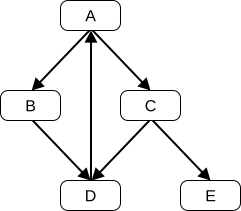
加载和链接照常发生,所有模块最终的 [[Status]] 都设置为
调用 A.
|
字段
|
A | B | C | D | E |
|---|---|---|---|---|---|
| [[DFSAncestorIndex]] | 0 | 0 | 0 | 0 | 4 |
| [[Status]] | |||||
| [[AsyncEvaluationOrder]] | 4 | 1 | 3 | 0 | 2 |
| [[AsyncParentModules]] | « » | « A » | « A » | « B, C » | « C » |
| [[PendingAsyncDependencies]] | 2(B 和 C) | 1(D) | 2(D 和 E) | 0 | 0 |
我们假设 E 最先完成执行。当这发生时,调用
|
字段
|
C | E |
|---|---|---|
| [[DFSAncestorIndex]] | 0 | 4 |
| [[Status]] | ||
| [[AsyncEvaluationOrder]] | 3 | |
| [[AsyncParentModules]] | « A » | « C » |
| [[PendingAsyncDependencies]] | 1(D) | 0 |
接下来 D 完成(因为它是唯一仍在执行的模块)。当这发生时,再次调用 await,则可能与 B 并行执行)。更新后的模块字段如
|
字段
|
B | C | D |
|---|---|---|---|
| [[DFSAncestorIndex]] | 0 | 0 | 0 |
| [[Status]] | |||
| [[AsyncEvaluationOrder]] | 1 | 3 | |
| [[AsyncParentModules]] | « A » | « A » | « B, C » |
| [[PendingAsyncDependencies]] | 0 | 0 | 0 |
我们假设 C 接下来完成执行。当这发生时,再次调用
|
字段
|
A | C |
|---|---|---|
| [[DFSAncestorIndex]] | 0 | 0 |
| [[Status]] | ||
| [[AsyncEvaluationOrder]] | 4 | |
| [[AsyncParentModules]] | « » | « A » |
| [[PendingAsyncDependencies]] | 1(B) | 0 |
然后,B 完成执行。当这发生时,再次调用
|
字段
|
A | B |
|---|---|---|
| [[DFSAncestorIndex]] | 0 | 0 |
| [[Status]] | ||
| [[AsyncEvaluationOrder]] | 4 | |
| [[AsyncParentModules]] | « » | « A » |
| [[PendingAsyncDependencies]] | 0 | 0 |
最后,A 完成执行。当这发生时,再次调用
|
字段
|
A |
|---|---|
| [[DFSAncestorIndex]] | 0 |
| [[Status]] | |
| [[AsyncEvaluationOrder]] | |
| [[AsyncParentModules]] | « » |
| [[PendingAsyncDependencies]] | 0 |
或者,考虑一种失败情况:C 在 B 完成执行之前执行失败并返回错误。当这发生时,调用
|
字段
|
A | C |
|---|---|---|
| [[DFSAncestorIndex]] | 0 | 0 |
| [[Status]] | ||
| [[AsyncEvaluationOrder]] | ||
| [[AsyncParentModules]] | « » | « A » |
| [[PendingAsyncDependencies]] | 1(B) | 0 |
| [[EvaluationError]] | C 的求值错误 |
A 将以与 C 相同的错误被拒绝,因为 C 会使用 C 的错误在 A 上调用
|
字段
|
A |
|---|---|
| [[DFSAncestorIndex]] | 0 |
| [[Status]] | |
| [[AsyncEvaluationOrder]] | |
| [[AsyncParentModules]] | « » |
| [[PendingAsyncDependencies]] | 0 |
| [[EvaluationError]] | C 的求值错误 |
然后,B 无错误地完成执行。当这发生时,再次调用
|
字段
|
A | B |
|---|---|---|
| [[DFSAncestorIndex]] | 0 | 0 |
| [[Status]] | ||
| [[AsyncEvaluationOrder]] | 4 | 1 |
| [[AsyncParentModules]] | « » | « A » |
| [[PendingAsyncDependencies]] | 0 | 0 |
| [[EvaluationError]] | C 的求值错误 |
16.2.1.7 源文本模块记录
源文本模块记录用于表示从
除了在
| 字段名 | 值类型 | 含义 |
|---|---|---|
| [[ECMAScriptCode]] |
一个 |
使用 |
| [[Context]] |
一个 |
与该模块关联的 |
| [[ImportMeta]] |
一个对象或 |
通过 import.meta 元属性暴露的对象。在 ECMAScript 代码访问它之前,它为 |
| [[ImportEntries]] |
|
从该 |
| [[LocalExportEntries]] |
|
从该 |
| [[IndirectExportEntries]] |
|
从该export * as namespace 声明的导出。
|
| [[StarExportEntries]] |
|
从该export * 声明,不包括 export * as namespace 声明。
|
ImportEntry 记录是一个记录,用于摘要关于单个声明式导入的信息。每个
| 字段名 | 值类型 | 含义 |
|---|---|---|
| [[ModuleRequest]] | 一个 ModuleRequest 记录 |
表示 |
| [[ImportName]] |
一个字符串或 |
由 [[ModuleRequest]] 标识的模块导出所需绑定所使用的名称。值 |
| [[LocalName]] | 一个字符串 | 在导入模块内部用于本地访问导入值的名称。 |
| 导入语句形式 | [[ModuleRequest]] | [[ImportName]] | [[LocalName]] |
|---|---|---|---|
import v from "mod";
|
|
|
|
import * as ns from "mod";
|
|
|
|
import {x} from "mod";
|
|
|
|
import {x as v} from "mod";
|
|
|
|
import "mod";
|
不会创建 |
||
ExportEntry 记录是一个记录,用于摘要关于单个声明式导出的信息。每个
| 字段名 | 值类型 | 含义 |
|---|---|---|
| [[ExportName]] |
一个字符串或 |
此模块用于导出该绑定的名称。 |
| [[ModuleRequest]] |
一个 ModuleRequest 记录或 |
表示 |
| [[ImportName]] |
一个字符串、 |
由 [[ModuleRequest]] 标识的模块导出所需绑定所使用的名称。如果 export * as ns from "mod" 声明。export * from "mod" 声明。
|
| [[LocalName]] |
一个字符串或 |
在导入模块内部用于本地访问导出值的名称。如果导出的值在模块内部无法本地访问,则为 |
| 导出语句形式 | [[ExportName]] | [[ModuleRequest]] | [[ImportName]] | [[LocalName]] |
|---|---|---|---|---|
export var v;
|
|
|
|
|
export default function f() {}
|
|
|
|
|
export default function () {}
|
|
|
|
|
export default 42;
|
|
|
|
|
export {x};
|
|
|
|
|
export {v as x};
|
|
|
|
|
export {x} from "mod";
|
|
|
|
|
export {v as x} from "mod";
|
|
|
|
|
export * from "mod";
|
|
|
|
|
export * as ns from "mod";
|
|
|
|
|
16.2.1.7.1 ParseModule ( sourceText, realm, hostDefined )
The abstract operation ParseModule takes arguments sourceText (
- 令 body 为
ParseText (sourceText,Module )。 - 如果 body 是错误列表,则返回 body。
- 令 requestedModules 为 body 的
ModuleRequests 。 - 令 importEntries 为 body 的
ImportEntries 。 - 令 importedBoundNames 为
ImportedLocalNames (importEntries)。 - 令 indirectExportEntries 为一个新的空列表。
- 令 localExportEntries 为一个新的空列表。
- 令 starExportEntries 为一个新的空列表。
- 令 exportEntries 为 body 的
ExportEntries 。 - 对于 exportEntries 中的每个
ExportEntry 记录 ee,执行- 如果 ee.[[ModuleRequest]] 为
null ,则- 如果 importedBoundNames 不包含 ee.[[LocalName]],则
- 将 ee 追加到 localExportEntries。
- 否则,
- 注意:当导出最初从另一个模块导入的绑定或命名空间对象时,
ExportEntry 记录 会被重写为与该绑定或命名空间对象直接从原始模块重导出时所具有的形式相匹配,而不是先导入再导出。这允许通过export * from以相同名称导出同一绑定或命名空间两次所产生的冲突被忽略,而不是在源文本模块记录的 ResolveExport 具体方法 的步骤9.e.iii 中被视为歧义。 - 令 ie 为 importEntries 中 [[LocalName]] 为 ee.[[LocalName]] 的元素。
- 将
ExportEntry 记录 { [[ModuleRequest]]: ie.[[ModuleRequest]], [[ImportName]]: ie.[[ImportName]], [[LocalName]]:null , [[ExportName]]: ee.[[ExportName]] } 追加到 indirectExportEntries。
- 注意:当导出最初从另一个模块导入的绑定或命名空间对象时,
- 如果 importedBoundNames 不包含 ee.[[LocalName]],则
- 否则如果 ee.[[ImportName]] 为
all-but-default ,则- 断言:ee.[[ExportName]] 为
null 。 - 将 ee 追加到 starExportEntries。
- 断言:ee.[[ExportName]] 为
- 否则,
- 将 ee 追加到 indirectExportEntries。
- 如果 ee.[[ModuleRequest]] 为
- 令 async 为 body
Contains await。 - 返回
源文本模块记录 { [[Realm]]: realm, [[Environment]]:empty , [[Namespace]]:empty , [[CycleRoot]]:empty , [[HasTLA]]: async, [[AsyncEvaluationOrder]]:unset , [[TopLevelCapability]]:empty , [[AsyncParentModules]]: « », [[PendingAsyncDependencies]]:empty , [[Status]]:new , [[EvaluationError]]:empty , [[HostDefined]]: hostDefined, [[ECMAScriptCode]]: body, [[Context]]:empty , [[ImportMeta]]:empty , [[RequestedModules]]: requestedModules, [[LoadedModules]]: « », [[ImportEntries]]: importEntries, [[LocalExportEntries]]: localExportEntries, [[IndirectExportEntries]]: indirectExportEntries, [[StarExportEntries]]: starExportEntries, [[DFSAncestorIndex]]:empty }。
实现可以在对该模块源文本求值 ParseModule 之前解析模块源文本并分析其 Early Error 条件。然而,任何错误的报告都必须推迟到本规范实际对该源文本执行 ParseModule 的时刻。
16.2.1.7.2 模块记录抽象方法的实现
以下是
16.2.1.7.2.1 GetExportedNames ( [ exportStarSet ] )
The
- 断言:module.[[Status]] 不是
new 。 - 如果 exportStarSet 未提供,则将 exportStarSet 设为一个新的空列表。
- 如果 exportStarSet 包含 module,则
- 断言:我们已经到达
export *循环的起点。 - 返回一个新的空列表。
- 断言:我们已经到达
- 将 module 追加到 exportStarSet。
- 令 exportedNames 为一个新的空列表。
- 对于 module.[[LocalExportEntries]] 中的每个
ExportEntry 记录 e,执行- 断言:module 为此导出提供直接绑定。
- 断言:e.[[ExportName]] 不是
null 。 - 将 e.[[ExportName]] 追加到 exportedNames。
- 对于 module.[[IndirectExportEntries]] 中的每个
ExportEntry 记录 e,执行- 断言:module 为此导出导入一个特定绑定。
- 断言:e.[[ExportName]] 不是
null 。 - 将 e.[[ExportName]] 追加到 exportedNames。
- 对于 module.[[StarExportEntries]] 中的每个
ExportEntry 记录 e,执行- 断言:e.[[ModuleRequest]] 不是
null 。 - 令 requestedModule 为
GetImportedModule (module, e.[[ModuleRequest]])。 - 令 starNames 为 requestedModule.
GetExportedNames (exportStarSet)。 - 对于 starNames 中的每个元素 n,执行
- 如果 n 不是
"default" ,则- 如果 exportedNames 不包含 n,则
- 将 n 追加到 exportedNames。
- 如果 exportedNames 不包含 n,则
- 如果 n 不是
- 断言:e.[[ModuleRequest]] 不是
- 返回 exportedNames。
16.2.1.7.2.2 ResolveExport ( exportName [ , resolveSet ] )
The
如果找到定义模块,则返回
It performs the following steps when called:
- 断言:module.[[Status]] 不是
new 。 - 如果 resolveSet 未提供,则将 resolveSet 设为一个新的空列表。
- 对于 resolveSet 中的每个记录 { [[Module]], [[ExportName]] } r,执行
- 如果 module 与 r.[[Module]] 是同一个
模块记录 ,且 exportName 是 r.[[ExportName]],则- 断言:这是一个循环导入请求。
- 返回
null 。
- 如果 module 与 r.[[Module]] 是同一个
- 将记录 { [[Module]]: module, [[ExportName]]: exportName } 追加到 resolveSet。
- 对于 module.[[LocalExportEntries]] 中的每个
ExportEntry 记录 e,执行- 如果 e.[[ExportName]] 是 exportName,则
- 断言:module 为此导出提供直接绑定。
- 返回
ResolvedBinding 记录 { [[Module]]: module, [[BindingName]]: e.[[LocalName]] }。
- 如果 e.[[ExportName]] 是 exportName,则
- 对于 module.[[IndirectExportEntries]] 中的每个
ExportEntry 记录 e,执行- 如果 e.[[ExportName]] 是 exportName,则
- 断言:e.[[ModuleRequest]] 不是
null 。 - 令 importedModule 为
GetImportedModule (module, e.[[ModuleRequest]])。 - 如果 e.[[ImportName]] 为
namespace ,则- 断言:module 不为此导出提供直接绑定。
- 返回
ResolvedBinding 记录 { [[Module]]: importedModule, [[BindingName]]:namespace }。
- 断言:module 为此导出导入一个特定绑定。
- 断言:e.[[ImportName]] 是一个字符串。
- 返回 importedModule.
ResolveExport (e.[[ImportName]], resolveSet)。
- 断言:e.[[ModuleRequest]] 不是
- 如果 e.[[ExportName]] 是 exportName,则
- 如果 exportName 是
"default" ,则- 断言:此模块未显式定义
default导出。 - 返回
null 。 - 注意:
default导出不能由export * from "mod"声明提供。
- 断言:此模块未显式定义
- 令 starResolution 为
null 。 - 对于 module.[[StarExportEntries]] 中的每个
ExportEntry 记录 e,执行- 断言:e.[[ModuleRequest]] 不是
null 。 - 令 importedModule 为
GetImportedModule (module, e.[[ModuleRequest]])。 - 令 resolution 为 importedModule.
ResolveExport (exportName, resolveSet)。 - 如果 resolution 为
ambiguous ,返回ambiguous 。 - 如果 resolution 不是
null ,则- 断言:resolution 是一个
ResolvedBinding 记录 。 - 如果 starResolution 为
null ,则- 将 starResolution 设为 resolution。
- 否则,
- 断言:存在多个包含所请求名称的
*导出。 - 如果 resolution.[[Module]] 和 starResolution.[[Module]] 不是同一个
模块记录 ,返回ambiguous 。 - 如果 resolution.[[BindingName]] 不是 starResolution.[[BindingName]],返回
ambiguous 。
- 断言:存在多个包含所请求名称的
- 断言:resolution 是一个
- 断言:e.[[ModuleRequest]] 不是
- 返回 starResolution。
16.2.1.7.3 循环模块记录抽象方法的实现
以下是
16.2.1.7.3.1 InitializeEnvironment ( )
The
- 对于 module.[[IndirectExportEntries]] 中的每个
ExportEntry 记录 e,执行- 断言:e.[[ExportName]] 不是
null 。 - 令 resolution 为 module.
ResolveExport (e.[[ExportName]])。 - 如果 resolution 为
null 或ambiguous ,则抛出一个SyntaxError 异常。 - 断言:resolution 是一个
ResolvedBinding 记录 。
- 断言:e.[[ExportName]] 不是
- 断言:来自 module 的所有命名导出都是可解析的。
- 令 realm 为 module.[[Realm]]。
- 断言:realm 不是
undefined 。 - 令 env 为
NewModuleEnvironment (realm.[[GlobalEnv]])。 - 将 module.[[Environment]] 设为 env。
- 对于 module.[[ImportEntries]] 中的每个
ImportEntry 记录 in,执行- 令 importedModule 为
GetImportedModule (module, in.[[ModuleRequest]])。 - 如果 in.[[ImportName]] 为
namespace ,则- 令 namespace 为
GetModuleNamespace (importedModule)。 - 执行 ! env.
CreateImmutableBinding (in.[[LocalName]],true )。 - 执行 ! env.
InitializeBinding (in.[[LocalName]], namespace)。
- 令 namespace 为
- 否则,
- 断言:in.[[ImportName]] 是一个字符串。
- 令 resolution 为 importedModule.
ResolveExport (in.[[ImportName]])。 - 如果 resolution 为
null 或ambiguous ,则抛出一个SyntaxError 异常。 - 如果 resolution.[[BindingName]] 为
namespace ,则- 令 namespace 为
GetModuleNamespace (resolution.[[Module]])。 - 执行 ! env.
CreateImmutableBinding (in.[[LocalName]],true )。 - 执行 ! env.
InitializeBinding (in.[[LocalName]], namespace)。
- 令 namespace 为
- 否则,
- 执行
CreateImportBinding (env, in.[[LocalName]], resolution.[[Module]], resolution.[[BindingName]])。
- 执行
- 令 importedModule 为
- 令 moduleContext 为一个新的
ECMAScript 代码执行上下文 。 - 将 moduleContext 的 Function 设为
null 。 - 断言:module.[[Realm]] 不是
undefined 。 - 将 moduleContext 的
Realm 设为 module.[[Realm]]。 - 将 moduleContext 的 ScriptOrModule 设为 module。
- 将 moduleContext 的 VariableEnvironment 设为 module.[[Environment]]。
- 将 moduleContext 的 LexicalEnvironment 设为 module.[[Environment]]。
- 将 moduleContext 的 PrivateEnvironment 设为
null 。 - 将 module.[[Context]] 设为 moduleContext。
- 将 moduleContext 压入
执行上下文栈 ;moduleContext 现在是运行中的执行上下文 。 - 令 code 为 module.[[ECMAScriptCode]]。
- 令 varDeclarations 为 code 的
VarScopedDeclarations 。 - 令 declaredVarNames 为一个新的空列表。
- 对于 varDeclarations 中的每个元素 d,执行
- 对于 d 的
BoundNames 中的每个元素 dn,执行- 如果 declaredVarNames 不包含 dn,则
- 执行 ! env.
CreateMutableBinding (dn,false )。 - 执行 ! env.
InitializeBinding (dn,undefined )。 - 将 dn 追加到 declaredVarNames。
- 执行 ! env.
- 如果 declaredVarNames 不包含 dn,则
- 对于 d 的
- 令 lexDeclarations 为 code 的
LexicallyScopedDeclarations 。 - 令 privateEnv 为
null 。 - 对于 lexDeclarations 中的每个元素 d,执行
- 对于 d 的
BoundNames 中的每个元素 dn,执行- 如果 d 的
IsConstantDeclaration 为true ,则- 执行 ! env.
CreateImmutableBinding (dn,true )。
- 执行 ! env.
- 否则,
- 执行 ! env.
CreateMutableBinding (dn,false )。
- 执行 ! env.
- 如果 d 是
FunctionDeclaration 、GeneratorDeclaration 、AsyncFunctionDeclaration 或AsyncGeneratorDeclaration ,则- 令 fo 为以 env 和 privateEnv 为参数对 d 执行
InstantiateFunctionObject 的结果。 - 执行 ! env.
InitializeBinding (dn, fo)。
- 令 fo 为以 env 和 privateEnv 为参数对 d 执行
- 如果 d 的
- 对于 d 的
- 从
执行上下文栈 中移除 moduleContext。 - 返回
unused 。
16.2.1.7.3.2 ExecuteModule ( [ capability ] )
The
- 断言:module 已被链接,且其模块环境中的声明已被实例化。
- 令 moduleContext 为 module.[[Context]]。
- 如果 module.[[HasTLA]] 为
false ,则 - 否则,
- 断言:capability 是一个 PromiseCapability 记录。
- 执行
AsyncBlockStart (capability, module.[[ECMAScriptCode]], moduleContext)。
- 返回
unused 。
16.2.1.8 合成模块记录
合成模块记录用于表示由规范定义的模块的信息。其导出名称在创建时静态定义,而其对应值可以随时间通过
除了在
16.2.1.8.1 CreateDefaultExportSyntheticModule ( defaultExport )
The abstract operation CreateDefaultExportSyntheticModule takes argument defaultExport (一个
- 令 realm 为当前
Realm 记录。 - 令 setDefaultExport 为一个新的抽象闭包,其参数为 (module),捕获 defaultExport,并在调用时执行以下步骤:
- 执行
SetSyntheticModuleExport (module,"default" , defaultExport)。 - 返回
NormalCompletion (unused )。
- 执行
- 返回
合成模块记录 { [[Realm]]: realm, [[Environment]]:empty , [[Namespace]]:empty , [[HostDefined]]:undefined , [[ExportNames]]: «"default" », [[EvaluationSteps]]: setDefaultExport }。
16.2.1.8.2 ParseJSONModule ( source )
The abstract operation ParseJSONModule takes argument source (一个字符串) and returns 返回包含
- 令 parseResult 为 ?
ParseJSON (source)。 - 返回
CreateDefaultExportSyntheticModule (parseResult.[[Value]])。
16.2.1.8.3 SetSyntheticModuleExport ( module, exportName, exportValue )
The abstract operation SetSyntheticModuleExport takes arguments module (一个
- 断言:module.[[ExportNames]] 包含 exportName。
- 令 envRec 为 module.[[Environment]]。
- 断言:envRec 不是
empty 。 - 执行 ! envRec.
SetMutableBinding (exportName, exportValue,true )。 - 返回
unused 。
16.2.1.8.4 模块记录抽象方法的实现
以下是
16.2.1.8.4.1 LoadRequestedModules ( [ hostDefined ] )
The
- 注意:
LoadRequestedModules 的此实现不使用 hostDefined。 - 返回 !
PromiseResolve (%Promise% ,undefined )。
16.2.1.8.4.2 GetExportedNames ( [ exportStarSet ] )
The
- 注意:
GetExportedNames 的此实现不使用 exportStarSet。 - 返回 module.[[ExportNames]]。
16.2.1.8.4.3 ResolveExport ( exportName [ , resolveSet ] )
The
- 注意:
ResolveExport 的此实现不使用 resolveSet。 - 如果 module.[[ExportNames]] 不包含 exportName,返回
null 。 - 返回
ResolvedBinding 记录 { [[Module]]: module, [[BindingName]]: exportName }。
16.2.1.8.4.4 Link ( )
The
- 令 realm 为 module.[[Realm]]。
- 令 env 为
NewModuleEnvironment (realm.[[GlobalEnv]])。 - 将 module.[[Environment]] 设为 env。
- 对于 module.[[ExportNames]] 中的每个字符串 exportName,执行
- 执行 ! env.
CreateMutableBinding (exportName,false )。 - 执行 ! env.
InitializeBinding (exportName,undefined )。
- 执行 ! env.
- 返回
NormalCompletion (unused )。
16.2.1.8.4.5 Evaluate ( )
The
- 令 moduleContext 为一个新的
ECMAScript 代码执行上下文 。 - 将 moduleContext 的 Function 设为
null 。 - 将 moduleContext 的
Realm 设为 module.[[Realm]]。 - 将 moduleContext 的 ScriptOrModule 设为 module。
- 将 moduleContext 的 VariableEnvironment 设为 module.[[Environment]]。
- 将 moduleContext 的 LexicalEnvironment 设为 module.[[Environment]]。
- 挂起运行中的
执行上下文 。 - 将 moduleContext 压入
执行上下文栈 ;moduleContext 现在是运行中的执行上下文 。 - 令 steps 为 module.[[EvaluationSteps]]。
- 令 result 为
Completion (steps(module))。 - 挂起 moduleContext 并将其从
执行上下文栈 中移除。 - 恢复现在位于
执行上下文栈 顶部的上下文作为运行中的执行上下文 。 - 令 pc 为 !
NewPromiseCapability (%Promise% )。 IfAbruptRejectPromise (result, pc)。- 执行 !
Call (pc.[[Resolve]],undefined , «undefined »)。 - 返回 pc.[[Promise]]。
16.2.1.9 GetImportedModule ( referrer, request )
The abstract operation GetImportedModule takes arguments referrer (一个
- 令 records 为一个列表,由 referrer.[[LoadedModules]] 中满足
ModuleRequestsEqual (r, request) 为true 的每个 LoadedModuleRequest 记录 r 组成。 - 断言:records 恰好有一个元素,因为在调用此
抽象操作 之前,LoadRequestedModules 已在 referrer 上成功完成。 - 令 record 为 records 的唯一元素。
- 返回 record.[[Module]]。
16.2.1.10 HostLoadImportedModule ( referrer, moduleRequest, hostDefined, payload )
The host-defined abstract operation HostLoadImportedModule takes arguments referrer (一个 Script 记录、一个
HostLoadImportedModule 的实现必须符合以下要求:
-
宿主环境 必须执行FinishLoadingImportedModule (referrer, moduleRequest, payload, result),其中 result 是包含已加载模块记录 的正常完成 或 throw completion,并且可以同步或异步执行。 -
如果此操作被多次调用,且两个 (referrer, moduleRequest) 对满足:
- 第一个 referrer 与第二个 referrer 相同;
ModuleRequestsEqual (第一个 moduleRequest, 第二个 moduleRequest) 为true ;
并且它执行
FinishLoadingImportedModule (referrer, moduleRequest, payload, result),其中 result 是正常完成 ,则它每次都必须使用相同的 result 执行FinishLoadingImportedModule (referrer, moduleRequest, payload, result)。 -
如果 moduleRequest.[[Attributes]] 有一个条目 entry,使得 entry.[[Key]] 为
"type" 且 entry.[[Value]] 为"json" ,那么当宿主环境 执行FinishLoadingImportedModule (referrer, moduleRequest, payload, result) 时,result 必须是调用ParseJSONModule 返回的Completion Record 或 throw completion。 -
此操作必须将 payload 视为不透明值,并将其原样传递给
FinishLoadingImportedModule 。
实际执行的过程由
16.2.1.11 FinishLoadingImportedModule ( referrer, moduleRequest, payload, result )
The abstract operation FinishLoadingImportedModule takes arguments referrer (一个 Script 记录、一个
- 如果 result 是
正常完成 ,则- 如果 referrer.[[LoadedModules]] 包含一个 LoadedModuleRequest 记录 record,使得
ModuleRequestsEqual (record, moduleRequest) 为true ,则- 断言:record.[[Module]] 与 result.[[Value]] 是同一个
模块记录 。
- 断言:record.[[Module]] 与 result.[[Value]] 是同一个
- 否则,
- 将 LoadedModuleRequest 记录 { [[Specifier]]: moduleRequest.[[Specifier]], [[Attributes]]: moduleRequest.[[Attributes]], [[Module]]: result.[[Value]] } 追加到 referrer.[[LoadedModules]]。
- 如果 referrer.[[LoadedModules]] 包含一个 LoadedModuleRequest 记录 record,使得
- 如果 payload 是
GraphLoadingState 记录 ,则- 执行
ContinueModuleLoading (payload, result)。
- 执行
- 否则,
- 执行
ContinueDynamicImport (payload, result)。
- 执行
- 返回
unused 。
16.2.1.12 AllImportAttributesSupported ( attributes )
The abstract operation AllImportAttributesSupported takes argument attributes (ImportAttribute 记录的列表) and returns 一个布尔值. It performs the following steps when called:
- 令 supported 为
HostGetSupportedImportAttributes ()。 - 对于 attributes 中的每个 ImportAttribute 记录 attribute,执行
- 如果 supported 不包含 attribute.[[Key]],返回
false 。
- 如果 supported 不包含 attribute.[[Key]],返回
- 返回
true 。
16.2.1.12.1 HostGetSupportedImportAttributes ( )
The host-defined abstract operation HostGetSupportedImportAttributes takes no arguments and returns 字符串列表. 允许
HostGetSupportedImportAttributes 的实现必须符合以下要求:
- 它必须返回一个字符串列表,每个字符串表示一个受支持的属性。
- 每次调用此操作时,它都必须返回内容相同且顺序相同的同一个列表。
HostGetSupportedImportAttributes 的默认实现是返回一个新的空列表。
16.2.1.13 GetModuleNamespace ( module )
The abstract operation GetModuleNamespace takes argument module (
- 断言:如果 module 是
循环模块记录 ,则 module.[[Status]] 不是new 或unlinked 。 - 令 namespace 为 module.[[Namespace]]。
- 如果 namespace 为
empty ,则- 令 exportedNames 为 module.
GetExportedNames ()。 - 令 unambiguousNames 为一个新的空列表。
- 对于 exportedNames 中的每个元素 name,执行
- 令 resolution 为 module.
ResolveExport (name)。 - 如果 resolution 是
ResolvedBinding 记录 ,则将 name 追加到 unambiguousNames。
- 令 resolution 为 module.
- 将 namespace 设为
ModuleNamespaceCreate (module, unambiguousNames)。
- 令 exportedNames 为 module.
- 返回 namespace。
GetModuleNamespace 从不抛出异常。相反,无法解析的名称此时会被简单地从命名空间中排除。它们稍后会导致真正的链接错误,除非它们全都是没有在任何地方被显式请求的歧义星号导出。
16.2.1.14 Runtime Semantics: 求值
- 返回
undefined 。
- 令 result 为
Completion (对ModuleItemList 求值)。 - 如果 result 是
正常完成 且 result.[[Value]] 为empty ,则- 返回
undefined 。
- 返回
- 返回 ? result。
- 令 sl 为 ? 对
ModuleItemList 求值。 - 令 s 为
Completion (对ModuleItem 求值)。 - 返回 ?
UpdateEmpty (s, sl)。
- 返回
empty 。
16.2.2 导入
语法
16.2.2.1 Static Semantics: 早期错误
-
如果
ImportDeclaration 的BoundNames 包含任何重复条目,则为语法错误。
-
如果
WithClause 的WithClauseToAttributes 中有两个不同条目 a 和 b,使得 a.[[Key]] 为 b.[[Key]],则为语法错误。
16.2.2.2 Static Semantics: ImportEntries
The syntax-directed operation ImportEntries takes no arguments and returns
- 返回一个新的空列表。
- 令 entries1 为
ModuleItemList 的ImportEntries 。 - 令 entries2 为
ModuleItem 的ImportEntries 。 - 返回 entries1 和 entries2 的列表拼接结果。
- 返回一个新的空列表。
- 令 module 为
ImportDeclaration 的ModuleRequests 的唯一元素。 - 返回以 module 为参数的
ImportClause 的ImportEntriesForModule 。
- 返回一个新的空列表。
16.2.2.3 Static Semantics: ImportEntriesForModule
The syntax-directed operation ImportEntriesForModule takes argument module (ModuleRequest 记录) and returns
- 令 entries1 为以 module 为参数的
ImportedDefaultBinding 的ImportEntriesForModule 。 - 令 entries2 为以 module 为参数的
NameSpaceImport 的ImportEntriesForModule 。 - 返回 entries1 和 entries2 的列表拼接结果。
- 令 entries1 为以 module 为参数的
ImportedDefaultBinding 的ImportEntriesForModule 。 - 令 entries2 为以 module 为参数的
NamedImports 的ImportEntriesForModule 。 - 返回 entries1 和 entries2 的列表拼接结果。
- 令 localName 为
ImportedBinding 的BoundNames 的唯一元素。 - 令 defaultEntry 为
ImportEntry 记录 { [[ModuleRequest]]: module, [[ImportName]]:"default" , [[LocalName]]: localName }。 - 返回 « defaultEntry »。
- 令 localName 为
ImportedBinding 的StringValue 。 - 令 entry 为
ImportEntry 记录 { [[ModuleRequest]]: module, [[ImportName]]:namespace , [[LocalName]]: localName }。 - 返回 « entry »。
- 返回一个新的空列表。
- 令 specs1 为以 module 为参数的
ImportsList 的ImportEntriesForModule 。 - 令 specs2 为以 module 为参数的
ImportSpecifier 的ImportEntriesForModule 。 - 返回 specs1 和 specs2 的列表拼接结果。
- 令 localName 为
ImportedBinding 的BoundNames 的唯一元素。 - 令 entry 为
ImportEntry 记录 { [[ModuleRequest]]: module, [[ImportName]]: localName, [[LocalName]]: localName }。 - 返回 « entry »。
- 令 importName 为
ModuleExportName 的StringValue 。 - 令 localName 为
ImportedBinding 的StringValue 。 - 令 entry 为
ImportEntry 记录 { [[ModuleRequest]]: module, [[ImportName]]: importName, [[LocalName]]: localName }。 - 返回 « entry »。
16.2.2.4 Static Semantics: WithClauseToAttributes
The syntax-directed operation WithClauseToAttributes takes no arguments and returns ImportAttribute 记录的列表. It is defined piecewise over the following productions:
- 返回一个新的空列表。
- 令 attributes 为
WithEntries 的WithClauseToAttributes 。 - 按照其 [[Key]] 字段的字典序对 attributes 排序,并将每个此类字段的值视为 UTF-16 代码单元值序列。注:这种排序唯一可观察之处在于,
宿主 被禁止基于属性枚举的顺序改变行为。 - 返回 attributes。
- 令 key 为
AttributeKey 的PropName 。 - 令 entry 为 ImportAttribute 记录 { [[Key]]: key, [[Value]]:
StringLiteral 的SV }。 - 返回 « entry »。
- 令 key 为
AttributeKey 的PropName 。 - 令 entry 为 ImportAttribute 记录 { [[Key]]: key, [[Value]]:
StringLiteral 的SV }。 - 令 rest 为
WithEntries 的WithClauseToAttributes 。 - 返回 « entry » 和 rest 的列表拼接结果。
16.2.3 导出
语法
16.2.3.1 Static Semantics: 早期错误
-
如果
NamedExports 的ReferencedBindings 包含任何StringLiteral ,则为语法错误。 -
对
NamedExports 的ReferencedBindings 中的每个IdentifierName n:如果 n 的StringValue 是ReservedWord ,或 n 的StringValue 是"implements" 、"interface" 、"let" 、"package" 、"private" 、"protected" 、"public" 或"static" 之一,则为语法错误。
上述规则意味着
16.2.3.2 Static Semantics: ExportedBindings
The syntax-directed operation ExportedBindings takes no arguments and returns 字符串列表.
ExportedBindings 是与
It is defined piecewise over the following productions:
- 令 names1 为
ModuleItemList 的ExportedBindings 。 - 令 names2 为
ModuleItem 的ExportedBindings 。 - 返回 names1 和 names2 的列表拼接结果。
- 返回一个新的空列表。
- 返回一个新的空列表。
- 返回
NamedExports 的ExportedBindings 。
- 返回
VariableStatement 的BoundNames 。
- 返回
Declaration 的BoundNames 。
- 返回此
ExportDeclaration 的BoundNames 。
- 返回一个新的空列表。
- 令 names1 为
ExportsList 的ExportedBindings 。 - 令 names2 为
ExportSpecifier 的ExportedBindings 。 - 返回 names1 和 names2 的列表拼接结果。
- 返回一个列表,其唯一元素为
ModuleExportName 的StringValue 。
- 返回一个列表,其唯一元素为第一个
ModuleExportName 的StringValue 。
16.2.3.3 Static Semantics: ExportedNames
The syntax-directed operation ExportedNames takes no arguments and returns 字符串列表.
ExportedNames 是
It is defined piecewise over the following productions:
- 令 names1 为
ModuleItemList 的ExportedNames 。 - 令 names2 为
ModuleItem 的ExportedNames 。 - 返回 names1 和 names2 的列表拼接结果。
- 返回一个新的空列表。
- 返回一个新的空列表。
- 返回一个列表,其唯一元素为
ModuleExportName 的StringValue 。
- 返回
NamedExports 的ExportedNames 。
- 返回
VariableStatement 的BoundNames 。
- 返回
Declaration 的BoundNames 。
- 返回 «
"default" »。
- 返回一个新的空列表。
- 令 names1 为
ExportsList 的ExportedNames 。 - 令 names2 为
ExportSpecifier 的ExportedNames 。 - 返回 names1 和 names2 的列表拼接结果。
- 返回一个列表,其唯一元素为
ModuleExportName 的StringValue 。
- 返回一个列表,其唯一元素为第二个
ModuleExportName 的StringValue 。
16.2.3.4 Static Semantics: ExportEntries
The syntax-directed operation ExportEntries takes no arguments and returns
- 返回一个新的空列表。
- 令 entries1 为
ModuleItemList 的ExportEntries 。 - 令 entries2 为
ModuleItem 的ExportEntries 。 - 返回 entries1 和 entries2 的列表拼接结果。
- 返回一个新的空列表。
- 令 module 为
ExportDeclaration 的ModuleRequests 的唯一元素。 - 返回以 module 为参数的
ExportFromClause 的ExportEntriesForModule 。
- 返回以
null 为参数的NamedExports 的ExportEntriesForModule 。
- 令 entries 为一个新的空列表。
- 令 names 为
VariableStatement 的BoundNames 。 - 对 names 的每个元素 name,执行
- 将
ExportEntry 记录 { [[ModuleRequest]]:null , [[ImportName]]:null , [[LocalName]]: name, [[ExportName]]: name } 追加到 entries。
- 将
- 返回 entries。
- 令 entries 为一个新的空列表。
- 令 names 为
Declaration 的BoundNames 。 - 对 names 的每个元素 name,执行
- 将
ExportEntry 记录 { [[ModuleRequest]]:null , [[ImportName]]:null , [[LocalName]]: name, [[ExportName]]: name } 追加到 entries。
- 将
- 返回 entries。
- 令 names 为
HoistableDeclaration 的BoundNames 。 - 令 localName 为 names 的唯一元素。
- 返回一个列表,其唯一元素为新的
ExportEntry 记录 { [[ModuleRequest]]:null , [[ImportName]]:null , [[LocalName]]: localName, [[ExportName]]:"default" }。
- 令 names 为
ClassDeclaration 的BoundNames 。 - 令 localName 为 names 的唯一元素。
- 返回一个列表,其唯一元素为新的
ExportEntry 记录 { [[ModuleRequest]]:null , [[ImportName]]:null , [[LocalName]]: localName, [[ExportName]]:"default" }。
- 令 entry 为
ExportEntry 记录 { [[ModuleRequest]]:null , [[ImportName]]:null , [[LocalName]]:"*default*" , [[ExportName]]:"default" }。 - 返回 « entry »。
16.2.3.5 Static Semantics: ExportEntriesForModule
The syntax-directed operation ExportEntriesForModule takes argument module (ModuleRequest 记录或
- 令 entry 为
ExportEntry 记录 { [[ModuleRequest]]: module, [[ImportName]]:all-but-default , [[LocalName]]:null , [[ExportName]]:null }。 - 返回 « entry »。
- 令 exportName 为
ModuleExportName 的StringValue 。 - 令 entry 为
ExportEntry 记录 { [[ModuleRequest]]: module, [[ImportName]]:namespace , [[LocalName]]:null , [[ExportName]]: exportName }。 - 返回 « entry »。
- 返回一个新的空列表。
- 令 specs1 为以 module 为参数的
ExportsList 的ExportEntriesForModule 。 - 令 specs2 为以 module 为参数的
ExportSpecifier 的ExportEntriesForModule 。 - 返回 specs1 和 specs2 的列表拼接结果。
- 令 sourceName 为
ModuleExportName 的StringValue 。 - 如果 module 是
null ,则- 令 localName 为 sourceName。
- 令 importName 为
null 。
- 否则,
- 令 localName 为
null 。 - 令 importName 为 sourceName。
- 令 localName 为
- 返回一个列表,其唯一元素为新的
ExportEntry 记录 { [[ModuleRequest]]: module, [[ImportName]]: importName, [[LocalName]]: localName, [[ExportName]]: sourceName }。
- 令 sourceName 为第一个
ModuleExportName 的StringValue 。 - 令 exportName 为第二个
ModuleExportName 的StringValue 。 - 如果 module 是
null ,则- 令 localName 为 sourceName。
- 令 importName 为
null 。
- 否则,
- 令 localName 为
null 。 - 令 importName 为 sourceName。
- 令 localName 为
- 返回一个列表,其唯一元素为新的
ExportEntry 记录 { [[ModuleRequest]]: module, [[ImportName]]: importName, [[LocalName]]: localName, [[ExportName]]: exportName }。
16.2.3.6 Static Semantics: ReferencedBindings
The syntax-directed operation ReferencedBindings takes no arguments and returns
- 返回一个新的空列表。
- 令 names1 为
ExportsList 的ReferencedBindings 。 - 令 names2 为
ExportSpecifier 的ReferencedBindings 。 - 返回 names1 和 names2 的列表拼接结果。
- 返回第一个
ModuleExportName 的ReferencedBindings 。
- 返回一个列表,其唯一元素为该
IdentifierName 。
- 返回一个列表,其唯一元素为该
StringLiteral 。
16.2.3.7 Runtime Semantics: Evaluation
- 返回
empty 。
- 返回 ?
VariableStatement 的Evaluation 。
- 返回 ?
Declaration 的Evaluation 。
- 返回 ?
HoistableDeclaration 的Evaluation 。
- 令 value 为 ?
ClassDeclaration 的BindingClassDeclarationEvaluation 。 - 令 className 为
ClassDeclaration 的BoundNames 的唯一元素。 - 如果 className 是
"*default*" ,则- 令 env 为
正在运行的执行上下文 的 LexicalEnvironment。 - 执行 ?
InitializeBoundName ("*default*" , value, env)。
- 令 env 为
- 返回
empty 。
- 如果
IsAnonymousFunctionDefinition (AssignmentExpression ) 是true ,则- 令 value 为以
"default" 为参数的AssignmentExpression 的 ?NamedEvaluation 。
- 令 value 为以
- 否则,
- 令 rhs 为 ?
AssignmentExpression 的Evaluation 。 - 令 value 为 ?
GetValue (rhs)。
- 令 rhs 为 ?
- 令 env 为
正在运行的执行上下文 的 LexicalEnvironment。 - 执行 ?
InitializeBoundName ("*default*" , value, env)。 - 返回
empty 。
17 错误处理与语言扩展
实现必须在相关 ECMAScript 语言构造被求值时报告大多数错误。早期错误是指在包含该错误的 eval 时报告,并阻止 eval 代码的求值。所有非
实现必须将本规范中“Static Semantics:
即使编译器可以证明某个构造在任何情况下都无法无错误地执行,实现也不得将其他类型的错误视为
实现应按规范报告所有错误,但以下情况除外:
-
除
17.1 中的限制外,宿主 或实现可以扩展Script 语法、Module 语法以及正则表达式模式或标志语法。为此,所有允许抛出SyntaxError 的操作(例如调用eval、使用正则表达式字面量或使用 Function 或 RegExp 构造函数)在遇到宿主定义 的脚本语法或正则表达式模式或标志语法扩展时,可以表现为宿主定义 的行为,而不是抛出SyntaxError 。 -
除
17.1 中的限制外,宿主 或实现可以提供超出本规范描述的附加类型、值、对象、属性和函数。这可能导致某些构造(例如在全局作用域查找变量)表现为宿主定义 的行为,而不是抛出错误(例如ReferenceError )。
17.1 禁止的扩展
实现不得以以下方式扩展本规范:
-
在
严格模式代码 中使用语法构造器 定义的 ECMAScript函数对象 ,不得创建具有名为"caller" 或"arguments" 的自有属性。对于使用ArrowFunction 、MethodDefinition 、GeneratorDeclaration 、GeneratorExpression 、AsyncGeneratorDeclaration 、AsyncGeneratorExpression 、ClassDeclaration 、ClassExpression 、AsyncFunctionDeclaration 、AsyncFunctionExpression 或AsyncArrowFunction 定义的函数对象 ,无论是否在严格模式代码 中,也不得创建此类自有属性。内建函数、通过 Function 构造函数创建的严格函数 、通过 Generator 构造函数创建的生成器函数、通过 AsyncFunction 构造函数创建的异步函数,以及通过bind方法创建的函数,同样不得创建此类自有属性。 -
如果实现为任何
函数对象 扩展了名为"caller" 的自有属性,则通过 [[Get]] 或 [[GetOwnProperty]] 观察该属性的值时,不得是严格函数 对象。如果它是访问器属性 ,则该属性的 [[Get]] 属性值所对应的函数在被调用时不得返回严格函数 。 -
映射或未映射的 arguments 对象都不得创建具有名为
"caller" 的自有属性。 -
ECMA-402 中规定的内建方法(例如名为
toLocaleString的方法)的行为不得扩展,除非 ECMA-402 中另有说明。 -
22.2.1 和B.1.2 中的 RegExp 模式语法,不得扩展为在存在 [UnicodeMode] 语法参数时,将任何源字符 A-Z 或 a-z 识别为IdentityEscape 。[+UnicodeMode] -
语法文法不得以任何方式扩展,使得 token
:可以紧跟在被BindingIdentifier 非终结符匹配的源文本 之后。 -
在处理
严格模式代码 时,实现不得放宽12.9.3.1 中的早期错误规则 。 -
TemplateEscapeSequence 不得扩展以包含在12.9.4 中定义的LegacyOctalEscapeSequence 或NonOctalDecimalEscapeSequence 。 -
在处理
严格模式代码 时,不得支持B.3.1 、B.3.2 、B.3.3 和B.3.5 中定义的扩展。 -
在以
Module 作为目标符号 进行解析时,不得支持B.1.1 中定义的词法文法扩展。 -
ImportCall 不得被扩展。
18 ECMAScript 标准内建对象
在任何 ECMAScript
除非另有说明,可作为函数调用的内建对象都是具有
许多内建对象是函数:它们可以带参数调用。其中一些还是构造函数:它们是用于与 new 运算符一起使用的函数。对于每个内建函数,本规范描述了该函数所需的参数以及该new 表达式调用该构造函数所返回的具体对象实例的属性。
除非在特定函数的描述中另有说明,如果内建函数或构造函数接收到的参数少于其规定所需的参数,则其行为应与接收到足够数量的额外参数完全相同,每个额外参数的值均为
除非在特定函数的描述中另有说明,如果内建函数或构造函数接收到的参数多于其允许的数量,则这些额外参数会被调用过程求值,但随后被函数忽略。不过,只要行为不是仅因为存在额外参数而抛出
鼓励实现通过添加新函数来扩展内建函数集合,而不是向现有函数添加新参数。
除非另有说明,每个内建函数和内建构造函数的 [[Prototype]] 内部槽值都是函数原型对象,即表达式 Function.prototype 的初始值(
除非另有说明,每个内建原型对象的 [[Prototype]] 内部槽值都是对象原型对象,即表达式 Object.prototype 的初始值(
如果本规范通过算法步骤定义了某个内建构造函数的行为,则该行为同时适用于 [[Call]] 和 [[Construct]]。如果需要区分这两种情况,则通过检查 NewTarget 是否为
未被标识为构造函数的内建
未被标识为构造函数的内建
本规范中定义的每个内建函数都是通过调用
每个内建
例如,
除非另有说明,内建
每个内建
对于其
除非另有说明,内建
在条款
在条款
19 全局对象
下列为 全局对象:
- 在控制进入任何
执行上下文 之前被创建。 - 没有 [[Construct]] 内部方法;不能用
new操作符作为构造器 使用。 - 没有 [[Call]] 内部方法;不能作为函数调用。
- 有一个 [[Prototype]] 内部槽,其值由
宿主定义 。 - 可能具有除本规范定义的属性以外的
宿主定义 属性。这可能包括其值为全局对象自身的属性。
19.1 全局对象的值属性
19.1.1 globalThis
该属性具有属性 { [[Writable]]:
19.1.2 Infinity
Infinity 的值为
19.1.3 NaN
NaN 的值为
19.1.4 undefined
undefined 的值为
19.2 全局对象的函数属性
19.2.1 eval ( source )
该函数为 %eval% 内在对象。
调用时执行下列步骤:
- 返回 ?
PerformEval (source,false ,false )。
19.2.1.1 PerformEval ( source, strictCaller, direct )
The abstract operation PerformEval takes arguments source (an ECMAScript language value), strictCaller (a Boolean), and direct (a Boolean) and returns either a normal completion containing an ECMAScript language value or a throw completion. It performs the following steps when called:
- 断言:如果 direct 为
false ,则 strictCaller 也为false 。 - 如果 source 不是一个 String,返回 source。
- 令 evalRealm 为当前的
Realm 记录。 - 注意:在
直接 eval 的情况下,evalRealm 是 eval 函数的调用者和 eval 函数本身的realm 。 - 执行 ?
HostEnsureCanCompileStrings (evalRealm, « », source, direct)。 - 令 inFunction 为
false 。 - 令 inMethod 为
false 。 - 令 inDerivedConstructor 为
false 。 - 令 inClassFieldInitializer 为
false 。 - 如果 direct 为
true ,则- 令 thisEnvRec 为
GetThisEnvironment ()。 - 如果 thisEnvRec 是一个
Function Environment Record ,则- 令 func 为 thisEnvRec.[[FunctionObject]]。
- 将 inFunction 设为
true 。 - 将 inMethod 设为 thisEnvRec.
HasSuperBinding ()。 - 如果 func.[[ConstructorKind]] 为
derived ,将 inDerivedConstructor 设为true 。 - 令 classFieldInitializerName 为 func.[[ClassFieldInitializerName]]。
- 如果 classFieldInitializerName 非
empty ,将 inClassFieldInitializer 设为true 。
- 令 thisEnvRec 为
- 以
实现定义 的顺序执行下列子步骤,可能交错进行解析与错误检测:- 令 script 为
ParseText (source,Script )。 - 如果 script 是一个错误列表,则抛出
SyntaxError 异常。 - 如果 script.
Contains ScriptBody 为false ,返回undefined 。 - 令 body 为 script 的
ScriptBody 。 - 如果 inFunction 为
false 且 body.Contains NewTarget ,抛出SyntaxError 异常。 - 如果 inMethod 为
false 且 body.Contains SuperProperty ,抛出SyntaxError 异常。 - 如果 inDerivedConstructor 为
false 且 body.Contains SuperCall ,抛出SyntaxError 异常。 - 如果 inClassFieldInitializer 为
true 且ContainsArguments (body) 为true ,抛出SyntaxError 异常。
- 令 script 为
- 如果 strictCaller 为
true ,令 strictEval 为true 。 - 否则,令 strictEval 为
ScriptIsStrict (script)。 - 令 runningContext 为
正在运行的执行上下文 。 - 注意:如果 direct 为
true ,runningContext 将是执行直接 eval 的执行上下文 。如果 direct 为false ,runningContext 将是调用eval函数的执行上下文 。 - 如果 direct 为
true ,则- 令 lexEnv 为
NewDeclarativeEnvironment (runningContext's LexicalEnvironment)。 - 令 varEnv 为 runningContext 的 VariableEnvironment。
- 令 privateEnv 为 runningContext 的 PrivateEnvironment。
- 令 lexEnv 为
- 否则,
- 令 lexEnv 为
NewDeclarativeEnvironment (evalRealm.[[GlobalEnv]])。 - 令 varEnv 为 evalRealm.[[GlobalEnv]]。
- 令 privateEnv 为
null 。
- 令 lexEnv 为
- 如果 strictEval 为
true ,将 varEnv 设为 lexEnv。 - 如果 runningContext 尚未被挂起,则挂起 runningContext。
- 令 evalContext 为新的
ECMAScript 代码执行上下文 。 - 将 evalContext 的 Function 设为
null 。 - 将 evalContext 的
Realm 设为 evalRealm。 - 将 evalContext 的 ScriptOrModule 设为 runningContext 的 ScriptOrModule。
- 将 evalContext 的 VariableEnvironment 设为 varEnv。
- 将 evalContext 的 LexicalEnvironment 设为 lexEnv。
- 将 evalContext 的 PrivateEnvironment 设为 privateEnv。
- 将 evalContext 推入
执行上下文栈 ;evalContext 现在为正在运行的执行上下文 。 - 令 result 为
Completion (EvalDeclarationInstantiation (body, varEnv, lexEnv, privateEnv, strictEval)) 的结果。 - 如果 result 为普通完成,则
- 将 result 设为
Completion (Evaluation of body) 的结果。
- 将 result 设为
- 如果 result 为普通完成且 result.[[Value]] 为
empty ,则- 将 result 设为
NormalCompletion (undefined )。
- 将 result 设为
- 挂起 evalContext 并将其从
执行上下文栈 中移除。 - 恢复当前栈顶的上下文为
正在运行的执行上下文 。 - 返回 ? result。
如果调用 eval 的上下文代码或 eval 代码为let、const 或 class 声明引入的绑定总是实例化在新的 LexicalEnvironment 中。
19.2.1.2 HostEnsureCanCompileStrings ( calleeRealm, parameterStrings, bodyString, direct )
The host-defined abstract operation HostEnsureCanCompileStrings takes arguments calleeRealm (a
parameterStrings 表示在使用函数eval 调用的字符串。
direct 表示该求值是否为
HostEnsureCanCompileStrings 的默认实现是返回
19.2.1.3 EvalDeclarationInstantiation ( body, varEnv, lexEnv, privateEnv, strict )
The abstract operation EvalDeclarationInstantiation takes arguments body (a
- 令 varNames 为 body 的
VarDeclaredNames 。 - 令 varDeclarations 为 body 的
VarScopedDeclarations 。 - 如果 strict 为
false ,则- 如果 varEnv 为
Global Environment Record ,则- 对 varNames 的每个元素 name 执行
- 如果
HasLexicalDeclaration (varEnv, name) 为true ,抛出SyntaxError 异常。 - 注:如果有全局词法声明,
eval将不会创建会被该全局词法声明遮蔽的全局 var 声明。
- 如果
- 对 varNames 的每个元素 name 执行
- 令 thisEnv 为 lexEnv。
- 断言:以下循环将终止。
- 重复,当 thisEnv 和 varEnv 不是同一
Environment Record 时,- 如果 thisEnv 不是
Object Environment Record ,则- 注:with 语句的环境不能包含任何词法声明,因此不需要检查 var/let 抛出冲突。
- 对 varNames 的每个元素 name 执行
- 如果 ! thisEnv.
HasBinding (name) 为true ,则- Normative Optional如果
宿主 为 Web 浏览器或以其他方式支持Catch 块中的 VariableStatement ,则- 如果 thisEnv 不是
Catch 子句的Environment Record ,抛出SyntaxError 异常。
- 如果 thisEnv 不是
- 否则,
- 抛出
SyntaxError 异常。
- 抛出
- 注:
直接 eval 不会将 var 声明提升至同名的词法声明之上。
- 如果 ! thisEnv.
- 将 thisEnv 设为 thisEnv.[[OuterEnv]]。
- 如果 thisEnv 不是
- 如果 varEnv 为
- 令 privateIdentifiers 为新的空列表。
- 令 pointer 为 privateEnv。
- 重复,直到 pointer 为
null ,- 对 pointer.[[Names]] 的每个
Private Name binding 执行- 如果 privateIdentifiers 不包含 binding.[[Description]],则将 binding.[[Description]] 附加到 privateIdentifiers。
- 将 pointer 设为 pointer.[[OuterPrivateEnvironment]]。
- 对 pointer.[[Names]] 的每个
- 如果
AllPrivateIdentifiersValid of body 以参数 privateIdentifiers 为假,抛出SyntaxError 异常。 - 令 functionsToInitialize 为新的空列表。
- 令 declaredFunctionNames 为新的空列表。
- 以逆序对 varDeclarations 的每个元素 d 执行
- 如果 d 既不是
VariableDeclaration 、也不是ForBinding 、也不是BindingIdentifier ,则- 断言:d 是
FunctionDeclaration 、GeneratorDeclaration 、AsyncFunctionDeclaration 或AsyncGeneratorDeclaration 之一。 - 注:如果存在同名的多个函数声明,使用最后一个声明。
- 令 fn 为 d 的
BoundNames 的唯一元素。 - 如果 declaredFunctionNames 不包含 fn,则
- 如果 varEnv 为
Global Environment Record ,则- 令 fnDefinable 为 ?
CanDeclareGlobalFunction (varEnv, fn)。 - 如果 fnDefinable 为
false ,抛出TypeError 异常。
- 令 fnDefinable 为 ?
- 将 fn 附加到 declaredFunctionNames。
- 将 d 插入为 functionsToInitialize 的第一个元素。
- 如果 varEnv 为
- 断言:d 是
- 如果 d 既不是
- 令 declaredVarNames 为新的空列表。
- 对 varDeclarations 的每个元素 d 执行
- 如果 d 为
VariableDeclaration 、ForBinding 或BindingIdentifier 之一,则- 对 d 的
BoundNames 的每个字符串 vn 执行- 如果 declaredFunctionNames 不包含 vn,则
- 如果 varEnv 为
Global Environment Record ,则- 令 vnDefinable 为 ?
CanDeclareGlobalVar (varEnv, vn)。 - 如果 vnDefinable 为
false ,抛出TypeError 异常。
- 令 vnDefinable 为 ?
- 如果 declaredVarNames 不包含 vn,则
- 将 vn 附加到 declaredVarNames。
- 如果 varEnv 为
- 如果 declaredFunctionNames 不包含 vn,则
- 对 d 的
- 如果 d 为
- Normative Optional如果 strict 为
false 且宿主 为 Web 浏览器或以其他方式支持块级函数声明的 Web 遗留兼容性语义 ,则- 令 declaredFunctionOrVarNames 为 declaredFunctionNames 与 declaredVarNames 的串联列表。
- 对任意
Block 、CaseClause 或DefaultClause x 中直接包含于其StatementList 且 body.Contains x 为true 的每个FunctionDeclaration f 执行- 令 funcName 为 f 的
BindingIdentifier 的StringValue 。 - 如果将
FunctionDeclaration f 替换为一个具有 funcName 作为BindingIdentifier 的VariableStatement 不会为 body 产生任何早期错误 ,则- 令 bindingExists 为
false 。 - 将 thisEnv 设为 lexEnv。
- 断言:以下循环将终止。
- 重复,直到 thisEnv 为 varEnv,
- 如果 thisEnv 不是
Object Environment Record ,则- 如果 ! thisEnv.
HasBinding (funcName) 为true ,则- Normative Optional如果
宿主 为 Web 浏览器或以其他方式支持Catch 块中的 VariableStatement ,则- 如果 thisEnv 不是
Catch 子句的Environment Record ,设 bindingExists 为true 。
- 如果 thisEnv 不是
- 否则,
- 设 bindingExists 为
true 。
- 设 bindingExists 为
- 如果 ! thisEnv.
- 将 thisEnv 设为 thisEnv.[[OuterEnv]]。
- 如果 thisEnv 不是
- 如果 bindingExists 为
false 且 varEnv 为Global Environment Record ,则- 如果
HasLexicalDeclaration (varEnv, funcName) 为false ,则- 令 fnDefinable 为 ?
CanDeclareGlobalVar (varEnv, funcName)。
- 令 fnDefinable 为 ?
- 否则,
- 令 fnDefinable 为
false 。
- 令 fnDefinable 为
- 如果
- 否则,
- 令 fnDefinable 为
true 。
- 令 fnDefinable 为
- 如果 bindingExists 为
false 且 fnDefinable 为true ,则- 如果 declaredFunctionOrVarNames 不包含 funcName,则
- 如果 varEnv 为
Global Environment Record ,则- 执行 ?
CreateGlobalVarBinding (varEnv, funcName,true )。
- 执行 ?
- 否则,
- 设 bindingExists 为 ! varEnv.
HasBinding (funcName)。 - 如果 bindingExists 为
false ,则- 执行 ! varEnv.
CreateMutableBinding (funcName,true )。 - 执行 ! varEnv.
InitializeBinding (funcName,undefined )。
- 执行 ! varEnv.
- 设 bindingExists 为 ! varEnv.
- 将 funcName 附加到 declaredFunctionOrVarNames。
- 如果 varEnv 为
- 当
FunctionDeclaration f 被求值时,替代15.2.6 中提供的FunctionDeclaration 求值算法执行下列步骤:- 令 gEnv 为
正在运行的执行上下文 的 VariableEnvironment。 - 令 bEnv 为
正在运行的执行上下文 的 LexicalEnvironment。 - 令 fObj 为 ! bEnv.
GetBindingValue (funcName,false )。 - 执行 ? gEnv.
SetMutableBinding (funcName, fObj,false )。 - 返回
unused 。
- 令 gEnv 为
- 如果 declaredFunctionOrVarNames 不包含 funcName,则
- 令 bindingExists 为
- 令 funcName 为 f 的
- 注:除非 varEnv 为
Global Environment Record 且全局对象 为 Proxy 异常对象,否则在本算法步骤后不会发生异常终止。 - 令 lexDeclarations 为 body 的
LexicallyScopedDeclarations 。 - 对 lexDeclarations 的每个元素 d 执行
- 注:词法声明的名字仅在此处被实例化但不被初始化。
- 对 d 的
BoundNames 的每个元素 dn 执行- 如果
IsConstantDeclaration (d) 为true ,则- 执行 ? lexEnv.
CreateImmutableBinding (dn,true )。
- 执行 ? lexEnv.
- 否则,
- 执行 ? lexEnv.
CreateMutableBinding (dn,false )。
- 执行 ? lexEnv.
- 如果
- 对 functionsToInitialize 的每个 Parse Node f 执行
- 令 fn 为 f 的
BoundNames 的唯一元素。 - 令 fo 为
InstantiateFunctionObject (f, lexEnv, privateEnv)。 - 如果 varEnv 为
Global Environment Record ,则- 执行 ?
CreateGlobalFunctionBinding (varEnv, fn, fo,true )。
- 执行 ?
- 否则,
- 令 bindingExists 为 ! varEnv.
HasBinding (fn)。 - 如果 bindingExists 为
false ,则- 注:由于在
14 之前已进行验证,因此以下调用不会返回异常完成。 - 执行 ! varEnv.
CreateMutableBinding (fn,true )。 - 执行 ! varEnv.
InitializeBinding (fn, fo)。
- 注:由于在
- 否则,
- 执行 ! varEnv.
SetMutableBinding (fn, fo,false )。
- 执行 ! varEnv.
- 令 bindingExists 为 ! varEnv.
- 令 fn 为 f 的
- 对 declaredVarNames 的每个字符串 vn 执行
- 如果 varEnv 为
Global Environment Record ,则- 执行 ?
CreateGlobalVarBinding (varEnv, vn,true )。
- 执行 ?
- 否则,
- 令 bindingExists 为 ! varEnv.
HasBinding (vn)。 - 如果 bindingExists 为
false ,则- 注:由于在
14 之前已进行验证,因此以下调用不会返回异常完成。 - 执行 ! varEnv.
CreateMutableBinding (vn,true )。 - 执行 ! varEnv.
InitializeBinding (vn,undefined )。
- 注:由于在
- 令 bindingExists 为 ! varEnv.
- 如果 varEnv 为
- 返回
unused 。
19.2.2 isFinite ( number )
该函数为 %isFinite% 内在对象。
调用时执行下列步骤:
19.2.3 isNaN ( number )
该函数为 %isNaN% 内在对象。
调用时执行下列步骤:
- 令 num 为 ?
ToNumber (number)。 - 如果 num 为
NaN ,返回true 。 - 返回
false 。
在 ECMAScript 代码中检测值 X 是否为 X !== X。当且仅当 X 为
19.2.4 parseFloat ( string )
该函数根据将 string 参数的内容解释为十进制字面量来产生一个
它是 %parseFloat% 内在对象。
调用时执行下列步骤:
- 令 inputString 为 ?
ToString (string)。 - 令 trimmedString 为 !
TrimString (inputString,start )。 - 令 trimmed 为
StringToCodePoints (trimmedString)。 - 令 trimmedPrefix 为满足
StrDecimalLiteral 语法的 trimmed 的最长前缀,该前缀可能就是 trimmed 本身。如果没有这样的前缀,返回NaN 。 - 令 parsedNumber 为
ParseText (trimmedPrefix,StrDecimalLiteral )。 - 断言:parsedNumber 为一个 Parse Node。
- 返回 parsedNumber 的
StringNumericValue 。
该函数可能仅将 string 的前导部分解释为
19.2.5 parseInt ( string, radix )
该函数根据指定的 radix 解释 string 的内容来产生一个
它是 %parseInt% 内在对象。
调用时执行下列步骤:
- 令 inputString 为 ?
ToString (string)。 - 令 trimmedString 为 !
TrimString (inputString,start )。 - 令 sign 为 1。
- 如果 trimmedString 非空且其第一个代码单元为代码单元 0x002D (HYPHEN-MINUS),将 sign 设为 -1。
- 如果 trimmedString 非空且其第一个代码单元为代码单元 0x002B (PLUS SIGN) 或代码单元 0x002D (HYPHEN-MINUS),将 trimmedString 设为从索引 1 开始的
子字符串 。 - 令 radixMV 为
ℝ (?ToInt32 (radix))。 - 令 stripPrefix 为
true 。 - 如果 radixMV ≠ 0,则
- 如果 radixMV < 2 或 radixMV > 36,返回
NaN 。 - 如果 radixMV ≠ 16,将 stripPrefix 设为
false 。
- 如果 radixMV < 2 或 radixMV > 36,返回
- 否则,
- 将 radixMV 设为 10。
- 如果 stripPrefix 为
true ,则- 如果 trimmedString 的长度 ≥ 2 且其前两个代码单元为
"0x" 或"0X" ,则- 将 trimmedString 设为从索引 2 开始的
子字符串 。 - 将 radixMV 设为 16。
- 将 trimmedString 设为从索引 2 开始的
- 如果 trimmedString 的长度 ≥ 2 且其前两个代码单元为
- 如果 trimmedString 包含非 radix-radixMV 的代码单元,则令 end 为 trimmedString 中第一个此类代码单元的索引;否则令 end 为 trimmedString 的长度。
- 令 numberString 为 trimmedString 从 0 到 end 的
子字符串 。 - 如果 numberString 为空,返回
NaN 。 - 令 mathInt 为以 radix-radixMV 表示法由 numberString 表示的
整数 值,使用字母 A 到 Z 与 a 到 z 表示值为 10 到 35 的数字。(不过,如果 radixMV = 10 且 numberString 包含超过 20 个有效数字,则实现可以选择在第 20 位之后将每个有效数字替换为 0;并且如果 radixMV 不是 2、4、8、10、16 或 32 之一,则 mathInt 可以是对由 numberString 在 radix-radixMV 表示法所表示整数 值的实现近似。) - 如果 mathInt = 0,则
- 如果 sign = -1,返回
-0 𝔽。 - 返回
+0 𝔽。
- 如果 sign = -1,返回
- 返回
𝔽 (sign × mathInt)。
19.2.6 URI 处理函数
统一资源标识符(URI)是标识资源(例如网页或文件)以及访问这些资源的传输协议(例如 HTTP 或 FTP)的字符串。ECMAScript 语言本身除了本节所述用于编码和解码 URI 的函数之外,不提供任何用于使用 URI 的支持。encodeURI 与 decodeURI 旨在用于完整的 URI;它们假定任何encodeURIComponent 与 decodeURIComponent 旨在用于 URI 的单个组件;它们假定任何
许多 ECMAScript 实现提供额外的函数和方法来操作网页;这些函数超出本标准的范围。
19.2.6.1 decodeURI ( encodedURI )
该函数计算 URI 的新版本,其中 encodeURI 可能引入的每个转义序列和 UTF-8 编码都被替换为其所表示的代码点的 UTF-16 编码。那些不可能由 encodeURI 引入的转义序列不被替换。
它是 %decodeURI% 内在对象。
调用时执行下列步骤:
19.2.6.2 decodeURIComponent ( encodedURIComponent )
该函数计算 URI 的新版本,其中 encodeURIComponent 可能引入的每个转义序列和 UTF-8 编码都被替换为其所表示的代码点的 UTF-16 编码。
它是 %decodeURIComponent% 内在对象。
调用时执行下列步骤:
19.2.6.3 encodeURI ( uri )
该函数计算一个 UTF-16 编码(参见
它是 %encodeURI% 内在对象。
调用时执行下列步骤:
19.2.6.4 encodeURIComponent ( uriComponent )
该函数计算一个 UTF-16 编码(参见
它是 %encodeURIComponent% 内在对象。
调用时执行下列步骤:
19.2.6.5 Encode ( string, extraUnescaped )
The abstract operation Encode takes arguments string (a String) and extraUnescaped (a String) and returns either a normal completion containing a String or a throw completion. 对 string 执行 URI 编码与转义,将其视为如
- 令 len 为 string 的长度。
- 令 result 为空字符串。
- 令 alwaysUnescaped 为
ASCII 单词字符 与"-.!~*'()" 的字符串拼接。 - 令 unescapedSet 为 alwaysUnescaped 与 extraUnescaped 的字符串拼接。
- 令 k 为 0。
- 重复,当 k < len 时,
- 令 codeUnit 为 string 中索引 k 的代码单元。
- 如果 unescapedSet 包含 codeUnit,则
- 将 k 设为 k + 1。
- 将 result 设为 result 与 codeUnit 的字符串拼接。
- 否则,
- 令 cp 为
CodePointAt (string, k)。 - 如果 cp.[[IsUnpairedSurrogate]] 为
true ,抛出URIError 异常。 - 将 k 设为 k + cp.[[CodeUnitCount]]。
- 令 octets 为对 cp.[[CodePoint]] 应用 UTF-8 转换所得到的八位元组列表。
- 对 octets 的每个元素 octet 执行
- 令 hex 为格式为大写十六进制数的 octet 的字符串表示。
- 将 result 设为 result 与
"%" 与StringPad (hex, 2,"0" ,start ) 的字符串拼接。
- 令 cp 为
- 返回 result。
因为百分号编码用于表示单个八位元组,单个代码点可能被表示为多个连续的转义序列(每个 8 位 UTF-8 代码单元一个)。
19.2.6.6 Decode ( string, preserveEscapeSet )
The abstract operation Decode takes arguments string (a String) and preserveEscapeSet (a String) and returns either a normal completion containing a String or a throw completion. 执行 URI 取消转义与解码,同时保留任何对应于 preserveEscapeSet 中基本拉丁字符的转义序列。 It performs the following steps when called:
- 令 len 为 string 的长度。
- 令 result 为空字符串。
- 令 k 为 0。
- 重复,当 k < len 时,
- 令 codeUnit 为 string 中索引 k 的代码单元。
- 令 segment 为 codeUnit。
- 如果 codeUnit 为代码单元 0x0025 (PERCENT SIGN),则
- 如果 k + 3 > len,抛出
URIError 异常。 - 令 escape 为 string 从 k 到 k + 3 的
子字符串 。 - 令 firstOctet 为
ParseHexOctet (string, k + 1)。 - 如果 firstOctet 不是
整数 ,抛出URIError 异常。 - 将 k 设为 k + 2。
- 令 n 为 firstOctet 中领先 1 位的个数。
- 如果 n = 0,则
- 令 asciiChar 为其数值为 firstOctet 的代码单元。
- 如果 preserveEscapeSet 包含 asciiChar,将 segment 设为 escape;否则将 segment 设为 asciiChar。
- 否则,
- 如果 n = 1 或 n > 4,抛出
URIError 异常。 - 令 octets 为 « firstOctet »。
- 令 j 为 1。
- 重复,当 j < n 时,
- 将 k 设为 k + 1。
- 如果 k + 3 > len,抛出
URIError 异常。 - 如果 string 在索引 k 处的代码单元不是代码单元 0x0025 (PERCENT SIGN),抛出
URIError 异常。 - 令 continuationByte 为
ParseHexOctet (string, k + 1)。 - 如果 continuationByte 不是
整数 ,抛出URIError 异常。 - 将 continuationByte 附加到 octets。
- 将 k 设为 k + 2。
- 将 j 设为 j + 1。
- 断言:octets 的长度为 n。
- 如果 octets 不包含有效的 UTF-8 编码的 Unicode 代码点,抛出
URIError 异常。 - 令 codePoint 为通过对 octets 应用 UTF-8 变换得到的代码点(即从八位元组列表到 21 位值)。
- 将 segment 设为
UTF16EncodeCodePoint (codePoint)。
- 如果 n = 1 或 n > 4,抛出
- 如果 k + 3 > len,抛出
- 将 result 设为 result 与 segment 的字符串拼接。
- 将 k 设为 k + 1。
- 返回 result。
RFC 3629 禁止对无效的 UTF-8 八位元组序列进行解码。例如,无效序列 0xC0 0x80 不得解码为代码单元 0x0000。Decode 算法的实现遇到此类无效序列时必须抛出
19.2.6.7 ParseHexOctet ( string, position )
The abstract operation ParseHexOctet takes arguments string (a String) and position (a non-negative integer) and returns either a non-negative integer or a non-empty
19.3 全局对象的构造器属性
19.3.1 AggregateError ( . . . )
参见
19.3.2 Array ( . . . )
参见
19.3.3 ArrayBuffer ( . . . )
参见
19.3.4 BigInt ( . . . )
参见
19.3.5 BigInt64Array ( . . . )
参见
19.3.6 BigUint64Array ( . . . )
参见
19.3.7 Boolean ( . . . )
参见
19.3.8 DataView ( . . . )
参见
19.3.9 Date ( . . . )
参见
19.3.10 Error ( . . . )
参见
19.3.11 EvalError ( . . . )
参见
19.3.12 FinalizationRegistry ( . . . )
参见
19.3.13 Float16Array ( . . . )
参见
19.3.14 Float32Array ( . . . )
参见
19.3.15 Float64Array ( . . . )
参见
19.3.16 Function ( . . . )
参见
19.3.17 Int8Array ( . . . )
参见
19.3.18 Int16Array ( . . . )
参见
19.3.19 Int32Array ( . . . )
参见
19.3.20 Iterator ( . . . )
参见
19.3.21 Map ( . . . )
参见
19.3.22 Number ( . . . )
参见
19.3.23 Object ( . . . )
参见
19.3.24 Promise ( . . . )
参见
19.3.25 Proxy ( . . . )
参见
19.3.26 RangeError ( . . . )
参见
19.3.27 ReferenceError ( . . . )
参见
19.3.28 RegExp ( . . . )
参见
19.3.29 Set ( . . . )
参见
19.3.30 SharedArrayBuffer ( . . . )
参见
19.3.31 String ( . . . )
参见
19.3.32 Symbol ( . . . )
参见
19.3.33 SyntaxError ( . . . )
参见
19.3.34 TypeError ( . . . )
参见
19.3.35 Uint8Array ( . . . )
参见
19.3.36 Uint8ClampedArray ( . . . )
参见
19.3.37 Uint16Array ( . . . )
参见
19.3.38 Uint32Array ( . . . )
参见
19.3.39 URIError ( . . . )
参见
19.3.40 WeakMap ( . . . )
参见
19.3.41 WeakRef ( . . . )
参见
19.3.42 WeakSet ( . . . )
参见
19.4 全局对象的其他属性
19.4.1 Atomics
参见
19.4.2 JSON
参见
19.4.3 Math
参见
19.4.4 Reflect
参见
20 基本对象
20.1 Object 对象
20.1.1 Object 构造函数
Object 构造函数:
- 是 %Object%。
- 是
全局对象 的"Object" 属性的初始值。 - 当作为构造函数调用时会创建一个新的
普通对象 。 - 当作为函数而非构造函数调用时会执行类型转换。
- 可用作类定义的
extends子句的值。
20.1.1.1 Object ( value )
调用此函数时执行下列步骤:
- 如果 NewTarget 既不是
undefined 也不是活动函数对象 ,则- 返回 ?
OrdinaryCreateFromConstructor (NewTarget,"%Object.prototype%" )。
- 返回 ?
- 如果 value 为
undefined 或null ,返回OrdinaryObjectCreate (%Object.prototype% )。 - 返回 !
ToObject (value)。
20.1.2 Object 构造函数的属性
Object 构造函数:
- 有一个 [[Prototype]] 内部槽,其值为
%Function.prototype% 。 - 具有下列附加属性:
20.1.2.1 Object.assign ( target, ...sources )
此函数将一个或多个源对象的所有可枚举自有属性的值复制到目标对象 target。
调用时执行下列步骤:
- 令 to 为 ?
ToObject (target)。 - 如果只传入了一个参数,返回 to。
- 对 sources 的每个元素 nextSource 执行
- 如果 nextSource 既不是
undefined 也不是null ,则
- 如果 nextSource 既不是
- 返回 to。
此函数的
20.1.2.2 Object.create ( proto, properties )
此函数创建一个具有指定原型的新对象。
调用时执行下列步骤:
- 如果 proto 既不是一个 Object 也不是
null ,抛出TypeError 异常。 - 令 obj 为
OrdinaryObjectCreate (proto)。 - 如果 properties 不是
undefined ,则- 返回 ?
ObjectDefineProperties (obj, properties)。
- 返回 ?
- 返回 obj。
20.1.2.3 Object.defineProperties ( obj, properties )
此函数向对象添加自有属性和/或更新现有自有属性的属性描述。
调用时执行下列步骤:
- 如果 obj 不是一个 Object,抛出
TypeError 异常。 - 返回 ?
ObjectDefineProperties (obj, properties)。
20.1.2.3.1 ObjectDefineProperties ( obj, properties )
The abstract operation ObjectDefineProperties takes arguments obj (an Object) and properties (an ECMAScript language value) and returns either a normal completion containing an Object or a throw completion. It performs the following steps when called:
- 令 props 为 ?
ToObject (properties)。 - 令 keys 为 ? props.[[OwnPropertyKeys]]()。
- 令 descriptors 为新的空列表。
- 对 keys 的每个元素 nextKey 执行
- 令 propDesc 为 ? props.[[GetOwnProperty]](nextKey)。
- 如果 propDesc 不是
undefined 且 propDesc.[[Enumerable]] 为true ,则- 令 descObj 为 ?
Get (props, nextKey)。 - 令 desc 为 ?
ToPropertyDescriptor (descObj)。 - 将记录 { [[Key]]: nextKey, [[Descriptor]]: desc } 附加到 descriptors。
- 令 descObj 为 ?
- 对 descriptors 的每个元素 property 执行
- 执行 ?
DefinePropertyOrThrow (obj, property.[[Key]], property.[[Descriptor]])。
- 执行 ?
- 返回 obj。
20.1.2.4 Object.defineProperty ( obj, propertyKey, attributes )
此函数向对象添加自有属性和/或更新现有自有属性的属性描述。
调用时执行下列步骤:
- 如果 obj 不是一个 Object,抛出
TypeError 异常。 - 令 key 为 ?
ToPropertyKey (propertyKey)。 - 令 desc 为 ?
ToPropertyDescriptor (attributes)。 - 执行 ?
DefinePropertyOrThrow (obj, key, desc)。 - 返回 obj。
20.1.2.5 Object.entries ( obj )
调用此函数时执行下列步骤:
- 令 coerced 为 ?
ToObject (obj)。 - 令 entryList 为 ?
EnumerableOwnProperties (coerced,key+value )。 - 返回
CreateArrayFromList (entryList)。
20.1.2.6 Object.freeze ( obj )
调用此函数时执行下列步骤:
- 如果 obj 不是一个 Object,返回 obj。
- 令 status 为 ?
SetIntegrityLevel (obj,frozen )。 - 如果 status 为
false ,抛出TypeError 异常。 - 返回 obj。
20.1.2.7 Object.fromEntries ( iterable )
调用此函数时执行下列步骤:
- 执行 ?
RequireObjectCoercible (iterable)。 - 令 obj 为
OrdinaryObjectCreate (%Object.prototype% )。 - 断言:obj 是一个不可枚举自有属性的可扩展
普通对象 。 - 令 closure 为一个新的抽象闭包,参数为 (key, value),该闭包捕获 obj 并在调用时执行下列步骤:
- 令 propertyKey 为 ?
ToPropertyKey (key)。 - 执行 !
CreateDataPropertyOrThrow (obj, propertyKey, value)。 - 返回
NormalCompletion (undefined )。
- 令 propertyKey 为 ?
- 令 adder 为
CreateBuiltinFunction (closure, 2,"" , « »)。 - 返回 ?
AddEntriesFromIterable (obj, iterable, adder)。
20.1.2.8 Object.getOwnPropertyDescriptor ( obj, propertyKey )
调用此函数时执行下列步骤:
- 令 coerced 为 ?
ToObject (obj)。 - 令 key 为 ?
ToPropertyKey (propertyKey)。 - 令 desc 为 ? coerced.[[GetOwnProperty]](key)。
- 返回
FromPropertyDescriptor (desc)。
20.1.2.9 Object.getOwnPropertyDescriptors ( obj )
调用此函数时执行下列步骤:
- 令 coerced 为 ?
ToObject (obj)。 - 令 ownKeys 为 ? coerced.[[OwnPropertyKeys]]()。
- 令 descriptors 为
OrdinaryObjectCreate (%Object.prototype% )。 - 对 ownKeys 的每个元素 key 执行
- 令 desc 为 ? coerced.[[GetOwnProperty]](key)。
- 令 descriptor 为
FromPropertyDescriptor (desc)。 - 如果 descriptor 不是
undefined ,执行 !CreateDataPropertyOrThrow (descriptors, key, descriptor)。
- 返回 descriptors。
20.1.2.10 Object.getOwnPropertyNames ( obj )
调用此函数时执行下列步骤:
- 返回
CreateArrayFromList (?GetOwnPropertyKeys (obj,string ))。
20.1.2.11 Object.getOwnPropertySymbols ( obj )
调用此函数时执行下列步骤:
- 返回
CreateArrayFromList (?GetOwnPropertyKeys (obj,symbol ))。
20.1.2.11.1 GetOwnPropertyKeys ( value, type )
The abstract operation GetOwnPropertyKeys takes arguments value (an ECMAScript language value) and type (
- 令 obj 为 ?
ToObject (value)。 - 令 keys 为 ? obj.[[OwnPropertyKeys]]()。
- 令 nameList 为新的空列表。
- 对 keys 的每个元素 nextKey 执行
- 如果 nextKey 是一个 Symbol 且 type 为
symbol ,或者 nextKey 是一个 String 且 type 为string ,则- 将 nextKey 附加到 nameList。
- 如果 nextKey 是一个 Symbol 且 type 为
- 返回 nameList。
20.1.2.12 Object.getPrototypeOf ( obj )
调用此函数时执行下列步骤:
- 令 coerced 为 ?
ToObject (obj)。 - 返回 ? coerced.[[GetPrototypeOf]]()。
20.1.2.13 Object.groupBy ( items, callback )
callback 应为接受两个参数的函数。groupBy 以升序顺序对 items 的每个元素调用 callback 并构造一个新对象。callback 返回的每个值都会被强制转换为
callback 以两个参数调用:元素的值和元素的索引。
groupBy 的返回值是一个不从
调用此函数时执行下列步骤:
- 令 groups 为 ?
GroupBy (items, callback,property )。 - 令 obj 为
OrdinaryObjectCreate (null )。 - 对 groups 的每个记录 { [[Key]], [[Elements]] } g 执行
- 令 elements 为
CreateArrayFromList (g.[[Elements]])。 - 执行 !
CreateDataPropertyOrThrow (obj, g.[[Key]], elements)。
- 令 elements 为
- 返回 obj。
20.1.2.14 Object.hasOwn ( obj, propertyKey )
调用此函数时执行下列步骤:
- 令 coerced 为 ?
ToObject (obj)。 - 令 key 为 ?
ToPropertyKey (propertyKey)。 - 返回 ?
HasOwnProperty (coerced, key)。
20.1.2.15 Object.is ( value1, value2 )
调用此函数时执行下列步骤:
- 返回
SameValue (value1, value2)。
20.1.2.16 Object.isExtensible ( obj )
调用此函数时执行下列步骤:
- 如果 obj 不是一个 Object,返回
false 。 - 返回 ?
IsExtensible (obj)。
20.1.2.17 Object.isFrozen ( obj )
调用此函数时执行下列步骤:
- 如果 obj 不是一个 Object,返回
true 。 - 返回 ?
TestIntegrityLevel (obj,frozen )。
20.1.2.18 Object.isSealed ( obj )
调用此函数时执行下列步骤:
- 如果 obj 不是一个 Object,返回
true 。 - 返回 ?
TestIntegrityLevel (obj,sealed )。
20.1.2.19 Object.keys ( obj )
调用此函数时执行下列步骤:
- 令 coerced 为 ?
ToObject (obj)。 - 令 keyList 为 ?
EnumerableOwnProperties (coerced,key )。 - 返回
CreateArrayFromList (keyList)。
20.1.2.20 Object.preventExtensions ( obj )
调用此函数时执行下列步骤:
- 如果 obj 不是一个 Object,返回 obj。
- 令 status 为 ? obj.[[PreventExtensions]]()。
- 如果 status 为
false ,抛出TypeError 异常。 - 返回 obj。
20.1.2.21 Object.prototype
Object.prototype 的初始值是
该属性具有属性 { [[Writable]]:
20.1.2.22 Object.seal ( obj )
调用此函数时执行下列步骤:
- 如果 obj 不是一个 Object,返回 obj。
- 令 status 为 ?
SetIntegrityLevel (obj,sealed )。 - 如果 status 为
false ,抛出TypeError 异常。 - 返回 obj。
20.1.2.23 Object.setPrototypeOf ( obj, proto )
调用此函数时执行下列步骤:
- 执行 ?
RequireObjectCoercible (obj)。 - 如果 proto 既不是一个 Object 也不是
null ,抛出TypeError 异常。 - 如果 obj 不是一个 Object,返回 obj。
- 令 status 为 ? obj.[[SetPrototypeOf]](proto)。
- 如果 status 为
false ,抛出TypeError 异常。 - 返回 obj。
20.1.2.24 Object.values ( obj )
调用此函数时执行下列步骤:
- 令 coerced 为 ?
ToObject (obj)。 - 令 valueList 为 ?
EnumerableOwnProperties (coerced,value )。 - 返回
CreateArrayFromList (valueList)。
20.1.3 Object 原型对象的属性
Object 原型对象:
- 是 %Object.prototype%。
- 有一个 [[Extensible]] 内部槽,其值为
true 。 - 具有
普通对象 定义的内部方法,除了 [[SetPrototypeOf]] 方法外,该方法按10.4.7.1 中的定义。(因此,它是一个不可变原型的特殊对象。) - 有一个 [[Prototype]] 内部槽,其值为
null 。
20.1.3.1 Object.prototype.constructor
Object.prototype.constructor 的初始值为
20.1.3.2 Object.prototype.hasOwnProperty ( value )
调用此方法时执行下列步骤:
- 令 propertyKey 为 ?
ToPropertyKey (value)。 - 令 obj 为 ?
ToObject (this value)。 - 返回 ?
HasOwnProperty (obj, propertyKey)。
20.1.3.3 Object.prototype.isPrototypeOf ( value )
调用此方法时执行下列步骤:
20.1.3.4 Object.prototype.propertyIsEnumerable ( value )
调用此方法时执行下列步骤:
- 令 propertyKey 为 ?
ToPropertyKey (value)。 - 令 obj 为 ?
ToObject (this value)。 - 令 desc 为 ? obj.[[GetOwnProperty]](propertyKey)。
- 如果 desc 为
undefined ,返回false 。 - 返回 desc.[[Enumerable]]。
此方法不考虑原型链中的对象。
20.1.3.5 Object.prototype.toLocaleString ( [ reserved1 [ , reserved2 ] ] )
调用此方法时执行下列步骤:
- 令 thisValue 为
this 值。 - 返回 ?
Invoke (thisValue,"toString" )。
此方法的可选参数未被使用,但旨在对应 ECMA-402 的 toLocaleString 方法所使用的参数模式。不包含 ECMA-402 支持的实现不得将这些参数位置用于其他目的。
此方法为那些没有本地化敏感 toString 行为的对象提供通用的 toLocaleString 实现。Array、Number、Date 和 toLocaleString 方法。
ECMA-402 有意不为该默认实现提供替代实现。
20.1.3.6 Object.prototype.toString ( )
调用此方法时执行下列步骤:
- 如果
this 值为undefined ,返回"[object Undefined]" 。 - 如果
this 值为null ,返回"[object Null]" 。 - 令 obj 为 !
ToObject (this value)。 - 令 isArray 为 ?
IsArray (obj)。 - 如果 isArray 为
true ,令 builtinTag 为"Array" 。 - 否则如果 obj 有 [[ParameterMap]] 内部槽,令 builtinTag 为
"Arguments" 。 - 否则如果 obj 有 [[Call]] 内部方法,令 builtinTag 为
"Function" 。 - 否则如果 obj 有 [[ErrorData]] 内部槽,令 builtinTag 为
"Error" 。 - 否则如果 obj 有 [[BooleanData]] 内部槽,令 builtinTag 为
"Boolean" 。 - 否则如果 obj 有 [[NumberData]] 内部槽,令 builtinTag 为
"Number" 。 - 否则如果 obj 有 [[StringData]] 内部槽,令 builtinTag 为
"String" 。 - 否则如果 obj 有 [[DateValue]] 内部槽,令 builtinTag 为
"Date" 。 - 否则如果 obj 有 [[RegExpMatcher]] 内部槽,令 builtinTag 为
"RegExp" 。 - 否则,令 builtinTag 为
"Object" 。 - 令 tag 为 ?
Get (obj,%Symbol.toStringTag% )。 - 如果 tag 不是一个 String,则将 tag 设为 builtinTag。
- 返回字符串拼接
"[object " , tag, 和"]" 的结果。
历史上,此方法有时被用来访问在规范早期版本中用作各种内建对象名义类型标记的 [[Class]] 内部槽的字符串值。上述 toString 的定义为那些将 toString 用作检测特定内建对象类型的
20.1.3.7 Object.prototype.valueOf ( )
调用此方法时执行下列步骤:
- 返回 ?
ToObject (this value)。
20.1.3.8 Object.prototype.__proto__
Object.prototype.__proto__ 是一个
20.1.3.8.1 get Object.prototype.__proto__
[[Get]] 属性的值是一个不接受参数的内建函数。调用时执行下列步骤:
- 令 obj 为 ?
ToObject (this value)。 - 返回 ? obj.[[GetPrototypeOf]]()。
20.1.3.8.2 set Object.prototype.__proto__
[[Set]] 属性的值是一个接受参数 proto 的内建函数。调用时执行下列步骤:
- 令 thisValue 为
this 值。 - 执行 ?
RequireObjectCoercible (thisValue)。 - 如果 proto 既不是一个 Object 也不是
null ,返回undefined 。 - 如果 thisValue 不是一个 Object,返回
undefined 。 - 令 status 为 ? thisValue.[[SetPrototypeOf]](proto)。
- 如果 status 为
false ,抛出TypeError 异常。 - 返回
undefined 。
20.1.3.9 遗留的 Object.prototype 访问器方法
20.1.3.9.1 Object.prototype.__defineGetter__ ( propertyKey, getter )
调用此方法时执行下列步骤:
- 令 obj 为 ?
ToObject (this value)。 - 如果
IsCallable (getter) 为false ,抛出TypeError 异常。 - 令 desc 为 PropertyDescriptor { [[Get]]: getter, [[Enumerable]]:
true , [[Configurable]]:true }。 - 令 key 为 ?
ToPropertyKey (propertyKey)。 - 执行 ?
DefinePropertyOrThrow (obj, key, desc)。 - 返回
undefined 。
20.1.3.9.2 Object.prototype.__defineSetter__ ( propertyKey, setter )
调用此方法时执行下列步骤:
- 令 obj 为 ?
ToObject (this value)。 - 如果
IsCallable (setter) 为false ,抛出TypeError 异常。 - 令 desc 为 PropertyDescriptor { [[Set]]: setter, [[Enumerable]]:
true , [[Configurable]]:true }。 - 令 key 为 ?
ToPropertyKey (propertyKey)。 - 执行 ?
DefinePropertyOrThrow (obj, key, desc)。 - 返回
undefined 。
20.1.3.9.3 Object.prototype.__lookupGetter__ ( propertyKey )
调用此方法时执行下列步骤:
- 令 obj 为 ?
ToObject (this value)。 - 令 key 为 ?
ToPropertyKey (propertyKey)。 - 重复,
- 令 desc 为 ? obj.[[GetOwnProperty]](key)。
- 如果 desc 不是
undefined ,则- 如果
IsAccessorDescriptor (desc) 为true ,返回 desc.[[Get]]。 - 返回
undefined 。
- 如果
- 将 obj 设为 ? obj.[[GetPrototypeOf]]()。
- 如果 obj 为
null ,返回undefined 。
20.1.3.9.4 Object.prototype.__lookupSetter__ ( propertyKey )
调用此方法时执行下列步骤:
- 令 obj 为 ?
ToObject (this value)。 - 令 key 为 ?
ToPropertyKey (propertyKey)。 - 重复,
- 令 desc 为 ? obj.[[GetOwnProperty]](key)。
- 如果 desc 不是
undefined ,则- 如果
IsAccessorDescriptor (desc) 为true ,返回 desc.[[Set]]。 - 返回
undefined 。
- 如果
- 将 obj 设为 ? obj.[[GetPrototypeOf]]()。
- 如果 obj 为
null ,返回undefined 。
20.1.4 对象实例的属性
对象实例除了从
20.2 函数对象
20.2.1 Function 构造函数
Function 构造函数:
- 是 %Function%。
- 是
全局对象 的"Function" 属性的初始值。 - 当作为函数而非构造函数调用时创建并初始化一个新的
函数对象 。因此函数调用Function(…)等价于使用相同参数的对象创建表达式new Function(…)。 - 可用作类定义的
extends子句的值。打算继承指定 Function 行为的子类构造函数必须包含对 Function 构造函数的super调用,以创建并初始化具有内建函数行为所需内部槽的子类实例。所有用于定义函数对象 的 ECMAScript 语法形式都会创建 Function 的实例。除内建的 GeneratorFunction、AsyncFunction 和 AsyncGeneratorFunction 子类外,没有语法方式可以创建 Function 子类的实例。
20.2.1.1 Function ( ...parameterArgs, bodyArg )
最后一个参数(如果存在)指定函数体(可执行代码);任何前面的参数指定形式参数。
调用此函数时执行下列步骤:
- 令 constructor 为
活动函数对象 。 - 如果 bodyArg 缺失,将 bodyArg 设为空字符串。
- 返回 ?
CreateDynamicFunction (constructor, NewTarget,normal , parameterArgs, bodyArg)。
对于要指定的每个形式参数,拥有一个参数是允许的但非必须。例如,下面三种表达式都产生相同结果:
new Function("a", "b", "c", "return a+b+c")
new Function("a, b, c", "return a+b+c")
new Function("a,b", "c", "return a+b+c")20.2.1.1.1 CreateDynamicFunction ( constructor, newTarget, kind, parameterArgs, bodyArg )
The abstract operation CreateDynamicFunction takes arguments constructor (a constructor), newTarget (a constructor or new 应用的构造函数。parameterArgs 与 bodyArg 反映传递给 constructor 的参数值。 It performs the following steps when called:
- 如果 newTarget 为
undefined ,将 newTarget 设为 constructor。 - 如果 kind 为
normal ,则- 令 prefix 为
"function" 。 - 令 exprSym 为语法符号
FunctionExpression 。 - 令 bodySym 为语法符号
FunctionBody 。[~Yield, ~Await] - 令 parameterSym 为语法符号
FormalParameters 。[~Yield, ~Await] - 令 fallbackProto 为
"%Function.prototype%" 。
- 令 prefix 为
- 否则如果 kind 为
generator ,则- 令 prefix 为
"function*" 。 - 令 exprSym 为语法符号
GeneratorExpression 。 - 令 bodySym 为语法符号
GeneratorBody 。 - 令 parameterSym 为语法符号
FormalParameters 。[+Yield, ~Await] - 令 fallbackProto 为
"%GeneratorFunction.prototype%" 。
- 令 prefix 为
- 否则如果 kind 为
async ,则- 令 prefix 为
"async function" 。 - 令 exprSym 为语法符号
AsyncFunctionExpression 。 - 令 bodySym 为语法符号
AsyncFunctionBody 。 - 令 parameterSym 为语法符号
FormalParameters 。[~Yield, +Await] - 令 fallbackProto 为
"%AsyncFunction.prototype%" 。
- 令 prefix 为
- 否则,
- 断言:kind 为
async-generator 。 - 令 prefix 为
"async function*" 。 - 令 exprSym 为语法符号
AsyncGeneratorExpression 。 - 令 bodySym 为语法符号
AsyncGeneratorBody 。 - 令 parameterSym 为语法符号
FormalParameters 。[+Yield, +Await] - 令 fallbackProto 为
"%AsyncGeneratorFunction.prototype%" 。
- 断言:kind 为
- 令 argCount 为 parameterArgs 中元素的数量。
- 令 parameterStrings 为新的空列表。
- 对 parameterArgs 的每个元素 arg 执行
- 将 ?
ToString (arg) 附加到 parameterStrings。
- 将 ?
- 令 bodyString 为 ?
ToString (bodyArg)。 - 令 currentRealm 为当前的
Realm 记录。 - 执行 ?
HostEnsureCanCompileStrings (currentRealm, parameterStrings, bodyString,false )。 - 令 parameterString 为空字符串。
- 如果 argCount > 0,则
- 将 parameterString 设为 parameterStrings[0]。
- 令 k 为 1。
- 重复,直到 k < argCount,
- 令 nextArgString 为 parameterStrings[k]。
- 将 parameterString 设为字符串拼接 parameterString、
"," (逗号)与 nextArgString。 - 将 k 设为 k + 1。
- 令 bodyParseString 为字符串拼接 0x000A (LINE FEED)、bodyString、和 0x000A (LINE FEED)。
- 令 sourceString 为字符串拼接 prefix、
" anonymous(" , parameterString、0x000A (LINE FEED)、") {" 、bodyParseString、和"}" 。 - 令 sourceText 为
StringToCodePoints (sourceString)。 - 令 parameters 为
ParseText (parameterString, parameterSym)。 - 如果 parameters 是一个错误列表,抛出
SyntaxError 异常。 - 令 body 为
ParseText (bodyParseString, bodySym)。 - 如果 body 是一个错误列表,抛出
SyntaxError 异常。 - 注意:参数与函数体分别解析以确保各自单独有效。例如,
new Function("/*", "*/ ) {")不会被解析为一个函数。 - 注意:如果到达此步骤,sourceText 必定具有 exprSym 的语法(尽管反向不成立)。下面两步的目的是强制应用直接作用于 exprSym 的任何
早期错误规则 。 - 令 expr 为
ParseText (sourceText, exprSym)。 - 如果 expr 是一个错误列表,抛出
SyntaxError 异常。 - 令 proto 为 ?
GetPrototypeFromConstructor (newTarget, fallbackProto)。 - 令 env 为 currentRealm.[[GlobalEnv]]。
- 令 privateEnv 为
null 。 - 令 func 为
OrdinaryFunctionCreate (proto, sourceText, parameters, body,non-lexical-this , env, privateEnv)。 - 执行
SetFunctionName (func,"anonymous" )。 - 如果 kind 为
generator ,则- 令 prototype 为
OrdinaryObjectCreate (%GeneratorPrototype% )。 - 执行 !
DefinePropertyOrThrow (func,"prototype" , PropertyDescriptor { [[Value]]: prototype, [[Writable]]:true , [[Enumerable]]:false , [[Configurable]]:false })。
- 令 prototype 为
- 否则如果 kind 为
async-generator ,则- 令 prototype 为
OrdinaryObjectCreate (%AsyncGeneratorPrototype% )。 - 执行 !
DefinePropertyOrThrow (func,"prototype" , PropertyDescriptor { [[Value]]: prototype, [[Writable]]:true , [[Enumerable]]:false , [[Configurable]]:false })。
- 令 prototype 为
- 否则如果 kind 为
normal ,则- 执行
MakeConstructor (func)。
- 执行
- 注意:kind 为
async 的函数不可构造,且不具有 [[Construct]] 内部方法或"prototype" 属性。 - 返回 func。
CreateDynamicFunction 会在其创建的任何非
20.2.2 Function 构造函数的属性
Function 构造函数:
- 自身是一个内建
函数对象 。 - 有一个 [[Prototype]] 内部槽,其值为
%Function.prototype% 。 - 具有
"length" 属性,其值为1 𝔽。 - 具有下列属性:
20.2.2.1 Function.prototype
Function.prototype 的值为
该属性具有属性 { [[Writable]]:
20.2.3 Function 原型对象的属性
Function 原型对象:
- 是 %Function.prototype%。
- 自身是一个内建
函数对象 。 - 接受任意参数并在调用时返回
undefined 。 - 没有 [[Construct]] 内部方法;不能用
new操作符作为构造函数使用。 - 有一个 [[Prototype]] 内部槽,其值为
%Object.prototype% 。 - 没有
"prototype" 属性。 - 有一个
"length" 属性,其值为+0 𝔽。 - 有一个
"name" 属性,其值为空字符串。
Function 原型对象被指定为一个
20.2.3.1 Function.prototype.apply ( thisArg, argArray )
调用此方法时执行下列步骤:
- 令 func 为
this 值。 - 如果
IsCallable (func) 为false ,抛出TypeError 异常。 - 如果 argArray 为
undefined 或null ,则- 执行
PrepareForTailCall ()。 - 返回 ?
Call (func, thisArg)。
- 执行
- 令 argList 为 ?
CreateListFromArrayLike (argArray)。 - 执行
PrepareForTailCall ()。 - 返回 ?
Call (func, thisArg, argList)。
如果 func 是箭头函数或绑定函数特殊对象,则在步骤
20.2.3.2 Function.prototype.bind ( thisArg, ...args )
调用此方法时执行下列步骤:
- 令 target 为
this 值。 - 如果
IsCallable (target) 为false ,抛出TypeError 异常。 - 令 boundFunc 为 ?
BoundFunctionCreate (target, thisArg, args)。 - 令 length 为 0。
- 令 targetHasLength 为 ?
HasOwnProperty (target,"length" )。 - 如果 targetHasLength 为
true ,则- 令 targetLen 为 ?
Get (target,"length" )。 - 如果 targetLen 是一个 Number,则
- 如果 targetLen 为
+∞ 𝔽,则- 将 length 设为 +∞。
- 否则如果 targetLen 为
-∞ 𝔽,则- 将 length 设为 0。
- 否则,
- 令 targetLenAsInt 为 !
ToIntegerOrInfinity (targetLen)。 - 断言:targetLenAsInt 是
有限 的。 - 令 argCount 为 args 中元素的数量。
- 将 length 设为
max (targetLenAsInt - argCount, 0)。
- 令 targetLenAsInt 为 !
- 如果 targetLen 为
- 令 targetLen 为 ?
- 执行
SetFunctionLength (boundFunc, length)。 - 令 targetName 为 ?
Get (target,"name" )。 - 如果 targetName 不是一个 String,将 targetName 设为空字符串。
- 执行
SetFunctionName (boundFunc, targetName,"bound" )。 - 返回 boundFunc。
使用 Function.prototype.bind 创建的
如果 target 是箭头函数或绑定函数特殊对象,则传递给此方法的 thisArg 不会被 func 的后续调用使用。
20.2.3.3 Function.prototype.call ( thisArg, ...args )
调用此方法时执行下列步骤:
- 令 func 为
this 值。 - 如果
IsCallable (func) 为false ,抛出TypeError 异常。 - 执行
PrepareForTailCall ()。 - 返回 ?
Call (func, thisArg, args)。
如果 func 是箭头函数或绑定函数特殊对象,则在步骤
20.2.3.4 Function.prototype.constructor
Function.prototype.constructor 的初始值为
20.2.3.5 Function.prototype.toString ( )
调用此方法时执行下列步骤:
- 令 func 为
this 值。 - 如果 func 是一个 Object,func 拥有 [[SourceText]] 内部槽,且 func.[[SourceText]] 为 Unicode 代码点序列,并且
HostHasSourceTextAvailable (func) 为true ,则- 返回
CodePointsToString (func.[[SourceText]])。
- 返回
- 如果 func 是一个
内建函数对象 ,返回由实现定义 的 func 的字符串源代码表示。该表示必须具有NativeFunction 的语法。此外,如果 func 拥有 [[InitialName]] 内部槽且 func.[[InitialName]] 是一个字符串,则返回字符串中可由NativeFunctionAccessor opt PropertyName 匹配的部分必须为 func.[[InitialName]]。 - 如果 func 是一个 Object 且
IsCallable (func) 为true ,返回由实现定义 的 func 的字符串源代码表示。该表示必须具有NativeFunction 的语法。 - 抛出
TypeError 异常。
20.2.3.6 Function.prototype [ %Symbol.hasInstance% ] ( value )
调用此方法时执行下列步骤:
- 令 thisValue 为
this 值。 - 返回 ?
OrdinaryHasInstance (thisValue, value)。
该属性具有属性 { [[Writable]]:
这是大多数函数继承的 %Symbol.hasInstance% 的默认实现。instanceof 操作符在确定某个值是否为特定构造函数的实例时会调用 %Symbol.hasInstance%。例如表达式
v instanceof F等价于
F[%Symbol.hasInstance%](v)构造函数可以通过在函数上公开不同的 %Symbol.hasInstance% 方法来控制 instanceof 识别哪些对象为其实例。
此属性为不可写且不可配置,以防止通过篡改可被用来全局暴露绑定函数目标函数的情况。
此方法的
20.2.4 函数实例
每个函数实例都是一个 ECMAScript Function.prototype.bind 方法(
函数实例具有下列属性:
20.2.4.1 length
20.2.4.2 name
未由本规范在上下文中关联名称的匿名
20.2.4.3 prototype
可用作构造函数的函数实例具有
此属性具有属性 { [[Writable]]:
通过 Function.prototype.bind 创建的
20.2.5 HostHasSourceTextAvailable ( func )
The host-defined abstract operation HostHasSourceTextAvailable takes argument func (a function object) and returns a Boolean. 它允许
HostHasSourceTextAvailable 的实现必须符合下列要求:
- 对于其参数必须是确定性的。每次以相同的 func 作为参数调用时,必须返回相同结果。
HostHasSourceTextAvailable 的默认实现返回
20.3 Boolean 对象
20.3.1 Boolean 构造函数
Boolean 构造函数:
- 是 %Boolean%。
- 是
全局对象 的"Boolean" 属性的初始值。 - 当作为构造函数调用时创建并初始化新的 Boolean 对象。
- 当作为函数而非构造函数调用时会执行类型转换。
- 可用作类定义的
extends子句的值。打算继承指定 Boolean 行为的子类构造函数必须包含对 Boolean 构造函数的super调用,以创建并初始化具有 [[BooleanData]] 内部槽的子类实例。
20.3.1.1 Boolean ( value )
调用此函数时执行下列步骤:
- 令 b 为
ToBoolean (value)。 - 如果 NewTarget 为
undefined ,返回 b。 - 令 obj 为 ?
OrdinaryCreateFromConstructor (NewTarget,"%Boolean.prototype%" , « [[BooleanData]] »)。 - 将 obj.[[BooleanData]] 设为 b。
- 返回 obj。
20.3.2 Boolean 构造函数的属性
Boolean 构造函数:
- 具有一个 [[Prototype]] 内部槽,其值为
%Function.prototype% 。 - 具有下列属性:
20.3.2.1 Boolean.prototype
Boolean.prototype 的初始值为
该属性具有属性 { [[Writable]]:
20.3.3 Boolean 原型对象的属性
Boolean 原型对象:
- 是 %Boolean.prototype%。
- 是一个
普通对象 。 - 自身是一个 Boolean 对象;它有一个 [[BooleanData]] 内部槽,值为
false 。 - 有一个 [[Prototype]] 内部槽,其值为
%Object.prototype% 。
20.3.3.1 Boolean.prototype.constructor
Boolean.prototype.constructor 的初始值为
20.3.3.2 Boolean.prototype.toString ( )
调用此方法时执行下列步骤:
- 令 b 为 ?
ThisBooleanValue (this value)。 - 如果 b 为
true ,返回"true" 。 - 返回
"false" 。
20.3.3.3 Boolean.prototype.valueOf ( )
调用此方法时执行下列步骤:
- 返回 ?
ThisBooleanValue (this value)。
20.3.3.3.1 ThisBooleanValue ( value )
The abstract operation ThisBooleanValue takes argument value (an ECMAScript language value) and returns either a normal completion containing a Boolean or a throw completion. It performs the following steps when called:
- 如果 value 是一个 Boolean,返回 value。
- 如果 value 是一个 Object 且 value 拥有 [[BooleanData]] 内部槽,则
- 令 b 为 value.[[BooleanData]]。
- 断言:b 是一个 Boolean。
- 返回 b。
- 抛出
TypeError 异常。
20.3.4 Boolean 实例的属性
Boolean 实例是
20.4 Symbol 对象
20.4.1 Symbol 构造函数
Symbol 构造函数:
- 是 %Symbol%。
- 是
全局对象 的"Symbol" 属性的初始值。 - 作为函数调用时返回一个新的 Symbol 值。
- 不应与
new操作符一起使用。 - 不应被子类化。
- 可用作类定义的
extends子句的值,但对其的super调用会导致异常。
20.4.1.1 Symbol ( [ description ] )
调用此函数时执行下列步骤:
- 如果 NewTarget 不是
undefined ,抛出TypeError 异常。 - 如果 description 为
undefined ,令 descString 为undefined 。 - 否则,令 descString 为 ?
ToString (description)。 - 返回一个新的 Symbol,其 [[Description]] 为 descString。
20.4.2 Symbol 构造函数的属性
Symbol 构造函数:
- 有一个 [[Prototype]] 内部槽,其值为
%Function.prototype% 。 - 具有下列属性:
20.4.2.1 Symbol.asyncIterator
Symbol.asyncIterator 的初始值是内建符号
该属性具有属性 { [[Writable]]:
20.4.2.2 Symbol.for ( key )
调用此函数时执行下列步骤:
- 令 stringKey 为 ?
ToString (key)。 - 对
GlobalSymbolRegistry 列表 的每个元素 e 执行- 如果 e.[[Key]] 为 stringKey,返回 e.[[Symbol]]。
- 断言:
GlobalSymbolRegistry 列表 当前不包含用于 stringKey 的条目。 - 令 newSymbol 为一个新的 Symbol,其 [[Description]] 为 stringKey。
- 将 GlobalSymbolRegistry 记录 { [[Key]]: stringKey, [[Symbol]]: newSymbol } 附加到
GlobalSymbolRegistry 列表 。 - 返回 newSymbol。
GlobalSymbolRegistry 列表 是一个追加专用的全局可用列表,由所有
| 字段名 | 值 | 用途 |
|---|---|---|
| [[Key]] | 一个 String | 用于全局标识一个 Symbol 的字符串键。 |
| [[Symbol]] | 一个 Symbol |
一个可以从任何 |
20.4.2.3 Symbol.hasInstance
Symbol.hasInstance 的初始值是内建符号
该属性具有属性 { [[Writable]]:
20.4.2.4 Symbol.isConcatSpreadable
Symbol.isConcatSpreadable 的初始值是内建符号
该属性具有属性 { [[Writable]]:
20.4.2.5 Symbol.iterator
Symbol.iterator 的初始值是内建符号
该属性具有属性 { [[Writable]]:
20.4.2.6 Symbol.keyFor ( sym )
调用此函数时执行下列步骤:
- 如果 sym 不是一个 Symbol,抛出
TypeError 异常。 - 返回
KeyForSymbol (sym)。
20.4.2.7 Symbol.match
Symbol.match 的初始值是内建符号
该属性具有属性 { [[Writable]]:
20.4.2.8 Symbol.matchAll
Symbol.matchAll 的初始值是内建符号
该属性具有属性 { [[Writable]]:
20.4.2.9 Symbol.prototype
Symbol.prototype 的初始值是
该属性具有属性 { [[Writable]]:
20.4.2.10 Symbol.replace
Symbol.replace 的初始值是内建符号
该属性具有属性 { [[Writable]]:
20.4.2.11 Symbol.search
Symbol.search 的初始值是内建符号
该属性具有属性 { [[Writable]]:
20.4.2.12 Symbol.species
Symbol.species 的初始值是内建符号
该属性具有属性 { [[Writable]]:
20.4.2.13 Symbol.split
Symbol.split 的初始值是内建符号
该属性具有属性 { [[Writable]]:
20.4.2.14 Symbol.toPrimitive
Symbol.toPrimitive 的初始值是内建符号
该属性具有属性 { [[Writable]]:
20.4.2.15 Symbol.toStringTag
Symbol.toStringTag 的初始值是内建符号
该属性具有属性 { [[Writable]]:
20.4.2.16 Symbol.unscopables
Symbol.unscopables 的初始值是内建符号
该属性具有属性 { [[Writable]]:
20.4.3 Symbol 原型对象的属性
Symbol 原型对象:
- 是 %Symbol.prototype%。
- 是一个
普通对象 。 - 不是 Symbol 实例且不具有 [[SymbolData]] 内部槽。
- 有一个 [[Prototype]] 内部槽,其值为
%Object.prototype% 。
20.4.3.1 Symbol.prototype.constructor
Symbol.prototype.constructor 的初始值为
20.4.3.2 get Symbol.prototype.description
Symbol.prototype.description 是一个
- 令 s 为
this 值。 - 令 sym 为 ?
ThisSymbolValue (s)。 - 返回 sym.[[Description]]。
20.4.3.3 Symbol.prototype.toString ( )
调用此方法时执行下列步骤:
- 令 sym 为 ?
ThisSymbolValue (this value)。 - 返回
SymbolDescriptiveString (sym)。
20.4.3.3.1 SymbolDescriptiveString ( sym )
The abstract operation SymbolDescriptiveString takes argument sym (a Symbol) and returns a String. It performs the following steps when called:
- 令 desc 为 sym.[[Description]]。
- 如果 desc 为
undefined ,将 desc 设为空字符串。 - 断言:desc 是一个字符串。
- 返回字符串拼接
"Symbol(" , desc, 和")" 的结果。
20.4.3.4 Symbol.prototype.valueOf ( )
调用此方法时执行下列步骤:
- 返回 ?
ThisSymbolValue (this value)。
20.4.3.4.1 ThisSymbolValue ( value )
The abstract operation ThisSymbolValue takes argument value (an ECMAScript language value) and returns either a normal completion containing a Symbol or a throw completion. It performs the following steps when called:
- 如果 value 是一个 Symbol,返回 value。
- 如果 value 是一个 Object 且 value 有 [[SymbolData]] 内部槽,则
- 令 s 为 value.[[SymbolData]]。
- 断言:s 是一个 Symbol。
- 返回 s。
- 抛出
TypeError 异常。
20.4.3.5 Symbol.prototype [ %Symbol.toPrimitive% ] ( hint )
ECMAScript 语言操作符调用此方法以将 Symbol 对象转换为原始值。
调用时执行下列步骤:
- 返回 ?
ThisSymbolValue (this value)。
该参数会被忽略。
该属性具有属性 { [[Writable]]:
此方法的
20.4.3.6 Symbol.prototype [ %Symbol.toStringTag% ]
该属性具有属性 { [[Writable]]:
20.4.4 Symbol 实例的属性
Symbol 实例是
20.4.5 关于符号的抽象操作
20.4.5.1 KeyForSymbol ( sym )
The abstract operation KeyForSymbol takes argument sym (a Symbol) and returns a String or
- 对
GlobalSymbolRegistry 列表 的每个元素 e 执行- 如果
SameValue (e.[[Symbol]], sym) 为true ,返回 e.[[Key]]。
- 如果
- 断言:
GlobalSymbolRegistry 列表 当前不包含用于 sym 的条目。 - 返回
undefined 。
20.5 Error 对象
Error 对象的实例在运行时错误发生时被作为异常抛出。Error 对象也可作为用户定义异常类的基对象。
当 ECMAScript 实现检测到运行时错误时,会抛出下列
20.5.1 Error 构造函数
Error 构造函数:
- 是 %Error%。
- 是
全局对象 的"Error" 属性的初始值。 - 当作为函数而非构造函数调用时创建并初始化一个新的 Error 对象。因此函数调用
Error(…)等价于使用相同参数的对象创建表达式new Error(…)。 - 可用作类定义的
extends子句的值。打算继承指定 Error 行为的子类构造函数必须包含对 Error 构造函数的super调用,以创建并初始化具有 [[ErrorData]] 内部槽的子类实例。
20.5.1.1 Error ( message [ , options ] )
调用此函数时执行下列步骤:
- 如果 NewTarget 为
undefined ,令 newTarget 为活动函数对象 ;否则令 newTarget 为 NewTarget。 - 令 obj 为 ?
OrdinaryCreateFromConstructor (newTarget,"%Error.prototype%" , « [[ErrorData]] »)。 - 如果 message 不是
undefined ,则- 令 msg 为 ?
ToString (message)。 - 执行
CreateNonEnumerableDataPropertyOrThrow (obj,"message" , msg)。
- 令 msg 为 ?
- 执行 ?
InstallErrorCause (obj, options)。 - 返回 obj。
20.5.2 Error 构造函数的属性
Error 构造函数:
- 具有一个 [[Prototype]] 内部槽,其值为
%Function.prototype% 。 - 具有下列属性:
20.5.2.1 Error.isError ( arg )
调用此函数时执行下列步骤:
- 如果 arg 不是一个 Object,返回
false 。 - 如果 arg 不具有 [[ErrorData]] 内部槽,返回
false 。 - 返回
true 。
20.5.2.2 Error.prototype
Error.prototype 的初始值为
该属性具有属性 { [[Writable]]:
20.5.3 Error 原型对象的属性
Error 原型对象:
- 是 %Error.prototype%。
- 是一个
普通对象 。 - 不是 Error 实例且不具有 [[ErrorData]] 内部槽。
- 有一个 [[Prototype]] 内部槽,其值为
%Object.prototype% 。
20.5.3.1 Error.prototype.constructor
Error.prototype.constructor 的初始值为
20.5.3.2 Error.prototype.message
Error.prototype.message 的初始值为空字符串。
20.5.3.3 Error.prototype.name
Error.prototype.name 的初始值为
20.5.3.4 Error.prototype.toString ( )
调用此方法时执行下列步骤:
- 令 obj 为
this 值。 - 如果 obj 不是一个 Object,抛出
TypeError 异常。 - 令 name 为 ?
Get (obj,"name" )。 - 如果 name 为
undefined ,将 name 设为"Error" ;否则将 name 设为 ?ToString (name)。 - 令 msg 为 ?
Get (obj,"message" )。 - 如果 msg 为
undefined ,将 msg 设为空字符串;否则将 msg 设为 ?ToString (msg)。 - 如果 name 是空字符串,返回 msg。
- 如果 msg 是空字符串,返回 name。
- 返回字符串拼接 name、代码单元 0x003A (COLON)、代码单元 0x0020 (SPACE) 与 msg 的结果。
20.5.4 Error 实例的属性
Error 实例是Object.prototype.toString 与 Error.isError 中识别为 Error 对象。
20.5.5 本规范中使用的原生错误类型
当检测到运行时错误时,会抛出下列某个 NativeError 对象或 AggregateError 对象的新实例。所有 NativeError 对象具有相同的结构,如
20.5.5.1 EvalError
EvalError 构造函数为 %EvalError%。
本异常当前在本规范中未被使用。该对象保留以兼容规范的早期版本。
20.5.5.2 RangeError
RangeError 构造函数为 %RangeError%。
表示值不在允许值集合或范围内。
20.5.5.3 ReferenceError
ReferenceError 构造函数为 %ReferenceError%。
表示检测到无效引用。
20.5.5.4 SyntaxError
SyntaxError 构造函数为 %SyntaxError%。
表示发生了解析错误。
20.5.5.5 TypeError
TypeError 构造函数为 %TypeError%。
当没有其它 NativeError 对象适当地指示失败原因时,TypeError 用于表示操作失败。
20.5.5.6 URIError
URIError 构造函数为 %URIError%。
表示某个全局 URI 处理函数以与其定义不兼容的方式使用。
20.5.6 NativeError 对象结构
这些对象中的每个具有下述所示的结构,仅在构造函数名和原型对象的
对于每个错误对象,定义中对 NativeError 的引用应替换为
20.5.6.1 NativeError 构造函数
每个 NativeError 构造函数:
- 当作为函数而非构造函数调用时会创建并初始化一个新的 NativeError 对象。作为函数调用对象等价于用相同参数调用其作为构造函数。因此函数调用
NativeError(…)等价于对象创建表达式new NativeError(…)。 - 可用作类定义的
extends子句的值。打算继承指定 NativeError 行为的子类构造函数必须包含对 NativeError 构造函数的super调用,以创建并初始化具有 [[ErrorData]] 内部槽的子类实例。
20.5.6.1.1 NativeError ( message [ , options ] )
每个 NativeError 函数在被调用时执行下列步骤:
- 如果 NewTarget 为
undefined ,令 newTarget 为活动函数对象 ;否则令 newTarget 为 NewTarget。 - 令 obj 为 ?
OrdinaryCreateFromConstructor (newTarget,"%NativeError.prototype%", « [[ErrorData]] »)。 - 如果 message 不是
undefined ,则- 令 msg 为 ?
ToString (message)。 - 执行
CreateNonEnumerableDataPropertyOrThrow (obj,"message" , msg)。
- 令 msg 为 ?
- 执行 ?
InstallErrorCause (obj, options)。 - 返回 obj。
在步骤
20.5.6.2 NativeError 构造函数的属性
每个 NativeError 构造函数:
- 具有一个 [[Prototype]] 内部槽,其值为
%Error% 。 - 具有
"name" 属性,其值为字符串"NativeError" 。 - 具有下列属性:
20.5.6.2.1 NativeError.prototype
NativeError.prototype 的初始值是一个 NativeError 原型对象(参见
该属性具有属性 { [[Writable]]:
20.5.6.3 NativeError 原型对象的属性
每个 NativeError 原型对象:
- 是一个
普通对象 。 - 不是 Error 实例且不具有 [[ErrorData]] 内部槽。
- 有一个 [[Prototype]] 内部槽,其值为
%Error.prototype% 。
20.5.6.3.1 NativeError.prototype.constructor
给定 NativeError 构造函数的原型的
20.5.6.3.2 NativeError.prototype.message
给定 NativeError 构造函数的原型的
20.5.6.3.3 NativeError.prototype.name
给定 NativeError 构造函数的原型的
20.5.6.4 NativeError 实例的属性
NativeError 实例是Object.prototype.toString (Error.isError (
20.5.7 AggregateError 对象
20.5.7.1 AggregateError 构造函数
AggregateError 构造函数:
- 是 %AggregateError%。
- 是
全局对象 的"AggregateError" 属性的初始值。 - 当作为函数而非构造函数调用时会创建并初始化一个新的 AggregateError 对象。因此函数调用
AggregateError(…)等价于使用相同参数的对象创建表达式new AggregateError(…)。 - 可用作类定义的
extends子句的值。打算继承指定 AggregateError 行为的子类构造函数必须包含对 AggregateError 构造函数的super调用,以创建并初始化具有 [[ErrorData]] 内部槽的子类实例。
20.5.7.1.1 AggregateError ( errors, message [ , options ] )
调用此函数时执行下列步骤:
- 如果 NewTarget 为
undefined ,令 newTarget 为活动函数对象 ;否则令 newTarget 为 NewTarget。 - 令 obj 为 ?
OrdinaryCreateFromConstructor (newTarget,"%AggregateError.prototype%" , « [[ErrorData]] »)。 - 如果 message 不是
undefined ,则- 令 msg 为 ?
ToString (message)。 - 执行
CreateNonEnumerableDataPropertyOrThrow (obj,"message" , msg)。
- 令 msg 为 ?
- 执行 ?
InstallErrorCause (obj, options)。 - 令 errorsList 为 ?
IteratorToList (?GetIterator (errors,sync ))。 - 执行 !
DefinePropertyOrThrow (obj,"errors" , PropertyDescriptor { [[Configurable]]:true , [[Enumerable]]:false , [[Writable]]:true , [[Value]]:CreateArrayFromList (errorsList) })。 - 返回 obj。
20.5.7.2 AggregateError 构造函数的属性
AggregateError 构造函数:
- 具有一个 [[Prototype]] 内部槽,其值为
%Error% 。 - 具有下列属性:
20.5.7.2.1 AggregateError.prototype
AggregateError.prototype 的初始值为
该属性具有属性 { [[Writable]]:
20.5.7.3 AggregateError 原型对象的属性
AggregateError 原型对象:
- 是 %AggregateError.prototype%。
- 是一个
普通对象 。 - 既不是 Error 实例也不是 AggregateError 实例,且不具有 [[ErrorData]] 内部槽。
- 有一个 [[Prototype]] 内部槽,其值为
%Error.prototype% 。
20.5.7.3.1 AggregateError.prototype.constructor
AggregateError.prototype.constructor 的初始值为
20.5.7.3.2 AggregateError.prototype.message
AggregateError.prototype.message 的初始值为空字符串。
20.5.7.3.3 AggregateError.prototype.name
AggregateError.prototype.name 的初始值为
20.5.7.4 AggregateError 实例的属性
AggregateError 实例是Object.prototype.toString (Error.isError (
20.5.8 Error 对象的抽象操作
20.5.8.1 InstallErrorCause ( obj, options )
The abstract operation InstallErrorCause takes arguments obj (an Object) and options (an ECMAScript language value) and returns either a normal completion containing
- 如果 options 是一个 Object 且 ?
HasProperty (options,"cause" ) 为true ,则- 令 cause 为 ?
Get (options,"cause" )。 - 执行
CreateNonEnumerableDataPropertyOrThrow (obj,"cause" , cause)。
- 令 cause 为 ?
- 返回
unused 。
21 数字与日期
21.1 Number 对象
21.1.1 Number 构造函数
Number 构造函数:
- 是 %Number%。
- 是
全局对象 的"Number" 属性的初始值。 - 当作为构造函数调用时,会创建并初始化一个新的 Number 对象。
- 当作为函数而非构造函数调用时,会执行类型转换。
- 可用作类定义的
extends子句的值。打算继承指定 Number 行为的子类构造函数必须包含对 Number 构造函数的super调用,以创建并初始化具有 [[NumberData]] 内部槽的子类实例。
21.1.1.1 Number ( value )
调用此函数时执行下列步骤:
- 如果存在 value,则
- 否则,
- 令 n 为
+0 𝔽。
- 令 n 为
- 如果 NewTarget 为
undefined ,则返回 n。 - 令 obj 为 ?
OrdinaryCreateFromConstructor (NewTarget,"%Number.prototype%" , « [[NumberData]] »)。 - 将 obj.[[NumberData]] 设为 n。
- 返回 obj。
21.1.2 Number 构造函数的属性
Number 构造函数:
- 具有一个 [[Prototype]] 内部槽,其值为
%Function.prototype% 。 - 具有下列属性:
21.1.2.1 Number.EPSILON
Number.EPSILON 的值是表示 1 与可以作为
此属性具有属性 { [[Writable]]:
21.1.2.2 Number.isFinite ( number )
调用此函数时执行下列步骤:
- 如果 number 不是 Number,返回
false 。 - 如果 number 不是
有限 值,返回false 。 - 返回
true 。
21.1.2.3 Number.isInteger ( number )
调用此函数时执行下列步骤:
- 如果 number 是整型 Number,则返回
true 。 - 返回
false 。
21.1.2.4 Number.isNaN ( number )
调用此函数时执行下列步骤:
- 如果 number 不是 Number,返回
false 。 - 如果 number 为
NaN ,返回true 。 - 返回
false 。
此函数不同于全局的 isNaN 函数(
21.1.2.5 Number.isSafeInteger ( number )
调用此函数时执行下列步骤:
21.1.2.6 Number.MAX_SAFE_INTEGER
Number.MAX_SAFE_INTEGER 的值为
此属性具有属性 { [[Writable]]:
21.1.2.7 Number.MAX_VALUE
Number.MAX_VALUE 的值是
此属性具有属性 { [[Writable]]:
21.1.2.8 Number.MIN_SAFE_INTEGER
Number.MIN_SAFE_INTEGER 的值为
此属性具有属性 { [[Writable]]:
21.1.2.9 Number.MIN_VALUE
Number.MIN_VALUE 的值是
在 Number.MIN_VALUE 的值必须是实现实际能够表示的最小非零正值。
此属性具有属性 { [[Writable]]:
21.1.2.10 Number.NaN
Number.NaN 的值是
此属性具有属性 { [[Writable]]:
21.1.2.11 Number.NEGATIVE_INFINITY
Number.NEGATIVE_INFINITY 的值是
此属性具有属性 { [[Writable]]:
21.1.2.12 Number.parseFloat ( string )
21.1.2.13 Number.parseInt ( string, radix )
21.1.2.14 Number.POSITIVE_INFINITY
Number.POSITIVE_INFINITY 的值是
此属性具有属性 { [[Writable]]:
21.1.2.15 Number.prototype
Number.prototype 的初始值为
此属性具有属性 { [[Writable]]:
21.1.3 Number 原型对象的属性
Number 原型对象:
- 是 %Number.prototype%。
- 是一个
普通对象 。 - 自身是一个 Number 对象;它具有一个值为
+0 𝔽 的 [[NumberData]] 内部槽。 - 有一个 [[Prototype]] 内部槽,其值为
%Object.prototype% 。
除非另有明确说明,下面定义的 Number 原型对象的方法不是通用的,传递给它们的
在方法规范中短语“this Number value”指的是通过调用
21.1.3.1 Number.prototype.constructor
Number.prototype.constructor 的初始值为
21.1.3.2 Number.prototype.toExponential ( fractionDigits )
此方法返回一个字符串,其中包含该
调用时执行下列步骤:
- 令 numberValue 为 ?
ThisNumberValue (this value)。 - 令 fractionCount 为 ?
ToIntegerOrInfinity (fractionDigits)。 - 断言:如果 fractionDigits 为
undefined ,则 fractionCount 为 0。 - 如果 numberValue 不是
有限 值,返回Number::toString (numberValue, 10)。 - 如果 fractionCount < 0 或 fractionCount > 100,抛出
RangeError 异常。 - 将 numberValue 设为
ℝ (numberValue)。 - 令 sign 为空字符串。
- 如果 numberValue < 0,则
- 将 sign 设为
"-" 。 - 将 numberValue 设为 -numberValue。
- 将 sign 设为
- 如果 numberValue = 0,则
- 令 significand 为由 fractionCount + 1 个代码单元 0x0030 (DIGIT ZERO) 组成的字符串值。
- 令 exponent 为 0。
- 否则,
- 如果 fractionDigits 不是
undefined ,则- 令 exponent 和 intSignificand 为满足 10fractionCount ≤ intSignificand < 10fractionCount + 1 且使 intSignificand × 10exponent - fractionCount - numberValue 尽可能接近零的
整数 。如果存在两组这样的 exponent 和 intSignificand,选择使 intSignificand × 10exponent - fractionCount 更大的那组 exponent 与 intSignificand。
- 令 exponent 和 intSignificand 为满足 10fractionCount ≤ intSignificand < 10fractionCount + 1 且使 intSignificand × 10exponent - fractionCount - numberValue 尽可能接近零的
- 否则,
- 令 significand 为由 intSignificand 的十进制表示的数字(按顺序,无前导零)组成的字符串值。
- 如果 fractionDigits 不是
- 如果 fractionCount ≠ 0,则
- 令 integerPart 为 significand 的第一个代码单元。
- 令 fractionalPart 为 significand 的其余 fractionCount 个代码单元。
- 将 significand 设为 integerPart、
"." 和 fractionalPart 的字符串连接 。
- 如果 exponent = 0,则
- 令 exponentSign 为
"+" 。 - 令 exponentDigits 为
"0" 。
- 令 exponentSign 为
- 否则,
- 如果 exponent > 0,则
- 令 exponentSign 为
"+" 。
- 令 exponentSign 为
- 否则,
- 断言:exponent < 0。
- 令 exponentSign 为
"-" 。 - 将 exponent 设为 -exponent。
- 令 exponentDigits 为由 exponent 的十进制表示的数字(按顺序,无前导零)组成的字符串值。
- 如果 exponent > 0,则
- 将 significand 设为 significand、
"e" 、exponentSign 和 exponentDigits 的字符串连接 。 - 返回 sign 与 significand 的
字符串连接 。
对于提供比上述规则更精确转换的实现,建议(但标准不规定)在作为指引的情况下使用如下替代的第
21.1.3.3 Number.prototype.toFixed ( fractionDigits )
此方法返回一个字符串,其中包含该
调用时执行下列步骤:
- 令 numberValue 为 ?
ThisNumberValue (this value)。 - 令 fractionCount 为 ?
ToIntegerOrInfinity (fractionDigits)。 - 断言:如果 fractionDigits 为
undefined ,则 fractionCount 为 0。 - 如果 fractionCount 不是
有限 值,抛出RangeError 异常。 - 如果 fractionCount < 0 或 fractionCount > 100,抛出
RangeError 异常。 - 如果 numberValue 不是
有限 值,返回Number::toString (numberValue, 10)。 - 将 numberValue 设为
ℝ (numberValue)。 - 令 sign 为空字符串。
- 如果 numberValue < 0,则
- 将 sign 设为
"-" 。 - 将 numberValue 设为 -numberValue。
- 将 sign 设为
- 如果 numberValue ≥ 1021,则
- 否则,
- 令 intValue 为一个
整数 ,使 intValue / 10fractionCount - numberValue 尽可能接近零。如果有两个这样的 intValue,选择较大的 intValue。 - 如果 intValue = 0,则令 digitString 为
"0" ;否则令 digitString 为由 intValue 的十进制表示的数字组成的字符串值(按顺序,无前导零)。 - 如果 fractionCount ≠ 0,则
- 令 digitCount 为 digitString 的长度。
- 如果 digitCount ≤ fractionCount,则
- 令 zeroPad 为由 fractionCount + 1 - digitCount 个代码单元 0x0030 (DIGIT ZERO) 组成的字符串值。
- 将 digitString 设为 zeroPad 与 digitString 的
字符串连接 。 - 将 digitCount 设为 fractionCount + 1。
- 令 integerPart 为 digitString 的前 digitCount - fractionCount 个代码单元。
- 令 fractionalPart 为 digitString 的其余 fractionCount 个代码单元。
- 将 digitString 设为 integerPart、
"." 与 fractionalPart 的字符串连接 。
- 令 intValue 为一个
- 返回 sign 与 digitString 的
字符串连接 。
对于某些值,toFixed 的输出可能比 toString 更精确,因为 toString 只打印足以将该数与相邻的
(1000000000000000128).toString() 返回
(1000000000000000128).toFixed(0) returns
21.1.3.4 Number.prototype.toLocaleString ( [ reserved1 [ , reserved2 ] ] )
包含 ECMA-402 国际化 API 的 ECMAScript 实现必须按照 ECMA-402 规范实现此方法。如果实现不包含 ECMA-402 API,则使用以下对该方法的规范:
此方法生成一个字符串值,表示根据toString 相同的内容。
对于此方法的可选参数的含义在 ECMA-402 规范中定义;不包含 ECMA-402 支持的实现不得将这些参数位置用于其他目的。
21.1.3.5 Number.prototype.toPrecision ( precision )
此方法返回一个字符串,其中包含该
调用时执行下列步骤:
- 令 numberValue 为 ?
ThisNumberValue (this value)。 - 如果 precision 为
undefined ,返回 !ToString (numberValue)。 - 令 precisionCount 为 ?
ToIntegerOrInfinity (precision)。 - 如果 numberValue 不是
有限 值,返回Number::toString (numberValue, 10)。 - 如果 precisionCount < 1 或 precisionCount > 100,抛出
RangeError 异常。 - 将 numberValue 设为
ℝ (numberValue)。 - 令 sign 为空字符串。
- 如果 numberValue < 0,则
- 将 sign 设为代码单元 0x002D (HYPHEN-MINUS)。
- 将 numberValue 设为 -numberValue。
- 如果 numberValue = 0,则
- 令 significand 为由 precisionCount 个代码单元 0x0030 (DIGIT ZERO) 组成的字符串值。
- 令 exponent 为 0。
- 否则,
- 令 exponent 和 intSignificand 为满足 10precisionCount - 1 ≤ intSignificand < 10precisionCount 且使 intSignificand × 10exponent - precisionCount + 1 - numberValue 尽可能接近零的
整数 。如果存在两组这样的 exponent 和 intSignificand,选择使 intSignificand × 10exponent - precisionCount + 1 更大的那组 exponent 与 intSignificand。 - 令 significand 为由 intSignificand 的十进制表示的数字(按顺序,无前导零)组成的字符串值。
- 如果 exponent < -6 或 exponent ≥ precisionCount,则
- 断言:exponent ≠ 0。
- 如果 precisionCount ≠ 1,则
- 令 integerPart 为 significand 的第一个代码单元。
- 令 fractionalPart 为 significand 的其余 precisionCount - 1 个代码单元。
- 将 significand 设为 integerPart、
"." 与 fractionalPart 的字符串连接 。
- 如果 exponent > 0,则
- 令 exponentSign 为代码单元 0x002B (PLUS SIGN)。
- 否则,
- 断言:exponent < 0。
- 令 exponentSign 为代码单元 0x002D (HYPHEN-MINUS)。
- 将 exponent 设为 -exponent。
- 令 exponentDigits 为由 exponent 的十进制表示的数字(按顺序,无前导零)组成的字符串值。
- 返回 sign、significand、代码单元 0x0065 (LATIN SMALL LETTER E)、exponentSign 与 exponentDigits 的
字符串连接 。
- 令 exponent 和 intSignificand 为满足 10precisionCount - 1 ≤ intSignificand < 10precisionCount 且使 intSignificand × 10exponent - precisionCount + 1 - numberValue 尽可能接近零的
- 如果 exponent = precisionCount - 1,返回 sign 与 significand 的
字符串连接 。 - 如果 exponent ≥ 0,则
- 将 significand 设为由 significand 的前 exponent + 1 个代码单元、代码单元 0x002E (FULL STOP) 和剩余的 precisionCount - (exponent + 1) 个代码单元组成的
字符串连接 。
- 将 significand 设为由 significand 的前 exponent + 1 个代码单元、代码单元 0x002E (FULL STOP) 和剩余的 precisionCount - (exponent + 1) 个代码单元组成的
- 否则,
- 将 significand 设为代码单元 0x0030 (DIGIT ZERO)、代码单元 0x002E (FULL STOP)、-(exponent + 1) 个代码单元 0x0030 (DIGIT ZERO) 以及字符串 significand 的
字符串连接 。
- 将 significand 设为代码单元 0x0030 (DIGIT ZERO)、代码单元 0x002E (FULL STOP)、-(exponent + 1) 个代码单元 0x0030 (DIGIT ZERO) 以及字符串 significand 的
- 返回 sign 与 significand 的
字符串连接 。
21.1.3.6 Number.prototype.toString ( [ radix ] )
调用此方法时执行下列步骤:
- 令 x 为 ?
ThisNumberValue (this value)。 - 如果 radix 为
undefined ,令 radixMV 为 10。 - 否则,令 radixMV 为 ?
ToIntegerOrInfinity (radix)。 - 如果 radixMV 不在 2 到 36 的
闭区间 内,抛出RangeError 异常。 - 返回
Number::toString (x, radixMV)。
此方法不是通用的;如果其
此方法的
21.1.3.7 Number.prototype.valueOf ( )
- 返回 ?
ThisNumberValue (this value)。
21.1.3.7.1 ThisNumberValue ( value )
The abstract operation ThisNumberValue takes argument value (an ECMAScript language value) and returns either a normal completion containing a Number or a throw completion. It performs the following steps when called:
- 如果 value 是一个 Number,返回 value。
- 如果 value 是一个对象且 value 拥有 [[NumberData]] 内部槽,则
- 令 n 为 value.[[NumberData]]。
- 断言:n 是一个 Number。
- 返回 n。
- 抛出
TypeError 异常。
21.1.4 Number 实例的属性
Number 实例是
21.2 BigInt 对象
21.2.1 BigInt 构造函数
BigInt 构造函数:
- 是 %BigInt%。
- 是
全局对象 的"BigInt" 属性的初始值。 - 当作为函数而非构造函数调用时执行类型转换。
- 不应与
new操作符一起使用,也不应被子类化。它可用作类定义的extends子句的值,但对其的super调用会导致异常。
21.2.1.1 BigInt ( value )
调用此函数时执行下列步骤:
- 如果 NewTarget 不是
undefined ,抛出TypeError 异常。 - 令 prim 为 ?
ToPrimitive (value,number )。 - 如果 prim 是一个 Number,返回 ?
NumberToBigInt (prim)。 - 返回 ?
ToBigInt (prim)。
21.2.1.1.1 NumberToBigInt ( number )
The abstract operation NumberToBigInt takes argument number (a Number) and returns either a normal completion containing a BigInt or a throw completion. It performs the following steps when called:
21.2.2 BigInt 构造函数的属性
BigInt 构造函数:
- 具有一个 [[Prototype]] 内部槽,其值为
%Function.prototype% 。 - 具有下列属性:
21.2.2.1 BigInt.asIntN ( bits, bigint )
调用此函数时执行下列步骤:
21.2.2.2 BigInt.asUintN ( bits, bigint )
调用此函数时执行下列步骤:
21.2.2.3 BigInt.prototype
BigInt.prototype 的初始值为
此属性具有属性 { [[Writable]]:
21.2.3 BigInt 原型对象的属性
BigInt 原型对象:
- 是 %BigInt.prototype%。
- 是一个
普通对象 。 - 不是 BigInt 对象;它不具有 [[BigIntData]] 内部槽。
- 有一个 [[Prototype]] 内部槽,其值为
%Object.prototype% 。
在方法规范中短语“this BigInt value”指的是通过调用
21.2.3.1 BigInt.prototype.constructor
BigInt.prototype.constructor 的初始值为
21.2.3.2 BigInt.prototype.toLocaleString ( [ reserved1 [ , reserved2 ] ] )
包含 ECMA-402 国际化 API 的 ECMAScript 实现必须按照 ECMA-402 规范实现此方法。如果实现不包含 ECMA-402 API,则使用以下对该方法的规范:
此方法生成一个字符串值,表示根据toString 相同的内容。
对于此方法的可选参数的含义在 ECMA-402 规范中定义;不包含 ECMA-402 支持的实现不得将这些参数位置用于其他目的。
21.2.3.3 BigInt.prototype.toString ( [ radix ] )
调用此方法时执行下列步骤:
- 令 x 为 ?
ThisBigIntValue (this value)。 - 如果 radix 为
undefined ,令 radixMV 为 10。 - 否则,令 radixMV 为 ?
ToIntegerOrInfinity (radix)。 - 如果 radixMV 不在 2 到 36 的
闭区间 内,抛出RangeError 异常。 - 返回
BigInt::toString (x, radixMV)。
此方法不是通用的;如果其
21.2.3.4 BigInt.prototype.valueOf ( )
- 返回 ?
ThisBigIntValue (this value)。
21.2.3.4.1 ThisBigIntValue ( value )
The abstract operation ThisBigIntValue takes argument value (an ECMAScript language value) and returns either a normal completion containing a BigInt or a throw completion. It performs the following steps when called:
- 如果 value 是一个 BigInt,返回 value。
- 如果 value 是一个对象且 value 拥有 [[BigIntData]] 内部槽,则
- 断言:value.[[BigIntData]] 是一个 BigInt。
- 返回 value.[[BigIntData]]。
- 抛出
TypeError 异常。
21.2.3.5 BigInt.prototype [ %Symbol.toStringTag% ]
此属性具有属性 { [[Writable]]:
21.2.4 BigInt 实例的属性
BigInt 实例是
21.3 Math 对象
Math 对象:
- 是 %Math%。
- 是
全局对象 的"Math" 属性的初始值。 - 是一个
普通对象 。 - 有一个 [[Prototype]] 内部槽,其值为
%Object.prototype% 。 - 不是一个
函数对象 。 - 没有 [[Construct]] 内部方法;不能用
new操作符作为构造函数使用。 - 没有 [[Call]] 内部方法;不能被当作函数调用。
21.3.1 Math 对象的数值属性
21.3.1.1 Math.E
自然对数的底数 e 的
此属性具有属性 { [[Writable]]:
21.3.1.2 Math.LN10
10 的自然对数的
此属性具有属性 { [[Writable]]:
21.3.1.3 Math.LN2
2 的自然对数的
此属性具有属性 { [[Writable]]:
21.3.1.4 Math.LOG10E
e 的以 10 为底的对数的
此属性具有属性 { [[Writable]]:
Math.LOG10E 的值约等于 Math.LN10 值的倒数。
21.3.1.5 Math.LOG2E
e 的以 2 为底的对数的
此属性具有属性 { [[Writable]]:
Math.LOG2E 的值约等于 Math.LN2 值的倒数。
21.3.1.6 Math.PI
圆周与直径之比 π 的
此属性具有属性 { [[Writable]]:
21.3.1.7 Math.SQRT1_2
½ 的平方根的
此属性具有属性 { [[Writable]]:
Math.SQRT1_2 的值约等于 Math.SQRT2 值的倒数。
21.3.1.8 Math.SQRT2
2 的平方根的
此属性具有属性 { [[Writable]]:
21.3.1.9 Math [ %Symbol.toStringTag% ]
此属性具有属性 { [[Writable]]:
21.3.2 Math 对象的函数属性
函数 acos, acosh, asin, asinh, atan, atanh, atan2, cbrt, cos, cosh, exp, expm1, hypot, log, log1p, log2, log10, pow, random, sin, sinh, tan, 和 tanh 的行为在此并未被精确规定,仅要求在一些表示边界情况的参数值上产生特定结果。对于其他参数值,这些函数旨在计算熟悉的数学函数的近似值,但在近似算法的选择上允许具有一定的自由度。总体意图是实现者应当能够在给定硬件平台上对 ECMAScript 使用与该平台上为 C 程序员可用的相同数学库。
虽然算法的选择留给实现,但建议(标准不强制)实现使用 Sun Microsystems 提供的可自由分发数学库 fdlibm 中针对
21.3.2.1 Math.abs ( x )
此函数返回 x 的绝对值;结果具有与 x 相同的幅度但为正号。
调用时执行下列步骤:
- 令 n 为 ?
ToNumber (x)。 - 如果 n 为
NaN ,返回NaN 。 - 如果 n 为
-0 𝔽,返回+0 𝔽。 - 如果 n 为
-∞ 𝔽,返回+∞ 𝔽。 - 如果 n <
-0 𝔽,返回 -n。 - 返回 n。
21.3.2.2 Math.acos ( x )
此函数返回 x 的反余弦。结果以弧度表示,并位于
调用时执行下列步骤:
21.3.2.3 Math.acosh ( x )
此函数返回 x 的反双曲余弦。
调用时执行下列步骤:
21.3.2.4 Math.asin ( x )
此函数返回 x 的反正弦。结果以弧度表示,并位于
调用时执行下列步骤:
21.3.2.5 Math.asinh ( x )
此函数返回 x 的反双曲正弦。
调用时执行下列步骤:
21.3.2.6 Math.atan ( x )
此函数返回 x 的反正切。结果以弧度表示,并位于
调用时执行下列步骤:
21.3.2.7 Math.atanh ( x )
此函数返回 x 的反双曲正切。
调用时执行下列步骤:
21.3.2.8 Math.atan2 ( y, x )
此函数返回参数 y 与 x 的商
调用时执行下列步骤:
- 令 ny 为 ?
ToNumber (y)。 - 令 nx 为 ?
ToNumber (x)。 - 如果 ny 为
NaN 或 nx 为NaN ,返回NaN 。 - 如果 ny 为
+∞ 𝔽,则 - 如果 ny 为
-∞ 𝔽,则 - 如果 ny 为
+0 𝔽,则- 如果 nx >
+0 𝔽 或 nx 为+0 𝔽,返回+0 𝔽。 - 返回表示 π 的实现近似的
Number 值 。
- 如果 nx >
- 如果 ny 为
-0 𝔽,则- 如果 nx >
+0 𝔽 或 nx 为+0 𝔽,返回-0 𝔽。 - 返回表示 -π 的实现近似的
Number 值 。
- 如果 nx >
- 断言:ny 是
有限 值并且既不是+0 𝔽 也不是-0 𝔽。 - 如果 ny >
+0 𝔽,则 - 如果 ny <
-0 𝔽,则 - 断言:nx 是
有限 值并且既不是+0 𝔽 也不是-0 𝔽。 - 令 r 为
abs (ℝ (ny) /ℝ (nx)) 的反正切。 - 如果 nx <
-0 𝔽,则- 如果 ny >
+0 𝔽,将 r 设为 π - r。 - 否则,将 r 设为 -π + r。
- 如果 ny >
- 否则,
- 如果 ny <
-0 𝔽,将 r 设为 -r。
- 如果 ny <
- 返回表示 r 的实现近似的
Number 值 。
21.3.2.9 Math.cbrt ( x )
此函数返回 x 的立方根。
调用时执行下列步骤:
21.3.2.10 Math.ceil ( x )
此函数返回不小于 x 的最小(最接近 -∞)的
调用时执行下列步骤:
Math.ceil(x) 的值等于 -Math.floor(-x) 的值。
21.3.2.11 Math.clz32 ( x )
此函数在被调用时执行下列步骤:
如果 n 为
21.3.2.12 Math.cos ( x )
此函数返回 x 的余弦。参数以弧度表示。
调用时执行下列步骤:
21.3.2.13 Math.cosh ( x )
此函数返回 x 的双曲余弦。
调用时执行下列步骤:
Math.cosh(x) 的值等于 (Math.exp(x) + Math.exp(-x)) / 2 的值。
21.3.2.14 Math.exp ( x )
此函数返回 x 的指数函数(e 的 x 次方,其中 e 为自然对数的底数)。
调用时执行下列步骤:
21.3.2.15 Math.expm1 ( x )
此函数返回指数函数减 1 的结果(e 的 x 次方减 1)。该结果以在 x 接近 0 时仍能保持准确的方式计算。
调用时执行下列步骤:
21.3.2.16 Math.floor ( x )
此函数返回不大于 x 的最大(最接近 +∞)的
调用时执行下列步骤:
Math.floor(x) 的值等于 -Math.ceil(-x) 的值。
21.3.2.17 Math.fround ( x )
此函数在被调用时执行下列步骤:
- 令 n 为 ?
ToNumber (x)。 - 如果 n 为
NaN ,返回NaN 。 - 如果 n 为
+0 𝔽、-0 𝔽、+∞ 𝔽 或-∞ 𝔽 之一,返回 n。 - 令 n32 为使用 roundTiesToEven 模式将 n 转换为
IEEE 754-2019 binary32 格式的结果。 - 令 n64 为将 n32 转换为
IEEE 754-2019 binary64 格式的结果。 - 返回与 n64 对应的 ECMAScript
Number 值 。
21.3.2.18 Math.f16round ( x )
此函数在被调用时执行下列步骤:
- 令 n 为 ?
ToNumber (x)。 - 如果 n 为
NaN ,返回NaN 。 - 如果 n 为
+0 𝔽、-0 𝔽、+∞ 𝔽 或-∞ 𝔽 之一,返回 n。 - 令 n16 为使用 roundTiesToEven 模式将 n 转换为
IEEE 754-2019 binary16 格式的结果。 - 令 n64 为将 n16 转换为
IEEE 754-2019 binary64 格式的结果。 - 返回与 n64 对应的 ECMAScript
Number 值 。
此操作不同于先转为 binary32 然后再转为 binary16,因为可能发生双重舍入:例如,考虑数值 k =
并非所有平台都提供从 binary64 到 binary16 的本地转换支持。有多种库可以提供此功能,包括 MIT 许可的 half 库。或者,也可以先在 roundTiesToEven 下将 binary64 转为 binary32,然后检查该结果是否可能导致不正确的双重舍入。此类情况可通过调整 binary32 值的尾数来显式处理,使其成为在 roundTiesToOdd 下执行初始转换时将产生的值。然后在 roundTiesToEven 下将调整后的值转换为 binary16 即可得到正确值。
21.3.2.19 Math.hypot ( ...args )
给定零个或多个参数,此函数返回其参数的平方和的平方根。
调用时执行下列步骤:
- 令 coerced 为一个新的空列表。
- 对于 args 的每个元素 arg,执行
- 令 n 为 ?
ToNumber (arg)。 - 将 n 附加到 coerced。
- 令 n 为 ?
- 对于 coerced 的每个元素 number,执行
- 如果 number 为
+∞ 𝔽 或-∞ 𝔽,返回+∞ 𝔽。
- 如果 number 为
- 令 onlyZero 为
true 。 - 对于 coerced 的每个元素 number,执行
- 如果 number 为
NaN ,返回NaN 。 - 如果 number 既不是
+0 𝔽 也不是-0 𝔽,将 onlyZero 设为false 。
- 如果 number 为
- 如果 onlyZero 为
true ,返回+0 𝔽。 - 返回表示 coerced 中元素的
数学值 的平方和的平方根的实现近似的Number 值 。
此函数的
实现应注意避免在带有两个或更多参数的朴素实现中容易发生的溢出和下溢导致的精度丢失。
21.3.2.20 Math.imul ( x, y )
此函数在被调用时执行下列步骤:
21.3.2.21 Math.log ( x )
此函数返回 x 的自然对数。
调用时执行下列步骤:
21.3.2.22 Math.log1p ( x )
此函数返回 1 + x 的自然对数。该结果以在 x 接近 0 时仍能保持准确的方式计算。
调用时执行下列步骤:
21.3.2.23 Math.log10 ( x )
此函数返回 x 的以 10 为底的对数。
调用时执行下列步骤:
21.3.2.24 Math.log2 ( x )
此函数返回 x 的以 2 为底的对数。
调用时执行下列步骤:
21.3.2.25 Math.max ( ...args )
给定零个或多个参数,此函数对每个参数调用
调用时执行下列步骤:
- 令 coerced 为一个新的空列表。
- 对于 args 的每个元素 arg,执行
- 令 n 为 ?
ToNumber (arg)。 - 将 n 附加到 coerced。
- 令 n 为 ?
- 令 highest 为
-∞ 𝔽。 - 对于 coerced 的每个元素 number,执行
- 如果 number 为
NaN ,返回NaN 。 - 如果 number 为
+0 𝔽 且 highest 为-0 𝔽,将 highest 设为+0 𝔽。 - 如果 number > highest,将 highest 设为 number。
- 如果 number 为
- 返回 highest。
用于确定最大值的比较使用
此函数的
21.3.2.26 Math.min ( ...args )
给定零个或多个参数,此函数对每个参数调用
调用时执行下列步骤:
- 令 coerced 为一个新的空列表。
- 对于 args 的每个元素 arg,执行
- 令 n 为 ?
ToNumber (arg)。 - 将 n 附加到 coerced。
- 令 n 为 ?
- 令 lowest 为
+∞ 𝔽。 - 对于 coerced 的每个元素 number,执行
- 如果 number 为
NaN ,返回NaN 。 - 如果 number 为
-0 𝔽 且 lowest 为+0 𝔽,将 lowest 设为-0 𝔽。 - 如果 number < lowest,将 lowest 设为 number。
- 如果 number 为
- 返回 lowest。
用于确定最小值的比较使用
此函数的
21.3.2.27 Math.pow ( base, exponent )
此函数在被调用时执行下列步骤:
- 将 base 设为 ?
ToNumber (base)。 - 将 exponent 设为 ?
ToNumber (exponent)。 - 返回
Number::exponentiate (base, exponent)。
21.3.2.28 Math.random ( )
此函数返回一个具有正号的
为不同 Math.random 函数在连续调用时必须产生不同的值序列。
21.3.2.29 Math.round ( x )
此函数返回最接近且为
调用时执行下列步骤:
Math.round(3.5) 返回 4,但 Math.round(-3.5) 返回 -3。
Math.round(x) 的值不总是等于 Math.floor(x + 0.5) 的值。当 x 为 x 小于 Math.round(x) 返回 Math.floor(x + 0.5) 返回 x + 0.5 时的内部舍入也可能导致 Math.round(x) 与 Math.floor(x + 0.5) 不同。
21.3.2.30 Math.sign ( x )
此函数返回 x 的符号,指示 x 为正、负或零。
调用时执行下列步骤:
- 令 n 为 ?
ToNumber (x)。 - 如果 n 为
NaN 、+0 𝔽 或-0 𝔽 之一,返回 n。 - 如果 n <
-0 𝔽,返回-1 𝔽。 - 返回
1 𝔽。
21.3.2.31 Math.sin ( x )
此函数返回 x 的正弦。参数以弧度表示。
调用时执行下列步骤:
21.3.2.32 Math.sinh ( x )
此函数返回 x 的双曲正弦。
调用时执行下列步骤:
Math.sinh(x) 的值等于 (Math.exp(x) - Math.exp(-x)) / 2 的值。
21.3.2.33 Math.sqrt ( x )
此函数返回 x 的平方根。
调用时执行下列步骤:
21.3.2.34 Math.sumPrecise ( items )
给定一个 Number 的可迭代对象,此函数对可迭代对象中的每个值求和并返回它们的总和。如果任一值不是 Number,则抛出
调用时执行下列步骤:
- 执行 ?
RequireObjectCoercible (items)。 - 令 iteratorRecord 为 ?
GetIterator (items,sync )。 - 令 state 为
minus-zero 。 - 令 sum 为 0。
- 令 count 为 0。
- 令 next 为
not-started 。 - 重复,直到 next 为
done ,- 将 next 设为 ?
IteratorStepValue (iteratorRecord)。 - 如果 next 不是
done ,则- 如果 count ≥ 253 - 1,则
- 注意:此步骤在实践中预计不会达到,仅包含以便实现可依赖输入为“合理大小”而不违反本规范。
- 令 error 为
ThrowCompletion (新创建的RangeError 对象)。 - 返回 ?
IteratorClose (iteratorRecord, error)。
- 如果 next 不是 Number,则
- 令 error 为
ThrowCompletion (新创建的TypeError 对象)。 - 返回 ?
IteratorClose (iteratorRecord, error)。
- 令 error 为
- 令 n 为 next。
- 如果 state 不是
not-a-number ,则- 如果 n 为
NaN ,则- 将 state 设为
not-a-number 。
- 将 state 设为
- 否则如果 n 为
+∞ 𝔽,则- 如果 state 为
minus-infinity ,将 state 设为not-a-number 。 - 否则,将 state 设为
plus-infinity 。
- 如果 state 为
- 否则如果 n 为
-∞ 𝔽,则- 如果 state 为
plus-infinity ,将 state 设为not-a-number 。 - 否则,将 state 设为
minus-infinity 。
- 如果 state 为
- 否则如果 n 不是
-0 𝔽 且 state 为minus-zero 或finite ,则- 将 state 设为
finite 。 - 将 sum 设为 sum +
ℝ (n)。
- 将 state 设为
- 如果 n 为
- 将 count 设为 count + 1。
- 如果 count ≥ 253 - 1,则
- 将 next 设为 ?
- 如果 state 为
not-a-number ,返回NaN 。 - 如果 state 为
plus-infinity ,返回+∞ 𝔽。 - 如果 state 为
minus-infinity ,返回-∞ 𝔽。 - 如果 state 为
minus-zero ,返回-0 𝔽。 - 返回
𝔽 (sum)。
可以通过多种算法在无需任意精度算术的情况下计算 sum 的值。一个此类算法是 Jonathan Richard Shewchuk 在 Adaptive Precision Floating-Point Arithmetic and Fast Robust Geometric Predicates 中给出的 "Grow-Expansion" 算法。一个较新的算法见 "Fast exact summation using small and large superaccumulators",其代码可在 https://gitlab.com/radfordneal/xsum 获取。
21.3.2.35 Math.tan ( x )
此函数返回 x 的正切。参数以弧度表示。
调用时执行下列步骤:
21.3.2.36 Math.tanh ( x )
此函数返回 x 的双曲正切。
调用时执行下列步骤:
Math.tanh(x) 的值等于 (Math.exp(x) - Math.exp(-x)) / (Math.exp(x) + Math.exp(-x)) 的值。
21.3.2.37 Math.trunc ( x )
此函数返回数字 x 的
调用时执行下列步骤:
21.4 Date 对象
21.4.1 Date 对象概述与抽象操作定义
下列
21.4.1.1 时间值与时间范围
ECMAScript 中的时间测量类似于 POSIX 中的时间测量,特别是在使用追溯(proleptic)格里高利历、以协调世界时 1970 年 1 月 1 日午夜为 纪元、并且规定每一天恰好包含 86,400 秒(每秒为 1000 毫秒)的定义方面保持一致。
ECMAScript 的 时间值 是一个 Number,要么是表示以毫秒精度的时刻的
时间值不计入 UTC 闰秒——不存在表示正闰秒内瞬间的时间值,并且存在被负闰秒从 UTC 时间线移除的瞬间的时间值。然而,时间值的定义在闰秒边界之外仍然与 UTC 分段对齐,只有在闰秒处存在不连续。
Number 可以精确表示从 -9,007,199,254,740,992 到 9,007,199,254,740,992 的所有
表示 1970 年 1 月 1 日午夜瞬间的精确时刻的时间值为
在追溯格里高利历中,闰年精确地是能被 4 整除且要么能被 400 整除要么不能被 100 整除的年份。
追溯格里高利历的 400 年周期包含 97 个闰年。这使得每年的平均天数为 365.2425 天,即 31,556,952,000 毫秒。因此,Number 在毫秒精度下能精确表示的最大范围大约是相对于 1970 年的 -285,426 到 285,426 年。本节所规范的时间值支持的较小范围大约是相对于 1970 年的 -273,790 到 273,790 年。
21.4.1.2 与时间相关的常量
这些常量在下列节的算法中被引用。
21.4.1.3 Day ( t )
The abstract operation Day takes argument t (a finite time value) and returns an integral Number. 返回 t 所在日的日序号。 It performs the following steps when called:
21.4.1.4 TimeWithinDay ( t )
The abstract operation TimeWithinDay takes argument t (a finite time value) and returns an integral Number in the interval from
21.4.1.5 DaysInYear ( y )
The abstract operation DaysInYear takes argument y (an integral Number) and returns
21.4.1.6 DayFromYear ( y )
The abstract operation DayFromYear takes argument y (an integral Number) and returns an integral Number. 返回年份 y 的第一天的日序号。 It performs the following steps when called:
- 令 ry 为
ℝ (y)。 - 注意:在下列步骤中,numYears1, numYears4, numYears100, 和 numYears400 表示从
纪元 到年份 y 开始之间可被 1、4、100、和 400 整除的年份数。若 y 在纪元 之前,则该数为负。 - 令 numYears1 为 (ry - 1970)。
- 令 numYears4 为
floor ((ry - 1969) / 4)。 - 令 numYears100 为
floor ((ry - 1901) / 100)。 - 令 numYears400 为
floor ((ry - 1601) / 400)。 - 返回
𝔽 (365 × numYears1 + numYears4 - numYears100 + numYears400)。
21.4.1.7 TimeFromYear ( y )
The abstract operation TimeFromYear takes argument y (an integral Number) and returns a time value. 返回年份 y 开始时刻的
- 返回
msPerDay ×DayFromYear (y)。
21.4.1.8 YearFromTime ( t )
The abstract operation YearFromTime takes argument t (a finite time value) and returns an integral Number. 返回 t 所在的年份。 It performs the following steps when called:
- 返回最大的
整数 Number y(最接近 +∞),使得TimeFromYear (y) ≤ t。
21.4.1.9 DayWithinYear ( t )
The abstract operation DayWithinYear takes argument t (a finite time value) and returns an integral Number in the inclusive interval from
- 返回
Day (t) -DayFromYear (YearFromTime (t))。
21.4.1.10 InLeapYear ( t )
The abstract operation InLeapYear takes argument t (a finite time value) and returns
- 如果
DaysInYear (YearFromTime (t)) 为366 𝔽,返回1 𝔽。 - 返回
+0 𝔽。
21.4.1.11 MonthFromTime ( t )
The abstract operation MonthFromTime takes argument t (a finite time value) and returns an integral Number in the inclusive interval from
- 令 inLeapYear 为
InLeapYear (t)。 - 令 dayWithinYear 为
DayWithinYear (t)。 - 如果 dayWithinYear <
31 𝔽,返回+0 𝔽。 - 如果 dayWithinYear <
59 𝔽 + inLeapYear,返回1 𝔽。 - 如果 dayWithinYear <
90 𝔽 + inLeapYear,返回2 𝔽。 - 如果 dayWithinYear <
120 𝔽 + inLeapYear,返回3 𝔽。 - 如果 dayWithinYear <
151 𝔽 + inLeapYear,返回4 𝔽。 - 如果 dayWithinYear <
181 𝔽 + inLeapYear,返回5 𝔽。 - 如果 dayWithinYear <
212 𝔽 + inLeapYear,返回6 𝔽。 - 如果 dayWithinYear <
243 𝔽 + inLeapYear,返回7 𝔽。 - 如果 dayWithinYear <
273 𝔽 + inLeapYear,返回8 𝔽。 - 如果 dayWithinYear <
304 𝔽 + inLeapYear,返回9 𝔽。 - 如果 dayWithinYear <
334 𝔽 + inLeapYear,返回10 𝔽。 - 断言:dayWithinYear <
365 𝔽 + inLeapYear。 - 返回
11 𝔽。
21.4.1.12 DateFromTime ( t )
The abstract operation DateFromTime takes argument t (a finite time value) and returns an integral Number in the inclusive interval from
- 令 inLeapYear 为
InLeapYear (t)。 - 令 dayWithinYear 为
DayWithinYear (t)。 - 令 month 为
MonthFromTime (t)。 - 如果 month 为
+0 𝔽,返回 dayWithinYear +1 𝔽。 - 如果 month 为
1 𝔽,返回 dayWithinYear -30 𝔽。 - 如果 month 为
2 𝔽,返回 dayWithinYear -58 𝔽 - inLeapYear。 - 如果 month 为
3 𝔽,返回 dayWithinYear -89 𝔽 - inLeapYear。 - 如果 month 为
4 𝔽,返回 dayWithinYear -119 𝔽 - inLeapYear。 - 如果 month 为
5 𝔽,返回 dayWithinYear -150 𝔽 - inLeapYear。 - 如果 month 为
6 𝔽,返回 dayWithinYear -180 𝔽 - inLeapYear。 - 如果 month 为
7 𝔽,返回 dayWithinYear -211 𝔽 - inLeapYear。 - 如果 month 为
8 𝔽,返回 dayWithinYear -242 𝔽 - inLeapYear。 - 如果 month 为
9 𝔽,返回 dayWithinYear -272 𝔽 - inLeapYear。 - 如果 month 为
10 𝔽,返回 dayWithinYear -303 𝔽 - inLeapYear。 - 断言:month 为
11 𝔽。 - 返回 dayWithinYear -
333 𝔽 - inLeapYear。
21.4.1.13 WeekDay ( t )
The abstract operation WeekDay takes argument t (a finite time value) and returns an integral Number in the inclusive interval from
21.4.1.14 HourFromTime ( t )
The abstract operation HourFromTime takes argument t (a finite time value) and returns an integral Number in the inclusive interval from
21.4.1.15 MinFromTime ( t )
The abstract operation MinFromTime takes argument t (a finite time value) and returns an integral Number in the inclusive interval from
- 返回
𝔽 (floor (ℝ (t /msPerMinute ))modulo MinutesPerHour )。
21.4.1.16 SecFromTime ( t )
The abstract operation SecFromTime takes argument t (a finite time value) and returns an integral Number in the inclusive interval from
- 返回
𝔽 (floor (ℝ (t /msPerSecond ))modulo SecondsPerMinute )。
21.4.1.17 msFromTime ( t )
The abstract operation msFromTime takes argument t (a finite time value) and returns an integral Number in the inclusive interval from
- 返回
𝔽 (ℝ (t)modulo ℝ (msPerSecond ))。
21.4.1.18 GetUTCEpochNanoseconds ( year, month, day, hour, minute, second, millisecond, microsecond, nanosecond )
The abstract operation GetUTCEpochNanoseconds takes arguments year (an integer), month (an integer in the inclusive interval from 1 to 12), day (an integer in the inclusive interval from 1 to 31), hour (an integer in the inclusive interval from 0 to 23), minute (an integer in the inclusive interval from 0 to 59), second (an integer in the inclusive interval from 0 to 59), millisecond (an integer in the inclusive interval from 0 to 999), microsecond (an integer in the inclusive interval from 0 to 999), and nanosecond (an integer in the inclusive interval from 0 to 999) and returns a BigInt. 返回值表示自
21.4.1.19 时区标识符
ECMAScript 中的时区由 时区标识符 表示,这些字符串完全由代码单元在包含
主时区标识符 是可用命名时区的首选标识符。 非主时区标识符 是实现中某可用命名时区的非主标识符。 可用命名时区标识符 是主时区标识符或非主时区标识符。 每个可用命名时区标识符与恰好一个可用命名时区关联。 每个可用命名时区与恰好一个主时区标识符以及零个或多个非主时区标识符关联。
ECMAScript 实现必须支持标识符为
遵循 ECMA-402 国际化 API 所描述的时区要求的实现称为 时区感知。
时区感知实现必须支持与 IANA 时区数据库的 Zone 和
21.4.1.20 GetNamedTimeZoneEpochNanoseconds ( timeZoneIdentifier, year, month, day, hour, minute, second, millisecond, microsecond, nanosecond )
The implementation-defined abstract operation GetNamedTimeZoneEpochNanoseconds takes arguments timeZoneIdentifier (a String), year (an integer), month (an integer in the inclusive interval from 1 to 12), day (an integer in the inclusive interval from 1 to 31), hour (an integer in the inclusive interval from 0 to 23), minute (an integer in the inclusive interval from 0 to 59), second (an integer in the inclusive interval from 0 to 59), millisecond (an integer in the inclusive interval from 0 to 999), microsecond (an integer in the inclusive interval from 0 to 999), and nanosecond (an integer in the inclusive interval from 0 to 999) and returns a
当输入表示由于负时区转换(例如夏令时结束或由于时区规则变更导致的 UTC 偏移减少)而发生多次的本地时间时,返回的列表将包含多个元素并按升序排序。 当输入表示由于正时区转换(例如夏令时开始或时区规则变更导致 UTC 偏移增加)而被跳过的本地时间时,返回的列表将为空。 否则,返回的列表将只有一个元素。
默认的 GetNamedTimeZoneEpochNanoseconds 实现(供不包含任何本地政治时区规则的 ECMAScript 实现使用)在被调用时执行下列步骤:
- 断言:timeZoneIdentifier 为
"UTC" 。 - 令 epochNanoseconds 为
GetUTCEpochNanoseconds (year, month, day, hour, minute, second, millisecond, microsecond, nanosecond)。 - 返回 « epochNanoseconds »。
对于
2017 年 11 月 5 日美国纽约时间 01:30(America/New_York)被重复两次,因此 GetNamedTimeZoneEpochNanoseconds(
2017 年 3 月 12 日美国纽约时间 02:30 不存在,因此 GetNamedTimeZoneEpochNanoseconds(
21.4.1.21 GetNamedTimeZoneOffsetNanoseconds ( timeZoneIdentifier, epochNanoseconds )
The implementation-defined abstract operation GetNamedTimeZoneOffsetNanoseconds takes arguments timeZoneIdentifier (a String) and epochNanoseconds (a BigInt) and returns an integer.
返回的
默认的 GetNamedTimeZoneOffsetNanoseconds 实现(供不包含任何本地政治时区规则的 ECMAScript 实现使用)在被调用时执行下列步骤:
- 断言:timeZoneIdentifier 为
"UTC" 。 - 返回 0。
时区偏移值可能为正或负。
21.4.1.22 时区标识符记录
时区标识符记录 是用于描述
时区标识符记录具有
如果 [[Identifier]] 是
21.4.1.23 AvailableNamedTimeZoneIdentifiers ( )
The implementation-defined abstract operation AvailableNamedTimeZoneIdentifiers takes no arguments and returns a
- 如果实现不包含任何时区的本地政治规则,则
- 返回 « the Time Zone Identifier
Record { [[Identifier]]:"UTC" , [[PrimaryIdentifier]]:"UTC" } »。
- 返回 « the Time Zone Identifier
- 令 identifiers 为唯一
可用命名时区标识符 的列表,按字典编码单元顺序排序。 - 令 result 为一个新的空列表。
- 对于 identifiers 的每个元素 identifier,执行
- 断言:result 包含一个
时区标识符记录 r 使得 r.[[Identifier]] 为"UTC" 且 r.[[PrimaryIdentifier]] 为"UTC" 。 - 返回 result。
21.4.1.24 SystemTimeZoneIdentifier ( )
The implementation-defined abstract operation SystemTimeZoneIdentifier takes no arguments and returns a String.
返回表示
为确保 Date 对象方法中实现通常提供的功能,建议 SystemTimeZoneIdentifier 返回与
例如,如果
21.4.1.25 LocalTime ( t )
The abstract operation LocalTime takes argument t (a finite time value) and returns an integral Number. 将 t 从 UTC 转换为本地时间。 应使用在 t 时刻生效的本地政治规则来确定结果,如本节所述。 It performs the following steps when called:
- 令 systemTimeZoneIdentifier 为
SystemTimeZoneIdentifier ()。 - 如果
IsTimeZoneOffsetString (systemTimeZoneIdentifier) 为true ,则- 令 offsetNs 为
ParseTimeZoneOffsetString (systemTimeZoneIdentifier)。
- 令 offsetNs 为
- 否则,
- 令 offsetNs 为
GetNamedTimeZoneOffsetNanoseconds (systemTimeZoneIdentifier,ℤ (ℝ (t) × 106))。
- 令 offsetNs 为
- 令 offsetMs 为
truncate (offsetNs / 106)。 - 返回 t +
𝔽 (offsetMs)。
如果实现中不存在本地时间的政治规则,结果为 t,因为
要求
21.4.1.26 UTC ( t )
The abstract operation UTC takes argument t (a Number) and returns a time value.
将 t 从本地时间转换为 UTC
- 如果 t 不是
有限 值,返回NaN 。 - 令 systemTimeZoneIdentifier 为
SystemTimeZoneIdentifier ()。 - 如果
IsTimeZoneOffsetString (systemTimeZoneIdentifier) 为true ,则- 令 offsetNs 为
ParseTimeZoneOffsetString (systemTimeZoneIdentifier)。
- 令 offsetNs 为
- 否则,
- 令 possibleInstants 为
GetNamedTimeZoneEpochNanoseconds (systemTimeZoneIdentifier,ℝ (YearFromTime (t)),ℝ (MonthFromTime (t)) + 1,ℝ (DateFromTime (t)),ℝ (HourFromTime (t)),ℝ (MinFromTime (t)),ℝ (SecFromTime (t)),ℝ (msFromTime (t)), 0, 0)。 - 注意:下列步骤确保当 t 表示在负时区转换时(例如夏令时结束或时区规则变更导致 UTC 偏移减少)重复多次的本地时间或在正时区转换时被跳过的本地时间时,t 使用转换前的时区偏移来解释。
- 如果 possibleInstants 非空,则
- 令 disambiguatedInstant 为 possibleInstants[0]。
- 否则,
- 注意:t 表示在正时区转换时被跳过的本地时间(例如由于夏令时开始或时区规则变更增加 UTC 偏移)。
- 令 possibleInstantsBefore 为
GetNamedTimeZoneEpochNanoseconds (systemTimeZoneIdentifier,ℝ (YearFromTime (tBefore)),ℝ (MonthFromTime (tBefore)) + 1,ℝ (DateFromTime (tBefore)),ℝ (HourFromTime (tBefore)),ℝ (MinFromTime (tBefore)),ℝ (SecFromTime (tBefore)),ℝ (msFromTime (tBefore)), 0, 0),其中 tBefore 为小于 t 的最大整型 Number,使得 possibleInstantsBefore 非空(即 tBefore 表示转换前的最后一个本地时间)。 - 令 disambiguatedInstant 为 possibleInstantsBefore 的最后一个元素。
- 令 offsetNs 为
GetNamedTimeZoneOffsetNanoseconds (systemTimeZoneIdentifier, disambiguatedInstant)。
- 令 possibleInstants 为
- 令 offsetMs 为
truncate (offsetNs / 106)。 - 返回 t -
𝔽 (offsetMs)。
输入 t 名义上为
如果实现中不存在本地时间的政治规则,结果为 t,因为
要求
2017 年 11 月 5 日美国纽约时间 01:30 被重复两次(回退),但必须将其解释为 UTC-04 的 01:30 而不是 UTC-05 的 01:30。
在 UTC(
2017 年 3 月 12 日美国纽约时间 02:30 不存在,但必须将其解释为 UTC-05 的 02:30(等价于 UTC-04 的 03:30)。
在 UTC(
21.4.1.27 MakeTime ( hour, min, sec, ms )
The abstract operation MakeTime takes arguments hour (a Number), min (a Number), sec (a Number), and ms (a Number) and returns a Number. 计算毫秒数。 It performs the following steps when called:
- 如果 hour、min、sec 或 ms 中有非
有限 值,返回NaN 。 - 令 h 为
𝔽 (!ToIntegerOrInfinity (hour))。 - 令 m 为
𝔽 (!ToIntegerOrInfinity (min))。 - 令 s 为
𝔽 (!ToIntegerOrInfinity (sec))。 - 令 milli 为
𝔽 (!ToIntegerOrInfinity (ms))。 - 返回 ((h ×
msPerHour + m ×msPerMinute ) + s ×msPerSecond ) + milli。
MakeTime 中的算术为浮点算术,非结合律,因此必须按正确顺序执行这些操作。
21.4.1.28 MakeDay ( year, month, date )
The abstract operation MakeDay takes arguments year (a Number), month (a Number), and date (a Number) and returns a finite Number or
- 如果 year、month 或 date 中有非
有限 值,返回NaN 。 - 令 y 为
𝔽 (!ToIntegerOrInfinity (year))。 - 令 m 为
𝔽 (!ToIntegerOrInfinity (month))。 - 令 dt 为
𝔽 (!ToIntegerOrInfinity (date))。 - 令 ym 为 y +
𝔽 (floor (ℝ (m) / 12))。 - 如果 ym 不是
有限 值,返回NaN 。 - 令 mn 为
𝔽 (ℝ (m)modulo 12)。 - 寻找一个
有限 时间值 t,使YearFromTime (t) 为 ym,MonthFromTime (t) 为 mn,且DateFromTime (t) 为1 𝔽;但如果这不可行(因为某些参数超出范围),则返回NaN 。 - 返回
Day (t) + dt -1 𝔽。
21.4.1.29 MakeDate ( day, time )
The abstract operation MakeDate takes arguments day (a Number) and time (a Number) and returns a finite Number or
21.4.1.30 MakeFullYear ( year )
The abstract operation MakeFullYear takes argument year (a Number) and returns an integral Number or
- 如果 year 为
NaN 、+∞ 𝔽 或-∞ 𝔽,返回NaN 。 - 令 truncated 为 !
ToIntegerOrInfinity (year)。 - 如果 truncated 在 0 到 99 的
闭区间 内,返回1900 𝔽 +𝔽 (truncated)。 - 返回
𝔽 (truncated)。
21.4.1.31 TimeClip ( time )
The abstract operation TimeClip takes argument time (a Number) and returns a time value. 计算毫秒数。 It performs the following steps when called:
- 如果 time 不是
有限 值,返回NaN 。 - 如果
abs (ℝ (time)) > 8.64 × 10¹⁵,返回NaN 。 - 返回
𝔽 (!ToIntegerOrInfinity (time))。
21.4.1.32 日期时间字符串格式
ECMAScript 定义了基于简化的 ISO 8601 扩展日历日期格式的日期时间字符串交换格式。格式如下:YYYY-MM-DDTHH:mm:ss.sssZ
其中各元素含义如下:
YYYY
|
是追溯格里高利历中的年份,表示为从 0000 到 9999 的四位十进制数字,或作为带有 '+' 或 '-' 前缀的 6 位扩展年份(参见 |
-
|
字符 |
MM
|
是月份,表示为两位十进制数字,从 01(一月)到 12(十二月)。 |
DD
|
是月中的日,表示为两位十进制数字,从 01 到 31。 |
T
|
字符 |
HH
|
表示自午夜以来完整小时数的两位十进制数字,范围 00 到 24。 |
:
|
字符 |
mm
|
表示自小时开始以来的完整分钟数的两位十进制数字,范围 00 到 59。 |
ss
|
表示自分钟开始以来的完整秒数的两位十进制数字,范围 00 到 59。 |
.
|
字符 |
sss
|
表示自秒开始以来的完整毫秒数,作为三位十进制数字。 |
Z
|
为 UTC 偏移表示,指定为 HH:mm(表示本地时间相对于 UTC 的提前或滞后,属于用于指示本地时间偏离 UTC 的时区偏移字符串格式的一个子集)
|
该格式包括仅日期形式:
YYYY
YYYY-MM
YYYY-MM-DD
它还包括“日期-时间”形式,即以上任一仅日期形式后紧接以下某一时间形式,可附加可选的 UTC 偏移表示:
THH:mm
THH:mm:ss
THH:mm:ss.sss
包含超出范围或不符合格式元素的字符串不是该格式的有效实例。
由于每一天既以午夜开始也以午夜结束,字符串 00:00 与 24:00 两种表示可用于区分与同一日期关联的两个午夜。这意味着下列两种表示指向完全相同的时刻:1995-02-04T24:00 与 1995-02-05T00:00。此处将后者解释为“日历日的结束”的语义与 ISO 8601 一致,尽管该规范将其保留用于描述时间
不存在规定民用时区缩写(如 CET、EST 等)的国际标准,而且同一缩写有时被用于两个截然不同的时区。因此,ISO 8601 与本格式都指定了数值形式的时区偏移。
21.4.1.32.1 扩展年份
Date.parse
带扩展年份的日期-时间示例:
| -271821-04-20T00:00:00Z | 公元前 271822 年 |
| -000001-01-01T00:00:00Z | 公元前 2 年 |
| +000000-01-01T00:00:00Z | 公元前 1 年 |
| +000001-01-01T00:00:00Z | 公元 1 年 |
| +001970-01-01T00:00:00Z | 公元 1970 年 |
| +002009-12-15T00:00:00Z | 公元 2009 年 |
| +275760-09-13T00:00:00Z | 公元 275760 年 |
21.4.1.33 时区偏移字符串格式
ECMAScript 定义了源自 ISO 8601 的 UTC 偏移字符串交换格式。 该格式由下列语法描述。
语法
21.4.1.33.1 IsTimeZoneOffsetString ( offsetString )
The abstract operation IsTimeZoneOffsetString takes argument offsetString (a String) and returns a Boolean. 返回值指示 offsetString 是否符合
21.4.1.33.2 ParseTimeZoneOffsetString ( offsetString )
The abstract operation ParseTimeZoneOffsetString takes argument offsetString (a String) and returns an integer. 返回值为与字符串 offsetString 对应的 UTC 偏移量,以纳秒为单位的
- 令 parseResult 为
ParseText (offsetString,UTCOffset )。 - 断言:parseResult 不是错误列表。
- 断言:parseResult 包含一个
ASCIISign 解析节点 。 - 令 parsedSign 为
ASCIISign 解析节点 所匹配的源文本 。 - 如果 parsedSign 为单个代码点 U+002D(HYPHEN-MINUS),则
- 令 sign 为 -1。
- 否则,
- 令 sign 为 1。
- 注意:下面对
StringToNumber 的应用不会丢失精度,因为每个被解析的值都保证是足够短的十进制数字字符串。 - 断言:parseResult 包含一个
Hour 解析节点 。 - 令 parsedHours 为
Hour 解析节点 所匹配的源文本 。 - 令 hours 为
ℝ (StringToNumber (CodePointsToString (parsedHours)))。 - 如果 parseResult 不包含
MinuteSecond 解析节点 ,则- 令 minutes 为 0。
- 否则,
- 令 parsedMinutes 为 parseResult 中第一个
MinuteSecond 解析节点 所匹配的源文本 。 - 令 minutes 为
ℝ (StringToNumber (CodePointsToString (parsedMinutes))).
- 令 parsedMinutes 为 parseResult 中第一个
- 如果 parseResult 不包含两个
MinuteSecond 解析节点 ,则- 令 seconds 为 0。
- 否则,
- 令 parsedSeconds 为 parseResult 中第二个
MinuteSecond 解析节点 所匹配的源文本 。 - 令 seconds 为
ℝ (StringToNumber (CodePointsToString (parsedSeconds)))。
- 令 parsedSeconds 为 parseResult 中第二个
- 如果 parseResult 不包含
TemporalDecimalFraction 解析节点 ,则- 令 nanoseconds 为 0。
- 否则,
- 令 parsedFraction 为 parseResult 中
TemporalDecimalFraction 解析节点 所匹配的源文本 。 - 令 fraction 为
CodePointsToString (parsedFraction) 与"000000000" 的字符串连接 。 - 令 nanosecondsString 为 fraction 的子串,从 1 到 10(含)。
- 令 nanoseconds 为
ℝ (StringToNumber (nanosecondsString))。
- 令 parsedFraction 为 parseResult 中
- 返回 sign × (((hours × 60 + minutes) × 60 + seconds) × 109 + nanoseconds)。
21.4.2 Date 构造函数
Date 构造函数:
- 是 %Date%。
- 是
全局对象 的"Date" 属性的初始值。 - 当作为构造函数调用时,会创建并初始化一个新的 Date。
- 当作为函数而非构造函数调用时,返回表示当前时间(UTC)的字符串。
- 是一个函数,其行为取决于参数的数量和类型。
- 可用作类定义的
extends子句的值。打算继承指定 Date 行为的子类构造函数必须包含对 Date 构造函数的super调用,以创建并初始化具有 [[DateValue]] 内部槽的子类实例。
21.4.2.1 Date ( ...values )
调用此函数时执行下列步骤:
- 如果 NewTarget 为
undefined ,则- 令 now 为标识当前时间的
时间值 (UTC)。 - 返回
ToDateString (now)。
- 令 now 为标识当前时间的
- 令 numberOfArgs 为 values 中元素的数量。
- 如果 numberOfArgs = 0,则
- 令 dv 为标识当前时间的
时间值 (UTC)。
- 令 dv 为标识当前时间的
- 否则如果 numberOfArgs = 1,则
- 令 value 为 values[0]。
- 如果 value 是一个对象且 value 具有 [[DateValue]] 内部槽,则
- 令 tv 为 value.[[DateValue]]。
- 否则,
- 令 v 为 ?
ToPrimitive (value)。 - 如果 v 是字符串,则
- 断言:下一步不会返回突发完成,因为 v 是字符串。
- 令 tv 为将 v 解析为日期的结果,解析方式与
parse方法(21.4.3.2 )完全相同。
- 否则,
- 令 tv 为 ?
ToNumber (v)。
- 令 tv 为 ?
- 令 v 为 ?
- 令 dv 为
TimeClip (tv)。
- 否则,
- 断言:numberOfArgs ≥ 2。
- 令 y 为 ?
ToNumber (values[0])。 - 令 m 为 ?
ToNumber (values[1])。 - 如果 numberOfArgs > 2,令 dt 为 ?
ToNumber (values[2]);否则令 dt 为1 𝔽。 - 如果 numberOfArgs > 3,令 h 为 ?
ToNumber (values[3]);否则令 h 为+0 𝔽。 - 如果 numberOfArgs > 4,令 min 为 ?
ToNumber (values[4]);否则令 min 为+0 𝔽。 - 如果 numberOfArgs > 5,令 s 为 ?
ToNumber (values[5]);否则令 s 为+0 𝔽。 - 如果 numberOfArgs > 6,令 milli 为 ?
ToNumber (values[6]);否则令 milli 为+0 𝔽。 - 令 yr 为
MakeFullYear (y)。 - 令 finalDate 为
MakeDate (MakeDay (yr, m, dt),MakeTime (h, min, s, milli))。 - 令 dv 为
TimeClip (UTC (finalDate))。
- 令 obj 为 ?
OrdinaryCreateFromConstructor (NewTarget,"%Date.prototype%" , « [[DateValue]] »)。 - 将 obj.[[DateValue]] 设为 dv。
- 返回 obj。
21.4.3 Date 构造函数的属性
Date 构造函数:
- 具有一个 [[Prototype]] 内部槽,其值为
%Function.prototype% 。 - 具有一个值为
7 𝔽 的"length" 属性。 - 具有下列属性:
21.4.3.1 Date.now ( )
此函数返回标示调用发生时 UTC 日期和时间的
21.4.3.2 Date.parse ( string )
此函数对其参数应用
如果字符串符合 MM 或 DD 元素时,使用 HH、mm 或 ss 元素时,使用 sss 元素时,使用
如果 x 为任何在特定 ECMAScript 实现中毫秒数为零的 Date,则在该实现中(若所有引用的属性都具有其初始值)下列表达式应产生相同的数值:
x.valueOf()
Date.parse(x.toString())
Date.parse(x.toUTCString())
Date.parse(x.toISOString())然而,表达式
Date.parse(x.toLocaleString())不要求产生与前面三者相同的 toString 或 toUTCString 方法生成的字符串值时,返回值为
21.4.3.3 Date.prototype
Date.prototype 的初始值为
此属性具有属性 { [[Writable]]:
21.4.3.4 Date.UTC ( year [ , month [ , date [ , hours [ , minutes [ , seconds [ , ms ] ] ] ] ] ] )
调用此函数时执行下列步骤:
- 令 y 为 ?
ToNumber (year)。 - 如果 month 存在,令 m 为 ?
ToNumber (month);否则令 m 为+0 𝔽。 - 如果 date 存在,令 dt 为 ?
ToNumber (date);否则令 dt 为1 𝔽。 - 如果 hours 存在,令 h 为 ?
ToNumber (hours);否则令 h 为+0 𝔽。 - 如果 minutes 存在,令 min 为 ?
ToNumber (minutes);否则令 min 为+0 𝔽。 - 如果 seconds 存在,令 s 为 ?
ToNumber (seconds);否则令 s 为+0 𝔽。 - 如果 ms 存在,令 milli 为 ?
ToNumber (ms);否则令 milli 为+0 𝔽。 - 令 yr 为
MakeFullYear (y)。 - 返回
TimeClip (MakeDate (MakeDay (yr, m, dt),MakeTime (h, min, s, milli)))。
此函数的
此函数与 Date 构造函数有两点不同:它返回一个作为 Number 的
21.4.4 Date 原型对象的属性
Date 原型对象:
- 是 %Date.prototype%。
- 本身是一个
普通对象 。 - 不是 Date 实例并且不具有 [[DateValue]] 内部槽。
- 有一个 [[Prototype]] 内部槽,其值为
%Object.prototype% 。
除非另有定义,下列 Date 原型对象的方法不是通用的,传递给它们的
21.4.4.1 Date.prototype.constructor
Date.prototype.constructor 的初始值为
21.4.4.2 Date.prototype.getDate ( )
此方法在被调用时执行下列步骤:
- 令 dateObject 为
this 值。 - 执行 ?
RequireInternalSlot (dateObject, [[DateValue]])。 - 令 t 为 dateObject.[[DateValue]]。
- 如果 t 为
NaN ,返回NaN 。 - 返回
DateFromTime (LocalTime (t))。
21.4.4.3 Date.prototype.getDay ( )
此方法在被调用时执行下列步骤:
- 令 dateObject 为
this 值。 - 执行 ?
RequireInternalSlot (dateObject, [[DateValue]])。 - 令 t 为 dateObject.[[DateValue]]。
- 如果 t 为
NaN ,返回NaN 。 - 返回
WeekDay (LocalTime (t))。
21.4.4.4 Date.prototype.getFullYear ( )
此方法在被调用时执行下列步骤:
- 令 dateObject 为
this 值。 - 执行 ?
RequireInternalSlot (dateObject, [[DateValue]])。 - 令 t 为 dateObject.[[DateValue]]。
- 如果 t 为
NaN ,返回NaN 。 - 返回
YearFromTime (LocalTime (t))。
21.4.4.5 Date.prototype.getHours ( )
此方法在被调用时执行下列步骤:
- 令 dateObject 为
this 值。 - 执行 ?
RequireInternalSlot (dateObject, [[DateValue]])。 - 令 t 为 dateObject.[[DateValue]]。
- 如果 t 为
NaN ,返回NaN 。 - 返回
HourFromTime (LocalTime (t))。
21.4.4.6 Date.prototype.getMilliseconds ( )
此方法在被调用时执行下列步骤:
- 令 dateObject 为
this 值。 - 执行 ?
RequireInternalSlot (dateObject, [[DateValue]])。 - 令 t 为 dateObject.[[DateValue]]。
- 如果 t 为
NaN ,返回NaN 。 - 返回
msFromTime (LocalTime (t))。
21.4.4.7 Date.prototype.getMinutes ( )
此方法在被调用时执行下列步骤:
- 令 dateObject 为
this 值。 - 执行 ?
RequireInternalSlot (dateObject, [[DateValue]])。 - 令 t 为 dateObject.[[DateValue]]。
- 如果 t 为
NaN ,返回NaN 。 - 返回
MinFromTime (LocalTime (t))。
21.4.4.8 Date.prototype.getMonth ( )
此方法在被调用时执行下列步骤:
- 令 dateObject 为
this 值。 - 执行 ?
RequireInternalSlot (dateObject, [[DateValue]])。 - 令 t 为 dateObject.[[DateValue]]。
- 如果 t 为
NaN ,返回NaN 。 - 返回
MonthFromTime (LocalTime (t))。
21.4.4.9 Date.prototype.getSeconds ( )
此方法在被调用时执行下列步骤:
- 令 dateObject 为
this 值。 - 执行 ?
RequireInternalSlot (dateObject, [[DateValue]])。 - 令 t 为 dateObject.[[DateValue]]。
- 如果 t 为
NaN ,返回NaN 。 - 返回
SecFromTime (LocalTime (t))。
21.4.4.10 Date.prototype.getTime ( )
此方法在被调用时执行下列步骤:
- 令 dateObject 为
this 值。 - 执行 ?
RequireInternalSlot (dateObject, [[DateValue]])。 - 返回 dateObject.[[DateValue]]。
21.4.4.11 Date.prototype.getTimezoneOffset ( )
此方法在被调用时执行下列步骤:
- 令 dateObject 为
this 值。 - 执行 ?
RequireInternalSlot (dateObject, [[DateValue]])。 - 令 t 为 dateObject.[[DateValue]]。
- 如果 t 为
NaN ,返回NaN 。 - 返回 (t -
LocalTime (t)) /msPerMinute 。
21.4.4.12 Date.prototype.getUTCDate ( )
此方法在被调用时执行下列步骤:
- 令 dateObject 为
this 值。 - 执行 ?
RequireInternalSlot (dateObject, [[DateValue]])。 - 令 t 为 dateObject.[[DateValue]]。
- 如果 t 为
NaN ,返回NaN 。 - 返回
DateFromTime (t)。
21.4.4.13 Date.prototype.getUTCDay ( )
此方法在被调用时执行下列步骤:
- 令 dateObject 为
this 值。 - 执行 ?
RequireInternalSlot (dateObject, [[DateValue]])。 - 令 t 为 dateObject.[[DateValue]]。
- 如果 t 为
NaN ,返回NaN 。 - 返回
WeekDay (t)。
21.4.4.14 Date.prototype.getUTCFullYear ( )
此方法在被调用时执行下列步骤:
- 令 dateObject 为
this 值。 - 执行 ?
RequireInternalSlot (dateObject, [[DateValue]])。 - 令 t 为 dateObject.[[DateValue]]。
- 如果 t 为
NaN ,返回NaN 。 - 返回
YearFromTime (t)。
21.4.4.15 Date.prototype.getUTCHours ( )
此方法在被调用时执行下列步骤:
- 令 dateObject 为
this 值。 - 执行 ?
RequireInternalSlot (dateObject, [[DateValue]])。 - 令 t 为 dateObject.[[DateValue]]。
- 如果 t 为
NaN ,返回NaN 。 - 返回
HourFromTime (t)。
21.4.4.16 Date.prototype.getUTCMilliseconds ( )
此方法在被调用时执行下列步骤:
- 令 dateObject 为
this 值。 - 执行 ?
RequireInternalSlot (dateObject, [[DateValue]])。 - 令 t 为 dateObject.[[DateValue]]。
- 如果 t 为
NaN ,返回NaN 。 - 返回
msFromTime (t)。
21.4.4.17 Date.prototype.getUTCMinutes ( )
此方法在被调用时执行下列步骤:
- 令 dateObject 为
this 值。 - 执行 ?
RequireInternalSlot (dateObject, [[DateValue]])。 - 令 t 为 dateObject.[[DateValue]]。
- 如果 t 为
NaN ,返回NaN 。 - 返回
MinFromTime (t)。
21.4.4.18 Date.prototype.getUTCMonth ( )
此方法在被调用时执行下列步骤:
- 令 dateObject 为
this 值。 - 执行 ?
RequireInternalSlot (dateObject, [[DateValue]])。 - 令 t 为 dateObject.[[DateValue]]。
- 如果 t 为
NaN ,返回NaN 。 - 返回
MonthFromTime (t)。
21.4.4.19 Date.prototype.getUTCSeconds ( )
此方法在被调用时执行下列步骤:
- 令 dateObject 为
this 值。 - 执行 ?
RequireInternalSlot (dateObject, [[DateValue]])。 - 令 t 为 dateObject.[[DateValue]]。
- 如果 t 为
NaN ,返回NaN 。 - 返回
SecFromTime (t)。
21.4.4.20 Date.prototype.setDate ( date )
此方法在被调用时执行下列步骤:
- 令 dateObject 为
this 值。 - 执行 ?
RequireInternalSlot (dateObject, [[DateValue]])。 - 令 t 为 dateObject.[[DateValue]]。
- 令 dt 为 ?
ToNumber (date)。 - 如果 t 为
NaN ,返回NaN 。 - 将 t 设为
LocalTime (t)。 - 令 newDate 为
MakeDate (MakeDay (YearFromTime (t),MonthFromTime (t), dt),TimeWithinDay (t))。 - 令 u 为
TimeClip (UTC (newDate))。 - 将 dateObject.[[DateValue]] 设为 u。
- 返回 u。
21.4.4.21 Date.prototype.setFullYear ( year [ , month [ , date ] ] )
此方法在被调用时执行下列步骤:
- 令 dateObject 为
this 值。 - 执行 ?
RequireInternalSlot (dateObject, [[DateValue]])。 - 令 t 为 dateObject.[[DateValue]]。
- 令 y 为 ?
ToNumber (year)。 - 如果 t 为
NaN ,将 t 设为+0 𝔽;否则将 t 设为LocalTime (t)。 - 如果 month 存在,令 m 为 ?
ToNumber (month);否则令 m 为MonthFromTime (t)。 - 如果 date 存在,令 dt 为 ?
ToNumber (date);否则令 dt 为DateFromTime (t)。 - 令 newDate 为
MakeDate (MakeDay (y, m, dt),TimeWithinDay (t))。 - 令 u 为
TimeClip (UTC (newDate))。 - 将 dateObject.[[DateValue]] 设为 u。
- 返回 u。
此方法的
如果未提供 month,此方法的行为等同于将 month 视为 getMonth() 的值。如果未提供 date,则视为 getDate() 的值。
21.4.4.22 Date.prototype.setHours ( hour [ , min [ , sec [ , ms ] ] ] )
此方法在被调用时执行下列步骤:
- 令 dateObject 为
this 值。 - 执行 ?
RequireInternalSlot (dateObject, [[DateValue]])。 - 令 t 为 dateObject.[[DateValue]]。
- 令 h 为 ?
ToNumber (hour)。 - 如果 min 存在,令 m 为 ?
ToNumber (min)。 - 如果 sec 存在,令 s 为 ?
ToNumber (sec)。 - 如果 ms 存在,令 milli 为 ?
ToNumber (ms)。 - 如果 t 为
NaN ,返回NaN 。 - 将 t 设为
LocalTime (t)。 - 如果 未提供 min,令 m 为
MinFromTime (t)。 - 如果 未提供 sec,令 s 为
SecFromTime (t)。 - 如果 未提供 ms,令 milli 为
msFromTime (t)。 - 令 date 为
MakeDate (Day (t),MakeTime (h, m, s, milli))。 - 令 u 为
TimeClip (UTC (date))。 - 将 dateObject.[[DateValue]] 设为 u。
- 返回 u。
此方法的
如果 未提供 min,此方法行为如同提供了 getMinutes() 的值。如果 未提供 sec,行为如同提供了 getSeconds() 的值。如果 未提供 ms,行为如同提供了 getMilliseconds() 的值。
21.4.4.23 Date.prototype.setMilliseconds ( ms )
此方法在被调用时执行下列步骤:
- 令 dateObject 为
this 值。 - 执行 ?
RequireInternalSlot (dateObject, [[DateValue]])。 - 令 t 为 dateObject.[[DateValue]]。
- 将 ms 设为 ?
ToNumber (ms)。 - 如果 t 为
NaN ,返回NaN 。 - 将 t 设为
LocalTime (t)。 - 令 time 为
MakeTime (HourFromTime (t),MinFromTime (t),SecFromTime (t), ms)。 - 令 u 为
TimeClip (UTC (MakeDate (Day (t), time))). - 将 dateObject.[[DateValue]] 设为 u。
- 返回 u。
21.4.4.24 Date.prototype.setMinutes ( min [ , sec [ , ms ] ] )
此方法在被调用时执行下列步骤:
- 令 dateObject 为
this 值。 - 执行 ?
RequireInternalSlot (dateObject, [[DateValue]])。 - 令 t 为 dateObject.[[DateValue]]。
- 令 m 为 ?
ToNumber (min)。 - 如果 sec 存在,令 s 为 ?
ToNumber (sec)。 - 如果 ms 存在,令 milli 为 ?
ToNumber (ms)。 - 如果 t 为
NaN ,返回NaN 。 - 将 t 设为
LocalTime (t)。 - 如果 未提供 sec,令 s 为
SecFromTime (t)。 - 如果 未提供 ms,令 milli 为
msFromTime (t)。 - 令 date 为
MakeDate (Day (t),MakeTime (HourFromTime (t), m, s, milli))。 - 令 u 为
TimeClip (UTC (date))。 - 将 dateObject.[[DateValue]] 设为 u。
- 返回 u。
此方法的
如果 未提供 sec,此方法行为如同提供了 getSeconds() 的值。如果 未提供 ms,行为如同提供了 getMilliseconds() 的值。
21.4.4.25 Date.prototype.setMonth ( month [ , date ] )
此方法在被调用时执行下列步骤:
- 令 dateObject 为
this 值。 - 执行 ?
RequireInternalSlot (dateObject, [[DateValue]])。 - 令 t 为 dateObject.[[DateValue]]。
- 令 m 为 ?
ToNumber (month)。 - 如果 date 存在,令 dt 为 ?
ToNumber (date)。 - 如果 t 为
NaN ,返回NaN 。 - 将 t 设为
LocalTime (t)。 - 如果 未提供 date,令 dt 为
DateFromTime (t)。 - 令 newDate 为
MakeDate (MakeDay (YearFromTime (t), m, dt),TimeWithinDay (t))。 - 令 u 为
TimeClip (UTC (newDate))。 - 将 dateObject.[[DateValue]] 设为 u。
- 返回 u。
此方法的
如果 未提供 date,此方法行为如同提供了 getDate() 的值。
21.4.4.26 Date.prototype.setSeconds ( sec [ , ms ] )
此方法在被调用时执行下列步骤:
- 令 dateObject 为
this 值。 - 执行 ?
RequireInternalSlot (dateObject, [[DateValue]])。 - 令 t 为 dateObject.[[DateValue]]。
- 令 s 为 ?
ToNumber (sec)。 - 如果 ms 存在,令 milli 为 ?
ToNumber (ms)。 - 如果 t 为
NaN ,返回NaN 。 - 将 t 设为
LocalTime (t)。 - 如果 未提供 ms,令 milli 为
msFromTime (t)。 - 令 date 为
MakeDate (Day (t),MakeTime (HourFromTime (t),MinFromTime (t), s, milli))。 - 令 u 为
TimeClip (UTC (date))。 - 将 dateObject.[[DateValue]] 设为 u。
- 返回 u。
此方法的
如果 未提供 ms,此方法行为如同提供了 getMilliseconds() 的值。
21.4.4.27 Date.prototype.setTime ( time )
此方法在被调用时执行下列步骤:
- 令 dateObject 为
this 值。 - 执行 ?
RequireInternalSlot (dateObject, [[DateValue]])。 - 令 t 为 ?
ToNumber (time)。 - 令 v 为
TimeClip (t)。 - 将 dateObject.[[DateValue]] 设为 v。
- 返回 v。
21.4.4.28 Date.prototype.setUTCDate ( date )
此方法在被调用时执行下列步骤:
- 令 dateObject 为
this 值。 - 执行 ?
RequireInternalSlot (dateObject, [[DateValue]])。 - 令 t 为 dateObject.[[DateValue]]。
- 令 dt 为 ?
ToNumber (date)。 - 如果 t 为
NaN ,返回NaN 。 - 令 newDate 为
MakeDate (MakeDay (YearFromTime (t),MonthFromTime (t), dt),TimeWithinDay (t))。 - 令 v 为
TimeClip (newDate)。 - 将 dateObject.[[DateValue]] 设为 v。
- 返回 v。
21.4.4.29 Date.prototype.setUTCFullYear ( year [ , month [ , date ] ] )
此方法在被调用时执行下列步骤:
- 令 dateObject 为
this 值。 - 执行 ?
RequireInternalSlot (dateObject, [[DateValue]])。 - 令 t 为 dateObject.[[DateValue]]。
- 如果 t 为
NaN ,将 t 设为+0 𝔽。 - 令 y 为 ?
ToNumber (year)。 - 如果 month 存在,令 m 为 ?
ToNumber (month);否则令 m 为MonthFromTime (t)。 - 如果 date 存在,令 dt 为 ?
ToNumber (date);否则令 dt 为DateFromTime (t)。 - 令 newDate 为
MakeDate (MakeDay (y, m, dt),TimeWithinDay (t))。 - 令 v 为
TimeClip (newDate)。 - 将 dateObject.[[DateValue]] 设为 v。
- 返回 v。
此方法的
如果 未提供 month,此方法行为如同提供了 getUTCMonth() 的值。如果 未提供 date,行为如同提供了 getUTCDate() 的值。
21.4.4.30 Date.prototype.setUTCHours ( hour [ , min [ , sec [ , ms ] ] ] )
此方法在被调用时执行下列步骤:
- 令 dateObject 为
this 值。 - 执行 ?
RequireInternalSlot (dateObject, [[DateValue]])。 - 令 t 为 dateObject.[[DateValue]]。
- 令 h 为 ?
ToNumber (hour)。 - 如果 min 存在,令 m 为 ?
ToNumber (min)。 - 如果 sec 存在,令 s 为 ?
ToNumber (sec)。 - 如果 ms 存在,令 milli 为 ?
ToNumber (ms)。 - 如果 t 为
NaN ,返回NaN 。 - 如果 未提供 min,令 m 为
MinFromTime (t)。 - 如果 未提供 sec,令 s 为
SecFromTime (t)。 - 如果 未提供 ms,令 milli 为
msFromTime (t)。 - 令 date 为
MakeDate (Day (t),MakeTime (h, m, s, milli))。 - 令 v 为
TimeClip (date)。 - 将 dateObject.[[DateValue]] 设为 v。
- 返回 v。
此方法的
如果 未提供 min,此方法行为如同提供了 getUTCMinutes() 的值。如果 未提供 sec,行为如同提供了 getUTCSeconds() 的值。如果 未提供 ms,行为如同提供了 getUTCMilliseconds() 的值。
21.4.4.31 Date.prototype.setUTCMilliseconds ( ms )
此方法在被调用时执行下列步骤:
- 令 dateObject 为
this 值。 - 执行 ?
RequireInternalSlot (dateObject, [[DateValue]])。 - 令 t 为 dateObject.[[DateValue]]。
- 将 ms 设为 ?
ToNumber (ms)。 - 如果 t 为
NaN ,返回NaN 。 - 令 time 为
MakeTime (HourFromTime (t),MinFromTime (t),SecFromTime (t), ms)。 - 令 v 为
TimeClip (MakeDate (Day (t), time))。 - 将 dateObject.[[DateValue]] 设为 v。
- 返回 v。
21.4.4.32 Date.prototype.setUTCMinutes ( min [ , sec [ , ms ] ] )
此方法在被调用时执行下列步骤:
- 令 dateObject 为
this 值。 - 执行 ?
RequireInternalSlot (dateObject, [[DateValue]])。 - 令 t 为 dateObject.[[DateValue]]。
- 令 m 为 ?
ToNumber (min)。 - 如果 sec 存在,令 s 为 ?
ToNumber (sec)。 - 如果 ms 存在,令 milli 为 ?
ToNumber (ms)。 - 如果 t 为
NaN ,返回NaN 。 - 如果 未提供 sec,令 s 为
SecFromTime (t)。 - 如果 未提供 ms,令 milli 为
msFromTime (t)。 - 令 date 为
MakeDate (Day (t),MakeTime (HourFromTime (t), m, s, milli))。 - 令 v 为
TimeClip (date)。 - 将 dateObject.[[DateValue]] 设为 v。
- 返回 v。
此方法的
如果 未提供 sec,此方法行为如同提供了 getUTCSeconds() 的值。如果 未提供 ms,行为如同提供了 getUTCMilliseconds() 的返回值。
21.4.4.33 Date.prototype.setUTCMonth ( month [ , date ] )
此方法在被调用时执行下列步骤:
- 令 dateObject 为
this 值。 - 执行 ?
RequireInternalSlot (dateObject, [[DateValue]])。 - 令 t 为 dateObject.[[DateValue]]。
- 令 m 为 ?
ToNumber (month)。 - 如果 date 存在,令 dt 为 ?
ToNumber (date)。 - 如果 t 为
NaN ,返回NaN 。 - 如果 未提供 date,令 dt 为
DateFromTime (t)。 - 令 newDate 为
MakeDate (MakeDay (YearFromTime (t), m, dt),TimeWithinDay (t))。 - 令 v 为
TimeClip (newDate)。 - 将 dateObject.[[DateValue]] 设为 v。
- 返回 v。
此方法的
如果 未提供 date,此方法行为如同提供了 getUTCDate() 的值。
21.4.4.34 Date.prototype.setUTCSeconds ( sec [ , ms ] )
此方法在被调用时执行下列步骤:
- 令 dateObject 为
this 值。 - 执行 ?
RequireInternalSlot (dateObject, [[DateValue]])。 - 令 t 为 dateObject.[[DateValue]]。
- 令 s 为 ?
ToNumber (sec)。 - 如果 ms 存在,令 milli 为 ?
ToNumber (ms)。 - 如果 t 为
NaN ,返回NaN 。 - 如果 未提供 ms,令 milli 为
msFromTime (t)。 - 令 date 为
MakeDate (Day (t),MakeTime (HourFromTime (t),MinFromTime (t), s, milli))。 - 令 v 为
TimeClip (date)。 - 将 dateObject.[[DateValue]] 设为 v。
- 返回 v。
此方法的
如果 未提供 ms,此方法行为如同提供了 getUTCMilliseconds() 的值。
21.4.4.35 Date.prototype.toDateString ( )
此方法在被调用时执行下列步骤:
- 令 dateObject 为
this 值。 - 执行 ?
RequireInternalSlot (dateObject, [[DateValue]])。 - 令 tv 为 dateObject.[[DateValue]]。
- 如果 tv 为
NaN ,返回"Invalid Date" 。 - 令 t 为
LocalTime (tv)。 - 返回
DateString (t)。
21.4.4.36 Date.prototype.toISOString ( )
此方法在被调用时执行下列步骤:
- 令 dateObject 为
this 值。 - 执行 ?
RequireInternalSlot (dateObject, [[DateValue]])。 - 令 tv 为 dateObject.[[DateValue]]。
- 如果 tv 为
NaN ,抛出RangeError 异常。 - 断言:tv 为整型 Number。
- 如果 tv 对应的年份不能在
日期时间字符串格式 中表示,抛出RangeError 异常。 - 在 UTC 时间尺度上返回包含所有格式元素并附带 UTC 偏移表示
"Z" 的 tv 在日期时间字符串格式 中的字符串表示。
21.4.4.37 Date.prototype.toJSON ( key )
此方法为 JSON.stringify (
调用时执行下列步骤:
- 令 obj 为 ?
ToObject (this value)。 - 令 tv 为 ?
ToPrimitive (obj,number )。 - 如果 tv 是 Number 且 tv 不是
有限 值,返回null 。 - 返回 ?
Invoke (obj,"toISOString" )。
忽略参数。
此方法是有意设计为通用的;它不要求其 toISOString 方法。
21.4.4.38 Date.prototype.toLocaleDateString ( [ reserved1 [ , reserved2 ] ] )
包含 ECMA-402 国际化 API 的 ECMAScript 实现必须按照 ECMA-402 规范实现此方法。如果实现不包含 ECMA-402 API,则使用以下对该方法的规范:
此方法返回一个字符串值。该字符串的内容由
此方法的可选参数意义在 ECMA-402 规范中定义;不包含 ECMA-402 支持的实现不得将这些参数位置用于其他目的。
21.4.4.39 Date.prototype.toLocaleString ( [ reserved1 [ , reserved2 ] ] )
包含 ECMA-402 国际化 API 的 ECMAScript 实现必须按照 ECMA-402 规范实现此方法。如果实现不包含 ECMA-402 API,则使用以下对该方法的规范:
此方法返回一个字符串值。该字符串的内容由
此方法的可选参数意义在 ECMA-402 规范中定义;不包含 ECMA-402 支持的实现不得将这些参数位置用于其他目的。
21.4.4.40 Date.prototype.toLocaleTimeString ( [ reserved1 [ , reserved2 ] ] )
包含 ECMA-402 国际化 API 的 ECMAScript 实现必须按照 ECMA-402 规范实现此方法。如果实现不包含 ECMA-402 API,则使用以下对该方法的规范:
此方法返回一个字符串值。该字符串的内容由
此方法的可选参数意义在 ECMA-402 规范中定义;不包含 ECMA-402 支持的实现不得将这些参数位置用于其他目的。
21.4.4.41 Date.prototype.toString ( )
此方法在被调用时执行下列步骤:
- 令 dateObject 为
this 值。 - 执行 ?
RequireInternalSlot (dateObject, [[DateValue]])。 - 令 tv 为 dateObject.[[DateValue]]。
- 返回
ToDateString (tv)。
对于任意 Date d 使得 d.[[DateValue]] 能被 1000 整除,Date.parse(d.toString()) 的结果 = d.valueOf()。参见
此方法不是通用的;如果其
21.4.4.41.1 TimeString ( tv )
The abstract operation TimeString takes argument tv (a Number, but not
- 令 hour 为
ToZeroPaddedDecimalString (ℝ (HourFromTime (tv)), 2)。 - 令 minute 为
ToZeroPaddedDecimalString (ℝ (MinFromTime (tv)), 2)。 - 令 second 为
ToZeroPaddedDecimalString (ℝ (SecFromTime (tv)), 2)。 - 返回 hour、
":" 、minute、":" 、second、代码单元 0x0020 (SPACE) 与"GMT" 的字符串连接 。
21.4.4.41.2 DateString ( tv )
The abstract operation DateString takes argument tv (a Number, but not
- 令 weekday 为表
Table 60 中与 NumberWeekDay (tv) 对应项的名称。 - 令 month 为表
Table 61 中与 NumberMonthFromTime (tv) 对应项的名称。 - 令 day 为
ToZeroPaddedDecimalString (ℝ (DateFromTime (tv)), 2)。 - 令 yv 为
YearFromTime (tv)。 - 如果 yv 为
+0 𝔽 或 yv >+0 𝔽,令 yearSign 为空字符串;否则令 yearSign 为"-" 。 - 令 paddedYear 为
ToZeroPaddedDecimalString (abs (ℝ (yv)), 4)。 - 返回 weekday、代码单元 0x0020 (SPACE)、month、代码单元 0x0020 (SPACE)、day、代码单元 0x0020 (SPACE)、yearSign 与 paddedYear 的
字符串连接 。
| Number | Name |
|---|---|
|
|
|
|
|
|
|
|
|
|
|
|
|
|
|
|
|
|
|
|
|
| Number | Name |
|---|---|
|
|
|
|
|
|
|
|
|
|
|
|
|
|
|
|
|
|
|
|
|
|
|
|
|
|
|
|
|
|
|
|
|
|
|
|
21.4.4.41.3 TimeZoneString ( tv )
The abstract operation TimeZoneString takes argument tv (an integral Number) and returns a String. It performs the following steps when called:
- 令 systemTimeZoneIdentifier 为
SystemTimeZoneIdentifier ()。 - 如果
IsTimeZoneOffsetString (systemTimeZoneIdentifier) 为true ,则- 令 offsetNs 为
ParseTimeZoneOffsetString (systemTimeZoneIdentifier)。
- 令 offsetNs 为
- 否则,
- 令 offsetNs 为
GetNamedTimeZoneOffsetNanoseconds (systemTimeZoneIdentifier,ℤ (ℝ (tv) × 106))。
- 令 offsetNs 为
- 令 offset 为
𝔽 (truncate (offsetNs / 106))。 - 如果 offset 为
+0 𝔽 或 offset >+0 𝔽,则- 令 offsetSign 为
"+" 。 - 令 absOffset 为 offset。
- 令 offsetSign 为
- 否则,
- 令 offsetSign 为
"-" 。 - 令 absOffset 为 -offset。
- 令 offsetSign 为
- 令 offsetMin 为
ToZeroPaddedDecimalString (ℝ (MinFromTime (absOffset)), 2)。 - 令 offsetHour 为
ToZeroPaddedDecimalString (ℝ (HourFromTime (absOffset)), 2)。 - 令 tzName 为一个
实现定义 的字符串,该字符串要么为空,要么是代码单元 0x0020 (SPACE)、代码单元 0x0028 (LEFT PARENTHESIS)、实现定义 的时区名称和代码单元 0x0029 (RIGHT PARENTHESIS) 的字符串连接 。 - 返回 offsetSign、offsetHour、offsetMin 与 tzName 的
字符串连接 。
21.4.4.41.4 ToDateString ( tv )
The abstract operation ToDateString takes argument tv (an integral Number or
- 如果 tv 为
NaN ,返回"Invalid Date" 。 - 令 t 为
LocalTime (tv)。 - 返回
DateString (t)、代码单元 0x0020 (SPACE)、TimeString (t) 与TimeZoneString (tv) 的字符串连接 。
21.4.4.42 Date.prototype.toTimeString ( )
此方法在被调用时执行下列步骤:
- 令 dateObject 为
this 值。 - 执行 ?
RequireInternalSlot (dateObject, [[DateValue]])。 - 令 tv 为 dateObject.[[DateValue]]。
- 如果 tv 为
NaN ,返回"Invalid Date" 。 - 令 t 为
LocalTime (tv)。 - 返回
TimeString (t) 与TimeZoneString (tv) 的字符串连接 。
21.4.4.43 Date.prototype.toUTCString ( )
此方法返回表示
调用时执行下列步骤:
- 令 dateObject 为
this 值。 - 执行 ?
RequireInternalSlot (dateObject, [[DateValue]])。 - 令 tv 为 dateObject.[[DateValue]]。
- 如果 tv 为
NaN ,返回"Invalid Date" 。 - 令 weekday 为表
Table 60 中与 NumberWeekDay (tv) 对应项的名称。 - 令 month 为表
Table 61 中与 NumberMonthFromTime (tv) 对应项的名称。 - 令 day 为
ToZeroPaddedDecimalString (ℝ (DateFromTime (tv)), 2)。 - 令 yv 为
YearFromTime (tv)。 - 如果 yv 为
+0 𝔽 或 yv >+0 𝔽,令 yearSign 为空字符串;否则令 yearSign 为"-" 。 - 令 paddedYear 为
ToZeroPaddedDecimalString (abs (ℝ (yv)), 4)。 - 返回 weekday、
"," 、代码单元 0x0020 (SPACE)、day、代码单元 0x0020 (SPACE)、month、代码单元 0x0020 (SPACE)、yearSign、paddedYear、代码单元 0x0020 (SPACE) 与TimeString (tv) 的字符串连接 。
21.4.4.44 Date.prototype.valueOf ( )
此方法在被调用时执行下列步骤:
- 令 dateObject 为
this 值。 - 执行 ?
RequireInternalSlot (dateObject, [[DateValue]])。 - 返回 dateObject.[[DateValue]]。
21.4.4.45 Date.prototype [ %Symbol.toPrimitive% ] ( hint )
此方法由 ECMAScript 语言操作调用以将 Date 转换为原始值。允许的 hint 值为
调用时执行下列步骤:
- 令 obj 为
this 值。 - 如果 obj 不是对象,抛出
TypeError 异常。 - 如果 hint 为
"string" 或"default" ,则- 令 tryFirst 为
string 。
- 令 tryFirst 为
- 否则如果 hint 为
"number" ,则- 令 tryFirst 为
number 。
- 令 tryFirst 为
- 否则,
- 抛出
TypeError 异常。
- 抛出
- 返回 ?
OrdinaryToPrimitive (obj, tryFirst)。
此属性具有属性 { [[Writable]]:
此方法的
21.4.5 Date 实例的属性
Date 实例是
22 文本处理
22.1 String 对象
22.1.1 String 构造器
String
- 是 %String%。
- 是
全局对象 的"String" 属性的初始值。 - 当作为
构造器 调用时,创建并初始化一个新的 String 对象。 - 当作为函数而不是
构造器 调用时,执行类型转换。 - 可用作类定义中
extends子句的值。意图继承指定 String 行为的子类构造器 必须包含对 String构造器 的super调用,以创建并初始化带有 [[StringData]] 内部槽的子类实例。
22.1.1.1 String ( value )
此函数在被调用时执行以下步骤:
- 如果 value 不存在,则
- 令 str 为空 String。
- 否则,
- 如果 NewTarget 是
undefined 且 value 是一个 Symbol,返回SymbolDescriptiveString (value)。 - 令 str 为 ?
ToString (value)。
- 如果 NewTarget 是
- 如果 NewTarget 是
undefined ,返回 str。 - 返回
StringCreate (str, ?GetPrototypeFromConstructor (NewTarget,"%String.prototype%" ))。
22.1.2 String 构造器的属性
String
- 有一个 [[Prototype]] 内部槽,其值为
%Function.prototype% 。 - 具有以下属性:
22.1.2.1 String.fromCharCode ( ...codeUnits )
此函数可使用任意数量的参数调用,这些参数构成剩余参数 codeUnits。
它在被调用时执行以下步骤:
此函数的
22.1.2.2 String.fromCodePoint ( ...codePoints )
此函数可使用任意数量的参数调用,这些参数构成剩余参数 codePoints。
它在被调用时执行以下步骤:
此函数的
22.1.2.3 String.prototype
String.prototype 的初始值是
此属性具有特性 { [[Writable]]:
22.1.2.4 String.raw ( template, ...substitutions )
此函数可使用可变数量的参数调用。第一个参数是 template,其余参数构成
它在被调用时执行以下步骤:
- 令 substitutionCount 为 substitutions 中元素的数量。
- 令 cooked 为 ?
ToObject (template)。 - 令 literals 为 ?
ToObject (?Get (cooked,"raw" ))。 - 令 literalCount 为 ?
LengthOfArrayLike (literals)。 - 如果 literalCount ≤ 0,返回空 String。
- 令 result 为空 String。
- 令 nextIndex 为 0。
- 重复,
- 令 nextLiteralVal 为 ?
Get (literals, !ToString (𝔽 (nextIndex)))。 - 令 nextLiteral 为 ?
ToString (nextLiteralVal)。 - 将 result 设置为 result 与 nextLiteral 的字符串拼接。
- 如果 nextIndex + 1 = literalCount,返回 result。
- 如果 nextIndex < substitutionCount,则
- 令 nextSubVal 为 substitutions[nextIndex]。
- 令 nextSub 为 ?
ToString (nextSubVal)。 - 将 result 设置为 result 与 nextSub 的字符串拼接。
- 将 nextIndex 设置为 nextIndex + 1。
- 令 nextLiteralVal 为 ?
此函数旨在用作 Tagged Template(
22.1.3 String 原型对象的属性
String 原型对象:
- 是 %String.prototype%。
- 是一个 String
异质对象 ,并具有为此类对象指定的内部方法。 - 有一个 [[StringData]] 内部槽,其值为空 String。
- 有一个
"length" 属性,其初始值为+0 𝔽,且其特性为 { [[Writable]]:false , [[Enumerable]]:false , [[Configurable]]:false }。 - 有一个 [[Prototype]] 内部槽,其值为
%Object.prototype% 。
除非另有明确说明,下文定义的 String 原型对象的方法不是泛型的,传递给它们的
22.1.3.1 String.prototype.at ( index )
- 令 thisValue 为
this 值。 - 执行 ?
RequireObjectCoercible (thisValue)。 - 令 str 为 ?
ToString (thisValue)。 - 令 len 为 str 的长度。
- 令 relativeIndex 为 ?
ToIntegerOrInfinity (index)。 - 如果 relativeIndex ≥ 0,则
- 令 k 为 relativeIndex。
- 否则,
- 令 k 为 len + relativeIndex。
- 如果 k < 0 或 k ≥ len,返回
undefined 。 - 返回 str 中从 k 到 k + 1 的
子字符串 。
22.1.3.2 String.prototype.charAt ( pos )
此方法返回一个单元素 String,该元素为将此对象转换为 String 后所得 String 值中索引 pos 处的码元。如果该索引处没有元素,则结果为空 String。结果是 String 值,而不是 String 对象。
如果 pos 是一个x.charAt(pos) 的结果等价于 x.substring(pos, pos + 1) 的结果。
此方法在被调用时执行以下步骤:
- 令 thisValue 为
this 值。 - 执行 ?
RequireObjectCoercible (thisValue)。 - 令 str 为 ?
ToString (thisValue)。 - 令 position 为 ?
ToIntegerOrInfinity (pos)。 - 令 size 为 str 的长度。
- 如果 position < 0 或 position ≥ size,返回空 String。
- 返回 str 中从 position 到 position + 1 的
子字符串 。
此方法有意设计为泛型;它不要求其
22.1.3.3 String.prototype.charCodeAt ( pos )
此方法返回一个 Number(小于 216 的非负
此方法在被调用时执行以下步骤:
- 令 thisValue 为
this 值。 - 执行 ?
RequireObjectCoercible (thisValue)。 - 令 str 为 ?
ToString (thisValue)。 - 令 position 为 ?
ToIntegerOrInfinity (pos)。 - 令 size 为 str 的长度。
- 如果 position < 0 或 position ≥ size,返回
NaN 。 - 返回 String str 中索引 position 处码元数值的
Number 值 。
此方法有意设计为泛型;它不要求其
22.1.3.4 String.prototype.codePointAt ( pos )
此方法在被调用时执行以下步骤:
- 令 thisValue 为
this 值。 - 执行 ?
RequireObjectCoercible (thisValue)。 - 令 str 为 ?
ToString (thisValue)。 - 令 position 为 ?
ToIntegerOrInfinity (pos)。 - 令 size 为 str 的长度。
- 如果 position < 0 或 position ≥ size,返回
undefined 。 - 令 cp 为
CodePointAt (str, position)。 - 返回
𝔽 (cp.[[CodePoint]])。
此方法有意设计为泛型;它不要求其
22.1.3.5 String.prototype.concat ( ...args )
当调用此方法时,它返回由
此方法在被调用时执行以下步骤:
- 令 thisValue 为
this 值。 - 执行 ?
RequireObjectCoercible (thisValue)。 - 令 str 为 ?
ToString (thisValue)。 - 令 result 为 str。
- 对于 args 的每个元素 next,执行
- 令 nextString 为 ?
ToString (next)。 - 将 result 设置为 result 与 nextString 的字符串拼接。
- 令 nextString 为 ?
- 返回 result。
此方法的
此方法有意设计为泛型;它不要求其
22.1.3.6 String.prototype.constructor
String.prototype.constructor 的初始值是
22.1.3.7 String.prototype.endsWith ( searchString [ , endPosition ] )
此方法在被调用时执行以下步骤:
- 令 thisValue 为
this 值。 - 执行 ?
RequireObjectCoercible (thisValue)。 - 令 str 为 ?
ToString (thisValue)。 - 令 isRegExp 为 ?
IsRegExp (searchString)。 - 如果 isRegExp 是
true ,抛出TypeError 异常。 - 令 searchStr 为 ?
ToString (searchString)。 - 令 len 为 str 的长度。
- 如果 endPosition 是
undefined ,令 pos 为 len;否则令 pos 为 ?ToIntegerOrInfinity (endPosition)。 - 令 end 为将 pos 夹在 0 和 len 之间的结果。
- 令 searchLength 为 searchStr 的长度。
- 如果 searchLength = 0,返回
true 。 - 令 start 为 end - searchLength。
- 如果 start < 0,返回
false 。 - 令 substring 为 str 中从 start 到 end 的
子字符串 。 - 如果 substring 是 searchStr,返回
true 。 - 返回
false 。
指定当第一个参数是 RegExp 时抛出异常,是为了允许未来版本定义允许此类参数值的扩展。
此方法有意设计为泛型;它不要求其
22.1.3.8 String.prototype.includes ( searchString [ , position ] )
此方法在被调用时执行以下步骤:
- 令 thisValue 为
this 值。 - 执行 ?
RequireObjectCoercible (thisValue)。 - 令 str 为 ?
ToString (thisValue)。 - 令 isRegExp 为 ?
IsRegExp (searchString)。 - 如果 isRegExp 是
true ,抛出TypeError 异常。 - 令 searchStr 为 ?
ToString (searchString)。 - 令 pos 为 ?
ToIntegerOrInfinity (position)。 - 断言:如果 position 是
undefined ,则 pos 为 0。 - 令 len 为 str 的长度。
- 令 start 为将 pos 夹在 0 和 len 之间的结果。
- 令 index 为
StringIndexOf (str, searchStr, start)。 - 如果 index 是
not-found ,返回false 。 - 返回
true 。
如果 searchString 作为将此对象转换为 String 后所得结果的一个
指定当第一个参数是 RegExp 时抛出异常,是为了允许未来版本定义允许此类参数值的扩展。
此方法有意设计为泛型;它不要求其
22.1.3.9 String.prototype.indexOf ( searchString [ , position ] )
如果 searchString 作为将此对象转换为 String 后所得结果的一个
此方法在被调用时执行以下步骤:
- 令 thisValue 为
this 值。 - 执行 ?
RequireObjectCoercible (thisValue)。 - 令 str 为 ?
ToString (thisValue)。 - 令 searchStr 为 ?
ToString (searchString)。 - 令 pos 为 ?
ToIntegerOrInfinity (position)。 - 断言:如果 position 是
undefined ,则 pos 为 0。 - 令 len 为 str 的长度。
- 令 start 为将 pos 夹在 0 和 len 之间的结果。
- 令 result 为
StringIndexOf (str, searchStr, start)。 - 如果 result 是
not-found ,返回-1 𝔽。 - 返回
𝔽 (result)。
此方法有意设计为泛型;它不要求其
22.1.3.10 String.prototype.isWellFormed ( )
此方法在被调用时执行以下步骤:
- 令 thisValue 为
this 值。 - 执行 ?
RequireObjectCoercible (thisValue)。 - 令 str 为 ?
ToString (thisValue)。 - 返回
IsStringWellFormedUnicode (str)。
22.1.3.11 String.prototype.lastIndexOf ( searchString [ , position ] )
如果 searchString 作为将此对象转换为 String 后所得结果的一个
此方法在被调用时执行以下步骤:
- 令 thisValue 为
this 值。 - 执行 ?
RequireObjectCoercible (thisValue)。 - 令 str 为 ?
ToString (thisValue)。 - 令 searchStr 为 ?
ToString (searchString)。 - 令 numPos 为 ?
ToNumber (position)。 - 断言:如果 position 是
undefined ,则 numPos 是NaN 。 - 如果 numPos 是
NaN ,令 pos 为 +∞;否则令 pos 为 !ToIntegerOrInfinity (numPos)。 - 令 len 为 str 的长度。
- 令 searchLen 为 searchStr 的长度。
- 如果 len < searchLen,返回
-1 𝔽。 - 令 start 为将 pos 夹在 0 和 len - searchLen 之间的结果。
- 令 result 为
StringLastIndexOf (str, searchStr, start)。 - 如果 result 是
not-found ,返回-1 𝔽。 - 返回
𝔽 (result)。
此方法有意设计为泛型;它不要求其
22.1.3.12 String.prototype.localeCompare ( that [ , reserved1 [ , reserved2 ] ] )
包含 ECMA-402 国际化 API 的 ECMAScript 实现必须按照 ECMA-402 规范中的规定实现此方法。如果 ECMAScript 实现不包含 ECMA-402 API,则使用以下对此方法的规范:
此方法返回一个非
在执行比较之前,此方法执行以下步骤来准备 String:
- 令 thisValue 为
this 值。 - 执行 ?
RequireObjectCoercible (thisValue)。 - 令 str 为 ?
ToString (thisValue)。 - 令 thatValue 为 ?
ToString (that)。
此方法的可选第二和第三参数的含义在 ECMA-402 规范中定义;不包含 ECMA-402 支持的实现不得为这些参数位置赋予任何其他解释。
实际返回值是
此方法本身并不直接适合作为 Array.prototype.sort 的参数,因为后者需要一个双参数函数。
此方法可以依赖 ECMAScript 环境从
// Å ANGSTROM SIGN vs.
// Å LATIN CAPITAL LETTER A + COMBINING RING ABOVE
"\u212B".localeCompare("A\u030A")
// Ω OHM SIGN vs.
// Ω GREEK CAPITAL LETTER OMEGA
"\u2126".localeCompare("\u03A9")
// ṩ LATIN SMALL LETTER S WITH DOT BELOW AND DOT ABOVE vs.
// ṩ LATIN SMALL LETTER S + COMBINING DOT ABOVE + COMBINING DOT BELOW
"\u1E69".localeCompare("s\u0307\u0323")
// ḍ̇ LATIN SMALL LETTER D WITH DOT ABOVE + COMBINING DOT BELOW vs.
// ḍ̇ LATIN SMALL LETTER D WITH DOT BELOW + COMBINING DOT ABOVE
"\u1E0B\u0323".localeCompare("\u1E0D\u0307")
// 가 HANGUL CHOSEONG KIYEOK + HANGUL JUNGSEONG A vs.
// 가 HANGUL SYLLABLE GA
"\u1100\u1161".localeCompare("\uAC00")关于规范等价性的定义和讨论,参见 Unicode 标准第 2 章和第 3 章,以及 Unicode Standard Annex #15, Unicode Normalization Forms 和 Unicode Technical Note #5, Canonical Equivalence in Applications。另见 Unicode Technical Standard #10, Unicode Collation Algorithm。
建议此方法不应遵守 Unicode 标准第 3 章第 3.7 节中定义的 Unicode 兼容等价或兼容分解。
此方法有意设计为泛型;它不要求其
22.1.3.13 String.prototype.match ( regexpOrPattern )
此方法在被调用时执行以下步骤:
- 令 thisValue 为
this 值。 - 执行 ?
RequireObjectCoercible (thisValue)。 - 如果 regexpOrPattern 是一个 Object,则
- 令 matcher 为 ?
GetMethod (regexpOrPattern,%Symbol.match% )。 - 如果 matcher 不是
undefined ,则- 返回 ?
Call (matcher, regexpOrPattern, « thisValue »)。
- 返回 ?
- 令 matcher 为 ?
- 令 str 为 ?
ToString (thisValue)。 - 令 regexp 为 ?
RegExpCreate (regexpOrPattern,undefined )。 - 返回 ?
Invoke (regexp,%Symbol.match% , « str »)。
此方法有意设计为泛型;它不要求其
22.1.3.14 String.prototype.matchAll ( regexpOrPattern )
此方法对表示
它在被调用时执行以下步骤:
- 令 thisValue 为
this 值。 - 执行 ?
RequireObjectCoercible (thisValue)。 - 如果 regexpOrPattern 是一个 Object,则
- 令 isRegExp 为 ?
IsRegExp (regexpOrPattern)。 - 如果 isRegExp 是
true ,则- 令 flags 为 ?
Get (regexpOrPattern,"flags" )。 - 执行 ?
RequireObjectCoercible (flags)。 - 如果 ?
ToString (flags) 不包含"g" ,抛出TypeError 异常。
- 令 flags 为 ?
- 令 matcher 为 ?
GetMethod (regexpOrPattern,%Symbol.matchAll% )。 - 如果 matcher 不是
undefined ,则- 返回 ?
Call (matcher, regexpOrPattern, « thisValue »)。
- 返回 ?
- 令 isRegExp 为 ?
- 令 str 为 ?
ToString (thisValue)。 - 令 regexp 为 ?
RegExpCreate (regexpOrPattern,"g" )。 - 返回 ?
Invoke (regexp,%Symbol.matchAll% , « str »)。
String.prototype.split,String.prototype.matchAll 被设计为通常不改变其输入。22.1.3.15 String.prototype.normalize ( [ form ] )
此方法在被调用时执行以下步骤:
- 令 thisValue 为
this 值。 - 执行 ?
RequireObjectCoercible (thisValue)。 - 令 str 为 ?
ToString (thisValue)。 - 如果 form 是
undefined ,令 f 为"NFC" 。 - 否则,令 f 为 ?
ToString (form)。 - 如果 f 不是
"NFC" 、"NFD" 、"NFKC" 或"NFKD" 之一,抛出RangeError 异常。 - 令 ns 为 String 值,该值是按照 最新 Unicode 标准的 Normalization Forms 中所指定的、将 str 规范化为名为 f 的规范化形式的结果。
- 返回 ns。
此方法有意设计为泛型;它不要求其
22.1.3.16 String.prototype.padEnd ( maxLength [ , fillString ] )
此方法在被调用时执行以下步骤:
- 令 thisValue 为
this 值。 - 执行 ?
RequireObjectCoercible (thisValue)。 - 返回 ?
StringPaddingBuiltinsImpl (thisValue, maxLength, fillString,end )。
22.1.3.17 String.prototype.padStart ( maxLength [ , fillString ] )
此方法在被调用时执行以下步骤:
- 令 thisValue 为
this 值。 - 执行 ?
RequireObjectCoercible (thisValue)。 - 返回 ?
StringPaddingBuiltinsImpl (thisValue, maxLength, fillString,start )。
22.1.3.17.1 StringPaddingBuiltinsImpl ( thisValue, maxLength, fillString, placement )
The abstract operation StringPaddingBuiltinsImpl takes arguments thisValue (一个
- 令 str 为 ?
ToString (thisValue)。 - 令 intMaxLength 为
ℝ (?ToLength (maxLength))。 - 令 stringLength 为 str 的长度。
- 如果 intMaxLength ≤ stringLength,返回 str。
- 如果 fillString 是
undefined ,将 fillString 设置为仅由码元 0x0020 (SPACE) 组成的 String 值。 - 否则,将 fillString 设置为 ?
ToString (fillString)。 - 返回
StringPad (str, intMaxLength, fillString, placement)。
22.1.3.17.2 StringPad ( str, maxLength, fillString, placement )
The abstract operation StringPad takes arguments str (一个 String,), maxLength (一个非负
- 令 stringLength 为 str 的长度。
- 如果 maxLength ≤ stringLength,返回 str。
- 如果 fillString 是空 String,返回 str。
- 令 fillLen 为 maxLength - stringLength。
- 令 truncatedStringFiller 为由重复拼接 fillString 并截断到长度 fillLen 所组成的 String 值。
- 如果 placement 是
start ,返回 truncatedStringFiller 与 str 的字符串拼接。 - 返回 str 与 truncatedStringFiller 的字符串拼接。
参数 maxLength 将被
参数 fillString 默认为
22.1.3.17.3 ToZeroPaddedDecimalString ( n, minLength )
The abstract operation ToZeroPaddedDecimalString takes arguments n (一个非负
- 令 str 为 n 的 String 表示,按十进制数格式化。
- 返回
StringPad (str, minLength,"0" ,start )。
22.1.3.18 String.prototype.repeat ( count )
此方法在被调用时执行以下步骤:
- 令 thisValue 为
this 值。 - 执行 ?
RequireObjectCoercible (thisValue)。 - 令 str 为 ?
ToString (thisValue)。 - 令 n 为 ?
ToIntegerOrInfinity (count)。 - 如果 n < 0 或 n = +∞,抛出
RangeError 异常。 - 如果 n = 0,返回空 String。
- 返回由 str 的 n 个副本追加在一起形成的 String 值。
此方法创建由
此方法有意设计为泛型;它不要求其
22.1.3.19 String.prototype.replace ( searchValue, replaceValue )
此方法在被调用时执行以下步骤:
- 令 thisValue 为
this 值。 - 执行 ?
RequireObjectCoercible (thisValue)。 - 如果 searchValue 是一个 Object,则
- 令 replacer 为 ?
GetMethod (searchValue,%Symbol.replace% )。 - 如果 replacer 不是
undefined ,则- 返回 ?
Call (replacer, searchValue, « thisValue, replaceValue »)。
- 返回 ?
- 令 replacer 为 ?
- 令 string 为 ?
ToString (thisValue)。 - 令 searchString 为 ?
ToString (searchValue)。 - 令 functionalReplace 为
IsCallable (replaceValue)。 - 如果 functionalReplace 是
false ,则- 将 replaceValue 设置为 ?
ToString (replaceValue)。
- 将 replaceValue 设置为 ?
- 令 searchLength 为 searchString 的长度。
- 令 position 为
StringIndexOf (string, searchString, 0)。 - 如果 position 是
not-found ,返回 string。 - 令 preceding 为 string 中从 0 到 position 的
子字符串 。 - 令 following 为 string 中从 position + searchLength 开始的
子字符串 。 - 如果 functionalReplace 是
true ,则 - 否则,
- 断言:replaceValue 是一个 String。
- 令 captures 为一个新的空
List 。 - 令 replacement 为 !
GetSubstitution (searchString, string, position, captures,undefined , replaceValue)。
- 返回 preceding、replacement 和 following 的字符串拼接。
此方法有意设计为泛型;它不要求其
22.1.3.19.1 GetSubstitution ( matched, str, position, captures, namedCaptures, replacementTemplate )
The abstract operation GetSubstitution takes arguments matched (一个 String,), str (一个 String,), position (一个非负
- 令 stringLength 为 str 的长度。
- 断言:position ≤ stringLength。
- 令 result 为空 String。
- 令 templateRemainder 为 replacementTemplate。
- 重复,当 templateRemainder 不是空 String 时,
- 注:以下步骤隔离 ref(templateRemainder 的一个前缀),确定 refReplacement(其替换),然后将该替换追加到 result。
- 如果 templateRemainder 以
"$$" 开始,则- 令 ref 为
"$$" 。 - 令 refReplacement 为
"$" 。
- 令 ref 为
- 否则如果 templateRemainder 以
"$`" 开始,则- 令 ref 为
"$`" 。 - 令 refReplacement 为 str 中从 0 到 position 的
子字符串 。
- 令 ref 为
- 否则如果 templateRemainder 以
"$&" 开始,则- 令 ref 为
"$&" 。 - 令 refReplacement 为 matched。
- 令 ref 为
- 否则如果 templateRemainder 以
"$'" (0x0024 (DOLLAR SIGN) 后跟 0x0027 (APOSTROPHE))开始,则- 令 ref 为
"$'" 。 - 令 matchLength 为 matched 的长度。
- 令 tailPos 为 position + matchLength。
- 令 refReplacement 为 str 中从
min (tailPos, stringLength) 开始的子字符串 。 - 注:只有当此
抽象操作 是由对象上%RegExp.prototype% 的内在%Symbol.replace% 方法调用,且该对象的"exec" 属性不是内在 %RegExp.prototype.exec% 时,tailPos 才可能超过 stringLength。
- 令 ref 为
- 否则如果 templateRemainder 以
"$" 后跟 1 个或多个十进制数字开始,则- 如果 templateRemainder 以
"$" 后跟 2 个或更多十进制数字开始,令 digitCount 为 2;否则令 digitCount 为 1。 - 令 digits 为 templateRemainder 中从 1 到 1 + digitCount 的
子字符串 。 - 令 index 为
ℝ (StringToNumber (digits))。 - 断言:0 ≤ index ≤ 99。
- 令 captureLen 为 captures 中元素的数量。
- 如果 index > captureLen 且 digitCount = 2,则
- 注:当一个两位数替换模式指定了超过捕获组数量的索引时,它被视为一个一位数替换模式后跟一个字面数字。
- 将 digitCount 设置为 1。
- 将 digits 设置为 digits 中从 0 到 1 的
子字符串 。 - 将 index 设置为
ℝ (StringToNumber (digits))。
- 令 ref 为 templateRemainder 中从 0 到 1 + digitCount 的
子字符串 。 - 如果 1 ≤ index ≤ captureLen,则
- 令 capture 为 captures[index - 1]。
- 如果 capture 是
undefined ,则- 令 refReplacement 为空 String。
- 否则,
- 令 refReplacement 为 capture。
- 否则,
- 令 refReplacement 为 ref。
- 如果 templateRemainder 以
- 否则如果 templateRemainder 以
"$<" 开始,则- 令 gtPos 为
StringIndexOf (templateRemainder,">" , 0)。 - 如果 gtPos 是
not-found 或 namedCaptures 是undefined ,则- 令 ref 为
"$<" 。 - 令 refReplacement 为 ref。
- 令 ref 为
- 否则,
- 令 gtPos 为
- 否则,
- 令 ref 为 templateRemainder 中从 0 到 1 的
子字符串 。 - 令 refReplacement 为 ref。
- 令 ref 为 templateRemainder 中从 0 到 1 的
- 令 refLength 为 ref 的长度。
- 将 templateRemainder 设置为 templateRemainder 中从 refLength 开始的
子字符串 。 - 将 result 设置为 result 与 refReplacement 的字符串拼接。
- 返回 result。
22.1.3.20 String.prototype.replaceAll ( searchValue, replaceValue )
此方法在被调用时执行以下步骤:
- 令 thisValue 为
this 值。 - 执行 ?
RequireObjectCoercible (thisValue)。 - 如果 searchValue 是一个 Object,则
- 令 isRegExp 为 ?
IsRegExp (searchValue)。 - 如果 isRegExp 是
true ,则- 令 flags 为 ?
Get (searchValue,"flags" )。 - 执行 ?
RequireObjectCoercible (flags)。 - 如果 ?
ToString (flags) 不包含"g" ,抛出TypeError 异常。
- 令 flags 为 ?
- 令 replacer 为 ?
GetMethod (searchValue,%Symbol.replace% )。 - 如果 replacer 不是
undefined ,则- 返回 ?
Call (replacer, searchValue, « thisValue, replaceValue »)。
- 返回 ?
- 令 isRegExp 为 ?
- 令 string 为 ?
ToString (thisValue)。 - 令 searchString 为 ?
ToString (searchValue)。 - 令 functionalReplace 为
IsCallable (replaceValue)。 - 如果 functionalReplace 是
false ,则- 将 replaceValue 设置为 ?
ToString (replaceValue)。
- 将 replaceValue 设置为 ?
- 令 searchLength 为 searchString 的长度。
- 令 advanceBy 为
max (1, searchLength)。 - 令 matchPositions 为一个新的空
List 。 - 令 position 为
StringIndexOf (string, searchString, 0)。 - 重复,当 position 不是
not-found 时,- 将 position 追加到 matchPositions。
- 将 position 设置为
StringIndexOf (string, searchString, position + advanceBy)。
- 令 endOfLastMatch 为 0。
- 令 result 为空 String。
- 对于 matchPositions 的每个元素 matchPosition,执行
- 令 preserved 为 string 中从 endOfLastMatch 到 matchPosition 的
子字符串 。 - 如果 functionalReplace 是
true ,则 - 否则,
- 断言:replaceValue 是一个 String。
- 令 captures 为一个新的空
List 。 - 令 replacement 为 !
GetSubstitution (searchString, string, matchPosition, captures,undefined , replaceValue)。
- 将 result 设置为 result、preserved 和 replacement 的字符串拼接。
- 将 endOfLastMatch 设置为 matchPosition + searchLength。
- 令 preserved 为 string 中从 endOfLastMatch 到 matchPosition 的
- 如果 endOfLastMatch < string 的长度,则
- 将 result 设置为 result 与 string 中从 endOfLastMatch 开始的
子字符串 的字符串拼接。
- 将 result 设置为 result 与 string 中从 endOfLastMatch 开始的
- 返回 result。
22.1.3.21 String.prototype.search ( regexpOrPattern )
此方法在被调用时执行以下步骤:
- 令 thisValue 为
this 值。 - 执行 ?
RequireObjectCoercible (thisValue)。 - 如果 regexpOrPattern 是一个 Object,则
- 令 searcher 为 ?
GetMethod (regexpOrPattern,%Symbol.search% )。 - 如果 searcher 不是
undefined ,则- 返回 ?
Call (searcher, regexpOrPattern, « thisValue »)。
- 返回 ?
- 令 searcher 为 ?
- 令 string 为 ?
ToString (thisValue)。 - 令 regexp 为 ?
RegExpCreate (regexpOrPattern,undefined )。 - 返回 ?
Invoke (regexp,%Symbol.search% , « string »)。
此方法有意设计为泛型;它不要求其
22.1.3.22 String.prototype.slice ( start, end )
此方法返回将此对象转换为 String 后所得结果的一个
它在被调用时执行以下步骤:
- 令 thisValue 为
this 值。 - 执行 ?
RequireObjectCoercible (thisValue)。 - 令 str 为 ?
ToString (thisValue)。 - 令 len 为 str 的长度。
- 令 intStart 为 ?
ToIntegerOrInfinity (start)。 - 如果 intStart = -∞,令 from 为 0。
- 否则如果 intStart < 0,令 from 为
max (len + intStart, 0)。 - 否则,令 from 为
min (intStart, len)。 - 如果 end 是
undefined ,令 intEnd 为 len;否则令 intEnd 为 ?ToIntegerOrInfinity (end)。 - 如果 intEnd = -∞,令 to 为 0。
- 否则如果 intEnd < 0,令 to 为
max (len + intEnd, 0)。 - 否则,令 to 为
min (intEnd, len)。 - 如果 from ≥ to,返回空 String。
- 返回 str 中从 from 到 to 的
子字符串 。
此方法有意设计为泛型;它不要求其
22.1.3.23 String.prototype.split ( separator, limit )
此方法返回一个 Array,其中存储了将此对象转换为 String 后所得结果的各个
它在被调用时执行以下步骤:
- 令 thisValue 为
this 值。 - 执行 ?
RequireObjectCoercible (thisValue)。 - 如果 separator 是一个 Object,则
- 令 splitter 为 ?
GetMethod (separator,%Symbol.split% )。 - 如果 splitter 不是
undefined ,则- 返回 ?
Call (splitter, separator, « thisValue, limit »)。
- 返回 ?
- 令 splitter 为 ?
- 令 str 为 ?
ToString (thisValue)。 - 如果 limit 是
undefined ,令 lim 为 232 - 1;否则令 lim 为ℝ (?ToUint32 (limit))。 - 令 separatorStr 为 ?
ToString (separator)。 - 如果 lim = 0,则
- 返回
CreateArrayFromList (« »)。
- 返回
- 如果 separator 是
undefined ,则- 返回
CreateArrayFromList (« str »)。
- 返回
- 令 separatorLength 为 separatorStr 的长度。
- 如果 separatorLength = 0,则
- 令 strLen 为 str 的长度。
- 令 outLen 为将 lim 夹在 0 和 strLen 之间的结果。
- 令 head 为 str 中从 0 到 outLen 的
子字符串 。 - 令 codeUnits 为一个
List ,它由作为 head 元素的码元序列组成。 - 返回
CreateArrayFromList (codeUnits)。
- 如果 str 是空 String,返回
CreateArrayFromList (« str »)。 - 令 substrings 为一个新的空
List 。 - 令 searchStart 为 0。
- 令 matchIndex 为
StringIndexOf (str, separatorStr, 0)。 - 重复,当 matchIndex 不是
not-found 时,- 令 substring 为 str 中从 searchStart 到 matchIndex 的
子字符串 。 - 将 substring 追加到 substrings。
- 如果 substrings 中元素的数量是 lim,返回
CreateArrayFromList (substrings)。 - 将 searchStart 设置为 matchIndex + separatorLength。
- 将 matchIndex 设置为
StringIndexOf (str, separatorStr, searchStart)。
- 令 substring 为 str 中从 searchStart 到 matchIndex 的
- 令 substring 为 str 中从 searchStart 开始的
子字符串 。 - 将 substring 追加到 substrings。
- 返回
CreateArrayFromList (substrings)。
separator 的值可以是空 String。在这种情况下,separator 不匹配输入 String 开头或结尾处的空
如果
如果 separator 是
此方法有意设计为泛型;它不要求其
22.1.3.24 String.prototype.startsWith ( searchString [ , position ] )
此方法在被调用时执行以下步骤:
- 令 thisValue 为
this 值。 - 执行 ?
RequireObjectCoercible (thisValue)。 - 令 str 为 ?
ToString (thisValue)。 - 令 isRegExp 为 ?
IsRegExp (searchString)。 - 如果 isRegExp 是
true ,抛出TypeError 异常。 - 令 searchStr 为 ?
ToString (searchString)。 - 令 len 为 str 的长度。
- 如果 position 是
undefined ,令 pos 为 0;否则令 pos 为 ?ToIntegerOrInfinity (position)。 - 令 start 为将 pos 夹在 0 和 len 之间的结果。
- 令 searchLength 为 searchStr 的长度。
- 如果 searchLength = 0,返回
true 。 - 令 end 为 start + searchLength。
- 如果 end > len,返回
false 。 - 令 substring 为 str 中从 start 到 end 的
子字符串 。 - 如果 substring 是 searchStr,返回
true 。 - 返回
false 。
指定当第一个参数是 RegExp 时抛出异常,是为了允许未来版本定义允许此类参数值的扩展。
此方法有意设计为泛型;它不要求其
22.1.3.25 String.prototype.substring ( start, end )
此方法返回将此对象转换为 String 后所得结果的一个
如果任一参数是
如果 start 严格大于 end,则交换它们。
它在被调用时执行以下步骤:
- 令 thisValue 为
this 值。 - 执行 ?
RequireObjectCoercible (thisValue)。 - 令 str 为 ?
ToString (thisValue)。 - 令 len 为 str 的长度。
- 令 intStart 为 ?
ToIntegerOrInfinity (start)。 - 如果 end 是
undefined ,令 intEnd 为 len;否则令 intEnd 为 ?ToIntegerOrInfinity (end)。 - 令 finalStart 为将 intStart 夹在 0 和 len 之间的结果。
- 令 finalEnd 为将 intEnd 夹在 0 和 len 之间的结果。
- 令 from 为
min (finalStart, finalEnd)。 - 令 to 为
max (finalStart, finalEnd)。 - 返回 str 中从 from 到 to 的
子字符串 。
此方法有意设计为泛型;它不要求其
22.1.3.26 String.prototype.toLocaleLowerCase ( [ reserved1 [ , reserved2 ] ] )
包含 ECMA-402 国际化 API 的 ECMAScript 实现必须按照 ECMA-402 规范中的规定实现此方法。如果 ECMAScript 实现不包含 ECMA-402 API,则使用以下对此方法的规范:
此方法将 String 值解释为 UTF-16 编码码点的序列,如
它的工作方式与 toLowerCase 完全相同,只是它旨在产生与
此方法的可选参数的含义在 ECMA-402 规范中定义;不包含 ECMA-402 支持的实现不得将这些参数位置用于任何其他用途。
此方法有意设计为泛型;它不要求其
22.1.3.27 String.prototype.toLocaleUpperCase ( [ reserved1 [ , reserved2 ] ] )
包含 ECMA-402 国际化 API 的 ECMAScript 实现必须按照 ECMA-402 规范中的规定实现此方法。如果 ECMAScript 实现不包含 ECMA-402 API,则使用以下对此方法的规范:
此方法将 String 值解释为 UTF-16 编码码点的序列,如
它的工作方式与 toUpperCase 完全相同,只是它旨在产生与
此方法的可选参数的含义在 ECMA-402 规范中定义;不包含 ECMA-402 支持的实现不得将这些参数位置用于任何其他用途。
此方法有意设计为泛型;它不要求其
22.1.3.28 String.prototype.toLowerCase ( )
此方法将 String 值解释为 UTF-16 编码码点的序列,如
它在被调用时执行以下步骤:
- 令 thisValue 为
this 值。 - 执行 ?
RequireObjectCoercible (thisValue)。 - 令 str 为 ?
ToString (thisValue)。 - 令 sText 为
StringToCodePoints (str)。 - 令 lowerText 为按照 Unicode 默认大小写转换算法得到的 toLowercase(sText)。
- 令 lowercaseString 为
CodePointsToString (lowerText)。 - 返回 lowercaseString。
结果必须根据 Unicode 字符数据库中的非区域设置敏感大小写映射派生(这明确不仅包括文件 UnicodeData.txt,还包括随附文件 SpecialCasing.txt 中所有非区域设置敏感映射)。
某些码点的大小写映射可能产生多个码点。在这种情况下,结果 String 的长度可能与源 String 不同。由于 toUpperCase 和 toLowerCase 都具有上下文敏感行为,这些方法并不对称。换句话说,s.toUpperCase().toLowerCase() 不一定等于 s.toLowerCase()。
此方法有意设计为泛型;它不要求其
22.1.3.29 String.prototype.toString ( )
此方法在被调用时执行以下步骤:
- 返回 ?
ThisStringValue (this value)。
对于 String 对象,此方法碰巧返回与 valueOf 方法相同的内容。
22.1.3.30 String.prototype.toUpperCase ( )
此方法将 String 值解释为 UTF-16 编码码点的序列,如
它的行为与 String.prototype.toLowerCase 完全相同,只是使用 Unicode 默认大小写转换的 toUppercase 算法来映射 String。
此方法有意设计为泛型;它不要求其
22.1.3.31 String.prototype.toWellFormed ( )
此方法返回此对象的 String 表示,其中所有不属于
它在被调用时执行以下步骤:
- 令 thisValue 为
this 值。 - 执行 ?
RequireObjectCoercible (thisValue)。 - 令 str 为 ?
ToString (thisValue)。 - 令 strLen 为 str 的长度。
- 令 k 为 0。
- 令 result 为空 String。
- 重复,当 k < strLen 时,
- 令 cp 为
CodePointAt (str, k)。 - 如果 cp.[[IsUnpairedSurrogate]] 是
true ,则- 将 result 设置为 result 与 0xFFFD (REPLACEMENT CHARACTER) 的字符串拼接。
- 否则,
- 将 result 设置为 result 与
UTF16EncodeCodePoint (cp.[[CodePoint]]) 的字符串拼接。
- 将 result 设置为 result 与
- 将 k 设置为 k + cp.[[CodeUnitCount]]。
- 令 cp 为
- 返回 result。
22.1.3.32 String.prototype.trim ( )
此方法将 String 值解释为 UTF-16 编码码点的序列,如
它在被调用时执行以下步骤:
- 令 thisValue 为
this 值。 - 返回 ?
TrimString (thisValue,start+end )。
此方法有意设计为泛型;它不要求其
22.1.3.32.1 TrimString ( string, where )
The abstract operation TrimString takes arguments string (一个
- 执行 ?
RequireObjectCoercible (string)。 - 令 str 为 ?
ToString (string)。 - 如果 where 是
start ,则- 令 trimmedString 为 str 的一个副本所成的 String 值,其中前导空白已被移除。
- 否则如果 where 是
end ,则- 令 trimmedString 为 str 的一个副本所成的 String 值,其中尾随空白已被移除。
- 否则,
- 断言:where 是
start+end 。 - 令 trimmedString 为 str 的一个副本所成的 String 值,其中前导和尾随空白都已被移除。
- 断言:where 是
- 返回 trimmedString。
空白的定义是
22.1.3.33 String.prototype.trimEnd ( )
此方法将 String 值解释为 UTF-16 编码码点的序列,如
它在被调用时执行以下步骤:
- 令 str 为
this 值。 - 返回 ?
TrimString (str,end )。
此方法有意设计为泛型;它不要求其
22.1.3.34 String.prototype.trimStart ( )
此方法将 String 值解释为 UTF-16 编码码点的序列,如
它在被调用时执行以下步骤:
- 令 str 为
this 值。 - 返回 ?
TrimString (str,start )。
此方法有意设计为泛型;它不要求其
22.1.3.35 String.prototype.valueOf ( )
此方法在被调用时执行以下步骤:
- 返回 ?
ThisStringValue (this value)。
22.1.3.35.1 ThisStringValue ( value )
The abstract operation ThisStringValue takes argument value (一个
- 如果 value 是一个 String,返回 value。
- 如果 value 是一个 Object 且 value 具有 [[StringData]] 内部槽,则
- 令 str 为 value.[[StringData]]。
- 断言:str 是一个 String。
- 返回 str。
- 抛出
TypeError 异常。
22.1.3.36 String.prototype [ %Symbol.iterator% ] ( )
此方法返回一个迭代器对象,该对象迭代 String 值的码点,并将每个码点作为 String 值返回。
它在被调用时执行以下步骤:
- 令 str 为
this 值。 - 执行 ?
RequireObjectCoercible (str)。 - 将 str 设置为 ?
ToString (str)。 - 令 closure 为一个没有参数的新
Abstract Closure ,它捕获 str,并在被调用时执行以下步骤:- 令 len 为 str 的长度。
- 令 position 为 0。
- 重复,当 position < len 时,
- 令 cp 为
CodePointAt (str, position)。 - 令 nextIndex 为 position + cp.[[CodeUnitCount]]。
- 令 resultString 为 str 中从 position 到 nextIndex 的
子字符串 。 - 将 position 设置为 nextIndex。
- 执行 ?
GeneratorYield (CreateIteratorResultObject (resultString,false ))。
- 令 cp 为
- 返回
NormalCompletion (unused )。
- 返回
CreateIteratorFromClosure (closure,"%StringIteratorPrototype%" ,%StringIteratorPrototype% )。
此方法的
22.1.4 String 实例的属性
String 实例是 String
String 实例有一个
22.1.4.1 length
由此 String 对象表示的 String 值中的元素数量。
一旦 String 对象被初始化,此属性即不可更改。它具有特性 { [[Writable]]:
22.1.5 String Iterator 对象
String Iterator 是一个表示对某个特定 String 实例对象进行特定迭代的对象。String Iterator 对象没有具名
22.1.5.1 %StringIteratorPrototype% 对象
%StringIteratorPrototype% 对象:
- 具有由所有
String Iterator 对象继承的属性。 - 是一个
普通对象 。 - 有一个 [[Prototype]] 内部槽,其值为
%Iterator.prototype% 。 - 具有以下属性:
22.1.5.1.1 %StringIteratorPrototype%.next ( )
- 返回 ?
GeneratorResume (this value,empty ,"%StringIteratorPrototype%" )。
22.1.5.1.2 %StringIteratorPrototype% [ %Symbol.toStringTag% ]
此属性具有特性 { [[Writable]]:
22.2 RegExp(正则表达式)对象
RegExp 对象包含一个正则表达式和关联的标志。
正则表达式的形式和功能以 Perl 5 编程语言中的正则表达式设施为模型。
22.2.1 模式
RegExp
语法
对于每个关联的 u \u u u \u
这里的前两行等价于 CharacterClass。
本节中的若干产生式在
22.2.1.1 Static Semantics: 早期错误
本节在
-
如果
CountLeftCapturingParensWithin (Pattern ) ≥ 232 - 1,则为语法错误。 -
如果
Pattern 包含两个不同的GroupSpecifier x 和 y,使得 x 的CapturingGroupName 与 y 的CapturingGroupName 相同,并且MightBothParticipate (x, y) 为true ,则为语法错误。
-
如果第一个
DecimalDigits 的 MV 严格大于第二个DecimalDigits 的 MV,则为语法错误。
-
如果
RegularExpressionModifiers 匹配的源文本 多次包含同一个码点,则为语法错误。
-
如果第一个
RegularExpressionModifiers 匹配的源文本 和第二个RegularExpressionModifiers 匹配的源文本 都为空,则为语法错误。 -
如果第一个
RegularExpressionModifiers 匹配的源文本 多次包含同一个码点,则为语法错误。 -
如果第二个
RegularExpressionModifiers 匹配的源文本 多次包含同一个码点,则为语法错误。 -
如果第一个
RegularExpressionModifiers 匹配的源文本 中的任何码点也包含在第二个RegularExpressionModifiers 匹配的源文本 中,则为语法错误。
-
如果
GroupSpecifiersThatMatch (GroupName ) 为空,则为语法错误。
-
如果
DecimalEscape 的CapturingGroupNumber 严格大于CountLeftCapturingParensWithin (包含AtomEscape 的Pattern ),则为语法错误。
-
如果第一个
ClassAtom 的IsCharacterClass 为true ,或第二个ClassAtom 的IsCharacterClass 为true ,则为语法错误。 -
如果第一个
ClassAtom 的IsCharacterClass 为false 、第二个ClassAtom 的IsCharacterClass 为false ,并且第一个ClassAtom 的CharacterValue 严格大于第二个ClassAtom 的CharacterValue ,则为语法错误。
-
如果
ClassAtomNoDash 的IsCharacterClass 为true 或ClassAtom 的IsCharacterClass 为true ,则为语法错误。 -
如果
ClassAtomNoDash 的IsCharacterClass 为false 、ClassAtom 的IsCharacterClass 为false ,并且ClassAtomNoDash 的CharacterValue 严格大于ClassAtom 的CharacterValue ,则为语法错误。
-
如果
RegExpUnicodeEscapeSequence 的CharacterValue 不是由IdentifierStartChar 词法文法产生式匹配的某个码点的数值,则为语法错误。
-
如果
RegExpIdentifierStart 的RegExpIdentifierCodePoint 不被UnicodeIDStart 词法文法产生式匹配,则为语法错误。
-
如果
RegExpUnicodeEscapeSequence 的CharacterValue 不是由IdentifierPartChar 词法文法产生式匹配的某个码点的数值,则为语法错误。
-
如果
RegExpIdentifierPart 的RegExpIdentifierCodePoint 不被UnicodeIDContinue 词法文法产生式匹配,则为语法错误。
-
如果
UnicodePropertyName 匹配的源文本 不是Table 64 的 “Property name and aliases ” 列中列出的Unicode property name 或属性别名,则为语法错误。 -
如果
UnicodePropertyValue 匹配的源文本 不是PropertyValueAliases.txt中列出的、由UnicodePropertyName 匹配的源文本 给出的 Unicode 属性或属性别名的属性值或属性值别名,则为语法错误。
-
如果
LoneUnicodePropertyNameOrValue 匹配的源文本 既不是PropertyValueAliases.txt中列出的 General_Category (gc) 属性的 Unicode 属性值或属性值别名,也不是Table 65 的 “Property name and aliases ” 列中列出的二元属性或二元属性别名,也不是Table 66 的 “Property name ” 列中列出的字符串二元属性,则为语法错误。 -
如果外围
Pattern 没有 [UnicodeSetsMode] 参数,并且LoneUnicodePropertyNameOrValue 匹配的源文本 是Table 66 的 “Property name ” 列中列出的字符串二元属性,则为语法错误。
-
如果
UnicodePropertyValueExpression 的MayContainStrings 为true ,则为语法错误。
-
如果
ClassContents 的MayContainStrings 为true ,则为语法错误。
-
如果
ClassContents 的MayContainStrings 为true ,则为语法错误。
-
如果第一个
ClassSetCharacter 的CharacterValue 严格大于第二个ClassSetCharacter 的CharacterValue ,则为语法错误。
22.2.1.2 Static Semantics: CountLeftCapturingParensWithin ( node )
The abstract operation CountLeftCapturingParensWithin takes argument node (一个 Parse Node,) and returns 一个非负( 终结符所匹配的 ( 模式字符。
本节在
It performs the following steps when called:
- 断言:node 是
RegExp Pattern 文法 中某个产生式的实例。 - 返回 node 中包含的
Atom :: ( GroupSpecifier opt Disjunction )
22.2.1.3 Static Semantics: CountLeftCapturingParensBefore ( node )
The abstract operation CountLeftCapturingParensBefore takes argument node (一个 Parse Node,) and returns 一个非负
本节在
It performs the following steps when called:
- 断言:node 是
RegExp Pattern 文法 中某个产生式的实例。 - 令 pattern 为包含 node 的
Pattern 。 - 返回 pattern 中包含的、出现在 node 之前或包含 node 的
Atom :: ( GroupSpecifier opt Disjunction )
22.2.1.4 Static Semantics: MightBothParticipate ( x, y )
The abstract operation MightBothParticipate takes arguments x (一个 Parse Node,) and y (一个 Parse Node,) and returns 一个 Boolean. It performs the following steps when called:
- 断言:x 和 y 具有相同的外围
Pattern 。 - 如果外围
Pattern 包含一个Disjunction :: Alternative | Disjunction Alternative 中且 y 包含在派生的Disjunction 中,或者 x 包含在派生的Disjunction 中且 y 包含在Alternative 中,返回false 。 - 返回
true 。
22.2.1.5 Static Semantics: CapturingGroupNumber
The syntax-directed operation CapturingGroupNumber takes no arguments and returns 一个正
本节在
It is defined piecewise over the following productions:
- 返回
NonZeroDigit 的 MV。
- 令 n 为
DecimalDigits 中码点的数量。 - 返回(
NonZeroDigit 的 MV × 10n 加上DecimalDigits 的 MV)。
“
22.2.1.6 Static Semantics: IsCharacterClass
The syntax-directed operation IsCharacterClass takes no arguments and returns 一个 Boolean.
本节在
It is defined piecewise over the following productions:
- 返回
false 。
- 返回
true 。
22.2.1.7 Static Semantics: CharacterValue
The syntax-directed operation CharacterValue takes no arguments and returns 一个非负
本节在
It is defined piecewise over the following productions:
- 返回 U+002D (HYPHEN-MINUS) 的数值。
- 令 ch 为由
SourceCharacter 匹配的码点。 - 返回 ch 的数值。
- 返回 U+0008 (BACKSPACE) 的数值。
- 返回 U+002D (HYPHEN-MINUS) 的数值。
- 返回根据
Table 62 的数值。
| ControlEscape | 数值 | 码点 | Unicode 名称 | 符号 |
|---|---|---|---|---|
t
|
9 |
U+0009
|
CHARACTER TABULATION | <HT> |
n
|
10 |
U+000A
|
LINE FEED (LF) | <LF> |
v
|
11 |
U+000B
|
LINE TABULATION | <VT> |
f
|
12 |
U+000C
|
FORM FEED (FF) | <FF> |
r
|
13 |
U+000D
|
CARRIAGE RETURN (CR) | <CR> |
- 令 ch 为由
AsciiLetter 匹配的码点。 - 令 i 为 ch 的数值。
- 返回 i 除以 32 的余数。
- 返回 U+0000 (NULL) 的数值。
\0 表示 <NUL> 字符,且其后不能跟十进制数字。
- 返回
HexEscapeSequence 的 MV。
- 令 lead 为
HexLeadSurrogate 的CharacterValue 。 - 令 trail 为
HexTrailSurrogate 的CharacterValue 。 - 令 cp 为
UTF16SurrogatePairToCodePoint (lead, trail)。 - 返回 cp 的数值。
- 返回
Hex4Digits 的 MV。
- 返回
CodePoint 的 MV。
- 返回
Hex4Digits 的 MV。
- 令 ch 为由
IdentityEscape 匹配的码点。 - 返回 ch 的数值。
- 令 ch 为由
SourceCharacter 匹配的码点。 - 返回 ch 的数值。
- 令 ch 为由
ClassSetReservedPunctuator 匹配的码点。 - 返回 ch 的数值。
- 返回 U+0008 (BACKSPACE) 的数值。
22.2.1.8 Static Semantics: MayContainStrings
The syntax-directed operation MayContainStrings takes no arguments and returns 一个 Boolean. It is defined piecewise over the following productions:
- 返回
false 。
- 如果
LoneUnicodePropertyNameOrValue 匹配的源文本 是Table 66 的 “Property name ” 列中列出的字符串二元属性,返回true 。 - 返回
false 。
- 如果
ClassUnion 存在,返回ClassUnion 的MayContainStrings 。 - 返回
false 。
- 如果
ClassSetOperand 的MayContainStrings 为true ,返回true 。 - 如果
ClassUnion 存在,返回ClassUnion 的MayContainStrings 。 - 返回
false 。
- 如果第一个
ClassSetOperand 的MayContainStrings 为false ,返回false 。 - 如果第二个
ClassSetOperand 的MayContainStrings 为false ,返回false 。 - 返回
true 。
- 如果
ClassIntersection 的MayContainStrings 为false ,返回false 。 - 如果
ClassSetOperand 的MayContainStrings 为false ,返回false 。 - 返回
true 。
- 返回第一个
ClassSetOperand 的MayContainStrings 。
- 如果
ClassString 的MayContainStrings 为true ,返回true 。 - 返回
ClassStringDisjunctionContents 的MayContainStrings 。
- 返回
true 。
- 如果
NonEmptyClassString 存在,返回true 。 - 返回
false 。
22.2.1.9 Static Semantics: GroupSpecifiersThatMatch ( thisGroupName )
The abstract operation GroupSpecifiersThatMatch takes argument thisGroupName (一个
- 令 name 为 thisGroupName 的
CapturingGroupName 。 - 令 pattern 为包含 thisGroupName 的
Pattern 。 - 令 result 为一个新的空
List 。 - 对于 pattern 包含的每个
GroupSpecifier gs,执行- 如果 gs 的
CapturingGroupName 是 name,则- 将 gs 追加到 result。
- 如果 gs 的
- 返回 result。
22.2.1.10 Static Semantics: CapturingGroupName
The syntax-directed operation CapturingGroupName takes no arguments and returns 一个 String. It is defined piecewise over the following productions:
- 令 idTextUnescaped 为
RegExpIdentifierName 的RegExpIdentifierCodePoints 。 - 返回
CodePointsToString (idTextUnescaped)。
22.2.1.11 Static Semantics: RegExpIdentifierCodePoints
The syntax-directed operation RegExpIdentifierCodePoints takes no arguments and returns 一个码点
- 令 cp 为
RegExpIdentifierStart 的RegExpIdentifierCodePoint 。 - 返回 « cp »。
- 令 cps 为派生的
RegExpIdentifierName 的RegExpIdentifierCodePoints 。 - 令 cp 为
RegExpIdentifierPart 的RegExpIdentifierCodePoint 。 - 返回 cps 与 « cp » 的列表拼接。
22.2.1.12 Static Semantics: RegExpIdentifierCodePoint
The syntax-directed operation RegExpIdentifierCodePoint takes no arguments and returns 一个码点. It is defined piecewise over the following productions:
- 返回由
IdentifierStartChar 匹配的码点。
- 返回由
IdentifierPartChar 匹配的码点。
- 返回其数值为
RegExpUnicodeEscapeSequence 的CharacterValue 的码点。
- 令 lead 为其数值是由
UnicodeLeadSurrogate 匹配的码点数值的码元。 - 令 trail 为其数值是由
UnicodeTrailSurrogate 匹配的码点数值的码元。 - 返回
UTF16SurrogatePairToCodePoint (lead, trail)。
22.2.2 模式语义
正则表达式模式会通过下文描述的过程被转换为一个
如果一个 u 也不包含 v,则它是 BMP 模式。否则,它是 Unicode 模式。BMP 模式匹配一个被解释为由 16 位值序列组成的 String,这些 16 位值是基本多文种平面范围内的 Unicode 码点。Unicode 模式匹配一个被解释为由使用 UTF-16 编码的 Unicode 码点组成的 String。在描述 BMP 模式行为的上下文中,“字符”指单个 16 位 Unicode BMP 码点。在描述 Unicode 模式行为的上下文中,“字符”指一个 UTF-16 编码码点(
例如,考虑一个在源文本中表示为单个非 BMP 字符 U+1D11E (MUSICAL SYMBOL G CLEF) 的模式。将其解释为 Unicode 模式时,它将是一个由单个码点 U+1D11E 组成的单元素(字符)
模式作为 ECMAScript String 值传递给 RegExp
实现实际上可以不执行这种到 UTF-16 或从 UTF-16 的转换,但本规范的语义要求模式匹配的结果仿佛这些转换已经执行。
22.2.2.1 记法
以下描述使用下列内部数据结构:
-
CharSetElement 是以下两个实体之一:
-
如果 regexpRecord.[[UnicodeSets]] 是
false ,则 CharSetElement 是上文模式语义意义上的一个字符。 -
如果 regexpRecord.[[UnicodeSets]] 是
true ,则 CharSetElement 是一个序列,其元素是上文模式语义意义上的字符。这包括空序列、单字符序列以及多字符序列。为方便起见,在处理此类 CharSetElement 时,单个字符可与单字符序列互换对待。
-
如果 regexpRecord.[[UnicodeSets]] 是
- CharSet 是 CharSetElement 的数学集合。
-
CaptureRange 是一个
Record { [[StartIndex]], [[EndIndex]] },表示包含在一次捕获中的字符范围,其中 [[StartIndex]] 是一个整数 ,表示该范围在 input 中的起始索引(包含),[[EndIndex]] 是一个整数 ,表示该范围在 input 中的结束索引(不包含)。对于任何CaptureRange ,这些索引必须满足 [[StartIndex]] ≤ [[EndIndex]] 的不变式。 -
MatchState 是一个
Record { [[Input]], [[EndIndex]], [[Captures]] },其中 [[Input]] 是表示正在匹配的 String 的字符List ,[[EndIndex]] 是一个整数 ,[[Captures]] 是一个值的List ,模式中每个左捕获括号 对应一个值。MatchState 用于在正则表达式匹配算法中表示部分匹配状态。[[EndIndex]] 是到目前为止被模式匹配的最后一个输入字符的索引加一,而 [[Captures]] 保存捕获括号的结果。[[Captures]] 的第 nth 个元素要么是一个CaptureRange ,表示第 nth 组捕获括号所捕获的字符范围,要么是undefined ,表示第 nth 组捕获括号尚未到达。由于回溯,在匹配过程中任意时刻可能有多个MatchState 正在使用。 -
MatcherContinuation 是一个
Abstract Closure ,它接受一个MatchState 参数并返回一个MatchState 或failure 。MatcherContinuation 尝试将模式的剩余部分(由该闭包捕获的值指定)与 input 进行匹配,从其MatchState 参数给出的中间状态开始。如果匹配成功,MatcherContinuation 返回它到达的最终MatchState ;如果匹配失败,MatcherContinuation 返回failure 。 -
Matcher 是一个
Abstract Closure ,它接受两个参数——一个MatchState 和一个MatcherContinuation ——并返回一个MatchState 或failure 。Matcher 尝试将模式的中间子模式(由该闭包捕获的值指定)与MatchState 的 [[Input]] 匹配,从其MatchState 参数给出的中间状态开始。MatcherContinuation 参数应是一个匹配模式其余部分的闭包。在匹配模式的子模式以获得新的MatchState 之后,Matcher 随后在该新的MatchState 上调用MatcherContinuation ,以测试模式的其余部分是否也能匹配。如果可以,Matcher 返回MatcherContinuation 返回的MatchState ;如果不可以,Matcher 可以在其选择点尝试不同选择,反复调用MatcherContinuation ,直到成功或所有可能性耗尽。
22.2.2.1.1 RegExp Record
RegExp Record 是一个
它具有以下字段:
| 字段名 | 值 | 含义 |
|---|---|---|
| [[IgnoreCase]] | 一个 Boolean | 指示 RegExp 的标志中是否出现 |
| [[Multiline]] | 一个 Boolean | 指示 RegExp 的标志中是否出现 |
| [[DotAll]] | 一个 Boolean | 指示 RegExp 的标志中是否出现 |
| [[Unicode]] | 一个 Boolean | 指示 RegExp 的标志中是否出现 |
| [[UnicodeSets]] | 一个 Boolean | 指示 RegExp 的标志中是否出现 |
| [[CapturingGroupsCount]] | 一个非负 |
RegExp 的模式中 |
22.2.2.2 Runtime Semantics: CompilePattern
The syntax-directed operation CompilePattern takes argument regexpRecord (一个
- 令 m 为以 regexpRecord 和
forward 为参数的Disjunction 的CompileSubpattern 。 - 返回一个新的
Abstract Closure ,其参数为 (input, index),捕获 regexpRecord 和 m,并在被调用时执行以下步骤:- 断言:input 是一个字符
List 。 - 断言:0 ≤ index ≤ input 中元素的数量。
- 令 c 为一个新的
MatcherContinuation ,其参数为 (y),不捕获任何内容,并在被调用时执行以下步骤:- 断言:y 是一个
MatchState 。 - 返回 y。
- 断言:y 是一个
- 令 cap 为由 regexpRecord.[[CapturingGroupsCount]] 个
undefined 值组成的List ,索引从 1 到 regexpRecord.[[CapturingGroupsCount]]。 - 令 x 为
MatchState { [[Input]]: input, [[EndIndex]]: index, [[Captures]]: cap }。 - 返回 m(x, c)。
- 断言:input 是一个字符
Pattern 会编译为一个
22.2.2.3 Runtime Semantics: CompileSubpattern
The syntax-directed operation CompileSubpattern takes arguments regexpRecord (一个
本节在
It is defined piecewise over the following productions:
- 令 m1 为以 regexpRecord 和 direction 为参数的
Alternative 的CompileSubpattern 。 - 令 m2 为以 regexpRecord 和 direction 为参数的
Disjunction 的CompileSubpattern 。 - 返回
MatchTwoAlternatives (m1, m2)。
| 正则表达式运算符分隔两个替代项。模式首先尝试匹配左侧 | 跳过的部分内的任何捕获括号都会产生
/a|ab/.exec("abc")返回结果
/((a)|(ab))((c)|(bc))/.exec("abc")返回数组
["abc", "a", "a", undefined, "bc", undefined, "bc"]而不是
["abc", "ab", undefined, "ab", "c", "c", undefined]尝试这两个替代项的顺序独立于 direction 的值。
- 返回
EmptyMatcher ()。
- 令 m1 为以 regexpRecord 和 direction 为参数的
Alternative 的CompileSubpattern 。 - 令 m2 为以 regexpRecord 和 direction 为参数的
Term 的CompileSubpattern 。 - 返回
MatchSequence (m1, m2, direction)。
连续的
- 返回以 regexpRecord 为参数的
Assertion 的CompileAssertion 。
得到的
- 返回以 regexpRecord 和 direction 为参数的
Atom 的CompileAtom 。
- 令 m 为以 regexpRecord 和 direction 为参数的
Atom 的CompileAtom 。 - 令 q 为
Quantifier 的CompileQuantifier 。 - 断言:q.[[Min]] ≤ q.[[Max]]。
- 令 parenIndex 为
CountLeftCapturingParensBefore (Term )。 - 令 parenCount 为
CountLeftCapturingParensWithin (Atom )。 - 返回一个新的
Matcher ,其参数为 (x, c),捕获 m、q、parenIndex 和 parenCount,并在被调用时执行以下步骤:- 断言:x 是一个
MatchState 。 - 断言:c 是一个
MatcherContinuation 。 - 返回
RepeatMatcher (m, q.[[Min]], q.[[Max]], q.[[Greedy]], x, c, parenIndex, parenCount)。
- 断言:x 是一个
22.2.2.3.1 RepeatMatcher ( m, min, max, greedy, matchState, continue, parenIndex, parenCount )
The abstract operation RepeatMatcher takes arguments m (一个
- 如果 max = 0,返回 continue(matchState)。
- 令 d 为一个新的
MatcherContinuation ,其参数为 (y),捕获 m、min、max、greedy、matchState、continue、parenIndex 和 parenCount,并在被调用时执行以下步骤:- 断言:y 是一个
MatchState 。 - 如果 min = 0 且 y.[[EndIndex]] = matchState.[[EndIndex]],返回
failure 。 - 如果 min = 0,令 min2 为 0;否则令 min2 为 min - 1。
- 如果 max = +∞,令 max2 为 +∞;否则令 max2 为 max - 1。
- 返回
RepeatMatcher (m, min2, max2, greedy, y, continue, parenIndex, parenCount)。
- 断言:y 是一个
- 令 cap 为 matchState.[[Captures]] 的副本。
- 对于从 parenIndex + 1 到 parenIndex + parenCount
闭区间 内的每个整数 k,将 cap[k] 设置为undefined 。 - 令 input 为 matchState.[[Input]]。
- 令 e 为 matchState.[[EndIndex]]。
- 令 xr 为
MatchState { [[Input]]: input, [[EndIndex]]: e, [[Captures]]: cap }。 - 如果 min ≠ 0,返回 m(xr, d)。
- 如果 greedy 是
false ,则- 令 z 为 continue(matchState)。
- 如果 z 不是
failure ,返回 z。 - 返回 m(xr, d)。
- 令 z 为 m(xr, d)。
- 如果 z 不是
failure ,返回 z。 - 返回 continue(matchState)。
如果
比较
/a[a-z]{2,4}/.exec("abcdefghi")它返回
/a[a-z]{2,4}?/.exec("abcdefghi")返回
另请考虑
/(aa|aabaac|ba|b|c)*/.exec("aabaac")根据上述选择点顺序,它返回数组
["aaba", "ba"]而不是以下任何一个:
["aabaac", "aabaac"]
["aabaac", "c"]上述选择点顺序可用于编写一个计算两个数(以一元记法表示)最大公约数的正则表达式。以下示例计算 10 和 15 的 gcd:
"aaaaaaaaaa,aaaaaaaaaaaaaaa".replace(/^(a+)\1*,\1+$/, "$1")它返回一元记法的 gcd
22.2.2.3.2 EmptyMatcher ( )
The abstract operation EmptyMatcher takes no arguments and returns 一个
- 返回一个新的
Matcher ,其参数为 (matchState, continue),不捕获任何内容,并在被调用时执行以下步骤:- 断言:matchState 是一个
MatchState 。 - 断言:continue 是一个
MatcherContinuation 。 - 返回 continue(matchState)。
- 断言:matchState 是一个
22.2.2.3.3 MatchTwoAlternatives ( m1, m2 )
The abstract operation MatchTwoAlternatives takes arguments m1 (一个
- 返回一个新的
Matcher ,其参数为 (matchState, continue),捕获 m1 和 m2,并在被调用时执行以下步骤:- 断言:matchState 是一个
MatchState 。 - 断言:continue 是一个
MatcherContinuation 。 - 令 r 为 m1(matchState, continue)。
- 如果 r 不是
failure ,返回 r。 - 返回 m2(matchState, continue)。
- 断言:matchState 是一个
22.2.2.3.4 MatchSequence ( m1, m2, direction )
The abstract operation MatchSequence takes arguments m1 (一个
- 如果 direction 是
forward ,则- 返回一个新的
Matcher ,其参数为 (matchState, continue),捕获 m1 和 m2,并在被调用时执行以下步骤:- 断言:matchState 是一个
MatchState 。 - 断言:continue 是一个
MatcherContinuation 。 - 令 d 为一个新的
MatcherContinuation ,其参数为 (y),捕获 continue 和 m2,并在被调用时执行以下步骤:- 断言:y 是一个
MatchState 。 - 返回 m2(y, continue)。
- 断言:y 是一个
- 返回 m1(matchState, d)。
- 断言:matchState 是一个
- 返回一个新的
- 断言:direction 是
backward 。 - 返回一个新的
Matcher ,其参数为 (matchState, continue),捕获 m1 和 m2,并在被调用时执行以下步骤:- 断言:matchState 是一个
MatchState 。 - 断言:continue 是一个
MatcherContinuation 。 - 令 d 为一个新的
MatcherContinuation ,其参数为 (y),捕获 continue 和 m1,并在被调用时执行以下步骤:- 断言:y 是一个
MatchState 。 - 返回 m1(y, continue)。
- 断言:y 是一个
- 返回 m2(matchState, d)。
- 断言:matchState 是一个
22.2.2.4 Runtime Semantics: CompileAssertion
The syntax-directed operation CompileAssertion takes argument regexpRecord (一个
本节在
It is defined piecewise over the following productions:
- 返回一个新的
Matcher ,其参数为 (matchState, continue),捕获 regexpRecord,并在被调用时执行以下步骤:- 断言:matchState 是一个
MatchState 。 - 断言:continue 是一个
MatcherContinuation 。 - 令 input 为 matchState.[[Input]]。
- 令 e 为 matchState.[[EndIndex]]。
- 如果 e = 0,或者如果 regexpRecord.[[Multiline]] 是
true 且字符 input[e - 1] 被LineTerminator 匹配,则- 返回 continue(matchState)。
- 返回
failure 。
- 断言:matchState 是一个
即使 y 标志与模式一起使用,^ 也始终只匹配 input 的开头,或者(如果 regexpRecord.[[Multiline]] 是
- 返回一个新的
Matcher ,其参数为 (matchState, continue),捕获 regexpRecord,并在被调用时执行以下步骤:- 断言:matchState 是一个
MatchState 。 - 断言:continue 是一个
MatcherContinuation 。 - 令 input 为 matchState.[[Input]]。
- 令 e 为 matchState.[[EndIndex]]。
- 令 inputLength 为 input 中元素的数量。
- 如果 e = inputLength,或者如果 regexpRecord.[[Multiline]] 是
true 且字符 input[e] 被LineTerminator 匹配,则- 返回 continue(matchState)。
- 返回
failure 。
- 断言:matchState 是一个
- 返回一个新的
Matcher ,其参数为 (matchState, continue),捕获 regexpRecord,并在被调用时执行以下步骤:- 断言:matchState 是一个
MatchState 。 - 断言:continue 是一个
MatcherContinuation 。 - 令 input 为 matchState.[[Input]]。
- 令 e 为 matchState.[[EndIndex]]。
- 令 a 为
IsWordChar (regexpRecord, input, e - 1)。 - 令 b 为
IsWordChar (regexpRecord, input, e)。 - 如果 a 是
true 且 b 是false ,或者如果 a 是false 且 b 是true ,返回 continue(matchState)。 - 返回
failure 。
- 断言:matchState 是一个
- 返回一个新的
Matcher ,其参数为 (matchState, continue),捕获 regexpRecord,并在被调用时执行以下步骤:- 断言:matchState 是一个
MatchState 。 - 断言:continue 是一个
MatcherContinuation 。 - 令 input 为 matchState.[[Input]]。
- 令 e 为 matchState.[[EndIndex]]。
- 令 a 为
IsWordChar (regexpRecord, input, e - 1)。 - 令 b 为
IsWordChar (regexpRecord, input, e)。 - 如果 a 是
true 且 b 是true ,或者如果 a 是false 且 b 是false ,返回 continue(matchState)。 - 返回
failure 。
- 断言:matchState 是一个
- 令 m 为以 regexpRecord 和
forward 为参数的Disjunction 的CompileSubpattern 。 - 返回一个新的
Matcher ,其参数为 (matchState, continue),捕获 m,并在被调用时执行以下步骤:- 断言:matchState 是一个
MatchState 。 - 断言:continue 是一个
MatcherContinuation 。 - 令 d 为一个新的
MatcherContinuation ,其参数为 (y),不捕获任何内容,并在被调用时执行以下步骤:- 断言:y 是一个
MatchState 。 - 返回 y。
- 断言:y 是一个
- 令 r 为 m(matchState, d)。
- 如果 r 是
failure ,返回failure 。 - 断言:r 是一个
MatchState 。 - 令 cap 为 r.[[Captures]]。
- 令 input 为 matchState.[[Input]]。
- 令 xe 为 matchState.[[EndIndex]]。
- 令 z 为
MatchState { [[Input]]: input, [[EndIndex]]: xe, [[Captures]]: cap }。 - 返回 continue(z)。
- 断言:matchState 是一个
形式 (?= ) 指定一个零宽正向先行断言。为了使其成功,(?= 形式(这种不寻常的行为继承自 Perl)。这只有在
例如,
/(?=(a+))/.exec("baaabac")匹配第一个 b 之后的空 String,因此返回数组:
["", "aaa"]为说明不会回溯进入先行断言,请考虑:
/(?=(a+))a*b\1/.exec("baaabac")此表达式返回
["aba", "a"]而不是:
["aaaba", "a"]- 令 m 为以 regexpRecord 和
forward 为参数的Disjunction 的CompileSubpattern 。 - 返回一个新的
Matcher ,其参数为 (matchState, continue),捕获 m,并在被调用时执行以下步骤:- 断言:matchState 是一个
MatchState 。 - 断言:continue 是一个
MatcherContinuation 。 - 令 d 为一个新的
MatcherContinuation ,其参数为 (y),不捕获任何内容,并在被调用时执行以下步骤:- 断言:y 是一个
MatchState 。 - 返回 y。
- 断言:y 是一个
- 令 r 为 m(matchState, d)。
- 如果 r 不是
failure ,返回failure 。 - 返回 continue(matchState)。
- 断言:matchState 是一个
形式 (?! ) 指定一个零宽负向先行断言。为了使其成功,
/(.*?)a(?!(a+)b\2c)\2(.*)/.exec("baaabaac")查找一个 a,其后不是立即跟随某个正数 n 个 a、一个 b、另外 n 个 a(由第一个 \2 指定)以及一个 c。第二个 \2 位于负向先行断言之外,因此它与
["baaabaac", "ba", undefined, "abaac"]- 令 m 为以 regexpRecord 和
backward 为参数的Disjunction 的CompileSubpattern 。 - 返回一个新的
Matcher ,其参数为 (matchState, continue),捕获 m,并在被调用时执行以下步骤:- 断言:matchState 是一个
MatchState 。 - 断言:continue 是一个
MatcherContinuation 。 - 令 d 为一个新的
MatcherContinuation ,其参数为 (y),不捕获任何内容,并在被调用时执行以下步骤:- 断言:y 是一个
MatchState 。 - 返回 y。
- 断言:y 是一个
- 令 r 为 m(matchState, d)。
- 如果 r 是
failure ,返回failure 。 - 断言:r 是一个
MatchState 。 - 令 cap 为 r.[[Captures]]。
- 令 input 为 matchState.[[Input]]。
- 令 xe 为 matchState.[[EndIndex]]。
- 令 z 为
MatchState { [[Input]]: input, [[EndIndex]]: xe, [[Captures]]: cap }。 - 返回 continue(z)。
- 断言:matchState 是一个
- 令 m 为以 regexpRecord 和
backward 为参数的Disjunction 的CompileSubpattern 。 - 返回一个新的
Matcher ,其参数为 (matchState, continue),捕获 m,并在被调用时执行以下步骤:- 断言:matchState 是一个
MatchState 。 - 断言:continue 是一个
MatcherContinuation 。 - 令 d 为一个新的
MatcherContinuation ,其参数为 (y),不捕获任何内容,并在被调用时执行以下步骤:- 断言:y 是一个
MatchState 。 - 返回 y。
- 断言:y 是一个
- 令 r 为 m(matchState, d)。
- 如果 r 不是
failure ,返回failure 。 - 返回 continue(matchState)。
- 断言:matchState 是一个
22.2.2.4.1 IsWordChar ( regexpRecord, input, e )
The abstract operation IsWordChar takes arguments regexpRecord (一个
- 令 inputLength 为 input 中元素的数量。
- 如果 e = -1 或 e = inputLength,返回
false 。 - 令 c 为字符 input[e]。
- 如果
WordCharacters (regexpRecord) 包含 c,返回true 。 - 返回
false 。
22.2.2.5 Runtime Semantics: CompileQuantifier
The syntax-directed operation CompileQuantifier takes no arguments and returns 一个具有字段 [[Min]](一个非负
- 令 qp 为
QuantifierPrefix 的CompileQuantifierPrefix 。 - 返回
Record { [[Min]]: qp.[[Min]], [[Max]]: qp.[[Max]], [[Greedy]]:true }。
- 令 qp 为
QuantifierPrefix 的CompileQuantifierPrefix 。 - 返回
Record { [[Min]]: qp.[[Min]], [[Max]]: qp.[[Max]], [[Greedy]]:false }。
22.2.2.6 Runtime Semantics: CompileQuantifierPrefix
The syntax-directed operation CompileQuantifierPrefix takes no arguments and returns 一个具有字段 [[Min]](一个非负
- 返回
Record { [[Min]]: 0, [[Max]]: +∞ }。
- 返回
Record { [[Min]]: 1, [[Max]]: +∞ }。
- 返回
Record { [[Min]]: 0, [[Max]]: 1 }。
- 令 i 为
DecimalDigits 的 MV(见12.9.3 )。 - 返回
Record { [[Min]]: i, [[Max]]: i }。
- 令 i 为
DecimalDigits 的 MV。 - 返回
Record { [[Min]]: i, [[Max]]: +∞ }。
- 令 i 为第一个
DecimalDigits 的 MV。 - 令 j 为第二个
DecimalDigits 的 MV。 - 返回
Record { [[Min]]: i, [[Max]]: j }。
22.2.2.7 Runtime Semantics: CompileAtom
The syntax-directed operation CompileAtom takes arguments regexpRecord (一个
本节在
It is defined piecewise over the following productions:
- 令 ch 为由
PatternCharacter 匹配的字符。 - 令 charSet 为一个包含字符 ch 的单元素
CharSet 。 - 返回
CharacterSetMatcher (regexpRecord, charSet,false , direction)。
- 令 charSet 为
AllCharacters (regexpRecord)。 - 如果 regexpRecord.[[DotAll]] 不是
true ,则- 从 charSet 中移除所有对应于
LineTerminator 产生式右侧码点的字符。
- 从 charSet 中移除所有对应于
- 返回
CharacterSetMatcher (regexpRecord, charSet,false , direction)。
- 令 cc 为以 regexpRecord 为参数的
CharacterClass 的CompileCharacterClass 。 - 令 cs 为 cc.[[CharSet]]。
- 如果 regexpRecord.[[UnicodeSets]] 是
false ,或者 cs 的每个CharSetElement 都由单个字符组成(包括 cs 为空的情况),返回CharacterSetMatcher (regexpRecord, cs, cc.[[Invert]], direction)。 - 断言:cc.[[Invert]] 是
false 。 - 令 lm 为一个空的
Matcher List 。 - 对于 cs 中包含多于 1 个字符的每个
CharSetElement s,按长度降序迭代,执行- 令 cs2 为一个包含 s 最后一个码点的单元素
CharSet 。 - 令 m2 为
CharacterSetMatcher (regexpRecord, cs2,false , direction)。 - 对于 s 中的每个码点 c1,从倒数第二个码点开始向后迭代,执行
- 令 cs1 为一个包含 c1 的单元素
CharSet 。 - 令 m1 为
CharacterSetMatcher (regexpRecord, cs1,false , direction)。 - 将 m2 设置为
MatchSequence (m1, m2, direction)。
- 令 cs1 为一个包含 c1 的单元素
- 将 m2 追加到 lm。
- 令 cs2 为一个包含 s 最后一个码点的单元素
- 令 singles 为包含 cs 中每个由单个字符组成的
CharSetElement 的CharSet 。 - 将
CharacterSetMatcher (regexpRecord, singles,false , direction) 追加到 lm。 - 如果 cs 包含空字符序列,将
EmptyMatcher () 追加到 lm。 - 令 m2 为 lm 中最后一个
Matcher 。 - 对于 lm 的每个
Matcher m1,从倒数第二个元素开始向后迭代,执行- 将 m2 设置为
MatchTwoAlternatives (m1, m2)。
- 将 m2 设置为
- 返回 m2。
- 令 m 为以 regexpRecord 和 direction 为参数的
Disjunction 的CompileSubpattern 。 - 令 parenIndex 为
CountLeftCapturingParensBefore (Atom )。 - 返回一个新的
Matcher ,其参数为 (x, c),捕获 direction、m 和 parenIndex,并在被调用时执行以下步骤:- 断言:x 是一个
MatchState 。 - 断言:c 是一个
MatcherContinuation 。 - 令 d 为一个新的
MatcherContinuation ,其参数为 (y),捕获 x、c、direction 和 parenIndex,并在被调用时执行以下步骤:- 断言:y 是一个
MatchState 。 - 令 cap 为 y.[[Captures]] 的副本。
- 令 input 为 x.[[Input]]。
- 令 xe 为 x.[[EndIndex]]。
- 令 ye 为 y.[[EndIndex]]。
- 如果 direction 是
forward ,则- 断言:xe ≤ ye。
- 令 r 为
CaptureRange { [[StartIndex]]: xe, [[EndIndex]]: ye }。
- 否则,
- 断言:direction 是
backward 。 - 断言:ye ≤ xe。
- 令 r 为
CaptureRange { [[StartIndex]]: ye, [[EndIndex]]: xe }。
- 断言:direction 是
- 将 cap[parenIndex + 1] 设置为 r。
- 令 z 为
MatchState { [[Input]]: input, [[EndIndex]]: ye, [[Captures]]: cap }。 - 返回 c(z)。
- 断言:y 是一个
- 返回 m(x, d)。
- 断言:x 是一个
形式为 ( ) 的括号既用于将 \ 后跟一个非零十进制数)、在替换 String 中引用,或者作为正则表达式匹配 (?: )。
- 令 addModifiers 为
RegularExpressionModifiers 匹配的源文本 。 - 令 removeModifiers 为空 String。
- 令 modifiedRer 为
UpdateModifiers (regexpRecord,CodePointsToString (addModifiers), removeModifiers)。 - 返回以 modifiedRer 和 direction 为参数的
Disjunction 的CompileSubpattern 。
- 令 addModifiers 为第一个
RegularExpressionModifiers 匹配的源文本 。 - 令 removeModifiers 为第二个
RegularExpressionModifiers 匹配的源文本 。 - 令 modifiedRer 为
UpdateModifiers (regexpRecord,CodePointsToString (addModifiers),CodePointsToString (removeModifiers))。 - 返回以 modifiedRer 和 direction 为参数的
Disjunction 的CompileSubpattern 。
- 令 n 为
DecimalEscape 的CapturingGroupNumber 。 - 断言:n ≤ regexpRecord.[[CapturingGroupsCount]]。
- 返回
BackreferenceMatcher (regexpRecord, « n », direction)。
形式为 \ 后跟非零十进制数 n 的转义序列,匹配第 nth 组捕获括号(
- 令 cv 为
CharacterEscape 的CharacterValue 。 - 令 ch 为字符值为 cv 的字符。
- 令 charSet 为一个包含字符 ch 的单元素
CharSet 。 - 返回
CharacterSetMatcher (regexpRecord, charSet,false , direction)。
- 令 cs 为以 regexpRecord 为参数的
CharacterClassEscape 的CompileToCharSet 。 - 如果 regexpRecord.[[UnicodeSets]] 是
false ,或者 cs 的每个CharSetElement 都由单个字符组成(包括 cs 为空的情况),返回CharacterSetMatcher (regexpRecord, cs,false , direction)。 - 令 lm 为一个空的
Matcher List 。 - 对于 cs 中包含多于 1 个字符的每个
CharSetElement s,按长度降序迭代,执行- 令 cs2 为一个包含 s 最后一个码点的单元素
CharSet 。 - 令 m2 为
CharacterSetMatcher (regexpRecord, cs2,false , direction)。 - 对于 s 中的每个码点 c1,从倒数第二个码点开始向后迭代,执行
- 令 cs1 为一个包含 c1 的单元素
CharSet 。 - 令 m1 为
CharacterSetMatcher (regexpRecord, cs1,false , direction)。 - 将 m2 设置为
MatchSequence (m1, m2, direction)。
- 令 cs1 为一个包含 c1 的单元素
- 将 m2 追加到 lm。
- 令 cs2 为一个包含 s 最后一个码点的单元素
- 令 singles 为包含 cs 中每个由单个字符组成的
CharSetElement 的CharSet 。 - 将
CharacterSetMatcher (regexpRecord, singles,false , direction) 追加到 lm。 - 如果 cs 包含空字符序列,将
EmptyMatcher () 追加到 lm。 - 令 m2 为 lm 中最后一个
Matcher 。 - 对于 lm 的每个
Matcher m1,从倒数第二个元素开始向后迭代,执行- 将 m2 设置为
MatchTwoAlternatives (m1, m2)。
- 将 m2 设置为
- 返回 m2。
- 令 matchingGroupSpecifiers 为
GroupSpecifiersThatMatch (GroupName )。 - 令 parenIndices 为一个新的空
List 。 - 对于 matchingGroupSpecifiers 的每个
GroupSpecifier groupSpecifier,执行- 令 parenIndex 为
CountLeftCapturingParensBefore (groupSpecifier)。 - 将 parenIndex 追加到 parenIndices。
- 令 parenIndex 为
- 返回
BackreferenceMatcher (regexpRecord, parenIndices, direction)。
22.2.2.7.1 CharacterSetMatcher ( regexpRecord, charSet, invert, direction )
The abstract operation CharacterSetMatcher takes arguments regexpRecord (一个
- 如果 regexpRecord.[[UnicodeSets]] 是
true ,则- 断言:invert 是
false 。 - 断言:charSet 的每个
CharSetElement 都由单个字符组成。
- 断言:invert 是
- 返回一个新的
Matcher ,其参数为 (x, c),捕获 regexpRecord、charSet、invert 和 direction,并在被调用时执行以下步骤:- 断言:x 是一个
MatchState 。 - 断言:c 是一个
MatcherContinuation 。 - 令 input 为 x.[[Input]]。
- 令 endIndex 为 x.[[EndIndex]]。
- 如果 direction 是
forward ,令 f 为 endIndex + 1。 - 否则,令 f 为 endIndex - 1。
- 令 inputLength 为 input 中元素的数量。
- 如果 f < 0 或 f > inputLength,返回
failure 。 - 令 index 为
min (endIndex, f)。 - 令 ch 为字符 input[index]。
- 令 cc 为
Canonicalize (regexpRecord, ch)。 - 如果 charSet 中存在一个恰好包含一个字符 a 的
CharSetElement ,使得Canonicalize (regexpRecord, a) 是 cc,则令 found 为true ;否则令 found 为false 。 - 如果 invert 是
false 且 found 是false ,返回failure 。 - 如果 invert 是
true 且 found 是true ,返回failure 。 - 令 cap 为 x.[[Captures]]。
- 令 y 为
MatchState { [[Input]]: input, [[EndIndex]]: f, [[Captures]]: cap }。 - 返回 c(y)。
- 断言:x 是一个
22.2.2.7.2 BackreferenceMatcher ( regexpRecord, ns, direction )
The abstract operation BackreferenceMatcher takes arguments regexpRecord (一个
- 返回一个新的
Matcher ,其参数为 (x, c),捕获 regexpRecord、ns 和 direction,并在被调用时执行以下步骤:- 断言:x 是一个
MatchState 。 - 断言:c 是一个
MatcherContinuation 。 - 令 input 为 x.[[Input]]。
- 令 cap 为 x.[[Captures]]。
- 令 r 为
undefined 。 - 对于 ns 的每个
整数 n,执行- 如果 cap[n] 不是
undefined ,则- 断言:r 是
undefined 。 - 将 r 设置为 cap[n]。
- 断言:r 是
- 如果 cap[n] 不是
- 如果 r 是
undefined ,返回 c(x)。 - 令 endIndex 为 x.[[EndIndex]]。
- 令 rs 为 r.[[StartIndex]]。
- 令 re 为 r.[[EndIndex]]。
- 令 len 为 re - rs。
- 如果 direction 是
forward ,令 f 为 endIndex + len。 - 否则,令 f 为 endIndex - len。
- 令 inputLength 为 input 中元素的数量。
- 如果 f < 0 或 f > inputLength,返回
failure 。 - 令 g 为
min (endIndex, f)。 - 如果存在
区间 从 0(包含)到 len(不包含)内的整数 i,使得Canonicalize (regexpRecord, input[rs + i]) 不是Canonicalize (regexpRecord, input[g + i]),返回failure 。 - 令 y 为
MatchState { [[Input]]: input, [[EndIndex]]: f, [[Captures]]: cap }。 - 返回 c(y)。
- 断言:x 是一个
22.2.2.7.3 Canonicalize ( regexpRecord, ch )
The abstract operation Canonicalize takes arguments regexpRecord (一个
- 如果
HasEitherUnicodeFlag (regexpRecord) 是true 且 regexpRecord.[[IgnoreCase]] 是true ,则- 如果 Unicode 字符数据库的文件
CaseFolding.txt为 ch 提供了简单或公共大小写折叠映射,返回将该映射应用于 ch 的结果。 - 返回 ch。
- 如果 Unicode 字符数据库的文件
- 如果 regexpRecord.[[IgnoreCase]] 是
false ,返回 ch。 - 断言:ch 是一个 UTF-16 码元。
- 令 cp 为其数值为 ch 的数值的码点。
- 令 u 为按照 Unicode 默认大小写转换算法得到的 toUppercase(« cp »)。
- 令 uStr 为
CodePointsToString (u)。 - 如果 uStr 的长度 ≠ 1,返回 ch。
- 令 cu 为 uStr 的单个码元元素。
- 如果 ch 的数值 ≥ 128 且 cu 的数值 < 128,返回 ch。
- 返回 cu。
在 ß(U+00DF LATIN SMALL LETTER SHARP S)映射为 ss 或 SS。然而,它可能将基本拉丁块之外的码点映射到其中的码点——例如,ſ(U+017F LATIN SMALL LETTER LONG S)大小写折叠为 s(U+0073 LATIN SMALL LETTER S),而 K(U+212A KELVIN SIGN)大小写折叠为 k(U+006B LATIN SMALL LETTER K)。包含这些码点的 String 会被诸如 /[a-z]/ui 的正则表达式匹配。
在 Ω(U+2126 OHM SIGN)通过 toUppercase 映射到自身,但通过 toCasefold 与 Ω(U+03A9 GREEK CAPITAL LETTER OMEGA)一起映射到 ω(U+03C9 GREEK SMALL LETTER OMEGA),因此 /[ω]/ui 和 /[\u03A9]/ui 匹配,但不会被 /[ω]/i 或 /[\u03A9]/i 匹配。此外,基本拉丁块之外的码点不会被映射到其中的码点,因此诸如 /[a-z]/i 匹配。
22.2.2.7.4 UpdateModifiers ( regexpRecord, add, remove )
The abstract operation UpdateModifiers takes arguments regexpRecord (一个
- 断言:add 和 remove 没有共同元素。
- 令 ignoreCase 为 regexpRecord.[[IgnoreCase]]。
- 令 multiline 为 regexpRecord.[[Multiline]]。
- 令 dotAll 为 regexpRecord.[[DotAll]]。
- 令 unicode 为 regexpRecord.[[Unicode]]。
- 令 unicodeSets 为 regexpRecord.[[UnicodeSets]]。
- 令 capturingGroupsCount 为 regexpRecord.[[CapturingGroupsCount]]。
- 如果 remove 包含
"i" ,将 ignoreCase 设置为false 。 - 否则如果 add 包含
"i" ,将 ignoreCase 设置为true 。 - 如果 remove 包含
"m" ,将 multiline 设置为false 。 - 否则如果 add 包含
"m" ,将 multiline 设置为true 。 - 如果 remove 包含
"s" ,将 dotAll 设置为false 。 - 否则如果 add 包含
"s" ,将 dotAll 设置为true 。 - 返回
RegExp Record { [[IgnoreCase]]: ignoreCase, [[Multiline]]: multiline, [[DotAll]]: dotAll, [[Unicode]]: unicode, [[UnicodeSets]]: unicodeSets, [[CapturingGroupsCount]]: capturingGroupsCount }。
22.2.2.8 Runtime Semantics: CompileCharacterClass
The syntax-directed operation CompileCharacterClass takes argument regexpRecord (一个
- 令 charSet 为以 regexpRecord 为参数的
ClassContents 的CompileToCharSet 。 - 返回
Record { [[CharSet]]: charSet, [[Invert]]:false }。
- 令 charSet 为以 regexpRecord 为参数的
ClassContents 的CompileToCharSet 。 - 如果 regexpRecord.[[UnicodeSets]] 是
true ,则- 返回
Record { [[CharSet]]:CharacterComplement (regexpRecord, charSet), [[Invert]]:false }。
- 返回
- 返回
Record { [[CharSet]]: charSet, [[Invert]]:true }。
22.2.2.9 Runtime Semantics: CompileToCharSet
The syntax-directed operation CompileToCharSet takes argument regexpRecord (一个
本节在
It is defined piecewise over the following productions:
- 返回空
CharSet 。
- 令 charSet 为以 regexpRecord 为参数的
ClassAtom 的CompileToCharSet 。 - 令 otherSet 为以 regexpRecord 为参数的
NonemptyClassRangesNoDash 的CompileToCharSet 。 - 返回
CharSet charSet 和 otherSet 的并集。
- 令 charSet 为以 regexpRecord 为参数的第一个
ClassAtom 的CompileToCharSet 。 - 令 otherSet 为以 regexpRecord 为参数的第二个
ClassAtom 的CompileToCharSet 。 - 令 remainingSet 为以 regexpRecord 为参数的
ClassContents 的CompileToCharSet 。 - 令 rangeSet 为
CharacterRange (charSet, otherSet)。 - 返回 rangeSet 和 remainingSet 的并集。
- 令 charSet 为以 regexpRecord 为参数的
ClassAtomNoDash 的CompileToCharSet 。 - 令 otherSet 为以 regexpRecord 为参数的
NonemptyClassRangesNoDash 的CompileToCharSet 。 - 返回
CharSet charSet 和 otherSet 的并集。
- 令 charSet 为以 regexpRecord 为参数的
ClassAtomNoDash 的CompileToCharSet 。 - 令 otherSet 为以 regexpRecord 为参数的
ClassAtom 的CompileToCharSet 。 - 令 remainingSet 为以 regexpRecord 为参数的
ClassContents 的CompileToCharSet 。 - 令 rangeSet 为
CharacterRange (charSet, otherSet)。 - 返回 rangeSet 和 remainingSet 的并集。
即使模式忽略大小写,范围两端的大小写在确定哪些字符属于该范围时仍然重要。因此,例如,模式 /[E-F]/i 只匹配字母 E、F、e 和 f,而模式 /[E-f]/i 匹配 Unicode 基本拉丁块中的所有大写和小写字母,以及符号 [, \, ], ^, _ 和 `。
- 字符可以按字面量处理,也可以表示一个范围。如果它是
- 返回包含单个字符
-U+002D (HYPHEN-MINUS) 的CharSet 。
- 返回包含由
SourceCharacter 匹配的字符的CharSet 。
- 令 cv 为此
ClassEscape 的CharacterValue 。 - 令 c 为字符值为 cv 的字符。
- 返回包含单个字符 c 的
CharSet 。
\b、\B 和反向引用除外。在 \b 表示退格字符,而 \B 和反向引用会引发错误。在
- 返回包含字符
0、1、2、3、4、5、6、7、8和9的十元素CharSet 。
- 令 charSet 为由
CharacterClassEscape :: d CharSet 。 - 返回
CharacterComplement (regexpRecord, charSet)。
- 返回包含所有对应于
WhiteSpace 或LineTerminator 产生式右侧码点的字符的CharSet 。
- 令 charSet 为由
CharacterClassEscape :: s CharSet 。 - 返回
CharacterComplement (regexpRecord, charSet)。
- 返回
MaybeSimpleCaseFolding (regexpRecord,WordCharacters (regexpRecord))。
- 令 charSet 为由
CharacterClassEscape :: w CharSet 。 - 返回
CharacterComplement (regexpRecord, charSet)。
- 返回以 regexpRecord 为参数的
UnicodePropertyValueExpression 的CompileToCharSet 。
- 令 charSet 为以 regexpRecord 为参数的
UnicodePropertyValueExpression 的CompileToCharSet 。 - 断言:charSet 只包含单个码点。
- 返回
CharacterComplement (regexpRecord, charSet)。
- 令 ps 为由
UnicodePropertyName 匹配的源文本 。 - 令 p 为
UnicodeMatchProperty (regexpRecord, ps)。 - 断言:p 是
Table 64 的 “Property name and aliases ” 列中列出的Unicode property name 或属性别名。 - 令 vs 为由
UnicodePropertyValue 匹配的源文本 。 - 令 v 为
UnicodeMatchPropertyValue (p, vs)。 - 令 charSet 为包含所有 Unicode 码点的
CharSet ,这些码点的字符数据库定义包含属性 p 且值为 v。 - 返回
MaybeSimpleCaseFolding (regexpRecord, charSet)。
- 令 s 为由
LoneUnicodePropertyNameOrValue 匹配的源文本 。 - 如果
UnicodeMatchPropertyValue (General_Category, s) 是PropertyValueAliases.txt中列出的 General_Category (gc) 属性的 Unicode 属性值或属性值别名,则- 返回包含所有 Unicode 码点的
CharSet ,这些码点的字符数据库定义包含属性 “General_Category” 且值为 s。
- 返回包含所有 Unicode 码点的
- 令 p 为
UnicodeMatchProperty (regexpRecord, s)。 - 断言:p 是
Table 65 的 “Property name and aliases ” 列中列出的二元 Unicode 属性或二元属性别名,或Table 66 的 “Property name ” 列中列出的字符串二元 Unicode 属性。 - 令 charSet 为包含所有
CharSetElement 的CharSet ,这些CharSetElement 的字符数据库定义包含属性 p 且值为 “True”。 - 返回
MaybeSimpleCaseFolding (regexpRecord, charSet)。
- 令 charSet 为以 regexpRecord 为参数的
ClassSetRange 的CompileToCharSet 。 - 如果
ClassUnion 存在,则- 令 otherSet 为以 regexpRecord 为参数的
ClassUnion 的CompileToCharSet 。 - 返回
CharSet charSet 和 otherSet 的并集。
- 令 otherSet 为以 regexpRecord 为参数的
- 返回 charSet。
- 令 charSet 为以 regexpRecord 为参数的
ClassSetOperand 的CompileToCharSet 。 - 如果
ClassUnion 存在,则- 令 otherSet 为以 regexpRecord 为参数的
ClassUnion 的CompileToCharSet 。 - 返回
CharSet charSet 和 otherSet 的并集。
- 令 otherSet 为以 regexpRecord 为参数的
- 返回 charSet。
- 令 charSet 为以 regexpRecord 为参数的第一个
ClassSetOperand 的CompileToCharSet 。 - 令 otherSet 为以 regexpRecord 为参数的第二个
ClassSetOperand 的CompileToCharSet 。 - 返回
CharSet charSet 和 otherSet 的交集。
- 令 charSet 为以 regexpRecord 为参数的
ClassIntersection 的CompileToCharSet 。 - 令 otherSet 为以 regexpRecord 为参数的
ClassSetOperand 的CompileToCharSet 。 - 返回
CharSet charSet 和 otherSet 的交集。
- 令 charSet 为以 regexpRecord 为参数的第一个
ClassSetOperand 的CompileToCharSet 。 - 令 otherSet 为以 regexpRecord 为参数的第二个
ClassSetOperand 的CompileToCharSet 。 - 返回包含 charSet 中也不是 otherSet 的
CharSetElement 的CharSetElement 的CharSet 。
- 令 charSet 为以 regexpRecord 为参数的
ClassSubtraction 的CompileToCharSet 。 - 令 otherSet 为以 regexpRecord 为参数的
ClassSetOperand 的CompileToCharSet 。 - 返回包含 charSet 中也不是 otherSet 的
CharSetElement 的CharSetElement 的CharSet 。
- 令 charSet 为以 regexpRecord 为参数的第一个
ClassSetCharacter 的CompileToCharSet 。 - 令 otherSet 为以 regexpRecord 为参数的第二个
ClassSetCharacter 的CompileToCharSet 。 - 返回
MaybeSimpleCaseFolding (regexpRecord,CharacterRange (charSet, otherSet))。
结果通常会由两个或更多范围组成。当 UnicodeSets 是
- 令 charSet 为以 regexpRecord 为参数的
ClassSetCharacter 的CompileToCharSet 。 - 返回
MaybeSimpleCaseFolding (regexpRecord, charSet)。
- 令 charSet 为以 regexpRecord 为参数的
ClassStringDisjunction 的CompileToCharSet 。 - 返回
MaybeSimpleCaseFolding (regexpRecord, charSet)。
- 返回以 regexpRecord 为参数的
NestedClass 的CompileToCharSet 。
- 返回以 regexpRecord 为参数的
ClassContents 的CompileToCharSet 。
- 令 charSet 为以 regexpRecord 为参数的
ClassContents 的CompileToCharSet 。 - 返回
CharacterComplement (regexpRecord, charSet)。
- 返回以 regexpRecord 为参数的
CharacterClassEscape 的CompileToCharSet 。
- 返回以 regexpRecord 为参数的
ClassStringDisjunctionContents 的CompileToCharSet 。
- 令 s 为以 regexpRecord 为参数的
ClassString 的CompileClassSetString 。 - 返回包含一个字符串 s 的
CharSet 。
- 令 s 为以 regexpRecord 为参数的
ClassString 的CompileClassSetString 。 - 令 charSet 为包含一个字符串 s 的
CharSet 。 - 令 otherSet 为以 regexpRecord 为参数的
ClassStringDisjunctionContents 的CompileToCharSet 。 - 返回
CharSet charSet 和 otherSet 的并集。
- 令 cv 为此
ClassSetCharacter 的CharacterValue 。 - 令 c 为字符值为 cv 的字符。
- 返回包含单个字符 c 的
CharSet 。
- 返回包含单个字符 U+0008 (BACKSPACE) 的
CharSet 。
22.2.2.9.1 CharacterRange ( charSet, otherSet )
The abstract operation CharacterRange takes arguments charSet (一个
22.2.2.9.2 HasEitherUnicodeFlag ( regexpRecord )
The abstract operation HasEitherUnicodeFlag takes argument regexpRecord (一个
- 如果 regexpRecord.[[Unicode]] 是
true 或 regexpRecord.[[UnicodeSets]] 是true ,返回true 。 - 返回
false 。
22.2.2.9.3 WordCharacters ( regexpRecord )
The abstract operation WordCharacters takes argument regexpRecord (一个 \b、\B、\w 和 \W 的目的而被视为“单词字符”的字符。 It performs the following steps when called:
- 令 basicWordChars 为包含
ASCII 单词字符 中每个字符的CharSet 。 - 令 extraWordChars 为包含所有字符 c 的
CharSet ,使得 c 不在 basicWordChars 中,但Canonicalize (regexpRecord, c) 在 basicWordChars 中。 - 断言:除非
HasEitherUnicodeFlag (regexpRecord) 是true 且 regexpRecord.[[IgnoreCase]] 是true ,否则 extraWordChars 为空。 - 返回 basicWordChars 和 extraWordChars 的并集。
22.2.2.9.4 AllCharacters ( regexpRecord )
The abstract operation AllCharacters takes argument regexpRecord (一个
- 如果 regexpRecord.[[UnicodeSets]] 是
true 且 regexpRecord.[[IgnoreCase]] 是true ,则- 返回包含所有没有 Simple Case Folding 映射(即
scf (c)=c)的 Unicode 码点 c 的CharSet 。
- 返回包含所有没有 Simple Case Folding 映射(即
- 如果
HasEitherUnicodeFlag (regexpRecord) 是true ,则- 返回包含所有码点值的
CharSet 。
- 返回包含所有码点值的
- 返回包含所有码元值的
CharSet 。
22.2.2.9.5 MaybeSimpleCaseFolding ( regexpRecord, charSet )
The abstract operation MaybeSimpleCaseFolding takes arguments regexpRecord (一个 CaseFolding.txt 中的 Simple Case Folding(
- 如果 regexpRecord.[[UnicodeSets]] 是
false 或 regexpRecord.[[IgnoreCase]] 是false ,返回 charSet。 - 令 otherSet 为一个新的空
CharSet 。 - 对于 charSet 的每个
CharSetElement s,执行- 令 t 为空字符序列。
- 对于 s 中的每个单个码点 cp,执行
- 将
scf (cp) 追加到 t。
- 将
- 将 t 添加到 otherSet。
- 返回 otherSet。
22.2.2.9.6 CharacterComplement ( regexpRecord, complement )
The abstract operation CharacterComplement takes arguments regexpRecord (一个
- 令 charSet 为
AllCharacters (regexpRecord)。 - 返回包含 charSet 中也不是 complement 的
CharSetElement 的CharSetElement 的CharSet 。
22.2.2.9.7 UnicodeMatchProperty ( regexpRecord, p )
The abstract operation UnicodeMatchProperty takes arguments regexpRecord (一个
实现必须支持
例如,Script_Extensions(scx(属性别名)是有效的,但 script_extensions 或 Scx 不是。
列出的属性构成了 UTS18 RL1.2 要求内容的超集。
这些表中条目的拼写(包括大小写)与 Unicode 字符数据库中的文件 PropertyAliases.txt 所使用的拼写一致。该文件中的精确拼写保证稳定。
General_Category |
General_Category |
gc |
|
Script |
Script |
sc |
|
Script_Extensions |
Script_Extensions |
scx |
ASCII |
ASCII |
ASCII_Hex_Digit |
ASCII_Hex_Digit |
AHex |
|
Alphabetic |
Alphabetic |
Alpha |
|
Any |
Any |
Assigned |
Assigned |
Bidi_Control |
Bidi_Control |
Bidi_C |
|
Bidi_Mirrored |
Bidi_Mirrored |
Bidi_M |
|
Case_Ignorable |
Case_Ignorable |
CI |
|
Cased |
Cased |
Changes_When_Casefolded |
Changes_When_Casefolded |
CWCF |
|
Changes_When_Casemapped |
Changes_When_Casemapped |
CWCM |
|
Changes_When_Lowercased |
Changes_When_Lowercased |
CWL |
|
Changes_When_NFKC_Casefolded |
Changes_When_NFKC_Casefolded |
CWKCF |
|
Changes_When_Titlecased |
Changes_When_Titlecased |
CWT |
|
Changes_When_Uppercased |
Changes_When_Uppercased |
CWU |
|
Dash |
Dash |
Default_Ignorable_Code_Point |
Default_Ignorable_Code_Point |
DI |
|
Deprecated |
Deprecated |
Dep |
|
Diacritic |
Diacritic |
Dia |
|
Emoji |
Emoji |
Emoji_Component |
Emoji_Component |
EComp |
|
Emoji_Modifier |
Emoji_Modifier |
EMod |
|
Emoji_Modifier_Base |
Emoji_Modifier_Base |
EBase |
|
Emoji_Presentation |
Emoji_Presentation |
EPres |
|
Extended_Pictographic |
Extended_Pictographic |
ExtPict |
|
Extender |
Extender |
Ext |
|
Grapheme_Base |
Grapheme_Base |
Gr_Base |
|
Grapheme_Extend |
Grapheme_Extend |
Gr_Ext |
|
Hex_Digit |
Hex_Digit |
Hex |
|
IDS_Binary_Operator |
IDS_Binary_Operator |
IDSB |
|
IDS_Trinary_Operator |
IDS_Trinary_Operator |
IDST |
|
ID_Continue |
ID_Continue |
IDC |
|
ID_Start |
ID_Start |
IDS |
|
Ideographic |
Ideographic |
Ideo |
|
Join_Control |
Join_Control |
Join_C |
|
Logical_Order_Exception |
Logical_Order_Exception |
LOE |
|
Lowercase |
Lowercase |
Lower |
|
Math |
Math |
Noncharacter_Code_Point |
Noncharacter_Code_Point |
NChar |
|
Pattern_Syntax |
Pattern_Syntax |
Pat_Syn |
|
Pattern_White_Space |
Pattern_White_Space |
Pat_WS |
|
Quotation_Mark |
Quotation_Mark |
QMark |
|
Radical |
Radical |
Regional_Indicator |
Regional_Indicator |
RI |
|
Sentence_Terminal |
Sentence_Terminal |
STerm |
|
Soft_Dotted |
Soft_Dotted |
SD |
|
Terminal_Punctuation |
Terminal_Punctuation |
Term |
|
Unified_Ideograph |
Unified_Ideograph |
UIdeo |
|
Uppercase |
Uppercase |
Upper |
|
Variation_Selector |
Variation_Selector |
VS |
|
White_Space |
White_Space |
space |
|
XID_Continue |
XID_Continue |
XIDC |
|
XID_Start |
XID_Start |
XIDS |
Basic_Emoji |
Emoji_Keycap_Sequence |
RGI_Emoji_Modifier_Sequence |
RGI_Emoji_Flag_Sequence |
RGI_Emoji_Tag_Sequence |
RGI_Emoji_ZWJ_Sequence |
RGI_Emoji |
22.2.2.9.8 UnicodeMatchPropertyValue ( p, v )
The abstract operation UnicodeMatchPropertyValue takes arguments p (
- 断言:p 是
Table 64 的 “Canonical property name ” 列中列出的规范、无别名Unicode property name 。 - 断言:v 是
PropertyValueAliases.txt中列出的 Unicode 属性 p 的属性值或属性值别名。 - 令 value 为 v 的规范属性值,如相应行的 “Canonical property value” 列中所给出。
- 返回 Unicode 码点
List value。
实现必须支持 PropertyValueAliases.txt 中针对
例如,Xpeo 和 Old_Persian 是有效的 Script_Extensions 值,但 xpeo 和 Old Persian 不是。
此算法不同于 UAX44 中列出的符号值匹配规则:大小写、Is 前缀。
22.2.2.10 Runtime Semantics: CompileClassSetString
The syntax-directed operation CompileClassSetString takes argument regexpRecord (一个
- 返回一个空字符序列。
- 返回以 regexpRecord 为参数的
NonEmptyClassString 的CompileClassSetString 。
- 令 cs 为以 regexpRecord 为参数的
ClassSetCharacter 的CompileToCharSet 。 - 令 s1 为字符序列,它是 cs 的唯一
CharSetElement 。 - 如果
NonEmptyClassString 存在,则- 令 s2 为以 regexpRecord 为参数的
NonEmptyClassString 的CompileClassSetString 。 - 返回 s1 和 s2 的拼接。
- 令 s2 为以 regexpRecord 为参数的
- 返回 s1。
22.2.3 用于 RegExp 创建的抽象操作
22.2.3.1 RegExpCreate ( pattern, flags )
The abstract operation RegExpCreate takes arguments pattern (一个
- 令 obj 为 !
RegExpAlloc (%RegExp% )。 - 返回 ?
RegExpInitialize (obj, pattern, flags)。
22.2.3.2 RegExpAlloc ( newTarget )
The abstract operation RegExpAlloc takes argument newTarget (一个
- 令 obj 为 ?
OrdinaryCreateFromConstructor (newTarget,"%RegExp.prototype%" , « [[OriginalSource]], [[OriginalFlags]], [[RegExpRecord]], [[RegExpMatcher]] »)。 - 执行 !
DefinePropertyOrThrow (obj,"lastIndex" , PropertyDescriptor { [[Writable]]:true , [[Enumerable]]:false , [[Configurable]]:false })。 - 返回 obj。
22.2.3.3 RegExpInitialize ( obj, pattern, flags )
The abstract operation RegExpInitialize takes arguments obj (一个 Object,), pattern (一个
- 如果 pattern 是
undefined ,将 pattern 设置为空 String。 - 否则,将 pattern 设置为 ?
ToString (pattern)。 - 如果 flags 是
undefined ,将 flags 设置为空 String。 - 否则,将 flags 设置为 ?
ToString (flags)。 - 如果 flags 包含除
"d" 、"g" 、"i" 、"m" 、"s" 、"u" 、"v" 或"y" 之外的任何码元,抛出SyntaxError 异常。 - 如果 flags 多次包含任何码元,抛出
SyntaxError 异常。 - 如果 flags 包含
"i" ,令 i 为true ;否则令 i 为false 。 - 如果 flags 包含
"m" ,令 m 为true ;否则令 m 为false 。 - 如果 flags 包含
"s" ,令 s 为true ;否则令 s 为false 。 - 如果 flags 包含
"u" ,令 u 为true ;否则令 u 为false 。 - 如果 flags 包含
"v" ,令 v 为true ;否则令 v 为false 。 - 如果 u 是
true 或 v 是true ,则- 令 patternText 为
StringToCodePoints (pattern)。
- 令 patternText 为
- 否则,
- 令 patternText 为将 pattern 的每个 16 位元素解释为 Unicode BMP 码点的结果。不对这些元素应用 UTF-16 解码。
- 令 parseResult 为
ParsePattern (patternText, u, v)。 - 如果 parseResult 是一个由
SyntaxError 对象组成的非空List ,抛出SyntaxError 异常。 - 断言:parseResult 是一个
Pattern Parse Node。 - 将 obj.[[OriginalSource]] 设置为 pattern。
- 将 obj.[[OriginalFlags]] 设置为 flags。
- 令 capturingGroupsCount 为
CountLeftCapturingParensWithin (parseResult)。 - 令 regexpRecord 为
RegExp Record { [[IgnoreCase]]: i, [[Multiline]]: m, [[DotAll]]: s, [[Unicode]]: u, [[UnicodeSets]]: v, [[CapturingGroupsCount]]: capturingGroupsCount }。 - 将 obj.[[RegExpRecord]] 设置为 regexpRecord。
- 将 obj.[[RegExpMatcher]] 设置为以 regexpRecord 为参数的 parseResult 的
CompilePattern 。 - 执行 ?
Set (obj,"lastIndex" ,+0 𝔽,true )。 - 返回 obj。
22.2.3.4 Static Semantics: ParsePattern ( patternText, u, v )
The abstract operation ParsePattern takes arguments patternText (一个 Unicode 码点序列,), u (一个 Boolean,), and v (一个 Boolean,) and returns 一个 Parse Node 或一个由
本节在
It performs the following steps when called:
- 如果 v 是
true 且 u 是true ,则- 令 parseResult 为一个包含一个或多个
SyntaxError 对象的List 。
- 令 parseResult 为一个包含一个或多个
- 否则如果 v 是
true ,则 - 否则如果 u 是
true ,则 - 否则,
- 返回 parseResult。
22.2.4 RegExp 构造器
RegExp
- 是 %RegExp%。
- 是
全局对象 的"RegExp" 属性的初始值。 - 当作为
构造器 调用时,创建并初始化一个新的 RegExp 对象。 - 当作为函数而不是
构造器 调用时,返回一个新的 RegExp 对象,或者如果唯一参数是一个 RegExp 对象,则返回该参数本身。 - 可用作类定义中
extends子句的值。意图继承指定 RegExp 行为的子类构造器 必须包含对 RegExp构造器 的super调用,以创建并初始化带有必要内部槽的子类实例。
22.2.4.1 RegExp ( patternOrRegexp, flags )
此函数在被调用时执行以下步骤:
- 令 patternIsRegExp 为 ?
IsRegExp (patternOrRegexp)。 - 如果 NewTarget 是
undefined ,则 - 否则,
- 令 newTarget 为 NewTarget。
- 如果 patternOrRegexp 是一个 Object 且 patternOrRegexp 具有 [[RegExpMatcher]] 内部槽,则
- 令 patternSource 为 patternOrRegexp.[[OriginalSource]]。
- 如果 flags 是
undefined ,将 flags 设置为 patternOrRegexp.[[OriginalFlags]]。
- 否则如果 patternIsRegExp 是
true ,则 - 否则,
- 令 patternSource 为 patternOrRegexp。
- 令 obj 为 ?
RegExpAlloc (newTarget)。 - 返回 ?
RegExpInitialize (obj, patternSource, flags)。
如果使用
22.2.5 RegExp 构造器的属性
RegExp
- 有一个 [[Prototype]] 内部槽,其值为
%Function.prototype% 。 - 具有以下属性:
22.2.5.1 RegExp.escape ( str )
此函数返回 str 的一个副本,其中在正则表达式
它在被调用时执行以下步骤:
- 如果 str 不是 String,抛出
TypeError 异常。 - 令 escaped 为空 String。
- 令 cpList 为
StringToCodePoints (str)。 - 对于 cpList 的每个码点 cp,执行
- 如果 escaped 为空 String 且 cp 被
DecimalDigit 或AsciiLetter 匹配,则- 注:转义前导数字确保输出对应于可在
\0字符转义或诸如\1的DecimalEscape 之后使用的模式文本,并且仍然匹配 str,而不是被解释为前一个转义序列的扩展。转义前导 ASCII 字母对\c之后的上下文具有相同作用。 - 令 numericValue 为 cp 的数值。
- 令 hex 为
Number::toString (𝔽 (numericValue), 16)。 - 断言:hex 的长度为 2。
- 将 escaped 设置为码元 0x005C (REVERSE SOLIDUS)、
"x" 和 hex 的字符串拼接。
- 注:转义前导数字确保输出对应于可在
- 否则,
- 将 escaped 设置为 escaped 与
EncodeForRegExpEscape (cp) 的字符串拼接。
- 将 escaped 设置为 escaped 与
- 如果 escaped 为空 String 且 cp 被
- 返回 escaped。
尽管名称相似,RegExp.escape 并不执行相似的动作。前者转义模式以表示为字符串,而此函数转义字符串以表示在模式内部。
22.2.5.1.1 EncodeForRegExpEscape ( cp )
The abstract operation EncodeForRegExpEscape takes argument cp (一个码点,) and returns 一个 String. 它返回一个表示用于匹配 cp 的
- 如果 cp 被
SyntaxCharacter 匹配,或 cp 是 U+002F (SOLIDUS),则- 返回 0x005C (REVERSE SOLIDUS) 与
UTF16EncodeCodePoint (cp) 的字符串拼接。
- 返回 0x005C (REVERSE SOLIDUS) 与
- 如果 cp 是
Table 62 的 “Code Point” 列中列出的码点,则- 返回 0x005C (REVERSE SOLIDUS) 与其 “Code Point” 列包含 cp 的那一行中 “ControlEscape” 列的字符串的字符串拼接。
- 令 otherPunctuators 为
",-=<>#&!%:;@~'`" 和码元 0x0022 (QUOTATION MARK) 的字符串拼接。 - 令 toEscape 为
StringToCodePoints (otherPunctuators)。 - 如果 toEscape 包含 cp,cp 被
WhiteSpace 或LineTerminator 匹配,或 cp 具有与前导代理项 或尾随代理项相同的数值,则- 令 cpNum 为 cp 的数值。
- 如果 cpNum ≤ 0xFF,则
- 令 hex 为
Number::toString (𝔽 (cpNum), 16)。 - 返回码元 0x005C (REVERSE SOLIDUS)、
"x" 和StringPad (hex, 2,"0" ,start ) 的字符串拼接。
- 令 hex 为
- 令 escaped 为空 String。
- 令 codeUnits 为
UTF16EncodeCodePoint (cp)。 - 对于 codeUnits 的每个码元 cu,执行
- 将 escaped 设置为 escaped 与
UnicodeEscape (cu) 的字符串拼接。
- 将 escaped 设置为 escaped 与
- 返回 escaped。
- 返回
UTF16EncodeCodePoint (cp)。
22.2.5.2 RegExp.prototype
RegExp.prototype 的初始值是
此属性具有特性 { [[Writable]]:
22.2.5.3 get RegExp [ %Symbol.species% ]
RegExp[%Symbol.species%] 是一个
- 返回
this 值。
此函数的
RegExp 原型方法通常使用其
22.2.6 RegExp 原型对象的属性
RegExp 原型对象:
- 是 %RegExp.prototype%。
- 是一个
普通对象 。 - 不是 RegExp 实例,并且没有 [[RegExpMatcher]] 内部槽或 RegExp 实例对象的任何其他内部槽。
- 有一个 [[Prototype]] 内部槽,其值为
%Object.prototype% 。
RegExp 原型对象自身没有
22.2.6.1 RegExp.prototype.constructor
RegExp.prototype.constructor 的初始值是
22.2.6.2 RegExp.prototype.exec ( string )
此方法在 string 中搜索正则表达式模式的一次出现,并返回一个包含匹配结果的 Array;如果 string 未匹配,则返回
它在被调用时执行以下步骤:
- 令 regexp 为
this 值。 - 执行 ?
RequireInternalSlot (regexp, [[RegExpMatcher]])。 - 令 str 为 ?
ToString (string)。 - 返回 ?
RegExpBuiltinExec (regexp, str)。
22.2.6.3 get RegExp.prototype.dotAll
RegExp.prototype.dotAll 是一个
- 令 regexp 为
this 值。 - 令 cu 为码元 0x0073 (LATIN SMALL LETTER S)。
- 返回 ?
RegExpHasFlag (regexp, cu)。
22.2.6.4 get RegExp.prototype.flags
RegExp.prototype.flags 是一个
- 令 regexp 为
this 值。 - 如果 regexp 不是一个 Object,抛出
TypeError 异常。 - 令 codeUnits 为一个新的空
List 。 - 令 hasIndices 为
ToBoolean (?Get (regexp,"hasIndices" ))。 - 如果 hasIndices 是
true ,将码元 0x0064 (LATIN SMALL LETTER D) 追加到 codeUnits。 - 令 global 为
ToBoolean (?Get (regexp,"global" ))。 - 如果 global 是
true ,将码元 0x0067 (LATIN SMALL LETTER G) 追加到 codeUnits。 - 令 ignoreCase 为
ToBoolean (?Get (regexp,"ignoreCase" ))。 - 如果 ignoreCase 是
true ,将码元 0x0069 (LATIN SMALL LETTER I) 追加到 codeUnits。 - 令 multiline 为
ToBoolean (?Get (regexp,"multiline" ))。 - 如果 multiline 是
true ,将码元 0x006D (LATIN SMALL LETTER M) 追加到 codeUnits。 - 令 dotAll 为
ToBoolean (?Get (regexp,"dotAll" ))。 - 如果 dotAll 是
true ,将码元 0x0073 (LATIN SMALL LETTER S) 追加到 codeUnits。 - 令 unicode 为
ToBoolean (?Get (regexp,"unicode" ))。 - 如果 unicode 是
true ,将码元 0x0075 (LATIN SMALL LETTER U) 追加到 codeUnits。 - 令 unicodeSets 为
ToBoolean (?Get (regexp,"unicodeSets" ))。 - 如果 unicodeSets 是
true ,将码元 0x0076 (LATIN SMALL LETTER V) 追加到 codeUnits。 - 令 sticky 为
ToBoolean (?Get (regexp,"sticky" ))。 - 如果 sticky 是
true ,将码元 0x0079 (LATIN SMALL LETTER Y) 追加到 codeUnits。 - 返回其码元为
List codeUnits 元素的 String 值。如果 codeUnits 没有元素,则返回空 String。
22.2.6.4.1 RegExpHasFlag ( regexp, codeUnit )
The abstract operation RegExpHasFlag takes arguments regexp (一个
- 如果 regexp 不是一个 Object,抛出
TypeError 异常。 - 如果 regexp 没有 [[OriginalFlags]] 内部槽,则
- 如果
SameValue (regexp,%RegExp.prototype% ) 是true ,返回undefined 。 - 抛出
TypeError 异常。
- 如果
- 令 flags 为 regexp.[[OriginalFlags]]。
- 如果 flags 包含 codeUnit,返回
true 。 - 返回
false 。
22.2.6.5 get RegExp.prototype.global
RegExp.prototype.global 是一个
- 令 regexp 为
this 值。 - 令 cu 为码元 0x0067 (LATIN SMALL LETTER G)。
- 返回 ?
RegExpHasFlag (regexp, cu)。
22.2.6.6 get RegExp.prototype.hasIndices
RegExp.prototype.hasIndices 是一个
- 令 regexp 为
this 值。 - 令 cu 为码元 0x0064 (LATIN SMALL LETTER D)。
- 返回 ?
RegExpHasFlag (regexp, cu)。
22.2.6.7 get RegExp.prototype.ignoreCase
RegExp.prototype.ignoreCase 是一个
- 令 regexp 为
this 值。 - 令 cu 为码元 0x0069 (LATIN SMALL LETTER I)。
- 返回 ?
RegExpHasFlag (regexp, cu)。
22.2.6.8 RegExp.prototype [ %Symbol.match% ] ( string )
此方法在被调用时执行以下步骤:
- 令 regexp 为
this 值。 - 如果 regexp 不是一个 Object,抛出
TypeError 异常。 - 令 str 为 ?
ToString (string)。 - 令 flags 为 ?
ToString (?Get (regexp,"flags" ))。 - 如果 flags 不包含
"g" ,返回 ?RegExpExec (regexp, str)。 - 如果 flags 包含
"u" 或 flags 包含"v" ,令 fullUnicode 为true ;否则令 fullUnicode 为false 。 - 执行 ?
Set (regexp,"lastIndex" ,+0 𝔽,true )。 - 令 array 为 !
ArrayCreate (0)。 - 令 matchCount 为 0。
- 重复,
- 令 result 为 ?
RegExpExec (regexp, str)。 - 如果 result 是
null ,则- 如果 matchCount = 0,返回
null 。 - 返回 array。
- 如果 matchCount = 0,返回
- 令 matchStr 为 ?
ToString (?Get (result,"0" ))。 - 执行 !
CreateDataPropertyOrThrow (array, !ToString (𝔽 (matchCount)), matchStr)。 - 如果 matchStr 是空 String,则
- 将 matchCount 设置为 matchCount + 1。
- 令 result 为 ?
此方法的
22.2.6.9 RegExp.prototype [ %Symbol.matchAll% ] ( string )
此方法在被调用时执行以下步骤:
- 令 regexp 为
this 值。 - 如果 regexp 不是一个 Object,抛出
TypeError 异常。 - 令 str 为 ?
ToString (string)。 - 令 speciesConstructor 为 ?
SpeciesConstructor (regexp,%RegExp% )。 - 令 flags 为 ?
ToString (?Get (regexp,"flags" ))。 - 令 matcher 为 ?
Construct (speciesConstructor, « regexp, flags »)。 - 令 lastIndex 为 ?
ToLength (?Get (regexp,"lastIndex" )). - 执行 ?
Set (matcher,"lastIndex" , lastIndex,true )。 - 如果 flags 包含
"g" ,令 global 为true 。 - 否则,令 global 为
false 。 - 如果 flags 包含
"u" 或 flags 包含"v" ,令 fullUnicode 为true 。 - 否则,令 fullUnicode 为
false 。 - 返回
CreateRegExpStringIterator (matcher, str, global, fullUnicode)。
此方法的
22.2.6.10 get RegExp.prototype.multiline
RegExp.prototype.multiline 是一个
- 令 regexp 为
this 值。 - 令 cu 为码元 0x006D (LATIN SMALL LETTER M)。
- 返回 ?
RegExpHasFlag (regexp, cu)。
22.2.6.11 RegExp.prototype [ %Symbol.replace% ] ( string, replaceValue )
此方法在被调用时执行以下步骤:
- 令 regexp 为
this 值。 - 如果 regexp 不是一个 Object,抛出
TypeError 异常。 - 令 str 为 ?
ToString (string)。 - 令 lengthS 为 str 的长度。
- 令 functionalReplace 为
IsCallable (replaceValue)。 - 如果 functionalReplace 是
false ,则- 将 replaceValue 设置为 ?
ToString (replaceValue)。
- 将 replaceValue 设置为 ?
- 令 flags 为 ?
ToString (?Get (regexp,"flags" ))。 - 如果 flags 包含
"g" ,令 global 为true ;否则令 global 为false 。 - 如果 global 是
true ,则- 执行 ?
Set (regexp,"lastIndex" ,+0 𝔽,true )。
- 执行 ?
- 令 results 为一个新的空
List 。 - 令 done 为
false 。 - 重复,当 done 是
false 时,- 令 result 为 ?
RegExpExec (regexp, str)。 - 如果 result 是
null ,则- 将 done 设置为
true 。
- 将 done 设置为
- 否则,
- 令 result 为 ?
- 令 accumulatedResult 为空 String。
- 令 nextSourcePosition 为 0。
- 对于 results 的每个元素 result,执行
- 令 resultLength 为 ?
LengthOfArrayLike (result)。 - 令 nCaptures 为
max (resultLength - 1, 0)。 - 令 matched 为 ?
ToString (?Get (result,"0" ))。 - 令 matchLength 为 matched 的长度。
- 令 position 为 ?
ToIntegerOrInfinity (?Get (result,"index" ))。 - 将 position 设置为将 position 夹在 0 和 lengthS 之间的结果。
- 令 captures 为一个新的空
List 。 - 令 captureNumber 为 1。
- 重复,当 captureNumber ≤ nCaptures 时,
- 令 capN 为 ?
Get (result, !ToString (𝔽 (captureNumber)))。 - 如果 capN 不是
undefined ,则- 将 capN 设置为 ?
ToString (capN)。
- 将 capN 设置为 ?
- 将 capN 追加到 captures。
- 注:当 captureNumber = 1 时,前一步将第一个元素放入 captures(索引为 0)。更一般地说,第 captureNumberth 个捕获(由第 captureNumberth 组捕获括号捕获的字符)位于 captures[captureNumber - 1]。
- 将 captureNumber 设置为 captureNumber + 1。
- 令 capN 为 ?
- 令 namedCaptures 为 ?
Get (result,"groups" )。 - 如果 functionalReplace 是
true ,则 - 否则,
- 如果 namedCaptures 不是
undefined ,则- 将 namedCaptures 设置为 ?
ToObject (namedCaptures)。
- 将 namedCaptures 设置为 ?
- 令 replacementString 为 ?
GetSubstitution (matched, str, position, captures, namedCaptures, replaceValue)。
- 如果 namedCaptures 不是
- 如果 position ≥ nextSourcePosition,则
- 注:position 通常不应向后移动。如果确实向后移动,则表明存在行为不良的 RegExp 子类,或使用访问触发的副作用来更改 regexp 的 global 标志或其他特性。在此类情况下,相应的替换会被忽略。
- 将 accumulatedResult 设置为 accumulatedResult、str 中从 nextSourcePosition 到 position 的
子字符串 以及 replacementString 的字符串拼接。 - 将 nextSourcePosition 设置为 position + matchLength。
- 令 resultLength 为 ?
- 如果 nextSourcePosition ≥ lengthS,返回 accumulatedResult。
- 返回 accumulatedResult 与 str 中从 nextSourcePosition 开始的
子字符串 的字符串拼接。
此方法的
22.2.6.12 RegExp.prototype [ %Symbol.search% ] ( string )
此方法在被调用时执行以下步骤:
- 令 regexp 为
this 值。 - 如果 regexp 不是一个 Object,抛出
TypeError 异常。 - 令 str 为 ?
ToString (string)。 - 令 previousLastIndex 为 ?
Get (regexp,"lastIndex" )。 - 如果 previousLastIndex 不是
+0 𝔽,则- 执行 ?
Set (regexp,"lastIndex" ,+0 𝔽,true )。
- 执行 ?
- 令 result 为 ?
RegExpExec (regexp, str)。 - 令 currentLastIndex 为 ?
Get (regexp,"lastIndex" )。 - 如果
SameValue (currentLastIndex, previousLastIndex) 是false ,则- 执行 ?
Set (regexp,"lastIndex" , previousLastIndex,true )。
- 执行 ?
- 如果 result 是
null ,返回-1 𝔽。 - 返回 ?
Get (result,"index" )。
此方法的
执行搜索时会忽略此 RegExp 对象的
22.2.6.13 get RegExp.prototype.source
RegExp.prototype.source 是一个
- 令 regexp 为
this 值。 - 如果 regexp 不是一个 Object,抛出
TypeError 异常。 - 如果 regexp 没有 [[OriginalSource]] 内部槽,则
- 如果
SameValue (regexp,%RegExp.prototype% ) 是true ,返回"(?:)" 。 - 抛出
TypeError 异常。
- 如果
- 断言:regexp 具有 [[OriginalFlags]] 内部槽。
- 令 src 为 regexp.[[OriginalSource]]。
- 令 flags 为 regexp.[[OriginalFlags]]。
- 返回
EscapeRegExpPattern (src, flags)。
22.2.6.13.1 EscapeRegExpPattern ( pattern, flags )
The abstract operation EscapeRegExpPattern takes arguments pattern (一个 String,) and flags (一个 String,) and returns 一个 String. It performs the following steps when called:
- 如果 flags 包含
"v" ,则- 令 patternSymbol 为
Pattern 。[+UnicodeMode, +UnicodeSetsMode]
- 令 patternSymbol 为
- 否则如果 flags 包含
"u" ,则- 令 patternSymbol 为
Pattern 。[+UnicodeMode, ~UnicodeSetsMode]
- 令 patternSymbol 为
- 否则,
- 令 patternSymbol 为
Pattern 。[~UnicodeMode, ~UnicodeSetsMode]
- 令 patternSymbol 为
- 令 escapedPattern 为形式为 patternSymbol 的一个 String,等价于将 pattern 解释为 UTF-16 编码的 Unicode 码点(
6.1.4 ),其中某些码点按下文描述进行转义。escapedPattern 可以与 pattern 不同,也可以相同;然而,将 escapedPattern 作为 patternSymbol 求值所得的Abstract Closure 必须与构造对象的 [[RegExpMatcher]] 内部槽给出的Abstract Closure 行为相同。使用相同的 pattern 和 flags 值多次调用此抽象操作 ,必须产生相同结果。 - 模式中出现的码点
/或任何LineTerminator 应在 escapedPattern 中按需转义,以确保"/" 、escapedPattern、"/" 和 flags 的字符串拼接可(在适当的词法上下文中)解析为一个RegularExpressionLiteral ,且其行为与构造的正则表达式相同。例如,如果 pattern 是"/" ,则 escapedPattern 可以是"\/" 或"\u002F" 等可能形式,但不能是"/" ,因为///后跟 flags 将被解析为SingleLineComment 而不是RegularExpressionLiteral 。如果 pattern 是空 String,则可通过令 escapedPattern 为"(?:)" 来满足本规范。 - 返回 escapedPattern。
尽管名称相似,RegExp.escape 和 EscapeRegExpPattern 并不执行相似的动作。前者转义字符串以表示在模式内部,而此函数转义模式以表示为字符串。
22.2.6.14 RegExp.prototype [ %Symbol.split% ] ( string, limit )
此方法返回一个 Array,其中存储了将 string 转换为 String 后所得结果的各个
/a*?/[Symbol.split]("ab") 求值为数组 ["a", "b"],而 /a*/[Symbol.split]("ab") 求值为数组 ["","b"]。)
如果 string 是(或转换为)空 String,则结果取决于正则表达式是否能匹配空 String。如果能,则结果数组不包含任何元素。否则,结果数组包含一个元素,即空 String。
如果正则表达式包含捕获括号,则每次 separator 被匹配时,捕获括号的结果(包括任何
/<(\/)?([^<>]+)>/[Symbol.split]("A<B>bold</B>and<CODE>coded</CODE>")求值为数组
["A", undefined, "B", "bold", "/", "B", "and", undefined, "CODE", "coded", "/", "CODE", ""]如果 limit 不是
此方法在被调用时执行以下步骤:
- 令 regexp 为
this 值。 - 如果 regexp 不是一个 Object,抛出
TypeError 异常。 - 令 str 为 ?
ToString (string)。 - 令 speciesConstructor 为 ?
SpeciesConstructor (regexp,%RegExp% )。 - 令 flags 为 ?
ToString (?Get (regexp,"flags" ))。 - 如果 flags 包含
"u" 或 flags 包含"v" ,令 unicodeMatching 为true 。 - 否则,令 unicodeMatching 为
false 。 - 如果 flags 包含
"y" ,令 newFlags 为 flags。 - 否则,令 newFlags 为 flags 和
"y" 的字符串拼接。 - 令 splitter 为 ?
Construct (speciesConstructor, « regexp, newFlags »)。 - 令 array 为 !
ArrayCreate (0)。 - 令 lengthA 为 0。
- 如果 limit 是
undefined ,令 lim 为 232 - 1;否则令 lim 为ℝ (?ToUint32 (limit))。 - 如果 lim = 0,返回 array。
- 如果 str 是空 String,则
- 令 matchResult 为 ?
RegExpExec (splitter, str)。 - 如果 matchResult 不是
null ,返回 array。 - 执行 !
CreateDataPropertyOrThrow (array,"0" , str)。 - 返回 array。
- 令 matchResult 为 ?
- 令 size 为 str 的长度。
- 令 lastMatchEnd 为 0。
- 令 searchIndex 为 lastMatchEnd。
- 重复,当 searchIndex < size 时,
- 执行 ?
Set (splitter,"lastIndex" ,𝔽 (searchIndex),true )。 - 令 matchResult 为 ?
RegExpExec (splitter, str)。 - 如果 matchResult 是
null ,则- 将 searchIndex 设置为
AdvanceStringIndex (str, searchIndex, unicodeMatching)。
- 将 searchIndex 设置为
- 否则,
- 令 matchEnd 为
ℝ (?ToLength (?Get (splitter,"lastIndex" )))。 - 将 matchEnd 设置为
min (matchEnd, size)。 - 如果 matchEnd = lastMatchEnd,则
- 将 searchIndex 设置为
AdvanceStringIndex (str, searchIndex, unicodeMatching)。
- 将 searchIndex 设置为
- 否则,
- 令 substring 为 str 中从 lastMatchEnd 到 searchIndex 的
子字符串 。 - 执行 !
CreateDataPropertyOrThrow (array, !ToString (𝔽 (lengthA)), substring)。 - 将 lengthA 设置为 lengthA + 1。
- 如果 lengthA = lim,返回 array。
- 将 lastMatchEnd 设置为 matchEnd。
- 令 numberOfCaptures 为 ?
LengthOfArrayLike (matchResult)。 - 将 numberOfCaptures 设置为
max (numberOfCaptures - 1, 0)。 - 令 captureIndex 为 1。
- 重复,当 captureIndex ≤ numberOfCaptures 时,
- 将 searchIndex 设置为 lastMatchEnd。
- 令 substring 为 str 中从 lastMatchEnd 到 searchIndex 的
- 令 matchEnd 为
- 执行 ?
- 令 substring 为 str 中从 lastMatchEnd 到 size 的
子字符串 。 - 执行 !
CreateDataPropertyOrThrow (array, !ToString (𝔽 (lengthA)), substring)。 - 返回 array。
此方法的
此方法会忽略此 RegExp 对象的
22.2.6.15 get RegExp.prototype.sticky
RegExp.prototype.sticky 是一个
- 令 regexp 为
this 值。 - 令 cu 为码元 0x0079 (LATIN SMALL LETTER Y)。
- 返回 ?
RegExpHasFlag (regexp, cu)。
22.2.6.16 RegExp.prototype.test ( str )
此方法在被调用时执行以下步骤:
- 令 regexp 为
this 值。 - 如果 regexp 不是一个 Object,抛出
TypeError 异常。 - 令 string 为 ?
ToString (str)。 - 令 match 为 ?
RegExpExec (regexp, string)。 - 如果 match 是
null ,返回false 。 - 返回
true 。
22.2.6.17 RegExp.prototype.toString ( )
返回的 String 具有
22.2.6.18 get RegExp.prototype.unicode
RegExp.prototype.unicode 是一个
- 令 regexp 为
this 值。 - 令 cu 为码元 0x0075 (LATIN SMALL LETTER U)。
- 返回 ?
RegExpHasFlag (regexp, cu)。
22.2.6.19 get RegExp.prototype.unicodeSets
RegExp.prototype.unicodeSets 是一个
- 令 regexp 为
this 值。 - 令 cu 为码元 0x0076 (LATIN SMALL LETTER V)。
- 返回 ?
RegExpHasFlag (regexp, cu)。
22.2.7 用于 RegExp 匹配的抽象操作
22.2.7.1 RegExpExec ( regexp, str )
The abstract operation RegExpExec takes arguments regexp (一个 Object,) and str (一个 String,) and returns 要么是一个包含 Object 或
- 令 exec 为 ?
Get (regexp,"exec" )。 - 如果
IsCallable (exec) 是true ,则- 令 result 为 ?
Call (exec, regexp, « str »)。 - 如果 result 不是 Object 且 result 不是
null ,抛出TypeError 异常。 - 返回 result。
- 令 result 为 ?
- 执行 ?
RequireInternalSlot (regexp, [[RegExpMatcher]])。 - 返回 ?
RegExpBuiltinExec (regexp, str)。
如果未找到可调用的
22.2.7.2 RegExpBuiltinExec ( regexp, str )
The abstract operation RegExpBuiltinExec takes arguments regexp (一个已初始化的 RegExp 实例,) and str (一个 String,) and returns 要么是一个包含 Array
- 令 length 为 str 的长度。
- 令 lastIndex 为
ℝ (?ToLength (!Get (regexp,"lastIndex" )))。 - 令 flags 为 regexp.[[OriginalFlags]]。
- 如果 flags 包含
"g" ,令 global 为true ;否则令 global 为false 。 - 如果 flags 包含
"y" ,令 sticky 为true ;否则令 sticky 为false 。 - 如果 flags 包含
"d" ,令 hasIndices 为true ;否则令 hasIndices 为false 。 - 如果 global 是
false 且 sticky 是false ,将 lastIndex 设置为 0。 - 令 matcher 为 regexp.[[RegExpMatcher]]。
- 如果 flags 包含
"u" 或 flags 包含"v" ,令 fullUnicode 为true ;否则令 fullUnicode 为false 。 - 令 matchSucceeded 为
false 。 - 如果 fullUnicode 是
true ,令 input 为StringToCodePoints (str);否则令 input 为一个List ,其元素为作为 str 元素的码元。 - 注:input 的每个元素都被视为一个字符。
- 重复,当 matchSucceeded 是
false 时,- 如果 lastIndex > length,则
- 如果 global 是
true 或 sticky 是true ,则- 执行 ?
Set (regexp,"lastIndex" ,+0 𝔽,true )。
- 执行 ?
- 返回
null 。
- 如果 global 是
- 令 inputIndex 为 input 中从 str 的元素 lastIndex 获得的字符的索引。
- 令 r 为 matcher(input, inputIndex)。
- 如果 r 是
failure ,则- 如果 sticky 是
true ,则- 执行 ?
Set (regexp,"lastIndex" ,+0 𝔽,true )。 - 返回
null 。
- 执行 ?
- 将 lastIndex 设置为
AdvanceStringIndex (str, lastIndex, fullUnicode)。
- 如果 sticky 是
- 否则,
- 断言:r 是一个
MatchState 。 - 将 matchSucceeded 设置为
true 。
- 断言:r 是一个
- 如果 lastIndex > length,则
- 令 endIndex 为 r.[[EndIndex]]。
- 如果 fullUnicode 是
true ,将 endIndex 设置为GetStringIndex (str, endIndex)。 - 如果 global 是
true 或 sticky 是true ,则 - 令 n 为 r.[[Captures]] 中元素的数量。
- 断言:n = regexp.[[RegExpRecord]].[[CapturingGroupsCount]]。
- 断言:n < 232 - 1。
- 令 array 为 !
ArrayCreate (n + 1)。 - 断言:array 的
"length" 属性的数学值 为 n + 1。 - 执行 !
CreateDataPropertyOrThrow (array,"index" ,𝔽 (lastIndex))。 - 执行 !
CreateDataPropertyOrThrow (array,"input" , str)。 - 令 match 为
Match Record { [[StartIndex]]: lastIndex, [[EndIndex]]: endIndex }。 - 令 indices 为一个新的空
List 。 - 令 groupNames 为一个新的空
List 。 - 将 match 追加到 indices。
- 令 matchedSubstr 为
GetMatchString (str, match)。 - 执行 !
CreateDataPropertyOrThrow (array,"0" , matchedSubstr)。 - 如果 regexp 包含任何
GroupName ,则- 令 groups 为
OrdinaryObjectCreate (null )。 - 令 hasGroups 为
true 。
- 令 groups 为
- 否则,
- 令 groups 为
undefined 。 - 令 hasGroups 为
false 。
- 令 groups 为
- 执行 !
CreateDataPropertyOrThrow (array,"groups" , groups)。 - 令 matchedGroupNames 为一个新的空
List 。 - 对于满足 1 ≤ i ≤ n 的每个
整数 i,按升序执行- 令 captureI 为 r.[[Captures]] 的第 ith 个元素。
- 如果 captureI 是
undefined ,则- 令 capturedValue 为
undefined 。 - 将
undefined 追加到 indices。
- 令 capturedValue 为
- 否则,
- 令 captureStart 为 captureI.[[StartIndex]]。
- 令 captureEnd 为 captureI.[[EndIndex]]。
- 如果 fullUnicode 是
true ,则- 将 captureStart 设置为
GetStringIndex (str, captureStart)。 - 将 captureEnd 设置为
GetStringIndex (str, captureEnd)。
- 将 captureStart 设置为
- 令 capture 为
Match Record { [[StartIndex]]: captureStart, [[EndIndex]]: captureEnd }。 - 令 capturedValue 为
GetMatchString (str, capture)。 - 将 capture 追加到 indices。
- 执行 !
CreateDataPropertyOrThrow (array, !ToString (𝔽 (i)), capturedValue)。 - 如果 regexp 的第 ith 个捕获是用
GroupName 定义的,则- 令 s 为该
GroupName 的CapturingGroupName 。 - 如果 matchedGroupNames 包含 s,则
- 断言:capturedValue 是
undefined 。 - 将
undefined 追加到 groupNames。
- 断言:capturedValue 是
- 否则,
- 如果 capturedValue 不是
undefined ,将 s 追加到 matchedGroupNames。 - 注:如果存在多个名为 s 的组,则 groups 此时可能已经具有一个 s 属性。然而,因为 groups 是一个
普通对象 ,其属性都是可写的数据属性 ,所以对CreateDataPropertyOrThrow 的调用仍然保证成功。 - 执行 !
CreateDataPropertyOrThrow (groups, s, capturedValue)。 - 将 s 追加到 groupNames。
- 如果 capturedValue 不是
- 令 s 为该
- 否则,
- 将
undefined 追加到 groupNames。
- 将
- 如果 hasIndices 是
true ,则- 令 indicesArray 为
MakeMatchIndicesIndexPairArray (str, indices, groupNames, hasGroups)。 - 执行 !
CreateDataPropertyOrThrow (array,"indices" , indicesArray)。
- 令 indicesArray 为
- 返回 array。
22.2.7.3 AdvanceStringIndex ( str, index, unicode )
The abstract operation AdvanceStringIndex takes arguments str (a String), index (a non-negative integer), and unicode (a Boolean) and returns a non-negative integer. It performs the following steps when called:
- 断言:index ≤ 253 - 1。
- 如果 unicode 是
false ,返回 index + 1。 - 令 length 为 str 的长度。
- 如果 index + 1 ≥ length,返回 index + 1。
- 令 cp 为
CodePointAt (str, index)。 - 返回 index + cp.[[CodeUnitCount]]。
22.2.7.4 GetStringIndex ( str, codePointIndex )
The abstract operation GetStringIndex takes arguments str (一个 String,) and codePointIndex (一个非负
- 如果 str 是空 String,返回 0。
- 令 len 为 str 的长度。
- 令 codeUnitCount 为 0。
- 令 codePointCount 为 0。
- 重复,当 codeUnitCount < len 时,
- 如果 codePointCount = codePointIndex,返回 codeUnitCount。
- 令 cp 为
CodePointAt (str, codeUnitCount)。 - 将 codeUnitCount 设置为 codeUnitCount + cp.[[CodeUnitCount]]。
- 将 codePointCount 设置为 codePointCount + 1。
- 返回 len。
22.2.7.5 Match Record
Match Record 是一个
Match Record 具有
| 字段名 | 值 | 含义 |
|---|---|---|
| [[StartIndex]] | 一个非负 |
从字符串开头到匹配开始处(包含)的码元数量。 |
| [[EndIndex]] | 一个 |
从字符串开头到匹配结束处(不包含)的码元数量。 |
22.2.7.6 GetMatchString ( str, match )
The abstract operation GetMatchString takes arguments str (一个 String,) and match (一个
- 断言:match.[[StartIndex]] ≤ match.[[EndIndex]] ≤ str 的长度。
- 返回 str 中从 match.[[StartIndex]] 到 match.[[EndIndex]] 的
子字符串 。
22.2.7.7 GetMatchIndexPair ( str, match )
The abstract operation GetMatchIndexPair takes arguments str (一个 String,) and match (一个
- 断言:match.[[StartIndex]] ≤ match.[[EndIndex]] ≤ str 的长度。
- 返回
CreateArrayFromList («𝔽 (match.[[StartIndex]]),𝔽 (match.[[EndIndex]]) »)。
22.2.7.8 MakeMatchIndicesIndexPairArray ( str, indices, groupNames, hasGroups )
The abstract operation MakeMatchIndicesIndexPairArray takes arguments str (一个 String,), indices (一个由
- 令 n 为 indices 中元素的数量。
- 断言:n < 232 - 1。
- 断言:groupNames 有 n - 1 个元素。
- 注:groupNames
List 包含从 indices[1] 开始与 indicesList 对齐的元素。 - 令 array 为 !
ArrayCreate (n)。 - 如果 hasGroups 是
true ,则- 令 groups 为
OrdinaryObjectCreate (null )。
- 令 groups 为
- 否则,
- 令 groups 为
undefined 。
- 令 groups 为
- 执行 !
CreateDataPropertyOrThrow (array,"groups" , groups)。 - 对于满足 0 ≤ i < n 的每个
整数 i,按升序执行- 令 matchIndices 为 indices[i]。
- 如果 matchIndices 不是
undefined ,则- 令 matchIndexPair 为
GetMatchIndexPair (str, matchIndices)。
- 令 matchIndexPair 为
- 否则,
- 令 matchIndexPair 为
undefined 。
- 令 matchIndexPair 为
- 执行 !
CreateDataPropertyOrThrow (array, !ToString (𝔽 (i)), matchIndexPair)。 - 如果 i > 0,则
- 令 name 为 groupNames[i - 1]。
- 如果 name 不是
undefined ,则- 断言:groups 不是
undefined 。 - 注:如果存在多个名为 name 的组,则 groups 此时可能已经具有一个 name 属性。然而,因为 groups 是一个
普通对象 ,其属性都是可写的数据属性 ,所以对CreateDataPropertyOrThrow 的调用仍然保证成功。 - 执行 !
CreateDataPropertyOrThrow (groups, name, matchIndexPair)。
- 断言:groups 不是
- 返回 array。
22.2.8 RegExp 实例的属性
RegExp 实例是
RegExp 实例还具有以下属性:
22.2.8.1 lastIndex
22.2.9 RegExp String Iterator 对象
RegExp String Iterator 是一个对象,表示对某个特定 String 实例对象进行的特定迭代,并与某个特定 RegExp 实例对象进行匹配。RegExp String Iterator 对象没有具名
22.2.9.1 CreateRegExpStringIterator ( regexp, str, global, fullUnicode )
The abstract operation CreateRegExpStringIterator takes arguments regexp (一个 Object,), str (一个 String,), global (一个 Boolean,), and fullUnicode (一个 Boolean,) and returns 一个 Object. It performs the following steps when called:
- 令 iterator 为
OrdinaryObjectCreate (%RegExpStringIteratorPrototype% , « [[IteratingRegExp]], [[IteratedString]], [[Global]], [[Unicode]], [[Done]] »)。 - 将 iterator.[[IteratingRegExp]] 设置为 regexp。
- 将 iterator.[[IteratedString]] 设置为 str。
- 将 iterator.[[Global]] 设置为 global。
- 将 iterator.[[Unicode]] 设置为 fullUnicode。
- 将 iterator.[[Done]] 设置为
false 。 - 返回 iterator。
22.2.9.2 %RegExpStringIteratorPrototype% 对象
%RegExpStringIteratorPrototype% 对象:
- 具有由所有
RegExp String Iterator 对象继承的属性。 - 是一个
普通对象 。 - 有一个 [[Prototype]] 内部槽,其值为
%Iterator.prototype% 。 - 具有以下属性:
22.2.9.2.1 %RegExpStringIteratorPrototype%.next ( )
- 令 iteratorObj 为
this 值。 - 如果 iteratorObj 不是一个 Object,抛出
TypeError 异常。 - 如果 iteratorObj 不具有
RegExp String Iterator 对象实例的所有内部槽(见22.2.9.3 ),抛出TypeError 异常。 - 如果 iteratorObj.[[Done]] 是
true ,则- 返回
CreateIteratorResultObject (undefined ,true )。
- 返回
- 令 regexp 为 iteratorObj.[[IteratingRegExp]]。
- 令 str 为 iteratorObj.[[IteratedString]]。
- 令 global 为 iteratorObj.[[Global]]。
- 令 fullUnicode 为 iteratorObj.[[Unicode]]。
- 令 match 为 ?
RegExpExec (regexp, str)。 - 如果 match 是
null ,则- 将 iteratorObj.[[Done]] 设置为
true 。 - 返回
CreateIteratorResultObject (undefined ,true )。
- 将 iteratorObj.[[Done]] 设置为
- 如果 global 是
false ,则- 将 iteratorObj.[[Done]] 设置为
true 。 - 返回
CreateIteratorResultObject (match,false )。
- 将 iteratorObj.[[Done]] 设置为
- 令 matchStr 为 ?
ToString (?Get (match,"0" ))。 - 如果 matchStr 是空 String,则
- 返回
CreateIteratorResultObject (match,false )。
22.2.9.2.2 %RegExpStringIteratorPrototype% [ %Symbol.toStringTag% ]
此属性具有特性 { [[Writable]]:
22.2.9.3 RegExp String Iterator 实例的属性
| 内部槽 | 类型 | 描述 |
|---|---|---|
| [[IteratingRegExp]] | 一个 Object | 用于迭代的正则表达式。 |
| [[IteratedString]] | 一个 String | 正在被迭代的 String 值。 |
| [[Global]] | 一个 Boolean | 指示 [[IteratingRegExp]] 是否为 global。 |
| [[Unicode]] | 一个 Boolean | 指示 [[IteratingRegExp]] 是否处于 Unicode 模式。 |
| [[Done]] | 一个 Boolean | 指示迭代是否完成。 |
23 索引集合
23.1 Array 对象
Array 是
23.1.1 Array 构造器
Array
- 是 %Array%。
- 是
全局对象 的"Array" 属性的初始值。 - 当作为
构造器 调用时,创建并初始化一个新的 Array。 - 当作为函数而不是
构造器 调用时,也会创建并初始化一个新的 Array。因此,函数调用Array(…)等价于带有相同参数的对象创建表达式new Array(…)。 - 是一个其行为会根据参数数量和类型而不同的函数。
- 可用作类定义中
extends子句的值。意图继承异质 Array 行为的子类构造器 必须包含对 Array构造器 的super调用,以初始化作为 Array异质对象 的子类实例。然而,大多数Array.prototype方法都是泛型方法,并不依赖其this 值是一个 Array异质对象 。
23.1.1.1 Array ( ...values )
此函数在被调用时执行以下步骤:
- 如果 NewTarget 是
undefined ,令 newTarget 为活动函数对象 ;否则令 newTarget 为 NewTarget。 - 令 proto 为 ?
GetPrototypeFromConstructor (newTarget,"%Array.prototype%" )。 - 令 numberOfArgs 为 values 中元素的数量。
- 如果 numberOfArgs = 0,返回 !
ArrayCreate (0, proto)。 - 如果 numberOfArgs = 1,则
- 令 len 为 values[0]。
- 令 array 为 !
ArrayCreate (0, proto)。 - 如果 len 不是 Number,则
- 执行 !
CreateDataPropertyOrThrow (array,"0" , len)。 - 令 intLen 为
1 𝔽。
- 执行 !
- 否则,
- 令 intLen 为 !
ToUint32 (len)。 - 如果
SameValueZero (intLen, len) 是false ,抛出RangeError 异常。
- 令 intLen 为 !
- 执行 !
Set (array,"length" , intLen,true )。 - 返回 array。
- 断言:numberOfArgs ≥ 2。
- 令 array 为 ?
ArrayCreate (numberOfArgs, proto)。 - 令 k 为 0。
- 重复,当 k < numberOfArgs 时,
- 令 propertyKey 为 !
ToString (𝔽 (k))。 - 令 itemK 为 values[k]。
- 执行 !
CreateDataPropertyOrThrow (array, propertyKey, itemK)。 - 将 k 设置为 k + 1。
- 令 propertyKey 为 !
- 断言:array 的
"length" 属性的数学值 是 numberOfArgs。 - 返回 array。
23.1.2 Array 构造器的属性
Array
- 有一个 [[Prototype]] 内部槽,其值为
%Function.prototype% 。 - 有一个值为
1 𝔽 的"length" 属性。 - 具有以下属性:
23.1.2.1 Array.from ( items [ , mapper [ , thisArg ] ] )
此函数在被调用时执行以下步骤:
- 令 constructor 为
this 值。 - 如果 mapper 是
undefined ,则- 令 mapping 为
false 。
- 令 mapping 为
- 否则,
- 如果
IsCallable (mapper) 是false ,抛出TypeError 异常。 - 令 mapping 为
true 。
- 如果
- 令 usingIterator 为 ?
GetMethod (items,%Symbol.iterator% )。 - 如果 usingIterator 不是
undefined ,则- 如果
IsConstructor (constructor) 是true ,则- 令 array 为 ?
Construct (constructor)。
- 令 array 为 ?
- 否则,
- 令 array 为 !
ArrayCreate (0)。
- 令 array 为 !
- 令 iteratorRecord 为 ?
GetIteratorFromMethod (items, usingIterator)。 - 令 k 为 0。
- 重复,
- 如果 k ≥ 253 - 1,则
- 令 error 为
ThrowCompletion (一个新创建的TypeError 对象)。 - 返回 ?
IteratorClose (iteratorRecord, error)。
- 令 error 为
- 令 propertyKey 为 !
ToString (𝔽 (k))。 - 令 next 为 ?
IteratorStepValue (iteratorRecord)。 - 如果 next 是
done ,则 - 如果 mapping 是
true ,则- 令 mappedValue 为
Completion (Call (mapper, thisArg, « next,𝔽 (k) »))。 IfAbruptCloseIterator (mappedValue, iteratorRecord)。
- 令 mappedValue 为
- 否则,
- 令 mappedValue 为 next。
- 令 defineStatus 为
Completion (CreateDataPropertyOrThrow (array, propertyKey, mappedValue))。 IfAbruptCloseIterator (defineStatus, iteratorRecord)。- 将 k 设置为 k + 1。
- 如果 k ≥ 253 - 1,则
- 如果
- 注:items 不可迭代,因此假定它是一个
类数组对象 。 - 令 arrayLike 为 !
ToObject (items)。 - 令 len 为 ?
LengthOfArrayLike (arrayLike)。 - 如果
IsConstructor (constructor) 是true ,则 - 否则,
- 令 array 为 ?
ArrayCreate (len)。
- 令 array 为 ?
- 令 k 为 0。
- 重复,当 k < len 时,
- 执行 ?
Set (array,"length" ,𝔽 (len),true )。 - 返回 array。
23.1.2.2 Array.fromAsync ( items [ , mapper [ , thisArg ] ] )
此 async 函数在被调用时执行以下步骤:
- 令 constructor 为
this 值。 - 令 mapping 为
false 。 - 如果 mapper 不是
undefined ,则- 如果
IsCallable (mapper) 是false ,抛出TypeError 异常。 - 将 mapping 设置为
true 。
- 如果
- 令 iteratorRecord 为
undefined 。 - 令 usingAsyncIterator 为 ?
GetMethod (items,%Symbol.asyncIterator% )。 - 如果 usingAsyncIterator 是
undefined ,则- 令 usingSyncIterator 为 ?
GetMethod (items,%Symbol.iterator% )。 - 如果 usingSyncIterator 不是
undefined ,则- 将 iteratorRecord 设置为
CreateAsyncFromSyncIterator (?GetIteratorFromMethod (items, usingSyncIterator))。
- 将 iteratorRecord 设置为
- 令 usingSyncIterator 为 ?
- 否则,
- 将 iteratorRecord 设置为 ?
GetIteratorFromMethod (items, usingAsyncIterator)。
- 将 iteratorRecord 设置为 ?
- 如果 iteratorRecord 不是
undefined ,则- 如果
IsConstructor (constructor) 是true ,则- 令 array 为 ?
Construct (constructor)。
- 令 array 为 ?
- 否则,
- 令 array 为 !
ArrayCreate (0)。
- 令 array 为 !
- 令 k 为 0。
- 重复,
- 如果 k ≥ 253 - 1,则
- 令 error 为
ThrowCompletion (一个新创建的TypeError 对象)。 - 返回 ?
AsyncIteratorClose (iteratorRecord, error)。
- 令 error 为
- 令 propertyKey 为 !
ToString (𝔽 (k))。 - 令 nextResult 为 ?
Call (iteratorRecord.[[NextMethod]], iteratorRecord.[[Iterator]])。 - 将 nextResult 设置为 ?
Await (nextResult)。 - 如果 nextResult 不是 Object,抛出
TypeError 异常。 - 令 done 为 ?
IteratorComplete (nextResult)。 - 如果 done 是
true ,则 - 令 nextValue 为 ?
IteratorValue (nextResult)。 - 如果 mapping 是
true ,则- 令 mappedValue 为
Completion (Call (mapper, thisArg, « nextValue,𝔽 (k) »))。 IfAbruptCloseAsyncIterator (mappedValue, iteratorRecord)。- 将 mappedValue 设置为
Completion (Await (mappedValue))。 IfAbruptCloseAsyncIterator (mappedValue, iteratorRecord)。
- 令 mappedValue 为
- 否则,
- 令 mappedValue 为 nextValue。
- 令 defineStatus 为
Completion (CreateDataPropertyOrThrow (array, propertyKey, mappedValue))。 IfAbruptCloseAsyncIterator (defineStatus, iteratorRecord)。- 将 k 设置为 k + 1。
- 如果 k ≥ 253 - 1,则
- 如果
- 否则,
- 注:items 既不是异步可迭代,也不是可迭代,因此假定它是一个
类数组对象 。 - 令 arrayLike 为 !
ToObject (items)。 - 令 len 为 ?
LengthOfArrayLike (arrayLike)。 - 如果
IsConstructor (constructor) 是true ,则 - 否则,
- 令 array 为 ?
ArrayCreate (len)。
- 令 array 为 ?
- 令 k 为 0。
- 重复,当 k < len 时,
- 令 propertyKey 为 !
ToString (𝔽 (k))。 - 令 kValue 为 ?
Get (arrayLike, propertyKey)。 - 将 kValue 设置为 ?
Await (kValue)。 - 如果 mapping 是
true ,则 - 否则,
- 令 mappedValue 为 kValue。
- 执行 ?
CreateDataPropertyOrThrow (array, propertyKey, mappedValue)。 - 将 k 设置为 k + 1。
- 令 propertyKey 为 !
- 执行 ?
Set (array,"length" ,𝔽 (len),true )。 - 返回 array。
- 注:items 既不是异步可迭代,也不是可迭代,因此假定它是一个
23.1.2.3 Array.isArray ( arg )
此函数在被调用时执行以下步骤:
- 返回 ?
IsArray (arg)。
23.1.2.4 Array.of ( ...items )
此方法在被调用时执行以下步骤:
- 令 len 为 items 中元素的数量。
- 令 lenNumber 为
𝔽 (len)。 - 令 constructor 为
this 值。 - 如果
IsConstructor (constructor) 是true ,则- 令 array 为 ?
Construct (constructor, « lenNumber »)。
- 令 array 为 ?
- 否则,
- 令 array 为 ?
ArrayCreate (len)。
- 令 array 为 ?
- 令 k 为 0。
- 重复,当 k < len 时,
- 令 kValue 为 items[k]。
- 令 propertyKey 为 !
ToString (𝔽 (k))。 - 执行 ?
CreateDataPropertyOrThrow (array, propertyKey, kValue)。 - 将 k 设置为 k + 1。
- 执行 ?
Set (array,"length" , lenNumber,true )。 - 返回 array。
23.1.2.5 Array.prototype
Array.prototype 的值是
此属性具有特性 { [[Writable]]:
23.1.2.6 get Array [ %Symbol.species% ]
Array[%Symbol.species%] 是一个
- 返回
this 值。
此函数的
Array 原型方法通常使用其
23.1.3 Array 原型对象的属性
Array 原型对象:
- 是 %Array.prototype%。
- 是一个 Array
异质对象 ,并具有为此类对象指定的内部方法。 - 有一个
"length" 属性,其初始值为+0 𝔽,且其特性为 { [[Writable]]:true , [[Enumerable]]:false , [[Configurable]]:false }。 - 有一个 [[Prototype]] 内部槽,其值为
%Object.prototype% 。
Array 原型对象被指定为 Array
23.1.3.1 Array.prototype.at ( index )
- 令 obj 为 ?
ToObject (this value)。 - 令 len 为 ?
LengthOfArrayLike (obj)。 - 令 relativeIndex 为 ?
ToIntegerOrInfinity (index)。 - 如果 relativeIndex ≥ 0,则
- 令 k 为 relativeIndex。
- 否则,
- 令 k 为 len + relativeIndex。
- 如果 k < 0 或 k ≥ len,返回
undefined 。 - 返回 ?
Get (obj, !ToString (𝔽 (k)))。
23.1.3.2 Array.prototype.concat ( ...items )
此方法返回一个数组,其中包含该对象的数组元素,后跟每个参数的数组元素。
它在被调用时执行以下步骤:
- 令 obj 为 ?
ToObject (this value)。 - 令 array 为 ?
ArraySpeciesCreate (obj, 0)。 - 令 nextIndex 为 0。
- 将 obj 前置到 items。
- 对于 items 的每个元素 item,执行
- 令 spreadable 为 ?
IsConcatSpreadable (item)。 - 如果 spreadable 是
true ,则- 令 len 为 ?
LengthOfArrayLike (item)。 - 如果 nextIndex + len > 253 - 1,抛出
TypeError 异常。 - 令 sourceIndex 为 0。
- 重复,当 sourceIndex < len 时,
- 令 propertyKey 为 !
ToString (𝔽 (sourceIndex))。 - 令 exists 为 ?
HasProperty (item, propertyKey)。 - 如果 exists 是
true ,则- 令 subElement 为 ?
Get (item, propertyKey)。 - 执行 ?
CreateDataPropertyOrThrow (array, !ToString (𝔽 (nextIndex)), subElement)。
- 令 subElement 为 ?
- 将 nextIndex 设置为 nextIndex + 1。
- 将 sourceIndex 设置为 sourceIndex + 1。
- 令 propertyKey 为 !
- 令 len 为 ?
- 否则,
- 注:item 作为单个项添加,而不是展开。
- 如果 nextIndex ≥ 253 - 1,抛出
TypeError 异常。 - 执行 ?
CreateDataPropertyOrThrow (array, !ToString (𝔽 (nextIndex)), item)。 - 将 nextIndex 设置为 nextIndex + 1。
- 令 spreadable 为 ?
- 执行 ?
Set (array,"length" ,𝔽 (nextIndex),true )。 - 返回 array。
此方法的
步骤
此方法有意设计为泛型;它不要求其
23.1.3.2.1 IsConcatSpreadable ( obj )
The abstract operation IsConcatSpreadable takes argument obj (一个
- 如果 obj 不是 Object,返回
false 。 - 令 spreadable 为 ?
Get (obj,%Symbol.isConcatSpreadable% )。 - 如果 spreadable 不是
undefined ,返回ToBoolean (spreadable)。 - 返回 ?
IsArray (obj)。
23.1.3.3 Array.prototype.constructor
Array.prototype.constructor 的初始值是
23.1.3.4 Array.prototype.copyWithin ( target, start [ , end ] )
end 参数是可选的。如果未提供,则使用
如果 target 为负,则将其视为
此方法在被调用时执行以下步骤:
- 令 obj 为 ?
ToObject (this value)。 - 令 len 为 ?
LengthOfArrayLike (obj)。 - 令 relativeTarget 为 ?
ToIntegerOrInfinity (target)。 - 如果 relativeTarget = -∞,令 to 为 0。
- 否则如果 relativeTarget < 0,令 to 为
max (len + relativeTarget, 0)。 - 否则,令 to 为
min (relativeTarget, len)。 - 令 relativeStart 为 ?
ToIntegerOrInfinity (start)。 - 如果 relativeStart = -∞,令 from 为 0。
- 否则如果 relativeStart < 0,令 from 为
max (len + relativeStart, 0)。 - 否则,令 from 为
min (relativeStart, len)。 - 如果 end 是
undefined ,令 relativeEnd 为 len;否则令 relativeEnd 为 ?ToIntegerOrInfinity (end)。 - 如果 relativeEnd = -∞,令 final 为 0。
- 否则如果 relativeEnd < 0,令 final 为
max (len + relativeEnd, 0)。 - 否则,令 final 为
min (relativeEnd, len)。 - 令 count 为
min (final - from, len - to)。 - 如果 from < to 且 to < from + count,则
- 令 direction 为 -1。
- 将 from 设置为 from + count - 1。
- 将 to 设置为 to + count - 1。
- 否则,
- 令 direction 为 1。
- 重复,当 count > 0 时,
- 令 fromKey 为 !
ToString (𝔽 (from))。 - 令 toKey 为 !
ToString (𝔽 (to))。 - 令 fromPresent 为 ?
HasProperty (obj, fromKey)。 - 如果 fromPresent 是
true ,则 - 否则,
- 断言:fromPresent 是
false 。 - 执行 ?
DeletePropertyOrThrow (obj, toKey)。
- 断言:fromPresent 是
- 将 from 设置为 from + direction。
- 将 to 设置为 to + direction。
- 将 count 设置为 count - 1。
- 令 fromKey 为 !
- 返回 obj。
此方法有意设计为泛型;它不要求其
23.1.3.5 Array.prototype.entries ( )
此方法在被调用时执行以下步骤:
- 令 obj 为 ?
ToObject (this value)。 - 返回
CreateArrayIterator (obj,key+value )。
23.1.3.6 Array.prototype.every ( callback [ , thisArg ] )
callback 应是一个接受三个参数并返回可强制转换为 Boolean 值的值的函数。every 按升序对数组中存在的每个元素调用一次 callback,直到发现某个元素使 callback 返回 every 立即返回 every 返回
如果提供了 thisArg 参数,则它将用作每次调用 callback 时的
调用 callback 时传入三个参数:元素的值、元素的索引以及正在遍历的对象。
every 不会直接修改调用它的对象,但该对象可能会被对 callback 的调用修改。
every 处理的元素范围在第一次调用 callback 之前确定。在 every 调用开始后追加到数组的元素不会被 callback 访问。如果数组的现有元素被更改,则传给 callback 的值将是 every 访问它们时的值;在 every 调用开始后且被访问之前被删除的元素不会被访问。every 的行为类似于数学中的“全称”量词。特别是,对于空数组,它返回
此方法在被调用时执行以下步骤:
- 令 obj 为 ?
ToObject (this value)。 - 令 len 为 ?
LengthOfArrayLike (obj)。 - 如果
IsCallable (callback) 是false ,抛出TypeError 异常。 - 令 k 为 0。
- 重复,当 k < len 时,
- 返回
true 。
此方法有意设计为泛型;它不要求其
23.1.3.7 Array.prototype.fill ( value [ , start [ , end ] ] )
start 参数是可选的。如果未提供,则使用
end 参数是可选的。如果未提供,则使用
如果 start 为负,则将其视为
此方法在被调用时执行以下步骤:
- 令 obj 为 ?
ToObject (this value)。 - 令 len 为 ?
LengthOfArrayLike (obj)。 - 令 relativeStart 为 ?
ToIntegerOrInfinity (start)。 - 如果 relativeStart = -∞,令 k 为 0。
- 否则如果 relativeStart < 0,令 k 为
max (len + relativeStart, 0)。 - 否则,令 k 为
min (relativeStart, len)。 - 如果 end 是
undefined ,令 relativeEnd 为 len;否则令 relativeEnd 为 ?ToIntegerOrInfinity (end)。 - 如果 relativeEnd = -∞,令 final 为 0。
- 否则如果 relativeEnd < 0,令 final 为
max (len + relativeEnd, 0)。 - 否则,令 final 为
min (relativeEnd, len)。 - 重复,当 k < final 时,
- 返回 obj。
此方法有意设计为泛型;它不要求其
23.1.3.8 Array.prototype.filter ( callback [ , thisArg ] )
callback 应是一个接受三个参数并返回可强制转换为 Boolean 值的值的函数。filter 按升序对数组中的每个元素调用一次 callback,并构造一个新数组,其中包含所有使 callback 返回
如果提供了 thisArg 参数,则它将用作每次调用 callback 时的
调用 callback 时传入三个参数:元素的值、元素的索引以及正在遍历的对象。
filter 不会直接修改调用它的对象,但该对象可能会被对 callback 的调用修改。
filter 处理的元素范围在第一次调用 callback 之前确定。在 filter 调用开始后追加到数组的元素不会被 callback 访问。如果数组的现有元素被更改,则传给 callback 的值将是 filter 访问它们时的值;在 filter 调用开始后且被访问之前被删除的元素不会被访问。
此方法在被调用时执行以下步骤:
- 令 obj 为 ?
ToObject (this value)。 - 令 len 为 ?
LengthOfArrayLike (obj)。 - 如果
IsCallable (callback) 是false ,抛出TypeError 异常。 - 令 array 为 ?
ArraySpeciesCreate (obj, 0)。 - 令 k 为 0。
- 令 to 为 0。
- 重复,当 k < len 时,
- 令 propertyKey 为 !
ToString (𝔽 (k))。 - 令 kPresent 为 ?
HasProperty (obj, propertyKey)。 - 如果 kPresent 是
true ,则 - 将 k 设置为 k + 1。
- 令 propertyKey 为 !
- 返回 array。
此方法有意设计为泛型;它不要求其
23.1.3.9 Array.prototype.find ( predicate [ , thisArg ] )
此方法按升序索引顺序对数组的每个元素调用一次 predicate,直到找到一个使 predicate 返回可强制转换为 find 立即返回该元素值。否则,find 返回
更多信息见
此方法在被调用时执行以下步骤:
- 令 obj 为 ?
ToObject (this value)。 - 令 len 为 ?
LengthOfArrayLike (obj)。 - 令 findRec 为 ?
FindViaPredicate (obj, len,ascending , predicate, thisArg)。 - 返回 findRec.[[Value]]。
此方法有意设计为泛型;它不要求其
23.1.3.10 Array.prototype.findIndex ( predicate [ , thisArg ] )
此方法按升序索引顺序对数组的每个元素调用一次 predicate,直到找到一个使 predicate 返回可强制转换为 findIndex 立即返回该元素值的索引。否则,findIndex 返回 -1。
更多信息见
此方法在被调用时执行以下步骤:
- 令 obj 为 ?
ToObject (this value)。 - 令 len 为 ?
LengthOfArrayLike (obj)。 - 令 findRec 为 ?
FindViaPredicate (obj, len,ascending , predicate, thisArg)。 - 返回 findRec.[[Index]]。
此方法有意设计为泛型;它不要求其
23.1.3.11 Array.prototype.findLast ( predicate [ , thisArg ] )
此方法按降序索引顺序对数组的每个元素调用一次 predicate,直到找到一个使 predicate 返回可强制转换为 findLast 立即返回该元素值。否则,findLast 返回
更多信息见
此方法在被调用时执行以下步骤:
- 令 obj 为 ?
ToObject (this value)。 - 令 len 为 ?
LengthOfArrayLike (obj)。 - 令 findRec 为 ?
FindViaPredicate (obj, len,descending , predicate, thisArg)。 - 返回 findRec.[[Value]]。
此方法有意设计为泛型;它不要求其
23.1.3.12 Array.prototype.findLastIndex ( predicate [ , thisArg ] )
此方法按降序索引顺序对数组的每个元素调用一次 predicate,直到找到一个使 predicate 返回可强制转换为 findLastIndex 立即返回该元素值的索引。否则,findLastIndex 返回 -1。
更多信息见
此方法在被调用时执行以下步骤:
- 令 obj 为 ?
ToObject (this value)。 - 令 len 为 ?
LengthOfArrayLike (obj)。 - 令 findRec 为 ?
FindViaPredicate (obj, len,descending , predicate, thisArg)。 - 返回 findRec.[[Index]]。
此方法有意设计为泛型;它不要求其
23.1.3.12.1 FindViaPredicate ( obj, len, direction, predicate, thisArg )
The abstract operation FindViaPredicate takes arguments obj (一个 Object,), len (一个非负
obj 应是一个
predicate 应是一个函数。当针对数组元素调用时,会向它传入三个参数:元素的值、元素的索引以及正在遍历的对象。它的返回值将被强制转换为 Boolean 值。
thisArg 将用作每次调用 predicate 时的
此操作不会直接修改调用它的对象,但该对象可能会被对 predicate 的调用修改。
处理的元素范围在第一次调用 predicate 之前、遍历即将开始时确定。此后追加到数组的元素不会被 predicate 访问。如果数组的现有元素被更改,则传给 predicate 的值将是此操作访问它们时的值。在遍历开始后且被访问之前被删除的元素仍会被访问,并且要么从原型查找,要么为
It performs the following steps when called:
- 如果
IsCallable (predicate) 是false ,抛出TypeError 异常。 - 如果 direction 是
ascending ,则 - 否则,
- 对于 indices 的每个
整数 k,执行 - 返回
Record { [[Index]]:-1 𝔽, [[Value]]:undefined }。
23.1.3.13 Array.prototype.flat ( [ depth ] )
此方法在被调用时执行以下步骤:
- 令 obj 为 ?
ToObject (this value)。 - 令 sourceLen 为 ?
LengthOfArrayLike (obj)。 - 令 depthNum 为 1。
- 如果 depth 不是
undefined ,则- 将 depthNum 设置为 ?
ToIntegerOrInfinity (depth)。 - 如果 depthNum < 0,将 depthNum 设置为 0。
- 将 depthNum 设置为 ?
- 令 array 为 ?
ArraySpeciesCreate (obj, 0)。 - 执行 ?
FlattenIntoArray (array, obj, sourceLen, 0, depthNum)。 - 返回 array。
23.1.3.13.1 FlattenIntoArray ( target, source, sourceLen, start, depth [ , mapperFunction [ , thisArg ] ] )
The abstract operation FlattenIntoArray takes arguments target (一个 Object,), source (一个 Object,), sourceLen (一个非负
- 断言:如果 mapperFunction 存在,则
IsCallable (mapperFunction) 是true ,thisArg 存在,且 depth 为 1。 - 令 targetIndex 为 start。
- 令 sourceIndex 为
+0 𝔽。 - 重复,当
ℝ (sourceIndex) < sourceLen 时,- 令 propertyKey 为 !
ToString (sourceIndex)。 - 令 exists 为 ?
HasProperty (source, propertyKey)。 - 如果 exists 是
true ,则- 令 element 为 ?
Get (source, propertyKey)。 - 如果 mapperFunction 存在,则
- 将 element 设置为 ?
Call (mapperFunction, thisArg, « element, sourceIndex, source »)。
- 将 element 设置为 ?
- 令 shouldFlatten 为
false 。 - 如果 depth > 0,则
- 将 shouldFlatten 设置为 ?
IsArray (element)。
- 将 shouldFlatten 设置为 ?
- 如果 shouldFlatten 是
true ,则- 如果 depth = +∞,令 newDepth 为 +∞。
- 否则,令 newDepth 为 depth - 1。
- 令 elementLen 为 ?
LengthOfArrayLike (element)。 - 将 targetIndex 设置为 ?
FlattenIntoArray (target, element, elementLen, targetIndex, newDepth)。
- 否则,
- 如果 targetIndex ≥ 253 - 1,抛出
TypeError 异常。 - 执行 ?
CreateDataPropertyOrThrow (target, !ToString (𝔽 (targetIndex)), element)。 - 将 targetIndex 设置为 targetIndex + 1。
- 如果 targetIndex ≥ 253 - 1,抛出
- 令 element 为 ?
- 将 sourceIndex 设置为 sourceIndex +
1 𝔽。
- 令 propertyKey 为 !
- 返回 targetIndex。
23.1.3.14 Array.prototype.flatMap ( mapperFunction [ , thisArg ] )
此方法在被调用时执行以下步骤:
- 令 obj 为 ?
ToObject (this value)。 - 令 sourceLen 为 ?
LengthOfArrayLike (obj)。 - 如果
IsCallable (mapperFunction) 是false ,抛出TypeError 异常。 - 令 array 为 ?
ArraySpeciesCreate (obj, 0)。 - 执行 ?
FlattenIntoArray (array, obj, sourceLen, 0, 1, mapperFunction, thisArg)。 - 返回 array。
23.1.3.15 Array.prototype.forEach ( callback [ , thisArg ] )
callback 应是一个接受三个参数的函数。forEach 按升序对数组中存在的每个元素调用一次 callback。callback 只会对数组中实际存在的元素调用;不会对数组中缺失的元素调用。
如果提供了 thisArg 参数,则它将用作每次调用 callback 时的
调用 callback 时传入三个参数:元素的值、元素的索引以及正在遍历的对象。
forEach 不会直接修改调用它的对象,但该对象可能会被对 callback 的调用修改。
forEach 处理的元素范围在第一次调用 callback 之前确定。在 forEach 调用开始后追加到数组的元素不会被 callback 访问。如果数组的现有元素被更改,则传给 callback 的值将是 forEach 访问它们时的值;在 forEach 调用开始后且被访问之前被删除的元素不会被访问。
此方法在被调用时执行以下步骤:
- 令 obj 为 ?
ToObject (this value)。 - 令 len 为 ?
LengthOfArrayLike (obj)。 - 如果
IsCallable (callback) 是false ,抛出TypeError 异常。 - 令 k 为 0。
- 重复,当 k < len 时,
- 返回
undefined 。
此方法有意设计为泛型;它不要求其
23.1.3.16 Array.prototype.includes ( searchElement [ , fromIndex ] )
此方法按升序使用
可选的第二参数 fromIndex 默认为
此方法在被调用时执行以下步骤:
- 令 obj 为 ?
ToObject (this value)。 - 令 len 为 ?
LengthOfArrayLike (obj)。 - 如果 len = 0,返回
false 。 - 令 startIndex 为 ?
ToIntegerOrInfinity (fromIndex)。 - 断言:如果 fromIndex 是
undefined ,则 startIndex 为 0。 - 如果 startIndex = +∞,返回
false 。 - 如果 startIndex = -∞,将 startIndex 设置为 0。
- 如果 startIndex ≥ 0,则
- 令 k 为 startIndex。
- 否则,
- 令 k 为 len + startIndex。
- 如果 k < 0,将 k 设置为 0。
- 重复,当 k < len 时,
- 令 elementK 为 ?
Get (obj, !ToString (𝔽 (k)))。 - 如果
SameValueZero (searchElement, elementK) 是true ,返回true 。 - 将 k 设置为 k + 1。
- 令 elementK 为 ?
- 返回
false 。
此方法有意设计为泛型;它不要求其
此方法有意在两个方面不同于类似的 indexOf 方法。第一,它使用
23.1.3.17 Array.prototype.indexOf ( searchElement [ , fromIndex ] )
此方法按升序使用
可选的第二参数 fromIndex 默认为
此方法在被调用时执行以下步骤:
- 令 obj 为 ?
ToObject (this value)。 - 令 len 为 ?
LengthOfArrayLike (obj)。 - 如果 len = 0,返回
-1 𝔽。 - 令 startIndex 为 ?
ToIntegerOrInfinity (fromIndex)。 - 断言:如果 fromIndex 是
undefined ,则 startIndex 为 0。 - 如果 startIndex = +∞,返回
-1 𝔽。 - 如果 startIndex = -∞,将 startIndex 设置为 0。
- 如果 startIndex ≥ 0,则
- 令 k 为 startIndex。
- 否则,
- 令 k 为 len + startIndex。
- 如果 k < 0,将 k 设置为 0。
- 重复,当 k < len 时,
- 令 propertyKey 为 !
ToString (𝔽 (k))。 - 令 kPresent 为 ?
HasProperty (obj, propertyKey)。 - 如果 kPresent 是
true ,则- 令 elementK 为 ?
Get (obj, propertyKey)。 - 如果
IsStrictlyEqual (searchElement, elementK) 是true ,返回𝔽 (k)。
- 令 elementK 为 ?
- 将 k 设置为 k + 1。
- 令 propertyKey 为 !
- 返回
-1 𝔽。
此方法有意设计为泛型;它不要求其
23.1.3.18 Array.prototype.join ( separator )
此方法将数组的元素转换为 String,然后将这些 String 拼接起来,并用 separator 的出现分隔。如果未提供分隔符,则使用单个逗号作为分隔符。
它在被调用时执行以下步骤:
- 令 obj 为 ?
ToObject (this value)。 - 令 len 为 ?
LengthOfArrayLike (obj)。 - 如果 separator 是
undefined ,令 sep 为"," 。 - 否则,令 sep 为 ?
ToString (separator)。 - 令 result 为空 String。
- 令 k 为 0。
- 重复,当 k < len 时,
- 返回 result。
此方法有意设计为泛型;它不要求其
23.1.3.19 Array.prototype.keys ( )
此方法在被调用时执行以下步骤:
- 令 obj 为 ?
ToObject (this value)。 - 返回
CreateArrayIterator (obj,key )。
23.1.3.20 Array.prototype.lastIndexOf ( searchElement [ , fromIndex ] )
此方法按降序使用
可选的第二参数 fromIndex 默认为数组长度减一(即搜索整个数组)。如果它大于或等于数组的长度,则会搜索整个数组。如果它小于
此方法在被调用时执行以下步骤:
- 令 obj 为 ?
ToObject (this value)。 - 令 len 为 ?
LengthOfArrayLike (obj)。 - 如果 len = 0,返回
-1 𝔽。 - 如果 fromIndex 存在,令 startIndex 为 ?
ToIntegerOrInfinity (fromIndex);否则令 startIndex 为 len - 1。 - 如果 startIndex = -∞,返回
-1 𝔽。 - 如果 startIndex ≥ 0,则
- 令 k 为
min (startIndex, len - 1)。
- 令 k 为
- 否则,
- 令 k 为 len + startIndex。
- 重复,当 k ≥ 0 时,
- 令 propertyKey 为 !
ToString (𝔽 (k))。 - 令 kPresent 为 ?
HasProperty (obj, propertyKey)。 - 如果 kPresent 是
true ,则- 令 elementK 为 ?
Get (obj, propertyKey)。 - 如果
IsStrictlyEqual (searchElement, elementK) 是true ,返回𝔽 (k)。
- 令 elementK 为 ?
- 将 k 设置为 k - 1。
- 令 propertyKey 为 !
- 返回
-1 𝔽。
此方法有意设计为泛型;它不要求其
23.1.3.21 Array.prototype.map ( callback [ , thisArg ] )
callback 应是一个接受三个参数的函数。map 按升序对数组中的每个元素调用一次 callback,并根据结果构造一个新的 Array。callback 只会对数组中实际存在的元素调用;不会对数组中缺失的元素调用。
如果提供了 thisArg 参数,则它将用作每次调用 callback 时的
调用 callback 时传入三个参数:元素的值、元素的索引以及正在遍历的对象。
map 不会直接修改调用它的对象,但该对象可能会被对 callback 的调用修改。
map 处理的元素范围在第一次调用 callback 之前确定。在 map 调用开始后追加到数组的元素不会被 callback 访问。如果数组的现有元素被更改,则传给 callback 的值将是 map 访问它们时的值;在 map 调用开始后且被访问之前被删除的元素不会被访问。
此方法在被调用时执行以下步骤:
- 令 obj 为 ?
ToObject (this value)。 - 令 len 为 ?
LengthOfArrayLike (obj)。 - 如果
IsCallable (callback) 是false ,抛出TypeError 异常。 - 令 array 为 ?
ArraySpeciesCreate (obj, len)。 - 令 k 为 0。
- 重复,当 k < len 时,
- 令 propertyKey 为 !
ToString (𝔽 (k))。 - 令 kPresent 为 ?
HasProperty (obj, propertyKey)。 - 如果 kPresent 是
true ,则- 令 kValue 为 ?
Get (obj, propertyKey)。 - 令 mappedValue 为 ?
Call (callback, thisArg, « kValue,𝔽 (k), obj »)。 - 执行 ?
CreateDataPropertyOrThrow (array, propertyKey, mappedValue)。
- 令 kValue 为 ?
- 将 k 设置为 k + 1。
- 令 propertyKey 为 !
- 返回 array。
此方法有意设计为泛型;它不要求其
23.1.3.22 Array.prototype.pop ( )
此方法移除数组的最后一个元素并返回它。
此方法在被调用时执行以下步骤:
- 令 obj 为 ?
ToObject (this value)。 - 令 len 为 ?
LengthOfArrayLike (obj)。 - 如果 len = 0,则
- 执行 ?
Set (obj,"length" ,+0 𝔽,true )。 - 返回
undefined 。
- 执行 ?
- 断言:len > 0。
- 令 newLen 为
𝔽 (len - 1)。 - 令 index 为 !
ToString (newLen)。 - 令 element 为 ?
Get (obj, index)。 - 执行 ?
DeletePropertyOrThrow (obj, index)。 - 执行 ?
Set (obj,"length" , newLen,true )。 - 返回 element。
此方法有意设计为泛型;它不要求其
23.1.3.23 Array.prototype.push ( ...items )
此方法按参数出现的顺序将参数追加到数组末尾。它返回数组的新长度。
此方法在被调用时执行以下步骤:
此方法的
此方法有意设计为泛型;它不要求其
23.1.3.24 Array.prototype.reduce ( callback [ , initialValue ] )
callback 应是一个接受四个参数的函数。reduce 会按升序对数组中存在的每个元素调用一次 callback,除非提供了 initialValue,否则会跳过第一个元素。
调用 callback 时传入四个参数:previousValue(前一次调用 callback 得到的值)、currentValue(当前元素的值)、currentIndex 以及正在遍历的对象。第一次调用 callback 时,previousValue 和 currentValue 可以是两种值之一。如果调用 reduce 时提供了 initialValue,则 previousValue 将是 initialValue,currentValue 将是数组中的第一个值。如果未提供 initialValue,则 previousValue 将是数组中的第一个值,currentValue 将是第二个值。如果数组不包含任何元素且未提供 initialValue,则为
reduce 不会直接修改调用它的对象,但该对象可能会被对 callback 的调用修改。
reduce 处理的元素范围在第一次调用 callback 之前确定。在 reduce 调用开始后追加到数组的元素不会被 callback 访问。如果数组的现有元素被更改,则传给 callback 的值将是 reduce 访问它们时的值;在 reduce 调用开始后且被访问之前被删除的元素不会被访问。
此方法在被调用时执行以下步骤:
- 令 obj 为 ?
ToObject (this value)。 - 令 len 为 ?
LengthOfArrayLike (obj)。 - 如果
IsCallable (callback) 是false ,抛出TypeError 异常。 - 如果 len = 0 且 initialValue 不存在,抛出
TypeError 异常。 - 令 k 为 0。
- 令 accumulator 为
undefined 。 - 如果 initialValue 存在,则
- 将 accumulator 设置为 initialValue。
- 否则,
- 令 kPresent 为
false 。 - 重复,当 kPresent 是
false 且 k < len 时,- 令 propertyKey 为 !
ToString (𝔽 (k))。 - 将 kPresent 设置为 ?
HasProperty (obj, propertyKey)。 - 如果 kPresent 是
true ,则- 将 accumulator 设置为 ?
Get (obj, propertyKey)。
- 将 accumulator 设置为 ?
- 将 k 设置为 k + 1。
- 令 propertyKey 为 !
- 如果 kPresent 是
false ,抛出TypeError 异常。
- 令 kPresent 为
- 重复,当 k < len 时,
- 返回 accumulator。
此方法有意设计为泛型;它不要求其
23.1.3.25 Array.prototype.reduceRight ( callback [ , initialValue ] )
callback 应是一个接受四个参数的函数。reduceRight 会按降序对数组中存在的每个元素调用一次 callback,除非提供了 initialValue,否则会跳过第一次调用。
调用 callback 时传入四个参数:previousValue(前一次调用 callback 得到的值)、currentValue(当前元素的值)、currentIndex 以及正在遍历的对象。第一次调用该函数时,previousValue 和 currentValue 可以是两种值之一。如果调用 reduceRight 时提供了 initialValue,则 previousValue 将是 initialValue,currentValue 将是数组中的最后一个值。如果未提供 initialValue,则 previousValue 将是数组中的最后一个值,currentValue 将是倒数第二个值。如果数组不包含任何元素且未提供 initialValue,则为
reduceRight 不会直接修改调用它的对象,但该对象可能会被对 callback 的调用修改。
reduceRight 处理的元素范围在第一次调用 callback 之前确定。在 reduceRight 调用开始后追加到数组的元素不会被 callback 访问。如果数组的现有元素被 callback 更改,则传给 callback 的值将是 reduceRight 访问它们时的值;在 reduceRight 调用开始后且被访问之前被删除的元素不会被访问。
此方法在被调用时执行以下步骤:
- 令 obj 为 ?
ToObject (this value)。 - 令 len 为 ?
LengthOfArrayLike (obj)。 - 如果
IsCallable (callback) 是false ,抛出TypeError 异常。 - 如果 len = 0 且 initialValue 不存在,抛出
TypeError 异常。 - 令 k 为 len - 1。
- 令 accumulator 为
undefined 。 - 如果 initialValue 存在,则
- 将 accumulator 设置为 initialValue。
- 否则,
- 令 kPresent 为
false 。 - 重复,当 kPresent 是
false 且 k ≥ 0 时,- 令 propertyKey 为 !
ToString (𝔽 (k))。 - 将 kPresent 设置为 ?
HasProperty (obj, propertyKey)。 - 如果 kPresent 是
true ,则- 将 accumulator 设置为 ?
Get (obj, propertyKey)。
- 将 accumulator 设置为 ?
- 将 k 设置为 k - 1。
- 令 propertyKey 为 !
- 如果 kPresent 是
false ,抛出TypeError 异常。
- 令 kPresent 为
- 重复,当 k ≥ 0 时,
- 返回 accumulator。
此方法有意设计为泛型;它不要求其
23.1.3.26 Array.prototype.reverse ( )
此方法重新排列数组的元素,以反转其顺序。它返回反转后的数组。
此方法在被调用时执行以下步骤:
- 令 obj 为 ?
ToObject (this value)。 - 令 len 为 ?
LengthOfArrayLike (obj)。 - 令 middle 为
floor (len / 2)。 - 令 lower 为 0。
- 重复,当 lower ≠ middle 时,
- 令 upper 为 len - lower - 1。
- 令 upperP 为 !
ToString (𝔽 (upper))。 - 令 lowerP 为 !
ToString (𝔽 (lower))。 - 令 lowerExists 为 ?
HasProperty (obj, lowerP)。 - 如果 lowerExists 是
true ,则- 令 lowerValue 为 ?
Get (obj, lowerP)。
- 令 lowerValue 为 ?
- 令 upperExists 为 ?
HasProperty (obj, upperP)。 - 如果 upperExists 是
true ,则- 令 upperValue 为 ?
Get (obj, upperP)。
- 令 upperValue 为 ?
- 如果 lowerExists 是
true 且 upperExists 是true ,则 - 否则如果 lowerExists 是
false 且 upperExists 是true ,则- 执行 ?
Set (obj, lowerP, upperValue,true )。 - 执行 ?
DeletePropertyOrThrow (obj, upperP)。
- 执行 ?
- 否则如果 lowerExists 是
true 且 upperExists 是false ,则- 执行 ?
DeletePropertyOrThrow (obj, lowerP)。 - 执行 ?
Set (obj, upperP, lowerValue,true )。
- 执行 ?
- 否则,
- 断言:lowerExists 和 upperExists 都是
false 。 - 注:不需要任何动作。
- 断言:lowerExists 和 upperExists 都是
- 将 lower 设置为 lower + 1。
- 返回 obj。
此方法有意设计为泛型;它不要求其
23.1.3.27 Array.prototype.shift ( )
此方法移除数组的第一个元素并返回它。
它在被调用时执行以下步骤:
- 令 obj 为 ?
ToObject (this value)。 - 令 len 为 ?
LengthOfArrayLike (obj)。 - 如果 len = 0,则
- 执行 ?
Set (obj,"length" ,+0 𝔽,true )。 - 返回
undefined 。
- 执行 ?
- 令 first 为 ?
Get (obj,"0" )。 - 令 k 为 1。
- 重复,当 k < len 时,
- 令 from 为 !
ToString (𝔽 (k))。 - 令 to 为 !
ToString (𝔽 (k - 1))。 - 令 fromPresent 为 ?
HasProperty (obj, from)。 - 如果 fromPresent 是
true ,则 - 否则,
- 断言:fromPresent 是
false 。 - 执行 ?
DeletePropertyOrThrow (obj, to)。
- 断言:fromPresent 是
- 将 k 设置为 k + 1。
- 令 from 为 !
- 执行 ?
DeletePropertyOrThrow (obj, !ToString (𝔽 (len - 1)))。 - 执行 ?
Set (obj,"length" ,𝔽 (len - 1),true )。 - 返回 first。
此方法有意设计为泛型;它不要求其
23.1.3.28 Array.prototype.slice ( start, end )
此方法返回一个数组,其中包含从元素 start 到元素 end(不包含)的数组元素(如果 end 是
它在被调用时执行以下步骤:
- 令 obj 为 ?
ToObject (this value)。 - 令 len 为 ?
LengthOfArrayLike (obj)。 - 令 relativeStart 为 ?
ToIntegerOrInfinity (start)。 - 如果 relativeStart = -∞,令 k 为 0。
- 否则如果 relativeStart < 0,令 k 为
max (len + relativeStart, 0)。 - 否则,令 k 为
min (relativeStart, len)。 - 如果 end 是
undefined ,令 relativeEnd 为 len;否则令 relativeEnd 为 ?ToIntegerOrInfinity (end)。 - 如果 relativeEnd = -∞,令 final 为 0。
- 否则如果 relativeEnd < 0,令 final 为
max (len + relativeEnd, 0)。 - 否则,令 final 为
min (relativeEnd, len)。 - 令 count 为
max (final - k, 0)。 - 令 array 为 ?
ArraySpeciesCreate (obj, count)。 - 令 resultIndex 为 0。
- 重复,当 k < final 时,
- 令 propertyKey 为 !
ToString (𝔽 (k))。 - 令 kPresent 为 ?
HasProperty (obj, propertyKey)。 - 如果 kPresent 是
true ,则- 令 kValue 为 ?
Get (obj, propertyKey)。 - 执行 ?
CreateDataPropertyOrThrow (array, !ToString (𝔽 (resultIndex)), kValue)。
- 令 kValue 为 ?
- 将 k 设置为 k + 1。
- 将 resultIndex 设置为 resultIndex + 1。
- 令 propertyKey 为 !
- 执行 ?
Set (array,"length" ,𝔽 (resultIndex),true )。 - 返回 array。
步骤
此方法有意设计为泛型;它不要求其
23.1.3.29 Array.prototype.some ( callback [ , thisArg ] )
callback 应是一个接受三个参数并返回可强制转换为 Boolean 值的值的函数。some 按升序对数组中存在的每个元素调用一次 callback,直到发现某个元素使 callback 返回 some 立即返回 some 返回
如果提供了 thisArg 参数,则它将用作每次调用 callback 时的
调用 callback 时传入三个参数:元素的值、元素的索引以及正在遍历的对象。
some 不会直接修改调用它的对象,但该对象可能会被对 callback 的调用修改。
some 处理的元素范围在第一次调用 callback 之前确定。在 some 调用开始后追加到数组的元素不会被 callback 访问。如果数组的现有元素被更改,则传给 callback 的值将是 some 访问它们时的值;在 some 调用开始后且被访问之前被删除的元素不会被访问。some 的行为类似于数学中的“存在”量词。特别是,对于空数组,它返回
此方法在被调用时执行以下步骤:
- 令 obj 为 ?
ToObject (this value)。 - 令 len 为 ?
LengthOfArrayLike (obj)。 - 如果
IsCallable (callback) 是false ,抛出TypeError 异常。 - 令 k 为 0。
- 重复,当 k < len 时,
- 返回
false 。
此方法有意设计为泛型;它不要求其
23.1.3.30 Array.prototype.sort ( comparator )
此方法对该数组的元素进行排序。如果 comparator 不是
它在被调用时执行以下步骤:
- 如果 comparator 不是
undefined 且IsCallable (comparator) 是false ,抛出TypeError 异常。 - 令 obj 为 ?
ToObject (this value)。 - 令 len 为 ?
LengthOfArrayLike (obj)。 - 令 sortCompare 为一个新的
Abstract Closure ,其参数为 (x, y),捕获 comparator,并在被调用时执行以下步骤:- 返回 ?
CompareArrayElements (x, y, comparator)。
- 返回 ?
- 令 sortedList 为 ?
SortIndexedProperties (obj, len, sortCompare,skip-holes )。 - 令 itemCount 为 sortedList 中元素的数量。
- 令 j 为 0。
- 重复,当 j < itemCount 时,
- 注:步骤
5 中对SortIndexedProperties 的调用使用skip-holes 。剩余索引会被删除,以保留检测到并从排序中排除的空洞数量。 - 重复,当 j < len 时,
- 执行 ?
DeletePropertyOrThrow (obj, !ToString (𝔽 (j)))。 - 将 j 设置为 j + 1。
- 执行 ?
- 返回 obj。
由于不存在的属性值总是比较为大于
此方法有意设计为泛型;它不要求其
23.1.3.30.1 SortIndexedProperties ( obj, len, sortCompare, holes )
The abstract operation SortIndexedProperties takes arguments obj (一个 Object,), len (一个非负
- 令 items 为一个新的空
List 。 - 令 k 为 0。
- 重复,当 k < len 时,
- 令 propertyKey 为 !
ToString (𝔽 (k))。 - 如果 holes 是
skip-holes ,则- 令 kRead 为 ?
HasProperty (obj, propertyKey)。
- 令 kRead 为 ?
- 否则,
- 断言:holes 是
read-through-holes 。 - 令 kRead 为
true 。
- 断言:holes 是
- 如果 kRead 是
true ,则- 令 kValue 为 ?
Get (obj, propertyKey)。 - 将 kValue 追加到 items。
- 令 kValue 为 ?
- 将 k 设置为 k + 1。
- 令 propertyKey 为 !
- 使用
实现定义 的 对 sortCompare 的调用序列对 items 排序。如果任何此类调用返回 abrupt completion,则在执行任何进一步的 sortCompare 调用之前停止,并返回该Completion Record 。 - 返回 items。
排序顺序是在上述算法步骤
-
必须存在某个小于 itemCount 的非负
整数 的数学排列 π,使得对于每个小于 itemCount 的非负整数 j,元素old[j] 与new[π(j)] 完全相同。 -
然后对于所有小于 itemCount 的非负
整数 j 和 k,如果ℝ (sortCompare(old[j], old[k])) < 0π(j) < π(k) 。 -
并且对于所有满足 j < k < itemCount 的非负
整数 j 和 k,如果ℝ (sortCompare(old[j], old[k])) = 0π(j) < π(k) ;即,排序是稳定的。
这里使用记法
如果对于集合 values 中的所有值 a、b 和 c(可能是同一个值)都满足下列要求,则
-
对给定的一对值 a 和 b 作为两个参数调用 comparator(a, b) 时,总是返回相同的值 v。此外,v 是一个 Number,并且 v 不是
NaN 。注意,这意味着对于给定的一对 a 和 b,a <C b、a =C b 和 a >C b 中恰好有一个为 true。 - 调用 comparator(a, b) 不会修改 obj 或 obj 原型链上的任何对象。
- a =C a(自反性)
- 如果 a =C b,则 b =C a(对称性)
- 如果 a =C b 且 b =C c,则 a =C c(=C 的传递性)
- 如果 a <C b 且 b <C c,则 a <C c(<C 的传递性)
- 如果 a >C b 且 b >C c,则 a >C c(>C 的传递性)
上述条件是确保 comparator 将集合 values 划分为等价类,并且这些等价类被全序排列的必要且充分条件。
23.1.3.30.2 CompareArrayElements ( x, y, comparator )
The abstract operation CompareArrayElements takes arguments x (一个
- 如果 x 是
undefined 且 y 是undefined ,返回+0 𝔽。 - 如果 x 是
undefined ,返回1 𝔽。 - 如果 y 是
undefined ,返回-1 𝔽。 - 如果 comparator 不是
undefined ,则 - 令 xString 为 ?
ToString (x)。 - 令 yString 为 ?
ToString (y)。 - 令 xSmaller 为 !
IsLessThan (xString, yString,true )。 - 如果 xSmaller 是
true ,返回-1 𝔽。 - 令 ySmaller 为 !
IsLessThan (yString, xString,true )。 - 如果 ySmaller 是
true ,返回1 𝔽。 - 返回
+0 𝔽。
23.1.3.31 Array.prototype.splice ( start, deleteCount, ...items )
此方法删除数组中从
此方法在被调用时执行以下步骤:
- 令 obj 为 ?
ToObject (this value)。 - 令 len 为 ?
LengthOfArrayLike (obj)。 - 令 relativeStart 为 ?
ToIntegerOrInfinity (start)。 - 如果 relativeStart = -∞,令 actualStart 为 0。
- 否则如果 relativeStart < 0,令 actualStart 为
max (len + relativeStart, 0)。 - 否则,令 actualStart 为
min (relativeStart, len)。 - 令 itemCount 为 items 中元素的数量。
- 如果 start 不存在,则
- 令 actualDeleteCount 为 0。
- 否则如果 deleteCount 不存在,则
- 令 actualDeleteCount 为 len - actualStart。
- 否则,
- 令 dc 为 ?
ToIntegerOrInfinity (deleteCount)。 - 令 actualDeleteCount 为将 dc 夹在 0 和 len - actualStart 之间的结果。
- 令 dc 为 ?
- 如果 len + itemCount - actualDeleteCount > 253 - 1,抛出
TypeError 异常。 - 令 deletedArray 为 ?
ArraySpeciesCreate (obj, actualDeleteCount)。 - 令 k 为 0。
- 重复,当 k < actualDeleteCount 时,
- 令 from 为 !
ToString (𝔽 (actualStart + k))。 - 如果 ?
HasProperty (obj, from) 是true ,则- 令 fromValue 为 ?
Get (obj, from)。 - 执行 ?
CreateDataPropertyOrThrow (deletedArray, !ToString (𝔽 (k)), fromValue)。
- 令 fromValue 为 ?
- 将 k 设置为 k + 1。
- 令 from 为 !
- 执行 ?
Set (deletedArray,"length" ,𝔽 (actualDeleteCount),true )。 - 如果 itemCount < actualDeleteCount,则
- 将 k 设置为 actualStart。
- 重复,当 k < (len - actualDeleteCount) 时,
- 令 from 为 !
ToString (𝔽 (k + actualDeleteCount))。 - 令 to 为 !
ToString (𝔽 (k + itemCount))。 - 如果 ?
HasProperty (obj, from) 是true ,则 - 否则,
- 执行 ?
DeletePropertyOrThrow (obj, to)。
- 执行 ?
- 将 k 设置为 k + 1。
- 令 from 为 !
- 将 k 设置为 len。
- 重复,当 k > (len - actualDeleteCount + itemCount) 时,
- 执行 ?
DeletePropertyOrThrow (obj, !ToString (𝔽 (k - 1)))。 - 将 k 设置为 k - 1。
- 执行 ?
- 否则如果 itemCount > actualDeleteCount,则
- 将 k 设置为 (len - actualDeleteCount)。
- 重复,当 k > actualStart 时,
- 令 from 为 !
ToString (𝔽 (k + actualDeleteCount - 1))。 - 令 to 为 !
ToString (𝔽 (k + itemCount - 1))。 - 如果 ?
HasProperty (obj, from) 是true ,则 - 否则,
- 执行 ?
DeletePropertyOrThrow (obj, to)。
- 执行 ?
- 将 k 设置为 k - 1。
- 令 from 为 !
- 将 k 设置为 actualStart。
- 对于 items 的每个元素 item,执行
- 执行 ?
Set (obj,"length" ,𝔽 (len - actualDeleteCount + itemCount),true )。 - 返回 deletedArray。
此方法有意设计为泛型;它不要求其
23.1.3.32 Array.prototype.toLocaleString ( [ reserved1 [ , reserved2 ] ] )
包含 ECMA-402 国际化 API 的 ECMAScript 实现必须按照 ECMA-402 规范中的规定实现此方法。如果 ECMAScript 实现不包含 ECMA-402 API,则使用以下对此方法的规范。
ECMA-402 第一版未包含此方法的替代规范。
此方法的可选参数的含义在 ECMA-402 规范中定义;不包含 ECMA-402 支持的实现不得将这些参数位置用于任何其他用途。
此方法在被调用时执行以下步骤:
- 令 array 为 ?
ToObject (this value)。 - 令 len 为 ?
LengthOfArrayLike (array)。 - 令 separator 为适合
宿主环境 当前区域设置的实现定义 的列表分隔符 String 值(例如", " )。 - 令 result 为空 String。
- 令 k 为 0。
- 重复,当 k < len 时,
- 返回 result。
此方法有意设计为泛型;它不要求其
23.1.3.33 Array.prototype.toReversed ( )
此方法在被调用时执行以下步骤:
- 令 obj 为 ?
ToObject (this value)。 - 令 len 为 ?
LengthOfArrayLike (obj)。 - 令 array 为 ?
ArrayCreate (len)。 - 令 k 为 0。
- 重复,当 k < len 时,
- 返回 array。
23.1.3.34 Array.prototype.toSorted ( comparator )
此方法在被调用时执行以下步骤:
- 如果 comparator 不是
undefined 且IsCallable (comparator) 是false ,抛出TypeError 异常。 - 令 obj 为 ?
ToObject (this value)。 - 令 len 为 ?
LengthOfArrayLike (obj)。 - 令 array 为 ?
ArrayCreate (len)。 - 令 sortCompare 为一个新的
Abstract Closure ,其参数为 (x, y),捕获 comparator,并在被调用时执行以下步骤:- 返回 ?
CompareArrayElements (x, y, comparator)。
- 返回 ?
- 令 sortedList 为 ?
SortIndexedProperties (obj, len, sortCompare,read-through-holes )。 - 令 j 为 0。
- 重复,当 j < len 时,
- 执行 !
CreateDataPropertyOrThrow (array, !ToString (𝔽 (j)), sortedList[j])。 - 将 j 设置为 j + 1。
- 执行 !
- 返回 array。
23.1.3.35 Array.prototype.toSpliced ( start, skipCount, ...items )
此方法在被调用时执行以下步骤:
- 令 obj 为 ?
ToObject (this value)。 - 令 len 为 ?
LengthOfArrayLike (obj)。 - 令 relativeStart 为 ?
ToIntegerOrInfinity (start)。 - 如果 relativeStart = -∞,令 actualStart 为 0。
- 否则如果 relativeStart < 0,令 actualStart 为
max (len + relativeStart, 0)。 - 否则,令 actualStart 为
min (relativeStart, len)。 - 令 insertCount 为 items 中元素的数量。
- 如果 start 不存在,则
- 令 actualSkipCount 为 0。
- 否则如果 skipCount 不存在,则
- 令 actualSkipCount 为 len - actualStart。
- 否则,
- 令 sc 为 ?
ToIntegerOrInfinity (skipCount)。 - 令 actualSkipCount 为将 sc 夹在 0 和 len - actualStart 之间的结果。
- 令 sc 为 ?
- 令 newLen 为 len + insertCount - actualSkipCount。
- 如果 newLen > 253 - 1,抛出
TypeError 异常。 - 令 newArray 为 ?
ArrayCreate (newLen)。 - 令 writeIndex 为 0。
- 令 readIndex 为 actualStart + actualSkipCount。
- 重复,当 writeIndex < actualStart 时,
- 令 propertyKey 为 !
ToString (𝔽 (writeIndex))。 - 令 iValue 为 ?
Get (obj, propertyKey)。 - 执行 !
CreateDataPropertyOrThrow (newArray, propertyKey, iValue)。 - 将 writeIndex 设置为 writeIndex + 1。
- 令 propertyKey 为 !
- 对于 items 的每个元素 item,执行
- 令 propertyKey 为 !
ToString (𝔽 (writeIndex))。 - 执行 !
CreateDataPropertyOrThrow (newArray, propertyKey, item)。 - 将 writeIndex 设置为 writeIndex + 1。
- 令 propertyKey 为 !
- 重复,当 writeIndex < newLen 时,
- 返回 newArray。
23.1.3.36 Array.prototype.toString ( )
此方法在被调用时执行以下步骤:
- 令 array 为 ?
ToObject (this value)。 - 令 func 为 ?
Get (array,"join" )。 - 如果
IsCallable (func) 是false ,将 func 设置为内在函数 %Object.prototype.toString%。 - 返回 ?
Call (func, array)。
此方法有意设计为泛型;它不要求其
23.1.3.37 Array.prototype.unshift ( ...items )
此方法将参数前置到数组开头,使它们在数组中的顺序与其在参数列表中出现的顺序相同。
它在被调用时执行以下步骤:
- 令 obj 为 ?
ToObject (this value)。 - 令 len 为 ?
LengthOfArrayLike (obj)。 - 令 argCount 为 items 中元素的数量。
- 如果 argCount > 0,则
- 如果 len + argCount > 253 - 1,抛出
TypeError 异常。 - 令 k 为 len。
- 重复,当 k > 0 时,
- 令 from 为 !
ToString (𝔽 (k - 1))。 - 令 to 为 !
ToString (𝔽 (k + argCount - 1))。 - 令 fromPresent 为 ?
HasProperty (obj, from)。 - 如果 fromPresent 是
true ,则 - 否则,
- 断言:fromPresent 是
false 。 - 执行 ?
DeletePropertyOrThrow (obj, to)。
- 断言:fromPresent 是
- 将 k 设置为 k - 1。
- 令 from 为 !
- 令 j 为
+0 𝔽。 - 对于 items 的每个元素 item,执行
- 如果 len + argCount > 253 - 1,抛出
- 执行 ?
Set (obj,"length" ,𝔽 (len + argCount),true )。 - 返回
𝔽 (len + argCount)。
此方法的
此方法有意设计为泛型;它不要求其
23.1.3.38 Array.prototype.values ( )
此方法在被调用时执行以下步骤:
- 令 obj 为 ?
ToObject (this value)。 - 返回
CreateArrayIterator (obj,value )。
23.1.3.39 Array.prototype.with ( index, value )
此方法在被调用时执行以下步骤:
- 令 obj 为 ?
ToObject (this value)。 - 令 len 为 ?
LengthOfArrayLike (obj)。 - 令 relativeIndex 为 ?
ToIntegerOrInfinity (index)。 - 如果 relativeIndex ≥ 0,令 actualIndex 为 relativeIndex。
- 否则,令 actualIndex 为 len + relativeIndex。
- 如果 actualIndex ≥ len 或 actualIndex < 0,抛出
RangeError 异常。 - 令 array 为 ?
ArrayCreate (len)。 - 令 k 为 0。
- 重复,当 k < len 时,
- 令 propertyKey 为 !
ToString (𝔽 (k))。 - 如果 k = actualIndex,令 fromValue 为 value。
- 否则,令 fromValue 为 ?
Get (obj, propertyKey)。 - 执行 !
CreateDataPropertyOrThrow (array, propertyKey, fromValue)。 - 将 k 设置为 k + 1。
- 令 propertyKey 为 !
- 返回 array。
23.1.3.40 Array.prototype [ %Symbol.iterator% ] ( )
23.1.3.41 Array.prototype [ %Symbol.unscopables% ]
- 令 unscopableList 为
OrdinaryObjectCreate (null )。 - 执行 !
CreateDataPropertyOrThrow (unscopableList,"at" ,true )。 - 执行 !
CreateDataPropertyOrThrow (unscopableList,"copyWithin" ,true )。 - 执行 !
CreateDataPropertyOrThrow (unscopableList,"entries" ,true )。 - 执行 !
CreateDataPropertyOrThrow (unscopableList,"fill" ,true )。 - 执行 !
CreateDataPropertyOrThrow (unscopableList,"find" ,true )。 - 执行 !
CreateDataPropertyOrThrow (unscopableList,"findIndex" ,true )。 - 执行 !
CreateDataPropertyOrThrow (unscopableList,"findLast" ,true )。 - 执行 !
CreateDataPropertyOrThrow (unscopableList,"findLastIndex" ,true )。 - 执行 !
CreateDataPropertyOrThrow (unscopableList,"flat" ,true )。 - 执行 !
CreateDataPropertyOrThrow (unscopableList,"flatMap" ,true )。 - 执行 !
CreateDataPropertyOrThrow (unscopableList,"includes" ,true )。 - 执行 !
CreateDataPropertyOrThrow (unscopableList,"keys" ,true )。 - 执行 !
CreateDataPropertyOrThrow (unscopableList,"toReversed" ,true )。 - 执行 !
CreateDataPropertyOrThrow (unscopableList,"toSorted" ,true )。 - 执行 !
CreateDataPropertyOrThrow (unscopableList,"toSpliced" ,true )。 - 执行 !
CreateDataPropertyOrThrow (unscopableList,"values" ,true )。 - 返回 unscopableList。
此属性具有特性 { [[Writable]]:
23.1.4 Array 实例的属性
Array 实例是 Array
Array 实例有一个
23.1.4.1 length
Array 实例的
23.1.5 Array Iterator 对象
Array Iterator 是一个表示对某个特定 Array 实例对象进行特定迭代的对象。Array Iterator 对象没有具名
23.1.5.1 CreateArrayIterator ( array, kind )
The abstract operation CreateArrayIterator takes arguments array (一个 Object,) and kind (
- 令 iterator 为
OrdinaryObjectCreate (%ArrayIteratorPrototype% , « [[IteratedArrayLike]], [[ArrayLikeNextIndex]], [[ArrayLikeIterationKind]] »)。 - 将 iterator.[[IteratedArrayLike]] 设置为 array。
- 将 iterator.[[ArrayLikeNextIndex]] 设置为 0。
- 将 iterator.[[ArrayLikeIterationKind]] 设置为 kind。
- 返回 iterator。
23.1.5.2 %ArrayIteratorPrototype% 对象
%ArrayIteratorPrototype% 对象:
- 具有由所有
Array Iterator 对象继承的属性。 - 是一个
普通对象 。 - 有一个 [[Prototype]] 内部槽,其值为
%Iterator.prototype% 。 - 具有以下属性:
23.1.5.2.1 %ArrayIteratorPrototype%.next ( )
- 令 iteratorObj 为
this 值。 - 如果 iteratorObj 不是 Object,抛出
TypeError 异常。 - 如果 iteratorObj 不具有
Array Iterator 实例的所有内部槽(23.1.5.3 ),抛出TypeError 异常。 - 令 array 为 iteratorObj.[[IteratedArrayLike]]。
- 如果 array 是
undefined ,返回CreateIteratorResultObject (undefined ,true )。 - 令 index 为 iteratorObj.[[ArrayLikeNextIndex]]。
- 令 kind 为 iteratorObj.[[ArrayLikeIterationKind]]。
- 如果 array 具有 [[TypedArrayName]] 内部槽,则
- 令 taRecord 为
MakeTypedArrayWithBufferWitnessRecord (array,seq-cst )。 - 如果
IsTypedArrayOutOfBounds (taRecord) 是true ,抛出TypeError 异常。 - 令 len 为
TypedArrayLength (taRecord)。
- 令 taRecord 为
- 否则,
- 令 len 为 ?
LengthOfArrayLike (array)。
- 令 len 为 ?
- 如果 index ≥ len,则
- 将 iteratorObj.[[IteratedArrayLike]] 设置为
undefined 。 - 返回
CreateIteratorResultObject (undefined ,true )。
- 将 iteratorObj.[[IteratedArrayLike]] 设置为
- 将 iteratorObj.[[ArrayLikeNextIndex]] 设置为 index + 1。
- 令 indexNumber 为
𝔽 (index)。 - 如果 kind 是
key ,则- 令 result 为 indexNumber。
- 否则,
- 令 elementKey 为 !
ToString (indexNumber)。 - 令 elementValue 为 ?
Get (array, elementKey)。 - 如果 kind 是
value ,则- 令 result 为 elementValue。
- 否则,
- 断言:kind 是
key+value 。 - 令 result 为
CreateArrayFromList (« indexNumber, elementValue »)。
- 断言:kind 是
- 令 elementKey 为 !
- 返回
CreateIteratorResultObject (result,false )。
23.1.5.2.2 %ArrayIteratorPrototype% [ %Symbol.toStringTag% ]
此属性具有特性 { [[Writable]]:
23.1.5.3 Array Iterator 实例的属性
| 内部槽 | 类型 | 描述 |
|---|---|---|
| [[IteratedArrayLike]] |
一个 Object 或 |
正在被迭代的 |
| [[ArrayLikeNextIndex]] |
一个非负 |
此迭代器要检查的下一个元素的 |
| [[ArrayLikeIterationKind]] |
|
一个标识每次迭代的元素返回内容的值。 |
23.2 TypedArray 对象
TypedArray 表示底层二进制数据缓冲区(
|
|
元素类型 | 元素大小 | 转换操作 | 描述 |
|---|---|---|---|---|
|
Int8Array %Int8Array% |
|
1 |
|
8 位二进制补码有符号 |
|
Uint8Array %Uint8Array% |
|
1 |
|
8 位无符号 |
|
Uint8ClampedArray %Uint8ClampedArray% |
|
1 |
|
8 位无符号 |
|
Int16Array %Int16Array% |
|
2 |
|
16 位二进制补码有符号 |
|
Uint16Array %Uint16Array% |
|
2 |
|
16 位无符号 |
|
Int32Array %Int32Array% |
|
4 |
|
32 位二进制补码有符号 |
|
Uint32Array %Uint32Array% |
|
4 |
|
32 位无符号 |
|
BigInt64Array %BigInt64Array% |
|
8 |
|
64 位二进制补码有符号 |
|
BigUint64Array %BigUint64Array% |
|
8 |
|
64 位无符号 |
|
Float16Array %Float16Array% |
|
2 | 16 位 IEEE 浮点数 | |
|
Float32Array %Float32Array% |
|
4 | 32 位 IEEE 浮点数 | |
|
Float64Array %Float64Array% |
|
8 | 64 位 IEEE 浮点数 |
在下面的定义中,对 TypedArray 的引用应替换为上表中适当的
23.2.1 %TypedArray% 内在对象
%TypedArray% 内在对象:
- 是一个
构造器 函数对象 ,所有 TypedArray构造器 对象都继承自它。 - 连同其对应的原型对象,提供由所有 TypedArray
构造器 及其实例继承的公共属性。 - 没有全局名称,也不作为
全局对象 的属性出现。 - 充当各种 TypedArray
构造器 的抽象超类。 - 被调用时会抛出错误,因为它是一个抽象类
构造器 。TypedArray构造器 不会对它执行super调用。
23.2.1.1 %TypedArray% ( )
此函数在被调用时执行以下步骤:
- 抛出
TypeError 异常。
此函数的
23.2.2 %TypedArray% 内在对象的属性
- 有一个 [[Prototype]] 内部槽,其值为
%Function.prototype% 。 - 有一个值为
"TypedArray" 的"name" 属性。 - 具有以下属性:
23.2.2.1 %TypedArray%.from ( source [ , mapper [ , thisArg ] ] )
此方法在被调用时执行以下步骤:
- 令 constructor 为
this 值。 - 如果
IsConstructor (constructor) 是false ,抛出TypeError 异常。 - 如果 mapper 是
undefined ,则- 令 mapping 为
false 。
- 令 mapping 为
- 否则,
- 如果
IsCallable (mapper) 是false ,抛出TypeError 异常。 - 令 mapping 为
true 。
- 如果
- 令 usingIterator 为 ?
GetMethod (source,%Symbol.iterator% )。 - 如果 usingIterator 不是
undefined ,则- 令 values 为 ?
IteratorToList (?GetIteratorFromMethod (source, usingIterator))。 - 令 len 为 values 中元素的数量。
- 令 targetObj 为 ?
TypedArrayCreateFromConstructor (constructor, «𝔽 (len) »)。 - 令 k 为 0。
- 重复,当 k < len 时,
- 断言:values 现在是一个空
List 。 - 返回 targetObj。
- 令 values 为 ?
- 注:source 不是可迭代对象,因此假定它已经是一个
类数组对象 。 - 令 arrayLike 为 !
ToObject (source)。 - 令 len 为 ?
LengthOfArrayLike (arrayLike)。 - 令 targetObj 为 ?
TypedArrayCreateFromConstructor (constructor, «𝔽 (len) »)。 - 令 k 为 0。
- 重复,当 k < len 时,
- 返回 targetObj。
23.2.2.2 %TypedArray%.of ( ...items )
此方法在被调用时执行以下步骤:
- 令 len 为 items 中元素的数量。
- 令 constructor 为
this 值。 - 如果
IsConstructor (constructor) 是false ,抛出TypeError 异常。 - 令 newObj 为 ?
TypedArrayCreateFromConstructor (constructor, «𝔽 (len) »)。 - 令 k 为 0。
- 重复,当 k < len 时,
- 返回 newObj。
23.2.2.3 %TypedArray%.prototype
.prototype 的初始值是
此属性具有特性 { [[Writable]]:
23.2.2.4 get %TypedArray% [ %Symbol.species% ]
[%Symbol.species%] 是一个
- 返回
this 值。
此函数的
23.2.3 %TypedArray% 原型对象的属性
%TypedArray% 原型对象:
- 有一个 [[Prototype]] 内部槽,其值为
%Object.prototype% 。 - 是 %TypedArray.prototype%。
- 是一个
普通对象 。 - 没有 [[ViewedArrayBuffer]] 或任何其他特定于 TypedArray 实例对象的内部槽。
23.2.3.1 %TypedArray%.prototype.at ( index )
- 令 obj 为
this 值。 - 令 taRecord 为 ?
ValidateTypedArray (obj,seq-cst )。 - 令 len 为
TypedArrayLength (taRecord)。 - 令 relativeIndex 为 ?
ToIntegerOrInfinity (index)。 - 如果 relativeIndex ≥ 0,则
- 令 k 为 relativeIndex。
- 否则,
- 令 k 为 len + relativeIndex。
- 如果 k < 0 或 k ≥ len,返回
undefined 。 - 返回 !
Get (obj, !ToString (𝔽 (k)))。
23.2.3.2 get %TypedArray%.prototype.buffer
.prototype.buffer 是一个
- 令 obj 为
this 值。 - 执行 ?
RequireInternalSlot (obj, [[TypedArrayName]])。 - 断言:obj 有 [[ViewedArrayBuffer]] 内部槽。
- 令 buffer 为 obj.[[ViewedArrayBuffer]]。
- 返回 buffer。
23.2.3.3 get %TypedArray%.prototype.byteLength
.prototype.byteLength 是一个
- 令 obj 为
this 值。 - 执行 ?
RequireInternalSlot (obj, [[TypedArrayName]])。 - 断言:obj 有 [[ViewedArrayBuffer]] 内部槽。
- 令 taRecord 为
MakeTypedArrayWithBufferWitnessRecord (obj,seq-cst )。 - 如果
IsTypedArrayOutOfBounds (taRecord) 是true ,返回+0 𝔽。 - 令 size 为
TypedArrayByteLength (taRecord)。 - 返回
𝔽 (size)。
23.2.3.4 get %TypedArray%.prototype.byteOffset
.prototype.byteOffset 是一个
- 令 obj 为
this 值。 - 执行 ?
RequireInternalSlot (obj, [[TypedArrayName]])。 - 断言:obj 有 [[ViewedArrayBuffer]] 内部槽。
- 令 taRecord 为
MakeTypedArrayWithBufferWitnessRecord (obj,seq-cst )。 - 如果
IsTypedArrayOutOfBounds (taRecord) 是true ,返回+0 𝔽。 - 令 offset 为 obj.[[ByteOffset]]。
- 返回
𝔽 (offset)。
23.2.3.5 %TypedArray%.prototype.constructor
.prototype.constructor 的初始值是
23.2.3.6 %TypedArray%.prototype.copyWithin ( target, start [ , end ] )
此方法的参数解释和使用方式与 Array.prototype.copyWithin 相同。
此方法在被调用时执行以下步骤:
- 令 obj 为
this 值。 - 令 taRecord 为 ?
ValidateTypedArray (obj,seq-cst )。 - 令 len 为
TypedArrayLength (taRecord)。 - 令 relativeTarget 为 ?
ToIntegerOrInfinity (target)。 - 如果 relativeTarget = -∞,令 targetIndex 为 0。
- 否则如果 relativeTarget < 0,令 targetIndex 为
max (len + relativeTarget, 0)。 - 否则,令 targetIndex 为
min (relativeTarget, len)。 - 令 relativeStart 为 ?
ToIntegerOrInfinity (start)。 - 如果 relativeStart = -∞,令 startIndex 为 0。
- 否则如果 relativeStart < 0,令 startIndex 为
max (len + relativeStart, 0)。 - 否则,令 startIndex 为
min (relativeStart, len)。 - 如果 end 是
undefined ,令 relativeEnd 为 len;否则令 relativeEnd 为 ?ToIntegerOrInfinity (end)。 - 如果 relativeEnd = -∞,令 endIndex 为 0。
- 否则如果 relativeEnd < 0,令 endIndex 为
max (len + relativeEnd, 0)。 - 否则,令 endIndex 为
min (relativeEnd, len)。 - 令 count 为
min (endIndex - startIndex, len - targetIndex)。 - 如果 count > 0,则
- 注:复制必须以保留源数据位级编码的方式执行。
- 令 buffer 为 obj.[[ViewedArrayBuffer]]。
- 将 taRecord 设置为
MakeTypedArrayWithBufferWitnessRecord (obj,seq-cst )。 - 如果
IsTypedArrayOutOfBounds (taRecord) 是true ,抛出TypeError 异常。 - 将 len 设置为
TypedArrayLength (taRecord)。 - 注:上述步骤的副作用可能减小了 obj 的大小,在这种情况下复制应按仍适用的最长前缀继续进行。
- 将 count 设置为
min (count, len - startIndex, len - targetIndex)。 - 令 elementSize 为
TypedArrayElementSize (obj)。 - 令 byteOffset 为 obj.[[ByteOffset]]。
- 令 toByteIndex 为 (targetIndex × elementSize) + byteOffset。
- 令 fromByteIndex 为 (startIndex × elementSize) + byteOffset。
- 令 countBytes 为 count × elementSize。
- 如果 fromByteIndex < toByteIndex 且 toByteIndex < fromByteIndex + countBytes,则
- 令 direction 为 -1。
- 将 fromByteIndex 设置为 fromByteIndex + countBytes - 1。
- 将 toByteIndex 设置为 toByteIndex + countBytes - 1。
- 否则,
- 令 direction 为 1。
- 重复,当 countBytes > 0 时,
- 令 value 为
GetValueFromBuffer (buffer, fromByteIndex,uint8 ,true ,unordered )。 - 执行
SetValueInBuffer (buffer, toByteIndex,uint8 , value,true ,unordered )。 - 将 fromByteIndex 设置为 fromByteIndex + direction。
- 将 toByteIndex 设置为 toByteIndex + direction。
- 将 countBytes 设置为 countBytes - 1。
- 令 value 为
- 返回 obj。
23.2.3.7 %TypedArray%.prototype.entries ( )
此方法在被调用时执行以下步骤:
- 令 obj 为
this 值。 - 执行 ?
ValidateTypedArray (obj,seq-cst )。 - 返回
CreateArrayIterator (obj,key+value )。
23.2.3.8 %TypedArray%.prototype.every ( callback [ , thisArg ] )
此方法的参数解释和使用方式与 Array.prototype.every 相同。
此方法在被调用时执行以下步骤:
- 令 obj 为
this 值。 - 令 taRecord 为 ?
ValidateTypedArray (obj,seq-cst )。 - 令 len 为
TypedArrayLength (taRecord)。 - 如果
IsCallable (callback) 是false ,抛出TypeError 异常。 - 令 k 为 0。
- 重复,当 k < len 时,
- 返回
true 。
此方法不是泛型的。
23.2.3.9 %TypedArray%.prototype.fill ( value [ , start [ , end ] ] )
此方法的参数解释和使用方式与 Array.prototype.fill 相同。
此方法在被调用时执行以下步骤:
- 令 obj 为
this 值。 - 令 taRecord 为 ?
ValidateTypedArray (obj,seq-cst )。 - 令 len 为
TypedArrayLength (taRecord)。 - 如果 obj.[[ContentType]] 是
bigint ,将 value 设置为 ?ToBigInt (value)。 - 否则,将 value 设置为 ?
ToNumber (value)。 - 令 relativeStart 为 ?
ToIntegerOrInfinity (start)。 - 如果 relativeStart = -∞,令 startIndex 为 0。
- 否则如果 relativeStart < 0,令 startIndex 为
max (len + relativeStart, 0)。 - 否则,令 startIndex 为
min (relativeStart, len)。 - 如果 end 是
undefined ,令 relativeEnd 为 len;否则令 relativeEnd 为 ?ToIntegerOrInfinity (end)。 - 如果 relativeEnd = -∞,令 endIndex 为 0。
- 否则如果 relativeEnd < 0,令 endIndex 为
max (len + relativeEnd, 0)。 - 否则,令 endIndex 为
min (relativeEnd, len)。 - 将 taRecord 设置为
MakeTypedArrayWithBufferWitnessRecord (obj,seq-cst )。 - 如果
IsTypedArrayOutOfBounds (taRecord) 是true ,抛出TypeError 异常。 - 将 len 设置为
TypedArrayLength (taRecord)。 - 将 endIndex 设置为
min (endIndex, len)。 - 令 k 为 startIndex。
- 重复,当 k < endIndex 时,
- 返回 obj。
23.2.3.10 %TypedArray%.prototype.filter ( callback [ , thisArg ] )
此方法的参数解释和使用方式与 Array.prototype.filter 相同。
此方法在被调用时执行以下步骤:
- 令 obj 为
this 值。 - 令 taRecord 为 ?
ValidateTypedArray (obj,seq-cst )。 - 令 len 为
TypedArrayLength (taRecord)。 - 如果
IsCallable (callback) 是false ,抛出TypeError 异常。 - 令 kept 为一个新的空
List 。 - 令 captured 为 0。
- 令 k 为 0。
- 重复,当 k < len 时,
- 令 resultTypedArray 为 ?
TypedArraySpeciesCreate (obj, «𝔽 (captured) »)。 - 令 n 为 0。
- 对于 kept 的每个元素 e,执行
- 返回 resultTypedArray。
此方法不是泛型的。
23.2.3.11 %TypedArray%.prototype.find ( predicate [ , thisArg ] )
此方法的参数解释和使用方式与 Array.prototype.find 相同。
此方法在被调用时执行以下步骤:
- 令 obj 为
this 值。 - 令 taRecord 为 ?
ValidateTypedArray (obj,seq-cst )。 - 令 len 为
TypedArrayLength (taRecord)。 - 令 findRec 为 ?
FindViaPredicate (obj, len,ascending , predicate, thisArg)。 - 返回 findRec.[[Value]]。
此方法不是泛型的。
23.2.3.12 %TypedArray%.prototype.findIndex ( predicate [ , thisArg ] )
此方法的参数解释和使用方式与 Array.prototype.findIndex 相同。
此方法在被调用时执行以下步骤:
- 令 obj 为
this 值。 - 令 taRecord 为 ?
ValidateTypedArray (obj,seq-cst )。 - 令 len 为
TypedArrayLength (taRecord)。 - 令 findRec 为 ?
FindViaPredicate (obj, len,ascending , predicate, thisArg)。 - 返回 findRec.[[Index]]。
此方法不是泛型的。
23.2.3.13 %TypedArray%.prototype.findLast ( predicate [ , thisArg ] )
此方法的参数解释和使用方式与 Array.prototype.findLast 相同。
此方法在被调用时执行以下步骤:
- 令 obj 为
this 值。 - 令 taRecord 为 ?
ValidateTypedArray (obj,seq-cst )。 - 令 len 为
TypedArrayLength (taRecord)。 - 令 findRec 为 ?
FindViaPredicate (obj, len,descending , predicate, thisArg)。 - 返回 findRec.[[Value]]。
此方法不是泛型的。
23.2.3.14 %TypedArray%.prototype.findLastIndex ( predicate [ , thisArg ] )
此方法的参数解释和使用方式与 Array.prototype.findLastIndex 相同。
此方法在被调用时执行以下步骤:
- 令 obj 为
this 值。 - 令 taRecord 为 ?
ValidateTypedArray (obj,seq-cst )。 - 令 len 为
TypedArrayLength (taRecord)。 - 令 findRec 为 ?
FindViaPredicate (obj, len,descending , predicate, thisArg)。 - 返回 findRec.[[Index]]。
此方法不是泛型的。
23.2.3.15 %TypedArray%.prototype.forEach ( callback [ , thisArg ] )
此方法的参数解释和使用方式与 Array.prototype.forEach 相同。
此方法在被调用时执行以下步骤:
- 令 obj 为
this 值。 - 令 taRecord 为 ?
ValidateTypedArray (obj,seq-cst )。 - 令 len 为
TypedArrayLength (taRecord)。 - 如果
IsCallable (callback) 是false ,抛出TypeError 异常。 - 令 k 为 0。
- 重复,当 k < len 时,
- 返回
undefined 。
此方法不是泛型的。
23.2.3.16 %TypedArray%.prototype.includes ( searchElement [ , fromIndex ] )
此方法的参数解释和使用方式与 Array.prototype.includes 相同。
此方法在被调用时执行以下步骤:
- 令 obj 为
this 值。 - 令 taRecord 为 ?
ValidateTypedArray (obj,seq-cst )。 - 令 len 为
TypedArrayLength (taRecord)。 - 如果 len = 0,返回
false 。 - 令 n 为 ?
ToIntegerOrInfinity (fromIndex)。 - 断言:如果 fromIndex 是
undefined ,则 n 为 0。 - 如果 n = +∞,返回
false 。 - 如果 n = -∞,将 n 设置为 0。
- 如果 n ≥ 0,则
- 令 k 为 n。
- 否则,
- 令 k 为 len + n。
- 如果 k < 0,将 k 设置为 0。
- 重复,当 k < len 时,
- 令 elementK 为 !
Get (obj, !ToString (𝔽 (k)))。 - 如果
SameValueZero (searchElement, elementK) 是true ,返回true 。 - 将 k 设置为 k + 1。
- 令 elementK 为 !
- 返回
false 。
此方法不是泛型的。
23.2.3.17 %TypedArray%.prototype.indexOf ( searchElement [ , fromIndex ] )
此方法的参数解释和使用方式与 Array.prototype.indexOf 相同。
此方法在被调用时执行以下步骤:
- 令 obj 为
this 值。 - 令 taRecord 为 ?
ValidateTypedArray (obj,seq-cst )。 - 令 len 为
TypedArrayLength (taRecord)。 - 如果 len = 0,返回
-1 𝔽。 - 令 n 为 ?
ToIntegerOrInfinity (fromIndex)。 - 断言:如果 fromIndex 是
undefined ,则 n 为 0。 - 如果 n = +∞,返回
-1 𝔽。 - 如果 n = -∞,将 n 设置为 0。
- 如果 n ≥ 0,则
- 令 k 为 n。
- 否则,
- 令 k 为 len + n。
- 如果 k < 0,将 k 设置为 0。
- 重复,当 k < len 时,
- 令 propertyKey 为 !
ToString (𝔽 (k))。 - 令 kPresent 为 !
HasProperty (obj, propertyKey)。 - 如果 kPresent 是
true ,则- 令 elementK 为 !
Get (obj, propertyKey)。 - 如果
IsStrictlyEqual (searchElement, elementK) 是true ,返回𝔽 (k)。
- 令 elementK 为 !
- 将 k 设置为 k + 1。
- 令 propertyKey 为 !
- 返回
-1 𝔽。
此方法不是泛型的。
23.2.3.18 %TypedArray%.prototype.join ( separator )
此方法的参数解释和使用方式与 Array.prototype.join 相同。
此方法在被调用时执行以下步骤:
- 令 obj 为
this 值。 - 令 taRecord 为 ?
ValidateTypedArray (obj,seq-cst )。 - 令 len 为
TypedArrayLength (taRecord)。 - 如果 separator 是
undefined ,令 sep 为"," 。 - 否则,令 sep 为 ?
ToString (separator)。 - 令 result 为空 String。
- 令 k 为 0。
- 重复,当 k < len 时,
- 返回 result。
此方法不是泛型的。
23.2.3.19 %TypedArray%.prototype.keys ( )
此方法在被调用时执行以下步骤:
- 令 obj 为
this 值。 - 执行 ?
ValidateTypedArray (obj,seq-cst )。 - 返回
CreateArrayIterator (obj,key )。
23.2.3.20 %TypedArray%.prototype.lastIndexOf ( searchElement [ , fromIndex ] )
此方法的参数解释和使用方式与 Array.prototype.lastIndexOf 相同。
此方法在被调用时执行以下步骤:
- 令 obj 为
this 值。 - 令 taRecord 为 ?
ValidateTypedArray (obj,seq-cst )。 - 令 len 为
TypedArrayLength (taRecord)。 - 如果 len = 0,返回
-1 𝔽。 - 如果 fromIndex 存在,令 n 为 ?
ToIntegerOrInfinity (fromIndex);否则令 n 为 len - 1。 - 如果 n = -∞,返回
-1 𝔽。 - 如果 n ≥ 0,则
- 令 k 为
min (n, len - 1)。
- 令 k 为
- 否则,
- 令 k 为 len + n。
- 重复,当 k ≥ 0 时,
- 令 propertyKey 为 !
ToString (𝔽 (k))。 - 令 kPresent 为 !
HasProperty (obj, propertyKey)。 - 如果 kPresent 是
true ,则- 令 elementK 为 !
Get (obj, propertyKey)。 - 如果
IsStrictlyEqual (searchElement, elementK) 是true ,返回𝔽 (k)。
- 令 elementK 为 !
- 将 k 设置为 k - 1。
- 令 propertyKey 为 !
- 返回
-1 𝔽。
此方法不是泛型的。
23.2.3.21 get %TypedArray%.prototype.length
.prototype.length 是一个
- 令 obj 为
this 值。 - 执行 ?
RequireInternalSlot (obj, [[TypedArrayName]])。 - 断言:obj 有 [[ViewedArrayBuffer]] 和 [[ArrayLength]] 内部槽。
- 令 taRecord 为
MakeTypedArrayWithBufferWitnessRecord (obj,seq-cst )。 - 如果
IsTypedArrayOutOfBounds (taRecord) 是true ,返回+0 𝔽。 - 令 length 为
TypedArrayLength (taRecord)。 - 返回
𝔽 (length)。
此函数不是泛型的。
23.2.3.22 %TypedArray%.prototype.map ( callback [ , thisArg ] )
此方法的参数解释和使用方式与 Array.prototype.map 相同。
此方法在被调用时执行以下步骤:
- 令 obj 为
this 值。 - 令 taRecord 为 ?
ValidateTypedArray (obj,seq-cst )。 - 令 len 为
TypedArrayLength (taRecord)。 - 如果
IsCallable (callback) 是false ,抛出TypeError 异常。 - 令 resultTypedArray 为 ?
TypedArraySpeciesCreate (obj, «𝔽 (len) »)。 - 令 k 为 0。
- 重复,当 k < len 时,
- 返回 resultTypedArray。
此方法不是泛型的。
23.2.3.23 %TypedArray%.prototype.reduce ( callback [ , initialValue ] )
此方法的参数解释和使用方式与 Array.prototype.reduce 相同。
此方法在被调用时执行以下步骤:
- 令 obj 为
this 值。 - 令 taRecord 为 ?
ValidateTypedArray (obj,seq-cst )。 - 令 len 为
TypedArrayLength (taRecord)。 - 如果
IsCallable (callback) 是false ,抛出TypeError 异常。 - 如果 len = 0 且 initialValue 不存在,抛出
TypeError 异常。 - 令 k 为 0。
- 令 accumulator 为
undefined 。 - 如果 initialValue 存在,则
- 将 accumulator 设置为 initialValue。
- 否则,
- 重复,当 k < len 时,
- 返回 accumulator。
此方法不是泛型的。
23.2.3.24 %TypedArray%.prototype.reduceRight ( callback [ , initialValue ] )
此方法的参数解释和使用方式与 Array.prototype.reduceRight 相同。
此方法在被调用时执行以下步骤:
- 令 obj 为
this 值。 - 令 taRecord 为 ?
ValidateTypedArray (obj,seq-cst )。 - 令 len 为
TypedArrayLength (taRecord)。 - 如果
IsCallable (callback) 是false ,抛出TypeError 异常。 - 如果 len = 0 且 initialValue 不存在,抛出
TypeError 异常。 - 令 k 为 len - 1。
- 令 accumulator 为
undefined 。 - 如果 initialValue 存在,则
- 将 accumulator 设置为 initialValue。
- 否则,
- 重复,当 k ≥ 0 时,
- 返回 accumulator。
此方法不是泛型的。
23.2.3.25 %TypedArray%.prototype.reverse ( )
此方法的参数解释和使用方式与 Array.prototype.reverse 相同。
此方法在被调用时执行以下步骤:
- 令 obj 为
this 值。 - 令 taRecord 为 ?
ValidateTypedArray (obj,seq-cst )。 - 令 len 为
TypedArrayLength (taRecord)。 - 令 middle 为
floor (len / 2)。 - 令 lower 为 0。
- 重复,当 lower ≠ middle 时,
- 返回 obj。
此方法不是泛型的。
23.2.3.26 %TypedArray%.prototype.set ( source [ , offset ] )
此方法在此 TypedArray 中设置多个值,从 source 读取值。细节取决于 source 的类型。可选的 offset 值指示在此 TypedArray 中写入值的第一个元素索引。如果省略,则假定为 0。
它在被调用时执行以下步骤:
- 令 target 为
this 值。 - 执行 ?
RequireInternalSlot (target, [[TypedArrayName]])。 - 断言:target 有 [[ViewedArrayBuffer]] 内部槽。
- 令 targetOffset 为 ?
ToIntegerOrInfinity (offset)。 - 如果 targetOffset < 0,抛出
RangeError 异常。 - 如果 source 是一个具有 [[TypedArrayName]] 内部槽的 Object,则
- 执行 ?
SetTypedArrayFromTypedArray (target, targetOffset, source)。
- 执行 ?
- 否则,
- 执行 ?
SetTypedArrayFromArrayLike (target, targetOffset, source)。
- 执行 ?
- 返回
undefined 。
此方法不是泛型的。
23.2.3.26.1 SetTypedArrayFromArrayLike ( target, targetOffset, source )
The abstract operation SetTypedArrayFromArrayLike takes arguments target (一个
- 令 targetRecord 为
MakeTypedArrayWithBufferWitnessRecord (target,seq-cst )。 - 如果
IsTypedArrayOutOfBounds (targetRecord) 是true ,抛出TypeError 异常。 - 令 targetLength 为
TypedArrayLength (targetRecord)。 - 令 src 为 ?
ToObject (source)。 - 令 srcLength 为 ?
LengthOfArrayLike (src)。 - 如果 targetOffset = +∞,抛出
RangeError 异常。 - 如果 srcLength + targetOffset > targetLength,抛出
RangeError 异常。 - 令 k 为 0。
- 重复,当 k < srcLength 时,
- 令 propertyKey 为 !
ToString (𝔽 (k))。 - 令 value 为 ?
Get (src, propertyKey)。 - 令 targetIndex 为
𝔽 (targetOffset + k)。 - 执行 ?
TypedArraySetElement (target, targetIndex, value)。 - 将 k 设置为 k + 1。
- 令 propertyKey 为 !
- 返回
unused 。
23.2.3.26.2 SetTypedArrayFromTypedArray ( target, targetOffset, source )
The abstract operation SetTypedArrayFromTypedArray takes arguments target (一个
- 令 targetBuffer 为 target.[[ViewedArrayBuffer]]。
- 令 targetRecord 为
MakeTypedArrayWithBufferWitnessRecord (target,seq-cst )。 - 如果
IsTypedArrayOutOfBounds (targetRecord) 是true ,抛出TypeError 异常。 - 令 targetLength 为
TypedArrayLength (targetRecord)。 - 令 srcBuffer 为 source.[[ViewedArrayBuffer]]。
- 令 srcRecord 为
MakeTypedArrayWithBufferWitnessRecord (source,seq-cst )。 - 如果
IsTypedArrayOutOfBounds (srcRecord) 是true ,抛出TypeError 异常。 - 令 srcLength 为
TypedArrayLength (srcRecord)。 - 令 targetType 为
TypedArrayElementType (target)。 - 令 targetElementSize 为
TypedArrayElementSize (target)。 - 令 targetByteOffset 为 target.[[ByteOffset]]。
- 令 srcType 为
TypedArrayElementType (source)。 - 令 srcElementSize 为
TypedArrayElementSize (source)。 - 令 srcByteOffset 为 source.[[ByteOffset]]。
- 如果 targetOffset = +∞,抛出
RangeError 异常。 - 如果 srcLength + targetOffset > targetLength,抛出
RangeError 异常。 - 如果 target.[[ContentType]] 不是 source.[[ContentType]],抛出
TypeError 异常。 - 如果
IsSharedArrayBuffer (srcBuffer) 是true ,IsSharedArrayBuffer (targetBuffer) 是true ,并且 srcBuffer.[[ArrayBufferData]] 是 targetBuffer.[[ArrayBufferData]],令 sameSharedArrayBuffer 为true ;否则令 sameSharedArrayBuffer 为false 。 - 如果
SameValue (srcBuffer, targetBuffer) 是true 或 sameSharedArrayBuffer 是true ,则- 令 srcByteLength 为
TypedArrayByteLength (srcRecord)。 - 将 srcBuffer 设置为 ?
CloneArrayBuffer (srcBuffer, srcByteOffset, srcByteLength)。 - 令 srcByteIndex 为 0。
- 令 srcByteLength 为
- 否则,
- 令 srcByteIndex 为 srcByteOffset。
- 令 targetByteIndex 为 (targetOffset × targetElementSize) + targetByteOffset。
- 令 limit 为 targetByteIndex + (targetElementSize × srcLength)。
- 如果 srcType 是 targetType,则
- 注:传输必须以保留源数据位级编码的方式执行。
- 重复,当 targetByteIndex < limit 时,
- 令 value 为
GetValueFromBuffer (srcBuffer, srcByteIndex,uint8 ,true ,unordered )。 - 执行
SetValueInBuffer (targetBuffer, targetByteIndex,uint8 , value,true ,unordered )。 - 将 srcByteIndex 设置为 srcByteIndex + 1。
- 将 targetByteIndex 设置为 targetByteIndex + 1。
- 令 value 为
- 否则,
- 重复,当 targetByteIndex < limit 时,
- 令 value 为
GetValueFromBuffer (srcBuffer, srcByteIndex, srcType,true ,unordered )。 - 执行
SetValueInBuffer (targetBuffer, targetByteIndex, targetType, value,true ,unordered )。 - 将 srcByteIndex 设置为 srcByteIndex + srcElementSize。
- 将 targetByteIndex 设置为 targetByteIndex + targetElementSize。
- 令 value 为
- 重复,当 targetByteIndex < limit 时,
- 返回
unused 。
23.2.3.27 %TypedArray%.prototype.slice ( start, end )
此方法的参数解释和使用方式与 Array.prototype.slice 相同。
此方法在被调用时执行以下步骤:
- 令 obj 为
this 值。 - 令 taRecord 为 ?
ValidateTypedArray (obj,seq-cst )。 - 令 srcArrayLength 为
TypedArrayLength (taRecord)。 - 令 relativeStart 为 ?
ToIntegerOrInfinity (start)。 - 如果 relativeStart = -∞,令 startIndex 为 0。
- 否则如果 relativeStart < 0,令 startIndex 为
max (srcArrayLength + relativeStart, 0)。 - 否则,令 startIndex 为
min (relativeStart, srcArrayLength)。 - 如果 end 是
undefined ,令 relativeEnd 为 srcArrayLength;否则令 relativeEnd 为 ?ToIntegerOrInfinity (end)。 - 如果 relativeEnd = -∞,令 endIndex 为 0。
- 否则如果 relativeEnd < 0,令 endIndex 为
max (srcArrayLength + relativeEnd, 0)。 - 否则,令 endIndex 为
min (relativeEnd, srcArrayLength)。 - 令 countBytes 为
max (endIndex - startIndex, 0)。 - 令 resultArray 为 ?
TypedArraySpeciesCreate (obj, «𝔽 (countBytes) »)。 - 如果 countBytes > 0,则
- 将 taRecord 设置为
MakeTypedArrayWithBufferWitnessRecord (obj,seq-cst )。 - 如果
IsTypedArrayOutOfBounds (taRecord) 是true ,抛出TypeError 异常。 - 将 endIndex 设置为
min (endIndex,TypedArrayLength (taRecord))。 - 将 countBytes 设置为
max (endIndex - startIndex, 0)。 - 令 srcType 为
TypedArrayElementType (obj)。 - 令 targetType 为
TypedArrayElementType (resultArray)。 - 如果 srcType 是 targetType,则
- 注:传输必须以保留源数据位级编码的方式执行。
- 令 srcBuffer 为 obj.[[ViewedArrayBuffer]]。
- 令 targetBuffer 为 resultArray.[[ViewedArrayBuffer]]。
- 令 elementSize 为
TypedArrayElementSize (obj)。 - 令 srcByteOffset 为 obj.[[ByteOffset]]。
- 令 srcByteIndex 为 (startIndex × elementSize) + srcByteOffset。
- 令 targetByteIndex 为 resultArray.[[ByteOffset]]。
- 令 endByteIndex 为 targetByteIndex + (countBytes × elementSize)。
- 重复,当 targetByteIndex < endByteIndex 时,
- 令 value 为
GetValueFromBuffer (srcBuffer, srcByteIndex,uint8 ,true ,unordered )。 - 执行
SetValueInBuffer (targetBuffer, targetByteIndex,uint8 , value,true ,unordered )。 - 将 srcByteIndex 设置为 srcByteIndex + 1。
- 将 targetByteIndex 设置为 targetByteIndex + 1。
- 令 value 为
- 否则,
- 将 taRecord 设置为
- 返回 resultArray。
此方法不是泛型的。
23.2.3.28 %TypedArray%.prototype.some ( callback [ , thisArg ] )
此方法的参数解释和使用方式与 Array.prototype.some 相同。
此方法在被调用时执行以下步骤:
- 令 obj 为
this 值。 - 令 taRecord 为 ?
ValidateTypedArray (obj,seq-cst )。 - 令 len 为
TypedArrayLength (taRecord)。 - 如果
IsCallable (callback) 是false ,抛出TypeError 异常。 - 令 k 为 0。
- 重复,当 k < len 时,
- 返回
false 。
此方法不是泛型的。
23.2.3.29 %TypedArray%.prototype.sort ( comparator )
这是一个不同的方法,除下文所述外,它实现与 Array.prototype.sort 相同的要求。此方法的实现可以基于以下事实进行优化:
此方法不是泛型的。
它在被调用时执行以下步骤:
- 如果 comparator 不是
undefined 且IsCallable (comparator) 是false ,抛出TypeError 异常。 - 令 obj 为
this 值。 - 令 taRecord 为 ?
ValidateTypedArray (obj,seq-cst )。 - 令 len 为
TypedArrayLength (taRecord)。 - 注:下面的闭包执行数值比较,而不是
23.1.3.30 中使用的字符串比较。 - 令 sortCompare 为一个新的
Abstract Closure ,其参数为 (x, y),捕获 comparator,并在被调用时执行以下步骤:- 返回 ?
CompareTypedArrayElements (x, y, comparator)。
- 返回 ?
- 令 sortedList 为 ?
SortIndexedProperties (obj, len, sortCompare,read-through-holes )。 - 令 j 为 0。
- 重复,当 j < len 时,
- 返回 obj。
因为
23.2.3.30 %TypedArray%.prototype.subarray ( start, end )
此方法返回一个新的 TypedArray,其元素类型是此 TypedArray 的元素类型,其 ArrayBuffer 是此 TypedArray 的 ArrayBuffer,并引用从 start(包含)到 end(不包含)
它在被调用时执行以下步骤:
- 令 obj 为
this 值。 - 执行 ?
RequireInternalSlot (obj, [[TypedArrayName]])。 - 断言:obj 有 [[ViewedArrayBuffer]] 内部槽。
- 令 buffer 为 obj.[[ViewedArrayBuffer]]。
- 令 srcRecord 为
MakeTypedArrayWithBufferWitnessRecord (obj,seq-cst )。 - 如果
IsTypedArrayOutOfBounds (srcRecord) 是true ,则- 令 srcLength 为 0。
- 否则,
- 令 srcLength 为
TypedArrayLength (srcRecord)。
- 令 srcLength 为
- 令 relativeStart 为 ?
ToIntegerOrInfinity (start)。 - 如果 relativeStart = -∞,令 startIndex 为 0。
- 否则如果 relativeStart < 0,令 startIndex 为
max (srcLength + relativeStart, 0)。 - 否则,令 startIndex 为
min (relativeStart, srcLength)。 - 令 elementSize 为
TypedArrayElementSize (obj)。 - 令 srcByteOffset 为 obj.[[ByteOffset]]。
- 令 beginByteOffset 为 srcByteOffset + (startIndex × elementSize)。
- 如果 obj.[[ArrayLength]] 是
auto 且 end 是undefined ,则- 令 argumentsList 为 « buffer,
𝔽 (beginByteOffset) »。
- 令 argumentsList 为 « buffer,
- 否则,
- 如果 end 是
undefined ,令 relativeEnd 为 srcLength;否则令 relativeEnd 为 ?ToIntegerOrInfinity (end)。 - 如果 relativeEnd = -∞,令 endIndex 为 0。
- 否则如果 relativeEnd < 0,令 endIndex 为
max (srcLength + relativeEnd, 0)。 - 否则,令 endIndex 为
min (relativeEnd, srcLength)。 - 令 newLength 为
max (endIndex - startIndex, 0)。 - 令 argumentsList 为 « buffer,
𝔽 (beginByteOffset),𝔽 (newLength) »。
- 如果 end 是
- 返回 ?
TypedArraySpeciesCreate (obj, argumentsList)。
此方法不是泛型的。
23.2.3.31 %TypedArray%.prototype.toLocaleString ( [ reserved1 [ , reserved2 ] ] )
这是一个不同的方法,它实现与 Array.prototype.toLocaleString 相同的算法,不同之处在于调用
此方法不是泛型的。在求值该算法之前,会以
如果 ECMAScript 实现包含 ECMA-402 国际化 API,则此方法基于 ECMA-402 规范中的 Array.prototype.toLocaleString 算法。
23.2.3.32 %TypedArray%.prototype.toReversed ( )
此方法在被调用时执行以下步骤:
- 令 obj 为
this 值。 - 令 taRecord 为 ?
ValidateTypedArray (obj,seq-cst )。 - 令 len 为
TypedArrayLength (taRecord)。 - 令 resultArray 为 ?
TypedArrayCreateSameType (obj, len)。 - 令 k 为 0。
- 重复,当 k < len 时,
- 返回 resultArray。
23.2.3.33 %TypedArray%.prototype.toSorted ( comparator )
此方法在被调用时执行以下步骤:
- 如果 comparator 不是
undefined 且IsCallable (comparator) 是false ,抛出TypeError 异常。 - 令 obj 为
this 值。 - 令 taRecord 为 ?
ValidateTypedArray (obj,seq-cst )。 - 令 len 为
TypedArrayLength (taRecord)。 - 令 resultArray 为 ?
TypedArrayCreateSameType (obj, len)。 - 注:下面的闭包执行数值比较,而不是
23.1.3.34 中使用的字符串比较。 - 令 sortCompare 为一个新的
Abstract Closure ,其参数为 (x, y),捕获 comparator,并在被调用时执行以下步骤:- 返回 ?
CompareTypedArrayElements (x, y, comparator)。
- 返回 ?
- 令 sortedList 为 ?
SortIndexedProperties (obj, len, sortCompare,read-through-holes )。 - 令 j 为 0。
- 重复,当 j < len 时,
- 返回 resultArray。
23.2.3.34 %TypedArray%.prototype.toString ( )
23.2.3.35 %TypedArray%.prototype.values ( )
此方法在被调用时执行以下步骤:
- 令 obj 为
this 值。 - 执行 ?
ValidateTypedArray (obj,seq-cst )。 - 返回
CreateArrayIterator (obj,value )。
23.2.3.36 %TypedArray%.prototype.with ( index, value )
此方法在被调用时执行以下步骤:
- 令 obj 为
this 值。 - 令 taRecord 为 ?
ValidateTypedArray (obj,seq-cst )。 - 令 len 为
TypedArrayLength (taRecord)。 - 令 relativeIndex 为 ?
ToIntegerOrInfinity (index)。 - 如果 relativeIndex ≥ 0,令 actualIndex 为 relativeIndex。
- 否则,令 actualIndex 为 len + relativeIndex。
- 如果 obj.[[ContentType]] 是
bigint ,令 numericValue 为 ?ToBigInt (value)。 - 否则,令 numericValue 为 ?
ToNumber (value)。 - 如果
IsValidIntegerIndex (obj,𝔽 (actualIndex)) 是false ,抛出RangeError 异常。 - 令 resultArray 为 ?
TypedArrayCreateSameType (obj, len)。 - 令 k 为 0。
- 重复,当 k < len 时,
- 返回 resultArray。
23.2.3.37 %TypedArray%.prototype [ %Symbol.iterator% ] ( )
23.2.3.38 get %TypedArray%.prototype [ %Symbol.toStringTag% ]
.prototype[%Symbol.toStringTag%] 是一个
- 令 obj 为
this 值。 - 如果 obj 不是 Object,返回
undefined 。 - 如果 obj 没有 [[TypedArrayName]] 内部槽,返回
undefined 。 - 令 name 为 obj.[[TypedArrayName]]。
- 断言:name 是一个 String。
- 返回 name。
此属性具有特性 { [[Enumerable]]:
此函数的
23.2.4 TypedArray 对象的抽象操作
23.2.4.1 TypedArrayCreateFromConstructor ( constructor, argumentList )
The abstract operation TypedArrayCreateFromConstructor takes arguments constructor (一个
- 令 newTypedArray 为 ?
Construct (constructor, argumentList)。 - 令 taRecord 为 ?
ValidateTypedArray (newTypedArray,seq-cst )。 - 断言:newTypedArray 具有
TypedArray 实例的属性 中提到的所有内部槽。 - 如果 argumentList 中的元素数量为 1,且 argumentList[0] 是 Number,则
- 如果
IsTypedArrayOutOfBounds (taRecord) 是true ,抛出TypeError 异常。 - 令 length 为
TypedArrayLength (taRecord)。 - 如果 length <
ℝ (argumentList[0]),抛出TypeError 异常。
- 如果
- 返回 newTypedArray。
23.2.4.2 TypedArrayCreateSameType ( exemplar, length )
The abstract operation TypedArrayCreateSameType takes arguments exemplar (一个
- 令 constructor 为
Table 70 中与构造器 名称 exemplar.[[TypedArrayName]] 关联的内在对象。 - 令 result 为 ?
TypedArrayCreateFromConstructor (constructor, «𝔽 (length) »)。 - 断言:result 具有 [[TypedArrayName]] 和 [[ContentType]] 内部槽。
- 断言:result.[[ContentType]] 是 exemplar.[[ContentType]]。
- 返回 result。
23.2.4.3 TypedArraySpeciesCreate ( exemplar, argumentList )
The abstract operation TypedArraySpeciesCreate takes arguments exemplar (一个
- 令 defaultConstructor 为
Table 70 中与构造器 名称 exemplar.[[TypedArrayName]] 关联的内在对象。 - 令 constructor 为 ?
SpeciesConstructor (exemplar, defaultConstructor)。 - 令 result 为 ?
TypedArrayCreateFromConstructor (constructor, argumentList)。 - 如果 result.[[ContentType]] 不是 exemplar.[[ContentType]],抛出
TypeError 异常。 - 返回 result。
23.2.4.4 ValidateTypedArray ( obj, order )
The abstract operation ValidateTypedArray takes arguments obj (一个
- 执行 ?
RequireInternalSlot (obj, [[TypedArrayName]])。 - 断言:obj 有 [[ViewedArrayBuffer]] 内部槽。
- 令 taRecord 为
MakeTypedArrayWithBufferWitnessRecord (obj, order)。 - 如果
IsTypedArrayOutOfBounds (taRecord) 是true ,抛出TypeError 异常。 - 返回 taRecord。
23.2.4.5 TypedArrayElementSize ( obj )
The abstract operation TypedArrayElementSize takes argument obj (一个
- 返回
Table 70 中为 obj.[[TypedArrayName]] 指定的 Element Size 值。
23.2.4.6 TypedArrayElementType ( obj )
The abstract operation TypedArrayElementType takes argument obj (一个
- 返回
Table 70 中为 obj.[[TypedArrayName]] 指定的 Element Type 值。
23.2.4.7 CompareTypedArrayElements ( x, y, comparator )
The abstract operation CompareTypedArrayElements takes arguments x (一个 Number 或 BigInt,), y (一个 Number 或 BigInt,), and comparator (一个
- 断言:x 是 Number 且 y 是 Number,或者 x 是 BigInt 且 y 是 BigInt。
- 如果 comparator 不是
undefined ,则 - 如果 x 是
NaN 且 y 是NaN ,返回+0 𝔽。 - 如果 x 是
NaN ,返回1 𝔽。 - 如果 y 是
NaN ,返回-1 𝔽。 - 如果 x < y,返回
-1 𝔽。 - 如果 x > y,返回
1 𝔽。 - 如果 x 是
-0 𝔽 且 y 是+0 𝔽,返回-1 𝔽。 - 如果 x 是
+0 𝔽 且 y 是-0 𝔽,返回1 𝔽。 - 返回
+0 𝔽。
23.2.5 TypedArray 构造器
每个 TypedArray
- 是一个内在对象,具有下文所述的结构,除非另有说明,否则仅在
Table 70 中使用的构造器 名称替代 TypedArray 这一点上有所不同。 - 是一个其行为会根据参数数量和类型而不同的函数。TypedArray 调用的实际行为取决于传递给它的参数数量和种类。
- 不意图作为函数调用,并且以这种方式调用时会抛出异常。
- 可用作类定义中
extends子句的值。意图继承指定 TypedArray 行为的子类构造器 必须包含对 TypedArray构造器 的super调用,以创建并初始化带有支持%TypedArray% .prototype内置方法所需内部状态的子类实例。
23.2.5.1 TypedArray ( ...args )
每个 TypedArray
- 如果 NewTarget 是
undefined ,抛出TypeError 异常。 - 令 constructorName 为
Table 70 中为此 TypedArray构造器 指定的 Constructor Name 值的 String 值。 - 令 proto 为
"%TypedArray.prototype%"。 - 令 numberOfArgs 为 args 中元素的数量。
- 如果 numberOfArgs = 0,返回 ?
AllocateTypedArray (constructorName, NewTarget, proto, 0)。 - 令 firstArgument 为 args[0]。
- 如果 firstArgument 是 Object,则
- 令 obj 为 ?
AllocateTypedArray (constructorName, NewTarget, proto)。 - 如果 firstArgument 有 [[TypedArrayName]] 内部槽,则
- 执行 ?
InitializeTypedArrayFromTypedArray (obj, firstArgument)。
- 执行 ?
- 否则如果 firstArgument 有 [[ArrayBufferData]] 内部槽,则
- 如果 numberOfArgs > 1,令 byteOffset 为 args[1];否则令 byteOffset 为
undefined 。 - 如果 numberOfArgs > 2,令 length 为 args[2];否则令 length 为
undefined 。 - 执行 ?
InitializeTypedArrayFromArrayBuffer (obj, firstArgument, byteOffset, length)。
- 如果 numberOfArgs > 1,令 byteOffset 为 args[1];否则令 byteOffset 为
- 否则,
- 断言:firstArgument 是 Object,并且 firstArgument 既没有 [[TypedArrayName]] 内部槽,也没有 [[ArrayBufferData]] 内部槽。
- 令 usingIterator 为 ?
GetMethod (firstArgument,%Symbol.iterator% )。 - 如果 usingIterator 不是
undefined ,则- 令 values 为 ?
IteratorToList (?GetIteratorFromMethod (firstArgument, usingIterator))。 - 执行 ?
InitializeTypedArrayFromList (obj, values)。
- 令 values 为 ?
- 否则,
- 注:firstArgument 不是可迭代对象,因此假定它已经是一个
类数组对象 。 - 执行 ?
InitializeTypedArrayFromArrayLike (obj, firstArgument)。
- 注:firstArgument 不是可迭代对象,因此假定它已经是一个
- 返回 obj。
- 令 obj 为 ?
- 断言:firstArgument 不是 Object。
- 令 elementLength 为 ?
ToIndex (firstArgument)。 - 返回 ?
AllocateTypedArray (constructorName, NewTarget, proto, elementLength)。
23.2.5.1.1 AllocateTypedArray ( constructorName, newTarget, defaultProto [ , length ] )
The abstract operation AllocateTypedArray takes arguments constructorName (一个 String,它是
- 令 proto 为 ?
GetPrototypeFromConstructor (newTarget, defaultProto)。 - 令 obj 为
TypedArrayCreate (proto)。 - 断言:obj.[[ViewedArrayBuffer]] 是
undefined 。 - 将 obj.[[TypedArrayName]] 设置为 constructorName。
- 如果 constructorName 是
"BigInt64Array" 或"BigUint64Array" ,将 obj.[[ContentType]] 设置为bigint 。 - 否则,将 obj.[[ContentType]] 设置为
number 。 - 如果 length 不存在,则
- 将 obj.[[ByteLength]] 设置为 0。
- 将 obj.[[ByteOffset]] 设置为 0。
- 将 obj.[[ArrayLength]] 设置为 0。
- 否则,
- 执行 ?
AllocateTypedArrayBuffer (obj, length)。
- 执行 ?
- 返回 obj。
23.2.5.1.2 InitializeTypedArrayFromTypedArray ( obj, srcArray )
The abstract operation InitializeTypedArrayFromTypedArray takes arguments obj (一个
- 令 srcData 为 srcArray.[[ViewedArrayBuffer]]。
- 令 elementType 为
TypedArrayElementType (obj)。 - 令 elementSize 为
TypedArrayElementSize (obj)。 - 令 srcType 为
TypedArrayElementType (srcArray)。 - 令 srcElementSize 为
TypedArrayElementSize (srcArray)。 - 令 srcByteOffset 为 srcArray.[[ByteOffset]]。
- 令 srcRecord 为
MakeTypedArrayWithBufferWitnessRecord (srcArray,seq-cst )。 - 如果
IsTypedArrayOutOfBounds (srcRecord) 是true ,抛出TypeError 异常。 - 令 elementLength 为
TypedArrayLength (srcRecord)。 - 令 byteLength 为 elementSize × elementLength。
- 如果 elementType 是 srcType,则
- 令 data 为 ?
CloneArrayBuffer (srcData, srcByteOffset, byteLength)。
- 令 data 为 ?
- 否则,
- 令 data 为 ?
AllocateArrayBuffer (%ArrayBuffer% , byteLength)。 - 如果 srcArray.[[ContentType]] 不是 obj.[[ContentType]],抛出
TypeError 异常。 - 令 srcByteIndex 为 srcByteOffset。
- 令 targetByteIndex 为 0。
- 令 count 为 elementLength。
- 重复,当 count > 0 时,
- 令 value 为
GetValueFromBuffer (srcData, srcByteIndex, srcType,true ,unordered )。 - 执行
SetValueInBuffer (data, targetByteIndex, elementType, value,true ,unordered )。 - 将 srcByteIndex 设置为 srcByteIndex + srcElementSize。
- 将 targetByteIndex 设置为 targetByteIndex + elementSize。
- 将 count 设置为 count - 1。
- 令 value 为
- 令 data 为 ?
- 将 obj.[[ViewedArrayBuffer]] 设置为 data。
- 将 obj.[[ByteLength]] 设置为 byteLength。
- 将 obj.[[ByteOffset]] 设置为 0。
- 将 obj.[[ArrayLength]] 设置为 elementLength。
- 返回
unused 。
23.2.5.1.3 InitializeTypedArrayFromArrayBuffer ( obj, buffer, byteOffset, length )
The abstract operation InitializeTypedArrayFromArrayBuffer takes arguments obj (一个
- 令 elementSize 为
TypedArrayElementSize (obj)。 - 令 offset 为 ?
ToIndex (byteOffset)。 - 如果 offset
modulo elementSize ≠ 0,抛出RangeError 异常。 - 令 bufferIsFixedLength 为
IsFixedLengthArrayBuffer (buffer)。 - 如果 length 不是
undefined ,则- 令 newLength 为 ?
ToIndex (length)。
- 令 newLength 为 ?
- 如果
IsDetachedBuffer (buffer) 是true ,抛出TypeError 异常。 - 令 bufferByteLength 为
ArrayBufferByteLength (buffer,seq-cst )。 - 如果 length 是
undefined 且 bufferIsFixedLength 是false ,则- 如果 offset > bufferByteLength,抛出
RangeError 异常。 - 将 obj.[[ByteLength]] 设置为
auto 。 - 将 obj.[[ArrayLength]] 设置为
auto 。
- 如果 offset > bufferByteLength,抛出
- 否则,
- 如果 length 是
undefined ,则- 如果 bufferByteLength
modulo elementSize ≠ 0,抛出RangeError 异常。 - 令 newByteLength 为 bufferByteLength - offset。
- 如果 newByteLength < 0,抛出
RangeError 异常。
- 如果 bufferByteLength
- 否则,
- 令 newByteLength 为 newLength × elementSize。
- 如果 offset + newByteLength > bufferByteLength,抛出
RangeError 异常。
- 将 obj.[[ByteLength]] 设置为 newByteLength。
- 将 obj.[[ArrayLength]] 设置为 newByteLength / elementSize。
- 如果 length 是
- 将 obj.[[ViewedArrayBuffer]] 设置为 buffer。
- 将 obj.[[ByteOffset]] 设置为 offset。
- 返回
unused 。
23.2.5.1.4 InitializeTypedArrayFromList ( obj, values )
The abstract operation InitializeTypedArrayFromList takes arguments obj (一个
- 令 len 为 values 中元素的数量。
- 执行 ?
AllocateTypedArrayBuffer (obj, len)。 - 令 k 为 0。
- 重复,当 k < len 时,
- 断言:values 现在是一个空
List 。 - 返回
unused 。
23.2.5.1.5 InitializeTypedArrayFromArrayLike ( obj, arrayLike )
The abstract operation InitializeTypedArrayFromArrayLike takes arguments obj (一个
- 令 len 为 ?
LengthOfArrayLike (arrayLike)。 - 执行 ?
AllocateTypedArrayBuffer (obj, len)。 - 令 k 为 0。
- 重复,当 k < len 时,
- 返回
unused 。
23.2.5.1.6 AllocateTypedArrayBuffer ( obj, length )
The abstract operation AllocateTypedArrayBuffer takes arguments obj (一个
- 断言:obj.[[ViewedArrayBuffer]] 是
undefined 。 - 令 elementSize 为
TypedArrayElementSize (obj)。 - 令 byteLength 为 elementSize × length。
- 令 data 为 ?
AllocateArrayBuffer (%ArrayBuffer% , byteLength)。 - 将 obj.[[ViewedArrayBuffer]] 设置为 data。
- 将 obj.[[ByteLength]] 设置为 byteLength。
- 将 obj.[[ByteOffset]] 设置为 0。
- 将 obj.[[ArrayLength]] 设置为 length。
- 返回
unused 。
23.2.6 TypedArray 构造器的属性
每个 TypedArray
- 有一个 [[Prototype]] 内部槽,其值为
%TypedArray% 。 - 有一个值为
3 𝔽 的"length" 属性。 - 有一个
"name" 属性,其值是在Table 70 中为它指定的构造器 名称的 String 值。 - 具有以下属性:
23.2.6.1 TypedArray.BYTES_PER_ELEMENT
TypedArray.BYTES_PER_ELEMENT 的值是
此属性具有特性 { [[Writable]]:
23.2.6.2 TypedArray.prototype
TypedArray.prototype 的初始值是对应的 TypedArray 原型内在对象(
此属性具有特性 { [[Writable]]:
23.2.7 TypedArray 原型对象的属性
每个 TypedArray 原型对象:
- 有一个 [[Prototype]] 内部槽,其值为
%TypedArray.prototype% 。 - 是一个
普通对象 。 - 没有 [[ViewedArrayBuffer]] 或任何其他特定于 TypedArray 实例对象的内部槽。
23.2.7.1 TypedArray.prototype.BYTES_PER_ELEMENT
TypedArray.prototype.BYTES_PER_ELEMENT 的值是
此属性具有特性 { [[Writable]]:
23.2.7.2 TypedArray.prototype.constructor
23.2.8 TypedArray 实例的属性
TypedArray 实例是
23.3 Uint8Array 对象
Uint8Array 是上文所述的一种特定 TypedArray。此外,Uint8Array
23.3.1 Uint8Array 构造器的附加属性
23.3.1.1 Uint8Array.fromBase64 ( string [ , options ] )
- 如果 string 不是 String,抛出
TypeError 异常。 - 令 opts 为 ?
GetOptionsObject (options)。 - 令 alphabet 为 ?
Get (opts,"alphabet" )。 - 如果 alphabet 是
undefined ,将 alphabet 设置为"base64" 。 - 如果 alphabet 既不是
"base64" 也不是"base64url" ,抛出TypeError 异常。 - 令 lastChunkHandling 为 ?
Get (opts,"lastChunkHandling" )。 - 如果 lastChunkHandling 是
undefined ,将 lastChunkHandling 设置为"loose" 。 - 如果 lastChunkHandling 不是
"loose" 、"strict" 或"stop-before-partial" 之一,抛出TypeError 异常。 - 令 result 为
FromBase64 (string, alphabet, lastChunkHandling)。 - 如果 result.[[Error]] 不是
none ,则- 抛出 result.[[Error]]。
- 令 resultLength 为 result.[[Bytes]] 中元素的数量。
- 令 ta 为 ?
AllocateTypedArray ("Uint8Array" ,%Uint8Array% ,"%Uint8Array.prototype%" , resultLength)。 - 断言:ta.[[ViewedArrayBuffer]].[[ArrayBufferByteLength]] 是 result.[[Bytes]] 中元素的数量。
- 将 ta.[[ViewedArrayBuffer]].[[ArrayBufferData]] 每个索引处的值设置为 result.[[Bytes]] 中对应索引处的值。
- 返回 ta。
23.3.1.2 Uint8Array.fromHex ( string )
- 如果 string 不是 String,抛出
TypeError 异常。 - 令 result 为
FromHex (string)。 - 如果 result.[[Error]] 不是
none ,则- 抛出 result.[[Error]]。
- 令 resultLength 为 result.[[Bytes]] 中元素的数量。
- 令 ta 为 ?
AllocateTypedArray ("Uint8Array" ,%Uint8Array% ,"%Uint8Array.prototype%" , resultLength)。 - 断言:ta.[[ViewedArrayBuffer]].[[ArrayBufferByteLength]] 是 result.[[Bytes]] 中元素的数量。
- 将 ta.[[ViewedArrayBuffer]].[[ArrayBufferData]] 每个索引处的值设置为 result.[[Bytes]] 中对应索引处的值。
- 返回 ta。
23.3.2 Uint8Array 原型对象的附加属性
23.3.2.1 Uint8Array.prototype.setFromBase64 ( string [ , options ] )
- 令 into 为
this 值。 - 执行 ?
ValidateUint8Array (into)。 - 如果 string 不是 String,抛出
TypeError 异常。 - 令 opts 为 ?
GetOptionsObject (options)。 - 令 alphabet 为 ?
Get (opts,"alphabet" )。 - 如果 alphabet 是
undefined ,将 alphabet 设置为"base64" 。 - 如果 alphabet 既不是
"base64" 也不是"base64url" ,抛出TypeError 异常。 - 令 lastChunkHandling 为 ?
Get (opts,"lastChunkHandling" )。 - 如果 lastChunkHandling 是
undefined ,将 lastChunkHandling 设置为"loose" 。 - 如果 lastChunkHandling 不是
"loose" 、"strict" 或"stop-before-partial" 之一,抛出TypeError 异常。 - 令 taRecord 为
MakeTypedArrayWithBufferWitnessRecord (into,seq-cst )。 - 如果
IsTypedArrayOutOfBounds (taRecord) 是true ,抛出TypeError 异常。 - 令 byteLength 为
TypedArrayLength (taRecord)。 - 令 result 为
FromBase64 (string, alphabet, lastChunkHandling, byteLength)。 - 令 bytes 为 result.[[Bytes]]。
- 令 written 为 bytes 中元素的数量。
- 注:
FromBase64 不调用任何用户代码,因此支持 into 的 ArrayBuffer 不可能已经被分离或缩小。 - 断言:written ≤ byteLength。
- 执行
SetUint8ArrayBytes (into, bytes)。 - 如果 result.[[Error]] 不是
none ,则- 抛出 result.[[Error]]。
- 令 resultObject 为
OrdinaryObjectCreate (%Object.prototype% )。 - 执行 !
CreateDataPropertyOrThrow (resultObject,"read" ,𝔽 (result.[[Read]]))。 - 执行 !
CreateDataPropertyOrThrow (resultObject,"written" ,𝔽 (written))。 - 返回 resultObject。
23.3.2.2 Uint8Array.prototype.setFromHex ( string )
- 令 into 为
this 值。 - 执行 ?
ValidateUint8Array (into)。 - 如果 string 不是 String,抛出
TypeError 异常。 - 令 taRecord 为
MakeTypedArrayWithBufferWitnessRecord (into,seq-cst )。 - 如果
IsTypedArrayOutOfBounds (taRecord) 是true ,抛出TypeError 异常。 - 令 byteLength 为
TypedArrayLength (taRecord)。 - 令 result 为
FromHex (string, byteLength)。 - 令 bytes 为 result.[[Bytes]]。
- 令 written 为 bytes 中元素的数量。
- 注:
FromHex 不调用任何用户代码,因此支持 into 的 ArrayBuffer 不可能已经被分离或缩小。 - 断言:written ≤ byteLength。
- 执行
SetUint8ArrayBytes (into, bytes)。 - 如果 result.[[Error]] 不是
none ,则- 抛出 result.[[Error]]。
- 令 resultObject 为
OrdinaryObjectCreate (%Object.prototype% )。 - 执行 !
CreateDataPropertyOrThrow (resultObject,"read" ,𝔽 (result.[[Read]]))。 - 执行 !
CreateDataPropertyOrThrow (resultObject,"written" ,𝔽 (written))。 - 返回 resultObject。
23.3.2.3 Uint8Array.prototype.toBase64 ( [ options ] )
- 令 obj 为
this 值。 - 执行 ?
ValidateUint8Array (obj)。 - 令 opts 为 ?
GetOptionsObject (options)。 - 令 alphabet 为 ?
Get (opts,"alphabet" )。 - 如果 alphabet 是
undefined ,将 alphabet 设置为"base64" 。 - 如果 alphabet 既不是
"base64" 也不是"base64url" ,抛出TypeError 异常。 - 令 omitPadding 为
ToBoolean (?Get (opts,"omitPadding" )). - 令 toEncode 为 ?
GetUint8ArrayBytes (obj)。 - 如果 alphabet 是
"base64" ,则- 令 outAscii 为按照 RFC 4648 第 4 节中指定的 base64 编码对 toEncode 编码所得的码点序列。当且仅当 omitPadding 是
false 时包含填充。
- 令 outAscii 为按照 RFC 4648 第 4 节中指定的 base64 编码对 toEncode 编码所得的码点序列。当且仅当 omitPadding 是
- 否则,
- 断言:alphabet 是
"base64url" 。 - 令 outAscii 为按照 RFC 4648 第 5 节中指定的 base64url 编码对 toEncode 编码所得的码点序列。当且仅当 omitPadding 是
false 时包含填充。
- 断言:alphabet 是
- 返回
CodePointsToString (outAscii)。
23.3.2.4 Uint8Array.prototype.toHex ( )
- 令 obj 为
this 值。 - 执行 ?
ValidateUint8Array (obj)。 - 令 toEncode 为 ?
GetUint8ArrayBytes (obj)。 - 令 out 为空 String。
- 对于 toEncode 的每个字节 byte,执行
- 令 hex 为
Number::toString (𝔽 (byte), 16)。 - 将 hex 设置为
StringPad (hex, 2,"0" ,start )。 - 将 out 设置为 out 与 hex 的字符串拼接。
- 令 hex 为
- 返回 out。
23.3.3 Uint8Array 对象的抽象操作
23.3.3.1 ValidateUint8Array ( ta )
The abstract operation ValidateUint8Array takes argument ta (一个
- 执行 ?
RequireInternalSlot (ta, [[TypedArrayName]])。 - 如果 ta.[[TypedArrayName]] 不是
"Uint8Array" ,抛出TypeError 异常。 - 返回
unused 。
23.3.3.2 GetUint8ArrayBytes ( ta )
The abstract operation GetUint8ArrayBytes takes argument ta (一个 Uint8Array,) and returns 要么是一个包含
- 令 buffer 为 ta.[[ViewedArrayBuffer]]。
- 令 taRecord 为
MakeTypedArrayWithBufferWitnessRecord (ta,seq-cst )。 - 如果
IsTypedArrayOutOfBounds (taRecord) 是true ,抛出TypeError 异常。 - 令 len 为
TypedArrayLength (taRecord)。 - 令 byteOffset 为 ta.[[ByteOffset]]。
- 令 bytes 为一个新的空
List 。 - 令 index 为 0。
- 重复,当 index < len 时,
- 令 byteIndex 为 byteOffset + index。
- 令 byte 为
ℝ (GetValueFromBuffer (buffer, byteIndex,uint8 ,true ,unordered ))。 - 将 byte 追加到 bytes。
- 将 index 设置为 index + 1。
- 返回 bytes。
23.3.3.3 SetUint8ArrayBytes ( into, bytes )
The abstract operation SetUint8ArrayBytes takes arguments into (一个 Uint8Array,) and bytes (一个
- 令 offset 为 into.[[ByteOffset]]。
- 令 len 为 bytes 中元素的数量。
- 令 index 为 0。
- 重复,当 index < len 时,
- 令 byte 为 bytes[index]。
- 令 byteIndexInBuffer 为 index + offset。
- 执行
SetValueInBuffer (into.[[ViewedArrayBuffer]], byteIndexInBuffer,uint8 ,𝔽 (byte),true ,unordered )。 - 将 index 设置为 index + 1。
- 返回
unused 。
23.3.3.4 SkipAsciiWhitespace ( string, index )
The abstract operation SkipAsciiWhitespace takes arguments string (一个 String,) and index (一个非负
- 令 length 为 string 的长度。
- 重复,当 index < length 时,
- 令 char 为 string 中索引 index 处的码元。
- 如果 char 不是 0x0009 (TAB)、0x000A (LF)、0x000C (FF)、0x000D (CR) 或 0x0020 (SPACE) 之一,则
- 返回 index。
- 将 index 设置为 index + 1。
- 返回 index。
23.3.3.5 DecodeFinalBase64Chunk ( chunk, throwOnExtraBits )
The abstract operation DecodeFinalBase64Chunk takes arguments chunk (一个长度为 2 或 3 的 String,) and throwOnExtraBits (一个 Boolean,) and returns 要么是一个包含
- 令 chunkLength 为 chunk 的长度。
- 如果 chunkLength = 2,则
- 将 chunk 设置为 chunk 与
"AA" 的字符串拼接。
- 将 chunk 设置为 chunk 与
- 否则,
- 断言:chunkLength 为 3。
- 将 chunk 设置为 chunk 与
"A" 的字符串拼接。
- 令 bytes 为
DecodeFullLengthBase64Chunk (chunk)。 - 如果 chunkLength = 2,则
- 如果 throwOnExtraBits 是
true 且 bytes[1] ≠ 0,抛出SyntaxError 异常。 - 返回 « bytes[0] »。
- 如果 throwOnExtraBits 是
- 如果 throwOnExtraBits 是
true 且 bytes[2] ≠ 0,抛出SyntaxError 异常。 - 返回 « bytes[0], bytes[1] »。
23.3.3.6 DecodeFullLengthBase64Chunk ( chunk )
The abstract operation DecodeFullLengthBase64Chunk takes argument chunk (一个长度为 4 的 String,) and returns 一个长度为 3 的
标准 base64 字母表是
23.3.3.7 FromBase64 ( string, alphabet, lastChunkHandling [ , maxLength ] )
The abstract operation FromBase64 takes arguments string (一个 String,), alphabet (
- 如果 maxLength 不存在,则
- 将 maxLength 设置为 253 - 1。
- 注:因为输入是 String,String 的长度限制为 253 - 1 个字符,并且输出所需字节数不超过输入字符数,所以永远不会达到此限制。然而,使用
有限 值在编辑上更方便。
- 注:下面算法中的验证和解码顺序是不可观察的。鼓励实现以最高效的任何顺序执行它们,也可以将验证与解码交错进行。
- 如果 maxLength = 0,则
- 返回
Record { [[Read]]: 0, [[Bytes]]: « », [[Error]]:none }。
- 返回
- 令 read 为 0。
- 令 bytes 为一个新的空
List 。 - 令 chunk 为空 String。
- 令 chunkLength 为 0。
- 令 index 为 0。
- 令 length 为 string 的长度。
- 重复,
- 将 index 设置为
SkipAsciiWhitespace (string, index)。 - 如果 index = length,则
- 如果 chunkLength > 0,则
- 如果 lastChunkHandling 是
"stop-before-partial" ,则- 返回
Record { [[Read]]: read, [[Bytes]]: bytes, [[Error]]:none }。
- 返回
- 如果 lastChunkHandling 是
"strict" ,则- 令 error 为一个新创建的
SyntaxError 对象。 - 返回
Record { [[Read]]: read, [[Bytes]]: bytes, [[Error]]: error }。
- 令 error 为一个新创建的
- 断言:lastChunkHandling 是
"loose" 。 - 如果 chunkLength = 1,则
- 令 error 为一个新创建的
SyntaxError 对象。 - 返回
Record { [[Read]]: read, [[Bytes]]: bytes, [[Error]]: error }。
- 令 error 为一个新创建的
- 将 bytes 设置为 bytes 与 !
DecodeFinalBase64Chunk (chunk,false ) 的列表拼接。
- 如果 lastChunkHandling 是
- 返回
Record { [[Read]]: length, [[Bytes]]: bytes, [[Error]]:none }。
- 如果 chunkLength > 0,则
- 令 char 为 string 中从 index 到 index + 1 的
子字符串 。 - 将 index 设置为 index + 1。
- 如果 char 是
"=" ,则- 如果 chunkLength < 2,则
- 令 error 为一个新创建的
SyntaxError 对象。 - 返回
Record { [[Read]]: read, [[Bytes]]: bytes, [[Error]]: error }。
- 令 error 为一个新创建的
- 将 index 设置为
SkipAsciiWhitespace (string, index)。 - 如果 chunkLength = 2,则
- 如果 index = length,则
- 将 char 设置为 string 中从 index 到 index + 1 的
子字符串 。 - 如果 char 是
"=" ,则- 将 index 设置为
SkipAsciiWhitespace (string, index + 1)。
- 将 index 设置为
- 如果 index < length,则
- 令 error 为一个新创建的
SyntaxError 对象。 - 返回
Record { [[Read]]: read, [[Bytes]]: bytes, [[Error]]: error }。
- 令 error 为一个新创建的
- 如果 lastChunkHandling 是
"strict" ,令 throwOnExtraBits 为true ;否则令 throwOnExtraBits 为false 。 - 令 decodeResult 为
Completion (DecodeFinalBase64Chunk (chunk, throwOnExtraBits))。 - 如果 decodeResult 是一个 abrupt completion,则
- 令 error 为 decodeResult.[[Value]]。
- 返回
Record { [[Read]]: read, [[Bytes]]: bytes, [[Error]]: error }。
- 将 bytes 设置为 bytes 与 ! decodeResult 的列表拼接。
- 返回
Record { [[Read]]: length, [[Bytes]]: bytes, [[Error]]:none }。
- 如果 chunkLength < 2,则
- 如果 alphabet 是
"base64url" ,则- 如果 char 是
"+" 或"/" ,则- 令 error 为一个新创建的
SyntaxError 对象。 - 返回
Record { [[Read]]: read, [[Bytes]]: bytes, [[Error]]: error }。
- 令 error 为一个新创建的
- 否则如果 char 是
"-" ,则- 将 char 设置为
"+" 。
- 将 char 设置为
- 否则如果 char 是
"_" ,则- 将 char 设置为
"/" 。
- 将 char 设置为
- 如果 char 是
- 如果 char 的唯一码元不是
标准 base64 字母表 的元素,则- 令 error 为一个新创建的
SyntaxError 对象。 - 返回
Record { [[Read]]: read, [[Bytes]]: bytes, [[Error]]: error }。
- 令 error 为一个新创建的
- 令 remaining 为 maxLength - bytes 中元素的数量。
- 如果 remaining = 1 且 chunkLength = 2,或如果 remaining = 2 且 chunkLength = 3,则
- 返回
Record { [[Read]]: read, [[Bytes]]: bytes, [[Error]]:none }。
- 返回
- 将 chunk 设置为 chunk 与 char 的字符串拼接。
- 将 chunkLength 设置为 chunk 的长度。
- 如果 chunkLength = 4,则
- 将 bytes 设置为 bytes 与
DecodeFullLengthBase64Chunk (chunk) 的列表拼接。 - 将 chunk 设置为空 String。
- 将 chunkLength 设置为 0。
- 将 read 设置为 index。
- 如果 bytes 中元素的数量 = maxLength,则
- 返回
Record { [[Read]]: read, [[Bytes]]: bytes, [[Error]]:none }。
- 返回
- 将 bytes 设置为 bytes 与
- 将 index 设置为
23.3.3.8 FromHex ( string [ , maxLength ] )
The abstract operation FromHex takes argument string (一个 String,) and optional argument maxLength (一个非负
- 如果 maxLength 不存在,将 maxLength 设置为 253 - 1。
- 令 length 为 string 的长度。
- 令 bytes 为一个新的空
List 。 - 令 read 为 0。
- 如果 length
modulo 2 ≠ 0,则- 令 error 为一个新创建的
SyntaxError 对象。 - 返回
Record { [[Read]]: read, [[Bytes]]: bytes, [[Error]]: error }。
- 令 error 为一个新创建的
- 重复,当 read < length 且 bytes 中元素的数量 < maxLength 时,
- 返回
Record { [[Read]]: read, [[Bytes]]: bytes, [[Error]]:none }。
24 键控集合
24.1 Map 对象
Map 是键/值对的集合,其中键和值都可以是任意
Map 必须使用哈希表或其他机制来实现,这些机制平均而言能提供相对于集合中元素数量为次线性的访问时间。本规范中使用的数据结构仅用于描述 Map 所要求的可观察语义。它并不意图作为可行的实现模型。
24.1.1 Map 构造器
Map
- 是 %Map%。
- 是
全局对象 的"Map" 属性的初始值。 - 当作为
构造器 调用时,创建并初始化一个新的 Map。 - 不意图作为函数调用,并且以这种方式调用时会抛出异常。
- 可用作类定义中
extends子句的值。意图继承指定 Map 行为的子类构造器 必须包含对 Map构造器 的super调用,以创建并初始化带有支持Map.prototype内置方法所需内部状态的子类实例。
24.1.1.1 Map ( [ iterable ] )
此函数在被调用时执行以下步骤:
- 如果 NewTarget 是
undefined ,抛出TypeError 异常。 - 令 map 为 ?
OrdinaryCreateFromConstructor (NewTarget,"%Map.prototype%" , « [[MapData]] »)。 - 将 map.[[MapData]] 设置为一个新的空
List 。 - 如果 iterable 是
undefined 或null ,返回 map。 - 令 adder 为 ?
Get (map,"set" )。 - 如果
IsCallable (adder) 是false ,抛出TypeError 异常。 - 返回 ?
AddEntriesFromIterable (map, iterable, adder)。
如果存在参数 iterable,则期望它是一个实现了
24.1.1.2 AddEntriesFromIterable ( target, iterable, adder )
The abstract operation AddEntriesFromIterable takes arguments target (an Object), iterable (an ECMAScript language value, but not
- 令 iteratorRecord 为 ?
GetIterator (iterable,sync )。 - 重复,
- 令 next 为 ?
IteratorStepValue (iteratorRecord)。 - 如果 next 是
done ,返回 target。 - 如果 next 不是 Object,则
- 令 error 为
ThrowCompletion (一个新创建的TypeError 对象)。 - 返回 ?
IteratorClose (iteratorRecord, error)。
- 令 error 为
- 令 key 为
Completion (Get (next,"0" ))。 IfAbruptCloseIterator (key, iteratorRecord)。- 令 value 为
Completion (Get (next,"1" ))。 IfAbruptCloseIterator (value, iteratorRecord)。- 令 status 为
Completion (Call (adder, target, « key, value »))。 IfAbruptCloseIterator (status, iteratorRecord)。
- 令 next 为 ?
期望参数 iterable 是一个实现了
24.1.2 Map 构造器的属性
Map
- 有一个 [[Prototype]] 内部槽,其值为
%Function.prototype% 。 - 具有以下属性:
24.1.2.1 Map.groupBy ( items, callback )
callback 应是一个接受两个参数的函数。groupBy 按升序对 items 中的每个元素调用一次 callback,并构造一个新的 Map。callback 返回的每个值都用作 Map 中的键。对于每个这样的键,结果 Map 都有一个条目,其键为该键,其值为一个数组,包含所有使 callback 返回该键的元素。
调用 callback 时传入两个参数:元素的值和元素的索引。
groupBy 的返回值是一个 Map。
此函数在被调用时执行以下步骤:
24.1.2.2 Map.prototype
Map.prototype 的初始值是
此属性具有特性 { [[Writable]]:
24.1.2.3 get Map [ %Symbol.species% ]
Map[%Symbol.species%] 是一个
- 返回
this 值。
此函数的
创建派生集合对象的方法应调用
24.1.3 Map 原型对象的属性
Map 原型对象:
- 是 %Map.prototype%。
- 有一个 [[Prototype]] 内部槽,其值为
%Object.prototype% 。 - 是一个
普通对象 。 - 没有 [[MapData]] 内部槽。
24.1.3.1 Map.prototype.clear ( )
此方法在被调用时执行以下步骤:
- 令 map 为
this 值。 - 执行 ?
RequireInternalSlot (map, [[MapData]])。 - 对于 map.[[MapData]] 的每个
Record { [[Key]], [[Value]] } entry,执行- 将 entry.[[Key]] 设置为
empty 。 - 将 entry.[[Value]] 设置为
empty 。
- 将 entry.[[Key]] 设置为
- 返回
undefined 。
保留现有的 [[MapData]]
24.1.3.2 Map.prototype.constructor
Map.prototype.constructor 的初始值是
24.1.3.3 Map.prototype.delete ( key )
此方法在被调用时执行以下步骤:
- 令 map 为
this 值。 - 执行 ?
RequireInternalSlot (map, [[MapData]])。 - 将 key 设置为
CanonicalizeKeyedCollectionKey (key)。 - 对于 map.[[MapData]] 的每个
Record { [[Key]], [[Value]] } entry,执行- 如果 entry.[[Key]] 不是
empty 且SameValue (entry.[[Key]], key) 是true ,则- 将 entry.[[Key]] 设置为
empty 。 - 将 entry.[[Value]] 设置为
empty 。 - 返回
true 。
- 将 entry.[[Key]] 设置为
- 如果 entry.[[Key]] 不是
- 返回
false 。
值
24.1.3.4 Map.prototype.entries ( )
此方法在被调用时执行以下步骤:
- 令 map 为
this 值。 - 返回 ?
CreateMapIterator (map,key+value )。
24.1.3.5 Map.prototype.forEach ( callback [ , thisArg ] )
此方法在被调用时执行以下步骤:
- 令 map 为
this 值。 - 执行 ?
RequireInternalSlot (map, [[MapData]])。 - 如果
IsCallable (callback) 是false ,抛出TypeError 异常。 - 令 entries 为 map.[[MapData]]。
- 令 numEntries 为 entries 中元素的数量。
- 令 index 为 0。
- 重复,当 index < numEntries 时,
- 令 e 为 entries[index]。
- 将 index 设置为 index + 1。
- 如果 e.[[Key]] 不是
empty ,则- 执行 ?
Call (callback, thisArg, « e.[[Value]], e.[[Key]], map »)。 - 注:在执行 callback 期间,entries 中的元素数量可能已增加。
- 将 numEntries 设置为 entries 中元素的数量。
- 执行 ?
- 返回
undefined 。
callback 应是一个接受三个参数的函数。forEach 按键插入顺序对 Map 中存在的每个键/值对调用一次 callback。callback 只会针对 Map 中实际存在的键调用;不会针对已从 Map 中删除的键调用。
如果提供了 thisArg 参数,则它将用作每次调用 callback 时的
调用 callback 时传入三个参数:项的值、项的键以及正在遍历的 Map。
forEach 不会直接改变调用它的对象,但该对象可能会被对 callback 的调用改变。map 的 [[MapData]] 中的每个条目只会被访问一次。在 forEach 调用开始后添加的新键会被访问。某个键如果在被访问后被删除,然后在 forEach 调用完成前重新添加,则会被再次访问。在 forEach 调用开始后且被访问之前被删除的键不会被访问,除非该键在 forEach 调用完成前再次被添加。
24.1.3.6 Map.prototype.get ( key )
此方法在被调用时执行以下步骤:
- 令 map 为
this 值。 - 执行 ?
RequireInternalSlot (map, [[MapData]])。 - 将 key 设置为
CanonicalizeKeyedCollectionKey (key)。 - 对于 map.[[MapData]] 的每个
Record { [[Key]], [[Value]] } entry,执行- 如果 entry.[[Key]] 不是
empty 且SameValue (entry.[[Key]], key) 是true ,返回 entry.[[Value]]。
- 如果 entry.[[Key]] 不是
- 返回
undefined 。
24.1.3.7 Map.prototype.getOrInsert ( key, value )
此方法在被调用时执行以下步骤:
- 令 map 为
this 值。 - 执行 ?
RequireInternalSlot (map, [[MapData]])。 - 将 key 设置为
CanonicalizeKeyedCollectionKey (key)。 - 对于 map.[[MapData]] 的每个
Record { [[Key]], [[Value]] } entry,执行- 如果 entry.[[Key]] 不是
empty 且SameValue (entry.[[Key]], key) 是true ,返回 entry.[[Value]]。
- 如果 entry.[[Key]] 不是
- 令 entry 为
Record { [[Key]]: key, [[Value]]: value }。 - 将 entry 追加到 map.[[MapData]]。
- 返回 value。
24.1.3.8 Map.prototype.getOrInsertComputed ( key, callback )
此方法在被调用时执行以下步骤:
- 令 map 为
this 值。 - 执行 ?
RequireInternalSlot (map, [[MapData]])。 - 如果
IsCallable (callback) 是false ,抛出TypeError 异常。 - 将 key 设置为
CanonicalizeKeyedCollectionKey (key)。 - 对于 map.[[MapData]] 的每个
Record { [[Key]], [[Value]] } entry,执行- 如果 entry.[[Key]] 不是
empty 且SameValue (entry.[[Key]], key) 是true ,返回 entry.[[Value]]。
- 如果 entry.[[Key]] 不是
- 令 value 为 ?
Call (callback,undefined , « key »)。 - 注:在执行 callback 期间,Map 可能已被修改。
- 对于 map.[[MapData]] 的每个
Record { [[Key]], [[Value]] } entry,执行- 如果 entry.[[Key]] 不是
empty 且SameValue (entry.[[Key]], key) 是true ,则- 将 entry.[[Value]] 设置为 value。
- 返回 value。
- 如果 entry.[[Key]] 不是
- 令 entry 为
Record { [[Key]]: key, [[Value]]: value }。 - 将 entry 追加到 map.[[MapData]]。
- 返回 value。
24.1.3.9 Map.prototype.has ( key )
此方法在被调用时执行以下步骤:
- 令 map 为
this 值。 - 执行 ?
RequireInternalSlot (map, [[MapData]])。 - 将 key 设置为
CanonicalizeKeyedCollectionKey (key)。 - 对于 map.[[MapData]] 的每个
Record { [[Key]], [[Value]] } entry,执行- 如果 entry.[[Key]] 不是
empty 且SameValue (entry.[[Key]], key) 是true ,返回true 。
- 如果 entry.[[Key]] 不是
- 返回
false 。
24.1.3.10 Map.prototype.keys ( )
此方法在被调用时执行以下步骤:
- 令 map 为
this 值。 - 返回 ?
CreateMapIterator (map,key )。
24.1.3.11 Map.prototype.set ( key, value )
此方法在被调用时执行以下步骤:
- 令 map 为
this 值。 - 执行 ?
RequireInternalSlot (map, [[MapData]])。 - 将 key 设置为
CanonicalizeKeyedCollectionKey (key)。 - 对于 map.[[MapData]] 的每个
Record { [[Key]], [[Value]] } entry,执行- 如果 entry.[[Key]] 不是
empty 且SameValue (entry.[[Key]], key) 是true ,则- 将 entry.[[Value]] 设置为 value。
- 返回 map。
- 如果 entry.[[Key]] 不是
- 令 entry 为
Record { [[Key]]: key, [[Value]]: value }。 - 将 entry 追加到 map.[[MapData]]。
- 返回 map。
24.1.3.12 get Map.prototype.size
Map.prototype.size 是一个
- 令 map 为
this 值。 - 执行 ?
RequireInternalSlot (map, [[MapData]])。 - 令 count 为 0。
- 对于 map.[[MapData]] 的每个
Record { [[Key]], [[Value]] } entry,执行- 如果 entry.[[Key]] 不是
empty ,将 count 设置为 count + 1。
- 如果 entry.[[Key]] 不是
- 返回
𝔽 (count)。
24.1.3.13 Map.prototype.values ( )
此方法在被调用时执行以下步骤:
- 令 map 为
this 值。 - 返回 ?
CreateMapIterator (map,value )。
24.1.3.14 Map.prototype [ %Symbol.iterator% ] ( )
24.1.3.15 Map.prototype [ %Symbol.toStringTag% ]
此属性具有特性 { [[Writable]]:
24.1.4 Map 实例的属性
24.1.5 Map Iterator 对象
Map Iterator 是一个对象,表示对某个特定 Map 实例对象进行的特定迭代。Map Iterator 对象没有具名
24.1.5.1 CreateMapIterator ( map, kind )
The abstract operation CreateMapIterator takes arguments map (一个
- 执行 ?
RequireInternalSlot (map, [[MapData]])。 - 令 closure 为一个新的无参数
Abstract Closure ,捕获 map 和 kind,并在被调用时执行以下步骤:- 令 entries 为 map.[[MapData]]。
- 令 index 为 0。
- 令 numEntries 为 entries 中元素的数量。
- 重复,当 index < numEntries 时,
- 令 entry 为 entries[index]。
- 将 index 设置为 index + 1。
- 如果 entry.[[Key]] 不是
empty ,则- 如果 kind 是
key ,则- 令 result 为 entry.[[Key]]。
- 否则如果 kind 是
value ,则- 令 result 为 entry.[[Value]]。
- 否则,
- 断言:kind 是
key+value 。 - 令 result 为
CreateArrayFromList (« entry.[[Key]], entry.[[Value]] »)。
- 断言:kind 是
- 执行 ?
GeneratorYield (CreateIteratorResultObject (result,false ))。 - 注:当此
抽象操作 的执行被GeneratorYield 暂停时,entries 中的元素数量可能已增加。 - 将 numEntries 设置为 entries 中元素的数量。
- 如果 kind 是
- 返回
NormalCompletion (unused )。
- 返回
CreateIteratorFromClosure (closure,"%MapIteratorPrototype%" ,%MapIteratorPrototype% )。
24.1.5.2 %MapIteratorPrototype% 对象
%MapIteratorPrototype% 对象:
- 具有由所有
Map Iterator 对象继承的属性。 - 是一个
普通对象 。 - 有一个 [[Prototype]] 内部槽,其值为
%Iterator.prototype% 。 - 具有以下属性:
24.1.5.2.1 %MapIteratorPrototype%.next ( )
- 返回 ?
GeneratorResume (this value,empty ,"%MapIteratorPrototype%" )。
24.1.5.2.2 %MapIteratorPrototype% [ %Symbol.toStringTag% ]
此属性具有特性 { [[Writable]]:
24.2 Set 对象
Set 对象是
Set 对象必须使用哈希表或其他机制来实现,这些机制平均而言能提供相对于集合中元素数量为次线性的访问时间。本规范中使用的数据结构仅用于描述 Set 对象所要求的可观察语义。它并不意图作为可行的实现模型。
24.2.1 Set 对象的抽象操作
24.2.1.1 Set Record
Set Record 是一个
Set Record 具有
| 字段名 | 值 | 含义 |
|---|---|---|
| [[SetObject]] | 一个 Object | 该 Set 或类似对象。 |
| [[Size]] |
一个非负 |
该对象报告的大小。 |
| [[Has]] |
一个 |
该对象的 has 方法。
|
| [[Keys]] |
一个 |
该对象的 keys 方法。
|
24.2.1.2 GetSetRecord ( obj )
The abstract operation GetSetRecord takes argument obj (一个
- 如果 obj 不是 Object,抛出
TypeError 异常。 - 令 rawSize 为 ?
Get (obj,"size" )。 - 令 numSize 为 ?
ToNumber (rawSize)。 - 注:如果 rawSize 是
undefined ,则 numSize 将是NaN 。 - 如果 numSize 是
NaN ,抛出TypeError 异常。 - 令 intSize 为 !
ToIntegerOrInfinity (numSize)。 - 如果 intSize < 0,抛出
RangeError 异常。 - 令 has 为 ?
Get (obj,"has" )。 - 如果
IsCallable (has) 是false ,抛出TypeError 异常。 - 令 keys 为 ?
Get (obj,"keys" )。 - 如果
IsCallable (keys) 是false ,抛出TypeError 异常。 - 返回一个新的
Set Record { [[SetObject]]: obj, [[Size]]: intSize, [[Has]]: has, [[Keys]]: keys }。
24.2.1.3 SetDataHas ( setData, value )
The abstract operation SetDataHas takes arguments setData (一个由
- 如果
SetDataIndex (setData, value) 是not-found ,返回false 。 - 返回
true 。
24.2.1.4 SetDataIndex ( setData, value )
The abstract operation SetDataIndex takes arguments setData (一个由
- 将 value 设置为
CanonicalizeKeyedCollectionKey (value)。 - 令 size 为 setData 中元素的数量。
- 令 index 为 0。
- 重复,当 index < size 时,
- 令 e 为 setData[index]。
- 如果 e 不是
empty 且 e 是 value,则- 返回 index。
- 将 index 设置为 index + 1。
- 返回
not-found 。
24.2.1.5 SetDataSize ( setData )
The abstract operation SetDataSize takes argument setData (一个由
- 令 count 为 0。
- 对于 setData 的每个元素 e,执行
- 如果 e 不是
empty ,将 count 设置为 count + 1。
- 如果 e 不是
- 返回 count。
24.2.2 Set 构造器
Set
- 是 %Set%。
- 是
全局对象 的"Set" 属性的初始值。 - 当作为
构造器 调用时,创建并初始化一个新的Set 对象 。 - 不意图作为函数调用,并且以这种方式调用时会抛出异常。
- 可用作类定义中
extends子句的值。意图继承指定 Set 行为的子类构造器 必须包含对 Set构造器 的super调用,以创建并初始化带有支持Set.prototype内置方法所需内部状态的子类实例。
24.2.2.1 Set ( [ iterable ] )
此函数在被调用时执行以下步骤:
- 如果 NewTarget 是
undefined ,抛出TypeError 异常。 - 令 set 为 ?
OrdinaryCreateFromConstructor (NewTarget,"%Set.prototype%" , « [[SetData]] »)。 - 将 set.[[SetData]] 设置为一个新的空
List 。 - 如果 iterable 是
undefined 或null ,返回 set。 - 令 adder 为 ?
Get (set,"add" )。 - 如果
IsCallable (adder) 是false ,抛出TypeError 异常。 - 令 iteratorRecord 为 ?
GetIterator (iterable,sync )。 - 重复,
- 令 next 为 ?
IteratorStepValue (iteratorRecord)。 - 如果 next 是
done ,返回 set。 - 令 status 为
Completion (Call (adder, set, « next »))。 IfAbruptCloseIterator (status, iteratorRecord)。
- 令 next 为 ?
24.2.3 Set 构造器的属性
Set
- 有一个 [[Prototype]] 内部槽,其值为
%Function.prototype% 。 - 具有以下属性:
24.2.3.1 Set.prototype
Set.prototype 的初始值是
此属性具有特性 { [[Writable]]:
24.2.3.2 get Set [ %Symbol.species% ]
Set[%Symbol.species%] 是一个
- 返回
this 值。
此函数的
创建派生集合对象的方法应调用
24.2.4 Set 原型对象的属性
Set 原型对象:
- 是 %Set.prototype%。
- 有一个 [[Prototype]] 内部槽,其值为
%Object.prototype% 。 - 是一个
普通对象 。 - 没有 [[SetData]] 内部槽。
24.2.4.1 Set.prototype.add ( value )
此方法在被调用时执行以下步骤:
- 令 set 为
this 值。 - 执行 ?
RequireInternalSlot (set, [[SetData]])。 - 将 value 设置为
CanonicalizeKeyedCollectionKey (value)。 - 对于 set.[[SetData]] 的每个元素 entry,执行
- 如果 entry 不是
empty 且SameValue (entry, value) 是true ,则- 返回 set。
- 如果 entry 不是
- 将 value 追加到 set.[[SetData]]。
- 返回 set。
24.2.4.2 Set.prototype.clear ( )
此方法在被调用时执行以下步骤:
- 令 set 为
this 值。 - 执行 ?
RequireInternalSlot (set, [[SetData]])。 - 对于 set.[[SetData]] 的每个元素 entry,执行
- 将 set.[[SetData]] 中值为 entry 的元素替换为值为
empty 的元素。
- 将 set.[[SetData]] 中值为 entry 的元素替换为值为
- 返回
undefined 。
保留现有的 [[SetData]]
24.2.4.3 Set.prototype.constructor
Set.prototype.constructor 的初始值是
24.2.4.4 Set.prototype.delete ( value )
此方法在被调用时执行以下步骤:
- 令 set 为
this 值。 - 执行 ?
RequireInternalSlot (set, [[SetData]])。 - 将 value 设置为
CanonicalizeKeyedCollectionKey (value)。 - 对于 set.[[SetData]] 的每个元素 entry,执行
- 如果 entry 不是
empty 且SameValue (entry, value) 是true ,则- 将 set.[[SetData]] 中值为 entry 的元素替换为值为
empty 的元素。 - 返回
true 。
- 将 set.[[SetData]] 中值为 entry 的元素替换为值为
- 如果 entry 不是
- 返回
false 。
值
24.2.4.5 Set.prototype.difference ( other )
此方法在被调用时执行以下步骤:
- 令 set 为
this 值。 - 执行 ?
RequireInternalSlot (set, [[SetData]])。 - 令 otherRec 为 ?
GetSetRecord (other)。 - 令 resultSetData 为 set.[[SetData]] 的副本。
- 如果
SetDataSize (set.[[SetData]]) ≤ otherRec.[[Size]],则 - 否则,
- 令 keysIter 为 ?
GetIteratorFromMethod (otherRec.[[SetObject]], otherRec.[[Keys]])。 - 令 next 为
not-started 。 - 重复,当 next 不是
done 时,- 将 next 设置为 ?
IteratorStepValue (keysIter)。 - 如果 next 不是
done ,则- 将 next 设置为
CanonicalizeKeyedCollectionKey (next)。 - 令 valueIndex 为
SetDataIndex (resultSetData, next)。 - 如果 valueIndex 不是
not-found ,则- 将 resultSetData[valueIndex] 设置为
empty 。
- 将 resultSetData[valueIndex] 设置为
- 将 next 设置为
- 将 next 设置为 ?
- 令 keysIter 为 ?
- 令 result 为
OrdinaryObjectCreate (%Set.prototype% , « [[SetData]] »)。 - 将 result.[[SetData]] 设置为 resultSetData。
- 返回 result。
24.2.4.6 Set.prototype.entries ( )
此方法在被调用时执行以下步骤:
- 令 set 为
this 值。 - 返回 ?
CreateSetIterator (set,key+value )。
为迭代目的,Set 看起来类似于一个 Map,其中每个条目的键和值具有相同的值。
24.2.4.7 Set.prototype.forEach ( callback [ , thisArg ] )
此方法在被调用时执行以下步骤:
- 令 set 为
this 值。 - 执行 ?
RequireInternalSlot (set, [[SetData]])。 - 如果
IsCallable (callback) 是false ,抛出TypeError 异常。 - 令 entries 为 set.[[SetData]]。
- 令 numEntries 为 entries 中元素的数量。
- 令 index 为 0。
- 重复,当 index < numEntries 时,
- 令 entry 为 entries[index]。
- 将 index 设置为 index + 1。
- 如果 entry 不是
empty ,则- 执行 ?
Call (callback, thisArg, « entry, entry, set »)。 - 注:在执行 callback 期间,entries 中的元素数量可能已增加。
- 将 numEntries 设置为 entries 中元素的数量。
- 执行 ?
- 返回
undefined 。
callback 应是一个接受三个参数的函数。forEach 按值插入顺序对
如果提供了 thisArg 参数,则它将用作每次调用 callback 时的
调用 callback 时传入三个参数:前两个参数是 Set 中包含的一个值。两个参数传入相同的值。正在遍历的
callback 以三个参数调用,是为了与 Map 和 Array 的 forEach 方法所使用的回调函数保持一致。对于 Set,每个项值都被视为键和值。
forEach 不会直接改变调用它的对象,但该对象可能会被对 callback 的调用改变。
通常每个值只会被访问一次。然而,如果某个值在被访问后被删除,然后在 forEach 调用完成前重新添加,则该值会被再次访问。在 forEach 调用开始后且被访问之前被删除的值不会被访问,除非该值在 forEach 调用完成前再次被添加。在 forEach 调用开始后添加的新值会被访问。
24.2.4.8 Set.prototype.has ( value )
此方法在被调用时执行以下步骤:
- 令 set 为
this 值。 - 执行 ?
RequireInternalSlot (set, [[SetData]])。 - 将 value 设置为
CanonicalizeKeyedCollectionKey (value)。 - 对于 set.[[SetData]] 的每个元素 entry,执行
- 如果 entry 不是
empty 且SameValue (entry, value) 是true ,返回true 。
- 如果 entry 不是
- 返回
false 。
24.2.4.9 Set.prototype.intersection ( other )
此方法在被调用时执行以下步骤:
- 令 set 为
this 值。 - 执行 ?
RequireInternalSlot (set, [[SetData]])。 - 令 otherRec 为 ?
GetSetRecord (other)。 - 令 resultSetData 为一个新的空
List 。 - 如果
SetDataSize (set.[[SetData]]) ≤ otherRec.[[Size]],则- 令 thisSize 为 set.[[SetData]] 中元素的数量。
- 令 index 为 0。
- 重复,当 index < thisSize 时,
- 令 entry 为 set.[[SetData]][index]。
- 将 index 设置为 index + 1。
- 如果 entry 不是
empty ,则- 令 inOther 为
ToBoolean (?Call (otherRec.[[Has]], otherRec.[[SetObject]], « entry »))。 - 如果 inOther 是
true ,则- 注:较早的 otherRec.[[Has]] 调用可能移除并重新添加 set.[[SetData]] 的一个元素,这可能导致同一元素在此迭代期间被访问两次。
- 如果
SetDataHas (resultSetData, entry) 是false ,则- 将 entry 追加到 resultSetData。
- 注:在执行 otherRec.[[Has]] 期间,set.[[SetData]] 中的元素数量可能已增加。
- 将 thisSize 设置为 set.[[SetData]] 中元素的数量。
- 令 inOther 为
- 否则,
- 令 keysIter 为 ?
GetIteratorFromMethod (otherRec.[[SetObject]], otherRec.[[Keys]])。 - 令 next 为
not-started 。 - 重复,当 next 不是
done 时,- 将 next 设置为 ?
IteratorStepValue (keysIter)。 - 如果 next 不是
done ,则- 将 next 设置为
CanonicalizeKeyedCollectionKey (next)。 - 令 inThis 为
SetDataHas (set.[[SetData]], next)。 - 如果 inThis 是
true ,则- 注:因为 other 是任意对象,所以其
"keys" 迭代器可能多次产生相同的值。 - 如果
SetDataHas (resultSetData, next) 是false ,则- 将 next 追加到 resultSetData。
- 注:因为 other 是任意对象,所以其
- 将 next 设置为
- 将 next 设置为 ?
- 令 keysIter 为 ?
- 令 result 为
OrdinaryObjectCreate (%Set.prototype% , « [[SetData]] »)。 - 将 result.[[SetData]] 设置为 resultSetData。
- 返回 result。
24.2.4.10 Set.prototype.isDisjointFrom ( other )
此方法在被调用时执行以下步骤:
- 令 set 为
this 值。 - 执行 ?
RequireInternalSlot (set, [[SetData]])。 - 令 otherRec 为 ?
GetSetRecord (other)。 - 如果
SetDataSize (set.[[SetData]]) ≤ otherRec.[[Size]],则- 令 thisSize 为 set.[[SetData]] 中元素的数量。
- 令 index 为 0。
- 重复,当 index < thisSize 时,
- 否则,
- 令 keysIter 为 ?
GetIteratorFromMethod (otherRec.[[SetObject]], otherRec.[[Keys]])。 - 令 next 为
not-started 。 - 重复,当 next 不是
done 时,- 将 next 设置为 ?
IteratorStepValue (keysIter)。 - 如果 next 不是
done ,则- 如果
SetDataHas (set.[[SetData]], next) 是true ,则- 执行 ?
IteratorClose (keysIter,NormalCompletion (unused ))。 - 返回
false 。
- 执行 ?
- 如果
- 将 next 设置为 ?
- 令 keysIter 为 ?
- 返回
true 。
24.2.4.11 Set.prototype.isSubsetOf ( other )
此方法在被调用时执行以下步骤:
- 令 set 为
this 值。 - 执行 ?
RequireInternalSlot (set, [[SetData]])。 - 令 otherRec 为 ?
GetSetRecord (other)。 - 如果
SetDataSize (set.[[SetData]]) > otherRec.[[Size]],返回false 。 - 令 thisSize 为 set.[[SetData]] 中元素的数量。
- 令 index 为 0。
- 重复,当 index < thisSize 时,
- 返回
true 。
24.2.4.12 Set.prototype.isSupersetOf ( other )
此方法在被调用时执行以下步骤:
- 令 set 为
this 值。 - 执行 ?
RequireInternalSlot (set, [[SetData]])。 - 令 otherRec 为 ?
GetSetRecord (other)。 - 如果
SetDataSize (set.[[SetData]]) < otherRec.[[Size]],返回false 。 - 令 keysIter 为 ?
GetIteratorFromMethod (otherRec.[[SetObject]], otherRec.[[Keys]])。 - 令 next 为
not-started 。 - 重复,当 next 不是
done 时,- 将 next 设置为 ?
IteratorStepValue (keysIter)。 - 如果 next 不是
done ,则- 如果
SetDataHas (set.[[SetData]], next) 是false ,则- 执行 ?
IteratorClose (keysIter,NormalCompletion (unused ))。 - 返回
false 。
- 执行 ?
- 如果
- 将 next 设置为 ?
- 返回
true 。
24.2.4.13 Set.prototype.keys ( )
为迭代目的,Set 看起来类似于一个 Map,其中每个条目的键和值具有相同的值。
24.2.4.14 get Set.prototype.size
Set.prototype.size 是一个
- 令 set 为
this 值。 - 执行 ?
RequireInternalSlot (set, [[SetData]])。 - 令 size 为
SetDataSize (set.[[SetData]])。 - 返回
𝔽 (size)。
24.2.4.15 Set.prototype.symmetricDifference ( other )
此方法在被调用时执行以下步骤:
- 令 set 为
this 值。 - 执行 ?
RequireInternalSlot (set, [[SetData]])。 - 令 otherRec 为 ?
GetSetRecord (other)。 - 令 keysIter 为 ?
GetIteratorFromMethod (otherRec.[[SetObject]], otherRec.[[Keys]])。 - 令 resultSetData 为 set.[[SetData]] 的副本。
- 令 next 为
not-started 。 - 重复,当 next 不是
done 时,- 将 next 设置为 ?
IteratorStepValue (keysIter)。 - 如果 next 不是
done ,则- 将 next 设置为
CanonicalizeKeyedCollectionKey (next)。 - 令 resultIndex 为
SetDataIndex (resultSetData, next)。 - 如果 resultIndex 是
not-found ,令 alreadyInResult 为false ;否则令 alreadyInResult 为true 。 - 如果
SetDataHas (set.[[SetData]], next) 是true ,则- 如果 alreadyInResult 是
true ,将 resultSetData[resultIndex] 设置为empty 。
- 如果 alreadyInResult 是
- 否则,
- 如果 alreadyInResult 是
false ,将 next 追加到 resultSetData。
- 如果 alreadyInResult 是
- 将 next 设置为
- 将 next 设置为 ?
- 令 result 为
OrdinaryObjectCreate (%Set.prototype% , « [[SetData]] »)。 - 将 result.[[SetData]] 设置为 resultSetData。
- 返回 result。
24.2.4.16 Set.prototype.union ( other )
此方法在被调用时执行以下步骤:
- 令 set 为
this 值。 - 执行 ?
RequireInternalSlot (set, [[SetData]])。 - 令 otherRec 为 ?
GetSetRecord (other)。 - 令 keysIter 为 ?
GetIteratorFromMethod (otherRec.[[SetObject]], otherRec.[[Keys]])。 - 令 resultSetData 为 set.[[SetData]] 的副本。
- 令 next 为
not-started 。 - 重复,当 next 不是
done 时,- 将 next 设置为 ?
IteratorStepValue (keysIter)。 - 如果 next 不是
done ,则- 将 next 设置为
CanonicalizeKeyedCollectionKey (next)。 - 如果
SetDataHas (resultSetData, next) 是false ,则- 将 next 追加到 resultSetData。
- 将 next 设置为
- 将 next 设置为 ?
- 令 result 为
OrdinaryObjectCreate (%Set.prototype% , « [[SetData]] »)。 - 将 result.[[SetData]] 设置为 resultSetData。
- 返回 result。
24.2.4.17 Set.prototype.values ( )
此方法在被调用时执行以下步骤:
- 令 set 为
this 值。 - 返回 ?
CreateSetIterator (set,value )。
24.2.4.18 Set.prototype [ %Symbol.iterator% ] ( )
24.2.4.19 Set.prototype [ %Symbol.toStringTag% ]
此属性具有特性 { [[Writable]]:
24.2.5 Set 实例的属性
24.2.6 Set Iterator 对象
Set Iterator 是一个
24.2.6.1 CreateSetIterator ( set, kind )
The abstract operation CreateSetIterator takes arguments set (一个
- 执行 ?
RequireInternalSlot (set, [[SetData]])。 - 令 closure 为一个新的无参数
Abstract Closure ,捕获 set 和 kind,并在被调用时执行以下步骤:- 令 index 为 0。
- 令 entries 为 set.[[SetData]]。
- 令 numEntries 为 entries 中元素的数量。
- 重复,当 index < numEntries 时,
- 令 entry 为 entries[index]。
- 将 index 设置为 index + 1。
- 如果 entry 不是
empty ,则- 如果 kind 是
key+value ,则- 令 result 为
CreateArrayFromList (« entry, entry »)。 - 执行 ?
GeneratorYield (CreateIteratorResultObject (result,false ))。
- 令 result 为
- 否则,
- 断言:kind 是
value 。 - 执行 ?
GeneratorYield (CreateIteratorResultObject (entry,false ))。
- 断言:kind 是
- 注:当此
抽象操作 的执行被GeneratorYield 暂停时,entries 中的元素数量可能已增加。 - 将 numEntries 设置为 entries 中元素的数量。
- 如果 kind 是
- 返回
NormalCompletion (unused )。
- 返回
CreateIteratorFromClosure (closure,"%SetIteratorPrototype%" ,%SetIteratorPrototype% )。
24.2.6.2 %SetIteratorPrototype% 对象
%SetIteratorPrototype% 对象:
- 具有由所有
Set Iterator 对象继承的属性。 - 是一个
普通对象 。 - 有一个 [[Prototype]] 内部槽,其值为
%Iterator.prototype% 。 - 具有以下属性:
24.2.6.2.1 %SetIteratorPrototype%.next ( )
- 返回 ?
GeneratorResume (this value,empty ,"%SetIteratorPrototype%" )。
24.2.6.2.2 %SetIteratorPrototype% [ %Symbol.toStringTag% ]
此属性具有特性 { [[Writable]]:
24.3 WeakMap 对象
WeakMap 是键/值对的集合,其中键是对象和/或符号,值可以是任意
实现可以在 WeakMap 的某个键/值对变得不可访问的时间与该键/值对从 WeakMap 中移除的时间之间施加任意确定的延迟。如果此延迟可被 ECMAScript 程序观察到,它将成为一种可能影响程序执行的不确定性来源。因此,ECMAScript 实现不得提供任何手段来观察 WeakMap 的某个键,除非该观察要求观察者提供被观察的键。
WeakMap 必须使用哈希表或其他机制来实现,这些机制平均而言能提供相对于集合中键/值对数量为次线性的访问时间。本规范中使用的数据结构仅用于描述 WeakMap 所要求的可观察语义。它并不意图作为可行的实现模型。
WeakMap 和 WeakSet 意图提供一种机制,用于以不会“泄漏”内存资源的方式动态地将状态与对象或符号关联起来;也就是说,如果没有 WeakMap 或 WeakSet 实例,该对象或符号本来会变得不可访问并受实现的垃圾收集机制回收。此特性可以通过使用 WeakMap 或 WeakSet 实例到键的反向每对象/符号映射来实现。或者,每个 WeakMap 或 WeakSet 实例也可以在内部存储其键和值数据,但这种方式要求 WeakMap 或 WeakSet 实现与垃圾收集器协调。以下参考文献描述了可能对 WeakMap 和 WeakSet 实现有用的机制:
Barry Hayes. 1997. Ephemerons: a new finalization mechanism. In Proceedings of the 12th ACM SIGPLAN conference on Object-oriented programming, systems, languages, and applications (OOPSLA '97), A. Michael Berman (Ed.). ACM, New York, NY, USA, 176-183, http://doi.acm.org/10.1145/263698.263733.
Alexandra Barros, Roberto Ierusalimschy, Eliminating Cycles in Weak Tables. Journal of Universal Computer Science - J.UCS, vol. 14, no. 21, pp. 3481-3497, 2008, http://www.jucs.org/jucs_14_21/eliminating_cycles_in_weak
24.3.1 WeakMap 构造器
WeakMap
- 是 %WeakMap%。
- 是
全局对象 的"WeakMap" 属性的初始值。 - 当作为
构造器 调用时,创建并初始化一个新的 WeakMap。 - 不意图作为函数调用,并且以这种方式调用时会抛出异常。
- 可用作类定义中
extends子句的值。意图继承指定 WeakMap 行为的子类构造器 必须包含对 WeakMap构造器 的super调用,以创建并初始化带有支持WeakMap.prototype内置方法所需内部状态的子类实例。
24.3.1.1 WeakMap ( [ iterable ] )
此函数在被调用时执行以下步骤:
- 如果 NewTarget 是
undefined ,抛出TypeError 异常。 - 令 map 为 ?
OrdinaryCreateFromConstructor (NewTarget,"%WeakMap.prototype%" , « [[WeakMapData]] »)。 - 将 map.[[WeakMapData]] 设置为一个新的空
List 。 - 如果 iterable 是
undefined 或null ,返回 map。 - 令 adder 为 ?
Get (map,"set" )。 - 如果
IsCallable (adder) 是false ,抛出TypeError 异常。 - 返回 ?
AddEntriesFromIterable (map, iterable, adder)。
如果存在参数 iterable,则期望它是一个实现了
24.3.2 WeakMap 构造器的属性
WeakMap
- 有一个 [[Prototype]] 内部槽,其值为
%Function.prototype% 。 - 具有以下属性:
24.3.2.1 WeakMap.prototype
WeakMap.prototype 的初始值是
此属性具有特性 { [[Writable]]:
24.3.3 WeakMap 原型对象的属性
WeakMap 原型对象:
- 是 %WeakMap.prototype%。
- 有一个 [[Prototype]] 内部槽,其值为
%Object.prototype% 。 - 是一个
普通对象 。 - 没有 [[WeakMapData]] 内部槽。
24.3.3.1 WeakMap.prototype.constructor
WeakMap.prototype.constructor 的初始值是
24.3.3.2 WeakMap.prototype.delete ( key )
此方法在被调用时执行以下步骤:
- 令 weakMap 为
this 值。 - 执行 ?
RequireInternalSlot (weakMap, [[WeakMapData]])。 - 如果
CanBeHeldWeakly (key) 是false ,返回false 。 - 对于 weakMap.[[WeakMapData]] 的每个
Record { [[Key]], [[Value]] } entry,执行- 如果 entry.[[Key]] 不是
empty 且SameValue (entry.[[Key]], key) 是true ,则- 将 entry.[[Key]] 设置为
empty 。 - 将 entry.[[Value]] 设置为
empty 。 - 返回
true 。
- 将 entry.[[Key]] 设置为
- 如果 entry.[[Key]] 不是
- 返回
false 。
值
24.3.3.3 WeakMap.prototype.get ( key )
此方法在被调用时执行以下步骤:
- 令 weakMap 为
this 值。 - 执行 ?
RequireInternalSlot (weakMap, [[WeakMapData]])。 - 如果
CanBeHeldWeakly (key) 是false ,返回undefined 。 - 对于 weakMap.[[WeakMapData]] 的每个
Record { [[Key]], [[Value]] } entry,执行- 如果 entry.[[Key]] 不是
empty 且SameValue (entry.[[Key]], key) 是true ,返回 entry.[[Value]]。
- 如果 entry.[[Key]] 不是
- 返回
undefined 。
24.3.3.4 WeakMap.prototype.getOrInsert ( key, value )
此方法在被调用时执行以下步骤:
- 令 weakMap 为
this 值。 - 执行 ?
RequireInternalSlot (weakMap, [[WeakMapData]])。 - 如果
CanBeHeldWeakly (key) 是false ,抛出TypeError 异常。 - 对于 weakMap.[[WeakMapData]] 的每个
Record { [[Key]], [[Value]] } entry,执行- 如果 entry.[[Key]] 不是
empty 且SameValue (entry.[[Key]], key) 是true ,返回 entry.[[Value]]。
- 如果 entry.[[Key]] 不是
- 令 entry 为
Record { [[Key]]: key, [[Value]]: value }。 - 将 entry 追加到 weakMap.[[WeakMapData]]。
- 返回 value。
24.3.3.5 WeakMap.prototype.getOrInsertComputed ( key, callback )
此方法在被调用时执行以下步骤:
- 令 weakMap 为
this 值。 - 执行 ?
RequireInternalSlot (weakMap, [[WeakMapData]])。 - 如果
CanBeHeldWeakly (key) 是false ,抛出TypeError 异常。 - 如果
IsCallable (callback) 是false ,抛出TypeError 异常。 - 对于 weakMap.[[WeakMapData]] 的每个
Record { [[Key]], [[Value]] } entry,执行- 如果 entry.[[Key]] 不是
empty 且SameValue (entry.[[Key]], key) 是true ,返回 entry.[[Value]]。
- 如果 entry.[[Key]] 不是
- 令 value 为 ?
Call (callback,undefined , « key »)。 - 注:在执行 callback 期间,WeakMap 可能已被修改。
- 对于 weakMap.[[WeakMapData]] 的每个
Record { [[Key]], [[Value]] } entry,执行- 如果 entry.[[Key]] 不是
empty 且SameValue (entry.[[Key]], key) 是true ,则- 将 entry.[[Value]] 设置为 value。
- 返回 value。
- 如果 entry.[[Key]] 不是
- 令 entry 为
Record { [[Key]]: key, [[Value]]: value }。 - 将 entry 追加到 weakMap.[[WeakMapData]]。
- 返回 value。
24.3.3.6 WeakMap.prototype.has ( key )
此方法在被调用时执行以下步骤:
- 令 weakMap 为
this 值。 - 执行 ?
RequireInternalSlot (weakMap, [[WeakMapData]])。 - 如果
CanBeHeldWeakly (key) 是false ,返回false 。 - 对于 weakMap.[[WeakMapData]] 的每个
Record { [[Key]], [[Value]] } entry,执行- 如果 entry.[[Key]] 不是
empty 且SameValue (entry.[[Key]], key) 是true ,返回true 。
- 如果 entry.[[Key]] 不是
- 返回
false 。
24.3.3.7 WeakMap.prototype.set ( key, value )
此方法在被调用时执行以下步骤:
- 令 weakMap 为
this 值。 - 执行 ?
RequireInternalSlot (weakMap, [[WeakMapData]])。 - 如果
CanBeHeldWeakly (key) 是false ,抛出TypeError 异常。 - 对于 weakMap.[[WeakMapData]] 的每个
Record { [[Key]], [[Value]] } entry,执行- 如果 entry.[[Key]] 不是
empty 且SameValue (entry.[[Key]], key) 是true ,则- 将 entry.[[Value]] 设置为 value。
- 返回 weakMap。
- 如果 entry.[[Key]] 不是
- 令 entry 为
Record { [[Key]]: key, [[Value]]: value }。 - 将 entry 追加到 weakMap.[[WeakMapData]]。
- 返回 weakMap。
24.3.3.8 WeakMap.prototype [ %Symbol.toStringTag% ]
此属性具有特性 { [[Writable]]:
24.3.4 WeakMap 实例的属性
WeakMap 实例是
24.4 WeakSet 对象
WeakSet 是对象和/或符号的集合。一个不同的对象或符号作为 WeakSet 集合的元素只能出现一次。可以查询 WeakSet 以查看它是否包含某个特定值,但不提供枚举它所持有的值的机制。在某些条件下,不再存
实现可以在 WeakSet 中包含的某个值变得不可访问的时间与该值从 WeakSet 中移除的时间之间施加任意确定的延迟。如果此延迟可被 ECMAScript 程序观察到,它将成为一种可能影响程序执行的不确定性来源。因此,ECMAScript 实现不得提供任何手段来确定 WeakSet 是否包含某个特定值,除非该确定要求观察者提供被观察的值。
WeakSet 必须使用哈希表或其他机制来实现,这些机制平均而言能提供相对于集合中元素数量为次线性的访问时间。本规范中使用的数据结构仅用于描述 WeakSet 所要求的可观察语义。它并不意图作为可行的实现模型。
见
24.4.1 WeakSet 构造器
WeakSet
- 是 %WeakSet%。
- 是
全局对象 的"WeakSet" 属性的初始值。 - 当作为
构造器 调用时,创建并初始化一个新的 WeakSet。 - 不意图作为函数调用,并且以这种方式调用时会抛出异常。
- 可用作类定义中
extends子句的值。意图继承指定 WeakSet 行为的子类构造器 必须包含对 WeakSet构造器 的super调用,以创建并初始化带有支持WeakSet.prototype内置方法所需内部状态的子类实例。
24.4.1.1 WeakSet ( [ iterable ] )
此函数在被调用时执行以下步骤:
- 如果 NewTarget 是
undefined ,抛出TypeError 异常。 - 令 set 为 ?
OrdinaryCreateFromConstructor (NewTarget,"%WeakSet.prototype%" , « [[WeakSetData]] »)。 - 将 set.[[WeakSetData]] 设置为一个新的空
List 。 - 如果 iterable 是
undefined 或null ,返回 set。 - 令 adder 为 ?
Get (set,"add" )。 - 如果
IsCallable (adder) 是false ,抛出TypeError 异常。 - 令 iteratorRecord 为 ?
GetIterator (iterable,sync )。 - 重复,
- 令 next 为 ?
IteratorStepValue (iteratorRecord)。 - 如果 next 是
done ,返回 set。 - 令 status 为
Completion (Call (adder, set, « next »))。 IfAbruptCloseIterator (status, iteratorRecord)。
- 令 next 为 ?
24.4.2 WeakSet 构造器的属性
WeakSet
- 有一个 [[Prototype]] 内部槽,其值为
%Function.prototype% 。 - 具有以下属性:
24.4.2.1 WeakSet.prototype
WeakSet.prototype 的初始值是
此属性具有特性 { [[Writable]]:
24.4.3 WeakSet 原型对象的属性
WeakSet 原型对象:
- 是 %WeakSet.prototype%。
- 有一个 [[Prototype]] 内部槽,其值为
%Object.prototype% 。 - 是一个
普通对象 。 - 没有 [[WeakSetData]] 内部槽。
24.4.3.1 WeakSet.prototype.add ( value )
此方法在被调用时执行以下步骤:
- 令 weakSet 为
this 值。 - 执行 ?
RequireInternalSlot (weakSet, [[WeakSetData]])。 - 如果
CanBeHeldWeakly (value) 是false ,抛出TypeError 异常。 - 对于 weakSet.[[WeakSetData]] 的每个元素 entry,执行
- 如果 entry 不是
empty 且SameValue (entry, value) 是true ,则- 返回 weakSet。
- 如果 entry 不是
- 将 value 追加到 weakSet.[[WeakSetData]]。
- 返回 weakSet。
24.4.3.2 WeakSet.prototype.constructor
WeakSet.prototype.constructor 的初始值是
24.4.3.3 WeakSet.prototype.delete ( value )
此方法在被调用时执行以下步骤:
- 令 weakSet 为
this 值。 - 执行 ?
RequireInternalSlot (weakSet, [[WeakSetData]])。 - 如果
CanBeHeldWeakly (value) 是false ,返回false 。 - 对于 weakSet.[[WeakSetData]] 的每个元素 entry,执行
- 如果 entry 不是
empty 且SameValue (entry, value) 是true ,则- 将 weakSet.[[WeakSetData]] 中值为 entry 的元素替换为值为
empty 的元素。 - 返回
true 。
- 将 weakSet.[[WeakSetData]] 中值为 entry 的元素替换为值为
- 如果 entry 不是
- 返回
false 。
值
24.4.3.4 WeakSet.prototype.has ( value )
此方法在被调用时执行以下步骤:
- 令 weakSet 为
this 值。 - 执行 ?
RequireInternalSlot (weakSet, [[WeakSetData]])。 - 如果
CanBeHeldWeakly (value) 是false ,返回false 。 - 对于 weakSet.[[WeakSetData]] 的每个元素 entry,执行
- 如果 entry 不是
empty 且SameValue (entry, value) 是true ,返回true 。
- 如果 entry 不是
- 返回
false 。
24.4.3.5 WeakSet.prototype [ %Symbol.toStringTag% ]
此属性具有特性 { [[Writable]]:
24.4.4 WeakSet 实例的属性
WeakSet 实例是
24.5 键控集合的抽象操作
24.5.1 CanonicalizeKeyedCollectionKey ( key )
The abstract operation CanonicalizeKeyedCollectionKey takes argument key (一个
- 如果 key 是
-0 𝔽,返回+0 𝔽。 - 返回 key。
25 结构化数据
25.1 ArrayBuffer 对象
25.1.1 记号
本节、
读-改-写修改函数是一个数学函数,表示为一个
- 它们以原子方式执行其所有算法步骤。
- 它们各自的算法步骤不可被观察。
为有助于验证读-改-写修改函数的算法步骤构成一个纯数学函数,建议采用以下编辑约定:
- 它们不直接访问任何语言值或规范值,也不通过被调用的
抽象操作 和Abstract Closure 传递性地访问任何语言值或规范值,但其参数和捕获值除外。 - 它们不直接调用会返回
Completion Record 的抽象操作 和Abstract Closure ,也不传递性地调用这类操作和闭包。 - 它们不返回
Completion Record 。
25.1.2 固定长度和可调整大小的 ArrayBuffer 对象
固定长度 ArrayBuffer 是创建之后其字节长度不能改变的 ArrayBuffer。
可调整大小 ArrayBuffer 是创建之后其字节长度可以通过调用
所创建的 ArrayBuffer 对象种类取决于传递给
25.1.3 ArrayBuffer 对象的抽象操作
25.1.3.1 AllocateArrayBuffer ( constructor, byteLength [ , maxByteLength ] )
The abstract operation AllocateArrayBuffer takes arguments constructor (一个
- 令 slots 为 « [[ArrayBufferData]], [[ArrayBufferByteLength]], [[ArrayBufferDetachKey]] »。
- 如果 maxByteLength 存在且 maxByteLength 不是
empty ,令 allocatingResizableBuffer 为true ;否则令 allocatingResizableBuffer 为false 。 - 如果 allocatingResizableBuffer 是
true ,则- 如果 byteLength > maxByteLength,抛出
RangeError 异常。 - 将 [[ArrayBufferMaxByteLength]] 追加到 slots。
- 如果 byteLength > maxByteLength,抛出
- 令 obj 为 ?
OrdinaryCreateFromConstructor (constructor,"%ArrayBuffer.prototype%" , slots)。 - 令 block 为 ?
CreateByteDataBlock (byteLength)。 - 将 obj.[[ArrayBufferData]] 设置为 block。
- 将 obj.[[ArrayBufferByteLength]] 设置为 byteLength。
- 如果 allocatingResizableBuffer 是
true ,则- 如果无法创建由 maxByteLength 个字节组成的
Data Block block,抛出RangeError 异常。 - 注:可调整大小的 ArrayBuffer 被设计为可以通过就地增长来实现。例如,如果无法预先保留虚拟内存,实现可以抛出。
- 将 obj.[[ArrayBufferMaxByteLength]] 设置为 maxByteLength。
- 如果无法创建由 maxByteLength 个字节组成的
- 返回 obj。
25.1.3.2 ArrayBufferByteLength ( arrayBuffer, order )
The abstract operation ArrayBufferByteLength takes arguments arrayBuffer (一个 ArrayBuffer 或 SharedArrayBuffer,) and order (
- 如果
IsGrowableSharedArrayBuffer (arrayBuffer) 是true ,则- 令 bufferByteLengthBlock 为 arrayBuffer.[[ArrayBufferByteLengthData]]。
- 令 rawLength 为
GetRawBytesFromSharedBlock (bufferByteLengthBlock, 0,biguint64 ,true , order)。 - 令 agentRecord 为周围
agent 的Agent Record 。 - 令 isLittleEndian 为 agentRecord.[[LittleEndian]]。
- 返回
ℝ (RawBytesToNumeric (biguint64 , rawLength, isLittleEndian))。
- 断言:
IsDetachedBuffer (arrayBuffer) 是false 。 - 返回 arrayBuffer.[[ArrayBufferByteLength]]。
25.1.3.3 ArrayBufferCopyAndDetach ( arrayBuffer, newLength, preserveResizability )
The abstract operation ArrayBufferCopyAndDetach takes arguments arrayBuffer (一个
- 执行 ?
RequireInternalSlot (arrayBuffer, [[ArrayBufferData]])。 - 如果
IsSharedArrayBuffer (arrayBuffer) 是true ,抛出TypeError 异常。 - 如果 newLength 是
undefined ,则- 令 newByteLength 为 arrayBuffer.[[ArrayBufferByteLength]]。
- 否则,
- 令 newByteLength 为 ?
ToIndex (newLength)。
- 令 newByteLength 为 ?
- 如果
IsDetachedBuffer (arrayBuffer) 是true ,抛出TypeError 异常。 - 如果 preserveResizability 是
preserve-resizability 且IsFixedLengthArrayBuffer (arrayBuffer) 是false ,则- 令 newMaxByteLength 为 arrayBuffer.[[ArrayBufferMaxByteLength]]。
- 否则,
- 令 newMaxByteLength 为
empty 。
- 令 newMaxByteLength 为
- 如果 arrayBuffer.[[ArrayBufferDetachKey]] 不是
undefined ,抛出TypeError 异常。 - 令 newBuffer 为 ?
AllocateArrayBuffer (%ArrayBuffer% , newByteLength, newMaxByteLength)。 - 令 copyLength 为
min (newByteLength, arrayBuffer.[[ArrayBufferByteLength]])。 - 令 fromBlock 为 arrayBuffer.[[ArrayBufferData]]。
- 令 toBlock 为 newBuffer.[[ArrayBufferData]]。
- 执行
CopyDataBlockBytes (toBlock, 0, fromBlock, 0, copyLength)。 - 注:新
Data Block 的创建以及从旧Data Block 的复制都不可被观察。实现可以将此方法实现为零复制移动或realloc。 - 执行 !
DetachArrayBuffer (arrayBuffer)。 - 返回 newBuffer。
25.1.3.4 IsDetachedBuffer ( arrayBuffer )
The abstract operation IsDetachedBuffer takes argument arrayBuffer (一个 ArrayBuffer 或 SharedArrayBuffer,) and returns 一个 Boolean. It performs the following steps when called:
- 如果 arrayBuffer.[[ArrayBufferData]] 是
null ,返回true 。 - 返回
false 。
25.1.3.5 DetachArrayBuffer ( arrayBuffer [ , key ] )
The abstract operation DetachArrayBuffer takes argument arrayBuffer (一个 ArrayBuffer,) and optional argument key (任意值,) and returns 要么是一个包含
- 断言:
IsSharedArrayBuffer (arrayBuffer) 是false 。 - 如果 key 不存在,将 key 设置为
undefined 。 - 如果 arrayBuffer.[[ArrayBufferDetachKey]] 不是 key,抛出
TypeError 异常。 - 将 arrayBuffer.[[ArrayBufferData]] 设置为
null 。 - 将 arrayBuffer.[[ArrayBufferByteLength]] 设置为 0。
- 返回
unused 。
分离 ArrayBuffer 实例会将作为其后备存储的
25.1.3.6 CloneArrayBuffer ( srcBuffer, srcByteOffset, srcLength )
The abstract operation CloneArrayBuffer takes arguments srcBuffer (一个 ArrayBuffer 或 SharedArrayBuffer,), srcByteOffset (一个非负
- 断言:
IsDetachedBuffer (srcBuffer) 是false 。 - 令 targetBuffer 为 ?
AllocateArrayBuffer (%ArrayBuffer% , srcLength)。 - 令 srcBlock 为 srcBuffer.[[ArrayBufferData]]。
- 令 targetBlock 为 targetBuffer.[[ArrayBufferData]]。
- 执行
CopyDataBlockBytes (targetBlock, 0, srcBlock, srcByteOffset, srcLength)。 - 返回 targetBuffer。
25.1.3.7 GetArrayBufferMaxByteLengthOption ( options )
The abstract operation GetArrayBufferMaxByteLengthOption takes argument options (一个
25.1.3.8 HostResizeArrayBuffer ( buffer, newByteLength )
The host-defined abstract operation HostResizeArrayBuffer takes arguments buffer (一个 ArrayBuffer,) and newByteLength (一个非负
HostResizeArrayBuffer 的实现必须符合以下要求:
HostResizeArrayBuffer 的默认实现是返回
25.1.3.9 IsFixedLengthArrayBuffer ( arrayBuffer )
The abstract operation IsFixedLengthArrayBuffer takes argument arrayBuffer (一个 ArrayBuffer 或 SharedArrayBuffer,) and returns 一个 Boolean. It performs the following steps when called:
- 如果 arrayBuffer 有 [[ArrayBufferMaxByteLength]] 内部槽,返回
false 。 - 返回
true 。
25.1.3.10 IsUnsignedElementType ( type )
The abstract operation IsUnsignedElementType takes argument type (一个
- 如果 type 是
uint8 、uint8clamped 、uint16 、uint32 或biguint64 之一,返回true 。 - 返回
false 。
25.1.3.11 IsUnclampedIntegerElementType ( type )
The abstract operation IsUnclampedIntegerElementType takes argument type (一个
- 如果 type 是
int8 、uint8 、int16 、uint16 、int32 或uint32 之一,返回true 。 - 返回
false 。
25.1.3.12 IsBigIntElementType ( type )
The abstract operation IsBigIntElementType takes argument type (一个
- 如果 type 是
biguint64 或bigint64 ,返回true 。 - 返回
false 。
25.1.3.13 IsNoTearConfiguration ( type, order )
The abstract operation IsNoTearConfiguration takes arguments type (一个
- 如果
IsUnclampedIntegerElementType (type) 是true ,返回true 。 - 如果
IsBigIntElementType (type) 是true 且 order 既不是init 也不是unordered ,返回true 。 - 返回
false 。
25.1.3.14 RawBytesToNumeric ( type, rawBytes, isLittleEndian )
The abstract operation RawBytesToNumeric takes arguments type (一个
- 令 elementSize 为
Table 70 中为 Element Type type 指定的 Element Size 值。 - 如果 isLittleEndian 是
false ,反转 rawBytes 各元素的顺序。 - 如果 type 是
float16 ,则- 令 value 为 rawBytes 的字节元素拼接后并解释为
IEEE 754-2019 binary16 值的小端 bit string 编码。 - 如果 value 是 NaN,返回
NaN 。 - 返回对应于 value 的
Number 值 。
- 令 value 为 rawBytes 的字节元素拼接后并解释为
- 如果 type 是
float32 ,则- 令 value 为 rawBytes 的字节元素拼接后并解释为
IEEE 754-2019 binary32 值的小端 bit string 编码。 - 如果 value 是 NaN,返回
NaN 。 - 返回对应于 value 的
Number 值 。
- 令 value 为 rawBytes 的字节元素拼接后并解释为
- 如果 type 是
float64 ,则- 令 value 为 rawBytes 的字节元素拼接后并解释为
IEEE 754-2019 binary64 值的小端 bit string 编码。 - 如果 value 是 NaN,返回
NaN 。 - 返回对应于 value 的
Number 值 。
- 令 value 为 rawBytes 的字节元素拼接后并解释为
- 如果
IsUnsignedElementType (type) 是true ,则- 令 intValue 为 rawBytes 的字节元素拼接后并解释为无符号小端二进制数 bit string 编码所得的值。
- 否则,
- 令 intValue 为 rawBytes 的字节元素拼接后并解释为 bit 长度为 elementSize × 8 的二进制小端二进制补码数 bit string 编码所得的值。
- 如果
IsBigIntElementType (type) 是true ,返回对应于 intValue 的BigInt 值 。 - 返回对应于 intValue 的
Number 值 。
25.1.3.15 GetRawBytesFromSharedBlock ( block, byteIndex, type, isTypedArray, order )
The abstract operation GetRawBytesFromSharedBlock takes arguments block (一个
- 令 elementSize 为
Table 70 中为 Element Type type 指定的 Element Size 值。 - 令 agentRecord 为周围
agent 的Agent Record 。 - 令 execution 为 agentRecord.[[CandidateExecution]]。
- 令 eventsRecord 为 execution.[[EventsRecords]] 中 [[AgentSignifier]] 为
AgentSignifier () 的Agent Events Record 。 - 如果 isTypedArray 是
true 且IsNoTearConfiguration (type, order) 是true ,令 noTear 为true ;否则令 noTear 为false 。 - 令 rawValue 为一个长度为 elementSize 的
List ,其元素为非确定性选择的字节值 。 - 注:在实现中,rawValue 是底层硬件上非原子或原子读取指令的结果。该非确定性是
内存模型 的一种语义规定,用来描述具有弱一致性的硬件的可观察行为。 - 令 readEvent 为 ReadSharedMemory { [[Order]]: order, [[NoTear]]: noTear, [[Block]]: block, [[ByteIndex]]: byteIndex, [[ElementSize]]: elementSize }。
- 将 readEvent 追加到 eventsRecord.[[EventList]]。
- 将
Chosen Value Record { [[Event]]: readEvent, [[ChosenValue]]: rawValue } 追加到 execution.[[ChosenValues]]。 - 返回 rawValue。
25.1.3.16 GetValueFromBuffer ( arrayBuffer, byteIndex, type, isTypedArray, order [ , isLittleEndian ] )
The abstract operation GetValueFromBuffer takes arguments arrayBuffer (一个 ArrayBuffer 或 SharedArrayBuffer,), byteIndex (一个非负
- 断言:
IsDetachedBuffer (arrayBuffer) 是false 。 - 断言:arrayBuffer 中从 byteIndex 开始有足够的字节来表示一个 type 的值。
- 令 block 为 arrayBuffer.[[ArrayBufferData]]。
- 令 elementSize 为
Table 70 中为 Element Type type 指定的 Element Size 值。 - 如果
IsSharedArrayBuffer (arrayBuffer) 是true ,则- 断言:block 是一个
Shared Data Block 。 - 令 rawValue 为
GetRawBytesFromSharedBlock (block, byteIndex, type, isTypedArray, order)。
- 断言:block 是一个
- 否则,
- 断言:rawValue 中元素的数量为 elementSize。
- 如果 isLittleEndian 不存在,则
- 令 agentRecord 为周围
agent 的Agent Record 。 - 将 isLittleEndian 设置为 agentRecord.[[LittleEndian]]。
- 令 agentRecord 为周围
- 返回
RawBytesToNumeric (type, rawValue, isLittleEndian)。
25.1.3.17 NumericToRawBytes ( type, value, isLittleEndian )
The abstract operation NumericToRawBytes takes arguments type (一个
- 如果 type 是
float16 ,则- 令 rawBytes 为一个
List ,其元素为使用 roundTiesToEven 模式将 value 转换为IEEE 754-2019 binary16 格式所得的 2 个字节。这些字节按小端顺序排列。如果 value 是NaN ,rawBytes 可被设置为任意由实现选择的IEEE 754-2019 binary16 格式 NaN 编码。实现必须始终为每个实现可区分的NaN 值选择相同的编码。
- 令 rawBytes 为一个
- 否则如果 type 是
float32 ,则- 令 rawBytes 为一个
List ,其元素为使用 roundTiesToEven 模式将 value 转换为IEEE 754-2019 binary32 格式所得的 4 个字节。这些字节按小端顺序排列。如果 value 是NaN ,rawBytes 可被设置为任意由实现选择的IEEE 754-2019 binary32 格式 NaN 编码。实现必须始终为每个实现可区分的NaN 值选择相同的编码。
- 令 rawBytes 为一个
- 否则如果 type 是
float64 ,则- 令 rawBytes 为一个
List ,其元素为 value 的IEEE 754-2019 binary64 格式编码的 8 个字节。这些字节按小端顺序排列。如果 value 是NaN ,rawBytes 可被设置为任意由实现选择的IEEE 754-2019 binary64 格式 NaN 编码。实现必须始终为每个实现可区分的NaN 值选择相同的编码。
- 令 rawBytes 为一个
- 否则,
- 令 n 为
Table 70 中为 Element Type type 指定的 Element Size 值。 - 令 conversionOperation 为
Table 70 中 Element Type type 的 “Conversion Operation” 列中命名的抽象操作 。 - 令 intValue 为
ℝ (! conversionOperation(value))。 - 如果 intValue ≥ 0,则
- 令 rawBytes 为一个
List ,其元素为 intValue 的 n 字节二进制编码。这些字节按小端顺序排列。
- 令 rawBytes 为一个
- 否则,
- 令 rawBytes 为一个
List ,其元素为 intValue 的 n 字节二进制补码编码。这些字节按小端顺序排列。
- 令 rawBytes 为一个
- 令 n 为
- 如果 isLittleEndian 是
false ,反转 rawBytes 各元素的顺序。 - 返回 rawBytes。
25.1.3.18 SetValueInBuffer ( arrayBuffer, byteIndex, type, value, isTypedArray, order [ , isLittleEndian ] )
The abstract operation SetValueInBuffer takes arguments arrayBuffer (一个 ArrayBuffer 或 SharedArrayBuffer,), byteIndex (一个非负
- 断言:
IsDetachedBuffer (arrayBuffer) 是false 。 - 断言:arrayBuffer 中从 byteIndex 开始有足够的字节来表示一个 type 的值。
- 断言:如果
IsBigIntElementType (type) 是true ,则 value 是一个 BigInt;否则,value 是一个 Number。 - 令 block 为 arrayBuffer.[[ArrayBufferData]]。
- 令 elementSize 为
Table 70 中为 Element Type type 指定的 Element Size 值。 - 令 agentRecord 为周围
agent 的Agent Record 。 - 如果 isLittleEndian 不存在,则
- 将 isLittleEndian 设置为 agentRecord.[[LittleEndian]]。
- 令 rawBytes 为
NumericToRawBytes (type, value, isLittleEndian)。 - 如果
IsSharedArrayBuffer (arrayBuffer) 是true ,则- 令 execution 为 agentRecord.[[CandidateExecution]]。
- 令 eventsRecord 为 execution.[[EventsRecords]] 中 [[AgentSignifier]] 为
AgentSignifier () 的Agent Events Record 。 - 如果 isTypedArray 是
true 且IsNoTearConfiguration (type, order) 是true ,令 noTear 为true ;否则令 noTear 为false 。 - 将 WriteSharedMemory { [[Order]]: order, [[NoTear]]: noTear, [[Block]]: block, [[ByteIndex]]: byteIndex, [[ElementSize]]: elementSize, [[Payload]]: rawBytes } 追加到 eventsRecord.[[EventList]]。
- 否则,
- 将 rawBytes 的各个字节存储进 block,从 block[byteIndex] 开始。
- 返回
unused 。
25.1.3.19 GetModifySetValueInBuffer ( arrayBuffer, byteIndex, type, value, op )
The abstract operation GetModifySetValueInBuffer takes arguments arrayBuffer (一个 ArrayBuffer 或一个 SharedArrayBuffer,), byteIndex (一个非负
- 断言:
IsDetachedBuffer (arrayBuffer) 是false 。 - 断言:arrayBuffer 中从 byteIndex 开始有足够的字节来表示一个 type 的值。
- 断言:如果
IsBigIntElementType (type) 是true ,则 value 是一个 BigInt;否则,value 是一个 Number。 - 令 block 为 arrayBuffer.[[ArrayBufferData]]。
- 令 elementSize 为
Table 70 中为 Element Type type 指定的 Element Size 值。 - 令 agentRecord 为周围
agent 的Agent Record 。 - 令 isLittleEndian 为 agentRecord.[[LittleEndian]]。
- 令 rawBytes 为
NumericToRawBytes (type, value, isLittleEndian)。 - 如果
IsSharedArrayBuffer (arrayBuffer) 是true ,则- 令 execution 为 agentRecord.[[CandidateExecution]]。
- 令 eventsRecord 为 execution.[[EventsRecords]] 中 [[AgentSignifier]] 为
AgentSignifier () 的Agent Events Record 。 - 令 rawBytesRead 为一个长度为 elementSize 的
List ,其元素为非确定性选择的字节值 。 - 注:在实现中,rawBytesRead 是底层硬件上的 load-link、load-exclusive 或读-改-写指令的一个操作数的结果。该非确定性是
内存模型 的一种语义规定,用来描述具有弱一致性的硬件的可观察行为。 - 令 rmwEvent 为 ReadModifyWriteSharedMemory { [[Order]]:
seq-cst , [[NoTear]]:true , [[Block]]: block, [[ByteIndex]]: byteIndex, [[ElementSize]]: elementSize, [[Payload]]: rawBytes, [[ModifyOp]]: op }。 - 将 rmwEvent 追加到 eventsRecord.[[EventList]]。
- 将
Chosen Value Record { [[Event]]: rmwEvent, [[ChosenValue]]: rawBytesRead } 追加到 execution.[[ChosenValues]]。
- 否则,
- 令 rawBytesRead 为一个长度为 elementSize 的
List ,其元素为从 block[byteIndex] 开始的 elementSize 个字节序列。 - 令 rawBytesModified 为 op(rawBytesRead, rawBytes)。
- 将 rawBytesModified 的各个字节存储进 block,从 block[byteIndex] 开始。
- 令 rawBytesRead 为一个长度为 elementSize 的
- 返回
RawBytesToNumeric (type, rawBytesRead, isLittleEndian)。
25.1.4 ArrayBuffer 构造器
ArrayBuffer
- 是 %ArrayBuffer%。
- 是
全局对象 的"ArrayBuffer" 属性的初始值。 - 当作为
构造器 调用时,创建并初始化一个新的 ArrayBuffer。 - 不意图作为函数调用,并且在以这种方式调用时会抛出异常。
- 可用作类定义中
extends子句的值。意图继承指定 ArrayBuffer 行为的子类构造器 必须包含对 ArrayBuffer构造器 的super调用,以创建并初始化具有支持ArrayBuffer.prototype内置方法所必需内部状态的子类实例。
25.1.4.1 ArrayBuffer ( length [ , options ] )
此函数在被调用时执行以下步骤:
- 如果 NewTarget 是
undefined ,抛出TypeError 异常。 - 令 byteLength 为 ?
ToIndex (length)。 - 令 requestedMaxByteLength 为 ?
GetArrayBufferMaxByteLengthOption (options)。 - 返回 ?
AllocateArrayBuffer (NewTarget, byteLength, requestedMaxByteLength)。
25.1.5 ArrayBuffer 构造器的属性
ArrayBuffer
- 有一个 [[Prototype]] 内部槽,其值为
%Function.prototype% 。 - 具有以下属性:
25.1.5.1 ArrayBuffer.isView ( arg )
此函数在被调用时执行以下步骤:
- 如果 arg 不是 Object,返回
false 。 - 如果 arg 有 [[ViewedArrayBuffer]] 内部槽,返回
true 。 - 返回
false 。
25.1.5.2 ArrayBuffer.prototype
ArrayBuffer.prototype 的初始值是
此属性具有特性 { [[Writable]]:
25.1.5.3 get ArrayBuffer [ %Symbol.species% ]
ArrayBuffer[%Symbol.species%] 是一个
- 返回
this 值。
此函数的
25.1.6 ArrayBuffer 原型对象的属性
ArrayBuffer 原型对象:
- 是 %ArrayBuffer.prototype%。
- 有一个 [[Prototype]] 内部槽,其值为
%Object.prototype% 。 - 是一个
普通对象 。 - 没有 [[ArrayBufferData]] 或 [[ArrayBufferByteLength]] 内部槽。
25.1.6.1 get ArrayBuffer.prototype.byteLength
ArrayBuffer.prototype.byteLength 是一个
- 令 obj 为
this 值。 - 执行 ?
RequireInternalSlot (obj, [[ArrayBufferData]])。 - 如果
IsSharedArrayBuffer (obj) 是true ,抛出TypeError 异常。 - 如果
IsDetachedBuffer (obj) 是true ,返回+0 𝔽。 - 令 length 为 obj.[[ArrayBufferByteLength]]。
- 返回
𝔽 (length)。
25.1.6.2 ArrayBuffer.prototype.constructor
ArrayBuffer.prototype.constructor 的初始值是
25.1.6.3 get ArrayBuffer.prototype.detached
ArrayBuffer.prototype.detached 是一个
- 令 obj 为
this 值。 - 执行 ?
RequireInternalSlot (obj, [[ArrayBufferData]])。 - 如果
IsSharedArrayBuffer (obj) 是true ,抛出TypeError 异常。 - 返回
IsDetachedBuffer (obj)。
25.1.6.4 get ArrayBuffer.prototype.maxByteLength
ArrayBuffer.prototype.maxByteLength 是一个
- 令 obj 为
this 值。 - 执行 ?
RequireInternalSlot (obj, [[ArrayBufferData]])。 - 如果
IsSharedArrayBuffer (obj) 是true ,抛出TypeError 异常。 - 如果
IsDetachedBuffer (obj) 是true ,返回+0 𝔽。 - 如果
IsFixedLengthArrayBuffer (obj) 是true ,则- 令 length 为 obj.[[ArrayBufferByteLength]]。
- 否则,
- 令 length 为 obj.[[ArrayBufferMaxByteLength]]。
- 返回
𝔽 (length)。
25.1.6.5 get ArrayBuffer.prototype.resizable
ArrayBuffer.prototype.resizable 是一个
- 令 obj 为
this 值。 - 执行 ?
RequireInternalSlot (obj, [[ArrayBufferData]])。 - 如果
IsSharedArrayBuffer (obj) 是true ,抛出TypeError 异常。 - 如果
IsFixedLengthArrayBuffer (obj) 是false ,返回true 。 - 返回
false 。
25.1.6.6 ArrayBuffer.prototype.resize ( newLength )
此方法在被调用时执行以下步骤:
- 令 obj 为
this 值。 - 执行 ?
RequireInternalSlot (obj, [[ArrayBufferMaxByteLength]])。 - 如果
IsSharedArrayBuffer (obj) 是true ,抛出TypeError 异常。 - 令 newByteLength 为 ?
ToIndex (newLength)。 - 如果
IsDetachedBuffer (obj) 是true ,抛出TypeError 异常。 - 如果 newByteLength > obj.[[ArrayBufferMaxByteLength]],抛出
RangeError 异常。 - 令 hostHandled 为 ?
HostResizeArrayBuffer (obj, newByteLength)。 - 如果 hostHandled 是
handled ,返回undefined 。 - 令 oldBlock 为 obj.[[ArrayBufferData]]。
- 令 newBlock 为 ?
CreateByteDataBlock (newByteLength)。 - 令 copyLength 为
min (newByteLength, obj.[[ArrayBufferByteLength]])。 - 执行
CopyDataBlockBytes (newBlock, 0, oldBlock, 0, copyLength)。 - 注:新
Data Block 的创建以及从旧Data Block 的复制都不可被观察。实现可以将此方法实现为就地增长或收缩。 - 将 obj.[[ArrayBufferData]] 设置为 newBlock。
- 将 obj.[[ArrayBufferByteLength]] 设置为 newByteLength。
- 返回
undefined 。
25.1.6.7 ArrayBuffer.prototype.slice ( start, end )
此方法在被调用时执行以下步骤:
- 令 obj 为
this 值。 - 执行 ?
RequireInternalSlot (obj, [[ArrayBufferData]])。 - 如果
IsSharedArrayBuffer (obj) 是true ,抛出TypeError 异常。 - 如果
IsDetachedBuffer (obj) 是true ,抛出TypeError 异常。 - 令 len 为 obj.[[ArrayBufferByteLength]]。
- 令 relativeStart 为 ?
ToIntegerOrInfinity (start)。 - 如果 relativeStart = -∞,令 first 为 0。
- 否则如果 relativeStart < 0,令 first 为
max (len + relativeStart, 0)。 - 否则,令 first 为
min (relativeStart, len)。 - 如果 end 是
undefined ,令 relativeEnd 为 len;否则令 relativeEnd 为 ?ToIntegerOrInfinity (end)。 - 如果 relativeEnd = -∞,令 final 为 0。
- 否则如果 relativeEnd < 0,令 final 为
max (len + relativeEnd, 0)。 - 否则,令 final 为
min (relativeEnd, len)。 - 令 newLen 为
max (final - first, 0)。 - 令 ctor 为 ?
SpeciesConstructor (obj,%ArrayBuffer% )。 - 令 new 为 ?
Construct (ctor, «𝔽 (newLen) »)。 - 执行 ?
RequireInternalSlot (new, [[ArrayBufferData]])。 - 如果
IsSharedArrayBuffer (new) 是true ,抛出TypeError 异常。 - 如果
IsDetachedBuffer (new) 是true ,抛出TypeError 异常。 - 如果
SameValue (new, obj) 是true ,抛出TypeError 异常。 - 如果 new.[[ArrayBufferByteLength]] < newLen,抛出
TypeError 异常。 - 注:上述步骤的副作用可能已分离或调整了 obj 的大小。
- 如果
IsDetachedBuffer (obj) 是true ,抛出TypeError 异常。 - 令 fromBuf 为 obj.[[ArrayBufferData]]。
- 令 toBuf 为 new.[[ArrayBufferData]]。
- 令 currentLen 为 obj.[[ArrayBufferByteLength]]。
- 如果 first < currentLen,则
- 令 count 为
min (newLen, currentLen - first)。 - 执行
CopyDataBlockBytes (toBuf, 0, fromBuf, first, count)。
- 令 count 为
- 返回 new。
25.1.6.8 ArrayBuffer.prototype.transfer ( [ newLength ] )
此方法在被调用时执行以下步骤:
- 令 obj 为
this 值。 - 返回 ?
ArrayBufferCopyAndDetach (obj, newLength,preserve-resizability )。
25.1.6.9 ArrayBuffer.prototype.transferToFixedLength ( [ newLength ] )
此方法在被调用时执行以下步骤:
- 令 obj 为
this 值。 - 返回 ?
ArrayBufferCopyAndDetach (obj, newLength,fixed-length )。
25.1.6.10 ArrayBuffer.prototype [ %Symbol.toStringTag% ]
此属性具有特性 { [[Writable]]:
25.1.7 ArrayBuffer 实例的属性
ArrayBuffer 实例从
其 [[ArrayBufferData]] 为
其 [[ArrayBufferDetachKey]] 被设置为
25.1.8 可调整大小 ArrayBuffer 指南
以下是供处理
建议尽可能在程序的部署环境中进行测试。可用物理内存的数量在不同硬件设备之间差异很大。同样,虚拟内存子系统在不同硬件设备以及操作系统之间也差异很大。一个在 64 位桌面 Web 浏览器中运行而不会出现内存不足错误的应用,可能会在 32 位移动 Web 浏览器中耗尽内存。
为
请注意,成功为某个特定最大大小构造
以下是供实现
如果
如果
25.2 SharedArrayBuffer 对象
25.2.1 固定长度和可增长的 SharedArrayBuffer 对象
固定长度 SharedArrayBuffer 是创建之后其字节长度不能改变的 SharedArrayBuffer。
可增长 SharedArrayBuffer 是创建之后其字节长度可以通过调用
所创建的 SharedArrayBuffer 对象种类取决于传递给
25.2.2 SharedArrayBuffer 对象的抽象操作
25.2.2.1 AllocateSharedArrayBuffer ( constructor, byteLength [ , maxByteLength ] )
The abstract operation AllocateSharedArrayBuffer takes arguments constructor (一个
- 令 slots 为 « [[ArrayBufferData]] »。
- 如果 maxByteLength 存在且 maxByteLength 不是
empty ,令 allocatingGrowableBuffer 为true ;否则令 allocatingGrowableBuffer 为false 。 - 如果 allocatingGrowableBuffer 是
true ,则- 如果 byteLength > maxByteLength,抛出
RangeError 异常。 - 将 [[ArrayBufferByteLengthData]] 和 [[ArrayBufferMaxByteLength]] 追加到 slots。
- 如果 byteLength > maxByteLength,抛出
- 否则,
- 将 [[ArrayBufferByteLength]] 追加到 slots。
- 令 obj 为 ?
OrdinaryCreateFromConstructor (constructor,"%SharedArrayBuffer.prototype%" , slots)。 - 如果 allocatingGrowableBuffer 是
true ,令 allocLength 为 maxByteLength;否则令 allocLength 为 byteLength。 - 令 block 为 ?
CreateSharedByteDataBlock (allocLength)。 - 将 obj.[[ArrayBufferData]] 设置为 block。
- 如果 allocatingGrowableBuffer 是
true ,则- 断言:byteLength ≤ maxByteLength。
- 令 byteLengthBlock 为 ?
CreateSharedByteDataBlock (8)。 - 执行
SetValueInBuffer (byteLengthBlock, 0,biguint64 ,ℤ (byteLength),true ,seq-cst )。 - 将 obj.[[ArrayBufferByteLengthData]] 设置为 byteLengthBlock。
- 将 obj.[[ArrayBufferMaxByteLength]] 设置为 maxByteLength。
- 否则,
- 将 obj.[[ArrayBufferByteLength]] 设置为 byteLength。
- 返回 obj。
25.2.2.2 IsSharedArrayBuffer ( obj )
The abstract operation IsSharedArrayBuffer takes argument obj (一个 ArrayBuffer 或一个 SharedArrayBuffer,) and returns 一个 Boolean. 它测试一个对象是否为 SharedArrayBuffer。 It performs the following steps when called:
- 如果 obj.[[ArrayBufferData]] 是一个
Shared Data Block ,返回true 。 - 返回
false 。
25.2.2.3 IsGrowableSharedArrayBuffer ( obj )
The abstract operation IsGrowableSharedArrayBuffer takes argument obj (一个 ArrayBuffer 或一个 SharedArrayBuffer,) and returns 一个 Boolean. 它测试一个对象是否为可增长的 SharedArrayBuffer。 It performs the following steps when called:
- 如果
IsSharedArrayBuffer (obj) 是true 且 obj 有 [[ArrayBufferByteLengthData]] 内部槽,返回true 。 - 返回
false 。
25.2.2.4 HostGrowSharedArrayBuffer ( buffer, newByteLength )
The host-defined abstract operation HostGrowSharedArrayBuffer takes arguments buffer (一个 SharedArrayBuffer,) and newByteLength (一个非负
HostGrowSharedArrayBuffer 的实现必须符合以下要求:
- 如果该
抽象操作 没有以unhandled 正常完成 ,且 newByteLength < buffer 的当前字节长度或 newByteLength > buffer.[[ArrayBufferMaxByteLength]],则抛出RangeError 异常。 - 令 agentRecord 为周围
agent 的Agent Record 。令 isLittleEndian 为 agentRecord.[[LittleEndian]]。如果该抽象操作 以handled 正常完成 ,则向周围agent 的候选执行 添加一个 WriteSharedMemory 或 ReadModifyWriteSharedMemory 事件,其 [[Order]] 为seq-cst ,[[Payload]] 为NumericToRawBytes (biguint64 , newByteLength, isLittleEndian),[[Block]] 为 buffer.[[ArrayBufferByteLengthData]],[[ByteIndex]] 为 0,且 [[ElementSize]] 为 8,使得对SharedArrayBuffer.prototype.grow ( newLength ) 的竞争调用不会“丢失”,即不会静默地什么也不做。
上面的第二项要求有意对如何或何时读取 buffer 的当前字节长度保持模糊。因为字节长度必须通过底层硬件上的原子读-改-写操作来更新,所以使用 load-link/store-conditional 或 load-exclusive/store-exclusive 指令对的架构可能希望让成对指令在指令流中彼此接近。因此,
这与
HostGrowSharedArrayBuffer 的默认实现是返回
25.2.3 SharedArrayBuffer 构造器
SharedArrayBuffer
- 是 %SharedArrayBuffer%。
- 如果
全局对象 的"SharedArrayBuffer" 属性存在(见下文),则它是该属性的初始值。 - 当作为
构造器 调用时,创建并初始化一个新的 SharedArrayBuffer。 - 不意图作为函数调用,并且在以这种方式调用时会抛出异常。
- 可用作类定义中
extends子句的值。意图继承指定 SharedArrayBuffer 行为的子类构造器 必须包含对 SharedArrayBuffer构造器 的super调用,以创建并初始化具有支持SharedArrayBuffer.prototype内置方法所必需内部状态的子类实例。
每当
与 ArrayBuffer 不同,SharedArrayBuffer 不能变为已分离,并且其内部 [[ArrayBufferData]] 槽永远不是
25.2.3.1 SharedArrayBuffer ( length [ , options ] )
此函数在被调用时执行以下步骤:
- 如果 NewTarget 是
undefined ,抛出TypeError 异常。 - 令 byteLength 为 ?
ToIndex (length)。 - 令 requestedMaxByteLength 为 ?
GetArrayBufferMaxByteLengthOption (options)。 - 返回 ?
AllocateSharedArrayBuffer (NewTarget, byteLength, requestedMaxByteLength)。
25.2.4 SharedArrayBuffer 构造器的属性
SharedArrayBuffer
- 有一个 [[Prototype]] 内部槽,其值为
%Function.prototype% 。 - 具有以下属性:
25.2.4.1 SharedArrayBuffer.prototype
SharedArrayBuffer.prototype 的初始值是
此属性具有特性 { [[Writable]]:
25.2.4.2 get SharedArrayBuffer [ %Symbol.species% ]
SharedArrayBuffer[%Symbol.species%] 是一个
- 返回
this 值。
此函数的
25.2.5 SharedArrayBuffer 原型对象的属性
SharedArrayBuffer 原型对象:
- 是 %SharedArrayBuffer.prototype%。
- 有一个 [[Prototype]] 内部槽,其值为
%Object.prototype% 。 - 是一个
普通对象 。 - 没有 [[ArrayBufferData]] 或 [[ArrayBufferByteLength]] 内部槽。
25.2.5.1 get SharedArrayBuffer.prototype.byteLength
SharedArrayBuffer.prototype.byteLength 是一个
- 令 obj 为
this 值。 - 执行 ?
RequireInternalSlot (obj, [[ArrayBufferData]])。 - 如果
IsSharedArrayBuffer (obj) 是false ,抛出TypeError 异常。 - 令 length 为
ArrayBufferByteLength (obj,seq-cst )。 - 返回
𝔽 (length)。
25.2.5.2 SharedArrayBuffer.prototype.constructor
SharedArrayBuffer.prototype.constructor 的初始值是
25.2.5.3 SharedArrayBuffer.prototype.grow ( newLength )
此方法在被调用时执行以下步骤:
- 令 obj 为
this 值。 - 执行 ?
RequireInternalSlot (obj, [[ArrayBufferMaxByteLength]])。 - 如果
IsSharedArrayBuffer (obj) 是false ,抛出TypeError 异常。 - 令 newByteLength 为 ?
ToIndex (newLength)。 - 令 hostHandled 为 ?
HostGrowSharedArrayBuffer (obj, newByteLength)。 - 如果 hostHandled 是
handled ,返回undefined 。 - 令 agentRecord 为周围
agent 的Agent Record 。 - 令 isLittleEndian 为 agentRecord.[[LittleEndian]]。
- 令 byteLengthBlock 为 obj.[[ArrayBufferByteLengthData]]。
- 令 currentByteLengthRawBytes 为
GetRawBytesFromSharedBlock (byteLengthBlock, 0,biguint64 ,true ,seq-cst )。 - 令 newByteLengthRawBytes 为
NumericToRawBytes (biguint64 ,ℤ (newByteLength), isLittleEndian)。 - 重复,
- 注:这是一个 compare-and-exchange 循环,用于确保同一 buffer 的并行竞争增长是全序的、不会丢失,也不会静默地什么也不做。如果它能够尝试无竞争地增长,则循环退出。
- 令 currentByteLength 为
ℝ (RawBytesToNumeric (biguint64 , currentByteLengthRawBytes, isLittleEndian))。 - 如果 newByteLength = currentByteLength,返回
undefined 。 - 如果 newByteLength < currentByteLength 或 newByteLength > obj.[[ArrayBufferMaxByteLength]],抛出
RangeError 异常。 - 令 byteLengthDelta 为 newByteLength - currentByteLength。
- 如果不可能创建由 byteLengthDelta 个字节组成的新
Shared Data Block 值,抛出RangeError 异常。 - 注:这里不会构造并使用新的
Shared Data Block 。可增长 SharedArrayBuffer 的可观察行为是通过在构造时分配最大大小的Shared Data Block 来指定的,而此步骤捕获了耗尽内存的实现必须抛出RangeError 的要求。 - 令 readByteLengthRawBytes 为
AtomicCompareExchangeInSharedBlock (byteLengthBlock, 0, 8, currentByteLengthRawBytes, newByteLengthRawBytes)。 - 如果
ByteListEqual (readByteLengthRawBytes, currentByteLengthRawBytes) 是true ,返回undefined 。 - 将 currentByteLengthRawBytes 设置为 readByteLengthRawBytes。
禁止 compare-exchange 在更新长度时发生虚假失败。如果新长度的边界检查通过,且实现没有内存不足,则总是会向
对 SharedArrayBuffer.prototype.grow 的并行调用是全序的。例如,考虑两个竞争调用:sab.grow(10) 和 sab.grow(20)。这两个调用之一保证会赢得竞争。即使 sab.grow(20) 先发生,sab.grow(10) 的调用也永远不会收缩 sab;在这种情况下,它会改为抛出 RangeError。
25.2.5.4 get SharedArrayBuffer.prototype.growable
SharedArrayBuffer.prototype.growable 是一个
- 令 obj 为
this 值。 - 执行 ?
RequireInternalSlot (obj, [[ArrayBufferData]])。 - 如果
IsSharedArrayBuffer (obj) 是false ,抛出TypeError 异常。 - 如果
IsFixedLengthArrayBuffer (obj) 是false ,返回true 。 - 返回
false 。
25.2.5.5 get SharedArrayBuffer.prototype.maxByteLength
SharedArrayBuffer.prototype.maxByteLength 是一个
- 令 obj 为
this 值。 - 执行 ?
RequireInternalSlot (obj, [[ArrayBufferData]])。 - 如果
IsSharedArrayBuffer (obj) 是false ,抛出TypeError 异常。 - 如果
IsFixedLengthArrayBuffer (obj) 是true ,则- 令 length 为 obj.[[ArrayBufferByteLength]]。
- 否则,
- 令 length 为 obj.[[ArrayBufferMaxByteLength]]。
- 返回
𝔽 (length)。
25.2.5.6 SharedArrayBuffer.prototype.slice ( start, end )
此方法在被调用时执行以下步骤:
- 令 obj 为
this 值。 - 执行 ?
RequireInternalSlot (obj, [[ArrayBufferData]])。 - 如果
IsSharedArrayBuffer (obj) 是false ,抛出TypeError 异常。 - 令 len 为
ArrayBufferByteLength (obj,seq-cst )。 - 令 relativeStart 为 ?
ToIntegerOrInfinity (start)。 - 如果 relativeStart = -∞,令 first 为 0。
- 否则如果 relativeStart < 0,令 first 为
max (len + relativeStart, 0)。 - 否则,令 first 为
min (relativeStart, len)。 - 如果 end 是
undefined ,令 relativeEnd 为 len;否则令 relativeEnd 为 ?ToIntegerOrInfinity (end)。 - 如果 relativeEnd = -∞,令 final 为 0。
- 否则如果 relativeEnd < 0,令 final 为
max (len + relativeEnd, 0)。 - 否则,令 final 为
min (relativeEnd, len)。 - 令 newLen 为
max (final - first, 0)。 - 令 ctor 为 ?
SpeciesConstructor (obj,%SharedArrayBuffer% )。 - 令 new 为 ?
Construct (ctor, «𝔽 (newLen) »)。 - 执行 ?
RequireInternalSlot (new, [[ArrayBufferData]])。 - 如果
IsSharedArrayBuffer (new) 是false ,抛出TypeError 异常。 - 如果 new.[[ArrayBufferData]] 是 obj.[[ArrayBufferData]],抛出
TypeError 异常。 - 如果
ArrayBufferByteLength (new,seq-cst ) < newLen,抛出TypeError 异常。 - 令 fromBuf 为 obj.[[ArrayBufferData]]。
- 令 toBuf 为 new.[[ArrayBufferData]]。
- 执行
CopyDataBlockBytes (toBuf, 0, fromBuf, first, newLen)。 - 返回 new。
25.2.5.7 SharedArrayBuffer.prototype [ %Symbol.toStringTag% ]
此属性具有特性 { [[Writable]]:
25.2.6 SharedArrayBuffer 实例的属性
SharedArrayBuffer 实例从
SharedArrayBuffer 实例不同于 ArrayBuffer 实例,它们永远不会被分离。
25.2.7 可增长 SharedArrayBuffer 指南
以下是供处理
建议尽可能在程序的部署环境中进行测试。可用物理内存的数量在不同硬件设备之间差异很大。同样,虚拟内存子系统在不同硬件设备以及操作系统之间也差异很大。一个在 64 位桌面 Web 浏览器中运行而不会出现内存不足错误的应用,可能会在 32 位移动 Web 浏览器中耗尽内存。
为
请注意,成功为某个特定最大大小构造
并非所有对u8[idx])边界检查的长度加载不是同步性的。通常,在没有显式同步的情况下,某次属性访问在边界内并不意味着同一 length 和 byteLength getter 对长度的显式加载是同步性的。由内置方法为了检查
以下是供实现
建议将
因为 grow 操作可能与
增长出来的内存从创建的那一刻起就必须表现为已清零,包括对任何并行的竞争访问也是如此。这可以通过按需填零的虚拟内存页实现,或者在手动清零内存时通过仔细同步实现。
实践中,在没有虚拟内存的
25.3 DataView 对象
25.3.1 DataView 对象的抽象操作
25.3.1.1 DataView With Buffer Witness Records
DataView With Buffer Witness Record 是一个
DataView With Buffer Witness Record 具有
| 字段名 | 值 | 含义 |
|---|---|---|
| [[Object]] | 一个 DataView | 加载其 buffer 字节长度的 DataView 对象。 |
| [[CachedBufferByteLength]] |
一个非负 |
创建该 |
25.3.1.2 MakeDataViewWithBufferWitnessRecord ( obj, order )
The abstract operation MakeDataViewWithBufferWitnessRecord takes arguments obj (一个 DataView,) and order (
- 令 buffer 为 obj.[[ViewedArrayBuffer]]。
- 如果
IsDetachedBuffer (buffer) 是true ,则- 令 byteLength 为
detached 。
- 令 byteLength 为
- 否则,
- 令 byteLength 为
ArrayBufferByteLength (buffer, order)。
- 令 byteLength 为
- 返回
DataView With Buffer Witness Record { [[Object]]: obj, [[CachedBufferByteLength]]: byteLength }。
25.3.1.3 GetViewByteLength ( viewRecord )
The abstract operation GetViewByteLength takes argument viewRecord (一个
- 断言:
IsViewOutOfBounds (viewRecord) 是false 。 - 令 view 为 viewRecord.[[Object]]。
- 如果 view.[[ByteLength]] 不是
auto ,返回 view.[[ByteLength]]。 - 断言:
IsFixedLengthArrayBuffer (view.[[ViewedArrayBuffer]]) 是false 。 - 令 byteOffset 为 view.[[ByteOffset]]。
- 令 byteLength 为 viewRecord.[[CachedBufferByteLength]]。
- 断言:byteLength 不是
detached 。 - 返回 byteLength - byteOffset。
25.3.1.4 IsViewOutOfBounds ( viewRecord )
The abstract operation IsViewOutOfBounds takes argument viewRecord (一个
- 令 view 为 viewRecord.[[Object]]。
- 令 bufferByteLength 为 viewRecord.[[CachedBufferByteLength]]。
- 如果
IsDetachedBuffer (view.[[ViewedArrayBuffer]]) 是true ,则- 断言:bufferByteLength 是
detached 。 - 返回
true 。
- 断言:bufferByteLength 是
- 断言:bufferByteLength 是一个非负
整数 。 - 令 byteOffsetStart 为 view.[[ByteOffset]]。
- 如果 view.[[ByteLength]] 是
auto ,则- 令 byteOffsetEnd 为 bufferByteLength。
- 否则,
- 令 byteOffsetEnd 为 byteOffsetStart + view.[[ByteLength]]。
- 注:[[ByteOffset]] 为 bufferByteLength 的 0 长度 DataView 不被视为越界。
- 如果 byteOffsetStart > bufferByteLength 或 byteOffsetEnd > bufferByteLength,返回
true 。 - 返回
false 。
25.3.1.5 GetViewValue ( view, requestIndex, isLittleEndian, type )
The abstract operation GetViewValue takes arguments view (一个
- 执行 ?
RequireInternalSlot (view, [[DataView]])。 - 断言:view 有 [[ViewedArrayBuffer]] 内部槽。
- 令 getIndex 为 ?
ToIndex (requestIndex)。 - 将 isLittleEndian 设置为
ToBoolean (isLittleEndian)。 - 令 viewOffset 为 view.[[ByteOffset]]。
- 令 viewRecord 为
MakeDataViewWithBufferWitnessRecord (view,unordered )。 - 注:当 view 的后备 buffer 是
可增长 SharedArrayBuffer 时,边界检查不是同步操作。 - 如果
IsViewOutOfBounds (viewRecord) 是true ,抛出TypeError 异常。 - 令 viewSize 为
GetViewByteLength (viewRecord)。 - 令 elementSize 为
Table 70 中为 Element Type type 指定的 Element Size 值。 - 如果 getIndex + elementSize > viewSize,抛出
RangeError 异常。 - 令 bufferIndex 为 getIndex + viewOffset。
- 返回
GetValueFromBuffer (view.[[ViewedArrayBuffer]], bufferIndex, type,false ,unordered , isLittleEndian)。
25.3.1.6 SetViewValue ( view, requestIndex, isLittleEndian, type, value )
The abstract operation SetViewValue takes arguments view (一个
- 执行 ?
RequireInternalSlot (view, [[DataView]])。 - 断言:view 有 [[ViewedArrayBuffer]] 内部槽。
- 令 getIndex 为 ?
ToIndex (requestIndex)。 - 如果
IsBigIntElementType (type) 是true ,令 numberValue 为 ?ToBigInt (value)。 - 否则,令 numberValue 为 ?
ToNumber (value)。 - 将 isLittleEndian 设置为
ToBoolean (isLittleEndian)。 - 令 viewOffset 为 view.[[ByteOffset]]。
- 令 viewRecord 为
MakeDataViewWithBufferWitnessRecord (view,unordered )。 - 注:当 view 的后备 buffer 是
可增长 SharedArrayBuffer 时,边界检查不是同步操作。 - 如果
IsViewOutOfBounds (viewRecord) 是true ,抛出TypeError 异常。 - 令 viewSize 为
GetViewByteLength (viewRecord)。 - 令 elementSize 为
Table 70 中为 Element Type type 指定的 Element Size 值。 - 如果 getIndex + elementSize > viewSize,抛出
RangeError 异常。 - 令 bufferIndex 为 getIndex + viewOffset。
- 执行
SetValueInBuffer (view.[[ViewedArrayBuffer]], bufferIndex, type, numberValue,false ,unordered , isLittleEndian)。 - 返回
undefined 。
25.3.2 DataView 构造器
DataView
- 是 %DataView%。
- 是
全局对象 的"DataView" 属性的初始值。 - 当作为
构造器 调用时,创建并初始化一个新的 DataView。 - 不意图作为函数调用,并且在以这种方式调用时会抛出异常。
- 可用作类定义中
extends子句的值。意图继承指定 DataView 行为的子类构造器 必须包含对 DataView构造器 的super调用,以创建并初始化具有支持DataView.prototype内置方法所必需内部状态的子类实例。
25.3.2.1 DataView ( buffer [ , byteOffset [ , byteLength ] ] )
此函数在被调用时执行以下步骤:
- 如果 NewTarget 是
undefined ,抛出TypeError 异常。 - 执行 ?
RequireInternalSlot (buffer, [[ArrayBufferData]])。 - 令 offset 为 ?
ToIndex (byteOffset)。 - 如果
IsDetachedBuffer (buffer) 是true ,抛出TypeError 异常。 - 令 bufferByteLength 为
ArrayBufferByteLength (buffer,seq-cst )。 - 如果 offset > bufferByteLength,抛出
RangeError 异常。 - 令 bufferIsFixedLength 为
IsFixedLengthArrayBuffer (buffer)。 - 如果 byteLength 是
undefined ,则- 如果 bufferIsFixedLength 是
true ,则- 令 viewByteLength 为 bufferByteLength - offset。
- 否则,
- 令 viewByteLength 为
auto 。
- 令 viewByteLength 为
- 如果 bufferIsFixedLength 是
- 否则,
- 令 viewByteLength 为 ?
ToIndex (byteLength)。 - 如果 offset + viewByteLength > bufferByteLength,抛出
RangeError 异常。
- 令 viewByteLength 为 ?
- 令 obj 为 ?
OrdinaryCreateFromConstructor (NewTarget,"%DataView.prototype%" , « [[DataView]], [[ViewedArrayBuffer]], [[ByteLength]], [[ByteOffset]] »)。 - 如果
IsDetachedBuffer (buffer) 是true ,抛出TypeError 异常。 - 将 bufferByteLength 设置为
ArrayBufferByteLength (buffer,seq-cst )。 - 如果 offset > bufferByteLength,抛出
RangeError 异常。 - 如果 byteLength 不是
undefined ,则- 如果 offset + viewByteLength > bufferByteLength,抛出
RangeError 异常。
- 如果 offset + viewByteLength > bufferByteLength,抛出
- 将 obj.[[ViewedArrayBuffer]] 设置为 buffer。
- 将 obj.[[ByteLength]] 设置为 viewByteLength。
- 将 obj.[[ByteOffset]] 设置为 offset。
- 返回 obj。
25.3.3 DataView 构造器的属性
DataView
- 有一个 [[Prototype]] 内部槽,其值为
%Function.prototype% 。 - 具有以下属性:
25.3.3.1 DataView.prototype
DataView.prototype 的初始值是
此属性具有特性 { [[Writable]]:
25.3.4 DataView 原型对象的属性
DataView 原型对象:
- 是 %DataView.prototype%。
- 有一个 [[Prototype]] 内部槽,其值为
%Object.prototype% 。 - 是一个
普通对象 。 - 没有 [[DataView]]、[[ViewedArrayBuffer]]、[[ByteLength]] 或 [[ByteOffset]] 内部槽。
25.3.4.1 get DataView.prototype.buffer
DataView.prototype.buffer 是一个
- 令 obj 为
this 值。 - 执行 ?
RequireInternalSlot (obj, [[DataView]])。 - 断言:obj 有 [[ViewedArrayBuffer]] 内部槽。
- 令 buffer 为 obj.[[ViewedArrayBuffer]]。
- 返回 buffer。
25.3.4.2 get DataView.prototype.byteLength
DataView.prototype.byteLength 是一个
- 令 obj 为
this 值。 - 执行 ?
RequireInternalSlot (obj, [[DataView]])。 - 断言:obj 有 [[ViewedArrayBuffer]] 内部槽。
- 令 viewRecord 为
MakeDataViewWithBufferWitnessRecord (obj,seq-cst )。 - 如果
IsViewOutOfBounds (viewRecord) 是true ,抛出TypeError 异常。 - 令 size 为
GetViewByteLength (viewRecord)。 - 返回
𝔽 (size)。
25.3.4.3 get DataView.prototype.byteOffset
DataView.prototype.byteOffset 是一个
- 令 obj 为
this 值。 - 执行 ?
RequireInternalSlot (obj, [[DataView]])。 - 断言:obj 有 [[ViewedArrayBuffer]] 内部槽。
- 令 viewRecord 为
MakeDataViewWithBufferWitnessRecord (obj,seq-cst )。 - 如果
IsViewOutOfBounds (viewRecord) 是true ,抛出TypeError 异常。 - 令 offset 为 obj.[[ByteOffset]]。
- 返回
𝔽 (offset)。
25.3.4.4 DataView.prototype.constructor
DataView.prototype.constructor 的初始值是
25.3.4.5 DataView.prototype.getBigInt64 ( byteOffset [ , littleEndian ] )
此方法在被调用时执行以下步骤:
- 令 view 为
this 值。 - 返回 ?
GetViewValue (view, byteOffset, littleEndian,bigint64 )。
25.3.4.6 DataView.prototype.getBigUint64 ( byteOffset [ , littleEndian ] )
此方法在被调用时执行以下步骤:
- 令 view 为
this 值。 - 返回 ?
GetViewValue (view, byteOffset, littleEndian,biguint64 )。
25.3.4.7 DataView.prototype.getFloat16 ( byteOffset [ , littleEndian ] )
此方法在被调用时执行以下步骤:
- 令 view 为
this 值。 - 如果 littleEndian 不存在,将 littleEndian 设置为
false 。 - 返回 ?
GetViewValue (view, byteOffset, littleEndian,float16 )。
25.3.4.8 DataView.prototype.getFloat32 ( byteOffset [ , littleEndian ] )
此方法在被调用时执行以下步骤:
- 令 view 为
this 值。 - 如果 littleEndian 不存在,将 littleEndian 设置为
false 。 - 返回 ?
GetViewValue (view, byteOffset, littleEndian,float32 )。
25.3.4.9 DataView.prototype.getFloat64 ( byteOffset [ , littleEndian ] )
此方法在被调用时执行以下步骤:
- 令 view 为
this 值。 - 如果 littleEndian 不存在,将 littleEndian 设置为
false 。 - 返回 ?
GetViewValue (view, byteOffset, littleEndian,float64 )。
25.3.4.10 DataView.prototype.getInt8 ( byteOffset )
此方法在被调用时执行以下步骤:
- 令 view 为
this 值。 - 返回 ?
GetViewValue (view, byteOffset,true ,int8 )。
25.3.4.11 DataView.prototype.getInt16 ( byteOffset [ , littleEndian ] )
此方法在被调用时执行以下步骤:
- 令 view 为
this 值。 - 如果 littleEndian 不存在,将 littleEndian 设置为
false 。 - 返回 ?
GetViewValue (view, byteOffset, littleEndian,int16 )。
25.3.4.12 DataView.prototype.getInt32 ( byteOffset [ , littleEndian ] )
此方法在被调用时执行以下步骤:
- 令 view 为
this 值。 - 如果 littleEndian 不存在,将 littleEndian 设置为
false 。 - 返回 ?
GetViewValue (view, byteOffset, littleEndian,int32 )。
25.3.4.13 DataView.prototype.getUint8 ( byteOffset )
此方法在被调用时执行以下步骤:
- 令 view 为
this 值。 - 返回 ?
GetViewValue (view, byteOffset,true ,uint8 )。
25.3.4.14 DataView.prototype.getUint16 ( byteOffset [ , littleEndian ] )
此方法在被调用时执行以下步骤:
- 令 view 为
this 值。 - 如果 littleEndian 不存在,将 littleEndian 设置为
false 。 - 返回 ?
GetViewValue (view, byteOffset, littleEndian,uint16 )。
25.3.4.15 DataView.prototype.getUint32 ( byteOffset [ , littleEndian ] )
此方法在被调用时执行以下步骤:
- 令 view 为
this 值。 - 如果 littleEndian 不存在,将 littleEndian 设置为
false 。 - 返回 ?
GetViewValue (view, byteOffset, littleEndian,uint32 )。
25.3.4.16 DataView.prototype.setBigInt64 ( byteOffset, value [ , littleEndian ] )
此方法在被调用时执行以下步骤:
- 令 view 为
this 值。 - 返回 ?
SetViewValue (view, byteOffset, littleEndian,bigint64 , value)。
25.3.4.17 DataView.prototype.setBigUint64 ( byteOffset, value [ , littleEndian ] )
此方法在被调用时执行以下步骤:
- 令 view 为
this 值。 - 返回 ?
SetViewValue (view, byteOffset, littleEndian,biguint64 , value)。
25.3.4.18 DataView.prototype.setFloat16 ( byteOffset, value [ , littleEndian ] )
此方法在被调用时执行以下步骤:
- 令 view 为
this 值。 - 如果 littleEndian 不存在,将 littleEndian 设置为
false 。 - 返回 ?
SetViewValue (view, byteOffset, littleEndian,float16 , value)。
25.3.4.19 DataView.prototype.setFloat32 ( byteOffset, value [ , littleEndian ] )
此方法在被调用时执行以下步骤:
- 令 view 为
this 值。 - 如果 littleEndian 不存在,将 littleEndian 设置为
false 。 - 返回 ?
SetViewValue (view, byteOffset, littleEndian,float32 , value)。
25.3.4.20 DataView.prototype.setFloat64 ( byteOffset, value [ , littleEndian ] )
此方法在被调用时执行以下步骤:
- 令 view 为
this 值。 - 如果 littleEndian 不存在,将 littleEndian 设置为
false 。 - 返回 ?
SetViewValue (view, byteOffset, littleEndian,float64 , value)。
25.3.4.21 DataView.prototype.setInt8 ( byteOffset, value )
此方法在被调用时执行以下步骤:
- 令 view 为
this 值。 - 返回 ?
SetViewValue (view, byteOffset,true ,int8 , value)。
25.3.4.22 DataView.prototype.setInt16 ( byteOffset, value [ , littleEndian ] )
此方法在被调用时执行以下步骤:
- 令 view 为
this 值。 - 如果 littleEndian 不存在,将 littleEndian 设置为
false 。 - 返回 ?
SetViewValue (view, byteOffset, littleEndian,int16 , value)。
25.3.4.23 DataView.prototype.setInt32 ( byteOffset, value [ , littleEndian ] )
此方法在被调用时执行以下步骤:
- 令 view 为
this 值。 - 如果 littleEndian 不存在,将 littleEndian 设置为
false 。 - 返回 ?
SetViewValue (view, byteOffset, littleEndian,int32 , value)。
25.3.4.24 DataView.prototype.setUint8 ( byteOffset, value )
此方法在被调用时执行以下步骤:
- 令 view 为
this 值。 - 返回 ?
SetViewValue (view, byteOffset,true ,uint8 , value)。
25.3.4.25 DataView.prototype.setUint16 ( byteOffset, value [ , littleEndian ] )
此方法在被调用时执行以下步骤:
- 令 view 为
this 值。 - 如果 littleEndian 不存在,将 littleEndian 设置为
false 。 - 返回 ?
SetViewValue (view, byteOffset, littleEndian,uint16 , value)。
25.3.4.26 DataView.prototype.setUint32 ( byteOffset, value [ , littleEndian ] )
此方法在被调用时执行以下步骤:
- 令 view 为
this 值。 - 如果 littleEndian 不存在,将 littleEndian 设置为
false 。 - 返回 ?
SetViewValue (view, byteOffset, littleEndian,uint32 , value)。
25.3.4.27 DataView.prototype [ %Symbol.toStringTag% ]
此属性具有特性 { [[Writable]]:
25.3.5 DataView 实例的属性
DataView 实例是从
[[DataView]] 内部槽的值在本规范中并未使用。规范中仅使用该内部槽的存在来识别使用 DataView
25.4 Atomics 对象
Atomics 对象:
- 是 %Atomics%。
- 是
全局对象 的"Atomics" 属性的初始值。 - 是一个
普通对象 。 - 有一个 [[Prototype]] 内部槽,其值为
%Object.prototype% 。 - 没有 [[Construct]] 内部方法;不能与
new运算符一起用作构造器 。 - 没有 [[Call]] 内部方法;不能作为函数调用。
Atomics 对象提供一些函数,这些函数以不可分割(原子)的方式操作共享内存数组单元,也提供一些使
关于在 ECMAScript 中编程和实现共享内存的信息性指南,请参见
25.4.1 Waiter Record
Waiter Record 是一个 Atomics.wait 或 Atomics.waitAsync 的某个特定调用。
Waiter Record 具有
| 字段名 | 值 | 含义 |
|---|---|---|
| [[AgentSignifier]] |
一个 |
调用 Atomics.wait 或 Atomics.waitAsync 的 |
| [[PromiseCapability]] |
一个 |
如果表示对 Atomics.waitAsync 的调用,则为产生的 promise;否则为 |
| [[TimeoutTime]] |
一个非负 |
timeout 可以被触发的最早时间;使用 |
| [[Result]] |
|
该调用的返回值。 |
25.4.2 WaiterList Records
WaiterList Record 用于解释 Atomics.wait、Atomics.waitAsync 和 Atomics.notify 进行等待和通知。
WaiterList Record 具有
| 字段名 | 值 | 含义 |
|---|---|---|
| [[Waiters]] |
一个由 |
正在等待与此 WaiterList 相关联位置的 Atomics.wait 或 Atomics.waitAsync 调用。
|
| [[MostRecentLeaveEvent]] |
一个 |
最近一次离开其 |
一个 WaiterList 中可以有多个具有相同
每个 WaiterList Record 都有一个临界区,该临界区在求值期间控制对该 WaiterList Record 的排他访问。同一时间只有一个
25.4.3 Atomics 的抽象操作
25.4.3.1 ValidateIntegerTypedArray ( typedArray, waitable )
The abstract operation ValidateIntegerTypedArray takes arguments typedArray (一个
- 令 taRecord 为 ?
ValidateTypedArray (typedArray,unordered )。 - 注:当 typedArray 的后备 buffer 是
可增长 SharedArrayBuffer 时,边界检查不是同步操作。 - 如果 waitable 是
true ,则- 如果 typedArray.[[TypedArrayName]] 既不是
"Int32Array" 也不是"BigInt64Array" ,抛出TypeError 异常。
- 如果 typedArray.[[TypedArrayName]] 既不是
- 否则,
- 令 type 为
TypedArrayElementType (typedArray)。 - 如果
IsUnclampedIntegerElementType (type) 是false 且IsBigIntElementType (type) 是false ,抛出TypeError 异常。
- 令 type 为
- 返回 taRecord。
25.4.3.2 ValidateAtomicAccess ( taRecord, requestIndex )
The abstract operation ValidateAtomicAccess takes arguments taRecord (a
- 令 length 为
TypedArrayLength (taRecord)。 - 令 accessIndex 为 ?
ToIndex (requestIndex)。 - 断言:accessIndex ≥ 0。
- 如果 accessIndex ≥ length,抛出
RangeError 异常。 - 令 typedArray 为 taRecord.[[Object]]。
- 令 elementSize 为
TypedArrayElementSize (typedArray)。 - 令 offset 为 typedArray.[[ByteOffset]]。
- 返回 (accessIndex × elementSize) + offset。
25.4.3.3 ValidateAtomicAccessOnIntegerTypedArray ( typedArray, requestIndex )
The abstract operation ValidateAtomicAccessOnIntegerTypedArray takes arguments typedArray (an ECMAScript language value) and requestIndex (an ECMAScript language value) and returns either a normal completion containing a non-negative integer or a throw completion. It performs the following steps when called:
- 令 taRecord 为 ?
ValidateIntegerTypedArray (typedArray,false )。 - 返回 ?
ValidateAtomicAccess (taRecord, requestIndex)。
25.4.3.4 RevalidateAtomicAccess ( typedArray, byteIndexInBuffer )
The abstract operation RevalidateAtomicAccess takes arguments typedArray (a
- 令 taRecord 为
MakeTypedArrayWithBufferWitnessRecord (typedArray,unordered )。 - 注:当 typedArray 的后备 buffer 是
可增长 SharedArrayBuffer 时,边界检查不是同步操作。 - 如果
IsTypedArrayOutOfBounds (taRecord) 是true ,抛出TypeError 异常。 - 断言:byteIndexInBuffer ≥ typedArray.[[ByteOffset]]。
- 如果 byteIndexInBuffer ≥ taRecord.[[CachedBufferByteLength]],抛出
RangeError 异常。 - 返回
unused 。
25.4.3.5 GetWaiterList ( block, i )
The abstract operation GetWaiterList takes arguments block (一个
- 断言:i 和 i + 3 都是 block 内存中的有效字节偏移。
- 返回由 pair (block, i) 所引用的
WaiterList Record 。
25.4.3.6 EnterCriticalSection ( waiterList )
The abstract operation EnterCriticalSection takes argument waiterList (一个
- 断言:周围
agent 不在任何WaiterList Record 的临界区 中。 - 等待直到没有
agent 处于 waiterList 的临界区 中,然后进入 waiterList 的临界区 (不允许任何其他agent 进入)。 - 如果 waiterList.[[MostRecentLeaveEvent]] 不是
empty ,则- 注:
临界区 已至少进入过一次的 waiterList 具有由LeaveCriticalSection 设置的Synchronize 事件 。 - 令 agentRecord 为周围
agent 的Agent Record 。 - 令 execution 为 agentRecord.[[CandidateExecution]]。
- 令 eventsRecord 为 execution.[[EventsRecords]] 中 [[AgentSignifier]] 为
AgentSignifier () 的Agent Events Record 。 - 令 enterEvent 为一个新的
Synchronize 事件 。 - 将 enterEvent 追加到 eventsRecord.[[EventList]]。
- 将 (waiterList.[[MostRecentLeaveEvent]], enterEvent) 追加到 eventsRecord.[[AgentSynchronizesWith]]。
- 注:
- 返回
unused 。
当尝试进入
25.4.3.7 LeaveCriticalSection ( waiterList )
The abstract operation LeaveCriticalSection takes argument waiterList (一个
- 断言:周围
agent 处于 waiterList 的临界区 中。 - 令 agentRecord 为周围
agent 的Agent Record 。 - 令 execution 为 agentRecord.[[CandidateExecution]]。
- 令 eventsRecord 为 execution.[[EventsRecords]] 中 [[AgentSignifier]] 为
AgentSignifier () 的Agent Events Record 。 - 令 leaveEvent 为一个新的
Synchronize 事件 。 - 将 leaveEvent 追加到 eventsRecord.[[EventList]]。
- 将 waiterList.[[MostRecentLeaveEvent]] 设置为 leaveEvent。
- 离开 waiterList 的
临界区 。 - 返回
unused 。
25.4.3.8 AddWaiter ( waiterList, waiterRecord )
The abstract operation AddWaiter takes arguments waiterList (一个
- 断言:周围
agent 处于 waiterList 的临界区 中。 - 断言:waiterList.[[Waiters]] 中不存在其 [[PromiseCapability]] 字段为 waiterRecord.[[PromiseCapability]] 且其 [[AgentSignifier]] 字段为 waiterRecord.[[AgentSignifier]] 的
Waiter Record 。 - 将 waiterRecord 追加到 waiterList.[[Waiters]]。
- 返回
unused 。
25.4.3.9 RemoveWaiter ( waiterList, waiterRecord )
The abstract operation RemoveWaiter takes arguments waiterList (一个
25.4.3.10 RemoveWaiters ( waiterList, count )
The abstract operation RemoveWaiters takes arguments waiterList (一个
25.4.3.11 SuspendThisAgent ( waiterList, waiterRecord )
The abstract operation SuspendThisAgent takes arguments waiterList (一个
- 断言:周围
agent 处于 waiterList 的临界区 中。 - 断言:waiterList.[[Waiters]] 包含 waiterRecord。
- 令 thisAgent 为
AgentSignifier ()。 - 断言:waiterRecord.[[AgentSignifier]] 是 thisAgent。
- 断言:waiterRecord.[[PromiseCapability]] 是
blocking 。 - 断言:
AgentCanSuspend () 是true 。 - 执行
LeaveCriticalSection (waiterList) 并挂起周围agent ,直到时间为 waiterRecord.[[TimeoutTime]];以这样一种方式执行该组合操作,使得在退出临界区 之后但在挂起生效之前到达的通知不会丢失。周围agent 只能因 timeout 或因另一个agent 使用参数 waiterList 和 thisAgent 调用NotifyWaiter (即通过调用Atomics.notify)而从挂起中醒来。 - 执行
EnterCriticalSection (waiterList)。 - 返回
unused 。
25.4.3.12 NotifyWaiter ( waiterList, waiterRecord )
The abstract operation NotifyWaiter takes arguments waiterList (一个
- 断言:周围
agent 处于 waiterList 的临界区 中。 - 如果 waiterRecord.[[PromiseCapability]] 是
blocking ,则- 将其 signifier 为 waiterRecord.[[AgentSignifier]] 的
agent 从挂起中唤醒。 - 注:这会导致该
agent 在SuspendThisAgent 中恢复执行。
- 将其 signifier 为 waiterRecord.[[AgentSignifier]] 的
- 否则如果
AgentSignifier () 是 waiterRecord.[[AgentSignifier]],则- 令 promiseCapability 为 waiterRecord.[[PromiseCapability]]。
- 执行 !
Call (promiseCapability.[[Resolve]],undefined , « waiterRecord.[[Result]] »)。
- 否则,
- 执行
EnqueueResolveInAgentJob (waiterRecord.[[AgentSignifier]], waiterRecord.[[PromiseCapability]], waiterRecord.[[Result]])。
- 执行
- 返回
unused 。
25.4.3.13 EnqueueResolveInAgentJob ( agentSignifier, promiseCapability, resolution )
The abstract operation EnqueueResolveInAgentJob takes arguments agentSignifier (一个
- 令 resolveJob 为一个新的无参数
Job Abstract Closure ,捕获 agentSignifier、promiseCapability 和 resolution,并在被调用时执行以下步骤:- 断言:
AgentSignifier () 是 agentSignifier。 - 执行 !
Call (promiseCapability.[[Resolve]],undefined , « resolution »)。 - 返回
unused 。
- 断言:
- 令 realmInTargetAgent 为 !
GetFunctionRealm (promiseCapability.[[Resolve]])。 - 断言:agentSignifier 是 realmInTargetAgent.[[AgentSignifier]]。
- 执行
HostEnqueueGenericJob (resolveJob, realmInTargetAgent)。 - 返回
unused 。
25.4.3.14 DoWait ( mode, typedArray, index, value, timeout )
The abstract operation DoWait takes arguments mode (
- 令 taRecord 为 ?
ValidateIntegerTypedArray (typedArray,true )。 - 令 buffer 为 taRecord.[[Object]].[[ViewedArrayBuffer]]。
- 如果
IsSharedArrayBuffer (buffer) 是false ,抛出TypeError 异常。 - 令 byteIndexInBuffer 为 ?
ValidateAtomicAccess (taRecord, index)。 - 令 arrayTypeName 为 typedArray.[[TypedArrayName]]。
- 如果 arrayTypeName 是
"BigInt64Array" ,令 expected 为 ?ToBigInt64 (value)。 - 否则,令 expected 为 ?
ToInt32 (value)。 - 令 timeoutNumber 为 ?
ToNumber (timeout)。 - 如果 timeoutNumber 是
NaN 或+∞ 𝔽,令 realTimeout 为 +∞。 - 否则如果 timeoutNumber 是
-∞ 𝔽,令 realTimeout 为 0。 - 否则,令 realTimeout 为
max (ℝ (timeoutNumber), 0)。 - 如果 mode 是
sync 且AgentCanSuspend () 是false ,抛出TypeError 异常。 - 令 block 为 buffer.[[ArrayBufferData]]。
- 令 waiterList 为
GetWaiterList (block, byteIndexInBuffer)。 - 如果 mode 是
sync ,则- 令 promiseCapability 为
blocking 。 - 令 resultObject 为
undefined 。
- 令 promiseCapability 为
- 否则,
- 令 promiseCapability 为 !
NewPromiseCapability (%Promise% )。 - 令 resultObject 为
OrdinaryObjectCreate (%Object.prototype% )。
- 令 promiseCapability 为 !
- 执行
EnterCriticalSection (waiterList)。 - 令 elementType 为
TypedArrayElementType (typedArray)。 - 令 witness 为
GetValueFromBuffer (buffer, byteIndexInBuffer, elementType,true ,seq-cst )。 - 如果 expected ≠ witness,则
- 执行
LeaveCriticalSection (waiterList)。 - 如果 mode 是
sync ,返回"not-equal" 。 - 执行 !
CreateDataPropertyOrThrow (resultObject,"async" ,false )。 - 执行 !
CreateDataPropertyOrThrow (resultObject,"value" ,"not-equal" )。 - 返回 resultObject。
- 执行
- 如果 realTimeout = 0 且 mode 是
async ,则- 注:同步的立即 timeout 没有特殊处理。异步的立即 timeout 有特殊处理,以便快速失败并避免不必要的 Promise jobs。
- 执行
LeaveCriticalSection (waiterList)。 - 执行 !
CreateDataPropertyOrThrow (resultObject,"async" ,false )。 - 执行 !
CreateDataPropertyOrThrow (resultObject,"value" ,"timed-out" )。 - 返回 resultObject。
- 令 thisAgent 为
AgentSignifier ()。 - 令 now 为标识当前时间的
时间值 (UTC)。 - 令 additionalTimeout 为一个
实现定义 的非负数学值 。 - 令 timeoutTime 为
ℝ (now) + realTimeout + additionalTimeout。 - 注:当 realTimeout 为 +∞ 时,timeoutTime 也为 +∞。
- 令 waiterRecord 为一个新的
Waiter Record { [[AgentSignifier]]: thisAgent, [[PromiseCapability]]: promiseCapability, [[TimeoutTime]]: timeoutTime, [[Result]]:"ok" }。 - 执行
AddWaiter (waiterList, waiterRecord)。 - 如果 mode 是
sync ,则- 执行
SuspendThisAgent (waiterList, waiterRecord)。
- 执行
- 否则如果 timeoutTime 是
有限 的,则- 执行
EnqueueAtomicsWaitAsyncTimeoutJob (waiterList, waiterRecord)。
- 执行
- 执行
LeaveCriticalSection (waiterList)。 - 如果 mode 是
sync ,返回 waiterRecord.[[Result]]。 - 执行 !
CreateDataPropertyOrThrow (resultObject,"async" ,true )。 - 执行 !
CreateDataPropertyOrThrow (resultObject,"value" , promiseCapability.[[Promise]])。 - 返回 resultObject。
additionalTimeout 允许实现按需填充 timeout,例如用于降低功耗或粗化计时器分辨率以缓解定时攻击。该值在 DoWait 的不同调用之间可以不同。
25.4.3.15 EnqueueAtomicsWaitAsyncTimeoutJob ( waiterList, waiterRecord )
The abstract operation EnqueueAtomicsWaitAsyncTimeoutJob takes arguments waiterList (一个
- 令 timeoutJob 为一个新的无参数
Job Abstract Closure ,捕获 waiterList 和 waiterRecord,并在被调用时执行以下步骤:- 执行
EnterCriticalSection (waiterList)。 - 如果 waiterList.[[Waiters]] 包含 waiterRecord,则
- 令 timeOfJobExecution 为标识当前时间的
时间值 (UTC)。 - 断言:
ℝ (timeOfJobExecution) ≥ waiterRecord.[[TimeoutTime]](忽略时间值 潜在的非单调性)。 - 将 waiterRecord.[[Result]] 设置为
"timed-out" 。 - 执行
RemoveWaiter (waiterList, waiterRecord)。 - 执行
NotifyWaiter (waiterList, waiterRecord)。
- 令 timeOfJobExecution 为标识当前时间的
- 执行
LeaveCriticalSection (waiterList)。 - 返回
unused 。
- 执行
- 令 now 为标识当前时间的
时间值 (UTC)。 - 令 currentRealm 为
当前 Realm Record 。 - 执行
HostEnqueueTimeoutJob (timeoutJob, currentRealm,𝔽 (waiterRecord.[[TimeoutTime]]) - now)。 - 返回
unused 。
25.4.3.16 AtomicCompareExchangeInSharedBlock ( block, byteIndexInBuffer, elementSize, expectedBytes, replacementBytes )
The abstract operation AtomicCompareExchangeInSharedBlock takes arguments block (一个
- 令 agentRecord 为周围
agent 的Agent Record 。 - 令 execution 为 agentRecord.[[CandidateExecution]]。
- 令 eventsRecord 为 execution.[[EventsRecords]] 中 [[AgentSignifier]] 为
AgentSignifier () 的Agent Events Record 。 - 令 rawBytesRead 为一个长度为 elementSize 的
List ,其元素为非确定性选择的字节值 。 - 注:在实现中,rawBytesRead 是底层硬件上的 load-link、load-exclusive 或读-改-写指令的一个操作数的结果。该非确定性是
内存模型 的一种语义规定,用来描述具有弱一致性的硬件的可观察行为。 - 注:期望值与读取值的比较是在
读-改-写修改函数 之外执行的,以避免在期望值不等于读取值时产生不必要的强同步。 - 如果
ByteListEqual (rawBytesRead, expectedBytes) 是true ,则- 令 second 为一个新的
读-改-写修改函数 ,带参数 (oldBytes, newBytes),不捕获任何内容,并在被调用时以原子方式执行以下步骤:- 返回 newBytes。
- 令 event 为 ReadModifyWriteSharedMemory { [[Order]]:
seq-cst , [[NoTear]]:true , [[Block]]: block, [[ByteIndex]]: byteIndexInBuffer, [[ElementSize]]: elementSize, [[Payload]]: replacementBytes, [[ModifyOp]]: second }。
- 令 second 为一个新的
- 否则,
- 令 event 为 ReadSharedMemory { [[Order]]:
seq-cst , [[NoTear]]:true , [[Block]]: block, [[ByteIndex]]: byteIndexInBuffer, [[ElementSize]]: elementSize }。
- 令 event 为 ReadSharedMemory { [[Order]]:
- 将 event 追加到 eventsRecord.[[EventList]]。
- 将
Chosen Value Record { [[Event]]: event, [[ChosenValue]]: rawBytesRead } 追加到 execution.[[ChosenValues]]。 - 返回 rawBytesRead。
25.4.3.17 AtomicReadModifyWrite ( typedArray, index, value, op )
The abstract operation AtomicReadModifyWrite takes arguments typedArray (一个
- 令 byteIndexInBuffer 为 ?
ValidateAtomicAccessOnIntegerTypedArray (typedArray, index)。 - 如果 typedArray.[[ContentType]] 是
bigint ,令 coerced 为 ?ToBigInt (value)。 - 否则,令 coerced 为
𝔽 (?ToIntegerOrInfinity (value))。 - 执行 ?
RevalidateAtomicAccess (typedArray, byteIndexInBuffer)。 - 令 buffer 为 typedArray.[[ViewedArrayBuffer]]。
- 令 elementType 为
TypedArrayElementType (typedArray)。 - 返回
GetModifySetValueInBuffer (buffer, byteIndexInBuffer, elementType, coerced, op)。
25.4.3.18 ByteListBitwiseOp ( op, xBytes, yBytes )
The abstract operation ByteListBitwiseOp takes arguments op (&、^ 或 |,), xBytes (一个由
- 断言:xBytes 和 yBytes 具有相同数量的元素。
- 令 result 为一个新的空
List 。 - 令 i 为 0。
- 对于 xBytes 的每个元素 xByte,执行
- 令 yByte 为 yBytes[i]。
- 如果 op 是
&,则- 令 resultByte 为对 xByte 和 yByte 应用按位 AND 操作的结果。
- 否则如果 op 是
^,则- 令 resultByte 为对 xByte 和 yByte 应用按位 exclusive OR(XOR)操作的结果。
- 否则,
- 断言:op 是
|。 - 令 resultByte 为对 xByte 和 yByte 应用按位 inclusive OR 操作的结果。
- 断言:op 是
- 将 i 设置为 i + 1。
- 将 resultByte 追加到 result。
- 返回 result。
25.4.3.19 ByteListEqual ( xBytes, yBytes )
The abstract operation ByteListEqual takes arguments xBytes (一个由
- 如果 xBytes 和 yBytes 不具有相同数量的元素,返回
false 。 - 令 i 为 0。
- 对于 xBytes 的每个元素 xByte,执行
- 令 yByte 为 yBytes[i]。
- 如果 xByte ≠ yByte,返回
false 。 - 将 i 设置为 i + 1。
- 返回
true 。
25.4.4 Atomics.add ( typedArray, index, value )
此函数在被调用时执行以下步骤:
- 令 add 为一个新的
读-改-写修改函数 ,带参数 (xBytes, yBytes),捕获 typedArray,并在被调用时以原子方式执行以下步骤:- 令 type 为
TypedArrayElementType (typedArray)。 - 令 agentRecord 为周围
agent 的Agent Record 。 - 令 isLittleEndian 为 agentRecord.[[LittleEndian]]。
- 令 x 为
RawBytesToNumeric (type, xBytes, isLittleEndian)。 - 令 y 为
RawBytesToNumeric (type, yBytes, isLittleEndian)。 - 如果 x 是一个 Number,则
- 令 sum 为
Number::add (x, y)。
- 令 sum 为
- 否则,
- 断言:x 是一个 BigInt。
- 令 sum 为
BigInt::add (x, y)。
- 令 sumBytes 为
NumericToRawBytes (type, sum, isLittleEndian)。 - 断言:sumBytes、xBytes 和 yBytes 具有相同数量的元素。
- 返回 sumBytes。
- 令 type 为
- 返回 ?
AtomicReadModifyWrite (typedArray, index, value, add)。
25.4.5 Atomics.and ( typedArray, index, value )
此函数在被调用时执行以下步骤:
- 令 and 为一个新的
读-改-写修改函数 ,带参数 (xBytes, yBytes),不捕获任何内容,并在被调用时以原子方式执行以下步骤:- 返回
ByteListBitwiseOp (&, xBytes, yBytes)。
- 返回
- 返回 ?
AtomicReadModifyWrite (typedArray, index, value, and)。
25.4.6 Atomics.compareExchange ( typedArray, index, expectedValue, replacementValue )
此函数在被调用时执行以下步骤:
- 令 byteIndexInBuffer 为 ?
ValidateAtomicAccessOnIntegerTypedArray (typedArray, index)。 - 令 buffer 为 typedArray.[[ViewedArrayBuffer]]。
- 令 block 为 buffer.[[ArrayBufferData]]。
- 如果 typedArray.[[ContentType]] 是
bigint ,则 - 否则,
- 令 expected 为
𝔽 (?ToIntegerOrInfinity (expectedValue))。 - 令 replacement 为
𝔽 (?ToIntegerOrInfinity (replacementValue))。
- 令 expected 为
- 执行 ?
RevalidateAtomicAccess (typedArray, byteIndexInBuffer)。 - 令 elementType 为
TypedArrayElementType (typedArray)。 - 令 elementSize 为
TypedArrayElementSize (typedArray)。 - 令 agentRecord 为周围
agent 的Agent Record 。 - 令 isLittleEndian 为 agentRecord.[[LittleEndian]]。
- 令 expectedBytes 为
NumericToRawBytes (elementType, expected, isLittleEndian)。 - 令 replacementBytes 为
NumericToRawBytes (elementType, replacement, isLittleEndian)。 - 如果
IsSharedArrayBuffer (buffer) 是true ,则- 令 rawBytesRead 为
AtomicCompareExchangeInSharedBlock (block, byteIndexInBuffer, elementSize, expectedBytes, replacementBytes)。
- 令 rawBytesRead 为
- 否则,
- 令 rawBytesRead 为一个长度为 elementSize 的
List ,其元素是从 block[byteIndexInBuffer] 开始的 elementSize 个字节序列。 - 如果
ByteListEqual (rawBytesRead, expectedBytes) 是true ,则- 将 replacementBytes 的各个字节存储进 block,从 block[byteIndexInBuffer] 开始。
- 令 rawBytesRead 为一个长度为 elementSize 的
- 返回
RawBytesToNumeric (elementType, rawBytesRead, isLittleEndian)。
25.4.7 Atomics.exchange ( typedArray, index, value )
此函数在被调用时执行以下步骤:
- 令 second 为一个新的
读-改-写修改函数 ,带参数 (oldBytes, newBytes),不捕获任何内容,并在被调用时以原子方式执行以下步骤:- 返回 newBytes。
- 返回 ?
AtomicReadModifyWrite (typedArray, index, value, second)。
25.4.8 Atomics.isLockFree ( size )
此函数在被调用时执行以下步骤:
- 令 n 为 ?
ToIntegerOrInfinity (size)。 - 令 agentRecord 为周围
agent 的Agent Record 。 - 如果 n = 1,返回 agentRecord.[[IsLockFree1]]。
- 如果 n = 2,返回 agentRecord.[[IsLockFree2]]。
- 如果 n = 4,返回
true 。 - 如果 n = 8,返回 agentRecord.[[IsLockFree8]]。
- 返回
false 。
此函数是一个优化原语。其直觉是:如果大小为 n 字节的数据上的原子原语(compareExchange、load、store、add、sub、and、or、xor 或 exchange)的原子步骤将在不让周围 Atomics.isLockFree(n) 将返回
Atomics.isLockFree(4) 总是返回
无论此函数返回的值是什么,所有原子操作都保证是原子的。例如,它们永远不会在操作中间发生可见操作(例如“撕裂”)。
25.4.9 Atomics.load ( typedArray, index )
此函数在被调用时执行以下步骤:
- 令 byteIndexInBuffer 为 ?
ValidateAtomicAccessOnIntegerTypedArray (typedArray, index)。 - 执行 ?
RevalidateAtomicAccess (typedArray, byteIndexInBuffer)。 - 令 buffer 为 typedArray.[[ViewedArrayBuffer]]。
- 令 elementType 为
TypedArrayElementType (typedArray)。 - 返回
GetValueFromBuffer (buffer, byteIndexInBuffer, elementType,true ,seq-cst )。
25.4.10 Atomics.or ( typedArray, index, value )
此函数在被调用时执行以下步骤:
- 令 or 为一个新的
读-改-写修改函数 ,带参数 (xBytes, yBytes),不捕获任何内容,并在被调用时以原子方式执行以下步骤:- 返回
ByteListBitwiseOp (|, xBytes, yBytes)。
- 返回
- 返回 ?
AtomicReadModifyWrite (typedArray, index, value, or)。
25.4.11 Atomics.store ( typedArray, index, value )
此函数在被调用时执行以下步骤:
- 令 byteIndexInBuffer 为 ?
ValidateAtomicAccessOnIntegerTypedArray (typedArray, index)。 - 如果 typedArray.[[ContentType]] 是
bigint ,令 coerced 为 ?ToBigInt (value)。 - 否则,令 coerced 为
𝔽 (?ToIntegerOrInfinity (value))。 - 执行 ?
RevalidateAtomicAccess (typedArray, byteIndexInBuffer)。 - 令 buffer 为 typedArray.[[ViewedArrayBuffer]]。
- 令 elementType 为
TypedArrayElementType (typedArray)。 - 执行
SetValueInBuffer (buffer, byteIndexInBuffer, elementType, coerced,true ,seq-cst )。 - 返回 coerced。
25.4.12 Atomics.sub ( typedArray, index, value )
此函数在被调用时执行以下步骤:
- 令 subtract 为一个新的
读-改-写修改函数 ,带参数 (xBytes, yBytes),捕获 typedArray,并在被调用时以原子方式执行以下步骤:- 令 type 为
TypedArrayElementType (typedArray)。 - 令 agentRecord 为周围
agent 的Agent Record 。 - 令 isLittleEndian 为 agentRecord.[[LittleEndian]]。
- 令 x 为
RawBytesToNumeric (type, xBytes, isLittleEndian)。 - 令 y 为
RawBytesToNumeric (type, yBytes, isLittleEndian)。 - 如果 x 是一个 Number,则
- 令 difference 为
Number::subtract (x, y)。
- 令 difference 为
- 否则,
- 断言:x 是一个 BigInt。
- 令 difference 为
BigInt::subtract (x, y)。
- 令 differenceBytes 为
NumericToRawBytes (type, difference, isLittleEndian)。 - 断言:differenceBytes、xBytes 和 yBytes 具有相同数量的元素。
- 返回 differenceBytes。
- 令 type 为
- 返回 ?
AtomicReadModifyWrite (typedArray, index, value, subtract)。
25.4.13 Atomics.wait ( typedArray, index, value, timeout )
此函数将周围
它在被调用时执行以下步骤:
- 返回 ?
DoWait (sync , typedArray, index, value, timeout)。
25.4.14 Atomics.waitAsync ( typedArray, index, value, timeout )
此函数返回一个 Promise,该 Promise 会在调用
它在被调用时执行以下步骤:
- 返回 ?
DoWait (async , typedArray, index, value, timeout)。
25.4.15 Atomics.notify ( typedArray, index, count )
此函数通知一些正在等待队列中休眠的
它在被调用时执行以下步骤:
- 令 taRecord 为 ?
ValidateIntegerTypedArray (typedArray,true )。 - 令 byteIndexInBuffer 为 ?
ValidateAtomicAccess (taRecord, index)。 - 如果 count 是
undefined ,则- 将 count 设置为 +∞。
- 否则,
- 令 intCount 为 ?
ToIntegerOrInfinity (count)。 - 将 count 设置为
max (intCount, 0)。
- 令 intCount 为 ?
- 令 buffer 为 typedArray.[[ViewedArrayBuffer]]。
- 令 block 为 buffer.[[ArrayBufferData]]。
- 如果
IsSharedArrayBuffer (buffer) 是false ,返回+0 𝔽。 - 令 waiterList 为
GetWaiterList (block, byteIndexInBuffer)。 - 执行
EnterCriticalSection (waiterList)。 - 令 waiters 为
RemoveWaiters (waiterList, count)。 - 对于 waiters 的每个元素 waiterRecord,执行
- 执行
NotifyWaiter (waiterList, waiterRecord)。
- 执行
- 执行
LeaveCriticalSection (waiterList)。 - 令 n 为 waiters 中元素的数量。
- 返回
𝔽 (n)。
25.4.16 Atomics.xor ( typedArray, index, value )
此函数在被调用时执行以下步骤:
- 令 xor 为一个新的
读-改-写修改函数 ,带参数 (xBytes, yBytes),不捕获任何内容,并在被调用时以原子方式执行以下步骤:- 返回
ByteListBitwiseOp (^, xBytes, yBytes)。
- 返回
- 返回 ?
AtomicReadModifyWrite (typedArray, index, value, xor)。
25.4.17 Atomics [ %Symbol.toStringTag% ]
此属性具有特性 { [[Writable]]:
25.5 JSON 对象
JSON 对象:
- 是 %JSON%。
- 是
全局对象 的"JSON" 属性的初始值。 - 是一个
普通对象 。 - 包含两个函数
parse和stringify,它们用于解析和构造 JSON 文本。 - 有一个 [[Prototype]] 内部槽,其值为
%Object.prototype% 。 - 没有 [[Construct]] 内部方法;不能与
new运算符一起用作构造器 。 - 没有 [[Call]] 内部方法;不能作为函数调用。
JSON Data Interchange Format 在 ECMA-404 中定义。本规范中使用的 JSON 交换格式正是 ECMA-404 所描述的格式。JSON.parse 和 JSON.stringify 的符合实现必须支持 ECMA-404 规范中描述的精确交换格式,不得对该格式进行任何删除或扩展。
25.5.1 JSON.isRawJSON ( obj )
此函数在被调用时执行以下步骤:
- 如果 obj 是 Object 且 obj 有 [[IsRawJSON]] 内部槽,返回
true 。 - 返回
false 。
25.5.2 JSON.parse ( text [ , reviver ] )
此函数解析一个 JSON 文本(JSON 格式的 String)并产生一个
可选的 reviver 参数是一个可以过滤和转换结果的函数。对于 parse 产生的每个值,都会以三个参数(关联的
- 令 jsonString 为 ?
ToString (text)。 - 令 parseResult 为 ?
ParseJSON (jsonString)。 - 令 unfiltered 为 parseResult.[[Value]]。
- 如果
IsCallable (reviver) 是false ,返回 unfiltered。 - 令 root 为
OrdinaryObjectCreate (%Object.prototype% )。 - 令 rootName 为空 String。
- 执行 !
CreateDataPropertyOrThrow (root, rootName, unfiltered)。 - 令 snapshot 为
CreateJSONParseRecord (parseResult.[[ParseNode]], rootName, unfiltered)。 - 返回 ?
InternalizeJSONProperty (root, rootName, reviver, snapshot)。
此函数的
25.5.2.1 ParseJSON ( text )
The abstract operation ParseJSON takes argument text (一个 String,) and returns 要么是一个包含字段 [[ParseNode]](一个 Parse Node)和 [[Value]](一个
- 如果
StringToCodePoints (text) 不是 ECMA-404 中指定的有效 JSON 文本,抛出SyntaxError 异常。 - 令 scriptString 为
"(" 、text 和");" 的字符串拼接。 - 令 script 为
ParseText (scriptString,Script )。 - 注:
13.2.5.1 中定义的早期错误规则 对上述ParseText 调用有特殊处理。 - 断言:script 是一个 Parse Node。
- 令 result 为 ! script 的
Evaluation 。 - 注:
13.2.5.6 中定义的PropertyDefinitionEvaluation 语义对上述求值有特殊处理。 - 断言:result 要么是 String、Number、Boolean、由
ArrayLiteral 或ObjectLiteral 定义的 Object,要么是null 。 - 返回
Record { [[ParseNode]]: script, [[Value]]: result }。
符合实现的 JSON.parse 不允许扩展 JSON 语法。如果某个实现希望支持修改过或扩展过的 JSON 交换格式,它必须通过定义另一个 parse 函数来做到这一点。
有效 JSON 文本是 ECMAScript
然而,由于
在一个对象中存在重复 name Strings 的情况下,词法上靠前的同一键的值应被
25.5.2.2 JSON Parse Record
JSON Parse Record 是一个
JSON Parse Records 具有
| 字段名 | 值 | 含义 |
|---|---|---|
| [[ParseNode]] | 一个 Parse Node | context Parse Node。 |
| [[Key]] | 一个 |
与 [[Value]] 相关联的 |
| [[Value]] | 一个 |
由 [[ParseNode]] 的求值产生的值。 |
| [[Elements]] | 一个由 |
如果 [[Value]] 是一个 Array,则它包含与 [[Value]] 的元素相对应的 |
| [[Entries]] | 一个由 |
如果 [[Value]] 是一个非 Array Object,则它包含与 [[Value]] 的 entries 相对应的 |
25.5.2.3 CreateJSONParseRecord ( parseNode, key, val )
The abstract operation CreateJSONParseRecord takes arguments parseNode (一个 Parse Node,), key (一个
- 令 typedValNode 为
ShallowestContainedJSONValue (parseNode)。 - 断言:typedValNode 不是
empty 。 - 令 elements 为一个新的空
List 。 - 令 entries 为一个新的空
List 。 - 如果 val 是一个 Object,则
- 令 isArray 为 !
IsArray (val)。 - 如果 isArray 是
true ,则- 断言:typedValNode 是一个
ArrayLiteral Parse Node。 - 令 contentNodes 为 typedValNode 的
JSONArrayLiteralContentNodes 。 - 令 len 为 contentNodes 中元素的数量。
- 令 valLen 为 !
LengthOfArrayLike (val)。 - 断言:valLen 是 len。
- 令 index 为 0。
- 重复,当 index < len 时,
- 令 propName 为 !
ToString (𝔽 (index))。 - 令 elementParseRecord 为
CreateJSONParseRecord (contentNodes[index], propName, !Get (val, propName))。 - 将 elementParseRecord 追加到 elements。
- 将 index 设置为 index + 1。
- 令 propName 为 !
- 断言:typedValNode 是一个
- 否则,
- 断言:typedValNode 是一个
ObjectLiteral Parse Node。 - 令 propertyNodes 为 typedValNode 的
PropertyDefinitionNodes 。 - 注:因为 val 是从 JSON 文本产生且尚未被修改,所以它的所有
属性键 都是 Strings,并将被穷尽枚举。 - 令 keys 为 !
EnumerableOwnProperties (val,key )。 - 对于 keys 的每个 String propertyKey,执行
- 注:在 JSON 文本为单个对象指定多个具有相同 name 的 name/value pairs(例如
{"a":"lost","a":"kept"})的情况下,结果 ECMAScript 对象对应属性的值由具有该 name 的最后一个 pair 指定。 - 令 propertyDefinition 为
empty 。 - 对于 propertyNodes 的每个 Parse Node propertyNode,执行
- 令 propName 为 propertyNode 的
PropName 。 - 如果 propName 是 propertyKey,将 propertyDefinition 设置为 propertyNode。
- 令 propName 为 propertyNode 的
- 断言:propertyDefinition 是
PropertyDefinition : PropertyName : AssignmentExpression - 令 propertyValueNode 为 propertyDefinition 的
AssignmentExpression 。 - 令 entryParseRecord 为
CreateJSONParseRecord (propertyValueNode, propertyKey, !Get (val, propertyKey))。 - 将 entryParseRecord 追加到 entries。
- 注:在 JSON 文本为单个对象指定多个具有相同 name 的 name/value pairs(例如
- 断言:typedValNode 是一个
- 令 isArray 为 !
- 否则,
- 断言:typedValNode 既不是
ArrayLiteral Parse Node,也不是ObjectLiteral Parse Node。
- 断言:typedValNode 既不是
- 返回
JSON Parse Record { [[ParseNode]]: typedValNode, [[Key]]: key, [[Value]]: val, [[Elements]]: elements, [[Entries]]: entries }。
25.5.2.4 InternalizeJSONProperty ( holder, name, reviver, parseRecord )
The abstract operation InternalizeJSONProperty takes arguments holder (一个 Object,), name (一个 String,), reviver (一个
如果 [[Delete]] 或
它在被调用时执行以下步骤:
- 令 val 为 ?
Get (holder, name)。 - 令 context 为
OrdinaryObjectCreate (%Object.prototype% )。 - 如果 parseRecord 是一个
JSON Parse Record 且SameValue (parseRecord.[[Value]], val) 是true ,则- 如果 val 不是 Object,则
- 令 parseNode 为 parseRecord.[[ParseNode]]。
- 断言:parseNode 既不是
ArrayLiteral Parse Node,也不是ObjectLiteral Parse Node。 - 令 sourceText 为 parseNode 所
匹配的源文本 。 - 执行 !
CreateDataPropertyOrThrow (context,"source" ,CodePointsToString (sourceText))。
- 令 elementRecords 为 parseRecord.[[Elements]]。
- 令 entryRecords 为 parseRecord.[[Entries]]。
- 如果 val 不是 Object,则
- 否则,
- 如果 val 是一个 Object,则
- 令 isArray 为 ?
IsArray (val)。 - 如果 isArray 是
true ,则- 令 elementRecordsLen 为 elementRecords 中元素的数量。
- 令 len 为 ?
LengthOfArrayLike (val)。 - 令 index 为 0。
- 重复,当 index < len 时,
- 令 propertyKey 为 !
ToString (𝔽 (index))。 - 如果 index < elementRecordsLen,令 elementRecord 为 elementRecords[index];否则令 elementRecord 为
empty 。 - 令 newElement 为 ?
InternalizeJSONProperty (val, propertyKey, reviver, elementRecord)。 - 如果 newElement 是
undefined ,则- 执行 ? val.[[Delete]](propertyKey)。
- 否则,
- 执行 ?
CreateDataProperty (val, propertyKey, newElement)。
- 执行 ?
- 将 index 设置为 index + 1。
- 令 propertyKey 为 !
- 否则,
- 令 keys 为 ?
EnumerableOwnProperties (val,key )。 - 对于 keys 的每个 String propertyKey,执行
- 如果存在 entryRecords 的某个元素 entry 使得 entry.[[Key]] 是 propertyKey,令 entryRecord 为 entry;否则令 entryRecord 为
empty 。 - 令 newElement 为 ?
InternalizeJSONProperty (val, propertyKey, reviver, entryRecord)。 - 如果 newElement 是
undefined ,则- 执行 ? val.[[Delete]](propertyKey)。
- 否则,
- 执行 ?
CreateDataProperty (val, propertyKey, newElement)。
- 执行 ?
- 如果存在 entryRecords 的某个元素 entry 使得 entry.[[Key]] 是 propertyKey,令 entryRecord 为 entry;否则令 entryRecord 为
- 令 keys 为 ?
- 令 isArray 为 ?
- 返回 ?
Call (reviver, holder, « name, val, context »)。
25.5.2.5 Static Semantics: ShallowestContainedJSONValue ( root )
The abstract operation ShallowestContainedJSONValue takes argument root (一个 Parse Node,) and returns 一个 Parse Node 或
- 令 activeFunc 为
活动函数对象 。 - 断言:activeFunc 是一个
JSON.parse内置函数对象 (见JSON.parse )。 - 令 types 为 «
NullLiteral ,BooleanLiteral ,NumericLiteral ,StringLiteral ,ArrayLiteral ,ObjectLiteral ,UnaryExpression »。 - 令 unaryExpression 为
empty 。 - 令 queue 为 « root »。
- 重复,当 queue 不是空时,
- 令 candidate 为 queue 的第一个元素。
- 从 queue 中移除第一个元素。
- 令 queuedChildren 为
false 。 - 对于 types 的每个 nonterminal type,执行
- 如果 candidate 是 type 的一个实例,则
- 注:在 JSON 语法中,
numbertoken 可以表示一个负值。在 ECMAScript 中,取负表示为一元操作,其中UnaryExpression 解析为-后跟一个派生的UnaryExpression 。 - 如果 type 是
UnaryExpression ,则- 如果 candidate 的 parent 不是
UnaryExpression Parse Node,将 unaryExpression 设置为 candidate。
- 如果 candidate 的 parent 不是
- 否则如果 type 是
NumericLiteral ,则- 断言:candidate 包含于 unaryExpression 中。
- 返回 unaryExpression。
- 否则,
- 返回 candidate。
- 注:在 JSON 语法中,
- 如果 queuedChildren 是
false ,candidate 是一个 nonterminal 的实例,且 candidateContains type 是true ,则- 令 children 为一个包含 candidate 的每个子节点且按顺序排列的
List 。 - 将 queue 设置为 queue 和 children 的列表拼接。
- 将 queuedChildren 设置为
true 。
- 令 children 为一个包含 candidate 的每个子节点且按顺序排列的
- 如果 candidate 是 type 的一个实例,则
- 返回
empty 。
25.5.2.6 Static Semantics: JSONArrayLiteralContentNodes
The syntax-directed operation JSONArrayLiteralContentNodes takes no arguments and returns 一个由
- 断言:
Elision 不存在。 - 如果
ElementList 不存在,返回一个新的空List 。 - 返回
ElementList 的JSONArrayLiteralContentNodes 。
- 断言:
Elision 不存在。 - 返回 «
AssignmentExpression »。
- 断言:
Elision 不存在。 - 令 elements 为派生的
ElementList 的JSONArrayLiteralContentNodes 。 - 返回 elements 和 «
AssignmentExpression » 的列表拼接。
- 注:ECMA-404 中指定的 JSON 文本不包含
SpreadElement 。 - 断言:此步骤永远不会到达。
25.5.3 JSON.rawJSON ( text )
此函数返回一个对象,该对象表示字符串、数字、布尔值或 null 值的原始 JSON 文本。
- 令 jsonString 为 ?
ToString (text)。 - 如果 jsonString 是空 String,抛出
SyntaxError 异常。 - 如果 jsonString 的第一个 code unit 既不是 ASCII 小写字母 code unit(0x0061 到 0x007A,包含两端)、ASCII 数字 code unit(0x0030 到 0x0039,包含两端)、0x0022 (QUOTATION MARK),也不是 0x002D (HYPHEN-MINUS),抛出
SyntaxError 异常。 - 如果 jsonString 的最后一个 code unit 既不是 ASCII 小写字母 code unit(0x0061 到 0x007A,包含两端)、ASCII 数字 code unit(0x0030 到 0x0039,包含两端),也不是 0x0022 (QUOTATION MARK),抛出
SyntaxError 异常。 - 令 parseResult 为 ?
ParseJSON (jsonString)。 - 断言:parseResult.[[Value]] 要么是 String、Number、Boolean,要么是
null 。 - 令 internalSlotsList 为 « [[IsRawJSON]] »。
- 令 obj 为
OrdinaryObjectCreate (null , internalSlotsList)。 - 执行 !
CreateDataPropertyOrThrow (obj,"rawJSON" , jsonString)。 - 执行 !
SetIntegrityLevel (obj,frozen )。 - 返回 obj。
25.5.4 JSON.stringify ( value [ , replacer [ , space ] ] )
此函数返回一个采用 UTF-16 编码 JSON 格式的 String,用于表示一个
它在被调用时执行以下步骤:
- 令 stack 为一个新的空
List 。 - 令 indent 为空 String。
- 令 propertyList 为
undefined 。 - 令 replacerFunction 为
undefined 。 - 如果 replacer 是 Object,则
- 如果
IsCallable (replacer) 是true ,则- 将 replacerFunction 设置为 replacer。
- 否则,
- 令 isArray 为 ?
IsArray (replacer)。 - 如果 isArray 是
true ,则- 将 propertyList 设置为一个新的空
List 。 - 令 len 为 ?
LengthOfArrayLike (replacer)。 - 令 k 为 0。
- 重复,当 k < len 时,
- 令 propertyKey 为 !
ToString (𝔽 (k))。 - 令 propertyValue 为 ?
Get (replacer, propertyKey)。 - 令 item 为
undefined 。 - 如果 propertyValue 是 String,则
- 将 item 设置为 propertyValue。
- 否则如果 propertyValue 是 Number,则
- 将 item 设置为 !
ToString (propertyValue)。
- 将 item 设置为 !
- 否则如果 propertyValue 是 Object,则
- 如果 propertyValue 有 [[StringData]] 或 [[NumberData]] 内部槽,将 item 设置为 ?
ToString (propertyValue)。
- 如果 propertyValue 有 [[StringData]] 或 [[NumberData]] 内部槽,将 item 设置为 ?
- 如果 item 不是
undefined 且 propertyList 不包含 item,则- 将 item 追加到 propertyList。
- 将 k 设置为 k + 1。
- 令 propertyKey 为 !
- 将 propertyList 设置为一个新的空
- 令 isArray 为 ?
- 如果
- 如果 space 是 Object,则
- 如果 space 是 Number,则
- 令 spaceMV 为 !
ToIntegerOrInfinity (space)。 - 将 spaceMV 设置为
min (10, spaceMV)。 - 如果 spaceMV < 1,令 gap 为空 String;否则令 gap 为包含 spaceMV 次 code unit 0x0020 (SPACE) 出现的 String 值。
- 令 spaceMV 为 !
- 否则如果 space 是 String,则
- 如果 space 的长度 ≤ 10,令 gap 为 space;否则令 gap 为 space 从 0 到 10 的
子字符串 。
- 如果 space 的长度 ≤ 10,令 gap 为 space;否则令 gap 为 space 从 0 到 10 的
- 否则,
- 令 gap 为空 String。
- 令 wrapper 为
OrdinaryObjectCreate (%Object.prototype% )。 - 执行 !
CreateDataPropertyOrThrow (wrapper, 空 String, value)。 - 令 state 为
JSON Serialization Record { [[ReplacerFunction]]: replacerFunction, [[Stack]]: stack, [[Indent]]: indent, [[Gap]]: gap, [[PropertyList]]: propertyList }。 - 返回 ?
SerializeJSONProperty (state, 空 String, wrapper)。
此函数的
JSON 结构允许嵌套到任意深度,但它们必须是无环的。如果 value 是或包含一个循环结构,则此函数必须抛出
a = [];
a[0] = a;
my_text = JSON.stringify(a); // This must throw a TypeError.符号性 primitive 值按如下方式渲染:
-
null 值在 JSON 文本中渲染为 String 值"null" 。 -
undefined 值不会被渲染。 -
true 值在 JSON 文本中渲染为 String 值"true" 。 -
false 值在 JSON 文本中渲染为 String 值"false" 。
String 值被包裹在 QUOTATION MARK (") code units 中。code units " 和 \ 会以 \ 前缀转义。控制字符 code units 会被替换为 escape sequences \uHHHH,或替换为较短形式 \b (BACKSPACE)、\f (FORM FEED)、\n (LINE FEED)、\r (CARRIAGE RETURN)、\t (CHARACTER TABULATION)。
没有 JSON 表示的值(例如
对象被渲染为 U+007B (LEFT CURLY BRACKET),后跟零个或多个属性,属性之间以 U+002C (COMMA) 分隔,并以 U+007D (RIGHT CURLY BRACKET) 闭合。属性是一个表示
25.5.4.1 JSON Serialization Record
JSON Serialization Record 是一个
JSON Serialization Records 具有
| 字段名 | 值 | 含义 |
|---|---|---|
| [[ReplacerFunction]] | 一个 |
能够为对象属性提供替换值的函数(来自 JSON.stringify 的 replacer 参数)。 |
| [[PropertyList]] | 要么是一个由 Strings 组成的 |
序列化非数组对象时要包含的 |
| [[Gap]] | 一个 String | 缩进单位(来自 JSON.stringify 的 space 参数)。 |
| [[Stack]] | 一个由 Objects 组成的 |
正在序列化过程中的嵌套对象集合。用于检测循环结构。 |
| [[Indent]] | 一个 String | 当前缩进。 |
25.5.4.2 SerializeJSONProperty ( state, key, holder )
The abstract operation SerializeJSONProperty takes arguments state (一个
- 令 value 为 ?
Get (holder, key)。 - 如果 value 是一个 Object 或 value 是一个 BigInt,则
- 令 toJSON 为 ?
GetV (value,"toJSON" )。 - 如果
IsCallable (toJSON) 为true ,则- 将 value 设为 ?
Call (toJSON, value, « key »)。
- 将 value 设为 ?
- 令 toJSON 为 ?
- 如果 state.[[ReplacerFunction]] 不是
undefined ,则- 将 value 设为 ?
Call (state.[[ReplacerFunction]], holder, « key, value »)。
- 将 value 设为 ?
- 如果 value 是一个 Object,则
- 如果 value 具有 [[IsRawJSON]] 内部槽,则
- 令 rawJSON 为 !
Get (value,"rawJSON" )。 - 断言:rawJSON 是一个 String。
- 返回 rawJSON。
- 令 rawJSON 为 !
- 如果 value 具有 [[NumberData]] 内部槽,则
- 将 value 设为 ?
ToNumber (value)。
- 将 value 设为 ?
- 否则,如果 value 具有 [[StringData]] 内部槽,则
- 将 value 设为 ?
ToString (value)。
- 将 value 设为 ?
- 否则,如果 value 具有 [[BooleanData]] 内部槽,则
- 将 value 设为 value.[[BooleanData]]。
- 否则,如果 value 具有 [[BigIntData]] 内部槽,则
- 将 value 设为 value.[[BigIntData]]。
- 如果 value 具有 [[IsRawJSON]] 内部槽,则
- 如果 value 是
null ,返回"null" 。 - 如果 value 是
true ,返回"true" 。 - 如果 value 是
false ,返回"false" 。 - 如果 value 是一个 String,返回
QuoteJSONString (value)。 - 如果 value 是一个 Number,则
- 如果 value 是一个 BigInt,抛出一个
TypeError 异常。 - 如果 value 是一个 Object 且
IsCallable (value) 为false ,则- 令 isArray 为 ?
IsArray (value)。 - 如果 isArray 为
true ,则- 返回 ?
SerializeJSONArray (state, value)。
- 返回 ?
- 返回 ?
SerializeJSONObject (state, value)。
- 令 isArray 为 ?
- 返回
undefined 。
25.5.4.3 QuoteJSONString ( value )
The abstract operation QuoteJSONString takes argument value (一个 String,) and returns 一个 String. 它用 0x0022 (QUOTATION MARK) code units 包裹 value,并转义其中的某些其他 code units。此操作按
- 令 product 为仅由 code unit 0x0022 (QUOTATION MARK) 组成的 String 值。
- 对于
StringToCodePoints (value) 的每个 code point cp,执行- 如果 cp 列于
Table 77 的 “Code Point” 列中,则- 将 product 设置为 product 与对应行 “Escape Sequence” 列中指定的 cp 的 escape sequence 的字符串拼接。
- 否则如果 cp 的数值小于 0x0020 (SPACE),或 cp 具有与 leading surrogate 或 trailing surrogate 相同的数值,则
- 令 unit 为其数值等于 cp 数值的 code unit。
- 将 product 设置为 product 与
UnicodeEscape (unit) 的字符串拼接。
- 否则,
- 将 product 设置为 product 与
UTF16EncodeCodePoint (cp) 的字符串拼接。
- 将 product 设置为 product 与
- 如果 cp 列于
- 将 product 设置为 product 与 code unit 0x0022 (QUOTATION MARK) 的字符串拼接。
- 返回 product。
| Code Point | Unicode 字符名称 | 转义序列 |
|---|---|---|
| U+0008 | BACKSPACE |
\b
|
| U+0009 | CHARACTER TABULATION |
\t
|
| U+000A | LINE FEED (LF) |
\n
|
| U+000C | FORM FEED (FF) |
\f
|
| U+000D | CARRIAGE RETURN (CR) |
\r
|
| U+0022 | QUOTATION MARK |
\"
|
| U+005C | REVERSE SOLIDUS |
\\
|
25.5.4.4 UnicodeEscape ( constructor )
The abstract operation UnicodeEscape takes argument constructor (一个 code unit,) and returns 一个 String. 它将 constructor 表示为一个 Unicode escape sequence。 It performs the following steps when called:
- 令 n 为 constructor 的数值。
- 断言:n ≤ 0xFFFF。
- 令 hex 为 n 的 String 表示,格式化为小写十六进制数。
- 返回 code unit 0x005C (REVERSE SOLIDUS)、
"u" 和StringPad (hex, 4,"0" ,start ) 的字符串拼接。
25.5.4.5 SerializeJSONObject ( state, value )
The abstract operation SerializeJSONObject takes arguments state (一个
- 如果 state.[[Stack]] 包含 value,抛出
TypeError 异常,因为该结构是循环的。 - 将 value 追加到 state.[[Stack]]。
- 令 stepBack 为 state.[[Indent]]。
- 将 state.[[Indent]] 设置为 state.[[Indent]] 和 state.[[Gap]] 的字符串拼接。
- 如果 state.[[PropertyList]] 不是
undefined ,则- 令 keys 为 state.[[PropertyList]]。
- 否则,
- 令 keys 为 ?
EnumerableOwnProperties (value,key )。
- 令 keys 为 ?
- 令 partial 为一个新的空
List 。 - 对于 keys 的每个元素 propertyKey,执行
- 令 strP 为 ?
SerializeJSONProperty (state, propertyKey, value)。 - 如果 strP 不是
undefined ,则- 令 member 为
QuoteJSONString (propertyKey)。 - 将 member 设置为 member 和
":" 的字符串拼接。 - 如果 state.[[Gap]] 不是空 String,则
- 将 member 设置为 member 和 code unit 0x0020 (SPACE) 的字符串拼接。
- 将 member 设置为 member 和 strP 的字符串拼接。
- 将 member 追加到 partial。
- 令 member 为
- 令 strP 为 ?
- 如果 partial 为空,则
- 令 final 为
"{}" 。
- 令 final 为
- 否则,
- 如果 state.[[Gap]] 是空 String,则
- 令 properties 为通过拼接 partial 中所有元素 Strings 形成的 String 值,相邻每对 Strings 之间以 code unit 0x002C (COMMA) 分隔。逗号既不会插入在第一个 String 之前,也不会插入在最后一个 String 之后。
- 令 final 为
"{" 、properties 和"}" 的字符串拼接。
- 否则,
- 令 separator 为 code unit 0x002C (COMMA)、code unit 0x000A (LINE FEED) 和 state.[[Indent]] 的字符串拼接。
- 令 properties 为通过拼接 partial 中所有元素 Strings 形成的 String 值,相邻每对 Strings 之间以 separator 分隔。separator String 既不会插入在第一个 String 之前,也不会插入在最后一个 String 之后。
- 令 final 为
"{" 、code unit 0x000A (LINE FEED)、state.[[Indent]]、properties、code unit 0x000A (LINE FEED)、stepBack 和"}" 的字符串拼接。
- 如果 state.[[Gap]] 是空 String,则
- 移除 state.[[Stack]] 的最后一个元素。
- 将 state.[[Indent]] 设置为 stepBack。
- 返回 final。
25.5.4.6 SerializeJSONArray ( state, value )
The abstract operation SerializeJSONArray takes arguments state (a
- 如果 state.[[Stack]] 包含 value,抛出
TypeError 异常,因为该结构是循环的。 - 将 value 追加到 state.[[Stack]]。
- 令 stepBack 为 state.[[Indent]]。
- 将 state.[[Indent]] 设置为 state.[[Indent]] 和 state.[[Gap]] 的字符串拼接。
- 令 partial 为一个新的空
List 。 - 令 len 为 ?
LengthOfArrayLike (value)。 - 令 index 为 0。
- 重复,当 index < len 时,
- 令 strP 为 ?
SerializeJSONProperty (state, !ToString (𝔽 (index)), value)。 - 如果 strP 是
undefined ,则- 将
"null" 追加到 partial。
- 将
- 否则,
- 将 strP 追加到 partial。
- 将 index 设置为 index + 1。
- 令 strP 为 ?
- 如果 partial 为空,则
- 令 final 为
"[]" 。
- 令 final 为
- 否则,
- 如果 state.[[Gap]] 是空 String,则
- 令 properties 为通过拼接 partial 中所有元素 Strings 形成的 String 值,相邻每对 Strings 之间以 code unit 0x002C (COMMA) 分隔。逗号既不会插入在第一个 String 之前,也不会插入在最后一个 String 之后。
- 令 final 为
"[" 、properties 和"]" 的字符串拼接。
- 否则,
- 令 separator 为 code unit 0x002C (COMMA)、code unit 0x000A (LINE FEED) 和 state.[[Indent]] 的字符串拼接。
- 令 properties 为通过拼接 partial 中所有元素 Strings 形成的 String 值,相邻每对 Strings 之间以 separator 分隔。separator String 既不会插入在第一个 String 之前,也不会插入在最后一个 String 之后。
- 令 final 为
"[" 、code unit 0x000A (LINE FEED)、state.[[Indent]]、properties、code unit 0x000A (LINE FEED)、stepBack 和"]" 的字符串拼接。
- 如果 state.[[Gap]] 是空 String,则
- 移除 state.[[Stack]] 的最后一个元素。
- 将 state.[[Indent]] 设置为 stepBack。
- 返回 final。
25.5.5 JSON [ %Symbol.toStringTag% ]
此属性具有特性 { [[Writable]]:
26 管理内存
26.1 WeakRef 对象
26.1.1 WeakRef 构造器
WeakRef
- 是 %WeakRef%。
-
是
全局对象 的"WeakRef" 属性的初始值。 -
当作为
构造器 调用时,创建并初始化一个新的 WeakRef。 - 不意图作为函数调用,并且在以这种方式调用时会抛出异常。
-
可用作类定义中
extends子句的值。意图继承指定WeakRef行为的子类构造器 必须包含对WeakRef构造器 的super调用,以创建并初始化具有支持WeakRef.prototype内置方法所必需内部状态的子类实例。
26.1.1.1 WeakRef ( target )
此函数在被调用时执行以下步骤:
- 如果 NewTarget 是
undefined ,抛出TypeError 异常。 - 如果
CanBeHeldWeakly (target) 是false ,抛出TypeError 异常。 - 令 weakRef 为 ?
OrdinaryCreateFromConstructor (NewTarget,"%WeakRef.prototype%" , « [[WeakRefTarget]] »)。 - 执行
AddToKeptObjects (target)。 - 将 weakRef.[[WeakRefTarget]] 设置为 target。
- 返回 weakRef。
26.1.2 WeakRef 构造器的属性
-
有一个 [[Prototype]] 内部槽,其值为
%Function.prototype% 。 - 具有以下属性:
26.1.2.1 WeakRef.prototype
WeakRef.prototype 的初始值是
此属性具有特性 { [[Writable]]:
26.1.3 WeakRef 原型对象的属性
WeakRef 原型对象:
- 是 %WeakRef.prototype%。
-
有一个 [[Prototype]] 内部槽,其值为
%Object.prototype% 。 - 是一个
普通对象 。 - 没有 [[WeakRefTarget]] 内部槽。
26.1.3.1 WeakRef.prototype.constructor
WeakRef.prototype.constructor 的初始值是
26.1.3.2 WeakRef.prototype.deref ( )
此方法在被调用时执行以下步骤:
- 令 weakRef 为
this 值。 - 执行 ?
RequireInternalSlot (weakRef, [[WeakRefTarget]])。 - 返回
WeakRefDeref (weakRef)。
如果
let target = { foo() {} };
let weakRef = new WeakRef(target);
// ... 稍后 ...
if (weakRef.deref()) {
weakRef.deref().foo();
}在上述示例中,如果第一次 deref 未求值为
26.1.3.3 WeakRef.prototype [ %Symbol.toStringTag% ]
此属性具有特性 { [[Writable]]:
26.1.4 WeakRef 抽象操作
26.1.4.1 WeakRefDeref ( weakRef )
The abstract operation WeakRefDeref takes argument weakRef (一个
- 令 target 为 weakRef.[[WeakRefTarget]]。
- 如果 target 不是
empty ,则- 执行
AddToKeptObjects (target)。 - 返回 target。
- 执行
- 返回
undefined 。
此
26.1.5 WeakRef 实例的属性
26.2 FinalizationRegistry 对象
26.2.1 FinalizationRegistry 构造器
FinalizationRegistry
- 是 %FinalizationRegistry%。
-
是
全局对象 的"FinalizationRegistry" 属性的初始值。 -
当作为
构造器 调用时,创建并初始化一个新的 FinalizationRegistry。 - 不意图作为函数调用,并且在以这种方式调用时会抛出异常。
-
可用作类定义中
extends子句的值。意图继承指定FinalizationRegistry行为的子类构造器 必须包含对FinalizationRegistry构造器 的super调用,以创建并初始化具有支持FinalizationRegistry.prototype内置方法所必需内部状态的子类实例。
26.2.1.1 FinalizationRegistry ( cleanupCallback )
此函数在被调用时执行以下步骤:
- 如果 NewTarget 是
undefined ,抛出TypeError 异常。 - 如果
IsCallable (cleanupCallback) 是false ,抛出TypeError 异常。 - 令 finalizationRegistry 为 ?
OrdinaryCreateFromConstructor (NewTarget,"%FinalizationRegistry.prototype%" , « [[Realm]], [[CleanupCallback]], [[Cells]] »)。 - 令 fn 为
活动函数对象 。 - 将 finalizationRegistry.[[Realm]] 设置为 fn.[[Realm]]。
- 将 finalizationRegistry.[[CleanupCallback]] 设置为
HostMakeJobCallback (cleanupCallback)。 - 将 finalizationRegistry.[[Cells]] 设置为一个新的空
List 。 - 返回 finalizationRegistry。
26.2.2 FinalizationRegistry 构造器的属性
-
有一个 [[Prototype]] 内部槽,其值为
%Function.prototype% 。 - 具有以下属性:
26.2.2.1 FinalizationRegistry.prototype
FinalizationRegistry.prototype 的初始值是
此属性具有特性 { [[Writable]]:
26.2.3 FinalizationRegistry 原型对象的属性
FinalizationRegistry 原型对象:
- 是 %FinalizationRegistry.prototype%。
-
有一个 [[Prototype]] 内部槽,其值为
%Object.prototype% 。 - 是一个
普通对象 。 - 没有 [[Cells]] 和 [[CleanupCallback]] 内部槽。
26.2.3.1 FinalizationRegistry.prototype.constructor
FinalizationRegistry.prototype.constructor 的初始值是
26.2.3.2 FinalizationRegistry.prototype.register ( target, heldValue [ , unregisterToken ] )
此方法在被调用时执行以下步骤:
- 令 finalizationRegistry 为
this 值。 - 执行 ?
RequireInternalSlot (finalizationRegistry, [[Cells]])。 - 如果
CanBeHeldWeakly (target) 是false ,抛出TypeError 异常。 - 如果
SameValue (target, heldValue) 是true ,抛出TypeError 异常。 - 如果
CanBeHeldWeakly (unregisterToken) 是false ,则- 如果 unregisterToken 不是
undefined ,抛出TypeError 异常。 - 将 unregisterToken 设置为
empty 。
- 如果 unregisterToken 不是
- 令 cell 为
Record { [[WeakRefTarget]]: target, [[HeldValue]]: heldValue, [[UnregisterToken]]: unregisterToken }。 - 将 cell 追加到 finalizationRegistry.[[Cells]]。
- 返回
undefined 。
根据本规范中的算法和定义,当 finalizationRegistry.[[Cells]] 包含 cell 时,cell.[[HeldValue]] 是 live 的;然而,这并不必然意味着 cell.[[UnregisterToken]] 或 cell.[[Target]] 是 live 的。例如,将一个对象以其自身作为 unregister token 注册,并不会让该对象永远保持存活。
26.2.3.3 FinalizationRegistry.prototype.unregister ( unregisterToken )
此方法在被调用时执行以下步骤:
- 令 finalizationRegistry 为
this 值。 - 执行 ?
RequireInternalSlot (finalizationRegistry, [[Cells]])。 - 如果
CanBeHeldWeakly (unregisterToken) 是false ,抛出TypeError 异常。 - 令 removed 为
false 。 - 对于 finalizationRegistry.[[Cells]] 的每个
Record { [[WeakRefTarget]], [[HeldValue]], [[UnregisterToken]] } cell,执行- 如果 cell.[[UnregisterToken]] 不是
empty 且SameValue (cell.[[UnregisterToken]], unregisterToken) 是true ,则- 从 finalizationRegistry.[[Cells]] 中移除 cell。
- 将 removed 设置为
true 。
- 如果 cell.[[UnregisterToken]] 不是
- 返回 removed。
26.2.3.4 FinalizationRegistry.prototype [ %Symbol.toStringTag% ]
此属性具有特性 { [[Writable]]:
26.2.4 FinalizationRegistry 实例的属性
27 控制抽象对象
27.1 迭代
27.1.1 通用迭代接口
接口是一组
27.1.1.1 可迭代接口
可迭代接口包含
27.1.1.2 迭代器接口
实现迭代器接口的对象必须包含
| 属性 | 值 | 要求 |
|---|---|---|
|
|
一个返回 IteratorResult 对象的函数 |
返回的对象必须符合 next 方法的前一次调用返回了一个 next 方法的所有调用也应返回一个 |
可以向 next 函数传递实参,但这些实参的解释和有效性取决于目标迭代器。for-of 语句和迭代器的其他常见使用者不会传递任何实参,因此期望以这种方式使用的迭代器对象必须准备好处理无实参调用。
| 属性 | 值 | 要求 |
|---|---|---|
|
|
一个返回 IteratorResult 对象的函数 |
返回的对象必须符合 next 方法。返回的 IteratorResult 对象通常会有一个值为 return 方法实参传入的值。不过,此要求不强制执行。
|
|
|
一个返回 IteratorResult 对象的函数 |
返回的对象必须符合 throw 作为实参传入的值。如果该方法不 throw,则返回的 IteratorResult 对象通常会有一个值为 |
通常,这些方法的调用者在调用之前应检查它们是否存在。某些 ECMAScript 语言特性,包括 for-of、yield* 和数组解构,会在执行存在性检查后调用这些方法。大多数接受可迭代对象作为实参的 ECMAScript 库函数也会有条件地调用它们。
27.1.1.3 异步可迭代接口
异步可迭代接口包含
27.1.1.4 异步迭代器接口
实现异步迭代器接口的对象必须包含
| 属性 | 值 | 要求 |
|---|---|---|
| 一个返回 IteratorResult 对象 promise 的函数 |
返回的 promise 在兑现时,必须以一个符合 此外,作为兑现值的 IteratorResult 对象应有一个 |
可以向 next 函数传递实参,但这些实参的解释和有效性取决于目标异步迭代器。for-await-of 语句和异步迭代器的其他常见使用者不会传递任何实参,因此期望以这种方式使用的异步迭代器对象必须准备好处理无实参调用。
| 属性 | 值 | 要求 |
|---|---|---|
| 一个返回 IteratorResult 对象 promise 的函数 |
返回的 promise 在兑现时,必须以一个符合 此外,作为兑现值的 IteratorResult 对象应有一个 |
|
| 一个返回 IteratorResult 对象 promise 的函数 |
返回的 promise 在兑现时,必须以一个符合 如果返回的 promise 被兑现,则 IteratorResult 对象兑现值通常会有一个值为 |
通常,这些方法的调用者在调用之前应检查它们是否存在。某些 ECMAScript 语言特性,包括 for-await-of 和 yield*,会在执行存在性检查后调用这些方法。
27.1.1.5 IteratorResult 接口
IteratorResult 接口包含
| 属性 | 值 | 要求 |
|---|---|---|
|
|
一个布尔值 |
这是迭代器 next 方法调用的结果状态。如果已到达迭代器的末尾, |
|
|
一个 |
如果 done 为 |
27.1.2 迭代器辅助对象
迭代器辅助对象是一个
27.1.2.1 %IteratorHelperPrototype% 对象
%IteratorHelperPrototype% 对象:
- 具有由所有
Iterator Helper 对象继承的属性。 - 是一个
普通对象 。 - 有一个 [[Prototype]] 内部槽,其值为
%Iterator.prototype% 。 - 具有以下属性:
27.1.2.1.1 %IteratorHelperPrototype%.next ( )
- 返回 ?
GeneratorResume (this value,undefined ,"Iterator Helper" )。
27.1.2.1.2 %IteratorHelperPrototype%.return ( )
- 令 obj 为
this 值。 - 执行 ?
RequireInternalSlot (obj, [[UnderlyingIterators]])。 - 断言:obj 具有 [[GeneratorState]] 内部槽。
- 如果 obj.[[GeneratorState]] 是
suspended-start ,则- 将 obj.[[GeneratorState]] 设为
completed 。 - 注:一旦生成器进入 completed 状态,它就永远不会离开该状态,并且其关联的
执行上下文 永远不会恢复。此时可以丢弃与 obj 关联的任何执行状态。 - 执行 ?
IteratorCloseAll (obj.[[UnderlyingIterators]],NormalCompletion (unused ))。 - 返回
CreateIteratorResultObject (undefined ,true )。
- 将 obj.[[GeneratorState]] 设为
- 令 completion 为
ReturnCompletion (undefined )。 - 返回 ?
GeneratorResumeAbrupt (obj, completion,"Iterator Helper" )。
27.1.2.1.3 %IteratorHelperPrototype% [ %Symbol.toStringTag% ]
此属性具有属性特性 { [[Writable]]:
27.1.3 Iterator 对象
27.1.3.1 Iterator 构造器
Iterator
- 是 %Iterator%。
- 是
全局对象 的"Iterator" 属性的初始值。 - 被设计为可子类化。它可用作类定义的
extends 子句的值。
27.1.3.1.1 Iterator ( )
此函数在被调用时执行以下步骤:
- 如果 NewTarget 是
undefined 或活动函数对象 ,则抛出TypeError 异常。 - 返回 ?
OrdinaryCreateFromConstructor (NewTarget,"%Iterator.prototype%" )。
27.1.3.2 Iterator 构造器的属性
- 有一个 [[Prototype]] 内部槽,其值为
%Function.prototype% 。 - 具有以下属性:
27.1.3.2.1 Iterator.concat ( ...items )
- 令 iterables 为一个新的空
List 。 - 对于 items 的每个元素 item,执行
- 如果 item 不是 Object,则抛出
TypeError 异常。 - 令 method 为 ?
GetMethod (item,%Symbol.iterator% )。 - 如果 method 是
undefined ,则抛出TypeError 异常。 - 将
Record { [[OpenMethod]]: method, [[Iterable]]: item } 追加到 iterables。
- 如果 item 不是 Object,则抛出
- 令 closure 为一个新的无参数抽象闭包,它捕获 iterables,并在被调用时执行以下步骤:
- 对于 iterables 的每个
Record iterable,执行- 令 iter 为 ?
Call (iterable.[[OpenMethod]], iterable.[[Iterable]])。 - 如果 iter 不是 Object,则抛出
TypeError 异常。 - 令 iteratorRecord 为 ?
GetIteratorDirect (iter)。 - 令 innerAlive 为
true 。 - 重复,当 innerAlive 为
true 时,- 令 innerValue 为 ?
IteratorStepValue (iteratorRecord)。 - 如果 innerValue 是
done ,则- 将 innerAlive 设为
false 。
- 将 innerAlive 设为
- 否则,
- 令 completion 为
Completion (Yield (innerValue))。 - 如果 completion 是 abrupt completion,则
- 返回 ?
IteratorClose (iteratorRecord, completion)。
- 返回 ?
- 令 completion 为
- 令 innerValue 为 ?
- 令 iter 为 ?
- 返回
ReturnCompletion (undefined )。
- 对于 iterables 的每个
- 令 gen 为
CreateIteratorFromClosure (closure,"Iterator Helper" ,%IteratorHelperPrototype% , « [[UnderlyingIterators]] »)。 - 将 gen.[[UnderlyingIterators]] 设为一个新的空
List 。 - 返回 gen。
27.1.3.2.2 Iterator.from ( obj )
- 令 iteratorRecord 为 ?
GetIteratorFlattenable (obj,iterate-string-primitives )。 - 令 hasInstance 为 ?
OrdinaryHasInstance (%Iterator% , iteratorRecord.[[Iterator]])。 - 如果 hasInstance 为
true ,则- 返回 iteratorRecord.[[Iterator]]。
- 令 wrapper 为
OrdinaryObjectCreate (%WrapForValidIteratorPrototype% , « [[Iterated]] »)。 - 将 wrapper.[[Iterated]] 设为 iteratorRecord。
- 返回 wrapper。
27.1.3.2.2.1 %WrapForValidIteratorPrototype% 对象
%WrapForValidIteratorPrototype% 对象:
- 是一个
普通对象 。 - 有一个 [[Prototype]] 内部槽,其值为
%Iterator.prototype% 。
27.1.3.2.2.1.1 %WrapForValidIteratorPrototype%.next ( )
- 令 obj 为
this 值。 - 执行 ?
RequireInternalSlot (obj, [[Iterated]])。 - 令 iteratorRecord 为 obj.[[Iterated]]。
- 返回 ?
Call (iteratorRecord.[[NextMethod]], iteratorRecord.[[Iterator]])。
27.1.3.2.2.1.2 %WrapForValidIteratorPrototype%.return ( )
- 令 obj 为
this 值。 - 执行 ?
RequireInternalSlot (obj, [[Iterated]])。 - 令 iterator 为 obj.[[Iterated]].[[Iterator]]。
- 断言:iterator 是 Object。
- 令 returnMethod 为 ?
GetMethod (iterator,"return" )。 - 如果 returnMethod 是
undefined ,则- 返回
CreateIteratorResultObject (undefined ,true )。
- 返回
- 返回 ?
Call (returnMethod, iterator)。
27.1.3.2.3 Iterator.prototype
Iterator.prototype 的初始值是
此属性具有属性特性 { [[Writable]]:
27.1.3.3 Iterator 原型对象的属性
Iterator 原型对象:
- 是 %Iterator.prototype%。
- 有一个 [[Prototype]] 内部槽,其值为
%Object.prototype% 。 - 是一个
普通对象 。
本规范中定义的所有实现
以下表达式是 ECMAScript 代码访问 %Iterator.prototype% 对象的一种方式:
Object.getPrototypeOf(Object.getPrototypeOf([][Symbol.iterator]()))27.1.3.3.1 Iterator.prototype.constructor
Iterator.prototype.constructor 是一个
27.1.3.3.1.1 get Iterator.prototype.constructor
[[Get]] 属性特性的值是一个不需要实参的内置函数。它在被调用时执行以下步骤:
- 返回
%Iterator% 。
27.1.3.3.1.2 set Iterator.prototype.constructor
[[Set]] 属性特性的值是一个接受实参 v 的内置函数。它在被调用时执行以下步骤:
- 执行 ?
SetterThatIgnoresPrototypeProperties (this value,%Iterator.prototype% ,"constructor" , v)。 - 返回
undefined 。
与大多数内置原型上的
27.1.3.3.2 Iterator.prototype.drop ( limit )
此方法在被调用时执行以下步骤:
- 令 obj 为
this 值。 - 如果 obj 不是 Object,则抛出
TypeError 异常。 - 令 iterated 为
Iterator Record { [[Iterator]]: obj, [[NextMethod]]:undefined , [[Done]]:false }。 - 令 numLimit 为
Completion (ToNumber (limit))。 IfAbruptCloseIterator (numLimit, iterated)。- 如果 numLimit 是
NaN ,则- 令 error 为
ThrowCompletion (一个新创建的RangeError 对象)。 - 返回 ?
IteratorClose (iterated, error)。
- 令 error 为
- 令 integerLimit 为 !
ToIntegerOrInfinity (numLimit)。 - 如果 integerLimit < 0,则
- 令 error 为
ThrowCompletion (一个新创建的RangeError 对象)。 - 返回 ?
IteratorClose (iterated, error)。
- 令 error 为
- 将 iterated 设为 ?
GetIteratorDirect (obj)。 - 令 closure 为一个新的无参数抽象闭包,它捕获 iterated 和 integerLimit,并在被调用时执行以下步骤:
- 令 remaining 为 integerLimit。
- 重复,当 remaining > 0 时,
- 如果 remaining ≠ +∞,则
- 将 remaining 设为 remaining - 1。
- 令 next 为 ?
IteratorStep (iterated)。 - 如果 next 是
done ,返回ReturnCompletion (undefined )。
- 如果 remaining ≠ +∞,则
- 重复,
- 令 value 为 ?
IteratorStepValue (iterated)。 - 如果 value 是
done ,返回ReturnCompletion (undefined )。 - 令 completion 为
Completion (Yield (value))。 IfAbruptCloseIterator (completion, iterated)。
- 令 value 为 ?
- 令 result 为
CreateIteratorFromClosure (closure,"Iterator Helper" ,%IteratorHelperPrototype% , « [[UnderlyingIterators]] »)。 - 将 result.[[UnderlyingIterators]] 设为 « iterated »。
- 返回 result。
27.1.3.3.3 Iterator.prototype.every ( predicate )
此方法在被调用时执行以下步骤:
- 令 obj 为
this 值。 - 如果 obj 不是 Object,则抛出
TypeError 异常。 - 令 iterated 为
Iterator Record { [[Iterator]]: obj, [[NextMethod]]:undefined , [[Done]]:false }。 - 如果
IsCallable (predicate) 为false ,则- 令 error 为
ThrowCompletion (一个新创建的TypeError 对象)。 - 返回 ?
IteratorClose (iterated, error)。
- 令 error 为
- 将 iterated 设为 ?
GetIteratorDirect (obj)。 - 令 counter 为 0。
- 重复,
- 令 value 为 ?
IteratorStepValue (iterated)。 - 如果 value 是
done ,返回true 。 - 令 result 为
Completion (Call (predicate,undefined , « value,𝔽 (counter) »))。 IfAbruptCloseIterator (result, iterated)。- 如果
ToBoolean (result) 为false ,返回 ?IteratorClose (iterated,NormalCompletion (false ))。 - 将 counter 设为 counter + 1。
- 令 value 为 ?
27.1.3.3.4 Iterator.prototype.filter ( predicate )
此方法在被调用时执行以下步骤:
- 令 obj 为
this 值。 - 如果 obj 不是 Object,则抛出
TypeError 异常。 - 令 iterated 为
Iterator Record { [[Iterator]]: obj, [[NextMethod]]:undefined , [[Done]]:false }。 - 如果
IsCallable (predicate) 为false ,则- 令 error 为
ThrowCompletion (一个新创建的TypeError 对象)。 - 返回 ?
IteratorClose (iterated, error)。
- 令 error 为
- 将 iterated 设为 ?
GetIteratorDirect (obj)。 - 令 closure 为一个新的无参数抽象闭包,它捕获 iterated 和 predicate,并在被调用时执行以下步骤:
- 令 counter 为 0。
- 重复,
- 令 value 为 ?
IteratorStepValue (iterated)。 - 如果 value 是
done ,返回ReturnCompletion (undefined )。 - 令 selected 为
Completion (Call (predicate,undefined , « value,𝔽 (counter) »))。 IfAbruptCloseIterator (selected, iterated)。- 如果
ToBoolean (selected) 为true ,则- 令 completion 为
Completion (Yield (value))。 IfAbruptCloseIterator (completion, iterated)。
- 令 completion 为
- 将 counter 设为 counter + 1。
- 令 value 为 ?
- 令 result 为
CreateIteratorFromClosure (closure,"Iterator Helper" ,%IteratorHelperPrototype% , « [[UnderlyingIterators]] »)。 - 将 result.[[UnderlyingIterators]] 设为 « iterated »。
- 返回 result。
27.1.3.3.5 Iterator.prototype.find ( predicate )
此方法在被调用时执行以下步骤:
- 令 obj 为
this 值。 - 如果 obj 不是 Object,则抛出
TypeError 异常。 - 令 iterated 为
Iterator Record { [[Iterator]]: obj, [[NextMethod]]:undefined , [[Done]]:false }。 - 如果
IsCallable (predicate) 为false ,则- 令 error 为
ThrowCompletion (一个新创建的TypeError 对象)。 - 返回 ?
IteratorClose (iterated, error)。
- 令 error 为
- 将 iterated 设为 ?
GetIteratorDirect (obj)。 - 令 counter 为 0。
- 重复,
- 令 value 为 ?
IteratorStepValue (iterated)。 - 如果 value 是
done ,返回undefined 。 - 令 result 为
Completion (Call (predicate,undefined , « value,𝔽 (counter) »))。 IfAbruptCloseIterator (result, iterated)。- 如果
ToBoolean (result) 为true ,返回 ?IteratorClose (iterated,NormalCompletion (value))。 - 将 counter 设为 counter + 1。
- 令 value 为 ?
27.1.3.3.6 Iterator.prototype.flatMap ( mapper )
此方法在被调用时执行以下步骤:
- 令 obj 为
this 值。 - 如果 obj 不是 Object,则抛出
TypeError 异常。 - 令 iterated 为
Iterator Record { [[Iterator]]: obj, [[NextMethod]]:undefined , [[Done]]:false }。 - 如果
IsCallable (mapper) 为false ,则- 令 error 为
ThrowCompletion (一个新创建的TypeError 对象)。 - 返回 ?
IteratorClose (iterated, error)。
- 令 error 为
- 将 iterated 设为 ?
GetIteratorDirect (obj)。 - 令 closure 为一个新的无参数抽象闭包,它捕获 iterated 和 mapper,并在被调用时执行以下步骤:
- 令 counter 为 0。
- 重复,
- 令 value 为 ?
IteratorStepValue (iterated)。 - 如果 value 是
done ,返回ReturnCompletion (undefined )。 - 令 mapped 为
Completion (Call (mapper,undefined , « value,𝔽 (counter) »))。 IfAbruptCloseIterator (mapped, iterated)。- 令 innerIterator 为
Completion (GetIteratorFlattenable (mapped,reject-primitives ))。 IfAbruptCloseIterator (innerIterator, iterated)。- 令 innerAlive 为
true 。 - 重复,当 innerAlive 为
true 时,- 令 innerValue 为
Completion (IteratorStepValue (innerIterator))。 IfAbruptCloseIterator (innerValue, iterated)。- 如果 innerValue 是
done ,则- 将 innerAlive 设为
false 。
- 将 innerAlive 设为
- 否则,
- 令 completion 为
Completion (Yield (innerValue))。 - 如果 completion 是 abrupt completion,则
- 令 backupCompletion 为
Completion (IteratorClose (innerIterator, completion))。 IfAbruptCloseIterator (backupCompletion, iterated)。- 返回 ?
IteratorClose (iterated, completion)。
- 令 backupCompletion 为
- 令 completion 为
- 令 innerValue 为
- 将 counter 设为 counter + 1。
- 令 value 为 ?
- 令 result 为
CreateIteratorFromClosure (closure,"Iterator Helper" ,%IteratorHelperPrototype% , « [[UnderlyingIterators]] »)。 - 将 result.[[UnderlyingIterators]] 设为 « iterated »。
- 返回 result。
27.1.3.3.7 Iterator.prototype.forEach ( procedure )
此方法在被调用时执行以下步骤:
- 令 obj 为
this 值。 - 如果 obj 不是 Object,则抛出
TypeError 异常。 - 令 iterated 为
Iterator Record { [[Iterator]]: obj, [[NextMethod]]:undefined , [[Done]]:false }。 - 如果
IsCallable (procedure) 为false ,则- 令 error 为
ThrowCompletion (一个新创建的TypeError 对象)。 - 返回 ?
IteratorClose (iterated, error)。
- 令 error 为
- 将 iterated 设为 ?
GetIteratorDirect (obj)。 - 令 counter 为 0。
- 重复,
- 令 value 为 ?
IteratorStepValue (iterated)。 - 如果 value 是
done ,返回undefined 。 - 令 result 为
Completion (Call (procedure,undefined , « value,𝔽 (counter) »))。 IfAbruptCloseIterator (result, iterated)。- 将 counter 设为 counter + 1。
- 令 value 为 ?
27.1.3.3.8 Iterator.prototype.map ( mapper )
此方法在被调用时执行以下步骤:
- 令 obj 为
this 值。 - 如果 obj 不是 Object,则抛出
TypeError 异常。 - 令 iterated 为
Iterator Record { [[Iterator]]: obj, [[NextMethod]]:undefined , [[Done]]:false }。 - 如果
IsCallable (mapper) 为false ,则- 令 error 为
ThrowCompletion (一个新创建的TypeError 对象)。 - 返回 ?
IteratorClose (iterated, error)。
- 令 error 为
- 将 iterated 设为 ?
GetIteratorDirect (obj)。 - 令 closure 为一个新的无参数抽象闭包,它捕获 iterated 和 mapper,并在被调用时执行以下步骤:
- 令 counter 为 0。
- 重复,
- 令 value 为 ?
IteratorStepValue (iterated)。 - 如果 value 是
done ,返回ReturnCompletion (undefined )。 - 令 mapped 为
Completion (Call (mapper,undefined , « value,𝔽 (counter) »))。 IfAbruptCloseIterator (mapped, iterated)。- 令 completion 为
Completion (Yield (mapped))。 IfAbruptCloseIterator (completion, iterated)。- 将 counter 设为 counter + 1。
- 令 value 为 ?
- 令 result 为
CreateIteratorFromClosure (closure,"Iterator Helper" ,%IteratorHelperPrototype% , « [[UnderlyingIterators]] »)。 - 将 result.[[UnderlyingIterators]] 设为 « iterated »。
- 返回 result。
27.1.3.3.9 Iterator.prototype.reduce ( reducer [ , initialValue ] )
此方法在被调用时执行以下步骤:
- 令 obj 为
this 值。 - 如果 obj 不是 Object,则抛出
TypeError 异常。 - 令 iterated 为
Iterator Record { [[Iterator]]: obj, [[NextMethod]]:undefined , [[Done]]:false }。 - 如果
IsCallable (reducer) 为false ,则- 令 error 为
ThrowCompletion (一个新创建的TypeError 对象)。 - 返回 ?
IteratorClose (iterated, error)。
- 令 error 为
- 将 iterated 设为 ?
GetIteratorDirect (obj)。 - 如果 initialValue 不存在,则
- 令 accumulator 为 ?
IteratorStepValue (iterated)。 - 如果 accumulator 是
done ,抛出TypeError 异常。 - 令 counter 为 1。
- 令 accumulator 为 ?
- 否则,
- 令 accumulator 为 initialValue。
- 令 counter 为 0。
- 重复,
- 令 value 为 ?
IteratorStepValue (iterated)。 - 如果 value 是
done ,返回 accumulator。 - 令 result 为
Completion (Call (reducer,undefined , « accumulator, value,𝔽 (counter) »))。 IfAbruptCloseIterator (result, iterated)。- 将 accumulator 设为 result。
- 将 counter 设为 counter + 1。
- 令 value 为 ?
27.1.3.3.10 Iterator.prototype.some ( predicate )
此方法在被调用时执行以下步骤:
- 令 obj 为
this 值。 - 如果 obj 不是 Object,则抛出
TypeError 异常。 - 令 iterated 为
Iterator Record { [[Iterator]]: obj, [[NextMethod]]:undefined , [[Done]]:false }。 - 如果
IsCallable (predicate) 为false ,则- 令 error 为
ThrowCompletion (一个新创建的TypeError 对象)。 - 返回 ?
IteratorClose (iterated, error)。
- 令 error 为
- 将 iterated 设为 ?
GetIteratorDirect (obj)。 - 令 counter 为 0。
- 重复,
- 令 value 为 ?
IteratorStepValue (iterated)。 - 如果 value 是
done ,返回false 。 - 令 result 为
Completion (Call (predicate,undefined , « value,𝔽 (counter) »))。 IfAbruptCloseIterator (result, iterated)。- 如果
ToBoolean (result) 为true ,返回 ?IteratorClose (iterated,NormalCompletion (true ))。 - 将 counter 设为 counter + 1。
- 令 value 为 ?
27.1.3.3.11 Iterator.prototype.take ( limit )
此方法在被调用时执行以下步骤:
- 令 obj 为
this 值。 - 如果 obj 不是 Object,则抛出
TypeError 异常。 - 令 iterated 为
Iterator Record { [[Iterator]]: obj, [[NextMethod]]:undefined , [[Done]]:false }。 - 令 numLimit 为
Completion (ToNumber (limit))。 IfAbruptCloseIterator (numLimit, iterated)。- 如果 numLimit 是
NaN ,则- 令 error 为
ThrowCompletion (一个新创建的RangeError 对象)。 - 返回 ?
IteratorClose (iterated, error)。
- 令 error 为
- 令 integerLimit 为 !
ToIntegerOrInfinity (numLimit)。 - 如果 integerLimit < 0,则
- 令 error 为
ThrowCompletion (一个新创建的RangeError 对象)。 - 返回 ?
IteratorClose (iterated, error)。
- 令 error 为
- 将 iterated 设为 ?
GetIteratorDirect (obj)。 - 令 closure 为一个新的无参数抽象闭包,它捕获 iterated 和 integerLimit,并在被调用时执行以下步骤:
- 令 remaining 为 integerLimit。
- 重复,
- 如果 remaining = 0,则
- 返回 ?
IteratorClose (iterated,ReturnCompletion (undefined ))。
- 返回 ?
- 如果 remaining ≠ +∞,则
- 将 remaining 设为 remaining - 1。
- 令 value 为 ?
IteratorStepValue (iterated)。 - 如果 value 是
done ,返回ReturnCompletion (undefined )。 - 令 completion 为
Completion (Yield (value))。 IfAbruptCloseIterator (completion, iterated)。
- 如果 remaining = 0,则
- 令 result 为
CreateIteratorFromClosure (closure,"Iterator Helper" ,%IteratorHelperPrototype% , « [[UnderlyingIterators]] »)。 - 将 result.[[UnderlyingIterators]] 设为 « iterated »。
- 返回 result。
27.1.3.3.12 Iterator.prototype.toArray ( )
此方法在被调用时执行以下步骤:
- 令 obj 为
this 值。 - 如果 obj 不是 Object,则抛出
TypeError 异常。 - 令 iterated 为 ?
GetIteratorDirect (obj)。 - 令 items 为一个新的空
List 。 - 重复,
- 令 value 为 ?
IteratorStepValue (iterated)。 - 如果 value 是
done ,返回CreateArrayFromList (items)。 - 将 value 追加到 items。
- 令 value 为 ?
27.1.3.3.13 Iterator.prototype [ %Symbol.iterator% ] ( )
此函数在被调用时执行以下步骤:
- 返回
this 值。
此函数的
27.1.3.3.14 Iterator.prototype [ %Symbol.toStringTag% ]
Iterator.prototype[%Symbol.toStringTag%] 是一个
27.1.3.3.14.1 get Iterator.prototype [ %Symbol.toStringTag% ]
[[Get]] 属性特性的值是一个不需要实参的内置函数。它在被调用时执行以下步骤:
- 返回
"Iterator" 。
27.1.3.3.14.2 set Iterator.prototype [ %Symbol.toStringTag% ]
[[Set]] 属性特性的值是一个接受实参 v 的内置函数。它在被调用时执行以下步骤:
- 执行 ?
SetterThatIgnoresPrototypeProperties (this value,%Iterator.prototype% ,%Symbol.toStringTag% , v)。 - 返回
undefined 。
与大多数内置原型上的
27.1.4 %AsyncIteratorPrototype% 对象
%AsyncIteratorPrototype% 对象:
- 有一个 [[Prototype]] 内部槽,其值为
%Object.prototype% 。 - 是一个
普通对象 。
本规范中定义的所有实现
27.1.4.1 %AsyncIteratorPrototype% [ %Symbol.asyncIterator% ] ( )
此函数在被调用时执行以下步骤:
- 返回
this 值。
此函数的
27.1.5 Async-from-Sync Iterator 对象
Async-from-Sync Iterator 对象是适配特定同步迭代器的异步迭代器。Async-from-Sync Iterator 对象永远不能被 ECMAScript 代码直接访问。Async-from-Sync Iterator 对象没有具名
27.1.5.1 CreateAsyncFromSyncIterator ( syncIteratorRecord )
The abstract operation CreateAsyncFromSyncIterator takes argument syncIteratorRecord (一个
- 令 asyncIterator 为
OrdinaryObjectCreate (%AsyncFromSyncIteratorPrototype% , « [[SyncIteratorRecord]] »)。 - 将 asyncIterator.[[SyncIteratorRecord]] 设为 syncIteratorRecord。
- 令 nextMethod 为 !
Get (asyncIterator,"next" )。 - 令 iteratorRecord 为
Iterator Record { [[Iterator]]: asyncIterator, [[NextMethod]]: nextMethod, [[Done]]:false }。 - 返回 iteratorRecord。
27.1.5.2 %AsyncFromSyncIteratorPrototype% 对象
%AsyncFromSyncIteratorPrototype% 对象:
- 具有由所有
Async-from-Sync Iterator 对象 继承的属性。 - 是一个
普通对象 。 - 有一个 [[Prototype]] 内部槽,其值为
%AsyncIteratorPrototype% 。 - 永远不能被 ECMAScript 代码直接访问。
- 具有以下属性:
27.1.5.2.1 %AsyncFromSyncIteratorPrototype%.next ( [ value ] )
- 令 obj 为
this 值。 - 断言:obj 是具有 [[SyncIteratorRecord]] 内部槽的 Object。
- 令 promiseCapability 为 !
NewPromiseCapability (%Promise% )。 - 令 syncIteratorRecord 为 obj.[[SyncIteratorRecord]]。
- 如果 value 存在,则
- 令 result 为
Completion (IteratorNext (syncIteratorRecord, value))。
- 令 result 为
- 否则,
- 令 result 为
Completion (IteratorNext (syncIteratorRecord))。
- 令 result 为
IfAbruptRejectPromise (result, promiseCapability)。- 返回
AsyncFromSyncIteratorContinuation (result, promiseCapability, syncIteratorRecord,true )。
27.1.5.2.2 %AsyncFromSyncIteratorPrototype%.return ( [ value ] )
- 令 obj 为
this 值。 - 断言:obj 是具有 [[SyncIteratorRecord]] 内部槽的 Object。
- 令 promiseCapability 为 !
NewPromiseCapability (%Promise% )。 - 令 syncIteratorRecord 为 obj.[[SyncIteratorRecord]]。
- 令 syncIterator 为 syncIteratorRecord.[[Iterator]]。
- 令 return 为
Completion (GetMethod (syncIterator,"return" ))。 IfAbruptRejectPromise (return, promiseCapability)。- 如果 return 是
undefined ,则- 令 iteratorResult 为
CreateIteratorResultObject (value,true )。 - 执行 !
Call (promiseCapability.[[Resolve]],undefined , « iteratorResult »)。 - 返回 promiseCapability.[[Promise]]。
- 令 iteratorResult 为
- 如果 value 存在,则
- 令 result 为
Completion (Call (return, syncIterator, « value »))。
- 令 result 为
- 否则,
- 令 result 为
Completion (Call (return, syncIterator))。
- 令 result 为
IfAbruptRejectPromise (result, promiseCapability)。- 如果 result 不是 Object,则
- 执行 !
Call (promiseCapability.[[Reject]],undefined , « 一个新创建的TypeError 对象 »)。 - 返回 promiseCapability.[[Promise]]。
- 执行 !
- 返回
AsyncFromSyncIteratorContinuation (result, promiseCapability, syncIteratorRecord,false )。
27.1.5.2.3 %AsyncFromSyncIteratorPrototype%.throw ( [ value ] )
- 令 obj 为
this 值。 - 断言:obj 是具有 [[SyncIteratorRecord]] 内部槽的 Object。
- 令 promiseCapability 为 !
NewPromiseCapability (%Promise% )。 - 令 syncIteratorRecord 为 obj.[[SyncIteratorRecord]]。
- 令 syncIterator 为 syncIteratorRecord.[[Iterator]]。
- 令 throw 为
Completion (GetMethod (syncIterator,"throw" ))。 IfAbruptRejectPromise (throw, promiseCapability)。- 如果 throw 是
undefined ,则- 注:如果 syncIterator 没有
throw方法,则关闭它,让它有机会在我们拒绝 capability 之前进行清理。 - 令 closeCompletion 为
NormalCompletion (empty )。 - 令 result 为
Completion (IteratorClose (syncIteratorRecord, closeCompletion))。 IfAbruptRejectPromise (result, promiseCapability)。- 注:下一步抛出
TypeError ,用于表示发生了协议违例:syncIterator 没有throw方法。 - 注:如果关闭 syncIterator 没有抛出,则该操作的结果会被忽略,即使它产出一个被拒绝的 promise。
- 执行 !
Call (promiseCapability.[[Reject]],undefined , « 一个新创建的TypeError 对象 »)。 - 返回 promiseCapability.[[Promise]]。
- 注:如果 syncIterator 没有
- 如果 value 存在,则
- 令 result 为
Completion (Call (throw, syncIterator, « value »))。
- 令 result 为
- 否则,
- 令 result 为
Completion (Call (throw, syncIterator))。
- 令 result 为
IfAbruptRejectPromise (result, promiseCapability)。- 如果 result 不是 Object,则
- 执行 !
Call (promiseCapability.[[Reject]],undefined , « 一个新创建的TypeError 对象 »)。 - 返回 promiseCapability.[[Promise]]。
- 执行 !
- 返回
AsyncFromSyncIteratorContinuation (result, promiseCapability, syncIteratorRecord,true )。
27.1.5.3 Async-from-Sync Iterator 实例的属性
Async-from-Sync
| 内部槽 | 类型 | 描述 |
|---|---|---|
| [[SyncIteratorRecord]] |
一个 |
表示正在被适配的原始同步迭代器。 |
27.1.5.4 AsyncFromSyncIteratorContinuation ( result, promiseCapability, syncIteratorRecord, closeOnRejection )
The abstract operation AsyncFromSyncIteratorContinuation takes arguments result (一个 Object), promiseCapability (内在
- 注:由于 promiseCapability 派生自内在
%Promise% ,因此下面使用IfAbruptRejectPromise 所导致的对 promiseCapability.[[Reject]] 的调用保证不会抛出。 - 令 done 为
Completion (IteratorComplete (result))。 IfAbruptRejectPromise (done, promiseCapability)。- 令 value 为
Completion (IteratorValue (result))。 IfAbruptRejectPromise (value, promiseCapability)。- 令 valueWrapper 为
Completion (PromiseResolve (%Promise% , value))。 - 如果 valueWrapper 是 abrupt completion,done 为
false ,且 closeOnRejection 为true ,则- 将 valueWrapper 设为
Completion (IteratorClose (syncIteratorRecord, valueWrapper))。
- 将 valueWrapper 设为
IfAbruptRejectPromise (valueWrapper, promiseCapability)。- 令 unwrap 为一个新的抽象闭包,带有参数 (v),它捕获 done,并在被调用时执行以下步骤:
- 返回
CreateIteratorResultObject (v, done)。
- 返回
- 令 onFulfilled 为
CreateBuiltinFunction (unwrap, 1,"" , « »)。 - 注:onFulfilled 用于处理 IteratorResult 对象的
"value" 属性,以等待其值(如果它是 promise),并将结果重新封装到一个新的“已解包” IteratorResult 对象中。 - 如果 done 为
true 或 closeOnRejection 为false ,则- 令 onRejected 为
undefined 。
- 令 onRejected 为
- 否则,
- 令 closeIterator 为一个新的抽象闭包,带有参数 (error),它捕获 syncIteratorRecord,并在被调用时执行以下步骤:
- 返回 ?
IteratorClose (syncIteratorRecord,ThrowCompletion (error))。
- 返回 ?
- 令 onRejected 为
CreateBuiltinFunction (closeIterator, 1,"" , « »)。 - 注:当 IteratorResult 对象所产出的
"value" 属性是一个被拒绝的 promise 时,onRejected 用于关闭Iterator 。
- 令 closeIterator 为一个新的抽象闭包,带有参数 (error),它捕获 syncIteratorRecord,并在被调用时执行以下步骤:
- 执行
PerformPromiseThen (valueWrapper, onFulfilled, onRejected, promiseCapability)。 - 返回 promiseCapability.[[Promise]]。
27.2 Promise 对象
Promise 是一种对象,用作延迟的(并且可能是异步的)计算的最终结果的占位符。
任何 Promise 都处于三种互斥状态之一:fulfilled、rejected 和 pending:
-
如果
p.then(f, r)会立即将一个调用函数f的Job 入队,则 promisep为 fulfilled。 -
如果
p.then(f, r)会立即将一个调用函数r的Job 入队,则 promisep为 rejected。 - 如果一个 promise 既不是 fulfilled 也不是 rejected,则它为 pending。
如果一个 promise 不是 pending,也就是说如果它是 fulfilled 或 rejected,则称该 promise 为 settled。
如果一个 promise 已 settled,或者已被“锁定”以匹配另一个 promise 的状态,则该 promise 为 resolved。尝试 resolve 或 reject 一个已 resolved 的 promise 不会产生任何效果。如果一个 promise 不是 resolved,则它为 unresolved。一个 unresolved 的 promise 总是处于 pending 状态。一个 resolved 的 promise 可以是 pending、fulfilled 或 rejected。
27.2.1 Promise 抽象操作
27.2.1.1 PromiseCapability Record
PromiseCapability Record 是一种
PromiseCapability Record 具有
| 字段名 | 值 | 含义 |
|---|---|---|
| [[Promise]] | 一个 Object | 一个可用作 promise 的对象。 |
| [[Resolve]] |
一个 |
用于 resolve 给定 promise 的函数。 |
| [[Reject]] |
一个 |
用于 reject 给定 promise 的函数。 |
27.2.1.1.1 IfAbruptRejectPromise ( value, capability )
IfAbruptRejectPromise 是使用
IfAbruptRejectPromise (value, capability).
含义与以下内容相同:
- 断言:value 是
Completion Record 。 - 如果 value 是 abrupt completion,则
- 执行 ?
Call (capability.[[Reject]],undefined , « value.[[Value]] »)。 - 返回 capability.[[Promise]]。
- 执行 ?
- 将 value 设为 ! value。
27.2.1.2 PromiseReaction Record
PromiseReaction Record 是一种
PromiseReaction Record 具有
| 字段名 | 值 | 含义 |
|---|---|---|
| [[Capability]] |
一个 |
此记录为其提供 reaction 处理器的 promise 的 capability。 |
| [[Type]] |
|
当 [[Handler]] 为 |
| [[Handler]] |
一个 |
应应用于传入值的函数,其返回值将决定派生 promise 会发生什么。如果 [[Handler]] 为 |
27.2.1.3 CreateResolvingFunctions ( toResolve )
The abstract operation CreateResolvingFunctions takes argument toResolve (一个 Promise) and returns 一个具有字段 [[Resolve]](一个
- 令 promiseOrEmpty 为
Record { [[Value]]: toResolve }。 - 令 resolveSteps 为一个新的
Abstract Closure ,带有参数 (resolution),它捕获 promiseOrEmpty,并在被调用时执行以下步骤:- 如果 promiseOrEmpty.[[Value]] 是
empty ,返回undefined 。 - 令 promise 为 promiseOrEmpty.[[Value]]。
- 将 promiseOrEmpty.[[Value]] 设为
empty 。 - 如果
SameValue (resolution, promise) 为true ,则- 令 selfResolutionError 为一个新创建的
TypeError 对象。 - 执行
RejectPromise (promise, selfResolutionError)。 - 返回
undefined 。
- 令 selfResolutionError 为一个新创建的
- 如果 resolution 不是 Object,则
- 执行
FulfillPromise (promise, resolution)。 - 返回
undefined 。
- 执行
- 令 then 为
Completion (Get (resolution,"then" ))。 - 如果 then 是 abrupt completion,则
- 执行
RejectPromise (promise, then.[[Value]])。 - 返回
undefined 。
- 执行
- 令 thenAction 为 then.[[Value]]。
- 如果
IsCallable (thenAction) 为false ,则- 执行
FulfillPromise (promise, resolution)。 - 返回
undefined 。
- 执行
- 令 thenJobCallback 为
HostMakeJobCallback (thenAction)。 - 令 job 为
NewPromiseResolveThenableJob (promise, resolution, thenJobCallback)。 - 执行
HostEnqueuePromiseJob (job.[[Job]], job.[[Realm]])。 - 返回
undefined 。
- 如果 promiseOrEmpty.[[Value]] 是
- 令 resolve 为
CreateBuiltinFunction (resolveSteps, 1,"" , « »)。 - 令 rejectSteps 为一个新的
Abstract Closure ,带有参数 (reason),它捕获 promiseOrEmpty,并在被调用时执行以下步骤:- 如果 promiseOrEmpty.[[Value]] 是
empty ,返回undefined 。 - 令 promise 为 promiseOrEmpty.[[Value]]。
- 将 promiseOrEmpty.[[Value]] 设为
empty 。 - 执行
RejectPromise (promise, reason)。 - 返回
undefined 。
- 如果 promiseOrEmpty.[[Value]] 是
- 令 reject 为
CreateBuiltinFunction (rejectSteps, 1,"" , « »)。 - 返回
Record { [[Resolve]]: resolve, [[Reject]]: reject }。
27.2.1.4 FulfillPromise ( promise, value )
The abstract operation FulfillPromise takes arguments promise (一个 Promise) and value (一个
- 断言:promise.[[PromiseState]] 是
pending 。 - 令 reactions 为 promise.[[PromiseFulfillReactions]]。
- 将 promise.[[PromiseResult]] 设为 value。
- 将 promise.[[PromiseFulfillReactions]] 设为
undefined 。 - 将 promise.[[PromiseRejectReactions]] 设为
undefined 。 - 将 promise.[[PromiseState]] 设为
fulfilled 。 - 执行
TriggerPromiseReactions (reactions, value)。 - 返回
unused 。
27.2.1.5 NewPromiseCapability ( constructor )
The abstract operation NewPromiseCapability takes argument constructor (一个 resolve 和 reject 函数。该 promise 以及 resolve 和 reject 函数用于初始化新的
- 如果
IsConstructor (constructor) 为false ,抛出TypeError 异常。 - 注:假定 constructor 是一个支持 Promise
构造器 参数约定的构造器 函数(见27.2.3.1 )。 - 令 resolvingFunctions 为
Record { [[Resolve]]:undefined , [[Reject]]:undefined }。 - 令 executorClosure 为一个新的
Abstract Closure ,带有参数 (resolve, reject),它捕获 resolvingFunctions,并在被调用时执行以下步骤:- 如果 resolvingFunctions.[[Resolve]] 不是
undefined ,抛出TypeError 异常。 - 如果 resolvingFunctions.[[Reject]] 不是
undefined ,抛出TypeError 异常。 - 将 resolvingFunctions.[[Resolve]] 设为 resolve。
- 将 resolvingFunctions.[[Reject]] 设为 reject。
- 返回
NormalCompletion (undefined )。
- 如果 resolvingFunctions.[[Resolve]] 不是
- 令 executor 为
CreateBuiltinFunction (executorClosure, 2,"" , « »)。 - 令 promise 为 ?
Construct (constructor, « executor »)。 - 如果
IsCallable (resolvingFunctions.[[Resolve]]) 为false ,抛出TypeError 异常。 - 如果
IsCallable (resolvingFunctions.[[Reject]]) 为false ,抛出TypeError 异常。 - 返回
PromiseCapability Record { [[Promise]]: promise, [[Resolve]]: resolvingFunctions.[[Resolve]], [[Reject]]: resolvingFunctions.[[Reject]] }。
27.2.1.6 IsPromise ( value )
The abstract operation IsPromise takes argument value (一个
- 如果 value 不是 Object,返回
false 。 - 如果 value 没有 [[PromiseState]] 内部槽,返回
false 。 - 返回
true 。
27.2.1.7 RejectPromise ( promise, reason )
The abstract operation RejectPromise takes arguments promise (一个 Promise) and reason (一个
- 断言:promise.[[PromiseState]] 是
pending 。 - 令 reactions 为 promise.[[PromiseRejectReactions]]。
- 将 promise.[[PromiseResult]] 设为 reason。
- 将 promise.[[PromiseFulfillReactions]] 设为
undefined 。 - 将 promise.[[PromiseRejectReactions]] 设为
undefined 。 - 将 promise.[[PromiseState]] 设为
rejected 。 - 如果 promise.[[PromiseIsHandled]] 为
false ,执行HostPromiseRejectionTracker (promise,"reject" )。 - 执行
TriggerPromiseReactions (reactions, reason)。 - 返回
unused 。
27.2.1.8 TriggerPromiseReactions ( reactions, argument )
The abstract operation TriggerPromiseReactions takes arguments reactions (
- 对于 reactions 的每个元素 reaction,执行
- 令 job 为
NewPromiseReactionJob (reaction, argument)。 - 执行
HostEnqueuePromiseJob (job.[[Job]], job.[[Realm]])。
- 令 job 为
- 返回
unused 。
27.2.1.9 HostPromiseRejectionTracker ( promise, operation )
The host-defined abstract operation HostPromiseRejectionTracker takes arguments promise (一个 Promise) and operation (
HostPromiseRejectionTracker 的默认实现是返回
HostPromiseRejectionTracker 在两种场景中被调用:
- 当 promise 在没有任何处理器的情况下被 rejected 时,会以其 operation 实参设为
"reject" 调用它。 - 当首次向 rejected 的 promise 添加处理器时,会以其 operation 实参设为
"handle" 调用它。
HostPromiseRejectionTracker 的典型实现可能会尝试通知开发者未处理的 rejection,同时也会注意在这种先前通知后来因附加了新处理器而失效时通知他们。
如果 operation 是
27.2.2 Promise Job
27.2.2.1 NewPromiseReactionJob ( reaction, argument )
The abstract operation NewPromiseReactionJob takes arguments reaction (一个
- 令 job 为一个新的无参数
Job Abstract Closure ,它捕获 reaction 和 argument,并在被调用时执行以下步骤:- 令 promiseCapability 为 reaction.[[Capability]]。
- 令 type 为 reaction.[[Type]]。
- 令 handler 为 reaction.[[Handler]]。
- 如果 handler 是
empty ,则- 如果 type 是
fulfill ,则- 令 handlerResult 为
NormalCompletion (argument)。
- 令 handlerResult 为
- 否则,
- 断言:type 是
reject 。 - 令 handlerResult 为
ThrowCompletion (argument)。
- 断言:type 是
- 如果 type 是
- 否则,
- 令 handlerResult 为
Completion (HostCallJobCallback (handler,undefined , « argument »))。
- 令 handlerResult 为
- 如果 promiseCapability 是
undefined ,则- 断言:handlerResult 不是 abrupt completion。
- 返回
empty 。
- 断言:promiseCapability 是
PromiseCapability Record 。 - 如果 handlerResult 是 abrupt completion,则
- 返回 ?
Call (promiseCapability.[[Reject]],undefined , « handlerResult.[[Value]] »)。
- 返回 ?
- 返回 ?
Call (promiseCapability.[[Resolve]],undefined , « handlerResult.[[Value]] »)。
- 令 handlerRealm 为
null 。 - 如果 reaction.[[Handler]] 不是
empty ,则- 令 getHandlerRealmResult 为
Completion (GetFunctionRealm (reaction.[[Handler]].[[Callback]]))。 - 如果 getHandlerRealmResult 是 normal completion,将 handlerRealm 设为 getHandlerRealmResult.[[Value]]。
- 否则,将 handlerRealm 设为
当前 Realm Record 。 - 注:除非处理器是
undefined ,否则 handlerRealm 永远不是null 。当处理器是已撤销的 Proxy 且没有 ECMAScript 代码运行时,handlerRealm 用于创建错误对象。
- 令 getHandlerRealmResult 为
- 返回
Record { [[Job]]: job, [[Realm]]: handlerRealm }。
27.2.2.2 NewPromiseResolveThenableJob ( promiseToResolve, thenable, then )
The abstract operation NewPromiseResolveThenableJob takes arguments promiseToResolve (一个 Promise), thenable (一个 Object), and then (一个
- 令 job 为一个新的无参数
Job Abstract Closure ,它捕获 promiseToResolve、thenable 和 then,并在被调用时执行以下步骤:- 令 resolvingFunctions 为
CreateResolvingFunctions (promiseToResolve)。 - 令 thenCallResult 为
Completion (HostCallJobCallback (then, thenable, « resolvingFunctions.[[Resolve]], resolvingFunctions.[[Reject]] »))。 - 如果 thenCallResult 是 abrupt completion,则
- 返回 ?
Call (resolvingFunctions.[[Reject]],undefined , « thenCallResult.[[Value]] »)。
- 返回 ?
- 返回 ! thenCallResult。
- 令 resolvingFunctions 为
- 令 getThenRealmResult 为
Completion (GetFunctionRealm (then.[[Callback]]))。 - 如果 getThenRealmResult 是 normal completion,令 thenRealm 为 getThenRealmResult.[[Value]]。
- 否则,令 thenRealm 为
当前 Realm Record 。 - 注:thenRealm 永远不是
null 。当 then.[[Callback]] 是已撤销的 Proxy 且没有代码运行时,thenRealm 用于创建错误对象。 - 返回
Record { [[Job]]: job, [[Realm]]: thenRealm }。
27.2.3 Promise 构造器
Promise
- 是 %Promise%。
- 是
全局对象 的"Promise" 属性的初始值。 - 作为
构造器 调用时,创建并初始化一个新的 Promise。 - 并非旨在作为函数调用,并且以这种方式调用时会抛出异常。
- 可以用作类定义的
extends子句中的值。意图继承指定 Promise 行为的子类构造器 必须包含对 Promise构造器 的super调用,以使用支持Promise和Promise.prototype内置方法所需的内部状态来创建并初始化子类实例。
27.2.3.1 Promise ( executor )
此函数在被调用时执行以下步骤:
- 如果 NewTarget 是
undefined ,抛出TypeError 异常。 - 如果
IsCallable (executor) 为false ,抛出TypeError 异常。 - 令 promise 为 ?
OrdinaryCreateFromConstructor (NewTarget,"%Promise.prototype%" , « [[PromiseState]], [[PromiseResult]], [[PromiseFulfillReactions]], [[PromiseRejectReactions]], [[PromiseIsHandled]] »)。 - 将 promise.[[PromiseState]] 设为
pending 。 - 将 promise.[[PromiseResult]] 设为
empty 。 - 将 promise.[[PromiseFulfillReactions]] 设为一个新的空
List 。 - 将 promise.[[PromiseRejectReactions]] 设为一个新的空
List 。 - 将 promise.[[PromiseIsHandled]] 设为
false 。 - 令 resolvingFunctions 为
CreateResolvingFunctions (promise)。 - 令 completion 为
Completion (Call (executor,undefined , « resolvingFunctions.[[Resolve]], resolvingFunctions.[[Reject]] »))。 - 如果 completion 是 abrupt completion,则
- 执行 ?
Call (resolvingFunctions.[[Reject]],undefined , « completion.[[Value]] »)。
- 执行 ?
- 返回 promise。
executor 实参必须是
传递给 executor 函数的 resolve 函数接受一个实参。executor 代码最终可以调用 resolve 函数,以指示它希望 resolve 关联的 Promise。传递给 resolve 函数的实参表示延迟动作的最终值,可以是实际的 fulfillment 值,也可以是另一个 promise;如果该 promise 被 fulfilled,它将提供该值。
传递给 executor 函数的 reject 函数接受一个实参。executor 代码最终可以调用 reject 函数,以指示关联的 Promise 被 rejected 且永远不会 fulfilled。传递给 reject 函数的实参用作该 promise 的 rejection 值。通常它会是一个 Error 对象。
Promise
27.2.4 Promise 构造器的属性
Promise
- 有一个 [[Prototype]] 内部槽,其值为
%Function.prototype% 。 - 具有以下属性:
27.2.4.1 Promise.all ( iterable )
此函数返回一个新的 promise,该 promise 以传入的各 promise 的 fulfillment 值数组 fulfilled,或者以第一个被 rejected 的传入 promise 的 reason rejected。它在运行此算法时将传入
- 令 constructor 为
this 值。 - 令 promiseCapability 为 ?
NewPromiseCapability (constructor)。 - 令 promiseResolve 为
Completion (GetPromiseResolve (constructor))。 IfAbruptRejectPromise (promiseResolve, promiseCapability)。- 令 iteratorRecord 为
Completion (GetIterator (iterable,sync ))。 IfAbruptRejectPromise (iteratorRecord, promiseCapability)。- 令 result 为
Completion (PerformPromiseAll (iteratorRecord, constructor, promiseCapability, promiseResolve))。 - 如果 result 是 abrupt completion,则
- 如果 iteratorRecord.[[Done]] 为
false ,将 result 设为Completion (IteratorClose (iteratorRecord, result))。 IfAbruptRejectPromise (result, promiseCapability)。
- 如果 iteratorRecord.[[Done]] 为
- 返回 ! result。
27.2.4.1.1 GetPromiseResolve ( promiseConstructor )
The abstract operation GetPromiseResolve takes argument promiseConstructor (一个
- 令 promiseResolve 为 ?
Get (promiseConstructor,"resolve" )。 - 如果
IsCallable (promiseResolve) 为false ,抛出TypeError 异常。 - 返回 promiseResolve。
27.2.4.1.2 PerformPromiseAll ( iteratorRecord, constructor, resultCapability, promiseResolve )
The abstract operation PerformPromiseAll takes arguments iteratorRecord (an
- 令 values 为一个新的空
List 。 - 注:remainingElementsCount 从 1 而不是 0 开始,以确保 resultCapability.[[Resolve]] 只被调用一次,即使存在行为不当的
"then" ,它在输入迭代器耗尽之前调用传入的回调。 - 令 remainingElementsCount 为
Record { [[Value]]: 1 }。 - 令 index 为 0。
- 重复,
- 令 next 为 ?
IteratorStepValue (iteratorRecord)。 - 如果 next 是
done ,则- 将 remainingElementsCount.[[Value]] 设为 remainingElementsCount.[[Value]] - 1。
- 如果 remainingElementsCount.[[Value]] = 0,则
- 令 valuesArray 为
CreateArrayFromList (values)。 - 执行 ?
Call (resultCapability.[[Resolve]],undefined , « valuesArray »)。
- 令 valuesArray 为
- 返回 resultCapability.[[Promise]]。
- 将
undefined 追加到 values。 - 令 nextPromise 为 ?
Call (promiseResolve, constructor, « next »)。 - 令 fulfilledSteps 为一个新的
Abstract Closure ,带有参数 (value),它捕获 values、resultCapability 和 remainingElementsCount,并在被调用时执行以下步骤:- 令 activeFunc 为
活动函数对象 。 - 如果 activeFunc.[[AlreadyCalled]] 为
true ,返回undefined 。 - 将 activeFunc.[[AlreadyCalled]] 设为
true 。 - 令 thisIndex 为 activeFunc.[[Index]]。
- 将 values[thisIndex] 设为 value。
- 将 remainingElementsCount.[[Value]] 设为 remainingElementsCount.[[Value]] - 1。
- 如果 remainingElementsCount.[[Value]] = 0,则
- 令 valuesArray 为
CreateArrayFromList (values)。 - 返回 ?
Call (resultCapability.[[Resolve]],undefined , « valuesArray »)。
- 令 valuesArray 为
- 返回
undefined 。
- 令 activeFunc 为
- 令 onFulfilled 为
CreateBuiltinFunction (fulfilledSteps, 1,"" , « [[AlreadyCalled]], [[Index]] »)。 - 将 onFulfilled.[[AlreadyCalled]] 设为
false 。 - 将 onFulfilled.[[Index]] 设为 index。
- 将 index 设为 index + 1。
- 将 remainingElementsCount.[[Value]] 设为 remainingElementsCount.[[Value]] + 1。
- 执行 ?
Invoke (nextPromise,"then" , « onFulfilled, resultCapability.[[Reject]] »)。
- 令 next 为 ?
27.2.4.2 Promise.allSettled ( iterable )
此函数返回一个 promise,该 promise 以 promise 状态快照数组 fulfilled,但仅在所有原始 promise 都 settled,即变为 fulfilled 或 rejected 之后才会如此。它在运行此算法时将传入
- 令 constructor 为
this 值。 - 令 promiseCapability 为 ?
NewPromiseCapability (constructor)。 - 令 promiseResolve 为
Completion (GetPromiseResolve (constructor))。 IfAbruptRejectPromise (promiseResolve, promiseCapability)。- 令 iteratorRecord 为
Completion (GetIterator (iterable,sync ))。 IfAbruptRejectPromise (iteratorRecord, promiseCapability)。- 令 result 为
Completion (PerformPromiseAllSettled (iteratorRecord, constructor, promiseCapability, promiseResolve))。 - 如果 result 是 abrupt completion,则
- 如果 iteratorRecord.[[Done]] 为
false ,将 result 设为Completion (IteratorClose (iteratorRecord, result))。 IfAbruptRejectPromise (result, promiseCapability)。
- 如果 iteratorRecord.[[Done]] 为
- 返回 ! result。
27.2.4.2.1 PerformPromiseAllSettled ( iteratorRecord, constructor, resultCapability, promiseResolve )
The abstract operation PerformPromiseAllSettled takes arguments iteratorRecord (an
- 令 values 为一个新的空
List 。 - 注:remainingElementsCount 从 1 而不是 0 开始,以确保 resultCapability.[[Resolve]] 只被调用一次,即使存在行为不当的
"then" ,它在输入迭代器耗尽之前调用传入的回调之一。 - 令 remainingElementsCount 为
Record { [[Value]]: 1 }。 - 令 index 为 0。
- 重复,
- 令 next 为 ?
IteratorStepValue (iteratorRecord)。 - 如果 next 是
done ,则- 将 remainingElementsCount.[[Value]] 设为 remainingElementsCount.[[Value]] - 1。
- 如果 remainingElementsCount.[[Value]] = 0,则
- 令 valuesArray 为
CreateArrayFromList (values)。 - 执行 ?
Call (resultCapability.[[Resolve]],undefined , « valuesArray »)。
- 令 valuesArray 为
- 返回 resultCapability.[[Promise]]。
- 将
undefined 追加到 values。 - 令 nextPromise 为 ?
Call (promiseResolve, constructor, « next »)。 - 令 alreadyCalled 为
Record { [[Value]]:false }。 - 令 fulfilledSteps 为一个新的
Abstract Closure ,带有参数 (value),它捕获 values、resultCapability 和 remainingElementsCount,并在被调用时执行以下步骤:- 令 activeFunc 为
活动函数对象 。 - 如果 activeFunc.[[AlreadyCalled]].[[Value]] 为
true ,返回undefined 。 - 将 activeFunc.[[AlreadyCalled]].[[Value]] 设为
true 。 - 令 obj 为
OrdinaryObjectCreate (%Object.prototype% )。 - 执行 !
CreateDataPropertyOrThrow (obj,"status" ,"fulfilled" )。 - 执行 !
CreateDataPropertyOrThrow (obj,"value" , value)。 - 令 thisIndex 为 activeFunc.[[Index]]。
- 将 values[thisIndex] 设为 obj。
- 将 remainingElementsCount.[[Value]] 设为 remainingElementsCount.[[Value]] - 1。
- 如果 remainingElementsCount.[[Value]] = 0,则
- 令 valuesArray 为
CreateArrayFromList (values)。 - 返回 ?
Call (resultCapability.[[Resolve]],undefined , « valuesArray »)。
- 令 valuesArray 为
- 返回
undefined 。
- 令 activeFunc 为
- 令 onFulfilled 为
CreateBuiltinFunction (fulfilledSteps, 1,"" , « [[AlreadyCalled]], [[Index]] »)。 - 将 onFulfilled.[[AlreadyCalled]] 设为 alreadyCalled。
- 将 onFulfilled.[[Index]] 设为 index。
- 令 rejectedSteps 为一个新的
Abstract Closure ,带有参数 (error),它捕获 values、resultCapability 和 remainingElementsCount,并在被调用时执行以下步骤:- 令 activeFunc 为
活动函数对象 。 - 如果 activeFunc.[[AlreadyCalled]].[[Value]] 为
true ,返回undefined 。 - 将 activeFunc.[[AlreadyCalled]].[[Value]] 设为
true 。 - 令 obj 为
OrdinaryObjectCreate (%Object.prototype% )。 - 执行 !
CreateDataPropertyOrThrow (obj,"status" ,"rejected" )。 - 执行 !
CreateDataPropertyOrThrow (obj,"reason" , error)。 - 令 thisIndex 为 activeFunc.[[Index]]。
- 将 values[thisIndex] 设为 obj。
- 将 remainingElementsCount.[[Value]] 设为 remainingElementsCount.[[Value]] - 1。
- 如果 remainingElementsCount.[[Value]] = 0,则
- 令 valuesArray 为
CreateArrayFromList (values)。 - 返回 ?
Call (resultCapability.[[Resolve]],undefined , « valuesArray »)。
- 令 valuesArray 为
- 返回
undefined 。
- 令 activeFunc 为
- 令 onRejected 为
CreateBuiltinFunction (rejectedSteps, 1,"" , « [[AlreadyCalled]], [[Index]] »)。 - 将 onRejected.[[AlreadyCalled]] 设为 alreadyCalled。
- 将 onRejected.[[Index]] 设为 index。
- 将 index 设为 index + 1。
- 将 remainingElementsCount.[[Value]] 设为 remainingElementsCount.[[Value]] + 1。
- 执行 ?
Invoke (nextPromise,"then" , « onFulfilled, onRejected »)。
- 令 next 为 ?
27.2.4.3 Promise.any ( iterable )
此函数返回一个 promise,该 promise 由第一个 fulfilled 的给定 promise 使其 fulfilled,或者如果所有给定 promise 都被 rejected,则以持有各 rejection reason 的 AggregateError rejected。它在运行此算法时将传入
- 令 constructor 为
this 值。 - 令 promiseCapability 为 ?
NewPromiseCapability (constructor)。 - 令 promiseResolve 为
Completion (GetPromiseResolve (constructor))。 IfAbruptRejectPromise (promiseResolve, promiseCapability)。- 令 iteratorRecord 为
Completion (GetIterator (iterable,sync ))。 IfAbruptRejectPromise (iteratorRecord, promiseCapability)。- 令 result 为
Completion (PerformPromiseAny (iteratorRecord, constructor, promiseCapability, promiseResolve))。 - 如果 result 是 abrupt completion,则
- 如果 iteratorRecord.[[Done]] 为
false ,将 result 设为Completion (IteratorClose (iteratorRecord, result))。 IfAbruptRejectPromise (result, promiseCapability)。
- 如果 iteratorRecord.[[Done]] 为
- 返回 ! result。
27.2.4.3.1 PerformPromiseAny ( iteratorRecord, constructor, resultCapability, promiseResolve )
The abstract operation PerformPromiseAny takes arguments iteratorRecord (an
- 令 errors 为一个新的空
List 。 - 注:remainingElementsCount 从 1 而不是 0 开始,以确保 resultCapability.[[Reject]] 只被调用一次,即使存在行为不当的
"then" ,它在输入迭代器耗尽之前调用传入的回调。 - 令 remainingElementsCount 为
Record { [[Value]]: 1 }。 - 令 index 为 0。
- 重复,
- 令 next 为 ?
IteratorStepValue (iteratorRecord)。 - 如果 next 是
done ,则- 将 remainingElementsCount.[[Value]] 设为 remainingElementsCount.[[Value]] - 1。
- 如果 remainingElementsCount.[[Value]] = 0,则
- 令 aggregateError 为一个新创建的
AggregateError 对象。 - 执行 !
DefinePropertyOrThrow (aggregateError,"errors" , PropertyDescriptor { [[Configurable]]:true , [[Enumerable]]:false , [[Writable]]:true , [[Value]]:CreateArrayFromList (errors) })。 - 执行 ?
Call (resultCapability.[[Reject]],undefined , « aggregateError »)。
- 令 aggregateError 为一个新创建的
- 返回 resultCapability.[[Promise]]。
- 将
undefined 追加到 errors。 - 令 nextPromise 为 ?
Call (promiseResolve, constructor, « next »)。 - 令 rejectedSteps 为一个新的
Abstract Closure ,带有参数 (error),它捕获 errors、resultCapability 和 remainingElementsCount,并在被调用时执行以下步骤:- 令 activeFunc 为
活动函数对象 。 - 如果 activeFunc.[[AlreadyCalled]] 为
true ,返回undefined 。 - 将 activeFunc.[[AlreadyCalled]] 设为
true 。 - 令 thisIndex 为 activeFunc.[[Index]]。
- 将 errors[thisIndex] 设为 error。
- 将 remainingElementsCount.[[Value]] 设为 remainingElementsCount.[[Value]] - 1。
- 如果 remainingElementsCount.[[Value]] = 0,则
- 令 aggregateError 为一个新创建的
AggregateError 对象。 - 执行 !
DefinePropertyOrThrow (aggregateError,"errors" , PropertyDescriptor { [[Configurable]]:true , [[Enumerable]]:false , [[Writable]]:true , [[Value]]:CreateArrayFromList (errors) })。 - 返回 ?
Call (resultCapability.[[Reject]],undefined , « aggregateError »)。
- 令 aggregateError 为一个新创建的
- 返回
undefined 。
- 令 activeFunc 为
- 令 onRejected 为
CreateBuiltinFunction (rejectedSteps, 1,"" , « [[AlreadyCalled]], [[Index]] »)。 - 将 onRejected.[[AlreadyCalled]] 设为
false 。 - 将 onRejected.[[Index]] 设为 index。
- 将 index 设为 index + 1。
- 将 remainingElementsCount.[[Value]] 设为 remainingElementsCount.[[Value]] + 1。
- 执行 ?
Invoke (nextPromise,"then" , « resultCapability.[[Resolve]], onRejected »)。
- 令 next 为 ?
27.2.4.4 Promise.prototype
Promise.prototype 的初始值是
此属性具有属性特性 { [[Writable]]:
27.2.4.5 Promise.race ( iterable )
此函数返回一个新的 promise,其 settled 方式与第一个 settled 的传入 promise 相同。它在运行此算法时将传入的 iterable 的所有元素 resolve 为 promise。
- 令 constructor 为
this 值。 - 令 promiseCapability 为 ?
NewPromiseCapability (constructor)。 - 令 promiseResolve 为
Completion (GetPromiseResolve (constructor))。 IfAbruptRejectPromise (promiseResolve, promiseCapability)。- 令 iteratorRecord 为
Completion (GetIterator (iterable,sync ))。 IfAbruptRejectPromise (iteratorRecord, promiseCapability)。- 令 result 为
Completion (PerformPromiseRace (iteratorRecord, constructor, promiseCapability, promiseResolve))。 - 如果 result 是 abrupt completion,则
- 如果 iteratorRecord.[[Done]] 为
false ,将 result 设为Completion (IteratorClose (iteratorRecord, result))。 IfAbruptRejectPromise (result, promiseCapability)。
- 如果 iteratorRecord.[[Done]] 为
- 返回 ! result。
如果 iterable 实参不产生任何值,或者 iterable 产生的 promise 都永远不 settle,那么此方法返回的 pending promise 将永远不会 settled。
27.2.4.5.1 PerformPromiseRace ( iteratorRecord, constructor, resultCapability, promiseResolve )
The abstract operation PerformPromiseRace takes arguments iteratorRecord (an
- 重复,
- 令 next 为 ?
IteratorStepValue (iteratorRecord)。 - 如果 next 是
done ,则- 返回 resultCapability.[[Promise]]。
- 令 nextPromise 为 ?
Call (promiseResolve, constructor, « next »)。 - 执行 ?
Invoke (nextPromise,"then" , « resultCapability.[[Resolve]], resultCapability.[[Reject]] »)。
- 令 next 为 ?
27.2.4.6 Promise.reject ( reason )
此函数返回一个以传入实参 rejected 的新 promise。
- 令 constructor 为
this 值。 - 令 promiseCapability 为 ?
NewPromiseCapability (constructor)。 - 执行 ?
Call (promiseCapability.[[Reject]],undefined , « reason »)。 - 返回 promiseCapability.[[Promise]]。
27.2.4.7 Promise.resolve ( resolution )
此函数返回一个以传入实参 resolved 的新 promise,或者如果该实参是由此
- 令 constructor 为
this 值。 - 如果 constructor 不是 Object,抛出
TypeError 异常。 - 返回 ?
PromiseResolve (constructor, resolution)。
27.2.4.7.1 PromiseResolve ( constructor, resolution )
The abstract operation PromiseResolve takes arguments constructor (an Object) and resolution (an ECMAScript language value) and returns either a normal completion containing an Object or a throw completion. 它返回一个以 resolution resolved 的新 promise。 It performs the following steps when called:
- 如果
IsPromise (resolution) 为true ,则 - 令 promiseCapability 为 ?
NewPromiseCapability (constructor)。 - 执行 ?
Call (promiseCapability.[[Resolve]],undefined , « resolution »)。 - 返回 promiseCapability.[[Promise]]。
27.2.4.8 Promise.try ( callback, ...args )
此函数在被调用时执行以下步骤:
- 令 constructor 为
this 值。 - 如果 constructor 不是 Object,抛出
TypeError 异常。 - 令 promiseCapability 为 ?
NewPromiseCapability (constructor)。 - 令 status 为
Completion (Call (callback,undefined , args))。 - 如果 status 是 abrupt completion,则
- 执行 ?
Call (promiseCapability.[[Reject]],undefined , « status.[[Value]] »)。
- 执行 ?
- 否则,
- 执行 ?
Call (promiseCapability.[[Resolve]],undefined , « status.[[Value]] »)。
- 执行 ?
- 返回 promiseCapability.[[Promise]]。
27.2.4.9 Promise.withResolvers ( )
此函数返回一个具有三个属性的对象:一个新的 promise,以及与其关联的 resolve 和 reject 函数。
- 令 constructor 为
this 值。 - 令 promiseCapability 为 ?
NewPromiseCapability (constructor)。 - 令 obj 为
OrdinaryObjectCreate (%Object.prototype% )。 - 执行 !
CreateDataPropertyOrThrow (obj,"promise" , promiseCapability.[[Promise]])。 - 执行 !
CreateDataPropertyOrThrow (obj,"resolve" , promiseCapability.[[Resolve]])。 - 执行 !
CreateDataPropertyOrThrow (obj,"reject" , promiseCapability.[[Reject]])。 - 返回 obj。
27.2.4.10 get Promise [ %Symbol.species% ]
Promise[%Symbol.species%] 是一个
- 返回
this 值。
此函数的
Promise 原型方法通常使用其
27.2.5 Promise 原型对象的属性
Promise 原型对象:
- 是 %Promise.prototype%。
- 有一个 [[Prototype]] 内部槽,其值为
%Object.prototype% 。 - 是一个
普通对象 。 - 没有 [[PromiseState]] 内部槽,也没有 Promise 实例的任何其他内部槽。
27.2.5.1 Promise.prototype.catch ( onRejected )
此方法在被调用时执行以下步骤:
- 令 promise 为
this 值。 - 返回 ?
Invoke (promise,"then" , «undefined , onRejected »)。
27.2.5.2 Promise.prototype.constructor
Promise.prototype.constructor 的初始值为
27.2.5.3 Promise.prototype.finally ( onFinally )
此方法在被调用时执行以下步骤:
- 令 promise 为
this 值。 - 如果 promise 不是 Object,抛出
TypeError 异常。 - 令 constructor 为 ?
SpeciesConstructor (promise,%Promise% )。 - 断言:
IsConstructor (constructor) 为true 。 - 如果
IsCallable (onFinally) 为false ,则- 令 thenFinally 为 onFinally。
- 令 catchFinally 为 onFinally。
- 否则,
- 令 thenFinallyClosure 为一个新的
Abstract Closure ,带有参数 (value),它捕获 onFinally 和 constructor,并在被调用时执行以下步骤:- 令 result 为 ?
Call (onFinally,undefined )。 - 令 p 为 ?
PromiseResolve (constructor, result)。 - 令 returnValue 为一个新的无参数
Abstract Closure ,它捕获 value,并在被调用时执行以下步骤:- 返回
NormalCompletion (value)。
- 返回
- 令 valueThunk 为
CreateBuiltinFunction (returnValue, 0,"" , « »)。 - 返回 ?
Invoke (p,"then" , « valueThunk »)。
- 令 result 为 ?
- 令 thenFinally 为
CreateBuiltinFunction (thenFinallyClosure, 1,"" , « »)。 - 令 catchFinallyClosure 为一个新的
Abstract Closure ,带有参数 (reason),它捕获 onFinally 和 constructor,并在被调用时执行以下步骤:- 令 result 为 ?
Call (onFinally,undefined )。 - 令 p 为 ?
PromiseResolve (constructor, result)。 - 令 throwReason 为一个新的无参数
Abstract Closure ,它捕获 reason,并在被调用时执行以下步骤:- 抛出 reason。
- 令 thrower 为
CreateBuiltinFunction (throwReason, 0,"" , « »)。 - 返回 ?
Invoke (p,"then" , « thrower »)。
- 令 result 为 ?
- 令 catchFinally 为
CreateBuiltinFunction (catchFinallyClosure, 1,"" , « »)。
- 令 thenFinallyClosure 为一个新的
- 返回 ?
Invoke (promise,"then" , « thenFinally, catchFinally »)。
27.2.5.4 Promise.prototype.then ( onFulfilled, onRejected )
此方法在被调用时执行以下步骤:
- 令 promise 为
this 值。 - 如果
IsPromise (promise) 为false ,抛出TypeError 异常。 - 令 constructor 为 ?
SpeciesConstructor (promise,%Promise% )。 - 令 resultCapability 为 ?
NewPromiseCapability (constructor)。 - 返回
PerformPromiseThen (promise, onFulfilled, onRejected, resultCapability)。
27.2.5.4.1 PerformPromiseThen ( promise, onFulfilled, onRejected [ , resultCapability ] )
The abstract operation PerformPromiseThen takes arguments promise (a Promise), onFulfilled (an ECMAScript language value), and onRejected (an ECMAScript language value) and optional argument resultCapability (a
- 断言:
IsPromise (promise) 为true 。 - 如果 resultCapability 不存在,则
- 将 resultCapability 设为
undefined 。
- 将 resultCapability 设为
- 如果
IsCallable (onFulfilled) 为false ,则- 令 onFulfilledJobCallback 为
empty 。
- 令 onFulfilledJobCallback 为
- 否则,
- 令 onFulfilledJobCallback 为
HostMakeJobCallback (onFulfilled)。
- 令 onFulfilledJobCallback 为
- 如果
IsCallable (onRejected) 为false ,则- 令 onRejectedJobCallback 为
empty 。
- 令 onRejectedJobCallback 为
- 否则,
- 令 onRejectedJobCallback 为
HostMakeJobCallback (onRejected)。
- 令 onRejectedJobCallback 为
- 令 fulfillReaction 为
PromiseReaction Record { [[Capability]]: resultCapability, [[Type]]:fulfill , [[Handler]]: onFulfilledJobCallback }。 - 令 rejectReaction 为
PromiseReaction Record { [[Capability]]: resultCapability, [[Type]]:reject , [[Handler]]: onRejectedJobCallback }。 - 如果 promise.[[PromiseState]] 是
pending ,则- 将 fulfillReaction 追加到 promise.[[PromiseFulfillReactions]]。
- 将 rejectReaction 追加到 promise.[[PromiseRejectReactions]]。
- 否则,如果 promise.[[PromiseState]] 是
fulfilled ,则- 令 value 为 promise.[[PromiseResult]]。
- 令 fulfillJob 为
NewPromiseReactionJob (fulfillReaction, value)。 - 执行
HostEnqueuePromiseJob (fulfillJob.[[Job]], fulfillJob.[[Realm]])。
- 否则,
- 断言:promise.[[PromiseState]] 是
rejected 。 - 令 reason 为 promise.[[PromiseResult]]。
- 如果 promise.[[PromiseIsHandled]] 为
false ,执行HostPromiseRejectionTracker (promise,"handle" )。 - 令 rejectJob 为
NewPromiseReactionJob (rejectReaction, reason)。 - 执行
HostEnqueuePromiseJob (rejectJob.[[Job]], rejectJob.[[Realm]])。
- 断言:promise.[[PromiseState]] 是
- 将 promise.[[PromiseIsHandled]] 设为
true 。 - 如果 resultCapability 是
undefined ,返回undefined 。 - 返回 resultCapability.[[Promise]]。
27.2.5.5 Promise.prototype [ %Symbol.toStringTag% ]
此属性具有属性特性 { [[Writable]]:
27.2.6 Promise 实例的属性
Promise 实例是
| 内部槽 | 类型 | 描述 |
|---|---|---|
| [[PromiseState]] |
|
控制 promise 如何对传入的对其 then 方法的调用作出反应。
|
| [[PromiseResult]] |
一个 |
promise 已被 fulfilled 或 rejected 时所使用的值(如果有)。当且仅当 [[PromiseState]] 是 |
| [[PromiseFulfillReactions]] |
|
当/如果 promise 从 |
| [[PromiseRejectReactions]] |
|
当/如果 promise 从 |
| [[PromiseIsHandled]] | 一个 Boolean | 表示该 promise 是否曾经有过 fulfillment 或 rejection 处理器;用于未处理 rejection 跟踪。 |
27.3 GeneratorFunction 对象
GeneratorFunction 是通常通过求值
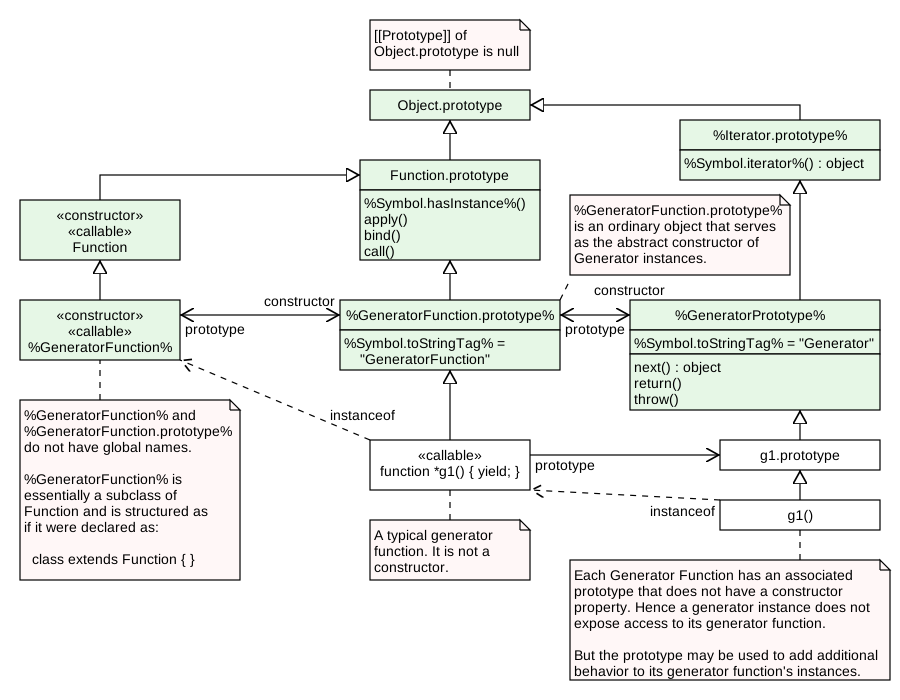
27.3.1 GeneratorFunction 构造器
GeneratorFunction
- 是 %GeneratorFunction%。
- 是
Function的子类。 - 当作为函数而不是
构造器 调用时,创建并初始化一个新的 GeneratorFunction。因此函数调用GeneratorFunction (…)等价于使用相同实参的对象创建表达式new GeneratorFunction (…)。 - 可以用作类定义的
extends子句的值。意图继承指定 GeneratorFunction 行为的子类构造器 必须包含对 GeneratorFunction构造器 的super调用,以使用内置 GeneratorFunction 行为所需的内部槽来创建并初始化子类实例。所有用于定义 generator函数对象 的 ECMAScript 语法形式都会创建 GeneratorFunction 的直接实例。没有语法手段可以创建 GeneratorFunction 子类的实例。
27.3.1.1 GeneratorFunction ( ...parameterArgs, bodyArg )
最后一个实参(如果有)指定 generator 函数的函数体(可执行代码);任何前面的实参指定形式参数。
此函数在被调用时执行以下步骤:
- 令 activeFunc 为
活动函数对象 。 - 如果 bodyArg 不存在,将 bodyArg 设为空字符串。
- 返回 ?
CreateDynamicFunction (activeFunc, NewTarget,generator , parameterArgs, bodyArg)。
见
27.3.2 GeneratorFunction 构造器的属性
GeneratorFunction
- 是一个继承自 Function
构造器 的标准内置函数对象 。 - 有一个 [[Prototype]] 内部槽,其值为
%Function% 。 - 有一个
"length" 属性,其值为1 𝔽。 - 有一个
"name" 属性,其值为"GeneratorFunction" 。 - 具有以下属性:
27.3.2.1 GeneratorFunction.prototype
GeneratorFunction.prototype 的初始值是
此属性具有属性特性 { [[Writable]]:
27.3.3 GeneratorFunction 原型对象的属性
GeneratorFunction 原型对象:
- 是 %GeneratorFunction.prototype%(见
Figure 6 )。 - 是一个
普通对象 。 - 不是
函数对象 ,并且没有 [[ECMAScriptCode]] 内部槽,也没有Table 25 或Table 89 中列出的任何其他内部槽。 - 有一个 [[Prototype]] 内部槽,其值为
%Function.prototype% 。
27.3.3.1 GeneratorFunction.prototype.constructor
GeneratorFunction.prototype.constructor 的初始值是
此属性具有属性特性 { [[Writable]]:
27.3.3.2 GeneratorFunction.prototype.prototype
GeneratorFunction.prototype.prototype 的初始值是
此属性具有属性特性 { [[Writable]]:
27.3.3.3 GeneratorFunction.prototype [ %Symbol.toStringTag% ]
此属性具有属性特性 { [[Writable]]:
27.3.4 GeneratorFunction 实例
每个 GeneratorFunction 实例都是 ECMAScript
每个 GeneratorFunction 实例都具有以下自有属性:
27.3.4.1 length
27.3.4.2 name
27.3.4.3 prototype
每当创建 GeneratorFunction 实例时,也会创建另一个
此属性具有属性特性 { [[Writable]]:
与 Function 实例不同,作为 GeneratorFunction 的
27.4 AsyncGeneratorFunction 对象
AsyncGeneratorFunction 是通常通过求值
27.4.1 AsyncGeneratorFunction 构造器
AsyncGeneratorFunction
- 是 %AsyncGeneratorFunction%。
- 是
Function的子类。 - 当作为函数而不是
构造器 调用时,创建并初始化一个新的 AsyncGeneratorFunction。因此函数调用AsyncGeneratorFunction (...)等价于使用相同实参的对象创建表达式new AsyncGeneratorFunction (...)。 - 可以用作类定义的
extends子句的值。意图继承指定 AsyncGeneratorFunction 行为的子类构造器 必须包含对 AsyncGeneratorFunction构造器 的super调用,以使用内置 AsyncGeneratorFunction 行为所需的内部槽来创建并初始化子类实例。所有用于定义 async generator函数对象 的 ECMAScript 语法形式都会创建 AsyncGeneratorFunction 的直接实例。没有语法手段可以创建 AsyncGeneratorFunction 子类的实例。
27.4.1.1 AsyncGeneratorFunction ( ...parameterArgs, bodyArg )
最后一个实参(如果有)指定 async generator 函数的函数体(可执行代码);任何前面的实参指定形式参数。
此函数在被调用时执行以下步骤:
- 令 activeFunc 为
活动函数对象 。 - 如果 bodyArg 不存在,将 bodyArg 设为空字符串。
- 返回 ?
CreateDynamicFunction (activeFunc, NewTarget,async-generator , parameterArgs, bodyArg)。
见
27.4.2 AsyncGeneratorFunction 构造器的属性
AsyncGeneratorFunction
- 是一个继承自 Function
构造器 的标准内置函数对象 。 - 有一个 [[Prototype]] 内部槽,其值为
%Function% 。 - 有一个
"length" 属性,其值为1 𝔽。 - 有一个
"name" 属性,其值为"AsyncGeneratorFunction" 。 - 具有以下属性:
27.4.2.1 AsyncGeneratorFunction.prototype
AsyncGeneratorFunction.prototype 的初始值是
此属性具有属性特性 { [[Writable]]:
27.4.3 AsyncGeneratorFunction 原型对象的属性
AsyncGeneratorFunction 原型对象:
- 是 %AsyncGeneratorFunction.prototype%。
- 是一个
普通对象 。 - 不是
函数对象 ,并且没有 [[ECMAScriptCode]] 内部槽,也没有Table 25 或Table 90 中列出的任何其他内部槽。 - 有一个 [[Prototype]] 内部槽,其值为
%Function.prototype% 。
27.4.3.1 AsyncGeneratorFunction.prototype.constructor
AsyncGeneratorFunction.prototype.constructor 的初始值是
此属性具有属性特性 { [[Writable]]:
27.4.3.2 AsyncGeneratorFunction.prototype.prototype
AsyncGeneratorFunction.prototype.prototype 的初始值是
此属性具有属性特性 { [[Writable]]:
27.4.3.3 AsyncGeneratorFunction.prototype [ %Symbol.toStringTag% ]
此属性具有属性特性 { [[Writable]]:
27.4.4 AsyncGeneratorFunction 实例
每个 AsyncGeneratorFunction 实例都是 ECMAScript
每个 AsyncGeneratorFunction 实例都具有以下自有属性:
27.4.4.1 length
此属性具有属性特性 { [[Writable]]:
27.4.4.2 name
27.4.4.3 prototype
每当创建 AsyncGeneratorFunction 实例时,也会创建另一个
此属性具有属性特性 { [[Writable]]:
与函数实例不同,作为 AsyncGeneratorFunction 的
27.5 Generator 对象
Generator 通过调用 generator 函数创建,并且同时符合
Generator 实例直接继承创建该实例的 generator 函数的
27.5.1 %GeneratorPrototype% 对象
%GeneratorPrototype% 对象:
- 是 %GeneratorFunction.prototype.prototype%。
- 是一个
普通对象 。 - 不是 Generator 实例,并且没有 [[GeneratorState]] 内部槽。
- 有一个 [[Prototype]] 内部槽,其值为
%Iterator.prototype% 。 - 具有由所有 Generator 实例间接继承的属性。
27.5.1.1 %GeneratorPrototype%.constructor
.constructor 的初始值是
此属性具有属性特性 { [[Writable]]:
27.5.1.2 %GeneratorPrototype%.next ( value )
- 返回 ?
GeneratorResume (this value, value,empty )。
27.5.1.3 %GeneratorPrototype%.return ( value )
此方法在被调用时执行以下步骤:
- 令 generator 为
this 值。 - 令 completion 为
ReturnCompletion (value)。 - 返回 ?
GeneratorResumeAbrupt (generator, completion,empty )。
27.5.1.4 %GeneratorPrototype%.throw ( exception )
此方法在被调用时执行以下步骤:
- 令 generator 为
this 值。 - 令 completion 为
ThrowCompletion (exception)。 - 返回 ?
GeneratorResumeAbrupt (generator, completion,empty )。
27.5.1.5 %GeneratorPrototype% [ %Symbol.toStringTag% ]
此属性具有属性特性 { [[Writable]]:
27.5.2 Generator 实例的属性
Generator 实例最初会以
| 内部槽 | 类型 | 描述 |
|---|---|---|
| [[GeneratorState]] |
|
generator 的当前执行状态。 |
| [[GeneratorContext]] |
一个 |
执行此 generator 的代码时使用的 |
| [[GeneratorBrand]] |
一个 String 或 |
用于区分不同种类 generator 的品牌。由 |
27.5.3 Generator 抽象操作
27.5.3.1 GeneratorStart ( generator, generatorBody )
The abstract operation GeneratorStart takes arguments generator (一个 Generator) and generatorBody (一个
- 断言:generator.[[GeneratorState]] 是
suspended-start 。 - 令 genContext 为运行中的
执行上下文 。 - 将 genContext 的 Generator 组件设为 generator。
- 令 closure 为一个新的无参数
Abstract Closure ,它捕获 generatorBody,并在被调用时执行以下步骤:- 令 acGenContext 为运行中的
执行上下文 。 - 令 acGenerator 为 acGenContext 的 Generator 组件。
- 如果 generatorBody 是 Parse Node,则
- 令 result 为
Completion (对 generatorBody 求值)。
- 令 result 为
- 否则,
- 断言:generatorBody 是一个无参数
Abstract Closure 。 - 令 result 为
Completion (generatorBody())。
- 断言:generatorBody 是一个无参数
- 断言:如果我们返回到这里,则 generator 要么抛出了异常,要么执行了隐式或显式 return。
- 从
执行上下文栈 中移除 acGenContext,并将位于执行上下文栈 顶部的执行上下文 恢复为运行中的执行上下文 。 - 将 acGenerator.[[GeneratorState]] 设为
completed 。 - 注:一旦 generator 进入
completed 状态,它就永远不会离开该状态,并且其关联的执行上下文 永远不会恢复。此时可以丢弃与 acGenerator 关联的任何执行状态。 - 如果 result 是 normal completion,则
- 令 resultValue 为
undefined 。
- 令 resultValue 为
- 否则,如果 result 是 return completion,则
- 令 resultValue 为 result.[[Value]]。
- 否则,
- 断言:result 是 throw completion。
- 返回 ? result。
- 返回
NormalCompletion (CreateIteratorResultObject (resultValue,true ))。
- 令 acGenContext 为运行中的
- 设置 genContext 的代码求值状态,使得当该
执行上下文 的求值被恢复时,将无实参调用 closure。 - 将 generator.[[GeneratorContext]] 设为 genContext。
- 返回
unused 。
27.5.3.2 GeneratorValidate ( generator, generatorBrand )
The abstract operation GeneratorValidate takes arguments generator (一个
- 执行 ?
RequireInternalSlot (generator, [[GeneratorState]])。 - 执行 ?
RequireInternalSlot (generator, [[GeneratorBrand]])。 - 如果 generator.[[GeneratorBrand]] 不是 generatorBrand,抛出
TypeError 异常。 - 断言:generator 具有 [[GeneratorContext]] 内部槽。
- 令 state 为 generator.[[GeneratorState]]。
- 如果 state 是
executing ,抛出TypeError 异常。 - 返回 state。
27.5.3.3 GeneratorResume ( generator, value, generatorBrand )
The abstract operation GeneratorResume takes arguments generator (一个
- 令 state 为 ?
GeneratorValidate (generator, generatorBrand)。 - 如果 state 是
completed ,则返回CreateIteratorResultObject (undefined ,true )。 - 断言:state 是
suspended-start 或suspended-yield 。 - 令 genContext 为 generator.[[GeneratorContext]]。
- 将 generator.[[GeneratorState]] 设置为
executing 。 - 返回 ?
RunSuspendedContext (genContext,NormalCompletion (value))。
27.5.3.4 GeneratorResumeAbrupt ( generator, abruptCompletion, generatorBrand )
The abstract operation GeneratorResumeAbrupt takes arguments generator (一个
- 令 state 为 ?
GeneratorValidate (generator, generatorBrand)。 - 如果 state 是
suspended-start ,则- 将 generator.[[GeneratorState]] 设置为
completed 。 - 注:一旦生成器进入
completed 状态,它就永远不会离开该状态,并且其关联的执行上下文 永远不会被恢复。此时可以丢弃与 generator 关联的任何执行状态。 - 将 state 设置为
completed 。
- 将 generator.[[GeneratorState]] 设置为
- 如果 state 是
completed ,则- 如果 abruptCompletion 是一个
return 完成 ,则- 返回
CreateIteratorResultObject (abruptCompletion.[[Value]],true )。
- 返回
- 返回 ? abruptCompletion。
- 如果 abruptCompletion 是一个
- 断言:state 是
suspended-yield 。 - 令 genContext 为 generator.[[GeneratorContext]]。
- 将 generator.[[GeneratorState]] 设置为
executing 。 - 返回 ?
RunSuspendedContext (genContext, abruptCompletion)。
27.5.3.5 GetGeneratorKind ( )
The abstract operation GetGeneratorKind takes no arguments and returns
- 令 genContext 为运行中的
执行上下文 。 - 如果 genContext 没有 Generator 组件,返回
non-generator 。 - 令 generator 为 genContext 的 Generator 组件。
- 如果 generator 具有 [[AsyncGeneratorState]] 内部槽,返回
async 。 - 返回
sync 。
27.5.3.6 GeneratorYield ( iteratorResult )
The abstract operation GeneratorYield takes argument iteratorResult (一个符合
- 令 genContext 为运行中的
执行上下文 。 - 断言:genContext 是某个 generator 的
执行上下文 。 - 令 generator 为 genContext 的 Generator 组件的值。
- 断言:
GetGeneratorKind () 是sync 。 - 将 generator.[[GeneratorState]] 设为
suspended-yield 。 - 从
执行上下文栈 中移除 genContext,并将位于执行上下文栈 顶部的执行上下文 恢复为运行中的执行上下文 。 - 令 callerContext 为运行中的
执行上下文 。 - 恢复 callerContext,传入
NormalCompletion (iteratorResult)。如果 genContext 曾经再次被恢复,令 resumptionValue 为它被恢复时所用的Completion Record 。 - 断言:如果控制到达这里,则 genContext 又是运行中的
执行上下文 。 - 返回 resumptionValue。
27.5.3.7 Yield ( value )
The abstract operation Yield takes argument value (一个
- 令 generatorKind 为
GetGeneratorKind ()。 - 如果 generatorKind 是
async ,返回 ?AsyncGeneratorYield (?Await (value))。 - 返回 ?
GeneratorYield (CreateIteratorResultObject (value,false ))。
27.5.3.8 CreateIteratorFromClosure ( closure, generatorBrand, generatorPrototype [ , extraSlots ] )
The abstract operation CreateIteratorFromClosure takes arguments closure (一个无参数
- 注:closure 可以包含对
Yield 操作的使用,以产出 IteratorResult 对象。 - 如果 extraSlots 不存在,将 extraSlots 设为一个新的空
List 。 - 令 internalSlotsList 为 extraSlots 与 « [[GeneratorState]], [[GeneratorContext]], [[GeneratorBrand]] » 的
列表连接 。 - 令 generator 为
OrdinaryObjectCreate (generatorPrototype, internalSlotsList)。 - 将 generator.[[GeneratorBrand]] 设为 generatorBrand。
- 将 generator.[[GeneratorState]] 设为
suspended-start 。 - 令 callerContext 为运行中的
执行上下文 。 - 令 calleeContext 为一个新的
执行上下文 。 - 将 calleeContext 的 Function 设为
null 。 - 将 calleeContext 的
Realm 设为当前 Realm Record 。 - 将 calleeContext 的 ScriptOrModule 设为 callerContext 的 ScriptOrModule。
- 如果 callerContext 尚未挂起,则挂起 callerContext。
- 将 calleeContext 压入
执行上下文栈 ;calleeContext 现在是运行中的执行上下文 。 - 执行
GeneratorStart (generator, closure)。 - 从
执行上下文栈 中移除 calleeContext,并将 callerContext 恢复为运行中的执行上下文 。 - 返回 generator。
27.6 AsyncGenerator 对象
AsyncGenerator 通过调用 async generator 函数创建,并且同时符合
AsyncGenerator 实例直接继承创建该实例的 async generator 函数的
27.6.1 %AsyncGeneratorPrototype% 对象
%AsyncGeneratorPrototype% 对象:
- 是 %AsyncGeneratorFunction.prototype.prototype%。
- 是一个
普通对象 。 - 不是 AsyncGenerator 实例,并且没有 [[AsyncGeneratorState]] 内部槽。
- 有一个 [[Prototype]] 内部槽,其值为
%AsyncIteratorPrototype% 。 - 具有由所有 AsyncGenerator 实例间接继承的属性。
27.6.1.1 %AsyncGeneratorPrototype%.constructor
.constructor 的初始值是
此属性具有属性特性 { [[Writable]]:
27.6.1.2 %AsyncGeneratorPrototype%.next ( value )
- 令 generator 为
this 值。 - 令 promiseCapability 为 !
NewPromiseCapability (%Promise% )。 - 令 result 为
Completion (AsyncGeneratorValidate (generator,empty ))。 IfAbruptRejectPromise (result, promiseCapability)。- 令 state 为 generator.[[AsyncGeneratorState]]。
- 如果 state 是
completed ,则- 令 iteratorResult 为
CreateIteratorResultObject (undefined ,true )。 - 执行 !
Call (promiseCapability.[[Resolve]],undefined , « iteratorResult »)。 - 返回 promiseCapability.[[Promise]]。
- 令 iteratorResult 为
- 令 completion 为
NormalCompletion (value)。 - 执行
AsyncGeneratorEnqueue (generator, completion, promiseCapability)。 - 如果 state 是
suspended-start 或suspended-yield ,则- 执行
AsyncGeneratorResume (generator, completion)。
- 执行
- 否则,
- 断言:state 是
executing 或draining-queue 。
- 断言:state 是
- 返回 promiseCapability.[[Promise]]。
27.6.1.3 %AsyncGeneratorPrototype%.return ( value )
- 令 generator 为
this 值。 - 令 promiseCapability 为 !
NewPromiseCapability (%Promise% )。 - 令 result 为
Completion (AsyncGeneratorValidate (generator,empty ))。 IfAbruptRejectPromise (result, promiseCapability)。- 令 completion 为
ReturnCompletion (value)。 - 执行
AsyncGeneratorEnqueue (generator, completion, promiseCapability)。 - 令 state 为 generator.[[AsyncGeneratorState]]。
- 如果 state 是
suspended-start 或completed ,则- 将 generator.[[AsyncGeneratorState]] 设为
draining-queue 。 - 执行
AsyncGeneratorAwaitReturn (generator)。
- 将 generator.[[AsyncGeneratorState]] 设为
- 否则,如果 state 是
suspended-yield ,则- 执行
AsyncGeneratorResume (generator, completion)。
- 执行
- 否则,
- 断言:state 是
executing 或draining-queue 。
- 断言:state 是
- 返回 promiseCapability.[[Promise]]。
27.6.1.4 %AsyncGeneratorPrototype%.throw ( exception )
- 令 generator 为
this 值。 - 令 promiseCapability 为 !
NewPromiseCapability (%Promise% )。 - 令 result 为
Completion (AsyncGeneratorValidate (generator,empty ))。 IfAbruptRejectPromise (result, promiseCapability)。- 令 state 为 generator.[[AsyncGeneratorState]]。
- 如果 state 是
suspended-start ,则- 将 generator.[[AsyncGeneratorState]] 设为
completed 。 - 将 state 设为
completed 。
- 将 generator.[[AsyncGeneratorState]] 设为
- 如果 state 是
completed ,则- 执行 !
Call (promiseCapability.[[Reject]],undefined , « exception »)。 - 返回 promiseCapability.[[Promise]]。
- 执行 !
- 令 completion 为
ThrowCompletion (exception)。 - 执行
AsyncGeneratorEnqueue (generator, completion, promiseCapability)。 - 如果 state 是
suspended-yield ,则- 执行
AsyncGeneratorResume (generator, completion)。
- 执行
- 否则,
- 断言:state 是
executing 或draining-queue 。
- 断言:state 是
- 返回 promiseCapability.[[Promise]]。
27.6.1.5 %AsyncGeneratorPrototype% [ %Symbol.toStringTag% ]
此属性具有属性特性 { [[Writable]]:
27.6.2 AsyncGenerator 实例的属性
AsyncGenerator 实例最初会以下面描述的内部槽创建:
| 内部槽 | 类型 | 描述 |
|---|---|---|
| [[AsyncGeneratorState]] | async generator 的当前执行状态。 | |
| [[AsyncGeneratorContext]] | 一个 |
执行此 async generator 的代码时使用的 |
| [[AsyncGeneratorQueue]] | 表示恢复 async generator 请求的记录。除状态转换期间外,当且仅当 [[AsyncGeneratorState]] 是 |
|
| [[GeneratorBrand]] | 一个 String 或 |
用于区分不同种类 async generator 的品牌。由 |
27.6.3 AsyncGenerator 抽象操作
27.6.3.1 AsyncGeneratorRequest Record
AsyncGeneratorRequest 是一种
它们具有以下字段:
| 字段名 | 值 | 含义 |
|---|---|---|
| [[Completion]] | 一个 |
应当用于恢复 async generator 的 |
| [[Capability]] | 一个 |
与此请求关联的 promise capability。 |
27.6.3.2 AsyncGeneratorStart ( generator, generatorBody )
The abstract operation AsyncGeneratorStart takes arguments generator (一个 AsyncGenerator) and generatorBody (一个
- 断言:generator.[[AsyncGeneratorState]] 是
suspended-start 。 - 令 genContext 为运行中的
执行上下文 。 - 将 genContext 的 Generator 组件设为 generator。
- 令 closure 为一个新的无参数
Abstract Closure ,它捕获 generatorBody,并在被调用时执行以下步骤:- 令 acGenContext 为运行中的
执行上下文 。 - 令 acGenerator 为 acGenContext 的 Generator 组件。
- 如果 generatorBody 是 Parse Node,则
- 令 result 为
Completion (对 generatorBody 求值)。
- 令 result 为
- 否则,
- 断言:generatorBody 是一个无参数
Abstract Closure 。 - 令 result 为
Completion (generatorBody())。
- 断言:generatorBody 是一个无参数
- 断言:如果我们返回到这里,则 async generator 要么抛出了异常,要么执行了隐式或显式 return。
- 从
执行上下文栈 中移除 acGenContext,并将位于执行上下文栈 顶部的执行上下文 恢复为运行中的执行上下文 。 - 将 acGenerator.[[AsyncGeneratorState]] 设为
draining-queue 。 - 如果 result 是 normal completion,将 result 设为
NormalCompletion (undefined )。 - 如果 result 是 return completion,将 result 设为
NormalCompletion (result.[[Value]])。 - 执行
AsyncGeneratorCompleteStep (acGenerator, result,true )。 - 执行
AsyncGeneratorDrainQueue (acGenerator)。 - 返回
NormalCompletion (undefined )。
- 令 acGenContext 为运行中的
- 设置 genContext 的代码求值状态,使得当该
执行上下文 的求值被恢复时,将无实参调用 closure。 - 将 generator.[[AsyncGeneratorContext]] 设为 genContext。
- 将 generator.[[AsyncGeneratorQueue]] 设为一个新的空
List 。 - 返回
unused 。
27.6.3.3 AsyncGeneratorValidate ( generator, generatorBrand )
The abstract operation AsyncGeneratorValidate takes arguments generator (一个
- 执行 ?
RequireInternalSlot (generator, [[AsyncGeneratorContext]])。 - 执行 ?
RequireInternalSlot (generator, [[AsyncGeneratorState]])。 - 执行 ?
RequireInternalSlot (generator, [[AsyncGeneratorQueue]])。 - 如果 generator.[[GeneratorBrand]] 不是 generatorBrand,抛出
TypeError 异常。 - 返回
unused 。
27.6.3.4 AsyncGeneratorEnqueue ( generator, completion, promiseCapability )
The abstract operation AsyncGeneratorEnqueue takes arguments generator (一个 AsyncGenerator), completion (一个
- 令 request 为
AsyncGeneratorRequest { [[Completion]]: completion, [[Capability]]: promiseCapability }。 - 将 request 追加到 generator.[[AsyncGeneratorQueue]]。
- 返回
unused 。
27.6.3.5 AsyncGeneratorCompleteStep ( generator, completion, done [ , realm ] )
The abstract operation AsyncGeneratorCompleteStep takes arguments generator (一个 AsyncGenerator), completion (一个
- 断言:generator.[[AsyncGeneratorQueue]] 非空。
- 令 next 为 generator.[[AsyncGeneratorQueue]] 的第一个元素。
- 从 generator.[[AsyncGeneratorQueue]] 中移除第一个元素。
- 令 promiseCapability 为 next.[[Capability]]。
- 令 value 为 completion.[[Value]]。
- 如果 completion 是 throw completion,则
- 执行 !
Call (promiseCapability.[[Reject]],undefined , « value »)。
- 执行 !
- 否则,
- 断言:completion 是 normal completion。
- 如果 realm 存在,则
- 否则,
- 令 iteratorResult 为
CreateIteratorResultObject (value, done)。
- 令 iteratorResult 为
- 执行 !
Call (promiseCapability.[[Resolve]],undefined , « iteratorResult »)。
- 返回
unused 。
27.6.3.6 AsyncGeneratorResume ( generator, completion )
The abstract operation AsyncGeneratorResume takes arguments generator (一个 AsyncGenerator) and completion (一个
- 断言:generator.[[AsyncGeneratorState]] 是
suspended-start 或suspended-yield 。 - 令 genContext 为 generator.[[AsyncGeneratorContext]]。
- 将 generator.[[AsyncGeneratorState]] 设置为
executing 。 - 执行 !
RunSuspendedContext (genContext, completion)。 - 返回
unused 。
27.6.3.7 AsyncGeneratorUnwrapYieldResumption ( resumptionValue )
The abstract operation AsyncGeneratorUnwrapYieldResumption takes argument resumptionValue (一个
- 如果 resumptionValue 不是 return completion,返回 ? resumptionValue。
- 令 awaited 为
Completion (Await (resumptionValue.[[Value]]))。 - 如果 awaited 是 throw completion,返回 ? awaited。
- 断言:awaited 是 normal completion。
- 返回
ReturnCompletion (awaited.[[Value]])。
27.6.3.8 AsyncGeneratorYield ( value )
The abstract operation AsyncGeneratorYield takes argument value (一个
- 令 genContext 为运行中的
执行上下文 。 - 断言:genContext 是某个 generator 的
执行上下文 。 - 令 generator 为 genContext 的 Generator 组件的值。
- 断言:
GetGeneratorKind () 是async 。 - 令 completion 为
NormalCompletion (value)。 - 断言:
执行上下文栈 至少有两个元素。 - 令 previousContext 为
执行上下文栈 中倒数第二个元素。 - 令 previousRealm 为 previousContext 的
Realm 。 - 执行
AsyncGeneratorCompleteStep (generator, completion,false , previousRealm)。 - 令 queue 为 generator.[[AsyncGeneratorQueue]]。
- 如果 queue 非空,则
- 注:执行会继续,而不挂起 generator。
- 令 toYield 为 queue 的第一个元素。
- 令 resumptionValue 为
Completion (toYield.[[Completion]])。 - 返回 ?
AsyncGeneratorUnwrapYieldResumption (resumptionValue)。
- 将 generator.[[AsyncGeneratorState]] 设为
suspended-yield 。 - 从
执行上下文栈 中移除 genContext,并将位于执行上下文栈 顶部的执行上下文 恢复为运行中的执行上下文 。 - 令 callerContext 为运行中的
执行上下文 。 - 恢复 callerContext,传入
undefined 。如果 genContext 曾经再次被恢复,令 resumptionValue 为它被恢复时所用的Completion Record 。 - 断言:如果控制到达这里,则 genContext 又是运行中的
执行上下文 。 - 返回 ?
AsyncGeneratorUnwrapYieldResumption (resumptionValue)。
27.6.3.9 AsyncGeneratorAwaitReturn ( generator )
The abstract operation AsyncGeneratorAwaitReturn takes argument generator (一个 AsyncGenerator) and returns
- 断言:generator.[[AsyncGeneratorState]] 是
draining-queue 。 - 令 queue 为 generator.[[AsyncGeneratorQueue]]。
- 断言:queue 非空。
- 令 next 为 queue 的第一个元素。
- 令 completion 为
Completion (next.[[Completion]])。 - 断言:completion 是 return completion。
- 令 promiseCompletion 为
Completion (PromiseResolve (%Promise% , completion.[[Value]]))。 - 如果 promiseCompletion 是 abrupt completion,则
- 执行
AsyncGeneratorCompleteStep (generator, promiseCompletion,true )。 - 执行
AsyncGeneratorDrainQueue (generator)。 - 返回
unused 。
- 执行
- 断言:promiseCompletion 是 normal completion。
- 令 promise 为 promiseCompletion.[[Value]]。
- 令 fulfilledClosure 为一个新的
Abstract Closure ,带有参数 (value),它捕获 generator,并在被调用时执行以下步骤:- 断言:generator.[[AsyncGeneratorState]] 是
draining-queue 。 - 令 result 为
NormalCompletion (value)。 - 执行
AsyncGeneratorCompleteStep (generator, result,true )。 - 执行
AsyncGeneratorDrainQueue (generator)。 - 返回
NormalCompletion (undefined )。
- 断言:generator.[[AsyncGeneratorState]] 是
- 令 onFulfilled 为
CreateBuiltinFunction (fulfilledClosure, 1,"" , « »)。 - 令 rejectedClosure 为一个新的
Abstract Closure ,带有参数 (reason),它捕获 generator,并在被调用时执行以下步骤:- 断言:generator.[[AsyncGeneratorState]] 是
draining-queue 。 - 令 result 为
ThrowCompletion (reason)。 - 执行
AsyncGeneratorCompleteStep (generator, result,true )。 - 执行
AsyncGeneratorDrainQueue (generator)。 - 返回
NormalCompletion (undefined )。
- 断言:generator.[[AsyncGeneratorState]] 是
- 令 onRejected 为
CreateBuiltinFunction (rejectedClosure, 1,"" , « »)。 - 执行
PerformPromiseThen (promise, onFulfilled, onRejected)。 - 返回
unused 。
27.6.3.10 AsyncGeneratorDrainQueue ( generator )
The abstract operation AsyncGeneratorDrainQueue takes argument generator (一个 AsyncGenerator) and returns
- 断言:generator.[[AsyncGeneratorState]] 是
draining-queue 。 - 令 queue 为 generator.[[AsyncGeneratorQueue]]。
- 重复,当 queue 非空时,
- 令 next 为 queue 的第一个元素。
- 令 completion 为
Completion (next.[[Completion]])。 - 如果 completion 是 return completion,则
- 执行
AsyncGeneratorAwaitReturn (generator)。 - 返回
unused 。
- 执行
- 如果 completion 是 normal completion,则
- 将 completion 设为
NormalCompletion (undefined )。
- 将 completion 设为
- 执行
AsyncGeneratorCompleteStep (generator, completion,true )。
- 将 generator.[[AsyncGeneratorState]] 设为
completed 。 - 返回
unused 。
27.7 AsyncFunction 对象
AsyncFunction 是通常通过求值
27.7.1 AsyncFunction 构造器
AsyncFunction
- 是 %AsyncFunction%。
- 是
Function的子类。 - 当作为函数而不是
构造器 调用时,创建并初始化一个新的 AsyncFunction。因此函数调用AsyncFunction(…)等价于使用相同实参的对象创建表达式new AsyncFunction(…)。 - 可以用作类定义的
extends子句的值。意图继承指定 AsyncFunction 行为的子类构造器 必须包含对 AsyncFunction构造器 的super调用,以使用内置 async 函数行为所需的内部槽来创建并初始化子类实例。所有用于定义 async函数对象 的 ECMAScript 语法形式都会创建 AsyncFunction 的直接实例。没有语法手段可以创建 AsyncFunction 子类的实例。
27.7.1.1 AsyncFunction ( ...parameterArgs, bodyArg )
最后一个实参(如果有)指定 async 函数的函数体(可执行代码)。任何前面的实参指定形式参数。
此函数在被调用时执行以下步骤:
- 令 activeFunc 为
活动函数对象 。 - 如果 bodyArg 不存在,将 bodyArg 设为空字符串。
- 返回 ?
CreateDynamicFunction (activeFunc, NewTarget,async , parameterArgs, bodyArg)。
27.7.2 AsyncFunction 构造器的属性
AsyncFunction
- 是一个继承自 Function
构造器 的标准内置函数对象 。 - 有一个 [[Prototype]] 内部槽,其值为
%Function% 。 - 有一个
"length" 属性,其值为1 𝔽。 - 有一个
"name" 属性,其值为"AsyncFunction" 。 - 具有以下属性:
27.7.2.1 AsyncFunction.prototype
AsyncFunction.prototype 的初始值是
此属性具有属性特性 { [[Writable]]:
27.7.3 AsyncFunction 原型对象的属性
AsyncFunction 原型对象:
- 是 %AsyncFunction.prototype%。
- 是一个
普通对象 。 - 不是
函数对象 ,并且没有 [[ECMAScriptCode]] 内部槽,也没有Table 25 中列出的任何其他内部槽。 - 有一个 [[Prototype]] 内部槽,其值为
%Function.prototype% 。
27.7.3.1 AsyncFunction.prototype.constructor
AsyncFunction.prototype.constructor 的初始值是
此属性具有属性特性 { [[Writable]]:
27.7.3.2 AsyncFunction.prototype [ %Symbol.toStringTag% ]
此属性具有属性特性 { [[Writable]]:
27.7.4 AsyncFunction 实例
每个 AsyncFunction 实例都是 ECMAScript
每个 AsyncFunction 实例都具有以下自有属性:
27.7.4.1 length
27.7.4.2 name
27.7.5 Async Function 抽象操作
27.7.5.1 AsyncFunctionStart ( promiseCapability, asyncFunctionBody )
The abstract operation AsyncFunctionStart takes arguments promiseCapability (一个
- 令 runningContext 为运行中的
执行上下文 。 - 令 asyncContext 为 runningContext 的副本。
- 注:复制执行状态是
AsyncBlockStart 恢复其执行所必需的。恢复当前正在执行的上下文是定义不良的。 - 执行
AsyncBlockStart (promiseCapability, asyncFunctionBody, asyncContext)。 - 返回
unused 。
27.7.5.2 AsyncBlockStart ( promiseCapability, asyncBody, asyncContext )
The abstract operation AsyncBlockStart takes arguments promiseCapability (一个
- 令 closure 为一个无参数的新抽象闭包,它捕获 promiseCapability 和 asyncBody,并在被调用时执行以下步骤:
- 令 acAsyncContext 为
正在运行的执行上下文 。 - 如果 asyncBody 是
解析节点 ,则- 令 result 为
Completion (对 asyncBody 求值)。
- 令 result 为
- 否则,
- 断言:asyncBody 是一个无参数的抽象闭包。
- 令 result 为
Completion (asyncBody())。
- 断言:如果我们在这里返回,则该 async 函数要么抛出了异常,要么执行了隐式或显式 return;所有 await 都已完成。
- 从
执行上下文栈 中移除 acAsyncContext,并将执行上下文栈 顶的执行上下文 恢复为正在运行的执行上下文 。 - 如果 result 是一个
正常完成 ,则- 执行 !
Call (promiseCapability.[[Resolve]],undefined , «undefined »)。
- 执行 !
- 否则,如果 result 是一个
return 完成 ,则- 执行 !
Call (promiseCapability.[[Resolve]],undefined , « result.[[Value]] »)。
- 执行 !
- 否则,
- 返回
NormalCompletion (unused )。
- 令 acAsyncContext 为
- 设置 asyncContext 的代码求值状态,使得当该
执行上下文 的求值被恢复时,将不带参数调用 closure。 - 令 result 为 !
RunSuspendedContext (asyncContext,NormalCompletion (empty ))。 - 断言:result 是
unused 。 - 注:result 值的可能来源是
Await ,或者如果该 async 函数没有 await 任何内容,则为上面的步骤1.i 。 - 返回
unused 。
27.7.5.3 Await ( value )
The abstract operation Await takes argument value (一个
- 令 asyncContext 为
正在运行的执行上下文 。 - 令 promise 为 ?
PromiseResolve (%Promise% , value)。 - 令 fulfilledClosure 为一个带参数 (v) 的新抽象闭包,它捕获 asyncContext,并在被调用时执行以下步骤:
- 执行
Completion (RunSuspendedContext (asyncContext,NormalCompletion (v)))。 - 注:
RunSuspendedContext 返回的完成记录会被有意忽略。 - 返回
NormalCompletion (undefined )。
- 执行
- 令 onFulfilled 为
CreateBuiltinFunction (fulfilledClosure, 1,"" , « »)。 - 令 rejectedClosure 为一个带参数 (reason) 的新抽象闭包,它捕获 asyncContext,并在被调用时执行以下步骤:
- 执行
Completion (RunSuspendedContext (asyncContext,ThrowCompletion (reason)))。 - 注:
RunSuspendedContext 返回的完成记录会被有意忽略。 - 返回
NormalCompletion (undefined )。
- 执行
- 令 onRejected 为
CreateBuiltinFunction (rejectedClosure, 1,"" , « »)。 - 执行
PerformPromiseThen (promise, onFulfilled, onRejected)。 - 从
执行上下文栈 中移除 asyncContext,并将位于执行上下文栈 顶的执行上下文 恢复为正在运行的执行上下文 。 - 令 callerContext 为
正在运行的执行上下文 。 - 恢复 callerContext,传入
empty 。如果 asyncContext 再次被恢复,则令 completion 为恢复它所用的完成记录。 - 断言:如果控制到达这里,则 asyncContext 再次成为
正在运行的执行上下文 。 - 返回 completion。
28 反射
28.1 Reflect 对象
Reflect 对象:
- 是 %Reflect%。
- 是
全局对象 的"Reflect" 属性的初始值。 - 是一个
普通对象 。 - 有一个 [[Prototype]] 内部槽,其值为
%Object.prototype% 。 - 不是
函数对象 。 - 没有 [[Construct]] 内部方法;它不能作为
构造器 与new运算符一起使用。 - 没有 [[Call]] 内部方法;它不能作为函数被调用。
28.1.1 Reflect.apply ( target, thisArgument, argumentsList )
此函数在被调用时执行以下步骤:
- 如果
IsCallable (target) 为false ,抛出TypeError 异常。 - 令 args 为 ?
CreateListFromArrayLike (argumentsList)。 - 执行
PrepareForTailCall ()。 - 返回 ?
Call (target, thisArgument, args)。
28.1.2 Reflect.construct ( target, argumentsList [ , newTarget ] )
此函数在被调用时执行以下步骤:
- 如果
IsConstructor (target) 为false ,抛出TypeError 异常。 - 如果 newTarget 不存在,将 newTarget 设为 target。
- 否则,如果
IsConstructor (newTarget) 为false ,抛出TypeError 异常。 - 令 args 为 ?
CreateListFromArrayLike (argumentsList)。 - 返回 ?
Construct (target, args, newTarget)。
28.1.3 Reflect.defineProperty ( target, propertyKey, attributes )
此函数在被调用时执行以下步骤:
- 如果 target 不是 Object,抛出
TypeError 异常。 - 令 key 为 ?
ToPropertyKey (propertyKey)。 - 令 desc 为 ?
ToPropertyDescriptor (attributes)。 - 返回 ? target.[[DefineOwnProperty]](key, desc)。
28.1.4 Reflect.deleteProperty ( target, propertyKey )
此函数在被调用时执行以下步骤:
- 如果 target 不是 Object,抛出
TypeError 异常。 - 令 key 为 ?
ToPropertyKey (propertyKey)。 - 返回 ? target.[[Delete]](key)。
28.1.5 Reflect.get ( target, propertyKey [ , receiver ] )
此函数在被调用时执行以下步骤:
- 如果 target 不是 Object,抛出
TypeError 异常。 - 令 key 为 ?
ToPropertyKey (propertyKey)。 - 如果 receiver 不存在,则
- 将 receiver 设为 target。
- 返回 ? target.[[Get]](key, receiver)。
28.1.6 Reflect.getOwnPropertyDescriptor ( target, propertyKey )
此函数在被调用时执行以下步骤:
- 如果 target 不是 Object,抛出
TypeError 异常。 - 令 key 为 ?
ToPropertyKey (propertyKey)。 - 令 desc 为 ? target.[[GetOwnProperty]](key)。
- 返回
FromPropertyDescriptor (desc)。
28.1.7 Reflect.getPrototypeOf ( target )
此函数在被调用时执行以下步骤:
- 如果 target 不是 Object,抛出
TypeError 异常。 - 返回 ? target.[[GetPrototypeOf]]()。
28.1.8 Reflect.has ( target, propertyKey )
此函数在被调用时执行以下步骤:
- 如果 target 不是 Object,抛出
TypeError 异常。 - 令 key 为 ?
ToPropertyKey (propertyKey)。 - 返回 ? target.[[HasProperty]](key)。
28.1.9 Reflect.isExtensible ( target )
此函数在被调用时执行以下步骤:
- 如果 target 不是 Object,抛出
TypeError 异常。 - 返回 ? target.[[IsExtensible]]()。
28.1.10 Reflect.ownKeys ( target )
此函数在被调用时执行以下步骤:
- 如果 target 不是 Object,抛出
TypeError 异常。 - 令 keys 为 ? target.[[OwnPropertyKeys]]()。
- 返回
CreateArrayFromList (keys)。
28.1.11 Reflect.preventExtensions ( target )
此函数在被调用时执行以下步骤:
- 如果 target 不是 Object,抛出
TypeError 异常。 - 返回 ? target.[[PreventExtensions]]()。
28.1.12 Reflect.set ( target, propertyKey, value [ , receiver ] )
此函数在被调用时执行以下步骤:
- 如果 target 不是 Object,抛出
TypeError 异常。 - 令 key 为 ?
ToPropertyKey (propertyKey)。 - 如果 receiver 不存在,则
- 将 receiver 设为 target。
- 返回 ? target.[[Set]](key, value, receiver)。
28.1.13 Reflect.setPrototypeOf ( target, proto )
此函数在被调用时执行以下步骤:
- 如果 target 不是 Object,抛出
TypeError 异常。 - 如果 proto 不是 Object 且 proto 不是
null ,抛出TypeError 异常。 - 返回 ? target.[[SetPrototypeOf]](proto)。
28.1.14 Reflect [ %Symbol.toStringTag% ]
此属性具有属性特性 { [[Writable]]:
28.2 Proxy 对象
28.2.1 Proxy 构造器
Proxy
28.2.1.1 Proxy ( target, handler )
此函数在被调用时执行以下步骤:
- 如果 NewTarget 是
undefined ,抛出TypeError 异常。 - 返回 ?
ProxyCreate (target, handler)。
28.2.2 Proxy 构造器的属性
Proxy
- 有一个 [[Prototype]] 内部槽,其值为
%Function.prototype% 。 - 没有
"prototype" 属性,因为 Proxy 对象没有需要初始化的 [[Prototype]] 内部槽。 - 具有以下属性:
28.2.2.1 Proxy.revocable ( target, handler )
此函数创建一个可撤销的 Proxy 对象。
它在被调用时执行以下步骤:
- 令 proxy 为 ?
ProxyCreate (target, handler)。 - 令 revokerClosure 为一个新的无参数
Abstract Closure ,它不捕获任何内容,并在被调用时执行以下步骤:- 令 activeFunc 为
活动函数对象 。 - 令 p 为 activeFunc.[[RevocableProxy]]。
- 如果 p 是
null ,返回NormalCompletion (undefined )。 - 将 activeFunc.[[RevocableProxy]] 设为
null 。 - 断言:p 是一个 Proxy exotic object。
- 将 p.[[ProxyTarget]] 设为
null 。 - 将 p.[[ProxyHandler]] 设为
null 。 - 返回
NormalCompletion (undefined )。
- 令 activeFunc 为
- 令 revoker 为
CreateBuiltinFunction (revokerClosure, 0,"" , « [[RevocableProxy]] »)。 - 将 revoker.[[RevocableProxy]] 设为 proxy。
- 令 result 为
OrdinaryObjectCreate (%Object.prototype% )。 - 执行 !
CreateDataPropertyOrThrow (result,"proxy" , proxy)。 - 执行 !
CreateDataPropertyOrThrow (result,"revoke" , revoker)。 - 返回 result。
28.3 模块命名空间对象
模块命名空间对象是一种
除了
28.3.1 %Symbol.toStringTag%
此属性具有属性特性 { [[Writable]]:
29 内存模型
内存一致性模型,或称内存模型,规定了
内存模型被定义为对
29.1 内存模型基础
共享内存访问(读和写)分为两组:原子访问和数据访问,如下所定义。原子访问是顺序一致的,即存在一个由
不支持弱于顺序一致且强于无序的排序,例如 release-acquire。
共享数据块事件是 ReadSharedMemory、WriteSharedMemory 或 ReadModifyWriteSharedMemory
| 字段名 | 值 | 含义 |
|---|---|---|
| [[Order]] | 读-改- |
|
| [[NoTear]] | 读-改- |
|
| [[Block]] | 一个共享数据块 | 该事件所操作的块。 |
| [[ByteIndex]] | 一个非负 |
[[Block]] 中读-改-写的字节地址。 |
| [[ElementSize]] | 一个非负 |
读-改-写的大小。 |
| [[Payload]] | 将传递给 [[ModifyOp]] 的 |
|
| [[ModifyOp]] | 一个 |
一个 |
共享数据块事件由
令共享数据块事件 e 的内存范围为从 e.[[ByteIndex]](包含)到 e.[[ByteIndex]] + e.[[ElementSize]](不包含)
事件在
29.2 Agent Events Record
Agent Events Record 是具有以下字段的
| 字段名 | 值 | 含义 |
|---|---|---|
| [[AgentSignifier]] | 一个 |
其求值导致此排序的 |
| [[EventList]] | 事件在求值期间被追加到该列表。 | |
| [[AgentSynchronizesWith]] | 由操作语义引入的 |
29.3 Chosen Value Record
Chosen Value Record 是具有以下字段的
| 字段名 | 值 | 含义 |
|---|---|---|
| [[Event]] | 一个 |
为此 chosen value 引入的 ReadSharedMemory 或 ReadModifyWriteSharedMemory 事件。 |
| [[ChosenValue]] | 求值期间被非确定性选择的字节。 |
29.4 候选执行
29.5 内存模型的抽象操作
29.5.1 EventSet ( execution )
The abstract operation EventSet takes argument execution (一个
- 令 events 为一个空 Set。
- 对于 execution.[[EventsRecords]] 的每个
Agent Events Record aer,执行- 对于 aer.[[EventList]] 的每个
Memory 事件 event,执行- 将 event 添加到 events。
- 对于 aer.[[EventList]] 的每个
- 返回 events。
29.5.2 SharedDataBlockEventSet ( execution )
The abstract operation SharedDataBlockEventSet takes argument execution (一个
29.5.3 HostEventSet ( execution )
The abstract operation HostEventSet takes argument execution (一个
- 返回一个新的 Set,包含
EventSet (execution) 中所有不在SharedDataBlockEventSet (execution) 中的元素。
29.5.4 ComposeWriteEventBytes ( execution, byteIndex, writes )
The abstract operation ComposeWriteEventBytes takes arguments execution (一个
- 令 byteLocation 为 byteIndex。
- 令 bytesRead 为一个新的空
List 。 - 对于 writes 的每个元素 writeEvent,执行
- 断言:writeEvent 的
内存范围 中含有 byteLocation。 - 令 payloadIndex 为 byteLocation - writeEvent.[[ByteIndex]]。
- 如果 writeEvent 是 WriteSharedMemory 事件,则
- 令 byte 为 writeEvent.[[Payload]][payloadIndex]。
- 否则,
- 断言:writeEvent 是 ReadModifyWriteSharedMemory 事件。
- 令 bytes 为
ValueOfReadEvent (execution, writeEvent)。 - 令 bytesModified 为 writeEvent.[[ModifyOp]](bytes, writeEvent.[[Payload]])。
- 令 byte 为 bytesModified[payloadIndex]。
- 将 byte 追加到 bytesRead。
- 将 byteLocation 设为 byteLocation + 1。
- 断言:writeEvent 的
- 返回 bytesRead。
读-改-写修改 [[ModifyOp]] 由 Atomics 对象上引入 ReadModifyWriteSharedMemory 事件的函数属性给出。
29.5.5 ValueOfReadEvent ( execution, readEvent )
The abstract operation ValueOfReadEvent takes arguments execution (一个
- 令 writes 为 execution 中
reads-bytes-from (readEvent)。 - 断言:writes 是 WriteSharedMemory 或 ReadModifyWriteSharedMemory 事件的
List ,其长度等于 readEvent.[[ElementSize]]。 - 返回
ComposeWriteEventBytes (execution, readEvent.[[ByteIndex]], writes)。
29.6 候选执行的关系
以下关系和数学函数以某个特定
29.6.1 is-agent-order-before
对于
- 对于事件 eventA 和 eventB,如果在 execution.[[EventsRecords]] 中存在某个
Agent Events Record aer,使得 aer.[[EventList]] 同时包含 eventA 和 eventB,且 eventA 在 aer.[[EventList]] 的List 顺序中位于 eventB 之前,则 eventA 在 execution 中 is-agent-order-before eventB。
29.6.2 reads-bytes-from
对于
-
对于
SharedDataBlockEventSet (execution) 中的每个 ReadSharedMemory 或 ReadModifyWriteSharedMemory 事件 readEvent,execution 中的 reads-bytes-from(readEvent) 是一个长度为 readEvent.[[ElementSize]] 的List ,其元素是 WriteSharedMemory 或 ReadModifyWriteSharedMemory 事件 writes,且满足以下全部条件。- writes 中索引为 i 的每个事件 writeEvent 的
内存范围 中都含有 readEvent.[[ByteIndex]] + i。 - result 不在 writes 中。
- writes 中索引为 i 的每个事件 writeEvent 的
29.6.3 reads-from
对于
- 对于事件 readEvent 和 writeEvent,如果
SharedDataBlockEventSet (execution) 同时包含 readEvent 和 writeEvent,并且 execution 中的reads-bytes-from (readEvent) 包含 writeEvent,则 readEvent 在 execution 中 reads-from writeEvent。
29.6.4 host-synchronizes-with
对于
- 如果 eventA 在 execution 中 host-synchronizes-with eventB,则
HostEventSet (execution) 包含 eventA 和 eventB。 - 在 execution 中,host-synchronizes-with 和
is-agent-order-before 的并集中不存在环。
对于
此关系允许postMessage。
29.6.5 synchronizes-with
对于
-
对于事件 readEvent 和 writeEvent,如果 readEvent 在 execution 中
reads-from writeEvent,readEvent.[[Order]] 是seq-cst ,writeEvent.[[Order]] 是seq-cst ,并且 readEvent 和 writeEvent 具有相等的内存范围 ,则 writeEvent 在 execution 中 synchronizes-with readEvent。 -
对于 execution.[[EventsRecords]] 的每个元素 eventsRecord,以下为真。
- 对于事件 eventA 和 eventB,如果 eventsRecord.[[AgentSynchronizesWith]] 包含 (eventA, eventB),则 eventA 在 execution 中 synchronizes-with eventB。
- 对于事件 eventA 和 eventB,如果 execution.[[HostSynchronizesWith]] 包含 (eventA, eventB),则 eventA 在 execution 中 synchronizes-with eventB。
在
在
对于
29.6.6 happens-before
对于
-
对于事件 eventA 和 eventB,如果以下任一条件为真,则 eventA 在 execution 中 happens-before eventB。
- eventA 在 execution 中
is-agent-order-before eventB。 - eventA 在 execution 中
synchronizes-with eventB。 SharedDataBlockEventSet (execution) 同时包含 eventA 和 eventB,eventA.[[Order]] 是init ,并且 eventA 和 eventB 具有重叠的内存范围 。- 存在事件 eventC,使得 eventA 在 execution 中 happens-before eventC,且 eventC 在 execution 中 happens-before eventB。
- eventA 在 execution 中
29.7 有效执行的属性
29.7.1 有效的选择读
如果以下算法返回
- 对于
SharedDataBlockEventSet (execution) 的每个 ReadSharedMemory 或 ReadModifyWriteSharedMemory 事件 readEvent,执行- 令 chosenValueRecord 为 execution.[[ChosenValues]] 中其 [[Event]] 字段为 readEvent 的元素。
- 令 chosenValue 为 chosenValueRecord.[[ChosenValue]]。
- 令 readValue 为
ValueOfReadEvent (execution, readEvent)。 - 令 chosenLen 为 chosenValue 中元素的数量。
- 令 readLen 为 readValue 中元素的数量。
- 如果 chosenLen ≠ readLen,则
- 返回
false 。
- 返回
- 如果对于从 0(包含)到 chosenLen(不包含)
区间 内的某个整数 i,chosenValue[i] ≠ readValue[i],则- 返回
false 。
- 返回
- 返回
true 。
29.7.2 一致读
如果以下算法返回
- 对于
SharedDataBlockEventSet (execution) 的每个 ReadSharedMemory 或 ReadModifyWriteSharedMemory 事件 readEvent,执行- 令 writes 为 execution 中
reads-bytes-from (readEvent)。 - 令 byteLocation 为 readEvent.[[ByteIndex]]。
- 对于 writes 的每个元素 writeEvent,执行
- 如果 readEvent 在 execution 中
happens-before writeEvent,则- 返回
false 。
- 返回
- 如果存在某个 WriteSharedMemory 或 ReadModifyWriteSharedMemory 事件 value,其
内存范围 中含有 byteLocation,且 writeEvent 在 execution 中happens-before value,并且 value 在 execution 中happens-before readEvent,则- 返回
false 。
- 返回
- 将 byteLocation 设为 byteLocation + 1。
- 如果 readEvent 在 execution 中
- 令 writes 为 execution 中
- 返回
true 。
29.7.3 无撕裂读
如果以下算法返回
- 对于
SharedDataBlockEventSet (execution) 的每个 ReadSharedMemory 或 ReadModifyWriteSharedMemory 事件 readEvent,执行- 如果 readEvent.[[NoTear]] 为
true ,则- 断言:readEvent.[[ByteIndex]] 除以 readEvent.[[ElementSize]] 的余数为 0。
- 对于每个
Memory 事件 writeEvent,若 readEvent 在 execution 中reads-from writeEvent 且 writeEvent.[[NoTear]] 为true ,执行- 如果 readEvent 和 writeEvent 具有相等的
内存范围 ,并且存在某个Memory 事件 value,使得 value 和 writeEvent 具有相等的内存范围 ,value.[[NoTear]] 为true ,writeEvent 和 value 不是同一个共享数据块事件 ,并且 readEvent 在 execution 中reads-from value,则- 返回
false 。
- 返回
- 如果 readEvent 和 writeEvent 具有相等的
- 如果 readEvent.[[NoTear]] 为
- 返回
true 。
当
直观地说,此要求表示:当
29.7.4 顺序一致原子
对于
- 对于事件 eventA 和 eventB,如果 eventA 在 execution 中
happens-before eventB,则 eventA 在 execution 中 is-memory-order-before eventB。 -
对于事件 readEvent 和 writeEvent,若 readEvent 在 execution 中
reads-from writeEvent,则不存在SharedDataBlockEventSet (execution) 中的 WriteSharedMemory 或 ReadModifyWriteSharedMemory 事件 value,使得 value.[[Order]] 是seq-cst ,writeEvent 在 execution 中 is-memory-order-before value,value 在 execution 中 is-memory-order-before readEvent,并且以下任一条件为真。- writeEvent 在 execution 中
synchronizes-with readEvent,且 value 和 readEvent 具有相等的内存范围 。 - writeEvent 在 execution 中
happens-before readEvent,且 value 在 execution 中happens-before readEvent,writeEvent.[[Order]] 是seq-cst ,并且 writeEvent 和 value 具有相等的内存范围 。 - writeEvent 在 execution 中
happens-before readEvent,且 writeEvent 在 execution 中happens-before value,readEvent.[[Order]] 是seq-cst ,并且 value 和 readEvent 具有相等的内存范围 。
Note 1 此条款额外约束相等
内存范围 上的seq-cst 事件。 - writeEvent 在 execution 中
-
对于
SharedDataBlockEventSet (execution) 中的每个 WriteSharedMemory 或 ReadModifyWriteSharedMemory 事件 writeEvent,如果 writeEvent.[[Order]] 是seq-cst ,则不存在无限多个SharedDataBlockEventSet (execution) 中具有相等内存范围 的 ReadSharedMemory 或 ReadModifyWriteSharedMemory 事件,它们在 memory-order 中位于 writeEvent 之前。Note 2
如果
虽然 is-memory-order-before 包含
29.7.5 有效执行
如果以下全部为真,则
宿主 为 execution 提供host-synchronizes-with 关系。- execution 允许一个作为
严格偏序 的happens-before 关系。 - execution 具有有效的选择读。
- execution 具有一致读。
- execution 具有无撕裂读。
- execution 具有顺序一致原子。
所有程序都至少有一个有效执行。
29.8 竞争
对于执行 execution 以及包含在
- 如果 eventA 和 eventB 不是同一个
共享数据块事件 ,则- 如果并非 eventA 在 execution 中
happens-before eventB 且 eventB 在 execution 中happens-before eventA,则- 如果 eventA 是 WriteSharedMemory 或 ReadModifyWriteSharedMemory 事件,eventB 是 WriteSharedMemory 或 ReadModifyWriteSharedMemory 事件,并且 eventA 和 eventB 的
内存范围 并非互不相交,则- 返回
true 。
- 返回
- 如果 eventA 在 execution 中
reads-from eventB,或 eventB 在 execution 中reads-from eventA,则- 返回
true 。
- 返回
- 如果 eventA 是 WriteSharedMemory 或 ReadModifyWriteSharedMemory 事件,eventB 是 WriteSharedMemory 或 ReadModifyWriteSharedMemory 事件,并且 eventA 和 eventB 的
- 如果并非 eventA 在 execution 中
- 返回
false 。
29.9 数据竞争
对于执行 execution 以及包含在
29.10 无数据竞争
如果在
如果一个程序的所有执行都是无数据竞争的,则该程序是无数据竞争的。
29.11 共享内存指南
以下是面向使用共享内存的 ECMAScript 程序员的指南。
我们建议程序保持
更一般地,即使程序不是
以下是面向为使用共享内存的程序编写编译器变换的 ECMAScript 实现者的指南。
理想情况下,应允许大多数在单
令 agent-order 切片为与单个
令
在没有共享内存时有效的任何 agent-order 切片变换,在存在共享内存时也是有效的,但有以下例外。
-
Atomics 被刻在石头上:程序变换不得导致任何 [[Order]] 为
seq-cst 的共享数据块事件 从is-agent-order-before 关系中移除,也不得导致它们彼此重排序,或在 agent-order 切片内相对于 [[Order]] 为unordered 的事件重排序。(实践中,对重排序的禁止迫使编译器假定每个
seq-cst 操作都是一个同步,并包含在最终的is-memory-order-before 关系中;在缺少跨agent 程序分析的情况下,编译器通常无论如何都必须这样假定。它还迫使编译器假定每个其对 memory-order 影响未知的被调用方调用都可能包含seq-cst 操作。) -
读必须稳定:任何给定的共享内存读取在一次执行中必须只观察到一个值。
(例如,如果程序中语义上的单次读取被执行了多次,那么随后程序只允许观察到读取到的值之一。一种称为重物化的变换可能违反此规则。)
-
写必须稳定:所有对共享内存的可观察写都必须来自一次执行中的程序语义。
(例如,变换不得引入某些可观察写,例如通过在更大的位置上使用读-改-写操作来写入更小的数据、向内存写入程序不可能写入的值,或将刚读到的值写回其读取位置,如果该位置可能在读取后已被另一个
agent 覆写。) -
可能读取值必须非空:程序变换不能导致共享内存读取的可能读取值变为空。
(反直觉的是,此规则实际上限制了对写的变换,因为写在
内存模型 中之所以有作用,是因为可被读事件 读取。例如,写可以在两个seq-cst 操作之间被移动、合并,有时也可以重排序,但变换不得移除更新某个位置的每一个写;必须保留某个写。)
仍然有效的变换例子包括:合并来自同一位置的多个非原子读、重排序非原子读、引入推测性非原子读、合并到同一位置的多个非原子写、重排序到不同位置的非原子写,以及将非原子读提升出循环,即使这会影响终止性。注意,一般来说,别名化的
以下是面向为共享内存访问生成机器代码的 ECMAScript 实现者的指南。
对于LOCK 前缀的指令、ARM 上的 load-exclusive/store-exclusive 指令,以及 Power 上的 load-link/store-conditional 指令。
具体而言,
- 程序中的每个原子操作都被假定为必要的。
- 原子操作永远不会彼此重排,也不会与非原子操作重排。
- 函数始终被假定会执行原子操作。
- 原子操作永远不会作为更大数据上的读-改-写操作来实现;如果平台没有适当大小的原子操作,则作为非无锁原子来实现。(我们已经假定每个平台都具有每种有意义大小的普通内存访问操作。)
朴素代码生成使用以下模式:
- 常规加载和存储编译为单条加载和存储指令。
- 无锁原子加载和存储编译为一个完整(顺序一致)栅栏、一个常规加载或存储,以及一个完整栅栏。
- 无锁原子读-改-写访问编译为一个完整栅栏、一个原子读-改-写指令序列,以及一个完整栅栏。
- 非无锁原子编译为一次自旋锁获取、一个完整栅栏、一系列非原子加载和存储指令、一个完整栅栏,以及一次自旋锁释放。
只要某个
在这些基本模式上的局部改进也是允许的,但须受
- 存在显而易见的平台相关改进,可以移除冗余栅栏。例如,在 x86 上,围绕无锁原子加载和存储的栅栏总是可以省略,除了存储之后的栅栏;并且无锁读-改-写指令不需要栅栏,因为这些都使用带
LOCK前缀的指令。在许多平台上有多种强度的栅栏,在某些上下文中可以使用较弱的栅栏而不破坏顺序一致性。 - 大多数现代平台支持 ECMAScript 原子所需的所有数据大小的无锁原子。如果需要非无锁原子,围绕原子操作主体的栅栏通常可以折叠到加锁和解锁步骤中。非无锁原子的最简单解决方案是为每个 SharedArrayBuffer 设置一个单独的锁字。
- 还有更复杂的平台相关局部改进,需要一些代码分析。例如,两个背靠背的栅栏通常与单个栅栏具有相同效果,因此如果为连续两个原子操作生成代码,只需一个栅栏将它们分开。在 x86 上,即使分隔原子存储的单个栅栏也可以省略,因为存储后的栅栏只需要用于将该存储与后续加载分开。
Annex A (informative) 语法摘要
A.1 词法语法
A.2 表达式
当处理产生式的一个实例
时,使用以下语法来细化
当处理产生式的一个实例
时,使用以下语法来细化
在某些情况下,当处理产生式的一个实例
时,使用以下语法来细化
A.3 语句
A.4 函数和类
当处理产生式的一个实例
时,使用以下语法来细化
当处理产生式的一个实例
时,使用以下语法来细化
A.5 脚本和模块
A.6 Number 转换
未由
A.7 时区偏移字符串格式
A.8 正则表达式
对于每个 \u u \u u
Annex B (normative) Web 浏览器的附加 ECMAScript 特性
当 ECMAScript
本附录中定义的一些特性在本附录中规定,另一些则在本文档主体中规定。
当某个特性在主体中规定时,它影响文档的每一点都会以彩色框标记“Normative Optional”字样。此外,当该特性涉及算法或
本附录描述了 Web 浏览器 ECMAScript
这些特性不被认为是核心 ECMAScript 语言的一部分。程序员在编写新的 ECMAScript 代码时不应使用或假定这些特性和行为的存在。除非实现是 Web 浏览器的一部分,或需要运行 Web 浏览器所遇到的相同
B.1 附加语法
B.1.1 类 HTML 注释
语法
类似于包含行终止符码点的
B.1.2 正则表达式模式
此替代模式语法和语义只改变 BMP 模式的语法和语义。以下语法扩展包括带有 [UnicodeMode] 参数的产生式。然而,这些扩展均不改变在
语法
当相同的左侧同时以 [+UnicodeMode] 和 [~UnicodeMode] 保护出现时,这是为了控制消歧优先级。
B.1.2.1 静态语义:早期错误
- 如果任何源文本与此产生式匹配,则为语法错误。
此外,以下产生式的规则通过加入高亮文本进行修改:
-
如果第一个
ClassAtom 的IsCharacterClass 为true ,或者第二个ClassAtom 的IsCharacterClass 为true 且此产生式具有 [UnicodeMode] 参数,则为语法错误。 -
如果第一个
ClassAtom 的IsCharacterClass 为false ,第二个ClassAtom 的IsCharacterClass 为false ,并且第一个ClassAtom 的CharacterValue 严格大于第二个ClassAtom 的CharacterValue ,则为语法错误。
-
如果
ClassAtomNoDash 的IsCharacterClass 为true ,或者ClassAtom 的IsCharacterClass 为true 且此产生式具有 [UnicodeMode] 参数,则为语法错误。 -
如果
ClassAtomNoDash 的IsCharacterClass 为false ,ClassAtom 的IsCharacterClass 为false ,并且ClassAtomNoDash 的CharacterValue 严格大于ClassAtom 的CharacterValue ,则为语法错误。
B.1.2.2 静态语义:CountLeftCapturingParensWithin 和 CountLeftCapturingParensBefore
在
B.1.2.3 静态语义:IsCharacterClass
- 返回
false 。
B.1.2.4 静态语义:CharacterValue
- 返回 U+005C (REVERSE SOLIDUS) 的数值。
- 令 ch 为与
ClassControlLetter 匹配的码点。 - 令 i 为 ch 的数值。
- 返回 i 除以 32 的余数。
- 返回
LegacyOctalEscapeSequence 的 MV(见12.9.4.3 )。
B.1.2.5 运行时语义:CompileSubpattern
B.1.2.6 运行时语义:CompileAssertion
B.1.2.7 运行时语义:CompileAtom
除
- 令 charSet 为包含单个字符
\U+005C (REVERSE SOLIDUS) 的CharSet 。 - 返回
CharacterSetMatcher (regexpRecord, charSet,false , direction)。
- 令 ch 为
ExtendedPatternCharacter 所表示的字符。 - 令 charSet 为包含字符 ch 的单元素
CharSet 。 - 返回
CharacterSetMatcher (regexpRecord, charSet,false , direction)。
B.1.2.8 运行时语义:CompileToCharSet
以下两条规则替换
- 令 charSet 为第一个
ClassAtom 以 regexpRecord 为实参的CompileToCharSet 。 - 令 otherSet 为第二个
ClassAtom 以 regexpRecord 为实参的CompileToCharSet 。 - 令 remainingSet 为
ClassContents 以 regexpRecord 为实参的CompileToCharSet 。 - 令 rangeSet 为
CharacterRangeOrUnion (regexpRecord, charSet, otherSet)。 - 返回 rangeSet 和 remainingSet 的并集。
- 令 charSet 为
ClassAtomNoDash 以 regexpRecord 为实参的CompileToCharSet 。 - 令 otherSet 为
ClassAtom 以 regexpRecord 为实参的CompileToCharSet 。 - 令 remainingSet 为
ClassContents 以 regexpRecord 为实参的CompileToCharSet 。 - 令 rangeSet 为
CharacterRangeOrUnion (regexpRecord, charSet, otherSet)。 - 返回 rangeSet 和 remainingSet 的并集。
此外,向
- 令 cv 为此
ClassEscape 的CharacterValue 。 - 令 c 为字符值为 cv 的字符。
- 返回包含单个字符 c 的
CharSet 。
- 返回包含单个字符
\U+005C (REVERSE SOLIDUS) 的CharSet 。
\c 到达,且其后未跟随可接受的控制字符。B.1.2.8.1 CharacterRangeOrUnion ( regexpRecord, charSet, otherSet )
The abstract operation CharacterRangeOrUnion takes arguments regexpRecord (一个
- 如果
HasEitherUnicodeFlag (regexpRecord) 为false ,则 - 返回
CharacterRange (charSet, otherSet)。
B.1.2.9 静态语义:ParsePattern ( patternText, u, v )
- 如果 v 为
true 且 u 为true ,则- 令 parseResult 为包含一个或多个
SyntaxError 对象的List 。
- 令 parseResult 为包含一个或多个
- 否则,如果 v 为
true ,则 - 否则,如果 u 为
true ,则 - 否则,
- 返回 parseResult。
B.2 附加内置属性
当 ECMAScript
B.2.1 全局对象的附加属性
| 内在名称 | 全局名称 | ECMAScript 语言关联 |
|---|---|---|
|
|
escape
|
escape 函数( |
|
|
unescape
|
unescape 函数( |
B.2.1.1 escape ( string )
此函数是
当替换数值小于或等于 0x00FF 的代码单元时,使用形如 %xx 的两位转义序列。当替换数值严格大于 0x00FF 的代码单元时,使用形如 %uxxxx 的四位转义序列。
它是 %escape% 内在对象。
它在被调用时执行以下步骤:
- 将 string 设为 ?
ToString (string)。 - 令 len 为 string 的长度。
- 令 result 为空字符串。
- 令 unescapedSet 为 ASCII word characters 与
"@*+-./" 的字符串拼接。 - 令 k 为 0。
- 重复,当 k < len 时,
- 令 codeUnit 为 string 中索引 k 处的代码单元。
- 如果 unescapedSet 包含 codeUnit,则
- 令 str 为 codeUnit。
- 否则,
- 将 result 设为 result 与 str 的字符串拼接。
- 将 k 设为 k + 1。
- 返回 result。
该编码部分基于 RFC 1738 中描述的编码,但本标准中指定的整个编码已在上文描述,而不考虑 RFC 1738 的内容。该编码不反映 RFC 3986 对 RFC 1738 所作的更改。
B.2.1.2 unescape ( string )
此函数是escape 函数引入的那类转义序列都被替换为其表示的代码单元。
它是 %unescape% 内在对象。
它在被调用时执行以下步骤:
- 将 string 设为 ?
ToString (string)。 - 令 len 为 string 的长度。
- 令 result 为空字符串。
- 令 k 为 0。
- 重复,当 k < len 时,
- 令 codeUnit 为 string 中索引 k 处的代码单元。
- 如果 codeUnit 是代码单元 0x0025 (PERCENT SIGN),则
- 令 hexDigits 为空字符串。
- 令 optionalAdvance 为 0。
- 如果 k + 5 < len 且 string 中索引 k + 1 处的代码单元是代码单元 0x0075 (LATIN SMALL LETTER U),则
- 将 hexDigits 设为 string 从 k + 2 到 k + 6 的
子字符串 。 - 将 optionalAdvance 设为 5。
- 将 hexDigits 设为 string 从 k + 2 到 k + 6 的
- 否则,如果 k + 3 ≤ len,则
- 将 hexDigits 设为 string 从 k + 1 到 k + 3 的
子字符串 。 - 将 optionalAdvance 设为 2。
- 将 hexDigits 设为 string 从 k + 1 到 k + 3 的
- 令 parseResult 为
ParseText (hexDigits,HexDigits )。[~Sep] - 如果 parseResult 是 Parse Node,则
- 令 n 为 parseResult 的 MV。
- 将 codeUnit 设为数值为 n 的代码单元。
- 将 k 设为 k + optionalAdvance。
- 将 result 设为 result 与 codeUnit 的字符串拼接。
- 将 k 设为 k + 1。
- 返回 result。
B.2.2 String.prototype 对象的附加属性
B.2.2.1 String.prototype.substr ( start, length )
此方法返回将
它在被调用时执行以下步骤:
- 令 obj 为
this 值。 - 执行 ?
RequireObjectCoercible (obj)。 - 令 str 为 ?
ToString (obj)。 - 令 size 为 str 的长度。
- 令 intStart 为 ?
ToIntegerOrInfinity (start)。 - 如果 intStart = -∞,将 intStart 设为 0。
- 否则,如果 intStart < 0,将 intStart 设为
max (size + intStart, 0)。 - 否则,将 intStart 设为
min (intStart, size)。 - 如果 length 是
undefined ,令 intLength 为 size;否则令 intLength 为 ?ToIntegerOrInfinity (length)。 - 将 intLength 设为把 intLength 夹在 0 和 size 之间的结果。
- 令 intEnd 为
min (intStart + intLength, size)。 - 返回 str 从 intStart 到 intEnd 的
子字符串 。
此方法有意设计为泛型;它不要求其
B.2.2.2 String.prototype.anchor ( name )
此方法在被调用时执行以下步骤:
- 令 str 为
this 值。 - 返回 ?
CreateHTML (str,"a" ,"name" , name)。
B.2.2.2.1 CreateHTML ( contents, tag, attribute, attrValue )
The abstract operation CreateHTML takes arguments contents (一个
- 执行 ?
RequireObjectCoercible (contents)。 - 令 contentsStr 为 ?
ToString (contents)。 - 令 p1 为
"<" 与 tag 的字符串拼接。 - 如果 attribute 不是空字符串,则
- 令 attrValueStr 为 ?
ToString (attrValue)。 - 令 escapedAttrValue 为一个 String 值,它与 attrValueStr 相同,但 attrValueStr 中每次出现的代码单元 0x0022 (QUOTATION MARK) 都被替换为六代码单元序列
""" 。 - 将 p1 设为以下项的字符串拼接:
- p1
- 代码单元 0x0020 (SPACE)
- attribute
- 代码单元 0x003D (EQUALS SIGN)
- 代码单元 0x0022 (QUOTATION MARK)
- escapedAttrValue
- 代码单元 0x0022 (QUOTATION MARK)
- 令 attrValueStr 为 ?
- 令 p2 为 p1 与
">" 的字符串拼接。 - 令 p3 为 p2 与 contentsStr 的字符串拼接。
- 令 p4 为 p3、
"</" 、tag 和">" 的字符串拼接。 - 返回 p4。
B.2.2.3 String.prototype.big ( )
此方法在被调用时执行以下步骤:
- 令 str 为
this 值。 - 返回 ?
CreateHTML (str,"big" ,"" ,"" )。
B.2.2.4 String.prototype.blink ( )
此方法在被调用时执行以下步骤:
- 令 str 为
this 值。 - 返回 ?
CreateHTML (str,"blink" ,"" ,"" )。
B.2.2.5 String.prototype.bold ( )
此方法在被调用时执行以下步骤:
- 令 str 为
this 值。 - 返回 ?
CreateHTML (str,"b" ,"" ,"" )。
B.2.2.6 String.prototype.fixed ( )
此方法在被调用时执行以下步骤:
- 令 str 为
this 值。 - 返回 ?
CreateHTML (str,"tt" ,"" ,"" )。
B.2.2.7 String.prototype.fontcolor ( colour )
此方法在被调用时执行以下步骤:
- 令 str 为
this 值。 - 返回 ?
CreateHTML (str,"font" ,"color" , colour)。
B.2.2.8 String.prototype.fontsize ( size )
此方法在被调用时执行以下步骤:
- 令 str 为
this 值。 - 返回 ?
CreateHTML (str,"font" ,"size" , size)。
B.2.2.9 String.prototype.italics ( )
此方法在被调用时执行以下步骤:
- 令 str 为
this 值。 - 返回 ?
CreateHTML (str,"i" ,"" ,"" )。
B.2.2.10 String.prototype.link ( url )
此方法在被调用时执行以下步骤:
- 令 str 为
this 值。 - 返回 ?
CreateHTML (str,"a" ,"href" , url)。
B.2.2.11 String.prototype.small ( )
此方法在被调用时执行以下步骤:
- 令 str 为
this 值。 - 返回 ?
CreateHTML (str,"small" ,"" ,"" )。
B.2.2.12 String.prototype.strike ( )
此方法在被调用时执行以下步骤:
- 令 str 为
this 值。 - 返回 ?
CreateHTML (str,"strike" ,"" ,"" )。
B.2.2.13 String.prototype.sub ( )
此方法在被调用时执行以下步骤:
- 令 str 为
this 值。 - 返回 ?
CreateHTML (str,"sub" ,"" ,"" )。
B.2.2.14 String.prototype.sup ( )
此方法在被调用时执行以下步骤:
- 令 str 为
this 值。 - 返回 ?
CreateHTML (str,"sup" ,"" ,"" )。
B.2.2.15 String.prototype.trimLeft ( )
属性
B.2.2.16 String.prototype.trimRight ( )
属性
B.2.3 Date.prototype 对象的附加属性
B.2.3.1 Date.prototype.getYear ( )
几乎所有用途都首选 getFullYear 方法,因为它避免了“2000 年问题”。
此方法在被调用时执行以下步骤:
- 令 dateObject 为
this 值。 - 执行 ?
RequireInternalSlot (dateObject, [[DateValue]])。 - 令 t 为 dateObject.[[DateValue]]。
- 如果 t 是
NaN ,返回NaN 。 - 返回
YearFromTime (LocalTime (t)) -1900 𝔽。
B.2.3.2 Date.prototype.setYear ( year )
几乎所有用途都首选 setFullYear 方法,因为它避免了“2000 年问题”。
此方法在被调用时执行以下步骤:
- 令 dateObject 为
this 值。 - 执行 ?
RequireInternalSlot (dateObject, [[DateValue]])。 - 令 time 为 dateObject.[[DateValue]]。
- 令 year 为 ?
ToNumber (year)。 - 如果 time 是
NaN ,将 time 设为+0 𝔽;否则将 time 设为LocalTime (time)。 - 令 fullYear 为
MakeFullYear (year)。 - 令 day 为
MakeDay (fullYear,MonthFromTime (time),DateFromTime (time))。 - 令 date 为
MakeDate (day,TimeWithinDay (time))。 - 令 utcTimestamp 为
TimeClip (UTC (date))。 - 将 dateObject.[[DateValue]] 设为 utcTimestamp。
- 返回 utcTimestamp。
B.2.3.3 Date.prototype.toGMTString ( )
toUTCString 方法是首选。此方法主要为兼容旧代码而提供。
B.2.4 RegExp.prototype 对象的附加属性
B.2.4.1 RegExp.prototype.compile ( pattern, flags )
此方法在被调用时执行以下步骤:
- 令 obj 为
this 值。 - 执行 ?
RequireInternalSlot (obj, [[RegExpMatcher]])。 - 如果 pattern 是 Object 且 pattern 具有 [[RegExpMatcher]] 内部槽,则
- 如果 flags 不是
undefined ,抛出TypeError 异常。 - 将 flags 设为 pattern.[[OriginalFlags]]。
- 将 pattern 设为 pattern.[[OriginalSource]]。
- 如果 flags 不是
- 返回 ?
RegExpInitialize (obj, pattern, flags)。
此方法会用新的模式和标志完全重新初始化
B.3 其他附加特性
B.3.1 带标签的函数声明
在 ECMAScript 2015 之前,
B.3.2 块级函数声明的 Web 遗留兼容性语义
在 ECMAScript 2015 之前,ECMAScript 规范没有定义
-
函数被声明且仅在单个块内被引用。
-
一个或多个
FunctionDeclaration 出现在外层函数 g 的函数代码 中,其BindingIdentifier 为名称 f,并且该声明嵌套在Block 内。 -
在 g 的
函数代码 中,不存在任何其他不是var声明的 f 声明。 -
f 作为
IdentifierReference 的所有出现都位于包含 f 声明的Block 的StatementList 内。
-
一个或多个
-
函数被声明且可能在单个
Block 内使用,但也被不包含在该同一Block 内的内部函数定义引用。-
一个或多个
FunctionDeclaration 出现在外层函数 g 的函数代码 中,其BindingIdentifier 为名称 f,并且该声明嵌套在Block 内。 -
在 g 的
函数代码 中,不存在任何其他不是var声明的 f 声明。 -
f 作为
IdentifierReference 的出现可以存在于包含 f 声明的Block 的StatementList 内。 -
至少存在一个 f 作为
IdentifierReference 的出现,它位于嵌套在 g 内的另一个函数 h 中,并且没有其他 f 声明遮蔽来自 h 内部的对 f 的引用。 - 对 h 的所有调用都发生在 f 的声明已被求值之后。
-
一个或多个
-
函数被声明且可能在单个块内使用,但也在后续块中被引用。
-
一个或多个
FunctionDeclaration 出现在外层函数 g 的函数代码 中,其BindingIdentifier 为名称 f,并且该声明嵌套在Block 内。 -
在 g 的
函数代码 中,不存在任何其他不是var声明的 f 声明。 -
f 作为
IdentifierReference 的出现可以存在于包含 f 声明的Block 的StatementList 内。 -
在 g 的
函数代码 中,至少存在一个 f 作为IdentifierReference 的出现,其词法位置跟在包含 f 声明的Block 之后。
-
一个或多个
第一个用例可与 ECMAScript 2015 提供的
第二和第三个用例的 ECMAScript 2015 互操作性需要对条款
如果 ECMAScript 实现具有报告诊断警告消息的机制,则当代码包含适用了这些兼容性语义且引入了与非兼容性语义可观察差异的
此特性在以下位置涉及特殊语义:
14.2.1 中Block : { StatementList } 早期错误规则 14.12.1 中SwitchStatement : switch ( Expression ) CaseBlock 早期错误规则 FunctionDeclarationInstantiation 中的步骤32.a BlockDeclarationInstantiation 中的步骤3.a.ii.1 BlockDeclarationInstantiation 中的步骤3.b.iii GlobalDeclarationInstantiation 中的步骤12 EvalDeclarationInstantiation 中的步骤13
B.3.3 IfStatement 语句子句中的 FunctionDeclaration
以下内容扩充了
此产生式仅在解析
B.3.4 Catch 块中的 VariableStatement
在此特性中,var 声明,而该名称也由
运行时,此类绑定在 VariableDeclarationEnvironment 中实例化。它们不会遮蔽由 var 声明的 var 绑定。
此修改后的行为也适用于由包含在 var 和 function 声明。此更改通过修改
B.3.5 ForIn 语句头中的初始化器
以下内容扩充了
此产生式仅在解析
- 返回
Statement 以 labelSet 为实参的ContainsDuplicateLabels 。
- 返回
Statement 以 labelSet 为实参的ContainsUndefinedBreakTarget 。
- 返回
Statement 以 iterationSet 和 « » 为实参的ContainsUndefinedContinueTarget 。
- 返回
false 。
- 令 names1 为
BindingIdentifier 的BoundNames 。 - 令 names2 为
Statement 的VarDeclaredNames 。 - 返回 names1 和 names2 的
列表连接 。
- 令 declarations1 为 «
BindingIdentifier »。 - 令 declarations2 为
Statement 的VarScopedDeclarations 。 - 返回 declarations1 和 declarations2 的
列表连接 。
- 令 bindingId 为
BindingIdentifier 的StringValue 。 - 令 lhs 为 ?
ResolveBinding (bindingId)。 - 如果
IsAnonymousFunctionDefinition (Initializer ) 为true ,则- 令 value 为
Initializer 以 bindingId 为实参的NamedEvaluation 。
- 令 value 为
- 否则,
- 令 rhs 为 ? 对
Initializer 求值。 - 令 value 为 ?
GetValue (rhs)。
- 令 rhs 为 ? 对
- 执行 ?
PutValue (lhs, value)。 - 令 keyResult 为 ?
ForIn/OfHeadEvaluation (« »,Expression ,enumerate )。 - 返回 ?
ForIn/OfBodyEvaluation (BindingIdentifier ,Statement , keyResult,enumerate ,var-binding , labelSet)。
B.3.6 [[IsHTMLDDA]] 内部槽
[[IsHTMLDDA]] 内部槽可以存在于typeof 运算符
具有 [[IsHTMLDDA]] 内部槽的对象从不会由本规范创建。然而,Web 浏览器中的 document.all 对象是一个具有此槽的document.all 外,没有其他已知的此类对象示例,实现不应创建任何此类对象。
此特性在以下位置涉及特殊语义:
ToBoolean 中的步骤3 IsLooselyEqual 中的步骤4 typeof求值语义中的步骤12
B.3.7 HostMakeJobCallback 中的非默认行为
B.3.8 HostEnsureCanAddPrivateElement 中的非默认行为
B.3.9 函数调用作为赋值目标时的运行时错误
当函数调用(
当赋值目标是 = 或 ??=、&&=、||=)。
见
Annex C (informative) ECMAScript 的严格模式
严格模式限制和异常
-
implements、interface、let、package、private、protected、public、static和yield在严格模式代码 中是保留字 。(12.7.2 )。 -
符合规范的实现,在处理
严格模式代码 时,必须不允许产生式NumericLiteral :: LegacyOctalIntegerLiteral DecimalIntegerLiteral :: NonOctalDecimalIntegerLiteral -
符合规范的实现,在处理
严格模式代码 时,必须不允许产生式EscapeSequence :: LegacyOctalEscapeSequence EscapeSequence :: NonOctalDecimalEscapeSequence -
对未声明标识符或其他不可解析引用的赋值不会在
全局对象 中创建属性。当简单赋值发生在严格模式代码 中时,其LeftHandSideExpression 不得求值为不可解析的 Reference。如果确实如此,则抛出ReferenceError 异常(6.2.5.6 )。LeftHandSideExpression 也不得是对具有属性特性值 { [[Writable]]:false } 的数据属性 、具有属性特性值 { [[Set]]:undefined } 的访问器属性 ,或 [[Extensible]] 内部槽为false 的对象的不存在属性的引用。在这些情况下会抛出TypeError异常(13.15 )。 -
StringValue 为"eval" 或"arguments" 的IdentifierReference 不得作为赋值运算符(13.15 )或UpdateExpression (13.4 )的LeftHandSideExpression 出现,也不得作为由前缀递增(13.4.4 )或前缀递减(13.4.5 )运算符操作的UnaryExpression 出现。 -
严格函数 的 arguments 对象定义了一个不可配置的访问器属性 "callee" ,访问该属性会抛出TypeError 异常(10.4.4.6 )。 -
严格函数 的 arguments 对象不会将其数组索引 属性值与其函数对应的形式参数绑定动态共享。(10.4.4 )。 -
对于
严格函数 ,如果创建了 arguments 对象,则局部标识符arguments到 arguments 对象的绑定是不可变的,因此不得作为赋值表达式的目标。(10.2.11 )。 -
如果
严格模式代码 中的BindingIdentifier 的StringValue 是"eval" 或"arguments" ,则为SyntaxError (13.1.1 )。 -
严格模式 eval 代码不能在 eval 调用者的变量环境中实例化变量或函数。相反,会创建新的变量环境,并将该环境用于 eval 代码的声明绑定实例化(
19.2.1 )。 -
如果在
严格模式代码 中求值this ,则this 值不会被强制转换为对象。this 值为undefined 或null 时不会转换为全局对象 ,原始值也不会转换为包装对象。通过函数调用传递的this 值(包括使用Function.prototype.apply和Function.prototype.call进行的调用)不会把传入的this 值强制转换为对象(10.2.1.2 、20.2.3.1 、20.2.3.3 )。 -
当
delete运算符出现在严格模式代码 中时,如果其UnaryExpression 是对变量、函数实参或函数名的直接引用,则抛出SyntaxError (13.5.1.1 )。 -
当
delete运算符出现在严格模式代码 中时,如果要删除的属性具有属性特性 { [[Configurable]]:false } 或因其他原因不能删除,则抛出TypeError (13.5.1.2 )。 -
严格模式代码 不得包含WithStatement 。在这样的上下文中出现WithStatement 是SyntaxError (14.11.1 )。 -
如果
CatchParameter 出现在严格模式代码 中,并且CatchParameter 的BoundNames 包含eval或arguments,则为SyntaxError (14.15.1 )。 -
如果同一个
BindingIdentifier 在严格函数 的FormalParameters 中出现多于一次,则为SyntaxError 。尝试使用 Function、Generator 或 AsyncFunction构造器 创建这样的函数是SyntaxError (15.2.1 、20.2.1.1.1 )。 -
实现不得在本规范所定义之外扩展
严格函数 中函数实例的名为"caller" 或"arguments" 的属性含义。
Annex D (informative) 宿主分层点
D.1 宿主钩子
D.2 宿主定义字段
Module
[[IsHTMLDDA]]:见
D.3 宿主定义对象
D.4 运行 Job
调用
D.5 异质对象的内部方法
D.6 内置对象和方法
本规范中未定义的任何内置对象和方法,但受
Annex E (informative) ECMAScript 2015 中可能影响兼容性的修正和澄清
Date.prototype.toString 返回的值。ECMAScript 2015 规定结果为 String 值
/ 进行转义。
global 标志被设置的 RegExp 值的情况,String.prototype.match 和 String.prototype.replace 的规范不正确。先前规范声明,对于每次尝试匹配该模式,如果 lastIndex 没有改变,则应将其递增 1。正确行为是仅当该模式匹配空 String 时才应将 lastIndex 递增 1。
Array.prototype.sort 如何解释 comparator 返回的
Annex F (informative) 引入与先前版本不兼容的新增和更改
Space_Separator (Zs) 类别移动到 Format (Cf) 类别(自 Unicode 6.3.0 起),而它在 ECMAScript 2015 中被视为空白。这会导致对空白敏感的方法表现不同。例如,"\u180E".trim().length 在先前版本中为 0,但在 ECMAScript 2016 及以后版本中为 1。此外,ECMAScript 2017 强制要求始终使用 Unicode 标准的最新版本。
let 开头,后跟标记 [ 的
( 标记后紧跟标记序列 let [,则该 let 被视为
let [,则该 let 被视为
in
var 声明是
eval,且其 eval 代码包含绑定与 var 或 FunctionDeclaration 声明,则会抛出运行时
Object.freeze 的实参不是对象,则将其视为没有自有属性的不可扩展
Object.getOwnPropertyDescriptor 的实参不是对象,则会尝试使用
Object.getOwnPropertyNames 的实参不是对象,则会尝试使用
Object.getPrototypeOf 的实参不是对象,则会尝试使用
Object.isExtensible 的实参不是对象,则将其视为没有自有属性的不可扩展
Object.isFrozen 的实参不是对象,则将其视为没有自有属性的不可扩展
Object.isSealed 的实参不是对象,则将其视为没有自有属性的不可扩展
Object.keys 的实参不是对象,则会尝试使用
Object.preventExtensions 的实参不是对象,则将其视为没有自有属性的不可扩展
Object.seal 的实参不是对象,则将其视为没有自有属性的不可扩展
String.prototype.localeCompare 函数必须将根据 Unicode 标准规范等价的 String 视为相同。在先前版本中,实现被允许忽略规范等价性,转而使用按位比较。
String.prototype.trim 方法被定义为识别可能存在于 Unicode BMP 之外的空白码点。然而,截至 Unicode 7 尚未定义这样的码点。在先前版本中,这样的码点不会被识别为空白。
Atomics.wake 已重命名为 Atomics.notify,以避免与 Atomics.wait 混淆。
await 入队的 then() 调用和 await 表达式之间的解析顺序上产生可观察差异。
参考文献
-
IEEE 754-2019:IEEE 浮点算术标准。Institute of Electrical and Electronic Engineers, New York (2019)
Note IEEE 754-2008 与 IEEE 754-2019 之间不存在影响 ECMA-262 规范的规范性更改。
- Unicode 标准,可在 <https://unicode.org/versions/latest> 获取
- Unicode Technical Note #5:应用中的规范等价性,可在 <https://unicode.org/notes/tn5/> 获取
- Unicode Technical Standard #10:Unicode 排序算法,可在 <https://unicode.org/reports/tr10/> 获取
- Unicode Standard Annex #15,Unicode 规范化形式,可在 <https://unicode.org/reports/tr15/> 获取
- Unicode Standard Annex #18:Unicode 正则表达式,可在 <https://unicode.org/reports/tr18/> 获取
-
Unicode Standard Annex #24:Unicode
Script属性,可在 <https://unicode.org/reports/tr24/> 获取 - Unicode Standard Annex #31,Unicode 标识符和模式语法,可在 <https://unicode.org/reports/tr31/> 获取
- Unicode Standard Annex #44:Unicode 字符数据库,可在 <https://unicode.org/reports/tr44/> 获取
- Unicode Technical Standard #51:Unicode Emoji,可在 <https://unicode.org/reports/tr51/> 获取
- IANA 时区数据库,可在 <https://www.iana.org/time-zones> 获取
- ISO 8601:2004(E) 数据元素和交换格式 — 信息交换 — 日期和时间表示法
- RFC 1738 “统一资源定位符 (URL)”,可在 <https://tools.ietf.org/html/rfc1738> 获取
- RFC 2396 “统一资源标识符 (URI):通用语法”,可在 <https://tools.ietf.org/html/rfc2396> 获取
- RFC 3629 “UTF-8,ISO 10646 的一种转换格式”,可在 <https://tools.ietf.org/html/rfc3629> 获取
- RFC 7231 “超文本传输协议 (HTTP/1.1):语义和内容”,可在 <https://tools.ietf.org/html/rfc7231> 获取
制作说明
本规范在 GitHub 上以一种称为 Ecmarkup 的纯文本源格式编写。Ecmarkup 是一种 HTML 和 Markdown 方言,它提供了一个框架和工具集,用于以纯文本编写 Ecma 规范,并将规范处理为遵循本文档编辑惯例的完整 HTML 渲染。Ecmarkup 构建于并集成了许多其他格式和技术,包括用于定义语法的 Grammarkdown 和用于编写算法步骤的 Ecmarkdown。本规范的 PDF 渲染使用利用 CSS Paged Media 规范的打印样式表生成,并使用 PrinceXML 转换。
本规范的先前版本使用 Word 编写——构成本版基础的 Ecmarkup 源文本是通过自动转换工具将 ECMAScript 2015 Word 文档转换为 Ecmarkup 而产生的。
Copyright & Software License
Ecma International
Rue du Rhone 114
CH-1204 Geneva
Tel: +41 22 849 6000
Fax: +41 22 849 6001
Web: https://ecma-international.org/
Copyright Notice
ALTERNATIVE COPYRIGHT NOTICE AND COPYRIGHT LICENSE
© 2026 Ecma International
By obtaining and/or copying this work, you (the licensee) agree that you have read, understood, and will comply with the following terms and conditions.
Permission under Ecma’s copyright to copy, modify, prepare derivative works of, and distribute this work, with or without modification, for any purpose and without fee or royalty is hereby granted, provided that you include the following on ALL copies of the work or portions thereof, including modifications:
(i) The full text of this COPYRIGHT NOTICE AND COPYRIGHT LICENSE in a location viewable to users of the redistributed or derivative work.
(ii) Any pre-existing intellectual property disclaimers, notices, or terms and conditions. If none exist, the Ecma alternative copyright notice should be included.
(iii) Notice of any changes or modifications, through a copyright statement on
the document such as “This document includes material copied from or
derived from ECMAScript® 2027 Language Specification https://tc39.es/ecma262/.
Copyright © Ecma International.”
Disclaimers
THIS WORK IS PROVIDED “AS IS,” AND COPYRIGHT HOLDERS MAKE NO REPRESENTATIONS OR WARRANTIES, EXPRESS OR IMPLIED, INCLUDING BUT NOT LIMITED TO, WARRANTIES OF MERCHANTABILITY OR FITNESS FOR ANY PARTICULAR PURPOSE OR THAT THE USE OF THE DOCUMENT WILL NOT INFRINGE ANY THIRD PARTY PATENTS, COPYRIGHTS, TRADEMARKS OR OTHER RIGHTS.
COPYRIGHT HOLDERS WILL NOT BE LIABLE FOR ANY DIRECT, INDIRECT, SPECIAL OR CONSEQUENTIAL DAMAGES ARISING OUT OF ANY USE OF THE DOCUMENT.
The name and trademarks of copyright holders may NOT be used in advertising or publicity pertaining to the work without specific, written prior permission. Title to copyright in this work will at all times remain with copyright holders.
Software License
All Software contained in this document ("Software") is protected by copyright and is being made available under the "BSD License", included below. This Software may be subject to third party rights (rights from parties other than Ecma International), including patent rights, and no licenses under such third party rights are granted under this license even if the third party concerned is a member of Ecma International. SEE THE ECMA CODE OF CONDUCT IN PATENT MATTERS AVAILABLE AT https://ecma-international.org/memento/codeofconduct.htm FOR INFORMATION REGARDING THE LICENSING OF PATENT CLAIMS THAT ARE REQUIRED TO IMPLEMENT ECMA INTERNATIONAL STANDARDS.
Redistribution and use in source and binary forms, with or without modification, are permitted provided that the following conditions are met:
- Redistributions of source code must retain the above copyright notice, this list of conditions and the following disclaimer.
- Redistributions in binary form must reproduce the above copyright notice, this list of conditions and the following disclaimer in the documentation and/or other materials provided with the distribution.
- Neither the name of the authors nor Ecma International may be used to endorse or promote products derived from this software without specific prior written permission.
THIS SOFTWARE IS PROVIDED BY THE ECMA INTERNATIONAL "AS IS" AND ANY EXPRESS OR IMPLIED WARRANTIES, INCLUDING, BUT NOT LIMITED TO, THE IMPLIED WARRANTIES OF MERCHANTABILITY AND FITNESS FOR A PARTICULAR PURPOSE ARE DISCLAIMED. IN NO EVENT SHALL ECMA INTERNATIONAL BE LIABLE FOR ANY DIRECT, INDIRECT, INCIDENTAL, SPECIAL, EXEMPLARY, OR CONSEQUENTIAL DAMAGES (INCLUDING, BUT NOT LIMITED TO, PROCUREMENT OF SUBSTITUTE GOODS OR SERVICES; LOSS OF USE, DATA, OR PROFITS; OR BUSINESS INTERRUPTION) HOWEVER CAUSED AND ON ANY THEORY OF LIABILITY, WHETHER IN CONTRACT, STRICT LIABILITY, OR TORT (INCLUDING NEGLIGENCE OR OTHERWISE) ARISING IN ANY WAY OUT OF THE USE OF THIS SOFTWARE, EVEN IF ADVISED OF THE POSSIBILITY OF SUCH DAMAGE.