27 제어 추상화 객체
27.1 반복
27.1.1 공통 반복 인터페이스
interface는 associated values가 specific specification과 match하는
27.1.1.1 Iterable Interface
iterable interface는
| Property | Value | Requirements |
|---|---|---|
%Symbol.iterator%
|
|
반환된 object는 |
27.1.1.2 Iterator Interface
iterator interface를 implement하는 object는
| Property | Value | Requirements |
|---|---|---|
|
|
|
반환된 object는 next method에 대한 previous call이 next method에 대한 모든 subsequent calls도 |
arguments는 next function에 passed될 수 있지만, 그 interpretation과 validity는 target iterator에 dependent합니다. for-of statement와 iterators의 other common users는 어떤 arguments도 pass하지 않으므로, 그러한 방식으로 사용될 것으로 expect되는 iterator objects는 arguments 없이 called되는 것을 deal할 준비가 되어 있어야 합니다.
| Property | Value | Requirements |
|---|---|---|
|
|
|
반환된 object는 next method calls를 make할 intention이 없음을 return method의 argument로 passed된 value를 가진 |
|
|
|
반환된 object는 throw하는 것입니다. method가 throw하지 않으면, 반환된 |
Typically 이 methods의 callers는 invoking하기 전에 their existence를 check해야 합니다. for-of, yield*, 및 array destructuring을 포함한 certain ECMAScript language features는 existence check를 수행한 후 이 methods를 call합니다.
27.1.1.3 Async Iterable Interface
async iterable interface는
| Property | Value | Requirements |
|---|---|---|
%Symbol.asyncIterator% |
반환된 object는 |
27.1.1.4 Async Iterator Interface
async iterator interface를 implement하는 object는
| Property | Value | Requirements |
|---|---|---|
|
반환된 promise는 fulfilled될 때 Additionally, fulfillment value로 serves하는 |
arguments는 next function에 passed될 수 있지만, 그 interpretation과 validity는 target async iterator에 dependent합니다. for-await-of statement와 async iterators의 other common users는 어떤 arguments도 pass하지 않으므로, 그러한 방식으로 사용될 것으로 expect되는 async iterator objects는 arguments 없이 called되는 것을 deal할 준비가 되어 있어야 합니다.
| Property | Value | Requirements |
|---|---|---|
|
반환된 promise는 fulfilled될 때 Additionally, fulfillment value로 serves하는 |
||
|
반환된 promise는 fulfilled될 때 반환된 promise가 fulfilled되면, |
Typically 이 methods의 callers는 invoking하기 전에 their existence를 check해야 합니다. for-await-of와 yield*를 포함한 certain ECMAScript language features는 existence check를 수행한 후 이 methods를 call합니다.
27.1.1.5 IteratorResult Interface
IteratorResult interface는
| Property | Value | Requirements |
|---|---|---|
|
|
Boolean |
이는 next method call의 result status입니다. |
|
|
|
done이 |
27.1.2 Iterator Helper 객체
Iterator Helper object는 some specific source
27.1.2.1 The %IteratorHelperPrototype% Object
%IteratorHelperPrototype% object는:
- all
Iterator Helper objects 에 inherited되는 properties를 가집니다. ordinary object 입니다.- value가
%Iterator.prototype% 인 [[Prototype]] internal slot을 가집니다. - 다음 properties를 가집니다:
27.1.2.1.1 %IteratorHelperPrototype%.next ( )
- ?
GeneratorResume (this value,undefined ,"Iterator Helper" )를 반환한다.
27.1.2.1.2 %IteratorHelperPrototype%.return ( )
- obj를
this value로 둔다. - ?
RequireInternalSlot (obj, [[UnderlyingIterators]])를 수행한다. Assert : obj는 [[GeneratorState]] internal slot을 가진다.- obj.[[GeneratorState]]가
suspended-start 이면, 다음을 수행한다.- obj.[[GeneratorState]]를
completed 로 설정한다. NOTE : generator가 completed state에 들어가면 결코 그 state를 떠나지 않으며 its associatedexecution context 는 결코 resumed되지 않는다. obj와 associated된 any execution state는 이 point에서 discarded될 수 있다.- ?
IteratorCloseAll (obj.[[UnderlyingIterators]],NormalCompletion (unused ))를 수행한다. CreateIteratorResultObject (undefined ,true )를 반환한다.
- obj.[[GeneratorState]]를
- completion을
ReturnCompletion (undefined )으로 둔다. - ?
GeneratorResumeAbrupt (obj, completion,"Iterator Helper" )를 반환한다.
27.1.2.1.3 %IteratorHelperPrototype% [ %Symbol.toStringTag% ]
이 property는 attributes { [[Writable]]:
27.1.3 Iterator 객체
27.1.3.1 Iterator 생성자
Iterator
- %Iterator%입니다.
global object 의"Iterator" property의 initial value입니다.- subclassable하도록 designed되었습니다. class definition의
extends clause의 value로 사용될 수 있습니다.
27.1.3.1.1 Iterator ( )
이 function은 called될 때 다음 steps를 수행합니다:
- NewTarget이
undefined 이거나 activefunction object 이면,TypeError exception을 throw한다. - ?
OrdinaryCreateFromConstructor (NewTarget,"%Iterator.prototype%" )를 반환한다.
27.1.3.2 Iterator 생성자의 속성
- value가
%Function.prototype% 인 [[Prototype]] internal slot을 가집니다. - 다음 properties를 가집니다:
27.1.3.2.1 Iterator.concat ( ...items )
- iterables를 new empty
List 로 둔다. - items의 각 element item에 대해, 다음을 수행한다.
- item이 Object가 아니면,
TypeError exception을 throw한다. - method를 ?
GetMethod (item,%Symbol.iterator% )로 둔다. - method가
undefined 이면,TypeError exception을 throw한다. Record { [[OpenMethod]]: method, [[Iterable]]: item }를 iterables에 append한다.
- item이 Object가 아니면,
- closure를 iterables를 captures하고 called될 때 다음 steps를 수행하는, parameters가 없는 new
Abstract Closure 로 둔다:- iterables의 각
Record iterable에 대해, 다음을 수행한다.- iterator를 ?
Call (iterable.[[OpenMethod]], iterable.[[Iterable]])로 둔다. - iterator가 Object가 아니면,
TypeError exception을 throw한다. - iteratorRecord를 ?
GetIteratorDirect (iterator)로 둔다. - innerAlive를
true 로 둔다. - Repeat, while innerAlive is
true ,- innerValue를 ?
IteratorStepValue (iteratorRecord)로 둔다. - innerValue가
done 이면, 다음을 수행한다.- innerAlive를
false 로 설정한다.
- innerAlive를
- Else,
- completion을
Completion (Yield (innerValue))로 둔다. - completion이
abrupt completion 이면, 다음을 수행한다.- ?
IteratorClose (iteratorRecord, completion)를 반환한다.
- ?
- completion을
- innerValue를 ?
- iterator를 ?
ReturnCompletion (undefined )을 반환한다.
- iterables의 각
- gen을
CreateIteratorFromClosure (closure,"Iterator Helper" ,%IteratorHelperPrototype% , « [[UnderlyingIterators]] »)로 둔다. - gen.[[UnderlyingIterators]]를 new empty
List 로 설정한다. - gen을 반환한다.
27.1.3.2.2 Iterator.from ( obj )
- iteratorRecord를 ?
GetIteratorFlattenable (obj,iterate-string-primitives )로 둔다. - hasInstance를 ?
OrdinaryHasInstance (%Iterator% , iteratorRecord.[[Iterator]])로 둔다. - hasInstance가
true 이면, 다음을 수행한다.- iteratorRecord.[[Iterator]]를 반환한다.
- wrapper를
OrdinaryObjectCreate (%WrapForValidIteratorPrototype% , « [[Iterated]] »)로 둔다. - wrapper.[[Iterated]]를 iteratorRecord로 설정한다.
- wrapper를 반환한다.
27.1.3.2.2.1 The %WrapForValidIteratorPrototype% Object
%WrapForValidIteratorPrototype% object는:
ordinary object 입니다.- value가
%Iterator.prototype% 인 [[Prototype]] internal slot을 가집니다.
27.1.3.2.2.1.1 %WrapForValidIteratorPrototype%.next ( )
- obj를
this value로 둔다. - ?
RequireInternalSlot (obj, [[Iterated]])를 수행한다. - iteratorRecord를 obj.[[Iterated]]로 둔다.
- ?
Call (iteratorRecord.[[NextMethod]], iteratorRecord.[[Iterator]])를 반환한다.
27.1.3.2.2.1.2 %WrapForValidIteratorPrototype%.return ( )
- obj를
this value로 둔다. - ?
RequireInternalSlot (obj, [[Iterated]])를 수행한다. - iterator를 obj.[[Iterated]].[[Iterator]]로 둔다.
Assert : iterator는 Object이다.- returnMethod를 ?
GetMethod (iterator,"return" )로 둔다. - returnMethod가
undefined 이면, 다음을 수행한다.CreateIteratorResultObject (undefined ,true )를 반환한다.
- ?
Call (returnMethod, iterator)를 반환한다.
27.1.3.2.3 Iterator.prototype
Iterator.prototype의 initial value는
이 property는 attributes { [[Writable]]:
27.1.3.2.4 Iterator.zip ( iterables [ , options ] )
이 function은 called될 때 다음 steps를 수행합니다:
- iterables가 Object가 아니면,
TypeError exception을 throw한다. - options를 ?
GetOptionsObject (options)로 설정한다. - mode를 ?
Get (options,"mode" )로 둔다. - mode가
undefined 이면, mode를"shortest" 로 설정한다. - mode가
"shortest" ,"longest" , 또는"strict" 중 하나가 아니면,TypeError exception을 throw한다. - paddingOption을
undefined 로 둔다. - mode가
"longest" 이면, 다음을 수행한다.- paddingOption을 ?
Get (options,"padding" )으로 설정한다. - paddingOption이
undefined 가 아니고 Object도 아니면,TypeError exception을 throw한다.
- paddingOption을 ?
- iters를 new empty
List 로 둔다. - padding을 new empty
List 로 둔다. - inputIter를 ?
GetIterator (iterables,sync )로 둔다. - next를
not-started 로 둔다. - Repeat, while next is not
done ,- next를
Completion (IteratorStepValue (inputIter))로 설정한다. IfAbruptCloseIterators (next, iters).- next가
done 이 아니면, 다음을 수행한다.- iter를
Completion (GetIteratorFlattenable (next,reject-primitives ))로 둔다. - needClosing을 « inputIter »와 iters의 list-concatenation으로 둔다.
IfAbruptCloseIterators (iter, needClosing).- iter를 iters에 append한다.
- iter를
- next를
- iterCount를 iters 안의 elements 수로 둔다.
- mode가
"longest" 이면, 다음을 수행한다.- paddingOption이
undefined 이면, 다음을 수행한다.- Repeat iterCount times:
undefined 를 padding에 append한다.
- Repeat iterCount times:
- Else,
- paddingIter를
Completion (GetIterator (paddingOption,sync ))로 둔다. IfAbruptCloseIterators (paddingIter, iters).- usingIterator를
true 로 둔다. - Repeat iterCount times:
- usingIterator가
true 이면, 다음을 수행한다.- next를
Completion (IteratorStepValue (paddingIter))로 설정한다. IfAbruptCloseIterators (next, iters).- next가
done 이면, 다음을 수행한다.- usingIterator를
false 로 설정한다.
- usingIterator를
- Else,
- next를 padding에 append한다.
- next를
- usingIterator가
false 이면,undefined 를 padding에 append한다.
- usingIterator가
- usingIterator가
true 이면, 다음을 수행한다.- completion을
Completion (IteratorClose (paddingIter,NormalCompletion (unused )))로 둔다. IfAbruptCloseIterators (completion, iters).
- completion을
- paddingIter를
- paddingOption이
- finishResults를 parameters (results)를 가지고 captures nothing하며 called될 때 다음 steps를 수행하는 new
Abstract Closure 로 둔다:CreateArrayFromList (results)를 반환한다.
IteratorZip (iters, mode, padding, finishResults)를 반환한다.
27.1.3.2.5 Iterator.zipKeyed ( iterables [ , options ] )
이 function은 called될 때 다음 steps를 수행합니다:
- iterables가 Object가 아니면,
TypeError exception을 throw한다. - options를 ?
GetOptionsObject (options)로 설정한다. - mode를 ?
Get (options,"mode" )로 둔다. - mode가
undefined 이면, mode를"shortest" 로 설정한다. - mode가
"shortest" ,"longest" , 또는"strict" 중 하나가 아니면,TypeError exception을 throw한다. - paddingOption을
undefined 로 둔다. - mode가
"longest" 이면, 다음을 수행한다.- paddingOption을 ?
Get (options,"padding" )으로 설정한다. - paddingOption이
undefined 가 아니고 Object도 아니면,TypeError exception을 throw한다.
- paddingOption을 ?
- iters를 new empty
List 로 둔다. - padding을 new empty
List 로 둔다. - allKeys를 ? iterables.[[OwnPropertyKeys]]()로 둔다.
- keys를 new empty
List 로 둔다. - allKeys의 각 element key에 대해, 다음을 수행한다.
- propertyDesc를
Completion (iterables.[[GetOwnProperty]](key))로 둔다. IfAbruptCloseIterators (propertyDesc, iters).- propertyDesc가
undefined 가 아니고 propertyDesc.[[Enumerable]]이true 이면, 다음을 수행한다.- value를
Completion (Get (iterables, key))로 둔다. IfAbruptCloseIterators (value, iters).- value가
undefined 가 아니면, 다음을 수행한다.- key를 keys에 append한다.
- iter를
Completion (GetIteratorFlattenable (value,reject-primitives ))로 둔다. IfAbruptCloseIterators (iter, iters).- iter를 iters에 append한다.
- value를
- propertyDesc를
- iterCount를 iters 안의 elements 수로 둔다.
- mode가
"longest" 이면, 다음을 수행한다.- paddingOption이
undefined 이면, 다음을 수행한다.- Repeat iterCount times:
undefined 를 padding에 append한다.
- Repeat iterCount times:
- Else,
- keys의 각 element key에 대해, 다음을 수행한다.
- value를
Completion (Get (paddingOption, key))로 둔다. IfAbruptCloseIterators (value, iters).- value를 padding에 append한다.
- value를
- keys의 각 element key에 대해, 다음을 수행한다.
- paddingOption이
- finishResults를 parameters (results)를 가지고 keys와 iterCount를 captures하며 called될 때 다음 steps를 수행하는 new
Abstract Closure 로 둔다:- obj를
OrdinaryObjectCreate (null )로 둔다. - 0 ≤ i < iterCount인 각
integer i에 대해, ascending order로, 다음을 수행한다.- !
CreateDataPropertyOrThrow (obj, keys[i], results[i])를 수행한다.
- !
- obj를 반환한다.
- obj를
IteratorZip (iters, mode, padding, finishResults)를 반환한다.
27.1.3.3 Iterator Prototype Object의 Properties
Iterator prototype object는:
- %Iterator.prototype%입니다.
- value가
%Object.prototype% 인 [[Prototype]] internal slot을 가집니다. ordinary object 입니다.
이 specification에서
다음 expression은 ECMAScript code가 %Iterator.prototype% object에 access할 수 있는 one way입니다:
Object.getPrototypeOf(Object.getPrototypeOf([][Symbol.iterator]()))27.1.3.3.1 Iterator.prototype.constructor
Iterator.prototype.constructor는 { [[Enumerable]]:
27.1.3.3.1.1 get Iterator.prototype.constructor
[[Getter]] 속성의 값은 인수를 요구하지 않는 built-in function이다. 호출될 때 다음 단계를 수행한다:
%Iterator% 를 반환한다.
27.1.3.3.1.2 set Iterator.prototype.constructor
[[Setter]] 속성의 값은 인수 v를 받는 built-in function이다. 호출될 때 다음 단계를 수행한다:
- ?
SetterThatIgnoresPrototypeProperties (this value,%Iterator.prototype% ,"constructor" , v)를 수행한다. undefined 를 반환한다.
대부분의 built-in prototype에 있는
27.1.3.3.2 Iterator.prototype.drop ( limit )
이 method는 called될 때 다음 steps를 수행합니다:
- obj를
this 값으로 둔다. - obj가 Object가 아니면,
TypeError 예외를 던진다. - iterated를
Iterator Record { [[Iterator]]: obj, [[NextMethod]]:undefined , [[Done]]:false }로 둔다. - numberLimit을
Completion (ToNumber (limit))으로 둔다. IfAbruptCloseIterator (numberLimit, iterated).- numberLimit이
NaN 이면,- error를
ThrowCompletion (새로 생성된RangeError 객체)으로 둔다. - ?
IteratorClose (iterated, error)를 반환한다.
- error를
- numberLimit이 유한하고 numberLimit >
𝔽 (253 - 1)이면,- error를
ThrowCompletion (새로 생성된RangeError 객체)으로 둔다. - ?
IteratorClose (iterated, error)를 반환한다.
- error를
- intLimit을 !
ToIntegerOrInfinity (numberLimit)으로 둔다. - intLimit < 0이면,
- error를
ThrowCompletion (새로 생성된RangeError 객체)으로 둔다. - ?
IteratorClose (iterated, error)를 반환한다.
- error를
- iterated를 ?
GetIteratorDirect (obj)로 설정한다. - closure를 매개변수가 없고 iterated와 intLimit을 캡처하며 호출될 때 다음 단계를 수행하는 새로운
Abstract Closure 로 둔다.- remaining을
𝔽 (intLimit)으로 둔다. - remaining >
+0 𝔽인 동안 다음을 반복한다.- remaining을 remaining -
1 𝔽로 설정한다. - next를 ?
IteratorStep (iterated)으로 둔다. - next가
done 이면,ReturnCompletion (undefined )을 반환한다.
- remaining을 remaining -
- 다음을 반복한다.
- value를 ?
IteratorStepValue (iterated)로 둔다. - value가
done 이면,ReturnCompletion (undefined )을 반환한다. - completion을
Completion (Yield (value))으로 둔다. IfAbruptCloseIterator (completion, iterated).
- value를 ?
- remaining을
- result를
CreateIteratorFromClosure (closure,"Iterator Helper" ,%IteratorHelperPrototype% , « [[UnderlyingIterators]] »)로 둔다. - result.[[UnderlyingIterators]]를 « iterated »로 설정한다.
- result를 반환한다.
27.1.3.3.3 Iterator.prototype.every ( predicate )
이 method는 called될 때 다음 steps를 수행합니다:
- obj를
this 값으로 둔다. - obj가 Object가 아니면,
TypeError 예외를 던진다. - iterated를
Iterator Record { [[Iterator]]: obj, [[NextMethod]]:undefined , [[Done]]:false }로 둔다. IsCallable (predicate)이false 이면,- error를
ThrowCompletion (새로 생성된TypeError 객체)으로 둔다. - ?
IteratorClose (iterated, error)를 반환한다.
- error를
- iterated를 ?
GetIteratorDirect (obj)로 설정한다. - counter를
+0 𝔽로 둔다. - 다음을 반복한다.
- value를 ?
IteratorStepValue (iterated)로 둔다. - value가
done 이면,true 를 반환한다. - result를
Completion (Call (predicate,undefined , « value, counter »))으로 둔다. IfAbruptCloseIterator (result, iterated).ToBoolean (result)이false 이면, ?IteratorClose (iterated,NormalCompletion (false ))를 반환한다.- 참고: 다음 단계는 counter가
253 𝔽에 도달하면 더 이상 counter를 변경하지 않는다. - counter를 counter +
1 𝔽로 설정한다.
- value를 ?
27.1.3.3.4 Iterator.prototype.filter ( predicate )
이 method는 called될 때 다음 steps를 수행합니다:
- obj를
this 값으로 둔다. - obj가 Object가 아니면,
TypeError 예외를 던진다. - iterated를
Iterator Record { [[Iterator]]: obj, [[NextMethod]]:undefined , [[Done]]:false }로 둔다. IsCallable (predicate)이false 이면,- error를
ThrowCompletion (새로 생성된TypeError 객체)으로 둔다. - ?
IteratorClose (iterated, error)를 반환한다.
- error를
- iterated를 ?
GetIteratorDirect (obj)로 설정한다. - closure를 매개변수가 없고 iterated와 predicate를 캡처하며 호출될 때 다음 단계를 수행하는 새로운
Abstract Closure 로 둔다.- counter를
+0 𝔽로 둔다. - 다음을 반복한다.
- value를 ?
IteratorStepValue (iterated)로 둔다. - value가
done 이면,ReturnCompletion (undefined )을 반환한다. - selected를
Completion (Call (predicate,undefined , « value, counter »))으로 둔다. IfAbruptCloseIterator (selected, iterated).ToBoolean (selected)이true 이면,- completion을
Completion (Yield (value))으로 둔다. IfAbruptCloseIterator (completion, iterated).
- completion을
- 참고: 다음 단계는 counter가
253 𝔽에 도달하면 더 이상 counter를 변경하지 않는다. - counter를 counter +
1 𝔽로 설정한다.
- value를 ?
- counter를
- result를
CreateIteratorFromClosure (closure,"Iterator Helper" ,%IteratorHelperPrototype% , « [[UnderlyingIterators]] »)로 둔다. - result.[[UnderlyingIterators]]를 « iterated »로 설정한다.
- result를 반환한다.
27.1.3.3.5 Iterator.prototype.find ( predicate )
이 method는 called될 때 다음 steps를 수행합니다:
- obj를
this 값으로 둔다. - obj가 Object가 아니면,
TypeError 예외를 던진다. - iterated를
Iterator Record { [[Iterator]]: obj, [[NextMethod]]:undefined , [[Done]]:false }로 둔다. IsCallable (predicate)이false 이면,- error를
ThrowCompletion (새로 생성된TypeError 객체)으로 둔다. - ?
IteratorClose (iterated, error)를 반환한다.
- error를
- iterated를 ?
GetIteratorDirect (obj)로 설정한다. - counter를
+0 𝔽로 둔다. - 다음을 반복한다.
- value를 ?
IteratorStepValue (iterated)로 둔다. - value가
done 이면,undefined 를 반환한다. - result를
Completion (Call (predicate,undefined , « value, counter »))으로 둔다. IfAbruptCloseIterator (result, iterated).ToBoolean (result)이true 이면, ?IteratorClose (iterated,NormalCompletion (value))를 반환한다.- 참고: 다음 단계는 counter가
253 𝔽에 도달하면 더 이상 counter를 변경하지 않는다. - counter를 counter +
1 𝔽로 설정한다.
- value를 ?
27.1.3.3.6 Iterator.prototype.flatMap ( mapper )
이 method는 called될 때 다음 steps를 수행합니다:
- obj를
this 값으로 둔다. - obj가 Object가 아니면,
TypeError 예외를 던진다. - iterated를
Iterator Record { [[Iterator]]: obj, [[NextMethod]]:undefined , [[Done]]:false }로 둔다. IsCallable (mapper)가false 이면,- error를
ThrowCompletion (새로 생성된TypeError 객체)으로 둔다. - ?
IteratorClose (iterated, error)를 반환한다.
- error를
- iterated를 ?
GetIteratorDirect (obj)로 설정한다. - closure를 매개변수가 없고 iterated와 mapper를 캡처하며 호출될 때 다음 단계를 수행하는 새로운
Abstract Closure 로 둔다.- counter를
+0 𝔽로 둔다. - 다음을 반복한다.
- value를 ?
IteratorStepValue (iterated)로 둔다. - value가
done 이면,ReturnCompletion (undefined )을 반환한다. - mapped를
Completion (Call (mapper,undefined , « value, counter »))으로 둔다. IfAbruptCloseIterator (mapped, iterated).- innerIterator를
Completion (GetIteratorFlattenable (mapped,reject-primitives ))으로 둔다. IfAbruptCloseIterator (innerIterator, iterated).- innerAlive를
true 로 둔다. - innerAlive가
true 인 동안 다음을 반복한다.- innerValue를
Completion (IteratorStepValue (innerIterator))으로 둔다. IfAbruptCloseIterator (innerValue, iterated).- innerValue가
done 이면,- innerAlive를
false 로 설정한다.
- innerAlive를
- 그렇지 않으면,
- completion을
Completion (Yield (innerValue))으로 둔다. - completion이 갑작스러운 완료이면,
- backupCompletion을
Completion (IteratorClose (innerIterator, completion))으로 둔다. IfAbruptCloseIterator (backupCompletion, iterated).- ?
IteratorClose (iterated, completion)을 반환한다.
- backupCompletion을
- completion을
- innerValue를
- 참고: 다음 단계는 counter가
253 𝔽에 도달하면 더 이상 counter를 변경하지 않는다. - counter를 counter +
1 𝔽로 설정한다.
- value를 ?
- counter를
- result를
CreateIteratorFromClosure (closure,"Iterator Helper" ,%IteratorHelperPrototype% , « [[UnderlyingIterators]] »)로 둔다. - result.[[UnderlyingIterators]]를 « iterated »로 설정한다.
- result를 반환한다.
27.1.3.3.7 Iterator.prototype.forEach ( procedure )
이 method는 called될 때 다음 steps를 수행합니다:
- obj를
this 값으로 둔다. - obj가 Object가 아니면,
TypeError 예외를 던진다. - iterated를
Iterator Record { [[Iterator]]: obj, [[NextMethod]]:undefined , [[Done]]:false }로 둔다. IsCallable (procedure)가false 이면,- error를
ThrowCompletion (새로 생성된TypeError 객체)으로 둔다. - ?
IteratorClose (iterated, error)를 반환한다.
- error를
- iterated를 ?
GetIteratorDirect (obj)로 설정한다. - counter를
+0 𝔽로 둔다. - 다음을 반복한다.
- value를 ?
IteratorStepValue (iterated)로 둔다. - value가
done 이면,undefined 를 반환한다. - result를
Completion (Call (procedure,undefined , « value, counter »))으로 둔다. IfAbruptCloseIterator (result, iterated).- 참고: 다음 단계는 counter가
253 𝔽에 도달하면 더 이상 counter를 변경하지 않는다. - counter를 counter +
1 𝔽로 설정한다.
- value를 ?
27.1.3.3.8 Iterator.prototype.map ( mapper )
이 method는 called될 때 다음 steps를 수행합니다:
- obj를
this 값으로 둔다. - obj가 Object가 아니면,
TypeError 예외를 던진다. - iterated를
Iterator Record { [[Iterator]]: obj, [[NextMethod]]:undefined , [[Done]]:false }로 둔다. IsCallable (mapper)가false 이면,- error를
ThrowCompletion (새로 생성된TypeError 객체)으로 둔다. - ?
IteratorClose (iterated, error)를 반환한다.
- error를
- iterated를 ?
GetIteratorDirect (obj)로 설정한다. - closure를 매개변수가 없고 iterated와 mapper를 캡처하며 호출될 때 다음 단계를 수행하는 새로운
Abstract Closure 로 둔다.- counter를
+0 𝔽로 둔다. - 다음을 반복한다.
- value를 ?
IteratorStepValue (iterated)로 둔다. - value가
done 이면,ReturnCompletion (undefined )을 반환한다. - mapped를
Completion (Call (mapper,undefined , « value, counter »))으로 둔다. IfAbruptCloseIterator (mapped, iterated).- completion을
Completion (Yield (mapped))으로 둔다. IfAbruptCloseIterator (completion, iterated).- 참고: 다음 단계는 counter가
253 𝔽에 도달하면 더 이상 counter를 변경하지 않는다. - counter를 counter +
1 𝔽로 설정한다.
- value를 ?
- counter를
- result를
CreateIteratorFromClosure (closure,"Iterator Helper" ,%IteratorHelperPrototype% , « [[UnderlyingIterators]] »)로 둔다. - result.[[UnderlyingIterators]]를 « iterated »로 설정한다.
- result를 반환한다.
27.1.3.3.9 Iterator.prototype.reduce ( reducer [ , initialValue ] )
이 method는 called될 때 다음 steps를 수행합니다:
- obj를
this 값으로 둔다. - obj가 Object가 아니면,
TypeError 예외를 던진다. - iterated를
Iterator Record { [[Iterator]]: obj, [[NextMethod]]:undefined , [[Done]]:false }로 둔다. IsCallable (reducer)가false 이면,- error를
ThrowCompletion (새로 생성된TypeError 객체)으로 둔다. - ?
IteratorClose (iterated, error)를 반환한다.
- error를
- iterated를 ?
GetIteratorDirect (obj)로 설정한다. - initialValue가 제공되지 않았으면,
- accumulator를 ?
IteratorStepValue (iterated)로 둔다. - accumulator가
done 이면,TypeError 예외를 던진다. - counter를
1 𝔽로 둔다.
- accumulator를 ?
- 그렇지 않으면,
- accumulator를 initialValue로 둔다.
- counter를
+0 𝔽로 둔다.
- 다음을 반복한다.
- value를 ?
IteratorStepValue (iterated)로 둔다. - value가
done 이면, accumulator를 반환한다. - result를
Completion (Call (reducer,undefined , « accumulator, value, counter »))으로 둔다. IfAbruptCloseIterator (result, iterated).- accumulator를 result로 설정한다.
- 참고: 다음 단계는 counter가
253 𝔽에 도달하면 더 이상 counter를 변경하지 않는다. - counter를 counter +
1 𝔽로 설정한다.
- value를 ?
27.1.3.3.10 Iterator.prototype.some ( predicate )
이 메서드는 호출될 때 다음 단계를 수행한다:
- obj를
this 값으로 둔다. - obj가 Object가 아니면,
TypeError 예외를 던진다. - iterated를
Iterator Record { [[Iterator]]: obj, [[NextMethod]]:undefined , [[Done]]:false }로 둔다. IsCallable (predicate)이false 이면,- error를
ThrowCompletion (새로 생성된TypeError 객체)으로 둔다. - ?
IteratorClose (iterated, error)를 반환한다.
- error를
- iterated를 ?
GetIteratorDirect (obj)로 설정한다. - counter를
+0 𝔽로 둔다. - 다음을 반복한다.
- value를 ?
IteratorStepValue (iterated)로 둔다. - value가
done 이면,false 를 반환한다. - result를
Completion (Call (predicate,undefined , « value, counter »))으로 둔다. IfAbruptCloseIterator (result, iterated).ToBoolean (result)이true 이면, ?IteratorClose (iterated,NormalCompletion (true ))를 반환한다.- 참고: 다음 단계는 counter가
253 𝔽에 도달하면 더 이상 counter를 변경하지 않는다. - counter를 counter +
1 𝔽로 설정한다.
- value를 ?
27.1.3.3.11 Iterator.prototype.take ( limit )
이 메서드는 호출될 때 다음 단계를 수행한다:
- obj를
this 값으로 둔다. - obj가 Object가 아니면,
TypeError 예외를 던진다. - iterated를
Iterator Record { [[Iterator]]: obj, [[NextMethod]]:undefined , [[Done]]:false }로 둔다. - numberLimit을
Completion (ToNumber (limit))으로 둔다. IfAbruptCloseIterator (numberLimit, iterated).- numberLimit이
NaN 이면,- error를
ThrowCompletion (새로 생성된RangeError 객체)으로 둔다. - ?
IteratorClose (iterated, error)를 반환한다.
- error를
- numberLimit이 유한하고 numberLimit >
𝔽 (253 - 1)이면,- error를
ThrowCompletion (새로 생성된RangeError 객체)으로 둔다. - ?
IteratorClose (iterated, error)를 반환한다.
- error를
- intLimit을 !
ToIntegerOrInfinity (numberLimit)으로 둔다. - intLimit < 0이면,
- error를
ThrowCompletion (새로 생성된RangeError 객체)으로 둔다. - ?
IteratorClose (iterated, error)를 반환한다.
- error를
- iterated를 ?
GetIteratorDirect (obj)로 설정한다. - closure를 매개변수가 없고 iterated와 intLimit을 캡처하며 호출될 때 다음 단계를 수행하는 새로운
Abstract Closure 로 둔다.- remaining을
𝔽 (intLimit)으로 둔다. - 다음을 반복한다.
- remaining이
+0 𝔽이면,- ?
IteratorClose (iterated,ReturnCompletion (undefined ))를 반환한다.
- ?
- remaining을 remaining -
1 𝔽로 설정한다. - value를 ?
IteratorStepValue (iterated)로 둔다. - value가
done 이면,ReturnCompletion (undefined )을 반환한다. - completion을
Completion (Yield (value))으로 둔다. IfAbruptCloseIterator (completion, iterated).
- remaining이
- remaining을
- result를
CreateIteratorFromClosure (closure,"Iterator Helper" ,%IteratorHelperPrototype% , « [[UnderlyingIterators]] »)로 둔다. - result.[[UnderlyingIterators]]를 « iterated »로 설정한다.
- result를 반환한다.
27.1.3.3.12 Iterator.prototype.toArray ( )
이 method는 called될 때 다음 steps를 수행합니다:
- obj를
this value로 둔다. - obj가 Object가 아니면,
TypeError exception을 throw한다. - iterated를 ?
GetIteratorDirect (obj)로 둔다. - items를 new empty
List 로 둔다. - Repeat,
- value를 ?
IteratorStepValue (iterated)로 둔다. - value가
done 이면,CreateArrayFromList (items)를 반환한다. - value를 items에 append한다.
- value를 ?
27.1.3.3.13 Iterator.prototype [ %Symbol.dispose% ] ( )
이 메서드는 호출될 때 다음 단계를 수행한다:
이 메서드의
27.1.3.3.14 Iterator.prototype [ %Symbol.iterator% ] ( )
이 function은 called될 때 다음 steps를 수행합니다:
this value를 반환한다.
이 function의
27.1.3.3.15 Iterator.prototype [ %Symbol.toStringTag% ]
Iterator.prototype[%Symbol.toStringTag%]는 { [[Enumerable]]:
27.1.3.3.15.1 get Iterator.prototype [ %Symbol.toStringTag% ]
[[Getter]] 속성의 값은 인수를 요구하지 않는 built-in function이다. 호출될 때 다음 단계를 수행한다:
"Iterator" 를 반환한다.
27.1.3.3.15.2 set Iterator.prototype [ %Symbol.toStringTag% ]
[[Setter]] 속성의 값은 인수 v를 받는 built-in function이다. 호출될 때 다음 단계를 수행한다:
- ?
SetterThatIgnoresPrototypeProperties (this value,%Iterator.prototype% ,%Symbol.toStringTag% , v)를 수행한다. undefined 를 반환한다.
대부분의 built-in prototype에 있는
27.1.3.4 Iterators용 Abstract Operations
27.1.3.4.1 IteratorZip ( iters, mode, padding, finishResults )
The abstract operation IteratorZip takes arguments iters (a
- iterCount를 iters 안의 elements 수로 둔다.
- openIters를 iters의 copy로 둔다.
- closure를 iters, iterCount, openIters, mode, padding, 및 finishResults를 captures하고 called될 때 다음 steps를 수행하는, parameters가 없는 new
Abstract Closure 로 둔다:- iterCount = 0이면,
ReturnCompletion (undefined )을 반환한다. - Repeat,
- results를 new empty
List 로 둔다. Assert : openIters는 empty가 아니다.- 0 ≤ i < iterCount인 각
integer i에 대해, ascending order로, 다음을 수행한다.- iter를 iters[i]로 둔다.
- iter가
null 이면, 다음을 수행한다.Assert : mode는"longest" 이다.- result를 padding[i]로 둔다.
- Else,
- result를
Completion (IteratorStepValue (iter))로 둔다. - result가
abrupt completion 이면, 다음을 수행한다.- iter를 openIters에서 remove한다.
- ?
IteratorCloseAll (openIters, result)를 반환한다.
- result를 ! result로 설정한다.
- result가
done 이면, 다음을 수행한다.- iter를 openIters에서 remove한다.
- mode가
"shortest" 이면, 다음을 수행한다.- ?
IteratorCloseAll (openIters,ReturnCompletion (undefined ))를 반환한다.
- ?
- Else if mode is
"strict" , then- i ≠ 0이면, 다음을 수행한다.
- ?
IteratorCloseAll (openIters,ThrowCompletion (a newly createdTypeError object))를 반환한다.
- ?
- 1 ≤ k < iterCount인 각
integer k에 대해, ascending order로, 다음을 수행한다.Assert : iters[k]는null 이 아니다.- open을
Completion (IteratorStep (iters[k]))으로 둔다. - open이
abrupt completion 이면, 다음을 수행한다.- iters[k]를 openIters에서 remove한다.
- ?
IteratorCloseAll (openIters, open)를 반환한다.
- open을 ! open으로 설정한다.
- open이
done 이면, 다음을 수행한다.- iters[k]를 openIters에서 remove한다.
- Else,
- ?
IteratorCloseAll (openIters,ThrowCompletion (a newly createdTypeError object))를 반환한다.
- ?
ReturnCompletion (undefined )을 반환한다.
- i ≠ 0이면, 다음을 수행한다.
- Else,
Assert : mode는"longest" 이다.- openIters가 empty이면,
ReturnCompletion (undefined )을 반환한다. - iters[i]를
null 로 설정한다. - result를 padding[i]로 설정한다.
- result를
- result를 results에 append한다.
- results를 finishResults(results)로 설정한다.
- completion을
Completion (Yield (results))로 둔다. IfAbruptCloseIterators (completion, openIters).
- results를 new empty
- iterCount = 0이면,
- gen을
CreateIteratorFromClosure (closure,"Iterator Helper" ,%IteratorHelperPrototype% , « [[UnderlyingIterators]] »)로 둔다. - gen.[[UnderlyingIterators]]를 openIters로 설정한다.
- gen을 반환한다.
27.1.4 The %AsyncIteratorPrototype% Object
%AsyncIteratorPrototype% object는:
- value가
%Object.prototype% 인 [[Prototype]] internal slot을 가집니다. ordinary object 입니다.
이 specification에서
27.1.4.1 %AsyncIteratorPrototype% [ %Symbol.asyncDispose% ] ( )
이 메서드는 호출될 때 다음 단계를 수행한다:
- obj를
this 값으로 둔다. - promiseCapability를 !
NewPromiseCapability (%Promise% )로 둔다. - return을
Completion (GetMethod (obj,"return" ))으로 둔다. IfAbruptRejectPromise (return, promiseCapability).- return이
undefined 이면,- !
Call (promiseCapability.[[Resolve]],undefined , «undefined »)를 수행한다.
- !
- 그렇지 않으면,
- result를
Completion (Call (return, obj, « »))으로 둔다. IfAbruptRejectPromise (result, promiseCapability).- resultWrapper를
Completion (PromiseResolve (%Promise% , result))로 둔다. IfAbruptRejectPromise (resultWrapper, promiseCapability).- 아무것도 캡처하지 않고 호출될 때 다음 단계를 수행하는, 매개변수가 없는 새
Abstract Closure 로 unwrap을 둔다:undefined 를 반환한다.
- onFulfilled를
CreateBuiltinFunction (unwrap, 1,"" , « »)로 둔다. PerformPromiseThen (resultWrapper, onFulfilled,undefined , promiseCapability)를 수행한다.
- result를
- promiseCapability.[[Promise]]를 반환한다.
이 메서드의
27.1.4.2 %AsyncIteratorPrototype% [ %Symbol.asyncIterator% ] ( )
이 function은 called될 때 다음 steps를 수행합니다:
this value를 반환한다.
이 function의
27.1.5 Async-from-Sync Iterator 객체
Async-from-Sync Iterator object는 specific synchronous
27.1.5.1 CreateAsyncFromSyncIterator ( syncIteratorRecord )
The abstract operation CreateAsyncFromSyncIterator takes argument syncIteratorRecord (an
- asyncIterator를
OrdinaryObjectCreate (%AsyncFromSyncIteratorPrototype% , « [[SyncIteratorRecord]] »)로 둔다. - asyncIterator.[[SyncIteratorRecord]]를 syncIteratorRecord로 설정한다.
- nextMethod를 !
Get (asyncIterator,"next" )로 둔다. - iteratorRecord를
Iterator Record { [[Iterator]]: asyncIterator, [[NextMethod]]: nextMethod, [[Done]]:false }로 둔다. - iteratorRecord를 반환한다.
27.1.5.2 The %AsyncFromSyncIteratorPrototype% Object
%AsyncFromSyncIteratorPrototype% object는:
- all
Async-from-Sync Iterator objects 에 inherited되는 properties를 가집니다. ordinary object 입니다.- value가
%AsyncIteratorPrototype% 인 [[Prototype]] internal slot을 가집니다. - ECMAScript code에 직접 accessible하지 않습니다.
- 다음 properties를 가집니다:
27.1.5.2.1 %AsyncFromSyncIteratorPrototype%.next ( [ value ] )
- obj를
this value로 둔다. Assert : obj는 [[SyncIteratorRecord]] internal slot을 가진 Object이다.- promiseCapability를 !
NewPromiseCapability (%Promise% )로 둔다. - syncIteratorRecord를 obj.[[SyncIteratorRecord]]로 둔다.
- value가 present하면, 다음을 수행한다.
- result를
Completion (IteratorNext (syncIteratorRecord, value))로 둔다.
- result를
- Else,
- result를
Completion (IteratorNext (syncIteratorRecord))로 둔다.
- result를
IfAbruptRejectPromise (result, promiseCapability).AsyncFromSyncIteratorContinuation (result, promiseCapability, syncIteratorRecord,true )를 반환한다.
27.1.5.2.2 %AsyncFromSyncIteratorPrototype%.return ( [ value ] )
- obj를
this value로 둔다. Assert : obj는 [[SyncIteratorRecord]] internal slot을 가진 Object이다.- promiseCapability를 !
NewPromiseCapability (%Promise% )로 둔다. - syncIteratorRecord를 obj.[[SyncIteratorRecord]]로 둔다.
- syncIterator를 syncIteratorRecord.[[Iterator]]로 둔다.
- return을
Completion (GetMethod (syncIterator,"return" ))으로 둔다. IfAbruptRejectPromise (return, promiseCapability).- return이
undefined 이면, 다음을 수행한다.- iteratorResult를
CreateIteratorResultObject (value,true )로 둔다. - !
Call (promiseCapability.[[Resolve]],undefined , « iteratorResult »)를 수행한다. - promiseCapability.[[Promise]]를 반환한다.
- iteratorResult를
- value가 present하면, 다음을 수행한다.
- result를
Completion (Call (return, syncIterator, « value »))로 둔다.
- result를
- Else,
- result를
Completion (Call (return, syncIterator))로 둔다.
- result를
IfAbruptRejectPromise (result, promiseCapability).- result가 Object가 아니면, 다음을 수행한다.
- !
Call (promiseCapability.[[Reject]],undefined , « a newly createdTypeError object »)를 수행한다. - promiseCapability.[[Promise]]를 반환한다.
- !
AsyncFromSyncIteratorContinuation (result, promiseCapability, syncIteratorRecord,false )를 반환한다.
27.1.5.2.3 %AsyncFromSyncIteratorPrototype%.throw ( [ value ] )
- obj를
this value로 둔다. Assert : obj는 [[SyncIteratorRecord]] internal slot을 가진 Object이다.- promiseCapability를 !
NewPromiseCapability (%Promise% )로 둔다. - syncIteratorRecord를 obj.[[SyncIteratorRecord]]로 둔다.
- syncIterator를 syncIteratorRecord.[[Iterator]]로 둔다.
- throw를
Completion (GetMethod (syncIterator,"throw" ))으로 둔다. IfAbruptRejectPromise (throw, promiseCapability).- throw가
undefined 이면, 다음을 수행한다.NOTE : syncIterator가throwmethod를 가지지 않으면, capability를 reject하기 전에 cleanup할 chance를 주기 위해 it을 close한다.- closeCompletion을
NormalCompletion (empty )으로 둔다. - result를
Completion (IteratorClose (syncIteratorRecord, closeCompletion))로 둔다. IfAbruptRejectPromise (result, promiseCapability).NOTE : next step은 protocol violation이 있었다는 것을 indicate하기 위해TypeError 를 throw한다: syncIterator는throwmethod를 가지지 않는다.NOTE : syncIterator를 closing하는 것이 throw하지 않으면 그 operation의 result는 ignored된다, rejected promise를 yields하더라도 마찬가지이다.- !
Call (promiseCapability.[[Reject]],undefined , « a newly createdTypeError object »)를 수행한다. - promiseCapability.[[Promise]]를 반환한다.
- value가 present하면, 다음을 수행한다.
- result를
Completion (Call (throw, syncIterator, « value »))로 둔다.
- result를
- Else,
- result를
Completion (Call (throw, syncIterator))로 둔다.
- result를
IfAbruptRejectPromise (result, promiseCapability).- result가 Object가 아니면, 다음을 수행한다.
- !
Call (promiseCapability.[[Reject]],undefined , « a newly createdTypeError object »)를 수행한다. - promiseCapability.[[Promise]]를 반환한다.
- !
AsyncFromSyncIteratorContinuation (result, promiseCapability, syncIteratorRecord,true )를 반환한다.
27.1.5.3 Async-from-Sync Iterator Instances의 Properties
Async-from-Sync
| Internal Slot | Type | Description |
|---|---|---|
| [[SyncIteratorRecord]] |
|
adapted되고 있는 original synchronous |
27.1.5.4 AsyncFromSyncIteratorContinuation ( result, promiseCapability, syncIteratorRecord, closeOnRejection )
The abstract operation AsyncFromSyncIteratorContinuation takes arguments result (an Object), promiseCapability (a
NOTE : promiseCapability가 intrinsic%Promise% 에서 derived되므로, 아래IfAbruptRejectPromise 의 use에 entailed되는 promiseCapability.[[Reject]]에 대한 calls는 throw하지 않음이 guaranteed된다.- done을
Completion (IteratorComplete (result))로 둔다. IfAbruptRejectPromise (done, promiseCapability).- value를
Completion (IteratorValue (result))로 둔다. IfAbruptRejectPromise (value, promiseCapability).- valueWrapper를
Completion (PromiseResolve (%Promise% , value))로 둔다. - valueWrapper가
abrupt completion 이고, done이false 이며, closeOnRejection이true 이면, 다음을 수행한다.- valueWrapper를
Completion (IteratorClose (syncIteratorRecord, valueWrapper))로 설정한다.
- valueWrapper를
IfAbruptRejectPromise (valueWrapper, promiseCapability).- unwrap을 parameters (v)를 가지고 done을 captures하며 called될 때 다음 steps를 수행하는 new
Abstract Closure 로 둔다:CreateIteratorResultObject (v, done)를 반환한다.
- onFulfilled를
CreateBuiltinFunction (unwrap, 1,"" , « »)로 둔다. NOTE : onFulfilled는IteratorResult object 의"value" property를 processing할 때, 그 value가 promise이면 it을 wait하고 new “unwrapped”IteratorResult object 로 result를 re-package하기 위해 used된다.- done이
true 이거나 closeOnRejection이false 이면, 다음을 수행한다.- onRejected를
undefined 로 둔다.
- onRejected를
- Else,
- closeIterator를 parameters (error)를 가지고 syncIteratorRecord를 captures하며 called될 때 다음 steps를 수행하는 new
Abstract Closure 로 둔다:- ?
IteratorClose (syncIteratorRecord,ThrowCompletion (error))를 반환한다.
- ?
- onRejected를
CreateBuiltinFunction (closeIterator, 1,"" , « »)로 둔다. NOTE : onRejected는 yields하는IteratorResult object 의"value" property가 rejected promise일 때Iterator 를 close하는 데 used된다.
- closeIterator를 parameters (error)를 가지고 syncIteratorRecord를 captures하며 called될 때 다음 steps를 수행하는 new
PerformPromiseThen (valueWrapper, onFulfilled, onRejected, promiseCapability)를 수행한다.- promiseCapability.[[Promise]]를 반환한다.
27.2 리소스 관리
27.2.1 공통 리소스 관리 인터페이스
27.2.1.1 Disposable 인터페이스
Disposable 인터페이스에는
| 속성 | 값 | 요구사항 |
|---|---|---|
%Symbol.dispose%
|
함수 객체 |
이 메서드를 호출하면 호출자가 이 객체를 계속 사용할 의도가 없음을 같은 객체에 대해 이 메서드를 두 번 이상 호출하는 경우, 이미 폐기된 리소스에 대해 정리 로직을 반복하지 않아야 하며, 첫 번째 호출에서 예외가 던져졌더라도 예외를 던지지 않아야 한다. 그러나 이 요구사항은 강제되지 않는다.
|
27.2.1.2 AsyncDisposable 인터페이스
AsyncDisposable 인터페이스에는
| 속성 | 값 | 요구사항 |
|---|---|---|
%Symbol.asyncDispose%
|
promise를 반환하는 함수 객체 |
이 메서드를 호출하면 호출자가 더 이상 이 객체를 계속 사용할 의도가 없음을 같은 객체에 대해 이 메서드를 두 번 이상 호출하는 경우, 이미 폐기된 리소스에 대해 정리 로직을 반복하지 않아야 하며, 첫 번째 호출에서 예외가 던져졌거나 거부된 promise가 반환되었더라도 예외를 던지거나 거부된 promise를 반환하지 않아야 한다. 그러나 이 요구사항은 강제되지 않는다.
|
27.3 DisposableStack 객체
DisposableStack은 함께 폐기되어야 하는 하나 이상의 리소스를 담는 데 사용할 수 있는 객체이다.
모든 DisposableStack 객체는 서로 배타적인 두 상태 중 하나, 즉 disposed 또는 pending 상태에 있다. disposable stack d에 대해 d.dispose()와 d.move()가 모두 호출되지 않은 경우에만 d는 pending이다.
27.3.1 DisposableStack 생성자
DisposableStack 생성자는 다음과 같다:
- %DisposableStack%이다.
- 전역 객체의
"DisposableStack" 속성의 초기값이다. - 생성자로 호출될 때 새 DisposableStack을 생성하고 초기화한다.
- 함수로 호출되도록 의도되지 않았으며, 그런 방식으로 호출되면 예외를 던진다.
- 클래스 정의의
extends절에서 값으로 사용할 수 있다. 지정된 DisposableStack 동작을 상속하려는 하위 클래스 생성자는DisposableStack.prototype의 내장 메서드를 지원하는 데 필요한 내부 상태로 하위 클래스 인스턴스를 생성하고 초기화하기 위해 DisposableStack 생성자에 대한super호출을 포함해야 한다.
27.3.1.1 DisposableStack ( )
이 함수는 호출될 때 다음 단계를 수행한다:
- NewTarget이
undefined 이면,TypeError 예외를 던진다. - disposableStack을 ?
OrdinaryCreateFromConstructor (NewTarget,"%DisposableStack.prototype%" , « [[DisposableState]], [[DisposableResourceStack]] »)로 둔다. - disposableStack.[[DisposableState]]를
pending 으로 설정한다. - disposableStack.[[DisposableResourceStack]]을 새 빈
List 로 설정한다. - disposableStack을 반환한다.
27.3.2 DisposableStack 생성자의 속성
DisposableStack 생성자는 다음과 같다:
- 값이
%Function.prototype% 인 [[Prototype]] 내부 슬롯을 갖는다. - 다음 속성을 갖는다:
27.3.2.1 DisposableStack.prototype
DisposableStack.prototype의 초기값은
이 속성은 { [[Writable]]:
27.3.3 DisposableStack 프로토타입 객체의 속성
DisposableStack 프로토타입 객체는 다음과 같다:
- %DisposableStack.prototype%이다.
- 값이
%Object.prototype% 인 [[Prototype]] 내부 슬롯을 갖는다. - 일반 객체이다.
- [[DisposableState]] 내부 슬롯 또는 DisposableStack 인스턴스의 다른 내부 슬롯을 갖지 않는다.
27.3.3.1 DisposableStack.prototype.adopt ( value, onDispose )
이 메서드는 호출될 때 다음 단계를 수행한다:
- disposableStack을
this 값으로 둔다. - ?
RequireInternalSlot (disposableStack, [[DisposableState]])를 수행한다. - disposableStack.[[DisposableState]]가
disposed 이면,ReferenceError 예외를 던진다. IsCallable (onDispose)가false 이면,TypeError 예외를 던진다.- value와 onDispose를 캡처하고 호출될 때 다음 단계를 수행하는, 매개변수가 없는 새
Abstract Closure 로 closure를 둔다:- ?
Call (onDispose,undefined , « value »)를 반환한다.
- ?
- func를
CreateBuiltinFunction (closure, 0,"" , « »)로 둔다. - ?
AddDisposableResource (disposableStack.[[DisposableResourceStack]],undefined ,sync-dispose , func)를 수행한다. - value를 반환한다.
27.3.3.2 DisposableStack.prototype.constructor
DisposableStack.prototype.constructor의 초기값은
27.3.3.3 DisposableStack.prototype.defer ( onDispose )
이 메서드는 호출될 때 다음 단계를 수행한다:
- disposableStack을
this 값으로 둔다. - ?
RequireInternalSlot (disposableStack, [[DisposableState]])를 수행한다. - disposableStack.[[DisposableState]]가
disposed 이면,ReferenceError 예외를 던진다. IsCallable (onDispose)가false 이면,TypeError 예외를 던진다.- ?
AddDisposableResource (disposableStack.[[DisposableResourceStack]],undefined ,sync-dispose , onDispose)를 수행한다. undefined 를 반환한다.
27.3.3.4 DisposableStack.prototype.dispose ( )
이 메서드는 호출될 때 다음 단계를 수행한다:
- disposableStack을
this 값으로 둔다. - ?
RequireInternalSlot (disposableStack, [[DisposableState]])를 수행한다. - disposableStack.[[DisposableState]]가
disposed 이면,undefined 를 반환한다. - disposableStack.[[DisposableState]]를
disposed 로 설정한다. - ?
DisposeResources (disposableStack.[[DisposableResourceStack]],NormalCompletion (undefined ))를 반환한다.
27.3.3.5 get DisposableStack.prototype.disposed
DisposableStack.prototype.disposed는 set 접근자 함수가
- disposableStack을
this 값으로 둔다. - ?
RequireInternalSlot (disposableStack, [[DisposableState]])를 수행한다. - disposableStack.[[DisposableState]]가
disposed 이면,true 를 반환한다. false 를 반환한다.
27.3.3.6 DisposableStack.prototype.move ( )
이 메서드는 호출될 때 다음 단계를 수행한다:
- disposableStack을
this 값으로 둔다. - ?
RequireInternalSlot (disposableStack, [[DisposableState]])를 수행한다. - disposableStack.[[DisposableState]]가
disposed 이면,ReferenceError 예외를 던진다. - newDisposableStack을 ?
OrdinaryCreateFromConstructor (%DisposableStack% ,"%DisposableStack.prototype%" , « [[DisposableState]], [[DisposableResourceStack]] »)로 둔다. - newDisposableStack.[[DisposableState]]를
pending 으로 설정한다. - newDisposableStack.[[DisposableResourceStack]]를 disposableStack.[[DisposableResourceStack]]로 설정한다.
- disposableStack.[[DisposableResourceStack]]을 새 빈
List 로 설정한다. - disposableStack.[[DisposableState]]를
disposed 로 설정한다. - newDisposableStack을 반환한다.
27.3.3.7 DisposableStack.prototype.use ( value )
이 메서드는 호출될 때 다음 단계를 수행한다:
- disposableStack을
this 값으로 둔다. - ?
RequireInternalSlot (disposableStack, [[DisposableState]])를 수행한다. - disposableStack.[[DisposableState]]가
disposed 이면,ReferenceError 예외를 던진다. - ?
AddDisposableResource (disposableStack.[[DisposableResourceStack]], value,sync-dispose )를 수행한다. - value를 반환한다.
27.3.3.8 DisposableStack.prototype [ %Symbol.dispose% ] ( )
%Symbol.dispose% 속성의 초기값은
27.3.3.9 DisposableStack.prototype [ %Symbol.toStringTag% ]
%Symbol.toStringTag% 속성의 초기값은 String 값
이 속성은 { [[Writable]]:
27.3.4 DisposableStack 인스턴스의 속성
DisposableStack 인스턴스는
| 내부 슬롯 | 타입 | 설명 |
|---|---|---|
| [[DisposableState]] |
|
disposable stack이 자신의 %Symbol.dispose% 메서드에 대한 들어오는 호출에 어떻게 반응할지를 지배한다.
|
| [[DisposableResourceStack]] |
|
disposable stack이 폐기될 때 폐기될 리소스. 리소스는 초기화된 순서대로 추가되고, 역순으로 폐기된다. |
27.4 AsyncDisposableStack 객체
AsyncDisposableStack은 함께 비동기적으로 폐기되어야 하는 하나 이상의 리소스를 담는 데 사용할 수 있는 객체이다.
모든 AsyncDisposableStack 객체는 서로 배타적인 두 상태 중 하나, 즉 disposed 또는 pending 상태에 있다. async-disposable stack d에 대해 d.disposeAsync()와 d.move()가 모두 호출되지 않은 경우에만 d는 pending이다.
27.4.1 AsyncDisposableStack 생성자
AsyncDisposableStack 생성자는 다음과 같다:
- %AsyncDisposableStack%이다.
- 전역 객체의
"AsyncDisposableStack" 속성의 초기값이다. - 생성자로 호출될 때 새 AsyncDisposableStack을 생성하고 초기화한다.
- 함수로 호출되도록 의도되지 않았으며, 그런 방식으로 호출되면 예외를 던진다.
- 클래스 정의의
extends절에서 값으로 사용할 수 있다. 지정된 AsyncDisposableStack 동작을 상속하려는 하위 클래스 생성자는AsyncDisposableStack.prototype의 내장 메서드를 지원하는 데 필요한 내부 상태로 하위 클래스 인스턴스를 생성하고 초기화하기 위해 AsyncDisposableStack 생성자에 대한super호출을 포함해야 한다.
27.4.1.1 AsyncDisposableStack ( )
이 함수는 호출될 때 다음 단계를 수행한다:
- NewTarget이
undefined 이면,TypeError 예외를 던진다. - asyncDisposableStack을 ?
OrdinaryCreateFromConstructor (NewTarget,"%AsyncDisposableStack.prototype%" , « [[AsyncDisposableState]], [[DisposableResourceStack]] »)로 둔다. - asyncDisposableStack.[[AsyncDisposableState]]를
pending 으로 설정한다. - asyncDisposableStack.[[DisposableResourceStack]]을 새 빈
List 로 설정한다. - asyncDisposableStack을 반환한다.
27.4.2 AsyncDisposableStack 생성자의 속성
AsyncDisposableStack 생성자는 다음과 같다:
- 값이
%Function.prototype% 인 [[Prototype]] 내부 슬롯을 갖는다. - 다음 속성을 갖는다:
27.4.2.1 AsyncDisposableStack.prototype
AsyncDisposableStack.prototype의 초기값은
이 속성은 { [[Writable]]:
27.4.3 AsyncDisposableStack 프로토타입 객체의 속성
AsyncDisposableStack 프로토타입 객체는 다음과 같다:
- %AsyncDisposableStack.prototype%이다.
- 값이
%Object.prototype% 인 [[Prototype]] 내부 슬롯을 갖는다. - 일반 객체이다.
- [[AsyncDisposableState]] 내부 슬롯 또는 AsyncDisposableStack 인스턴스의 다른 내부 슬롯을 갖지 않는다.
27.4.3.1 AsyncDisposableStack.prototype.adopt ( value, onDisposeAsync )
이 메서드는 호출될 때 다음 단계를 수행한다:
- asyncDisposableStack을
this 값으로 둔다. - ?
RequireInternalSlot (asyncDisposableStack, [[AsyncDisposableState]])를 수행한다. - asyncDisposableStack.[[AsyncDisposableState]]가
disposed 이면,ReferenceError 예외를 던진다. IsCallable (onDisposeAsync)가false 이면,TypeError 예외를 던진다.- value와 onDisposeAsync를 캡처하고 호출될 때 다음 단계를 수행하는, 매개변수가 없는 새
Abstract Closure 로 closure를 둔다:- ?
Call (onDisposeAsync,undefined , « value »)를 반환한다.
- ?
- func를
CreateBuiltinFunction (closure, 0,"" , « »)로 둔다. - ?
AddDisposableResource (asyncDisposableStack.[[DisposableResourceStack]],undefined ,async-dispose , func)를 수행한다. - value를 반환한다.
27.4.3.2 AsyncDisposableStack.prototype.constructor
AsyncDisposableStack.prototype.constructor의 초기값은
27.4.3.3 AsyncDisposableStack.prototype.defer ( onDisposeAsync )
이 메서드는 호출될 때 다음 단계를 수행한다:
- asyncDisposableStack을
this 값으로 둔다. - ?
RequireInternalSlot (asyncDisposableStack, [[AsyncDisposableState]])를 수행한다. - asyncDisposableStack.[[AsyncDisposableState]]가
disposed 이면,ReferenceError 예외를 던진다. IsCallable (onDisposeAsync)가false 이면,TypeError 예외를 던진다.- ?
AddDisposableResource (asyncDisposableStack.[[DisposableResourceStack]],undefined ,async-dispose , onDisposeAsync)를 수행한다. undefined 를 반환한다.
27.4.3.4 AsyncDisposableStack.prototype.disposeAsync ( )
이 async 메서드는 호출될 때 다음 단계를 수행한다:
- asyncDisposableStack을
this 값으로 둔다. - ?
RequireInternalSlot (asyncDisposableStack, [[AsyncDisposableState]])를 수행한다. - asyncDisposableStack.[[AsyncDisposableState]]가
disposed 이면,undefined 를 반환한다. - asyncDisposableStack.[[AsyncDisposableState]]를
disposed 로 설정한다. - ?
DisposeResources (asyncDisposableStack.[[DisposableResourceStack]],NormalCompletion (undefined ))를 반환한다.
27.4.3.5 get AsyncDisposableStack.prototype.disposed
AsyncDisposableStack.prototype.disposed는 set 접근자 함수가
- asyncDisposableStack을
this 값으로 둔다. - ?
RequireInternalSlot (asyncDisposableStack, [[AsyncDisposableState]])를 수행한다. - asyncDisposableStack.[[AsyncDisposableState]]가
disposed 이면,true 를 반환한다. false 를 반환한다.
27.4.3.6 AsyncDisposableStack.prototype.move ( )
이 메서드는 호출될 때 다음 단계를 수행한다:
- asyncDisposableStack을
this 값으로 둔다. - ?
RequireInternalSlot (asyncDisposableStack, [[AsyncDisposableState]])를 수행한다. - asyncDisposableStack.[[AsyncDisposableState]]가
disposed 이면,ReferenceError 예외를 던진다. - newAsyncDisposableStack을 ?
OrdinaryCreateFromConstructor (%AsyncDisposableStack% ,"%AsyncDisposableStack.prototype%" , « [[AsyncDisposableState]], [[DisposableResourceStack]] »)로 둔다. - newAsyncDisposableStack.[[AsyncDisposableState]]를
pending 으로 설정한다. - newAsyncDisposableStack.[[DisposableResourceStack]]를 asyncDisposableStack.[[DisposableResourceStack]]로 설정한다.
- asyncDisposableStack.[[DisposableResourceStack]]을 새 빈
List 로 설정한다. - asyncDisposableStack.[[AsyncDisposableState]]를
disposed 로 설정한다. - newAsyncDisposableStack을 반환한다.
27.4.3.7 AsyncDisposableStack.prototype.use ( value )
이 메서드는 호출될 때 다음 단계를 수행한다:
- asyncDisposableStack을
this 값으로 둔다. - ?
RequireInternalSlot (asyncDisposableStack, [[AsyncDisposableState]])를 수행한다. - asyncDisposableStack.[[AsyncDisposableState]]가
disposed 이면,ReferenceError 예외를 던진다. - ?
AddDisposableResource (asyncDisposableStack.[[DisposableResourceStack]], value,async-dispose )를 수행한다. - value를 반환한다.
27.4.3.8 AsyncDisposableStack.prototype [ %Symbol.asyncDispose% ] ( )
%Symbol.asyncDispose% 속성의 초기값은
27.4.3.9 AsyncDisposableStack.prototype [ %Symbol.toStringTag% ]
%Symbol.toStringTag% 속성의 초기값은 String 값
이 속성은 { [[Writable]]:
27.4.4 AsyncDisposableStack 인스턴스의 속성
AsyncDisposableStack 인스턴스는
| 내부 슬롯 | 타입 | 설명 |
|---|---|---|
| [[AsyncDisposableState]] |
|
disposable stack이 자신의 %Symbol.asyncDispose% 메서드에 대한 들어오는 호출에 어떻게 반응할지를 지배한다.
|
| [[DisposableResourceStack]] |
|
disposable stack이 폐기될 때 폐기될 리소스. 리소스는 초기화된 순서대로 추가되고, 역순으로 폐기된다. |
27.5 Promise 객체
Promise는 deferred된(그리고 possibly asynchronous인) computation의 eventual results에 대한 placeholder로 사용되는 object입니다.
모든 Promise는 mutually exclusive한 세 states 중 하나입니다: fulfilled, rejected, 그리고 pending:
-
promise
p는p.then(f, r)가 functionf를 call하는Job 을 immediately enqueue할 경우 fulfilled입니다. -
promise
p는p.then(f, r)가 functionr를 call하는Job 을 immediately enqueue할 경우 rejected입니다. - promise는 fulfilled도 rejected도 아니면 pending입니다.
promise는 pending이 아니면, 즉 fulfilled 또는 rejected이면 settled라고 합니다.
promise는 settled되었거나 다른 promise의 state와 match하도록 “locked in”된 경우 resolved입니다. resolved promise를 resolve 또는 reject하려는 시도는 effect가 없습니다. promise는 resolved가 아니면 unresolved입니다. unresolved promise는 항상 pending state입니다. resolved promise는 pending, fulfilled 또는 rejected일 수 있습니다.
thenable은
27.5.1 Promise Abstract Operations
27.5.1.1 PromiseCapability Records
PromiseCapability Record는 Promise 또는 promise-like 객체를, 해당 Promise를 resolve하거나 reject할 수 있는 함수들과 함께 캡슐화하는 데 사용되는
PromiseCapability Records는
| Field Name | Value | Meaning |
|---|---|---|
| [[Promise]] | Object | promise로 usable한 object. |
| [[Resolve]] |
|
주어진 promise를 resolve하는 데 사용되는 function. |
| [[Reject]] |
|
주어진 promise를 reject하는 데 사용되는 function. |
27.5.1.1.1 IfAbruptRejectPromise ( value, capability )
IfAbruptRejectPromise는
IfAbruptRejectPromise (value, capability).
는 다음과 same thing을 의미합니다:
Assert : value는Completion Record 이다.- value가
abrupt completion 이면, 다음을 수행한다.- ?
Call (capability.[[Reject]],undefined , « value.[[Value]] »)를 수행한다. - capability.[[Promise]]를 반환한다.
- ?
- value를 ! value로 설정한다.
27.5.1.2 PromiseReaction Records
PromiseReaction Record는 promise가 주어진 값으로 resolved되거나 rejected될 때 어떻게 반응해야 하는지에 대한 정보를 저장하는 데 사용되는
PromiseReaction Records는
| Field Name | Value | Meaning |
|---|---|---|
| [[Capability]] |
|
이 record가 reaction handler를 제공하는 promise의 capabilities. |
| [[Type]] |
|
[[Type]]은 [[Handler]]가 |
| [[Handler]] |
|
incoming value에 applied되어야 하는 function이며, 그 return value가 derived promise에 무슨 일이 일어나는지를 govern합니다. [[Handler]]가 |
27.5.1.3 CreateResolvingFunctions ( toResolve )
The abstract operation CreateResolvingFunctions takes argument toResolve (a Promise) and returns a
- promiseOrEmpty를
Record { [[Value]]: toResolve }로 둔다. - resolveSteps를 parameters (resolution)를 가지고 promiseOrEmpty를 captures하며 called될 때 다음 steps를 수행하는 new
Abstract Closure 로 둔다:- promiseOrEmpty.[[Value]]가
empty 이면,undefined 를 반환한다. - promise를 promiseOrEmpty.[[Value]]로 둔다.
- promiseOrEmpty.[[Value]]를
empty 로 설정한다. SameValue (resolution, promise)가true 이면, 다음을 수행한다.- selfResolutionError를 newly created
TypeError object로 둔다. RejectPromise (promise, selfResolutionError)를 수행한다.undefined 를 반환한다.
- selfResolutionError를 newly created
- resolution이 Object가 아니면, 다음을 수행한다.
FulfillPromise (promise, resolution)를 수행한다.undefined 를 반환한다.
- then을
Completion (Get (resolution,"then" )))로 둔다. - then이
abrupt completion 이면, 다음을 수행한다.RejectPromise (promise, then.[[Value]])를 수행한다.undefined 를 반환한다.
- thenAction을 then.[[Value]]로 둔다.
IsCallable (thenAction)가false 이면, 다음을 수행한다.FulfillPromise (promise, resolution)를 수행한다.undefined 를 반환한다.
- thenJobCallback을
HostMakeJobCallback (thenAction)로 둔다. - job을
NewPromiseResolveThenableJob (promise, resolution, thenJobCallback)으로 둔다. HostEnqueuePromiseJob (job.[[Job]], job.[[Realm]])을 수행한다.undefined 를 반환한다.
- promiseOrEmpty.[[Value]]가
- resolve를
CreateBuiltinFunction (resolveSteps, 1,"" , « »)로 둔다. - rejectSteps를 parameters (reason)를 가지고 promiseOrEmpty를 captures하며 called될 때 다음 steps를 수행하는 new
Abstract Closure 로 둔다:- promiseOrEmpty.[[Value]]가
empty 이면,undefined 를 반환한다. - promise를 promiseOrEmpty.[[Value]]로 둔다.
- promiseOrEmpty.[[Value]]를
empty 로 설정한다. RejectPromise (promise, reason)를 수행한다.undefined 를 반환한다.
- promiseOrEmpty.[[Value]]가
- reject를
CreateBuiltinFunction (rejectSteps, 1,"" , « »)로 둔다. Record { [[Resolve]]: resolve, [[Reject]]: reject }를 반환한다.
27.5.1.4 FulfillPromise ( promise, value )
The abstract operation FulfillPromise takes arguments promise (a Promise) and value (an
Assert : promise.[[PromiseState]]는pending 이다.- reactions를 promise.[[PromiseFulfillReactions]]로 둔다.
- promise.[[PromiseResult]]를 value로 설정한다.
- promise.[[PromiseFulfillReactions]]를
undefined 로 설정한다. - promise.[[PromiseRejectReactions]]를
undefined 로 설정한다. - promise.[[PromiseState]]를
fulfilled 로 설정한다. TriggerPromiseReactions (reactions, value)를 수행한다.unused 를 반환한다.
27.5.1.5 NewPromiseCapability ( ctor )
The abstract operation NewPromiseCapability takes argument ctor (an resolve 및 reject functions를 extract하려고 attempts합니다. promise와 resolve 및 reject functions는 new
IsConstructor (ctor)가false 이면,TypeError exception을 throw한다.NOTE : ctor는 Promiseconstructor 의 parameter conventions를 support하는constructor function으로 assumed된다(27.5.3.1 참조).- resolvingFuncs를
Record { [[Resolve]]:undefined , [[Reject]]:undefined }로 둔다. - executorClosure를 parameters (resolve, reject)를 가지고 resolvingFuncs를 captures하며 called될 때 다음 steps를 수행하는 new
Abstract Closure 로 둔다:- resolvingFuncs.[[Resolve]]가
undefined 가 아니면,TypeError exception을 throw한다. - resolvingFuncs.[[Reject]]가
undefined 가 아니면,TypeError exception을 throw한다. - resolvingFuncs.[[Resolve]]를 resolve로 설정한다.
- resolvingFuncs.[[Reject]]를 reject로 설정한다.
NormalCompletion (undefined )을 반환한다.
- resolvingFuncs.[[Resolve]]가
- executor를
CreateBuiltinFunction (executorClosure, 2,"" , « »)로 둔다. - promise를 ?
Construct (ctor, « executor »)로 둔다. IsCallable (resolvingFuncs.[[Resolve]])가false 이면,TypeError exception을 throw한다.IsCallable (resolvingFuncs.[[Reject]])가false 이면,TypeError exception을 throw한다.PromiseCapability Record { [[Promise]]: promise, [[Resolve]]: resolvingFuncs.[[Resolve]], [[Reject]]: resolvingFuncs.[[Reject]] }를 반환한다.
이 abstract operation은 Promise subclassing을 support합니다. 이는 Promise
27.5.1.6 IsPromise ( arg )
The abstract operation IsPromise takes argument arg (an
- arg가 Object가 아니면,
false 를 반환한다. - arg가 [[PromiseState]] internal slot을 가지지 않으면,
false 를 반환한다. true 를 반환한다.
27.5.1.7 RejectPromise ( promise, reason )
The abstract operation RejectPromise takes arguments promise (a Promise) and reason (an
Assert : promise.[[PromiseState]]는pending 이다.- reactions를 promise.[[PromiseRejectReactions]]로 둔다.
- promise.[[PromiseResult]]를 reason으로 설정한다.
- promise.[[PromiseFulfillReactions]]를
undefined 로 설정한다. - promise.[[PromiseRejectReactions]]를
undefined 로 설정한다. - promise.[[PromiseState]]를
rejected 로 설정한다. - promise.[[PromiseIsHandled]]가
false 이면,HostPromiseRejectionTracker (promise,"reject" )를 수행한다. TriggerPromiseReactions (reactions, reason)를 수행한다.unused 를 반환한다.
27.5.1.8 TriggerPromiseReactions ( reactions, arg )
The abstract operation TriggerPromiseReactions takes arguments reactions (a
- reactions의 각 element reaction에 대해, 다음을 수행한다.
- job을
NewPromiseReactionJob (reaction, arg)로 둔다. HostEnqueuePromiseJob (job.[[Job]], job.[[Realm]])을 수행한다.
- job을
unused 를 반환한다.
27.5.1.9 HostPromiseRejectionTracker ( promise, operation )
The
HostPromiseRejectionTracker의 default implementation은
HostPromiseRejectionTracker는 두 scenarios에서 called됩니다:
- promise가 any handlers 없이 rejected될 때, operation argument가
"reject" 로 set되어 called됩니다. - rejected promise에 handler가 first time added될 때, operation argument가
"handle" 로 set되어 called됩니다.
HostPromiseRejectionTracker의 typical implementation은 unhandled rejections를 developers에게 notify하려고 시도할 수 있으며, 그러한 previous notifications가 later new handlers being attached에 의해 invalidated되면 also notify하도록 careful할 수 있습니다.
operation이
27.5.2 Promise Jobs
27.5.2.1 NewPromiseReactionJob ( reaction, arg )
The abstract operation NewPromiseReactionJob takes arguments reaction (a
- job을 reaction과 arg를 captures하며 called될 때 다음 steps를 수행하는, parameters가 없는 new
Job Abstract Closure 로 둔다:- promiseCapability를 reaction.[[Capability]]로 둔다.
- type을 reaction.[[Type]]으로 둔다.
- handler를 reaction.[[Handler]]로 둔다.
- handler가
empty 이면, 다음을 수행한다.- type이
fulfill 이면, 다음을 수행한다.- handlerResult를
NormalCompletion (arg)로 둔다.
- handlerResult를
- Else,
Assert : type은reject 이다.- handlerResult를
ThrowCompletion (arg)로 둔다.
- type이
- Else,
- handlerResult를
Completion (HostCallJobCallback (handler,undefined , « arg »))로 둔다.
- handlerResult를
- promiseCapability가
undefined 이면, 다음을 수행한다.Assert : handlerResult는abrupt completion 이 아니다.empty 를 반환한다.
Assert : promiseCapability는PromiseCapability Record 이다.- handlerResult가
abrupt completion 이면, 다음을 수행한다.- ?
Call (promiseCapability.[[Reject]],undefined , « handlerResult.[[Value]] »)를 반환한다.
- ?
- ?
Call (promiseCapability.[[Resolve]],undefined , « handlerResult.[[Value]] »)를 반환한다.
- handlerRealm을
null 로 둔다. - reaction.[[Handler]]가
empty 가 아니면, 다음을 수행한다.- getHandlerRealmResult를
Completion (GetFunctionRealm (reaction.[[Handler]].[[Callback]]))으로 둔다. - getHandlerRealmResult가
normal completion 이면, handlerRealm을 getHandlerRealmResult.[[Value]]로 설정한다. - Else, handlerRealm을 current
Realm Record 로 설정한다. NOTE : handler가undefined 가 아닌 한 handlerRealm은 nevernull 이다. handler가 revoked Proxy이고 ECMAScript code가 실행되지 않을 때, handlerRealm은 error objects를 create하는 데 사용된다.
- getHandlerRealmResult를
Record { [[Job]]: job, [[Realm]]: handlerRealm }를 반환한다.
27.5.2.2 NewPromiseResolveThenableJob ( promiseToResolve, thenable, then )
The abstract operation NewPromiseResolveThenableJob takes arguments promiseToResolve (a Promise), thenable (an Object), and then (a
- job을 promiseToResolve, thenable, 및 then을 captures하며 called될 때 다음 steps를 수행하는, parameters가 없는 new
Job Abstract Closure 로 둔다:- resolvingFuncs를
CreateResolvingFunctions (promiseToResolve)로 둔다. - thenCallResult를
Completion (HostCallJobCallback (then, thenable, « resolvingFuncs.[[Resolve]], resolvingFuncs.[[Reject]] »))로 둔다. - thenCallResult가
abrupt completion 이면, 다음을 수행한다.- ?
Call (resolvingFuncs.[[Reject]],undefined , « thenCallResult.[[Value]] »)를 반환한다.
- ?
- ! thenCallResult를 반환한다.
- resolvingFuncs를
- getThenRealmResult를
Completion (GetFunctionRealm (then.[[Callback]]))으로 둔다. - getThenRealmResult가
normal completion 이면, thenRealm을 getThenRealmResult.[[Value]]로 둔다. - Else, thenRealm을 current
Realm Record 로 둔다. NOTE : thenRealm은 nevernull 이다. then.[[Callback]]이 revoked Proxy이고 code가 실행되지 않을 때, thenRealm은 error objects를 create하는 데 사용된다.Record { [[Job]]: job, [[Realm]]: thenRealm }를 반환한다.
27.5.3 Promise Constructor
Promise
- %Promise%입니다.
global object 의"Promise" property의 initial value입니다.constructor 로 called될 때 new Promise를 create하고 initialize합니다.- function으로 called되도록 intended되지 않으며, 그런 방식으로 called되면 exception을 throw합니다.
- 클래스 정의의
extends절의 값으로 사용될 수 있다. 지정된 Promise 동작을 상속하려는 서브클래스 생성자는Promise및Promise.prototype의 내장 메서드를 지원하는 데 필요한 내부 상태로 서브클래스 인스턴스를 생성하고 초기화하기 위해 Promise 생성자에 대한super호출을 포함해야 한다.
27.5.3.1 Promise ( executor )
이 function은 called될 때 다음 steps를 수행합니다:
- NewTarget이
undefined 이면,TypeError exception을 throw한다. IsCallable (executor)가false 이면,TypeError exception을 throw한다.- promise를 ?
OrdinaryCreateFromConstructor (NewTarget,"%Promise.prototype%" , « [[PromiseState]], [[PromiseResult]], [[PromiseFulfillReactions]], [[PromiseRejectReactions]], [[PromiseIsHandled]] »)로 둔다. - promise.[[PromiseState]]를
pending 으로 설정한다. - promise.[[PromiseResult]]를
empty 로 설정한다. - promise.[[PromiseFulfillReactions]]를 new empty
List 로 설정한다. - promise.[[PromiseRejectReactions]]를 new empty
List 로 설정한다. - promise.[[PromiseIsHandled]]를
false 로 설정한다. - resolvingFuncs를
CreateResolvingFunctions (promise)로 둔다. - completion을
Completion (Call (executor,undefined , « resolvingFuncs.[[Resolve]], resolvingFuncs.[[Reject]] »))로 둔다. - completion이
abrupt completion 이면, 다음을 수행한다.- ?
Call (resolvingFuncs.[[Reject]],undefined , « completion.[[Value]] »)를 수행한다.
- ?
- promise를 반환한다.
executor argument는
executor function에 passed되는 resolve function은 single argument를 accepts합니다. executor code는 eventually associated Promise를 resolve하기 원함을 indicate하기 위해 resolve function을 call할 수 있습니다. resolve function에 passed되는 argument는 deferred action의 eventual value를 represent하며, actual fulfillment value 또는 fulfilled될 경우 value를 provide할 another promise일 수 있습니다.
executor function에 passed되는 reject function은 single argument를 accepts합니다. executor code는 associated Promise가 rejected되며 결코 fulfilled되지 않음을 indicate하기 위해 reject function을 eventually call할 수 있습니다. reject function에 passed되는 argument는 promise의 rejection value로 used됩니다. Typically Error object입니다.
Promise
27.5.4 Promise Constructor의 Properties
Promise
- value가
%Function.prototype% 인 [[Prototype]] internal slot을 가집니다. - 다음 properties를 가집니다:
27.5.4.1 Promise.all ( iterable )
이 function은 passed promises의 fulfillment values array로 fulfilled되는 new promise를 반환하거나, rejects하는 first passed promise의 reason으로 rejects합니다. 이 algorithm을 run하면서 passed
- ctor를
this value로 둔다. - promiseCapability를 ?
NewPromiseCapability (ctor)로 둔다. - promiseResolve를
Completion (GetPromiseResolve (ctor))로 둔다. IfAbruptRejectPromise (promiseResolve, promiseCapability).- iteratorRecord를
Completion (GetIterator (iterable,sync ))로 둔다. IfAbruptRejectPromise (iteratorRecord, promiseCapability).- result를
Completion (PerformPromiseAll (iteratorRecord, ctor, promiseCapability, promiseResolve))로 둔다. - result가
abrupt completion 이면, 다음을 수행한다.- iteratorRecord.[[Done]]이
false 이면, result를Completion (IteratorClose (iteratorRecord, result))로 설정한다. IfAbruptRejectPromise (result, promiseCapability).
- iteratorRecord.[[Done]]이
- ! result를 반환한다.
이 function은 its
27.5.4.1.1 GetPromiseResolve ( promiseCtor )
The abstract operation GetPromiseResolve takes argument promiseCtor (a
- promiseResolve를 ?
Get (promiseCtor,"resolve" )로 둔다. IsCallable (promiseResolve)가false 이면,TypeError exception을 throw한다.- promiseResolve를 반환한다.
27.5.4.1.2 PerformPromiseAll ( iteratorRecord, ctor, resultCapability, promiseResolve )
The abstract operation PerformPromiseAll takes arguments iteratorRecord (an
- values를 new empty
List 로 둔다. NOTE : remainingElementsCount는 0 대신 1에서 시작하여, passed callback이 inputiterator 가 exhausted되기 전에 misbehaving"then" 에 의해 called되는 경우에도 resultCapability.[[Resolve]]가 only once called되도록 ensure한다.- remainingElementsCount를
Record { [[Value]]: 1 }로 둔다. - index를 0으로 둔다.
- Repeat,
- next를 ?
IteratorStepValue (iteratorRecord)로 둔다. - next가
done 이면, 다음을 수행한다.- remainingElementsCount.[[Value]]를 remainingElementsCount.[[Value]] - 1로 설정한다.
- remainingElementsCount.[[Value]] = 0이면, 다음을 수행한다.
- valuesArray를
CreateArrayFromList (values)로 둔다. - ?
Call (resultCapability.[[Resolve]],undefined , « valuesArray »)를 수행한다.
- valuesArray를
- resultCapability.[[Promise]]를 반환한다.
undefined 를 values에 append한다.- nextPromise를 ?
Call (promiseResolve, ctor, « next »)로 둔다. - fulfilledSteps를 parameters (value)를 가지고 values, resultCapability, 및 remainingElementsCount를 captures하며 called될 때 다음 steps를 수행하는 new
Abstract Closure 로 둔다:- activeFunc를 active
function object 로 둔다. - activeFunc.[[AlreadyCalled]]가
true 이면,undefined 를 반환한다. - activeFunc.[[AlreadyCalled]]를
true 로 설정한다. - thisIndex를 activeFunc.[[Index]]로 둔다.
- values[thisIndex]를 value로 설정한다.
- remainingElementsCount.[[Value]]를 remainingElementsCount.[[Value]] - 1로 설정한다.
- remainingElementsCount.[[Value]] = 0이면, 다음을 수행한다.
- valuesArray를
CreateArrayFromList (values)로 둔다. - ?
Call (resultCapability.[[Resolve]],undefined , « valuesArray »)를 반환한다.
- valuesArray를
undefined 를 반환한다.
- activeFunc를 active
- onFulfilled를
CreateBuiltinFunction (fulfilledSteps, 1,"" , « [[AlreadyCalled]], [[Index]] »)로 둔다. - onFulfilled.[[AlreadyCalled]]를
false 로 설정한다. - onFulfilled.[[Index]]를 index로 설정한다.
- index를 index + 1로 설정한다.
- remainingElementsCount.[[Value]]를 remainingElementsCount.[[Value]] + 1로 설정한다.
- ?
Invoke (nextPromise,"then" , « onFulfilled, resultCapability.[[Reject]] »)를 수행한다.
- next를 ?
27.5.4.2 Promise.allSettled ( iterable )
이 function은 original promises가 모두 settled될 때, 즉 fulfilled 또는 rejected 중 하나가 될 때만 promise state snapshots의 array로 fulfilled되는 promise를 반환합니다. 이 algorithm을 run하면서 passed
- ctor를
this value로 둔다. - promiseCapability를 ?
NewPromiseCapability (ctor)로 둔다. - promiseResolve를
Completion (GetPromiseResolve (ctor))로 둔다. IfAbruptRejectPromise (promiseResolve, promiseCapability).- iteratorRecord를
Completion (GetIterator (iterable,sync ))로 둔다. IfAbruptRejectPromise (iteratorRecord, promiseCapability).- result를
Completion (PerformPromiseAllSettled (iteratorRecord, ctor, promiseCapability, promiseResolve))로 둔다. - result가
abrupt completion 이면, 다음을 수행한다.- iteratorRecord.[[Done]]이
false 이면, result를Completion (IteratorClose (iteratorRecord, result))로 설정한다. IfAbruptRejectPromise (result, promiseCapability).
- iteratorRecord.[[Done]]이
- ! result를 반환한다.
이 function은 its
27.5.4.2.1 PerformPromiseAllSettled ( iteratorRecord, ctor, resultCapability, promiseResolve )
The abstract operation PerformPromiseAllSettled takes arguments iteratorRecord (an
- values를 new empty
List 로 둔다. NOTE : remainingElementsCount는 0 대신 1에서 시작하여, passed callbacks 중 하나가 inputiterator 가 exhausted되기 전에 misbehaving"then" 에 의해 called되는 경우에도 resultCapability.[[Resolve]]가 only once called되도록 ensure한다.- remainingElementsCount를
Record { [[Value]]: 1 }로 둔다. - index를 0으로 둔다.
- Repeat,
- next를 ?
IteratorStepValue (iteratorRecord)로 둔다. - next가
done 이면, 다음을 수행한다.- remainingElementsCount.[[Value]]를 remainingElementsCount.[[Value]] - 1로 설정한다.
- remainingElementsCount.[[Value]] = 0이면, 다음을 수행한다.
- valuesArray를
CreateArrayFromList (values)로 둔다. - ?
Call (resultCapability.[[Resolve]],undefined , « valuesArray »)를 수행한다.
- valuesArray를
- resultCapability.[[Promise]]를 반환한다.
undefined 를 values에 append한다.- nextPromise를 ?
Call (promiseResolve, ctor, « next »)로 둔다. - alreadyCalled를
Record { [[Value]]:false }로 둔다. - fulfilledSteps를 parameters (value)를 가지고 values, resultCapability, 및 remainingElementsCount를 captures하며 called될 때 다음 steps를 수행하는 new
Abstract Closure 로 둔다:- activeFunc를 active
function object 로 둔다. - activeFunc.[[AlreadyCalled]].[[Value]]가
true 이면,undefined 를 반환한다. - activeFunc.[[AlreadyCalled]].[[Value]]를
true 로 설정한다. - obj를
OrdinaryObjectCreate (%Object.prototype% )로 둔다. - !
CreateDataPropertyOrThrow (obj,"status" ,"fulfilled" )를 수행한다. - !
CreateDataPropertyOrThrow (obj,"value" , value)를 수행한다. - thisIndex를 activeFunc.[[Index]]로 둔다.
- values[thisIndex]를 obj로 설정한다.
- remainingElementsCount.[[Value]]를 remainingElementsCount.[[Value]] - 1로 설정한다.
- remainingElementsCount.[[Value]] = 0이면, 다음을 수행한다.
- valuesArray를
CreateArrayFromList (values)로 둔다. - ?
Call (resultCapability.[[Resolve]],undefined , « valuesArray »)를 반환한다.
- valuesArray를
undefined 를 반환한다.
- activeFunc를 active
- onFulfilled를
CreateBuiltinFunction (fulfilledSteps, 1,"" , « [[AlreadyCalled]], [[Index]] »)로 둔다. - onFulfilled.[[AlreadyCalled]]를 alreadyCalled로 설정한다.
- onFulfilled.[[Index]]를 index로 설정한다.
- rejectedSteps를 parameters (error)를 가지고 values, resultCapability, 및 remainingElementsCount를 captures하며 called될 때 다음 steps를 수행하는 new
Abstract Closure 로 둔다:- activeFunc를 active
function object 로 둔다. - activeFunc.[[AlreadyCalled]].[[Value]]가
true 이면,undefined 를 반환한다. - activeFunc.[[AlreadyCalled]].[[Value]]를
true 로 설정한다. - obj를
OrdinaryObjectCreate (%Object.prototype% )로 둔다. - !
CreateDataPropertyOrThrow (obj,"status" ,"rejected" )를 수행한다. - !
CreateDataPropertyOrThrow (obj,"reason" , error)를 수행한다. - thisIndex를 activeFunc.[[Index]]로 둔다.
- values[thisIndex]를 obj로 설정한다.
- remainingElementsCount.[[Value]]를 remainingElementsCount.[[Value]] - 1로 설정한다.
- remainingElementsCount.[[Value]] = 0이면, 다음을 수행한다.
- valuesArray를
CreateArrayFromList (values)로 둔다. - ?
Call (resultCapability.[[Resolve]],undefined , « valuesArray »)를 반환한다.
- valuesArray를
undefined 를 반환한다.
- activeFunc를 active
- onRejected를
CreateBuiltinFunction (rejectedSteps, 1,"" , « [[AlreadyCalled]], [[Index]] »)로 둔다. - onRejected.[[AlreadyCalled]]를 alreadyCalled로 설정한다.
- onRejected.[[Index]]를 index로 설정한다.
- index를 index + 1로 설정한다.
- remainingElementsCount.[[Value]]를 remainingElementsCount.[[Value]] + 1로 설정한다.
- ?
Invoke (nextPromise,"then" , « onFulfilled, onRejected »)를 수행한다.
- next를 ?
27.5.4.3 Promise.any ( iterable )
이 function은 fulfilled되는 first given promise에 의해 fulfilled되거나, given promises가 모두 rejected되면 rejection reasons를 holding하는 AggregateError로 rejected되는 promise를 반환합니다. 이 algorithm을 run하면서 passed
- ctor를
this value로 둔다. - promiseCapability를 ?
NewPromiseCapability (ctor)로 둔다. - promiseResolve를
Completion (GetPromiseResolve (ctor))로 둔다. IfAbruptRejectPromise (promiseResolve, promiseCapability).- iteratorRecord를
Completion (GetIterator (iterable,sync ))로 둔다. IfAbruptRejectPromise (iteratorRecord, promiseCapability).- result를
Completion (PerformPromiseAny (iteratorRecord, ctor, promiseCapability, promiseResolve))로 둔다. - result가
abrupt completion 이면, 다음을 수행한다.- iteratorRecord.[[Done]]이
false 이면, result를Completion (IteratorClose (iteratorRecord, result))로 설정한다. IfAbruptRejectPromise (result, promiseCapability).
- iteratorRecord.[[Done]]이
- ! result를 반환한다.
이 function은 its Promise
27.5.4.3.1 PerformPromiseAny ( iteratorRecord, ctor, resultCapability, promiseResolve )
The abstract operation PerformPromiseAny takes arguments iteratorRecord (an
- errors를 new empty
List 로 둔다. NOTE : remainingElementsCount는 0 대신 1에서 시작하여, passed callback이 inputiterator 가 exhausted되기 전에 misbehaving"then" 에 의해 called되는 경우에도 resultCapability.[[Reject]]가 only once called되도록 ensure한다.- remainingElementsCount를
Record { [[Value]]: 1 }로 둔다. - index를 0으로 둔다.
- Repeat,
- next를 ?
IteratorStepValue (iteratorRecord)로 둔다. - next가
done 이면, 다음을 수행한다.- remainingElementsCount.[[Value]]를 remainingElementsCount.[[Value]] - 1로 설정한다.
- remainingElementsCount.[[Value]] = 0이면, 다음을 수행한다.
- aggregateError를 newly created
AggregateError object로 둔다. - !
DefinePropertyOrThrow (aggregateError,"errors" , PropertyDescriptor { [[Configurable]]:true , [[Enumerable]]:false , [[Writable]]:true , [[Value]]:CreateArrayFromList (errors) })를 수행한다. - ?
Call (resultCapability.[[Reject]],undefined , « aggregateError »)를 수행한다.
- aggregateError를 newly created
- resultCapability.[[Promise]]를 반환한다.
undefined 를 errors에 append한다.- nextPromise를 ?
Call (promiseResolve, ctor, « next »)로 둔다. - rejectedSteps를 parameters (error)를 가지고 errors, resultCapability, 및 remainingElementsCount를 captures하며 called될 때 다음 steps를 수행하는 new
Abstract Closure 로 둔다:- activeFunc를 active
function object 로 둔다. - activeFunc.[[AlreadyCalled]]가
true 이면,undefined 를 반환한다. - activeFunc.[[AlreadyCalled]]를
true 로 설정한다. - thisIndex를 activeFunc.[[Index]]로 둔다.
- errors[thisIndex]를 error로 설정한다.
- remainingElementsCount.[[Value]]를 remainingElementsCount.[[Value]] - 1로 설정한다.
- remainingElementsCount.[[Value]] = 0이면, 다음을 수행한다.
- aggregateError를 newly created
AggregateError object로 둔다. - !
DefinePropertyOrThrow (aggregateError,"errors" , PropertyDescriptor { [[Configurable]]:true , [[Enumerable]]:false , [[Writable]]:true , [[Value]]:CreateArrayFromList (errors) })를 수행한다. - ?
Call (resultCapability.[[Reject]],undefined , « aggregateError »)를 반환한다.
- aggregateError를 newly created
undefined 를 반환한다.
- activeFunc를 active
- onRejected를
CreateBuiltinFunction (rejectedSteps, 1,"" , « [[AlreadyCalled]], [[Index]] »)로 둔다. - onRejected.[[AlreadyCalled]]를
false 로 설정한다. - onRejected.[[Index]]를 index로 설정한다.
- index를 index + 1로 설정한다.
- remainingElementsCount.[[Value]]를 remainingElementsCount.[[Value]] + 1로 설정한다.
- ?
Invoke (nextPromise,"then" , « resultCapability.[[Resolve]], onRejected »)를 수행한다.
- next를 ?
27.5.4.4 Promise.prototype
Promise.prototype의 initial value는
이 property는 attributes { [[Writable]]:
27.5.4.5 Promise.race ( iterable )
이 function은 settle되는 first passed promise와 same way로 settled되는 new promise를 반환합니다. 이 algorithm을 run하면서 passed iterable의 모든 elements를 promises로 resolves합니다.
- ctor를
this value로 둔다. - promiseCapability를 ?
NewPromiseCapability (ctor)로 둔다. - promiseResolve를
Completion (GetPromiseResolve (ctor))로 둔다. IfAbruptRejectPromise (promiseResolve, promiseCapability).- iteratorRecord를
Completion (GetIterator (iterable,sync ))로 둔다. IfAbruptRejectPromise (iteratorRecord, promiseCapability).- result를
Completion (PerformPromiseRace (iteratorRecord, ctor, promiseCapability, promiseResolve))로 둔다. - result가
abrupt completion 이면, 다음을 수행한다.- iteratorRecord.[[Done]]이
false 이면, result를Completion (IteratorClose (iteratorRecord, result))로 설정한다. IfAbruptRejectPromise (result, promiseCapability).
- iteratorRecord.[[Done]]이
- ! result를 반환한다.
iterable argument가 no values를 yield하거나 iterable에 의해 yielded된 promises 중 none이 ever settle하지 않으면, 이 method가 반환하는 pending promise는 never settled됩니다.
이 function은 its resolve method를 provide할 것을 expects합니다.
27.5.4.5.1 PerformPromiseRace ( iteratorRecord, ctor, resultCapability, promiseResolve )
The abstract operation PerformPromiseRace takes arguments iteratorRecord (an
- Repeat,
- next를 ?
IteratorStepValue (iteratorRecord)로 둔다. - next가
done 이면, 다음을 수행한다.- resultCapability.[[Promise]]를 반환한다.
- nextPromise를 ?
Call (promiseResolve, ctor, « next »)로 둔다. - ?
Invoke (nextPromise,"then" , « resultCapability.[[Resolve]], resultCapability.[[Reject]] »)를 수행한다.
- next를 ?
27.5.4.6 Promise.reject ( reason )
이 function은 passed argument로 rejected된 new promise를 반환합니다.
- ctor를
this value로 둔다. - promiseCapability를 ?
NewPromiseCapability (ctor)로 둔다. - ?
Call (promiseCapability.[[Reject]],undefined , « reason »)를 수행한다. - promiseCapability.[[Promise]]를 반환한다.
이 function은 its
27.5.4.7 Promise.resolve ( resolution )
이 function은 passed argument로 resolved된 new promise를 반환하거나, argument가 this
- ctor를
this value로 둔다. - ctor가 Object가 아니면,
TypeError exception을 throw한다. - ?
PromiseResolve (ctor, resolution)를 반환한다.
이 function은 its
27.5.4.7.1 PromiseResolve ( ctor, resolution )
The abstract operation PromiseResolve takes arguments ctor (an Object) and resolution (an
IsPromise (resolution)가true 이면, 다음을 수행한다.- promiseCapability를 ?
NewPromiseCapability (ctor)로 둔다. - ?
Call (promiseCapability.[[Resolve]],undefined , « resolution »)를 수행한다. - promiseCapability.[[Promise]]를 반환한다.
27.5.4.8 Promise.try ( callback, ...args )
이 function은 called될 때 다음 steps를 수행합니다:
- ctor를
this value로 둔다. - ctor가 Object가 아니면,
TypeError exception을 throw한다. - promiseCapability를 ?
NewPromiseCapability (ctor)로 둔다. - status를
Completion (Call (callback,undefined , args))로 둔다. - status가
abrupt completion 이면, 다음을 수행한다.- ?
Call (promiseCapability.[[Reject]],undefined , « status.[[Value]] »)를 수행한다.
- ?
- Else,
- ?
Call (promiseCapability.[[Resolve]],undefined , « status.[[Value]] »)를 수행한다.
- ?
- promiseCapability.[[Promise]]를 반환한다.
이 function은 its
27.5.4.9 Promise.withResolvers ( )
이 function은 세 properties를 가진 object를 반환합니다: new promise와 그에 associated된 resolve 및 reject functions.
- ctor를
this value로 둔다. - promiseCapability를 ?
NewPromiseCapability (ctor)로 둔다. - obj를
OrdinaryObjectCreate (%Object.prototype% )로 둔다. - !
CreateDataPropertyOrThrow (obj,"promise" , promiseCapability.[[Promise]])를 수행한다. - !
CreateDataPropertyOrThrow (obj,"resolve" , promiseCapability.[[Resolve]])를 수행한다. - !
CreateDataPropertyOrThrow (obj,"reject" , promiseCapability.[[Reject]])를 수행한다. - obj를 반환한다.
27.5.4.10 get Promise [ %Symbol.species% ]
Promise[%Symbol.species%]는 set accessor function이
this value를 반환한다.
이 function의
Promise prototype methods는 normally derived object를 create하기 위해 their
27.5.5 Promise Prototype Object의 Properties
Promise prototype object는:
- %Promise.prototype%입니다.
- value가
%Object.prototype% 인 [[Prototype]] internal slot을 가집니다. ordinary object 입니다.- [[PromiseState]] internal slot 또는 Promise instances의 other internal slots 중 any를 가지지 않습니다.
27.5.5.1 Promise.prototype.catch ( onRejected )
이 method는 called될 때 다음 steps를 수행합니다:
- promise를
this value로 둔다. - ?
Invoke (promise,"then" , «undefined , onRejected »)를 반환한다.
27.5.5.2 Promise.prototype.constructor
Promise.prototype.constructor의 initial value는
27.5.5.3 Promise.prototype.finally ( onFinally )
이 method는 called될 때 다음 steps를 수행합니다:
- promise를
this value로 둔다. - promise가 Object가 아니면,
TypeError exception을 throw한다. - ctor를 ?
SpeciesConstructor (promise,%Promise% )로 둔다. Assert :IsConstructor (ctor)는true 이다.IsCallable (onFinally)가false 이면, 다음을 수행한다.- thenFinally를 onFinally로 둔다.
- catchFinally를 onFinally로 둔다.
- Else,
- thenFinallyClosure를 parameters (value)를 가지고 onFinally와 ctor를 captures하며 called될 때 다음 steps를 수행하는 new
Abstract Closure 로 둔다:- result를 ?
Call (onFinally,undefined )로 둔다. - p를 ?
PromiseResolve (ctor, result)로 둔다. - returnValue를 parameters가 없고 value를 captures하며 called될 때 다음 steps를 수행하는 new
Abstract Closure 로 둔다:NormalCompletion (value)를 반환한다.
- valueThunk를
CreateBuiltinFunction (returnValue, 0,"" , « »)로 둔다. - ?
Invoke (p,"then" , « valueThunk »)를 반환한다.
- result를 ?
- thenFinally를
CreateBuiltinFunction (thenFinallyClosure, 1,"" , « »)로 둔다. - catchFinallyClosure를 parameters (reason)를 가지고 onFinally와 ctor를 captures하며 called될 때 다음 steps를 수행하는 new
Abstract Closure 로 둔다:- result를 ?
Call (onFinally,undefined )로 둔다. - p를 ?
PromiseResolve (ctor, result)로 둔다. - throwReason을 parameters가 없고 reason을 captures하며 called될 때 다음 steps를 수행하는 new
Abstract Closure 로 둔다:- Throw reason.
- thrower를
CreateBuiltinFunction (throwReason, 0,"" , « »)로 둔다. - ?
Invoke (p,"then" , « thrower »)를 반환한다.
- result를 ?
- catchFinally를
CreateBuiltinFunction (catchFinallyClosure, 1,"" , « »)로 둔다.
- thenFinallyClosure를 parameters (value)를 가지고 onFinally와 ctor를 captures하며 called될 때 다음 steps를 수행하는 new
- ?
Invoke (promise,"then" , « thenFinally, catchFinally »)를 반환한다.
27.5.5.4 Promise.prototype.then ( onFulfilled, onRejected )
이 method는 called될 때 다음 steps를 수행합니다:
- promise를
this value로 둔다. IsPromise (promise)가false 이면,TypeError exception을 throw한다.- ctor를 ?
SpeciesConstructor (promise,%Promise% )로 둔다. - resultCapability를 ?
NewPromiseCapability (ctor)로 둔다. PerformPromiseThen (promise, onFulfilled, onRejected, resultCapability)를 반환한다.
27.5.5.4.1 PerformPromiseThen ( promise, onFulfilled, onRejected [ , resultCapability ] )
The abstract operation PerformPromiseThen takes arguments promise (a Promise), onFulfilled (an
Assert :IsPromise (promise)는true 이다.- resultCapability가 present하지 않으면, 다음을 수행한다.
- resultCapability를
undefined 로 설정한다.
- resultCapability를
IsCallable (onFulfilled)가false 이면, 다음을 수행한다.- onFulfilledJobCallback을
empty 로 둔다.
- onFulfilledJobCallback을
- Else,
- onFulfilledJobCallback을
HostMakeJobCallback (onFulfilled)로 둔다.
- onFulfilledJobCallback을
IsCallable (onRejected)가false 이면, 다음을 수행한다.- onRejectedJobCallback을
empty 로 둔다.
- onRejectedJobCallback을
- Else,
- onRejectedJobCallback을
HostMakeJobCallback (onRejected)로 둔다.
- onRejectedJobCallback을
- fulfillReaction을
PromiseReaction Record { [[Capability]]: resultCapability, [[Type]]:fulfill , [[Handler]]: onFulfilledJobCallback }로 둔다. - rejectReaction을
PromiseReaction Record { [[Capability]]: resultCapability, [[Type]]:reject , [[Handler]]: onRejectedJobCallback }로 둔다. - promise.[[PromiseState]]가
pending 이면, 다음을 수행한다.- fulfillReaction을 promise.[[PromiseFulfillReactions]]에 append한다.
- rejectReaction을 promise.[[PromiseRejectReactions]]에 append한다.
- Else if promise.[[PromiseState]] is
fulfilled , then- value를 promise.[[PromiseResult]]로 둔다.
- fulfillJob을
NewPromiseReactionJob (fulfillReaction, value)로 둔다. HostEnqueuePromiseJob (fulfillJob.[[Job]], fulfillJob.[[Realm]])을 수행한다.
- Else,
Assert : promise.[[PromiseState]]는rejected 이다.- reason을 promise.[[PromiseResult]]로 둔다.
- promise.[[PromiseIsHandled]]가
false 이면,HostPromiseRejectionTracker (promise,"handle" )를 수행한다. - rejectJob을
NewPromiseReactionJob (rejectReaction, reason)로 둔다. HostEnqueuePromiseJob (rejectJob.[[Job]], rejectJob.[[Realm]])을 수행한다.
- promise.[[PromiseIsHandled]]를
true 로 설정한다. - resultCapability가
undefined 이면,undefined 를 반환한다. - resultCapability.[[Promise]]를 반환한다.
27.5.5.5 Promise.prototype [ %Symbol.toStringTag% ]
이 property는 attributes { [[Writable]]:
27.5.6 Promise Instances의 Properties
Promise instances는
| Internal Slot | Type | Description |
|---|---|---|
| [[PromiseState]] |
|
promise가 its then method에 대한 incoming calls에 어떻게 react할지를 governs합니다.
|
| [[PromiseResult]] |
|
promise가 fulfilled 또는 rejected된 value, if any. [[PromiseState]]가 |
| [[PromiseFulfillReactions]] |
|
promise가 |
| [[PromiseRejectReactions]] |
|
promise가 |
| [[PromiseIsHandled]] | Boolean | promise가 fulfillment 또는 rejection handler를 ever had했는지를 indicates합니다; unhandled rejection tracking에 used됩니다. |
27.6 GeneratorFunction 객체
GeneratorFunctions는 보통
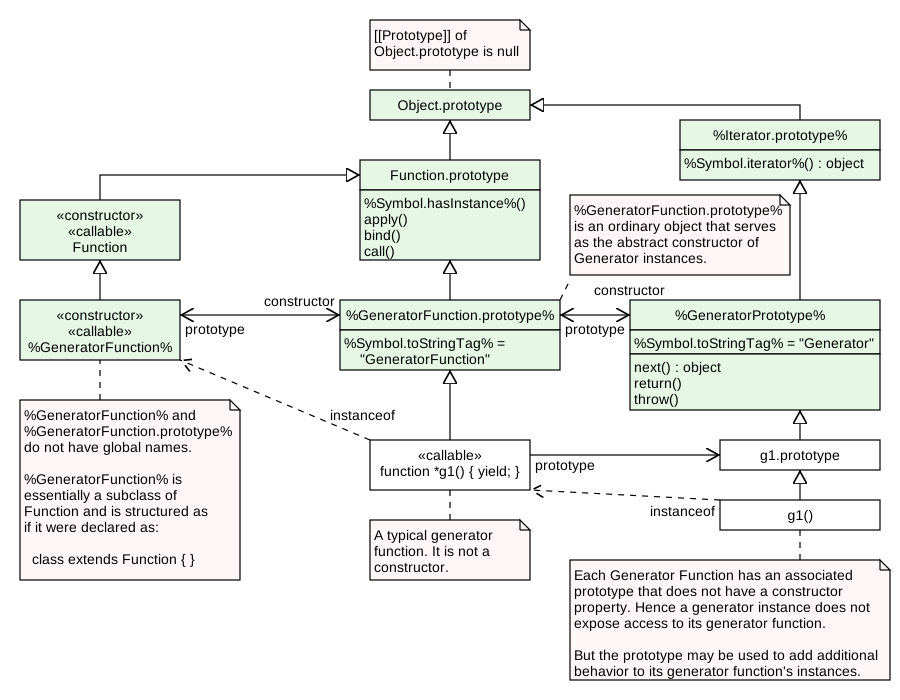
27.6.1 GeneratorFunction Constructor
GeneratorFunction
- %GeneratorFunction%입니다.
Function의 subclass입니다.constructor 가 아니라 function으로 호출될 때 새 GeneratorFunction을 생성하고 초기화합니다. 따라서 function callGeneratorFunction (…)은 같은 arguments를 가진 object creation expressionnew GeneratorFunction (…)과 동등합니다.- class definition의
extendsclause의 value로 사용될 수 있습니다. 지정된 GeneratorFunction behaviour를 상속하려는 subclassconstructors 는 built-in GeneratorFunction behaviour에 필요한 internal slots를 가진 subclass instances를 생성하고 초기화하기 위해 GeneratorFunctionconstructor 에 대한supercall을 포함해야 합니다. generatorfunction objects 를 정의하는 모든 ECMAScript syntactic forms는 GeneratorFunction의 direct instances를 생성합니다. GeneratorFunction subclasses의 instances를 생성하는 syntactic means는 없습니다.
27.6.1.1 GeneratorFunction ( ...paramArgs, bodyArg )
마지막 argument(있다면)는 generator function의 body(executable code)를 지정하고, preceding arguments는 formal parameters를 지정합니다.
이 function은 호출될 때 다음 steps를 수행합니다:
- activeFunc를 active
function object 로 둔다. - bodyArg가 present하지 않으면, bodyArg를 empty String으로 설정한다.
- ?
CreateDynamicFunction (activeFunc, NewTarget,generator , paramArgs, bodyArg)를 반환한다.
27.6.2 GeneratorFunction Constructor의 Properties
GeneratorFunction
- Function
constructor 에서 inherit하는 standard built-infunction object 입니다. - value가
%Function% 인 [[Prototype]] internal slot을 가집니다. - value가
1 𝔽인"length" property를 가집니다. - value가
"GeneratorFunction" 인"name" property를 가집니다. - 다음 properties를 가집니다:
27.6.2.1 GeneratorFunction.prototype
GeneratorFunction.prototype의 initial value는
이 property는 attributes { [[Writable]]:
27.6.3 GeneratorFunction Prototype Object의 Properties
GeneratorFunction prototype object는:
- %GeneratorFunction.prototype%입니다(
Figure 6 참조). ordinary object 입니다.function object 가 아니며, [[ECMAScriptCode]] internal slot 또는Table 26 나Table 94 에 listed된 internal slots 중 any other를 가지지 않습니다.- value가
%Function.prototype% 인 [[Prototype]] internal slot을 가집니다.
27.6.3.1 GeneratorFunction.prototype.constructor
GeneratorFunction.prototype.constructor의 initial value는
이 property는 attributes { [[Writable]]:
27.6.3.2 GeneratorFunction.prototype.prototype
GeneratorFunction.prototype.prototype의 initial value는
이 property는 attributes { [[Writable]]:
27.6.3.3 GeneratorFunction.prototype [ %Symbol.toStringTag% ]
이 property는 attributes { [[Writable]]:
27.6.4 GeneratorFunction Instances
모든 GeneratorFunction instance는 ECMAScript
각 GeneratorFunction instance는 다음 own properties를 가집니다:
27.6.4.1 length
27.6.4.2 name
27.6.4.3 prototype
GeneratorFunction instance가 생성될 때마다 또 다른
이 property는 attributes { [[Writable]]:
Function instances와 달리, GeneratorFunction의
27.7 AsyncGeneratorFunction 객체
AsyncGeneratorFunctions는 보통
27.7.1 AsyncGeneratorFunction Constructor
AsyncGeneratorFunction
- %AsyncGeneratorFunction%입니다.
Function의 subclass입니다.constructor 가 아니라 function으로 호출될 때 새 AsyncGeneratorFunction을 생성하고 초기화합니다. 따라서 function callAsyncGeneratorFunction (...)은 같은 arguments를 가진 object creation expressionnew AsyncGeneratorFunction (...)과 동등합니다.- class definition의
extendsclause의 value로 사용될 수 있습니다. 지정된 AsyncGeneratorFunction behaviour를 상속하려는 subclassconstructors 는 built-in AsyncGeneratorFunction behaviour에 필요한 internal slots를 가진 subclass instances를 생성하고 초기화하기 위해 AsyncGeneratorFunctionconstructor 에 대한supercall을 포함해야 합니다. async generatorfunction objects 를 정의하는 모든 ECMAScript syntactic forms는 AsyncGeneratorFunction의 direct instances를 생성합니다. AsyncGeneratorFunction subclasses의 instances를 생성하는 syntactic means는 없습니다.
27.7.1.1 AsyncGeneratorFunction ( ...paramArgs, bodyArg )
마지막 argument(있다면)는 async generator function의 body(executable code)를 지정하고, preceding arguments는 formal parameters를 지정합니다.
이 function은 호출될 때 다음 steps를 수행합니다:
- activeFunc를 active
function object 로 둔다. - bodyArg가 present하지 않으면, bodyArg를 empty String으로 설정한다.
- ?
CreateDynamicFunction (activeFunc, NewTarget,async-generator , paramArgs, bodyArg)를 반환한다.
27.7.2 AsyncGeneratorFunction Constructor의 Properties
AsyncGeneratorFunction
- Function
constructor 에서 inherit하는 standard built-infunction object 입니다. - value가
%Function% 인 [[Prototype]] internal slot을 가집니다. - value가
1 𝔽인"length" property를 가집니다. - value가
"AsyncGeneratorFunction" 인"name" property를 가집니다. - 다음 properties를 가집니다:
27.7.2.1 AsyncGeneratorFunction.prototype
AsyncGeneratorFunction.prototype의 initial value는
이 property는 attributes { [[Writable]]:
27.7.3 AsyncGeneratorFunction Prototype Object의 Properties
AsyncGeneratorFunction prototype object는:
- %AsyncGeneratorFunction.prototype%입니다.
ordinary object 입니다.function object 가 아니며, [[ECMAScriptCode]] internal slot 또는Table 26 나Table 95 에 listed된 internal slots 중 any other를 가지지 않습니다.- value가
%Function.prototype% 인 [[Prototype]] internal slot을 가집니다.
27.7.3.1 AsyncGeneratorFunction.prototype.constructor
AsyncGeneratorFunction.prototype.constructor의 initial value는
이 property는 attributes { [[Writable]]:
27.7.3.2 AsyncGeneratorFunction.prototype.prototype
AsyncGeneratorFunction.prototype.prototype의 initial value는
이 property는 attributes { [[Writable]]:
27.7.3.3 AsyncGeneratorFunction.prototype [ %Symbol.toStringTag% ]
이 property는 attributes { [[Writable]]:
27.7.4 AsyncGeneratorFunction Instances
모든 AsyncGeneratorFunction instance는 ECMAScript
각 AsyncGeneratorFunction instance는 다음 own properties를 가집니다:
27.7.4.1 length
이 property는 attributes { [[Writable]]:
27.7.4.2 name
27.7.4.3 prototype
AsyncGeneratorFunction instance가 생성될 때마다 또 다른
이 property는 attributes { [[Writable]]:
function instances와 달리, AsyncGeneratorFunction의
27.8 Generator 객체
Generator는 generator function을 호출하여 생성되며
Generator instances는 instance를 생성한 generator function의
27.8.1 %GeneratorPrototype% 객체
%GeneratorPrototype% object는:
- %GeneratorFunction.prototype.prototype%입니다.
ordinary object 입니다.- Generator instance가 아니며 [[GeneratorState]] internal slot을 가지지 않습니다.
- value가
%Iterator.prototype% 인 [[Prototype]] internal slot을 가집니다. - 모든 Generator instances가 indirectly inherit하는 properties를 가집니다.
27.8.1.1 %GeneratorPrototype%.constructor
.constructor의 initial value는
이 property는 attributes { [[Writable]]:
27.8.1.2 %GeneratorPrototype%.next ( value )
- ?
GeneratorResume (this value, value,empty )를 반환한다.
27.8.1.3 %GeneratorPrototype%.return ( value )
이 method는 호출될 때 다음 steps를 수행합니다:
- gen을
this value로 둔다. - completion을
ReturnCompletion (value)로 둔다. - ?
GeneratorResumeAbrupt (gen, completion,empty )를 반환한다.
27.8.1.4 %GeneratorPrototype%.throw ( exception )
이 method는 호출될 때 다음 steps를 수행합니다:
- gen을
this value로 둔다. - completion을
ThrowCompletion (exception)으로 둔다. - ?
GeneratorResumeAbrupt (gen, completion,empty )를 반환한다.
27.8.1.5 %GeneratorPrototype% [ %Symbol.toStringTag% ]
이 property는 attributes { [[Writable]]:
27.8.2 Generator Instances의 Properties
Generator instances는
| Internal Slot | Type | Description |
|---|---|---|
| [[GeneratorState]] |
|
generator의 current execution state. |
| [[GeneratorContext]] |
|
이 generator의 code를 executing할 때 사용되는 |
| [[GeneratorBrand]] |
String 또는 |
different kinds of generators를 distinguish하기 위해 사용되는 brand. |
27.8.3 Generator Abstract Operations
27.8.3.1 GeneratorStart ( gen, genBody )
The abstract operation GeneratorStart takes arguments gen (a Generator) and genBody (a
Assert : gen.[[GeneratorState]]는suspended-start 이다.- genContext를
running execution context 로 둔다. - genContext의 Generator component를 gen으로 설정한다.
- closure를 parameters가 없고 genBody를 captures하며 호출될 때 다음 steps를 수행하는 new
Abstract Closure 로 둔다:- acGenContext를
running execution context 로 둔다. - acGen을 acGenContext의 Generator component로 둔다.
- genBody가
Parse Node 이면, 다음을 수행한다.- result를
Completion (Evaluation of genBody)로 둔다.
- result를
- Else,
Assert : genBody는 parameters가 없는Abstract Closure 이다.- result를
Completion (genBody())로 둔다.
Assert : 여기로 return한다면, generator는 exception을 throw했거나 implicit 또는 explicit return 중 하나를 수행했다.execution context stack 에서 acGenContext를 remove하고,execution context stack 의 top에 있는execution context 를running execution context 로 restore한다.- acGen.[[GeneratorState]]를
completed 로 설정한다. NOTE : generator가completed state에 들어가면 결코 이를 떠나지 않으며, its associatedexecution context 는 결코 resumed되지 않는다. acGen과 associated된 any execution state는 이 시점에서 discarded될 수 있다.- result가
normal completion 이면, 다음을 수행한다.- resultValue를
undefined 로 둔다.
- resultValue를
- Else if result가
return completion 이면, 다음을 수행한다.- resultValue를 result.[[Value]]로 둔다.
- Else,
Assert : result는throw completion 이다.- ? result를 반환한다.
NormalCompletion (CreateIteratorResultObject (resultValue,true ))를 반환한다.
- acGenContext를
- genContext의 code evaluation state를, 그
execution context 에 대해 evaluation이 resumed될 때 closure가 no arguments로 called되도록 설정한다. - gen.[[GeneratorContext]]를 genContext로 설정한다.
unused 를 반환한다.
27.8.3.2 GeneratorValidate ( gen, genBrand )
The abstract operation GeneratorValidate takes arguments gen (an
- ?
RequireInternalSlot (gen, [[GeneratorState]])를 수행한다. - ?
RequireInternalSlot (gen, [[GeneratorBrand]])를 수행한다. - gen.[[GeneratorBrand]]가 genBrand가 아니면,
TypeError exception을 throw한다. Assert : gen은 [[GeneratorContext]] internal slot을 가진다.- state를 gen.[[GeneratorState]]로 둔다.
- state가
executing 이면,TypeError exception을 throw한다. - state를 반환한다.
27.8.3.3 GeneratorResume ( gen, value, genBrand )
The abstract operation GeneratorResume takes arguments gen (an
- state를 ?
GeneratorValidate (gen, genBrand)로 둔다. - state가
completed 이면,CreateIteratorResultObject (undefined ,true )를 반환한다. Assert : state는suspended-start 또는suspended-yield 중 하나이다.- genContext를 gen.[[GeneratorContext]]로 둔다.
- gen.[[GeneratorState]]를
executing 으로 설정한다. - ?
RunSuspendedContext (genContext,NormalCompletion (value))를 반환한다.
27.8.3.4 GeneratorResumeAbrupt ( gen, abruptCompletion, genBrand )
The abstract operation GeneratorResumeAbrupt takes arguments gen (an
- state를 ?
GeneratorValidate (gen, genBrand)로 둔다. - state가
suspended-start 이면, 다음을 수행한다.- gen.[[GeneratorState]]를
completed 로 설정한다. NOTE : generator가completed state에 들어가면 결코 이를 떠나지 않으며, its associatedexecution context 는 결코 resumed되지 않는다. gen과 associated된 any execution state는 이 시점에서 discarded될 수 있다.- state를
completed 로 설정한다.
- gen.[[GeneratorState]]를
- state가
completed 이면, 다음을 수행한다.- abruptCompletion이
return completion 이면, 다음을 수행한다.CreateIteratorResultObject (abruptCompletion.[[Value]],true )를 반환한다.
- ? abruptCompletion을 반환한다.
- abruptCompletion이
Assert : state는suspended-yield 이다.- genContext를 gen.[[GeneratorContext]]로 둔다.
- gen.[[GeneratorState]]를
executing 으로 설정한다. - ?
RunSuspendedContext (genContext, abruptCompletion)를 반환한다.
27.8.3.5 GetGeneratorKind ( )
The abstract operation GetGeneratorKind takes no arguments and returns
- genContext를
running execution context 로 둔다. - genContext가 Generator component를 가지지 않으면,
non-generator 를 반환한다. - gen을 genContext의 Generator component로 둔다.
- gen이 [[AsyncGeneratorState]] internal slot을 가지면,
async 를 반환한다. sync 를 반환한다.
27.8.3.6 GeneratorYield ( iteratorResult )
The abstract operation GeneratorYield takes argument iteratorResult (an Object that conforms to the
- genContext를 실행 중인 실행 컨텍스트라 하자.
Assert : genContext는 제너레이터의 실행 컨텍스트이다.- gen을 genContext의 Generator 컴포넌트 값이라 하자.
Assert :GetGeneratorKind ()는sync 이다.- gen.[[GeneratorState]]를
suspended-yield 로 설정한다. - ?
RunCallerContext (iteratorResult)를 반환한다.
27.8.3.7 Yield ( arg )
The abstract operation Yield takes argument arg (an
- genKind를
GetGeneratorKind ()로 둔다. - genKind가
async 이면, ?AsyncGeneratorYield (?Await (arg))를 반환한다. - ?
GeneratorYield (CreateIteratorResultObject (arg,false ))를 반환한다.
27.8.3.8 CreateIteratorFromClosure ( closure, genBrand, genProto [ , extraSlots ] )
The abstract operation CreateIteratorFromClosure takes arguments closure (an
NOTE : closure는IteratorResult object 를 yield하기 위해Yield operation의 uses를 contain할 수 있다.- extraSlots가 present하지 않으면, extraSlots를 new empty
List 로 설정한다. - internalSlotsList를 extraSlots와 « [[GeneratorState]], [[GeneratorContext]], [[GeneratorBrand]] »의 list-concatenation으로 둔다.
- gen을
OrdinaryObjectCreate (genProto, internalSlotsList)로 둔다. - gen.[[GeneratorBrand]]를 genBrand로 설정한다.
- gen.[[GeneratorState]]를
suspended-start 로 설정한다. - callerContext를
running execution context 로 둔다. - calleeContext를 new
execution context 로 둔다. - calleeContext의 Function을
null 로 설정한다. - calleeContext의
Realm 을 currentRealm Record 로 설정한다. - calleeContext의 ScriptOrModule을 callerContext의 ScriptOrModule로 설정한다.
- callerContext가 already suspended가 아니면, callerContext를 suspend한다.
- calleeContext를
execution context stack 에 Push한다; calleeContext는 이제running execution context 이다. GeneratorStart (gen, closure)를 수행한다.execution context stack 에서 calleeContext를 remove하고 callerContext를running execution context 로 restore한다.- gen을 반환한다.
27.9 AsyncGenerator 객체
AsyncGenerator는 async generator function을 호출하여 생성되며
AsyncGenerator instances는 instance를 생성한 async generator function의
27.9.1 %AsyncGeneratorPrototype% 객체
%AsyncGeneratorPrototype% object는:
- %AsyncGeneratorFunction.prototype.prototype%입니다.
ordinary object 입니다.- AsyncGenerator instance가 아니며 [[AsyncGeneratorState]] internal slot을 가지지 않습니다.
- value가
%AsyncIteratorPrototype% 인 [[Prototype]] internal slot을 가집니다. - 모든 AsyncGenerator instances가 indirectly inherit하는 properties를 가집니다.
27.9.1.1 %AsyncGeneratorPrototype%.constructor
.constructor의 initial value는
이 property는 attributes { [[Writable]]:
27.9.1.2 %AsyncGeneratorPrototype%.next ( value )
- gen을
this value로 둔다. - promiseCapability를 !
NewPromiseCapability (%Promise% )로 둔다. - result를
Completion (AsyncGeneratorValidate (gen,empty ))로 둔다. IfAbruptRejectPromise (result, promiseCapability).- state를 gen.[[AsyncGeneratorState]]로 둔다.
- state가
completed 이면, 다음을 수행한다.- iteratorResult를
CreateIteratorResultObject (undefined ,true )로 둔다. - !
Call (promiseCapability.[[Resolve]],undefined , « iteratorResult »)를 수행한다. - promiseCapability.[[Promise]]를 반환한다.
- iteratorResult를
- completion을
NormalCompletion (value)로 둔다. AsyncGeneratorEnqueue (gen, completion, promiseCapability)를 수행한다.- state가
suspended-start 또는suspended-yield 중 하나이면, 다음을 수행한다.AsyncGeneratorResume (gen, completion)을 수행한다.
- Else,
Assert : state는executing 또는draining-queue 중 하나이다.
- promiseCapability.[[Promise]]를 반환한다.
27.9.1.3 %AsyncGeneratorPrototype%.return ( value )
- gen을
this value로 둔다. - promiseCapability를 !
NewPromiseCapability (%Promise% )로 둔다. - result를
Completion (AsyncGeneratorValidate (gen,empty ))로 둔다. IfAbruptRejectPromise (result, promiseCapability).- completion을
ReturnCompletion (value)로 둔다. AsyncGeneratorEnqueue (gen, completion, promiseCapability)를 수행한다.- state를 gen.[[AsyncGeneratorState]]로 둔다.
- state가
suspended-start 또는completed 중 하나이면, 다음을 수행한다.- gen.[[AsyncGeneratorState]]를
draining-queue 로 설정한다. AsyncGeneratorAwaitReturn (gen)을 수행한다.
- gen.[[AsyncGeneratorState]]를
- Else if state가
suspended-yield 이면, 다음을 수행한다.AsyncGeneratorResume (gen, completion)을 수행한다.
- Else,
Assert : state는executing 또는draining-queue 중 하나이다.
- promiseCapability.[[Promise]]를 반환한다.
27.9.1.4 %AsyncGeneratorPrototype%.throw ( exception )
- gen을
this value로 둔다. - promiseCapability를 !
NewPromiseCapability (%Promise% )로 둔다. - result를
Completion (AsyncGeneratorValidate (gen,empty ))로 둔다. IfAbruptRejectPromise (result, promiseCapability).- state를 gen.[[AsyncGeneratorState]]로 둔다.
- state가
suspended-start 이면, 다음을 수행한다.- gen.[[AsyncGeneratorState]]를
completed 로 설정한다. - state를
completed 로 설정한다.
- gen.[[AsyncGeneratorState]]를
- state가
completed 이면, 다음을 수행한다.- !
Call (promiseCapability.[[Reject]],undefined , « exception »)를 수행한다. - promiseCapability.[[Promise]]를 반환한다.
- !
- completion을
ThrowCompletion (exception)으로 둔다. AsyncGeneratorEnqueue (gen, completion, promiseCapability)를 수행한다.- state가
suspended-yield 이면, 다음을 수행한다.AsyncGeneratorResume (gen, completion)을 수행한다.
- Else,
Assert : state는executing 또는draining-queue 중 하나이다.
- promiseCapability.[[Promise]]를 반환한다.
27.9.1.5 %AsyncGeneratorPrototype% [ %Symbol.toStringTag% ]
이 property는 attributes { [[Writable]]:
27.9.2 AsyncGenerator Instances의 Properties
AsyncGenerator instances는 아래에 described된 internal slots로 initially created됩니다:
| Internal Slot | Type | Description |
|---|---|---|
| [[AsyncGeneratorState]] | async generator의 current execution state. | |
| [[AsyncGeneratorContext]] | 이 async generator의 code를 executing할 때 사용되는 |
|
| [[AsyncGeneratorQueue]] | async generator를 resume하기 위한 requests를 represent하는 |
|
| [[GeneratorBrand]] | String 또는 |
different kinds of async generators를 distinguish하기 위해 사용되는 brand. |
27.9.3 AsyncGenerator Abstract Operations
27.9.3.1 AsyncGeneratorRequest Records
AsyncGeneratorRequest는 async generator가 어떻게 재개되어야 하는지에 대한 정보를 저장하는 데 사용되는
이는 다음 fields를 가집니다:
| Field Name | Value | Meaning |
|---|---|---|
| [[Completion]] | async generator를 resume하기 위해 사용되어야 하는 |
|
| [[Capability]] | 이 request와 associated된 promise capabilities. |
27.9.3.2 AsyncGeneratorStart ( gen, genBody )
The abstract operation AsyncGeneratorStart takes arguments gen (an AsyncGenerator) and genBody (a
Assert : gen.[[AsyncGeneratorState]]는suspended-start 이다.- genContext를
running execution context 로 둔다. - genContext의 Generator component를 gen으로 설정한다.
- closure를 parameters가 없고 genBody를 captures하며 호출될 때 다음 steps를 수행하는 new
Abstract Closure 로 둔다:- acGenContext를
running execution context 로 둔다. - acGen을 acGenContext의 Generator component로 둔다.
- genBody가
Parse Node 이면, 다음을 수행한다.- result를
Completion (Evaluation of genBody)로 둔다.
- result를
- Else,
Assert : genBody는 parameters가 없는Abstract Closure 이다.- result를
Completion (genBody())로 둔다.
Assert : 여기로 return한다면, async generator는 exception을 throw했거나 implicit 또는 explicit return 중 하나를 수행했다.execution context stack 에서 acGenContext를 remove하고,execution context stack 의 top에 있는execution context 를running execution context 로 restore한다.- acGen.[[AsyncGeneratorState]]를
draining-queue 로 설정한다. - result가
normal completion 이면, result를NormalCompletion (undefined )로 설정한다. - result가
return completion 이면, result를NormalCompletion (result.[[Value]])로 설정한다. AsyncGeneratorCompleteStep (acGen, result,true )를 수행한다.AsyncGeneratorDrainQueue (acGen)를 수행한다.NormalCompletion (undefined )를 반환한다.
- acGenContext를
- genContext의 code evaluation state를, 그
execution context 에 대해 evaluation이 resumed될 때 closure가 no arguments로 called되도록 설정한다. - gen.[[AsyncGeneratorContext]]를 genContext로 설정한다.
- gen.[[AsyncGeneratorQueue]]를 new empty
List 로 설정한다. unused 를 반환한다.
27.9.3.3 AsyncGeneratorValidate ( gen, genBrand )
The abstract operation AsyncGeneratorValidate takes arguments gen (an
- ?
RequireInternalSlot (gen, [[AsyncGeneratorContext]])를 수행한다. - ?
RequireInternalSlot (gen, [[AsyncGeneratorState]])를 수행한다. - ?
RequireInternalSlot (gen, [[AsyncGeneratorQueue]])를 수행한다. - gen.[[GeneratorBrand]]가 genBrand가 아니면,
TypeError exception을 throw한다. unused 를 반환한다.
27.9.3.4 AsyncGeneratorEnqueue ( gen, completion, promiseCapability )
The abstract operation AsyncGeneratorEnqueue takes arguments gen (an AsyncGenerator), completion (a
- request를
AsyncGeneratorRequest { [[Completion]]: completion, [[Capability]]: promiseCapability }로 둔다. - request를 gen.[[AsyncGeneratorQueue]]에 append한다.
unused 를 반환한다.
27.9.3.5 AsyncGeneratorCompleteStep ( gen, completion, done [ , realm ] )
The abstract operation AsyncGeneratorCompleteStep takes arguments gen (an AsyncGenerator), completion (a
Assert : gen.[[AsyncGeneratorQueue]]는 empty가 아니다.- next를 gen.[[AsyncGeneratorQueue]]의 first element로 둔다.
- gen.[[AsyncGeneratorQueue]]에서 first element를 remove한다.
- promiseCapability를 next.[[Capability]]로 둔다.
- value를 completion.[[Value]]로 둔다.
- completion이
throw completion 이면, 다음을 수행한다.- !
Call (promiseCapability.[[Reject]],undefined , « value »)를 수행한다.
- !
- Else,
Assert : completion은normal completion 이다.- realm이 present하면, 다음을 수행한다.
- oldRealm을
running execution context 의Realm 으로 둔다. running execution context 의Realm 을 realm으로 설정한다.- iteratorResult를
CreateIteratorResultObject (value, done)로 둔다. running execution context 의Realm 을 oldRealm으로 설정한다.
- oldRealm을
- Else,
- iteratorResult를
CreateIteratorResultObject (value, done)로 둔다.
- iteratorResult를
- !
Call (promiseCapability.[[Resolve]],undefined , « iteratorResult »)를 수행한다.
unused 를 반환한다.
27.9.3.6 AsyncGeneratorResume ( gen, completion )
The abstract operation AsyncGeneratorResume takes arguments gen (an AsyncGenerator) and completion (a
Assert : gen.[[AsyncGeneratorState]]는suspended-start 또는suspended-yield 중 하나이다.- genContext를 gen.[[AsyncGeneratorContext]]로 둔다.
- gen.[[AsyncGeneratorState]]를
executing 으로 설정한다. - !
RunSuspendedContext (genContext, completion)을 수행한다. unused 를 반환한다.
27.9.3.7 AsyncGeneratorUnwrapYieldResumption ( resumptionValue )
The abstract operation AsyncGeneratorUnwrapYieldResumption takes argument resumptionValue (a
- resumptionValue가
return completion 이 아니면, ? resumptionValue를 반환한다. - awaited를
Completion (Await (resumptionValue.[[Value]]))로 둔다. - awaited가
throw completion 이면, ? awaited를 반환한다. Assert : awaited는normal completion 이다.ReturnCompletion (awaited.[[Value]])를 반환한다.
27.9.3.8 AsyncGeneratorYield ( arg )
The abstract operation AsyncGeneratorYield takes argument arg (an
- genContext를 실행 중인 실행 컨텍스트라 하자.
Assert : genContext는 제너레이터의 실행 컨텍스트이다.- gen을 genContext의 Generator 컴포넌트 값이라 하자.
Assert :GetGeneratorKind ()는async 이다.- completion을
NormalCompletion (arg)이라 하자. Assert : 실행 컨텍스트 스택에는 최소 두 개의 요소가 있다.- previousContext를 실행 컨텍스트 스택의 위에서 두 번째 요소라 하자.
- previousRealm을 previousContext의
Realm 이라 하자. AsyncGeneratorCompleteStep (gen, completion,false , previousRealm)을 수행한다.- queue를 gen.[[AsyncGeneratorQueue]]라 하자.
- queue가 비어 있지 않으면,
NOTE : 실행은 제너레이터를 일시 중단하지 않고 계속된다.- toYield를 queue의 첫 번째 요소라 하자.
- resumptionValue를
Completion (toYield.[[Completion]])이라 하자. - ?
AsyncGeneratorUnwrapYieldResumption (resumptionValue)를 반환한다.
- gen.[[AsyncGeneratorState]]를
suspended-yield 로 설정한다. - resumptionValue를
Completion (RunCallerContext (undefined ))이라 하자. - ?
AsyncGeneratorUnwrapYieldResumption (resumptionValue)를 반환한다.
27.9.3.9 AsyncGeneratorAwaitReturn ( gen )
The abstract operation AsyncGeneratorAwaitReturn takes argument gen (an AsyncGenerator) and returns
Assert : gen.[[AsyncGeneratorState]]는draining-queue 이다.- queue를 gen.[[AsyncGeneratorQueue]]로 둔다.
Assert : queue는 empty가 아니다.- next를 queue의 first element로 둔다.
- completion을
Completion (next.[[Completion]])으로 둔다. Assert : completion은return completion 이다.- promiseCompletion을
Completion (PromiseResolve (%Promise% , completion.[[Value]]))로 둔다. - promiseCompletion이
abrupt completion 이면, 다음을 수행한다.AsyncGeneratorCompleteStep (gen, promiseCompletion,true )를 수행한다.AsyncGeneratorDrainQueue (gen)를 수행한다.unused 를 반환한다.
Assert : promiseCompletion은normal completion 이다.- promise를 promiseCompletion.[[Value]]로 둔다.
- fulfilledClosure를 parameters (value)를 가지고 gen을 captures하며 호출될 때 다음 steps를 수행하는 new
Abstract Closure 로 둔다:Assert : gen.[[AsyncGeneratorState]]는draining-queue 이다.- result를
NormalCompletion (value)로 둔다. AsyncGeneratorCompleteStep (gen, result,true )를 수행한다.AsyncGeneratorDrainQueue (gen)를 수행한다.NormalCompletion (undefined )를 반환한다.
- onFulfilled를
CreateBuiltinFunction (fulfilledClosure, 1,"" , « »)로 둔다. - rejectedClosure를 parameters (reason)를 가지고 gen을 captures하며 호출될 때 다음 steps를 수행하는 new
Abstract Closure 로 둔다:Assert : gen.[[AsyncGeneratorState]]는draining-queue 이다.- result를
ThrowCompletion (reason)으로 둔다. AsyncGeneratorCompleteStep (gen, result,true )를 수행한다.AsyncGeneratorDrainQueue (gen)를 수행한다.NormalCompletion (undefined )를 반환한다.
- onRejected를
CreateBuiltinFunction (rejectedClosure, 1,"" , « »)로 둔다. PerformPromiseThen (promise, onFulfilled, onRejected)를 수행한다.unused 를 반환한다.
27.9.3.10 AsyncGeneratorDrainQueue ( gen )
The abstract operation AsyncGeneratorDrainQueue takes argument gen (an AsyncGenerator) and returns
Assert : gen.[[AsyncGeneratorState]]는draining-queue 이다.- queue를 gen.[[AsyncGeneratorQueue]]로 둔다.
- Repeat, while queue is not empty,
- next를 queue의 first element로 둔다.
- completion을
Completion (next.[[Completion]])으로 둔다. - completion이
return completion 이면, 다음을 수행한다.AsyncGeneratorAwaitReturn (gen)을 수행한다.unused 를 반환한다.
- completion이
normal completion 이면, 다음을 수행한다.- completion을
NormalCompletion (undefined )로 설정한다.
- completion을
AsyncGeneratorCompleteStep (gen, completion,true )를 수행한다.
- gen.[[AsyncGeneratorState]]를
completed 로 설정한다. unused 를 반환한다.
27.10 AsyncFunction 객체
AsyncFunctions는 보통
27.10.1 AsyncFunction Constructor
AsyncFunction
- %AsyncFunction%입니다.
Function의 subclass입니다.constructor 가 아니라 function으로 호출될 때 새 AsyncFunction을 생성하고 초기화합니다. 따라서 function callAsyncFunction(…)은 같은 arguments를 가진 object creation expressionnew AsyncFunction(…)과 동등합니다.- class definition의
extendsclause의 value로 사용될 수 있습니다. 지정된 AsyncFunction behaviour를 상속하려는 subclassconstructors 는 built-in async function behaviour에 필요한 internal slots를 가진 subclass instance를 생성하고 초기화하기 위해 AsyncFunctionconstructor 에 대한supercall을 포함해야 합니다. asyncfunction objects 를 정의하는 모든 ECMAScript syntactic forms는 AsyncFunction의 direct instances를 생성합니다. AsyncFunction subclasses의 instances를 생성하는 syntactic means는 없습니다.
27.10.1.1 AsyncFunction ( ...paramArgs, bodyArg )
마지막 argument(있다면)는 async function의 body(executable code)를 지정합니다. preceding arguments는 formal parameters를 지정합니다.
이 function은 호출될 때 다음 steps를 수행합니다:
- activeFunc를 active
function object 로 둔다. - bodyArg가 present하지 않으면, bodyArg를 empty String으로 설정한다.
- ?
CreateDynamicFunction (activeFunc, NewTarget,async , paramArgs, bodyArg)를 반환한다.
27.10.2 AsyncFunction Constructor의 Properties
AsyncFunction
- Function
constructor 에서 inherit하는 standard built-infunction object 입니다. - value가
%Function% 인 [[Prototype]] internal slot을 가집니다. - value가
1 𝔽인"length" property를 가집니다. - value가
"AsyncFunction" 인"name" property를 가집니다. - 다음 properties를 가집니다:
27.10.2.1 AsyncFunction.prototype
AsyncFunction.prototype의 initial value는
이 property는 attributes { [[Writable]]:
27.10.3 AsyncFunction Prototype Object의 Properties
AsyncFunction prototype object는:
- %AsyncFunction.prototype%입니다.
ordinary object 입니다.function object 가 아니며, [[ECMAScriptCode]] internal slot 또는Table 26 에 listed된 internal slots 중 any other를 가지지 않습니다.- value가
%Function.prototype% 인 [[Prototype]] internal slot을 가집니다.
27.10.3.1 AsyncFunction.prototype.constructor
AsyncFunction.prototype.constructor의 initial value는
이 property는 attributes { [[Writable]]:
27.10.3.2 AsyncFunction.prototype [ %Symbol.toStringTag% ]
이 property는 attributes { [[Writable]]:
27.10.4 AsyncFunction Instances
모든 AsyncFunction instance는 ECMAScript
각 AsyncFunction instance는 다음 own properties를 가집니다:
27.10.4.1 length
27.10.4.2 name
27.10.5 Async Functions Abstract Operations
27.10.5.1 AsyncFunctionStart ( promiseCapability, asyncFuncBody )
The abstract operation AsyncFunctionStart takes arguments promiseCapability (a
- runningContext를
running execution context 로 둔다. - asyncContext를 runningContext의 copy로 둔다.
NOTE : execution state를 copy하는 것은AsyncBlockStart 가 its execution을 resume하기 위해 required된다. currently executing context를 resume하는 것은 ill-defined이다.AsyncBlockStart (promiseCapability, asyncFuncBody, asyncContext)를 수행한다.unused 를 반환한다.
27.10.5.2 AsyncBlockStart ( promiseCapability, asyncBody, asyncContext )
The abstract operation AsyncBlockStart takes arguments promiseCapability (a
- closure를 parameters가 없고 promiseCapability와 asyncBody를 captures하며 호출될 때 다음 steps를 수행하는 new
Abstract Closure 로 둔다:- acAsyncContext를
running execution context 로 둔다. - asyncBody가
Parse Node 이면, 다음을 수행한다.- result를
Completion (Evaluation of asyncBody)로 둔다.
- result를
- Else,
Assert : asyncBody는 parameters가 없는Abstract Closure 이다.- result를
Completion (asyncBody())로 둔다.
Assert : 여기로 return한다면, async function은 exception을 throw했거나 implicit 또는 explicit return을 수행했다; all awaiting is done.execution context stack 에서 acAsyncContext를 remove하고,execution context stack 의 top에 있는execution context 를running execution context 로 restore한다.- result가
normal completion 이면, 다음을 수행한다.- !
Call (promiseCapability.[[Resolve]],undefined , «undefined »)를 수행한다.
- !
- Else if result가
return completion 이면, 다음을 수행한다.- !
Call (promiseCapability.[[Resolve]],undefined , « result.[[Value]] »)를 수행한다.
- !
- Else,
Assert : result는throw completion 이다.- !
Call (promiseCapability.[[Reject]],undefined , « result.[[Value]] »)를 수행한다.
NormalCompletion (unused )를 반환한다.
- acAsyncContext를
- asyncContext의 code evaluation state를, 그
execution context 에 대해 evaluation이 resumed될 때 closure가 no arguments로 called되도록 설정한다. - result를 !
RunSuspendedContext (asyncContext,NormalCompletion (empty ))로 둔다. Assert : result는unused 이다.NOTE : result values의 possible sources는Await 이거나, async function이 anything을 await하지 않는 경우 위의 step1.i 이다.unused 를 반환한다.
27.10.5.3 Await ( arg )
The abstract operation Await takes argument arg (an
- asyncContext를 실행 중인 실행 컨텍스트라 하자.
- promise를 ?
PromiseResolve (%Promise% , arg)라 하자. - fulfilledClosure를 asyncContext를 캡처하고 호출될 때 다음 단계를 수행하는, 매개변수 (v)를 갖는 새로운
Abstract Closure 라 하자.Completion (RunSuspendedContext (asyncContext,NormalCompletion (v)))을 수행한다.NOTE :RunSuspendedContext 가 반환한Completion Record 는 의도적으로 무시된다.NormalCompletion (undefined )을 반환한다.
- onFulfilled를
CreateBuiltinFunction (fulfilledClosure, 1,"" , « »)라 하자. - rejectedClosure를 asyncContext를 캡처하고 호출될 때 다음 단계를 수행하는, 매개변수 (reason)를 갖는 새로운
Abstract Closure 라 하자.Completion (RunSuspendedContext (asyncContext,ThrowCompletion (reason)))을 수행한다.NOTE :RunSuspendedContext 가 반환한Completion Record 는 의도적으로 무시된다.NormalCompletion (undefined )을 반환한다.
- onRejected를
CreateBuiltinFunction (rejectedClosure, 1,"" , « »)라 하자. PerformPromiseThen (promise, onFulfilled, onRejected)을 수행한다.- ?
RunCallerContext (empty )를 반환한다.