16 ECMAScript 언어: Scripts and Modules
16.1 Scripts
Syntax
16.1.1 Static Semantics: Early Errors
-
ScriptBody 의LexicallyDeclaredNames 가 duplicate entry를 contain하면 Syntax Error입니다. -
ScriptBody 의LexicallyDeclaredNames 의 어떤 element가ScriptBody 의VarDeclaredNames 에도 occur하면 Syntax Error입니다.
-
StatementList Contains super이면,super를 contain하는 source text가direct eval 에 의해 processed되고 있는 eval code인 경우를 제외하고 Syntax Error입니다.direct eval 안의super에 대한 additionalearly error rule은19.2.1.1 에 defined되어 있습니다. -
StatementList Contains NewTarget 이면,NewTarget 을 contain하는 source text가direct eval 에 의해 processed되고 있는 eval code인 경우를 제외하고 Syntax Error입니다.direct eval 안의NewTarget 에 대한 additionalearly error rule은19.2.1.1 에 defined되어 있습니다. -
argument « »를 가진
StatementList 의ContainsDuplicateLabels 가true 이면 Syntax Error입니다. -
argument « »를 가진
StatementList 의ContainsUndefinedBreakTarget 이true 이면 Syntax Error입니다. -
arguments « »와 « »를 가진
StatementList 의ContainsUndefinedContinueTarget 이true 이면 Syntax Error입니다. -
argument « »를 가진
StatementList 의AllPrivateIdentifiersValid 가false 이면,ScriptBody 를 contain하는 source text가direct eval 에 의해 processed되고 있는 eval code인 경우를 제외하고 Syntax Error입니다. -
StatementList 의ContainsUsing 이true 이면 Syntax Error이다.
16.1.2 Static Semantics: ScriptIsStrict
The
ScriptBody 가 present하고ScriptBody 의Directive Prologue 가Use Strict Directive 를 contain하면,true 를 반환한다.false 를 반환한다.
16.1.3 Runtime Semantics: Evaluation
undefined 를 반환한다.
16.1.4 Script Records
Script Record는 evaluating되고 있는 script에 대한 information을 encapsulate합니다. 각 script record는
| Field Name | Value Type | Meaning |
|---|---|---|
| [[Realm]] |
a |
이 script가 created된 |
| [[ECMAScriptCode]] |
a |
이 script의 source text를 parsing한 result입니다. |
| [[LoadedModules]] |
a |
이 script에 의해 imported된 specifier string에서 resolved |
| [[HostDefined]] |
anything (default value is |
script와 additional information을 associate해야 하는 |
16.1.5 ParseScript ( sourceText, realm, hostDefined )
The abstract operation ParseScript takes arguments sourceText (a String or a sequence of Unicode code points), realm (a
- script를
ParseText (sourceText,Script )로 둔다. - script가 error의
List 이면, script를 반환한다. Script Record { [[Realm]]: realm, [[ECMAScriptCode]]: script, [[LoadedModules]]: « », [[HostDefined]]: hostDefined }를 반환한다.
implementation은 해당 script source text에 대해 ParseScript를 evaluation하기 전에 script source text를 parse하고 Early Error condition에 대해 analyse할 수 있습니다. 그러나 any error의 reporting은 이 specification이 실제로 해당 source text에 대해 ParseScript를 수행하는 point까지 deferred되어야 합니다.
16.1.6 ScriptEvaluation ( scriptRecord )
The abstract operation ScriptEvaluation takes argument scriptRecord (a
- globalEnv를 scriptRecord.[[Realm]].[[GlobalEnv]]로 둔다.
- scriptContext를 새
ECMAScript code execution context 로 둔다. - scriptContext의 Function을
null 로 설정한다. - scriptContext의
Realm 을 scriptRecord.[[Realm]]로 설정한다. - scriptContext의 ScriptOrModule을 scriptRecord로 설정한다.
- scriptContext의 VariableEnvironment를 globalEnv로 설정한다.
- scriptContext의 LexicalEnvironment를 globalEnv로 설정한다.
- scriptContext의 PrivateEnvironment를
null 로 설정한다. running execution context 를 suspend한다.- scriptContext를
execution context stack 에 push한다; scriptContext는 이제running execution context 이다. - scriptNode를 scriptRecord.[[ECMAScriptCode]]로 둔다.
- result를
Completion (GlobalDeclarationInstantiation (scriptNode, globalEnv))로 둔다. - result가
normal completion 이면, 다음을 수행한다.- result를
Completion (scriptNode의Evaluation )으로 설정한다. - result가
normal completion 이고 result.[[Value]]가empty 이면, 다음을 수행한다.- result를
NormalCompletion (undefined )로 설정한다.
- result를
- result를
- scriptContext를 suspend하고
execution context stack 에서 remove한다. Assert :execution context stack 은 empty가 아니다.execution context stack 의 top에 now 있는 context를running execution context 로 resume한다.- ? result를 반환한다.
16.1.7 GlobalDeclarationInstantiation ( script, envRecord )
The abstract operation GlobalDeclarationInstantiation takes arguments script (a
script를 evaluating하기 위해
called될 때 다음 step을 수행합니다:
- lexicalNames를 script의
LexicallyDeclaredNames 라고 하자. - variableNames를 script의
VarDeclaredNames 라고 하자. - lexicalNames의 각 요소 name에 대해 다음을 수행한다.
HasLexicalDeclaration (envRecord, name)이true 이면,SyntaxError 예외를 던진다.- hasRestrictedGlobal을 ?
HasRestrictedGlobalProperty (envRecord, name)라고 하자. NOTE : 전역var및function바인딩은 non-strictdirect eval 에 의해 도입된 것을 제외하고는 non-configurable이므로 restricted global properties이다.- hasRestrictedGlobal이
true 이면,SyntaxError 예외를 던진다.
- variableNames의 각 요소 name에 대해 다음을 수행한다.
HasLexicalDeclaration (envRecord, name)이true 이면,SyntaxError 예외를 던진다.
- variableDecls를 script의
VarScopedDeclarations 라고 하자. - funcsToInitialize를 새로운 빈
List 라고 하자. - declaredFuncNames를 새로운 빈
List 라고 하자. - variableDecls의 각 요소 variableDecl에 대해,
List 의 역순으로 다음을 수행한다.- variableDecl이
VariableDeclaration ,ForBinding 또는BindingIdentifier 중 어느 것도 아니면,Assert : variableDecl은FunctionDeclaration ,GeneratorDeclaration ,AsyncFunctionDeclaration 또는AsyncGeneratorDeclaration 중 하나이다.NOTE : 같은 이름에 대해 여러 함수 선언이 있으면, 마지막 선언이 사용된다.- funcName을 variableDecl의
BoundNames 의 유일한 요소라고 하자. - declaredFuncNames가 funcName을 포함하지 않으면,
- funcDefinable을 ?
CanDeclareGlobalFunction (envRecord, funcName)이라고 하자. - funcDefinable이
false 이면,TypeError 예외를 던진다. - funcName을 declaredFuncNames에 추가한다.
- variableDecl을 funcsToInitialize의 첫 번째 요소로 삽입한다.
- funcDefinable을 ?
- variableDecl이
- declaredVariableNames를 새로운 빈
List 라고 하자. - variableDecls의 각 요소 variableDecl에 대해 다음을 수행한다.
- variableDecl이
VariableDeclaration ,ForBinding 또는BindingIdentifier 중 하나이면,- variableDecl의
BoundNames 의 각 String name에 대해 다음을 수행한다.- declaredFuncNames가 name을 포함하지 않으면,
- variableDefinable을 ?
CanDeclareGlobalVar (envRecord, name)라고 하자. - variableDefinable이
false 이면,TypeError 예외를 던진다. - declaredVariableNames가 name을 포함하지 않으면,
- name을 declaredVariableNames에 추가한다.
- variableDefinable을 ?
- declaredFuncNames가 name을 포함하지 않으면,
- variableDecl의
- variableDecl이
NOTE : 전역 객체가ordinary object 이면 이 알고리즘 단계 이후에는 abnormal termination이 발생하지 않는다. 하지만 전역 객체가Proxy exotic object 이면 다음 단계 중 일부에서 abnormal termination을 유발하는 동작을 보일 수 있다.host 가 웹 브라우저이거나 그 밖에Block-Level Function Declarations Web Legacy Compatibility Semantics 를 지원하면,- strict를 script의
ScriptIsStrict 라고 하자. - strict가
false 이면,- declaredFuncOrVariableNames를 declaredFuncNames와 declaredVariableNames의 list-concatenation이라고 하자.
- script
Contains x가true 인Block ,CaseClause 또는DefaultClause x의StatementList 에 직접 포함된 각FunctionDeclaration funcDecl에 대해 다음을 수행한다.- funcName을 funcDecl의
BindingIdentifier 의StringValue 라고 하자. FunctionDeclaration funcDecl을 funcName을BindingIdentifier 로 갖는VariableStatement 로 대체해도 script에 대한 Early Errors가 생성되지 않으면,HasLexicalDeclaration (envRecord, funcName)이false 이면,- funcDefinable을 ?
CanDeclareGlobalVar (envRecord, funcName)라고 하자. - funcDefinable이
true 이면,NOTE : funcName에 대한 var 바인딩은 그것이 VarDeclaredName도 아니고 다른FunctionDeclaration 의 이름도 아닐 때에만 여기서 인스턴스화된다.- declaredFuncOrVariableNames가 funcName을 포함하지 않으면,
- ?
CreateGlobalVarBinding (envRecord, funcName,false )를 수행한다. - funcName을 declaredFuncOrVariableNames에 추가한다.
- ?
FunctionDeclaration funcDecl이 평가될 때,15.2.6 에 제공된FunctionDeclaration Evaluation 알고리즘 대신 다음 단계를 수행한다.- globalEnv를 실행 중인 실행 컨텍스트의 VariableEnvironment라고 하자.
- blockEnv를 실행 중인 실행 컨텍스트의 LexicalEnvironment라고 하자.
- funcObj를 ! blockEnv.
GetBindingValue (funcName,false )라고 하자. - ? globalEnv.
SetMutableBinding (funcName, funcObj,false )를 수행한다. unused 를 반환한다.
- funcDefinable을 ?
- funcName을 funcDecl의
- strict를 script의
- lexicalDecls를 script의
LexicallyScopedDeclarations 라고 하자. - privateEnv를
null 이라고 하자. - lexicalDecls의 각 요소 lexicalDecl에 대해 다음을 수행한다.
NOTE : Lexically declared name은 여기서 인스턴스화만 되고 초기화되지는 않는다.- lexicalDecl의
BoundNames 의 각 요소 name에 대해 다음을 수행한다.- lexicalDecl의
IsConstantDeclaration 이true 이면,- ? envRecord.
CreateImmutableBinding (name,true )를 수행한다.
- ? envRecord.
- 그렇지 않으면,
- ? envRecord.
CreateMutableBinding (name,false )를 수행한다.
- ? envRecord.
- lexicalDecl의
- funcsToInitialize의 각
Parse Node funcDecl에 대해 다음을 수행한다.- funcName을 funcDecl의
BoundNames 의 유일한 요소라고 하자. - funcObj를 funcDecl의
InstantiateFunctionObject 에 인수 envRecord 및 privateEnv를 전달한 결과라고 하자. - ?
CreateGlobalFunctionBinding (envRecord, funcName, funcObj,false )를 수행한다.
- funcName을 funcDecl의
- declaredVariableNames의 각 String variableName에 대해 다음을 수행한다.
- ?
CreateGlobalVarBinding (envRecord, variableName,false )를 수행한다.
- ?
unused 를 반환한다.
explicit var 또는 function declaration과 달리,
16.2 Modules
Syntax
16.2.1 Module Semantics
16.2.1.1 Static Semantics: Early Errors
-
ModuleItemList 의LexicallyDeclaredNames 가 duplicate entry를 contain하면 Syntax Error입니다. -
ModuleItemList 의LexicallyDeclaredNames 의 어떤 element가ModuleItemList 의VarDeclaredNames 에도 occur하면 Syntax Error입니다. -
ModuleItemList 의ExportedNames 가 duplicate entry를 contain하면 Syntax Error입니다. -
ModuleItemList 의ExportedBindings 의 어떤 element가ModuleItemList 의VarDeclaredNames 또는LexicallyDeclaredNames 중 어느 것에도 occur하지 않으면 Syntax Error입니다. -
ModuleItemList Contains super이면 Syntax Error입니다. -
ModuleItemList Contains NewTarget 이면 Syntax Error입니다. -
argument « »를 가진
ModuleItemList 의ContainsDuplicateLabels 가true 이면 Syntax Error입니다. -
argument « »를 가진
ModuleItemList 의ContainsUndefinedBreakTarget 이true 이면 Syntax Error입니다. -
arguments « »와 « »를 가진
ModuleItemList 의ContainsUndefinedContinueTarget 이true 이면 Syntax Error입니다. -
argument « »를 가진
ModuleItemList 의AllPrivateIdentifiersValid 가false 이면 Syntax Error입니다.
duplicate export default
IsStringWellFormedUnicode (StringLiteral 의SV )가false 이면 Syntax Error입니다.
16.2.1.2 Static Semantics: ImportedLocalNames ( importEntries )
The abstract operation ImportedLocalNames takes argument importEntries (a
- localNames를 새로운 빈
List 라고 하자. - importEntries의 각
ImportEntry Record importEntry에 대해 다음을 수행한다.- importEntry.[[LocalName]]을 localNames에 추가한다.
- localNames를 반환한다.
16.2.1.3 ModuleRequest Records
ModuleRequest Record는 given import attribute와 함께 module을 import하려는 request를 represent합니다. 이는 다음 field로 구성됩니다:
| Field Name | Value Type | Meaning |
|---|---|---|
| [[Specifier]] | a String | module specifier입니다. |
| [[Attributes]] |
a |
import attribute입니다. |
LoadedModuleRequest Record는 resulting
| Field Name | Value Type | Meaning |
|---|---|---|
| [[Specifier]] | a String | module specifier입니다. |
| [[Attributes]] |
a |
import attribute입니다. |
| [[Module]] |
a |
이 module request에 corresponding하는 loaded module입니다. |
ImportAttribute Record는 다음 field로 구성됩니다:
| Field Name | Value Type | Meaning |
|---|---|---|
| [[Key]] | a String | attribute key입니다. |
| [[Value]] | a String | attribute value입니다. |
16.2.1.3.1 ModuleRequestsEqual ( x, y )
The abstract operation ModuleRequestsEqual takes arguments x (a
- x.[[Specifier]]가 y.[[Specifier]]가 아니면,
false 를 반환한다. - xAttrs를 x.[[Attributes]]로 둔다.
- yAttrs를 y.[[Attributes]]로 둔다.
- xAttrsCount를 xAttrs 안의 element 수로 둔다.
- yAttrsCount를 yAttrs 안의 element 수로 둔다.
- xAttrsCount ≠ yAttrsCount이면,
false 를 반환한다. - xAttrs의 각
ImportAttribute Record xAttr에 대해, 다음을 수행한다.- yAttrs가 xAttr.[[Key]]가 yAttr.[[Key]]이고 xAttr.[[Value]]가 yAttr.[[Value]]인
ImportAttribute Record yAttr를 contain하지 않으면,false 를 반환한다.
- yAttrs가 xAttr.[[Key]]가 yAttr.[[Key]]이고 xAttr.[[Value]]가 yAttr.[[Value]]인
true 를 반환한다.
16.2.1.4 Static Semantics: ModuleRequests
The
- 새 empty
List 를 반환한다.
ModuleItem 의ModuleRequests 를 반환한다.
- requests를
ModuleItemList 의ModuleRequests 라고 하자. - additionalRequests를
ModuleItem 의ModuleRequests 라고 하자. - additionalRequests의 각
ModuleRequest Record moduleRequest에 대해 다음을 수행한다.- requests가
ModuleRequestsEqual (moduleRequest, otherModuleRequest)이true 인ModuleRequest Record otherModuleRequest를 포함하지 않으면,- moduleRequest를 requests에 추가한다.
- requests가
- requests를 반환한다.
- 새 empty
List 를 반환한다.
- specifier를
FromClause 의SV 로 둔다. - sole element가
ModuleRequest Record { [[Specifier]]: specifier, [[Attributes]]: « » }인List 를 반환한다.
- specifier를
FromClause 의SV 로 둔다. - attrs를
WithClause 의WithClauseToAttributes 로 둔다. - sole element가
ModuleRequest Record { [[Specifier]]: specifier, [[Attributes]]: attrs }인List 를 반환한다.
- specifier를
ModuleSpecifier 의SV 로 둔다. - sole element가
ModuleRequest Record { [[Specifier]]: specifier, [[Attributes]]: « » }인List 를 반환한다.
- specifier를
ModuleSpecifier 의SV 로 둔다. - attrs를
WithClause 의WithClauseToAttributes 로 둔다. - sole element가
ModuleRequest Record { [[Specifier]]: specifier, [[Attributes]]: attrs }인List 를 반환한다.
- specifier를
FromClause 의SV 로 둔다. - sole element가
ModuleRequest Record { [[Specifier]]: specifier, [[Attributes]]: « » }인List 를 반환한다.
- specifier를
FromClause 의SV 로 둔다. - attrs를
WithClause 의WithClauseToAttributes 로 둔다. - sole element가
ModuleRequest Record { [[Specifier]]: specifier, [[Attributes]]: attrs }인List 를 반환한다.
- 새 empty
List 를 반환한다.
16.2.1.5 Abstract Module Records
Module Record는 single module의 import와 export에 대한 structural information을 encapsulate합니다. 이 information은 connected module의 set의 import와 export를 link하는 데 사용됩니다. Module Record는 module을 evaluating할 때만 사용되는 네 개의 field를 include합니다.
명세 목적상 Module Records는
Module Record는
| Field Name | Value Type | Meaning |
|---|---|---|
| [[Realm]] |
a |
이 module이 created된 |
| [[Environment]] |
a |
이 module의 top level binding을 contain하는 |
| [[Namespace]] |
an Object or |
이 module에 대해 created된 경우의 Module Namespace Object( |
| [[HostDefined]] |
anything (default value is |
module과 additional information을 associate해야 하는 |
| Method | Purpose | Definitions |
|---|---|---|
| LoadRequestedModules ( [ hostDefined ] ) | The abstract method LoadRequestedModules takes optional argument hostDefined (anything) and returns a Promise. 모든 dependency를 recursively loading하여 linking을 위해 module을 prepare합니다. |
이 specification 안에서는 다음 type에 definition이 있습니다; |
| GetExportedNames ( [ exportStarSet ] ) | The abstract method GetExportedNames takes optional argument exportStarSet (a 이 module에서 directly 또는 indirectly exported되는 모든 name의 list를 반환합니다. 이 method를 invoking하기 전에 |
이 specification 안에서는 다음 type에 definition이 있습니다; |
| ResolveExport ( exportName [ , resolveSet ] ) | The abstract method ResolveExport takes argument exportName (a String) and optional argument resolveSet (a 이 module이 exported한 name의 binding을 반환합니다. Binding은 { [[Module]]: 이 operation이 specific exportName, resolveSet pair를 argument로 하여 called될 때마다 same result를 반환해야 합니다. 이 method를 invoking하기 전에 |
이 specification 안에서는 다음 type에 definition이 있습니다; |
| Link ( ) | The abstract method Link takes no arguments and returns either a 모든 module dependency를 transitively resolving하고 이 method를 invoking하기 전에 |
이 specification 안에서는 다음 type에 definition이 있습니다; |
| Evaluate ( ) | The abstract method Evaluate takes no arguments and returns a Promise. 이 module 및 그 dependency의 evaluation을 위한 promise를 반환하며, successful evaluation 또는 이미 successfully evaluated된 경우 resolve하고, evaluation error 또는 이미 unsuccessfully evaluated된 경우 reject합니다. promise가 rejected되면, 이 method를 invoking하기 전에 |
이 specification 안에서는 다음 type에 definition이 있습니다; |
16.2.1.5.1 EvaluateModuleSync ( module )
The abstract operation EvaluateModuleSync takes argument module (a
Assert : module은Cyclic Module Record 가 아니다.- promise를 module.
Evaluate ()로 둔다. Assert : promise.[[PromiseState]]는fulfilled 또는rejected 중 하나이다.- promise.[[PromiseState]]가
rejected 이면, 다음을 수행한다.- promise.[[PromiseIsHandled]]가
false 이면,HostPromiseRejectionTracker (promise,"handle" )를 수행한다. - promise.[[PromiseIsHandled]]를
true 로 설정한다. - promise.[[PromiseResult]]를 Throw한다.
- promise.[[PromiseIsHandled]]가
unused 를 반환한다.
16.2.1.6 Cyclic Module Records
Cyclic Module Record는
| Field Name | Value Type | Meaning |
|---|---|---|
| [[Status]] |
|
Initially |
| [[EvaluationError]] |
a |
evaluation 중에 occurred한 exception을 represent하는 |
| [[DFSAncestorIndex]] |
an |
|
| [[RequestedModules]] |
a |
이 module 안의 import와 associated된 |
| [[LoadedModules]] |
a |
이 record가 represented하는 module이 relative import attribute와 함께 module importation을 request하기 위해 사용한 specifier string에서 resolved |
| [[CycleRoot]] |
a |
cycle의 first visited module, strongly connected component의 root DFS ancestor입니다. cycle 안에 있지 않은 module의 경우, 이는 module 자체일 것입니다. |
| [[HasTLA]] | a Boolean |
이 module이 individually asynchronous인지 여부입니다(예를 들어 top-level await를 contain하는 |
| [[AsyncEvaluationOrder]] |
|
이 field는 initially |
| [[TopLevelCapability]] |
a |
이 module이 어떤 cycle의 [[CycleRoot]]이고, |
| [[AsyncParentModules]] |
a |
이 module 또는 dependency가 [[HasTLA]] |
| [[PendingAsyncDependencies]] |
an |
이 module이 asynchronous dependency를 가진 경우, 이 module을 위해 execute될 remaining asynchronous dependency module의 수를 track합니다. asynchronous dependency를 가진 module은 이 field가 0에 reach하고 execution error가 없을 때 executed됩니다. |
| Method | Purpose | Definitions |
|---|---|---|
| InitializeEnvironment ( ) | The abstract method InitializeEnvironment takes no arguments and returns either a |
이 specification 안에서는 다음 type에 definition이 있습니다; |
| ExecuteModule ( [ capability ] ) | The abstract method ExecuteModule takes optional argument capability (a |
이 specification 안에서는 다음 type에 definition이 있습니다; |
GraphLoadingState Record는 module graph의 loading process에 대한 information을 contain하는
| Field Name | Value Type | Meaning |
|---|---|---|
| [[PromiseCapability]] |
a |
loading process가 finish될 때 resolve할 promise입니다. |
| [[IsLoading]] | a Boolean | loading process가 아직 successfully도 error로도 finish되지 않은 경우 true입니다. |
| [[PendingModulesCount]] |
a non-negative |
pending |
| [[Visited]] |
a |
circular dependency로 인한 infinite loop를 avoid하기 위해, current loading process에 의해 already loaded된 |
| [[HostDefined]] |
anything (default value is |
|
16.2.1.6.1 Implementation of Module Record Abstract Methods
다음은
16.2.1.6.1.1 LoadRequestedModules ( [ hostDefined ] )
The
- hostDefined가 present하지 않으면, hostDefined를
empty 로 설정한다. - promiseCapability를 !
NewPromiseCapability (%Promise% )로 둔다. - state를
GraphLoadingState Record { [[IsLoading]]:true , [[PendingModulesCount]]: 1, [[Visited]]: « », [[PromiseCapability]]: promiseCapability, [[HostDefined]]: hostDefined }로 둔다. InnerModuleLoading (state, module)을 수행한다.- promiseCapability.[[Promise]]를 반환한다.
<link rel="preload" as="..."> tag에 대한 correct fetch destination을 set하는 데 사용됩니다.
import() expression은 hostDefined parameter를 never set하지 않습니다.
16.2.1.6.1.1.1 InnerModuleLoading ( state, module )
The abstract operation InnerModuleLoading takes arguments state (a
Assert : state.[[IsLoading]]은true 이다.- module이
Cyclic Module Record 이고, module.[[Status]]가new 이며, state.[[Visited]]가 module을 contain하지 않으면, 다음을 수행한다.- module을 state.[[Visited]]에 append한다.
- requestedModulesCount를 module.[[RequestedModules]] 안의 element 수로 둔다.
- state.[[PendingModulesCount]]를 state.[[PendingModulesCount]] + requestedModulesCount로 설정한다.
- module.[[RequestedModules]]의 각
ModuleRequest Record request에 대해, 다음을 수행한다.AllImportAttributesSupported (request.[[Attributes]])가false 이면, 다음을 수행한다.- error를
ThrowCompletion (newly createdSyntaxError object)로 둔다. ContinueModuleLoading (state, error)를 수행한다.
- error를
- 그렇지 않고 module.[[LoadedModules]]가
ModuleRequestsEqual (record, request)이true 인LoadedModuleRequest Record record를 contain하면, 다음을 수행한다.InnerModuleLoading (state, record.[[Module]])을 수행한다.
- 그렇지 않으면,
HostLoadImportedModule (module, request, state.[[HostDefined]], state)를 수행한다.NOTE :HostLoadImportedModule 은FinishLoadingImportedModule 을 call하며, 이는ContinueModuleLoading 을 통해 graph loading process에 re-enter한다.
- state.[[IsLoading]]이
false 이면,unused 를 반환한다.
Assert : state.[[PendingModulesCount]] ≥ 1이다.- state.[[PendingModulesCount]]를 state.[[PendingModulesCount]] - 1로 설정한다.
- state.[[PendingModulesCount]] = 0이면, 다음을 수행한다.
- state.[[IsLoading]]을
false 로 설정한다. - state.[[Visited]]의 각
Cyclic Module Record loaded에 대해, 다음을 수행한다.- loaded.[[Status]]가
new 이면, loaded.[[Status]]를unlinked 로 설정한다.
- loaded.[[Status]]가
- !
Call (state.[[PromiseCapability]].[[Resolve]],undefined , «undefined »)를 수행한다.
- state.[[IsLoading]]을
unused 를 반환한다.
16.2.1.6.1.1.2 ContinueModuleLoading ( state, moduleCompletion )
The abstract operation ContinueModuleLoading takes arguments state (a
- state.[[IsLoading]]이
false 이면,unused 를 반환한다. - moduleCompletion이
normal completion 이면, 다음을 수행한다.InnerModuleLoading (state, moduleCompletion.[[Value]])을 수행한다.
- 그렇지 않으면,
- state.[[IsLoading]]을
false 로 설정한다. - !
Call (state.[[PromiseCapability]].[[Reject]],undefined , « moduleCompletion.[[Value]] »)를 수행한다.
- state.[[IsLoading]]을
unused 를 반환한다.
16.2.1.6.1.2 Link ( )
The
Assert : module.[[Status]]는unlinked ,linked ,evaluating-async 또는evaluated 중 하나이다.- stack을 새로운 빈
List 라고 하자. - result를
Completion (InnerModuleLinking (module, stack, 0))이라고 하자. - result가
abrupt completion 이면,- stack의 각
Cyclic Module Record requiredModule에 대해 다음을 수행한다.Assert : requiredModule.[[Status]]는linking 이다.- requiredModule.[[Status]]를
unlinked 로 설정한다.
Assert : module.[[Status]]는unlinked 이다.- ? result를 반환한다.
- stack의 각
Assert : module.[[Status]]는linked ,evaluating-async 또는evaluated 중 하나이다.Assert : stack은 비어 있다.unused 를 반환한다.
16.2.1.6.1.2.1 InnerModuleLinking ( module, stack, index )
The abstract operation InnerModuleLinking takes arguments module (a
- module이
Cyclic Module Record 가 아니면, 다음을 수행한다.- ? module.
Link ()를 수행한다. - index를 반환한다.
- ? module.
- module.[[Status]]가
linking ,linked ,evaluating-async , 또는evaluated 중 하나이면, 다음을 수행한다.- index를 반환한다.
Assert : module.[[Status]]는unlinked 이다.- module.[[Status]]를
linking 으로 설정한다. - moduleIndex를 index로 둔다.
- module.[[DFSAncestorIndex]]를 index로 설정한다.
- index를 index + 1로 설정한다.
- module을 stack에 append한다.
- module.[[RequestedModules]]의 각
ModuleRequest Record request에 대해, 다음을 수행한다.- requiredModule을
GetImportedModule (module, request)로 둔다. - index를 ?
InnerModuleLinking (requiredModule, stack, index)로 설정한다. - requiredModule이
Cyclic Module Record 이면, 다음을 수행한다.Assert : requiredModule.[[Status]]는linking ,linked ,evaluating-async , 또는evaluated 중 하나이다.Assert : requiredModule.[[Status]]가linking 인 것은 stack이 requiredModule을 contain하는 경우에만, 그리고 그 경우에만 true이다.- requiredModule.[[Status]]가
linking 이면, 다음을 수행한다.- module.[[DFSAncestorIndex]]를
min (module.[[DFSAncestorIndex]], requiredModule.[[DFSAncestorIndex]])로 설정한다.
- module.[[DFSAncestorIndex]]를
- requiredModule을
- ? module.
InitializeEnvironment ()를 수행한다. Assert : module은 stack 안에 exactly once occur한다.Assert : module.[[DFSAncestorIndex]] ≤ moduleIndex이다.- module.[[DFSAncestorIndex]] = moduleIndex이면, 다음을 수행한다.
- done을
false 로 둔다. - Repeat, done이
false 인 동안,- requiredModule을 stack의 last element로 둔다.
- stack의 last element를 remove한다.
Assert : requiredModule은Cyclic Module Record 이다.- requiredModule.[[Status]]를
linked 로 설정한다. - requiredModule과 module이 same
Module Record 이면, done을true 로 설정한다.
- done을
- index를 반환한다.
16.2.1.6.1.3 Evaluate ( )
The
Assert : 이Evaluate 호출은 주변agent 내의 다른Evaluate 호출과 동시에 발생하고 있지 않다.Assert : module.[[Status]]는linked ,evaluating-async 또는evaluated 중 하나이다.- module.[[Status]]가
evaluating-async 또는evaluated 중 하나이면,- module.[[CycleRoot]]가
empty 가 아니면,- module을 module.[[CycleRoot]]로 설정한다.
- 그렇지 않으면,
Assert : module.[[Status]]는evaluated 이고 module.[[EvaluationError]]는throw completion 이다.
- module.[[CycleRoot]]가
- module.[[TopLevelCapability]]가
empty 가 아니면,- module.[[TopLevelCapability]].[[Promise]]를 반환한다.
- stack을 새로운 빈
List 라고 하자. - promiseCapability를 !
NewPromiseCapability (%Promise% )라고 하자. - module.[[TopLevelCapability]]를 promiseCapability로 설정한다.
- result를
Completion (InnerModuleEvaluation (module, stack, 0))이라고 하자. - result가
abrupt completion 이면,- stack의 각
Cyclic Module Record requiredModule에 대해 다음을 수행한다.Assert : requiredModule.[[Status]]는evaluating 이다.- requiredModule.[[Status]]를
evaluated 로 설정한다. - requiredModule.[[EvaluationError]]를 result로 설정한다.
Assert : module.[[Status]]는evaluated 이다.Assert : module.[[EvaluationError]]와 result는 같은Completion Record 이다.- !
Call (promiseCapability.[[Reject]],undefined , « result.[[Value]] »)를 수행한다.
- stack의 각
- 그렇지 않으면,
- promiseCapability.[[Promise]]를 반환한다.
16.2.1.6.1.3.1 InnerModuleEvaluation ( module, stack, index )
The abstract operation InnerModuleEvaluation takes arguments module (a
- module이 순환 모듈 레코드가 아닌 경우,
- ?
EvaluateModuleSync (module)를 수행한다. - index를 반환한다.
- ?
- module.[[Status]]가
evaluating-async 또는evaluated 인 경우,- module.[[EvaluationError]]가
empty 이면 index를 반환한다. - ? module.[[EvaluationError]]를 반환한다.
- module.[[EvaluationError]]가
- module.[[Status]]가
evaluating 이면 index를 반환한다. - 단언: module.[[Status]]는
linked 이다. - module.[[Status]]를
evaluating 으로 설정한다. - moduleIndex를 index로 둔다.
- module.[[DFSAncestorIndex]]를 index로 설정한다.
- module.[[PendingAsyncDependencies]]를 0으로 설정한다.
- index를 index + 1로 설정한다.
- module을 stack에 추가한다.
- module.[[RequestedModules]]의 각 ModuleRequest 레코드 request에 대해 다음을 수행한다.
- requiredModule을
GetImportedModule (module, request)로 둔다. - index를 ?
InnerModuleEvaluation (requiredModule, stack, index)로 설정한다. - requiredModule이 순환 모듈 레코드인 경우,
- 단언: requiredModule.[[Status]]는
evaluating ,evaluating-async 또는evaluated 중 하나이다. - 단언: stack에 requiredModule이 포함되는 경우에만 requiredModule.[[Status]]는
evaluating 이다. - requiredModule.[[Status]]가
evaluating 인 경우,- module.[[DFSAncestorIndex]]를
min (module.[[DFSAncestorIndex]], requiredModule.[[DFSAncestorIndex]])로 설정한다.
- module.[[DFSAncestorIndex]]를
- 그렇지 않으면,
- requiredModule을 requiredModule.[[CycleRoot]]로 설정한다.
- 단언: requiredModule.[[Status]]는
evaluating-async 또는evaluated 이다. - requiredModule.[[EvaluationError]]가
empty 가 아니면 ? requiredModule.[[EvaluationError]]를 반환한다.
- requiredModule.[[AsyncEvaluationOrder]]가 정수인 경우,
- module.[[PendingAsyncDependencies]]를 module.[[PendingAsyncDependencies]] + 1로 설정한다.
- module을 requiredModule.[[AsyncParentModules]]에 추가한다.
- 단언: requiredModule.[[Status]]는
- requiredModule을
- module.[[HasTLA]]가
true 이거나 module.[[PendingAsyncDependencies]] > 0인 경우,- 단언: module.[[AsyncEvaluationOrder]]는
unset 이다. - module.[[AsyncEvaluationOrder]]를
IncrementModuleAsyncEvaluationCount ()로 설정한다. - module.[[PendingAsyncDependencies]] = 0이면
ExecuteAsyncModule (module)을 수행한다.
- 단언: module.[[AsyncEvaluationOrder]]는
- 그렇지 않으면,
- ? module.
ExecuteModule ()을 수행한다.
- ? module.
- 단언: module은 stack에 정확히 한 번 나타난다.
- 단언: module.[[DFSAncestorIndex]] ≤ moduleIndex이다.
- module.[[DFSAncestorIndex]] = moduleIndex인 경우,
- done을
false 로 둔다. - done이
false 인 동안 다음을 반복한다.- requiredModule을 stack의 마지막 요소로 둔다.
- stack의 마지막 요소를 제거한다.
- 단언: requiredModule은 순환 모듈 레코드이다.
- 단언: requiredModule.[[AsyncEvaluationOrder]]는 정수 또는
unset 이다. - requiredModule.[[AsyncEvaluationOrder]]가
unset 이면 requiredModule.[[Status]]를evaluated 로 설정한다. - 그렇지 않으면 requiredModule.[[Status]]를
evaluating-async 로 설정한다. - requiredModule과 module이 동일한 모듈 레코드이면 done을
true 로 설정한다. - requiredModule.[[CycleRoot]]를 module로 설정한다.
- done을
- index를 반환한다.
module은 InnerModuleEvaluation에 의해 traversed되는 동안
asynchronous cycle의 module에 depending하는 any module은 that cycle이
16.2.1.6.1.3.2 ExecuteAsyncModule ( module )
The abstract operation ExecuteAsyncModule takes argument module (a
Assert : module.[[Status]]는evaluating 또는evaluating-async 중 하나이다.Assert : module.[[HasTLA]]는true 이다.- promiseCapability를 !
NewPromiseCapability (%Promise% )로 둔다. - module을 capture하고 called될 때 다음 step을 수행하는 parameter가 없는 새
Abstract Closure fulfilledClosure를 둔다:AsyncModuleExecutionFulfilled (module)을 수행한다.NormalCompletion (undefined )를 반환한다.
- onFulfilled를
CreateBuiltinFunction (fulfilledClosure, 0,"" , « »)로 둔다. - module을 capture하고 called될 때 다음 step을 수행하는 parameter (error)를 가진 새
Abstract Closure rejectedClosure를 둔다:AsyncModuleExecutionRejected (module, error)를 수행한다.NormalCompletion (undefined )를 반환한다.
- onRejected를
CreateBuiltinFunction (rejectedClosure, 0,"" , « »)로 둔다. PerformPromiseThen (promiseCapability.[[Promise]], onFulfilled, onRejected)를 수행한다.- ! module.
ExecuteModule (promiseCapability)를 수행한다. unused 를 반환한다.
16.2.1.6.1.3.3 GatherAvailableAncestors ( module, execList )
The abstract operation GatherAvailableAncestors takes arguments module (a
- module.[[AsyncParentModules]]의 각
Cyclic Module Record ancestorModule에 대해, 다음을 수행한다.- execList가 ancestorModule을 contain하지 않고 ancestorModule.[[CycleRoot]].[[EvaluationError]]가
empty 이면, 다음을 수행한다.Assert : ancestorModule.[[Status]]는evaluating-async 이다.Assert : ancestorModule.[[EvaluationError]]는empty 이다.Assert : ancestorModule.[[AsyncEvaluationOrder]]는integer 이다.Assert : ancestorModule.[[PendingAsyncDependencies]] > 0이다.- ancestorModule.[[PendingAsyncDependencies]]를 ancestorModule.[[PendingAsyncDependencies]] - 1로 설정한다.
- ancestorModule.[[PendingAsyncDependencies]] = 0이면, 다음을 수행한다.
- ancestorModule을 execList에 append한다.
- ancestorModule.[[HasTLA]]가
false 이면,GatherAvailableAncestors (ancestorModule, execList)를 수행한다.
- execList가 ancestorModule을 contain하지 않고 ancestorModule.[[CycleRoot]].[[EvaluationError]]가
unused 를 반환한다.
root module에 대한 asynchronous execution이 fulfilled될 때, 이 function은 이 completion에서 synchronously execute together할 수 있는 module의 list를 determine하여 execList에 populate합니다.
16.2.1.6.1.3.4 AsyncModuleExecutionFulfilled ( module )
The abstract operation AsyncModuleExecutionFulfilled takes argument module (a
- module.[[Status]]가
evaluated 이면, 다음을 수행한다.Assert : module.[[EvaluationError]]는empty 가 아니다.unused 를 반환한다.
Assert : module.[[Status]]는evaluating-async 이다.Assert : module.[[AsyncEvaluationOrder]]는integer 이다.Assert : module.[[EvaluationError]]는empty 이다.- module.[[AsyncEvaluationOrder]]를
done 으로 설정한다. - module.[[Status]]를
evaluated 로 설정한다. - module.[[TopLevelCapability]]가
empty 가 아니면, 다음을 수행한다.Assert : module.[[CycleRoot]]와 module은 sameModule Record 이다.- !
Call (module.[[TopLevelCapability]].[[Resolve]],undefined , «undefined »)를 수행한다.
- execList를 새 empty
List 로 둔다. GatherAvailableAncestors (module, execList)를 수행한다.Assert : execList의 모든 element는 [[AsyncEvaluationOrder]] field가integer 로 set되고, [[PendingAsyncDependencies]] field가 0으로 set되며, [[EvaluationError]] field가empty 로 set되어 있다.- sortedExecList를 execList의 element를 element로 가지고 그 [[AsyncEvaluationOrder]] field의 ascending order로 sorted된
List 로 둔다. - sortedExecList의 각
Cyclic Module Record ancestorModule에 대해, 다음을 수행한다.- ancestorModule.[[Status]]가
evaluated 이면, 다음을 수행한다.Assert : ancestorModule.[[EvaluationError]]는empty 가 아니다.
- 그렇지 않고 ancestorModule.[[HasTLA]]가
true 이면, 다음을 수행한다.ExecuteAsyncModule (ancestorModule)을 수행한다.
- 그렇지 않으면,
- result를
Completion (ancestorModule.ExecuteModule ())으로 둔다. - result가
abrupt completion 이면, 다음을 수행한다.AsyncModuleExecutionRejected (ancestorModule, result.[[Value]])를 수행한다.
- 그렇지 않으면,
- ancestorModule.[[AsyncEvaluationOrder]]를
done 으로 설정한다. - ancestorModule.[[Status]]를
evaluated 로 설정한다. - ancestorModule.[[TopLevelCapability]]가
empty 가 아니면, 다음을 수행한다.Assert : ancestorModule.[[CycleRoot]]와 ancestorModule은 sameModule Record 이다.- !
Call (ancestorModule.[[TopLevelCapability]].[[Resolve]],undefined , «undefined »)를 수행한다.
- ancestorModule.[[AsyncEvaluationOrder]]를
- result를
- ancestorModule.[[Status]]가
unused 를 반환한다.
16.2.1.6.1.3.5 AsyncModuleExecutionRejected ( module, error )
The abstract operation AsyncModuleExecutionRejected takes arguments module (a
- module.[[Status]]가
evaluated 이면, 다음을 수행한다.Assert : module.[[EvaluationError]]는empty 가 아니다.unused 를 반환한다.
Assert : module.[[Status]]는evaluating-async 이다.Assert : module.[[AsyncEvaluationOrder]]는integer 이다.Assert : module.[[EvaluationError]]는empty 이다.- module.[[EvaluationError]]를
ThrowCompletion (error)로 설정한다. - module.[[Status]]를
evaluated 로 설정한다. - module.[[AsyncEvaluationOrder]]를
done 으로 설정한다. NOTE : module.[[AsyncEvaluationOrder]]는AsyncModuleExecutionFulfilled 와의 symmetry를 위해done 으로 set된다.InnerModuleEvaluation 에서 module의 [[AsyncEvaluationOrder]] internal slot의 value는 그 [[EvaluationError]] internal slot이empty 가 아닐 때 unused이다.- module.[[TopLevelCapability]]가
empty 가 아니면, 다음을 수행한다.Assert : module.[[CycleRoot]]와 module은 sameModule Record 이다.- !
Call (module.[[TopLevelCapability]].[[Reject]],undefined , « error »)를 수행한다.
- module.[[AsyncParentModules]]의 각
Cyclic Module Record ancestorModule에 대해, 다음을 수행한다.AsyncModuleExecutionRejected (ancestorModule, error)를 수행한다.
unused 를 반환한다.
16.2.1.6.2 Example Cyclic Module Record Graphs
이 non-normative section은 몇 가지 common module graph의 linking 및 evaluation 예제를, error가 어떻게 occur할 수 있는지에 specific focus를 두고 제공합니다.
먼저 다음 simple module graph를 consider하십시오:
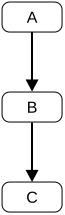
먼저 error condition이 없다고 assume합시다.
그 다음 A.
Finally,
이제 다른 type의 error condition을 consider하십시오:
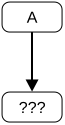
이 scenario에서 module A는 어떤 다른 module에 대한 dependency를 declare하지만, 그 module에 대한
여기서 loading, linking 및 evaluation error 사이의 difference는 다음 characteristic 때문입니다:
Evaluation 은 side effect를 cause할 수 있으므로 only once performed되어야 합니다; 따라서 evaluation이 already performed되었는지, even unsuccessfully라도 remember하는 것이 important합니다. (error case에서는 subsequentEvaluate () call이 new one을 synthesize해야 하지 않도록 exception도 remember하는 것이 makes sense합니다.)- 반면 Linking은 side-effect-free이므로, fail하더라도 later time에 issue 없이 retried될 수 있습니다.
- Loading은
host 와 closely interact하며, 일부host 는 failed load를 retry하도록 users에게 allow하는 것이 desirable할 수 있습니다(예를 들어 failure가 temporarily bad network condition에 의해 caused된 경우).
이제 cycle을 가진 module graph를 consider하십시오:
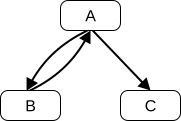
여기서는 entry point가 module A라고 assume하므로,
Then
cyclic module graph의 evaluation phase에 대해서도 success case에서는 analogous story가 occur합니다.
이제 A에 linking error가 있는 case를 consider하십시오; 예를 들어, it tries to import a binding from C that does not exist. 이 경우, above step은 still occur하며,
Alternatively, A에 evaluation error가 있는 case를 consider하십시오; 예를 들어, 그 source code가 exception을 throw합니다. 이 경우, evaluation-time analogue of the above step은 still occur하며, await를 contain하거나 depend하는 module을 위해 whole dependency graph를 통해 chain을 form하는 [[AsyncParentModules]]를 통해서도 record합니다. 이는
마지막으로, 모든 module이 asynchronously complete하는 cycle을 가진 module graph를 consider하십시오:
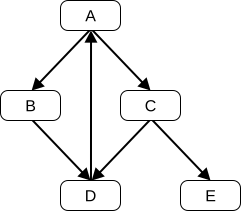
Loading 및 linking은 before와 같이 happen하며, 모든 module은 [[Status]]가
A.
|
Field
|
A | B | C | D | E |
|---|---|---|---|---|---|
| [[DFSAncestorIndex]] | 0 | 0 | 0 | 0 | 4 |
| [[Status]] | |||||
| [[AsyncEvaluationOrder]] | 4 | 1 | 3 | 0 | 2 |
| [[AsyncParentModules]] | « » | « A » | « A » | « B, C » | « C » |
| [[PendingAsyncDependencies]] | 2 (B and C) | 1 (D) | 2 (D and E) | 0 | 0 |
E가 first로 executing을 finish한다고 assume합시다. 그것이 happen하면,
|
Field
|
C | E |
|---|---|---|
| [[DFSAncestorIndex]] | 0 | 4 |
| [[Status]] | ||
| [[AsyncEvaluationOrder]] | 3 | |
| [[AsyncParentModules]] | « A » | « C » |
| [[PendingAsyncDependencies]] | 1 (D) | 0 |
D가 next로 finish합니다(아직 executing 중인 only module이었으므로). 그것이 happen하면, await를 contain하면 potentially in parallel to B). updated module의 field는
|
Field
|
B | C | D |
|---|---|---|---|
| [[DFSAncestorIndex]] | 0 | 0 | 0 |
| [[Status]] | |||
| [[AsyncEvaluationOrder]] | 1 | 3 | |
| [[AsyncParentModules]] | « A » | « A » | « B, C » |
| [[PendingAsyncDependencies]] | 0 | 0 | 0 |
C가 next로 executing을 finish한다고 assume합시다. 그것이 happen하면,
|
Field
|
A | C |
|---|---|---|
| [[DFSAncestorIndex]] | 0 | 0 |
| [[Status]] | ||
| [[AsyncEvaluationOrder]] | 4 | |
| [[AsyncParentModules]] | « » | « A » |
| [[PendingAsyncDependencies]] | 1 (B) | 0 |
Then, B가 executing을 finish합니다. 그것이 happen하면,
|
Field
|
A | B |
|---|---|---|
| [[DFSAncestorIndex]] | 0 | 0 |
| [[Status]] | ||
| [[AsyncEvaluationOrder]] | 4 | |
| [[AsyncParentModules]] | « » | « A » |
| [[PendingAsyncDependencies]] | 0 | 0 |
Finally, A가 executing을 finish합니다. 그것이 happen하면,
|
Field
|
A |
|---|---|
| [[DFSAncestorIndex]] | 0 |
| [[Status]] | |
| [[AsyncEvaluationOrder]] | |
| [[AsyncParentModules]] | « » |
| [[PendingAsyncDependencies]] | 0 |
Alternatively, C가 B가 executing을 finished하기 전에 execution에 fail하고 error를 return하는 failure case를 consider하십시오. 그것이 happen하면,
|
Field
|
A | C |
|---|---|---|
| [[DFSAncestorIndex]] | 0 | 0 |
| [[Status]] | ||
| [[AsyncEvaluationOrder]] | ||
| [[AsyncParentModules]] | « » | « A » |
| [[PendingAsyncDependencies]] | 1 (B) | 0 |
| [[EvaluationError]] | C의 evaluation error |
C가 C의 error와 함께 A에 대해
|
Field
|
A |
|---|---|
| [[DFSAncestorIndex]] | 0 |
| [[Status]] | |
| [[AsyncEvaluationOrder]] | |
| [[AsyncParentModules]] | « » |
| [[PendingAsyncDependencies]] | 0 |
| [[EvaluationError]] | C의 |
Then, B가 error 없이 executing을 finish합니다. 그것이 happen하면,
|
Field
|
A | B |
|---|---|---|
| [[DFSAncestorIndex]] | 0 | 0 |
| [[Status]] | ||
| [[AsyncEvaluationOrder]] | 4 | 1 |
| [[AsyncParentModules]] | « » | « A » |
| [[PendingAsyncDependencies]] | 0 | 0 |
| [[EvaluationError]] | C의 |
16.2.1.7 Source Text Module Records
Source Text Module Record는
| Field Name | Value Type | Meaning |
|---|---|---|
| [[ECMAScriptCode]] |
a |
|
| [[Context]] |
an |
이 module과 associated된 |
| [[ImportMeta]] |
an Object or |
import.meta meta property를 통해 exposed되는 object입니다. ECMAScript code에 의해 accessed될 때까지 |
| [[ImportEntries]] |
a |
이 module의 code에서 derived된 ImportEntry record의 |
| [[LocalExportEntries]] |
a |
module 안에서 occur하는 declaration에 corresponding하는, 이 module의 code에서 derived된 ExportEntry record의 |
| [[IndirectExportEntries]] |
a |
module 안에서 occur하는 reexported import 또는 export * as namespace declaration에서의 export에 corresponding하는, 이 module의 code에서 derived된 ExportEntry record의 |
| [[StarExportEntries]] |
a |
module 안에서 occur하는 export * declaration에 corresponding하는, 이 module의 code에서 derived된 ExportEntry record의 export * as namespace declaration은 include하지 않습니다.
|
ImportEntry Record는 single declarative import에 대한 information을 digest하는
| Field Name | Value Type | Meaning |
|---|---|---|
| [[ModuleRequest]] |
a |
|
| [[ImportName]] |
a String or |
[[ModuleRequest]]가 identified하는 module에 의해 desired binding이 exported되는 name입니다. value |
| [[LocalName]] | a String | importing module 안에서 imported value에 locally access하는 데 사용되는 name입니다. |
| Import Statement Form | [[ModuleRequest]] | [[ImportName]] | [[LocalName]] |
|---|---|---|---|
import v from "mod";
|
|
|
|
import * as ns from "mod";
|
|
|
|
import {x} from "mod";
|
|
|
|
import {x as v} from "mod";
|
|
|
|
import "mod";
|
|
||
ExportEntry Record는 single declarative export에 대한 information을 digest하는
| Field Name | Value Type | Meaning |
|---|---|---|
| [[ExportName]] |
a String or |
이 module이 이 binding을 export하는 데 사용하는 name입니다. |
| [[ModuleRequest]] |
a |
|
| [[ImportName]] |
a String, |
[[ModuleRequest]]가 identified하는 module에 의해 desired binding이 exported되는 name입니다. export * as ns from "mod" declaration에 사용됩니다. export * from "mod" declaration에 사용됩니다.
|
| [[LocalName]] |
a String or |
importing module 안에서 exported value에 locally access하는 데 사용되는 name입니다. exported value가 module 안에서 locally accessible하지 않으면 |
| Export Statement Form | [[ExportName]] | [[ModuleRequest]] | [[ImportName]] | [[LocalName]] |
|---|---|---|---|---|
export var v;
|
|
|
|
|
export default function f() {}
|
|
|
|
|
export default function () {}
|
|
|
|
|
export default 42;
|
|
|
|
|
export {x};
|
|
|
|
|
export {v as x};
|
|
|
|
|
export {x} from "mod";
|
|
|
|
|
export {v as x} from "mod";
|
|
|
|
|
export * from "mod";
|
|
|
|
|
export * as ns from "mod";
|
|
|
|
|
다음 definition은
16.2.1.7.1 ParseModule ( sourceText, realm, hostDefined )
The abstract operation ParseModule takes arguments sourceText (a String or a sequence of Unicode code points), realm (a
- body를
ParseText (sourceText,Module )라고 하자. - body가 errors의
List 이면, body를 반환한다. - requestedModules를 body의
ModuleRequests 라고 하자. - importEntries를 body의
ImportEntries 라고 하자. - importedBoundNames를
ImportedLocalNames (importEntries)라고 하자. - indirectExportEntries를 새로운 빈
List 라고 하자. - localExportEntries를 새로운 빈
List 라고 하자. - starExportEntries를 새로운 빈
List 라고 하자. - exportEntries를 body의
ExportEntries 라고 하자. - exportEntries의 각
ExportEntry Record exportEntry에 대해 다음을 수행한다.- exportEntry.[[ModuleRequest]]가
null 이면,- importedBoundNames가 exportEntry.[[LocalName]]을 포함하지 않으면,
- exportEntry를 localExportEntries에 추가한다.
- 그렇지 않으면,
NOTE : 원래 다른 모듈에서 가져온 바인딩 또는 namespace 객체를 내보낼 때,ExportEntry Record 는 바인딩 또는 namespace 객체가 가져온 뒤 내보내진 것이 아니라 원래 모듈에서 직접 다시 내보내졌다면 가졌을 형식과 일치하도록 다시 작성된다. 이를 통해export * from을 통해 같은 이름으로 같은 바인딩 또는 namespace를 두 번 내보내면서 발생하는 충돌이Source Text Module Records의 ResolveExport 구체 메서드 의9.e.iii 단계에서 모호한 것으로 처리되지 않고 무시될 수 있다.- importEntry를 [[LocalName]]이 exportEntry.[[LocalName]]인 importEntries의 요소라고 하자.
ExportEntry Record { [[ModuleRequest]]: importEntry.[[ModuleRequest]], [[ImportName]]: importEntry.[[ImportName]], [[LocalName]]:null , [[ExportName]]: exportEntry.[[ExportName]] }를 indirectExportEntries에 추가한다.
- importedBoundNames가 exportEntry.[[LocalName]]을 포함하지 않으면,
- 그렇지 않고 exportEntry.[[ImportName]]이
all-but-default 이면,Assert : exportEntry.[[ExportName]]은null 이다.- exportEntry를 starExportEntries에 추가한다.
- 그렇지 않으면,
- exportEntry를 indirectExportEntries에 추가한다.
- exportEntry.[[ModuleRequest]]가
- async를 body
Contains await라고 하자. Source Text Module Record { [[Realm]]: realm, [[Environment]]:empty , [[Namespace]]:empty , [[CycleRoot]]:empty , [[HasTLA]]: async, [[AsyncEvaluationOrder]]:unset , [[TopLevelCapability]]:empty , [[AsyncParentModules]]: « », [[PendingAsyncDependencies]]:empty , [[Status]]:new , [[EvaluationError]]:empty , [[HostDefined]]: hostDefined, [[ECMAScriptCode]]: body, [[Context]]:empty , [[ImportMeta]]:empty , [[RequestedModules]]: requestedModules, [[LoadedModules]]: « », [[ImportEntries]]: importEntries, [[LocalExportEntries]]: localExportEntries, [[IndirectExportEntries]]: indirectExportEntries, [[StarExportEntries]]: starExportEntries, [[DFSAncestorIndex]]:empty }를 반환한다.
implementation은 해당 module source text에 대한 ParseModule의 evaluation 전에 module source text를 parse하고 Early Error condition에 대해 analyse할 수 있습니다. 그러나 any error의 reporting은 이 specification이 실제로 해당 source text에 대해 ParseModule을 수행하는 point까지 deferred되어야 합니다.
16.2.1.7.2 Implementation of Module Record Abstract Methods
다음은
16.2.1.7.2.1 GetExportedNames ( [ exportStarSet ] )
The
Assert : module.[[Status]]는new 가 아니다.- exportStarSet이 없으면, exportStarSet을 새로운 빈
List 로 설정한다. - exportStarSet이 module을 포함하면,
- module을 exportStarSet에 추가한다.
- exportedNames를 새로운 빈
List 라고 하자. - module.[[LocalExportEntries]]의 각
ExportEntry Record exportEntry에 대해 다음을 수행한다. - module.[[IndirectExportEntries]]의 각
ExportEntry Record exportEntry에 대해 다음을 수행한다. - module.[[StarExportEntries]]의 각
ExportEntry Record exportEntry에 대해 다음을 수행한다.Assert : exportEntry.[[ModuleRequest]]는null 이 아니다.- requestedModule을
GetImportedModule (module, exportEntry.[[ModuleRequest]])라고 하자. - starNames를 requestedModule.
GetExportedNames (exportStarSet)라고 하자. - starNames의 각 요소 name에 대해 다음을 수행한다.
- name이
"default" 가 아니면,- exportedNames가 name을 포함하지 않으면,
- name을 exportedNames에 추가한다.
- exportedNames가 name을 포함하지 않으면,
- name이
- exportedNames를 반환한다.
16.2.1.7.2.2 ResolveExport ( exportName [ , resolveSet ] )
The
defining module이 found되면,
It performs the following steps when called:
Assert : module.[[Status]]는new 가 아니다.- resolveSet이 없으면, resolveSet을 새로운 빈
List 로 설정한다. - resolveSet의 각
Record { [[Module]], [[ExportName]] } record에 대해 다음을 수행한다.- module과 record.[[Module]]이 같은
Module Record 이고 exportName이 record.[[ExportName]]이면,Assert : 이것은 순환 import 요청이다.null 을 반환한다.
- module과 record.[[Module]]이 같은
Record { [[Module]]: module, [[ExportName]]: exportName }를 resolveSet에 추가한다.- module.[[LocalExportEntries]]의 각
ExportEntry Record exportEntry에 대해 다음을 수행한다.- exportEntry.[[ExportName]]이 exportName이면,
Assert : module은 이 export에 대한 direct binding을 제공한다.ResolvedBinding Record { [[Module]]: module, [[BindingName]]: exportEntry.[[LocalName]] }를 반환한다.
- exportEntry.[[ExportName]]이 exportName이면,
- module.[[IndirectExportEntries]]의 각
ExportEntry Record exportEntry에 대해 다음을 수행한다.- exportEntry.[[ExportName]]이 exportName이면,
Assert : exportEntry.[[ModuleRequest]]는null 이 아니다.- importedModule을
GetImportedModule (module, exportEntry.[[ModuleRequest]])라고 하자. - exportEntry.[[ImportName]]이
namespace 이면,Assert : module은 이 export에 대한 direct binding을 제공하지 않는다.ResolvedBinding Record { [[Module]]: importedModule, [[BindingName]]:namespace }를 반환한다.
Assert : module은 이 export에 대한 특정 binding을 가져온다.Assert : exportEntry.[[ImportName]]은 String이다.- importedModule.
ResolveExport (exportEntry.[[ImportName]], resolveSet)를 반환한다.
- exportEntry.[[ExportName]]이 exportName이면,
- exportName이
"default" 이면, - starResolution을
null 이라고 하자. - module.[[StarExportEntries]]의 각
ExportEntry Record exportEntry에 대해 다음을 수행한다.Assert : exportEntry.[[ModuleRequest]]는null 이 아니다.- importedModule을
GetImportedModule (module, exportEntry.[[ModuleRequest]])라고 하자. - resolution을 importedModule.
ResolveExport (exportName, resolveSet)라고 하자. - resolution이
ambiguous 이면,ambiguous 를 반환한다. - resolution이
null 이 아니면,Assert : resolution은ResolvedBinding Record 이다.- starResolution이
null 이면,- starResolution을 resolution으로 설정한다.
- 그렇지 않으면,
Assert : 요청된 이름을 포함하는*export가 둘 이상 있다.- resolution.[[Module]]과 starResolution.[[Module]]이 같은
Module Record 가 아니면,ambiguous 를 반환한다. - resolution.[[BindingName]]이 starResolution.[[BindingName]]이 아니면,
ambiguous 를 반환한다.
- starResolution을 반환한다.
16.2.1.7.3 Implementation of Cyclic Module Record Abstract Methods
다음은
16.2.1.7.3.1 InitializeEnvironment ( )
The
- module.[[IndirectExportEntries]]의 각
ExportEntry Record exportEntry에 대해 다음을 수행한다.Assert : exportEntry.[[ExportName]]은null 이 아니다.- resolution을 module.
ResolveExport (exportEntry.[[ExportName]])라고 하자. - resolution이
null 또는ambiguous 중 하나이면,SyntaxError 예외를 던진다. Assert : resolution은ResolvedBinding Record 이다.
Assert : module의 모든 named export는 resolve 가능하다.- realm을 module.[[Realm]]이라고 하자.
Assert : realm은undefined 가 아니다.- envRecord를
NewModuleEnvironment (realm.[[GlobalEnv]])라고 하자. - module.[[Environment]]를 envRecord로 설정한다.
- module.[[ImportEntries]]의 각
ImportEntry Record importEntry에 대해 다음을 수행한다.- importedModule을
GetImportedModule (module, importEntry.[[ModuleRequest]])라고 하자. - importEntry.[[ImportName]]이
namespace 이면,- namespace를
GetModuleNamespace (importedModule)라고 하자. - ! envRecord.
CreateImmutableBinding (importEntry.[[LocalName]],true )를 수행한다. - ! envRecord.
InitializeBinding (importEntry.[[LocalName]], namespace)를 수행한다.
- namespace를
- 그렇지 않으면,
Assert : importEntry.[[ImportName]]은 String이다.- resolution을 importedModule.
ResolveExport (importEntry.[[ImportName]])라고 하자. - resolution이
null 또는ambiguous 중 하나이면,SyntaxError 예외를 던진다. - resolution.[[BindingName]]이
namespace 이면,- namespace를
GetModuleNamespace (resolution.[[Module]])라고 하자. - ! envRecord.
CreateImmutableBinding (importEntry.[[LocalName]],true )를 수행한다. - ! envRecord.
InitializeBinding (importEntry.[[LocalName]], namespace)를 수행한다.
- namespace를
- 그렇지 않으면,
CreateImportBinding (envRecord, importEntry.[[LocalName]], resolution.[[Module]], resolution.[[BindingName]])을 수행한다.
- importedModule을
- moduleContext를 새로운
ECMAScript code execution context 라고 하자. - moduleContext의 Function을
null 로 설정한다. Assert : module.[[Realm]]은undefined 가 아니다.- moduleContext의
Realm 을 module.[[Realm]]으로 설정한다. - moduleContext의 ScriptOrModule을 module로 설정한다.
- moduleContext의 VariableEnvironment를 module.[[Environment]]로 설정한다.
- moduleContext의 LexicalEnvironment를 module.[[Environment]]로 설정한다.
- moduleContext의 PrivateEnvironment를
null 로 설정한다. - module.[[Context]]를 moduleContext로 설정한다.
- moduleContext를
execution context stack 에 push한다. moduleContext는 이제 실행 중인 실행 컨텍스트이다. - code를 module.[[ECMAScriptCode]]라고 하자.
- variableDecls를 code의
VarScopedDeclarations 라고 하자. - declaredVariableNames를 새로운 빈
List 라고 하자. - variableDecls의 각 요소 variableDecl에 대해 다음을 수행한다.
- variableDecl의
BoundNames 의 각 요소 name에 대해 다음을 수행한다.- declaredVariableNames가 name을 포함하지 않으면,
- ! envRecord.
CreateMutableBinding (name,false )를 수행한다. - ! envRecord.
InitializeBinding (name,undefined )를 수행한다. - name을 declaredVariableNames에 추가한다.
- ! envRecord.
- declaredVariableNames가 name을 포함하지 않으면,
- variableDecl의
- lexicalDecls를 code의
LexicallyScopedDeclarations 라고 하자. - privateEnv를
null 이라고 하자. - lexicalDecls의 각 요소 lexicalDecl에 대해 다음을 수행한다.
- lexicalDecl의
BoundNames 의 각 요소 name에 대해 다음을 수행한다.- lexicalDecl의
IsConstantDeclaration 이true 이면,- ! envRecord.
CreateImmutableBinding (name,true )를 수행한다.
- ! envRecord.
- 그렇지 않으면,
- ! envRecord.
CreateMutableBinding (name,false )를 수행한다.
- ! envRecord.
- lexicalDecl이
FunctionDeclaration ,GeneratorDeclaration ,AsyncFunctionDeclaration 또는AsyncGeneratorDeclaration 중 하나이면,- funcObj를 lexicalDecl의
InstantiateFunctionObject 에 인수 envRecord 및 privateEnv를 전달한 결과라고 하자. - ! envRecord.
InitializeBinding (name, funcObj)를 수행한다.
- funcObj를 lexicalDecl의
- lexicalDecl의
- lexicalDecl의
- moduleContext를
execution context stack 에서 제거한다. unused 를 반환한다.
16.2.1.7.3.2 ExecuteModule ( [ capability ] )
The
- 단언: module은 링크되었고 그 module environment의 선언들은 인스턴스화되었다.
- moduleContext를 module.[[Context]]로 둔다.
- module.[[HasTLA]]가
false 이면,- 단언: capability는 존재하지 않는다.
- env를 module.[[Environment]]로 둔다.
- 실행 중인 실행 컨텍스트를 일시 중단한다.
- moduleContext를 실행 컨텍스트 스택에 push한다. moduleContext는 이제 실행 중인 실행 컨텍스트이다.
- result를 module.[[ECMAScriptCode]]의
Evaluation 의Completion 으로 둔다. - result를
Completion (DisposeResources (env.[[DisposableResourceStack]], result))로 설정한다. - moduleContext를 일시 중단하고 실행 컨텍스트 스택에서 제거한다.
- 이제 실행 컨텍스트 스택의 맨 위에 있는 컨텍스트를 실행 중인 실행 컨텍스트로 재개한다.
- result가 abrupt 완료이면,
- ? result를 반환한다.
- 그렇지 않으면,
- 단언: capability는
PromiseCapability Record 이다. AsyncBlockStart (capability, module.[[ECMAScriptCode]], moduleContext)를 수행한다.
- 단언: capability는
unused 를 반환한다.
16.2.1.8 Synthetic Module Records
Synthetic Module Record는 specification에 의해 defined된 module에 대한 information을 represent하는 데 사용됩니다. 그 exported name은 creation 시 statically defined되며, 그 corresponding value는
| Field Name | Value Type | Meaning |
|---|---|---|
| [[ExportNames]] | a |
module의 export name입니다. 이 list는 duplicate를 contain하지 않습니다. |
| [[EvaluationSteps]] | an |
module의 evaluation 시 수행할 initialization logic이며, |
16.2.1.8.1 CreateDefaultExportSyntheticModule ( defaultExport )
The abstract operation CreateDefaultExportSyntheticModule takes argument defaultExport (an
- realm을 current
Realm Record 로 둔다. - defaultExport를 capture하고 called될 때 다음 step을 수행하는 parameter (module)를 가진 새
Abstract Closure setDefaultExport를 둔다:SetSyntheticModuleExport (module,"default" , defaultExport)를 수행한다.NormalCompletion (unused )를 반환한다.
Synthetic Module Record { [[Realm]]: realm, [[Environment]]:empty , [[Namespace]]:empty , [[HostDefined]]:undefined , [[ExportNames]]: «"default" », [[EvaluationSteps]]: setDefaultExport }를 반환한다.
16.2.1.8.2 ParseJSONModule ( source )
The abstract operation ParseJSONModule takes argument source (a String) and returns either a
- parseResult를 ?
ParseJSON (source)로 둔다. CreateDefaultExportSyntheticModule (parseResult.[[Value]])를 반환한다.
16.2.1.8.3 SetSyntheticModuleExport ( module, exportName, exportValue )
The abstract operation SetSyntheticModuleExport takes arguments module (a
Assert : module.[[ExportNames]]는 exportName을 contain한다.- envRecord를 module.[[Environment]]로 둔다.
Assert : envRecord는empty 가 아니다.- ! envRecord.
SetMutableBinding (exportName, exportValue,true )를 수행한다. unused 를 반환한다.
16.2.1.8.4 Implementation of Module Record Abstract Methods
다음은
16.2.1.8.4.1 LoadRequestedModules ( [ hostDefined ] )
The
NOTE :LoadRequestedModules 의 이 implementation은 hostDefined를 사용하지 않는다.- !
PromiseResolve (%Promise% ,undefined )를 반환한다.
16.2.1.8.4.2 GetExportedNames ( [ exportStarSet ] )
The
NOTE :GetExportedNames 의 이 implementation은 exportStarSet을 사용하지 않는다.- module.[[ExportNames]]를 반환한다.
16.2.1.8.4.3 ResolveExport ( exportName [ , resolveSet ] )
The
NOTE :ResolveExport 의 이 implementation은 resolveSet을 사용하지 않는다.- module.[[ExportNames]]가 exportName을 contain하지 않으면,
null 을 반환한다. ResolvedBinding Record { [[Module]]: module, [[BindingName]]: exportName }을 반환한다.
16.2.1.8.4.4 Link ( )
The
- realm을 module.[[Realm]]로 둔다.
- envRecord를
NewModuleEnvironment (realm.[[GlobalEnv]])로 둔다. - module.[[Environment]]를 envRecord로 설정한다.
- module.[[ExportNames]]의 각 String exportName에 대해, 다음을 수행한다.
- ! envRecord.
CreateMutableBinding (exportName,false )를 수행한다. - ! envRecord.
InitializeBinding (exportName,undefined )를 수행한다.
- ! envRecord.
NormalCompletion (unused )를 반환한다.
16.2.1.8.4.5 Evaluate ( )
The
- moduleContext를 새
ECMAScript code execution context 로 둔다. - moduleContext의 Function을
null 로 설정한다. - moduleContext의
Realm 을 module.[[Realm]]로 설정한다. - moduleContext의 ScriptOrModule을 module로 설정한다.
- moduleContext의 VariableEnvironment를 module.[[Environment]]로 설정한다.
- moduleContext의 LexicalEnvironment를 module.[[Environment]]로 설정한다.
running execution context 를 suspend한다.- moduleContext를
execution context stack 에 push한다; moduleContext는 이제running execution context 이다. - steps를 module.[[EvaluationSteps]]로 둔다.
- result를
Completion (steps(module))로 둔다. - moduleContext를 suspend하고
execution context stack 에서 remove한다. execution context stack 의 top에 now 있는 context를running execution context 로 resume한다.- promiseCapability를 !
NewPromiseCapability (%Promise% )로 둔다. IfAbruptRejectPromise (result, promiseCapability)를 수행한다.- !
Call (promiseCapability.[[Resolve]],undefined , «undefined »)를 수행한다. - promiseCapability.[[Promise]]를 반환한다.
16.2.1.9 GetImportedModule ( referrer, request )
The abstract operation GetImportedModule takes arguments referrer (a
- records를
ModuleRequestsEqual (r, request)이true 인 referrer.[[LoadedModules]]의 각LoadedModuleRequest Record r로 구성된List 로 둔다. Assert : this abstract operation을 invoking하기 전에LoadRequestedModules 가 referrer에서 successfully completed되었으므로, records는 exactly one element를 가진다.- record를 records의 sole element로 둔다.
- record.[[Module]]을 반환한다.
16.2.1.10 HostLoadImportedModule ( referrer, moduleRequest, hostDefined, payload )
The
referrer가
<button type="button" onclick="import('./foo.mjs')">Click me</button>import()
HostLoadImportedModule의 implementation은 다음 requirements에 conform해야 합니다:
-
host environment 는FinishLoadingImportedModule (referrer, moduleRequest, payload, result)를 수행해야 하며, 여기서 result는 loadedModule Record 를 contain하는normal completion 또는throw completion 중 하나입니다. 이는 synchronously 또는 asynchronously 수행됩니다. -
이 operation이 다음을 만족하는 두 (referrer, moduleRequest) pair로 multiple times called되면:
- first referrer는 second referrer와 same이다;
ModuleRequestsEqual (first moduleRequest, second moduleRequest)가true 이다;
그리고 result가
normal completion 인FinishLoadingImportedModule (referrer, moduleRequest, payload, result)를 수행하면, 매번 same result로FinishLoadingImportedModule (referrer, moduleRequest, payload, result)를 수행해야 합니다. -
moduleRequest.[[Attributes]]가 entry.[[Key]]가
"type" 이고 entry.[[Value]]가"json" 인 entry entry를 가지면,host environment 가FinishLoadingImportedModule (referrer, moduleRequest, payload, result)를 수행할 때, result는ParseJSONModule 의 invocation에 의해 returned된Completion Record 또는throw completion 중 하나여야 합니다. -
operation은 payload를
FinishLoadingImportedModule 에 pass through될 opaque value로 treat해야 합니다.
performed되는 actual process는
16.2.1.11 FinishLoadingImportedModule ( referrer, moduleRequest, payload, result )
The abstract operation FinishLoadingImportedModule takes arguments referrer (a
- result가
normal completion 이면, 다음을 수행한다.- referrer.[[LoadedModules]]가
ModuleRequestsEqual (record, moduleRequest)이true 인LoadedModuleRequest Record record를 contain하면, 다음을 수행한다.Assert : record.[[Module]]과 result.[[Value]]는 sameModule Record 이다.
- 그렇지 않으면,
LoadedModuleRequest Record { [[Specifier]]: moduleRequest.[[Specifier]], [[Attributes]]: moduleRequest.[[Attributes]], [[Module]]: result.[[Value]] }를 referrer.[[LoadedModules]]에 append한다.
- referrer.[[LoadedModules]]가
- payload가
GraphLoadingState Record 이면, 다음을 수행한다.ContinueModuleLoading (payload, result)를 수행한다.
- 그렇지 않으면,
ContinueDynamicImport (payload, result)를 수행한다.
unused 를 반환한다.
16.2.1.12 AllImportAttributesSupported ( attrs )
The abstract operation AllImportAttributesSupported takes argument attrs (a
- supported를
HostGetSupportedImportAttributes ()로 둔다. - attrs의 각
ImportAttribute Record attr에 대해, 다음을 수행한다.- supported가 attr.[[Key]]를 contain하지 않으면,
false 를 반환한다.
- supported가 attr.[[Key]]를 contain하지 않으면,
true 를 반환한다.
16.2.1.12.1 HostGetSupportedImportAttributes ( )
The
HostGetSupportedImportAttributes의 implementation은 다음 requirements에 conform해야 합니다:
- supported attribute를 각각 indicate하는 String의
List 를 반환해야 합니다. - 이 operation이 called될 때마다, same contents를 same order로 가진 same
List 를 반환해야 합니다.
HostGetSupportedImportAttributes의 default implementation은 새 empty
16.2.1.13 GetModuleNamespace ( module )
The abstract operation GetModuleNamespace takes argument module (an instance of a concrete subclass of
Assert : module이Cyclic Module Record 이면, module.[[Status]]는new 또는unlinked 가 아니다.- namespace를 module.[[Namespace]]로 둔다.
- namespace가
empty 이면, 다음을 수행한다.- exportedNames를 module.
GetExportedNames ()로 둔다. - unambiguousNames를 새 empty
List 로 둔다. - exportedNames의 각 element name에 대해, 다음을 수행한다.
- resolution을 module.
ResolveExport (name)으로 둔다. - resolution이
ResolvedBinding Record 이면, name을 unambiguousNames에 append한다.
- resolution을 module.
- namespace를
ModuleNamespaceCreate (module, unambiguousNames)로 설정한다.
- exportedNames를 module.
- namespace를 반환한다.
GetModuleNamespace는 never throws. 대신 unresolvable name은 이 point에서 simply namespace에서 excluded됩니다. 그것들이 explicitly requested되지 않는 ambiguous star export뿐인 경우가 아니면, later에 real linking error로 이어질 것입니다.
16.2.1.14 Runtime Semantics: Evaluation
undefined 를 반환한다.
- result를
Completion (ModuleItemList 의Evaluation )으로 둔다. - result가
normal completion 이고 result.[[Value]]가empty 이면, 다음을 수행한다.undefined 를 반환한다.
- ? result를 반환한다.
- sl을
ModuleItemList 의Evaluation 으로 ? 둔다. - s를
ModuleItem 의Evaluation 의Completion 으로 둔다. - ?
UpdateEmpty (s, sl)를 반환한다.
empty 를 반환한다.
16.2.2 Imports
Syntax
16.2.2.1 Static Semantics: Early Errors
-
ImportDeclaration 의BoundNames 가 duplicate entry를 contain하면 Syntax Error입니다.
-
WithClause 의WithClauseToAttributes 가 a.[[Key]]가 b.[[Key]]인 two different entry a와 b를 가지면 Syntax Error입니다.
16.2.2.2 Static Semantics: ImportEntries
The
- 새 empty
List 를 반환한다.
- entries1을
ModuleItemList 의ImportEntries 로 둔다. - entries2를
ModuleItem 의ImportEntries 로 둔다. - entries1과 entries2의 list-concatenation을 반환한다.
- 새 empty
List 를 반환한다.
- module을
ImportDeclaration 의ModuleRequests 의 sole element로 둔다. - argument module을 가진
ImportClause 의ImportEntriesForModule 을 반환한다.
- 새 empty
List 를 반환한다.
16.2.2.3 Static Semantics: ImportEntriesForModule
The
- entries1을 argument module을 가진
ImportedDefaultBinding 의ImportEntriesForModule 로 둔다. - entries2를 argument module을 가진
NameSpaceImport 의ImportEntriesForModule 로 둔다. - entries1과 entries2의 list-concatenation을 반환한다.
- entries1을 argument module을 가진
ImportedDefaultBinding 의ImportEntriesForModule 로 둔다. - entries2를 argument module을 가진
NamedImports 의ImportEntriesForModule 로 둔다. - entries1과 entries2의 list-concatenation을 반환한다.
- localName을
ImportedBinding 의BoundNames 의 sole element로 둔다. - defaultEntry를
ImportEntry Record { [[ModuleRequest]]: module, [[ImportName]]:"default" , [[LocalName]]: localName }로 둔다. - « defaultEntry »를 반환한다.
- localName을
ImportedBinding 의StringValue 로 둔다. - entry를
ImportEntry Record { [[ModuleRequest]]: module, [[ImportName]]:namespace , [[LocalName]]: localName }로 둔다. - « entry »를 반환한다.
- 새 empty
List 를 반환한다.
- specs1을 argument module을 가진
ImportsList 의ImportEntriesForModule 로 둔다. - specs2를 argument module을 가진
ImportSpecifier 의ImportEntriesForModule 로 둔다. - specs1과 specs2의 list-concatenation을 반환한다.
- localName을
ImportedBinding 의BoundNames 의 sole element로 둔다. - entry를
ImportEntry Record { [[ModuleRequest]]: module, [[ImportName]]: localName, [[LocalName]]: localName }로 둔다. - « entry »를 반환한다.
- importName을
ModuleExportName 의StringValue 로 둔다. - localName을
ImportedBinding 의StringValue 로 둔다. - entry를
ImportEntry Record { [[ModuleRequest]]: module, [[ImportName]]: importName, [[LocalName]]: localName }로 둔다. - « entry »를 반환한다.
16.2.2.4 Static Semantics: WithClauseToAttributes
The
- 새 empty
List 를 반환한다.
- attrs를
WithEntries 의WithClauseToAttributes 로 둔다. - attrs를 각 such field의 value를 UTF-16 code unit value의 sequence로 treating하여 그 [[Key]] field의 lexicographic order에 따라 sort한다.
NOTE : 이 sorting은host 가 attribute가 enumerated되는 order에 따라 behaviour를 changing하는 것이 prohibited된다는 점에서만 observable하다. - attrs를 반환한다.
- key를
AttributeKey 의PropName 으로 둔다. - entry를
ImportAttribute Record { [[Key]]: key, [[Value]]:StringLiteral 의SV }로 둔다. - « entry »를 반환한다.
- key를
AttributeKey 의PropName 으로 둔다. - entry를
ImportAttribute Record { [[Key]]: key, [[Value]]:StringLiteral 의SV }로 둔다. - rest를
WithEntries 의WithClauseToAttributes 로 둔다. - « entry »와 rest의 list-concatenation을 반환한다.
16.2.3 Exports
Syntax
16.2.3.1 Static Semantics: Early Errors
-
NamedExports 의ReferencedBindings 가 anyStringLiteral 을 contain하면 Syntax Error입니다. -
NamedExports 의ReferencedBindings 안의 각IdentifierName n에 대해: n의StringValue 가ReservedWord 이거나 n의StringValue 가"implements" ,"interface" ,"let" ,"package" ,"private" ,"protected" ,"public" , 또는"static" 중 하나이면 Syntax Error입니다.
above rule은
16.2.3.2 Static Semantics: ExportedBindings
The
ExportedBindings는
It is defined piecewise over the following productions:
- names1을
ModuleItemList 의ExportedBindings 로 둔다. - names2를
ModuleItem 의ExportedBindings 로 둔다. - names1과 names2의 list-concatenation을 반환한다.
- 새 empty
List 를 반환한다.
- 새 empty
List 를 반환한다.
NamedExports 의ExportedBindings 를 반환한다.
VariableStatement 의BoundNames 를 반환한다.
Declaration 의BoundNames 를 반환한다.
- this
ExportDeclaration 의BoundNames 를 반환한다.
- 새 empty
List 를 반환한다.
- names1을
ExportsList 의ExportedBindings 로 둔다. - names2를
ExportSpecifier 의ExportedBindings 로 둔다. - names1과 names2의 list-concatenation을 반환한다.
- sole element가
ModuleExportName 의StringValue 인List 를 반환한다.
- sole element가 first
ModuleExportName 의StringValue 인List 를 반환한다.
16.2.3.3 Static Semantics: ExportedNames
The
ExportedNames는
It is defined piecewise over the following productions:
- names1을
ModuleItemList 의ExportedNames 로 둔다. - names2를
ModuleItem 의ExportedNames 로 둔다. - names1과 names2의 list-concatenation을 반환한다.
ExportDeclaration 의ExportedNames 를 반환한다.
- 새 empty
List 를 반환한다.
ExportFromClause 의ExportedNames 를 반환한다.
- 새 empty
List 를 반환한다.
- sole element가
ModuleExportName 의StringValue 인List 를 반환한다.
NamedExports 의ExportedNames 를 반환한다.
VariableStatement 의BoundNames 를 반환한다.
Declaration 의BoundNames 를 반환한다.
- «
"default" »를 반환한다.
- 새 empty
List 를 반환한다.
- names1을
ExportsList 의ExportedNames 로 둔다. - names2를
ExportSpecifier 의ExportedNames 로 둔다. - names1과 names2의 list-concatenation을 반환한다.
- sole element가
ModuleExportName 의StringValue 인List 를 반환한다.
- sole element가 second
ModuleExportName 의StringValue 인List 를 반환한다.
16.2.3.4 Static Semantics: ExportEntries
The
- 새 empty
List 를 반환한다.
- entries1을
ModuleItemList 의ExportEntries 로 둔다. - entries2를
ModuleItem 의ExportEntries 로 둔다. - entries1과 entries2의 list-concatenation을 반환한다.
- 새 empty
List 를 반환한다.
- module을
ExportDeclaration 의ModuleRequests 의 sole element로 둔다. - argument module을 가진
ExportFromClause 의ExportEntriesForModule 을 반환한다.
- argument
null 을 가진NamedExports 의ExportEntriesForModule 을 반환한다.
- entries를 새 empty
List 로 둔다. - names를
VariableStatement 의BoundNames 로 둔다. - names의 각 element name에 대해, 다음을 수행한다.
ExportEntry Record { [[ModuleRequest]]:null , [[ImportName]]:null , [[LocalName]]: name, [[ExportName]]: name }을 entries에 append한다.
- entries를 반환한다.
- entries를 새 empty
List 로 둔다. - names를
Declaration 의BoundNames 로 둔다. - names의 각 element name에 대해, 다음을 수행한다.
ExportEntry Record { [[ModuleRequest]]:null , [[ImportName]]:null , [[LocalName]]: name, [[ExportName]]: name }을 entries에 append한다.
- entries를 반환한다.
- names를
HoistableDeclaration 의BoundNames 로 둔다. - localName을 names의 sole element로 둔다.
- sole element가 new
ExportEntry Record { [[ModuleRequest]]:null , [[ImportName]]:null , [[LocalName]]: localName, [[ExportName]]:"default" }인List 를 반환한다.
- names를
ClassDeclaration 의BoundNames 로 둔다. - localName을 names의 sole element로 둔다.
- sole element가 new
ExportEntry Record { [[ModuleRequest]]:null , [[ImportName]]:null , [[LocalName]]: localName, [[ExportName]]:"default" }인List 를 반환한다.
- entry를
ExportEntry Record { [[ModuleRequest]]:null , [[ImportName]]:null , [[LocalName]]:"*default*" , [[ExportName]]:"default" }로 둔다. - « entry »를 반환한다.
16.2.3.5 Static Semantics: ExportEntriesForModule
The
- entry를
ExportEntry Record { [[ModuleRequest]]: module, [[ImportName]]:all-but-default , [[LocalName]]:null , [[ExportName]]:null }로 둔다. - « entry »를 반환한다.
- exportName을
ModuleExportName 의StringValue 로 둔다. - entry를
ExportEntry Record { [[ModuleRequest]]: module, [[ImportName]]:namespace , [[LocalName]]:null , [[ExportName]]: exportName }로 둔다. - « entry »를 반환한다.
- 새 empty
List 를 반환한다.
- specs1을 argument module을 가진
ExportsList 의ExportEntriesForModule 로 둔다. - specs2를 argument module을 가진
ExportSpecifier 의ExportEntriesForModule 로 둔다. - specs1과 specs2의 list-concatenation을 반환한다.
- sourceName을
ModuleExportName 의StringValue 로 둔다. - module이
null 이면, 다음을 수행한다.- localName을 sourceName으로 둔다.
- importName을
null 로 둔다.
- 그렇지 않으면,
- localName을
null 로 둔다. - importName을 sourceName으로 둔다.
- localName을
- sole element가 new
ExportEntry Record { [[ModuleRequest]]: module, [[ImportName]]: importName, [[LocalName]]: localName, [[ExportName]]: sourceName }인List 를 반환한다.
- sourceName을 first
ModuleExportName 의StringValue 로 둔다. - exportName을 second
ModuleExportName 의StringValue 로 둔다. - module이
null 이면, 다음을 수행한다.- localName을 sourceName으로 둔다.
- importName을
null 로 둔다.
- 그렇지 않으면,
- localName을
null 로 둔다. - importName을 sourceName으로 둔다.
- localName을
- sole element가 new
ExportEntry Record { [[ModuleRequest]]: module, [[ImportName]]: importName, [[LocalName]]: localName, [[ExportName]]: exportName }인List 를 반환한다.
16.2.3.6 Static Semantics: ReferencedBindings
The
- 새 empty
List 를 반환한다.
- names1을
ExportsList 의ReferencedBindings 로 둔다. - names2를
ExportSpecifier 의ReferencedBindings 로 둔다. - names1과 names2의 list-concatenation을 반환한다.
- first
ModuleExportName 의ReferencedBindings 를 반환한다.
- sole element가
IdentifierName 인List 를 반환한다.
- sole element가
StringLiteral 인List 를 반환한다.
16.2.3.7 Runtime Semantics: Evaluation
empty 를 반환한다.
VariableStatement 의Evaluation 을 ? 반환한다.
Declaration 의Evaluation 을 ? 반환한다.
HoistableDeclaration 의Evaluation 을 ? 반환한다.
- value를
ClassDeclaration 의BindingClassDeclarationEvaluation 으로 ? 둔다. - className을
ClassDeclaration 의BoundNames 의 sole element로 둔다. - className이
"*default*" 이면, 다음을 수행한다.- envRecord를
running execution context 의 LexicalEnvironment로 둔다. - ?
InitializeBoundName ("*default*" , value, envRecord)를 수행한다.
- envRecord를
empty 를 반환한다.
IsAnonymousFunctionDefinition (AssignmentExpression )이true 이면, 다음을 수행한다.- value를 argument
"default" 를 가진AssignmentExpression 의NamedEvaluation 으로 ? 둔다.
- value를 argument
- 그렇지 않으면,
- rhs를
AssignmentExpression 의Evaluation 으로 ? 둔다. - value를 ?
GetValue (rhs)로 둔다.
- rhs를
- envRecord를
running execution context 의 LexicalEnvironment로 둔다. - ?
InitializeBoundName ("*default*" , value, envRecord)를 수행한다. empty 를 반환한다.